Vilma Santos-Recto is a popular multi-awarded actress and politician in the Republic of the Philippines. *** She is known as "Queen of Philippine Movies," "Queenstar," "Grand Slam Queen," "Box Office Queen," and "Star for All Seasons." *** This website is mostly about her iconic film career.
Basic Information: Directed: Wenn V. Deramas; Story: Rose Colindres; Screenplay: Theodore Boborol, Rose Colindres; Cast: Sandara Park, Joseph Bitangcol, Pokwang, Eugene Domingo, Nikki Valdez, Candy Pangilinan, Guest appearance of Vilma Santos; Executive producer: Charo Santos-Concio, Malou N. Santos; Original Music: Jessie Lasaten; Cinematography: Sherman So; Film Editing: Renewin Alano; Production Design: Nancy Arcega; Sound: Addiss Tabong; Theme Songs: “Ang Ganda Ko” Performed by Sandara Park; “Toyang” Performed by Eraserheads; “Sweet Sixteen” Performed by Vilma Santos
Plot Description: Tina (Eugene Domingo) and Lea (Pokwang) are best friends who are also avid fans of Vilma Santos. They were inseparable until Lea decides to leave the country and go to Korea. They promise that someday they will really become one big happy family when their children get married. Years after, by virtue of an old vow, Lucky Girl (Sandara Park) and Lucky Boy (Joseph Bitangcol) are forced to be together by their mothers. Problem is, they hate each other’s guts. But, just when they’re falling for each other, love plays a trick on the meddling moms which threatens to bring the young lovers apart. – IMDB
Film Achievement: Box office hit of 2006
Film Review: “…Parang tribute kay Vilma Santos ang D’ Lucky Ones ng Star Cinema dahil galing mula sa mga hit movie ng aktres ang mga linya nina Pokwang at Eugene Domingo. Base sa trailer na napanood namin sa presscon, potential hit ang D’ Lucky Ones at may posibilidad ito na maging another Ang Tanging Ina sa takilya. May special participation sa pelikula si Vilma Santos at ayon ito kay Sandara Park na hindi yata aware na hindi pa pwedeng sabihin ang surprise ng project niya sa Star Cinema. Very Vilma Santos ang itsura ni Eugene sa poster ng D’ Lucky Ones. Mismong si Eugene ang nagsabi na “fans na fans” (fan na fan) siya ng Star for All Seasons. Take note, seryoso ang comedienne nang ipahayag ang sobrang paghanga sa award-winning actress kaya hindi niya napansin na sumobra ang kanyang letrang ‘s….” – Jojo Gabinete, Abante Tonite, March 19, 2006 (READ MORE)
Stand out sina Pokwang at Eugene Domingo sa D’ Lucky Ones, kung tutuusin supporting roles lamang sila dito. Nag-mukhang sina Sandara Park at Joseph Bitangcol ang supporting, dahil nadala nila ang tunay na ibig sabihin ng pagiging isang tagahanga. Litaw na litaw ang paghango ng mga linya mula sa mga pelikulang Sister Stella L., Bata, Bata Paano Ka Ginawa at iba pang pelikulang pinagbibidahan ni Ate Vi. Oo, sila nga ay die hard fans ni Vilma Santos, at dahil dito, ang pelikula ay isang SUCCESS.
Well, it’s a crime to say that Pokwang and Domingo are supporting roles, in the first place, they are the ones who named their kids “Lucky”. Lucky girl and Lucky boy. How sweet ain’t it? Every single bit revolves around the two mothers, they practically OWN the movie, everytime they are on screen they demand presence. Especially, on the Vilma quote bits, they deliver each line right to the pulp. It was so hilarious because i’ve seen those films, and they’ve captured Vilma’s nuances and mannerisms.There was one part in the film when Eugene Domingo started quoting Vilma Santos in the film, Pahiram ng Isang Umaga, complete with the white free flowing dress, they even shot it on the beach, it’s oozing with cheese, it good, if you get my drift. If that wasn’t enough, they even had a dance showdown at a comedy bar, according to Pokwang, they’re just dancing just like Vilma did in the movie Burlesk Queen. Forget about Park and Bitangcol, the film belong to the two stars of all season. Majority of the jokes in the film will be lost in translation to those not familiar with Vilma’s films, and to this note, it is a film not for everyone. – Eboy Donato (READ MORE)
With Eugene Domingo and Pokwang heading the cast, D Lucky Ones can really make you laugh. But everything seems to end there. And though I know a number of people from the cast to the production staff, I just can’t help but write about the booboos of this movie. It is really disappointing. A good film should have cultural correctness and accuracy even in the smallest details that may seem unnoticeable to a number of viewers. And even though such a film is clearly fictionalized, a good research should let it convey a well-established story based from the realities of life. A comedy can sometimes deviate from realistic features. But this creative freedom is always justified for every story claiming for its use.
From Korea, Pokwang and Sandara return to the Philippines via an international flight of Cebu Pacific. In fact, Cebu Pacific looks like a sponsor of the movie because of its well-advertised treatment. But the problem is not the seemingly ‘product placement’ of the airline company as it looks valid and unexploited on screen. But never did I know that there’s an international flight courtesy of Cebu Pacific other than Hongkong to Manila and vice versa. I am open to corrections if there’s really a Korea to Manila flight via Cebu Pacific. Morever, Pokwang and Sandara go out of the airport’s Centennial Terminal under Cebu Pacific when the said terminal is only meant for PAL (Philippine Airlines) passengers. Is this the most that the location managers can do for the movie? And is this the best effort that the entire staff can have just to be able to shoot the movie without acknowledging a balance between creativity and correctness of what they are bringing to the viewers? On a personal note, for a movie of one of the top film production companies of the country, I just couldn’t get the point why they are supposed to let such simple things be overlooked. It’s like they let such booboos pass because they underestimate their audience.
I try to rationalize if all these things can be excused because it is meant to be like that for a comedic effect. But this one is not justifiable at all. I try to consider if it’s possible that Pokwang and Sandara have made a stopover trip to some Visayan islands first before finally riding a plane bound to Manila since they are riding a plane with the passengers all looking like Filipinos (it’s only Sandara who looks like a foreigner in the plane). But it just doesn’t make sense. Honestly, the production number Eugene Domingo presents at the Centennial Terminal looks a bit impossible when she is not established as a very influential person in the movie to have the power to get a permit for such at the arrival area of the airport. But this one I can let pass for creative license for such a comedy. But the other things I have initially mentioned, it really tends to underestimate the viewers.
I have no question about the talents of Eugene Domingo and Pokwang when it comes to making people laugh. They know how to deliver. They give good punchlines. They can make both a simple dialogue or an already very funny line to come to terms with their humor altogether. Their characters as big Vilma Santos fans who have vowed to marry their children when the right time comes work for the comedy. But the thing is, removing all the other characters in the movie, the comedy can stand alone with Eugene and Pokwang only. Candy contributes to the humor but her character is not a vital thing in the story. Sandara doesn’t give the right timing to deliver a dramatic line or transcend the needed emotion for a scene. Nevertheless, her ‘krung-krung’ aura adds up to the comedy. Joseph has a very superficial acting. He has no depth for his character and he seems to just read and deliver his lines coming from the script. JR Valentin’s role is obviously made for the fun and for that added spice to the story’s conflict. He seems like the usual sex object exploited in the big screen (this time the sex object is a guy!) and he seems to work after all. He knows how to carry himself for the scenes without upstaging or downstaging Eugene and Pokwang. He blends with them for his sex object role.
The dance numbers remind me of the 80’s flicks where such production numbers are always present in a number of flicks of the era. It’s like the 80’s dance numbers meet present day novelty songs. They are fun and the masses seem too enjoy it well. The production design and lighting department are not so impressing for this movie. Eugene’s face has not changed a bit during the flashback scenes. Additional effort for the make-up could have saved it. The room of Joseph looks newly-arranged by the art department. The set and props all look brand new when in reality, some things should have looked a bit crumpled or fading. But the funny wardrobe of Pokwang and Eugene looks effective for the genre. The editing is not seemless. Though for just a few seconds, I have noticed an overexposed shot after the bus scene. The closeup shot of Sandara during a dramatic scene with Pokwang is out of focus.
This movie is incomparable with other well-made Star Cinema films. I am a witness to the standing room only second day/weekend showing of this movie at Sta. Lucia East Grand Mall. I have heard the laughter from fans and from those who just want to have a dose of comedy without noticing the booboos I have seen. But I would have to keep up with my stand that every film outfit and filmmaker have the utmost responsibility to come up with a film that is honest to the littlest details of make-believe. Creative license should be exercised towards excellence in all aspects of production. And they should always treat every viewer as either an intellectual or a street-smart person who deserves to watch something worth the hundred bucks s/he pays. – Rianne Hill Soriano, Jeu d’esprit (READ MORE)
D’Lucky Ones is one of those oddball, low budget comedies that still fill movie theaters in The Philippines. Hollywood would never make this movie, not because Americans have so much better tastes in films, but because it now costs too much to make B films (as they used to churn out in droves). That’s television’s job. Two best friends are both avid fans of actress Vilma Santos. They know her movies by heart. When one takes a job in South Korea, they promise that her daughter will marry the other one’s son when they both are old enough. They name the girl Lucky Girl and the boy Lucky Boy after one of Vilma’s children, Luis “Lucky” Manzano. Of course they don’t consult the children, who hate each other because of an incident they both remember differently, at a party when they were both young. When the one friend returns to The Philippines with her daughter, the girl is determined to get her revenge on Lucky Boy. What follows is a typical screwball sequence of events and misunderstandings. Lucky Girl winds up staying in the same apartment with Lucky Boy, to hide out from her mother and her plans to marry the girl to Lucky Boy, and doesn’t understand who Lucky Boy is, and gradually starts to fall in love with him. Lucky Boy, however, is working hard to get his revenge on Lucky Girl. He even gets her arrested for picking flowers at the entrance to Lunetta (Rizal Park). Considering the things that go on in the park, you’d think the police would have other things to worry about besides picking flowers, but it’s funny just for that.
Then there’s the silly subplot where the two friends, while trying to search for Lucky Girl, somehow fall in with a handsome young man, and both of them are fighting each other for his attention. It’s clear that he has no romantic interest in either one, who are both old enough to be his mother, but he’s hanging around as a friend. The two mothers go to a bar and join in a dance contest to impress the young man. They make their two children look incredibly mature by comparison. There’s one intense scene between Lucky Girl and her mother where Lucky Girl learns that her South Korean father abused her mother, and all the inlaws hated her because she was Filipino rather than Korean. Many times they would not allow her stay in the house with her daughter, but she begged for food on the streets. Watching Vilma Santos movies was her escape from this reality. This may also make Lucky Girl rethink her preference for living in South Korea over The Philippines (she’d been planning to return to the only country she knew as home. Heck, she only knew how to speak Tagalog from her mother forcing her to watch Vilma Santos movies.) The ending is obvious. Send the Vilma Santos fans to a Vilma Santos reunion party and get Ate Vi (Older Sister Vi) to patch up the two friends. And then everybody gets to dance. Hey, it’s The Philippines. Make sure you are better able to survive catastrophes than the crew and passengers of The Titanic. Get emergency preparedness kits now. Disabled and senior citizens need to check out an emergency medical alert system – That Awesome TV (READ MORE)
Skeptics disappointed by the clumsiness of craft and the excess of theatrics of Burlesk Queen will have to revise their prejudices against director Celso Ad Castillo. Admirers of the wildly poetic, though erratic and often hysterical, works of the director of Nympha, Ang Alamat, Daluyong at Hagabat have reason to rejoice. Pagputi ng Uwak, Pag-itim ng Tagak, Castillo’s newest film, securely established its director in the ranks of Bernal and Brocka as filmmakers who have something to say and possess the craft and art to say it cinematically. Castillo’s Pagputi ng Uwak is a movie that is truly impressive this year or any other year. The title, Pagputi ng Uwak, Pag-itim ng Tagak is a traditional metaphorical way of saying “Never.” It is the first statement of the tragic theme of this tale about a class-divided (not “star-crossed”) Romeo and Juliet in a small Southern Tagalog town called Santa Ines in the mid 1950s. The screenplay is focused on the young music student Julie Monserrat (Vilma Santos), who has had to grow up without a father, in the care of two domineering old maid aunts (Adul de Leon and Angie Fierro).
As a young woman born in a tradition-bound town but raised in the modernizing atmosphere of Manila, Julie gropes towards maturity without benefit of guidance from understanding elders. Home for the traditional town fiesta, she meets the poor boy next-door, Dido Ventura (played by Bembol Rocco) whose passion and impulsiveness rush her into an elopement But Dido’s family has a long-standing grievance against the Monserrats who, through fraudulence in the past, had grabbed the Ventura property. When the young lovers ask for permission to marry, Julie’s snooty aunts make her choose between her present status as a rich single Monserrat, and an uncertain future as housewife of Dido. In a moment of indecisiveness, Julie gives up Dido and goes back to her music studies.
At the university, Julie is visited by the elderly violinist from her hometown whom she idolizes. Maestro Juan Roque (Jonee Gamboa) has learned she is pregnant, and he has come to tell Julie that he is her father and then walks out on him. When she gives birth, against the wishes of her aunts, Julie decides to keep the baby and give the baby to its father. By this time, it has become impossible for the baby to have its father. Dido has joined the band of Huks headed by Kumander Salome (Lito Anzures). Driven by the desire to help his daughter out, Maestro Juan Roque goes to the Huk hide-out to effect a reconciliation between Dido and Julie. A quick night visit for Dido is arranged, and the lovers rediscover each other. Too late, for government agents have learned of the presence of the Huks, and a bloody shoot-out affirms the nihilism of the film’s title.
The screenplay sets the rather conventional plot against a vividly characterized locale and times, using religious festivals to mark the periods of the year and key characters to show feudal society under stress from the challenge of new social forces. It weaves a tragic tapestry around the lovers by juxtaposing social and economic inequity, the pursuit of art, small town police brutality and revolutionary ferment. The result is a reading of the Romeo-and-Juliet story as filtered by a sensibility attuned to the social and historical pressures that mold human relationships in a Philippine town in the 1950s. This is where the writers (Ruben Arthur Nicdao, Lando Perez Jacob and Ishko Lopez) with whom Castillo worked, go beyond other screenplays which had worked on the same plot. The writers have located their characters against a backdrop of social realities which allows the viewer new insights into the ragged twists and turns of a tired plot. Julie and Dido’s fate is made ur concern because the lovers are figures of young Filipinos of the 1950s uprooted from a past they never made and reaching out for a future they are not allowed to make. The lovers are both without a father, and the only fathers in the story are a dedicated musician a staunch revolutionary and a revengeful town mayor, who is the only real family man of the three. This would seem to imply a social comment which is much to veiled to be coherently perceived.
Castillo-watchers who had to cringe at the amount of its acting that Castillo allowed or demanded from his actors and actresses, will be gratified at the quiet intensity of the performances in Pagputi ng Uwak. Although one is never convinced that Vilma Santos can indeed bow music out of violin, her characterization of Julie displays the maturing talent of an actress fast learning to explore and shape her emotional resources in creating a character. Bembol Roco is disadvantaged by the script’s focus on Julie, but he impressively communicates the change in Dido from reckless teenager to hardened rebel. The acting highlights in the film, however, are provided by the three capable stage performers playing supporting roles. At long last Jonee Gamboa has been allowed to shed the irritatingly mannered caricatures he has been made to do in his previous films. As Maestro Juan Roque, he gives a serene portrait of a man who sublimates the turmoil of his inner life into the music he plays and composes in a performance memorable for its restraint and sincerity. Angie Ferro tends to be over-empphatic in places, but her portrayal of Miguela effectively keeps the role from degenerating into a contra vida stereotype by touching it up with humor that is broad yet never out of character. It is Adul de Leon, however, who emerges luminously as a character actress of the first magnitude. Her interpretation of Beatriz is a piece of complex character portraiture all the more admirable for having made a role of rather limited range so persuasively human.
Good performances are not unusual in Filipino movies. What is rare is that coming together of temperaments and skills that make film art possible. In Pagputi ng Uwak, Castillo’s work does not display anything that he has not already shown in his previous films. The fondness for story material that reeks of social overtones, the lyrical exuberance with which he invests starkly realistic situations, and the intensely theatrical confrontations among his characters – these have been qualities evident even in Castillo’s lesser works, where they are often pushed to absurd lengths. What has happened in Pagput ng Uwak is that the director has been able to bring to a focus his varied talents, and found fellow artists with temperaments congenial to his. With cinematographer Romy Vitug and musical director George Canseco, he seem to have found working partners who share his penchant for the poetic, and their collaboration has resulted in a film where narrative imagery and music fuse into a memorable whole.
Vitug’s cinematography, always marked by the same lyricism that distinguishes his still photography, adds considerably to the visual impact of Pagputi ng Uwak through lightning and framing that enhance the poetic nuances of Castillo’s direction. In Vitug, perhaps, Castillo has found the ideal cinematographer, one who can effectively translate into visual terms and lush the poetry of Castillo’s imagination. Canseco’s music for Pagputi ng Uwak redeems his execrable work in Isang Gabi sa Iyo, Isang Gabi sa Akin. Inspired by Castillo’s vision and Vitug’s imagery, he seems to have caught fire, and the music (principally, Classical violin music) with which he supports the scenes in Pagputi ng Uwak demonstrates sensitivity to the intentions of the director at the same time that it transports the moviegoers from one image to another, from one point in time to the next, and from poetry to reality or vice-versa. A skeptic turned admirer is perhaps prone to gloss over the flaws of Pagputi ng Uwak. To be sure, cynics will find fault with editing and the production design. Yes, the camera lingers too long at the religious festivals and no, a young woman in the 1950s will not be caught dead wearing a long dress at a fiesta. However, the already considerable amount of art and craftmanship in evidence in Pagputi ng Uwak ought to be ample justification for a more forgiving eye. It is enough that Celso Ad Castillo has demonstrated that he has what it takes to be a major director and most of all, he has come up with a movie that makes film year 1978 begin in July. – Bienvenido Lumbera, MPP, Who Magazine, July 29, 1978, Source: Pelikula Atbp (READ MORE)
Basic Information:Official IML web-site; Directed: Olivia M. Lamasan; Story: Raymond Lee, Olivia M. Lamasan; Screenplay: Raymond Lee, Senedy Que, Olivia M. Lamasan; Cast: Vilma Santos, John Lloyd Cruz, Luis Manzano, Tirso Cruz III; Executive producer: Malou N. Santos; Original Music: Nonong Buencamino; Cinematography: Charlie Peralta; Film Editing: Marya Ignacio; Production Design: Elfren Vibar; Theme Song: “Something New In My Life” Performed by Sarah Geronimo
Plot Description: Santos plays Shirley, a public school librarian who wants to be in control of everything. Her unwarranted intervention in the lives of her children and their families leads to their emotional detachment from each other. Feeling she has lost her command over her children, she flies to New York to reunite with his estranged son, Mark (Manzano) only to find out that her son is gay and she has to live with him and his lover, illegal immigrant Noel (Cruz). As Shirley struggles to deal with the situation and with living in the Big Apple, she discovers that being gay is not the only huge secret that Mark is keeping. Discovering what this is will change Shirley’s life forever. – Manny The Movie Guy (READ MORE)
Film Achievement: Star Awards: Movie of the Year – Star; Best Actress – Vilma Santos; Best Actor – John Llyod Cruz; Best Supporting Actor – Luis Manzano; Best Screenplay – Lee, Que, Lamasan; Best Cinematography Nomination – Charlie Peralta; Best Editing Nomination – Marya Ignacio; Best Musical Score Nomination – Nonong Buencamino; Best Production Design Nomination – Efren Vivar; Best Sound Nomination – Albert Michael Idioma; Gawad Tanglaw: Best Film – Star Cinema; Best Actress – Ms. Vilma Santos; Best Actor – John Lloyd Cruz; Best Supporting Actor – Luis Manzano; Best Director – Olivia Lamasan; Golden Screen: Best Actress Nomination – Vilma Santos; Best Actor Nomination – John Llyod Cruz; Best Supporting Actor Nomination – Luis Manzano; Best Motion Picture Drama Nomination – Star Cinema; Best Director Nomination – Olivia Lamasan; Best Screenplay Nominations – Lee, Lamasan, Que; Best Cinematography Nomination – Charlie Peralta; Best Editing Nomination – Marya Ignacio; Best Production Design Nomination – Elfren Vivar; Best Sound Nomination – Albert Michael Idioma; Best Musical Score Nomination – Nonong Buencamino; Gawad Urian: Best Actress Nomination – Vilma Santos; Best Actor Nomination – John Llyod Cruz; FAMAS: Best Picture Nomination – Star Cinema; Best Actor Nomination – – John Lloyd Cruz; Best Supporting Actor Nomination – Luis Manzano; Best Director Nomination – Olivia M. Lamasan; Best Cinematography Nomination – Charlie Peralta; Best Sound Nomination – Albert Michael Idioma; Best Screenplay and Story Nominations – Raymond Lee/Olivia Lamasan; Best Musical Score Nomination – Nonong Buencamino; Best Art Direction Nomination – Elfren Vivar
‘In My Life’ Earns a Record on First Day – Star Cinema’s “In My Life,” the ABS-CBN movie outfit’s grandest film offering for 2009, earned a record P20 million in ticket sales on its first day of screening on Wednesday. This was according to the data released by Star Cinema’s Booking and Distribution Department, “SNN: Showbiz News Ngayon” reported. Under the direction of well-acclaimed director Olivia Lamasan, “In My Live” is posing to surpass the total earnings of Batangas Gov. Vilma Santos’ 2002 Star Cinema film, “Dekada ’70.” “Dekada ’70” was Santos last film project before she agreed to do “In My Life.” “In My Life” lead stars Luis Manzano, John Lloyd Cruz and Santos were grateful to all moviegoers who supported their film. “Maraming salamat po sa inyo. It’s a happy movie. Medyo may kurot sa puso. Buhay niyo po ito, iyong nanay niyo at kung paano magmahal nang unconditional,” Santos said. Cruz added: “Sa totoo lang hindi ako makapaniwala na natapos ko itong movie at naka-trabaho ko si Ate Vi, si inang (Lamasan). I will be forever grateful sa naabot kong ito.” Manzano also thanked all those who commended him for his genuine portrayal of a gay man. “Hindi po biro ang pinanggalingan naming lahat. So the fact na masabi iyon na I gave justice to Mark’s role, napakalaking bagay na po noon para sa akin. Thank you very much,” Manzano said. – ABS-CBN NEWS 09/17/2009
In My life screened in selected cities in United States and Canada in October of 2009 with huge success; Ranked 13th on the All-time highest-grossing local films, earning 2.89M US$ (135.74M PH)
kabahan ka – “…Veteran actresses Anita Linda and Rustica Carpio, who play two elderly women at opposing ends of a murder case in the Brillante Mendoza drama “Lola,” shared the Best Actress award at the 33rd Urian Awards given by the Manunuri ng Pelikulang Pilipino on Thursday night. “Lola” tells the story of grandmothers who find themselves at opposite ends of a murder case involving their grandsons. “Some people told me, ‘You’re nominated for Best Actress pero kalaban mo si (but you’re running against) Vilma (Santos for ‘In My Life’) kaya dapat kabahan ka na (so you should be nervous). Everybody knows how good an actress she is.’ To be nominated alongside Vilma and the other ladies, panalo na agad ako (already makes me a winner),” Linda told the Inquirer shortly after the awards show held at the UP Cine Adarna at University of the Philippines compound in Diliman, Quezon City…” – Marinel Cruz, Philippine Daily Inquirer, 05/01/2010 (READ MORE)
Film Review: The Librarian Review: “Losyang” Librarian? – In My Life, which stars Vilma Santos as a librarian, opens on September 16 and, predictably enough, articles about the film are beginning to appear. In “Direk Olive’s ‘In My Life’ is bold and fresh,” by Walden Sadiri (Manila Bulletin, 2009), its director Olive Lamasan is quoted as saying that she helped Santos “rehearse how a librarian walks and looks ‘losyang.'” If this were an article for a scholarly journal, I suppose some questions that could be asked are: Is there such a thing as a “librarian walk”? Are all librarians losyang (Tagalog slang for unglamorous)? But it probably isn’t fair to ask such questions of an article that only seeks to promote the release of a soon-to-be shown film.
I think it’s important to remember that Lamasan is talking about a specific character in a particular film. And that it would be a mistake to focus only on this one phrase in the 20-paragraph article or judge the entire movie based on how the librarian is portrayed. I don’t think there was any intention to characterize ALL librarians as losyang. But we also cannot deny that this stereotypical librarian exists. I look at the photo above and remember that more than a few librarians I’ve met dress exactly that way. Should the director perhaps have made sure that all kinds of librarians were represented in her film? It’s not her responsibility to do so and that’s not really how movies are made.
Librarians can probably condemn the movie and/or call for a boycott, but what will that accomplish? I think it’s much better to take this opportunity to say that, yes, there is an existing stereotype, but there are so many different kinds of librarians AND promote what these librarians are doing that do not fit the stereotype. The reason the image of the losyang librarian persists is that people do not see any other kind of librarian in media. This is the reason I always identify myself as a librarian AND started putting my photo on my blog. If we do not present alternative images of librarians, there is no way the stereotype will be replaced. I’ve said it before and I’ll say it again:
We can’t just leave it to others to tell the people who we are; that’s why the stereotypes about librarians continue to flourish. We have to be the ones to go out there and tell people who we are. It’s not enough to complain about inaccurate images of librarians; we must be able to present alternative, positive images in movies, books and, yes, blogs =)
An article entitled “It’s hip to be a librarian” appeared in the same newspaper last month. A few weeks before that, the influence of Reynaldo G. Alejandro as a librarian on a young boy was specifically mentioned by the grown journalist who benefited from his guidance. It is my hope that more journalists will consider doing more stories about non-stereotypical librarians on TV and in print. And that librarians will be more conscious about promoting their profession as well. – The Filipino Librarian (READ MORE)
The best thing about it is that it got made. Star Cinema, the most mainstream of movie studios in the country, lagged behind the so-called gay bandwagon, perhaps by strict design: It’s not supposed to be their territory. Homosexuality, believed to be a niche concern, presumably falls outside the realm of Star Cinema’s broad, PG-13 market. Yet by some dint of miracle, it casts Vilma Santos, one of the biggest stars ever, and a present provincial governor no less, in the main role of a mother to a gay son, played by Luis Manzano, Santos’ real life son. And then, oh boy, in the role of Manzano’s lover, the country’s current most bankable romantic leading man, John Lloyd Cruz. It’s directed by Olivia Lamasan, whose female-centered melodramas have come to emblematize the Star Cinema brand. With such trusted names, is there still reason for the public to shy away from the gay topic?
The uncanny hat-trick of In My Life is that the bandwagon it jumps is not the gay one, but still the female-centered family melodrama that Star Cinema helped galvanize, and also the OFW movie — a drama mapping the plight of Overseas Filipino Workers and their families — perhaps one of only two originally Filipino genres to emerge from our lifetime. (The other one is the macho dancer movie.) This one is largely set in New York City, and it’s centrally the woman’s story, with the gay elements tempered and almost subliminal. That is the film’s winning strategy, but also its debilitating blind spot.
What suffers is specificity. What do we know of the two guys’ relationship? Most of it is left to the imagination, or, more accurately, to That Which We Know But Never Show Or Talk About. Is their relationship even sexual? The film’s one kiss, which arrives late in the movie, is a swift, barely-brushed lip-to-limp. It’s also meant to express apology and forgiveness — you know, the wholesome, Catholic facet of love. It’s hard for me to muster enough love for a movie that’s intentionally castrated and guilty.
But it’s not just the sex that’s missing. I vaguely get to understand the lives of these two gay men in New York City. For example, what is Mark’s job and why is he so damn busy? There’s also a gay bar, but we barely see what goes on there, or what the interior even looks like. And the ultimate missing information: Is Noel gay, bi, confused, pretending, or maybe just another straight guy who happens to love a gay guy? It’s up to the viewer to decide; Your Mom might have a different opinion than you. Cruz’s family-friendly persona is spared of the damage. Not to give away spoilers, but he does end up quite a chaste man by film’s end. All’s well in the happy sin-free world, where only one of two things can happen to a gay man: He either dies violently or just stops being gay.
Of course, John Lloyd Cruz as Noel is the archetypal leading man of Star Cinema: a man who loves unconditionally, who suffers for his love, who also happens to be devoted to his parents. He’s predictably given moments to bare his heart out. But Manzano as Mark is the more interesting creation. He’d rather go to the gym than spend time with his Mom, and he makes that strange proposal to her (I won’t give away the surprise), tapping into a son who’s both practical and caring, tough and sweet. Plus, with all that missing sex in the movie, Manzano manages to hint at someone who’s comfortable with it, next to Cruz’s somewhat frozen take on man-to-man touching.
But what little gay moments that are permitted to slip through are strong. In one scene, Shirley (Santos) complains that her son never even “came out” to her. In defense, Mark points out the double standard: If his straight siblings were never obligated to declare their straightness, why should he announce his gayness? Lamasan’s co-writers, Raymond Lee and Senedy Que, are minds behind two of the most progressive queer films of our time. (Lee produced Ang Pagdadalaga Ni Maximo Oliveros; Que wrote and directed Dose.) Like those films, In My Life belies a fierce intelligence, wisdom that comes from a place of experience, at least whenever it’s allowed. The film’s most special move is that it roots Mark’s anxiety — He’s never good enough for Mom — to that moment in adolescence when he felt his homosexuality was a disappointment. But the makers don’t know when to ease up on the melodramatic conventions, which stall the movie here and there. Shirley’s journey is marked with obvious, rigid plotpoints. She spends the first part whining about America with a capital A, then finds mini-success as a career woman, complete with feel-good montage. There’s an old-fashioned, weary mannerism to Lamasan’s approach, not helped by her visual team. New York is a flat, gray city in the eyes of cinematographer Charlie Peralta, and lifeless and generic according to production designer Elfren Vibar. Somewhere in this movie is a shining work of art, but it’s shrouded in mediocrity. GRADE: B – The Bakla Review (READ MORE)
It is easy to blame it on distance. They say distance kills families. Distance breeds rebellious children who account their parentless childhood for lack of love towards them. It breeds children who don’t finish school and do drugs instead. It breeds children who would rather party all night than call their parents and ask them how they’re doing. It breeds children who complain they can’t find time to call their parents because it’s so late, why don’t they just call me instead? And when the parents call, Oh, shit, tell them I’m busy. Studying. These children who have always thought that the lack of attention given to them, like Claudine Barretto’s character in Anak, is more important than the attention given to them. They don’t need material things, they don’t need tuition for school, they don’t need extra allowance, they don’t need a secure home and steady future: what they need is the only thing not given to them. Their parents rearing them, being with them, seeing them everyday.
Like that scene, the best moments in the film are those which meld specific personal experience to the anyone-can-relate universal — which is really the aim of the genre of melodrama. Santos may be a mother to a gay son, but she’s really just any parent who wants to say sorry for her mistakes. Dimples Romana, in a great supporting performance, is any daughter (or son) who felt like a failure. That response to parental distance is not exactly wrong, but the movies made out of it make it appear that distance is the only reason why families break up, and why children lose their lines of communication with their parents. No one wants to go away, no one wants to work abroad and leave their children behind, no one wants to see them brought up by somebody else. But a family has to eat, kids have to go to school, young ladies need nice clothes for the prom, boys need boy things, the house must be repaired, your cousin Boyet has cancer, your Lolo Tasyo died and we have to pay for the coffin and the funeral parlor, and so on and so forth. Necessities pile up, so parents try their luck abroad and stay there for years. Children are left to stay with their lolos and lolas, or titos and titas. Parents send money once or twice a month, send boxes of imported goods, chocolates, clothes, love letters. Years go by. They go back. They see the worth of their sacrifice. Their children have all grown up. They don’t even recognize them, even if they send pictures once a year on their birthdays. But some things are lost, some things are left unsaid between them, or rather, some things are preferred not to be said. The distance mattered. From geographical to emotional, the distance continues to separate them.
But as I said, it is easy to hold the distance responsible. The homebreaker. The murderer of good relationships. We are so acquainted with these overseas worker stories that we tend to limit our understanding and segregate them into labeled “lucky” and “unlucky” boxes. In My Life closes the deal for me upon setting this matter straight. In this case, the son works abroad and the mother follows him, initially for a vacation. After mulling things over, or as it seems, she plans to stay for good. She thinks she has nowhere to go. Her daughter is migrating to Australia. Her former husband and her children prod her to agree to sell the house more than its worth. Staying in New York wouldn’t be a bad idea, especially that she is an American citizen by birth.
The baggage of family problems she carries dents the narrative. Apparently, working in another country is an issue here. But it is not what keeps her family apart. For one, her daughter and her family want to stay in Australia holding on the promise of better life. Her son works in New York after an opportunity given to him by his employer. Or—he chooses to stay because he wants the hell out of his boring life in the Philippines. Or—sounding more judgmental, maybe he just wants to have fun, collect strangers, knit love stories out of them and make himself happy. Or—we just don’t know how many reasons we can come up with. But I wish to raise my tone here. Distance is not the problem. It is the mother’s failure to bring up her children well.
As you see, the same producers who gave us Milan, Dubai, and Caregiver also made For The First Time and Love Me Again. Once love and work are set in another place, they become special. And In My Life is special in the virtue of the mother’s character as a failed one. She spent time with her children trying to raise them like any good mother does. She hardly listened to what they wanted because she thought she knew what’s best for them. She was there, as they all grew up. Along the way, her children made choices, and she was unaware that she was neglecting things that were important to them. Her son’s sexuality, her daughter’s dream of becoming a doctor, her husband’s unknown reason for splitting up. In defense of her character, she did her best. But she failed, and it took its toll on her. Gravely.
She had to realize it—so there goes the fish-out-of-the-water setup in New York. She meets her son’s partner who willingly guides her in the city. The partner is heavily used as a device to reveal her nature. Personally, it is the mother’s relationship with him—as opposed to the mother-son or mother-daughter or mother-herself relationship—that is integral to the film’s premise. The most beautiful part of the film is not when her son confesses to her about his childhood, but when she and her son’s partner exchange snide remarks after the wake, and they argue and throw rocks of guilt at each other. From then on the doubt we raised on her character becomes truth. She has no one to blame for her suffering but herself.
The woman who plays the mother tries hard to be young, which might be the pattern of her recent films. It is not a bad path after all, for one has to graduate from doing the same things for a long time. She has comedic timing, and she has dramatic prowess. When she complains, “Ginagawa niya akong turista! Ikaw ang pinunta ko rito, hindi ‘yung tour!” we laugh because she is witty. When she throws a tantrum after getting lost in the subway, we hate her. Apart from knowing that it was her fault, we can’t stand the charming partner being blamed despite his niceness by an ingrate. It crossed my mind to call her character one of the weakest roles ever written for her, but that’s just because Shirley Templo isn’t too likable. She is repulsive most of the time. Reflecting, the actor has portrayed “unlikable” characters before, even taboo roles for that matter, yet we still like her. But in In My Life, her role tends to go beyond understanding; you just need to be her to understand her. Yet the actor delivers; she deceives us.
But the blood of the film flows from the actor who plays the son’s partner. Amid the histrionics and uneven noise of the film in general, he shows his restraint without fuss. Apparently the writers intend to make his character subdued. He exists in the periphery without losing his grip. When he cries at his partner’s back as he hugs him on the bridge, he is the equivalent of sacrifice. Never show the pain, never show the loneliness. That’s us, on the screen. The brief exposure of his family’s life is enough for us to connect with him. Contrary to the emphasis given to the mother’s family, we would like to know him more, know if the lump in his mother’s breast is just a false alarm, know if he’s just fine after crying overnight. We learn about his troubles in staying in the States, how he juggles work and hobby, how he struggles to earn for his marriage. God forbid, we don’t want him to fall into the arms of Pamela. His issues are more interesting, yet what makes him special is that like most people around us, we only get to know him up to a certain extent. He comes and goes. We miss him. We want to see if he’s fine. His distance unsettles us, in a good way.
It doesn’t take a genius to realize that these locations that the producers choose are just a way to make more money. They could show it abroad and Filipinos there would flock to the theaters, filled with expectations of connecting with the film one way or another, see their lives projected on screen, see themselves in the characters. It’s some sort of self-discovery. They want to be intimate with themselves, see how it works, see their situations from afar, observe how other people react. Their identification with the characters is what they paid the tickets for. If they don’t shed a tear, that’s disappointment. But more often they just find ways to connect. They look at the nuances with affection, checking if the characters reacted the same way they did in similar situations. Audiences seek connection, and if they don’t find it, they create it. Even if the film is more of an examination of their faults as parents and children than the circumstances that brought them where they are. – Written by Richard Bolisay in Asian Films, Noypi, Queer – Lilok Pelikula (READ MORE)
“…Vilma Santos seldom appears in movies anymore, so when she does it is an event. In My Life is a good choice because she is allowed to act her age. Her character Shirley Templo (great name) is cute but frequently unsympathetic and even irritating, the way fussy old people who are set in their ways, who are resistant to anything new and never admit their own mistakes, are irritating. A human being! Wow. But she is still Ate Vi so there will be dancing. The bagel guy, though: too ancient. The extras: Please…” – Jessica Zafra (READ MORE)
“…Her last film project In My Life told of a mother (Vilma Santos) coming to terms with her son’s (Luis Manzano) gay lifestyle, understanding the emotions of his lover (John Lloyd Cruz) and accepting her own defects as a person and mother. One reviewer stated that the story of In My Life was just too much to digest with a lot of unnecessary subplots. Another said that the acting was fine but it didn’t need to be shot in New York. Still another complained that it was the mother’s story with the gay relationship glossed over. It was obvious they weren’t ready for the film…” – Bibsy M. Carballo, The Philippine Star, August 31, 2012 (READ MORE)
“…Vilma Santos chose this as her comeback film in lieu of Raya Martin’s Independencia. The latter film is among the best films released so far this year, while In My Life will soon be forgotten after the media hype whimpers down. The blurbs boldly scream… Passionate scene of John Lloyd Cruz and Luis Manzano! Acting showdown between Cruz and Vilma!! 16th Anniversary Presentation of Star Cinema! The prolific production company should have selected a better story for the triumvirate of Vilma, Cruz, and Manzano…The much-hyped passionate scene is a dud. If you blink, then you will probably miss it. The beautiful shot before the kissing scene is the one that should have been talked about. We see Noel hugging Mark while a tear drop rolls down his cheek. Now, that is a passionate person who is very much in love! There are directing and script flaws that bother me. The travelogue scenes diminish the impact of the fish-out-of-the-water concept. The initial scenes give the impression that Shirley is very much adapted to the city. Also, Shirley is not a bumbling moron. She is an educated person and a librarian at that. The wacky scenes are completely out of line. The film seems to be about how a mother comes to grips with her homophobia. Well, it turns out, that she is not only distant to her son but also to her two daughters. She is not homophobic. She is plainly a bad mother. How she ended up being a bad mother was not tackled at all. The film was so caught up with other topics such as marriage for convenience, and gay couples that it forgot the major topic…” – Film Angel (READ MORE)
“…Vilma said she chose In My Life as her comeback movie because she feels “challenged” to do it. “Kung wala yung excitement, hindi challenging yun sa iyo. Pero once na na feel mo na you’re excited, the whole thing from the script actors shooting hanggang ipalabas na yan yung excitement mo nandun. That’s very, very challenging for an artist,” she said. However, it took a while for her to accept the project, because it meant spending time away from her duties as the governor of Batangas. When Star Cinema offered the movie to her two years ago, she said she had to say no to it because she had just won the government seat. “E, kung gagawin po namin yun at that time wala pa kong isang taon nagsisilbi as governor. Kaya nakiusap po ako baka puwedeng maka-isang taon lang po akong governor bago natin magawa uli,” Vilma explained. After some years of serving as the provinces’ mother, Vilma finally said yes to play another one-of-a-kind mom role. She said she can never leave the biz. “Kahit po siguro ngayong nasa pulitika na ko hindi po talaga maaalis talaga yung dugo kong artista. Talagang hinahanap ko po. Kapag nanonood ako ng TV hinanahanap ko talaga,” the veteran actress explained. In My Life, for her, is a very different experience. “First time ako nagkaton ng ganitong itsura sa pelikula. And second, parang may pagka-comedy ba, yung character niya pero hindi naman siya nagpapatawa,” she said. When the children of Shirley (Vilma’s character) grow up and begin to have lives of their own, she thinks that nobody loves her anymore. “Yung character ko dito lihis na lihis sa totoo kong character sa buhay. Yung feeling ko dito hindi siya mahal. Cold. Parang may laging iniisip na negatibo. Which is kabaligtaran ng totoong character ko sa buhay,” Vilma explained…” – Mark Angelo Ching, 02 Sep 2009 (READ MORE)
“…Vilma Santos has become the poster girl for these cinematic suffering mothers, having played the progressive mother of children from different fathers in Chito Roño’s Bata Bata Paano Ka Ginawa? (Lea’s Story, 1998), the maltreated maid from Hong Kong who returns to Manila to ungrateful children in Anak, and the indefatigable mother in Roño’s 2003 adaptation of Lualhati Bautista’s famous novel Dekada ’70, where a middle class family wades through the turbulent decade and evolves from convenient apathy to activism and awareness. In Olivia Lamasan’s In My Life, she plays Shirley Templo, an effective yet stubborn mother to openly gay Mark (Luis Manzano, Santos’ son in real life). Shirley Templo is the culmination of all the mothers that Santos has played: assured because she can pinpoint every little comfort and pleasure that she dutifully has given up for her children and because of that, feels entitled to her children’s undivided loyalty and attention. Thus, when Shirley decides to move to New York City with Mark after learning that her daughter (Dimples Romana, who does wonders in the little role she has; that scene where she laments of her dissolved dream of becoming a doctor is precious) has decided to migrate elsewhere, Noel (John Lloyd Cruz), Mark’s overly loyal boyfriend who is staying illegally in the United States, suddenly becomes the third wheel in Shirley’s belated attempt to reconnect with her son. There is no denying that Santos is a terrific actress. Recently however, she has limited herself to roles that are quite unvaried, to the point of Santos becoming a predictable if not mechanical performer. Her Shirley Templo, while an always entertaining presence because of her amusing quirks (Santos has exquisite comedic timing) and the skill and experience that Santos gives her during the many emotional highlights in the film, feels more like a derivative of everything the actress has done in the last decade. Fortunately, Cruz, who has graduated from playing charming yet soulless boys next door in the many romantic comedies he starred in, gives formidable support to Santos. The methodical manner Cruz gives life to Noel (the extra split seconds that he has his mouth open after every word that is shouted with subtle inflection; the slight gestures that hint of the femininity underneath the masculine exterior) is complemented by the sensitivity and charisma that the actor naturally exudes. Manzano, although largely inconsistent, does quite well, even alongside more talented and more experienced actors like Santos and Cruz…” – Oggs Cruz, Oggsmoggs, 22 Sep 2009 (READ MORE)
“…This begs the question: should we expect this kind of progressive view on homosexuality from the mainstream in general and In My Life in particular? Perhaps not. In an industry dominated by conservative values—rooted in the ideal economic feasibility of a G-rated film—In My Life’s gay publicity is simply a ruse, the film’s bid to package itself as daring and sensitive, as is fitting for the Star of All Seasons. Vilma Santos’s comeback cannot be centered on anything but her. The film must project Vilma as a daring actress (and liberal-minded politician) willing to tackle controversial roles, while maintaining her palatable sensitivity as the ordinary matriarch of Anak and Dekada ’70 fame. In My Life, then, is ultimately a film about mothers. Though packaged as a queer film, it is actually a family movie, the much-publicized homosexual angle between Cruz and Manzano just one of the many issues mothers like Shirley have to deal with in these times…” – Edgar Allan Paule, Viewer Discretion, 14 Oct 2009 (READ MORE)
“…Perhaps one of the most rare and unforgettable showcases of a librarian in the history of Philippine movies was Vilma Santos, known as Philippine’s Star for All Seasons. Vilma had a stint in the movie In My Life released in 2009. The film was about the struggles of a mother, Shierly Templo, feeling alone and left out of her brood, with her daughter expressing the desire to migrate to Australia and her gay son already working in New York…The movie was really not that descriptive of the librarian role as the main character only showed up in library and school scenes in just few frames. No scene firmly suggests her activities inside the library except her acts of hissing students. She can be identified as a stereotypical librarian complete with her glasses and her choice of classic cardigans and coats; a staple to stereotypical librarian fashion. She was also punningly recognizable in the way the character shushes her workmates in the restaurant where she worked later in New York…” – InterLibnet, 08 May 2015 (READ MORE)
VILMA loyalists Maribeth Bichara, the choreographer, and Super Morales, the writer, reminisce on the dekada that followed the ‘70s – the decade of Vilma In Person. Vilma’s best point is her dedication to work. Example? Me sakit nuon si Lucky (Luis Manzano, her son by Edu Manzano, But we had a show in New York. When she assured that he’s well na, immediately she packed her things and we all proceeded to New York to attend to her commitment.
Minsan while performing nasabit ‘yong damit niya. But nobody noticed it at hindi naman nakita sa camera. Would you believe na ipinaulit pa ‘yong number niyang ‘yon despite our persistence na hindi naman nahalta sa screen ang nangyari? But she said, “I want it to do it again. I want a 100 percent performance na walang sabit-sabit kahit damit o anuman.” She insisted. That’s how concerned she is with her performance. Siya nga naman ang nakikita ng audience at hindi kami.
You don’t do things halfway with her. Ibang klase ‘yan. She is a perfectionist. In Vilma In Person, she got fitted every Monday. Thursday pag-isinuot na niya ‘yon, dapat walang kulubot, walang pin sa strap. Anything she noticed that she thinks wouldn’t be perfect in the eyes of the audience, hindi uubra sa kanya. If something happens, ayan tatakbo kami ng Rustans para ikuha ng eksaktong fitted na damit para sa kanya. She’ll never go onstage unprepared. She used to tell us, “Those people go out their way to see me. Some of them have traveled a long way so they could come.” She wanted to give her audience what they deserve to see.
She can be extremely conscious of her looks. When something worried her, she would tell us, “Huwag ilapit ang camera sa akin.” And we do that. But the moment she sees people, the audience, nag-iiba ang glow ng mukha niya. She forgets completely about whatever is troubling her and you can see how alive she is. The moment she is out of the lights, ayan uupo ‘yan, na parang rag doll sa isang silya and again nandidiyan na naman yong problema sa mukha niya.
She’ll never remove her bangs. Kahit na kapiraso dapat may nakalawit sa kanyang noo. During a shooting, ibina-brush ‘yung hair niya. Of course, makikita ‘yong kanyang forehead. We did it several times pero hindi talaga siya pumayag until somebody told me na it’s useless. She’ll never do that. There is not one person who can convince her to remove her bangs completely.
She loves telling stories. She is an insomniac so 12:00 midnight na buhay na buhay pa rin ‘yan. One time we listened to her kawento for five hours. May patayu-tayo pa ‘yan sa ibabaw ng bed, kuntodo with gestures pa. Just being with people make her happy. I think when you remove people around her, she’ll just die.
What’s the most memorable gift she has given you?
Maribeth Bichara: Her starting me off as a choreographer. Alam mo bang na noong mga panahon yaon sina Mel Feliciano, si Geleen Eugenio at si Al Quinn lamang ang mga kilala. I was practically a nobody. But a Vilma Santos trusted me.
What’s similar between you and Vi?
Maribeth Bichara: We are both perfectionists. There are times when she has her tamtrums and when I also have mine. Minsan while singing she wouldn’t want to do some dance steps kasi mahirap nga naman, but I usually insists that she has to do it. She gets irritated, she leaves but after sometime back na naman siya and we set a compromise. Kaya naman hanggang ngayon ang laki-laki ng respeto namin sa isa’t isa.
What the one thing people don’t know about Ate Vi?
Maribeth Bichara: Do you know that she can be very funny? Alam ninyo bang may pagkatsismosa din yan? Aah, always, curious ‘yan about what’s going on. Walang kaplastikan agn babaing ‘yan!
How is Ate Vi as a person?
Maribeth Bichara: And I have never seen such a person rolled into one: She is a very good sister, a good daughter and as a mother, she’s also tops.
The best advice she has given me?
Maribeth Bichara: That I should be happy and to look for somebody…
How did you handle her moods?
Maribeth Bichara: If she’s in a bad mood, I get challenged. I say to myself, O, sige maypai-star ka nga sa akin. What I like is she listens to me as much as I listen to her.
How did you react when VIP has to fold?
Maribeth Bichara: VIP has to axed when Vilma got pregnant with Ryan. O, how we cried together. Ang dami-dami pa sana naming plano nuon!
How is she as a friend?
Maribeth Bichara: She can be a very good friend. But you have to be very truthful and honest with her. We keep the friendship because of this. She tells me that I don’t look good on TV. – Written by Super Morales, As told to Len Llanes, Starstudio Magazine Dec 2002
If you want to spoil Batangas Gov. Vilma Santos’ day, enumerate to her the symptoms of an illness, any illness, and she’ll feel sick the whole day. Yes, she’s hypochondriac. Once, Perla Bautista (another hypochondriac) related to Vilma how her (Perla’s) friend suffered from an ailment and guess what Vilma did the next day — yes, she called in sick.
But discuss showbiz and politics with her and she perks up. Graduating from being Lipa City with a sterling record as the province’s governor, Vilma is now rumored to be the probable running mate of MMDA Chairman Bayani Fernando in the 2010 presidential race. Asked if she discussed that “possibility” when Fernando recently paid her a visit at the Batangas provincial capitol, Vilma insisted that he did not. “He just met with the department heads,” she said, adding, “but we didn’t talk about 2010. Hindi sa ayaw kong magsilbi sa iba but I know when I’m prepared.”
What she’s prepared for is her yet untitled movie (to be directed by Olivia Lamasan) for Star Cinema with John Lloyd Cruz for which they’re going to New York in November to start shooting (to catch the first snowfall). John Lloyd plays the lover of Vilma’s son (her own son, Luis/Lucky Manzano, is being eyed for the role but he might not be “ready” for love/kissing scenes with another guy). “My son in the movie will die at kami ni John Lloyd ang mag-i-enkuwentro,” she said. Gov. Vilma stands five-foot-flat, weighs 105 lbs., and wears medium/large shirts and size-6 shoes (her feet grew bigger after she gave birth to Ryan Christian).
You used to be insomniac, weren’t you? “Yes. It was terrible! Hindi ako inaantok hangga’t hindi ako makakita ng araw, kahit konting liwanag lang. But while it was dark, I was awake.”
How long did you suffer from insomnia? “It lasted while I was busy doing movies. Nag-iba lang ang body clock ko when I became a mayor. But before that, bago nabago ang sistema ng katawan ko, I was hospitalized for three weeks. My doctor said that my body had to adjust to my new schedule.”
So you sleep well now? “When I go home from work, as early as 11:30 p.m., I go to bed na and then I wake up at 5 a.m. Six hours of sleep are good enough for me. More than that, I feel sluggish, para akong nilalagnat.”
What’s your favorite sleep wear? “Loose shorts with a pajama top. The aircon has to be turned on full blast because I want to wrap myself in a thick blanket.”
What about Ralph? “Naku, mahilig din sa very cold temperature, pati anak namin (Ryan Christian).”
Do you snore? “According to Ralph, yes. When I’m tired daw, heavy ang breathing ko, may sound.”
Do you talk in your sleep? “I don’t think so. I hope not! But when I’m too tired, kapag kinakausap daw ako habang natutulog, sagot ako nang sagot. They would ask me daw about my schedule the next day at tama naman daw ang sagot ko.”
Do you sleepwalk? “No, I don’t.”
How many pillows do you sleep with? “I’m fine with two pillows. Ganoon din si Luis (Lucky). One under my head and the other I hug.”
What about Ralph? Don’t you hug him? “Ay, mahilig sa maraming unan, like Ryan. Unan ang yakap-yakap ni Ralph when he sleeps.”
Which side of the bed do you sleep on? “Left side. I’m comfortable sa left side. Nasa right side si Ralph.”
Do you and Ralph talk about politics in bed? “Yes. At least we can discuss a topic close to our hearts.”
Do you bring work to the bedroom? “As much as possible, I don’t. I see to it that I finish the paper work in my office even if it means staying up late, so that when I go home all I have to do is read and relax with my family.”
What’s the last thing that you do before you go to sleep? “I drink a glass of water and then I pray. But for me to fall asleep easily, kailangan i-massage ang paa ko, gentle lang. Basta gusto ko lang kina-caress ang mga paa ko.”
Who does the massaging, Ralph? “No. ‘Yung maid namin.”
First thing that you do when you wake up? “I make the Sign of the Cross and then derecho ligo if it’s a working day. Kapag rest day, I take my time and read the newspapers and then I exercise.”
What kind of exercise do you do? “I do taebo, I do the treadmill, and I dance. I do it at least one hour every day. I do it in a room with the aircon turned off para pawisan ako. And then nagsa-sauna ako.”
Aside from exercising, how else do you unwind? “I just stay home, make kuwento with my children and watch TV, and eat the food that I like. That is, after exercising. Aside from the gentle massage every night, I have hard massage twice a week.”
What part of your body is most vulnerable? “My stomach. Sakit ‘yan ng mga Scorpio. When I’m tense, sumasakit kaagad ang sikmura ko.”
How’s your sex life? “Ay, highly-satisfactory. Hahahaha! Mas magana kami ni Ralph when we are abroad. No pressure. We take our time. Heaven!”
You used to be a hypochondriac, right? “Up to now! Matapang ako, pero pagdating sa sakit duwag ako. That’s why I don’t want to go to hospitals because the moment nalaman ko ‘yung symptoms, parang nararamdaman kong mayroon ako.”
How often do you see your doctor? “Ay, very rarely. The last check-up I had was two years ago. But I advise women to undergo a mammogram once a year. Ang daming may breast cancer ngayon, di ba?”
How’s your diet? “I eat five to six small meals every day, but never busog na busog. I eat anything in moderation. I eat mostly fish and vegetables. But my favorite is Japanese food. My favorite fruit is banana, the latondan variety.”
Are you really a milk drinker? “Oh yes, ever since I was young. Ask my mom. Palagi kong baon ay pandesal with cheese and milk or Choco Vim. I’ve been drinking Bear Brand from way, way back.”
How much water do you take per day? “I should take eight glasses of water per day but the most I take is six glasses. But I also take lots of green tea. After eating, I take a glass of hot water or hot tea for digestion.”
How do you take care of your skin? (She used to endorse Eskinol.) “Wala akong masyadong beauty regimen. All I do is take off my make-up with cream. Before I sleep, I wash my face with warm water. And before I put on my make-up, I wash my face with cold water. Unless I appear on TV, hindi ako naglalagay ng makapal na make-up. Exercise helps. You sweat a lot and it’s good for the skin.”
Name three women you think have nice, healthy bodies. “Dawn Zulueta. Charlene Gonzalez. Lorna Tolentino. Mga mothers na pero marunong mag-alaga ng katawan.”
And three men… “Piolo Pascual. Ralph is fatherly sexy. And, of course, ang anak ko, si Luis.” – Ricardo F. Lo Aug 29, 2008
One of the lingering showbiz debates concerns the choice for the greatest Pinay movie actress. The matter may now be settled with the Gawad Plaridel that the University of the Philippines bestows on outstanding Filipino mass media practitioners.
Established by the UP College of Mass Communication under Dean Nicanor G. Tiongson last year and derived from the nom de plume of Philippine hero and propagandist Marcelo H. del Pilar, Gawad Plaridel is a form of lifetime-achievement honor with the recipient coming from any of the various fields that encompass mass media such as journalism, broadcast arts and, of course, cinema.
The first Gawad Plaridel awardee, Eugenia Apostol, hails from print media. For this year, it has been decided by the Gawad Plaridel organizers to hand out the plum to a film artist. Many welcome the choice of Star for All Seasons Vilma Santos getting the Gawad Plaridel, and many more could not less agree.
With a screen career spanning five decades, Vilma outshines her peers. She has proven herself not only as a consummate actress but also more importantly, a role model and enduring inspiration. The Gawad Plaridel is just the latest in the string of lifetime achievement awards Vilma has received in the course of her stellar career. It was the Film Academy of the Philippines that first extended Vilma such great honor in the early 1990s followed by the Filipino Academy of Movie Arts and Sciences later in the decade and then the Cinemanila International Film Festival a couple of years back.
On top of all these distinguished honors for lifetime contribution to motion-picture arts, Vilma has been proclaimed on various occasions as the country’s premier actress, sole screen diva (*Filipino cinematic diva* as Hollywood bible Variety Magazine exactly put it in 2003), most celebrated actress, best actress for all seasons and reasons, national actress, film actress par excellence, etc. – all in testament to the magnitude of the artistic legacy attributed to the actress-politician idolized by throngs of ardent admirers.
All in all, Vilma has amassed more than four dozen trophies for her sterling performance in a gamut of noteworthy films that automatically form part of the country’s cinematic heritage. She has worked with the best talents that Philippine cinema could boast of, and the Gawad Plaridel accorded to her is in itself an honor Vilma could share with these industry colleagues allied with her.
The Gawad Plaridel citation says it all. Part of it reads: “(The choice of Ms. Vilma Santos as this year’s Gawad Plaridel recipient was) among other reasons for building a brilliant career which saw her grow from popular icon to professional actor through self-discipline and tireless honing of her craft; for bravely using her popularity as an actress to choose roles which bring to the public attention as astounding range of female experiences, as well as an array of problems confronting women of different classes and sectors in contemporary Filipino society; and for bringing to life on screen characters whose stories have the effect of raising or transforming the consciousness of women, leading them a few steps closer to a deeper understanding of their situation vis-à-vis the patriarchy and to the ability to control their own lives and make empowered choices of their own.” – Source: RP Cinema’s Best Actress of All Time By Nonoy L. Lauzon, Reel Pinoy, RP Real Pinoy, The Best of the Philippines, Vol. 1 No. 4, July 2005, Page 40-41
Mother. Wife. Actress. Public Servant. Etcetera. Not necessarily in that order. Does it take a superwoman to excel in those roles? Not really. All it takes is Batangas Gov. Vilma Santos to pull such a feat. As she turns 55 today, Ate Vi (she’ll always be that to her fans, won’t she?) has 55 (actually, more) good reasons to celebrate, to wit:
1. She has Luis “Lucky” Manzano.
2. She has Ryan Christian.
3. She has Ralph Recto.
4. She has her mom, Milagros Santos, still around to guide her.
5. She has a province-ful of Batangueños who believe in her.
6. She has Girl Friday Aida Fandialan at her beck and call.
7. She has a beautiful house in Corinthian Gardens, Quezon City.
8. She has a beautiful resthouse in Batangas.
9. She has trusted employees.
10. She has true friends.
11. Her career is going great (even if she now rarely does movies, the latest being for Star Cinema, with John Lloyd Cruz, for which she’s going to New York end of January 2009 for a two-week shoot to catch the snow).
12. Her endorsements (for, among others, Ariel, Cheez Whiz, Eskinol, Smart, Bear Brand, Cherifer and Ponstan) are growing in number.
13. She has won so many awards that she has lost count.
14. She’s remembered for several classic films (to name a few: Sister Stella L., Aida Macaraig, Relasyon, Anak, Ipagpatawad Mo, Dolzura Cortez Story, Miss X, Tagos ng Dugo, Burlesk Queen, Dekada ‘70 and Bata, Bata, Paano Ka Ginawa?).
15. She had starred with all the great actors (among them: FPJ, Joseph Estrada, Rudy Fernandez, Eddie Rodriguez, Christopher de Leon, Dindo Fernando, Richard Gomez, Aga Muhlach, Dolphy, Phillip Salvador, Cesar Montano and Gabby Concepcion.).
16. She has been directed by great directors (Lino Brocka, Ishmael Bernal, Celso Ad. Castillo, Carlo J. Caparas, Mike de Leon, Laurice Guillen, Maryo J. delos Reyes, Leroy Salvador, etc.).
17. She has survived turbulent romances (you know the men she has loved before, don’t you?).
18. She has remained a good friend with her “exes” (guess how many).
19. She has hurdled the hardest blows of life (she bounced back from being bankrupt, remember?).
20. She tried producing movies (Mga Rosas sa Putikan and Pagputi ng Uwak, Pagitim ng Tagak).
21. She has graced the covers of all magazines.
22. She has hosted a variety TV show (V.I.P. in which she wore a sexy outfit in her opening numbers and she popularized the parting shot “I love you, Lucky!”).
23. She has loyal Vilmanians all over the world. (Hello, Alan Trambulo of New York!)
24. She is idolized by her colleagues (Sharon Cuneta and Kris Aquino are avid Vilmanians, or have you forgotten?).
25. She has released an album (remember Sweet Sixteen, etc.?).
26. She’s contented to be five-feet-flat tall (small but terrible!).
27. She has conquered insomnia.
28. She’s hypochondriac but she’s dealing with it very well.
29. She was given a clean bill of health during her last executive check-up.
30. She has been conferred a Doctor of Humanities degree, honoris causa, by the Lipa City Public College.
31. She took up a special course in Public Administration in UP Diliman.
32. She has her ubiquitous hanky.
33. She has successfully crossed over from showbiz to politics.
34. She has maintained her youthfulness.
35. She’s the only child star who metamorphosed into an enduring superstar.
36. She’s a Star For All Seasons.
37. She has a “highly-satisfactory” sex life.
38. She starred in two classic kiddie films, Trudis Liit and Ging.
39. She did things her way (as the song goes, “I faced it all and I stood tall and…”).
40. She’s comfortable being 105-pound heavy.
41. She sleeps soundly in loose shorts with a pajama top, usually from 11:30 p.m. to 5 a.m.
42. She did well as mayor of Lipa City and is doing just as well as governor of Batangas.
43. She doesn’t smoke.
44. She doesn’t drink anything harder than “two glasses of milk” per day.
45. She doesn’t harbor ill feelings (bad for the health…ask your doctor).
46. She has peace of mind.
47. She has passed the tests of time and trends with flying colors.
48. Very, very few (if there are) actors of this generation can hold a candle to her.
49. She has remained “flawless.” (“No big-deal beauty regimen; before I sleep, I just wash my face with cold water and, before I put on my make-up, with warm water.”)
50. She doesn’t owe anybody anything (only perhaps some debt of gratitude).
51. She has her future and that of her loved ones beautifully tucked up.
52. She is Vilma Santos and not anybody else.
53. She has no plans (just yet?) of doing a Sarah Palin in 2010.
54. She has remained at the top. And, last but not the least…
The people of Batangas knew exactly who they wanted for governor – and they made this perfectly clear when they gave Vilma Santos-Recto a landslide victory at the polls last May, giving her a 130,000 margin over her closest rival, then incumbent governor Arman Sanchez. Nothing really phenomenal about that, one may argue, considering that in this day and age, women leaders are no longer an “aberration” or “anomaly.”
But unlike other women whose educational credentials could make other men squirm in embarrassment and insecurity, the new Batangas governor has no college degree to speak of. And what makes her victory even more special is the fact that Santos-Recto, a female, won in a province known as “barako country” – where men are expected to dominate. Two, she is an actress. And like it or not, other showbiz denizens who have thrown their hat into the political arena did not exactly give stellar performances as public servants. In fact, majority of showbiz celebrities who ran for office last May were clobbered at the polls, with some people even snickering at the news of these actors’ defeat.
But not Vilma Santos-Recto. But then again, Santos-Recto, or “Gov. Vi” to her constituents, did not exactly get to the position of governor empty-handed. On the contrary, she had already set a record of sorts when she became the first female mayor of Lipa City in 1998.
“I must admit that initially, my being an actress was a plus factor, and it was a definite edge when I first ran for mayor of Lipa,” she admits. “But during my first term, some people also underestimated me especially since I was not from Lipa (she is from Pampanga and Nueva Ecija), I was from show business and I was a small woman. Of course it’s different if you have the height,” she laughs, recalling those days when the men would merely give a slight nod of acknowledgement, at times grudgingly, in response to her greetings.
But the multi-awarded actress soon proved that she was not just acting out a role as local chief executive; rather, she meant business, and she was in it for real. During her watch, the economy of Lipa City boomed, with infrastructure improvements that put the city on the radar of big time developers and investors that steadily increased government revenues year after year. “I eventually earned their respect because they discovered that lalaki akong kausap (I am also a man to talk to) and second, I am straight. If there’s an immediate solution at hand, then let’s not wait for tomorrow or next week to do it. People are tired of waiting and of lip service, so let’s get them what they need if we already can. But if there’s nothing I can do about something at this time, then I tell the people so they will not also keep on hoping,” she discloses.
“If there’s one thing that people appreciated from my administration, it’s the fact that I did not politicize my position. Even the barangay captains who did not support my candidacy were not deprived of the services their constituencies needed. Whether these leaders were political allies or not does not matter – I will give them what they need because it is the people who will benefit.
“Perhaps it’s because I am a woman and a mother. A mother’s heart is different; a woman’s pulse is different,” she adds. Which is probably the reason why one of her priorities is to uplift the quality of education in her province. She recalls a time when, during her tenure as mayor, she was “frustrated when grade school students took this exam and 70 percent did not pass. You know what I did? I gave a big allocation to have the day-care centers upgraded to Montessori level. We cooperated with the school of Mrs. (Precious) Soliven of OB Montessori and had the day-care teachers trained by them. Even the educational materials, we upgraded.
“I know how important education is because I am also a mother. I have an 11-year-old son (Ryan Christian) and he is number two in class (at De La Salle Zobel in Alabang) so I know that if you don’t start early by giving children the right foundation during their formative years, they will have a difficult time coping and competing later.”
Livelihood and other income-generating opportunities are also at the top of her agenda, putting up cooperatives and micro-financing institutions that would give loans at minimal interest to get people started with small business enterprises. “We started with very small amounts like P50,000 to these cooperatives, and before my (third) term as mayor ended, we were giving as much as P500,000. You know why? Because the people paid their loans religiously. I told them that if they did not, then they would be depriving the next person of the opportunity to get a loan as well. Pag ibinitin ninyo ang bayad, ibinibitin niyo rin ang iba. Which is not good.”
She is a “hands-on” type of executive, she admits, and some people even call her makulit (pushy). “That’s because I take note of everything they tell me. I write these down during meetings. If they tell me they can finish a project in two weeks, then I expect them to deliver within that time. I follow up on their commitments because I also base my commitments on what they tell me.”
Before she decided to throw her hat into the political arena, it was her husband former Sen. Ralph Recto who gave it to her straight: Her showbiz career would be affected one way or another, there would be danger not only from political rivals but from drug pushers and all sorts of people who will resent efforts to rid Lipa (and now Batangas) of criminality. In fact, during her first term as mayor, Vilma almost gave up, unnerved by the threats she got. But Ralph reminded her: “I told you this was all a part of being a public servant.”
The neophyte politician could not understand why she would become a target. “I was not doing anything wrong, I was just serving the people. I wasn’t part of a syndicate. So Ralph made me go on a two-week leave and I prayed and prayed. Of course I was afraid, I have children, I am a mother, and I felt that it was not even worth it to sacrifice my family. But then I also realized that the people who voted for me – I also won by a landslide – gave me their trust. They believed in me and were counting on me, so it would not be right to disappoint them, so I went back to work albeit with enhanced security,” says the governor, who admits that yes, she knows how to use a gun and in fact practices at the shooting range in her Lipa home.
Asked if she misses making movies, the 53-year-old actress gives a big smile. “I miss acting, I miss my showbiz career. In fact, I already have an offer, but I will have to ask the people of Batangas first like what I used to do in Lipa. Lipeños used to ask me ‘Mayor, why aren’t you making any more movies? We miss seeing you act!’ And I would tell them, ‘You want me to make movies and then you will hit me with rumors that I wasn’t going to work?’ But then during flag ceremonies I would ask them, “Please allow me to make a movie, that’s my racket. I earn a lot there. If you don’t, then I’d steal from you’!” she says in jest.
“Definitely it’s not easy,” she says, admitting that she was rather alarmed that “Luis (Manzano, her son by Optical Media Board chairman Edu Manzano) now pays more taxes than me. I told myself, this is not a good sign anymore, I have no more income! I had so many offers in the past that I could not accept because my priority was my work as mayor since it was already my last term and I wanted to do everything to get a passing grade, so I made sure that all my projects were finished by the time my term ended.”
For someone who started working at the age of nine and has been a virtual public property since her teenage years, the life of Vilma Santos-Recto is an open book. She is a “survivor for all seasons,” as STAR entertainment editor Ricky Lo called her. She was at the height of her career in the ’80s when she found herself bankrupt and facing a possible lawsuit from the Bureau of Internal Revenue, her properties mortgaged. “I was so trusting. I would just sign checks and anything they put before me. So there I was, pregnant with Lucky and I owed Php9 million without knowing why!” Edu, who was then a budding actor, was very supportive and wanted to help her get out of her predicament. It took her four years to pay off her obligations (“When I saw the last billing statement of P50,000, you could not imagine the joy and relief I felt!”) – but it cost her her marriage to Edu Manzano.
But the sad experience taught the actress to be smart with her finances. “Ngayon wala akong utang (I don’t have any debts to this day),” she proudly declares. And it naturally helped that she has her beloved Ralph by her side. While it pains her that her husband lost in his re-election bid as senator, she takes it as a blessing in disguise. “Perhaps the purpose was for him to help me, since this is already the whole of Batangas we are talking about. Hindi na biro ito (This is no joke). They say politics and showbiz are the same, but no way, malayo. Show business is more manageable even with all the intrigues. Politics is more tough. If you are not strong, you would buckle under the pressure. The attacks here are more personal, and the system is really different,” she reflects.
Despite the frustrations that go with the job – the governor says she derives her strength from her family. “I get my adrenaline, my energy, my inspiration from my family because I know they are proud of me. They support me and they believe in me, that’s why I always strive to do my best. I know nothing is perfect, but if we can make it almost perfect, then why not?” – Source: Bing Parel-Salud, Philippine Star, September 22, 2007
The title, Burlesk Queen, with its Tagalized spelling of “burlesque,” immediately striking up an image of novelty and distinction all its own, and inspired by the actual period of Philippine entertainment in the 50s and 60s, is rooted in concrete historical perspective contributing immensely to its achievement of exemplary unity in film art.
To film buffs like Ricky Lee, who at the time was only just beginning to mull the idea of turning scriptwriter, it became necessary to check the shooting script of Burlesk Queen, ostensibly for the festival committee, but in reality, I didn’t bothered to find out. He didn’t get to realize that with Castillo, what script is written on the typewriter is barely half of the work one gets to finally see on film; the other half is written on the spot as an imperative of the limitations in local filmmaking, like creativity on the set, lack of logistics for production design or camera requirements, etc. That—on the spot scriptwriting—happens to be my cup of tea, which figures perfectly with Castillo’s creative style, method of work, whatever you may want to call it. Lee, definitely, won’t get to first base with Castillo in such a methodology. At any rate, the best proof of the pudding is the tasting, never mind who the baker is.
Burlesk Queen opens with Virgie Knight (Rosemarie Gil) performing onstage. Traditionally movies begin by establishing the main character. Does Virgie’s opening dance defy the tradition? Not at all. Virgie may be taking time a bit too much in her dance so that she impresses the spectator as the main character in the story, but what is transpiring onstage is not an actress delineating a role but rather an image, an idea, of which the dancer is a mere representation. And what is that image, that idea?
Burlesque. And under the principle of montage, when two representations are juxtaposed to each other, i.e., joined together, the juxtaposition produces a qualitatively different theme. By making the idea, image of burlesque as its opening number, Burlesk Queen upholds revered canons for artistic expression. On aesthetics in general, the film conforms perfectly with the Aristotlean test for art: “at once, brilliant, beautiful and whole.” Burlesque is a thematically-hewn visual delight, appearing as sudden as the opening shot. By literary standard, Burlesk Queen conforms to the dictum of story development proceeding from the development of the main character. The actual start of the story is Chato’s (Vilma Santos’) affectation by the main theme, the burlesque dance. Adherents of montage will amaze at the theme of burlesque, from scene one onward, permeating every scene and every detail of these scenes with astonishing, exquisite, if tedious, consistency.
Note this story flow. After Virgie’s performance, she and Chato take snack at an eatery, Chato expressing her desire to dance burlesque like Virgie so as to earn a big sum by which to buy her crippled father a wheelchair. Coming home, Chato excitedly relates to her father, Mang Roque (Leopoldo Salcedo), how nice Virgie’s dancing is—burlesque. In relating thus, Chato does hip bumps and gyrations— burlesque. Mang Roque expresses aversion to Chato’s job as attendant to—burlesque. All the way to Mang Roque’s distaste for the food pasalubong Chato brings him which he says he cannot stomach for being a proceed of . . . burlesque.
Even up to this point only, it becomes clear that the film has had a firm grasp of the tenets of montage, has grappled with, and has overcome, the problem of building compositional structure for achieving organic unity. But the extent of such unity must go all the way to the climax where the desired pathos must be experienced, so that the testing of the validity of this observation must be continued all the way to the finale.
What comes next? Virgie goes home to her own third-rate flat, swinging to a boogie tune from a transistor radio slung by a hand on her shoulder. The gait, the sway, the music, including the erratic electric light that goes on and off — all of these effect a retention of the aura of the burlesque theater. The ensuing quarrel between her and lover Ander (Roldan Aquino) centers on Virgie’s failure to get further advance payment for her dancing, what else but burlesque? For failing to give Ander the money he needs, Virgie is deserted by him then and there, and as he steps out of the house (off-frame), banging the door shut, the impact causes the light to turn off for good—certainly the theatrical way of ending an episode of a show as well as a transition to the next episode.
And what transpires next? In a flat-like Virgie’s, the morning after, a rough-edged, if attractive, cheaply-sexy-looking woman who Ander, in his lines, reveals as a nightclub hostess (Dexter Doria) is urging him to get dressed pronto (he is naked in bed, his front covered only with a pillow—isn’t this burlesque!) and accompany her to the dressmaker to get an outfit she had ordered. In one respect, aside from being exposed (his nakedness does this) now as a gigolo victimizing women in the flesh trade, Ander serves as the unifying thread with the immediately preceding scene with Virgie. In another respect, the club hostess’ urging Ander to accompany her to the dressmaker is a crafty method for making the aberrant Ander to stay on-line, i.e., stay within the theme. For at that very moment, who should be figuring in the dressmaker’s shop but, yes, Virgie, trying on a new costume for her stage act, again yes, burlesque.
This dress shop sequence is a particularly interesting specimen for study. What are its elements? Virgie trying on her new costume. Chato snickering at the window with a friend as she exchanges naughty glances with Jessie (Rolly Quizon, presented here for the first time), who is playing pool with barkada across the street. The arrival of Ander and the club hostess, who engages Virgie in a verbal tussle over burlesque. Lowly folks crowding in the surroundings, as audience in a theater. While a pair of musician beggars endlessly play a violin and percussion instrument, rendering music that completes the theater atmosphere.
Truly, indeed, as montage requires, a film to be art must conform to the law governing organic unity in natural phenomena. Lenin, the great leader of the Russian proletarian revolution under whose influence Eisenstein developed the montage theory, puts it this way: “…the particular does not exist outside that relationship which leads to the general. The general exists only in the particular, through the particular.”
Hence in Burlesk Queen, scene after scene, and detail after detail to their minutest proportions within each scene, nothing exists that is not within the central theme of burlesque. In this dress shop sequence, Virgie makes like unaffected by Ander’s having completely abandoned her for the club hostess, but in the dressing room where she repairs to after the verbal clash, she gives vent to all her sorrow from having lost Ander forever. At precisely this point, Chato is exchanging love gazes with Jessie. Here we have a pretty lucid illustration of a rule in dramaturgy that has been a tradition of Greek tragedies whereby qualitative leaps in thematic development are always in the opposite. Chato’s joy at a nascent love affair with Jessie is contraposed to Virgie’s grief brought about by the end of her relationship with Ander. Yet though such qualitative leaps go separate ways, they stay confined within a seeming thematic parallel by which both leaps contribute to the building of a compositional structure necessary to maintain the organic unity begun earlier on at the opening. Virgie drops into depression and is so drunk during one burlesque presentation in the theater that she is not able to answer the call when her number comes. Now, who should come onstage to take Virgie’s place just so to placate a maddened crowd but a young dancer—Chato!
Love and hate, joy and sorrow, emotions going their separate ways, but perfectly maintained within the never-for-a-moment-missed parameters of the central theme of burlesque. More than bare feelings, the emotions actually represent images building up for another qualitative leap in the drama by which to finally attain, along strict criteria of Greek tragedies, the ultimate height of pathos. – Mao Gia Samonte Manila Times February 12, 2009
From an old article of Good Housekeeping Magazine, June 2000 issue. Here’s their interview to Ms. Vilma Santos during the press conference of her movie “Anak”
What is your greatest fear as a Mother?Siguro yung time na malalayo na sila sa akin. Mga lalake ang anak ko eh, so sila yung aalis. Ang talagang takot ko eh baka pag may sariling pamilya na sila, they’ll already forget about me. That’s why I’m enjoying my time with them right now. I would say na maswerte ako especially with Luis. He’s a very good young man Liberated but with limitations. Yung Mama ko hinawakan ako dati sa leeg. Ngayon kailangan kang sumunod sa generation. Dati 2 o’clock uwian na ang mga bata. Ngayon kainitan pa lang nila yan. Inaabot sila ng umaga, mga 6 am kung umuwi. You have to adjust.
What’s your greatest joy? Being a mother is my greatest joy.
How would you handle it if your kids were to rebel? I think rebellion is part of growing up. Ginawa ko rin yan nung bata pa ako. Alam ninyo yan. But I think there will come a point when the child will get tired of it. So as a parent, you have to be understanding. Like my Mama! Mama ko hanggang ngayon magkasama pa rin kami.
They’re calling you the mother of Lipa. Has being a mother helped you in your functions as a mayor? Yes, I think my being a mother is a plus factor. I run Lipa as I would run my household. Sa bahay, ang importante ayusin ang budget, yung edukasyon ng mga bata, at kung may pagkain syempre. Ganon din sa Lipa. First, I put the house in order, meaning City Hall. And my priorities are health and education.
Does being a movie star helped? I guess, advantage din if you come from showbiz, kasi napapatawad ka nila. If you commit a little mistake, may allowance sila. Kasi they still see me as Vilma Santos the actress.
How would you differentiate the fulfillment you get from showbiz and politics? It’s different. Sa showbiz, spoiled ka dito. There’s a lot of adulation but in politics, you get respect. Ibang kind of fulfillment. But I don’t have a political agenda. Bahala na ang partido diyan. That’s why I’m not comfortable with these politicians. They still have a year and a half left but they’re already preparing for the next election. They can still do so much more.
They say that your kumare Nora Aunor is planning to run. What do you think of this?Anybody can run. Pero hindi madali. Madaling tumulong pero iba yung nasa gobyerno ka. When I was starting out, I had to learn everything. These politicians, they always talk in acronyms. I had to learn that. The procedures, the budget, the legislations. Ralph used to give me these tutorials. We would talk every night. Finally, I just said, “Ralph, enough! My brain is full!”
How do you balance your political career with your home life? My first priority is still my family. My constituents know this. When Christian was hospitalized, I stayed by his bedside the whole week. It did’nt matter if all the paper works had to be brought to Manila everyday as long as I could be there when my son needs me.
How do you spend special time with Luis and Christian? Sunday is really for the family. Yan yung tipong walang liguan. Kung ano ang hitsura mo sa umaga, ganoon ka pa rin sa hapon. We go swimming, we eat out, watch TV or just play around the house. My sons are both in their formative years. Christian is four, Luis is 19. That’s why it’s very important that I’m there when they need me.
Would you mind if we talk about Luis? I don’t have the right to talk about his life. Oh, he goes out with girls and he tells me, but I’d rather not say anything. Buhay niya yan eh.
How would you react to news, for example that Luis gone to bed with this or that girl? What makes you think that he hasn’t yet? Please naman, my son is already 19.
How would you characterize your relationship with Luis? Every other Saturday, I would have one-on-one talks with Luis. I think that now, our relationship is more like friends than mother and son. I ask him kung anong gimik niya. Minsan, nag-aaway din kami. Sometimes, he would say, “Mommy, you’re not listening to me.” So, I keep quiet. He has a radio but I’m not the type who would call him every now and then and ask, “O nasaan ka na?” I trust my son, the radio is for emergencies. There are rules. He can’t go out on school days. And no overnight with friends, pero sila, pwedeng matulog sa bahay.
How about Edu? Edu still takes care of Luis’s education, and they always talk. If he feels that he can’t tell something to Edu, he’ll go to Ralph. Hay naku, mas mataas na si Luis kaysa kay Edu, malapit nang abutan si Ralph. Edung-Edu siya pati pag-joke, yung mga mannerisms, mga actions, pero mas maputi si Luis kay Edu.
What about Christian? I think siya ang artista. Yung bully. Haharap yan sa salamin, mag-e-emote. Sabi nga ni Mama parang ako daw nung bata. Mahilig sa picture taking. Siya pa nga ang tatawag sa iyo. Luis was never like that.
GH: With that, I packed my bags, and said a quick thank you to give way the tons of other reporters milling around the studio. But Ate Vi was not going to let me leave in a hurry. She looked me straight in the eye, waved goodbye, gave one of her easy smiles and said, “I’ll see you! I’ll see you!” And I believed. Source: Good Housekeeping Magazine, June 2000

 Related Reading:
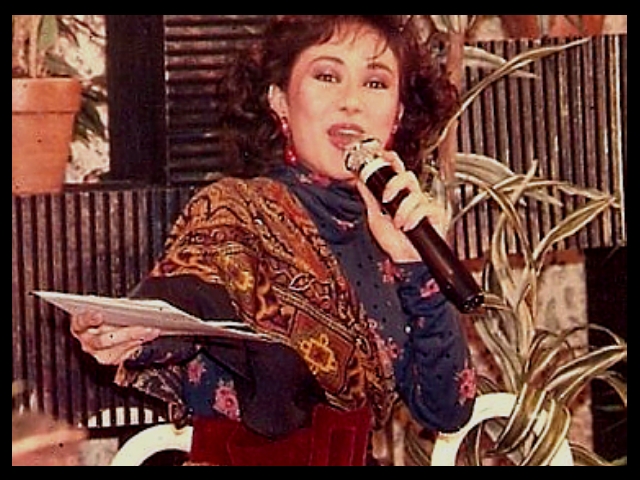
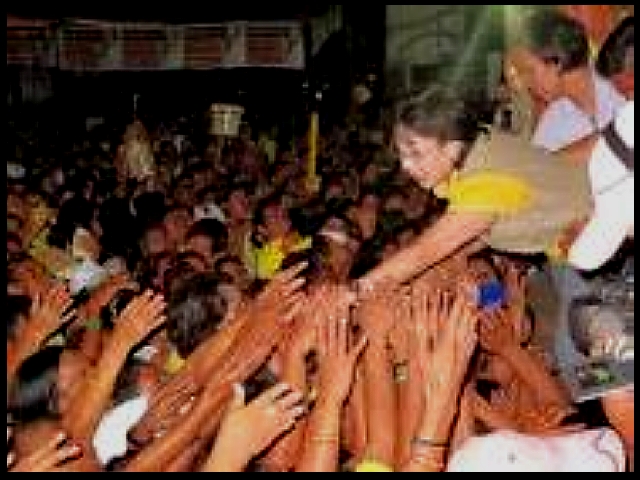

 Star For All Seasons
You must be logged in to post a comment.