Vilma Santos-Recto is a popular multi-awarded actress and politician in the Republic of the Philippines. *** She is known as "Queen of Philippine Movies," "Queenstar," "Grand Slam Queen," "Box Office Queen," and "Star for All Seasons." *** This website is mostly about her iconic film career.
The success of Sixteen brings out another facet of Vilma Santos’ talent. Everyone knows that she is a good actress and a wonderful dancer but nobody expects that she will be able to succeed as a singer. At the early stage of her young career, the rivalry between her and a more established singer, Nora Aunor was lapse sided because Aunor was the number one singer in town. The success of Sixteen brings about an even playing field between the two young stars. Vilma’s record breaking sales positioned her career into high grear. She continued to act in several musical films and at the same time recorded fun-filled songs. To her critics, Vilma’s recording success were attributed to pure luck. And so, to prove them wrong, Vilma’s manager smartly plotted follow-up recordings. Not only did Vilma record her follow-up album, she recorded a string of mini-LPs. Mini-LPs are shorter version of the big vinyl record with two songs on each side. She ventured into Tagalog songs, recording six songs that include instants hits like Isipin Mong Basta’t Mahal Kita, a theme song to a film she did opposite Filipino chess grand master, Eugene Torre; Palong-Palo, where she received a golden record award in 1974 and an up-tempo opm, Tok-Tok Palatok, another theme song from one of her comedy film with the same title opposite Jojit Paredes. Vi and Bot also released two mini-LPs, “Something Stupid,” a song that they regularly sings at their TV show, D’Sensations and “Christmas Tiding,” a collection of famous holiday songs like Silver Bells and Vilma’s now famous version of Santa Claus is Coming to Town and Mommy Kissing Santa Claus thats been circulating in the internet in recent years. In addition, Vilma recorded Baby Vi, another mini-LP. She also shared equal billing with Edgar Mortiz, Esperanza Fabon, Ed Finlan, Hilda Koronel and Sahlee Quizon in a Christmas compilation album titled, Christmas Carols.
Willears Records continued Vilma’s recording projects with two albums, Sweethearts and Aloha My Love both featured her with off and on screen love partner, Edgar Mortiz. The company who introduced the resurgent singer, Vilma in Sixteen followed up her solo success with Sweet, Vilma, Sweet, a much more ambitious offering with Vilma doing popular cover songs. Songs that are mostly identified with more established singers, like Nora Aunor. It is worth noting that during the peak of the musical genre in the early 70s, the musical films relied heavily on foreign influence. Maybe this was the reason why Vilma’s rival Nora Aunor doesn’t have a signature song. Recorded songs are mostly versions of the foreign recordings. Tom Jones, Frank Sinatra, Connie Francis, Neil Sedaka are the usual suspects. Instead of original simple composition, Willears selected songs like Mama, Sad Movies, and Our Day Will Come and let Vilma create her own version. The result was a disappointment not because Vilma didn’t work hard for the project but because it lacks the originality of her first album. Vilma’s thin voice also didn’t help.
But despite this visible contrast to her first album, Sweet Vilma Sweet was a successful follow-up. She continued her singing stints with an album most Vilmanians seems to forget, All I See Is You carried the folk song, Ati Cu Pung Sing-sing and Wonderful world of Music. The later song became a title of a musical film that paired Vilma with Edgar and co-starred with Snooky, Tony Ferrer, and Boots Anson Roa. The demand for Vi & Bot’s recordings increased and Willears produced Sweetheart, perhaps a confirmation album of the real score between the two young teen stars. Out of 25 films Vilma and Edgar made in 1970, both Sweethearts and Sixteen stands out as two of their certified hits both as films and recorded albums.
By 1972, Vicor Music Corporation took over Vilma’s singing career and smartly went back to the original fun-loving carefree theme that suited Vilma’s voice and made her a successful recording artist. With the guidance of Orly Ilacad, Vilma recorded original compositions that were light hearted, up-tempo and simple. Sing Vilma Sing arrived at the radio airwaves with the carrying single, “Bobby Bobby Bobby.” Despite the declaration of Martial law in 1972, the album became another instant hit. Also, Vilma and Edgar recorded their third album together, a follow-up with the hit, The Sensations. Aloha My Love came afterwards which also became a film and appropriately shoot entirely in Hawaii. Aloha was artistically packaged and contained Hawaiian and popular cover English songs like All Alone Am I and Eternally.
Unfortunately, all good things must end. By 1973, Vilma made her move. After almost one hundred films with Edgar Mortiz, she decided, it was time to venture out of the love team and test the water as solo star. This move also signaled the end of her singing career. At the same time, the musical genre started to subside as more turmoil politically spreads around the country. The bomba films exploded in mainstream local cinemas in mid 70s. Movie theatre owners illegally inserts porn clips in the middle of film. It was so popular back then that even the first Manila International Film Festival organized by former first lady, Imelda Romualdez Marcos allowed the bomba or sexy films to be shown during the midnight time slots of the festival. The bomba period created a long line up of respectable sexy actress like Elizabeth Oropeza, Daria Ramirez and Chanda Romero. Even former beauty queen, Gloria Diaz ventured into the sexy film. The emergence of sexy or “bold” films as what they referred to by local film buff challenged the now solo superstar, Vilma Santos. Tagalog Ilang Ilang production transformed her into an action super hero as the new Darna, Philippines version of Wonder Woman. Lipad Darna Lipad (Fly Darna Fly) defeated entertainment giants Fernando Poe Jr and Joseph Estrada, both have films being shown at the same time and the usual bomba films. A very long line-up snake down the streets of Claro M. Recto Avenue’s Cinerama theatre. It was recorded that Tagalog Ilang Ilang Production distributed Darna dolls and Coka-Cola bottles to the massive patrons during the film showing. Lipad Darna Lipad became the most successful Darna film ever. It broke box office records and solidified Vilma’s clout as the new box office queen of Philippine movies. Vilma’s stature as the most bankable artist of that time validated her decision to leave her love team with Edgar Mortiz and the singing stints to her closest rival, Nora Aunor. She became more adventurous and accepted roles that showcase her versatility. And this move cemented her position as the actress to watch, the actress on top of her game.
Remarkable History – As a singer, Vilma’s thin voice didn’t stop her to become a successful singer. Her hard work paid off and earned her a piece of history. The reluctant singer recorded strings of solo albums that created her signature songs, “Sixteen” and “Bobby, Bobby, Bobby.” Signature songs that enlisted her together with famous singers like Imelda Papin (Bakit), Eva Eugenio (Tukso), Claire DeLaFuente (Sayang), Sharon Cuneta (Mr. DJ), Didith Reyes (Nananabik), Aiza Siguerra (Pagdating Ng Panahon), Freddie Aguilar (Anak), Florante (Handog), and Gary Valenciano (Di Na Natuto). Her sweet and child like voice reflected the innocence of her original up-tempo songs that tackles teenage issues like dating, sexual education, body images and adulthood. Teenage issues that are still remarkably relevant today. – RV (READ MORE)
Figure 1: Best Actress from FAMAS, Gawad Urian, Film Academy of the Philippines, and CMMA
The oldest award giving body in the Philippines was the Filipino Academy of Movie Arts and Sciences simply called FAMAS. It was launch two years after the Maria Clara awards folded in 1951. FAMAS shared the same name with the American film academy; AMPAS until the later complained and the Filipino organization have to change theirs into the current acronym. FAMAS created a history of controversies throughout their more than sixty years in award-giving business mostly due to their questionable selection of winners. In 2006, FAMAS experienced another setback when two groups divided the organization due to a controversial election of its officers. As the legal battle settled, the battling groups decided to just hand out their own awards, one used the name FAMAS and the other the Maria Clara Awards. Like its infancy, the Maria Clara Awards did not reach its maturity and died the second time. This is not the first time FAMAS experience disgruntled “break-away” members forming their own award. Prior to 1976, FAMAS retained their status as the most prestigious recognition a Filipino actor could have. Charito Solis, who won best actress at the Asian Film Festival in 1967 used to proudly bring her FAMAS trophies on the film set to intimidate starlets and to instigate professionalism. The breakaway group of critics wish to distinguish themselves from FAMAS by successfully branded their award as not for actors who overtly act in films, they catered to the ones who are restrained and controlled. Hence, the term “Pang-FAMAS na acting” was born, which means over-acting.
The new group of practicing critics handed out their first award in 1976 and called themselves as the Manunuri ng Pelikulang Pilipino (The Filipino Film Critics) and their awards as Gawad Urian. The critics created a name for its credible choices of winners throughout the years. This untainted reputation made the Gawad Urian, the most sought after award in the Philippines.
Two years after the critics handed out their Gawad Urian, the Catholic Church joined the derby by handing out their own version of movie awards. The Catholic Mass Media Awards came to fruition in 1978 with the late Cardinal Jaime Sin in charge of the ceremony. CMMA honour not only films but also television, print, radio, and recently advertisement.
Five years afterwards, came the establishment of the Philippines’ counterpart of OSCAR. Consists of different guilds, the very first academy awards, now called Luna Awards, handed out in 1983. After 25 years, the Luna Awards cemented a reputation as “the popularity contest awards,” which means each guild votes for their favourites and not necessarily about merits. They tried very hard to adopt a new set of voting rules including different nominating group that represented each guild to resolve this issues but like the OSCAR, the results are sometimes questionable. The common consensus was that the Luna Awards remained far behind Gawad Urian. Two years after the creation of Film Academy of the Philippines’ Luna awards, another group joined the award giving business.
The Philippines Movie Press Club or the PMPC handed out their first Star awards in 1985. The Star awards were considered the Philippines’ counterpart of the Golden Globes. And like the Golden Globes, the Star also honours television. The only difference is that the Star Awards hands out their film and televisions ceremonies separately. Consists of publicists and entertainment writers, who are member of PMPC (Philippine Movie Press Club) the Star Awards followed the footsteps of Gawad Urian with very credible choices of winners but just like FAMAS, the Star Awards experienced the same fate with a disgruntled members formed their own version of the same awards. The Entertainment Press Society was born with their Golden Screen Awards in 2004.
Today, in addition to the Gawad Urian, FAMAS, Luna, CMMA, Star Awards, and Golden Screen, we also have the PASADO awards from an organization of academics; the YCC, Young Critics Circle Awards from a group of film students; the Gawad Tanglaw from an organization of film and arts’ instructors. Lately, the OMG Awards by the internet company, Yahoo Philippines, and the MTRC Awards by the board of censors joined the now, overcrowded award giving bodies.
Before 1982, the word grandslam were only used in sports. The term grandslam according to Wikipedia in terms of tennis is a singles player or doubles team that wins all four major tournaments (Australian, French, Wimbledon, US) in the same calendar year, is said to have achieved the “Grand Slam” or a “Calendar Year Grand Slam,” just like what Steffi Graf, the retired German tennis superstar did in 1988. Meanwhile the American Heritage dictionary described the term “grand slam” as follows: first, the winning of all the tricks during the play of one hand in bridge and other whist-derived card games. Second, the winning of all the major or specified events, especially on a professional circuit. And third, in baseball, a home run hit when three runners are on base. From this set of definitions comes the term “grand slam best actress” which basically winning all the best actresses awards from all major award giving bodies. And in 1983, the four majors were FAMAS, Gawad Urian, CMMA, and the FAP (or Luna now).
The Beginning – The Marcos administration created the Film Academy of the Philippines in 1981 under the guidance of first lady Imelda Marcos and Imee Marcos as Experimental Cinema of the Philippines’ director-general. ECP started to ambitiously produced films to showcase local talents for its inaugural Manila International Film Festival. The organization produced two memorable films, Peque Gallaga’s period film, “Oro, Plata, Mata” and Ishmael Bernal’s French influenced film, “Himala.” Come Gawad Urian night, both films received its stiff competitions from three other films, Mike Deleon’s “Batch ’81,” Lino Brocka’s “Cain at Abel” and Marilou Diaz Abaya’s “Moral.” For the Manunuri, the previous year produced only two stand out films, Mike De Leon’s Kisap Mata and Laurice Guillen’s Salome. A big contradiction this year, as not only they have the tasks of sorting out the best in each categories from these five films mentioned above but also other worthy films. Famous with their long heated debates, the local critics added the following films in their list of best films: Nora Aunor’s “Mga Uod at Rosas,” Vilma Santos’ “Relasyon” and Hilda Koronel’s “PX.” The three were cited not only for the overall production but also for the performances of the film’s lead actresses. Also cited were, ECP’s delicate horror film, “Haplos” directed by Jose Perez and two Lino Brocka films, the comedy “Palipat-lipat, Papalit-palit” and the drama “In this Corner.”
For Vilma Santos, The previous year, Pakawalan Mo Ako was a huge summer hit that earned Vilma a surprised best actress in FAMAS. That year also released Ex-Wife and Hiwalay, about marital problems. Art imitating life, as there were reports that Vilma and now, ex-husband, Edu Manzano were having some marital problems. But Vilma as trooper as she is, any personal troubles were not publicly noticeable as she goes on with her work, business as usual. Also, Vilma gave birth to her eldest son Luis “Lucky” Manzano.
By December of 1981, her film festival entry, Karma earned her another surprise best actress trophy after the FAMAS gave her the nod for Pakawalan Mo Ako. In an unrelated news, the entertainment industry were shocked to found that matinee idol, Alfie Anido died on Dec 31st. Like the death of Julie Vega and Rico Yan, it is still unknown the reason behind Anido’s death.
She is determined to make 1982 another successful year. She released a total of six films, out of six; two were certified record breakers, “Sinasamba Kita (I Idolized You)” released in August and “Gaano Kadalas ang Minsan? (How Many Times is Once),” released in November, both produced by Viva Films. The other four films (Relasyon, T-Bird at Ako, Never Ever Say Goodbye, Haplos) were mild hits. All of her hard work paid off because as early as January of the 1983 she was already poised to reap major awards.
Meanwhile for Nora Aunor, 1982 were a mixed bag of mild hits and failed opportunities. “Mga Uod at Rosas,” her collaboration with Lorna Tolentino and director Romy Zusara produced a mixed reviews from the critics. Her excellent performance did not help as the film were just mild hit with the audience. Her follow up films, “Annie Sabungera” and “Palenke Queen” both comedies also did not do well at the box office making the expectation from her next film higher, as she teamed-up with the hottest star of 1982, her closest rival, Vilma Santos in Danny Zialcita’s fast paced film, “T-bird at Ako.” T-bird’s high expectation wasn’t realized as the film earned just a modest income.
By December, all eyes were focused again on Nora and her most ambitious project to date, Ishmael Bernal’s “Himala,” produced by the Imee Marcos’ Experimental Cinema of the Philippines. The film was an entry to the Metro Manila film festival. Nora Aunor was again proclaimed the “queen of local festival” as she won her third Metro Manila Film Festival best actress. Nora’s momentum was rising and she was conditioned to make some serious dent in the following year’s award giving seasons. Critics were all going “gaga” with Aunor’s gigantic performance as Elsa. They said Himala was very effective in communicating its film’s message; it has moving moments and raw power.
Communicated It Really Well – “…Nestor Torre…he finds Batch ’81 the best movie made in 1982. “The movie had something very important to say and it communicated it very well…As for the best actress, it’s Nora Aunor in Himala. “It was a good role, and she communicated it very well. At least, Nora wasn’t api here for a change, It was quite a complicated role, but she handled it very well….Other choices were Gina Alajar and Lorna Tolentino in Moral…Vilma Santos, Nestor notes, is admittedly a “very hard worker but her physical structure really makes it difficult for her to be really effective—hindi malalim—and her voice is not that expressive.” Nestor adds, though, once in a while, Vilma “transcends her physical limitations, as in Rubia Servios…” – Nestor Torre Jr. (film critic), Parade Magazine, January 19, 1983
Moving Moments – “…Best Films: (in the order of preference) 1. Oro, Plata, Mata and Batch ’81; 2. Relasyon and Himala; 3. Moral. Best Directors: (in no particular order) 1. Ishmael Bernal for Relasyon and Himala; 2. Peque Gallaga for Oro Plata Mata; 3. Mike de Leon for Batch ’81. Actresses: 1. Vilma Santos for Relasyon; 2. Nora Aunor for Himala and Uod at Rosas; 3. Sandy Andolong for Moral and Oro Plata Mata; 4. Gina Alajar for Moral. Actors: 1. Mark Gil for Batch ’81 and Palipat-lipat, Papalit-palit; 2. Joel Torre for Oro Plata Mata; 3. Christopher de Leon for Relasyon. Most movies are usually flawed, and those in my list are no exception. However, apart from the standard criteria I am applying to them (the classic from and content balance), I am giving much weight on impact and emotional power. So, my top two are Oro and Batch. Himala is an ambitious film and much flawed, but it has visual beauty and emotional wallop.
Relasyon is more modest in scope, but I think is more successful on its own terms. Moral has many good things going for it, from direction and writing, to performances, but it does not match the four other films in impact (though it has some moving moments) and originality…” – Mario Hernando (film critic), Parade Magazine, January 19, 1983
Raw Power – “…Ding Nolledo…confesses to liking Himala “very much” but mentions that he hasn’t seen Oro Plata Mata…because the film exudes “raw power,” not to mention the excellent acting and the direction, which was like early Fellini, especially the middle part…Ding doesn’t agree with Moral’s rave reviews because “I’ve seen Moral in about 369 other films.” It’s not that original, he implies. As for best actress, it’ll have to be Nora in Himala. “She reminds me of the young Anna Magnani. Besides, the script fitted her to a T. The role practically coincides with what she is in real life…” – Wilfrido Nolledo (novelist, screenwriter, film critic), Parade Magazine, January 19, 1983
Himala won nine out of eleven local festival awards. A sort of repeat of what Vilma’s “Burlesk Queen” achieved in 1977 but without the complaints or sour grapes.
Body of Work – The success of Himala in the December festival has been overshadowed by the commercial success of Vilma Santos’ body of work. In fact, on Dec 14, 1982, Channel 9’s talk show, Let’s Talk Movies recognized Vilma Santos as their best actress for her body of work. Nora Aunor was nominated for her films excluding her epic movie Himala which was not qualified due to the show’s fiscal year requirements which covers December 1981 to November 1982 (More about this below).
On January 20, 1983, Vilma was crowned the Box Office Queen by the Metro Manila Theaters Association in their very first The 1st Cinehan Awards. Reporter Meg Mendoza wrote in an article for Prime Magazine, “…Vilma gave Viva Films its first biggest hit in Sinasamba Kita earning over P7M in Metro Manila alone. Then came T-Bird at Ako (a mild hit), Never Ever Say Goodbye (a sorry miss), Gaano Kadalas ang Minsan? (her biggest hit for that year) and Haplos. As early as January 20, 1983, Vilma began to reap several victories when she was awarded by the Metro Manila Theaters Association on their first Cinehan Awards together with Fernando Poe, Jr. held at the Philippine Plaza.
National Artist Nick Joaquin, in an article that came out in the Bulletin Today on February 11, 1983 wrote: “By emerging as box-office queen, Vilma Santos proved herself to be the Philippine Cinema’s Superstar – a title, it’s to be realized now, that can be bestowed only by the Cinehan.” So, on Cinehan Awards Night, Vilma was the very picture of the conquering heroine, drawing all eyes as she glowed and glittered, a rapture of radiance in her strapless white gown with lilac sash – and in white gloves yet! In her triumph joined both cinema and cinehan. Her pictures were all well done – and they also did very well at the box-office. In the same awards night, Ambassador Jaime Zobel de Ayala, another recipient of the Cinehan, upon receiving his award from Dean Lucresia Kasilag said: “I’m only a little bit sorry that Vilma didn’t give me the award. But it’s all right, I’ll try again next year. You’re my favorite star, you’re my muse! I’ll suffer in silence…”
Ironically, few weeks after her crowning as box office queen, Vilma released Ayaw Kong Maging Kerida, the result was average, proving the Romeo Vasquez and Vilma Santos screen charisma has subsided immensely.
Not to be outdone with Vilma’s latest feat, Nora’s “Himala” competed in the 1983 Berlin International Film Festival the following month. The film was the Philippines’ sole entry. The rave reviews were solid, Aunor’s performance was recognized by a nomination but unfortunately, according to Bernal, she lost the race by a mere vote. Would a similar fate awaits Aunor as the local award giving seasons begins?
First Major – By late February, the award-giving season in the country started. In their website, the Catholic Mass Media Awards recalled, “…The Archdiocese of Manila, through His Eminence Archbishop Jaime L. Cardinal Sin, organized the Catholic Mass Media Awards (CMMA) in 1978, in observance of the International Social Communication Day (established by the Universal Church to stress the importance of mass media and to instill a sense of responsibility in communicators). An outstanding way, in radio, print, advertising, television, and film. It was first given out in 1978; since then the CMMA was held every year onwards. In 1980, His Holiness Pope John Paul II graced the awarding ceremonies. Handing out personally the trophies to the winners, the Pontiff illustrated the significant place of mass media in today’s society, and its pervasive influence in the lives of the people…”
Just the previous year, the CMMA praised Nora Aunor’s acting in the late Mario O’harra film, “Bakit Bughaw ang Langit?” and she was adjudged their best actress. There is a great chance that Nora would repeat the feat, as many expected the church would favor a well-crafted film with religious theme.
On February 29, 1983, the fight between Nora Aunor’s “goliath” type of performance in “Himala (Miracle)” versus the “davidian” type of performance in Vilma Santos’ “Relasyon (the affair)” begins. The media were partly right, CMMA gave their best picture, screenplay, supporting actor/actress to Himala. But despite its, taboo story of a mistress, the Catholic Church’s award giving body favoured Vilma’s sympathetic performance.
Vilma won the first bout. Nora left empty-handed. The first blood has been drawn and Noranians, Nora Aunor’s fanatic fans were furious. The fight didn’t stop at the Catholic Mass Media Awards. The next one was a big one.
Second Major – Noranians expected a third Urian best actress considering the magnitude of Aunor’s performance in Himala and the positive reviews it received. Positive reviews that were written by the Manunuri critics themselves. Noranians dismissed Vilma’s win at the CMMA and expected that metal sculpted trophy was in the bag already. By the way, who are these critics anyway?
Practicing Film Critics – Movie writer, Billy R. Balbastro described the Manunuris: “…The Manunuri ng Pelikulang Filipino…is an organization of practicing film critics established in 1976. Most came from the Academe then with Nestor U. Torre becoming its first president. The Manunuri had its Gawad Urian in simple one hour-long rites at the CCP then. Dr. Bienvenido Lumbera Jr. became its second president. Other presidents include: Mario Hernando, Butch Francisco, Agustin “Hammy” Sotto, Gigi Javier Alfonso of UP. Each critic-member is expected to write regularly film reviews or film criticism which must be published in national publications. Each year too they give out awards for achievements in the movie industry, thus joining the FAMAS, the Film academy of the Philippines and the Philippine Movie Press Club’s Star Awards in this aspect of endeavor. During their first decade (1976 to 1985), they also came up with their Stars of the Decade: Nora Aunor, Vilma Santos, Vic Silayan and Phillip Salvador. The members of the Manunuri are: Mario Hernando (editor of Sunday Malaya), Bienvenido Lumbera Jr.(1993 Ramon Magsaysay awardee for journalism, literature and creative communication), Nicanor Tiongson (former artistic director of the Cultural Center of the Philippines, and former MTRCB chair), Butch Francisco (TV personality), Agustin “Hammy” Sotto (founding president of the Society of Film Archivists), Paul Daza (columnist), Gigi Javier Alfonso (dean of the UP-Diliman Open University and professor at the UP College of Mass Communication –UP-CMC), Ellen Paglinauan (dean of UP-CMC), Bro. Miguel Rapatan (DLSU), and Lito Zulueta (Inquirer sub-editor and faculty member of the UST Faculty of Arts and Letters)…”
The 1973 Scandal – Speaking of co-winner or “tie,” writer Rolfie Velasco pointed out in his article, “…FAMAS was the sole award-giving body for film in the Philippines from 1952 until 1976, when the Manunuri ng Pelikulang Pilipino (MPP) formed the Gawad URIAN (FAMAS was also contested by the Manila Film Festival, established in the 1960s, but a film festival cannot be considered as a major award-giving body). From 1952 to 1976, FAMAS alone has awarded the most foremost performers and craftsmen of Filipino films, from screen legend Rosa Rosal to master director Gerardo de Leon. Winning a FAMAS Award became the target obsession for many film craftsmen, for it was, after all, the Philippines’ counterpart of the Oscars. The awards itself, then held mostly in the Manila Hotel, was the biggest annual event in the Philippine movie industry…In 1973, the FAMAS was rocked by a terrible scandal. It awarded the first tie in the lead categories in the history of Philippine cinema. Before this, the only recorded tie was in 1968, when Tito Arevalo and Tony Maiquez shared the Best Musical Score honors. Because of the popular nominees with their loyal supporters, the tie in the 1973 best actress category became a hot topic with both Boots Anson-Roa (Tatay Na Si Erap) and Vilma Santos (Dama De Noche) sharing the honors. Because a tie in the lead categories was unheard of, the public dissented the vote. Therefore, for the next years, the FAMAS invited film critics to be members of its nominating and awarding committee. These critics left the FAMAS in 1976 to form MPP and subsequently, the Gawad Urian (Urian Award), named after the Tagalog word for gold standard…”
On April 15, 1983, the Gawad Urian was set to give out their hardware. It was known by many, that the critics or the Manunuris were pro-Nora Aunor. They gave Aunor their very first best actress award in 1976 for her excellent performance in “Tatlong Taong Walang Diyos (three years without God)”. They also gave Aunor a second nod in 1980 in her wonderful performance in “Bona” with Gina Alajar as co-winner.
When the winner was read, even Vilma was surprised. After so many years of snubs, she finally received the recognition she truly deserved. The critics finally came to their senses and recognized Vilma’s explosive and giant killer performance.
By winning the Gawad Urian, Vilma defeated not only Nora but also Lorna Tolentino and Gina Alajar both equally gave a felt performance in the feminist film, “Moral.”
Adding cherry to an already sumptuous plate, at the same night, on April 15, 1983, Vilma have to rush to another ceremony, she was crowned by the Guillermo Mendoza Memorial Foundation as the 1982 – 83 Box Office Queen of Philippine Movies at the Celebrity Sports Plaza with Fernando Poe Jr as the Box Office King, her second crown/title after January’s Cinehan Awards.
This was Vilma’s second major best actress wins in the same calendar year. She was half way there. People are now starts talking about the possibility of Vilma winning all the best actress awards.
Not to be outdone, Noranians regained from their disappointments as Nora Aunor received an award from a socio-political group, the TOWNS on April 23, 1983. Nora Aunor received (The Outstanding Women in the Nation’s Service) or simply TOWNS award from the former first lady, Madame Imelda Romualdez Marcos, at the Plenary Hall of the Philippine Convention Center. With the first lady handing out the TOWNS to Nora, people are started to insinuate that Nora Aunor’s defeat in two previous majors are politically motivated.
Third Major – The next race was the very first Luna Awards, back then, simply called the Film Academy Awards, Philippines’ counterpart of OSCAR.
On April 27, 1983 the First Film Academy of the Philippines Awards were held at the Manila Film Center. The FAP official web site provided some basic information about The Luna Awards, “…Established in 1981 as mandated by Executive Order No. 640-A, the Academy has been able to forge an alliance among the various guilds of the movie industry. Serving as the umbrella organization, the Film Academy oversees the welfare of the guilds thru an assortment of subsidies, projects and opportunities that would bring about the upgrading of the knowledge and expertise of the guild members. The principal function of the Academy is to give awards in recognition of the artistic and technical excellence of the performances and to accentuate the value of quality works of the people behind the outstanding films shown during the year. The Annual Luna Awards is intended to provide the necessary motivation in enhancing the craftsmanship of movie industry workers that will eventually uplift the quality of local films. The Academy also assists in the staging and managing of the annual Metro Manila Film Festival from which proceeds the Film Academy gets a share. Delegates to foreign film festivals are primarily sent thru the intercession of the Academy. The Academy also spearheads the collaboration of the movie industry with government agencies in order to gain opportunities for the guilds and its members…”
Academy insider, Jose N. Carreon wrote: “…At seven o’clock on a Wednesday evening on April 27, 1983, the Film Academy of the Philippines held its first ever awards night for distinguished works and performances in films exhibited in 1982. The venue was the Manila Film Center, one of the cultural edifices that were constructed under the auspices of former First Lady, Madame Imelda Romualdez-Marcos…The first ever Academy award winner was the late Rodolfo ‘Boy’ Garcia who was adjudged the best supporting actor for his role in Ito Ba ang Ating mga Anak?…Liza Lorena was best supporting actress for her role in Oro, Plata, Mata…The late Vic Macamay won the best sound award for Gaano Kadalas ang Minsan?…The best cinematography award was won by Romy Vitug for Sinasamba Kita…Sinasamba Kita by the late George Canseco was voted the best original song…The late Orlando Nadres won the best screenplay adaptation for Sinasamba Kita…Romy Suzara won as best director for Uod at Rosas…Manay Ichu’s MVP Pictures’ Batch ’81 was voted the first best picture of the academy awards…With the stage overflowing with showbiz people, the best actor and best actress awards were announced. Philip Salvador (for Cain at Abel) was declared best actor over Robert Arevalo (Santa Claus is Coming to Town), Mark Gil (Batch ’81), Christopher de Leon (Relasyon) and Joel Torre (Oro, Plata, Mata). The last winner of the night turned out to be Vilma Santos who was best actress for her performance in Relasyon. The other aspirants were Gina Alajar (Moral), Nora Aunor (Himala), Coney Reyes-Mumar (Pedring Taruc) and Lorna Tolentino (Moral). Then everything was history. After 25 years, we remember and we celebrate and we recommit ourselves for another quarter of a century. The Film Academy of the Philippines and its Luna Awards live on…”
Vilma Santos faces again a stiff resistance from Nora Aunor. In the end, Vilma received her fourth best actress award. And like when Nora received her TOWNS award, the former first lady, Imelda Marcos handed out the very first Academy award best actress to Vilma.
Vilma won her third major best actress in the same calendar year. One short of a complete overhaul.
Fourth Major – The award season of 1983 ended with the handing out of the FAMAS. The Manila Film Center was jam packed with not only celebrities but also a boisterous group of Noranians and Vilmanians. Unfortunately, Nora Aunor wasn’t nominated for her gigantic role of Elsa in “Himala” instead, she was nominated for her portrayal of an underdog lover of the late Johnny Delgado in Romy Zusara’s “Mga Uod at Rosas (The Worms and Roses)”. The competition didn’t stop with Vilma’s “Relasyon,” Noranians were worried about the other nominees too. Hilda Koronel was cited for her solo starrer, “PX” and Alma Moreno was nominated for her daring role as Cristina Gaston in the “Diary of Cristina Gaston.” The list of Nominees were completed with the inclusion of two veterans: Mona Lisa for her supposed to be supporting role in “Cain at Abel” and Liza Lorena for her surprising role in “Santa Claus is Coming to Town.” With this list comes a lesser expectation from Noranians, as Nora wasn’t nominated for her more intense role as Elsa. But this didn’t bother them as they raided the Manila Film Centre with so much fanfare.
The unofficial FAMAS website declared the winners, “…The 31st FAMAS Awards was held at the Manila Film Center on May 28, 1983. The Best Picture went to Cine Suerte’s Cain at Abel defeating Gaano Kadalas Ang Minsan [Viva Films], Himala [Experimental Cinema of the Philippines], Ang Panday: Ikatlong Yugto [FPJ Productions] and Sinasamba Kita [Viva Films]. The Best Actor went to Anthony Alonzo for Bambang defeating Christopher de Leon for Relasyon, Dolphy for My Heart Belongs to Daddy, George Estregan for Lalaki Ako, Dindo Fernando for Gaano Kadalas Ang Minsan, Fernando Poe, Jr. for Ang Panday: Ikatlong Yugto, and Philip Salvador for Cain at Abel. The best supporting Actor went to Tommy Abuel for Gaano Kadalas Ang Minsan while the best supporting Actress went to Sandy Andolong for Moral. Eddie Garcia won the best director Sinasamba Kita defeating Marilou Diaz-Abaya for Moral, Ishmael Bernal for Himala, Lino Brocka for Cain at Abel, Fernando Poe, Jr. for Ang Panday: Ikatlong Yugto and Danny Zialcita for Gaano Kadalas Ang Minsan. Gaano Kadalas Ang Minsan also won the best story for Tom Adrales; best screenplay for Tom Adrales and Danny Zialcita; best editing for Ike Jarlego, Jr.; best musical score and theme song for George Canseco and best sound for Vic Macamay. Joseph Estrada received the Hall of Famer Award for winning five times as producer. The most anticipated award was for best actress which went to Vilma Santos for Relasyon defeating Nora Aunor for Mga Uod at Rosas, Hilda Koronel for PX, Mona Lisa for Cain at Abel, Liza Lorena for Santa Claus is Coming to Town, Alma Moreno for The Diary of Cristina Gaston ..”
Unfortunately, for Noranians, their idol went empty handed again for the last time. Vilma claimed her fourth major best actress in one calendar year. The night for Vilmanians didn’t stop from Vilma’s win. Eddie Garcia won the best director award for a Vilma Santos’ blockbuster film, “Sinasamba Kita.”
Noranians were all mad as hell. Writer Bum D. Tenorio Jr., in his article for Philippine Star, described how the feisty Noranians reacted on Vilma’s win on their home turf, the Gawad Urian, “…Talk about Himala, it was because of this movie that two ladies in my neighborhood got into a nasty hair-pulling fight. Nora could have won the grand slam for Best Actress in all the award-giving bodies for this movie in 1982 except that her archrival and now Batangas Gov. Vilma Santos won for the movie “Relasyon” in the Gawad Urian. The feisty Noranians in the neighborhood could not accept this, while the Vilmanians gloated. This irreconcilable difference unfortunately turned ugly. In those days, fans were fiercely loyal. When Vilmanians talked about “Wonder V,” expect Noranians to come up with “Super G.” When Vilmanians mentioned how they got scared in “Phantom Lady,” expect a multitude of Noranians to thwart their claim by discussing “Fe, Esperanza, Caridad,” Nora’s suspense thriller. Even when Nora and Vilma starred together in a movie, say “Pinagbuklod ng Pag-Ibig” or the legendary “T-Bird at Ako,” competition between fans of both camps still raged. But in my community, the Noranians always prevailed!…”
Paranoia seeped in their brain as they hypothesized the reasons why Nora failed to win any awards. Sabotage according to them was the only reason. The political repercussion of the film being made under the Marcos administration resulted Nora Aunor being ignored by all award-giving bodies! Never mind that Vilma Santos deserved all the wins. Vilma Santos swept the entire best actress in four major award-giving bodies in one calendar year. The tag line “grand slam” was born.
In addition to the above majors, talk show, “Let’s talk movies” came up with their own film awards on its anniversary presentation at the end of 1982. The hosts, Behn Cervantes (filmmaker, film critic), Armida Siguion Reyna (film actress, producer) and Mario Bautista (movie reporter, critic, columnist) were quoted as who they think deserve the year’s accolade.
Behn Cervantes: “…Behn’s choice for best movie of 1982 comes easy, with one qualification (he has not seen Oro, Plata, Mata). “It’s Batch ’81 because it was innovative and more daring…As for the choice of best actress, “mahirap iyan,” Behn admits spontaneously. “It’s a difficult choice between Gina Alajar in Moral and Nora Aunor in Himala. Gina was beautifully flamboyant and effective as the funky character in Moral, while Nora was very cinematic in Himala. Nora is one actress who knows how to use her medium…Vilma is also good. She knows her craft, but somehow, at the moment of truth, physically she doesn’t quite hit me. There’s something very cutesified about it…”
Armida Siguion Reyna: “…Armida has said it in her TV show Let’s Talk Movies and she’s saying it again: her choice for best movie not only for the film fest but for the entire 1982 is Moral. “It’s very ‘today,’ NOW. You really get to identify with the characters in the movie…After Moral, Armida chooses Oro, Plata, Mata and Cain at Abel, respectively, as among 1982’s best…Armida chooses Vilma Santos as best actress for her performance in Relasyon. “I can’t explain my choice in the beautiful language of the Manunuri but I go by gut and alam kong maganda.” She is also more inclined toward Vilma because the actress made a number of good movies last year…”
Mario E. Bautista: “…For us, sinuman ang manalo kina Vilma Santos o Lorna Tolentino ay okey lang. Both Gina and Nora have won the Urian best actress awards twice. Gina for Brutal and Salome, Nora for Tatlong Taong Walang Diyos and Bona. Napakagaling ni Gina in portraying the role of the trying hard Kathy in Moral. Hindi biru-biro ang ganoong character na gagawin mong sympathetic dahil mas malamang na lumabas itong ridiculous lang kaysa nakakakuha ng simpatiya. But Gina succeeded in making her Kathy both ridiculous and sympathetic. As Elsa, Nora’s case is that of star and role merging into one, fitting into each other perfectly dahil alam nating ang karisma ni Guy sa kanyang fans ay siya ring karisma ni Elsa sa kanyang naging followers. Pero palagay namin, kung hindi magta-tie sina Lorna at Vilma, mananalo ng solo si Vilma Santos. Vi has never won the Urian. She should have gotten it in 1977 for Burlesk Queen but the trophy went to Daria Ramirez in Sinong Kasiping. Maraming acting highlights ang papel ni Vi bilang Marilou sa Relasyon. Sa confrontation scenes nila ni Boyet, superb siya roon sa tagpong sinusumbatan niya ito dahil ginagawa na lamang siyang tau-tauhan. Ang acting niya sa death scene ni Boyet na hindi malaman ang gagawin sa katarantahan is also awesome to behold…”
Unfortunately, despite their highly praises of Nora Aunor, the talk show hosts gave their nod to Vilma Santos due to their technical rules. An article from Movie Flash explained: “…In celebration of its first anniversary, Channel 9’s Let’s Talk Movies will have a special presentation on December 14 from 9:30 to 11:30 pm. The talk show hosted by Armida Siguion-Reyna, Behn Cervantes and Mario E. Bautista will distribute seven major awards to deserving artists who excelled in local pictures shown from Dec, 1981 to November, 1982. The Let’s Talk Movies awards differ from those of other award-giving bodies in that they honor a director or performer not for just a single work or performance in one movie but for a body of outstanding works or performances shown during the said fiscal year. This is in line with the show’s aim to help uplift local movies. To qualify, a nominee should have at least two significant contributions. Nominees for…best actress…are Gina Alajar (Init o Lamig, Pusong Uhaw), Nora Aunor (Uod at Rosa, T-bird, Rock ‘n Roll, Palengke Queen), Amy Austria (Katas ng Langis, Waywaya, Pusong Uhaw), Vilma Santos (Karma, Relasyon, T-bird, Sinasamba Kita, Never Ever Say Goodbye) and Maricel Soriano (Galawgaw, Mother Dear, Schoolgirls)…An award for best producer will be given to the company which has produced the most number of outstanding films during the year. Special citations will be given to movie personnel who made worthy contributions to the industry during the year…”
While Vilmanians celebrated their idol’s historical win, Nora Aunor redeemed their broken ego by lining up to the 1983 Manila International Film Festival on June 24th, Himala was chosen as the opening gala film together with Hollywood film, Gandhi as the closing.
After the awards season of 1983, Vilma Santos released three more films after the disappointment, Ayaw Kong Maging Kerida.
On June 9th, Viva Films released Paano Ba ang Mangarap? that turned out to be another box office hit. Few months afterwards, Regal films released Bernal’s Broken Marriage, the follow-up film after the successful grand slam film, Relasyon.
Finally, four days after Vi’s birthday, Viva Films released Marilou Diaz-Abaya’s drama, Minsan pa Natin Hagkan Ang Nakaraan, another box office hit. This film plus the two films mentioned above confirmed her bankable status. Not to be outshine again, “Himala” continued its relentless fight for recognition, winning the bronze prize at the 1983 Chicago International Film Festival on November of 1983 (Nov 4-18 1983).
Vilma Santos made history. The first grand slam win of Vilma Santos was repeatedly analyzed over and over again. Mostly to give accolade to Nora Aunor.
Joel David, in his article titled “Performances of the Age” wrote: “…the outstanding performance of the period belongs to that of Nora Aunor in Himala, which was honoured only by the MMFF….In Himala the director and writer seemed to have agreed to a mutual stand-off, thus amplifying the theatrical potential of an expansive locale with a protracted takes; stage-trained talents ensured the competent execution of histrionic stylizations, with the climax set on an open-air platform before a hysterical audience. It was a truly great actress’ opportunity of a lifetime, and Nora Aunor seized it and made it not just her role, but her film as well. Not since Anita Linda in Gerardo de Leon’s Sisa (circa the first Golden Age) had there been such a felicitous exploitation by a performer of ideal filmmaking conditions – and in this instance, Himala has the decided advantage of being major-league and universal….”
Arnel Resma Ramos’ article titled “Himala Revisited” praised Nora’s complex role: “…we believe that Nora Aunor should have swept all the best actress awards for that particular year…Aunor had the more complex role and only an actress of her calibre can pull off the part with much persuasion. It calls for a restrained, self-effacing acting style. And Aunor, the consummate actress that she was…strikes not a false note in her performance. It is, in one word, mesmerizing. And Himala is without a scintilla of a doubt the pinnacle of her cinematic achievements.”
In recent years, Himala was recognized in many film exhibitions around the world. Even international television network fell on the prey and held an international internet poll, raising Himala to its highest glory, proclaiming the film as one of Asia’s best film. They hail, finally, Aunor were given the citations its truly deserved!
Again, never mind that Vilma Santos gave the most effective performance in the history of local movie screen. The fact is, no matter what they do or say they can’t change history. Vilma Santos was the very first “grand slam” best actress winner.
The history continues – Three years after Vilma Santos registered the very first grand slam win, Philip Salvador replicated the honours by winning all the best actor in 1985 via Lino Brocka’s political drama, ‘Bayan Ko kapit sa Patalim.’ Salvador won five majors as Star Awards were added to the four. The next year, 1986, Nida Blanca followed suit with a best supporting actress grand slam for her outstanding performance in the film, “Magdusa Ka.” Then four years after Blanca’s came the most awaited turn for Vilma’s rival.
Noranians were ecstatic as their idol claimed all the best actress hardwares of 1990 for “Andrea Paano Ba Ang Maging Isang Ina.” A deserving consolation as the film bombed at the box office. Nora’s stiffest competition came from Vilma’s two films, Lino Brocka’s “Hahamakin Lahat,” and Laurice Guillen’s “Kapag Langit ang Humatol.” But the table was turned and Nora claimed almost all of the major awards except from CMMA where she was declared runner up to Gina Alajar.
By 1990, CMMA was relegated into the minor league of award giving bodies replaced by much more popular Star Awards. Two years after Nora Aunor claimed the honour as grand slam winner, Lorna Tolentino took the crown for her effective performance in 1992′s “Narito Ang Puso Ko.”
Then back to Vilma again. – In 1993, Vilma Santos successfully relived the life of the first PWA in Laurence Guillen’s “Dahil Mahal Kita: Dolzura Cortez Story.” Not only the film recorded the second grand slam win for Vilma as best actress of 1993, the film was also a smashed hit. The two years intervals prove to be a normal pattern as Vilma’s closest rival took all the trophies again in 1995.
Nora Aunor hit the jackpot via true to life film, the “Flor Contemplacion Story.” And not only did she won the grand slams, she added an international recognition winning the best actress at Cairo International Film Festival. In addition to the majors, Aunor also received the best performer from YCC and the box office queen title from the Guillermo Mendoza Memorial Scholarship Foundation, Inc. (GMMSFI).
The next years, two actresses claimed the grand slam honours. Sharon Cuneta as best actress for her effective performance in “Madrasta (the Stepmother)” and the best supporting actress awards for Gina Alajar in “Mulanay, Sa Pusod Ng Paraiso.”
Then back to Vilma Santos again after two years for the third time. Vilma Santos won all the best actress awards for 1998′s “Bata Bata Paano Ka Ginawa (Lea’s Story)”. Then like Aunor in 1995, she added an international recognition with her grand slam win. Vilma was cited as the best actress at the Brussels International Film Festival. And also received the YCC-Film Desk’s best performer award.
By 1999, the grand slams wins were alive and kicking. Elizabeth Oropeza won all the best actress hardwares for her very intense performance as a prostitute in 1998′s “Bulaklak Ng Maynila.” The same year, an unknown actress Glydel Mercado, surprised everyone as she won all the best supporting actress awards coincidentally from a Nora Aunor comeback vehicle, “Sidhi.”
Then in 2002, Vilma Santos for the fourth time claimed the grand slam title by winning all the best actress awards for her superb performance in the film, “Dekada 70 (the seventies).” At the same time, Vilma’s co-star, Piolo Pascual declared his arrival to the big league of fine acting by winning all the best supporting actor awards. The film also gave Vilma her second international recognition winning the best actress from Cinemanila International Film Festival. In addition, she also received hardwares from PASADO (Pampelikulang Samahan ng mga Dalubguro) and YCC-Film Desk in its annual Circle Citations.
In Conclusion – For Noranians, Nora Aunor should be given the honour as the very first grand slam win in 1976 as they argued Aunor won the best actress from FAMAS and Gawad Urian, the only major award giving bodies back then. Unfortunately, this wins didn’t create the tag line, grand slam. Also, Vilma Santos, as film producer won all the best picture award in 1978 for Pagputi ng Uwak Pagitim ng Tagak from FAMAS and Gawad Urian, still the only major award giving bodies. Unfortunately, no one said this is a grand slam win.
It was only when Vilma Santos won four majors in 1983 did the tag line “grand slam” came to its birth at least in Philippine award giving film history. And so, history will record Vilma’s achievements as the very first actress who claimed all four major best actresses in one calendar year based on the true meaning of the word “grand slam.” She is also the current record holder of the most grand slam wins, four [Relasyon (1982); Dahil Mahal Kita – The Dulzora Cortez Story (1993); Bata, Bata, Paano Ka Ginawa? (1998); and “Dekada 70” (2002)]. – Florencio “Rendt” Viray, V Magazine 2007, (READ MORE)
The idea of doing a film about an activist nun occurred to director Mike De Leon in 1982 while he was thinking of a possible story material for a Vilma Santos starrer at the suggestion of Marichu Maceda, producer of his critically-acclaimed Batch’ 81. Mike’s production company, Cinema Artists Philippines, was then applying for a loan from the Film Fund where Marichu was then administrator. “I can’t remember why I chose the subject,” said the 34-year old scion of the moviemaking family behind LVN in an interview with a Sunday magazine. “I’ve been hearing about nuns who are politically involved for sometime although I did not really know anything about them.” When Mike learned that an associate of noted screenwriter Pete Lacaba had a story idea entitled Sangandaan (about a nun who gets involved in the problem of agrarian arrest), he saw it as a good starting point for the movie project. Marichu, however, suggested some changes. “Why don’t you make the setting urban to make it more commercial?” She reportedly told Mike and Pete, pointing out the movie going public has difficulty accepting Vilma Santos in rural milieu. The change in the story setting thus explains how Stella L. came to deal with urban labor problem. A less explosive issue than the original theme. Stella L. touched on the labor issue but it focused more on Vilma as cloistered nun who awakens to the need for involvement in matters less personal than the psychological problems of her wards in Caritas, a home for unwed mothers run by her congregation. An elder nun (played by Laurice Guillen) guides her in the development of her new commitment until she is fully involved with the more pressing problems of workers staging a strike in a city-based cooking oil factory. This involvement results in conflict between her and her superiors and exposes her to the dangers not found within the convent walls. Her commitment, however, is so strong that when the elder nun leaves for larger concerns, Sister Stella L. takes her role in the strike. In the process, she finds an unexpected ally in her former boyfriend journalist Nick Fajardo.
In December 1982, the loan was approved and part of the 800,000.00 Mike gave to Vilma as down payment. Meanwhile, events taking place in the local political scene that time started having distinct parallelisms with the themes being dealt with in the movie: press freedom, labor unrest and religious involvement. The Film Fund backtracked. “It’s dangerous to continue with it,” a top official of ECP was said to have forewarned Mike in late 1983. By then, the director was about ready to start shooting: the cast had been line-up, contracts had been signed (Joseph Sytangco and Chanda Romero were originally tapped to play the militant journalist Nick Fajardo and Sister Stella B, respectively). Mike was asked to re-write Stella L. and turn it to a love story. But the director was firm he turn down the overtures. As events would have it, Stella L. was shelved. The director looked for anyone who might be interested in buying Vilma’s contract. So he could pay back the Film Fund. He tried Viva films, which asked him instead to direct the “political” film, “Ang Imbestigasyon Ni Juan San Diego.” For sometime, it seemed that Mike had totally forgotten Stella L. when he immersed himself in the production of Juan Diego – that is until Viva suddenly dropped the project. In the meantime, Regal Films’ Lily Monteverde had been sending feelers to Mike to work for her movie outfit through several intermediaries. In August 1983, after the dumping of Juan Diego and the Aquino assassination, Lily repeated her offer to Mike. He could do whatever he wanted, she said, as long as casting is left to her discretion. As things turned out, Mike told her all about Stella L. and Lily, obviously impressed with its possibilities, agreed to bankroll the film. Mike was totally surprised to Lily’s decision since he had warned her about the controversy the film may create. The only demand Regal made concerned casting, particularly the choice of Joseph and Chanda. Lily wanted Joel Torre to play the male lead role. The idea, however, had to be dropped when the revision of the script based on Joel proved unwieldy. The director reckoned that Joel, who was supposed to play a campus writer-activist, was too young to be Vilma’s leading man. The role of Nick Fajardo, the ex-boyfriend of Sister Stella L eventually went to Jay Ilagan.
The film was finally shown amidst controversy. In a public gathering, a top government official denounced it as “negative” and admitted that the government was wary of it’s possible influence in the movie going masses. The official has gone on record as saying “we were apprehensive that it may further agitate the people…so they kept on telling the President not to approve the film but the President said, ’No, let it be!’,” The censors board apparently followed the presidential direction and approved the film without cuts and for general patronage. The producers were said to have been bitter over Stella L disappointing box office performance, losing as it did to the immensely popular Sharon Cuneta rags to riches starrer “Bukas Lulohid Ang Mga Tala,” but they can content themselves with the fact that the movie has been unanimously acclaimed as a milestone in the history of filmmaking. – Alan Trambulo. Published at V magazine Issue No. 7 Literary Issue April 2005
(Or, Random Thoughts on Billing, My Favorite Movie Queens of All Time, and other Etchings)
In the egoistic world of movie stardom or stardoom, there are no permanent friends or enemies, only permanent interests. Stars may hate each other to death but in the name of “professionalism,” the show must go on. They dig into the characters once the director yells action! And quickly revert to their bitchy and selfish ways once the director says cut or pack-up. Dedmahan blues. ”Masquerade, paper faces on parade, masquerade!” Amalia Fuentes and Susan Roces were the original “pabilog” billing movie queens, such as in Cover Girls, which was produced by the late FPJ. Vilma Santos and Nora Aunor followed suit via their “Ikaw ay Akin” and “T-Bird at Ako” projects. Susan and Amalia became friends at mag-kumare in real life, ditto with Nora Aunor and Vilma Santos.
Ego aside, Gloria Romero, forever the revered movie queen then and now, was billed second to the late Nida Blanca in such movies as “Huwang Kang Sumingit,” together with their ka-love teams Nestor De Villa (SLN) and Luis Gonzales. Interestingly, Nida and Gloria were close friends up to the time of Nida’s gory death (whatever happened to her murder case?). I recalled how the regal La Romero (Saan Nagtatago ang Pag-ibig?) lovingly threw a flying kiss to her “rival” Nida (Kid, Huwag Kang Susuko) who defeated her for the best supporting race in the 1987 FAMAS when Nida said: “sorry, “Mare, di ko sinasadya!” Terms of endearment. Unfortunately, it did not happen between the late Charito Solis and the ‘60’s Uncrowned Movie Queen Amalia Fuentes. The volcanic and a stickler for details Charito Solis ignored the ‘60’s “taray movie queen” Amalia Fuentes and vice versa while doing a Regal Film Mother’s day film in the 80’s. La Solis enjoyed top billing over the former movie and box-office champ La Fuentes. They just did not click, period. Charito only allowed to be billed second to dramatic great Lolita Rodriguez (Ina, Kapatid, Anak), and to Vilma Santos in such movies as Dolzura Cortez and Ipagpatawad Mo. As far as I know, only Eddie Garcia and Gloria Romero are two stars who never had billingitis. There are no small roles. It is how you interpret them. That is why they are still very much around. Because of their stature in the movie industry, the studios respected them and knew how to put them in their proper place. As fate would have it, billing was never a problem between the Veteran Movie Queen Gloria Romero and the Philippines’ Movie Queen for All Seasons Vilma Santos. Ms. Romero, the ever practical and realistic auteur has so much respect and love for her “daughter” Ms. Santos that she allowed to be billed after the longest reigning box-office and movie queen since the 70’s (the monster hit “Lipad, Darna, Lipad” and the blockbusters “Nakakahiya I and II,” for example).
Let’s start from the very beginning, a very good place to start. When you act, you begin and end with humility and professionalism. The young Vilma acquired and inherited these traits from her favorite actresses Lolita Rodriguez and Gloria Romero. The dramatic child actress learned fast from her co-stars/mentors Lolita (Trudis Liit) and Gloria (Anak, ang Iyong Ina). As she was growing up, Vilma played daughter to Lolita, Gloria and Marlene Dauden. She even won a best supporting actress for her performance in the Lolita-Eddie-Marlene troika of a movie, Kasalanan Kaya? But it was the Gloria/Vilma collaborations that are forever etched in the minds and hearts of every Pinoy filmgoer, including yours truly. Ms. Romero was born in 1933 while Ms. Santos was born in 1953. Talk of 20 degrees of separation. And more than four decades as best friends and colleagues.
1963 – Anak, Ang Iyong Ina – Vilma has “two” mothers in Gloria Romero and the late Ms. Rita Gomez. Vilma’s name was itsy bitsy tiny in the theater marquees. She started her career right, to be acting with the brilliant and professional actors of the era.
1965 – Iginuhit ng Tadhana – Vilma, all of 12, played the young Imee Marcos to Gloria’s Imelda. Of course, La Romero and Luis Gonzales enjoyed top billing over Junior stars Vilma and Gina Alajar.
1968 – De Colores – An all-star cast flick with such superstars as Joseph Estrada, Amalia Fuentes, and Gloria Romero. Despite multiple episodic stories of this movie about the “cult” “religious” revival among the elite Catholics, Vilma was in a forgettable episode. I wasn’t sure if she played a rebellious daughter turned good via the Cursillo, and whether she shared scenes with Ms. Romero. What mattered was that she bumped into her Tita Gloria on the set. More bonding, please.
1969 – Pinagbuklod ng Langit – Vilma, now 16, reprises her role as Imee. No longer a girl, not yet a woman, Vilma was competent in her role like her Mommy Imelda (Gloria).
1973 – Lipad, Darna, Lipad – Vilma, now 20, still looking virginal and sweet kicked 70’s phenomenal superstar Nora’s butt at the boxoffice and earned her box-office wings via this monumental hit. The Emancipation of Baby Vi. Mariah Carey could not agree more. There was no turning back since then. The Fantasy Queen was born. Forty-three year old Tita Gloria gamely and bravely accepted the role of Ms. Luna, teacher by day and Manananggal by night. Movie Queen Gloria was deglamorized and became the evil incarnate as a vampire. Amalia Fuentes was the original movie queen who bravely accepted a daring role such as a vampire that won her a FAMAS statuette in Gerry De Leon’s Ibulong Mo Sa Hangin, and changed her goody-two-shoe image forever. Was she the original queen of reinvention that gave Vilma an idea to do the same via the landmark movie Burlesk Queen? Hmmm…for the first time, La Santos was billed above La Romero. Times have changed. The tables were turned. Vilma Santos is the New Box-Office Champ and Tita Glo and Company could only “bow” to the Reel/Real Queen: Ms. Rita Gomez, Helen Gamboa, Boots Anson-Roa, Barbara Perez and others did not have second thoughts to do a movie with the resurgent Vilma. Who wouldn’t want to be famous again and have fun working with the most hardworking and versatile actress? In my book, the aerial Good versus Evil fight of Vilma and Gloria as Darna and Impakta was one of the most thrilling and unforgettable scenes of my movie-going life. How I wish the movie resurfaces from Indonesia or from Timbuktu and my Vilma collection will be complete. That will be heaven! Where, oh, where is that classic movie? The Manananggal episode of Lipad, Darna, Lipad was so good that the two have to followed up their success via “Anak Ng Aswang.”
1973 – Anak ng Asuwang – featuring the Vilma/Gloria mother and daughter team had to be made. Gloria reprised her role as the vampire minus Darna. Vilma was her “doomed” daughter. Gloria was so identified as Impakta that when the second Darna flick came about she have to do do a cameo appearance!
1973 – Darna and the Giants – was shown at the Manila Film Festival, Gloria had a cameo role as a “mysterious” woman who comes out at night. People couldn’t get enough of La Romero and La Santos together. The film was a top grosser at the festival. Vilma is Darna and vice-versa. No doubt, she is the real Box-office Queen! Isa pa nga!
1975 – Nakakahiya – Starring Eddie Rodriguez who was married to Barbara Perez who was the best friend of Gloria Romero whose daughter (again!) Vilma Santos fell in love with Mr. Rodriguez, Vilma’s first of May-December flicks. Oh, what a shame and a scandal in the family. A Morality play? You betcha. It’s the 70’s and the times they were changin’. Nakakahiya? Vilma donned a bikini for the first time and the public did not mind. Vilma and Eddie were so good that they triumphed at the Bacolod City Film Festival. Best Picture. Best Director. Best Actress. Best Actor. Beating the likes of Nora Aunor and Gerry De Leon. Ms. Romero and Ms. Perez did not mind second billings. It’s the role that mattered most.
1975 – Karugtong ng Kahapon – Starring Vilma, daughter of a “happy” couple Eddie Garcia and Gloria Romero. Throw in the other woman of Eddie, Celia Rodriguez and as expected, another morality play was born. Shown at the first MMFF.
1976 – Hindi Nakakahiya? – Starring Eddie Rodriguez, Vilma Santos and Ms. Gloria Romero, a reprise of their first Nakakahiya film.
1987 – Saan Nagtatago ang Pag-ibig? – Ah, how I love the Vilma-Gloria confrontations. “Si Val, si Val, ang kawawang si Val!…” The movie was again a monster hit from Viva Films. FAMAS Best Picture and a supporting actress award for Ms. Romero.
1990 – Kapag Langit ang Humatol – The scene where the avenging Floreida (Vilma) to Gloria’s Octavia- wine-in-your face thing, followed by Vilma’s hysterical laughter is, to my mind the best scene in the movie. Catharsis at its best. Two great actresses. Bow!
As if Fate would have it, who would ever think that the Two Queens would duke it out in the 2000 awards derbies? Anak versus Tanging Yaman. Gloria may have won the Urian but she shared the award with her “daughter”: “I share this award with Ms. Vilma Santos who is so good in Anak.” So what do Vilma Santos and Gloria Romero have in common? Why are they still Philippine Cinema’s Regal Movie Queens? They are both professionals, humble in both defeat and victory, clean living, and have respect for the profession that is their bread and butter. They are the Katherine Hepburn and the Meryl Streep of the Philippines. Kate Hepburn disliked Streep in real life. She called Ms. Streep’s acting too cerebral. Was it envy, billingitis, or ego? Thank heavens for Gloria and Vilma. They respect and love each other. Terms of endearment. Friends for life. We shall never see their kind anymore. Vilma Santos and Gloria Romero. When will we see them on the big screen again? May their tribe increase! – Mario O. Garces, V magazine, Vol 1, Issue 4 Oct/Nov 2005
Kapag nakikita ko ang maraming taong nagra-rali sa Mediola, sa Liwasang Bonifacio o sa Edsa laging pumapasok sa isip ko ang maraming Pilipino na sa kabila ng pagsusumikap, ay patuloy na naghihikahos sa buhay. Mayroong panahong na ang tanging libangan ng mga ordinaryong mangagawa sa ating bansa ay ang magpunta sa naglalakihang sinehan sa Maynila upang mag-libang at kalimutan ang mga paghihirap sa buhay. Naalala ko nuon, maraming pelikula si Vilma na pumapawi sa mga paghihirap ng masa. Magmula pa nuong dekada sitenta, mga pelikulang dinudumog ng masang pilipino. Sobrang haba ng pila sa Cinerama nang ipinalabas ang Lipad Darna Lipad kahit na mainit ang kalagayang pang-politika sa ilalim ng administrasyon ni Marcos. Nang sumapit na ang dekada otsenta’y pinawi ni Vilma ang pangamba ng masa sa mga pelikulang komersyal tulad ng Sinasamba Kita at Gaano Kadalas Ang Minsan. Sa mga sumunod na dekada’y patuloy niyang inaliw ang masa sa mga matatagumpay na pelikula tulad ng Bata Bata Paano Ka Ginawa at Anak. Sa mahabang panahong ito’y maraming pelikula si Vilma na nag-lalarawan ng mga pakikibaka ng isang manggagawa. Mga pelikulang may intelehente at puso, Mga pelikulang nagsasalarawan ng mga gustong ipahatid ng mga taong sumisigaw sa kalye ng Mediola at Edsa. Itaaas ang sahod. Ibaba ang buwis. Ibagsak ang nakaluklok. Tama na, Palitan na! Ang sigaw ng masang Pilipino. Makikita ang mga pakikibaka ng mga mangagawa sa maraming pelikula ni Vilma. Naririto ang aking listahan na nagsasalarawan ng mga buhay mangagawa..
Ging – Isang batang batang Vilma Santos sa papel na manganganta at mananayaw sa pelikulang Ging. Sa kamay ng kanyang bagong ina-inahan, na ginampanan ni Carol Varga, dumanas si Ging ng parusa sa mahabang oras ng trabaho at limitadong pagkain at pagtulog. Pilit na pinigil ni Carol ang pagkain at pagtulog ng bata dahil ayaw agad nitong lumaki si Ging dahil sa takot na mawala ang pagiging bibo at ang kikitain pa habang bata pa ito. Mahabang oras ng trabaho at abuso ng may nasa kapangyarihan, isang pangkaraniwang karanasan ng masang Pilipino. Unang nakita sa pelikula ni Vilma kahit sa murang edad pa lamang.
Burlesk Queen – Nang magdesisyon si Vilma sa sagupain ang matapang na papel, nakita ng masang Pilipino ang sarili nila sa pelikulang Burlesk Queen. Bilang Chato, ang ninais niya’y bigyan ng kaginhawaan ang kanyang lumpong ama at magkaroon ng magandang buhay sa pamamagitan ng natatanging alam niya, ang talento bilang isang mananayaw. Itinakwil siya ng kanyang ama, iniwan ng kanyang katipan at sinagupa ang hamon ng buhay hanggang sa kanyang wakas. Ang pangarap ni Chato na makaahon sa kahirapan ay tumumbok sa isang pangkaraniwang hangad ng isang ordinaryong manggagawa.
Baby Tsina – Isinalarawan ni Baby Tsina ang buhay ng dekada sitenta sa kanyang trabaho bilang hostes sa klub. Makikita sa kanyang katapatan sa katipan at sa sitwasyon ng kanilang sinuong. Sa bandang huli ng pelikula makikita ang talumpati ni Baby tsina sa piitan na parang eksena sa mga rali sa Edsa o Mediola.
Adultery Aida Macaraeg – Si Aida ang siyang nagpapa-aral sa kanyang mga kapatid at ang tumayong ama ng kanilang malaking pamilya, magmula sa bayad sa kuryente hanggang sa matrikula ng mga kapatid, saan niya kukunin lahat ng gastusin. Natutong kainin ni Aida ang kanyang dignidad at pumatol sa isang mayamang matanda at tinalikuran ang katulad niyang mahirap na kasintahan. Isang buhay ng pangkaraniwan sa masang manggagawang Pilipino.
Pinay American Style – Tago ng tago at nagpapanggap ng mayaman sa America. Ito ang buhay ni PX. Sa kabila ng komersyal na direksyong ng pelikula naisalarawan ni Vilma ang papel ng isang pilipina na naghahangad ng magandang kinabukasan sa ibang bansa.
Pakawalan Mo Ako – Sinubukan niyang magtinda ng sabon sa kalye. Hopya at tubig lamang ang kanyang pananghalian habang nilalako niya ang mga paninda. Sa kahirapan niya naisip niyang maging isang call girl. Muli ninais niyang makaahon sa kahirapan, isang tipikal na suliranin ng masang mangagawang Pilipino.
Relasyon – Nagtratrabaho si Marilou sa Planetarium ngunit sa kabila ng medyo angat ng kita’y nagkaroon siya ng suliranin dahil sa pagpatol niya sa isang lalaki na may asawa na. Mga tanong pangpinansyal dahil hindi siya makakuha ng “joint bank account” na kailangan upang makabili siya ng ari-arian bilang may asawa. Isang panglipunang hamon ng sa isang kabit lamang.
Sister Stella L – Ang pagkakamulat ni Sister Stella Legaspi ang pinaka-sentral na mensahe ng pelikulang ito. Magmula umpisa hanggang sa huli’y makikita ang mga suliraning kinakaharap ng mga ordinaryong manggagawa sa aking bansa at kung paano ang isang tagamasid lamang ay humakbang upang makibaka at kumilos.
Bata Bata Paano Ka Ginawa – Ang isang pagiging babae ba’y sagabal upang patunayan mo na kapantay mo rin ang mga lalaki? Ang buhay ni Lea ay nagbibigay sigla sa katotohanang walang sagabal sa pagnanasang makuha mo ang mga pinapangarap mo sa buhay babae ka man o lalaki. At may karapatan kang hanapin ang kaligayahan sa kabila ng walang tamang panghuhusga ng lipunan dahil sa babae ka. Iniwan niya ang mga lalaking hindi nagpaligaya sa kanya at patuloy niyang tinaguyod ang mga anak. Makikita sa papel na ito ni Vilma ang tunay na pagsasalarawan ng isang makabagong liberal ng babaeng Pilipino.
Dolzura Cortez – Bukod sa inamin niyang gusto niya ang mga lalaki’y ninais rin niyang bigyan ng magandang kinabukasan ang kanyang mga anak. Ang buhay ni Dolzura ay isang kasaysayan ng ordinaryong manggagawa. Ninais niyang makaahon sa kahirapan at kumapit sa patalim naging isang tagapag-benta ng aliw. Binigyan nya ng mukha ang sakit na AIDS sa Pilipinas. Ibinunyag niya ang isang mensahe upang huwag tularan ang kanyang naging buhay at upang maisalba ang ibang babaeng tulad niya. Isang bayaning pagpapasya.
Anak – Si Josie Agbisit ay isang tipikal ng mangagawa ng makabagong panahon. Nangibang bansa upang mabigyan ng magandang kinabukasan ang kanyang tatlong anak at ang naging bunga nito’y ang pagkapariwa ng mga anak. Sa kabila ng mga sakripisyo’y kulang pa rin ang pakiramdam ng isang ina. Isang ina na sa mata ng lipunan ay nanatiling hindi pantay. Ang buhay ni Josie ay isang larawan ng mga makabagong bayani ng ating bansa, ang mga manggagawa.
Dekada 70 – Tulad ni Sister Stella Legaspi ang buhay ni Amanda Bartolome ay isang ehemplo ng isang ordinaryong ina na nakamasid lamang ngunit naging matapang at naging isang militante. Hango sa masalimuot ng dekada sitenta, ang papel ni Vilma sa pelikulang ito’y isang matapat na pagsasalarawan ng ordinaryong Pilipino na naging bukas ang isip at tumanggap ng hamon upang kumilos para sa pagbabago hindi lamang sa kanyang personal na buhay kundi sa pagbabago sa lipunan.
Ang mga pelikulang binangit ko sa itaas ay mga pelikulang naghudyat sa atin na mag-isip o buksan ang ating kaisipan sa mga konsepto na karamihan ay mga suliraning panglipunan, mga suliraning kinakaharap ng ordinaryong manggagawa, ng masa. Sa halos dalawang daang pelikulang ginawa ni Vilma Santos, ilan lamang ito sa mga papel na nagsalarawan ng buhay ng mga Pilipino sa ilang dekadang tadtad ng naggagandahang pelikulang pangkomeryal o pangintelektuwal. Ang halos lahat ng mga pelikulang ito’y nagdulot ng ligaya sa masang Pilipino ngunit higit sa lahat naghudyat upang bigyan daan ang bukas na paguusap sa mga isyu na kinakaharpa ng pangkaraniwang mangagawa o ng masa. –RV, Aug 30, 2005
When Vilma Santos released her first album in 1969 under Willears Record, no one expected that her vinyl record would sell 500,000 units making it the company’s surprise record-breaking album of that year. The signature song, “Sixteen” became the most played single of that year proving that Vilma Santos can be as phenomenal as her closest rival and the more established singer, Nora Aunor. The young Vilma won a Golden Record Award for her debut album that comprised of 16 English songs including four original songs composed and arranged by Dannie Subido.
Prior to her debut album, Vilma Santos’ first stint in singing was in her earlier film, 1964’s Ging. She played a child singing sensation opposite drama staple, Olivia Cenizal. Her career continued with string of dramatic roles and when the musical trends started in late 60s her career aspiration become limited mainly because everyone expected young stars to sing well. She admitted her limited range as singer and concentrated with her promising acting talents and dancing. When Vi found commercial success with Edgar Mortiz as her love team, she occasionally sings with him. Their fans did not mind Vilma’s soft thin voice. Actually, Vilma’s sweet tone blends well with Edgar’s balladeer pipes. The success of Vi & Bot love team was evident with numerous films and it was only a matter of time that the idea of having Vilma have her own album came in 1969. There was a market and demand for Vilma’s very own long-playing vinyl. William Leary, Vilma’s manager asked musical director Dannie Subido to gather songs that will suit Vilma’s limited range. It was reported that Subido find the project challenging. They have to find songs that are light but will still give Vilma’s fans enjoyment. They decided to make it fun and sort of child like. They also wanted to make sure that the songs reflect Vilma’s current state of mind, that of a growing teenager. Sort of like early Britney, “no longer a child not yet a woman.” Her promotional interview clearly confirmed some of the issues teenagers are experiencing during this time. Body image, sex education, adulthood, friendship, and dating are some of the topics the album tackled which are topics that are still relevant today. “…as a singer…gosh…I feel a funny thing inside every time na naiisip kong, I was not a born singer. But every time I hear my records play, I couldn’t help but kid myself that I was made after all.” She commented when asked to evaluate herself as singer. What she really meant by that line, “I made it” is that by making her record a success no one cannot say that she cannot be sell records. This success proves that she can be a successful singer like her closest rival, Nora.
Listening to “Sixteen” – Vilma’s first album was pure fun and still very relevant today. Consist of twelve songs six on each side. The vinyl record on side A starts with its carrying single, Sixteen. Composed by Dannie Subido, Sixteen talks about “making out” in the park. This might alarm some of the religious zealots in the 70s but Ate Vi’s wholesome sweet voice makes the song wholesome and child like. The hidden sex – “making out” – kissing and hugging in public place – message of the song would probably the reason why “Sixteen” became the favorites of teenagers. The song catapulted Vilma’s signature song. A feat that even her closest rival, Nora Aunor can’t replicated (Nora Aunor despite successful singing career lacked a signature song). Remember this is the hippie era and the start of the feminist movement. A clear reason why “Sixteen” was a major hit with the free love carefree young generation of this era. The next songs, Dry your Eyes and Bring Back Your Love both arranged by Dannie Subido are love songs that boils down to frustration of a girl in love. Followed by a turned around in terms of mood with Vi’s version of a Bacharach composition, Raindrops Keep Falling On My Head, a funny but out of place song. One of the two final songs on side A, came as a surprise. “When The Clock Strikes One” was an original composition of Robert Medina and like “Sixteen” was about “making out” – kissing and hugging but this time its more fun because of its unusual up-tempo mood that’s actually more like a hip-hop song.
Side B of Sixteen was pure fun too. Three songs that stands out were the original compositions of Dannie Subido, “Sometimes,” “It is Wonderful to be In Love” and “Then Along Came You Edgar.” The lyrics of these songs are simple and obviously catered to the massive followers of the Edgar – Vilma love team. Before Britney Spears came up with her hit song, “Sometimes,” Vilma has her own song titled “Sometimes.” Both Britney and Vilma’s songs are about teenage love confusion. It’s a Wonderful To Be in Love is self-explanatory, yes Ate Vi is in love and she expressed it nicely in this song. The up-tempo and simple lyrics of this song makes it more like a children rhyme song except that it’s about almost “adult-kind” of love. The puppy love theme of the album continued with an uplifting song, well at least for the Vi and Bot fans with “Then Along Came You, Edgar.” This song confirmed Vi’s puppy love to the dark and handsome but not so tall cutie-pie, Edgar Mortiz. Once again, Dannie Subido’s arrangement and lyrics are simple but playful, a perfect fit to Ate Vi’s sweet range.
The success of Sixteen can be attributed to the playfulness and simplicity of the song selections. It suited the sweetness and purity of Vilma’s almost child like voice. The album earned Vilma her first golden record award and a remarkable signature song, “Sixteen.” The album established her as a successful recording artist. If I will compare her to today’s list of contemporary artists, I will compare Vilma to the likes of Jennifer Lopez, Britney Spears, and Madonna. Jennifer, Britney, and Madonna has thin but sweet voices just like Vilma. Like Vilma, these pop superstars have to work hard to achieve almost perfect products that their fans loved. Like Vilma, the three pop stars are great dancers which they all used to the max in their choreographed production numbers.
The reluctant singer came out on top. Vilma Santos’s debut album made history. Sixteen made Vilma Santos a remarkable singer. Here’s Sixteen’s song lyrics:
Sixteen
Kissing on the park – Hanging on the fort – Holding hand in hand
Down the avenue – Strolling down the lane – A castle in the air
A Kissin’ or lovin’ – A kissing’ or lovin’ – A kissing all night long
They said I’m only Sweet Sixteen – I’ve never been Kiss – I’ve never been loved
And all I want is Candy – Ice Cream teddy bear Lollipop – Riding on the sun
A lot of things we do – Whispering to my ears
I love you so – Strolling down the lane – A castle in the air
A Kissin’ or lovin’ – A kissing’ or lovin’ – A kissing all night long
Kissing on the park – Hanging on the fort
Holding hand in hand Down the avenue
Strolling down the lane – A castle in the air A Kissin’ or lovin’
A kissing’ or lovin’ A kissing all night long (fade)
After Sixteen – The success of Sixteen brings out another facet of Vilma Santos’ talent. Everyone knows that she is a good actress and a wonderful dancer but nobody expects that she will be able to succeed as a singer. At the early stage of her young career, the rivalry between her and a more established singer, Nora Aunor was lapse sided because Aunor was the number one singer in town. The success of Sixteen brings about an even playing field between the two young stars. Vilma’s record-breaking sales positioned her career into high gear. She continued to act in several musical films and at the same time recorded fun-filled songs. To her critics, Vilma’s recording success were attributed to pure luck. And so, to prove them wrong, Vilma’s manager smartly plotted follow-up recordings. Not only did Vilma record her follow-up album, she recorded a string of mini-LPs. Mini-LPs are shorter version of the big vinyl record with two songs on each side. She ventured into Tagalog songs, recording six songs that include instants hits like Isipin Mong Basta’t Mahal Kita, a theme song to a film she did opposite Filipino chess grand master, Eugene Torre; Palong-Palo, where she received a golden record award in 1974 and an up-tempo opm, Tok-Tok Palatok, another theme song from one of her comedy film with the same title opposite Jojit Paredes. Vi and Bot also released two mini-LPs, “Something Stupid,” a song that they regularly sings at their TV show, D’Sensations and “Christmas Tiding,” a collection of famous holiday songs like Silver Bells and Vilma’s now famous version of Santa Claus is Coming to Town and Mommy Kissing Santa Claus that’s been circulating in the internet in recent years. In addition, Vilma recorded Baby Vi, another mini-LP. She also shared equal billing with Edgar Mortiz, Esperanza Fabon, Ed Finlan, Hilda Koronel, and Sahlee Quizon in a Christmas compilation album titled, Christmas Carols.
Willears Records continued Vilma’s recording projects with two albums, Sweethearts and Aloha My Love both featured her with off and on screen love partner, Edgar Mortiz. The company who introduced the resurgent singer, Vilma in Sixteen followed up her solo success with Sweet, Vilma, Sweet, a much more ambitious offering with Vilma doing popular cover songs. Songs that are mostly identified with more established singers, like Nora Aunor. It is worth noting that during the peak of the musical genre in the early 70s, the musical films relied heavily on foreign influence. Maybe this was the reason why Vilma’s rival Nora Aunor doesn’t have a signature song. Recorded songs are mostly versions of the foreign recordings. Tom Jones, Frank Sinatra, Connie Francis, Neil Sedaka are the usual suspects. Instead of original simple composition, Willears selected songs like Mama, Sad Movies, and Our Day Will Come and let Vilma create her own version. The result was a disappointment not because Vilma didn’t work hard for the project but because it lacks the originality of her first album. Vilma’s thin voice also didn’t help.
But despite this visible contrast to her first album, Sweet Vilma Sweet was a successful follow-up. She continued her singing stints with an album most Vilmanians seems to forget, All I See Is You carried the folk song, Ati Cu Pung Sing-sing and Wonderful world of Music. The later song became a title of a musical film that paired Vilma with Edgar and co-starred with Snooky, Tony Ferrer, and Boots Anson Roa. The demand for Vi & Bot’s recordings increased and Willears produced Sweetheart, perhaps a confirmation album of the real score between the two young teen stars. Out of 25 films Vilma and Edgar made in 1970, both Sweethearts and Sixteen stands out as two of their certified hits both as films and recorded albums.
By 1972, Vicor Music Corporation took over Vilma’s singing career and smartly went back to the original fun-loving carefree theme that suited Vilma’s voice and made her a successful recording artist. With the guidance of Orly Ilacad, Vilma recorded original compositions that were light hearted, up-tempo and simple. Sing Vilma Sing arrived at the radio airwaves with the carrying single, “Bobby Bobby Bobby.” Despite the declaration of Martial law in 1972, the album became another instant hit. Also, Vilma and Edgar recorded their third album together, a follow-up with the hit, The Sensations. Aloha My Love came afterwards which also became a film and appropriately shoot entirely in Hawaii. Aloha was artistically packaged and contained Hawaiian and popular cover English songs like All Alone Am I and Eternally.
Unfortunately, all good things must end. By 1973, Vilma made her move. After almost one hundred films with Edgar Mortiz, she decided, it was time to venture out of the love team and test the water as solo star. This move also signaled the end of her singing career. At the same time, the musical genre started to subside as more turmoil politically spreads around the country. The bomba films exploded in mainstream local cinemas in mid 70s. Movie theatre owners illegally inserts porn clips in the middle of film. It was so popular back then that even the first Manila International Film Festival organized by former first lady, Imelda Romualdez Marcos allowed the bomba or sexy films to be shown during the midnight time slots of the festival. The bomba period created a long line up of respectable sexy actress like Elizabeth Oropeza, Daria Ramirez, and Chanda Romero. Even former beauty queen, Gloria Diaz ventured into the sexy film. The emergence of sexy or “bold” films as what they referred to by local film buff challenged the now solo superstar, Vilma Santos. Tagalog Ilang Ilang production transformed her into an action super hero as the new Darna, Philippines version of Wonder Woman. Lipad Darna Lipad (Fly Darna Fly) defeated entertainment giants Fernando Poe Jr and Joseph Estrada, both have films being shown at the same time and the usual bomba films. A very long line-up snake down the streets of Claro M. Recto Avenue’s Cinerama theatre. It was recorded that Tagalog Ilang Ilang Production distributed Darna dolls and Coka-Cola bottles to the massive patrons during the film showing. Lipad Darna Lipad became the most successful Darna film ever. It broke box office records and solidified Vilma’s clout as the new box office queen of Philippine movies. Vilma’s stature as the most bankable artist of that time validated her decision to leave her love team with Edgar Mortiz and the singing stints to her closest rival, Nora Aunor. She became more adventurous and accepted roles that showcase her versatility. And this move cemented her position as the actress to watch, the actress on top of her game.
Remarkable History – As a singer, Vilma’s thin voice didn’t stop her to become a successful singer. Her hard work paid off and earned her a piece of history. The reluctant singer recorded strings of solo albums that created her signature songs, “Sixteen” and “Bobby, Bobby, Bobby.” Signature songs that enlisted her together with famous singers like Imelda Papin (Bakit), Eva Eugenio (Tukso), Claire DeLaFuente (Sayang), Sharon Cuneta (Mr. DJ), Didith Reyes (Nananabik), Aiza Siguerra (Pagdating Ng Panahon), Freddie Aguilar (Anak), Florante (Handog), and Gary Valenciano (Di Na Natuto). Her sweet and child like voice reflected the innocence of her original up-tempo songs that tackles teenage issues like dating, sexual education, body images, and adulthood. Teenage issues that are still remarkably relevant today. – Credits: Album texts and Photos: Nar Santander, Eric Nadurata, additional photos: Rene Maximo
What does Vilma Santos think of Vilma Santos now?At Sixteen, I guess is far cry from the Vilma Santos I’ve known eight years ago. I remember I was very childish and too carefree then, pretty naïve to what life would seem to offer and…oh yes, physically, I was skinny. But now, in such a little period of time, I’ve learned so many things about life really is, the differences between winning and losing…the many faces of happiness and success and yes, from a skinny girl…uh, what d’ya know, I fully bloomed into…ugh, would you believe fastest weight gainer! Gee whiz, it makes me feel sick everyday. I wonder how I will look come eight years more and the next to come. But one thing is sure, by that time I’m already a full-grown woman.
Do you have many friends? What king people do you choose for friends? I have lots of friends. But real friends, I doubt if there are many. I admire persons who know how to mingle with anybody and everybody. I despise the opportunist and the unkind.
At present, do you think people you meet are interested in you only as Vilma Santos, the movie star? Nope and…well, yes. There are some. I just don’t know the others.
Does acting come easy for you? Well, for me it’s only a matter of little concentration. I study the part I play and try to feel it in more realistic way. Emotion easily gets me you know, especially when I’m already in front of the camera.
How do you evaluate yourself as an actress? As a singer? I can act, yes but I don’t consider myself a very good actress yet. I guess, I have to learn more, especially in dealing with everybody, with people who support me and work with me and most especially I still have to learn how to accept criticism open-mindedly, gratefully and patiently in which some of the blasts you’ll deserve, many you won’t. And as a singer, gosh…I feel a funny thing inside everytime na naiisip kong I was not a born singer. But everytime I hear my records play, I couldn’t help but kid myself, that I was made after all.
What kind of reaction did you have when your first recording became a hit? Ofcourse I was very very very happy…overwhelmed with joy, for somehow, I didn’t fail my producer William leary, and the great song writer, Dannie Subido.
Did you feel pressure in preparing your LP album, Sixteen? I’ve felt pressure ever since I began to work in show business. Let’s just say, I was a little nervous.
Is it true that after you were given five complimentary copies of your first LP album, you immediately gave them to five special people closest to your heart, and the two of them were Jay Ilagan and Edgar Mortiz? Yes, but it didn’t mean anything on my part. It’s just a sort of a token of friendship. Just like when they also gave me a copy of their first record.
Is it true that one of your favorite songs which is entitled “Dry Your Eyes” reminds you of Jay Ilagan? Why? Well, its not exactly that way. I mean, kayak o lang nasabi youn kasi… kuwan, ;yon bang…tsk. Kasi kuwa, e ah it reminds me of Jay, because I was deeply touched sa mga write-ups na nababasa ko tungkol sa kanya – na gusto raw niya akong maging ka-love team. But it seems, as he himself said before, were not meant for each other even in real life that’s why I couldn’t help but dedicate the lyrics fo that song to him which goes like this…”Look around, never try to run, for the things to come could be your chance. You’re still young to suffer and to cry, don’t you deny, for I know your part and don’t be afraid to be alone.” And that’s it.
Is it also true that Jay and Edgar are two of your most ardent suitors in real life? Hmmm….yes….
Between Edgar and Jay, who of the two do you think has the greater chance of winning your heart? I haven’t thought about it yet. And besides, I enjoy life as it is now – – being free from love worries. Just wait na lang till I have enough time to study the matter closely, huh?
Speaking of Jay, how did you feel when you were separated as loveteam in Bata-Batuta? I felt sad, not because si Edgar ang ipinalit sa kanya. It was not Edgar’s fault, nor Jay’s or mine. But I was happy, too not because nagkahiwalay kami ni Jay. Tsk…you see, it’s hard to explain eh! Some people might misunderstand me, so let’s better not talk about it anymore, okay?
But do you also dream of working with Jay someday? Yes, why not? Kung may alok, that is. I think Jay is a very nice guy to work with and I’ll look forward to make picture with him in the near future.
Why is it that Edgar reportedly always gets jealous everytime you talk with other boys? I don’t know that! All I know is that I’m free to talk with anybody, and I guess, I have all the freedom to do so.
What qualities of Edgar do you find most attractive? Ditto with Jay Ilagan? They are different personalities. And qualities too. But I like them both, as friends, that is.
Lastly, at what age do you want to go steady with somebody? After my 18th birthday. But it all depends upon the situation, you know. Maybe this year, maybe next year…or maybe never. END. – Submitted for publication by A. Trambulo for V Magazine
Listening to Sixteen: “…Vilma’s first album was pure fun and still very relevant today. Consist of twelve songs six on each side. The vinyl record on side A starts with its carrying single, Sixteen. Composed by Dannie Subido, Sixteen talks about “making out” in the park. This might alarm some of the religious zealots in the 70s but Ate Vi’s wholesome sweet voice makes the song wholesome and child like. The hidden sex – “making out” – kissing and hugging in public place – message of the song would probably the reason why “Sixteen” became the favorites of teenagers. The song catapulted Vilma’s signature song. A feat that even her closest rival, Nora Aunor can’t replicated (Nora Aunor despite successful singing career lacked a signature song). Remember this is the hippie era and the start of the feminist movement. A clear reason why “Sixteen” was a major hit with the free love care free young generation of this era. The next songs, Dry your Eyes and Bring Back Your Love both arranged by Dannie Subido are love songs that boils down to frustration of a girl in love. Followed by a turned around in terms of mood with Vi’s version of a Bacharach composition, Raindrops Keep Falling On My Head, a funny but out of place song. One of the two final songs on side A, came as a surprise. “When The Clock Strikes One” was an original composition of Robert Medina and like “Sixteen” was about “making out” – kissing and hugging but this time its more fun because of its unusual up-tempo mood that’s actually more like a hip-hop song.
Side B of Sixteen was pure fun too. Three songs that stands out were the original compositions of Dannie Subido, “Sometimes,” “It is Wonderful to be In Love” and “Then Along Came You Edgar.” The lyrics of these songs are simple and obviously catered to the massive followers of the Edgar – Vilma love team. Before Britney Spears came up with her hit song, “Sometimes,” Vilma has her own song titled “Sometimes.” Both Britney and Vilma’s songs are about teenage love confusion. It’s a Wonderful To Be in Love is self-explanatory, yes Ate Vi is in love and she expressed it nicely in this song. The up-tempo and simple lyrics of this song makes it more like a children rhyme song except that it’s about almost “adult-kind” of love. The puppy love theme of the album continued with an uplifting song, well at least for the Vi and Bot fans with “Then Along Came You, Edgar.” This song confirmed Vi’s puppy love to the dark and handsome but not so tall cutie-pie, Edgar Mortiz. Once again, Dannie Subido’s arrangement and lyrics are simple but playful, a perfect fit to Ate Vi’s sweet range.
After Sixteen – The success of Sixteen can be attributed to the playfulness and simplicity of the song selections. It suited the sweetness and purity of Vilma’s almost child like voice. The album earned Vilma her first golden record award and a remarkable signature song, “Sixteen.” The album established her as a successful recording artist. If I will compare her to today’s list of contemporary artists, I will compare Vilma to the likes of Jennifer Lopez, Britney Spears, and Madonna. Jennifer, Britney, and Madonna has thin but sweet voices just like Vilma. Like Vilma, these pop superstars have to work harder to satisfy their loyal fans. Like Vilma, the three pop stars are great dancers which can be seen in their videos. And the reluctant singer came out on top. Vilma Santos’s debut album made history. Sixteen made Vilma Santos a remarkable singer…”
The success of Sixteen brings out another facet of Vilma Santos’ talent. Everyone knows that she is a good actress and a wonderful dancer but nobody expects that she will be able to succeed as a singer. At the early stage of her young career, the rivalry between her and a more established singer, Nora Aunor was lapse sided because Aunor was the number one singer in town. The success of Sixteen brings about an even playing field between the two young stars. Vilma’s record breaking sales positioned her career into high grear. She continued to act in several musical films and at the same time recorded fun-filled songs. To her critics, Vilma’s recording success were attributed to pure luck. And so, to prove them wrong, Vilma’s manager smartly plotted follow-up recordings. Not only did Vilma record her follow-up album, she recorded a string of mini-LPs. Mini-LPs are shorter version of the big vinyl record with two songs on each side. She ventured into Tagalog songs, recording six songs that include instants hits like Isipin Mong Basta’t Mahal Kita, a theme song to a film she did opposite Filipino chess grand master, Eugene Torre; Palong-Palo, where she received a golden record award in 1974 and an up-tempo opm, Tok-Tok Palatok, another theme song from one of her comedy film with the same title opposite Jojit Paredes. Vi and Bot also released two mini-LPs, “Something Stupid,” a song that they regularly sings at their TV show, D’Sensations and “Christmas Tiding,” a collection of famous holiday songs like Silver Bells and Vilma’s now famous version of Santa Claus is Coming to Town and Mommy Kissing Santa Claus thats been circulating in the internet in recent years. In addition, Vilma recorded Baby Vi, another mini-LP. She also shared equal billing with Edgar Mortiz, Esperanza Fabon, Ed Finlan, Hilda Koronel and Sahlee Quizon in a Christmas compilation album titled, Christmas Carols.
Willears Records continued Vilma’s recording projects with two albums, Sweethearts and Aloha My Love both featured her with off and on screen love partner, Edgar Mortiz. The company who introduced the resurgent singer, Vilma in Sixteen followed up her solo success with Sweet, Vilma, Sweet, a much more ambitious offering with Vilma doing popular cover songs. Songs that are mostly identified with more established singers, like Nora Aunor. It is worth noting that during the peak of the musical genre in the early 70s, the musical films relied heavily on foreign influence. Maybe this was the reason why Vilma’s rival Nora Aunor doesn’t have a signature song. Recorded songs are mostly versions of the foreign recordings. Tom Jones, Frank Sinatra, Connie Francis, Neil Sedaka are the usual suspects. Instead of original simple composition, Willears selected songs like Mama, Sad Movies, and Our Day Will Come and let Vilma create her own version. The result was a disappointment not because Vilma didn’t work hard for the project but because it lacks the originality of her first album. Vilma’s thin voice also didn’t help.
But despite this visible contrast to her first album, Sweet Vilma Sweet was a successful follow-up. She continued her singing stints with an album most Vilmanians seems to forget, All I See Is You carried the folk song, Ati Cu Pung Sing-sing and Wonderful world of Music. The later song became a title of a musical film that paired Vilma with Edgar and co-starred with Snooky, Tony Ferrer, and Boots Anson Roa. The demand for Vi & Bot’s recordings increased and Willears produced Sweetheart, perhaps a confirmation album of the real score between the two young teen stars. Out of 25 films Vilma and Edgar made in 1970, both Sweethearts and Sixteen stands out as two of their certified hits both as films and recorded albums.
By 1972, Vicor Music Corporation took over Vilma’s singing career and smartly went back to the original fun-loving carefree theme that suited Vilma’s voice and made her a successful recording artist. With the guidance of Orly Ilacad, Vilma recorded original compositions that were light hearted, up-tempo and simple. Sing Vilma Sing arrived at the radio airwaves with the carrying single, “Bobby Bobby Bobby.” Despite the declaration of Martial law in 1972, the album became another instant hit. Also, Vilma and Edgar recorded their third album together, a follow-up with the hit, The Sensations. Aloha My Love came afterwards which also became a film and appropriately shoot entirely in Hawaii. Aloha was artistically packaged and contained Hawaiian and popular cover English songs like All Alone Am I and Eternally.
Unfortunately, all good things must end. By 1973, Vilma made her move. After almost one hundred films with Edgar Mortiz, she decided, it was time to venture out of the love team and test the water as solo star. This move also signaled the end of her singing career. At the same time, the musical genre started to subside as more turmoil politically spreads around the country. The bomba films exploded in mainstream local cinemas in mid 70s. Movie theatre owners illegally inserts porn clips in the middle of film. It was so popular back then that even the first Manila International Film Festival organized by former first lady, Imelda Romualdez Marcos allowed the bomba or sexy films to be shown during the midnight time slots of the festival. The bomba period created a long line up of respectable sexy actress like Elizabeth Oropeza, Daria Ramirez and Chanda Romero. Even former beauty queen, Gloria Diaz ventured into the sexy film. The emergence of sexy or “bold” films as what they referred to by local film buff challenged the now solo superstar, Vilma Santos. Tagalog Ilang Ilang production transformed her into an action super hero as the new Darna, Philippines version of Wonder Woman. Lipad Darna Lipad (Fly Darna Fly) defeated entertainment giants Fernando Poe Jr and Joseph Estrada, both have films being shown at the same time and the usual bomba films. A very long line-up snake down the streets of Claro M. Recto Avenue’s Cinerama theatre. It was recorded that Tagalog Ilang Ilang Production distributed Darna dolls and Coka-Cola bottles to the massive patrons during the film showing. Lipad Darna Lipad became the most successful Darna film ever. It broke box office records and solidified Vilma’s clout as the new box office queen of Philippine movies. Vilma’s stature as the most bankable artist of that time validated her decision to leave her love team with Edgar Mortiz and the singing stints to her closest rival, Nora Aunor. She became more adventurous and accepted roles that showcase her versatility. And this move cemented her position as the actress to watch, the actress on top of her game.
Remarkable History – As a singer, Vilma’s thin voice didn’t stop her to become a successful singer. Her hard work paid off and earned her a piece of history. The reluctant singer recorded strings of solo albums that created her signature songs, “Sixteen” and “Bobby, Bobby, Bobby.” Signature songs that enlisted her together with famous singers like Imelda Papin (Bakit), Eva Eugenio (Tukso), Claire DeLaFuente (Sayang), Sharon Cuneta (Mr. DJ), Didith Reyes (Nananabik), Aiza Siguerra (Pagdating Ng Panahon), Freddie Aguilar (Anak), Florante (Handog), and Gary Valenciano (Di Na Natuto). Her sweet and child like voice reflected the innocence of her original up-tempo songs that tackles teenage issues like dating, sexual education, body images and adulthood. Teenage issues that are still remarkably relevant today. – RV (READ MORE)
Back cover text:
ONE: Filipinos are particularly and inherently keen in music. We have that very sharp ear for music. We know if one is a singer or not. Vilma Santos is a singer.
TWO: That’s why when her debut single “SIXTEEN” (this album’s title song), “IT”s wonderful to be in Love” on the flipside hit the record barsm, she became an instant discolandia celebrity, a national discolandia star, because Vilma Santos is a singer.
THREE: Stop comparing now. Her voice is not similar to the voice of this and that singer. Furthermore, she has her own style. Her very own. Inimitatable. Incomparable.
FOUR: Her voice is angelic, her voice is silky, her voice is versatile, her voice is beyond description.
FIVE: But let me describe it. Let me try. Her voice is fragile.
SIX: Fragile. But in this her first album, in all her songs, not a note is broken. Fragile, yet strong, vigorous, forceful.
SEVEN: But most of all, her voice has soul. A young soul. Very young.
EIGHT: Her “Sixteen” is lifting. Bithe. Sparkling. So are “It’s Wonderful to be in love,” “Bring back your love” and “Raindrops keepfalling on my head.”
NINE: Listen to “Dry your eyes” Dreamy. Almost like a lullaby. Gliding. Listen to “Baby baby baby” and “Sealed with a kiss.” Floating. Breezy. Very cool. Tender. Caressing.
TEN: Suddenly her voice become frisky, bouncy in “Love love,” “Sometimes,” “When the clock strike one,” “Then along came you Edgar, ” et al. Full of verve. Enough to turn you on.
ELEVEN: Consider the talents pooled together in the album. Consider Bacharach, David, Udell, Geld, Stelton, Medina, The Barons and Danny Subido. Consider Vilma Santos. This is the album for the young. For the young at heart.
TWELVE: This is your album, This is our album. This is my album.
THIRTEEN: This collection is more than half-hour of listening delight.
FOURTEEN: But I bet, the youthful artist will entice you to listen to this album for hour and hours and hours. I bet. I win.
FIFTEEN: Because the songs are irresistble, as irresistible as the voice and its owner itself.


 Sixteen
 Ooh Lonesome Me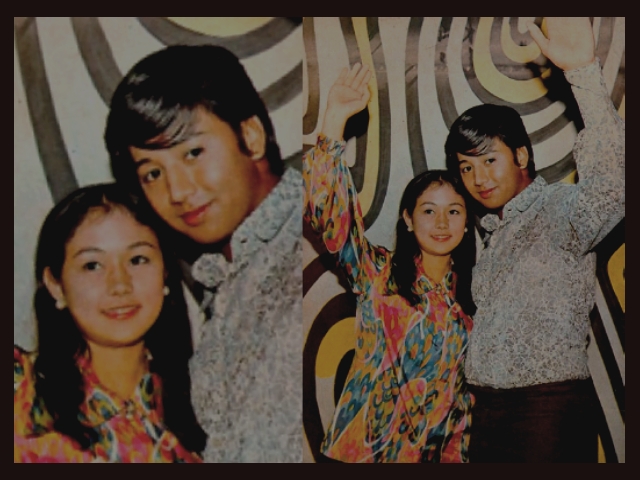

 RELATED READING:




 RELATED READING:


 Star For All Seasons
You must be logged in to post a comment.