Dance Films

This slideshow requires JavaScript.

Disco Queen – “…Ate Vi thus became the chief opponent of Nora Aunor as the movie queen of the 1970s. Her edge is that she also became the queen of hit disco movies filled with singing and dancing, like “Swing It, Baby,” “Disco Fever,” “Rock Baby Rock,” “Let’s Do the Salsa,” and the movie she did with Latin idol Junior, “Good Morning Sunshine…” – Mario Bautista (READ MORE)

Latin Singer – ”…Junior, Now 66 years old (can you believe that?), he was Vilma Santos’ leading man in Good Morning Sunshine in 1980. Born Antonio Morales Barretto, he was born in Manila, but moved to Spain with his family when he was 15. He was already a popular singer in Spain when he tried Pinoy showbiz. After doing a series of local movies (another one of his films was Disco Madhouse with Lorna Tolentino and Rio Locsin) and record albums (Yakap is still memorable to me), he went back to Spain (his wife and kids were all living there) where he continued singing. Eventually, he managed the showbiz career of his wife, Rocio Durcal, but she died of cancer in 2006…” – Butch Francisco (READ MORE)

Travolta Dance – “…I’d rather be known as Victor Laurel. But really, this Travolta is a sensation. I met him in Studio 54 and how the crowd loves him. He’s a wonderful actor, singer, and dancer.” Cocoy, too is a seasoned dancer even before the Travolta fever. He has a catlike grace that gives the impression of strenght and his dancing ability has helped tremendously in his career. “The Travolta dance is typical of hero worship even in San Francisco, Los Angeles and other big cities. Mondays, everyone who has caught the fever, even 30 year olds shop and prepare for the disco on Fridays and Saturday and stay up till the wee hours of the morning…We were about to ask another question about Vi, his leading lady in Lea’s Disco Fever but Ate Josie came in to remind Cocoy that the Sampaguita people were waiting with sketches of his costume for Dyesebel, the movie he was going to make for the Gilmore Studio. But didn’t. As a parting shot, Cocoy revealed that he’d soon put a disco. The Third Kind or something in Makati…” – Nena Z. Villanueva, Expressweek, November 16, 1978 (READ MORE)

First Legit “barkada” – “…Roger Rigor of VST and Co, when asked who is your friends from the entertainment industry: “Marami kaming barkada sa showbiz…and with respect to the recording industry, kakaunti lang noon ang mga personalities on a contract. So, we practically knew everyone, as the industry was still at its early stages. The guys would be the “studio rats”, having sessions in stretches that would start in the morning and end in the wee hours of the next morning…For us Little Baguio boys, I could only refer to Vilma Santos then as our first legit “barkada” in the film industry, dahil nga sa una naming sine was with her. She was “kalog” and really very smart. I am not surprised that as a mayor, she is able to pull it together. Of course, si Pip was already a friend of the guys kasi nga ka-basketbol na namin siya even before the VST days. And there were many others who were mga batikan sa larangan ng pelikula that we met along the course of time…” – Nostalgia Manila (READ MORE)

Top-rater TV show – “…Ang The Sensations ay produce ng ABS CBN at dinerek ni Tony Santos Sr. Consistent No. 1 Top rater ang show at kasama ni Vi & Bot sina Perla Adea, Romy Mallari, Rhodora Silva, Darius Razon, Baby de Jesus, Tony Santos Jr., Janine Frias, atbpa. Dahil sa kasikatan nila Vi & Bot ginawang movie ang The Sensations noong April, 1971, big boxoffice hit ito kaya sinundan agad ni direk tony ng ” Young Lovers ” noong August, 1971, big hit din ito. Ginawan din ng L.P. Album nila Vi & Bot ang The Sensations at muling tinangkilik ng masang pilipino…” – Jojo V. Lim (READ MORE)

Vilma Santos’ Dance Films

  • Good Morning, Sunshine (1980) – Direction: Ishmael Bernal; Story: Rolando Tinio; Screenplay: Rolando Tinio, Ishmael Bernal; Cast: Vilma Santos, Junior, Lloyd Samartino, Sheryl Cruz, Debraliz, Anita Linda, Liza Lorena; Production Co.: Lea Production; Release Date: February 1, 1980 (READ MORE)
  • Rock Baby, Rock (1979) – Directed, story, screenplay: Oscar Miranda; Cast: Vilma Santos, Junior, Rolly Quizon, Leah Navarro, Tito Sotto, Vic Sotto, Joey de Leon, Lorli Villanueva, Geleen Eugenio, Val Sotto, V.S.T. & Company; Executive producer: Joe Batac; Choreographer: Geleen Eugenio (READ MORE)
  • Swing It…Baby! (1979) – Directed: Al Quinn; Story, screenplay: Oscar Miranda; Cast: Romeo Vasquez, Vilma Santos, Tito Sotto, Vic Sotto, Joey de Leon, Amy Austria, V.S.T. & Company, Mike Monserrat, Sandy Garcia, Geleen Eugenio, Bing Davao, Walter Navarro, Nena Perez Rubio, Lirio Vital, Coritha, Ritchie D’Horsie, Val Sotto, Ernie Zarate; Executive producer: Emilia Blas; Original Music: Vicor Music Corporation; Cinematography: Joe Batac; Film Editing: Nonoy Santillan; Production Design: Orlando Tolentino; Art Direction: Francisco Faustino; Sound: Luis Reyes, Ramon Reyes; Theme Songs: “I-swing mo ako” performed by Sharon Cuneta (READ MORE)
  • Disco Fever (1978) – Directed: Al Quinn; Story, screenplay: Maryo De Los Reyes; Cast: Vilma Santos, Christopher De Leon, Victor Laurel, Rio Locsin, Romeo Enriquez, Sandy Garcia, Freddie Aguilar, Sampaguita, Anak Bayan Band; Executive producer: Emilia Blass; Cinematography: Al Quinn, Joe Batac; Film Editing: Nonoy Santillan (READ MORE)
  • Let’s Do the Salsa (1976) – Directed: Luciano B. Carlos; Story: Bert Mendoza; Cast: Vilma Santos, Walter Navarro, Rolly Quizon, Ronnie Henares, Chichay, Caridad Sanchez, Roderick Paulate, Arnold Gamboa, Winnie Santos, Maribel Aunor, Ike Lozada, Raul Aragon, Lorli Villanueva, Eddie Mercado, German Moreno, Trixia Gomez; Original Music: Dominic Valdez; Cinematography: Arnold Alyao (READ MORE)
  • The Sensations (1971) – Directed, screenplay: Tony Santos Sr.; Story: Rose Reynaldo, Tony Dantes; Cast: Vilma Santos, Edgar Mortiz, Ike Lozada, Perla Adea, Romy Mallari, Tony Santos Jr., Baby De Jesus, Darius Razon, Rhodora Silva, Vic Pacia, Ben David, Angge, Beth Manlongat (READ MORE)

Related Reading:

THE TEN BEST FILMS OF VILMA SANTOS


Sa history ng pelikulang lokal, sadyang namumukod-tangi si VILMA SANTOS dahil hindi lang sa larangan ng pag-arte siya nagtagumpay kundi pati na rin sa pulitika. Pagkatapos ng siyam na taong paglilingkod bilang mayor ng Lipa City, tinanghal naman siyang governor ng buong lalawigan ng Batangas. Nagsimula si Ate Vi bilang child actress noong 1963 sa pelikulang Tudis Liit ng Sampaguita Pictures nang siya ay siyam na taong gulang lamang. Nakipagtagisan siya ng talino sa dalawang batikang aktres nang panahong iyon, sina Gloria Romero at Lolita Rodriguez. Naging positibo ang reception ng publiko kay Ate Vi kaya naman nagkasunod-sunod ang movies niya as a child actress. Sa kanyang makumpletong filmography, makikita ninyong walang patlang ang paggawa ni Ate Vi ng pelikula. Hindi siya nagaya sa ibang child stars na sa transition from childhood to adolescence ay nawala sa eksena at tuluyang nagretiro, o kaya’y bumalik na lang noong teenager na sila. Noong naging 16 years old si Ate Vi in 1970, she became a teen idol and made a staggering total of 27 movies for one year alone. Malayung-malayo nga sa mga artista ngayon na isa o dalawang pelikula lang ang nagagawa taun-taon. She was truly in demand then! And to think may regular TV show pa siya at that time sa ABS CBN, ang D’ Senations na later on ay isinapelikula rin.

HINDI MADALING GAWIN – Ang assignment namin dito ay itala ang ten best films na nagawa ni Ate Vi at, sa totoo lang, hindi madaling gawin ito dahil nga napakarami niyang nagawang magagandang pelikula through the years. As a child star, pinakagusto namin ang kanyang Ging sa Premiere Productions. Street urchin siya ritong anak ng lumpong si Olivia Cenizal na natuklasan sa movies at sumikat bilang child star. Sa teenage phase ng kanyang career, ang most memorable movies niya for us ay ang Renee Rose (gumanap siya bilang isang sikat na artistang may mahigpit na stage mother, played by Lilia Dizon, at dahil dito ay nalaktawan niya ang kanyang kabataan and she often behaves like a child), Inspiration (directed by the late Ishmael Bernal, this is a well-written teen romance at ang nakatambal niya ay ang yumaong Jay Ilagan), Takbo, Vilma, Dali (this is and effective suspense-thriller directed by the late Joey Gosiengfaiao and Vilma played a witness to a crime na hinahabol ng killer), Dama de Noche (dito niya napanalunan ang first Famas best actress award niya and she is totally convincing in a dual role bilang magkapatid na kambal na ang isa ay mabait at ang isa ay baliw), Lipad, Darna, Lipad (this is her first Darna movie, a trilogy na naging blockbuster hit and established her as a top box office actress), Nakakahiya? (this is about a scandalous May-December romance na ang kapareha niya ay ang nasirang Eddie Rodriguez na pwede na niyang maging ama, naging big hit ito kaya nagkaroon pa ng sequel na Hindi Nakakahiya), at Tag-ulan Sa Tag-araw (directed by Celso Ad Castillo, ang first movie nila ni Christopher de Leon tungkol sa magpinsang-buo na umibig sa isa’t isa).

Natitiyak naming kayo ay may sariling paborito sa mga pelikulang ginawa ni Ate Vi. Tiyak na marami ring may gusto sa Pagputi Ng Uwak, Pag-itim Ng Tagak (a love story about a rebel, Bembol Roco, and a violinist, Ate Vi, na siya mismo ang nag-produce sa kanyang VS Films at dinirek ni Celso Ad Castillo), Rubia Servios (dito siya unang dinirek ni Lino Brocka and she played a rape victim who later gets to kill her rapist, Philipp Salvador), Tagos Ng Dugo (isa siyang serial killer dito, directed by Maryo J. de los Reyes), Kapag Langit Ang Humatol (a well-told komiks melodrama directed by Laurice Guillen), Anak (she played an OFW na may gap sa anak niyang si Claudine Barretto, directed by Rory Quintos), Bata-Bata Paano Ka Ginawa? (adapted from Lualhati Bautista’s award-winning novel, she played a liberal single mother who asserts herself, directed by Chito Roño) and Dekada ’70 (again adapted from a Lualhati Bautista novel and directed by Chito Roño, tungkol ito sa isang ina noong panahon ng martial lwa).

OUR PERSONAL CHOICES – Para sa amin, ang aming personal choices are the following:

article pic 0031. SISTER STELLA L (1984) Mula kay Mother Lily Monteverde ng Regal Films, ito ang most socially relevant film na ginawa ni Ate Vi, masterfully directed by Mike de Leon, written by Ricky Lee. Hinakot nito ang karamihan sa tropeo ng Urian Awards for that year, including best picture, best actress for Ate Vi, best actor for Jay Ilagan, best supporting actress for Laurice Guillen, and best supporting actor for Tony Santos, Sr. Si Vilma ang gumaganap bilang title-roler, isang apolitical nun na ang dating boyfirend ay naging isang journalist (Jay) na tumutulong sa mga inaaping manggagawa sa pangunguna ng labor leader na si Ka Dencio (Tony). Ang kapwa niya madreng si Sister Stella B. (Laurice) ang nagpakita sa kanya kung paano sila magiging mas makabuluhan by serving the people’s struggle for social justice. Ipinakita ritong dapat tayong makisangkot sa mga suliranin ng lipunan para magkaroon ng mabuting pagbabago sa sistema. Hindi pwedeng neutral ka lang na ayaw ma-involve. Kahit na nga member ka ng religious community, dapat ding makisangkot ka sa socio-political affairs. Ang talumpati ni Ate Vi nang maging militanteng madre na siya pagkatapos mapatay si Ka Dencio (“Kung ‘di tayo kikilos, sino’ngkikilos? Kung ‘di ngayon, kailan pa?”) ay talaga namang nakakaantig ng damdamin.

2. IKAW AY AKIN (1978)Member kami ng Urian Awards nung ’78 at ang pelikulang ito, produced by Tagalog Ilang-Ilang Productions, ang siyang ipinaglaban namin para manalo ng best picture. Hindi ito sinang-ayunan ng karamihan sa mga kapwa namin Manunuri dahil mas pinili nila ang Pagputi ng Uwak, Pag-itim Ng Tagak, dahil may elemento raw ng kaapihan ng magsasaka at ng reporma sa lupa. (Ang tanging consolation ng Ikaw Ay Akin ay nanalo si Christopher de Leon ng kanyang first Urian best actor award.) Years later, some of the Manunuri members who voted for Pagputi told us they regretted the decision dahil obvious namang Ikaw Ay Akin ang pelikula na talagang withstood the test of time, written by Jose Carreon and directed by Ishmael Bernal. Wala itong pretensiyon na nagpapa-socially relevant but it deals so effectively on the matter of how human beings and relantionships can at once be simple and complex. Malayo nga ito sa usual love triangle flicks na puno ng melodramang iyakan, although Christopher as Rex is also turn between Vilma Santos as Sandra, a kooky and neurotic artist designer, and Nora Aunor as Tere, an orchid expert. Ang mga salimuot ng menage-a-trois na ito ay sensitively laid out para makita ng viewer ang sakit at ligaya , at dusa at saya na dinaraanan ng bawa’t tauhan. Sa ending, nothing is really resolved. Basta nagtitinginan lang sina Nora at Vilma sa isa’t isa nang walang dialogue for five minutes. This is a very daring move, lalo na’t ang local viewers ay yung tipong gustong matiyak kung kanino ba talaga napunta si Boyet, kay Vi o kay Guy? Pero si Bernal ay walang pakialam with fulfilling viewer expectations. Basta ang gusto niya ay mailarawan niya ang mensahe ng movie.: that no one can totally, absolutely, fully own another human being. The best thing is to understand ang pangangailangan ng isang tao at mahalin mo ito according to his limitations. Sabi nga ni Boyet kay Guy: “Kailangan ako ni Sandra hindi lang sa pisikal kundi sa emosyonal din, tulad ng pangangailangan ko sa ‘yo. Sa kanya, nagkakaroon ako ng gamit. Kailangan ko kayong dalawa para mabuo ako.” Sabi naman niya kay Vi: “Si Tere, tinanggap nang hindi niya ako maaangkin nang buong-buo. Kung sasabihin mong nakuha mo ako ng buong buo ang isang bagay, kulang pa rin.” Grabe rin ang galing ng acting dito ni Vi sa tagpong inilantad niya ang kanyang sarili as an insecure woman: “Sabi nila, liberated ako, front lang. Kalong daw, front din. Alam mo namang kulang-kulang ako. ‘Pag wala ka, magkakalat ako. Para akong manok, takbo nang takbo, wala namang ulo!”

3. DALAWANG PUGAD, ISANG IBON (1977) A commercial and artistic success written and directed by Ishmael Bernal, love triangle movie rin ito that banked on the real life romance then of its lead stars, Vilma and Romeo Vasquez. Si Vilma ay si Terry, na iniwanan ng kanyang immature boyfriend (Mat Ranillo III at sumama sa isang lalaking may asawa (Romeo) sa kabila ng pagtutol ng mga magulang niya. Pwede itong naging mediocre romantic melodrama pero nagtagumpay si Bernal na i-elevate ito to art by giving us mature, sensitive characters who, like most of us, are looking for meaningful personal relationships. Tinalakay sa movie (in a very sutle manner) ang legal and moral implications ng adultery o pakikiapid ng isang dalaga sa isang married man, lalo na nga’t society shuns such sinful relationships. Ang relasyon nina Vilma at Romeo ay reflected sa relasyon ng iba pang mga tauhan sa movie, tulad ng sa mother ni Vilma (Anita Linda) at ng ama niyang nagtataksil din (Fred Montilla), sa lola ni Vi (Mary Walter),sa first boyfriend niya (Mat) at sa babaeng may gusto rito (Ann Villegas) at kapatid nitong pokpok (Laila Dee), at sa misis ni Romeo (Anna Gonzales) na ayaw siyang pakawalan kahit hindi naman sila magkasundo. Kung may pelikula si Ate Vi na nasasabik kaming panoorin uli, ito ‘yon. Kaya lang, wala na yatang existing copy ito at nakasama sa movies produced by Lea Productions na nasunog o nasira sa baha. What a big waste. Sayang talaga.
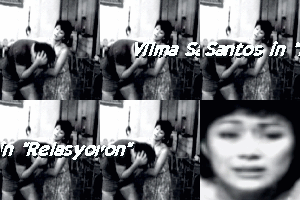
relasyon4. RELASYON (1982) Ito ay isa pang pelikula ni Ishmael Bernal sa Regal Films na tumatalakay sa subject ng adultery from the point of view of the other woman, si Marilou (Vilma), ang mistress ni Christopher de Leon na pinaglilingkuran siya ng buong puso: pinaglalaba siya, binibigyan ng beer at inaalagan pa ang anak niya mula sa legal wife niya. Ipinakita rin sa feministic movie na aito ang pagka-chauvinist ng mga lalaking Pinoy. Gusto’y sila lagi ang masusunod at ni ayaw makakausap ng ibang lalaki ang babae nila, tulad ng aversion ni Christopher kay Jimi Melendez sa kuwento, at pati na rin sa kaibigang bading ni Ate Vi na si Manny Castañeda. Tinalakay rin sa movie ang subject ng kawalan ng divorce sa Pilipinas, dahil kung may diborsiyo raw ditom sana ay pinakasalan na ni Boyet si Vi. Narito sa pelikulang ito, which scored for Ate Vi her first grand slam as best actress, ang famous death scene ni Boyet na namimilipit sa sakit habang inirereklamo ang masakit niyang ulo at tarantang-taranta naman si Ate Vi na hindi malaman ang gagawin. Tuhog ang kuha sa mahabang eksenang ito and the acting is really great kaya dito pa lang ay sulit na ang panonood ninyo.

5. BROKEN MARRIAGE (1983)Nagwagi rin ng Urian best actress award si Ate Vi para sa acting niya sa pelikulang ito na muli ay produced ng Regal Films. As the title implies, tungkol ito sa isang nasirang marriage. Si Vi ay si Ellen, isang TV production executive, at si Boyet ay si Rene, isang newspaper reporter. Pagkatapos ng sampung taong pagsasama, kinakalawang na ang relasyon nila bilang mag-asawa. Dahil lagi na lang silang nag-aaway, umalis si Rene mula sa tahanan nila at si Ellen ay naging single parent sa dalawa nilang anak. Nang manakawang ang bahay nila, lumipat si Ellen at mga anak nila sa bahay ng nanay niya. Nang mabugbog si Rene ng mga tauhan ng isang politiko dahil sa expose niya, napilitan siyang muling pumisan kina Ellen at dito rin muling nabuo ang pagsasama nila bilang mag-asawa, resulting into a reconciliation. May dalawang mahabang arias dito si Ate Vi na talagang lutang na lutang ang kahusayan niya. Una’y ang monologue niya sa piling ng mga kaibigan na pinagtatapatan niyang bagot a bagot na siya sa buhay. Susunod ay sa eksena niya with Boyet na sinasabi niyang hindi sila magkakabalikan nang dahil lang sa mga bata. Hindi rin malilimutan ang unang confrontation scene nila sa movie na natural na natural ang away nila bilang mag-asawang na-alienate na ang loob sa isa’t isa.

6. SAAN NAGTATAGO ANG PAG-IBIG (1987)Sa aming talaang ito, ito lamang ang pelikula ni Ate Vi na hinango sa isang nobelang komiks. This was shown in the same year as Tagos ng Dugo (na siayang nagpanalo sa kanya ng isa pang Famas best actress award), pero hindi namin naibigan ang performance niya rito as it was so palpably engineered, pati ang ibang movements niya na ang nakikita mo sa likuran niya ay ang instructions na bigay ng direktor kung ano ang gagawin niya. That year, ang choice namin for best actress ay si Lorna Tolentino sa anti-heroin role niya in Maging Akin Ka Laman ni Lino Brocka. But we will alwyas love Saan Nagtatago Ang Pag-ibig, na dinerek ni Eddie Garcia, dahil may kakaibang tama ito sa puso. Sa kuwrnto, si Vilma ay nabuntis ni Ricky Davao pero hindi siay mapakasalan nito dahil sa mamanahin mula sa kanilang dominanteng lola, the late Alicia Vergel, na inaapi-api pati ang ina ni Ricky, si Gloria Romero, who gives a great performance. Ang ginawa ni Ricky a kinumbinsi si Vilma na pakasal sa kanyang kapatid na retarded, si Val, played by Tonton Gutierrez, para aito ang magbigay ng pangalan sa magiging supling niya. Pumayag si Ate Vi at doon na nga siya natira sa malaking bahay ng pamilya nina Ricky at Tonton. Dahil doon, mababago ang takbo nga buhay ng pamilyang ito dahil si Vilma ang magsisilbing agent of change who will defy the matriach taht is Alicia Vergel. Mabubunyag din kung pano nagkaroon ng pinsala si Tontion sa utak. Maraming madamdaming eksena sa pelikula na talagang titimo sa inyong puso. Sa ending, there is justice dahil nagkamit ng karampatang parusa ang mga nagkasala.

pahiram7. PAHIRAM NG ISANG UMAGA (1989) Namatay si Ate Vi sa pelikulang ito sa papel niya bilang Juliet, isang advertising executive na dinapuan ng cancer, but the film, produced by Regal Films, written by Jose Javier Reyes and directed by Ishmael Bernal, is really more a celebration of life. Pagkatapos malaman ni Juliet na may taning na ang buhay niya, ginugol niya ang mga natitira niyang araw para ilagay sa ayos ang kanyang buhay. Nakipagkasundo siya sa kanyang estranged husband (Gabby Concepcion) na may iba nang asawa (Zsa Zsa Padilla) at inihabilin dito ang anak nila (Billy Joe Crawford). Maraming simbolo and motifs ng buhay at kamatayang ginamit din ang expressionist painter na si Ariel (Eric Quizon) ina an impressive performance) para ipakita ang parallelisms between life and art. In one scene, tinalakay pati ang origins ng art when prehistoric men made drawings on caves na kahit primitive ay they continue to exist until this day. people may die, but art will live on. Ironically, si Ariel ay isang tormented soul who wants to kill himself. Pero iniligtas siya ni Juliet, a dying woman na hindi na maililigtas ang sarili niyang buhay. The grand death scene of Juliet on the beach habang nakasuot siya ng puting night gown haang nagbubukang-liwayway, sa ‘di kalayuan ay isa sa mga ‘di-malilimutang paglalarawan ng buhay at kamatayan na maing napanood sa pinilakang tabing.

8. HAHAMAKIN ANG LAHAT (1990) Produced by Regal Films, dinirek ito ni Lino Brocka and we honestly believe na very much underrated ito. Ang tanging award na pinanalunan nito ay best supporting actress award for Snooky Serna (na very deserving). Nirepaso nga namin ang aming listahang ito at napansin naming ito lang ang movie ni Ate Vi na dinirek ni Brocka which is included in our list. Mas marami kaming isinaling pelikula ni Ate Vi na dinirek ni Bernal. Actually, may iba pang ginawang movies si Ate Vi with the legendary director, tulad ng nabanggit na rin naming Rubia Servios (kunsaan tinalo siya ni Ate Guy as best actress for Atsay in the 1978 Metro Manila Film Festival) at ang Adultery: Aida Macaraeg with Philipp Salvador and the late Mario Montenegro. Pero para sa amin, this is Ate Vi’s best Brocka movie and one of her best and most demanding roles sa mga nagampanan na niya. Vilma plays an anti-heroin, si Sylvia, isang bida-kontabida. Asawa siya ng isang gahamang mayor (Eric Quizon), na piangtataksilan siya. Nang muli niyang makatagpo ang una niyang pag-ibig, si Rene (Gabby Concepcion) ay pinagsikapan niyang makuhang muli ang pagtingin nito kahit kasal na rin ito sa ibang babae (Snooky). Sa kanya nga patungkol ang titulo ng movie dahil hahamakin niya ang lahat maagaw lang muli ang dati niyang pag-ibig. Dati, akala niya, magiging maligaya siya sa mga materyal na bagay at pati ang mahirap niyang ina (Perla Bautista) ay nagawa niyang itakwil. Nguni’t natanto niyang wala sa pera o sa kapangyarihan ang tunay na kaligayahan kundi nasa tunay na pag-ibig. Ang hindi niya alam, paghahangad niyang maibalik ang nakaraan ay hahantong lamang sa isang malagim na trahedya. Sadyang mapanghamon ang role ni Ate Vi rito na tuso, matapang, sinungaling at manggagamit ng kapwa tao. Mapupuri mo nga siya dahil hindi siya natatakot kumuha ng ganitong klase ng roles (gaya rin ng role niya sa Sinasamba Kita) na pwedeng maka-alienate sa kanyang fans. She’s definitely more adventurous as an actress. Kaso ang nakalaban niya that year ay si Nora Aunor who played a more sympathetic role bilang inang nagpakasakait alang-alang sa ikabubuti ng anak sa Andrea, Paano Ba Ang Maging Isang Ina? kaya mahuhulaan na ninyo kung sino ang nagwagi ng best actress awards for the year.

9. BURLESK QUEEN (1977) Humakot ng lahat ng tropeo sa 1977 Metro Manila Film Festival, tribute ito sa stage shows noong ’50s. Sinulat ni Mauro Gia Samonte at dinirek ni Celso Ad Castillo, dito unang nagpa-sexy si Ate Vi at talagang big blockbuster ito. Kuwento ito ng isang batambatang burlesque dancer noong 1950s, played by Ate Vi. Nagsimula siya bilang alalay ng isang reigning burlesque queen, si Rosemarie Gil, na kabit ang maton na si roldan Aquino. Nang iwana ni Roldan si Rosemarie, naglasing ito at ayaw nang sumayaw kaya si Vilma ang isinalang bilang kapalit niya sa entablado. Maiinit ang naging pagtanggap ng mga lalaking manonood kay Vilma, pero ang maprinsipyong ama niyang lumpo (Leopoldo Salcedo) ay tutol sa ginagawa niya. Dahil naghihirap sila, nasunod din ang gusto ni Vilma na maging burlesk dancer. Nagpatiwakal ang ama niya dahil dito. Umibig naman si Vilma sa isang iresponsableng lalaki na nakipag-live in dito, si Rollie Quizon, na isa palang mama’s boy at hindi sanay sa hirap kaya nilayasan din siya. Ang climax ng movie ay ang may sampung minutong pagsasayaw ni Vilma sa entablado hanggang duguin siya. Buntis pala siya at gusto niya talagang malaglag ang dinadala niya. Maganda ang maraming elemento sa movie, malian sa production design na 1950s ang setting pero hindi maingat kaya maraming detalye na pang-19702 ang kasama rito. Very memorable din dito si Jonee Gamboa sa papel ng stage impresario an siyang nagsasatining ng mga opinyon ng writer at direktot na pinupuna ang hypocrisy ng mga moralista, tulad ng pagtatanong niya kung anong uri ng show ang dapat ibigay sa masang Pinoy na hindi kayang magbayad ng pang-mayaman at kulturadong shows tulad ng operang Merry Widow. Sayang at wala na rin daw existing copy ng pelikulang ito.

10. DOLZURA CORTEZ STORY: DAHIL MAHAL KITA (1993) Ito ang unang pelikulang lokal na nagsiwalat tungkol sa sakit na AIDS at filmbio ito ng kuna-unahang Pilipino na umaming may AIDS siya, si olzura Cortez, na ang kuwento ay nalathala sa dyaryo. Sinulat ni Ricky Lee, dinirek ni Laurice Guillen at produced ng Octo Arts Films, bida-kontrabida rin ang papel ni Ate Vi rito in the title role. Hindi siya yung usual heroine na walang bahid-dungis at inaapi. Dito, isa siyang makasalanang babae na nagbili ng katawan, nagkaroon ng affairs sa maraming lalaki, hanggang sa dapuan nga siya ng dreaded sickness called AIDS. Muli ngang naka-grand slam si Ate Vi sa role niya sa pelikulang ito. The same year, meron ding nagawang movie si Ate Guy, ang Inay na dinirek ng yumaong Artemio Marquez, pero hindi man lang siya naging nominee para sa pagkakaganap niya roon. That year, dalawang movies ang nagawa ni Ate Vi. Ang isa pa ang ang action-dramang Ikaw Lang ni Chito Roño, na in fairness ay mahusay rin siya sa papel ng battered wife ng baliw na si Cesar Montano an naging bank robber kasama si Ronnie Ricketts. Pero sa Dolzura Cortez nga pinarangalan si Ate Vi dahil talaga namang very convincing ang pagkakaganap niya bilang isang babaeng lumaban sa buhay alang-alang sa kanyang pamilya, nguni’t sa kasamaang-palad ay iginupo ng isang sakit na walang lunas. Malusog na malusog si Ate Vi nang gawin niya ang pelikulang ito, pero very convincing siya sa paglalarawan ng isang babaeng may malubhang sakit at malapit nang bawian ng buhay. Dahil nga sa pelikulang ito, nagkaroon ng higit na kamulatan ang publiko ungkol sa sakit na AIDS.

BEST MOVIE IS YET TO COME – Kung magdagdag kami ng isa pang Ate Vi movie sa aming listahan, it will be another work of Laurice Guillen, ang Ipagpatawad Mo, where Ate Vi played the mother of an autistic boy na ipinaglaban ang anak niya kahit may kapansanan ito. At dahil aktibo pa rin si Ate Vi at may bagong movie na nakatakdang gawin sa Star Cinema, hindi pa tapos ang pagsulat sa history niya bilang isang actress. Kahait gobernadora na siya ang Batangas, lalabas pa rin daw siya sa movies every now and then. Who knows? Baka he really, really best movie is yet to come habang mas nagmamature siya, like fine wine, bilang isang actress for all seasons. – Mario Bautista, Hi! Magazine Dec 2007

Remembering Aruray

This slideshow requires JavaScript.

Aruray ni Dolphy – “…Aruray pala ang binansag ni Mang Dolphy kay Pokwang. Ito ay ikinuwento ni Pokwang sa preskon ng The Healing kung saan si Governor Vilma Santos ang bida. Aru kung tawagin ni Mang Dolphy si Pokwang. Sino nga ba si Aruray? Siya po ang komedyante noong araw na matagal na ring namayapa. Kahawig nga ni Pokwang si Aruray pero siyempre mas maganda si Pokwang, in all fairness. Bumunghalit ng tawa si Governor Vi nang marinig ang kuwento ni Pokwang na binansagan siyang Aru ni Mang Dolphy. Hindi naman makapag-react si Kim Chiu dahil hindi niya kilala si Aruray. Hindi pa yata siya ipinanganak nang mamatay si Aruray…” – Joe Barrameda (READ MORE)

“…In 1998 while she was working in Abu Dhabi, Pokwang received the sad news that her son died of a congenital brain ailment. “Of course, I felt guilty na wala man lang ako sa tabi ng anak ko nang kailangang-kailangan niya ako,” admitted Pokwang, the wacky comedienne (suspected to be the “reincarnation” of Aruray) who in real life is a serious mother. She changed moods from sadly reflective to hilariously comedic. “Shin was made in the Philippines, pero assembled by a Japanese. I met his father here before I went to Japan. Magulo ang relasyon namin. Away kami nang away, nagbabatuhan kami ng kung anu-ano, nagsasakitan kami talaga, that’s why the baby inside me was badly affected. Kawawa naman siya. When the baby was born, kami ng ama niya nagbabatuhan kami ng crib.” Ria Mae was also sired by a Japanese whom Pokwang met in Japan where she worked as a dancer. “I never lived with my children’s fathers,” Pokwang said. “Nabuntis lang nila ako…” – Ricardo F. Lo (READ MORE)

Sa Kabukiran – “…I did several shows before I was given my first regular show on ABS-CBN in 1961, Sa Kabukiran, produced by Atty. Narciso Pimentel,” Luz continues. “It was one of the top 10 shows in the ratings during the ’60s. It was a musical comedy where I was paired with Luis Gonzales and we had Bentot, Cachupoy and Aruray with us. We were dressed in Filipiniana costumes singing Tagalog songs, doing comedy skits, and dancing local folk dances. It ran for 12 years until martial law was declared and ABS-CBN was closed, so we moved to GMA 7, which was allowed to continue airing. The show became Basta Ikaw Mahal which ran for seven years. At the same time, I had a noontime show, Kuwentong Kutsero, also on GMA, that ran for four years. For a while, I also co-hosted another noontime variety show, Darigold Jamboree. I had the chance to work with the late Ading Fernando in the sitcom, Apartment 153-A, which ran for four years at ABS-CBN. I am really so blessed because I was never ran out of TV shows. For a while, I retired and went to the US. But then, I got another call from GMA 7, asking me to come back to play the role of Bong Revilla’s mother in the sitcom, Idol Ko Si Kap, which is now going on for three years and rating very well…” – Mario E. Bautista (READ MORE)

Pamosong Komedyante – “…Samantala sa entablado naman ng mga eskuwelahan at sa mga syudad, ipinalabas din ang dulang New Yorker in Tondo, isang komedya tungkol sa isang balikbayan na mas Amerikano pa kaysa Amerikano pero kayumanggi naman. Nauso rin sa radyo ang komedya tulad ng Sebya Mahal Kita na pinalabasan nina Sylvia Guerrero at Eddie San Jose. Ang iba pang pamosong mga komedyante ay sina Oscar Obligacion, Chichay at Aruray atbp…Sa larangan ng pelikula, si Ai-Ai pa rin ang bida sa mga komedya, na marahil ay namana ang kanyang pagiging komedyante sa mga “greats” tulad ni Chichay at Aruray na sumikat noong mga 50’s at hanggang 60’s. Bandang 70’s o 80’s ginawang katatawanan ang isang artista na sobra ang dunong daw…” – Wilhelmina S. Orozco (READ MORE)

Faux Ballet Dances – “…The field of comedy is basically dominated by men. To my surprise, however, I had difficulty paring down my list of best comediennes to just 10. Maybe woman empowerment encouraged female comic talents to shine starting in the ’80s and this continues to the present day. But who gets on the list? Below is the first installment…Thin like a stick, I don’t know where she got all that energy performing on stage (I never got to see that though), on TV and in the movies. But her faux ballet dances (she had classical ballet training if I’m not mistaken) were very funny. Always cast as the impertinent atsay (she was supposed to have played Virgin Mary in a Lenten play once though), my favorite among her films was when she played aspiring movie star in Sampaguita Pictures’ mega production of The Big Broadcast. In the story, Aruray and Chichay are sisters and they have a stage mother in Patsy who believes her two daughters are the loveliest in the world and that they should be cast in a picture in lieu of Susan Roces and Amalia Fuentes. Although everyone turned in a hilarious performance, I liked Aruray best and I will always put her on my best comediennes list. Unfortunately, after she died in the early ’90s, who remembers Aruray now?…” – Butch Francisco (READ MORE)

Aruray was a famous Filipina comedian of the Philippines. She made many movies produced by her home studio Sampaguita Pictures. Born in 1920, she is one of the most successful comedians of the 1950s and 1960s. She was once nominated as Best Supporting Actress in the movie Torkwata. – Wikipilipinas (READ MORE)

Aruray and Vilma Santos

Aruray and Vilma Santos’ first movie together was King and Queen for A Day (which was also Vilma’s first film with Dolphy and Chichay) in 1963. This was Vi’s first year in show business and as a child star. She followed this up with Ging the following year. Then after almost six year, now a teen star, Vilma joined Aruray and another comedian, Dely Atay-atayan in Mga Batang Bangketa. After this film, the two did three films as guest star. There is no detail Information about Aruray’s exact date and cause of death, only the year – 1988.

Candy (1980) – “…Sheryl Cruz has appeared with Vilma before in Candy (Vilma in a cameo role) and Good Morning Sunshine (1980) directed by Ishmael Bernal. Mano Po 3 is their third film together…” – The 28th (READ MORE)

Mga Mata ni Angelita (1978) – “…Julie Vega was only 10 years old when she was launched to full stardom in the 1978 movie, “Mga mata ni Angelita.” She appeared in previous movie outings as Darling Postigo. The young Vega was ably supported by an all super star cast headed by the King of Philippine Movies, Fernando Poe, Jr. (in the role of Conrado, the ex-convict) and Comedy King Dolphy (as Tacio, the taho vendor). Also appearing in cameo roles were Joseph Estrada (as himself as Mayor); Nora Aunor (a metro-aide sweeper); Vilma Santos ( as a worried wife); Ramon Revilla (as barrio captain); Alma Moreno (as a jealous sweetheart); Christopher de Leon (as the lover) and many more…” – Simon Santos (READ MORE)

Big Ike’s Happening (1976) – “…Enrique “Big Ike” Lozada (August 13, 1940-March 8, 1995) was a Filipino comedian, actor and TV host. He was born on August 13, 1940 in Iloilo City. He started acting at the age of 11 on the movie Mga Bituin ng Kinabukasan with the younger Susan Roces. He died on March 10, 1995 in Manila, of heart attack. He was 54. His had lain at Manila Memorial Park in Parañaque City…” – Wikipedia (READ MORE)

Mga Batang Bangketa (1970) – “…By late 1969, movie producers had been tapping a Vilma Santos-Edgar Mortiz love team. Edgar was a Tawag ng Tanghalan winner. They started to be together in the movies, My Darling Eddie (1969) and The Jukebox King (1969)…In 1970, the love team of Vilma Santos and Edgar “Bobot” Mortiz was officially launched in the movie Young Love, together with the another popular love team during that time, Nora Aunor and Tirso Cruz III. The Vi and Bot love team went on to do 14 more movies in 1970—The Young Idols, Songs and Lovers, Sweethearts, Sixteen, Love Letters, Love is for the Two of Us, Mga Batang Bangketa, My Pledge of Love, Renee Rose, Baby Vi, Because You Are Mine, Edgar Loves Vilma, From the Bottom of My Heart, and I Love You Honey. All did well at the box-office…” – Rommel R. Llanes (READ MORE)

Ging (1964) – “…Listang-lista at ang husay ni Vilma rito. Naroong kumanta siya (the voice over seemed like her singing voice), sumayaw at nagdrama. Luma si Madonna doon sa isang parang La Isla Bonita number niya. One memorable scene was when she was singing her signature song to the audience of her longing to see her mother and her father – the camera captures her pain and agony and the deep wound she suffers from her abusers – a poignant scene, complete with tears and and a well-internalized acting…” – Mario Garces (READ MORE)

King and Queen For A Day (1963) – “…Batangas Governor Vilma Santos, who’s now identified with ABS-CBN, told the Inquirer: “The whole country is saddened by the news. He was simple but someone with a big heart for Filipinos. He entertained us for over 60 years.” The actress-politician recalled that she first shared the screen with Dolphy when she was a child star. “I worked with him and the late comedians Panchito and Chichay when I was 11 years old in the Sampaguita movie ‘King and Queen for a Day.’ That was 1963…” – Bayani San Diego Jr (READ MORE)

Related Reading:

PROUDLY FILIPINA (Videos)


Proudly Filipina is a magazine show on QTV-11 focused on women achievers. Originally hosted by Daphne Oseña-Paez in 2006 but was replaced by beauty title holder/actress, Charlene Gonzales in 2008. The show was cancelled in 2009.

Charlene Mae Gonzales Bonnin Muhlach is a television and film personality and former beauty queen from the Philippines. Gonzalez won the Binibining Pilipinas-Universe 1994 title and represented her country at the Miss Universe 1994 pageant held in Manila, where she won the Best National Costume award and was one of the top 6 finalists. Born to actor Bernard Bonnin and model Elvira Gonzales, on 1 May 1974, she has a brother, actor Richard Bonnin. She married Filipino actor Aga Muhlach on May 24, 2001, and they have twin children born in 2001 named Andrés and Atasha. She is also a talk show host and a commercial model (Wikepedia).

RELATED READING:
Charlene Gonzalez joins QTV-11 to host “Proudly Filipina”
Charlene Gonzalez is the new face of “Proudly Filipina”
Charlene is Proudly Filipina
Daphne Oseña-Paez sets motherhood as priority over “Proudly Filipina”
Official Web-site: Daphne Oseña-Paez

FAMAS’ Circle of Excellence

This slideshow requires JavaScript.

After Hall of Fame – “…Relegated to hall of famer status, both Nora and Vilma were not allowed to compete for the acting awards in the coming years, a problem for FAMAS. Both actress were still active in making movies that deserve acting accolades. Two years after Vilma was acclaimed to the hall of fame status, she came up with performances that deserve praises, Kapag Langit Ang Humatol in 1990 and Ipagpatawad Mo in 1991. FAMAS can’t resist giving citation to Vilma anymore so they created a special award with a status higher than the Hall of Fame, hence the Circle of Excellence was born in 1993…”

“…The 41st FAMAS Awards honoring films made in 1992 was held again at the Fiesta Pavillion of the Manila Hotel on May 8, 1993. Vilma, now 40 years old earned her first of two Circle of Excellence awards. She was cited for Regal films’ Sinungaling Mong Puso. Sinungaling earned acting honours for Aga Muhlach, lead actor, Gabby Concepcion, supporting actor and best story for Jose Javier Reyes. It also earned nominations for its director, Maryo J. de los Reyes, best picture for Regal, supporting actress for Aiko Melendez. The next year, FAMAS deservingly gave Vilma her second Circle of Excellence award citing her performance in her social relevant film about HIV/AIDS, Dahil Mahal Kita: The Dolzura Cortez Story. Dahil Mahal Kita was nominated for best picture and best director for Laurice Guillen. …” – RV (READ MORE)

Sinungaling Mong Puso (1992)

“…Vilma Santos did not expect that her first experience at the Lower House could be so pleasant. “They were very nice. I was expecting that they’ll just tolerate me kasi artista ako, but they even posed with me,” she shared. Gina de Venecia, wife of the Speaker, asked her to join the Congressional Ladies Group. Ate Vi said that as soon as “Things settle down after the December 11 wedding to be held at the Lipa Cathedral, she will organize a foundation for street children. First, in Lipa and later here in Metro Manila. Vi said that her latest movie, Sinungaling Mong Puso, slated to open today, is inspired by her tele-movie, Once There Was A Love which also starred Aga Muhlach. I really wanted Aga to be my leading man in this movie since we started our tele-movie.” The movie also reminded her of the time when she and Ralph met for the first time. He was then only 21, or 11 years her junior. Vi does not plan to stop making movies, “I’ll be bored with just being a housewife,” she averred. “Sinungaling…, she said, “is teh story of three women and how they relate to the men in their lives. This is more intense compared to Ipagpatawad Mo. She is set to do two more movies this year – – one for Moviestars with Cesar Montano and Ronnie Rickets to be directed by Chito Rono; and another for OctoArts with perennial screen partner, Christopher de Leon with Mike de Leon as director…” – Nena Villanueva, Manila Standard, Aug 27 1992 (READ MORE)

Dahil Mahal Kita: The Dolzura Cortez Story (1993)

“…The 1990s saw Charito Solis graduate to mother and grandmother roles, which she had done with frequency in the 1980s. In another nod to her age, she finally allowed herself to be billed above Vilma Santos, then acknowledged as the Longest-Reigning Box Office Queen of Philippine Movies, albeit above-the-title in films such as Ipagpatawad Mo (1992) and Dahil Mahal Kita: The Dolzura Cortez Story (1993)…” – Gypsy Baldovino and Yolly Tiangco (READ MORE)

FAMAS’ Circle of Excellence Awarded Films of Vilma Santos

  • 1993 Dahil Mahal Kita: The Dolzura Cortez Story – Directed by Laurice Guillen; written by Ricardo Lee; produced by Orly Ilacad; musically scored by Nonong Buencamino; photographed by Eduardo Jacinto; and edited by Efren Jarlego; featured Vilma Santos, Christopher De Leon, Charito Solis, Jackie Aquino, Christine Bersola, Noni Buencamino, Maila Gumila, Mia Gutierrez, Gigette Reyes, Gilleth Sandico, Eula Valdez, Mikee Villanueva, Nonie Buecamino, Jaime Blanch, John Caddi, Tess Dumpit, Chris Michelena, Sharme Centenera, Ernie Zarate, Pocholo Montes and Gil Portes. (READ MORE)
  • 1992 Sinungaling Mong Puso – Directed by Maryo J. De Los Reyes; written by Jose Javier D. Reyes, Jake Tordesillas; produced by Lily Monteverde; musically scored by Lutgardo Labad; photographed by Charlie Peralta, Jun Pereira, Caloy Jacinto; edited by George Jarlego; featured Vilma Santos, Gabby Concepcion, Alice Dixon, Aga Muhlach, Aiko Melendez, Ricardo Cepeda, Dennis Baltazar, Charlie Davao, Philip Gamboa, Melinda Mendez, Mila Ocampo, Luz Valdez, Orestes Ojeda, Michelle Bautista, Lora Luna, Aris Bautista, Daniel Roa, Dax Rivera, Allan Laceda, Aida Carmona, Estrella Antonio, Alex Toledo, Nonoy Gates, Tato Malay, Lemuel Sales, Francis Ignacio, Chynthia Carriedo, Marvin Bellosillo, Veronica Medel, and Jeff Long. (READ MORE)

The Filipino Academy of Movie Arts and Sciences bestows the Circle of Excellence Award to Hall of Fame inductees who have used their skills and craftsmanship to the best of their abilities for the development and creation of a Filipino motion picture. The Circle of Excellence Award is the highest award the FAMAS can bestow on an individual. The Circle of Excellence was the brain child of then FAMAS member Jimmy Tiu to honor Hall of Fame inductees whose work deserves the recognition of the Academy. Since Hall of Fame inductees cannot be given another competitive FAMAS Award for the same category, the award was born.

The Circle of Excellence Award was modeled from great screen legend and FAMAS Award-winner Rosa Rosal by master sculptor Manuel Barreiro. The varnished gold-painted wood statuette boasts of a Balintawak-clad woman whose raised hands holds a four-spoke film reel. She stands on a circular pedestal, which is encircled with a thin sheet of gold that bears the initials and full name of FAMAS, the awards ceremony in which it was won, the words “Circle of Excellence” name and the name of the winner. The first Circle of Excellence Award was given out in the 41st FAMAS Awards (1992) in 1993 to honor Best Actress Hall of Fame inductee Vilma Santos for her performance in Sinungaling Mong Puso. At that time, the Circle of Excellence Award was a glass plaque. The current statuette was given the next year, also to Ms. Santos, at the 42nd FAMAS Awards (1993).

Circle of Excellence Recipients:  Vilma Santos – 1992, 1993; Nora Aunor – 1995; Christopher de Leon – 2004  (READ MORE)

Related Reading: * 1972 Best Actress  * FAMAS Recognitions * Who cares about movie awards? * FAMAS Hall of Fame Best Actress

Remembering Eddie Peregrina 2/2 (Videos)

This slideshow requires JavaScript.

Eddie Villavicencio Peregrina (11 November 1944 – 30 April 1977), better known as Eddie Peregrina, was a singer and leading matinee idol of the 1970s. Dubbed as “the Original Jukebox King,” he was most famous for hit songs such as What Am I Living For, Together Again, Two Lovely Flowers and Mardy, among others. He died at the age of 32 after a freak car accident in EDSA…eregrina’s popularity was high, particularly among masses. Jukebox, the coin-operated machine which plays selected music, was said to have attained much popularity as well because of continuous requests of Peregrina’s songs. His fame surge even more among the Filipino masses when he became movie star, cast with the leading ladies of the 1970s, including Esperanza Fabon and Nora Aunor, with whom he had a TV show entitled The Eddie-Nora Show on Channel 9 in the 1960s. Among his movies included Mardy, Memories of Our Dreams with Esperanza Fabon. He co-starred with his wife Lyn Salazarin in Batul of Mactan in 1974. He was also the leading man in Dito sa Aking Puso (1970) with Nora Aunor and with Vilma Santos in Mardy. Most of his films were produced by JBC Productions, which invariably paired him with Vilma Santos, Edgar Mortiz, Esperanza Fabon, and directed by Bebong Osorio. When not busy attending show business commitments, he managed his own business, including Edviper Records and the Pervil Photo Studio…Eddie’s Mustang car collided with a trailer truck in EDSA Shaw underpass in 1977. He died a month and a week later (April 30, 1977) at the age of 32 at Polymedic Hospital due to internal hemorrhage. His early and tragic death shocked his millions of fans nationwide. – Wikipedia (READ MORE)

Related Reading:

Remembering Eddie Peregrina 1/2

This slideshow requires JavaScript.

Coin-operated Machine – “…During the early 60’s, a singer’s popularity was practically determined by the jukebox, a coin-operated machine that can play specially selected songs from self-contained media. It was a period when fans dropped 20 centavos in a jukebox to listen to Timi Yuro’s “Crazy” or Matt Monro’s “Walk Away” and “Before You Go.” Of course, Eddie’s songs like “Together Again,” “Two Lovely Flowers,” “Mardy” and “I Do Love You” were such national anthems and outdid their foreign counterparts not only in the jukebox market but also on the airwaves, in restaurants and well…the local cabarets…” – Gypsy Baldovino (READ MORE)

Car Accident – “…Eddie Peregrina was another OPM (Original Pilipino Music) legend. While he sang with The Blinkers in Japan, he also became the first jukebox king in his homeland where Filipinos thronged around the coin-operated machines to drop 20 centavos to listen to their favorite singing idol. With the band, Eddie Peregrina gave us memorable hits like Blue Eyes and Together Again. During his prime, Eddie Pergrina was also doing TV (like the popular The Eddie-Nora Show) and acted in movies with leading ladies (like Vilma Santos, Espie Fabon, Nora Aunor). Eddie died from a car accident at the age of 32 in 1977. He was survived by his wife, Lyn, and two daughters, Edlyn and Michelle. He left a legacy of evergreen songs like Alaala ay ikaw and Nabubuhay ako dahil sa’yo…” – Questing Bandstand (READ MORE)

True Connoisseur of “Bakya” – “…If you don’t even get one answer right, you are, if not a foreigner, either a hopeless bourgeois or an incurable egghead. But if you guess that (a) “Mardy” is an Eddie Peregrina top tune and the title of one of his movies; (b) Orasyon na naman is the standard opening line of Johnny de Leon’s afternoon radio program, Lundagin Mo, Baby; (c) Nora Cabaltera Villamayor is the real name of Nora Aunor; (d) Pilyo, nguni’t clean fun is the slogan of Pogi; Ricky Na, Tirso Pa is the movie that brings together for the first time those real-life first cousins, Ricky Belmonte and Tirso Cruz III, congratulations: you are true connoisseur of bakya…” – Pete Lacaba (READ MORE)

Eddie Peregrina and Vilma Santos’ Films

  • May hangganan ang pag-ibig (1970) – Directed by Fely Crisostomo, written by Joey Luna and Eddie Perigrina co-starred with Vilma Santos, Romy Mallari, and Millie Mercado (READ MORE)
  • Mother Song (1970) – Directed by Jose De Villa, written by Ernesto ‘Baby’ Nauda, Eddie Peregrina co-starred with Vilma Santos, Rosa Mia, Patria Plata, and Joseph de Cordova. (READ MORE)
  • Songs and Lovers (1970) – Directed: A. Gregorio; Story: Felipe Baron, Henry Cuino; Screenplay: Felipe Baron, Henry Cuino; Cast: Eddie Perigrina, Alona Alegre, Vilma Santos, Edgar Mortiz, Esperanza Fabon, Fred Panopio, Thelma Kennedy, Romy Mallari, The Blinkers, and Pauline Sevilla. (READ MORE)
  • I Do Love You (1970) – Directed and written by Consuelo P. Rosario, Eddie Perigrina co-starred with Vilma Santos, Esperanza Fabon, Bebong Osorio, Perla Adea, Rebecca Rocha, Ben David, Mary Walter, Betty Mendez, Tommy Angeles, Jose Padilla Jr., Joey Alvarez, Dolly Favorito, Nick Aladdin, Armando De Guzman, Edgar Orda, Romy Mallari, and the Bunkers. (READ MORE)
  • My Darling Eddie (1969) – Directed and written by Consuelo P. Osorio, Eddie Peregrina co-starred with Vilma Santos, Edgar Mortiz, Esperanza Fabon, Bebong Osorio, Mildred Ortega, Joe Alvarez, Dolly Favorito, Nick Aladdin, Mary Walter, Ben David, Patria Plata, and Priscilla Ramirez. (READ MORE)
  • Mardy (1969) – Directed and written by Consuelo P. Osorio, Eddie Peregrina co-starred with Vilma Santos, Esperanza Fabon, Bebong Osorio, Perla Adea, Joe Alvarez, Dolly Favorito, Nick Aladdin, Ben David, Betty Mendez, Tommy Angeles, Danilo Jurado, Danny Boy (READ MORE)
  • The Jukebox King (1969) – Directed and written by Consuelo P. Osorio, Eddie Peregrina co-starred with Vilma Santos, Edgar Mortiz, Esperanza Fabon, Bebong Osorio, Mildred Ortega, Joe Alvarez, Nick Aladdin, Dolly Favorito, Ben David, Tommy Angeles, Metring David, Dely Villanueva, Perla Adea, Armando De Guzman Jr., and Eduardo Padilla. (READ MORE)

Eddie Villavicencio Peregrina (11 November 1944 – 30 April 1977), better known as Eddie Peregrina, was a singer and leading matinee idol of the 1970s. Dubbed as “the Original Jukebox King,” he was most famous for hit songs such as What Am I Living For, Together Again, Two Lovely Flowers and Mardy, among others. He died at the age of 32 after a freak car accident in EDSA…eregrina’s popularity was high, particularly among masses. Jukebox, the coin-operated machine which plays selected music, was said to have attained much popularity as well because of continuous requests of Peregrina’s songs. His fame surge even more among the Filipino masses when he became movie star, cast with the leading ladies of the 1970s, including Esperanza Fabon and Nora Aunor, with whom he had a TV show entitled The Eddie-Nora Show on Channel 9 in the 1960s. Among his movies included Mardy, Memories of Our Dreams with Esperanza Fabon. He co-starred with his wife Lyn Salazarin in Batul of Mactan in 1974. He was also the leading man in Dito sa Aking Puso (1970) with Nora Aunor and with Vilma Santos in Mardy. Most of his films were produced by JBC Productions, which invariably paired him with Vilma Santos, Edgar Mortiz, Esperanza Fabon, and directed by Bebong Osorio. When not busy attending show business commitments, he managed his own business, including Edviper Records and the Pervil Photo Studio…Eddie’s Mustang car collided with a trailer truck in EDSA Shaw underpass in 1977. He died a month and a week later (April 30, 1977) at the age of 32 at Polymedic Hospital due to internal hemorrhage. His early and tragic death shocked his millions of fans nationwide. – Wikipedia (READ MORE)

Related Reading:

The Making of Happy Days Are Here Again

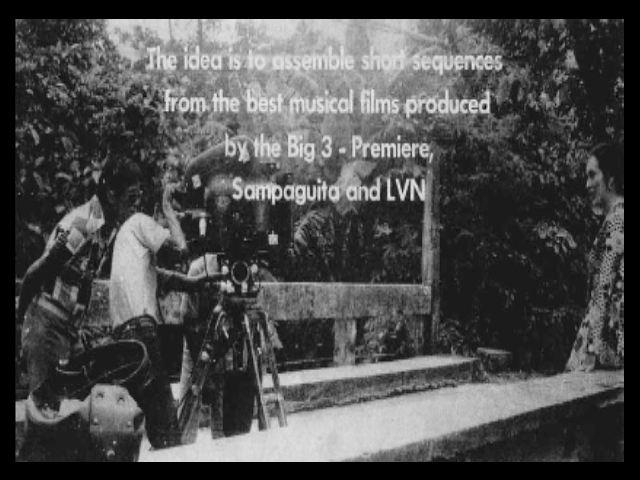
“…The idea is to assemble short sequences from the best muscal films produced by the Big 3 – Premiere, Sampaguita and LVN. It’s Digna Santiago on the phone giving it straight to tme like an IBM machine: “Sampaguita, LVN and Premiere are reproducing a full-lenght movie for the first time. It’s going to be a collection of film clips from their best movies since the 40s. The two studios hired their own researchers already. Can you research for us? Your associate will be Bernardo C. Bernardo.” Will I? Deal, I said with a school-boy enthusiasm. Cirio told us that the idea was to assemble a sizeable collection of short sequences from the three studios’ biggest hits. Bernie and I would work in the film library of Premiere. The co-production vernture was actually Cirio’s baby. His enthusiasm was so infectious that he was able to convince Mike de Leon of LVN and Bobby Vera Perez of Sampaguita to finance this unique production with him. The original plan was to produce, firstly, a straight documentary on the film trends in the local cinema from the 40’s up to the present and the superstars who glittered and captivated the audience for more than three decades. This was to be titled Remember When. It would be followed immediately by Happy Days Are Here Again!, which will showcase a compilation of the musical comedies produced by the three studios.

Cirio said that he had already contacted Lamberto Avellana to direct the movie. We were mesmerized by the imposing personality of Avellana whose anecdotes and witticism thrilled us like starry-eyed schoolchildren. Avellana said that documentary films are too stiff and not appealing enought to lure theater-goers. “We can’t spend more than two hundred fifty thousands grand for this film!” he emphasized. The hazy vision on the crystal ball finally became clear. The producer were making the movie on a shoe-string budget! During the pre-production talks, they couldn’t decide whether to cut the original budget – or splurge the four hundred fifty thousand bucks that Avellana wanted for the movie. They were frankly shocked by the “staggering” cost of the movie. Avellana wanted it spectacular in size. The producers were nervous. Meanwhile, the researchers began working at LVN. Socrates Jose and Eman Lacaba started reviewing old films inside the studio projection room and so did the Sampaguita group of Medy Tarnate and Joel Apuyan. Bernie and I were deep in research work at the studio editing room. To our dismay, the films we wanted were not available either because they were lost or the negatives had been destroyed. For instance, when Bernie and I wanted a copy of Bakya Mo Neneng which starred Rosa del Rosario, we were informed by the studio property master Ben Llenado that they didn’t have the negatives of the film anymore.

Not even Cirio’s repeated orders of “Find it!” could help locate the film. The LVN researchers wre on the same boat with us. Three of their musical comedy classics – Ikaw Kasi, Bahala Na (the first local film photographed in cinemascope type of lens called “MagnaScope”) and Tingnan Natin had been lost foreever. The studio didn’t have the copies of these three films! The same thing with Sampaguita’s Madaling Araw and Paru-Parong Bukid. Only the Big Broadcast had survived. While Cirio was preparing for abroad, Medy and Tiny worked on the second script. The verdict of Mike and Bobby was the same as on the first: Weak! When the third script was okayed, for the first time in more than a month of constant changes and editing, we were jubilant for a change, until Rosa Rosal, the leading character on the revised and okayed script dropped the bomb: She wanted P15,000 for three days of shooting! “Too much!” the producers’ blood temperatures rose, and we saw the third script slide down to oblivion. Earlier, they were even considering Dolphy for the musical finale of the movie – sort of a take-off from his El Pinoy Matador entry from Premiere. “Just imagine Dolphy with 50 toreadorabelles all in red,” enthused Avellana. But when they learned that the comedian’s asking price now is P300,000 per picture we said goodbye to Dolphy and his 50 dancing toreadorabelles all in red!

We were back again to zero. We were getting nervous as we sensed that the producers were contemplating on giving up their joint venture. In fact, Mike was all for abandoning the project. He was preparing for his trip to Germany to purchase new color processing equipments. Even the researchers were quarelling. When Peping Tarnate, our film editor, submitted his report on the running time of the film clips of each studio we found out that Sampaguita has 18 minutes, Premiere, 22 and LVN, 48 minutes! When the producers asked for the complete and final presentation of a new screen treatment for Happy Days Are Here Again!, we knew taht it was an ultimatum to produce something – or else! Suddenly, the dreaded specter oozed its frightening apparition before us. The bouncing baby had become an uncontrollable muti-headed monster! Bernie and I started arguing. One time we scandalized the LVN canteen with our “shoutings” and Soc joined in, banging the chair on the table that an outsider rushed inside our office. “What’s happening here?” he asked worried. “Nothing. Just discussing the script.” we answered like innocent school boys. The “Five Fingers,” too were on each other’s nerves. I couldn’t stant it anymore. Finally, we agreed to be clear headed about it. The project was in danger of collapsing, we couldn’t afford to be petty with our feelings anymore.

Avellana gave us encouragement. “Fight, boys, fight!” he enthused again like a cheer leader. With that, we worked on our individual scripts. It was Lina Santiago (who was representing Premiere on behalf of Cirio and her husband, Danilo) who read the script first. “Its much better this time and so many ideas to choose from,” Mike read the scripts in his office. Bobby was down with the flue but sent word that he’d go along with the decision of Lina and Mike regarding their final choice of the script. Premiere wanted to start the production rolling and offered to buy LVN’s share on the venture. But Mike refused. He knew that without the LVN films clips, the entire film would collapse like a pile of tarot cards! And besides, Mike himself was aware of the fact that LVN had the best entries. And he was right! Amidst the producer’s vaccilation and the production’s somnalent state, I gave the whole affair a shrug. I have other responsibilities to attend to. Two weeks later, a call from Premiere office asked me to be present at the HDAHA staff meeting. News was Ciriio just arrived and he was re-organizing the project – or what was left of it. I was glad to come. After two weeks, I’d see my friend again. In the movie, despite internal dissent, affection prevails. This I found out. The sight of Soc, Bernie, Tiny, Medy and Eman restored that warm glow of enthusiasm and concern I had for the project.

The next day, we wre once again in a panting flurry of actions. Once in his orbit, Cirio’s powerful motivating force seems to pull us in dizzying spins. Also, his volatile temper sent us coming and going like comfused rabbits! He asked the researchers of LVN, Sampaguita and Premiere to add more entries to the previewed and edited later. he gave his basic story line for Medy and Tiny to work on. What do you know – it was the original idea we had before! Talk about going in circles! “What happened to our best musicales? Hawaiian Boy? Basta Pinoy? I didn’t like our Eddie Mesa entry. Too simple. We have plenty of Eddie Mesas. Rolling Rockers, Singing Idols…” Cirio rattled on. The next morning, I sent a report on our research work the whole day to Cirio: Hawaiian Boy and Basta Pinoy are beyond salvage. Also, no prints or copies are available at the studio, Eddie Mesa’s big scene in Singing Idol is what you want it to be: Spectacular. But sorry, we can’t find the sound reel. We await your instructions. When our energetic “general” scheduled our first shooting day at the Sampaguita studiio, we were excited and bewildered. One question nagged us: What happened to Avellana? We asked Cirio if he had already informed him of the changes in the project including the script and that he (Avellana) was no longer to direct the HDAHA movie for the Big three.

“I tried twice, in fact. But I didn’t have the nerve to tell him that he’s out of project,” Cirio said. (Avellana ended up as consultant of the movie.) First shooting day dawned on the HDAHa company at the Sampaguita studio, Gloria Romero and Leopoldo Salcedo were scheduled to shoot that day for their brief narrations. The other stars like Nida Blanca, Jaime de la Rosa, Ike Lozada, German Moreno, Eddie Gutierrez, Pugo, Tirso Cruz III and Susan Roces were to shoot their scene within the week. There was a slight confusion and excitement when we found out that we had not submitted our script to the Board of Censors for their approval – before we could shoot or start shooting the film! Medy and Tiny immediately worked double time to type the censor’s copy. Bernie did the required sypnosis. “What do you think? Will we make it at the box office with our movie?” Cirio kept repeating, asking everyone, while pacing nervously all over the set. When he alerted us – “O, ready na, Gloria (Romero) is here!” – I was convinced that finally and most definitely the much delayed, plagued and battered project would see realization at last and this time no more hassles! – Cris D. Almario (READ MORE)