Vilma Santos-Recto is a popular multi-awarded actress and politician in the Republic of the Philippines. *** She is known as "Queen of Philippine Movies," "Queenstar," "Grand Slam Queen," "Box Office Queen," and "Star for All Seasons." *** This website is mostly about her iconic film career.
In 1985, the Philippine Movie Press Club initiated the Star Awards for Movies and Television, which is currently the Philippines’ Golden Globes’ counterpart. The very first recipient of Star best actress was Nora Aunor for Merika while Vilma’s movie Sister Stella L. received the movie of the year award. Vilma Santos was nominated for Palimos Ng Pag-ibig in 1986 but failed to win the best actress. Unfaithful Wife was judged the STAR best picture of this year. The next year, Vilma’s film, Saan nagtatago ang pag-ibig was proclaimed the movie of the year. Vilma received a best actress nomination for her FAMAS winning film, Tagos Ng Dugo. The fifth year, Vilma was nominated again, this time for Ibulong Mo Sa Diyos.
PMPC finally gave the trophy to Vilma in 1989 Star Awards. Vilma’s Pahiram Ng Isang Umaga four major awards: actress of the year for Vilma, supporting actor for Eric Quizon, director of the year for Ishmael Bernal, and Movie of the year for Regal films. Pahiram also won technical awards for cinematography, musical score, and production design. The following year, Snooky Serna won the supporting actress for Vilma’s “Hahamakin Ang Lahat.” Vilma was nominated for Hahamakin but the Star went to Nora Aunor for Andrea paano ba ang maging isang ina. Despite the lost, Vilma received a very special award from the PMPC, the “Darling of the Press” award. The next year, 1991, Nora Aunor again received the Star Award Actress of the Year for Ang totoong buhay ni Pacita M. Vilma was nominated for Ipagpatawad Mo.
In 1992, Vilma was nominated again, for Sinungaling Mong Puso that Lorna Tolentino won for Narito ang puso ko. After winning her first Star Award in 1989 and nominated three consecutive years, Vilma finally win her second Star in 1993 for Dahil mahal kita: Dolzura Cortez Story. The next year, Vilma was nominated for Nagiisang Bituin but Dawn Zulueta took home the trophy for Buhay ng buhay ko.
In 1995, Nora Aunor was the big winner again with her film, Flor Contemplacion Story. Then in 1996 was Sharon‘s grand slam year. She won the Star for Madrasta with co-star, Christopher De Leon taking the actor of the year. In 1997, Zsa Zsa Padilla defeated Nora, Vilma, Marecel and Sharon for actress of the year for Batang PX. Vilma was nominated for Hanggang Ngayon Ika’y Minamahal. Vilma was the big winner in ’98 for her film, Bata bata paano ka ginawa. She won actress of the year while co-star Serena Dalrymple won the supporting actress. Elizabeth Oropesa followed Vilma’s win the following year via Bulaklak ng Maynila. The new millennium brings another Star to Vilma as she claimed her fifth actress of the year for her film, Anak. The next year the Tuhog was the top film while Snooky Serna won the actress of the year for Habang kapiling ka.
Vilma won her sixth actress of the year from Star in 2002 for the film, Dekada ’70. She will win her seventh Star again in 2004 for Mano po III: My love in 2004. The next three years, Judy Ann Santos (Kasal, kasali, kasalo – 2006); Ai-Ai de las Alas (Ang cute ng ina mo! – 2007) and Sharon Cuneta (Caregiver – 2008) received the Star actress of the year. Vilma Santos received the lifetime achievement award in the 2008 Star Awards while Nora Aunor’s film Himala was given a special citation award. By 2010, Vilma received her 18th best actress nominations (surpasing Meryl Streep’s historical 17th OSCAR nominations) and won another STAR for her 2009 film, In My Life. – RV (READ MORE)
The Plot: A married couple who try to make their marriage work despite the fact that both of them are career-oriented and that there are tensions created by the prescence of their first-born child, Mike Jr., who turns out to be autistic. – RV (READ MORE)
The Reviews: “…At first, their marriage is close to being one made in heaven. Mike Esquivel (Christopher) is a successful lawyer, while Celina (Vilma) is a popular talkshow hostess. Celina gives up her career to devote fall time as mother to Junjun, the autistic child, played well by both Bennett Ignacio (when Junjun is three years old) and Terence Baylon (when the boy is seven years old). The husband, however, is totally unsympathetic and even considers the child a disgrace. With the wife spending practically all her waking hours to attend to her “special” child, the marriage expectedly begins to crumble. They only give themselves a second chance when Celina finds out that she is again pregnant. The second child – to father Mike’s relief – turns out to be a normal, healthy boy. But with Mike still unable to accept the first child, the marriage is on the rocks once more. The situation worsens when Mike -driven by the abnormal conditions at home and his own self-centeredness – starts an extramarital affair with a balikbayan named Monique (Bing Loyzaga). Finally, a near tragic incident gives Mike another chance to prove himself a worthy husband to Celina and even worthier father to his kids, especially the autistic one. The movie is poignant, nevermushy. It isnotthe run-of-the-mill tearjerker that relies on maudlin theatrics and melodramatic devices to touch the hearts of moviegoers. Surprisingly, despite the frustrating problem facing the movie couple, moviegoers did not seem to be depressed by the movie…” – Butch Francisco (READ MORE)
“What?s the critics said: Payak, makabuluhan ngunit kakaibang pelikula ang ?Ipagpatawad Mo? ng Viva Films. Sapat ngang ipakipaglaban ng Vilma Santos at Christopher de Leon tandem ang paghahanap ng ibang klaseng script na lalo pang mapatingkad sa status nila bilang mga aktor sa makatuturang kahulugan nito. Mapalad sila sa panulat ni Olivia lamasan ng isang story na tumatalakay sa reaksiyon ng isang pamilya sa pagkakaroon ng abnormal na anak. Hinugot ni Ms. Lamasan ang autism syndrome na first time na inilantad sa Pilipino screen, bagamat tinangka na rin itong ipaliwanag sa ?Rain Man? ni Dustin Hoffman sa Hollywood. Sa story, sina Vilma at Christopher ay intelihente (TV broadcaster at lawyer respectively) at matagumpay na indibidwal. Maykaya sila sa buhay ngunit nagkaanak ng autistic. (Ang autism, ayon sa mga modren psychologists na sina Bernard Rimiand at lauretta bender, ay isang uri ng infantile psychosis na kung saan ang sinasapian ay nagwi-withdraw sa reyalidad ng buhay. Nananatili sila sa sariling daigdig na nilikha ng isip at pantasya.) dahil sa autistic child (Edward Carlos Garcia) unti-unting nawasak ang pamilya nina Vilma. Vilma vowed to protect and care for the child because she felt this is the only way a mother can assure herself that everything can be given to the son. (Pinatunayan nga ng pelikula na mas apt ang title na Paano Ba Ang Maging Ina rito kaysa roon sa ginawa ni Nora Aunor). On the other hand, nire-reject ni Chris at ng kanyang family (Delia Razon, et al) ang bata dahil nakababawas ito sa dignidad ng family stature nila. The conflict progresses to give us the different views on how to accept the frailties of people within our family. Para bang kung paano tatanggapin ng magulang na may anak siyang may butas sa puso or worst bakla. The father and mother image were deliberately explored at sa tuwing mag-aaaway sina Vi at Boyet, parang nakikita natin ang ating mga magulang na nagtatalo. the scenes were too real for comfort.
Nadale ng Viva ang kiliti ng masa. Hindi mo nga kailangang bigyan ng heavy stuff ang tao para masabing matino ang pelikula. Tama na nga sa mga politicized films or pa-social relevance. Bugbog na bugbog na ang ganitong tema sa mga diyaryo at sensayunalismo ng TV Patrol ng Channe 2. Mas kinagugusto ng balana ang mga pelikulang nakasentro sa mga karaniwang problema ng tao, lalo na?t may kinalalaman sa ordinaryong relasyong pantao. Napapanahon ang story ng ?Ipagpatawad?. Simple. Natural na pinakilos ng mga tauhan ng dula na halos parang hindi mo namamalayang pelikula lang pala ito. Aakalain mo ngang nakikinood ka lang sa isang scenario sa buhay ng kapitbahay mo. Ganito katindi ang tama ng pelikula sa manonood. This is indeed a very special movie for Boyet and Vi. Santos is again in the running for Best Actress. She was able to sink her teeth to the role of a disturbed mother torn in the love and responsibilities for her husband and the abnormal child. Except for some restless gesticulation of the hands, damang-dama mong buong katawan niya ay nilukuban ng kaakuhan ng role. All her scenes can be considered highlights, because she was consistently good in them. Her duro scene with Boyet was satisfactorily blocked and orchestrated. So far here, Vilma has an edge over Ruffa Gutierrez, Mona Liza, Janice de Belen and Lorna Tolentino in the acting derby next year. De leon was able to regain his acting brilliance in this movie. hindi puwersado. Cool, less facial contortion which became evident in some recent films he made. I like him better here than in ?Salingin? and ?Makiusap sa Diyos?. Nakababagbag-damdamin ?yung paghingi niya ng tawad sa anak. The monologue, which started sa pasakalye to reconcile ended in pained catharsis, that even a man with a heart of stone whould melt in depression. As a team, gamay na gamay na nina Vi at Boyet ang isa?t isa. Actually. sa tender moments nila, you don?t see them as the stars. You are made to believe they were really husbadn and wife.They were too relaxed. Their movements were free and natural. This is really what we call team acting. Walang sapawan.
The movie added more luster with the convincing portrayal of the kids. (Edward Garcia, Bennet Ignacio at Terence Baylon) who played Vi?s children. Special mention dito si Garcia na gumanap na 3-year old Junjun. Ang nuances niya ng ritualistic hand movements and echolalic sppech (symptom ng autism) ay talagang believable. He is not even conscious of the camera. Not to be outdone ay ang great support nina Charito Solis, as the choleric mother of Vi: Joonee gamboa, as the phlegmatic father; Ruby Rodriguez, as the yaya na talagang agaw-eksena, lalo na sa carnival scene; Bing Loyzaga, na mas improved and better version ni Gretchen Barretto sa movie; at Vivian Foz, as the wronged confused sister of Vi. Exceptional din ang cinematography and lighting works ng movie. As usual, expected sa Viva melodrama ang glossy, fabulous setting na nag-capitalized sa affluent house interior. kaya lang, parang di tugma ang theme song ni Janno Gibbs sa story. But more than this, laudable ang script ni Ms. Lamasan. Veritable na may research work ang writer. Dahil na-inform niya nag madla tungkol sa autism na dominant sa mga batang lalaki ngayon. Naipabatid niya na autism is detectable at the first two years, when the child is suffering from hearing and speech impairment In-insinuate din niya na the birth delivery (as specified in the opening scene) can cause oxygen deprivation that may affect the brain development of the child, thus creating immaturity in vasomotor coordination such as hearing, speech and hand movement. nilinaw rin niya na ang emotional refrigeration (yaong rejection nina Chris, Delia at Vivian) can cause the intensification of the disease. However, na-establish din niya ang love and care ng parents (ni Vilma) at sibling (ng kapatid na normal) will be more than enough to push the child to develop little by little. This time Laurice Guillen has hit the pot. The movie turned out to be artistically made and yet the commercial value of it did not suffer. Bumalik na ang aesthetic eye ni Direktora Guillen. Thank God, a film like this comes once in a while to give us enter-educational (learning with pleasure) millieu.” – Ces Ysobel Orsal (READ MORE)
“…The 1990s saw Charito Solis graduate to mother and grandmother roles, which she had done with frequency in the 1980s. In another nod to her age, she finally allowed herself to be billed above Vilma Santos, then acknowledged as the Longest-Reigning Box Office Queen of Philippine Movies, albeit above-the-title in films such as Ipagpatawad Mo (1992) and Dahil Mahal Kita: The Dolzura Cortez Story (1993)…” – Gypsy Baldovino and Yolly Tiangco (READ MORE)
“So much has been said and written about Enter-Educate (Entertainment for Education) but does anyone really know what it all means? As their ad says people in the entertainment industry who ascribe to Enter Education use their appeal to inculcate positive values. Quickly applying this in the movies, It’s the difference between Ipagpatawad MO (Viva Films) and Disgrasyada (Regal Films) both showing at your favorite theaters. Ipagpatawad Mo is a movie about how a family copes with autisitc children. Value: The Family. I haven’t seen Disgrasyada, but given Regal’s track record for gadawful movies, this movie will probably have Ruffa Gutierrez rompling around (wet, most likely) in Mother Lily’s famous kamison. Value: Magic Kamison. I am not saying that Viva makes better movies than Regal. Viva is the same company which brought you Humanap ka ng Panget and Andrew Ford Medina. But it is making an effort to entertain and educate. Which is more than I could say for other movie companies. Ipagpatawad Mo (Direction: Laurice Guillen) is like a training film for parents of autistic children, with lots of drama and fine acting from two name stars. Before anything else, this is the first time I’ve seen a cellular phone (not cordless) in a Filipino movie. (Puh-leeze, I can’t stand people who use cellular phones in their cars, in restaurants, in movie houses, even in church. I hereby propose cellular phone-free zones). This is observation has nothing to do with the rest of this review. In the movie, Vilma Santos plays a successful TV journalist (Must everyone play Loren Legarda in the movies?) while Christopher is a successful lawyer. Everything is perfect until their son Junjun turns three (Are the two children who played Junjun, age 3 and age 8, autistic in real life, or are they actors?) They find out from Lorli Villanueva, who plays a psychiatrist, not a laudrywoman that their son is autistic. Christopher wants to put Junjun in an institution (ala-Rainman).
Instead Vilma takes Junjun to her parent’s house. She gives up her job, stops playing attentive wife to Christopher, and dutifully takes Junjun to a special school. Christopher complaints that Vilma doesn’t pay enough attention to him anymore. Vilma complains that Christopher has forsaken his duties as a father. They breakup, almost. But they reconcile because Vilma is pregnant. She has given birth to Paolo, a normal child. Understandably, Christopher is proud of Paolo and ashamed of Junjun. He doesn’t want his friends to know he has a “defective” son. One day, Junjun humiliates his father in a party. Christopher scolds him, but Junjun doesn’t understand. Instead, he starts to draw his father with a tail and horns. Christopher has an affair with Bing Loyzaga, who tries very hard to do a Nanette Medved, but ends up looking like Gloria Estefan in that Pepsi commercial. Vilma discovers the affair and moves out of the house. Christopher doesn’t want to lose his family so he breaks up with Bing. He begs Vilma to come back and promises to make an effort to accept Junjun. They take a vacation and finally Christopher comes to terms with his feeling for his autistic son. In a touching scene, Christopher and Junjun sit together, but apart in the living room. He tells his son how excited he was when he was born. How he had such great hopes for him. How dissapointed he was when he found out he was autistic. And that he really doesn’t know what to do with him. But he loves him very much. Christopher cries, Vilma, who has eavesdropped, cries too. Junjun who has been toying with a ball, stands up and leaves the room. I guess this sums up the whole situation of what it’s like to be a parent of an autistic child.
Christopher redeems himself from his bad performance in the movie Huwag Mong Salingin ang Sugat ko, shown last week. He is in top form here, and portrays a gamut of emotions, as a father who could not accept that his son is autistic; as comfused husband who turns to another woman for comfort; as a desperate man who implores his wife to give him another chance; and as a transformed father who finally accepts his son is autistic. Vilma is exceptional, as usual. The two stars look good together. (I cannot imagine Christopher and Nora Aunor together). Although, they looke visibly – dare I say it? – old. Not even the soft-focus lens could disguise the bags under their eyes and the lines on their cheeks. Good thing Ipagpatawad Mo is a movie which deals with a more sophisticated subject, other than a man who meets a woman and they fall in love, or a married man falls-in-love with another woman and vice versa. In the future, I would like to see less cellular phones and more mature movies like this, please.” – Elvira Mata, Manila Standard, Oct 23 1991 (READ MORE)
“Countless subjects have been written about this star for all seasons – a fascinating character to her fans. Her calm composure even in the midst of brickbats thrown her way by some members of the press, her acting talents attested by the 16 best actress trophies and her screen image are reasons enough why she has gained a strong foothold in the hearts of the moviegoers. “Being popular in one’s profession or let’s say being successful, is not a shield against the wounds of life. On the contrary, principles come more often and go deeper if one is successful and popular,” she told us when we chanced to talk toher on the set of her latest movie, Ipagpatawad Mo with Christopher de Leon. Moviegoers have always accepted the team-up of Vi and Boyet, acting and box office wise. This is their 16th partnership. Their first was in Tagulan sa Tagaraw.
So what else is new? “There was a time na parang sawa na kami sa subject ng movie namin. Relasyon, Pakawalan Mo Ako, Imortal, Nakawin Natin ang Bawat Sandali, Masarap Masakit ang Umibig, etc. are just some of them. So when we read the script, we said na sana bago naman ang story, not just a love triangle, or legal separation and such subjects. This is the first time in out picture togethertaht involved our child who is autistic. Not many people or only a few of our parents know what an autistic child is. Akala nila mentally retarded na ang mga yon. Which is definitely not true. Autistic children can be taught, can be improved but it takes a lot of patience and determination to make them so. In this movie, Boyet could not believe that he has such a child and he rejects him. But I could not, and that is the bane of our everyday quarrel. I fiercely defend out son here saying to all and sundry that he is not mentally retarded. How did you tackle the subject of autism? “Boyet and I read books about it, saw a movie with its theme, visited a special school for such children in Forbes Park, and spoke to parents of these children.
Ninety percent of these autistic children are very good-looking and are good in numbers but they have a world of their own. If you teach them something, yon kung ang alam nila, no other world exists. Autism is like virus and it is not hereditary. Hindi malalaman na autistic ang isang bata until they are about three or four years old. But doctors know, when a baby is born that he or she is autistic, only they don’t dare tell the parents about it. This movie should be an eye opener for such doctors and parents.” How is it that you and Boyet are so compatible with each other as a love team? To our knowledge, no other team-up has endured such long partnership. “Maybe it’s because we’re comfortable with each other. And one thing more, the moviegoers accepted our team because there’s no personal involvement between us. It’s not necessary that there’s love angle between us. Ang sa amin platonic lang. Not only that, we’re the best of friends. Do you know that Boyet was the first leading man to whom I confided that I’m going to marry Edu? He was also the first to whom I broke the news that I’m pregnant with Lucky. That’s how firm our friendship is.”
In all the years that you’ve been together in the movies, did Boyet ever court you? I heard before that wen you we’re filming a movie with Eddie Rodriguez, he sent you three red roses. “Naku ha! That’s just his way of affirming our friendship. Walang malisya youn.” If in real life, you’re really husband and wife, do you think your marriage will also endure up to the present? ” I just can’t tell, ha. But Boyet and I are both Scorpions. We have the same strong personalities. Siguro magka-clash kami. But in our scenes in the movies, It’s wonderful if Boyet is my partner, because kung intense at high ang feelings ko, kaya ni Boyet na saugtin kung ano ang sinasabi ko with the same intense feeling.” And with the others? “No comment.” In Ipagpatawad Mo, Vi portrays a mother’s love for her child. “I know the feeling because I am a mother. I’ll fight tooth and nail for the care and well-fare of my son, Lucky.” Vi is going full ahead of her movie schedules next year. After this movie, she’ll be shooting Sinungaling na Puso (temporary title), for Regal’s tehn one with Armida’s Reyna Films (The Heiress), and another one schedule for Vision Films.” – Nena Z. Villanueva, Manila Standard, Oct 28 1991 (READ MORE)
VSSI Inc. News: “Maraming donasyon ang ini-expect naming manggagaling sa abroad gaya ng Sweden, New York, meron kami, sa Dubai na miyembro ng VSSI,” sabi ni Governor Vilma Santos-Recto na hinahangaan ang good deeds ng kanyang loyal followers (for Sendong Victims). Eh, matapos niyang pasayahin ang Christmas party ng kanyang loyal followers, ano naman ang plano ng pamilya niya. “Dito lang kami. Hindi kami aalis,” sambit niya sa aming ambush interview. Naniniwala kasi si Governor Vilma na kahit may lungkot na nadarama ang mga kababayan natin sa Cagayan de Oro, Iligan City at iba pang lugar sa Mindanao, dapat ding magsaya ang mga tao dahil nga kapanganakan ni Hesus.” – Jun Nardo, Dec 2011 (READ MORE)
“…True enough, they were most enthusiastic but kind of controlled with their adulation when Ate Vi came with her Girl Friday Aida Fandialan in tow. Anyway, when the famed actress had the chance to talk with her adoring fans, she was most nostalgic as she went down memory lane of her memorable encounters with them. According to her, she had this fan who would come almost on a daily basis at her governor’s office in Batangas and never complained even if Ate Vi could not attend to her or keep her entertained. The actress-politician also cited this aging fan who’d carry blown-up photos of the Star for All Season with all the dedication in the world during her VIP days, content to see her idol perform. She also expressed being truly touched by the filial devotion of this fan who was with her almost from the very beginning of her illustrious showbiz career and was just staying with her family in a modest rented apartment in La Loma. The mere fact that he got along famously with her late dad was something that Ate Vi would always remember with fondness. “And I’m glad that he’s still with me today!” she says apparently overwhelmed by a myriad of emotions. Ate Vi also remembered a fan who was already in her early 80s and yet she never failed to come whenever she asked her to. At this point, Ate Vi also singled out a fan who has remained unattached and never gotten married, but has religiously brought her kakanins from Biñan, Laguna. Indeed, the Star for All Seasons is obviously equipped with an elephantine memory who never forgets any good deed done or kindness she’s been most generously showered with…” – Peter Ledesma (READ MORE)
Becoming Gloria Romero “Vilma Santos’ loyal fans were so happy about her latest acting award at the Urian awards (for her performance in “Dekada ’70”) that they turned out in full force at her “reunion” celebration at Bakahan at Manukan on P Guevarra st. in San Juan. Movie scribes with a soft spot in their hearts for Vi also showed up, making the evening a riotous success. In the midst fo all the fun and frolic, Vilma was able to sit with us for a spell, and breathlessly brought us up to date on what’s been happening to her these past months, as well as gave us a peek into her future prospects. First off, she’s appreciative of the trophies that she’s gotten for her intense but controlled performance in “Dekada ’70,” for which she swept the competition…In the past, she used to think of retiring from the big and small screens, to concentrate on public service and urban management. Now, however, she’s sure that she’ll continue to act “until I become a gransmother – Gloria Romero.” This is a welcome development on the local film scene, which is notorious for its fetish for youth, and its bias against age and experience. With Gloria and now Vilma showing the way, our moviegoers can be educated to value veteran talents over callow starlets, so performances on the big screen can mature and deepenn through time. The future? Vilma wants to make one film a yar, and is looking for challenging plots and characters. In politics, Vilma debunks rumors that she’s going to run for senator next year. In fact, she refuses to think of politics at all, preferring instead to concentrate on her work as mayor of Lipa City. But, if voters there want her to run for another term, Our sense is that they won’t have a hard time persuading her…” – Nestor U. Torre, Philippine Daily Inquirer, May 31, 2003 (READ MORE)
Bumandila na anaman ang JE Productions sa nakaraang FAMAS awards night nang makopo nila ang tatlong pinakamalalaking tropeo ng karangalan kabilang na ang Best Picture para sa Kumander Alibasbas, Best Actor para kay Joseph Estrada at sa Best Director para kay Augusto “Totoy” Buenaventura sa sermeonyang ginanap sa Metropolitan Theatre. Ito ang ikalimang karangalan natamo ni Erap sa iisang kategorya na nag-akyat sa kanya sa tinatawag na Hall of Fame, at siya rin ang kauna-unahang aktor na hall of famer sa best actor category. Natamo ni Erap ang unang best actor award noong 1962, Patria Adorada at ngayong 1981, Kumander Alibasbas. Ito namang Kumander Alibasbas ang ikatlong best director award na natamo ni Totoy Buenaventura. Una ay ang Kill the Pushers noong 1971 at Bakya Mo Neneng noong 1978. Sa best screenplay award ay hall of famer na si Buenaventura. Sobra pa nga sa quota ang natamong karangalan ni Buenaventura sa dapat na maging hall of famer. Anim na best screenplay awards na ang kanyang natatamo sa FAMAS: Kalibre .45 noong 1956, Psycho Sex Killer, 1968, Patria Adorada, 1969, Tatay na si Erap, 1970, Kill the Pushers, 1971, Bakya Mo Neneng, 1978.
Ang Kumander Alibasbas din ang isa sa mga box-office hit nang nakaraang taon. Kasaysayan ng isang rebel leader sa gitna ng tinatawag na labor unrest sa Central Luzon before Martial Law, ang Kumander Alibasbas ay naging kontroberyal sapagkat tumalakay rin ito sa ilang political problems ng bansa. Tinatayang may maselang tema, subalit mahusay na nailarawan nang walang “nasagasaan.” Umiiral ang cinematic effects ng pelikula na siyang nakatawag ng pansin sa mga humusga. Ang aktress na si Vilma Santos naman ang nagkamit ng Best Actress award dahilan sa makatotohanan niyang pagganap sa pelikula ng MVP na Pakawalan Mo Ako na tumatalakay sa tatsulok na pag-ibig na kung saan ay nakapareha niya sina Christopher de Leon at Anthony Castelo sa direksiyon ni Elwood Perez. Nakamit ni Chanda Romero ang Best Supporting Actress award sa pelikulang Karma na siya rin pinagwagihan sa best supporting actor award ni Tommy Abuel. Tatlong award rin ang natamo ng FPJ para sa pelikulang Ang Pagbabalik ng Panday: Best Art Direction, Rolando Sacristia; Best Sound para kay Cesar Lucas at Best Cinematography para kay Vir Reyes. Tuwang tuwa ang mga fans ng bulilit na si Sheryl Cruz na hinirang bilang Best Child Actress para sa Basang Sisiw at ang Best Child Actor ay natamo ng isang baguhang si Mark Versoza para sa pelikulang I Confess. Si Sheryl ay anak ng magasawang artistang sina Ricky Belmonte at Rosemarie Sonora. Sabi nga ni Inday Badiday, naunahan pa ni Sheryl na magka-award sina Ricky at Rosemarie. Dalawang award naman ang natamo ng pelikulang Init o Lamig; Best Editing for Edgardo Vinarao at Best Story for Baby Nebrida. Bukod kay Vilma Santos, ang Pakawalan Mo Ako ay nagkamit din ng dalawa pang award: Best Theme Song for Louie Ocampo at Jimmy Santiago at Best Music for Lutgardo Labad.
Nakamit ni Mother Lily Monteverde ang special award na Cirio Santiago Memorial Award; kay German Moreno ang Jose R. Perez Memorial Award; at Marichu Vera Perez ang Gregorio Valdez Memorial Award. Stage emcees sina Bert “Tawa” Marcelo at Coney Reyes-Mumar at achor woman naman si Helen Vela. Naging performer sina Rico J. Puno, Sharon Cuneta, Ivy Violan, Something Special, Lirio Vital, at Obusan Dance Troupe. Matabang mataba marahil ang puso ng presidente ng FAMAS na si Ros H. Olgado, sampu ng mga opisyales at kasapi ng akademiya dahil sa talumpati ng guest of honor na si Ms. Imee Marcos, ang direktor general ng Experimental Cinema of the Philippines. Lalo na nang ipahayag niya ang pagnanasang makapagpatuloy pa ang FAMAS sa pagkakaloob ng prestihiyosong awards ng tulad nang ipinamahagi nang gabing iyon. Sinabi pa ni Imee na kung nagkakaroon man ng krisis sa FAMAs, iyon ay bahagi ng pagunlad. Aniya, parang puno ng kawayan ang FAMAS na maaaring humahapay kapag may malakas na unos subalit makaraan ang unos na ‘yon ay muling titindig na tila aabutin pati ang langit. Ayon sa mga observer, ang nakaraang awards night ay lalong nagpatunay na ang FAMAS ay matibay pa rin at may prestihiyo at ito pa lamang ang kaisa-isang award giving body na nirerespeto at pinagsisikapang makamit ng mga taga-industriya. Sa lahat ng mga awardee, congratulations and mabuhay kayong lahat! – Mar D’Guzman Cruz, Pelikula ATBP (READ MORE)
Basic Information: Directed: Ishmael Bernal; Story: Ricardo Lee; Screenplay: Ricardo Lee, Raquel Villavicencion, Ishmael Bernal; Cast: Vilma Santos, Christopher De Leon, Jimi Melendez, Ernie Zarate, Lucy Quinto, Manny Castañeda, Beth Mondragon, Bing Fabregas, Olive Madridejos, Augusto Victa, Dante Castro, Tony Angeles, Thaemar Achacoso; Executive producer: Lily Monteverde; Original Music: Winston Raval; Cinematography: Sergio Lobo; Film Editing: Augusto Salvador; Production Design: Benjie De Guzman; Art Direction: Dennis Cid; Sound: Vic Macamay; Theme Songs: “Relasyon” performed by Eva Eugenio
Plot Description: He sees nothing wrong in having a wife and a mistress. She would do anything to make him happy, including putting up with his idiosyncrasies, babysitting his child, and finding loopholes in the law so she could be with him. The characters are so familiar and so realistic that you might see yourself. Vilma Santos and Christopher de Leon star in this very touching story about two people who truly love each other but are trapped by the circumstances. Relasyon is another fine motion picture from director Ishmael Bernal. – Regal Films
Before 1982, the word grandslam were only used in sports. The term grandslam according to Wikipedia in terms of tennis is a singles player or doubles team that wins all four major tournaments (Australian, French, Wimbledon, US) in the same calendar year, is said to have achieved the “Grand Slam” or a “Calendar Year Grand Slam,” just like what Steffi Graf, the retired German tennis superstar did in 1988. Meanwhile the American Heritage dictionary described the term “grand slam” as follows: first, the winning of all the tricks during the play of one hand in bridge and other whist-derived card games. Second, the winning of all the major or specified events, especially on a professional circuit. And third, in baseball, a home run hit when three runners are on base. From this set of definitions comes the term “grand slam best actress” which basically winning all the best actress awards from all major award giving bodies. And in 1983, the four majors were FAMAS, Gawad Urian, CMMA, and the FAP (or Luna now).
The Beginning – The Marcos administration created the Film Academy of the Philippines in 1981 under the guidance of first lady Imelda Marcos and Imee Marcos as Experimental Cinema of the Philippines’ director-general. ECP started to ambitiously produced films to showcase local talents for its inaugural Manila International Film Festival. The organization produced two memorable films, Peque Gallaga’s period film, “Oro, Plata, Mata” and Ishmael Bernal’s French influenced film, “Himala.” Come Gawad Urian night, both films received it’s stiff competitions from three other films, Mike Deleon’s “Batch ’81,” Lino Brocka’s “Cain at Abel” and Marilou Diaz Abaya’s “Moral.” For the Manunuri, the previous year produced only two stand out films, Mike De Leon’s Kisap Mata and Laurice Guillen’s Salome. A big contradiction this year, as not only they have the tasks of sorting out the best in each categories from these five films mentioned above but also other worthy films. Famous with their long heated debates, the local critics added the following fims in their list of best films: Nora Aunor’s “Mga Uod at Rosas,” Vilma Santos’ “Relasyon” and Hilda Koronel’s “PX.” The three were cited not ony for the overall production but also for the performances of the film’s lead actresses. Also cited were, ECP’s delicate horror film, “Haplos” directed by Jose Perez and two Lino Brocka films, the comedy “Palipat-lipat, Papalit-palit” and the drama “In this Corner.”
For Vilma Santos, The previous year, Pakawalan Mo Ako was a huge summer hit that earned Vilma a surprised best actress in FAMAS. That year also released Ex-Wife and Hiwalay, about marital problems. Art immitating life, as there were reports that Vilma and now, ex-husband, Edu Manzano were having some marital problems. But Vilma as trooper as she is, any personal troubles were not publicly noticeable as she goes on with her work, business as usual. Also, Vilma gave birth to her eldest son Luis “Lucky” Manzano.
By December of 1981, her film festival entry, Karma earned her another surprise best actress trophy after the FAMAS gave her the nod for Pakawalan Mo Ako. In an unrelated news, the entertainment industry were shocked to found that matinee idol, Alfie Anido died on Dec 31st. Like the death of Julie Vega and Rico Yan, it is still unknown the reason behind Anido’s death.
She’s determined to make 1982 another successful year. She released a total of six films, out of six, two were certified record breakers, “Sinasamba Kita (I Idolized You)” released in August and “Gaano Kadalas ang Minsan? (How Many Times is Onced),” released in November, both produced by Viva Films. The other four films (Relasyon, T-Bird at Ako, Never Ever Say Goodbye, Haplos) were mild hits. All of her hard work paid off because as early as January of the 1983 she was already poised to reap major awards.
Meanwhile for Nora Aunor, 1982 were a mixed bag of mild hits and failed opportunities. “Mga Uod at Rosas,” her collaboration with Lorna Tolentino and director Romy Zusara produced a mixed reviews from the critics. Her excellent performance did not help as the film were just mild hit with the audience. Her follow up films, “Annie Sabungera” and “Palenke Queen” both comedies also didn’t do well at the box office making the expectation from her next film higher, as she teamed-up with the hottest star of 1982, her closest rival, Vilma Santos in Danny Zialcita’s fast paced film, “T-bird at Ako.” T-bird’s high expectation wasn’t realized as the film earned just a modest income.
By December, all eyes were focused again on Nora and her most ambitious project to date, Ishmael Bernal’s “Himala,” produced by the Imee Marcos’ Experimental Cinema of the Philippines. The film was an entry to the Metro Manila film festival. Nora Aunor was again proclaimed the “queen of local festival” as she won her third Metro Manila Film Festival best actress. Nora’s momentum was rising and she was conditioned to make some serious dent in the following year’s award giving seasons. Critics were all going “gagah” with Aunor’s gigantic performance as Elsa. They said, Himala was very effective in communicating its film’s message, it has moving moments and raw power.
Communicated It Really Well – “…Nestor Torre…he finds Batch ’81 the best movie made in 1982. “The movie had something very important to say and it communicated it very well…As for the best actress, it’s Nora Aunor in Himala. “It was a good role, and she communicated it very well. At least, Nora wasn’t api here for a change, It was quite a complicated role, but she handled it very well….Other choices were Gina Alajar and Lorna Tolentino in Moral…Vilma Santos, Nestor notes, is admittedly a “very hard worker but her physical structure really makes it difficult for her to be really effective—hindi malalim—and her voice is not that expressive.” Nestor adds, though, that, once in a while, Vilma “transcends her physical limitations, as in Rubia Servios…” – Nestor Torre Jr. (film critic), Parade Magazine, January 19, 1983 (READ MORE)
Moving Moments – “…Best Films: (in the order of preference) 1. Oro, Plata, Mata and Batch ’81; 2. Relasyon and Himala; 3. Moral. Best Directors: (in no particular order) 1. Ishmael Bernal for Relasyon and Himala; 2. Peque Gallaga for Oro Plata Mata; 3. Mike de Leon for Batch ’81. Actresses: 1. Vilma Santos for Relasyon; 2. Nora Aunor for Himala and Uod at Rosas; 3. Sandy Andolong for Moral and Oro Plata Mata; 4. Gina Alajar for Moral. Actors: 1. Mark Gil for Batch ’81 and Palipat-lipat, Papalit-palit; 2. Joel Torre for Oro Plata Mata; 3. Christopher de Leon for Relasyon. Most movies are usually flawed, and those in my list are no exception. However, apart from the standard criteria I am applying to them (the classic from and content balance), I am giving much weight on impact and emotional power. So, my top two are Oro and Batch. Himala is an ambitious film and much flawed, but it has visual beauty and emotional wallop. Relasyon is more modest in scope, but I think is more successful on its own terms. Moral has many good things going for it, from direction and writing, to performances, but it does not match the four other films in impact (though it has some moving moments) and originality…” – Mario Hernando (film critic), Parade Magazine, January 19, 1983 (READ MORE)
Raw Power – “…Ding Nolledo…confesses to liking Himala “very much” but mentions that he hasn’t seen Oro Plata Mata…because the film exudes “raw power,” not to mention the excellent acting and the direction, which was like early Fellini, especially the middle part…Ding doesn’t agree with Moral’s rave reviews because “I’ve seen Moral in about 369 other films.” It’s not that original, he implies. As for best actress, it’ll have to be Nora in Himala. “She reminds me of the young Anna Magnani. Besides, the script fitted her to a T. The role practically coincides with what she is in real life…” – Wilfrido Nolledo (novelist, screenwriter, film critic), Parade Magazine, January 19, 1983 (READ MORE)
Himala won nine out of eleven local festival awards. A sort of repeat of what Vilma’s “Burlesk Queen” achieved in 1977 but without the complaints or sourgrapes.
The success of Himala in the December festival has been overshadowed by the commercial success of Vilma Santos’ body of work. In fact, on Dec 14, 1982, Channel 9’s talk show, Let’s Talk Movies recognized Vilma Santos as their best actress for her body on work. Nora Aunor was nominated for her films excluding her epic movie Himala which was not qualified due to the show’s fiscal year requirements which covers December 1981 to November 1982 (More about this below).
On January 20, 1983, Vilma was crowned the Box Office Queen by the Metro Manila Theaters Association in their very first The 1st Cinehan Awards. Reporter Meg Mendoza wrote in an article for Prime Magazine, “…Vilma gave Viva Films its first biggest hit in Sinasamba Kita earning over P7M in Metro Manila alone. Then came T-Bird at Ako (a mild hit), Never Ever Say Goodbye (a sorry miss), Gaano Kadalas ang Minsan? (her biggest hit for that year) and Haplos. As early as January 20, 1983, Vilma began to reap several victories when she was awarded by the Metro Manila Theaters Association on their first Cinehan Awards together with Fernando Poe, Jr. held at the Philippine Plaza. National Artist Nick Joaquin, in an article that came out in the Bulletin Today on February 11, 1983 wrote: “By emerging as box-office queen, Vilma Santos proved herself to be the Philippine Cinema’s Superstar – a title, it’s to be realized now, that can be bestowed only by the Cinehan.” So, on Cinehan Awards Night, Vilma was the very picture of the conquering heroine, drawing all eyes as she glowed and glittered, a rapture of radiance in her strapless white gown with lilac sash – and in white gloves yet! In her triumph joined both cinema and cinehan. Her pictures were all well done – and they also did very well at the box-office. In the same awards night, Ambassador Jaime Zobel de Ayala, another recipient of the Cinehan, upon receiving his award from Dean Lucresia Kasilag said: “I’m only a little bit sorry that Vilma didn’t give me the award. But it’s all right, I’ll try again next year. You’re my favorite star, you’re my muse! I’ll suffer in silence…”
Ironically, few weeks after her crowning as box office queen, Vilma released Ayaw Kong Maging Kerida, the results was average, proving the Romeo Vasquez and Vilma Santos screen charisma has subsided immensely.
Not to be outdone with Vilma’s latest feat, Nora’s “Himala” competed in the 1983 Berlin International Film Festival the following month. The film was the Philippines’ sole entry. The rave reviews were solid, Aunor’s performance was recognized by a nomination but unfortunately, according to Bernal, she lost the race by a mere vote. Would a similar fate awaits Aunor as the local award giving seasons begins?
First Major – By late February, the award-giving season in the country started. In their website, the Catholic Mass Media Awards recalled, “…The Archdiocese of Manila, through His Eminence Archbishop Jaime L. Cardinal Sin, organized the Catholic Mass Media Awards (CMMA) in 1978, in observance of the International Social Communication Day (established by the Universal Church to stress the importance of mass media and to instill a sense of responsibility in communicators). An outstanding way, in radio, print, advertising, television, and film. It was first given out in 1978; since then the CMMA was held every year onwards. In 1980, His Holiness Pope John Paul II graced the awarding ceremonies. Handing out personally the trophies to the winners, the Pontiff illustrated the significant place of mass media in today’s society, and its pervasive influence in the lives of the people…”
Just the previous year, the CMMA praised Nora Aunor’s acting in the late Mario O’harra film, “Bakit Bughaw ang Langit?” and she was adjudged their best actress. There is a great chance that Nora would repeat the feat, as many expected the church would favor a well-crafted film with religious theme.
On February 29, 1983, the fight between Nora Aunor’s “goliath” type of performance in “Himala (Miracle)” versus the “davidian” type of performance in Vilma Santos’ “Relasyon (the affair)” begins. The media were patly right, CMMA gave their best picture, screenplay, supporting actor/actress to Himala. But despite its, taboo story of a mistress, the Catholic Church’s award giving body favoured Vilma’s sympathetic performance.
Vilma won the first bout. Nora left empty-handed. The first blood has been drawn and Noranians, Nora Aunor’s fanatic fans were furious. The fight didn’t stop at the Catholic Mass Media Awards. The next one was a big one.
Second Major – Noranians expected a third Urian best actress considering the magnitude of Aunor’s performance in Himala and the positive reviews it received. Positive reviews that were written by the Manunuri critics themselves. Noranians dismissed Vilma’s win at the CMMA and expected that metal sculted trophy was in the bag already. By the way, who are these critics anyway?
Practicing Film Critics – Writer, Billy R. Balbastro described the Manunuris, “…The Manunuri ng Pelikulang Filipino, on the other hand, is an organization of practicing film critics established in 1976. Most came from the Academe then with Nestor U. Torre becoming its first president. The Manunuri had its Gawad Urian in simple one hour-long rites at the CCP then. Dr. Bienvenido Lumbera Jr. became its second president. Other presidents include: Mario Hernando, Butch Francisco, Agustin “Hammy” Sotto, Gigi Javier Alfonso of UP. Each critic-member is expected to write regularly film reviews or film criticism which must be published in national publications. Each year too they give out awards for achievements in the movie industry, thus joining the FAMAS, the Film academy of the Philippines and the Philippine Movie Press Club’s Star Awards in this aspect of endeavor. During their first decade (1976 to 1985), they also came up with their Stars of the Decade: Nora Aunor, Vilma Santos, Vic Silayan and Phillip Salvador. The members of the Manunuri are: Mario Hernando (editor of Sunday Malaya), Bienvenido Lumbera Jr.(1993 Ramon Magsaysay awardee for journalism, literature and creative communication), Nicanor Tiongson (former artistic director of the Cultural Center of the Philippines, and former MTRCB chair), Butch Francisco (TV personality), Agustin “Hammy” Sotto (founding president of the Society of Film Archivists), Paul Daza (columnist), Gigi Javier Alfonso (dean of the UP-Diliman Open University and professor at the UP College of Mass Communication –UP-CMC), Ellen Paglinauan (dean of UP-CMC), Bro. Miguel Rapatan (DLSU), and Lito Zulueta (Inquirer sub-editor and faculty member of the UST Faculty of Arts and Letters)…”
On April 15, 1983, the Gawad Urian was set to give out their hardware. It was known by many, that the critics or the Manunuris were pro-Nora Aunor. They gave Aunor their very first best actress award in 1976 for her excellent performance in “Tatlong Taong Walang Diyos (three years without God)”. They also gave Aunor a second nod in 1980 in her wonderful performance in “Bona” with Gina Alajar as co-winner.
Speaking of co-winner or “tie,” writer Rolfie Velasco pointed out in his article, “…FAMAS was the sole award-giving body for film in the Philippines from 1952 until 1976, when the Manunuri ng Pelikulang Pilipino (MPP) formed the Gawad URIAN (FAMAS was also contested by the Manila Film Festival, established in the 1960s, but a film festival cannot be considered as a major award-giving body). From 1952 to 1976, FAMAS alone has awarded the most foremost performers and craftsmen of Filipino films, from screen legend Rosa Rosal to master director Gerardo de Leon. Winning a FAMAS Award became the target obsession for many film craftsmen, for it was, after all, the Philippines’ counterpart of the Oscars. The awards itself, then held mostly in the Manila Hotel, was the biggest annual event in the Philippine movie industry…In 1973, the FAMAS was rocked by a terrible scandal. It awarded the first tie in the lead categories in the history of Philippine cinema. Before this, the only recorded tie was in 1968, when Tito Arevalo and Tony Maiquez shared the Best Musical Score honors and also the tie in the best actress category, with both Boots Anson-Roa and Vilma Santos sharing the honors. Because a tie in the lead categories was unheard of, the public dissented the vote. Therefore, for the next years, the FAMAS invited film critics to be members of its nominating and awarding committee. These critics left the FAMAS in 1976 to form MPP and subsequently, the Gawad Urian (Urian Award), named after the Tagalog word for gold standard…”
When the winner was read, even Vilma was surprised. After so many years of snubs, she finally received the recognition she truly deserved. The critics finally came to their senses and recognized Vilma’s explosive and giant killer performance.
By winning the Gawad Urian, Vilma defeated not only Nora but also Lorna Tolentino and Gina Alajar both equally gave a felt performance in the feminist film, “Moral.”
Adding chery to an already sumptous plate, at the same night, on April 15, 1983, Vilma have to rush to another ceremony, she was crowned by the Guillermo Mendoza Memorial Foundation as the 1982 – 83 Box Office Queen of Philippine Movies at the Celebrity Sports Plaza with Fernando Poe Jr as the Box Office King, her second crown/title after January’s Cinehan Awards.
This was Vilma’s second major best actress wins in the same calendar year. She was half way there. People are now starts talking about the possibility of Vilma winning all the best actress awards.
Not to be outdone, Noranians regained from their dissapointments as Nora Aunor received an award from a socio-political group, the TOWNS on April 23, 1983. Nora Aunor received (The Outstanding Women in the Nation’s Service) or simply TOWNS award from no less than the then tirst lady, Mrs. Imelda Romualdez Marcos, at the Plenary Hall of the Philippine Convention Center. With the first lady handing out the TOWNS to Nora, people are started to insinuate that Nora Aunor’s defeat in two previous majors are polically motivated.
Third Major – The next race was the very first Luna Awards, back then, simply called the Film Academy Awards, Philippines’ counterpart of OSCAR.
On April 27, 1983 the First Film Academy of the Philippines Awards were held at the Manila Film Center. The FAP official web-site provided some basic information about The Luna Awards, “…Established in 1981 as mandated by Executive Order No. 640-A, the Academy has been able to forge an alliance among the various guilds of the movie industry. Serving as the umbrella organization, the Film Academy oversees the welfare of the guilds thru an assortment of subsidies, projects and opportunities that would bring about the upgrading of the knowledge and expertise of the guild members. The principal function of the Academy is to give awards in recognition of the artistic and technical excellence of the performances and to accentuate the value of quality works of the people behind the outstanding films shown during the year. The Annual Luna Awards is intended to provide the necessary motivation in enhancing the craftmanship of movie industry workers that will eventually uplift the quality of local films. The Academy also assists in the staging and managing of the annual Metro Manila Film Festival from which proceeds the Film Academy gets a share. Delegates to foreign film festivals are primarily sent thru the intercession of the Academy. The Academy also spearheads the collaboration of the movie industry with government agencies in order to gain opportunities for the guilds and its members…”
Academy insider, Jose N. Carreon wrote: “…At seven o’clock on a Wednesday evening on April 27, 1983, the Film Academy of the Philippines held its first ever awards night for distinguished works and performances in films exhibited in 1982. The venue was the Manila Film Center, one of the cultural edifices that were constructed under the auspices of then First Lady, Madame Imelda Romualdez-Marcos…The first ever Academy award winner was the late Rodolfo ‘Boy’ Garcia who was adjudged the best supporting actor for his role in Ito Ba ang Ating mga Anak?…Liza Lorena was best supporting actress for her role in Oro, Plata, Mata…The late Vic Macamay won the best sound award for Gaano Kadalas ang Minsan?…The best cinematography award was won by Romy Vitug for Sinasamba Kita…Sinasamba Kita by the late George Canseco was voted the best original song…The late Orlando Nadres won the best screenplay adaptation for Sinasamba Kita…Romy Suzara won as best director for Uod at Rosas…Manay Ichu’s MVP Pictures’ Batch ’81 was voted the first best picture of the academy awards…With the stage overflowing with showbiz people, the best actor and best actress awards were announced. Philip Salvador (for Cain at Abel) was declared best actor over Robert Arevalo (Santa Claus is Coming to Town), Mark Gil (Batch ’81), Christopher de Leon (Relasyon) and Joel Torre (Oro, Plata, Mata). The last winner of the night turned out to be Vilma Santos who was best actress for her performance in Relasyon. The other aspirants were Gina Alajar (Moral), Nora Aunor (Himala), Coney Reyes-Mumar (Pedring Taruc) and Lorna Tolention (Moral). Then everything was history. After 25 years, we remember and we celebrate and we recommit ourselves for another quarter of a century. The Film Academy of the Philippines and its Luna Awards live on…”
Vilma Santos faces again a stiff resistance from Nora Aunor. In the end, Vilma received her fourth majors from non other than the first lady Imelda Romouldez Marcos. Like Nora in TOWNS, the first lady, Imelda Marcos handed out the very first Academy award best actress to Vilma.
Vilma won her third major best actress.in the same calendar year. One short of a complete overhaul.
Fourth Major – The award season of 1983 ended with the handing out of the FAMAS. The Manila Film Center was jam packed with not only celebrities but also a boisterous group of Noranians and Vilmanians. Unfortunately, Nora Aunor wasn’t nominated for her gigantic role of Elsa in “Himala” instead, she was nominated for her portrayal of an underdog lover of the late Johnny Delgado in Romy Zusara’s “Mga Uod at Rosas (the worms and roses)”. The competition didn’t stop with Vilma’s “Relasyon,” Noranians were worried about the other nominees too. Hilda Koronel was cited for her solo starrer, “PX” and Alma Moreno was nominated for her daring role as Cristina Gaston in the “Diary of Cristina Gaston.” The list of Nominees were completed with the inclusion of two veterans: Mona Lisa for her supposed to be supporting role in “Cain at Abel” and Liza Lorena for her surprising role in “Santa Claus is Coming to Town.” With this list comes a lesser expectation from Noranians, as Nora wasn’t nominated for her more intense role as Elsa. But this didn’t bother them as they raided the Manila Film Centre with so much fan fare.
The unofficial FAMAS website declared the winners, “…The 31st FAMAS Awards was held at the Manila Film Center on May 28, 1983. The Best Picture went to Cine Suerte’s Cain at Abel defeating Gaano Kadalas Ang Minsan [Viva Films], Himala [Experimental Cinema of the Philippines], Ang Panday: Ikatlong Yugto [FPJ Productions] and Sinasamba Kita [Viva Films]. The Best Actor went to Anthony Alonzo for Bambang defeating Christopher de Leon for Relasyon, Dolphy for My Heart Belongs to Daddy, George Estregan for Lalaki Ako, Dindo Fernando for Gaano Kadalas Ang Minsan, Fernando Poe, Jr. for Ang Panday: Ikatlong Yugto, and Philip Salvador for Cain at Abel. The best supporting Actor went to Tommy Abuel for Gaano Kadalas Ang Minsan while the best supporting Actress went to Sandy Andolong for Moral. Eddie Garcia won the best director Sinasamba Kita defeating Marilou Diaz-Abaya for Moral, Ishmael Bernal for Himala, Lino Brocka for Cain at Abel, Fernando Poe, Jr. for Ang Panday: Ikatlong Yugto and Danny Zialcita for Gaano Kadalas Ang Minsan. Gaano Kadalas Ang Minsan also won the best story for Tom Adrales; best screenplay for Tom Adrales and Danny Zialcita; best editing for Ike Jarlego, Jr.; best musical score and theme song for George Canseco and best sound for Vic Macamay. Joseph Estrada received the Hall of Famer Award for winnign five times as producer. The most anticipated award was for best actress which went to Vilma Santos for Relasyon defeating Nora Aunor for Mga Uod at Rosas, Hilda Koronel for PX, Mona Lisa for Cain at Abel, Liza Lorena for Santa Claus is Coming to Town, Alma Moreno for The Diary of Cristina Gaston ..”
Unfortunately, for Noranians, their idol went empty handed again for the last time. Vilma claimed her fourth major best actress in one calendar year. The night for Vilmanians didn’t stop from Vilma’s win. Eddie Garcia won the best director award for a Vilma Santos’ blockbuster film, “Sinasamba Kita.”
Noranians were all mad as hell. Writer Bum D. Tenorio Jr., in his article for Philippine Star, described how the feisty Noranians reacted on Vilma’s win on their home turf, the Gawad Urian, “…Talk about Himala, it was because of this movie that two ladies in my neighborhood got into a nasty hair-pulling fight. Nora could have won the grand-slam for Best Actress in all the award-giving bodies for this movie in 1982 except that her archrival and now Batangas Gov. Vilma Santos won for the movie “Relasyon” in the Gawad Urian. The feisty Noranians in the neighborhood could not accept this, while the Vilmanians gloated. This irreconcilable difference unfortunately turned ugly. In those days, fans were fiercely loyal. When Vilmanians talked about “Wonder V,” expect Noranians to come up with “Super G.” When Vilmanians mentioned how they got scared in “Phantom Lady,” expect a multitude of Noranians to thwart their claim by discussing “Fe, Esperanza, Caridad,” Nora’s suspense thriller. Even when Nora and Vilma starred together in a movie, say “Pinagbuklod ng Pag-Ibig” or the legendary “T-Bird at Ako,” competition between fans of both camps still raged. But in my community, the Noranians always prevailed!…”
Paranoia seeped in their brain as they hypothesized the reasons why Nora failed to win any awards. Sabotage according to them was the only reason. The political repercussion of the film being made under the Marcos administration resulted Nora Aunor being ignored by all award-giving bodies! Never mind that Vilma Santos deserved all the wins. Vilma Santos swept the entire best actress in four major award-giving bodies in one calendar year. The tag line “grand slam” was born.
In addition to the above majors, talk show, “Lets talk movies” came up with their own film awards on its anniversary presentation at the end of 1982. The hosts, Behn Cervantes (filmmaker, film critic), Armida Siguion Reyna (film actress, producer) and Mario Bautista (movie reporter, critic, columnist) were quoted as who they think deserve the year’s accolade.
Behn Cervantes: “…Behn’s choice for best movie of 1982 comes easy, with one qualification (he has not seen Oro, Plata, Mata). “It’s Batch ’81 because it was innovative and more daring…As for the choice of best actress, “mahirap iyan,” Behn admits spontaneously. “It’s a difficult choice between Gina Alajar in Moral and Nora Aunor in Himala. Gina was beautifully flamboyant and effective as the funky character in Moral, while Nora was very cinematic in Himala. Nora is one actress who knows how to use her medium…Vilma is also good. She knows her craft, but somehow, at the moment of truth, physically she doesn’t quite hit me. There’s something very cutesified about it…”
Armida Siguion Reyna: “…Armida has said it in her TV show Let’s Talk Movies and she’s saying it again: her choice for best movie not only for the filmfest but for the entire 1982 is Moral. “It’s very ‘today,’ NOW. You really get to identify with the characters in the movie…After Moral, Armida chooses Oro, Plata, Mata and Cain at Abel, respectively, as among 1982’s best…Armida chooses Vilma Santos as best actress for her performance in Relasyon. “I can’t explain my choice in the beautiful language of the Manunuri but I go by gut and alam kong maganda.” She is also more inclined toward Vilma because the actress made a number of good movies last year…”
Mario E. Bautista: “…For us, sinuman ang manalo kina Vilma Santos o Lorna Tolentino ay okey lang. Both Gina and Nora have won the Urian best actress awards twice. Gina for Brutal and Salome, Nora for Tatlong Taong Walang Diyos and Bona. Napakagaling ni Gina in portraying the role of the trying hard Kathy in Moral. Hindi biru-biro ang ganoong character na gagawin mong sympathetic dahil mas malamang na lumabas itong ridiculous lang kaysa nakakakuha ng simpatiya. But Gina succeeded in making her Kathy both ridiculous and sympathetic. As Elsa, Nora’s case is that of star and role merging into one, fitting into each other perfectly dahil alam nating ang karisma ni Guy sa kanyang fans ay siya ring karisma ni Elsa sa kanyang naging followers. Pero palagay namin, kung hindi magta-tie sina Lorna at Vilma, mananalo ng solo si Vilma Santos. Vi has never won the Urian. She should have gotten it in 1977 for Burlesk Queen but the trophy went to Daria Ramirez in Sinong Kasiping. Maraming acting highlights ang paper ni Vi bilang Marilou sa Relasyon. Sa confrontation scenes nila ni Boyet, superb siya roon sa tagpong sinusumbatan niya ito dahil ginagawa na lamang siyang tau-tauhan. Ang acting niya sa death scene ni Boyet na hindi malaman ang gagawin sa katarantahan is also awesome to behold…”
Unfortunately, despite their highly praises of Nora Aunor, the talk show hosts gave their nod to Vilma Santos due to their technical rules. An article from Movie Flash explained: “…In celebration of its first anniversary, Channel 9’s Let’s Talk Movies will have a special presentation on December 14 from 9:30 to 11:30 pm. The talk show hosted by Armida Siguion-Reyna, Behn Cervantes and Mario E. Bautista will distribute seven major awards to deserving artists who excelled in local pictures shown from Dec, 1981 to November, 1982. The Let’s Talk Movies awards differ from those of other award-giving bodies in that they honor a director or performer not for just a single work or performance in one movie but for a body of outstanding works or performances shown during the said fiscal year. This is in line with the show’s aim to help uplift local movies. To qualify, a nominee should have atleast two significant contributions. Nominees for…best actress…are Gina Alajar (Init o Lamig, Pusong Uhaw), Nora Aunor (Uod at Rosad, T-bird, Rock ‘n Roll, Palengke Queen), Amy Austria (Katas ng Langis, Waywaya, Pusong Uhaw), Vilma Santos (Karma, Relasyon, T-bird, Sinasamba Kita, Never Ever Say Goodbye) and Maricel Soriano (Galawgaw, Mother Dear, Schoolgirls)…An award for best producer will be given to the company which has produced the most number of outstanding films during the year. Special citations will be given to movie personnel who made worthy contributions to the industry during the year…” (READ MORE)
While Vilmanians celebrated their idol’s historical win, Nora Aunor redeemed their broken ego by lining up to the 1983 Manila International Film Festival on June 24th, Himala was choosen as the opening gala film together with Hollywood film, Gandhi as the closing.
After the awards season of 1983, Vilma Santos released three more films after the dissapointment, Ayaw Kong Maging Kerida.
On June 9th, Viva Films released Paano Ba ang Mangarap? that turned out to be another box office hit. Few months afterwards Regal films released Bernal’s Broken Marriage, the follow-up film after the successful grand slam film, Relasyon.
Finally, four days after Vi’s birthday, Viva Films released Marilou Diaz-Abaya’s drama, Minsan pa Natin Hagkan Ang Nakaraan, another box office hit. This film plus the two films mentioned above confirmed her bankable status. Not to be outshine again, “Himala” continued its relentless fight for recognition, winning the bronze prize at the 1983 Chicago International Film Festival on November of 1983 (Nov 4-18 1983).
Vilma Santos made history. The first grand slam win of Vilma Santos was repeatedly analyzed over and over again. Mostly to give credit to the loser, Nora Aunor.
Joel David, in his article titled “Performances of the Age” wrote: “…the outstanding performance of the period belongs to that of Nora Aunor in Himala, which was honoured only by the MMFF….In Himala the director and writer seemed to have agreed to a mutual stand-off, thus amplifying the theatrical potential of an expansive locale with a protracted takes; stage-trained talents ensured the competent execution of histrionic stylizations, with the climax set on an open-air platform before a hysterical audience. It was a truly great actress’ opportunity of a lifetime, and Nora Aunor seized it and made it not just her role, but her film as well. Not since Anita Linda in Gerardo de Leon’s Sisa (circa the first Golden Age) had there been such a felicitous exploitation by a performer of ideal filmmaking conditions – and in this instance, Himala has the decided advantage of being major-league and universal….”
Arnel Resma Ramos’ article titled “Himala Revisited” praised Nora’s complex role: “…we believe that Nora Aunor should have swept all the best actress awards for that particular year…Aunor had the more complex role and only an actress of her calibre can pull off the part with much persuasion. It calls for a restrained, self-effacing acting style. And Aunor, the consummate actress that she was…strikes not a false note in her performance. It is, in one word, mesmerizing. And Himala is without a scintilla of a doubt the pinnacle of her cinematic achievements.”
In recent years, Himala was recognized in many film exhibitions around the world. Even international television network fell on the prey and held an international internet poll, raising Himala to its highest glory, proclaiming the film as one of Asia’s best film. They hail, finally, Aunor were given the citations its truly deserved!
Again, never mind that Vilma Santos gave the most effective performance in the history of local movie screen. The fact is, no matter what they do or say they can’t change history. Vilma Santos was the very first “grand slam” best actress winner.
In 1981, President Ferdinand Marcos passed Executive Order 640-A, which established the Film Academy of the Philippines, the Philippines’ official counterpart of the United States’ Academy of Motion Picture Arts and Sciences (Wikipedia).
The very first Film Academy of the Philippines’ best actress winner was Vilma Santos in 1982, for Relasyon. Also, two Vilma Santos movies, Sinasamba Kita and Gaano Kadalas Ang Minsan won technical awards for sound, original score, cinematography, and adapted screenplay.
Paano Ba ang Mangarap, a Vilma Santos movie won best cinematography for Romy Vitug the following year.
The third FAP confirmed the arrival of Sharon Cuneta, as she was adjudged by the guilds, their best actress in 1984 beating Vilma and Nora for Sa Hirap At Ginhawa. Vilma’s Sister Stella L director, Mike De Leon won the best director. Vilma’s other film, Alyas Baby Tsina won best in musical score and production design.
Nida Blanca won best actress for Miguelito and Lino Brocka best director for Kapit sa Patalim in 1985.
Vilma’s Saan Nagtatago Ang Pag-ibig won best director for Eddie Garcia and best cinematography for Romy Vitug in 1987. Lorna Tolentino won the best actress for Maging Akin Ka Lamang. Tagos Ng Dugo, Vilma’s winning film at the FAMAS won, best musical score. Veteran actress, Mary Walter received the lifetime achievement award.
Amy Austria and Philip Salvador was the big winner in 1988, for surprisingly for forgettable films, Boy Negro and Celestina Sanchez aka Bubbles respectively.
As both Vilma and Nora shared the best actress at the URIAN, FAP gave the best actress solely to Nora Aunor in 1989. Her film Bilangin Mo Ang Bituin Sa Langit, won best actor, best director as well. Vilma’s film, Pahiram ng Isang Umaga won two, best production design and best sound. Director Lamberto Avellana received the posthumous recognition award and veteran actors, Leopoldo Salcedo and Bella Flores, the lifetime achievement awards. Leopoldo did the memorable film Burlesk Queen with Vilma while Bella Flores was Vilma’s torturer in her very first film as a child actress in Trudis Liit.
As Vilma Santos won three times in rival award giving bodies, URIAN, Nora Aunor did the same with her three consecutive best actress in 89, 90, and 91. Both Vilma and Nora have four Lunas.
Vilma’s Kapag Langit ang Humatol won best story and cinematography and Joseph Estrada received the lifetime achievement award in 1990. Also, this year, the Lamberto Avellana Memorial Award was given to Lino Brocka.
Vilma’s Ipagpatawad Mo won best child performer for Terence Baylon and best Editing while the lifetime achievement award went to Fernando Poe Jr in 1991.
Nora’s three-year feat ends when Lorna Tolentino won the best actress in 1992 for Narito ang Puso Ko.
Vilma won her second best actress after seven nominations in 1993 for Dolzura Cortez Story. The film also won best adaptation story and musical score. Lifetime achievement awards went to Espiridion Laxa and Nora Aunor. Laxa was Vilma’s film producer of so many memorable films like, Dama De Noche and Lipad Darna Lipad.
Nora won her fourth best actress in 1995 for The Flor Contemplacion Story and Sharon Cuneta in 1996 for Madrasta. The 1996 lifetime achievement award went to Anita Linda.
Maricel Soriano’s turn to receive the best actress happened in 1997. She won for Nasaan ang Puso. Also, this year, Vilma Santos received the lifetime achievement award and the posthumous recognition award to Charito Solis.
Vilma Santos won her third best actress in 1998 for Bata, Bata, Paano Ka Ginawa, her co-stars, child actors, Carlo Aquino and Serena Dalrymple won the supporting acting trophies. The film also won best in production design. Vilma’s director in box office hits like Sinasamba Kita and Imortal, Eddie Garcia, received the lifetime achievement award.
Bulaklak ng Maynila win big in 1999, best director (Joel Lamangan), best actor (Christopher de Leon) and best actress (Elizabeth Oropesa). Vilma’s blockbuster movie, Anak won two trophies in 2000: best supporting actress for Amy Austria and best screenplay for Ricardo Lee. Gloria Romero won the best actress for Tanging Yaman. Vilma’s director and co-star in memorable films Nakakahiya and sequeal, Hindi Nakakahiya, Eddie Rodriguez received the lifetime achievement award.
Lorna Tolentino reclaimed her spot in FAP history when she won the following year her second best actress for Abakada Ina.
Vilma won her fourth best actress in 2002 via Chito Rono’s Dekada ’70. Her co-star, Piolo Pascual won the best supporting and the film also won best production design.
Maricel Soriano won again in 2003 for Filipinas while Susan Roces received the lifetime achievement award. The next year, Claudine Barretto won her very first academy award for her film, Milan.
In 2005, the FAP award became, the “Luna Awards.”
In 2006, Nida Blanca and George Canseco received the posthumous recognition award. Nida Blanca co-starred with Vilma in 1988’s Ibulong Mo Sa Diyos. George Canseco created so many memorable songs for films starring Vilma Santos. In 2007, the special posthumous award was given to Armando Garces and Fernando Poe Jr. – RV (READ MORE)
Aside from Gawad Urian, Star Awards, Film Academy Awards and FAMAS, the annual local festival, called MMFF or Metro Manila Film Festival has become a part of Vilma Santos’ film career. From the 70s to the new millennium, Vilma Santos was able to entered memorable films that earned her awards, record-breaking ticket revenues, career breakthrough performances and even some memorable heartache. Spanning four decades, the MMFF earned Vilma 7 acting nominations with four wins.
The Martial Law established the amalgamation of the surrounding cities in Manila. Prior to 1975, three local film festivals showcase Filipino films, Quezon City and Manila each has their own festivities and another one in Southern part of the country, Bacolod City. The local festivals started the acting competition between rival, Vilma Santos and Nora Aunor. In 1970 Manila Film Festival, Nora’s Nora in Wonderland and Young Heart compete with Vilma’s sole entry, Love Letters. Two years afterwards, the acting race will heat up in Quezon City Film Festival when the two collided with Nora’s And God Smiled at Me and Vilma’s Dama De Noche. After the Martial Law, cities were amalgamated with Manila. And the Quezon City Film Festival and the Manila Film Festival ends creating the December festival in 1975. Occasionally, Manila will have their own festival every summer in connection to city’s “Araw Ng Manila” celebration. Tthe last time Vilma entered a film at MFF was in 1993 via Dahil Mahal Kita: The Dolzura Cortez Story where she won the best actress. Meanwhile, Nora Aunor’s last venture to MFF was in 2004’s Naglalayag where like Vilma, she won the best actress too.
The Metropolitan Manila Film Festival, now simply called, MMFF, (the “politan” was dropped eventually) or Metro Manila Film Festival exhibits only local films in all its theatres from Christmas Eve to the first week of the following New Year. The festival has its street parade at the eve of Christmas Day and each films contesting for best float. The festival has its awards night at the third or fourth nights.
Not surprisingly, both Nora and Vilma have competed in the first MMFF. Nora’s entry was her self-produced film directed by Luciano B. Carlos, Batu-Bato sa Langit and Vilma’s entry was the melodrama, Karugtong ang Kahapon. The big winner was the pre-presidential, Joseph Estrada. Directed by Augosto Bunaventura, Estrada’s Diligin Mo ng Hamog ang Uhaw na Lupa won the major awards: Best Picture, Best Director, and Best Actor. Best Actress went to Charito Solis for Araw-Araw, Gabi-Gabi.
The second year, the festival was noticeably the precursor to the awards race. It was a showcase of who’s who in the local film industry. Lino Brocka, Eddie Romero, Lupita Concio were among the big name directors competing. Romero’s Ganito Kami Noon, Paano Kayo Ngayon dominated the awards night winning the best director and Christopher de Leon the best actor. Hilda Koronel was proclaimed the best actress for her impressive performance in Insiang. Concio’s Minsa’y Isang Gamo-gamo, Brocka’s Insiang and Romero’s Ganito will be the top films competing for the first Gawad Urian.
The third MMFF, brought controversy to Vilma Santos. Now starting to accept offbeat roles and learning to adopt versatility to her arsenal, she bravely entered the festival with Celso Ad Castillo’s Burlesk Queen. The gamble paid off as the film became the top grosser and won eight awards out of ten. Burlesk won best picture and best in direction, lead actor, actress, screenplay, supporting actress/actor and cinematography.
Burlesk defeated Lino Brocka’s Inay, Mario O’Hara and Romy Suzara’s Mga Bilanggong Birhen, Mike de Leon’s Kung Mangarap Ka’t Magising, Eddie Romero’s Banta ng Kahapon, Ishmael Bernal’s Walang Katapusang Tag-araw, Joey Gosiengfiao’s Babae, Ngayon at Kailanman, Gil Portes’ Sa Piling ng mga Sugapa. A very impressive list, no wonder some critics loudly complained about the awards results. And according to Armida Sigueon Reyna, in her newspaper column, Brocka walked out the awards night in protest and even cursed the juror on the way out ot the auditorium. It was also reported that the organizer asked the winners to return their medals (they hand out medals that year) but no such things happened, Vilma still has her medal in her fully loaded cabinet of hardwares.
The success of Burlesk Queen commercially and critically brought down some senses to some Nora Aunor followers. Clearly, Vilma Santos’ willingness to accept mature and offbeat roles became a threat to Nora Aunor’s standing as the number one actress. Vilma Santos’ entry was Lino Brocka’s true to life film about rape victim, Rubia Servios. Critics and media have predicted Vilma was dead lock for the best actress. Come awards night, the juries’ award Nora’s film about a maid abused by her employer, Atsay won the major awards including best picture and best director for Eddie Garcia. The top acting award was changed to best performer that Nora Aunor won. A vindication from last year’s result? Wait, there wasn’t even an Aunor film last year. For some consolation, Rubia won two technical awards, one for editing and screenplay for Mario O’Harra. The film also became the top grosser of the festival even with the lost to Aunor. According to Isagani Cruz on his TV Times article in 1979: “…Nora does an excellent acting job; but so does Vilma Santos, and Rubia is a much more demanding and difficult role….Overall, Atsay may be much more impressive than Rubia Servios. In terms of challenging our moral and legal convictions, however, Rubia Servios is much more significant.”
1979 brought the tandem of Charito Solis & Vilma Santos versus Lolita Rodrigues and Nora Aunor. The clear winner was the latter team. Although Solis and Santos film did much better at the box office. Ina Ka Ng Anak Mo, a much better film, directed by Lino Brocka won the major awards, best picture, director and acting awards for Raul Aragon and Nora Aunor. For film aficionado, the scene where Solis slapped Santos in Modelong Tanso was memorable. Many reprised that scene, Vilma did it in Anak (with Claudine) and recently Sharon Cuneta with Heart Evangelist in the recent Mano Po.
By 1980, Nora Aunor kept on pushing for festival supremacy and like last year, she entered two films. This time, with Lino Brocka’s Bona and Laurice Guillen’s Kung Ako’y Iiwan Mo. Vilma’s lone entry was Danny Zialcita’s Langis at Tubig. Nora came up short, as both of her film missed the major awards. The big winner was Christopher De Leon and Bembol Roco’s film Taga Sa Panahon. Taga won the top awards while Marilou Diaz Abaya’s film Brutal won directing and best actress for Amy Austria. Langis At Tubig won best actor Dindo Fernando.
After winning in 1977 and a big loss in 1978, Vilma’s enthusiasm in winning at the MMFF subsided significantly. Her film entries were now focused on entertainment value aimed at getting commercial success instead of awards. 1980 and 1981 was a big example. Danny Zialcita’s Langis At Tubig did very well at the box office in ’80 and her entry the following year was a glossy production, Karma. Karma was a big hit and earned nominations but one film dominated all the 1981’s MMFF, Kisap Mata, directed by Mike De Leon won eight out of ten awards except for best actress, that award went to Vilma Santos. Vilma didn’t attend the ceremony, her co-star, Chanda Romero, accepted the award.
Nora’s absence in 1981 add motivation to her camp, she entered the festival with the epic film, directed by Ishmael Bernal, Himala, now considered by many as one of the best Filipino film of all time. Himala won seven major awards including best picture, director, screenplay and actress. Vilma’s entry Haplos was a distant third, with a win for lead actor, Christopher De Leon. The following year, Himala harvested nominations from four award-giving bodies particularly the best actress nominations for Nora but failed to win any, all the trophies went to Vilma, earning her first grand slam best actress. The next six years, no film by Vilma Santos in the festival. The big winners during these years are: 1983 – Karnal, 1984 – Bulaklak ng City Jail, 1985 – Paradise Inn, 1986 – Halimaw sa Banga, 1987 – Olongapo, 1988 – Patrolman.
The 1989 MMFF brought back the team of Vilma Santos and Christopher De Leon. Viva film’s Immortal directed by Eddie Garcia won major awards including best picture, director and the acting for Christopher and Vilma. Not to be undone, Nora Aunor entered the race the following year via Elwood Perez’ Andrea Paano ba ang Maging Isang Ina. The film won best picture, director and actress for Nora. Best actor went to Dolphy for Espadang Patpat. Then 1991 was a repeat for Nora as her film, again directed by Perez, Ang Totoong Buhay ni Pacita M. won major awards.
The next twelve years seems to be non-existent for Vilma followers as there were no entries from Vilma Santos in these years. There were no films that stands out compare to the high caliber films entered during the peak of the Vilma-Nora rivalry. There are six films that were praised by the critics though, Chito Rono‘s films Nasaan ang Puso (1997) and Bagong Buwan (2001), Marilou Diaz-Abaya’s Jose Rizal (1998) and Muro-ami (1999) and Laurice Guillen’s Tanging Yaman (2000). In the acting category, only Elizabeth Oropesa win in 1999 for Bulaklak ng Maynila and Gloria Romero’s win in 2000 for Tanging Yaman stands out.
By 2002, it was déjà vu all over again, Vilma Santos convinced by many as a sure bet for the best actress lost again for her festival entry, Dekada 70. The award was given to Ara Mina for her supposed to be supporting role in the very first Mano Po. Dekada will dominate the awards race the following year, Vilma will win several best actress awards. Vilma’s co-star, Piolo Pascual will win all the best supporting actor making him a grand slam winner. The next year, Crying Ladies, starring Sharon Cuneta, Hilda Koronel and Angel Aquino won the best picture, best actor for Eric Quizon, best supporting actress for Hilda while Maricel Soriano snatched the best actress for Filipinas. The next year, Vilma came back again with Regal’s third installment to the Mano Po series. Titled, Mano Po 3: My Love and directed by Joel Lamangan, the film won best picture and the lead acting for Vilma and Christopher De Leon. Cesar Montano’s self-produced and directed film, Panaghoy sa Suba won best actor.
No Vilma Santos or Nora Aunor films the next five years. Vilma visibly concentrated with her political career and Nora retired in the United States. The film festival continued its annual fan fare with some memorable films. Zsazsa Padilla and Cherry Pie Picache continued the Mano Po series with a comedy, Ako Legal Wife, Mano Po 4 won the female acting awards in 2005. Judy Ann Santos comedy film, directed Joey Reyes, Kasal, Kasali, Kasalo top the 2006 festival. Maricel Soriano received another best actress the following year for Bahay Kubo, The Pinoy Mano Po. Anne Curtis arrived in the big league as she wins best actress for Baler in 2008 and then this year, Bong Revilla won best actor for Ang Panday and Sharon Cuneta best actor for Mano Po 6: A Mother’s Love, both first time winner.
For some, Vilma Santos MMFF recognitions in terms of awards wasn’t as significant compare to lets say, her number of URIAN or FAMAS awards but all the shortcomings were forgotten when you think about the successful recorded revenue of her festival entries. From Burlesk Queen, Rubia Servios, Karma, Langis at Tubig and to her last one, Mano Po 3, all did very well. At the end of the day, producers would still prefer a little profit than trophies. – RV
superwoMOM “…Watching all the tributes and reading all the superlative articles about you leaves me in awe. But even without all those accolades, I have always known what an exceptional woman you are. I call you superwoMOM and there will never be any runners-up, no matter how sincerely they try to play second mom to Ricky, Clara and me. When people ask me if I am going to continue what you started, I am dumbfounded. Nobody, not even me whom you have always called your extension, is qualified to be the next Inday Badiday. The least I could do to honor you is to add up the bits and pieces of our wonderful, colorful life together and keep on living and loving the way you taught me how…” – Dolly Ann Carvajal, Philippine Daily Inquirer, Oct 16, 2003 (READ MORE)
The Queen is dead. Inday Badiday, real name Lourdes Jimenez Carvajal, in her lifetime was known as the Queen of Intrigues. No one is ready to wear that crown. Many have learned from her, but no one can yet make superstars and play godmother to a mudfish at the same time without losing the public’s respect. No one has yet mastered her knack for asking the right probing questions at the right time, for probing and then pulling back without really hurting. Her show biz talk shows are memorable like her laughter and her closing line, “Saranghameda,” but it is best to remember Inday in her own words. In an interview with Inquirer Entertainment in 2002, Inday was asked which she loved to do most, TV, radio, print. She said: “Radio and print are more freewheeling. You can choose the topics you like. Mas nailalabas mo ang innermost feeling mo, mas open ka. Unlike sa TV mas limitado and oras at and emotions.”
Why did shoe biz reporting today jolt her? “Minsan kasi parang, tama na! Haggang diyan ka na lang. Wala nang limit kasi. Ang nangyayari, the more na bulgar, more probing, more vicious, the more na gusto nila.”
When did she stop smoking? “1996. The bypass operation did it. Talagang ayoko na talaga. sabi ko nga kay (brother-in-law Dr. Carlitos Magsanoc), ” (sister and Inquirer edition in chief) letty (Jimenez-Magsanoc) smokes, I smoke. Seh drinks, I drink. I sleep late, mas lalo kung magpuyat si Letty. Mapag-isip ako, mas lalo si Letty. Pareho lang kami ng ginagawa. Pero bakit ako nagkakasakit, si Letty hindi? Letty still smokes. Grabe!”
What’s a good talk show to her? “No script. Freewheeling. Yung ang mga saopt ng mga artista hindi mag-uumpisa sa “Well…” or “Actually…”
Did she think she would regain her crown as queen of intrigues and talk show? “I’m not trying to regain anything. What crown are you talking about? Sila lang naman ang nag-name sa kin ng Queen of Intrigues. I don’t pretend to have a title. I’m just me. I don’t want to compete with any of them. I’m just here to join the parade, not to lead the parade.”
What first things did she do as a host? “Ang dami-dami. Lahat ng kababalaghan! Nung namatay ang dalag, nakiburol kami. Diyos ko! para akong luka-loka! May mga bulaklak pa kami. Ang tawag ko sa ganyan, “Aliw Awards.” Kagaya nung bumubuhay ng patay, yung ngasasayaw na Sto. Nino. Lahat ng ipinalihi sa kung saan. You name it, I did it.” In her Christmas Day “Face to Face” column in 1999, Iday Listed the “little and big monuments and milestones in my life.” Among them were Nora Aunor and public service. “Whether I like it or not,” she wrote, “the superstar’s name shall forever be a part of my life in show business. Seh has been the star to whom i hitched my wagon.” Of public servie, she wrote: “There was a time when public service weren’t watchable. But “Eye to Eye” changed that. It makes me happy to say this show helped institutionalize the Filipino’s innate gift of generosity. I’ve always been amazed by how the number of people needing help is always matched by the people willing to give it.”
What was she most proud of as a talk show host? “Before, show biz reporters were taboo on the air, Ipinaglaban ko ‘yun. My point was, they are the people who know what questions to ask the stars, who know what’s happening. “Many people did not like that idea, putting show biz reporters on the air. At least ngayon tanggap na tanggap na sila.” Indeed, entertainment columnist Butch Francisco wrote in July 2000: “Before Inday Badiday, entertainment writers were mere by-lines in fan magazines and the movie pages of newspapers. But through the trailblazing efforts of this woman with a vision, some movie journalists have become personalities themselves, hosting their own show biz talk show on TV.” Francisco proceeded to enumerate Inday’s “creations” – Cristy Fermin, Aster Amoyo, Lolit Solis, Nap Gutierrez, and Francisco himself. What was she like as a mother? “Normal.” Writer Anselle Beluso, one of her closest friends: “Depende kung sinong anak.” Inday: Gaga! Should other hosts be afraid of her comeback? “Why should they be? ‘There’s no reason to be afraid of me. I’m just one of them.” No more “Saranghameda?” “It will just come. That was the time I met Bo (Gene Palomo), so saranghameda. The word is Korean for I love you. Malay mo, baka may makilala ako sa show ko, e ‘di iba naman (laughs).” – Louie C. Camino, Philippine Daily Inquirer, Sep 28, 2003 (READ MORE)
Irreplaceable. “…its impossible to find somebody like Inday Badiday,” said Ansel Beluso, head writer of the show biz talk show “Inday: Heart to Heart” on GMA 7 last Sunday at Inday’s wake at the Santuario de San Antonio in Forbes Park, Makati City. He said that whoever would replace Inday should be someone who’s as credible and as highly respected in show biz as the Queen of Intrigues herself. “Whoever will take over the show would only have to be who he or she really is,” Beluso added. “The new host would have to be someone who’s motherly, like Inday,” said Bibeth Orteza, who’s also a head writer of “Heart to Heart” and one of Inday’s long-time friends. Inday, Lourdes Jimenez Carvajar in real life, pioneered show biz talk shows in the Phlippines, hosting TV shows like “See True,” which ran for seven years, “The Truth and Nothing But,” four years, and “Eye to Eye,” 10 years. She died on Sept. 27 of a lingering illness at the St. Luke’s Medical Center in Quezon City after being confined in the hospital’s intensive care unit since Aug. 18…At Inday’s wake last Sunday, show biz writer Ronald Carballo shared: For years, Inday had paid the bill of his birthday parties. “This happened when Inday was at the peak of her career in the ’80s,” said Carballo, “She would call me a week before my birthday, ask me how much I would need for the party and, on the day of the celebratin, send a check with an amount double than waht I told her.” Carballo said he was present during Inday’s Aug .7 birthday celebration at the Trader’s Hotel in Pasay City. “She hugged me and said, “Salamat, Ronald, Nawala na silang lahat, ikaw na alng ang naiwan (Thank you for being here, They are all gone, and you are the only one who has remained)…” – Marinel R. Cruz and Jocelyn Valle, Inquirer, Sep 30, 2003 (READ MORE)
Funny Lady “…She recalled how Inday once “tutored” her about how to act like a lady during a visit to South Korea in the ’80s, when Inday’s late father, Nicanor Jimenez, had been the Philippines ambassador to that country. “She lectured me about my behavior and warned me that I must not embarrass her dad,” Solis said. “But duiring a Mass which we attended, she fell asleep because she had too much wine to drink earlier. The following day, she couldn’t face her dad!” Expect the unexpected with Inday, Solis said. “Like how she would always find something to laugh about even if she was talking to the grimmest person on earth.” she added…” – Nini Valera, Philippine Daily Inquirer, Sep 29, 2003 (READ MORE)
Truth and Frienship When Aiko Melendez guested on “Eye to Eye” before going to her debut, Ate Luds presented to her a heart wrenching interview with her dad Jimi Melendez, who was dying in remote seashore village in Batangas. But Ate Luds was averse to inventing news. While others resorted to manufacturing lies which they then asked the movie stars converned to react to – an exercise that they passed on as news reporting – Ate Luds always chose to dig. “There is no need to invent news,” she always said. “You just have to dig deeper, and there’s always a gem out there waiting to be found.” I remember Ate Luds being very happy about a reaction that was attributed to Fernando Poe jr. when “Eye to Eye” went off the air. The king of Philippine Movies said, “Without Inday, we will never know what the truth is about show biz news.” “Be aware always about the fine line that divides friendship and show biz truth, and always choose to be on the side of friendship, because show biz truth is all a matter of perception.” I saw it happen: When her friends went through rough times, Ate Luds always chose to be by their side, even at the expense of her own credibility as a a broadcaster. Because of this, when bigger issues happened, her friends always honored her with the first shot at the truth. “Truth in show biz is different from truth in politics,” Ate Luds once explaine to me. “In show biz, when a movie star tells a lie, it is entertaining. In politics, when a politician tells a lie, no matter how small, it can ruin the nation.”
Affection for People “Beware of people you don’t know – but even more, of people you do know.” Ate Luds’ people skills were incredible. If she were fish, people were her water. And she could swim both in fresh and tropical waters. She had genuine love and affection for people. This was the key to her success. She knew what made people tick. She knew what turned them on or off. She also knew about the exquisite joy of loyalty, as well as the bitter taste of betrayal. “Friendship in show biz does not exist. So you have to make it for yourself. Friendship in show bix is an act of will.” Ate Lud was known by all, but she once admitted to me that she only had very few friends in show biz. A lot of her friends were not from the entertainment world. They were “ordinary” people who derived nothing from her except the joy of simple friendship. “In show biz, when you see someone who can be a friend, hold on to that person and protect your realtionship with everything you’ve got. Friendship is measured not by what you can get from it, but by what you are willing to give up for it – so choose wisely. A good friendship can enrich you, but a bad one can bankrupt you.” Ate luds gave up a lot for frienship. Of course, it was very sad that a few of these friendships proved to be wrong choice. “Show biz is serious business. But never take yourself seriously. Laugh hard – and laugh hardes at yourself.” Ate Luds’ self deprecating humor was legendary. “Hoy! Anak ako ng ambassador, no!,” She’d holler at anyone who pointed out some gaffe or breach in protocol she had committed. “Ako pa?,’ she’d self-mockingly proclaim each time a folly or foible was attributed to her, and you couldn’t help but laugh at her little idiosyncracies. Goodbye, Ate Luds. – Ansel Beluso, Philippine Daily Inquirer, Oct 11, 2003 (READ MORE)
Constant Reminder “…Inday Badiday (a.k.a. Ate Luds) doesn’t remember now who gave her the tableau containing that little prayer (“Ewan ko kung kaaway ko o kaibigan ko”) but that’s beside the point. The tableau stands on her headboard and it’s the first thing Inday sees when she wakes up every morning. Sa totoo lang, Inday has been trying, during the past many years, to observe that prayer — to no avail. “Para akong si Mother Lily,” says Inday, “pag hindi ko binuksan ang bibig ko, magugutom ako, hindi ako kikita. Aray ko!…Remember when Nora Aunor, displeased by a news report which she deemed favored Vilma Santos at her expense, asked her secretary to get back (that same evening!) a P5,000 check she had gifted Inday with a week earlier during the blessing of Inday’s house in Meycauayan, Bulacan?….Inday’s constant reminder to her children is this: “Don’t come to me crying!” That is also what the Ambassador would often tell his children: “Don’t ever come to me crying.” “Military man kasi ‘yon, e.” Inday hasn’t run back to Daddy crying ever since. “Alam mo,” she admits, “people can accuse me of not having been a good wife. Pero walang makapagsasabing hindi ako naging mabuting ina.” And that, would you believe, is the truth and nothing but…” – Ricky Lo, Weekend magazine, March 10 1985 (READ MORE)
Investigative Journalism – “…I follow up on events and I always add that dash of scoop by getting at the real story behind the news item.” Inday Badiday’s brand of gossip, therefore, is more akin to investigative journalism. Never mind the fact that her investigations always end up in the same way. For nobody can quite ransack a “ropero” as thoroughly as Inday can. Inday Badiday or Ludy Jimenez Carvajal also admits to having”sources” who relay precious information to her but she sifts these carefully and only follows up on the “more interesting” bits. “The hotel guest registry is not my cup of tea, I leave it to others to do that type of reporting. If I get a lead about so-and-so cheking in at this hotel, I sometimes pass on the information to another reporter and leave it up to him to follow the story if he cares to.” Inday’s chitchat being more issue-oriented has landed her into more controversies than she’s ready to bargain for. “In the Amalia-Romeo-Vilma affair, for instances, I was only a bystander. They were the ones who did all the talking, most especially Bobby. But it was my program which took the brunt of it all. Sabi ko nga, para bang nag-away ang mga bisita mo sa bahay mo. Anong magagawa mo?” Inday confesses that her job is not exactly a bed of roses. “Anong gagawin mo pag sinabi sa iyo ng artista, “Ate Luds, ito ang tunay na nangyari pero huwag mong sasabihin. Ito na lang ang sabihin mo, Sasakit ang ulo mo talaga.” The constant ringing of the phone, the centenarian who came to visit Inday that day, the unending parade of people streaming in and out of Inday’s tiny office-all these attest to the queen’s popularity. “My sister (Letty Jiminez-Magsanoc of Panorama) tells me that I’m but a mere spectator of this circus.” What LJM meant was perhaps that Inday’s life is the anti-thesis of the sordid world of her occupation. Inday after all started out as a ballet teacher at Joji Felix’s dance studio (would you believe?) where perhaps the most awkward event of any given day was a ballerina’s lazy arabesque. Now that her world has changed from ballet to bod stars, she remains even more certain of her ground. “The point of interest being facets of the stars’ private lives,” says Inday, “and this means I cannot write or talk about how many times they go to church. I cannot imagine why some peole would like us to turn plastic, too, by writing plastic things about their plastic selves. Ang sabi nga kung naiinitan ka sa apoy ng nagluluto, di umalis ka sa kusina.” It is the movies where one worries most when the gossip stops. Very few attain that sought-after state of virtual imperviousness. Should anything truly sensational happen in their lives, who do you think will merit bigger headlines today, Vilma Santos or Tita Duran? What worries certain movie scribes, Giovanni Calvo included…” – TV Times, 27 April – May 3 1980
Incredible Legacy “…Speaking of lessons I’ve learned in the talk show circuit, my mom’s (“the mother of all talk shows.” as she’s been dubbed) countless tips remained unparalleled in my book. You’ll be privy to all this when you catch our one-on-one interview in “CelebrityDAtCom’s” first episode. Due to time constraints, our interview was cut short just when it was getting juicy. But there will be a part 2 of that dream interview. Truth to tell, my mom has politely declined many invitations to be interviewed on other talk shows. As she says, “I’m beyond show biz.” That’s why I’m so grateful that she agreed to appear on my new show with TJ and Angelo. It;s not that she was obliged to just because I have to be her daughter. I know she wanted to be around to show me her support. Her presence was the only adrenaline shot I needed to perk me up for the initial telecast. I know that even when she was the one who asked me to take over the hosting chores on “Movie Magazine” many years ago, deep inside her she wished that I had pursued my dreams to become an interpreter in the United Nations. That dream may or may not be fullfilled but it doesn’t bother me much. Foregoin one dream to be able to continue my mom’s incredible legacy in show biz is more than enough compensations. It’s the least I can do to give something back to all the people whose live she has not only touched but changed for the better…” – Dolly Ann Carvajal, Philippine Daily Inquirer, May 13, 2003 (READ MORE)
The Bukas Palad Awardee – Inday Badiday Recipient (1998) – “…The Bukas Palad Award (Open-Armed Award) was awarded by the Filipino Academy of Movie Arts and Sciences in the 47th FAMAS Awards (1998) in 1999 to honor the generosity and indelible contributions of the Philippines’ original Queen of Talk, gossip columnist and TV host Inday Badiday, to the Philippine motion picture industry. Inday Badiday, who is Lourdes Carvajal in real life, not only boosted star’s careers through her gossip shows but had been also known to help various stars in their times of need. In addition, she had been known to help various local charities that promoted various social causes…” – FAMAS (READ MORE)
Lourdes Jimenez Carvajal (August 6, 1944 – September 26, 2003), better known as Inday Badiday, was a Filipino host and journalist who was known as Philippine television’s “queen of showbiz talk shows” and “queen of intrigues”. Referred to by many in the entertainment industry as “Ate Luds”, Inday began her broadcasting career as a radio host who talked about show business. Her commentary and knowledge about the industry eventually brought her fame. One of her first shows was Nothing but the Truth and later See-True and Eye to Eye, which served as Philippine television’s template for showbiz talk shows. These shows were all produced by GMA News and Public Affairs and her production company, LoCa Productions (LoCa is the combination of the first two letters of her names, Lourdes Carvajal). She made her television comeback in GMA Network in 2002 with the show Inday, Heart to Heart. Inday Badiday died on September 26, 2003, from multiple organ failure due to two strokes at 59 years old, at St. Luke’s Medical Center, Quezon City. She had three children, Dolly Anne and Ricky from a previous marriage, and Clara (Klang-klang) by her beloved Gene “Bo” Palomo, the man Inday referred to in her famous parting shot, “Saranghamnida, Bo” (Korean for “I love you, Bo”) in her program Eye to Eye. She was also the grandmother of Juicy co-host IC Mendoza. – Wikipedia (READ MORE)

 RELATED READING:


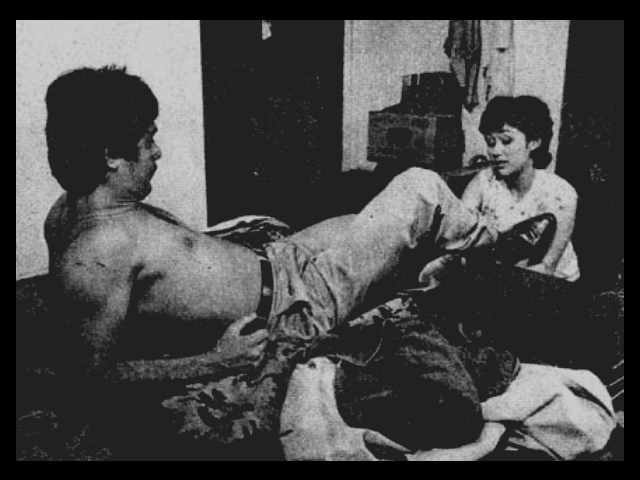


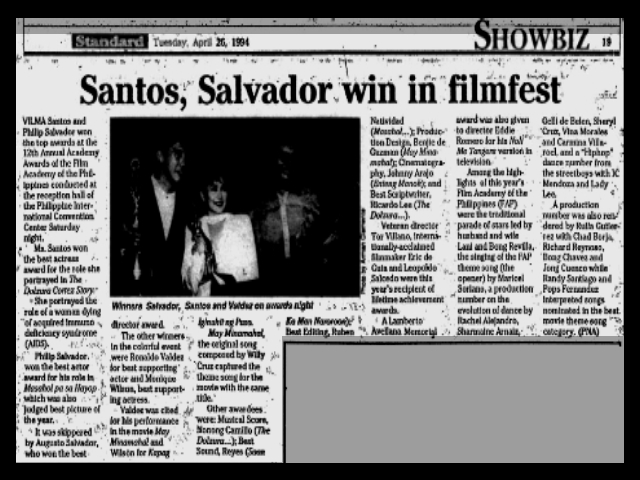

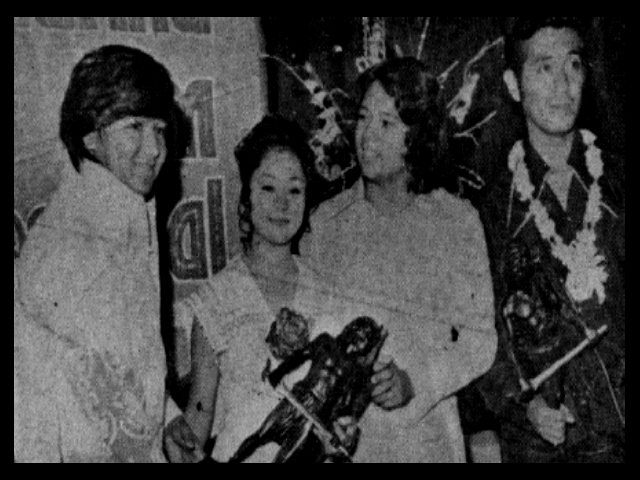
 Star For All Seasons
You must be logged in to post a comment.