International Film Festival Recognition 2/2

This slideshow requires JavaScript.

Other International Film Festival Recognition

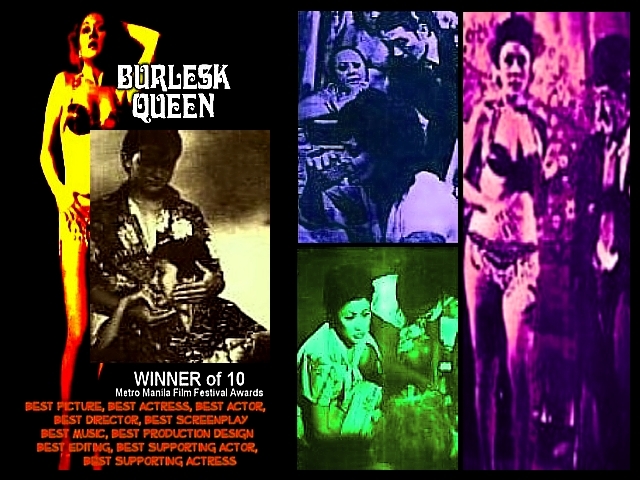
Official Entry – Festival del film Locarno Switzerland (1978) – Burlesk Queen (1977) – “…It was 1977 with an exceptional film, Burlesk Queen, that Castillo got his frist critical recognition. Entered in that year’s Metro Manil Film Festival, it was adjudged the Best Picture, won forhim a Best Director Award as well as nine other artistic awards. It told a young girl in Manila in the 50’s who wanted to become a burlesque dancer. It showed a subdued Castillo. He seemed in this film, to have held back his passion for visual impact to give way to his new mastery of film grammar. His characters cried and whimpered, they did not scream and curse. They delievered dissertations on art, not imprecations of wrath, which had set the pitch of his previous films. The critics fought bitterly over Burlesk Queen. In that festival, he was contending with film makers who enjoyed a high reputation among the country’s most avid film critics. Upon winning the award, Castillo instantly became the favorite beating boy of the critics who did not appreciate Burlesk Queen. To prove to them his worth, Castillo did Pagputi ng Uwak, a 50’s epic set in his favorite Southern Tagalog locale. It was the most lavish of all his productions and had all the elements of a “great” Filipino film. He exploited the many religious and social rituals typical of the region. The film featured the two most critically acclaimed performers of the time, Bembol Roco, Jr. and Vilma Santos, with the cinematography of Romy Vitug complementing Castillo’s visual sense. And it touched on civil unrest to underline the film director’s social awareness. Pagputi ng Uwak was a visual fest, an artistic and socially responsive film aimed at the critics. It was also Castillo’s first commercial failure after a string of more than 20 minor and major box-office hits…In just a decade, Castillo, with all his audacity and dramatic excesses, has claimed his place as one of the most versatile and genuinely interesting filmmakers in the Philippines today…” – Rosauro de la Cruz (READ MORE)

Official Entry – 1978 Berlin Film Festival (official citation not verified) – Burlesk Queen (1977) – “…One of the first Filipino filmmakers to invade foreign film festivals abroad with such output as Burlesk Queen and Alamat ni Julian Makabayan (Berlin Film Festival and World Film Festival in Montreal) and Nympha (Venice Film Festival), among others, Celso The Kid returned to his hometown Siniloan, Laguna where he led a quiet life while working on his autobiography…His 1977 film, Burlesk Queen, won 10 out of the 11 awards of the 1977 Metro Manila Film Festival but the results were contested by Lino Brocka and defended by juror Rolando Tinio (now National Artists for Film and Theater), respectively. He reflected: “I wanted to vindicate myself as a filmmaker in this movie. The media referred to me as a reluctant artist and a filmmaker who has yet to arrive. Not only did the film run away with awards. It was also the top grosser. It broke the myth that quality films don’s make money in the box-office and commercial films don’t win awards…” – Pablo A. Tariman, The Philippine Star, 28 November 2012 (READ MORE)

Official Selection – ASEAN Film Festival, Sydney Austarlia (1981); Official Selection – Asia-Pacific Film Festival, Taipei Taiwan (1978) – Masarap, Masakit ang Umibig (1977) – “…Elwood Perez and Vilma Santos colloborated in seven films (Ibulong Mo Sa Diyos 1988, Lipad Darna Lipad 1973, Magkaribal 1979, Masarap Masakit ang Umibig 1977, Nakawin Natin ang Bawat Sandali 1978, Pakawalan Mo Ako 1981, Pinay American Style 1979). The first one was the trilogy that he co-directed with two other director, Borlaza and Gosiengfiao (these three are the most underrated and under appreciated directors in the Philippines), the remake of Mars Ravelo comic super hero, Darna in Lipad Darna Lipad. The film was a record-breaking hit Box-office Film. They follow this up with a more mature projects as Vilma started to switched her image from sweet to a mature versatile actress, pairing her with Christopher DeLeon in five films starting with Masarap Masakit Ang Umibig in 1977. The Perez-Santos-DeLeon team produced seven blockbuster hits that gave Vilma two FAMAS best actress awards that secured her elevation to FAMAS highest honour, the FAMAS Hall of Fame award. She won in 1979 for Pakawalan Mo Ako and 1988 for Ibulong Mo Sa Diyos…” – RV (READ MORE)

Official Entry – 1979 The Latin American Film Festival Sao Paolo, Brazil (official citation not verified) – Pagputi ng Uwak, Pag-itim ng Tagak (When the Crow Turns White, When the Heron Turns Black) (1978) – “…This veritable spiritual co-ownership ostensibly has enriched us all, Asians or Asean. It is no mark of a monarchical hauteur to say, for instance, that the films of Celso Ad Castillo, once dubbed as the Messiah of Filipino movies, are contemporaneous in their being a classic. If all these seem contradictory, Celso can easily point to his filmography to prove that there has always been, and will always be, fire in his filmmaker’s eyes. His “Burlesk Queen” and “Pagputi ng Uwak, Pag-itim ng Tagak,” (When the Crow Turns White, When the Heron Turns Black) for one, are now a classic, conscience-searing sociological film tractatus on structutal violence and institutional injustice that probed into the hearts of little people amidst a third world setting as encapsulated in the microscopic life of a poverty-stricken, young woman. It’s Rossellini, you would say? Think again…”Pagputi ng Uwak, Pag-itim ng Tagak” was sent to Sao Paolo, Brazil for the Latin American Film Festival and represented the Philippines at the Asean Film Conference in 1981…” – Celso Ad Castillo Presents web-site (READ MORE)

Official Entry – 1981 Asean Film Conference (official citation not verified) – Pagputi ng Uwak, Pag-itim ng Tagak (When the Crow Turns White, When the Heron Turns Black) (1978) – “…This veritable spiritual co-ownership ostensibly has enriched us all, Asians or Asean. It is no mark of a monarchical hauteur to say, for instance, that the films of Celso Ad Castillo, once dubbed as the Messiah of Filipino movies, are contemporaneous in their being a classic. If all these seem contradictory, Celso can easily point to his filmography to prove that there has always been, and will always be, fire in his filmmaker’s eyes. His “Burlesk Queen” and “Pagputi ng Uwak, Pag-itim ng Tagak,” (When the Crow Turns White, When the Heron Turns Black) for one, are now a classic, conscience-searing sociological film tractatus on structutal violence and institutional injustice that probed into the hearts of little people amidst a third world setting as encapsulated in the microscopic life of a poverty-stricken, young woman. It’s Rossellini, you would say? Think again…”Pagputi ng Uwak, Pag-itim ng Tagak” was sent to Sao Paolo, Brazil for the Latin American Film Festival and represented the Philippines at the Asean Film Conference in 1981…” – Celso Ad Castillo Presents web-site (READ MORE)

Official Selection – Manila International Film Festival: Restrospective Festival “Focus on the Philippines” (1983) – Pagputi ng Uwak, Pag-itim ng Tagak (1978) – “…Furor is really an understatement. “Burlesk” swept the awards in that year’s MMFF, resulting in a controversy that led to the wholesale return of trophies. In spite of the scandal, “Burlesk” is still regarded by critics as the “quintessential” Filipino film. “Hinamon ni Brocka si Tinio ng suntukan (Lino Brocka dared Rolando Tinio to a fight), ” Celso remembers. “Tinio, who was the head of the jury, heralded “Burlesk as the most beautiful Filipino film” past, present and future.” Vi’s turnaround: Adding fuel to the fire, “Burlesk” had stunned moviegoers because it unveiled a new Vilma Santos “from ingénue to wanton woman. Vilma says of “Burlesk?” – “It marked a transition in my career. Working with Celso Kid is a privilege. He’s a genius.” With good humor, Vilma recalls a “quarrel” on the set of “Pagputi ng Uwak, Pag-itim ng Tagak,” which she produced in 1978. “It took so long to finish. I lost money on that. But we’re still friends.” Burlesk and Pagputi brought a lot of honor to me…” – Bayani Santos Jr., Inquirer (READ MORE)

Official Selection – Manila International Film Festival: Restrospective Festival “Focus on the Philippines” (1983) – Relasyon (1982) – “…Patrocinio and Bernal’s own mother, Elena, could very well have been Ishmael’s inspiration for several classics of Philippine movies. In Relasyon, Vilma Santos played the querida who lived up to her name as the beloved, a lady of intellect and fine sensibility; the virtually separated Emil truly loved and preferred her to his legal wife. In Dalawang Pugad, Isang Ibon (Two Nest, One Bird), Bernal explored the male’s polygamous nature, and pitted him against gritty female characters. In these films, Bernal recast the querida different from the stereotype of a family wrecker toward a clear-headed case-by-case realist delineation of the common-law wife. In Relasyon, Bernal can arguably be shown as a champion of the querida as a Filipino director, in depicting Marilou as a principled martyr in a society that wrongfully extols man’s false claim to moral ascendancy. As would be evident in the film, Ishmael saw the injustice done to women in male-dominated society, as he also saw and questioned the morality and rationality of institutionalized but falsely monogamist families…” – Bayani Santos Jr., Manuel L. Quezon University, Bernal as Auteur: Primary Biographical Notes, 2012 (READ MORE)

Philippine Film Week Moscow, Russia (1984) – Broken Marriage (1983) – “…Reportedly Ms. Santos, buoyed by the many acting awards earned by the previous film, was so eager to do well in the new production that Bernal got irritated, locked her in a bathroom, and delivered to her an ultimatum: she was not coming out till she got over her ‘hysteria.’ One sees what made the latter so successful, the same time watching this one sees why Bernal didn’t want to simply duplicate that success. Relasyon was a lean and elegantly told melodrama that took a sidelong glance at the institution of Filipino marriage; in Broken Marriage Bernal wanted to examine the institution directly, without the oblique glances. He didn’t want to film some doomed struggle to keep love alive but something less dramatic, far more difficult to capture: the aftermath of a protracted war, where the ultimate casualty is married love. He in effect didn’t want Ms. Santos at her perkiest and most energetic–he wanted her exhausted, looking for a way out, and to her credit Ms. Santos delivers exactly this with her performance…” – Noel Vera (READ MORE)

Prague International Film Festival (1984) (citation needed) – Broken Marriage (1983) – “…Vilma Santos is not about to be a letdown, not this time when the most important female roles are coming her way. A new intelligence she infuses in the character Ellen. Like De Leon, she turns Ellen into a woman-child, but the stress is less on her part as she has done similar roles before. Her beautiful face is flush receptive: the quiet moments of just observing the people around her are moments of perfect acting. Her body moves with an agility that is both funny and dramatic. Her two monologues – the first with her friends in the cafe when she informs them that she is bored, and the second with Rene when she tells him that they are not children anymore – are her best scenes: the camera lingers upon her countenance and she enunciates in return with ironic ease. She should watch out for next year’s awards race – there is simply no stopping her at the moment…” – Joselito Zulueta, Sine Manila – 1983 (READ MORE)

Vienna International Film Festival (1984) (citation needed) – Broken Marriage (1983) – “…Though in the last cited awards, Karnal did not make it as best films, it nevertheless gave Broken Marriage a tough fight for the honor, in fact winning more nominations than Berna’s films. It evetually won prizes for performances, cinematography, music and editing…A product of film schools, Marilou earned her M.A. in Film and Television from Loyola Marrymount College in Los Angeles and received a diploma in film from the London Film School. In May, she will be flying to Moscow to attend the Philippine Film Week, where Karnal, Broken Marriage and Soltero will be exhibited. Then it will be Prague and Vienna for both Karnal and Broken Marriage. Her earlier work, Brutal has also been invited to Tokyo’s Pia Film Festival, which is sponsored by critics and journalist to showcase the works of young directors from 10 countries. International may have come her way, but at the moment, Marilou is earnestly preoccupied with starting her latest project, Baby Tsina, which will star two-time Urian best actress Vilma Santos, and written by Marilou’s signature scenarist Ricky Lee. In a few days, the camera are set to start grinding for the director’s new film…” – Justino Dormiendo, Movie Flash Magazine, April 26, 1984 (READ MORE)

Official Entry – Venice International Film Festival (1985)  – Sister Stella L. (Sangandaan /Incroci /Crossroad) (1984) – “…There would have been two important Filipino films in this year’s prestigious Cannes Film Festival: Sister Stella L., directed by Mike de Leon and Kapit sa Patalim, directed by Lino Brocka. Both smuggled out to France and both vitally political in thrust, the two films were reportedly disowned by the Philippine embassy in France. Supposedly under instructions from the Philippine goverment, the embassy sent the following disclaimer to the festival directorate: “There are no Filipino films in the Cannes Film Festival.” The two films nevertheless made it to the festival site, though only one was screened as scheduled. Brocka’s film was in the category “In Competition,” and was tested against the works of such eminent directors as Werner Herzog, Wim Wenders, and Satyajit Ray. Early on Kapit sa Patalim (which acquired a second title, Bayan Ko, in deference to another film project which had been approved before Brocka’s project) was rumored to be a strong contender for the Best Film award. Critic Bertrand Tavernier was quoted as saying, “It’s a toss-up between Wim Wenders’ Paris Texas and Brockas’s Bayan Ko.” De Leon’s film was to have had special screenings, on the unanimous request of the Cannes’ board of critics. Sister Stella L., however, suffered from the rush of subtitling work that descended upon Cannes’ select group of translators and De Leon opted not to show the film without subtitles. He nevertheless had the distinct honor of holding a retrospective under the sponsorship of the French Cinematheque right after the festival. The film eventually competed at the Venice Film Festival. Under its original title Sangandaan (Crossroads), Sister Stella L. was invited to the Venice Film Festival in 1984, the second Filipino film (after Genghis Khan in 1951) to be honored with such recognition…” – Agustin L. Sotto and Pet Cleto, Philippine Panorama, Dec 02 1984 (READ MORE)

Official Selection – Asia-Pacific Film Festival Special Jury Award (1999) – Chito S. Roño – Bata, Bata… Paano Ka Ginawa? (Lea’s Story) (1998) – “…The film “Bata, Bata…Paano ka Ginawa?” was also given a Special Jury Award for Women’s Awareness at the Asia Pacific Film Festival held in Bangkok, Thailand from Nov. 22-26, 1999. Ms. Santos was a Best Actress nominee…” – Eric Nadurata (READ MORE)

Official Selection – 35th Chicago Film Festival (1999) – Bata, Bata… Paano Ka Ginawa? (Lea’s Story) (1998) – “…In one of the most remarkable performances in Filipino film history, Vilma Santos plays Lea, a woman who defiantly rejects social convention to experience life on her own terms. A woman’s rights activist and mother of two, Lea has been abandoned by the fathers of her children. Her daughter and son are at crucial, transitional ages and she struggles to provide for them while maintaining her hectic job at a women’s crisis center. Soon, however, the job and her budding romance with co-worker Johnny threaten Lea’s role as mother. When the children’s fathers turn up to accuse her of neglect, she must ask herself whether her independence is worth the possibility of losing her children? What role–motherhood or lover–will best satisfy the deepest needs of her soul?…” – CIFF (READ MORE)

Official Selection – Pusan International Film Festival (1999) – Bata, Bata… Paano Ka Ginawa? (Lea’s Story) (1998) – “…As much as people think that this is Vilma Santos’ movie, I beg to disagree. Me thinks it was the children’s show. Serena Dalrymple and Carlo Aquino gave two of the best child acting performances ever. Serena as Maya was a chatty young kid, whose bluntness, frankness, and honesty come across as cute and comical however one can still question as to how she was brought up. Carlo Aquino’s Ojie is a more mature kid, he understood what was going on and was rebelling to the fucked-up-ness of their situation. What pisses me off is that today, there hardly is a movie that Carlo Aquino is in, except maybe for last year’s “Carnivore, “where he was superb in again. Aquino is one of the few great young actors of his time that still is a great actor up to know. He is just not that present anymore. And I kinda wish that he makes more movies, because I know that he is a superb actor…” – Douglas Racso (READ MORE)

Official Selection – Temecula Valley International Film Festival (1999) – Bata, Bata… Paano Ka Ginawa? (Lea’s Story) (1998) – “…A free-spirited woman and madre de familia runs her life and raises her children unconventionally. It is one of the best films that espouses feminism without being didactic and self-righteous. Humorous, poignant and insightful, it features a yet-another dazzling performance by Vilma Santos…” – Mario A. Hernando (READ MORE)

Official Selection – Hawaii International Film Festival (1999) – Bata, Bata… Paano Ka Ginawa? (Lea’s Story) (1998) – “…Chito Rono’s telling and prismatic depiction of Lea’s character is worthy of praise because it is full-bodied and filled with surprises, unlike most other local film characterizations, which are two-dimensional and predictable. The audience’s hearty response to Vilma’s spirited portrayal of Lea is a big change from viewer’s knee-jerk responses to most lead characterizations on the local screen, which fail to delight and surprise because they follow tired, old formats so automatically…” – RV (READ MORE)

Philippines’ Official Entry to the Foreign Language Film Category – 73rd Academy Awards (OSCAR) – Anak (The Child) (2000) – “…Mas mahusay para sa amin ang pagkakaganap ni Vilma Santos sa “Anak” kaysa sa “Bata, Bata…Paano ka Ginawa?”. Hindi malayong humakot na naman siya ng award rito…But the film still belongs to Vilma, who goes through an entire spectrum of varied emotions as Josie, mula sa katuwaan at excitement niya sa pagbabalik sa Pilipinas (natural na natural ‘yung pagiging aligaga niya habang namamahagi ng pasalubong sa mga anak niya), ang disappointment niya nang matanto niyang hindi na niya kilala ang mga batang binalikan niya, hanggang sa finally ay sumambulat siya sa tagpong pinagsasampal na rin niya si Claudine at pinalalayas. It’s a bravura sequence and the performance is magnificent…” – Mario E. Bautista (READ MORE)

Official Selection – Fukuoka Asian Film Festival (2001) – Anak (The Child) (2000)- “…Children feel they are abandoned by their mother even they know their daily life is supported by her remittance. Mother’s love ends up with broken relationship. What a tragedy! The life of the family looks not bad in Philippine standard. In fact their house is large enough even in Japanese standard. However, their father, who looks a good man, do not have stable job, if not minimal income which is hard to afford their life. In fact, even working abroad as a maid is a kind of status. I don’t understand why the mother does not cancel going to Hong Kong and choose yet another life, to live with her family with less income, after reconciliation with her daughter. Unless Filipinos decide to quit working overseas for little money, I think this country would not become better. By the way, this is the first film I saw Vilma Santos. Her performance is superb. Few actresses can act both comical and serious sides of the same character…” – Furuya Shiro (READ MORE)

Official Selection – 2001 Fort Lauderdale International Film Festiva1 (2001) – Anak (The Child) (2000) – “…Josie’s final decision to leave for H.K. once again makes little sense, beyond its providing an excuse for “Anak’s” fourth hysterical-sobbing-at-the-airport sequence. That’s too bad, since early reels observe parent-child relationships with considerable delicacy. Quintos’ fluid handling of potentially claustrophobic, mawkish material underplays script’s more obvious gambits until they overwhelm pic. Veteran local star Santos is in fine form, while Barretto lends impressive shading to what might have been a stock sexy “bad girl” role. Tech package is polished…” – Dennis Harvey, Variety Magazine, 19 March 2001 (READ MORE)

Official Selection – San Francisco Asian American Film Festival (2001) – Anak (The Child) (2000) – “…The slick production is turned into art by its star Vilma Santos. Her magnetic star quality makes her look so wrong for the part and yet she makes it all her own. She’s a natural comedianne and a great tragedienne-her look of resignation is heartbreaking. Vilma discards the glittering clothes and make-up for Anak, but she still looks youthful. It wouldn’t come as a surprise if the sensitive young actor playing her son would go on to play her leading man a few years from now…” – Dennis Ladaw (READ MORE)

Philippines’ Official Entry to the Foreign Language Film Category – 76th Academy Awards (OSCAR) – Dekada ’70 (2002) – “…For ten consecutive years from 1995 to 2004, the Philippines submitted films for consideration for the Best Foreign Language Film category of the Oscar Awards. But up to this point of film history, we remain in the list of countries who has never won nor nominated for this award…The next year 2003, the country’s entry was Dekada ’70, directed by Chito S. Rono based on the novel Dekada ’70 of Lualhati Bautista. It tells the story of a middle-class Filipino couple (Christopher de Leon and Vilma Santos) and their five sons during a tumultuous decade of the martial law regime. The sons were played by Piolo Pascual, Carlos Agassi, Marvin Agustin, Daniel Barrios and John Wayne Sace…” – FAP (READ MORE)

Official Selection – Asian Pacific Film Festival (2003) – Dekada 70 (2002) “…The acting is generally impressive, most especially that of lead actress Santos, who gives a luminous, sensitive performance. Santos essays the transformation of Amanda so effectively that we do see clearly at the end of the film that there has been a fundamental change in her character…” – Antonio D. SisonAntonio D. Sison, Katholieke Universiteit Nijimegen, Journal of Religion & Film, University of Nebraska (READ MORE)

Official Selection – Hawai International Film Festival (2003) – Dekada ’70 (2002) – “…Four local movies have so far been chosen by Christian Gaines of the Hawaii International Film Festival for exhibition in the prestigious event in November. Four more will be picked in July when Gaines returns to Manila. Hawaii filmfest ’99 is focused on the Philippines.  The first four movies selected were Chito Roño’s “Bata, Bata…Paano Ka Ginawa?,” Joel Lamangan’s “Sidhi,” Carlitos Siguion Reyna’s “Kahapon May Dalawang Bata,” and Gil Portes’ “Saranggola.”  Of the four, only “Saranggola” has not yet been commercially released. Gaines viewed a rough copy (interlock) of “Saranggola” whose post-production work is yet unfinished. “Saranggola” stars Ricky Davao and Lester Llansang as father and son. Script by Butch Dalisay.  Also being eyed for Filipino movies’ participation is the Sundance (Utah) filmfest (Robert Redford’s very own project), where Gaines is in charge of the world cinema division. “Saranggola” is an aspirant to the June Manila Film Festival.  Gaines is inviting Cesar Montano as juror and Vilma Santos as special guest to the Hawaii filmfest, where “Jose Rizal” was shown last year…” – Sol Jose Vanzi, April 17, 1999 (READ MORE)

Official Selection – Quebec City International Film Festival (2003) – Dekada 70 (2002) – “…There are touches of seventies style Filipino humor that foreign audiences might miss; they effectively establish that this is a real, average Filipino family trying to navigate through the eye of the political storm. The acting is generally impressive, most especially that of lead actress Santos, who gives a luminous, sensitive performance. Santos essays the transformation of Amanda so effectively that we do see clearly at the end of the film that there has been a fundamental change in her character. If there is something to be faulted about the film, it is Roňo’s failure to keep melodramatic moments in check. The funeral sequence of one of Amanda’s sons, for instance, becomes an over-extended session of copious tears. The rich story material of Dekada 70 could do away with such “in your face” paroxysms, which only work to dull the film’s cutting edge political trajectory. Nonetheless, it cannot be denied that Roňo had created a noteworthy, epic-scale Filipino film, and on a Third World budget at that. It also cannot be denied that Roňo had not forgotten the sentence of history on his home country…” – Antonio D. Sison, Insititute for Pastoral Initiatives University of Dayton (READ MORE)

Official Selection – The World International Film Festival of Montreal (2003) – Dekada 70 (2002) – “…The reason “Sister Stella L” will probably end up better appreciated is that the movie was shown during the martial law era. The movie was relevant to the times and Vilma was portraying an activist nun, a role not usually associated with the Star for all Seasons… As the mother, Vilma does justice to her character, holding back her strong emotions until the end, when she finally confronts Christopher de Leon and wants to break up with him. Despite the many tragic events that befall her character, Vilma chooses to underplay her role except at key points towards the end of the movie. Boyet is his usual competent self as the chauvinistic husband of Vilma who is forced to change when his wife breaks out of her shell. Piolo Pascual also deserves mention for his realistic portrayal of the activist turned NPA rebel…” – Edmund L. Sicam, Philippine Daily Inquirer (READ MORE)

Official Selection – 15tth Ankara International Film Festival (2003) – Dekada ’70 (2002) – “…during the first half of the film, Vilma’s character occasionally felt unhappy, taken for granted or unappreciated as a person, but she held her emotions in check to keep the peace in the family. It was only later, when the national trauma of martial law rule affected her sons in various tragic ways, that she found the voice and rediscovered the heart to assert herself as a person and to give her emotions full play. We submit that Vilma’s portrayal is excellent precisely because she vivified he character as the wife and mother was in the ‘70s. Her thematic and emotional high points towards the end of the film rivetting, but it was her quieter, more controlled moments that showcased Vilma’s true gift as an actress. During those moments, Vilma didn’t just observe what was going on, she was constantly conflicted only, she had been programmed not to speak out because it wasn’t her “place”. Thus, when she finally changes and expresses herself in the end, the contrast makes her transformation all the more stunning…” – Nestor Torre, Philippine Daily Inquirer (READ MORE)

Special Exhibition: Cannes International Film Festival (2005) – Dekada 70 (2002) – “…At the center of the film and the family is Amanda (Filipino cinematic diva Vilma Santos) who vicariously experiences living under a dictatorship through her husband and five sons’ different reactions before coming into her own as a person. Her husband, Julian (Christopher De Leon), seems a walking contradiction: He offers rationalizations for the government while supporting his eldest son’s revolutionary activities, but has a fit when his wife wants to get a job. As for the sons, firstborn son (Piolo Pascual) joins the guerillas in the mountains. The second son (Carlos Agassi), forced into a shotgun wedding, defiantly works for the American Navy. The third son (Marvin Augustin) writes journalistic exposes he can’t publish, while the fourth son (Danilo Barrios) is a mystery to his family until his brutal, motiveless murder (probably by police) reveals a lost girlfriend. The fifth son (John W. Sace) is still a boy. Santos’ Amanda effortlessly and movingly chronicles the changed consciousness of the family and the country, with understatement her most reliable tool. Pic begins and ends with images of Santos at the forefront of a political demonstration, and nothing, from first image to last, for 128 minutes, is allowed to spontaneously or slyly deviate from the logic of her consciousness-raising…” – Ronnie Scheib, Variety Magazine (READ MORE)

Official Selection – Palm Spring International Film Festival (2003) – Dekada ’70 (2002) – “…In Chito S. Roño’s superb “Dekada ’70,” a family in the Marcos-era Philippines has a domineering father and five sons, but it is the mother (Vilma Santos) who provides the mental stamina. She fights for her family in ways the father can’t even dream of. “To give birth to these children isn’t enough,” she says. “You have to defend them, protect them.” That’s the ’70s. In 30 years, that kind of woman will deal with difficult questions of divorce and motherhood, one in which women want freedom, yet must be willing to share blame when something goes wrong. The young woman who leaves her husband and thinks about aborting her pregnancy in South Korean filmmaker Gina Kim’s “Invisible Light” is an experimental example. Moon’s great performance in “A Good Lawyer’s Wife” almost makes you believe wrong is right, and, taken with her much-lauded portrayal of a girl with cerebral palsy in “Oasis,” reveals her as one of the world’s best actresses. Hollywood, take note. – No stereotypes of Asians here…” – G. Allen Johnson, Festival Celebrates Real Women, San Francisco Chronicle March 4, 2004 (READ MORE)

Official Selection – 22nd San Francisco International Asian American Film Festival (2003) – Dekada ’70 (2002) – “…Last seen in Anak (SFIAAFF ‘01), Vilma Santos delivers an understated, profoundly moving performance as the matriarch whose awakening redefines the traditional mother and wife role she donned for years. This is the story of an incredible character that survived an unforgettable decade…” – Michael Magnaye, San Francisco Premiere (READ MORE)

Official Selection – UCLA Filipino Film Festival – Classics of the Filipino Film (2002) – Sister Stella L. (1984) – “…The final film was “Sister Stella L.” 1984, directed by Mike de Leon. Produced and shown during the Martial Law period of Ferdinand Marcos, this film is the story of a nun who is conscienticized and begins to identify wit the cause of the striking laborers. It won ten Urian awards and was chosen as one of the ten best films of the 1980s by the Manunuri ng Pelikulang Pilipino…” – Barbara Gaerlan (READ MORE)

Official Selection – 6th San Diego Asian Film Festival (2003) – Dekada ’70 (2002) – “…Santos’ performance is so vivid and insightful that we can see her changing in front of our very eyes… We were enthralled…we were moved. And we valued the film’s important contribution to the very urgent task of reminding everyone of the trauma in our collective lives that was the martial law period of the ’70s,” noted Nestor Torre of Inquirer News Service. Chito Rono’s Dekada ‘70 made its world premier at the Asian American International Film Festival in June of 2003. The film has also won numerous domestic awards. The Young Critics Circle voted Dekada ‘70 Best Film of the Year (2002), Best Screenplay, Best Sound and Best Performance in a tie between actress Vilma Santos (Amanda) and Piolo Pascual (Amanda’s eldest son). The Best Film of the Year award is reserved for the director, such that no separate prize for direction is needed. The Best Performance award is the most coveted as it is conferred on the performer whether male or female, adult or child, individual or ensemble in leading or supporting role. Vilma Santos also received an award for Best Actress from Star Awards for Movies, Film Academy of The Philippines, and Gawad Urian Awards. Piolo Pascual also received an award for Best Supporting Actor from the Young Critics Film Circle, Metro Manila Film Festival, Star Awards for Movies, Film Academy of the Philippines, FAMAS Awards, and Gawad Urian Awards. The Gawad Urian Awards also presented Dekada ’70 with the award for Best Screenplay…” – Sara Stokoe, Asia Pacific Arts (READ MORE)

Official Selection – 8th Shanghai International Film Festival (2005) – Mano Po III: My Love (2004) – “…As a love story, it is romantic as romantic can be – passionate even. And you really have to give it to the durable love team of Vilma Santos and Christopher de Leon to be able to pull off a material like Mano Po 3 and give the kilig effect of expected by most viewers and fans of love stories. It is handsomely-mounted, glossy and very entertaining. Its production values are far more superior compared to other local movies…” – Butch Francisco, Philippine Star (READ MORE)

Official Selection – The International Cannes Film Festival – Cinemas of the World (2005) – Dekada ’70 (2002) – “…On May 20, the Philippine films listed below were exclusively screened in a newly built theater within the Cannes Festival area: named All Cinemas in the World Theater, a new section in the International Cannes Film Festival where only seven countries including the Philippines , out of 125 countries, were invited to send their films. Feature Films…Dekada 70, Stars: Vilma Santos, Christopher de Leon; Director: Chito Rono…There was a long red carpet leading to the All the Cinemas in the World Theater. The exhibition of our films were well attended and appreciated. In fact, some of those who saw them commented that our films are better than some of the films in competition. This was confided to Mr. Robert Malengreau, an officer of the Brussel Film Festival and widely-respected film journalist, who enjoyed mentioning repeatedly said comment to us…” – Atty. Espiridion D. Laxa, Chairman FAP, Jun 1, 2005 (READ MORE)

Official Selection – 25 Filipino films shown at Lincoln Center (2010) – Sister Stella L (1984) and Relasyon (The Affair) (1982) – “In celebration of the 100th year of Philippine Independence, the Film Society of Lincoln Center, in partnership with the Philippine Centennial Commission, the Cultural Center of the Philippines, IFFCOM, the Philippine Information Agency, the Consulate General of the Philippines in New York and the Philippine Centennial Coordinating Council – Northeast USA, presented a series of Filipino films at the Walter Reade Theater of the Lincoln Center. Slated July 31 through August 20, and with a line-up of about 25 films, the series was the most extensive Filipino film retrospective ever to take place in the United States. All prints are subtitled in English. By including old classics as well as contemporary films, the three-week festival brought the country’s centennial commemoration into sharper historical focus. It also featured some of the best works by acclaimed director Lino Brocka, and concluded with the award-winning short films and videos of young, upcoming Filipino and Filipino-American filmmakers. The members of the film selection committee were Richard Peña (Program Director of the Film Society of Lincoln Center), Domingo Hornilla, Jr., Vincent “Ting” Nebrida, and Agustin “Hammy” Sotto. Some of the titles shown in the festival were: In the Classics Category…two films by Mike De Leon: Sister Stella L. starring Vilma Santos and Batch ’81 starring Mark Gil; and three works by Ishmael Bernal namely Nunal sa Tubig (A Speck in the Water) starring Daria Ramirez, Aliw starring Suzette Ranillo and Relasyon starring Vilma Santos…Among Brocka’s films being spotlighted were Maynila sa Mga Kuko ng Liwanag, Insiang, Tinimbang Ka Nguni’t Kulang (You Were Weighed But Was Found Wanting) and Ina, Kapatid, Anak (Mother, Sister, Daughter)…” – Seapavaa Bulletin (READ MORE)

Official Selection: Moviemov: Italian Cinema Now 2012, December 4 to 9 2012 – Dekada ’70 (2002) – “…Moviemov will also feature five Filipino films, including the newly restored Genghis Khan (1950) by Manuel Conde, which was “lost” in the 1950s and was restored in digital, high definition format through a collaborative effort of the FDCP, National Film Archive of the Philippines, Venice Film Festival and L’Immagine Ritrovata. Other Filipino films to be feted in Moviemov this year are Dekada ’70 by Chito Roño, The Mistress by Olivia Lamasan, Qiyamah by Gutierrez Mangansakan, and the winner of the FDCP’s National Film Festival in Davao City. For this year’s Moviemov, the youth is a special focus. Students from Makati public schools will be watching the films. “Cinema is the greatest art,” Bettini says. “Unfortunately, nowadays, youth are educated by TV. Tastes have been changing. It’s very important to have cinema brought to the youth, because it defines taste and educates conscience and will inform them in a deeper way…” – Michele Logarta, The Philippine Star, Dec 02 2012 (READ MORE)

Official Selection:Toronto International Film FestivalContemporary World Cinema Programme September 5-15, 2013 – Ekstra: The Bit Player (2013) – “…Told with an eye for the ludicrous excesses and stresses of TV work (one director is tasked with shooting forty set-ups in two days) and the inherently existential comedy of being a stand-in, Jeturian’s film never misses a target. One overly nervous extra loses her dentures during shooting; a neophyte shows up to play a peasant wearing enough makeup to shame RuPaul. At the same time, the film is buoyed with ample affection for the characters’ dreams. After working all day and into the night, the inevitably cheerful Loida is capable of pontificating about the important role the extras play. Skilfully directed by Jeturian, and driven by Santos’ courageous performance and peerless comic timing, The Bit Player is also a kind of tribute to Loida. Even at her lowest point, she never gives up…” – Steve Gravestock, Senior Programmer, TIFF (READ MORE)

At the sold-out premiere in Toronto, many in the long lineup awaiting the film’s start were excited to watch it given the critical acclaim at Cinemalaya. Arnold Manalac, a big Santos fan, organized about 20 of his friends to come watch the film. “These are all my college friends, friends here in Toronto, some of my relatives,” he said while pointing out the smiling faces with him, “so we organized and came up with a small group to support this film. The crowd of mostly Filipino-Canadians was abuzz with anticipation, including the very first people in the line, Danny Ong and Ricardo Obusan, who came to support independent Filipino films. Jeturian signed autographs before and after the film’s screening and took questions from the audience. The final showing of Ekstra at TIFF is Sept. 15, but the movie will have a theatrical release in eight Canadian cities including Mississauga and Scarborough from Sept. 13 to 26…” – Dyan Ruiz, The Philippine Reporter, 13 Sept 2013 (READ MORE)

Official Selection Asia Pop! 2013 San Diego Asian Film Festival (Nov 7-16 2013) – Ekstra: The Bit Player (2013) – “…In a way, Santos can be compared to Susan Sarandon and Jessica Lange; both thespians employ their entire body to bring out the internal turmoil of their characters if necessary. Santos impassioned performance in classic films such as “Broken Marriage” and “Relasyon” demands certain explosiveness. Santos has always played the fighter, never the silent suffering victim. Even powerless, Santos’ characters have trudged on despite obvious defeat. She has always embodied the ferocious female spirit, which I grew up witnessing from the strong females in my family. Fight, survive at all cost. Similarly, Santos can also quietly stand still and let her face do the exposition, “Sister Stella L.” is a perfect example. In both commercially melodramatic and critically acclaimed films, all of the characters in Santos wide repertoire refused to go without a good fight. I have heard other critics call her the “feminists’ actor,” but do not take our word for it, you need to watch her films to verify that. In her latest movie, “Ekstra” (The Bit Player), Santos is back to form after her commercially successful but critically disappointing horror film, “The Healing.” Santos plays Loida, a bit player dreaming of becoming a star despite working in the industry for so long. At first glance, Santos seemed to be miscast as a bit player because she is too fair and beautiful to stay a bit player that long; however, thanks to Jeffrey Jeturian’s clever direction, Santos transcends the obvious. The Santos celebrity persona disappears and we see the face of a bit player being used as a mere tool by an industry hell bent on producing crap. Loida’s triumph lies in Jeturian’s blatant critique of the industry that exploits people for commercial purposes. Loida is not just a real character, she is a symbol. The delightful irony of “Ekstra” is using one of the biggest stars in the industry to play it small…” – Rob San Miguel, Brun Philippines, 18 August 2013 (READ MORE)

Special Selection: 2013 NuCinema: NUVALI Outdoor Film Festival (2014) – Ekstra: The Bit Player (2013) – “…Vilma Santos may have been the film’s initial main attraction, but we can’t deny the fact that this is the best comedy-drama of the year. Santos proved her star-for-all-seasons status was far from waning, but Jeffrey Jeturian’s film itself is a brilliant achievement. Its portrayal of the television industry’s bit players is both honest and hilarious. With its small scale and grand ambitions, Ekstra brings a different flavor to the usual tale of the downtrodden…” – Paul G. Alcantara, Kara B. Chung, The Guidon on line, 30 December 2013 (READ MORE)

Official Selection: World Cinema Section of 2013 International Film Festival of India Goa, India (2013) – Ekstra: The Bit Player (2013) – “…The International Film Festival in Goa in November 2013 came alive with young audiences from across the country patiently standing in long lines to watch serious world cinema. They were the real stars of this festival. In many shows, disappointed audiences were turned away because every seat was taken. There is a new audience out there, ready for new ideas, new film grammar, and new reflective cinema. The time is long overdue for a publically financed network of art theatres in every city in the country. In my three days in Goa, I spent most time with the Soul of Asia segment, which introduced me to some fine films described in an earlier column. I recall here a few other films which remain with me even as the weeks pass after the festival…Adopting a diametrically opposite idiom of exuberant comic irony is Philippine director Jeffrey Jeturian’s Ekstra (Extra), an affectionate salute to the underdog. It follows one day in the life of a middle-aged woman extra, a bit player in television soap operas, after she is woken in the early hours of the morning one day to drive to a location shoot in the neighbouring countryside. The director subversively casts one of the Philippines’ best-loved actors, Vilma Santos, in the role of the extra. The viewer for once roots for the anonymous crowd — the farmer on the fields, the domestic help patiently waiting, and the guests in the background of a wedding — while the lead players strut and recite their lines. We watch the class system in the enormous gaps in food and lodging between stars and extras. The film mocks the hilarious script trajectories of the soap opera, and the vanity and fragile egos of its lead players. I often felt that if just the names were changed in the film’s script, it could have been located in India with no substantial changes…” – Harsh Mander, The Hindu, 28 Dec 2013 (READ MORE)

Official Selection: The 18th International Film Festival of Kerala (2013) – Ekstra: The Bit Player (2013) – “…I am aware of the Filipino culture and their language which could be one of the reasons why I happened to be amused by Jeffrey Jeturian’s “EKSTRA (The Bit Player)” when I caught it at the 6th Bengaluru Film Festival. But, that is not entirely the reason why the movie works big time! The prime reasons in that order would be…Vilma Santos, a sensational performer. She lives the character of an extra artiste in television soaps. Flawless, compelling and award-worthy, is her turn…To sum it up, Ekstra – The Bit Player is a poignant film which is certainly worth your time…” – Tusshar Sasi, Romancing Cinema, 27 Dec 2013 (READ MORE)

Official Selection NETPAC Award Winners: The 2013 Bangalore International Film Festival Bangalore, India (2014) – Ekstra: The Bit Player (2013) – “…The unshakable optimism of a middle-aged extra is the warm heart driving “The Bit Player,” an appealing dramedy that pokes plenty of good-natured fun at TV soap operas. Anchored by a glowing central performance by Filipino screen queen Vilma Santos as the single mother who smiles her way through work-related indignities in order to pay for her daughter’s education, the pic reps a fine feather in the cap of veteran helmer Jeffrey Jeturian. Winner of the audience award for best film in its category at Cinemalaya and a hit in domestic release in August, this crowdpleaser launches on limited North American screens on Sept. 13…Constant chuckles and a fair supply of big belly laughs are the order of the day as Loida, Venus and a lovable collection of fellow nameless wannabees are herded like cattle by Josie, acid-tongued assistant director Vincent (Vincent de Jesus, hilarious) and the super-stressed-out director (Marlon Rivera) of “You Were Mine First.” As expected, much of the fun derives from scenes being shot for the wildly melodramatic “You Were Mine First.” To that end, Jeturian gets great value from guest appearances by a host of big-name local stars including hunky matinee idol Piolo Pascual as troubled groom-in-waiting Brando, Pilar Pilapil as severe matriarch Dona Esmerelda and a wonderfully over-the-top Cherie Gil as gun-toting super-bitch Dona Beatriz. For all the merriment on display, the screenplay never loses sight of the economic and emotional imperatives propelling Loida’s uncomplaining acceptance of her place at the bottom of the entertainment-industry food chain. It’s no surprise when Loida finally gets a chance to make a mark with big speaking role in “You Were Mine First,” but the manner in which this plays out is surprising and genuinely touching…” – Richard Kuipers, Variety Magazine, 11 Sep 2013 (READ MORE)

In competition: The Boréal Audience Award Festival International de Films Independants Geneve – The 15th Black Movie Festival Geneva, Switzerland (2014) – Ekstra: The Bit Player (2013) – “… As Loida Malabanan, Ate Vi shines even in anonymity. She is supposed to fade into the background, not outshine the “stars” and just do what is assigned her- to be a bit player. But even in the crowd, Ate Vi makes Loida stand out. She gives Loida the bit player enough motivation, and a poignant love for the acting craft that she has forever changed the image of the bit player, in the same way that she redefined the term “mistress” when she did Ishmael Bernal’s RELASYON way back. For the director, the staff and the big stars, Loida is a nobody. But for us, the audience, we recognize Loida’s magnanimity. Watch out for that pivotal scene in the third act where Loida, and us the audience learns the true meaning of ingratitude in the media. Ekstra is Vilma’s movie. We cannot imagine any other actress for her role. At the end of the day, as Loida descends from the jeepney, and prepares to go to bed just about when everyone is supposed to go to work, we feel exhausted. It’s not the physical work that made us tired, but the system of a dog eat dog society. Filmmaker Jeffrey Jeturian, through Loida exposes the hypocrisy of the thankless and unjust world of entertainment, and after that whole bout of laughing and laughing and crying afterwards, we are forever changed. Yeah right, like you didn’t already know you were gonna cry after seeing the trailer…” – Macky Macarayan, Death of Traditional Cinema, 30 July 2013 (READ MORE)

Philippine’s Official Entry:Dhaka International Film Festival Dhaka, Bangladesh (Jan 10-18 2014) – Winner of Best Actress – Vilma Santos, Ekstra: The Bit Player (2013) – “…The irony of Santos, Philippine media’s “Star for All Seasons,” playing a bit player adds to both the film’s hilarity and meaning. It’s almost as if the film is asking this: if seeing someone as respected as Vilma Santos marginalized could only elicit sympathy, what can the people sans Santos’ credentials possibly do to invite empathic thought? The film ended with a question: “Sinong namatay?” It was addressed to Loida but it could possibly be for the audience. It is easy to know who literally dies in a teleserye because it shows it. In real life, those figuratively murdered is silenced to anonymity. What socio-realist films like Ekstra thrive in is lending voice to people and realities made silent. What these films need and have always needed is an audience that will listen. Their taking action is the next best thing.” – Chryssa Celestino, The Lasallian, 4 Aug 2013 (READ MORE)

Official Selection:Women of the World/Pacific PearlsThe 38th Cleveland International Film Festival (2014) – Ekstra: The Bit Player (2013) – “…Ekstra” is a very entertaining film that brings us into the world of a bit player or “ekstra” in the punishing world of television soap operas, where hectic daily shooting deadlines are the norm. This was not only a glimpse for the audience, but more of an immersion. We get an in-depth, no-holds-barred, brutally frank expose on how bit players are treated on and off the set of a location shoot. Loida Malabanan has been a bit player for many years already. This job, however unstable, had enabled her to get her daughter through college even as a single mother, albeit barely…Ms. Vilma Santos is the heart and soul of this film, and she was such a paradox in this role. She portrays her role in the most natural and realistic way, yet we know the character was so NOT her. Ms. Vilma was already the lead star in her very first film, “Trudis Liit”! Incredibly, she was able to successfully dim her megawatt star power to appear inferior in stature to stars like Marian Rivera and Piolo Pascual who were the lead stars of the soap being shot, yet Ms. Vilma still manages to outshine them all. Her most effective scenes had no spoken lines at all. Ms. Cherie Gil was so deliciously campy good in her villainous Doña Beatriz character. Tart Carlos, more popularly known for her role as the ditsy maid Doris on TV’s “Be Careful With My Heart,” has a marked role playing Loida’s friend and co-extra, where her skills in comedy shone. Musical director Vincent de Jesus was very effective as the harried assistant director, scrambling to accomplish all the orders of the impatient director….” – Fred Hawson, ABS-CBN News, 29 July 2013 (READ MORE)

Official Selection:15th Rainbow Film Festival London, UK (May 25-June 1 2014) – Ekstra: The Bit Player (2013) – “…I was worried coming in that Ekstra was just going to be a less interesting version of 2011’s Six Degrees of Separation from Lilia Cuntapay. It turns out that the fears were unwarranted. The film takes a fairly different approach, following one extra (played by the inimitable Vilma Santos) as she goes through one whole day of being a talent on the set of a popular soap opera. The film is as much about the absurdities that go into the production of one of these shows as it is about its titular subject, spending a good chunk of its time railing against the rampant disregard for any sort of quality on these productions. The film ends up depicting a hierarchy of suffering, with the extras at the bottom rung of a seemingly endless ladder to an unknowable top. The film could probably stand to be a little shorter, perhaps a little more economical in its criticism of the industry. But it’s hard to complain when Jeturian’s satirical instincts are so on point, and Vilma Santos is so affecting…” – Philbert Ortiz Dy, Click The City, 30 July 2013 (READ MORE)

Official Selection:Southeast Asian Film Festival Singapore 11 April – 4 May 2014 – Ekstra: The Bit Player (2013) – “…We laughed and guffawed at such acting antics, scenes both startling and familiar, stereotypical of TV soaps, with lines we have even come to memorize. But watch out for sly, self-referential moments. When Doris tries to discourage Loida from nursing dreams of eventual stardom, she makes mention of the “typical” talents who make it big in the biz: tall, fair with sharp noses. “But what about Nora Aunor?” asks Loida, to which Doris grants grudging assent. That the line is uttered by Vilma Santos, who for decades has been forced into a running competition against the “Superstar,” is all the more delicious. In fact, Jeturian, in an interview, admits that “Ekstra” could kick-start once more the legendary rivalry between the two. If so, I as a fan of both welcome such a development. As movie audiences we could be in for a rich and satisfying round of out-of-the-box roles for the still-reigning queens of local cinema…” – Rina Jimenez-David, Philippine Daily Inquirer, 19 Aug 2013 (READ MORE)

Special Screening:Honolulu Museum of Art Honolulu, Hawai Apr 4, 9, 15 2014 – Ekstra: The Bit Player (2013) – “…In the Directors’ Showcase, Jerrold Tarog’s Sana Dati (literal translation is “Wish It Were Like Before”), swept eight awards, including Best Film and Best Director. Set during a wedding ceremony, a bride disappears to meet her previous true love. Although well crafted and having an interesting premise, I do not think it deserved that many awards. The other real contender in the section was Jeffrey Jeturian’s new film, Ekstra (Bit player), an enjoyable comedy, which paid a sympathetic homage to the shadow “bit players” (or extras) in TV soaps. The film was lifted by the emphatic character of Loida, which was nicely acted by super star Vilma Santos (now Governor of the Batangas province!). Ekstra grabbed the Special Jury prize, Best Actress (Vilma Santos, known as “Ate Vi”), Best Supporting Actress (Ruby Ruiz), and also the Netpac award for that section. The main Jury (Peque Gallaga, Carlitos Siguion Reyna, Ditsi Carolino from the Philippines, Maggie Lee from Hong Kong and Bastian Meiresonne from France) decided not to award the Best Actor prize this year…I have mixed feelings for this edition of Cinemalaya: films were of uneven quality; jury awards were not well distributed. I am glad the Audience awards were given to Ekstra (Directors’ Showcase), Transit (New Breed) and Taya (Shorts). Whatever may happen, Cinemalaya remains the most important cinematic event in the Philippines and all other subsequent festivals are only variations on the format (whether it be Cinema One, Sineng Pambansa, and now Cine Filipino, in September). Let’s just hope that Cinemalaya’s budget will not be shrinking further, as it is the case for many festivals in the world. That would endanger its very existence…” – Max Tessier, NETPAC Bureau, 01 September 2013 (READ MORE)

Official Selection:24° Edizione del Festival Cinema Africano, Asia e America Latina (May 6 – 12, 2014) – Ekstra: The Bit Player (2013) – “…Overall, I like this film. It didn’t feel dragging. It’s a very energetic film with a hilariously written script. The ending may feel abrupt as I felt that too. But after thinking about it for creative reasons, I think it’s the most fitting way to end the day of a bit player. Loida’s emotion alone in that scene summarizes it all. Verdict: With Vilma Santos and her lively supporting cast, you might find Ekstra something worthwhile to see…” – John Albert Villanueva, Orange Magazine (READ MORE)

Official Selection:40th Seattle International Film Festival (May 15 – June 8, 2014) – Ekstra: The Bit Player (2013) – “…It’s not easy being an extra. While vital to the authenticity to a filmed project—be it a movie, TV show, or music video—extras, or bit players, are regularly relegated to the sidelines, where they are subjugated, mistreated, underfed, and disrespected, working long hours without any promises of fame, fortune, or respectable paychecks. Such is the life of middle-aged single mother Loida (Vilma Santos), who has yet to catch her big break. Waking up at the crack of dawn, she and a dozen other extras pack themselves like sardines into a van and head out to a remote location shoot for the nightly TV soap opera “Nauna kang nagging Akin” (or “You Were Mine First”). Upon their arrival, they find the set in complete disarray, a frenzied circus of diva behavior, rain delays, and prop mishaps. Over the course of one very long shooting day, the behind-the-scenes chaos become as dramatic, if not more, than the soap opera unfolding before the cameras, but Loida, ever committed to her craft, discovers what could be a glimmer of hope in the form of a small, available speaking role. Santos, who ironically is a cinema megastar in her home country, gives one of the best performances of the Festival, imbuing Loida with a dogged tenacity lying just beneath the surface of her kind but world-weary visage. The film itself strikes a wonderful balance between a screwball showbiz comedy and a compassionate socio-realist drama about the exploitation of labor, equally harsh and hilarious…” – SIFF 2014 (READ MORE)

Official Selection:New Filipino Cinema 2014 YBCA (2014) – Ekstra: The Bit Player (2013) – “…Vilma Santos, the legendary grand dame of Philippine cinema, stars in this bittersweet comedy. A clever satire of the telenovela formula, The Bit Player tells the story of a group of extras on a soap opera, as they patiently wait to be cast as anonymous background actors or in tiny speaking roles. At the very bottom of the showbiz hierarchy (working extremely long hours for very little pay), these extras turn out to be far more dedicated to their work than the egotistical, unreliable stars who are highly paid and constantly fawned over…” – YBCA New Filipino Cinema 2014 (READ MORE)

Related Reading:

International Film Festival Recognition 1/2

This slideshow requires JavaScript.

21st Festival Internationale Du Film Independant in Brussels, Belgium (Nov. 09-14, 1999)

1999 Brussels International Festival of Independent Films Best Actress – Vilma Santos; Best Director – Chito S. Roño – “…21st Festival Internationale Du Film Independant in Brussels, Belgium unanimously voted Ms. Santos as Best Actress for the movie “Bata, Bata… Paano ka Ginawa?”. The movie also won the Best Director award for Mr. Chito Rono. Its just to bad that Ms. Santos was not able to attend the said festival. The Jurors were: Aung Ko (Myanmar), Jacqueline Pierriex (Belgium), Mel Tobias (Philippines), Larissa Delcourt (Belgium), Xie Fie (China), Steve Montal (USA). The festival director is Mr. Robert Malengreau….” – Eric Nadurata (READ MORE)

Brussels International Film Festival Best Actress – “…Here is a much-deserved birthday gift for Lipa City Mayor Vilma Santos: she has just won the Best Actress award at the just-concluded Brussels International Film Festival for her portrayal as a single mother in Star Cinema’s Bata, Bata, Paano Ka Ginawa. The film’s director, Chito Roño, was named Best Director in the same event. “Bata, Bata” was Vilma’s only movie for 1998. It was shown four months after she was elected Lipa City Mayor. Before it went to Brussels, Bata, Bata won for Vilma the Best Actress trophy at the Urian Awards, the Star Awards and the Film Academy Awards. She could have also won the FAMAS award, but as a member of the FAMAS Hall of Fame, Vilma is disqualified from competing in the FAMAS Best Actress category. The story was written by Lualhati Bautista, also the author of the controversial “Sutla,” starring Priscilla Almeda…” – Sol Jose Vanzi, Nov. 16, 1999 (READ MORE)

Bata, Bata…Paano Ka Ginawa? (Lea’s Story) (1998): – “…This long narrative also became a film, where the Philippine actress Vilma Santos (who went on to become the first female governor of Batangas) took the role of the character Lea in 1998, together with Filipino actor Raymond Bagatsing. The transformation of the story from novel to film was under the direction of Chito S. Roño. After winning recognition by the Filipino Academy Awards (Best Picture, Best Actress, Best Screenplay and Best Director) in the Philippines, Lea’s Story – the film version of Bata, Bata… Pa’no Ka Ginawa? – was shown in Manhattan in 2000 as a part of a “bi-monthly series of Asian and Asian American film screenings at the Anthology Film Archives in New York City…” – Wikipedia (READ MORE)

5th CineManila International Film Festival (Aug. 07-24, 2003)

2003 CineManila International Film Festival Best Actress – “…Vilma Santos won the Best Actress award for her portrayal of the timid mother empowered by the death of her son in Chito Rono’s period drama, “Dekada ’70.” She acknowledged the film’s producer, Star Cinema, for continuously producing “non-traditional” films like “Dekada ’70,” and Lualhati Bautista, who wrote the screenplay…” – Marinel R. Cruz, Philippine Daily Inquirer, Aug 24 2003 (READ MORE)

2003 CineManila International Film Festival Life-time Achievement Award – “…With a screen career spanning five decades, Vilma outshines her peers. She has proven herself not only as a consummate actress but also more importantly, a role model and enduring inspiration. The Gawad Plaridel is just the latest in the string of lifetime achievement awards Vilma has received in the course of her stellar career. It was the Film Academy of the Philippines that first extended Vilma such great honor in the early 1990s followed by the Filipino Academy of Movie Arts and Sciences later in the decade and then the Cinemanila International Film Festival a couple of years back…” – Nonoy L. Lauzon (READ MORE)

“…As an actress, I am also constrained to my fans, who have stood by me through the years,” said Santos. “That’s why I choose my movies very carefully. I make sure the movies I make have social relevance.” Her best actress win for “Dekada ’70” is her second international acting trophy. She was also the best actress at teh 1999 Brussels International Film Festival in Belgium, for “Bata Bata, Paano Ka Ginawa?” which Rono also directed. “I’m very thankful that people appreciate my work, even if I only make one movie a year, by honoring me with awards like this,” Santos said of her triumph in the Cinemanila film fest. She said that a new movie, which is not as “heavy” as “Dekada ’70” and “Bata, Bata,” is now being planned for her…” – Marinel R. Cruz, Philippine Daily Inquirer, Aug 24 2003 (READ MORE)

2003 CineManila International Film Festival NETPAC Award for Best Asian Film – Chito S. Roño – “…Roño gave Vilma Santos her first international recognition winning the best actress in 1999 Brussels International Festival of Independent Films. At the same time, he was recognized as the festival’s Best Director both for Bata Bata Paano Ka Ginawa. The film also gave Vilma Santos her third grand slam winning all the best actress awards from several local award giving bodies. In 2003, Vilma received another international recognition, this time from Cinemanila International Film Festival winning the Best Actress for Dekada 70. The film was screen in the international film festival circuit and was the official entry of the Philippines in the 76th Academy Awards (OSCAR) for the best foreign language film category…” – RV (READ MORE)

Dekada 70 (2002) – “…Santos’ Amanda effortlessly and movingly chronicles the changed consciousness of the family and the country, with understatement her most reliable tool. Pic begins and ends with images of Santos at the forefront of a political demonstration, and nothing, from first image to last, for 128 minutes, is allowed to spontaneously or slyly deviate from the logic of her consciousness-raising…” – Ronnie Scheib, Variety Magazine (READ MORE)

“……Two Filipino films will have their world premiere in international film festival this year. Chito Rono’s “Dekada ’70” will be featured at the Asian American International Film Festival (AAIFf) this month, according to the filmmaker himself. Maryo J. de los Reyes’ “Magnifico” will be showcased at the Montreal World Film Festival in August, according to production designer and line producer Tatus Aldana…”Dekada ’70” is the story of a family caught in the middle of the tumultous Seventies. At the 26th Gawad Urian awards last May 17, it tied with Gil Portes’ “Mga Munting Tinig” for best picture. It earlier won the best picture award, too, from the Star Awards. “Dekada ’70” also won for Piolo Pascaula all the best supporting actor awards from the award-giving bodies. The grand slam put him in the same league as “Dekada” costar Vilma Santos, who swept all the best actress awards in 1982 for her performance in “Relasyon,” and Sharon Cuneta, who achieved the same feat in 1996 for Madrasta…” – Marinel R. Cruz, Philippine Daily Inquirer, June 2, 2003 (READ MORE)

13th Dhaka International Film Festival in Dhaka, Bangladesh (Jan 10-18, 2014)

13th Dhaka International Film Festival Best Actress – Vilma Santos “…The jury this year also failed to select the best film out of 23 entries of the main competition section of the 13th Dhaka International Film Festival that ended in the National Museum auditorium on Saturday. Like the previous edition held in 2012, the organisers remained satisfied giving awards in rest of the five categories of the Australasian competition. The jury composed of three foreigners and two Bangladeshis selected the Iranian filmmaker Parviz Shahbazi as the best director for his film Trapped. The Iranian actor Levon Hafevan and the Philippino actor Vilma Santos won the best actor and best actress awards for their performances in Parviz and Ekstra. Hiroyuki Tanaka won the best screenplay writer award for the Japanese film Miss Zombie while Geoffrey Simpson got the best cinematographer award for the Australian entry Satellite Boy…” – Ershad Kamol (READ MORE)

“…The unshakable optimism of a middle-aged extra is the warm heart driving “The Bit Player,” an appealing dramedy that pokes plenty of good-natured fun at TV soap operas. Anchored by a glowing central performance by Filipino screen queen Vilma Santos as the single mother who smiles her way through work-related indignities in order to pay for her daughter’s education, the pic reps a fine feather in the cap of veteran helmer Jeffrey Jeturian. Winner of the audience award for best film in its category at Cinemalaya and a hit in domestic release in August, this crowdpleaser launches on limited North American screens on Sept. 13…Constant chuckles and a fair supply of big belly laughs are the order of the day as Loida, Venus and a lovable collection of fellow nameless wannabees are herded like cattle by Josie, acid-tongued assistant director Vincent (Vincent de Jesus, hilarious) and the super-stressed-out director (Marlon Rivera) of “You Were Mine First.” As expected, much of the fun derives from scenes being shot for the wildly melodramatic “You Were Mine First.” To that end, Jeturian gets great value from guest appearances by a host of big-name local stars including hunky matinee idol Piolo Pascual as troubled groom-in-waiting Brando, Pilar Pilapil as severe matriarch Dona Esmerelda and a wonderfully over-the-top Cherie Gil as gun-toting super-bitch Dona Beatriz. For all the merriment on display, the screenplay never loses sight of the economic and emotional imperatives propelling Loida’s uncomplaining acceptance of her place at the bottom of the entertainment-industry food chain. It’s no surprise when Loida finally gets a chance to make a mark with big speaking role in “You Were Mine First,” but the manner in which this plays out is surprising and genuinely touching…” – Richard Kuipers, Variety Magazine, 11 Sep 2013 (READ MORE)

“…I am aware of the Filipino culture and their language which could be one of the reasons why I happened to be amused by Jeffrey Jeturian’s “EKSTRA (The Bit Player)” when I caught it at the 6th Bengaluru Film Festival. But, that is not entirely the reason why the movie works big time! The prime reasons in that order would be…Vilma Santos, a sensational performer. She lives the character of an extra artiste in television soaps. Flawless, compelling and award-worthy, is her turn…To sum it up, Ekstra – The Bit Player is a poignant film which is certainly worth your time…” – Tusshar Sasi, Romancing Cinema, 27 Dec 2013 (READ MORE)

“…Ekstra, which means bit player is a tribute to the nameless characters in Philippines cinemas who are paid a measly sum per day, and less often than not, graduates with “supporting” roles. Dhaka’s is Vilma’s third international Best Actress award. She first won at the Brussels International Film Festival with ‘Bata, Bata, Paano Ka Ginawa?’, followed by her popular film, Dekada ’70 at the Manila-based CineManila International Film festival. This year’s DIFF is the 13th edition of the annual festival held at the National Museum Auditorium in Dhaka, Bangladesh. Six of the twenty awards (including Best Director and Best Actor) went to the entry from Iran. There was no Best Picture winner since, according to the jurors as quoted in the Dhaka Tribune story, “no film stood out…” – Ely’s Planet, January 21, 2014 (READ MORE)

Related Reading:

Edgar Loves Vilma (Repost)


I saw this book of Lorna Kalaw Tirol titled “Above the crowd.” It caught my attention when I saw the drawing of Vilma’s face which was the most beautiful one compared to other caricatures. This book contained interviews of Kris, Kuh, Nora, Lino Brocka, and others. The pictures were illustrated by Nonoy Marcelo. Let me share you the article about Vi (Vilma Santos) & Bot (Edgar Mortiz)…

“If Vilma comes, can Edgar be far behind? – In the colorful world of the Filipino movie fan, circa 1971, the ideological lines (with all due respect to the radicals and the moderators in the movement) are sharply drawn. One is either for Nora Aunor or for Vilma Santos. One cannot like both and be worthy of the name “movie fan.” In fact, there are no fans in the case of Nora and Vilma; they are only fanatics. Nora, her loyal subjects maintain, has a far better singing voice than Vilma. That, counters the Santos camp, is because Vilma is primarily an actress and only incidentally a singer. And Vilma of the doll-like face is definitely the prettier of the two, her fanatics boast. There, we think, the debate should end. The assignment was to interview Vilma Santos for a cover story. We were told that we could catch her one Saturday morning at an Antipolo resort where she was shooting “Wonderful World of Music” for Tagalog Ilang Ilang. Her director was there, all right, and so was Snooky (child star), too self conscious and too small for her age. But Vilma was still in Cabanatuan, and so was Edgar.

The following Wednesday she was scheduled to start filming for another Tagalog Ilang Ilang picture, Young Lovers. With a title like that, we thought, the movie couldn’t be anything but a further buildup of the Edgar-Vilma love team. But who wants a story when you can have your fill of Vilma and Edgar exchanging sweet words and glances? We were at this house in Quezon City, site of the first day of shooting, at nine in the morning. The entire cast and crew were there, except for the leading lady and her leading man. When they arrived an hour and a half later, the place seemed to come alive. The young lovers were chaperoned by Mrs. Santos, pretty and amply proportioned. We were relieved to see none of the burly tomboys who smothered Nora. It was Edgar Mortiz, with his height and size, who looked more like Vilma’s bodyguard. If he were slim and shorter, he could pass for her shadow. Yet it is difficult to imagine him in the role of bodyguard, he is what older folk would describe as mukhang musmos pa. Edgar Mortiz is, in fact, younger than Vilma Santos who, at 17, is no giggly teenager. She is a woman and she knows it. “A LOT of people tells me that I am very mature for my age,” she says at the start of the interview. “I feel it myself. I like to think that I have the mind of 23-year old woman.” She speaks with unusual poise and self-confidence, a self-assurance that must explain why she strikes some people as suplada. Vilma had little time to be a child. When she was nine and a student at St. Mary’s Academy in Manila, an uncle who was a cameraman at Sampaguita introduced her to Dr. Jose Perez. Not long afterward, Rosa Vilma Santos made her first film, Trudis Liit, where she played the title role. Shooting schedules were arranged so as not to conflict with her studies. She attended school in the morning, reported to the set in the afternoon. More pictures for Sampaguita followed, including two on the life of Ferdinand Marcos, in which she was cast as Imee. When the time came for Vilma to choose between school and a film career, she readily chose the latter.

“We study so we can get a job later, di ba? Well, I have a job already.” When she does decide to resume her studies (she was in fourth year high school when she quit), she wants to go into fine arts. Right now however, her thoughts are on her career and, if we are to believe her studio’s drumbeaters, Edgar. Is he or isn’t he? That is as intriguing a question to their fanatics as Imelda Marcos’s political ambition is to newspaper columnists. The love team of Vilma and Edgar has been going strong for two years now. Whether on TV’s Sensations and Edgar Loves Vilma or on radio’s “Hot line 1250 with Edgar and Vilma” or in advertising gimmicks, the latest of which is birthday party with Vilma and Edgar, the team-up has proved to be a hit. They are, in addition, neighbors somewhere in Quezon City. Doesn’t she get tired of being paired with him? “Of course not,” she says petulantly. Whether their apparent fondness for each other is the real thing or just plain acting is hard to tell. When not holding hands, which are most of the time, they have their arms around each other. “I’m not really a singer,” Vilma admits, “but Edgar is teaching me how to sing.” Love team come and goes, but that is the least of Vilma’s worries. Show business is her world. She wants to stay in it for as long as she can. “Sana magtagal ako” she says. Even without Edgar? – Asia-Philippines Leader, July 9, 1971

Today, Vilma Santos is still the most bankable star of Philippine cinema. Her movies continued to be box office hits. She is the most awarded actress in the country and a respected public servant.

Edgar on the other hand is now a TV director. He is now a happy family man. He’s now part of the Teleserye “Kampanerang Kuba” which happened to be the remake of a Vi & Bot hit during the 70’s. Recently, Vilma was one of the sponsors of Edgar’s daughter’s wedding. The former love team is now Kumpares and Kumares. – Franco Gabriel, V magazine, Volume 1 Issue Nos. 1 June – July 2005 Global Vilmanians

MEMORABILIA - Edgar Mortiz (9)Related Reading:

‘Burlesk Queen’ onto the height of pathos (Repost)


The title, Burlesk Queen, with its Tagalized spelling of “burlesque,” immediately striking up an image of novelty and distinction all its own, and inspired by the actual period of Philippine entertainment in the 50s and 60s, is rooted in concrete historical perspective contributing immensely to its achievement of exemplary unity in film art.

To film buffs like Ricky Lee, who at the time was only just beginning to mull the idea of turning scriptwriter, it became necessary to check the shooting script of Burlesk Queen, ostensibly for the festival committee, but in reality, I didn’t bothered to find out. He didn’t get to realize that with Castillo, what script is written on the typewriter is barely half of the work one gets to finally see on film; the other half is written on the spot as an imperative of the limitations in local filmmaking, like creativity on the set, lack of logistics for production design or camera requirements, etc. That—on the spot scriptwriting—happens to be my cup of tea, which figures perfectly with Castillo’s creative style, method of work, whatever you may want to call it. Lee, definitely, won’t get to first base with Castillo in such a methodology.  At any rate, the best proof of the pudding is the tasting, never mind who the baker is.

Burlesk Queen opens with Virgie Knight (Rosemarie Gil) performing onstage. Traditionally movies begin by establishing the main character. Does Virgie’s opening dance defy the tradition? Not at all. Virgie may be taking time a bit too much in her dance so that she impresses the spectator as the main character in the story, but what is transpiring onstage is not an actress delineating a role but rather an image, an idea, of which the dancer is a mere representation. And what is that image, that idea?

Burlesque. And under the principle of montage, when two representations are juxtaposed to each other, i.e., joined together, the juxtaposition produces a qualitatively different theme. By making the idea, image of burlesque as its opening number, Burlesk Queen upholds revered canons for artistic expression. On aesthetics in general, the film conforms perfectly with the Aristotlean test for art: “at once, brilliant, beautiful and whole.” Burlesque is a thematically-hewn visual delight, appearing as sudden as the opening shot.

By literary standard, Burlesk Queen conforms to the dictum of story development proceeding from the development of the main character. The actual start of the story is Chato’s (Vilma Santos’) affectation by the main theme, the burlesque dance.  Adherents of montage will amaze at the theme of burlesque, from scene one onward, permeating every scene and every detail of these scenes with astonishing, exquisite, if tedious, consistency.

Note this story flow. After Virgie’s performance, she and Chato take snack at an eatery, Chato expressing her desire to dance burlesque like Virgie so as to earn a big sum by which to buy her crippled father a wheelchair. Coming home, Chato excitedly relates to her father, Mang Roque (Leopoldo Salcedo), how nice Virgie’s dancing is—burlesque. In relating thus, Chato does hip bumps and gyrations— burlesque. Mang Roque expresses aversion to Chato’s job as attendant to—burlesque. All the way to Mang Roque’s distaste for the food pasalubong Chato brings him which he says he cannot stomach for being a proceed of…burlesque.

Even up to this point only, it becomes clear that the film has had a firm grasp of the tenets of montage, has grappled with, and has overcome, the problem of building compositional structure for achieving organic unity. But the extent of such unity must go all the way to the climax where the desired pathos must be experienced, so that the testing of the validity of this observation must be continued all the way to the finale.

What comes next? Virgie goes home to her own third-rate flat, swinging to a boogie tune from a transistor radio slung by a hand on her shoulder. The gait, the sway, the music, including the erratic electric light that goes on and off — all of these effect a retention of the aura of the burlesque theater. The ensuing quarrel between her and lover Ander (Roldan Aquino) centers on Virgie’s failure to get further advance payment for her dancing, what else but burlesque? For failing to give Ander the money he needs, Virgie is deserted by him then and there, and as he steps out of the house (off-frame), banging the door shut, the impact causes the light to turn off for good—certainly the theatrical way of ending an episode of a show as well as a transition to the next episode.

And what transpires next? In a flat-like Virgie’s, the morning after, a rough-edged, if attractive, cheaply-sexy-looking woman who Ander, in his lines, reveals as a nightclub hostess (Dexter Doria) is urging him to get dressed pronto (he is naked in bed, his front covered only with a pillow—isn’t this burlesque!) and accompany her to the dressmaker to get an outfit she had ordered. In one respect, aside from being exposed (his nakedness does this) now as a gigolo victimizing women in the flesh trade, Ander serves as the unifying thread with the immediately preceding scene with Virgie. In another respect, the club hostess’ urging Ander to accompany her to the dressmaker is a crafty method for making the aberrant Ander to stay on-line, i.e., stay within the theme. For at that very moment, who should be figuring in the dressmaker’s shop but, yes, Virgie, trying on a new costume for her stage act, again yes, burlesque.

This dress shop sequence is a particularly interesting specimen for study. What are its elements? Virgie trying on her new costume. Chato snickering at the window with a friend as she exchanges naughty glances with Jessie (Rolly Quizon, presented here for the first time), who is playing pool with barkada across the street. The arrival of Ander and the club hostess, who engages Virgie in a verbal tussle over burlesque. Lowly folks crowding in the surroundings, as audience in a theater. While a pair of musician beggars endlessly play a violin and percussion instrument, rendering music that completes the theater atmosphere.

Truly, indeed, as montage requires, a film to be art must conform to the law governing organic unity in natural phenomena. Lenin, the great leader of the Russian proletarian revolution under whose influence Eisenstein developed the montage theory, puts it this way: “…the particular does not exist outside that relationship which leads to the general. The general exists only in the particular, through the particular.”

Hence in Burlesk Queen, scene after scene, and detail after detail to their minutest proportions within each scene, nothing exists that is not within the central theme of burlesque.

In this dress shop sequence, Virgie makes like unaffected by Ander’s having completely abandoned her for the club hostess, but in the dressing room where she repairs to after the verbal clash, she gives vent to all her sorrow from having lost Ander forever. At precisely this point, Chato is exchanging love gazes with Jessie. Here we have a pretty lucid illustration of a rule in dramaturgy that has been a tradition of Greek tragedies whereby qualitative leaps in thematic development are always in the opposite. Chato’s joy at a nascent love affair with Jessie is contraposed to Virgie’s grief brought about by the end of her relationship with Ander. Yet though such qualitative leaps go separate ways, they stay confined within a seeming thematic parallel by which both leaps contribute to the building of a compositional structure necessary to maintain the organic unity begun earlier on at the opening. Virgie drops into depression and is so drunk during one burlesque presentation in the theater that she is not able to answer the call when her number comes. Now, who should come onstage to take Virgie’s place just so to placate a maddened crowd but a young dancer—Chato!

Love and hate, joy and sorrow, emotions going their separate ways, but perfectly maintained within the never-for-a-moment-missed parameters of the central theme of burlesque. More than bare feelings, the emotions actually represent images building up for another qualitative leap in the drama by which to finally attain, along strict criteria of Greek tragedies, the ultimate height of pathos. – Mao Gia Samonte, Manila Times, Thursday, February 12, 2009

RELATED READING:
Burlesk Queen WINNER of 10 MMFF Awards
1977 Metro Manila Film Festival
Video 48: Vilma Santos As “Burlesk Queen” (1977)
Vilma Santos’ Top 10 Film Directors (part five)
IMDB: Burlesk Queen (1977)
IMDB: Celso Ad. Castillo
IMDB: Rolly Quizon
IMDB: Rosemarie Gil
IMDB: Leopoldo Salcedo (1912–1998)
Pelikula Atbp: Burlesk Queen (1977)
The Kid, uninterrupted
‘Burlesk Queen’ Onto The Height of Pathos
Vilma Santos as Burlesk Queen (1977)
Amanda Page performs a burlesque inspired number for the MMFF Gabi ng Parangal (Video)
The Classic Vilma Santos Movies

Goodhousekeeping Magazine’s Article (Repost)


From an old article of Good Housekeeping Magazine, June 2000 issue. Here’s their interview to Ms. Vilma Santos during the press conference of her movie “Anak”

Good Housekeeping Magazine: What is your greatest fear as a Mother?
Vilma Santos: Siguro yung time na malalayo na sila sa akin. Mga lalake ang anak ko eh, so sila yung aalis. Ang talagang takot ko eh baka pag may sariling pamilya na sila, they’ll already forget about me. That’s why I’m enjoying my time with them right now. I would say na maswerte ako especially with Luis. He’s a very good young man Liberated but with limitations. Yung Mama ko hinawakan ako dati sa leeg. Ngayon kailangan kang sumunod sa generation. Dati 2 o’clock uwian na ang mga bata. Ngayon kainitan pa lang nila yan. Inaabot sila ng umaga, mga 6 am kung umuwi. You have to adjust.

What’s your greatest joy?
Being a mother is my greatest joy.

How would you handle it if your kids were to rebel?
I think rebellion is part of growing up. Ginawa ko rin yan nung bata pa ako. Alam ninyo yan. But I think there will come a point when the child will get tired of it. So as a parent, you have to be understanding. Like my Mama! Mama ko hanggang ngayon magkasama pa rin kami.

They’re calling you the mother of Lipa. Has being a mother helped you in your functions as a mayor?
Yes, I think my being a mother is a plus factor. I run Lipa as I would run my household. Sa bahay, ang importante ayusin ang budget, yung edukasyon ng mga bata, at kung may pagkain syempre. Ganon din sa Lipa. First, I put the house in order, meaning City Hall. And my priorities are health and education.

Does being a movie star helped?
I guess, advantage din if you come from showbiz, kasi napapatawad ka nila. If you commit a little mistake, may allowance sila. Kasi they still see me as Vilma Santos the actress.

How would you differentiate the fulfillment you get from showbiz and politics?
It’s different. Sa showbiz, spoiled ka dito. There’s a lot of adulation but in politics, you get respect. Ibang kind of fulfillment. But I don’t have a political agenda. Bahala na ang partido diyan. That’s why I’m not comfortable with these politicians. They still have a year and a half left but they’re already preparing for the next election. They can still do so much more.

They say that your kumare Nora Aunor is planning to run. What do you think of this?
Anybody can run. Pero hindi madali. Madaling tumulong pero iba yung nasa gobyerno ka. When I was starting out, I had to learn everything. These politicians, they always talk in acronyms. I had to learn that. The procedures, the budget, the legislations. Ralph used to give me these tutorials. We would talk every night. Finally, I just said, “Ralph, enough! My brain is full!”

How do you balance your political career with your home life?
My first priority is still my family. My constituents know this. When Christian was hospitalized, I stayed by his bedside the whole week. It did’nt matter if all the paper works had to be brought to Manila everyday as long as I could be there when my son needs me.

How do you spend special time with Luis and Christian?
Sunday is really for the family. Yan yung tipong walang liguan. Kung ano ang hitsura mo sa umaga, ganoon ka pa rin sa hapon. We go swimming, we eat out, watch TV or just play around the house. My sons are both in their formative years. Christian is four, Luis is 19. That’s why it’s very important that I’m there when they need me.

Would you mind if we talk about Luis?
I don’t have the right to talk about his life. Oh, he goes out with girls and he tells me, but I’d rather not say anything. Buhay niya yan eh.

How would you react to news, for example that Luis gone to bed with this or that girl? What makes you think that he hasn’t yet?
Please naman, my son is already 19.

How would you characterize your relationship with Luis?
Every other Saturday, I would have one-on-one talks with Luis. I think that now, our relationship is more like friends than mother and son. I ask him kung anong gimik niya. Minsan, nag-aaway din kami. Sometimes, he would say, “Mommy, you’re not listening to me.” So, I keep quiet. He has a radio but I’m not the type who would call him every now and then and ask, “O nasaan ka na?” I trust my son, the radio is for emergencies. There are rules. He can’t go out on school days. And no overnight with friends, pero sila, pwedeng matulog sa bahay.

How about Edu?
Edu still takes care of Luis’s education, and they always talk. If he feels that he can’t tell something to Edu, he’ll go to Ralph. Hay naku, mas mataas na si Luis kaysa kay Edu, malapit nang abutan si Ralph. Edung-Edu siya pati pag-joke, yung mga mannerisms, mga actions, pero mas maputi si Luis kay Edu.

What about Christian?
I think siya ang artista. Yung bully. Haharap yan sa salamin, mag-e-emote. Sabi nga ni Mama parang ako daw nung bata. Mahilig sa picture taking. Siya pa nga ang tatawag sa iyo. Luis was never like that.

With that, I packed my bags, and said a quick thank you to give way the tons of other reporters milling around the studio. But Ate Vi was not going to let me leave in a hurry. She looked me straight in the eye, waved goodbye, gave one of her easy smiles and said, “I’ll see you! I’ll see you!” And I believed.

Source: Global Vilmanians

VERY LONG RIVALRY (Repost)

This slideshow requires JavaScript.

Vilma Santos’ triumph as Best Actress – for Mano Po 3 (My Love) – at the Metro Manila Film Festival in December 2004 parallels her greatest rival Nora Aunor’s similar feat at the Manila Film Festival last June, where Nora won for Naglalayag. So it goes without saying Nora and Vilma will once again be major contenders for the top acting honors in this year’s awards season. Nora, for the Maryo J. delos Reyes opus in which she portrayed a lady judge who fell in love with a man half her age; while Vilma, for Joel Lamangan’s romance-drama about a Chinese anti-crime crusader torn between her family and a past love. Nora versus Vilma. Their acting duel is never ending. All these years, their fight for the Best Actress plum in practically all the local award-giving bodies has been much anticipated since.

1972 – 1975 – At the 1972 Quezon City Film Festival, then held every October, Nora’s entry was Sampaguita Pictures’ And God Smiled At Me (directed by Tony Cayado and Danny Holmsen); while Vilma’s banner vehicle was Tagalog Ilang-Ilang Productions’ Dama de Noche (directed by Emmanuel H. Borlaza). And the winner was Nora! May die-hard Vilmanian kaming kaklase sa elementary, ang sabi: ‘Luto ‘yun, dahil malapit si Nora kay QC Mayor Norberto Amoranto!” Such loose talks were never confirmed to be true. Or as Tempo’s veteran movie columnist Ronald K. Constantino avers, ‘Nora never figured in any awards scam!”

1973 – Sa annual Filipino Academy of Movie Arts and Sciences (FAMAS) Awards Night, it was the Vilmanians’ turn to rejoice. Vi was ad-judged Best Actress for Dama de Noche, ka-tie ni Boots Anson-Roa (for JE Productions’ Augusto Buenaventura megger Tatay Na Si Erap). Nora wasn’t nominated for her award-winning starrer at the QC filmfest, but for The Gift of Love kung saan siya gumanap ng dual role: bilang isang cancer-stricken patient at ang kakambal na eventually ay napunta kay Tirso Cruz III. Dama de Noche, which paired Vi with Edgar Mortiz, also had her doing two parts: a baliw and a sane sister.

1974 – 1975 – In the succeeding years, nagkatunggali sina Nora at Vilma, mainly for box-office supremacy. May point na parehong box-office hit ang mga pelikula nina Nora (her own NV Productions’ Banaue) at Vilma (Nakakahiya? for Virgo Films), at nagkalaban sila for Best Actress sa Bacolod City Film Festival in 1975. Si Vilma ang nanalo para sa dinirek ni Eddie Rodriguez (a.k.a. Luis Enriquez), but Nora’s entry – helmed by Gerry de Leon – won as Best Picture. In 1974, Nora did a major dramatic trilogy for Premiere Productions: Fe, Esperanza, Caridad, which was handled by Cirio Santiago, Lamberto V. Avellana and Gerry de Leon. (Avellana and de Leon were to be honored as National Artists for Film in the years to come.) Nora won a FAMAS Best Actress nomination for Fe, Esperanza, Caridad; tulad sa ibang pelikula na nagpamalas siya ng potential bilang mahusay na aktres early on, such as George Rowe’s Paruparong Itim in 1973. Nora, as a deaf-mute blind woman, was beaten by Gloria Sevilla (for Gimingaw Ako, a Visayan movie). Ang notable performances ni Vilma Santos that time were in TIIP films: Biktima and Karugtong Ang Kahapon (by Borlaza), na entries sa MFF in 1974 and the 1st Metro Manila Film Festival in September 1975.

At the first MMFF, Nora’s entry, NV Productions’ Batu-Bato sa Langit (directed by Luciano B. Carlos), was a blockbuster and won as 3rd Best Picture. Kapwa na-hone ang acting potentials nina Guy at Vi (sa tulong din ng kanilang TV drama anthologies – Ang Makulay na Daigdig ni Norang RPN 9 at Dulambuhay ni Rosa Vilma ng BBC 2 – pero sige pa rin ang paggawa nila ng mga pelikulang komersyal dahil sila ang mga reyna ng takilya noon.

1976 -1977 – Nagkakalaban pa rin sina Nora at Vilma sa FAMAS, pero kapwa sila talunan. Especially Vilma, who didn’t win another FAMAS Best Actress trophy until 1982 (with Elwood Perez’s 1981 megger Pakawalan Mo Ako). In 1976, Nora Aunor’s “landmark performance ” in Mario O’Hara’s Tatlong Taong Walang Diyos won nods from the FAMAS voters as well as from the Gawad Urian critic-jurors bilang Best Actress. Hindi si Vilma ang naging mahigpit na kalaban ni Nora, kundi si Hilda Koronel (for Lino Brocka’s Insiang). Sa MMFF in December 1976, si Hilda ang Best Actress, but Nora’s performance in Lupita Kashiwahara’s Minsa’y Isang Gamugamo was equally acclaimed by the critics. (Minsa’y…won as FAMAS Best Picture in 1977.) It was the first year of the Gawad Urian (organized by film critics collectively known as the Manunuri ng Pelikulang Pilipino), at si Nora ang nag-buena-mano as Best Actress. Henceforth, hindi na lamang ang FAMAS ang kinilalang tagapagbigay-parangal sa industriya ng pelikulang lokal. Sa mga sumunod na taon, dumami ang award-giving body sa movie industry. Bukod dito, ang mga filmfest sa iba’t ibang siyudad outside Metro Manila; like in Davao City, where Nora Aunor once won as Best Actress for Tito Sanchez’s Ibilanggo si Neneng Magtanggol.

In 1977, it was apparent that the actress in Vilma Santos fully emerged when she won the MMFF Best Actress award for the controversial Celso Ad Castillo period drama Burlesk Queen. Unfortunately, her winning was marred by nasty talks (na kesyo binawi ang mga napanalunan ng pelikula, including Vi’s trophy or medallion.) It seems nakaapekto ‘yun sa awarding na pambuong taon: at the FAMAS, Vilma lost to Susan Roces (for Maligno, also by Castillo); and, at the Gawad Urian, to Daria Ramirez (for Eddie Romero’s Sino ’ng Kapiling, Sino’ng Kasiping?). As for Nora Aunor, matapos ang grand entrance niya sa big league bilang major award-winning actress (with a double victory, unmatched at the time), isang actionromance- drama ang kanyang nagging panlaban: Augusto Buenaventura’s Bakya Mo Neneng, which paired her off with Tirso Cruz III and Joseph Estrada. The film won as Best Picture sa FAMAS. Nora’s and Vilma’s starrers were big moneymakers at the 1977 MMFF.

1978, Sa dinami-dami ng natamong karangalan nina Vilma Santos at Nora Aunor, interesting point of discussion pa rin among their followers ang nangyaring acting duel nila in the 1978 MMFF. Vilma was handled for the first time by Lino Brocka in Rubia Servios, produced by Sampaguita-VP Pictures. Vi enacted a rape victim na naghiganti sa kanyang rapist (Phillip Salvador) at napawalang-sala. On the other hand, Nora had Eddie Garcia for her director in Atsay, a serious look on housemaids, as written by the award-winning Edgardo M. Reyes and lensed by ace cinematographer Romeo Vitug. Sa MMFF that year, walang ibang acting category na mapapagwagian maliban sa Best Performer award, na si Nora ang nagwagi. “The triumph of restrained acting!” ayon sa sumunod na ulat matapos ang Gabi ng Parangal. All the while, perhaps almost everyone thought it would be Vilma Santos who’d get the award, dahil si Brocka na ang director niya. May talk show (the late Inday Badiday’s Would You Believe?) na sadyang iniangat ang pag-asa at pag-asam ni Vi na siya ang mananalo. At the awards night, papasok pa lang daw si Vi sa CCP Main Theater (venue ng rites), nilapitan agad siya ni Marichu “Manay Ichu” Perez-Maceda (her producer, na kabilang sa MMFF committee) and whispered: “I’m sorry, Vi, it’s not for you …” Nag-stay si Vi hanggang matapos ang ceremonies; nakipalakpak siya when her rival was declared winner. Katabi niya sa upuan si Christopher de Leon (Garrotte: Jai Alai King), who also lost. Ayon sa grapevine, naglasing si Vilma sa tindi ng siphayo. “Ang sakit, Manay!” Vi reportedly told Ichu, who also produced many of Nora’s earlier movies which made millions of pesos. In the Gawad Urian and FAMAS, naparangalan naman si Vilma, bilang producer ng Pagputi ng Uwak, Pag-Itim ng Tagak which won as Best Picture. That year, mayroong pinagsamahang movie since Nora at Vilma, TIIP’s Ikaw Ay Akin na dinirek ni Ishmael Bernal, for which they were both Best Actress nominees at the Urian, but lost to Beth Bautista (for Danny Zialcita’s Hindi sa Iyo ang Mundo, Babyb Porcuna). Sa FAMAS, hindi rin para kina Vi (Pagputi) at Nora (Atsay) ang Best Actress statuette, kundi kay Susan Roces (for Brocka’s gothic drama Gumising Ka … Maruja!). Fair enough?

1979 – 81 In 1979, 1980 and 1981, kapwa maningning ang mga pangalan nina Nora Aunor at Vilma Santos bilang box-office stars at awardwinning actresses. Pero hindi kahigpitan ang labanan nila sa iba’t ibang parangal. May panahong nananalo si Nora na ibang aktres ang mahigpit na kalaban; ganu’n din si Vilma. Nang ma-handle si Nora ni Brocka (in 1979’s Ina Ka ng Anak Mo, produced by Premiere Productions and written by Jose Dalisay Jr.), she was pitted with the formidable Lolita Rodriguez and it was to Nora’s credit na pumantay siya sa parangal – bilang MMFF Best Actress.

Sa 1979 FAMAS, Nora bested Lolita, who, with her performance in Brocka’s Tinimbang Ka Ngunit Kulang, beat Aunor in 1974. Ang “katapat” ng Nora-Lolita duo ay ang acting tandem nina Vilma Santos at Charito Solis in Bancom Audiovision’s Modelong Tanso, directed by Cirio Santiago. Sa 1979 Gawad Urian, it was neither Nora nor Lolita as Best Actress; the award instead went to Charito Solis for Brocka’s Ina, Kapatid, Anak.

In 1980, tatlong pelikula ni Nora Aunor ang maituturing na panlaban: two by Brocka (Nakaw na Pag-ibig and Bona) and the other by Laurice Guillen, Lea Productions’ Kung Ako’y Iiwan Mo. She won the Gawad Urian for Bona. Ang panlaban ni Vilma was Zialcita’s Langis at Tubig. Hindi taon ni Vilma ang 1980, which saw the emergence of other young and talented actresses like Gina Alajar (Brutal), naka-tie ni Nora sa Urian, and Amy Austria, na tumalo kay Aunor sa Metro Manila Film Festival. In the 1980 MMFF, Amy won with a lone entry – Brutal – while Nora got nominated for Bona and Kung Ako’y Iiwan Mo. (A case of split votes.) Sa 1980 Gawad Urian, nominated sina Nora, Gina (eventual winners) at Amy, samantalang si Vilma was “snubbed by the critics.” In 1981, nanalong MMFF Best Actress si Vilma for Zialcita’s Karma, besting Nora’s multi-character portrayal in Maryo J. delos Reyes’ musical-drama Rock ‘N Roll. Vi, however, failed to win any other nomination for that starrer, while Nora went on to win a trophy (Catholic Mass Media Awards) and Best Actress nomination (Gawad Urian) for Mario O’Hara’s Bakit Bughaw ang Langit?

1982, Nauso ang so-called Grand Slam Best Actress in 1983, nang manalo si Vilma Santos for Ishmael Bernal’s Relasyon. That 1982 film was a small, low-budget drama of a husband and his mistress. Nag-hit ang tandem nina Vi at Christopher de Leon, starting in 1978, with Sampaguita Pictures’ Masarap … Masakit ang Umibig and Nakawin Natin ang Bawat Sandali (both by Elwood Perez), after their first pair-up in Celso Ad Castillo’s 1975 romance-drama Tag-Ulan sa Tag-Araw. For Relasyon, Vilma won as Best Actress sa CMMA, Gawad Urian, FAMAS and the debuting Film Academy of the Philippines (FAP) Awards. Maging sa “minor” parangal, like the TV show Let’s Talk Movies ng RPN 9 (hosted by Armida Siguion Reyna, Behn Cervantes and Mario Bautista), si Vilma rin ang Best Actress for the Regal Films drama. With Nora Aunor as Vilma’s main competitor, it was an interesting, but utterly disappointing, acting duel. Sa FAMAS, Nora got nominated for Romy Suzara’s Mga Uod at Rosas – and lost. Sa ibang award-giving bodies, isang malaking pelikula at pagganap ni Nora – sa Himala, as the visionary Elsa – ang natalo kay Vilma. The Ishmael Bernal opus was produced by the Marcos government-established Experimental Cinema of the Philippines (ECP). Some were of the opinion na may bahagi ng pulitika sa pagkatalo ni Nora; marami raw sa movie industry ang anti-administration, kabilang ang sympathizers ng Free the Artists Movement na anti-censors. May malaking rally noon na hindi dinaluhan ni Nora, samantalang nakiisa sa protesta si Vilma. Gayon man, may parangal na natamo si Nora para sa Himala: the 1982 MMFF Best Actress, where it won 9 out of 13 awards, including Best Direction and Best Picture. Naging opening Film ang Himala sa 1983 Manila International Film Festival – organized by then First Lady Imelda Romualdez-Marcos – at inilahok sa Berlin International Film Festival in February 1983. Ayon kay Bernal, Nora lost in Berlin to a Russian actress by a mere vote. Sa 7th Gawad Urian in 1983, nominated in almost all major and minor categories ang Himala but never won a single award. Ilang taon ang lumipas, sa tuwing titingnan ko ang Honor Roll ng Manunuri sa ipinamamahaging souvenir program, sadyang “walang Himala” na nagtamo ng parangal. But in 2002, sa 25th year ng Gawad Urian, kabilang ang Himala sa Pinakamahuhusay (Best Films of the past three decades) na naparangalan, with Nora Aunor personally receiving the overdue award para sa isang totoong klasikong pelikulang Pilipino. At bigla ngang naghimala ang Himala!

1983, Noong 1983 at 1984, nagkalaban uli sina Vilma at Nora, with Vi getting an edge. Bernal’s Broken Marriage won Vi her second Urian trophy, while Nora didn’t get a nomination (“Nora Out,” ayon sa introduction ng Highspeed column ni Ronald K. Constantino tungkol sa pagkaka-release ng Urian nominees for that year.) May drama starrer si Nora in 1983: Maryo J. delos Reyes’ Minsan, May Isang Ina, for which she got nominated sa FAMAS, where Charito Solis (Don’t Cry for Me, Papa) won and got elevated sa Hall of Fame. Taong 1983 nang makamit ni Nora Aunor ang TOWNS (The Outstanding Women in the Nation’s Service) award for her contributions in media arts. Hindi man siya naka-Grand Slam as Best Actress, ang parangal ay natatangi at ipinagkakaloob hanggang ngayon sa outstanding women achievers in different socio-civic fields. Hindi dito natapos ang Nora-Vilma rivalry. Pero ang pagsasama ng dalawang aktres sa isang pelikula was not repeated after Danny Zialcita’s T-Bird at Ako (released in 1982). Their initial appearance together was in 1970’s Young Love; naulit in 1978, sa Ikaw Ay Akin ni Bernal; at mayroon silang tig-isang episode sa Dugo at Pag-Ibig sa Kapirasong Lupa in 1975 at Pinagbuklod ng Pag-Ibig, also released in early 1978.

At the height of the Nora-Vilma rivalry for acting supremacy, ang kanilang mga pelikula, magkahiwalay man sila o magkasama, ang may malaking kinikita for their producers. In 1982 and 1983, Vilma was Box-Office Queen and Urian Best Actress; while Nora did several blockbusters (like Beloved and Till We Meet Again). There was social unrest, following the Ninoy Aquino assassination on Aug. 21, 1983, pero masigla ang daigdig ng TV at pelikula. Sikat pa rin sina Nora at Vilma.

1984 – 85 – In 1984, Nora and Vilma each had three “pang-award” movies. Nora starred in ‘Merika by Gil Portes, Condemned and Bulaklak ng City Jail by Mario O’Hara. The latter was entry in the MMFF, winning Best Picture and Direction at nanalo ring Best Actress si Guy. Si Vilma was in Brocka’s Adultery: Aida Macaraeg, Mike de Leon’s Sister Stella L. and Marilou Diaz-Abaya’s Alyas Baby Tsina. Noong 1985 unang nagbigay ng Star Awards ang Philippine Movie Press Club (PMPC). Para sa taong 1984 ang mga parangal na ipapamahagi, at sina Nora at Vilma lang ang nominated for Best Actress: Guy for all her three starrers, Vilma for Aida Macaraeg and Sister Stella L. Mainitan umano ang nagging deliberation para sa kategoryang Best Actress, which earlier that year was bagged by Vilma (for Sister Stella L. sa Gawad Urian; her third straight win!) and by Nora (for Bulaklak ng City Jail sa CMMA). Sa 1st Star Awards for Movies, it was Nora Aunor who won for ‘Merika. The late movie scribe Frank Mallo, a self-confessed Noranian, fought hard for Aunor to clinch the Best Actress plum, especially for ‘Merika. He even wrote a letter (published in Constantino’s Highspeed column) disputing the Manunuri’s earlier choice of Vilma Santos as Urian Best Actress. Sa taong ito rin ng Gawad Urian nagtamo ng double nomination si Nora – for ‘Merika and Bulaklak ng City Jail. Sa pagtatapos ng award-giving season, si Nora uli ang Best Actress sa FAMAS (her third win) for Bulaklak ng City Jail. Dito niya unang naka-tie si Sharon Cuneta (for Borlaza’s Dapat Ka Bang Mahalin?). Pero hanggang ngayon, nakahihinayang na walang napanalunang award si Nora for Condemned, kung saan she was cited by Tempo entertainment editor Nestor Cuartero for that single scene in which she acted out a “cry of sorrow like no other” upon the death of actor Dan Alvaro who played her brother in that film which was rated “A” by the Film Ratings Board.

1986-88 – Sa mga taong 1986, 1987 and 1988, walang mainitang tunggalian sa acting sina Nora at Vilma. It was the period following the EDSA Revolution in February 1986. Nanamlay ang movie career ni Nora, na noon ay regular na naghu-host ng long-running Superstar show sa RPN 9. Manaka-naka’y she had hit movie – I Love You, Mama/Papa and Sana Mahalin Mo Ako in 1986 and 1988, respectively – and produced Halimaw (dinirek nina Mario O’Hara at Christopher de Leon), na Best Picture sa 1986 Metro Manila Film Festival. Papasikat noon ang mga anak niyang sina Lotlot, Ian Kristoffer, at ang child wonder na si Matet de Leon. Si Vilma ay mas pinalad kesa kay Nora sa awards in 1987 (Best Actress, for Maryo J. delos Reyes’ Tagos Ng Dugo, sa Catholic Mass Media Awards at sa FAMAS). Twenty-fifth anniversary sa showbiz ni Vi that year, at may grand celebration siya sa Vilma! With Nora Aunor as one of her special guests. In 1987, Vilma starred in Viva Films’ Saan Nagtatago ang Pag-ibig? (penned by Armando Lao, megged by Eddie Garcia). The komiks melodrama won a string of Best Picture awards (Star, FAMAS, FAP) sa taon na hindi nagbigay-parangal ang mga Manunuri ng Pelikulang Pilipino (Gawad Urian) sa alinmang kategorya “for lack of deserving winners.” In contrast, hindi markado ang performance ni Nora in the 1987 Mario O’Hara megger Tatlong Ina, Isang Anak, another vehicle for Matet, which pitted Guy against Gina Alajar and Celeste Legaspi.

In 1988, Nora did a guest role in Takot Ako, Eh! (topbilling her popular kids) and produced under her NCV Films outfit the ill-fated Greatest Performance (co-starring her were Tirso Cruz III and Julio Diaz), which was rejected by the executive committee of the 1988 MMFF. Nora then would have debuted as movie director, but unfortunately her Greatest Performance never got shown.

1989, A series of unfortunate events seemed to hound Nora’s career up to this point. October 1, 1989 was to be the last airing date of the 22-year-old musical-variety show Superstar on RPN 9. A month later, it was revived on IBC 13 with a new title, The Legend … Superstar, but this was short-lived lasting only up to early 1990. Naging mas masuwerte si Vilma Santos sa hinu-host na Vilma! on GMA 7, which started in 1981 as VIP (Vilma in Person) ng lumang BBC 2 (naibalik sa Lopez owners ang ABS-CBN after the EDSA Revolution). Nagbida si Vilma sa isa sa mga pinakaimportanteng pelikula ng Dekada ‘80: Regal Films’ Pahiram Ng Isang Umaga (by Ishmael Bernal), na sinimulan in 1988 at ipinalabas in early 1989.

In December 1989, Vilma headlined a period romance-drama (Viva Films’ Imortal, megged by Eddie Garcia) at nanalo sila ng kaparehang si Christopher de Leon ng acting plums sa MMFF. Sa awardings for that year, si Vilma ang nanalong Best Actress sa Star Awards (for Pahiram), her first form the Philippine Movie Press Club. ‘Kumpletung-kumpleto na ang career ko!” nasabi ni Vilma as she accepted her trophy. Later, it was Nora’s turn to get a Best Actress trophy for the first time from the Film Academy of the Philippines, for Elwood Perez’s three-year-in-the-making Bilangin Ang Bituin Sa Langit. ‘Kumpletung-kumpleto na ang career ko!” sabi rin niya in her acceptance speech.

Na-elevate si Vilma sa FAMAS Hall of Fame, for having bagged five Best Actress statuettes: Dama de Noche, Pakawalan Mo Ako, Relasyon, Tagos ng Dugo, and Elwood Perez’s Ibulong Mo Sa Diyos. Nora won her fourth Best Actress plum sa FAMAS, also for Bilangin. Walang itulak-kabigin sa dalawa, kaya marapat lang na mag-tie sila for Best Actress, as in the 1990 Gawad Urian, na ‘pantay na parangal ”ang ipinagkaloob ng Manunuri kina Nora (for Bilangin Ang Bituin Sa Langit) at Vilma (for Pahiram Ng Isang Umaga).

1990, Dalawang malalaking pelikula ang tinampukan ni Vilma: Lino Brocka’s Hahamakin Lahat and Laurice Guillen’s Kapag Langit ang Humatol. Si Nora ay nakahabol sa MMFF with the low-budget social-realist drama Andrea, Paano Ba Ang Maging Isang Ina?, which she co-produced with an independent outfit, MRN Films, and was directed by Gil Portes based on a Ricardo Lee screenplay. Sa mga parangal para sa taong ito, si Nora Aunor ang nagwaging Best Actress sa ‘Movie Magazine” awards (ng GMA 7), Star Awards, FAMAS, FAP at Gawad Urian, making her a Grand Slam honoree. On May 22, 1991, Brocka’s sudden death in a vehiclar accident shocked the movie industry. Nora dedicated her FAP Best Actress award kay Brocka, na siyang dahilan upang maitanghal ang Bona sa Directors Fortnight ng Cannes Film Festival in 1981. May nagsasabing ‘hindi Grand Slam” ang pananalo ni Guy for Andrea dahil, sa CMMA, her costar Gina Alajar was declared Best Actress (with Nora as runner-up). But the CMMA was considered a minor award-giving body, at ‘yung apat na major ang ginagawang batayan for a Grand Slam win. Kaugnay rito, nagsimulang magbigay ng parangal ang UP-Young Critics Circle (YCC-Film Desk) at si Nora ang lone winner for Best Performance, also for Andrea. Hindi na nagbigay ng acting awards ang CMMA the following year, habang aktibo hanggang ngayon ang five major award-giving bodies, na nadagdagan ng iba’t ibang grupo. Nagkaloob ng Gawad Pandekada ang Manunuri – for achievements in acting – at sina Nora, Vilma, Vic Silayan, Phillip Salvador at Gina Alajar ang mga nagging karapat-dapat sa parangal (Nora having won Urian Best Actress trophies for Tatlong Taong Walang Diyos, Bona, Bilangin Ang Bituin Sa Langit and Andrea; Vilma for Relasyon, Broken Marriage, Sister Stella L. and Pahiram ng Isang Umaga).

1991 – 92 – Exciting uli ang labanang Vilma at Nora, para sa masusugid nilang tagahanga, noong 1991. Viva Films’ Ipagpatawad Mo starring Vilma Santos and Christopher de Leon was chosen as 1991 Gawad Urian Best Picture, with Vilma winning as Best Actress. Muli, nagproduce si Nora ng low-budget drama for MRN Films, Elwood Perez’s Ang Totoong Buhay ni Pacita M., na entry sa 1991 Metro Manila Film Festival. Its awards included Best Picture, Best Direction, and Best Actress for Nora Aunor.

In the award-giving season in early 1992, Nora won the Best Actress honors sa Star Awards and FAP, as well as the Best Performance award from the YCC-Film Desk’s 2nd Annual Circle Citations (with co-winner, Aga Muhlach, for Maryo J. delos Reyes’ Joeyboy Munti). Ang Pacita M. ay nanalo rin ng Best Picture and Best Direction among other awards as 1991 FAMAS. Nora scored three consecutive Best Actress triumphs sa FAP Awards: 1989 (Bilangin), 1990 (Andrea) and 1991 (Pacita M.). Ito bale ang katapat ng three straight victories ni Vilma sa Gawad Urian. Nora was elevated sa FAMAS Hall of Fame in 1991 for having copped five Best Actress statuettes: Tatlong Taong Walang Diyos, Ina Ka Ng Anak Mo, Bulaklak Ng City Jail, Bilangin Ang Bituin Sa Langit and Andrea, Paano Ba Ang Maging Isang Ina? Later, nagtamo siya ng Circle of Excellence awards sa FAMAS apara sa mahusay niyang pagganap sa Pacita M. in 1991 at sa The Flor Contemplacion Story in 1995.

To mark her 25th anniversary in show business, Nora starred in PETA’s Minsa’y Isang Gamugamo sa una niyang pagganap sa entablado. The play, an adaptation of Lupita Kashiwahara’s film based on a screenplay by Marina Feleo-Gonzales, was directed by Soxy Topacio mula sa script nina Ricky Lee at Boni Ilagan. It had a successful run at the Tanghalang Raja Sulayman in Fort Santiago in February-March 1991. Nora further acquitted herself in theater in December 1992 (DH by Topacio-Lee) and in the mid-1990s (Trojan Women, na dinirek ng isang Griyego and was staged at the Ninoy Aquino Parks and Wildlife). At tulad ng mga stage play na tinampukan, nagging malaking tagumpay ang unang major concert ni Nora (Handog ni Guy) sa Araneta Coliseum noong May 18, 1991.

1993, Hindi nagtapos ang labanang Nora-Vilma for Best Actress sa pagkaka-elevate nila sa FAMAS Hall of Fame. Dahil sa dumaming award-giving body since the mid-1980s, hindi nakuntento ang respective groups of fans nina Nora at Vilma sa pag-asam na patuloy silang gumawa ng magagandang pelikula na pagtatamuhan nila ng trophies. Sadly, dumating din sila sa punto ng kasalatan, careerwise.

In 1992, wala ni isang pelikulang tinampukan si Nora, samantalang si Vilma starred in only one: Maryo J. delos Reyes’ Sinungaling Mong Puso, na hindi niya pinagtamuhan ng anumang major Best Actress award. In 1993, gumawa si Vilma ng pelikula na ang kuwento’y base sa unang Pilipinang nag-reveal ng pagkakaroon niya ng AIDS (Acquired Immune Deficiency Syndrome), si Dolzura Cortez. Directed by Laurice Guillen for Octoarts Films, Dahil Mahal Kita (The Dolzura Cortez Story) won Vilma the Best Actress honors at the 1993 Manila Film Festival, Star, Gawad Urian and FAP. Si Nora ay gumawa ng Inay for Melanie Marquez’s MM Productions, by veteran megman Artemio Marquez (may-likha ng maraming box-office hit ni

Guy sa Tower Productions in the early 1970s). Natalo si Nora sa MMFF at ibang major awardings ng taon, but she won the Best Performance award, again from the UP-Young Critics Circle (YCC-Film Desk’s 4th Annual Circle Citations), with Aga Muhlach (for Jose Javier Reyes’ Hindi Kita Malilimutan) as co-winner.

1994, Mula 1994 hanggang 2003 ay hindi na nagkatunggali sa Best Actress award sina Nora at Vilma. Early 1994 nang huling magkasabay as contenders for the acting plum sina Nora (Inay) at Vilma (Dahil Mahal Kita). For the whole year, Nora didn’t topbill any movie. She hosted Modern Romance sa Telebisyon on GMA 7 and the monthly special Superstar Beyond Time on RPN 9, and appeared on several telesines and a successful two-night concert at the Mandarin Hotel Ballroom. Naulit ang pangyayari noong 1992 na walang pelikula si Nora (she only appeared in her second stage play, DH, na nag-world-tour in 1993) and this will be repeated 10 years later, when she did the ABS-CBN 2 drama series Bituin that aired from September 2002 to May 2003 and several concerts. Vilma notched two films: Regal’s Nag-iisang Bituin (by Joey Reyes) and Golden Lions’ Lipa Massacre (by Carlo J. Caparas), which won as Best Picture sa FAMAS.

1995 – 97 – Sa mga sumunod an taon, parehong nag-achieve sina Nora at Vilma in local award-giving groups and international film festivals. Nauna si Nora, in 1995, for The Flor Contemplacion Story, kuwento ng Pilipina na nasentensiyahang mamatay by hanging sa Singapore. Late 1995 nang maiulat na si Nora ang nagwaging Best Actress sa Cairo International Film Festival sa Egypt for her performance in the Joel Lamangan megger, which also won as Best Picture. Nanalo si Nora sa YCC-Film Desk’s 6th Annual Circle Citations (Best Performer) at sa Star Awards, FAP at Gawad Urian (Pinakamahusay na Pagganap – Pangunahing Aktres; with co-winner Helen Gamboa for Tikoy Aguiluz’s Bagong Bayani, another Flor Contemplacion filmbio). Top box-office hit ang The Flor Contemplacion Story, for which the Guillermo Mendoza Memorial Scholarship Foundation, Inc. (GMMSFI) chose Nora as Box-Office Queen, the same honor she received in the early 1970s and 1980s. Si Nora ang Best Actress sa 1995 MMFF for Viva Films’ Muling Umawit ang Puso. Sa international filmfests, Nora again won as Best Actress in 1997. She got the Golden Pearl Award in Penang, Malaysia, for Viva’s Bakit May Kahapon Pa? Para sa naturang Lamangan megger, Best Actress din sa Gawad Urian si Nora (with cowinner Sharon Cuneta, for Olive Lamasan’s Madrasta).

1998 – 2001 – Ang international fame, bilang Best Actress, ay nakamit ni Vilma in 1999, when her Star Cinema headliner Bata … Bata … Paano Ka Ginawa? – directed by Chito Rono – was entered as competition entry sa Brussels Film Festival. Released in 1998, Bata won for Vilma the Best Actress honors at the Star Awards, FAP and Gawad Urian, as well as the Best Performance award from the YCC-Film Desk. Dahil nahalal na alkalde ng Lipa City sa Batangas si Vilma Santos-Recto (she married then Batangas Congressman, now Senator Rafael ‘Ralph” Recto in December 1992), naging mas madalang ang paggawa niya ng pelikula. Pero hindi pa rin magmimintis si Vilma na manalo ng acting trophy, kapag din lang may panlabang pelikula, as in 2000 when she did Star Cineman’s Anak by Rory Quintos. Nanalo siyang Best Actress sa Star Awards.

2002, Vilma failed to win as Best Actress sa 2002 MMFF para sa major film na Dekada ‘70, megged by Chito Rono and produced by Star Cinema. Hindi naman nabigo ang Vilmanians sa mga sumunod na awarding, in early 2003, dahil kay Vilma napunta ang Best Actress trophies na kaloob ng Star Awards, FAP at Gawad Urian. Pati ng minor award-giving body na binubuo ng mga academician, ang PASADO (Pampelikulang Samahan ng mga Dalubguro). At ang kanyang ikalawang Best Performance award mula sa YCC-Film Desk in its annual Circle Citations. Panlaban ng bansa ang The Seventies (Dekada ‘70) sa 4th Makati CineManila International Film Festival (organized by Direk Tikoy Aguiluz). The film won a special jury prize at Best Actress award for Vilma (her second claim to international fame). In contrast, malaon nang walang pelikulang panlaban si Nora at this point. After Bakit My Kahapon Pa? In 1996, Nora did minor starrers: MAQ Productions ‘Mama, Dito sa Aking Puso, screenwriter Frank Rivera’s directorial debut; and Lupita Kashiwahara’s megger under Premiere Productions, Babae, an entry to the 1997 MMFF, for which Aunor got several acting nominations. Her last major performance was in Seven Stars Productions’ Sidhi, released in February 1999. Walang napanalunang trophy si Nora for her fourth Lamangan starrer, which was also panned by Manunuri ng Pelikulang Pilipino member Lito B. Zulueta. Both Nora and Vilma, however, were recipients of the Gawad Pan-Dekada (along with Richard Gomez) at the Urian rites in March 2001. Silang dalawa pa rin ang mga aktres na napagkalooban ng natatanging pagkilala ng Manunuri, para sa tigtatlong parangal na natamo nila – in the 1990s – sa kategoryang Pinakamahusay na Pagganap. Aunor won for Andrea, Paano Ba Ang Maging Isang Ina?, The Flor Contemplacion Story, and Bakit May Kahapon Pa?. Santos won for Ipagpatawad Mo, Dahil Mahal Kita and Bata … Bata … Paano Ka Ginawa?

2004, Kung susumahin, mahirap nang dagliang mabilang ang mga award nina Nora at Vilma, through the years, para sa mga pelikulang tinampukan nila. Ito rin ang puntong hindi ang pag-quantify sa mga natamong parangal ang mahalaga, kundi ang pagpapatunay na walang mintis sa kanya-kanyang laban, sa kahusayan, ang dalawang pinakamahigpit na magkaribal sa larangan ng pagganap pampelikula. The End. – “VERY LONG RIVALRY” By William Reyes

As of February 2012, Vilma Santos and Nora Aunor are very much in demand. Aunor finished a teleserye in 2011, “Sa Ngalan Ng Ina” and an unreleased movie with ER Ejercito.  She secured a contract for several projects under TV5 that include television projects and two films.  She also had a voice treatment (ala-Brit singer, Adele) to restore her much loved voice. Meanwhile Vilma Santos, remained politically involved with her job as the Governor of Batangas. She started a film with Kim Chiu, The Healing and slated to do another film and a semi-biographical book to celebrate her five decades film career. – RV

RELATED READING:
Official Web-site: Vilma Santos Recto
Official Web-site: Nora Aunor ICON
Facebook: Vilma Santos Recto
Facebook: Nora Aunor
IMDB: Nora Aunor
IMDB: Vilma Santos
Wikipedia: Vilma Santos
Wikipedia: Nora Aunor
Superstar Nora Aunor
Star For All Seasons Vilma Santos
Nora Aunor Film Actress
Vilma Santos Film Actress
And God Smiled at Me vs. Dama de Noche
Vilma-Nora Then, Nora-Vilma Now
Boxing Matches (Part One)

MUSIC ALBUM (PHOTOS)

This slideshow requires JavaScript.

As a singer, Vilma’s thin voice didn’t stop her to become a successful singer. Her hard work paid off and earned her a piece of history. The reluctant singer recorded strings of solo albums that created her signature songs, “Sixteen” and “Bobby, Bobby, Bobby.” Signature songs that enlisted her together with famous singers like Imelda Papin (Bakit), Eva Eugenio (Tukso), Claire DeLaFuente (Sayang), Sharon Cuneta (Mr. DJ), Didith Reyes (Nananabik), Aiza Siguerra (Pagdating Ng Panahon), Freddie Aguilar (Anak), Florante (Handog), and Gary Valenciano (Di Na Natuto). Her sweet and child like voice reflected the innocence of her original up-tempo songs that tackles teenage issues like dating, sexual education, body images, and adulthood. Teenage issues that are still remarkably relevant today (READ MORE).

Relasyon (Still Photos)

This slideshow requires JavaScript.

Plot Description: He sees nothing wrong in having a wife and a mistress. She would do anything to make him happy, including putting up with his idiosyncrasies, babysitting his child, and finding loopholes in the law so she could be with him. The characters are so familiar and so realistic that you might see yourself. Vilma Santos and Christopher de Leon star in this very touching story about two people who truly love each other but are trapped by the circumstances. Relasyon is another fine motion picture from director Ishmael Bernal. – Regal Films

RELATED READING:

Tele-Vilma (Videos)

RELATED READING:

PRODUCER DIRECTOR WRITER

This slideshow requires JavaScript.

Other films credits:

  • Producer: 6 films, 1 tele-movie
  • Directing: 1
  • Writing: 2

PRODUCER

About Producing Films: – “…Vilma herself gives the credit to her willingness to learn. The process was sometimes painful but, says Vilma, she knew it was all part of her education. I am now 28 years in this business and everything I have learned has made me a stronger woman. Even the troubles, the intrigues – they have made me a stronger woman. I’m always learning. For example, there was a part of my career that was for me a very expensive education.” She had set up a production company of her own that, it turned out, was mostly producing debts.‘ That was about 15 years ago. I tried producing and I made about five movies for VS Films, my own outfit. It was managed by my mother, not by me personally, and Mama is so good people take advantage of her. Before I knew it I was drowning in debt. I was pregnant at the time, 1980, when I learned I had a debt of six million pesos! And I didn’t even know if, after giving birth, audiences would still accept me. How was I to survive? I prayed; I told God I was willing to work, sarado ang mata, just to pay off all those debts. And with his blessings I was given a second chance. After giving birth to my son, my career got a second chance and became even more successful: not only did I continue to be box-office but I was winning awards right and left…” – Quijano De Manila (Nick Joaquin), Philippine Graphic Magazine 05 November 1990 (READ MORE)

Mga Rosas sa Putikan (1976)

Basic Information – Directed, story, screenplay: Emanuel H. Borlaza; Cast: Vilma Santos, Celia Rodriguez, Babara Luna, Trixia Gomez, Merle Fernandez, Romeo Enriquez, Arnold Gamboa, Sandy Garcia, Monica Morena, Ike Lozada; Executive producer: Vilma Santos; Original Music: George Canseco; Cinematography: Oscar Queruero; Release Date: September 10 1976; Production Co: VS Films

About the film: – A film about the flight of prostitutes. Vilma co-starred with sex starlets Barbara Luna and Trixia Gomez, veteran actress Celia Rodriguez and Rudy Fernandez’ sister, Merle Fernandez. Vilma recorded the theme song composed by George Canseco.

Apoy sa Ilalim Apoy sa Ibabaw (1977)

Basic Information – Direction, Story, Screenplay: Ben Feleo; Cast: Romeo Vasquez, Chanda Romero, Lorna Tolentino, Barbara Luna; Original Music: Demet Velasquez; Cinematography: Max de la Peña; Release Date: December 9 1977; Production Co: VS Films

About the film: – No information available except that the Vilma Santos’ birthday celebration was added as bonus feature of the film.

Pagputi Ng Uwak Pagitim ng Tagak (1978)

Basic Information – Directed, story: Celso Ad. Castillo; Screenplay: Celso Ad. Castillo, Iskho Lopez, Lando Jacob, Ruben Arthur Nicdao; Cast: Vilma Santos, Bembol Roco, Robert Talabis, Joonee Gamboa, Angie Ferro, Olivia O’Hara, Mona Lisa, Mario Escudero, Fred Panopio, Adul de Leon, Lito Anzures, Miniong Alvarez, Andres Centenera, Carpi Asturias, Filing Cudia, Yolanda Luna, Mervyn Samson, Dolores Pobre, Jennifer Cortez, Diomedes Maturan; Executive producer: Vilma Santos; Original Music: George Canseco; Cinematography: Romeo Vitug; Film Editing: Celso Ad. Castillo; Production Design: Peter Perlas; Sound: Gaudencio Barredo

About the film: – Lovers Julie (Vilma Santos) and Dido (Bembol Rocco) struggles to remained in a relationship despite the family conflict brought together by their rivaling relatives and the social unrest that surrounds them.

Pagputi Ng Uwak Pagitim ng Tagak won the 1978 FAMAS Best Picture and the 1978 Gawad Urian Best Picture. Also, Vilma Santos was nominated for FAMAS best actress.

“…Working with Celso Kid is a privilege. He’s a genius.” With good humor, Vilma recalls a “quarrel” on the set of “Pagputi ng Uwak, Pag-itim ng Tagak,” which she produced in 1978. “It took so long to finish. I lost money on that. But we’re still friends.” Burlesk and Pagputi brought a lot of honor to me…” – Bayani San Diego Jr. (READ MORE)

Coed (1979)

Basic Information – Directed: Emmanuel H. Borlaza; Story, screenplay: Allan Jayme Rabaya; Cast: Vilma Santos, Jay Ilagan, Celia Rodriguez, Allan Valenzuela, Romeo Enriquez, Romeo Rivera, Jun Soler, Angge, Jojo Santiago, Cora Tanada, Larry Leviste, Marilyn Villarruz, Rosemarie Sarita; Original Music: George Canseco; Cinematography: Mike Accion; Film Editing: Abelardo Hulleza

About the film: – No information available

Halik sa Paa Halik sa Kamay (1979)

Basic Information – Directed: Luis Enriquez; Story: Beybs Pizarro Gulfin; Screenplay: Luis Enriquez, Beybs Pizarro Gulfin; Cast: Vilma Santos, Ronald Corveau, Eddie Rodriguez, Rosemarie Gil, Jose Vergara, Roderick Paulate, Ester Chavez, Angie Ferro, Angge, Virginia Montez, Aurora Salve; Executive producer: Vilma Santos; Original Music: E Veron; Cinematography: Loreto Isleta; Film Editing: Abellardo Hulleza

About the film: Halik sa Paa Halik sa Kamay earned Vilma Santos a best actress nomination from 1979 FAMAS Awards.

Lamat sa Kristal (1988)

Basic Information – Cast: Vilma Santos, Jacklyn Jose. Produced by Vilma Santos and GMA – 7 (Citation is needed)

About the tele-movie: “…Jacklyn is cast with Vilma Santos and Christopher De Leon in Viva’s “Immortal.” This is Vilma and Christopher’s first film together after several years of making movies separately. Although Jacklyn is cast in a supporting role, she is excited in doing the dramatic opus since it is a Vilma starrer. Jacklyn is vocal to admit that she is an avid fan of Vilma. This is the second time she co-stars with her favorite idol. The first one was on a TV dramatic special “Lamat sa Kristal,” which was produced by Vilma herself. Besides, Jacklyn is also happy to note that she will be directed by one of her favorite directors, Eddie Garcia…” – Eddie O. Liboon (READ MORE)

“…Vilma Santos went through with the taping of her first drama special, Lamat sa Kristal, during the rage of killer typhoon Unsang. While it wrought havoc in the entire nation and claimed numerous lives and destroyed properties, the whole production made good use of the terribly bad weather to set the mood for the top actress’ tele-movie. Indeed, there’s nothing like Mother Nature providing the real atmosphere, as teh stars and crew braced the strong winds and heavy rains. To the said stars and crew the showbiz rule “the show must go on” still holds true, no matter what the weather is…” – Meg mendoza (READ MORE)

Ekstra, The Bit Player (2013)

Basic Information – Direction: Jeffrey Jeturian; Writing Credits (story and screenplay): Zig Madamba Dulay, Antoinette Jadaone, Jeffrey Jeturian; Executive Producer: Atty. Joji Alonso; Associate Producer: Ron Capili; Line Producer: Charyl Chan-de Guzman; Executive Producer: Jeffrey Jeturian, Ferdinand Lapuz, Malou N. Santos, Vilma Santos, Charo Santos-Concio, John Victor Tence; Music: Vincent de Jesus, Cinematography: Lee Meily, Lee Briones; Film Editing: Zig Madamba Dulay, Glenn Ituriaga; Production Design: Ericson Navarro, Erwin Sanchez; “Ekstra” – original title; Released: 14 August 2013 (Philippines); Production Co: Cinemalaya Foundation, Quantum Films; Runtime: 111 min; Cast: Nenita Deanoso, Karen Leslie Dematera, Boobsie Wonderland, Cris Castillo, Cris Ad Castillo, Raymund Ocampo, Abi Niesta, Cherry Pie Picache, Zyrus Imperial, Richard Yap, Ruby Ruiz, Vilma Santos, Ronaline Ronn Enriquez, Rita Rosario G. Carlos, Tart Carlos, Antonette Garcia, Linda Villalobos, Raymond Rinoza, Hazel Faith Dela Cru, Rex Lantano, Martha Comia, Jake Seneres, Ricky Pascua, Zachary Ezekiel Diaz, Angelica Luis, Mhel Seduco, Michael Bayot, Fatima Centena, Almira Alcid, Chris Garrido, Norberto Portales, Marlon Rivera, Sunshine Teodoro, Vincent de Jesus

About the tele-movie: “Ekstra, The Bit Player is a socio-realist drama-comedy film, it follows a seemingly usual day in the life of Loida Malabanan (Vilma Santos) as she embarks on yet another shooting day of a soap opera as an extra. As the shoot goes on, we get a glimpse of the truth in the ruling system of the production as well as the exploitation of the marginalized laborers like her.” – Cinemalaya (READ MORE)

DIRECTOR

Lazarito (1990s)

Basic Information Direction: Vilma Santos; Cast: Dawn Zulueta, Ariel Rivera, Ali Sotto, Bernardo Bernardo, Tom Taus, AJ Galvez and Armando Goyena; Production Co.: Vilma Santos Productions, Inc.

About directing – “…Ang mentor ni Vi sa pagiging direktor ay si Joel Torre. Nakapagdirek si Vi ng isang telemovie na may pamagat na Lazarito kung saan tampok dito sina Dawn Zulueta, Ariel Rivera at Tom Taus, Jr…Kabilang naman sa ginawang telemovie ni Vi ay ang Lamat Sa Kristal, Katuparan, Once There Was A Love, Correctional, Bugso at Maalaala Mo Kaya: Regalo episode…” – Alfonso Valencia (READ MORE)

“…Ang dream ko naman talaga—nung hindi ko alam na papasok ako sa pulitika—ay makapagdirek ng movie. Yun yung next step ko, parang maging Laurice Guillen, Marilou Diaz-Abaya. Nagpapaturo na nga ako ng anggulo! Yun ang dream ko talaga. But she was quick to point out that she already directed a telemovie for GMA-7 in the past. Titled Lazarito, it starred Dawn Zulueta and Ariel Rivera. “Nakapag-direct na ako para sa TV, pero ang dami ko pang mali. Nung mag-e-edit na ako, wala na akong material. Nung nag-shoot kasi ako, eksakto lang. Lesson learned: dapat pala ang dami mo talagang dapat [i-shoot]…” – Jocelyn Dimaculangan (READ MORE)

WRITER

Mardy (1970) (Citation is needed)

Basic Information: – Directed, story, screenplay: Consuelo P. Osorio; Cast: Eddie Peregrina, Vilma Santos, Esperanza Fabon, Bebong Osorio, Perla Adea, Joe Alvarez, Dolly Favorito, Nick Aladdin, Ben David, Betty Mendez, Tommy Angeles, Danilo Jurado, Danny Boy; Original Music: Demet Velasquez

Biktima (1974) (Citation is needed)

Basic Information: – Directed: Nilo Saez; Story: Laura Santos; Screenplay: Jose F Sabal; Cast: Helen Gamboa, Celia Rodriguez, Perla Bautista, Cristina Reyes, Divina Valencia, Leopoldo Salcedo, Bert Leroy Jr., Joe Sison, Tony Santos Jr., Yoyoy Villame, Tommy Abuel, Vilma Santos, Edgar Mortiz, Ike Lozada, German Moreno, Max Alvarado, Renato Robles, Patria Plata, Elizabeth vaughn, Maribel, Danny Rojo, Joaquin Fajardo, Steve Alcarado, Lope Policarpio, Romy Luartes, Lex Amores, Boy Clinton; Executive producer: Espiridion Laxa; Cinematography: Ricardo Dano

About writing: – “…Ang entry ng Tagalog Ilang-Ilang Productions sa 9th Manila Film Festival na Biktima (June 23, 1974) ay pinagsamahan nina Vi, Edgar Mortiz, Helen Gamboa, Celia Rodriguez…si Vilma Santos ang sumulat ng istorya, si Jose Flores Sibal sa iskrip at si Nilo Saez ang nagdirek ng nasabing pelikula…” – Alfonso Valencia (READ MORE)

“…In a strange turn of events, Dolores (Vilma Santos) moves in to live with her grandfather, who has sole custody of her ever since her mother was imprisoned for the m rder of Dolores’ father. Mystery unfolds as Dolores stays with her grandfather when members of the household are murdered one by one. Will Dolores escape the chaos unraveling around her or will she be the next victim? …” – Kabayan Central (READ MORE)