
Vilma Santos’ Discography (Repost)

This slideshow requires JavaScript.

When Vilma Santos released her first album in 1969 under Willears Record, no one expected that her vinyl record would sell 500,000 units making it the company’s surprise record-breaking album of that year. The signature song, “Sixteen” became the most played single of that year proving that Vilma Santos can be as phenomenal as her closest rival and the more established singer, Nora Aunor. The young Vilma won a Golden Record Award for her debut album that comprised of 16 English songs including four original songs composed and arranged by Dannie Subido.

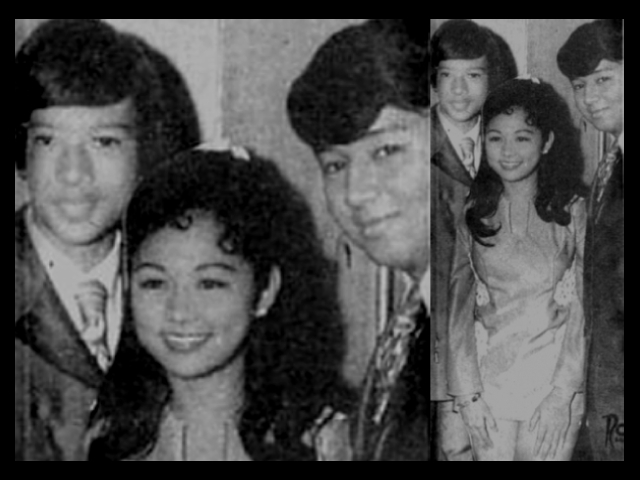
Prior to her debut album, Vilma Santos’ first stint in singing was in her earlier film, 1964’s Ging. She played a child singing sensation opposite drama staple, Olivia Cenizal. Her career continued with string of dramatic roles and when the musical trends started in late 60s her career aspiration become limited mainly because everyone expected young stars to sing well. She admitted her limited range as singer and concentrated with her promising acting talents and dancing. When Vi found commercial success with Edgar Mortiz as her love team, she occasionally sings with him. Their fans did not mind Vilma’s soft thin voice. Actually, Vilma’s sweet tone blends well with Edgar’s balladeer pipes. The success of Vi & Bot love team was evident with numerous films and it was only a matter of time that the idea of having Vilma have her own album came in 1969. There was a market and demand for Vilma’s very own long-playing vinyl. William Leary, Vilma’s manager asked musical director Dannie Subido to gather songs that will suit Vilma’s limited range.

It was reported that Subido find the project challenging. They have to find songs that are light but will still give Vilma’s fans enjoyment. They decided to make it fun and sort of child like. They also wanted to make sure that the songs reflect Vilma’s current state of mind, that of a growing teenager. Sort of like early Britney, “no longer a child not yet a woman.” Her promotional interview clearly confirmed some of the issues teenagers are experiencing during this time. Body image, sex education, adulthood, friendship and dating are some of the topics the album tackled which are topics that are still relevant today. “…as a singer…gosh…I feel a funny thing inside every time na naiisip kong, I was not a born singer. But every time I hear my records play, I couldn’t help but kid myself, that I was made after all.” She commented when asked to evaluate herself as singer. What she really meant by that line, “I made it” is that by making her record a success no one can’t say that she cannot be sell records. This success proves that she can be a successful singer like her closest rival, Nora.

Listening to “Sixteen” – Vilma’s first album was pure fun and still very relevant today. Consist of twelve songs six on each side. The vinyl record on side A starts with its carrying single, Sixteen. Composed by Dannie Subido, Sixteen talks about “making out” in the park. This might alarm some of the religious zealots in the 70s but Ate Vi’s wholesome sweet voice makes the song wholesome and child like. The hidden sex – “making out” – kissing and hugging in public place – message of the song would probably the reason why “Sixteen” became the favorites of teenagers. The song catapulted Vilma’s signature song. A feat that even her closest rival, Nora Aunor can’t replicated (Nora Aunor despite successful singing career lacked a signature song). Remember this is the hippie era and the start of the feminist movement. A clear reason why “Sixteen” was a major hit with the free love care free young generation of this era. The next songs, Dry your Eyes and Bring Back Your Love both arranged by Dannie Subido are love songs that boils down to frustration of a girl in love. Followed by a turned around in terms of mood with Vi’s version of a Bacharach composition, Raindrops Keep Falling On My Head, a funny but out of place song. One of the two final songs on side A, came as a surprise. “When The Clock Strikes One” was an original composition of Robert Medina and like “Sixteen” was about “making out” – kissing and hugging but this time its more fun because of its unusual up-tempo mood that’s actually more like a hip-hop song.

Side B of Sixteen was pure fun too. – Three songs that stands out were the original compositions of Dannie Subido, “Sometimes,” “It is Wonderful to be In Love” and “Then Along Came You Edgar.” The lyrics of these songs are simple and obviously catered to the massive followers of the Edgar – Vilma love team. Before Britney Spears came up with her hit song, “Sometimes,” Vilma has her own song titled “Sometimes.” Both Britney and Vilma’s songs are about teenage love confusion. It’s a Wonderful To Be in Love is self-explanatory, yes Ate Vi is in love and she expressed it nicely in this song. The up-tempo and simple lyrics of this song makes it more like a children rhyme song except that it’s about almost “adult-kind” of love. The puppy love theme of the album continued with an uplifting song, well at least for the Vi and Bot fans with “Then Along Came You, Edgar.” This song confirmed Vi’s puppy love to the dark and handsome but not so tall cutie-pie, Edgar Mortiz. Once again, Dannie Subido’s arrangement and lyrics are simple but playful, a perfect fit to Ate Vi’s sweet range. The success of Sixteen can be attributed to the playfulness and simplicity of the song selections. It suited the sweetness and purity of Vilma’s almost child like voice. The album earned Vilma her first golden record award and a remarkable signature song, “Sixteen.” The album established her as a successful recording artist. If I will compare her to today’s list of contemporary artists, I will compare Vilma to the likes of Jennifer Lopez, Britney Spears, and Madonna. Jennifer, Britney, and Madonna has thin but sweet voices just like Vilma. Like Vilma, these pop superstars have to work hard to achieve almost perfect products that their fans loved. Like Vilma, the three pop stars are great dancers which they all used to the max in their choreograph production numbers. The reluctant singer came out on top. Vilma Santos’s debut album made history. Sixteen made Vilma Santos a remarkable singer.

After Sixteen – The success of Sixteen brings out another facet of Vilma Santos’ talent. Everyone knows that she is a good actress and a wonderful dancer but nobody expects that she will be able to succeed as a singer. At the early stage of her young career, the rivalry between her and a more established singer, Nora Aunor was lapse sided because Aunor was the number one singer in town. The success of Sixteen brings about an even playing field between the two young stars. Vilma’s record breaking sales positioned her career into high grear. She continued to act in several musical films and at the same time recorded fun-filled songs. To her critics, Vilma’s recording success were attributed to pure luck. And so, to prove them wrong, Vilma’s manager smartly plotted follow-up recordings. Not only did Vilma record her follow-up album, she recorded a string of mini-LPs. Mini-LPs are shorter version of the big vinyl record with two songs on each side. She ventured into Tagalog songs, recording six songs that include instants hits like Isipin Mong Basta’t Mahal Kita, a theme song to a film she did opposite Filipino chess grand master, Eugene Torre; Palong-Palo, where she received a golden record award in 1974 and an up-tempo opm, Tok-Tok Palatok, another theme song from one of her comedy film with the same title opposite Jojit Paredes. Vi and Bot also released two mini-LPs, “Something Stupid,” a song that they regularly sings at their TV show, D’Sensations and “Christmas Tiding,” a collection of famous holiday songs like Silver Bells and Vilma’s now famous version of Santa Claus is Coming to Town and Mommy Kissing Santa Claus thats been circulating in the internet in recent years. In addition, Vilma recorded Baby Vi, another mini-LP. She also shared equal billing with Edgar Mortiz, Esperanza Fabon, Ed Finlan, Hilda Koronel and Sahlee Quizon in a Christmas compilation album titled, Christmas Carols.

Willears Records continued Vilma’s recording projects with two albums, Sweethearts and Aloha My Love both featured her with off and on screen love partner, Edgar Mortiz. The company who introduced the resurgent singer, Vilma in Sixteen followed up her solo success with Sweet, Vilma, Sweet, a much more ambitious offering with Vilma doing popular cover songs. Songs that are mostly identified with more established singers, like Nora Aunor. It is worth noting that during the peak of the musical genre in the early 70s, the musical films relied heavily on foreign influence. Maybe this was the reason why Vilma’s rival Nora Aunor doesn’t have a signature song. Recorded songs are mostly versions of the foreign recordings. Tom Jones, Frank Sinatra, Connie Francis, Neil Sedaka are the usual suspects. Instead of original simple composition, Willears selected songs like Mama, Sad Movies, and Our Day Will Come and let Vilma create her own version. The result was a disappointment not because Vilma didn’t work hard for the project but because it lacks the originality of her first album. Vilma’s thin voice also didn’t help.

But despite this visible contrast to her first album, Sweet Vilma Sweet was a successful follow-up. She continued her singing stints with an album most Vilmanians seems to forget, All I See Is You carried the folk song, Ati Cu Pung Sing-sing and Wonderful world of Music. The later song became a title of a musical film that paired Vilma with Edgar and co-starred with Snooky, Tony Ferrer, and Boots Anson Roa. The demand for Vi & Bot’s recordings increased and Willears produced Sweetheart, perhaps a confirmation album of the real score between the two young teen stars. Out of 25 films Vilma and Edgar made in 1970, both Sweethearts and Sixteen stands out as two of their certified hits both as films and recorded albums. By 1972, Vicor Music Corporation took over Vilma’s singing career and smartly went back to the original fun-loving carefree theme that suited Vilma’s voice and made her a successful recording artist. With the guidance of Orly Ilacad, Vilma recorded original compositions that were light hearted, up-tempo and simple. Sing Vilma Sing arrived at the radio airwaves with the carrying single, “Bobby Bobby Bobby.” Despite the declaration of Martial law in 1972, the album became another instant hit. Also, Vilma and Edgar recorded their third album together, a follow-up with the hit, The Sensations. Aloha My Love came afterwards which also became a film and appropriately shoot entirely in Hawaii. Aloha was artistically packaged and contained Hawaiian and popular cover English songs like All Alone Am I and Eternally.

Unfortunately, all good things must end. By 1973, Vilma made her move.  After almost one hundred films with Edgar Mortiz, she decided, it was time to venture out of the love team and test the water as solo star. This move also signaled the end of her singing career. At the same time, the musical genre started to subside as more turmoil politically spreads around the country. The bomba films exploded in mainstream local cinemas in mid 70s. Movie theatre owners illegally inserts porn clips in the middle of film. It was so popular back then that even the first Manila International Film Festival organized by former first lady, Imelda Romualdez Marcos allowed the bomba or sexy films to be shown during the midnight time slots of the festival. The bomba period created a long line up of respectable sexy actress like Elizabeth Oropeza, Daria Ramirez and Chanda Romero. Even former beauty queen, Gloria Diaz ventured into the sexy film. The emergence of sexy or “bold” films as what they referred to by local film buff challenged the now solo superstar, Vilma Santos. Tagalog Ilang Ilang production transformed her into an action super hero as the new Darna, Philippines version of Wonder Woman. Lipad Darna Lipad (Fly Darna Fly) defeated entertainment giants Fernando Poe Jr and Joseph Estrada, both have films being shown at the same time and the usual bomba films. A very long line-up snake down the streets of Claro M. Recto Avenue’s Cinerama theatre. It was recorded that Tagalog Ilang Ilang Production distributed Darna dolls and Coka-Cola bottles to the massive patrons during the film showing. Lipad Darna Lipad became the most successful Darna film ever. It broke box office records and solidified Vilma’s clout as the new box office queen of Philippine movies. Vilma’s stature as the most bankable artist of that time validated her decision to leave her love team with Edgar Mortiz and the singing stints to her closest rival, Nora Aunor. She became more adventurous and accepted roles that showcase her versatility. And this move cemented her position as the actress to watch, the actress on top of her game.

Remarkable History – As a singer, Vilma’s thin voice didn’t stop her to become a successful singer. Her hard work paid off and earned her a piece of history. The reluctant singer recorded strings of solo albums that created her signature songs, “Sixteen” and “Bobby, Bobby, Bobby.” Signature songs that enlisted her together with famous singers like Imelda Papin (Bakit), Eva Eugenio (Tukso), Claire DeLaFuente (Sayang), Sharon Cuneta (Mr. DJ), Didith Reyes (Nananabik), Aiza Siguerra (Pagdating Ng Panahon), Freddie Aguilar (Anak), Florante (Handog), and Gary Valenciano (Di Na Natuto). Her sweet and child like voice reflected the innocence of her original up-tempo songs that tackles teenage issues like dating, sexual education, body images and adulthood. Teenage issues that are still remarkably relevant today. – Credits: Album texts and Photos: Nar Santander, Eric Nadurata, additional photos: Rene Maximo Global Vilmanians

Sweet sweep for Stella

This slideshow requires JavaScript.

It was a sweet sweep for Sister Stella L., the movie which garnered ten of the twelve trophies at stake during Friday night’s 9th Urian Awards rites. The Regal Films production was hailed the Best Fil; Sister Stella L., herself Vilma Santos, Best Actress; Jay Ilagan, Best Actor; Mike De Leon, Best Director; Laurice Guillen, Best Supporting Actress; and Tony Santos, Sr., Best Supporting Actor; Still Stella L’s Jose Lacaba, Jose Almojuella, and Mike De Leon were cited for the Best Screenplay category; Jess Navarro, for Best Editing; Ding Achacoso, for Best Music; and Ramon Reyes, for Best Sound. This is more than enough to compensate for its poor performance at the box office. ECP’s Misteryo sa Tuwa went home with two remaining awards for Best Production Design by Don Escudero and Rodel Cruz; and for Best Cinematography by Rod Ilacad. For his outstanding contribution to the film industry, the Manunuri ng Pelikulang Pilipino bestowed a special award to William Smith for bringing into the country the first colored film laboratory. Some people could use a lesson in courtesy. At his age, Smith, understandably, could harlly walk, speak well or display clarity of thought, therefore, the need for him to read his remark of thanks from a piece of paper. While national artist Lamberto Avellana and veteran actress Mary Walter paid due respect for Smith, a young man seated beside us took note of this and declared, “Pare, ‘yung speech niya binabasa pa niya, o!” Although the presentation ran smoothly and briefly (yes, of long waits and intermission), notable was the marked seriousness about the atmosphere that night. Champoy’s twosome’s (emcee Cherie Gil and Noel Trinidad) efforts to perk up the audience were futile. The Urian show, furthermore, lacked star luster. Several guest stars failed to attend the ceremony as shown by the many vacant seats. Some presentors even had to go upstage twice. Have we suddenly grown weary of awards rites? Even the major awardees were not present to claim their trophies, thus, only Vilma posed for photographers at the end of the show. (Photos: Luis Garcia Jr.)

Sixteen


Original song sang by Vilma Santos

Kissing on the park
Hanging on the forth
Holding hand in hand
Down the avenue
Strolling down the lane
A castle in the air
A Kissin’ or lovin’
A kissing’ or lovin’
A kissing all night long
They said I’m only Sweet Sixteen
I’ve never been Kiss
I’ve never been loved
And all I want is Candy
Ice Cream teddy bear Lollipop
Riding on the sun

A lot of things we do
Whispering to my ears
I love you so
Strolling down the lane
A castle in the air
A Kissin’ or lovin’
A kissing’ or lovin’
A kissing all night long
Kissing on the park
Hanging on the forth
Holding hand in hand
Down the avenue
Strolling down the lane
A castle in the air
A Kissin’ or lovin’
A kissing’ or lovin’
A kissing all night long
(fade)
Global Vilmanians

RELATED READING:

Film Scenes – Confrontations (Videos)

VILMA SANTOS vs ALMA MORENO

VILMA SANTOS vs NIDA BLANCA

VILMA SANTOS vs MARECEL SORIANO

VILMA SANTOS vs LORNA TOLENTINO

VILMA SANTOS vs DINA BONEVIE

VILMA SANTOS vs ALICIA VERGEL

VILMA SANTOS vs CLAUDINE BARETTO

VILMA SANTOS vs GLORIA ROMERO

VILMA SANTOS vs AMALIA FUENTEZ

VILMA SANTOS vs CHARITO SOLIS

VILMA SANTOS vs NORA AUNOR

Walang Himala (Repost)

“I’m Home!” Ito ang unang katagang namutawi sa bibig ni Batangas Governor Vilma Santos-Recto sa ibinigay na presscon ni Mother Lily Monteverde para sa kanya at sa asawang si Sen. Ralph Recto last Wednesday night sa Imperial Palace Suites.

Bilang gobernadora ng Batangas, priority na ni Ate Vi ang pagsisilbi sa constituents kesa sa pag-aartista, aminado siya talagang nami-miss niya ang showbiz lalo pa nga’t dito na siya lumaki, nagdalaga, nagka-asawa, nagkaanak hanggang sa maging public servant.

Bukod sa mag-asawang Vi at Ralph, kasama rin nila ang anak na si Ryan Christian. Hindi na raw nakasama ang panganay ng Star for All Seasons na si Luis Manzano dahil may trabaho, pero early that night, magkasama sila dahil pareho silang tumanggap ng award sa Gawad Tanglaw – si Vi for Best Actress sa In My Life at si Luis ay Best Suppoting Actor for the same movie.

After the open forum, tsumika na ang entertainment press kay Ate Vi kung saan ay sinagot niya ang maraming issues at katanungan.

She was asked kung ano ang masasabi niya sa pagtakbo ng ex-husband niyang si Edu Manzano bilang vice president — isang posisyong kinumpirma niyang inalok sa kanya pero tinanggihan niya.

“Alam niyo, si Eduardo, noong huli kasi kaming nag-usap, ang alam ko, senador ang tatakbuhin. Baka in a way, may pagkabigla ‘yung desisyon na vice president kaagad.

“Hindi madali ‘yon, eh. Pero as I’ve said, may feeling naman ako na kung mabibigyan siya ng chance to serve, definitely, he will do so because he is efficient, matalino, competent.

“Pero ‘yung klase ng kampanyahan ngayon, hindi talaga ganu’n kadali. So, kung anuman ang magiging desisyon ni Edu, hindi ko siya masisisi. Politics is not easy,” pahayag ni ate Vi.

Natanong din siya hinggil sa pagbabalik sa ‘Pinas ng kanyang arch rival, ang Superstar na si Nora Aunor, at sa kanyang reaksyon sa ginawa nitong pagpaparetoke.

“Hindi lang naman ang kumare ko ang gumawa niyan, marami pang iba. Not for anything, mas bata sa amin, nagpapaayos na.

“There’s nothing wrong with that. Kung sa tingin mo, eh, kailangan na, bakit naman hindi? Walang masama na i-enhance mo ‘yung beauty mo, ‘di ba?”

Hinggil sa pagbabalik ni Ate Guy, ani Vi, welcome na welcome ito sa kanya.

“Oo naman! At saka noong magkaroon kami ng premiere night sa L. A. ng In My Life, nagkakausap kami niyan. Dapat nga manonood siya, eh. Kaya lang, biglang nagkaroon ng bisita sa kanila. Kaya ang pinapunta niya, close friends niya, which we accommodated, at nag-thank you siya. “

Tungkol naman sa paggawa ng pelikula, ani Vi, may natitira pang dalawang pelikula sa kontratang pinirmahan niya sa Star Cinema.

Ang isa ay ang pelikulang pagsasamahan nila ni Sharon Cuneta at ang isa ay hindi pa raw alam kung ano.

Tuloy pa rin ba ang pagganap niya bilang Cory Aquino sa filmbio nito na ipo-produce ng Star Cinema?

“Alam niyo, gustung-gusto kong gawin ‘yan. Wala na yatang honor sa isang artista kung hindi ang makaganap ng isang Corazon Aquino.

“Kaya lang, depende ‘yan. Kasi kung gusto na nilang gawin right away para mahabol sa death anniversary at birthday ni Presidente Cory, hindi ako pupuwede,” say pa ni Ate Vi.

Ipinaliwanag din ng gobernadora kung bakit mula sa Lakas-Kampi-CMD ay lumipat silang mag-asawa sa Liberal Party ni presidentiable Noynoy Aquino.

“Maybe, naghahanap na rin ako ng pagbabago, eh. Whether sabihin man nila na parang ginagamit ang magulang, eh, bali-baligtarin man natin, magulang niya talaga ‘yon na dalawang bayani. Kahit na sabihin niyong ginagamit lang, magulang niya, eh.

“Naniniwala ako na kung naghahanap tayo ng pagbabago with the vision na binanggit niya sa amin na tutulungan niya ang Batangas, we’re not saying overnight, may resulta ‘yan, walang himala. Talagang tatrabahuhin ‘yan, may vision ‘yan.

“Pero let’s face it, mag-iisip ka siguro ng dalawa, tatlo hanggang isang daang beses bago ka gumawa ng kalokohan. Kasi, sisirain mo ba nang ganu’n-ganu’n lang ang dalawang magulang mo na bayani?

“Plus, his vision, looking forward na ‘I believe,’ meron pa, kaya pa nating maka-survive. ‘Yun nga lang, may mga bagay tayong dapat i-strengthen, and one of these is corruption talaga. ” – Vinia Vivar, People’s Journal (Telebisyon.net).

MOST MEMORABLE PERFORMANCES (Videos)

When it comes to memorable performances only one actress top my list. Five decades, from being a child phenom to an a-1 caliber actress, Vilma Santos is no doubt the Meryl Streep of the Philippines. And maybe more. Maybe because Ms, Streep, didn’t start her illustrious career as child star.

Vilma Santos endured so many transformations that even Madonna will be pale in comparison. Of course, Vilma is not a singer but Madonna can’t even followed-up her half-decent excursion as Evita. Just a little trivia, Vilma tried successfully to be a singer with her golden album “sixteen” in the 70s but practically decided dancing was her forte hence the successful venture into television musical variety show “Vilma!” in the 80s to 90s. Vilma with her bountiful filmography is second to none. She did a wide variety of roles that even her closest rival can’t match. Listing her most memorable performances is a chore. It will take a true follower to figure out which one should be included in the list. And of course everyone have their favorites particularly Vilmanians who I am dedicating this article.

The fact is Vilma’s closest rival, Nora Aunor who repeatedly ventured into a string of comeback vehicles since the mid 90s failed miserably to capture her lost sparkle. And the fact that her brand of acting have never came to its fruitful evolution since the 70s. Meaning – she became stagnant. As an actress in order to have longevity, one should adapt to changes. Sadly, Nora never learned this concept.

Clearly, if you will list Nora’s best, it will all be films in the 70s and early 80s. Movies like Tatlong Taong Walang and Bona. While Vilma’s list will be from the past five decades. A proof that like Ms. Streep she evolved into much more versatile and serious actress than anyone else in Philippine cinema.

While Vilma is active in public service, film and TV producers are waiting for her availability; and corporate institutions are still lining up for her endorsements. All of these, of course made her still the highest paid actress/product endorser of the land. Should we change her title to the LONGEST REIGNING QUEEN OF PHILIPPINE CINEMA? You be the judge…

Here’s my list of most memorable Vilma Santos performances…

Trudis Liit (1963)The year…an actress was born! Vilma acted like she’s been doing this craft for a long time eclipsing the dramatic tandem of Luis Gonzales and Lolita Rodrigues. Her most memorable scenes were with villainous Bella Flores which secured her winning the FAMAS best child actress of 1963!

Dama De Noche (1972) – Vilma did 14 films this year and only six were musicals which means her career backers are starting to shift her into a more serious brand of acting. It was also evident that the musical genre was in that stage of phasing out. And Vilma embraced this by accepting a variety of projects from comedy (Ang Kundoctora), a light drama (Bernal’s Inspiration), action (Takbo Vilma Dali), horror (Hatinggabi Na Vilma) and drama (Tatlong Mukha Ni Rosa Vilma and Dama De Noche). Vilma’s portrayal of a twin sister in which one was insane in Dama De Noche signaled her willingness to take new daring projects seriously. This Emmanuel Borlaza melodrama showcased her ripe talents which earned her first best actress award. It maybe not be a full victory for some since she tied her best actress award with Boots Anson Roa but for many it was an honor to share this award to a veteran like Ms. Roa. Ms. Roa later on will confess her admiration for Vilma. She also went on to an extreme degree of explaining Vilma’s brand of acting, her different types of crying. Going back to Dama De Noche, the last scene where Vilma was showed crying and laughing like a true lunatic at the same time came to my mind. This alone, deserved the FAMAS statue all the more.

Lipad Darna Lipad (1973) – The most successful Darna film of all time. Vilma became the standard measurement of success for future Darna. The film was directed by three directors, all successfully gave us three different take on good versus evil, all with three scariest villain portrayed by three multi awardees veterans, Gloria Romero (babaeng impakta), Lisa Lorena (babaeng Lawin) and Celia Rodrigues (babaeng ahas).

Vilma despite her being the shortest darna in history compensate her height with her bubbly almost animated movements which made this film true to its form, like an action hero marvel comics! All the fight scenes minus the high tech computer generated sequences are done the old fashion way, via camera tricks. Even the flying scenes were not bad at all like, I said, considering the medium, they have to use back then.

Ordinary moviegoers will not even think of including this film as one of Ate Vi’s most memorable film/performance but for me, this is one of a good example how versatile Vilma is, even at the start of her illustrious career.

Here’s my list of most memorable Vilma Santos performances…

Tag-Ulan Sa Tag-Araw (1975) – All I can remember about this film was Ate Vi’s last scene in a car with her parents controlling her and Christopher De Leon chasing them in the street while rain falls down. A very melodramatic to some and yet very effective. Ate Vi’s portrayal of a girl who happens to be in love with her first cousin was commendable. She should have won an acting award for this. But of course, critics are all intoxicated by her popular nemesis back then. Falling in love with your first cousin was taboo back then and maybe still taboo in Philippine society today, Tag-ulan was the first film of Christopher De Leon and Vilma Santos. And it clearly show the chemistry between the two actors.

It was the most dramatic and down to earth film by director Celso Ad Castillo. Here there is no over the top production design like the one in Pedro Penduko or the overtly sexual innuendo of Pinakamagandang Hayup sa Balat ng Lupa or even a sexual vulgarity of Virgin People. It was a love story based on a real life situation which made the film more realistic.

Of course being a Castillo project, one can’t escape some creative adventure… like the trend back then, Ate Vi did a the “wet look”. Meaning she done a scene where her blouse got wet and you know what that means. To some, it was vulgar, to many, It’s like she’s testing the water. Will her fans accept her in a more mature daring roles? No more sweet image?

Apparently, we will get more of this “testing” in her strings of films like Nakakahiya 1 & 2 (where she did a two-piece bikini) and Nagaapoy Na Damdamin among others. Her next move will shock the local cinema not even her closest rival can replicate. A transformation of great maneuvering. And this time, another Castillo project…

Burlesk Queen (1977) – The test was over. Vilma Santos, the mature A-1 caliber actress has arrived. And she did it with a big bang.

Burlesk Queen became not only the top box office grosser of the 1977 Metro Manila Film Festival, it also became the most awarded. It got 10 awards out of 13. Like typical sour losers, complaints flew and a big scandal came where the press reportedly said the awards were being returned to the festival organizers.

No such thing happened in fact Ate Vi still possessed the medallion and award she received as the festival’s best actress.

For movie critics, Vilma’s portrayal of not so innocent Chato was so revealing even her opponent’s regular drumbeater came to Ate Vi’s defense saying her acting was surprisingly good enough to win the award.

Truth is, even the feminists applaud her matured performance and Times magazine couldn’t agree more, they featured Ate Vi in a short article, the very first for a Filipina actress.

For a shocked Vilmanians, this movie became a revelation that indeed Ate Vi is embracing her independence. She no longer the sweet virginal teen star of the late 60s to early 70s. She is now an actress willing to conquer any roles. And Vilmanians embraced this transformation with pride. Vilmanians are now ready for Ate Vi’s resurgence on top. We are all ready to support her no matter what the other camp will say.

As for her acting in the film, she proved once again that she has the goods. Critics noticed her multi-dimensional portrayal of a woman in pain. Her reluctant choice to survive poverty. Her father’s condemnation of her career choice. Her lover’s abandonment. All of these emotions captured into a superlative acting coup, surprising even her rival and her fans.

Pagputi Ng Uwak, PagItim Ng Tagak (1978) – Following up the success of Burlesk Queen, Celso Ad Castillo ventured into another love story with the backdrop of hukbalahap. It was a common knowledge now that this film costs Vilma and her film company a lot of money. This was due to Celso Ad Castillo’s lack of control over his film budget. His moody and lack of restrain took this film longer to finish. Later on, VS film company did not recuperate its huge capital, as the film was only a mild hit. Despite this, the film was applauded by critics and won Vilma numerous award as producer.

As Julie Monserrat, a music-loving provincial lass raised by her two prudish, wealthy spinsters aunt (Adul De Leon and Angie Ferro), Vilma convincingly portrayed a woman who was very much in love with Dido Ventura (Bembol Rocco), the poor son of embittered woman (Mona Lisa). Like its earlier love story, Tag-ulan sa Tag-araw, the couple have its struggle to remain together.

Aside from the beautiful scenery, Castillo did a wonderful job of combining poetical music to its scenes. And who can forget that kiss? It was said that Celso asked both Vilma and Bembol to put some condensed milk in their mouth prior to do the kissing scene. This was to signify their lust and love to each other as both have to control their desire as what most common in the Filipino society back in that period of time.

Rubia Servios (1978) – For many Vilmanians, Rubia Servios wasn’t given any recognition its truly deserved. Particularly the performance of Vilma Santos. It was a difficult role. A rape victim who managed to fight back at the end and killed her tormentor. Lino Brocka’s first film with Vilma. And he did it with careful manipulation of grief and emotion. A not so good director will falls into melodramatic scenes but Lino manages to showcase Vilma’s vulnerability with restraints with his carefully selected scenes.

The twists at the end where Vilma was once again being raped by the devilish Philip Salvador this time in front of Vilma’s husband played effectively by Mat Ranillo III was brutal and painful to watch. Vilma’s defeat at the hands of Philip was clearly expressed by her lack of facial emotion and then at the nick of time, when she was able to grasp a piece of wood, a paddle in that boat scene, her face was ignited by terror. She showed revenge in her face and moviegoer will root for her. Kill that bastard! Kill that bastard! One might say.

It was a hell of performance. One might assured her winning the best performer of the 1978 Metro Manila Film Festival. But we were all wrong. We were robbed. It was a painful night for many Vilmanians. I wasn’t able to eat and sleep even the following days after the awards night. Vilma accepted her defeat and learned never to expect any more come future awards night. And so, all Vilmanians did that too. Life is too short to cry over a spilled milk.

Miss X (1980) – Filmed on location in Amsterdam, Netherlands, Miss X was a triumph for its director Gil Portes. It was like seeing a dark European film.

Vilma Santos was exposed in a glass window at the red light district of this part of the world. These scenes alone deserve its being included in my list. A very brave act indeed for an actor who was never been to a place where actual sexual trade between people are legal.

Gil Portes showed his masterful skills pre-Munting Tinig fame. Miss X was dark and moody at the same time which made the exposition of a life of a Filipina illegally recruited as prostitute in this country revealing and disheartening.

Ex-Wife (1981) – Perhaps Eddie Rodriguez’ best film as director, Ex-Wife was actually a psychological drama about marriage and its players. A woman who became victim to a series of bad relationships.

Vilma showcased her acting maturity by portraying a bruised woman. Her scene in the end was reminiscent of Dama De Noche but this time, more restrained and controlled. She was seen, loosing her composure, crying and then laughing in a dinner table. She was a picture of defeat. Another wonderful performance too bad nobody took notice.

In 1981, Vilma did four movies, Hiwalay, Pakawalan Mo Ako, Karma and Ex-wife. Pakawalan earned Vilma a FAMAS best actress while Karma gave her another Metro Manila Film Festival best actress. Of the four movies, she did, I believe Ex-Wife should be the one deserving of any awards not Pakawalan (although she’s really good in her court scene there) and not Karma.

Relasyon (1982) – So many times snubbed by the critics, Vilma Santos emerged out of nowhere as the new darling of award giving bodies via Ishmael Bernal’s poignant take of a story of a mistress in Regal films’ Relasyon.

Prior to this, local films always stereotyped the mistress roles as the villain. Never in the history of local cinema that a societal taboo, the life of a mistress can be portrayed in a down to earth, very sympathetic way, only now in Relasyon.

Vilma Santos did a splendid job as Marilou, an independent, insecure, career woman who happened to fell in love with a chauvinistic, egocentric, typical Filipino married man. It was apparent that Relasyon was a Vilma Santos vehicle and Christopher knows this and did a wonderful job supporting her leading lady.

Perhaps the most memorable part of Relasyon was the death scene of Christopher. The scene wasn’t edited in parts but a continuous take from the shot where Christopher fell to the floor to Vilma’s marathon cry. The outcome was exhilarating. What a splendid decision for Bernal to take that scene as normally called in Philippine Cinematic lingo as “tuhog.” After this scene, Vilma’s look was that of a woman at peace with the outcome of her life. Her tired face indicates pain and we felt it too.

Vilma’s performance here was so realistic that even her rival’s epic portrayal of Elsa in Himala was a no match. And we rejoice. She deserve all the awards. No one complained. No awards being confiscated. Vilma finally got her recognition she truly deserved.

Sinasamba Kita (1982) – Before Meryl Streep did a wonderful job as the bitches of all bitches in the movie the Devil Wears Prada, Vilma Santos did a similar type of role. Produced by the house of glossy films, Viva and directed by Eddie Garcia, Sinasamba Kita broke all the local box office records at that time. Proving that by 1982 not only Vilma was the darling of all award-giving bodies, she was also the box office queen!

Derived from a comic serial, Sinasamba Kita contained so many twist and turns that one might have a headache just figuring out what happens next. But to the credit of Garcia, he was able to make all the twists into a realistic, acceptable ones that midway to the film we are all rooting for Nora (Lorna Tolentino) and hating her bitch sister Divina (Vilma Santos).

We are also amazed by the glossiness of the film’s locations (houses) and Vilma’s sophisticated dresses. All this made the film more credible and realistic. By the time, Divina gave way to her sister’s love for Christopher we also made amends and felt sympathy to the bitchy heiress. Making this film and Vilma’s performance a proof of her versatility as an actress that her rival will never – ever achieved.

Broken Marriage (1983) – Bernal at his finest. This was our conclusion after seeing Broken Marriage in 1983. And this time the roles of Christopher De Leon and Vilma Santos were even. Meaning unlike Relasyon which was a one-woman show, Broken Marriage was a two persons story. From the point of view of a man, a husband and a woman, a wife. As the title said, it was a marriage destined for failure. The numerous arguments here about marriage life was carefully written with wit giving both Christopher and Vilma shining moments.

As we are talking about Vilma here, I will concentrate on her, she did portray a woman looking for some justice in this unequal world of men and women in Philippine society. She even willingly did a scene where she doesn’t have any make-up on and the result was a realistic glance of a real life Filipina whose struggles were being exploited very realistically by Bernal.

Vilma effectively did a wonderful job that the Manunuri, the local critics, gave her second consecutive Urian Best Actress.

Sister Stella L (1984) – Most established local directors lined up for their turn to direct her, in Sister Stella L, It was Mike Deleon’s turn. And it was one of the most celebrated film of all time. And this was despite its disappointing result at the box office, Lily Monteverde, the producer of Regal films consolation was the numerous awards SSL earned.

And Vilma’s performance here did not disappoint both the critics and her avid fans. Her take on SSL’s awakening was somewhat lacking in hysterics as what her critics always says, she’s always has the hysterical brand of acting. Here, Vilma’s acting was controlled and restrained even her speech scenes at the rallies were calculated. And these made her performance more effective transcending her character bit by bit from an innocent bystander to a militant activist.

SSL was invited to the Cannes Film Festival in 1984 but due to technical problems the films wasn’t showed in there but at the Venice Film Festival which was equally prestigious. At the Venice, SSL was the second Filipino film after Genghis Khan in 1951 to be officially invited for exhibition.

Tagos Ng Dugo (1987) – originally offered to Maricel Soriano, Tagos proved to be another tour de force performance from Vilma Santos. The film was about the psychological state of being of Pina and her sexual needs that’s ends with her desire to kill her sexual partners. A study of mental state where Pina needs to change her physical looks each time she venture into manhunt.

Vilma exposed herself into different characters. Each bate to a possible sexual mate ends into an erotic sex scenes and its graphic death scenes. Vilma did a good job of portraying an psychotic murderer. But perhaps the most visually effective scenes wasn’t that of the ending where she was finally caught by the authorities, it was the quiet scenes in the dirty bathroom while she’s sitting in the toilet bowl and where she took her slipper and slap a cockroach that was crawling in the ground. The shots started from the ceiling and then zoomed down. Then her face was seen smiling at her latest killing -the cockroach. It was a symbol. That’s just like killing men.

Directed by Maryo DeLos Reyes, Tagos Ng Dugo may not be your typical Vilma movies. It was dark and very violent. It was another testament of how varied Vilma’s filmography is. She won two major awards for this, another best actress from FAMAS which elevated her into FAMAS hall of famer and another best actress from CMMA.

Pahiram Ng Isang Umaga (1989) – As the dying Juliet Vilma Santos gave us another tour de force performance. I know, I have said this line so many times in this article but what can I do? It was indeed another tour de force performance. As the premises of this film was already gloomy, about a cancer victim who died at the end of the film, some mediocre director will fall into a soap opera technique but not Bernal. It was the last Bernal-Santos collaboration before Bernal’s sad demise. Bernal successfully controlled Vilma’s tendency to overreact to dramatic scenes. On Vilma’s part it wasn’t that hard, this was 1989 she already matured into a fine a-1 caliber actress.

Most of Vilma’s scene here were really toned down. It’s like her tears where even choreograph falling down in her cheeks at the right moment. When she talked to the father of her child, asking him to take care of him, her voice trembles with regret and pain at the same time tears falls like in perfect connection to each words she delivered. Pahiram earned Vilma her first Star Award from PMPC. It took her nine years to finally earn their respect. Not surprisingly, PMPC consists of so many fans/reporter of her rival. Nowadays, Vilma has the most Star Awards (six compare to four for her rival). How times changes… for the better.

Ipagpatawad Mo (1991) – It was a different diversion from a company who was known for comics adaptation and glossy commercial movies. Finally, Viva films produced a serious film with a simple story. A story with a social message. Ipagpatawad mo penned by Olivia Lamasan and directed by Laurice Guillen was a story about a couple with an autistic child.

Autistism is a neurological condition that affects children in their early developments. The story focuses on the couples struggles with opposites views in how to deal with this misfortunes. The shame attached to it affects the typical Filipino manhood and the unconditional love typical of a caring Filipina woman hood. Another triumph for Christopher DeLeon and Vilma Santos. Christopher shared the spotlight as the insecure husband with the ever-consistent acting of Vilma Santos.

Dahil Mahal Kita (1993) – Another film with social relevance was this powerful true to life story of a woman who was the first person to publicly admit her sickness of AIDS. Typically stereotyped as gay’s disease, Dahil Mahal Kita tackled the ignorance of many Filipinos regarding this disease. Once again, Laurice Guillen gave us an realistic approach to story telling. She chronicled the life of Dolzura Cortez from her early life as a happy go lucky prostitute to the last stage of her life of giving a face to this deadly disease with a careful hand. Each stages gave us the reason to be compassionate.

Vilma Santos gave a powerful, angry performance. Her delivery of lines were crisped. Her emotion overflowed with question about Dulzora’s mortality, about god’s plan and about the people who will read or see Dulzora’s life story. All of these were convincingly seen in Vilma’s Dolzura.

Bata Bata Paano Ka Ginawa (1998) – re-titled as Lea’s Story for international release, Bata bata paano ka ginawa was one of the most successful film of 1998. That was in terms of critics response and box office returns! Bata was based on the award winning 1983 semi autobiographical novel of Lualhati Bautista. Bautista updated the novel to have a more fresh take.

With a superb cast which includes the irresistible Serena Dalrymple as Maya (she reminded us of that child star in the film, the Goodbye Girl), the very innocent Carlo Aquino as Ojie and of course the men in Lea’s life, Albert Martinez, Ariel Rivera and Raymond Bagatsing. Like many Vilma Santos starrer, Bata bata paano ka ginawa was of course belongs to Vilma. She has become the most effective actress in Philippine cinema. Her choice or roles made her the feminists’ kind of woman and ordinary Filipinas’ role model. Roles that yes, struggles… and vulnerable.. .but roles that shows resistance and fighting spirits.

Bata bata paano ka ginawa was showcased Vilma’s maturity as an actress. A proof that she was indeed in command of her choices of roles. Two traits that has never seen in her closest rival. Bata earned Vilma her first international recognition from the prestigious Brussels International Independent Film Festival.

Anak (2000) – The most successful film at the start of the new millennium in terms of box office returns and critical acclaimed. Anak, directed by Rory Quintos was a story of a domestic helper in Hongkong, Josie Agbisit, played masterfully by Vilma Santos and her family headed by her eldest daughter, Carla, played by Claudine Barretto. The story focuses on the mother and daughter relationship.

Two decades ago, Vilma Santos played an ungrateful daughter to the multi awarded veteran, Charito Solis in a drama titled Modelong Tanso. The films was a big disappointment even with the exploitation of Charito slapping Vilma in the face as their promotional stills.

Now comes year 2000, Vilma nows plays the role of the mother and Claudine as the spoiled brat daughter. Yes, there was a scene where the mother slap her daughters face in Anak but Star Cinema who produced it were smarter. They didn’t exploit these scene instead they promote the film as a story about typical Filipino family. The story was the selling point why Anak became one of the most successful film of Star Cinema and Vilma Santos.

Of course and again, despite the excellent performance of Claudine Barretto, Anak belongs to Vilma. And again, It was a tour de force from start to finish.

Dekada 70 (2002) – Chito Rono’s take on the forgotten 70s and the effects of the Marcos dictatorship in the Philippine society, Dekada 70 turned out to be a realistic adaptation of the lives of typical family back then. It features an excellent cast and performances particularly Vilma Santos and Piolo Pascual. Dekada was originally offered to Nora Aunor but for some reason it didn’t materialize. Following the success of Bata, Bata Paano Ka Ginawa, another lualhati Bautista opus, Dekada was offered to Vilma and accepted the project without any hesitation and despite the fact that she wasn’t the first choice for the role of Amanda Bartolome.

As Amanda Bartolome, Vilma Santos delivered an understated, profoundly moving performance deserving of all the awards. Vilma was once again showed here without make-up. Her scene in a room where she’s holding her son’s clothing after the burial of her son was so moving we couldn’t help but cry our hearts out.

All in all, the film (again) belongs to Vilma. Her transformation here from a bystander mother and wife at start to the end where she became a militant activist was so unexpected that we were convinced that her sufferings made her who she was at the end. Dekada earned Vilma her second international recognition. There. What’s in your list? – RV

Miss X (Videos)

Basic Information: Filipina prostitute living in red district of Amsterdam. Directed by Gil Portes, written by Ricardo Lee and Cast: Vilma Santos, Mark Gil. The film’s theme song. “Dito Ba?” was composed by George Canseco and performed by Kuh Ledesma. The film won the 1980 FAMAS Best Musical Score for George Canseco.

RELATED READING:

FILM REVIEW: BURLESK QUEEN

The Plot: To support her paralytic father, Chato (Vilma Santos) works as a utility girl for a burlesque star Virgie Nite (Rosemary Gil). But when Virgie gets drunk on the night of her scheduled show, Chato pitches in for her. And she becomes an instant sensation. Enthused by the initial acceptance of the audience, she defies her father’s admonitions and presents herself to the manager. And thus, becoming the new burlesque queen. – IMDB

The Reviews: Si Celso Ad. Castillo ay marami nang naunang eksperimento. Pero pumaltos sa pamantayan ng mga manunuri. Maraming nagsuspetsa na may ibubuga siya, pero hindi lang talaga maibuga nang nasa tiempo. Malimit ang kanyang pelikula ay maingay at maraming sobra. Halimbawa, maraming karahasan na wala namang katuturan ang kanyang Madugong Daigdig ni Salvacion, seksing walang kadahilanan (pinagandang garapal) ang kanyang Pinakamagandang Hayop sa Balat ng Lupa, numero unong manggagaya ang kanyang Maligno, at sabog-sabog ang kanyang pinakamagandang nagawa, ang Daluyong at Habagat. Kung may magkamali mang pumuri kay Celso, iyon nama’y halos pakunsuelo-de-bobo lamang, at hindi ito sapat para itaas ang kanyang pedestal sa ranggo nina Bernal, Brocka at Romero. Wari ngang napako sa komersiyalismo ang direktor na inaabangan maglalabas ng natatagong talino. Lalong nagduda sa kanyang kakayahan ang mga kritiko nang kumalat ang balita na gagawa siya ng serye sa TV na ala Cleopatra Jones na papamagatan naman niyang O’Hara. Pero ang direktor na ipinapalagay na laos ay biglang pumalag nang walang kaabog-abog. Bigla’y nabalitang may inihanda raw itong pang-festival na ikinataas na naman ng kilay ng kanyang mga kritiko. “Aber tingnan,” ang pasalubong sa balita. At sa preview ng kanyang Burlesk Queen, biglang napa-mea culpa ang ayaw maniwalang may ibubuga si Celso.

Tiyak na naiiba ang Burlesk Queen, kahit ikumpara sa mga naunang trabaho ni Celso at sa iba pang direktor na nagtangkang tumalakay sa paksang ito. Matagal-tagal na rin namang nauso ang kaputahan sa pelikula, pero walang nakapagbigay ng katarungan sa lahi ni Eba bilang Pilipina at bilang puta. Sa Burlesk Queen, para kay Celso ay hindi nangangahulugan ng pagpapakita lamang ng utong, puwit o singit, kung hindi isang seryosong pagtalakay sa damdamin ng mga tauhan sa isang kapanipaniwalang dahilan na nangyari sa isang makatotohanang kapaligiran. Sa kanya, ang tao ay hindi basta maghuhubad at magtatalik. Maraming pangyayari sa buhay ang dapat munang linawin at unawain, at iyon ang basehan ng kasaysayan. Simple lamang ang plot. Isang tinedyer si Vilma Santos na alalay ng isang original burlesk queen, si Rosemarie Gil. May tatay na lumpo si Vilma, si Leopoldo Salcedo. Si Rosemarie naman ay may kabit na isang hustler, si Roldan Aquino. Nang iwanan ni Roldan si Rose, nagwala ang huli. Naging lasengga siya at tumangging magsayaw sa tanghalan. Mabibitin ang palatuntunan, kaya’t si Vilma na talaga namang may ambisyong magsayaw ang pumalit. Hit naman sa manonood si Vilma. Sa bahay, pilit kinukumbinsi ni Vilma si Pol na payagan na siyang maging full time dancer. Ayaw ni Pol, mas mahalaga sa kanya ang prinsipyo at delikadesa. Sapagkat wala namang ibang pagkakakitaan, si Vilma rin ang nasunod sa bandang huli. Nag-suicide si Pol nang hindi na niya masikmura ang pasiya ng anak. Si Rollie Quizon naman ang binatilyong masama ang tama kay Vilma. Nagtanan sila at nagsama. Pero hindi sanay sa hirap si Rollie. Sa pagpili sa pag-ibig o ginhawa sa buhay, ang huli ang pinahalagahan niya. Nagkataon namang buntis na si Vilma. Sa pag-iisa sa buhay, nagbalik siya sa pagsasayaw. Nagsayaw siya ng nagsayaw hanggang duguin siya sa tanghalan at malaglag ang kanyang dinadala.

Bagamat simple ang plot ay hindi naman masasabing simple ang pamamaraang ginawa rito ni Celso. Sa kauna-unahang pagkakataon ay nangyari sa isang pelikula ang pagsasama-sama ng magandang istorya, mahusay na direksyon, magaling na pag-arte ng mga tauhan, masinop na musika, magaling na editing at angkop na sinematograpiya. Sa Burlesk Queen ay nagsama-sama ang talino ni Celso (direktor), Mauro Gia Samonte (story and screenplay), George Canseco (musical director), Ben Lobo (cinematographer), at Abelardo Hulleza (editor). Kung may ipipintas sa pelikula, iyon ay ang hindi malinaw na pagbuhay sa panahon na nangyari ang kuwento. Kung minsa’y maiisip na nagyari ito sa panahon ng kasikatan ni Elvis noong 1950s. Pero kapag pinansin na maraming long hair sa extra, may wall paper at synthetic na sako ang bahay nina Vilma ay maaari namang sabihing baka naman pa-Elvis craze lamang ang mga tao roon. Pero may pulitiko, at Yabut, at may dagdag pang Connie Francis bukod sa motorsiklong Lambretta at mga kotseng Buick. Kung sabagay, maliliit na detalye lamang ito na agad makakalimutan kapag ang inasikaso ay pagbuklat sa magagandang punto ng istorya. Tingnan natin ang ilang magandang eksena sa pelikula. Sa ikalawang eksena ay nagtatanong si Vilma kay Rosemarie kung puwede rin siyang maging dancer. Walang malinaw na sagot si Rose, pero ang timing ng background music na It’s Now or Never ay makahulugan. It’s Now or Never nga, payo ni Elvis. At kung kailan siya maaaring mag-umpisa, Tomorrow, sabi ng kanta. Ang ganitong sagot ay nasa mukha ni Rose, pero hindi na kailangang sabihin. Ang ganitong pamamaraan ay tinatawag na creativity ng direktor, na nagdagdag ng ibang pamamaraan sa paghahayag ng damdamin ng tauhan.

Sa paglakad ng istorya, dapat ding pansinin kung paano ang characterization ay binubuhay dito. Halimbawa, sa isang eksena na nangyari sa isang patahian ay nag-abot sina Dexter Doria, ang bagong kabit ni Roldan Aquino, at si Rose. Naroroon din si Vilma at sa hindi kalayuan ay si Rollie. Maliwanag na may kani-kanyang pangangailangan ang mga tauhan at magkakasama sila sa iisang eksena. Walang nakawan ng eksena na naganap dito. Nag-insultuhan sina Dexter at Rose, natameme si Roldan at waring walang pakialam sina Rollie at Vilma na panay na panay ang kindatan. Lalo namang walang pakialam ang dalawang pulubi na tumutugtog ng violin (na siya ring background music) sa mga nangyayari. Limos ang mahalaga sa kanila. Sa eksenang ito’y may gamit ang lahat ng tauhan, wala sa kanilang nagsilbing dekorasyon, walang nag-o.a. at pare-pareho nilang ginawang makatotohanan ang komprontasyon. Magandang halimbawa ito ng synchronized acting. Kung allusions naman ang pag-uusapan, marami ritong mga sariwang metaphor na mababanggit. Isa rito ang mahusay na pagpapakita na birhen pa si Vilma sa sex act nila ni Rollie. Habang nasa likod ng tanghalan ay may nagaganap sa magkasintahan, sa tanghalan ay nang-aliw naman ang mga acrobats na sinundan ng isang madyikero na tumutusok ng sariling noo, nagbabaon ng pako sa ilong at lumululon ng espada. Masakit tingnan iyon. At ganoon din ang nararanasan ni Vilma sa likod ng tanghalan sa piling ni Rollie. Hindi rin madaldal ang pelikula. Kung itatanong kung paano tinanggap ni Pol ang pasiya ng anak, nagtulos na lamang siya ng isang makahulugang kandila sa altar na para na ring sinabing “bahala na ang Diyos sa iyo”. Kung paano naman ipinakitang naging mananayaw na nga si Vilma, sapat nang ipakita ang isang trak na nagbababa ng isang wheel chair na ipapalit sa lumang tumba-tumba ng ama.

Maging ang paglakad ng panahon ay nararamdaman din ng manonood kahit hindi ikuwento o ipakita ang kinagawiang pamamaraan at ulat ng “nalalaglag na dahon ng kalendaryo o dahon ng puno kaya”. Sunod-sunod na cuts na nagpapakita sa uri ng palabas sa tanghalang kinabibilangan ni Vilma ang ginawa ni Celso. Saka ito sinundan ng kuha naman sa bahay nina Vilma at Rollie. Nag-iinit ng tubig si Vilma habang nakikinig ng dula sa radyo tungkol sa buhay ng isang asawang tamad at iresponsable. Ganoon nga ang nangyayari sa buhay ng dalawa, at may kasunod ring “abangan sa susunod na kabanata”. Sa paghihiwalay ng dalawa, sapat na ring iparinig ang awiting You’re All I Want For Christmas, para buhayin ang irony na nagaganap sa relasyon ng dalawa. Kung makinis ang exposition at pagbuhay sa conflict ng istorya, malinaw rin ang paghahanda sa wakas ng pelikula. Si Rose na laos na ay naging mumurahing puta. Si Dexter kahit hindi ipakita ay maliwanag na sumama na sa ibang lalaki. Si Roldan ay may bago nang kabit at napatay sa spiral staircase ng tanghalan na siya rin niyang dinadaanan sa paghahatid sa dalawang naunang kabit. Si Rollie, ang mama’s boy, ay natural bawiin ng ina. Si Vilma ay nagsayaw-nang-nagsayaw. Sa simula’y mahinhin at nakangiti at kaakit-akit hanggang sa pagbilis ng pulso ng tambol at pompiyang ay naubusan ng ngiti, tumagaktak ang pawis at manghina ang ligwak ng kanyang balakang, upang sa pagbuhay sa damdamin ng manonood ay siya namang maging dahilan ng pagkalaglag ng sanggol na kanyang dinadala. Sa labas, matapos ang pagtatanghal, may tatlong bagabundong naiwan na nakatangkod sa larawang pang ‘come on’ ng burlesk queen, habang ang kadilima’y bumabalot sa kapaligiran. Kung matino ang kaanyuan ng pelikula, ay ganoon din ang masasabi sa nilalaman. Makatotohanan at masinop ang pagtalakay sa buhay ng isang abang mananayaw. Tinalakay rin dito kung paano siya tinatanggap ng lipunan at inuusig ng mga tagapangalaga raw ng moralidad. Maging ang empresaryo ng tanghalan na ginampanan ni Joonee Gamboa ay may konsiyensiya rin at nagtatanong sa atin kung anong panoorin ang dapat ibigay sa isang ordinaryong Pilipino na hindi kayang pumunta sa mga mamahaling kainan upang manood tulad halimbawa ng Merry Widow at Boys in the Band. Sila, aniya ng mga ‘dakilang alagad ng moralidad na nagdidikta at kumu-kontrol sa moralidad ng komunidad’, katapat ng munting kasiyahan ng isang Pilipinong hindi ‘kaya ang bayad sa mga ekslusibong palabas ng mayayaman.’ Samantala’y busy tayo sa paglilibang at sa kanila’y walang pakialam ngunit may handang pintas at pula sa mangahas lumabas sa batas ng moralidad ng lipunan. – Jun Cruz Reyes, Manila magazine Dec. 1977 (READ MORE)

Celso Ad. Castillo’s Burlesk Queen (Burlesque Queen) is most famous for Vilma Santos’ noteworthy performance. She plays Chato, daughter of crippled Roque (Leopoldo Salcedo). She works as assistant to Virgie (Rosemarie Gil), current star of the burlesque stage (the film opens with Gil gyrating to the rapid beatings of drums, to the ecstasy of her numerous patrons). Resisting the lofty wishes of her father, Chato succumbs to the lure of the stage and the money it would bring her. It really is a grand performance as Santos was able to deliver the physical requirements of the role with her inate charismatic aura (a skill that earned the actress legions of fans and eventually elected to public office). Santos’ Chato is servile to the men around her (her father, Louie the theater manager (played by Joonee Gamboa in the film’s other equally terrific performance) and Jessie (Rolly Quizon), her boyfriend) but when she dances onstage, it doesn’t come off as merely sensual and titillating. She dances burlesque to make a statement (if there is such a thing), a statement important enough to die for. More remarkable than Santos’ portrayal of the doomed burlesque dancer, is Castillo’s filmmaking. Set within the very patriarchal lower class Manila, Castillo posits the burlesque theater as not merely, as impassioned Louie points out, a place for highbrow entertainment for the masses, but also the window for the film’s female lead to become superior to her male oppressors. It’s a difficult metaphor to execute but Castillo successfully does so. The dancer, scantilly clad amidst the cheers and jeers of horny men, is easily regarded as the victim of exploitation. But in the film’s case, the stage becomes the dancer’s opportunity for leverage which is impossible in the outside world. The stage provides Chato ease from the outside world’s patriarchal clutches. She becomes financially stable on her own, temporarily free from her father’s influences, and powerful over thousands of men.

Interestingly, Castillo stages a poetically sequenced scene of Chato’s devirginization within the theater. Jessie attempts to make love to Chato inside her dressing room, and the latter submits to the former’s sexual advances. Interspersed between their lovemaking (take note of the ballad that plays in the background as the lyrics talk of love amidst the entire world’s disapproval, very typical of the romantic declarations that inevitably falter over time) are scenes from the stage, a circus act of horrid penetrations: of a woman being juggled by a man, several magic acts, and more importantly, of a man hammering a nail inside his nostril, then puncturing his eye socket with a metal stick, finally commencing with him swallowing a long blade. Castillo’s juxtaposing Chato’s first sexual act with acts of unnatural and bizarre penetrations of the human body impart a clear message of invasion, of Chato’s theater where she is the goddess (her stage name is Tsarina the goddess) and almighty over all the men who watch her. The theater is no longer the same sanctuary; in a way, the theater’s magic has been tainted. She becomes pregnant and decides to stop dancing pursuant to her relationship with Jessie and pregnancy. Her devirginization within the theater becomes symbolic of her surrender to the outside patriarchal forces.

The burlesque is in its dying days. Submitting to the very same patriarchal forces that have established strict moral norms and economic systems, the government has deemed the dance to be lewd and illegal. Louis plans that the final burlesque performance be the best and we become witnesses to the plan’s grand execution: a judiciously edited montage of circus acts, musical numbers, costumed dances and finally Chato’s coup de grace to both the theater and to herself. In a hypnotized daze with spotlights concentrating on her rhythmic gyrations, she enchants her audience. Once more, she is a goddess, the most powerful person in that wide area full of men. Her reign is shortlived for she is pregnant with Jessie’s child and starts bleeding. Castillo cuts to Chato’s face, sweaty and in pain and we hear as her heavy breathing joins the rapid beating of the drums. The camera pans down, and we see her belly dangerously shaking as blood continuously flows down her thighs. This is Chato’s repentance, a fatal undoing of her naive betrayal of the stage to succumb to patriarchal forces. Chato reluctantly stops and presumably dies as the crowd cheers on.

A jovial and sweet melody replaces the hurried beating of the drums and the boisterous cheers. The theater is empty. The hundred or so seats have no eager men sitting on them. A dusty curtain covers the once vibrant stage. Pictures of the burlesque dancers, more prominently Chato, are on display. Outside, a couple of players, including the Filipino version of Chaplin (complete with the trademark hat and cane of The Tramp), are waiting. They stand up and trod through the alley. The film closes with them walking away from the theater, reminiscent of the bittersweet finales of Charlie Chaplin’s comedies (more specifically The Circus (1928) and Modern Times (1936)). Of course, Burlesk Queen is nowhere like Chaplin’s films yet the ending feels irresistably apt, an intriguingly ironic hommage. The living remnants of the theater, those bitplayers walking away, have no bright future. Like Chato, the theater is their sanctuary and survival. The real world, the desolate and unfair lower class Manila of which they are ultimately going to, has no place for them. The melody, the memories, and the transient burlesque queen that once charmed a thousand men with the movement of her hips have been drowned by hopelessness. They shall all remain tramps. Burlesk Queen is much more than a gripping commercial melodrama. It is also a scathing commentary on the sarcastic sexual politics that has become the atmosphere of Philippine society: of hardworking women and the good-for-nothing men they serve (in other words, a patriarchal society gone awry). It is also a fervent reminder of the redemptive and equalizing power of art, which is the reason why it will always be a threat to those who hold power. Multi-faceted, committedly acted, and very well-directed, Burlesk Queen, I opine, is an unsung masterpiece. – Max Blog (READ MORE)

“…I have my own orientation in film criticism…because we’re Third World, to me a film is, first of all, a social document, then an educational tool, and third, an aesthetic experience. If I have to name three important Tagalog movies of all time based on these criteria, they would have to be Brocka’s Maynila sa Mga Kuko ng Liwanag – acutally I can name four – Castillo’s Burlesk Queen, Romero’s Aguila, Gallaga’s Oro, Plata, Mata.” – Rafael Ma. Guerrero, Film critic (READ MORE)

“…Tuloy-tuloy ‘yun…(the hospital scense with Vilma and Leopoldo Salcedo) nag-experiment ako noong una, kumuha ako ng second take, pero di ko na rin tinapos. Perfect na iyong una. Alam mo bang nang gawin namin ang eksenang iyon tatlo kaming umiiyak sa set? Ako, si Vilma, at si Leopoldo? Dalang-dala si Leopoldo sa pagsasalita ni Vilma, lumuha siya kahit patay siya dapat doon. Buti na lang di siya nakuha ng kamera…(Kung Nahirapan ka ba kay Vilma?) …Oo, hindi sa acting dahil mahusay talaga siya kundi sa scheduling. Alam mo kasi it takes time before I can really get into the mood of a picture, mga two weeks, tapos kapag nandiyan na, that’s the stage when I’m ready to give my life to the project. Tapos biglang walang shooting ng two weeks dahil busy siya sa ibang pelikula…” – Ricardo Lee, Manila Magazine, Dec 1- 31, 1977

“…More remarkable than Santos’ portrayal of the doomed burlesque dancer, is Castillo’s filmmaking. Set within the very patriarchal lower class Manila, Castillo posits the burlesque theater as not merely, as impassioned Louie points out, a place for highbrow entertainment for the masses, but also the window for the film’s female lead to become superior to her male oppressors. It’s a difficult metaphor to execute but Castillo successfully does so. The dancer, scantilly clad amidst the cheers and jeers of horny men, is easily regarded as the victim of exploitation. But in the film’s case, the stage becomes the dancer’s opportunity for leverage which is impossible in the outside world. The stage provides Chato ease from the outside world’s patriarchal clutches. She becomes financially stable on her own, temporarily free from her father’s influences, and powerful over thousands of men. Interestingly, Castillo stages a poetically sequenced scene of Chato’s devirginization within the theater. Jessie attempts to make love to Chato inside her dressing room, and the latter submits to the former’s sexual advances. Interspersed between their lovemaking (take note of the ballad that plays in the background as the lyrics talk of love amidst the entire world’s disapproval, very typical of the romantic declarations that inevitably falter over time) are scenes from the stage, a circus act of horrid penetrations: of a woman being juggled by a man, several magic acts, and more importantly, of a man hammering a nail inside his nostril, then puncturing his eye socket with a metal stick, finally commencing with him swallowing a long blade. Castillo’s juxtaposing Chato’s first sexual act with acts of unnatural and bizarre penetrations of the human body impart a clear message of invasion, of Chato’s theater where she is the goddess (her stage name is Tsarina the goddess) and almighty over all the men who watch her. The theater is no longer the same sanctuary; in a way, the theater’s magic has been tainted. She becomes pregnant and decides to stop dancing pursuant to her relationship with Jessie and pregnancy. Her devirginization within the theater becomes symbolic of her surrender to the outside patriarchal forces…Burlesk Queen is much more than a gripping commercial melodrama. It is also a scathing commentary on the sexual politics that has become the atmosphere of Philippine society: of hardworking women and the good-for-nothing men they serve; of a patriarchal society gone awry. It is also a fervent reminder of the redemptive and equalizing power of art. Multi-faceted, committedly acted, and very well-directed, Burlesk Queen, I opine, is an unsung masterpiece.” – Oggs Cruz (READ MORE)

“(about the hospital scense with Vilma and Leopoldo Salcedo) Tuloy-tuloy ‘yun. nag-experiment ako noong una, kumuha ako ng second take, pero di ko na rin tinapos. Perfect na iyong una. Alam mo bang nang gawin namin ang eksenang iyon tatlo kaming umiiyak sa set? Ako, si Vilma, at si Leopoldo? Dalang-dala si Leopoldo sa pagsasalita ni Vilma, lumuha siya kahit patay siya dapat doon. Buti na lang di siya nakuha ng kamera…(Kung Nahirapan ka ba kay Vilma?) …Oo, hindi sa acting dahil mahusay talaga siya kundi sa scheduling. Alam mo kasi it takes time before I can really get into the mood of a picture, mga two weeks, tapos kapag nandiyan na, that’s the stage when I’m ready to give my life to the project. Tapos biglang walang shooting ng two weeks dahil busy siya sa ibang pelikula…” – Ricardo Lee, Manila magazine Dec. 1- 31, 1977 (READ MORE)

“…When Burlesk Queen was offered to her, Vilma bided her time until she talked with her parents. “Okay,” her Mama agreed, “as long as the sexy scenes would be treated well.” Says Vilma: “I am liberated in the sense that I have moved out of the family residence. Why did I do it? Because I feel I am old enough to take care of myself, gusto ko namang masubukan ang independence. I feel that I am old enough to know what I want. “Ngayon,” she adds, “anu’t-ano pa man ang mangyari, buhay ko na ito. Kung madapa man ako, sisikapin ko nang bumangon ng sarili ko.” Her kind of liberation includes freedom to choose her dates and to go out unchaperoned. To criticisms about her going out with a married man, Vilma snorts: “Ako naman, I don’t care whether a man is a sinner or a saint. Basta niri-respeto niya ako at ang pamilya ko, niri-respeto ko rin siya…It took us almost seven nights, shooting straight, to finish that sequence. I learned the dance from an expert real-life burlesque dancer. During shootings, palaging close-door. My God, I couldn’t have done it with so many people around.” She had to take several shots of brandy before the shooting. “Otherwise, I could have died from nervousness. ”According to Romy Ching, producer of Burlesk Queen, he didn’t really have the Metro Filmfest in mind because he had a November 25 playdate. But when he saw the rushes, he changed plans. “Hindi ka magsisisi na tinanggap mo ito,” he told Vilma, “it will be worth it.” Says Vilma: “I didn’t expect to win, although marami ang nagsasabi sa akin na malaki ang pag-asa ko. Ako naman, I don’t believe anything unless talagang nangyayari. Kasi noon, I expected to win, sa film festival din sa Quezon City, but somebody else did. I was very disappointed. Noong awards night nga, I wasn’t convinced I would win hanggang hindi ko pa hawak ‘yong trophy…” – Ricardo F. Lo, Expressweek Magazine January 19, 1978 (READ MORE)

“…When she cried foul when Rollie Quizon left her for his domineering mother in Burlesk Queen, Filipino women can relate with her anguish. A mama’s boy leaving his striper lover to go back to the luxury of home. Chato still very relevant today. The beerhouses and burlesk clubs no longer a major force in Ermita, now a toro-toro replaced them but the flight of Chato still very much existed with her story line of her decision to have an abortion symbolically reflected to its last few scenes. Her dancing to her death, bleeding to show the cruelty of her life. Vilma’s portrayal, subtle, physical and deeply emoted in her dialogues and eyes. Leopoldo Salcedo’s refusal to admit his daughter became like her mother but her disability and financial situation prevented him to control her dauther’s fate. Poverty one of issue that Mayor Vi has to tackled, very evident in Burlesk Queen….” – RV (READ MORE)

“Vilma is the first Filipino actress to be featured in Time Magaziine. – The Philippines: Let Them See Films. When politics became pretty much a one-man show in the Philippines, the people lost a prime source of entetainment. Part of the gap has been filled by a burhome-grown film industry, which displayed nine of its new productions at the Manila Film Festival last month. Some 2 million moviegoers saw the films. Some of the movies were historical dramas pointing up the search for a Filipino identity during the long years of Spanish rule. But the most acclaimed were contemporary stories with a heavy populist touch. The festival’s smash hit was Burlesk Queen, starring Filipino Superstar Vilma Santos. It tells the syrupy tale of a poor girl who turns to burlesque dancing to support a crippled father. She falls in love with the son of a politician, elopes with him, and then tragically loses him back to his possessive mother. The treacle is supplemented with some gritty argument about the rights and wrongs of burlesque, with a lefthanded dig at censors. Huffs the burlesque impresario at one point: “Who are they to dictate wha the people should see?” ” – Time Magazine Feb. 13, 1978 Vol. 111 No. 7 (READ MORE)

“…Truly, indeed, as montage requires, a film to be art must conform to the law governing organic unity in natural phenomena. Lenin, the great leader of the Russian proletarian revolution under whose influence Eisenstein developed the montage theory, puts it this way: “…the particular does not exist outside that relationship which leads to the general. The general exists only in the particular, through the particular.” Hence in Burlesk Queen, scene after scene, and detail after detail to their minutest proportions within each scene, nothing exists that is not within the central theme of burlesque. In this dress shop sequence, Virgie makes like unaffected by Ander’s having completely abandoned her for the club hostess, but in the dressing room where she repairs to after the verbal clash, she gives vent to all her sorrow from having lost Ander forever. At precisely this point, Chato is exchanging love gazes with Jessie. Here we have a pretty lucid illustration of a rule in dramaturgy that has been a tradition of Greek tragedies whereby qualitative leaps in thematic development are always in the opposite. Chato’s joy at a nascent love affair with Jessie is contraposed to Virgie’s grief brought about by the end of her relationship with Ander. Yet though such qualitative leaps go separate ways, they stay confined within a seeming thematic parallel by which both leaps contribute to the building of a compositional structure necessary to maintain the organic unity begun earlier on at the opening. Virgie drops into depression and is so drunk during one burlesque presentation in the theater that she is not able to answer the call when her number comes. Now, who should come onstage to take Virgie’s place just so to placate a maddened crowd but a young dancer—Chato!…” – Mao Gia Samonte, Manila Times February 12, 2009 (READ MORE)

Vilma Santos – Teen Idol

Movies: “…The loveteam of Edgar Mortiz and Vilma Santos endured a stiff competition from teeny bopper love team of Nora Aunor and Tirso Cruz III and came up with equal success with string of hit films during the musical era of the 70s. Together they did forgettable but commercial hits and also some hints of the years to come to Vilma Santos’ long career. The most notable one: Dama De Noche. Total Number of films with Vilma Santos – 25 (Young Love, Teenage Jamboree, Songs and Lovers, Renee Rose, My Pledge of Love, Mga Batang Bangketa, Love Is for the Two of Us, I Love You Honey, From the Bottom of My Heart, Baby Vi, Love Letters, The Wonderful World of Music, The Sensations, The Young Idols, Sweethearts, Sixteen, Leron-Leron Sinta, Edgar Love Vilma, Don’t Ever Say Goodbye, Dama de Noche, Anak ng Aswang, Because You Are Mine, Kampanerang Kuba, Kasalanan Kaya, Karugtong ang Kahapon…” – (READ MORE)

1969 My Darling, Eddie
1969 Pag-Ibig, Masdan ang Ginawa Mo
1969 Pinagbuklod ng Langit
1969 The Jukebox King
1970 Baby Vi
1970 Because You’re Mine
1970 Bulaklak at Paru-paro
1970 Ding Dong
1970 Edgar Loves Vilma
1970 From the Bottom of my Heart
1970 Give Me Your Love
1970 I Do Love You
1970 I Love You, Honey
1970 Love is for the Two of Us
1970 Love Letters
1970 Mardy
1970 May Hangganan ang Pag-Ibig
1970 Mga Batang Bangketa
1970 Mother Song
1970 My Pledge of Love
1970 Nobody’s Child
1970 Renee Rose
1970 Sapagkat Sila’y Aming mga Anak
1970 Sixteen
1970 Songs and Lovers
1970 Sweethearts
1970 The Young Idols
1970 Vilma, My Darling
1970 Young Love
1971 Angelica
1971 Eternally
1971 Ikaw Lamang
1971 Love at First Sight
1971 Our Love Affair
1971 Teen-Age Senorita
1971 The Sensations
1971 Wonderful World of Music
1971 Young Lovers
1972 Aloha, My Love
1972 Ang Kundoktora
1972 Dalagang Nayon
1972 Dama De Noche
1972 Don’t Ever say Goodbye
1972 Dulce Corazon
1972 Hatinggabi Na, Vilma
1972 Inspiration
1972 Leron, Leron, Sinta
1972 Little Darling
1972 Remembrance
1972 Sweet, Sweet, Love

Music: As a singer, Vilma’s thin voice didn’t stop her to become a successful singer. Her hard work paid off and earned her a piece of history. The reluctant singer recorded strings of solo albums that created her signature songs, “Sixteen” and “Bobby, Bobby, Bobby.” Signature songs that enlisted her together with famous singers like Imelda Papin (Bakit), Eva Eugenio (Tukso), Claire DeLaFuente (Sayang), Sharon Cuneta (Mr. DJ), Didith Reyes (Nananabik), Aiza Siguerra (Pagdating Ng Panahon), Freddie Aguilar (Anak), Florante (Handog), and Gary Valenciano (Di Na Natuto). Her sweet and child like voice reflected the innocence of her original up-tempo songs that tackles teenage issues like dating, sexual education, body images, and adulthood. Teenage issues that are still remarkably relevant today(READ MORE)

1970 Sixteen
1971 The Sensations
1971 Sweethearts
1971 Sweet Sweet Vilma
1972 Aloha My Love
1972 Sing Vilma Sing
1970s All I See Is You
1970s Mabuhay (Various Artist)
1970s Christmas Carols (Various Artist)
1971 Baby Vi (Mini LP)

Television and Radio: Vilma Santos’ long successful television career started with musical variety show, The Sensations with love team, Edgar Mortiz and other teen singing sensations like Perla Adea, Esperanza Fabon, Rommy Mallari and Eddie Peregrina.  She followed this up, with a drama anthology in Dalambuhay ni Rosa Vilma. The mid to late 70s, Vilma ventured again into the musical variety genre with a string of shows like, Ayan Eh, Vilma Santos Special Engagements and Vilma In Person until settling down with her top rated long-running show, Vilma! – (READ MORE)

1974 To You From me, Vilma (Radio Show) Radio – Host
1970s The Sensations Musical – Host
1970s Vilma Loves Edgar Musical – Host
1970s The Sensations Musical – Host

Related Readings:

FILM REVIEW: MODELONG TANSO

This slideshow requires JavaScript.

The Plot: Directed by Cirio H Santiago. Serialized from comics story of Nerissa Cabral. Film with Charito Solis.

The Reviews: “…The multi-awarded actress even related her personal experience about feeling inadequate when she did the 1979 movie Modelong Tanso with the late Charito Solis who played her mom in the story. “Ako ang naintimidate noon. Naranasan ko yun noong araw kay Ms. Charito Solis na ngayon parang yun naman ang nangyayari sa akin [with the young stars.] So tinuro ko sa kanila na kahit may ka-eksena kayo na senior stars, kapag sinabi ng direktor ni’yo na kailangan niyong sampalin/sigawan sila, wala kayong choice. Gawin ni’yo yun, kahit sabihin niyong senior or respected star man yun, hindi kayo pwedeng magpa-intimidate. Kasi lahat sila kinakabahan lalo na nung pinapasampal ako kay Megan…” – Rachelle Siazon (READ MORE)

“…Sa 1979 FAMAS, Nora bested Lolita, who, with her performance in Brocka’s Tinimbang Ka Ngunit Kulang, beat Aunor in 1974. Ang “katapat” ng Nora-Lolita duo ay ang acting tandem nina Vilma Santos at Charito Solis in Bancom Audiovision’s Modelong Tanso, directed by Cirio Santiago. Sa 1979 Gawad Urian, it was neither Nora nor Lolita as Best Actress; the award instead went to Charito Solis for Brocka’s Ina, Kapatid, Anak…” – William Reyes (READ MORE)

“…the film that defined her 1970s career was not an adult film, but a dramatic film, her specialty. Pitted with the “other dramatic empress” Lolita Rodriguez, she contrasted her usual acting style with Rodriguez’ restrained, quiet style in Ina, Kapatid, Anak (1979). At that time already acknowledged as Philippine Cinema’s Hall of Famer for Best Actress, Charito Solis showed her acting prowess in a way that did not swallow Rodriguez nor did not allow to be shadowed by Rodriguez’ subtle style. Come FAMAS time, she had another Best Actress nod but lost to Nora Aunor for Ina Ka ng Anak Mo, but the “other” awards, the Gawad Urian, granted her its Gawad para sa Pinakamahusay na Pangunahing Aktres (Best Actress). Interesting enough, her penchant for top-billing persisted: the usual tool for billing two actresses demanding top billing was employed (see left). She also appeared with Vilma Santos in Modelong Tanso, a pale competitor to Rodriguez’ and Nora Aunor’s Ina Ka ng Anak Mo. Because Vilma Santos was another actress known for her penchant with billing, the same tool was used…The 1990s saw Charito Solis graduate to mother and grandmother roles, which she had done with frequency in the 1980s. In another nod to her age, she finally allowed herself to be billed above Vilma Santos, then acknowledged as the Longest-Reigning Box Office Queen of Philippine Movies, albeit above-the-title in films such as Ipagpatawad Mo (1992) and Dahil Mahal Kita: The Dolzura Cortez Story (1993)…Charito Solis’ “antics” were the toast of the tabloids when she was younger, from the admirable to the ridiculous. Her volatile outbursts on sets when professionalism was not observed was a common story written in the movie magazines. Ever a stickler for promptness and professionalism, she was said not to allow any one to make a noise during her performances because it detracts from her concentration. She would even go to the lengths of bringing her acting trophies on movie sets so that she can show the younger stars that they were dealing with a competent and award-winning actress that they have to respect in terms of promptness and performance. Both Vilma Santos and Nora Aunor, future FAMAS Hall of Famers, were said to have experienced this…” – FAMAS (READ MORE)

“…Charito Solis, who initially had a tempestuous and hostile relationship with Vilma while making the ill-fated but box-office MMFF champ Modelong Tanso, had a change of heart when the reborn versatile/professional/charismatic actress Vilma impressed her through the years, at idineklara niya sa buong mundo, without batting an eyelash. na di hamak na mas magaling na aktres si Vilma kaysa kay Nora Aunor. Walang kumontra kay Chato dahil totoo ang sinabi niya, si La Solis yata iyan, at pati nga si Amalia Fuentes, another certified Vilmanian, at “kaaway” na mortal ni La Solis, ay sumang-ayon sa kanya. Si Susan Roces, ano naman kaya ang opinion niya sa obserbasyon ni Chato? Ah, Nida Blanca. Ang dami nilang pinagsamahan ni Vilma, mula TV hanggang sa movies. Dati ay una sa billing si Nida, subali’t dahil nga sa gulong ng buhay ay kailangang maging praktikal at handa ka sa katotohanang magiging second lead ka lang in the future. Walang problema sina Nida at Vilma – ke mag-Ate o mag-Ina sila sa mga proyekto, may chemistry sila and mutual respect. Patok ang kanilang pagsasama. Remember their mother and daughter roles in Ibulong Mo Sa Diyos? Sayang at wala na ang original versatile movie and dancing queen Nida – mapa-aksiyon (Babaing Isputnik), musical (Huwag Kang Sumingit with Gloria Romero), comedy (Waray-waray) at drama (Miguelito at Magdusa Ka!). Kung tutuusin ay tunay na maigsi ang ating hiram na buhay. Kung buhay nga lang ang mga nabanggit sa itaas ay mas lalu sanang makulay ang daigdig ng sining. Subali’t ang lahat ay may katapusan. Ating suriin ang mga sumusunod na talata….” – Mario O. Garces (READ MORE)

“…Vilma in 1979 was a picture of self-assured bankable star. She did two movies with Elwood Perez, Magkaribal and Pinay American Style both were box office hits. She also produced an Eddie Rodrigues starrer Halik sa Paa Halik sa Kamay, and teamed-up with comedy king, Dolphy in Buhay Artista. As the year 1979 ends, she battled the drama queen Charito Solis in the local festival entry, Modelong Tanso. The end of the decade marked her stronghold as the box office queen. Clearly, Vilma Santos’ versatility as an actress was the secret weapon of her box office success. And this weapon was in full display in Pinay American Style…” – RV (READ MORE)

“Ooops! Keep your cool, dear Noranians, and listen to Charito Solis’ explanation before you accuse her of being, uh, “maka-Vilma. “Vilma has a wider range as an actress while Nora is limited and typecast in certain roles,” Charito said in a tone devoid of intrigue, answering our question in a straightforward, matter-of-fact manner. “Si Vilma, puede kahit anong role, kahit bold. You can’t imagine Nora doing a bold role, can you?” But, and that’s the big but, “Nora has more depth than Vilma,” Charito added, “and it’s because of her expressive eyes. Nora is very effective in scenes where she doesn’t say anything, just act with her eyes, at “yan ang kulang ni Vilma. Vilma has to say something to be effective.” Charito has worked with Vilma twice (in “Mga Tigre ng SierraCruz” and “Modelong Tanso”) and with Nora once (“Minsan May Isang Ina”). Speaking in general now, said Charito, “Vilma is the better actress.” We asked Charito that ticklish question during the lunch presscon for her latest movie, the star-studded Mother’s Day offering of Regal Films titled “Dear Mama,” which also stars Gloria Romero, Laurice Guillen, Snooky, Janice de Belen, Julie Vega, Manilyn Reynes, Jaypee de Guzman, Rey “PJ” Abellana and Alicia Alonzo in the title role. Our own personal opinion somehow jibes with that of Charito whose “throne,” I suppose, will be inherited by Vilma (while Nora will inherit the “throne” of the other drama queen, Lolita Rodriguez).” – Ricardo F. Lo, The Phil. Star April 031984 (READ MORE)

“…what the non-winning dramatic films (Modelong Tanso, Alabok na Ginto, and Julian Makabayan) have in common are disappointments. Cirio H. Santiago’s Modelong Tanso is another of those Electra-complex explorations which lately have become so strangely fashionable in local cinema: in fact one of the festival winners, Ina Ka, falls in the same category. Modelong Tanso is about the conflict between a materialistic mother and an idealistic daughter, each of whom gets what she wants and pays the proper price for it. Santiago also pays a price: stereotypical acting, carelessly executed multiple roles, and embarrassing approximations of social sophistication. As in the other entries, Modelong Tanso attempts at significance through developmentalisms (i.e., favorable references to the barangay and the Bagong Lipunan Sites and Services program); as in the other entries, the attempts deservedly fail. Antonio C. Martinez’s Alabok na Ginto may have been the festival’s dark horse, a love triangle consistent in many ways, mostly technical. Thematically, it falls short of realizing the ambitious statements it makes about fairness (or the lack of it) in love and war. As its title suggests, the movie glitters, but it certainly isn’t gold. As least it is better than the uneven alloy Modelong Tanso turned out to be…” – Joel David, WHO, 19 January 1980 (READ MORE)