May be the Philippines’ best film actress of all time 3/3


Conclusion

By The Numbers: – Vilma Santos versus Nora Aunor

Here’s the ranking of the top 15 Greatest Filipino Actresses Ever (S Mag, 2006 survey):
1. Nora Aunor – 85 votes
2. Vilma Santos – 82 votes
3. Lolita Rodriguez – 57 votes
4. Charito Solis – 52 votes
5. Hilda Koronel – 50 votes
6. Gloria Romero – 45 votes
7. Nida Blanca – 40 votes
8. Jaclyn Jose – 40 votes
9. Gina Alajar – 40 votes
10. Sharon Cuneta – 37 votes
11. Maricel Soriano – 32 votes
12. Lorna Tolentino – 30 votes
13. Amy Austria – 25 votes
14. Rita Gomez – 23 votes
15. Cherry Pie Picache – 20 votes

Film Awards and Citations – Nora Aunor: Best Actress unless otherwise noted

Film Festival – International Best Actress
1. Cairo International Film Festival – 1995 – The Flor Contemplacion Story
2. East Asia Film and Television Award – 1997 – Bakit May Kahapon Pa?
3. Brussels Festival of Independent Films – 2004 – Naglalayag

Film Festival – Philippines Best Actress
1. 1978 Metro Manila Film Festival – Atsay (Best Performer)
2. 1979 Metro Manila Film Festival – Ina Ka Ng Anak Mo
3. 1982 Metro Manila Film Festival – Himala
4. 1984 Metro Manila Film Festival – Bulaklak sa City Jail
5. 1990 Metro Manila Film Festival – Andrea, Paano ang Maging Isang Ina
6. 1991 Metro Manila Film Festival – Ang Totoong Buhay ni Pacita M.
7. 1992 Metro Manila Film Festival – Gawad ng Natatanging Pagkilala
8. 1995 Metro Manila Film Festival – Muling Umawit ang Puso
9. 2004 Manila Film Festival – Naglalayag
10. 1972 Quezon City Film Festival – And God Smiled at Me
11. 1975 Bacolod Film Festival (?) – Banaue (Grand Buglas Award)
12. 1976 Davao City Film Festival – Ibilanggo Si Neneng Magtanggol

Philippines – Gawad Urian Best Actress
1. 1976 – Tatlong Taong Walang Diyos
2. 1980 – Bona
3. 1989 – Bilangin ang Bituin sa Langit
4. 1991 – Best Actress of the Decade (1980s)
5. 1990 – Andrea, Paano ang Maging Isang Ina
6. 1995 – The Flor Contemplacion Story
7. 1996 – Bakit May Kahapon Pa
8. 2001 – Best Actress of the Decade (1990s)

Philippines – FAMAS Best Actress
1. 1976 – Tatlong Taong Walang Diyos
2. 1979 – Ina Ka ng Anak Mo
3. 1984 – Bulaklak sa City Jail
4. 1989 – Bilangin ang Bituin sa Langit
5. 1990 – Andrea, Paano ang Maging Isang Ina
6. 1991 – Hall of Fame Award
7. 1996 – Circle of Excellence Award

Philippines – Star Awards Best Actress
1. 1984 – ’Merika
2. 1990 – Andrea, Paano ang Maging Isang Ina
3. 1991 – Ang Totoong Buhay ni Pacita M.
4. 1994 – Star of the Decade (1980s)
5. 1995 – The Flor Contemplacion Story
6. 2004 – Best Actress of the Decade (1990s)

Philippines – Film Academy of the Philippines Best Actress
1. 1989 – Bilangin ang Bituin sa Langit
2. 1990 – Andrea, Paano ang Maging Isang Ina
3. 1991 – Ang Totoong Buhay ni Pacita M.
4. 1993 – Lifetime Achievement Award
5. 1995 – The Flor Contemplacion Story

Philippines – Catholic Mass Media Awards Best Actress
1. 1981 – Bakit Bughaw ang Langit
2. 1984 – Bulaklak sa City Jail

Philippines – Young Critics Circle Best Actress
1. 1990 – Andrea, Paano Ba Maging Isang Ina (Best Performer)
2. 1991 – Ang Totoong Buhay ni Pacita M. (Best Performer)
3. 1993 – Inay (Best Performer)
4. 1995 – The Flor Contemplacion Story (Best Performer)

Philippines – Pasado Best Actress
1. 2004 – Naglalayag

Philippines – Gawad Tanglaw Best Actress
1. 2004 – Naglalayag

Philippines – Kritika Best Actress
1. 1991 – Ang Totoong Buhay Ni Pacita M.

Philippines – Balatca Best Actress
1. 2004 – Naglalayag

Philippines – Ateneo Galian Best Actress
1. 1991 – Ang Totoong Buhay Ni Pacita M.

Philippines – People’s Choice, PPC Publications Best Actress
1. 1995 – The Flor Contemplacion Story
2. 1997 – Babae

Film Awards and Citations – Vilma Santos Best Actress unless otherwise noted

Film Festival – International Best Actress
1. 1999 – Brussels International Film Festival – Bata, Bata…Paano ka Ginawa?
2. 1999 – Asia Pacific Film Festival (Bangkok, Thailand) Special Jury Award for Women’s Awareness – “Bata, Bata…Paano ka Ginawa?”
3. 2002 – CineManila International Film Festival – Dekada ‘70
4. 2002 – Cinemanila Lifetime Achievement Award Centennial Feminist

Film Festival Best Actress – Philippines
1. 1977 Metro Manila Film Festival – Burlesk Queen
2. 1981 Metro Manila Film Festival – Karma
3. 1989 Metro Manila Film Festival – Imortal
4. 2004 Metro Manila Film Festival – Mano Po 3: My Love
5. 1981 Cebu City Film Festival – for Karma
6. 1975 Bacolod City Film Festival – Nakakahiya?
7. 1993 Manila Film Festival – Dolzura Cortez Story

Philippines – Gawad URIAN Best Actress
1. 1982 – Relasyon
2. 1983 – Broken Marriage
3. 1984 – Sister Stella L.
4. 1989 – Pahiram ng Isang Umaga
5. 1990 – Gawad URIAN AKTRESS ng DEKADA (Body of Works in the 80s)
6. 1991 – Ipagpatawad Mo
7. 1993 – Dolzura Cortez Story
8. 1998 – Bata, Bata…Paano ka Ginawa?
9. 2000 – Gawad URIAN AKTRESS ng DEKADA (Body of Works in the 90s)
10. 2002 – Dekada ‘70

Philippines – FAMAS Best Actress
1. 1963 – Trudis Liit (Child Actress)
2. 1972 – Dama de Noche
3. 1981 – Pakawalan Mo Ako
4. 1982 – Relasyon
5. 1987 – Tagos ng Dugo
6. 1988 – Ibulong Mo sa Diyos
7. 1989 – FAMAS Hall of Fame
8. 1992 – Circle of Excellence Award – Sinungaling Mong Puso
9. 1993 – Circle of Excellence – Dolzura Cortez Story
10. 1998 – FAMAS Lifetime Achievement Award

Philippines – Star Awards Best Actress
1. 1989 – Pahiram ng Isang Umaga
2. 1993 – Dolzura Cortez Story
3. 1998 – Bata, Bata…Paano ka Ginawa?
4. 1999 – Star Special Citation for winning at the Brussels Int’l Film Festival
5. 2000 – Anak
6. 2002 – Dekada ‘70
7. 2004 – Mano Po 3: My Love
8. 2004 – PMPC Star Dekada Award (Body of Works)

Philippines – Film Academy of the Philippines Best Actress
1. 1982 – Relasyon
2. 1993 – Dolzura Cortez Story
3. 1997 – FAP Lifetime Achievement Award
4. 1998 – Bata, Bata…Paano ka Ginawa?
5. 2002 – Dekada ‘70

Philippines – Movie Magazine Awards Best Actress
1. 1987 – Tagos ng Dugo
2. 1989 – Pahiram ng Isang Umaga
3. 1991 – Ipagpatawad Mo
4. 1993 – Dolzura Cortez Story

Philippines – Catholic Mass Media Awards Best Actress
1. 1982 – Relasyon
2. 1987 – Tagos ng Dugo

Philippines – San Beda College Awards Best Actress
1. 1968 – Kasalanan Kaya? (Supporting Role)

Philippines – Let’s Talk Movies Awards Best Actress
1. 1982 – Relasyon (Body of works)

Philippines – Cinemascoop Awards Best Actress
1. 1987 – Tagos ng Dugo

Philippines – Channel 2 Viewers Choice Best Actress
1. 1989 – Imortal

Philippines – Intrigue Magazine Reader’s Choice Best Actress
1. 1991 – Ipagpatawad Mo
2. 1993 – Dolzura Cortez Story

Philippines – New Fame Magazine Reader’s Choice Best Actress
1. 1992 – Sinungaling Mong Puso
2. 1993 – Dolzura Cortez Story

Philippines – Film Desk of the Young Critics Circle Best Actress
1. 1998 – Bata, Bata…Paano ka Ginawa?
2. 2002 – Dekada ‘70

Philippines – Gawad Sineng-Sine PASADO Best Actress
1. 1998 – Bata, Bata…Paano ka Ginawa?
2. 2000 – Anak
3. 2002 – Dekada ‘70

Philippines – Siasi, Jolo Critics Best Actress
1. 1998 – Bata, Bata…Paano ka Ginawa?

Philippines – Gawad TANGLAW Best Actress
1. 2002 – Dekada ‘70
2. 2004 – Mano Po 3: My Love

Philippines – Cinema One’s RAVE Best Actress
2002 – Dekada ’70

Philippines – Critic’s Choice Best Actress
2002 – Best Performer – Dekada ‘70

Philippines – People’s Choice Best Actress
2002 – Best Performer for Dekada ‘70

Philippines – Gawad Suri Best Actress
1. 2004 – Mano Po 3: My Love
2. 2005 – Exemplary Film Practitioner and Public Servant

Philippines – Diwata
1. 2006 UP Lifetime Achievement Award

Philippines – Gawad Plaridel
1. 2005 for Outstanding Media Practitioner for Film

Conclusion: – Is there really anything that Vilma Santos cannot do, except sing (yet she has gold records and a hot-selling CD of her greatest hits), and to act on stage (too busy to say commit to oh so many tempting offers)? Fifty-three year old Vilma Santos’ outstanding record of achievements and awards in her dual career as actress and politician can easily land her in Guinness’ Book of Records. No other Philippine celebrity, male or female, dead or alive, can ever match this petite actress cum mayor’s formidable stature as the Philippines’ most awarded actress and politician. A high school graduate, a non-singer and only five feet tall, and an inexperienced mayor in her first of three successful terms, she practically is a David among the Goliaths such as Nora Aunor, FPJ (SLN), President GMA, Regine Velasquez, Sharon Cuneta, among others. As an actress, she played second fiddle to the CCP Centennial honoree and three-time International Best Actress Nora Aunor, an Urian favorite who would easily beat her in acting jousts via her signature soulful eye acting.

On TV, her then struggling VIP show would avoid competing with Nora’s Superstar to avoid being murdered in the ratings war, the barometer for popularity and advertisers’ nods. It is a different story though in the box-office arena where Vilma was crowned the champion many times over. In the late 70’s, just when people thought she was down and out with her so-so acting and TV careers and losing to her rival in awards nights (remember the 1978 MMFF best performer award?), her messy love life, and her in the red movie company VS Films, Vilma Santos, by some divine intervention, regrouped, took a breather and a crash course in counseling 101 with the industry experts. After soul-searching, making peace with God, listening to the advice of trusted friends, talent inventory, doing research/self- study, experimenting with movie roles and choosing her projects wisely (i.e. astute career management according to Nestor Torre), the New Vilma Santos was born. The rest is now history. Thanks to her Talent, Tenacity and Professionalism, and her many rivals’ complacency and misjudgments in life, Vilma Santos ’streaked’ past them, not easily though but through sheer True Grit. She earned her wings.

When the dust settles, Vilma Santos: Is probably the Philippines’ Best Film Actress. She is also the most awarded actress ever, 70 trophies in all and counting, the latest feat being her Best Single Performance Award from PMPC Star TV awards for her committed, focused, insightful and versatile performance (again, Nestor Torre’s remarks, not mine) in MMK’s Regalo. Her astounding range, equally at home in drama and comedy, earned her the most prestigious awards in the business: U.P. Gawad Plaridel, U.P. Diwata Award, a record 8 Urian best actress trophies, 6 from Star awards, two International Best Actress trophies, National Artist Award nominee, and the People’s Choice Awards (a record 14 movie fan-based magazine best actress awards), proofs that Vilma is both the critics and the paying moviegoers’ choice. Is one of the two highest paid actresses and top commercial product endorsers in the Philippines, along with best friend and soon costar in a Star Cinema project, MegaStar Sharon Cuneta, who, along with millions of Pinoys, including the Youth, look up to Ate Vi as a Positive and Inspiring Role Model. Is the Movie, TV and Stage Producers’ Choice based on published articles from various tabloids/journals.

She has to turn down juicy offers due to her commitments as Lipa city Mayor. Is the most awarded TV personality in the Musical-variety show genre, having won awards for Vilma!, from PMPC Star, CMMA, Dove Awards, among others. (Source: vilmasantos websites) Is the Philippines’ most successful and awarded Mayor ever, with such honors as Honoris Causa, PhD in Humanities, Outstanding Mayor, Unlad Pilipinas Award, Mga Munting Ngiti Award, among others,and even put Lipa city in the world map for winning Internationally for Mga Munting Ngiti project.(source: vilmasantos websites) Is the Longest Reigning Movie and Box-office Queen based on published/website data. Is a winner in the domestic front for helping her children Luis and Ryan excel in what they do, a real bonanza of priceless rewards for balancing parenthood and career, an almost impossible task which Vilma, Mother, accomplished, with aplomb, a Herculean task indeed, serving as Inspiration to all working mothers around the world. A consummate actress, an impassioned and hardworking mayor, a devoted wife and a dutiful mother, and a loyal and sincere friend to her fan base, Vilma Santos is indeed the Woman for All Seasons and Reasons. It’s all up to her. It is really between her and her Creator. We, her fans can only wish her the best, and respect and support her decision all the way, whatever that might be, whether it is politics or showbiz. As Mario Bautista sums up her many accomplishments: Incomparable. After all, either way, Vilma Santos is a Winner. The best is yet to come! – Mario O. Garces, Vilma & Nora, Rivalry No More, Special Issue Magazine, 2006

GO BACK TO PAGE ONE

RELATED READING:
Official Web-site: Vilma Santos Recto
Official Web-site: Nora Aunor ICON
Facebook: Vilma Santos Recto
Facebook: Nora Aunor
IMDB: Nora Aunor
IMDB: Vilma Santos
Wikipedia: Vilma Santos
Wikipedia: Nora Aunor
Superstar Nora Aunor
Star For All Seasons Vilma Santos
Nora Aunor Film Actress
Vilma Santos Film Actress
And God Smiled at Me vs. Dama de Noche
Vilma-Nora Then, Nora-Vilma Now
Will Vilma Santos do a Nora Aunor?

May be the Philippines’ best film actress of all time 1/3


(Or, why Vilma Santos is the better actress than contemporary and competitor Nora Aunor)

Introduction/Goals: This position paper is dedicated to Ms. Vilma Santos and her Vilmanians. I am an avid Vilmanian myself who followed the actress’ career ever since I could remember her in Ging, Dama De Noche, Larawan ng Pag-ibig and up to the present where she is running for Governor of Batangas. As for me, there is no other Actor and Politician like Vilma Santos. She is an Icon, a National Treasure, a Role Model and an Inspiration to all Filipinos for generations. Predicted to win the Batangas gubernatorial on May 14, 2007, talks are rife that she may run for President in 2010, with critic Nestor Torre concurring: Not only will Vilma win in the gubernatorial elections, but — if she does well in the post — she could be a nominee for president in 2010! From the movies to Lipa to Batangas to Malacañang Palace — what a stunning upward trajectory for Vilma! Call her V for endless Victory!

Of course this paper may be biased but I have tried to be as fair and balanced as I could if only to prove, through published historical data, that Vilma is the better actress than Nora, and, may be the Philippines’ best actress of all time. Notice the open ended declaration. Let me explain. As a cineaste and observer, I have no qualifications like Nicanor Tiongson, Nestor Torre, Behn Cervantes, Butch Francisco or Ricky Lo et al to make such a sweeping statement. My job as a Registered Nurse and an accountant on the side, watching, reading and writing about movies, especially about my fave Vilma is a hobby. I also went to various film retrospectives in Metro-Manila of American, French, German, Swedish (Bergman’s my fave director of all time), Japanese and Chinese movies as a serious movie enthusiast would. Prior to my migration to the U.S. in 1984, I have worked part-time with the late Palanca-winning writer Boy Noriega, Jr. (Soltero, Bayan- Bayanan) of the defunct Experimental Cinema of the Philippines as a movie analyst. Boy and I were schoolmates and neighbors. He had good words for Nora, Vilma and Hilda, his favorites. He knew I was a Vilmanian since way back. I did some research for Boy on such topics as Alternative Cinema, Philippine style and helped serve as usher and manned the box-office to sell tickets. In the 1983 Manila International Film Festival, I had a chance to rub elbows with the high and the mighty and watched unforgettable movies like In the Realm of the Senses and the premiere showing of E.T. and Soltero (Jay Ilagan) at the Manila Film Center. Mr. Ed Cabagnot was also a fellow ECP part-time employee. My full time job in Manila was marketing research/brand management in a big firm that marketed cough/cold medicines and skin lotions. I had a chance to promote our products in such TV shows like Eat Bulaga, VIP and Big Ike’s Happening.

I last saw Vilma win her second Urian for Broken Marriage at the Rizal Theater and when she promoted the movie at Eat Bulaga, where coincidentally, Sharon Cuneta was also present to promote Bukas, Luluhod ang Mga Tala. The two had a special bond off camera even then, as in Mutual Admiration and Respect Society. The other reason for the may be is that Nora has appeared live on stage such as DH and Minsa’y Isang Gamu-gamo with documented glowing reviews while Vilma has yet to appear in at least one, as offered by the CCP and the U.P. groups. Unfortunately, much as Vilma wanted to succumb to the lure and challenge of the stage, she had to say no for the moment for obvious reasons. Among the respected film actresses, she seemed to be the only one who had yet to appear on the legitimate stage to complete her acting career resume and to put a closure and defend her enviable titular position as the Premier Actress of the Land (U. P. Film Institute). Non-appearance at the stage does not decrease Vilma’s stature as the finest actress of her generation. It is interesting to note that Vilma’s foray to the stage was when she appeared as Veronica in a CCP Theater Lenten Play in the 70’s directed by Ruben Tizon, Sr. (Batang West Side best supporting actor at an International film festival).

My film appreciation flourished at the State University where I was a business major and began at the elementary when I tagged along with my 11 siblings, from Kuya, Diko, Ate, Ditse, Sanse, Dete and my Father and Mother, to the movies. It was a disparate film noir/genre, depending on who treated me the happiest place on earth, the movie house. From The Ten Commandments to Hitchcock’s Psycho, Ingmar Bergman‘s The Seventh Seal and Wild Strawberries, Julie Andrews’ The Sound of Music, Ian Fleming’s James Bond, to FPJ’s Daniel Barrion, to the tearjerker melodramas of Lolita Rodriguez, the Amalia Fuentes-Susan Roces fisticuff in Tulisan, and of course, the impressive, young Vilma Santos in Larawan ng Pag-ibig. Let it be known though that I have the highest respect for Ms. Aunor as a singer and actress. I’ve also seen some of her finest films including Himala, Ina Ka ng Anak Mo, Bilangin ang Bituin, Bulaklak sa City Jail, Merika, Andrea and Flor Contemplacion. I’ve accompanied my Noranian sister to the superstar’s concerts in Atlantic city in New Jersey, and I was impressed with her golden voice, and those magnetic eyes that sparkle and speak volumes when they look at you. Data source for this paper are the fans’ websites, the Wikipedia websites, the FAMAS, FAP (Luna), Urian websites, various Internet movie database, the U.P. Film Institute website, various movie journals and periodicals, where appropriate. This paper will attempt to debunk the theory that Vilma Santos’ approach to film acting as hysterical, which is a myth, as opposed to Nora Aunor’s natural and gut feel approach. The overall goal is to present, compare and analyze and make conclusions, based on judicious, fair and balanced review of data at hand as to who should be crowned the Philippines’ greatest actress.

Validation of Acting Excellence: – In the Philippines, in the pre-Urian and U.P. Gawad Plaridel era, the FAMAS and the National Artist Award (NAA) were the major validators of the actor/artist’s outstanding film achievements. The FAMAS was patterned after the U.S.’ Oscar annual awardgiving event while the NAA is patterned after the National Endowment of the Arts (NEA). Annually, it gives the National Medal of Arts award. It is an award and title bestowed on selected honorees by the NEA. Ceremoniously given by the President of the United States, it is the highest honor given to an individual artist by the national government on behalf of the people. The award is not restricted to a particular art. It looks like it is similar to the National Artist Award of the Philippines. It could also be akin to the U.P. Gawad Plaridel Award, a National Award, which is the sole award in the University of the Philippines System given to outstanding media practitioners. The Gawad bestows honor on Filipino media practitioners who have excelled in any of the media (print, film, radio, television, and new media) and performed with the highest level of professional integrity in the interest of public service.

The recognition, which comes with a Napoleon Abueva trophy, is given to one practitioner in one medium for each year. The awardee is expected to deliver the Plaridel Lecture which addresses important media issues. In the U.S. there’s also the American Film Institute Life Achievement Award. The highest honor given for a career in film, the AFI Life Achievement Award was established by the AFI Board of Trustees on February 26, 1973. It is presented to a single honoree each year based on the following criteria as mandated through a resolution passed by the AFI Board of Trustees: “The recipient should be one whose talent has in a fundamental way advanced the film art; whose accomplishment has been acknowledged by scholars, critics, professional peers and the general public; and whose work has stood the test of time.” I am adopting/applying the criteria set forth by the U.P. Gawad Plaridel and the AFI Life Achievement Award as my guide in my proposed thesis as they are not only specific about Film Acting/Career but has the least if not nil shade of any politicking that seemed evident in such government-backed projects such as the MMFF, the CCP Centennial Award and the National Artist Award.

The Birth of the Manunuri and other groups – In 1973, the FAMAS was rocked by a terrible scandal. It awarded the first tie in the history of Philippine cinema. The tie was in the Best Actress category, with both Boots Anson-Roa and Vilma Santos sharing the honors. Because a tie was unheard of, the public dissented the vote. Therefore, for the next years, the FAMAS invited film critics to be members of its nominating and awarding committee. These critics left the FAMAS in 1976 to form MPP and subsequently, the Gawad URIAN (Wikipedia). Interestingly, history repeated itself in 1983 when both Eddie Garcia and Fernando Poe, Jr. (SLN) tied for best actor and a three peat occurred in 1984 when both Nora Aunor and Sharon Cuneta tied for best actress. In 1981, the FAMAS’ moniker, “the Philippines’ counterpart of the Oscars,” was finally rescinded by the government when it established the Film Academy of the Philippines (FAP) under Executive Order No. 640-A. The FAP (now called the LUNA Awards) was patterned after the AMPAS of the United States. In addition, other award-giving bodies have sprung up over the years: among the most notable are the Star Awards for Movies of the Philippine Movie Press Club in 1985, the Catholic Mass Media Awards of the Catholic Church, the Gawad Pasado, Gawad Tanglaw, the U.P.Young Critics’ Circle and recently, the Golden Screen Awards of the Entertainment Press (Wikipedia). During the 1980s, the term grand slam became popular. The Philippine grand slam is an unofficial moniker given to an actor or actress who had won the following awards: FAMAS Awards, Gawad Urian, Luna Award in one year. Before 1985, the grand slam awards also included the CMMA, but in the establishment of the Star Awards in 1985, it informally replaced the CMMA in the awards roll for grand slam. The moniker was first earned by Philippine movie queen Vilma Santos when she won the FAMAS, Gawad Urian, CMMA and Luna Awards for her performance in the Ishmael Bernal film Relasyon (Wikipedia). The proliferation of award-giving bodies in the Philippines, however, grew in the 1990s. Various university scholars and other groups have formed their own awards. In addition, breakaway groups from the existing award-giving bodies have made their own awards, too. Because of the sheer number of award-giving bodies in the Philippines, various film insiders have concluded that, indeed, the Philippines is an award-crazed country (Wikipedia).

Acting Standards: – When FAMAS was the sole award-giving body, a win here is like winning an Olympic gold medal: you are declared/baptized a bona fide actor/actress in the real sense of the word, thus the moniker “pang-FAMAS na acting” was born. Looking at the winners list, it seemed that Marlene Dauden, Charito Solis, Eddie Garcia, FPJ and Erap dominated the honor roll of winners. Charito Solis was the first actress Hall of Fame winner for winning best actress five times over, followed by Vilma Santos and Nora Aunor respectively. Had Marlene Dauden stayed behind and continued to make movies, she probably would have been a FAMAS Hall of Famer. Ditto with another great acting legend, Lolita Rodriguez who has two FAMAS best actress trophies under her belt. The “pang-FAMAS” performances that clicked with the jurors as per this writer’s observation were those exemplified by Ms. Solis and Ms. Dauden: hysterical, over the top, excessive use of body language, complete with flared nostrils, piercing eyes, kilometric dialogues and an ample amount of tears to melt the mascara. Ditto with actors Eddie Garcia and company.

Even in the slum scenes, the actors were made to look poor with a dash of charcoal chalk painted in their limbs and torso. The leading actresses looked more Ridiculous – they had make-up on, long fingernails and a Susan Roces hairdo where you could build an egg’s nest. The set background, the story line, dialogues, characterization/internalization/motivation were all incongruent with each other. It was pathetic, albeit hysterical. It was Lolita Rodriguez and occasionally Barbara Perez and Ms. Rita Gomez (SLN), to my recollection, which impressed me the most with their tempered, down to earth performances. Then Lino Brocka (SLN) came, along with the classics Tubog Sa Ginto, Tinimbang Ka Nguni’t Kulang, Tatlo, Dalawa, Isa and Insiang. Not far behind was Ishmael Bernal (Pagdating sa Dulo, Lumapit, Lumayo ang Umaga, Nunal Sa Tubig, Dalawang Pugad, Isang Ibon) and of course Eddie Romero (Ganito Kami Noon), Lupita Kashiwahara (Minsa’y Isang Gamu-gamo), Mario O’Hara (Talong Taong Walang Diyos) and Celso Ad. Castillo (Pagputi ng Uwak) Artists challenged artists and the 70’s renaissance moviemaking gave birth to the Filipino Golden Age of movies since the 50’s. Under the tutelage of Lino Brocka and Mario O’Hara, Nora Aunor (Bona, Tatlong Taong), Hilda Koronel (Insiang) and Lolita Rodriguez (Tinimbang Ka, Tatlo, Dalawa, Isa), were the Critics’ Choices. Nora and Hilda’s movies made waves at the Cannes Film festival where before the pre-Brocka era, Philippine movies were unheard of. Meanwhile, the box-office receipts were in favor of Vilma Santos (Lipad, Darna, Lipad et al) while the critics were raving over Nora and Hilda. How the tables were turned through the years is discussed in another section.

Vilma-Nora-Vilma-Nora-Vilma-Nora – There were/are movie queen rivalries such as those of Glora Romero/Nida Blanca, Susan Roces/Amalia Fuentes, Rosemarie Sonora/Gina Pareno and today’s Judy Ann Santos and Claudine Barretto. BUT none can compare to the legendary and never-ending (?) battle royale of La Santos and La Aunor, Ate Vi and Ate Guy to their fans. It is a very long rivalry that has divided the Philippines and cuts across all sectors, genders, sexual orientation, even the intelligentsia and the literati, the high and the mighty, including Presidents and public officials, and up to the grassroots level, even the fans’ grandchildren and great grandchildren.

Who Is The Better Film Actress? – Before Relasyon (1982) and even after Burlesk Queen (1977), the movie that liberated Vilma from Nora’s shadow and that made the critics began to look at her as a serious actress, Nora Aunor was the Critics’ Darling. She was ‘the standard where her contemporary actresses will be measured.’ She earned this birth right via her quiet performances, where she made use of her soulful eyes that speak volume. She was the Queen of Restraint, in the league of Lolita Rodriguez, her senior counterpart. They were the quiet counterparts of the verbose and volcanic Vilma Santos and Charito Solis. Ms. Aunor could hold you at the palm of her hands with her tour de force performances that wowed local and foreign jurors in such films as Tatlong Taong Walang Diyos, Bona, Himala and Ina Ka Ng Anak Mo (her best performance ever). She was ahead of her time. The critics won over, she would be at the top of the best actress surveys of all time, with Vilma Santos, Lolita Rodriguez, Hilda Koronel, Charito Solis and Gina Alajar trailing her.(DGPI, journal/tabloid data). The Bicolana superstar would send fellow superstar Vilma and others home as she collected trophies from the critics’ groups the Urian and PMPC Star, as fish does water. Her films Himala and Bona were getting rave reviews internationally and she almost won her first international trophy for Himala at the Berlin Film Festival by a mere vote (fans’ website). She was at the top of her game. She could do no wrong. Lupita Kashiwahara (Inquirer): “Nora Aunor will sit down in a chair and you can have 10 different emotions coming out of her. She’s that good. I still honestly believe that she’s one of our national treasures,” she gushes. Vilma Santos, her chief rival both at the box-office and acting supremacy contest, was an also ran, playing second fiddle to the talented singer/actress.

“It does not matter how slowly you go so long as you do not stop.” – Confucius

Nestor Torre elucidates: “In those days, it looked like Nora could do no wrong. Even if she made quickie films, they would win awards over Vilma’s better-executed starrers. After years of this unfair competition, Vilma decided to stop playing the also-ran, and opted to essay the roles that Nora preferred not to do—the other woman, rape victim, burlesque dancer, etc (Inquirer).

Butch Francisco further clarifies: “It took long for Vilma Santos to be recognized as a serious actress. Although she won a major acting award – 1972 FAMAS Best Actress for Dama de Noche (she tied with Boots Anson-Roa) – ahead of Nora Aunor, it was the latter who first became the toast of the critics, the members of the Manunuri ng Pelikulang Pilipino in particular. Unlike Nora Aunor who only has to use her eyes to convey emotions, Vilma’s early performances were often hampered by her soft features and rather thin voice.” (Philippine Star)

The turning point was the 1978 MMFF where Vilma (Rubia Servios) was predicted to win for her more “technically difficult role” says Manunuri Isagani Cruz in his review (Urian anthology, book 1), lost to Nora (Atsay) for the best performer award. Vilma took her biggest defeat to heart. After that fateful night, rumors had it that she was suicidal, inconsolable, depressed and vowed not attend awards ceremonies anymore. The next thing we know, she was up against Nora again in the 1979 MMFF where it was a lopsided affair. Nora, in her best performance in years as a barren wife and daughter to Lolita Rodriguez in Ina Ka ng Anak Mo tied with the other queen of restraint for best actress. Vilma’s tardiness on the set of Modelong Tanso with costar Charito Solis (this was their ill-fated entry to the 1979 MMFF to square off with the Lolita/Nora tandem) irked her Tita Chato big time that on one occasion, as the paparazzi allegedly reported, La Solis brought her best actress trophies on the set and told Vilma: “kaya mong tapatan yang mga trophies na iyan?” True or not, the gesture from a more professional, experienced actress Chato probably was to stir up the 1979 Box-office Queen to straighten her act if she wants to remain on top and beat the competition. The two divas however became close friends and would work together in Vilma’s award-winning films Ipagpatawad Mo and Dolzura Cortez. Ms. Solis’ highest regards for Vilma was revealed when she told the media point blank that “Vilma is a better actress than Nora.” (Ricky Lo, Philippine Star). Meanwhile, Nora continued her winning streak via Bona. Directed by Lino Brocka, the movie was a big hit at the Cannes film festival and earned Nora her second Urian trophy. Vilma remained the box-office queen but the critics’ stamp of approval eluded her. Vilma pondered these things in her heart. She regrouped. She had a career/talent inventory and soul-searching.

“Study the past if you would define the future.” – Confucius

Mr. Torre (Inquirer) continues: Vilma’s “sexy” movies were more suggestive than anything else, but they gave her a new screen persona that made her a distinct movie entity from Nora. Fact is, Nora could also have played sensual characters, but she felt awkward doing so, and Vilma benefited from her reticence. In time, Vilma was also winning acting awards and starring in big hits, so the competition between her and Nora peaked. Then, in the 80s, Nora’s personal problems affected her career, while the more professional Vilma became producers’ actress of choice. Nobody doubted Nora’s talent, but Vilma had talent “and” professionalism, so she soon streaked in front of her archrival. No longer did she compete in areas where she was “dehado,” like singing. Instead, she stressed her dancing ability, sensuality and versatility, and truly came into her own. Mr. Francisco (Philippine Star) concurs: -But through hard work and determination- plus her collaborative efforts with top directors like Ishmael Bernal, Celso Ad Castillo, Lino Brocka and later, Mike de Leon, Laurice Guillen, Marilou Diaz-Abaya and Chito Roño, she became one of the greatest actresses of Philippine cinema.

Vilma may have reached the level of superstardom on a stack of materials with the so-called “commercial appeal,” but along the way, she also chose scripts that tackled social issues and oftentimes was experimental with her roles. The other woman part she portrays in Relasyon may be sympathetic, but in our society the mistress is still the much-hated third party in the break up of most marriages. Vilma, however, risked playing that and in the process was rewarded with the first of her four sets of grand-slam win in the various local award-giving bodies. In Sister Stella L., she plays an activist nun in a picture that doesn’t allow her to have romantic scenes that are rudimentary in most movies. Sister Stella L. may have bombed at the boxoffice, but it is listed among the finest in the history of local films and gave Vilma the third of her eight Urian trophies. But she was most commendable when she decided to accept the films Pahiram ng Isang Umaga and Dahil Mahal Kita (The Dolzura Cortez Story) because fans don’t want their screen idols to die in the movies. During the past six years (when she was already the mayor of Lipa City), she already had the full luxury of accepting only the film projects she fancies.

Actually, she only made four films during this period: Bata, Bata, Paano Ka Ginawa?, Anak, Dekada ‘70 and Mano Po 3: My Love. Except in Mano Po 3, where she is always fashionably dressed, she allows herself to be de-glamorized in her more recent films, at an age when most movie queens would rather be photographed through gauze or any gadget today’s modern technology could provide to erase those tell-tale wrinkles and lines. Fortunately, she always seems to be making the right choices. And the tables have turned. Nick Joaquin reveals Vilma’s secret weapon (Vilma, The Glad Girl): “What’s Vilma’s secret to remain on top?” Ishmael Bernal, who claims to have directed Vilma’s best pictures, believes she has endured because she has physical, emotion and mental endurance. She could work for 24 hours straight without getting tired, without flagging in her acting. There were times when we had to shoot for three or four successive days, getting very little sleep, but there Vilma would be: fresh, enthusiastic, rarin’ to go. Physical endurance is very important to a star. Another thing I noticed was her strong sense of competition. At that time, though of course, she didn’t say so, it was Nora she wanted to beat. Vilma was out to be the bigger star, the better actress. And so she geared her career for a zoom to the top.”

Lino Brocka who directed her in three of her most applauded vehicles: Rubia Servios, Adultery and Hahamakin Lahat tells Nick Joaquin (Vilma, The Glad Girl): “When you work with Vilma,” says Brocka, “you get this feeling of having just emerged from a bath and of being drenched all over with Johnson’s baby cologne. You feel so fresh, so youthful.” He adds that when they first worked together she seemed scared of him. Now he gushes: “Ang sarap niyang katrabaho.” The chief reason, of course, is: “She has matured and grown up as an actress. At this point of her career, she is very good, she is really big. Before, she had a hard time making herself cry, but now how fast she can do it. And she has become sensitive to direction: in that respect she has overtaken Nora.” Brocka says that the sensitivity he noticed at once in Nora Aunor was what he missed when he started directing Vilma. “So I assumed that, as an actress, she was really just second to Nora. But Vilma takes good care of herself not only physically – there’s always this aura about her – but intellectually too: so she grows and develops tremendously. The second time I worked with her, in Adultery, I realized she had become as good as Nora, or better. And by the time of Hahamakin Lahat there was the complete sensibility already – a difference in the way she expressed pain and hurt. Talent was welling out like spring water, and flowing from her most naturally, no longer courtesy of Vicks or whatever.” Flash forward to the present: From all angles such as box-office clout, talent fee, producers’ choice, net worth, longevity, public perception and respect, and successful dual careers, it seems that Vilma has the upperhand.

It is in the Battle for Acting Supremacy that the two are several notches superior vis-a-vis their senior and junior movie queen counterparts. Their very long rivalry as acting divas is characterized by almost hairline, marginal and/or split votes by film scholars and critics and the general public such as the Gore/Bush 2000 Presidential Election results. While occasional, inconclusive surveys would put Nora on the top over second placer Vilma (DGPI, tabloids), National Awards groups such as the National Artist Award and the U.P. Film Institute’s Gawad Plaridel have considered her nomination, with the latter (Gawad Plaridel) crowning her their winner as Outstanding Film Practitioner in 2005.(U.P. Film Institute, various websites) Vilma versus Nora in the major leagues – Head to head stats The thesis is not complete without discussing the two great actresses’ head on collisions in acting jousts where tension almost always ran high during awards nights and with their respective fans standing by their idol win or lose. Sidebar: In women’s tennis history, the most watched and publicized was that of Steffi Graf and Monica Seles.

Overall, (10-5 head to head) Graf ruled over Seles but early on, Seles put Graf over the edge in their classic matches where Seles would dominate/ overpower Graf to rule women’s tennis, until a deranged Graf fan stabbed Seles at the back during a tennis game break. The incident sidelined Seles and derailed her way to replacing Graf as the queen of tennis. Graf took advantage of her absence. In her comeback, Seles could only break Graf in the small leagues but in the grand slams, Graf showed her who’s the boss and went on to win 22 grand slams and has the record of being the longest reigning women’s tennis champion ever, 377 weeks. However, the only major tennis star that Graf did not overpower in single matches was the real queen of women’s tennis (more than 100 tennis championship titles), Martina Navratilova, where, toe to toe, they are deadlocked at 9-9 in their 18 matches face to face. As we review Nora and Vilma’s ‘boxing’ matches for film acting supremacy, will the pattern show a Graf/Seles or a Graf/Navratilova picture? Let’s bring it on(source: fans’ websites).

1972 – Nora (And God Smiled at Me) beats Vilma (Dama De Noche) at the Quezon City Film Festival. Score: Nora, 1; Vilma, 0.

1973 – Vilma (Dama de Noche) tied with Boots Anson-Roa (Tatay na si Erap) to beat Nora (A Gift of Love) at the FAMAS. Score: Vilma, 1; Nora, 0.

1975 – Vilma (Nakakahiya?) clobbered Nora at the Bacolod Film Festival (Banaue) for best actress. It is still a puzzle why Nora’s Best Actress list (NA website) includes the Gawad Buglas award/best picture (Banaue) as a ‘best actress win’)? Score: Vilma, 1; Nora, 0. (See by the numbers secion)

1978 – Nora (Atsay) was the Best Performer, beating Vilma (Rubia Servios) and company. Vilma and Nora (both nominated for Ikaw Ay Akin) lost to Beth Bautista at the Urian. Vilma (Pagputi ng Uwak) and Nora (Atsay) both lost to Susan Roces (Gumising Ka, Maruja!) at the FAMAS. Score: Nora, 1; Vilma, 0.

1979 – Nora and Lolita Rodriguez (Ina Ka ng Anak Mo) clobbered the Vilma/Charito Solis tandem at the MMFF for best actress. Score: Nora, 1; Vilma, 0.

1982 – Vilma single handedly won her first of four Grand slams for Relasyon over Nora (Himala) at the Urian, FAP and the CMMA, and over Nora again (Mga Uod at Rosas) at the FAMAS. Score: Vilma, 4; Nora, 0.

1984 – At the first PMPC Star Awards, Nora (‘Merika , Condemned, Bulaklak sa City Jail) edged Vilma (Sister Stella L. and Aida Macaraeg) for actress of the year. They were the only nominees for best actress. Nora won the most votes for ‘Merika over Vilma’s Stella L. A case of split votes? At the Urian however, Vilma (Sister Stella L.) beats Nora (‘Merika, Bulaklak sa City Jail). Another case of split votes? At the FAMAS, Nora (Bulaklak sa City Jail) and Sharon Cuneta (Dapat Ka Bang Mahalin?) tied to beat Vilma (Sister Stella L.). Score: Nora, 2; Vilma, 1.

1989 – Vilma (Pahiram ng Isang Umaga) bested Nora (Bilangin Ang Mga Bituin Sa Langit) at the PMPC Star Awards, her first of 6 best actress trophies. At the Urian, the rivals tied for best actress for the same movies. Score: Vilma, 2; Nora, 1.

1990 – Nora (Andrea) won over Vilma (Hahamakin Lahat) at the Star Awards and the FAP; over Vilma (Kapag Langit ang Humatol) at the Urian. Score: Nora, 3; Vilma, 0.

1991 – Nora almost had a grand slam for Pacita M. when she won at the FAMAS (Vilma is already a Hall of Famer), and over Vilma (Ipagpatawad Mo) at the FAP and the Star Awards. At the Urian, Vilma (Ipagpatawad Mo) halted Nora’s trip (Pacita M.) to the Grand slams. Score: Nora, 2; Vilma, 1.

1999 – Nora Aunor was the only actress cited in the CCP Centennial Honors for the Arts. No documentation or any proof would show if Vilma Santos was also considered for the award. The CCP, the MMFF and the National Commission for the Arts (which selects the NAA nominees, with the eventual winner to be selected by the President) are all government-run awards bodies. Nora joined actors FPJ and Dolphy for the honors, in what many consider an Erap Circle of Friends who heavily campaigned for his bid for President. Published reports also showed that Erap gave Nora a house as a token of gesture for helping him win the presidency in 1998. He would later be deposed via the Edsa People’s Power and replaced by then Vice President Gloria M. Arroyo for plundering the country’s wealth and is currently under house arrest and awaiting trial. Score: not applicable.

2004 – Nora (Naglalayag) bested Vilma (Mano Po 3) at the PASADO awards, tied with Vilma at the Gawad Tanglaw awards and lost to Vilma at the Star Awards. At the Urian where they were both nominated for Naglalayag and Mano Po 3 respectively, neither one won. Judy Ann Santos (Sabel) went home with the trophy. Nora, 1; Vilma, 1.

2005 – Nora was eliminated during the initial deliberation for the coveted U.P. Gawad Plaridel Award wherein Vilma eventually won over National Artist nominee Mike De Leon and National Artist Awardee Eddie Romero. Score: Vilma, 1; Nora, 0. (See U.P. Gawad Plaridel’s citation for 2005 winner Vilma santos).

2006 – Nora and Vilma were both nominated for the National Artist Award but were eliminated in the first round. FPJ was the eventual winner, who was chosen by sitting President Gloria M. Arroyo over finalists Mike De Leon and Manuel Conde.

Total head-to-head winner: – Vilma, 10, over Nora, 7. Very close indeed. Of course, Nora’s fans will protest as I did not include minor award groups, especially the U.P. YCC where Nora is the favorite in whatever movie she appears in, such as Inay. Interestingly, Nora bested Vilma once while Vilma got more votes than Nora three times at the Urian. At the FAP, Nora shut out Vilma three times to Vilma’s one; at local film festivals, Nora beats Vilma three times to Vilma’s one; they are even at the FAMAS, 1:1; at the Star Awards Nora’s ahead with, 3, Vilma, 1, although at the Star Awards, although overall, Vilma has six to to Nora’s four actress of the year awards; PASADO, Nora, 1, Vilma, 0, although Vilma won there three times (see By the Numbers section). – Mario O. Garces, Vilma & Nora, Rivalry No More, Special Issue Magazine, 2006

GO NEXT PAGE

RELATED READING:
Boxing Matches 1/7
Boxing Matches 2/7
Boxing Matches 3/7
Boxing Matches 4/7
Boxing Matches 5/7
Boxing Matches 6/7
Boxing Matches 7/7
Vilmanians and Noranians Surveyed
About “Larawan” and Nick Joaquin
Nora at Vilma sa Gitna ng Basura
Very Long Rivalry (Repost)

NORA AND VILMA, APART AND TOGETHER


In the ‘70s and ‘80s, the big stellar rivalry I local show biz was between Nora Aunor and Vilma Santos. The two female superstars have had quite a history together, and their instructive relationship remains interesting to this day.

Child Star – In the ‘70s, Vilma had a head start because she first entered show biz as a child star. By the time she became a teen star and was competing head-on with Nora, Vilma was already an established name and crowd drawer. And yet, the phenomenal Aunor quickly upstaged her. After Nora became the darling of the masses, Vilma had to cope with the harsh reality of playing second fiddle to the brash upstart who had captivated the nation with her golden voice, expressive eyes and volatile temperament. In those days, it looked like Nora could do no wrong. Even if she made quickie films, they would win awards over Vilma’s better-executed starrers. After years of this unfair competition, Vilma decided to stop playing the also-ran, and opted to essay the roles that Nora preferred not to do—the other woman, rape victim, burlesque dancer, etc.

Vilma’s “sexy” movies were more suggestive than anything else, but they gave her a new screen persona that made her a distinct movie entity from Nora. Fact is, Nora could also have played sensual characters, but she felt awkward doing so, and Vilma benefited from her reticence. In time, Vilma was also winning acting awards and starring in big hits, so the competition between her and Nora peaked. Then, in the ‘80s, Nora’s personal problems affected her career, while the more professional Vilma became producers’ actress of choice. Nobody doubted Nora’s talent, but Vilma had talent ‘and’ professionalism, so she soon streaked in front of her archrival. No longer did she compete in areas where she was ‘dehado,’ like singing. Instead, she stressed her dancing ability, sensuality and versatility, and truly came into her own.

Political phase – Then came the two rivals’ ‘political” phase, with Nora successfully boosting Joseph Estrada to the presidency while losing her own bid as governor. On the other hand, Vilma supported her husband’s bid for the senate ‘and” won as mayor of Lipa City. Even in politics, she showed she had the edge. That’s where the two rival superstars are today—Vilma flying high, while Nora is still trying to get her act together for the nth time. We wager, however, that if Nora regains her focus and determination, she can still give Vilma and other female stars a run for their popularity and awards.

First salvo – Nora’s new public service show on TV could be the first salvo in her current bid for recognition and respect in show biz. For her part, Vilma needs to give more importance to her acting career, which she’s tended to neglect in favor of her political obligations. The interesting thing is, all these years, the two archrivals have actually gone beyond competitiveness, and have forged a solid friendship, even if is one between opposites. The competition has just given added excitement to their ‘joint” careers and motivated their respective fans to support them with greater zeal. And both Nora and Vilma have become excellent actresses who still have a number of great performances left in them. May we see some of those memorable new portrayals on the big screen this year. Even better, Nora and Vilma should make another one of their infrequent films together. Now, that would be a great viewing experience that no local film buff would want to miss.  – Nestor U. Torre, Philippine Daily Inquirer, 2002

RELATED READING:
Official Web-site: Vilma Santos Recto
Official Web-site: Nora Aunor ICON
Facebook: Vilma Santos Recto
Facebook: Nora Aunor
Wikipedia: Vilma Santos
Wikipedia: Nora Aunor
Superstar Nora Aunor
Star For All Seasons Vilma Santos
Nora Aunor Film Actress
Vilma Santos Film Actress
And God Smiled at Me vs. Dama de Noche
Vilma-Nora Then, Nora-Vilma Now
Will Vilma Santos do a Nora Aunor?
A Tale of Two Movie Queens
About “Larawan” and Nick Joaquin
T-Bird at Ako (1982) (Video)

MY FAVORITE VILMA SANTOS FILMS


Lipa City Mayor Vilma Santos turns a year wiser today and as early as three weeks ago, her fans had been sending me text messages – asking me to write something about the Star For All Seasons on the occasion of her birthday. Since I’ve already written volumes about her, this is a rather difficult task for me to do. However, there will always be a way – especially if you’re doing it for a person you love and admire. For her birthday today, therefore, I’m coming up with a list of my favorite Vilma Santos films – and so here it is:

Trudis Liit (1963) – This is, of course, Vilma’s first film and it has all the elements of a melodrama – the good guys and one extremely bad woman (Bella Flores). This early, you can already tell that Vilma was to the acting profession born. (She won FAMAS Best Child Actress for this film). She doesn’t allow herself to be eclipsed by her veteran co-stars: Luis Gonzales and the Lolita Rodriguez. But with due respect to Vilma, even if she is the one who plays the title role here and is undeniably good in this Sampaguita Pictures boxoffice hit, the one who leaves a really lasting impression in the minds of most viewers is the character played by Connie Angeles – Oreng. After all, wasn’t it this girl who gets chewed up by a German Shepherd in the film?

Ging (1964) – Vilma Santos at her cutest. (She’d, of course, grow up into a lovely woman – one of the most beautiful in local cinema.) Actually, she is even better here than in Trudis Liit because her character requires more than to just cry and look forlorn. But true to form, Vilma delivers as always – especially in her scenes with villainess Carol Varga.

Takbo, Vilma, Dali! (1972) – A very effective suspense-thriller. There are images here that haunt you even long after the screening – like the sight of the old Mother Superior (Mary Walter) being tortured and pushed around before she is finally killed.

Tag-ulan sa Tag-araw (1975) – Her first team-up with Christopher de Leon. About kissing cousins, this movie is way ahead of its time.

Burlesk Queen (1977) – The turning point in Vilma’s career. She gets the Metro Manila Film Festival Best Actress trophy for this one. Yes, that was the controversial year. But no matter what you say, all the awards won by this film were well-deserved.

Pakawalan Mo Ako (1981) – Vilma may have won her second FAMAS for this film, but this movie never really earned critical acclaim in general. However, you just have to appreciate this film for what it is – a melodrama, a well-made one that has all the elements that play with the emotions of the audience.

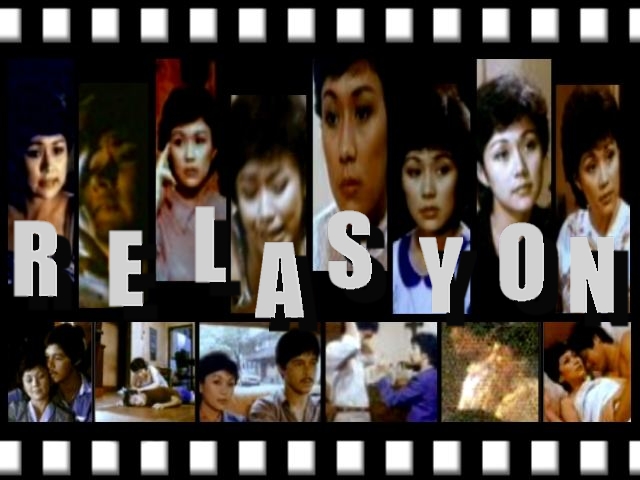
Relasyon (1982) – Vilma Santos was already a respected actress when she made this Ishmael Bernal film (with script by Ricky Lee). It was this movie, however, that put her on her way to greatness. She wins the first of her four rounds of grand-slam here.

Adultery (1984) – Although it was rated A by the old Film Ratings Board, this film is generally underrated. Vilma gives one of her finest performances in this movie, except that it went practically unnoticed because this was released in the same year as Sister Stella L. (and Alyas, Baby Tsina).

Sister Stella L. (1984)– It may have bombed at the box-office, but it will remain listed as one of the best Filipino films ever made.

Pahiram ng Isang Umaga (1989) – Vilma Santos at her most daring. No, she doesn’t go sexy here or anything. I say daring because a star of her stature doesn’t allow herself to die in any of her films (because the fans don’t like the idea). But she dared accept this film about the business of dying and was rewarded with the fourth of her eight Urian trophies (not counting the two times she was named Actress of the Decade).

Dahil Mahal Kita, The Dolzura Cortez Story (1992) – Vilma is even more daring here because she doesn’t only die in this Laurice Guillen movie, but even dies of AIDS. She gets her second round of grand-slam in this movie.

Bata, Bata Paano Ka Ginawa? (1998)– This Chito Roño movie is significant in Vilma’s filmography because here she forgoes glamour completely for the first time and allows herself to look like the regular person she is supposed to be in the story. She earns the third of her grand-slam victories in this film.

Dekada ‘70 (2002) – The first time I saw this, I have to admit I didn’t like the film that much. It had to take me a second viewing for me to appreciate the movie, Chito Roño’s direction, and the performances of Vilma, Christopher de Leon and Piolo Pascual. In the case of Vilma, it would seem like she doesn’t do anything in this film. However, her quiet performance envelops the entire movie. Somehow there is magic in her performance, but you can’t place it – you just feel it all over. With Dekada ‘70, I daresay that, yes, she has finally become the equivalent of Meryl Streep of Philippine cinema. – Source: STARBYTES By Butch Francisco, November 3, 2005, STAR

Vilma, the Glad Girl

This slideshow requires JavaScript.

Unlike Nora la Dolorosa, the durable Vi Santos has made happiness her career By Quijano De Manila

Durable is a word that shifts nuance when applied to Vilma Santos. Yes, you can say that, for instance, Gloria Romero, Nida Blanca and Charito Solis are durable because they are still on view as performers, if no longer at center stage. But when you say that Vilma Santos is durable you mean she is still at center, in front, on top. Now that’s phenomenal because in Philippine cinema 10 years seems to be the limit for female stardom. After 10 years you slip to character and supporting roles. But Vilma is on her 28th year in showbiz and the spotlight is hers yet as leading lady, the only one to match the record of Dolphy and Ronnie Poe. When she started out, Amalia Fuentes and Susan Roces were the glamour queens. Then she and Nora outshone them. Today, after several changings of the guard, the prima donnas are Sharon Cuneta and Gretchen Barretto. Nora Aunor is no longer in the running, at least not at the moment. But Vilma is. Very much so. And she can romance a whole new generation of leading men like Gabby Concepcion and Richard Gomez with no sense of strain or disparity.

Ishmael Bernal, who claims to have directed Vilma’s best pictures, believes she has endured because she has physical, emotion and mental endurance. ‘She could work for 24 hours straight without getting tired, without flagging in her acting. There were times when we had to shoot for three or four successive days, getting very little sleep, but there Vilma would be: fresh, enthusiastic, rarin’ to go. Physical endurance is very important to a star. Another thing I noticed was her strong sense of competition. At that time, though of course, she didn’t say so, it was Nora she wanted to beat. Vilma was out to be the bigger star, the better actress. And so she geared her career for a zoom to the top.” Bernal first directed her in Inspiration (1971), produced by Tagalog Ilang-Ilang from a script by Nestor Torre. ‘This was at the height of the Nora-Vilma rivalry and the competing love teams were Nora-Tirso[Cruz] and Vilma-Edgar[Mortiz]. But in Inspiration, Atty. Laxa decided to pair Vilma with a rising new star: Jay Ilagan. That early, I noted that Vilma had the potential to become a great dramatic star. At that time she was not yet doing actress roles, only juvenile fan movies. Her assets were the expressiveness of her eyes, very important for the camera; the creaminess of her complexion, very important on the screen; and the ability to make her audience sympathize if not identify with her. Another thing I noticed was that she’s perfectly relaxed in front of the camera: no sense of compulsion. She just stands there and with a flick of the eye, a movement of the hand, she communicates whatever emotion has to be communicated to the audience. Unlike theater actors who feel they have to use the entire body to communicate, she achieves her effects with the simplest gestures. She already had perfect timing.” 

Inspiration was a comedy and Vilma, to Bernal’s delight, needed very little rehearsal. ‘She didn’t enjoy too much rehearsing, preferring to give all on take one, confident in her spontaneity. Which was what her director wanted. Another thing I remember about the early Vilma: she was a travelling department store. She had a van that looked like the fourth floor of Rustan’s filled with clothes, clothes, clothes, and hundreds of shoes, hats, bras, panties, and costume jewels, all of them nursed by loving alalays who followed her everywhere she went. If the director required an evening gown, a negligee, a pajama top, she had it in her van.” Bernal next worked with Vilma in 1972, on Now and Forever, scripted by Rolando Tinio and co-starring her with Edgar Mortiz and Tommy Abuel. It was a dismal flop, says Ishmael Bernal: ‘So let’s not talk about it.” It wasn’t until six years later that he and Vilma worked together again, on Dalawang Pugad, Isang Ibon. ‘It was written by Jose Nadal Carreon, the former police reporter and UP literary apprentice, and currently one of our best directors. It was an adult film and it started a new trend for Vilma: playing the other woman. The film was very hot copy because it was the comeback vehicle of Romeo Vasquez, with whom she was then having an affair. I found Vilma different: she had already matured. She must have been around 23 or 24. She was up in the clouds, being very much in love with Romeo Vasquez, and having already beaten Nora in the game of Who’s No. 1? This was in 1978. Nora was doing action movies like Super Gee that were flopping miserably. But Vilma’s career had taken a new path: heavy drama.”

The change in Vilma was not all to be good. ‘I noticed that she was often tired, often had difficulty keeping up her energy or concentration. The message projected was that the business of acting and the pressures of showbiz in general were beginning to tell on her.” The prime reason was the exhausting affair with Romeo Vasquez. ‘That affair was blown up by the press to scandalous proportions and I could feel that she was under pressure. Still, she tried to keep up a brave front, to be always polite: the smiling professional, and to hide from the public her inner turmoil. She was getting a bad press because of this affair with an older man, a notorious playboy, but the affair was a big factor in the maturing of Vilma Santos. When she made Dalawang Pugad, Isang Ibon she was saying goodbye to adolescence. She was saying: ‘I am a woman, I am entitled to happiness, I am entitled to the love of the man I want to love!’ It was during this period she uttered the most famous of Vilma quotes when she said of those who were bad-mouthing her: ‘To hell with all of them!’ this was her declaration of independence, of adulthood, of resistance. The film proved to be a very big success, nominated for various awards, though she didn’t gain an acting award.”

Vilma’s next Bernal film was 1978’s Ikaw ay Akin, again scripted by Joe Carreon, and starring Vilma and Nora together, with Christopher de Leon as their leading man. In this film, says Bernal, was set the persona Vilma would portray in a series of sex melodramas. ‘She played a liberated woman who had grown up in the States: very witty, very nervous, very aggressive, a chain smoker and fast talker, who’s trying to steal Christopher de Leon from Nora Aunor. Her character was neurotic, a free spirit, unpredictable; and I noticed again that Vilma herself was on edge from too much hard work. I could understand her arriving late on the set because I knew she was doing four or five movies at the same time. She would just sleep in the car while rushing from one location to another and she would arrive looking groggy and exhausted. Sometimes she would just give up and beg that the shooting be postponed because her body just couldn’t take it any more.”

She was then the top box-office queen and the top dramatic actress and it’s always a strain to keep on top. But the ‘glad girl” that’s the basic Vilma Santos continued to shine through the murk of those harrowing days, as Bernie Bernal recalls. ‘However tired or sleepy, she remained carinosa, always polite, and all smiles to the crew. She would buy them merienda and at the end of shooting would throw a feast for them: lechon and pancit. She was always considerate with the crew.

Some movie stars get carried away by a sense of their importance: they know they are carrying the movie, are responsible for its success, are making big money for their producers. And so they become temperamental. Vilma is quite aware of her importance and make no mistake about it: she has the qualities needed for survival in a cruel ungrateful world. She is a fighter, she has a killer instinct. All movie stars, especially the superstars, necessarily have this instinct. But in Vilma it goes with a real concern for others. And she wants her public image to be positive.”

So, even in a time of crisis, Vilma preserved her image as a glad girl – while Nora was busy setting herself up, or down, as la Dolorosa. If Vilma works at happiness, Nora has made a career of masochism. Bernal says that in Ikaw ay Akin Vilma was already conscious of her own particular style of acting, which can be described as minimal: less is more. The fewer and simpler the gestures, the greater the effect. The stripped style won her a grandslam when she did Relasyon with Bernie, which he rates as her most memorable film. It got her all the awards on the market. ‘In Relasyon Vilma made the character of a mistress very human and sympathetic, not just a contravida. The film was her comeback after her pregnancy. She and Edu Manzano had just had their baby boy, Lucky. Her next film, Broken Marriage, set another trend for her; the role of a modern urban working girl, as sophisticated as her Makati office and her personal problems. Her fans are growing up and Vilma’s image is becoming more and more complicated.

But it was in the last film we did together, 1988’s Pahiram ng Isang Umaga, that I noticed the big change in Vilma. She had become an artist. She was no longer just a movie star following the director’s instructions. She was very hyper, very high, eager to experiment: a cooperative and mature actress. She had studied the script in advance and she had sensible suggestions about it. I felt I was no longer working with a movie star but that she and I were two artists collaborating on an objective statement about life and death and human relationships.” How did a girl who began as purely ‘pang-masa” develop into so fine an artist? Vilma herself gives the credit to her willingness to learn. The process was sometimes painful but, says Vilma, she knew it was all part of her education. I am now 28 years in this business and everything I have learned has made me a stronger woman. Even the troubles, the intrigues – they have made me a stronger woman. I’m always learning. For example, there was a part of my career that was for me a very expensive education.” She had set up a production company of her own that, it turned out, was mostly producing debts.‘ That was about 15 years ago. I tried producing and I made about five movies for VS Films, my own outfit. It was managed by my mother, not by me personally, and Mama is so good people take advantage of her. Before I knew it I was drowning in debt. I was pregnant at the time, 1980, when I learned I had a debt of six million pesos! And I didn’t even know if, after giving birth, audiences would still accept me. How was I to survive? I prayed; I told God I was willing to work, sarado ang mata, just to pay off all those debts. And with his blessings I was given a second chance. After giving birth to my son, my career got a second chance and became even more successful: not only did I continue to be box-office but I was winning awards right and left.”

Before Lucky’s birth she had no contract with any studio but after his birth the two leading studios, Regal and Viva, asked to place her under contract and she signed up with both! ‘It was arranged that everything they paid me went straight to the banks, to pay off my debts. Not a centavo of my movie earnings passed through my hands. We lived on my television earnings. I had been offered this TV show, VIP Vilma in Person. It was a Sunday show and Sunday was the only day I could spend with my family but I had to sacrifice my day with them because that weekly show provided us with maintenance money. Unfortunately, my marriage suffered because of that. At that time, Edu wasn’t active in the movies yet; he was working in an office and, of course, his schedules and my schedules were in conflict. I think he suffered some kind of culture shock. Oh, he tried to be understanding but imagine him coming home at seven o’clock in the evening and me coming home at four o’clock in the morning. That won’t work – but I had to work.” She says

she didn’t feel guilty about the marriage breaking up. ‘Definitely not. If that was bound to happen to our life, what could I do? Even if I had just stayed at home, our marriage would have suffered, because of all my debts. And what would have happened to us without any money?” She knows the importance of money because she grew up in security and has learned that insecurity is being without money. ‘I wasn’t born poor but I wasn’t born rich either. I had a comfortable childhood. I went to a private school, St. Mary’s Academy, and I had a new pair of shoes whenever the school year opened. We could buy what we liked and though our house wasn’t very big it was a cozy home.” Her father was in the government service and she had an uncle, Maurie Agra, who was a cameraman for Sampaguita Pictures.

It was this uncle who got her to audition for Sampaguita when she was only nine years old. ‘Whenever he came to the house I’d sing and dance for him. I loved to watch TV and listen to radio dramas and at school I was always on the programs. Once, my uncle watched me imitating Pilita Corrales, a white sheet all over me for evening gown, and he asked would I be interested in going into showbiz and I said I’d just love to become an artista.” The role she was called to Sampaguita to test for was as Rita Gomez’s daughter in Anak, ang Iyong Ina, but on the same day Sampaguita was testing about a hundred other children for the role of Trudis Liit, a komiks character. The little Vilma kept wandering into that larger group where, as her mother kept telling her, she didn’t belong. But here was Doc Perez himself, head of Sampaguita, beckoning to the child. ‘Mama says I don’t belong there,”said the little Vilma. ‘But I want you,” said Doc Perez. Ang Mama consenting, Vilma took the test for Trudis Liit: speaking a line or two of dialogue, crying out when hit by Bella Flores, even ad-libbing already. ‘And I was chosen to play Trudis Liit! So, my first time in movies, I was into two movies right away: Trudis Liit and Anak, ang Iyong Ina. And I got the Tessie Agana treatment: chicken and apples every lunch. Sampaguita was very nice to me. I was its baby.”

And she was its No. 1 fan, gaping to see Gloria Romero passing by and chasing after Amalia Fuentes for her autograph. ‘Ate Nena snubbed me. She just said: ‘Later!’ But I loved her and we’re very close now.” Vilma the child star was in a string of movies playing the daughter of Lolita Rodriguez or Luis Gonzales or Dolphy. And she was also in the TV soap opera Larawan ng Pag-ibig with Rosita Noble, Willie Sotelo and Eva Darren. That six o’clock p.m. tearjerker rose to No. 1 in the ratings. Meanwhile, what was happening to Vilma the growing girl? ‘What was happening was a lot of school absences and a lot of special exams. The Sisters at St. Mary’s were very understanding: if I had too many absences, they gave me special exams. But when I was in fourth year high school I was practically not attending classes any more because that was the height of the Nora-Vilma competition. What was done, with the permission of the Bureau of Education, was that I had a tutor during shootings and then I was given the test for the last grading period. Thanks to God, I passed it and I got my high school diploma. But there could be no thought of going on to college.” She had by then graduated from child star to teenage superstar.

‘Despite showbiz, I was able to enjoy my childhood. It was my teens that suffered. Those were the days of jam sessions (no discos yet) and I missed them. I was dying to attend but I couldn’t. I was too busy promoting my love team with Bobot Mortiz. So I didn’t have the chance to be a teenager. But when I reached my 20s that was when I experienced iyong being a woman: going out on dates, candlelight dinners, enjoying life. I enjoyed my 20s.” During her teens she was mostly a song-and-dance girl on the screen, but after seeing The Miracle Worker she dreamed of tackling roles like the one done by Patty Duke in that film.  However, she felt her true line was dancing: ‘Definitely not singing; I sing just for the sake of my fans.” Doing pop teen movies by the score, would she ever have a chance to act like Patty Duke in The Miracle Worker?

Loveteams were then the wheels of teenage superstardom. Vilma and Edgar Mortiz were a prize pair of wheels. The Nora-Tirso tandem formed the rival pair of wheels. It was an endless frenzied race. Vilma says that during her Bobot Mortiz phase she was doing multiple movies at the same time. ‘Actually Edgar didn’t start with me. He started with Nora and Tirso: they were a triangle. My loveteam then was with Jay Ilagan: we were doing Operetang Putol-Putol on the radio and going out on personal appearances for the fans. Jay was still slim then, very good-looking. Bobot was already chubby but not as fat as he would become later: he was guapo and moreno. Tirso was truly the mestizo type. Nora was even shorter than me though I think she’s older by a year; she was very thin then, with long hair. It’s our complexion that’s usually compared: she is kayumanggi and they say I am fair. Edgar dropped out from their triangle when it was noted that the public preferred Nora to be paired with Tirso. And Jay Ilagan dropped out when I was paired with Edgar. So when we all went on TV, on rival programs, it was the loveteam of Bobot and me versus the loveteam of Guy and Pip. That was in 1967.”

Inevitably, Bobot Mortiz came to share more than the spotlight with Vilma. ‘He was my first boyfriend, though ours was no more than puppy love. He’s a nice guy, very intelligent. In fact, I suspect that the ideas in Going Bananas are mostly his. No, we never talked marriage. We were a team for about five years. Then I did movies solo.” More serious was her next love affair, with Ronnie Henares, son of the famed news columnist. ‘I met Ronnie on TV, when he was guesting on shows with Jojit Paredes. He started courting me – this was in the early ‘70s – and our relationship had the blessings of our families. His family and mine became very close. We planned to marry but I felt I was not ready yet: I was still too concentrated on my career – though at the time the movies I was doing were merely pang-masa, nonsense musical like Lets’ Do the Salsa. I was not yet very conscious of artistic cinema: I wanted my movies to be for the boxoffice, Ronnie was the kind of boyfriend who gifts you not with rings or flowers but with books. I never went to college but Ronnie was a good equivalent: I learned a lot from him. He corrected my English, improved my pronunciation, and introduced me to new words, all through the use of cue cards that he made for me and made me read aloud to him. He gave me books to read and helped me understand them by explaining their meaning. Our relationship lasted a year and a half. We had our lover’s quarrels and the sweet thing is that even during our breaks our families stayed close. And Ronnie and I are still friends today. He composed a song for me.”

Tantamount to the Erap episode in Nora’s life is Vilma’s moment of appasionata with Romeo Vasquez, an older man with a past. ‘Romeo Vasquez was a turning point in my personal life. I really gambled with my life when I fell in love with him. He had come back to the country after being away for years. He was already separated from Amalia. Then I met him and we were offered a movie to do together: Nag-aapoy na Damdamin, for the Santiagos. The time we were together he was okay. We also did Dalawang Pugad, Isang Ibon, and Pulot-gata. And the movie that had him and me together with Nora nad Tirso: Pinagbuklod ng Pag-ibig. Our relationship lasted two years. Even after we parted, we still did a movie together.”

Vilma dismisses as mere chismis the rumor that Ronnie Poe became wildly enamored of her after they did Batya’t Palupalo and Bato sa Buhangin. But local cinema legend has the King coming to blows with Romeo Vasquez because of this jealous rivalry. Even the scene of the duel is specified: the lawns of a Joseph Estrada abode, during an Erap birthday party. An amused Vilma, however, shakes her head in denial. ‘Fernando Poe and I became close but we did not have any relationship. I’ll admit I was very impressed by him when we made our movies together. Totoong humanga ako sa kanya. He knows how to ‘carry’ people, how to deal with them in such a way as to command their respect. He is really the King. We became very very close: he’d send me food, like a dish of fish, during shootings. But that was all.”

While recovering from Romeo Vasquez, Vilma became a disco habitue, and in these excursions to the haunts of night people she often bumped into a young man who thus became a nodding acquaintance: someone she knew by face long before she knew him by name. One movie she did during this period was Yakapin Mo Ako, Lalaking Matapang, with Lito Lapid, which was shot in Cebu City. And as usual at night she went disco-hopping. And one night, at one disco, there he was again, this young man who had become a nodding acquaintance: Edu Manzano. ‘That was the first time we had a chance to talk. He’s really a charming guy and very handsome. We danced, we chatted, we danced – gano’n. Then I went back to my hotel.” She was getting ready for bed when the phone rang: Mr. Edu Manzano calling. ‘But how did you get my number?” ‘You know me, I’m resourceful. When do you go back to Manila?” ‘Tomorrow,” said Vilma. ‘What time is your flight?” ‘Two o’clock. What time is your flight?” ‘Three o’clock,” said Edu. ‘Bon voyage. And good night.” Next day, loaded with the mandatory hojaldres and rosquillos, she boarded the afternoon plane for Manila. And who should be sitting across the aisle from her but Mr. Manzano. Well! He really was resourceful. But they couldn’t converse. She was sitting beside Lito Lapid; Edu was sitting beside an Iranian. Only upon landing could they snatch a moment of exchange. Of course he wanted to know if he could date her.  “Can I invite you out or do you have a boyfriend?” “No.” “No, I can’t take you out?” “No, I don’t have a boyfriend.”

But a week passed; two weeks; a whole month – and no word from Edu. He’s not taking me seriously, shrugged Vilma. ‘Ako naman, at that time,” she says now, ‘I wasn’t taking him seriously either.” Then one night, at the Alibi Bar, she saw him again. But she was with a date with whom she went nightclub-hopping until four in the morning. When she came back to her hotel, there was a note from Edu: he was waiting in the lobby. She went down to see him, and he invited her to breakfast. What a terrific topping for the night before and her morning after. ‘So we stepped out again and had breakfast at the Manila Hotel. We talked and talked until daylight. Then he brought me back to my hotel. And that was how it started. After that, we were seeing each other every day.” During the Grand Passion that was Romeo Vasquez, her critics had hooted that she was Vilma the mad girl. But La Belle, La Perfectly swell, Romance with Edu Manzano was the real coming-out party for Vilma the Glad Girl. Miss twinkletoes had met the boy next door. Of the men in her life, Vilma Santos says it was Edu Manzano who had the most stunning style of courtship. He didn’t treat her like the superstar, the love goddess, the sex symbol, the glamour queen that she was; he treated her as if she was an ordinary kanto girl.‘ He didn’t take me to dine at five-star hotels; we ate at small pizza houses. We didn’t go dancing at elegant ballrooms; he took me to little discos. It was completely the opposite of how I had been treated by other suitors: kabaligtaran ng lahat. And how I loved it! Once, early in our relationship, he invited me to lunch. I assumed we would be going to a luxury bistro and so I dressed to the teeth. But he arrived on a motorcycle, wearing Levi’s and rubber shoes. When he saw me in all my finery, he flipped. He told me to go back up and change. So I change to jeans and rubbers. And off we sped on his motorcycle, me behind clinging to him.” Naturally, all those who spotted her – bus passengers, street vendors, pedestrians on the sidewalks – could hardly believe their eyes. ‘Si Vilma! Si Vilma!” they cried in amazement. And there indeed was the superstar, the love goddess, the sex symbol, the glamour queen, in jeans and rubber shoes, riding bumper on a motorcycle.  Vilma says it was as if she had moved into another world. ‘I really enjoyed it: riding on his motorcycle, walking in the rain. And then, after three months, he asked me to marry him. This was in 1980.” She was about to leave for the United States, to shoot a movie. She said to him: ‘Let’s give ourselves time, let’s test each other. This movie will take two months to do over there. If after two months we still feel this way, then we are really meant for each other. And we’ll get married. But not now, not right now when I’m going away.”

The decision was to make no decision yet. And Vilma left for California. She really was testing herself, for the stateside movie she was doing was with Romeo Vasquez. Had she really and truly got over him? Was she really and truly in love with Edu? The answer hit her like a bolt from the blue when Edu Manzano suddenly showed up on location and she felt, not annoyed, but enraptured, though he had broken their agreement to stay apart for two months. That he had so impulsively followed her bespoke ardor on his part. She did wonder if her producer, Atty. Espiridion Laxa, had anything to do with the surprise. But: ‘Definitely, it pleased me!” The news that lover boy Edu had leapt across the Pacific to join his lady love had Philippine moviedom ga-ga with the thought of how bigger a blockbuster than a Vilma-Romeo movie would be a Vilma-Edu picture.

The Vilmanians, as her fans are tagged when arrayed against la Aunor’s Noranians, were clamoring for a view of their glamour queen’s consort. Vilma, ever astute as businesswoman, was only too glad to deliver. ‘But before making that movie, we got married in the States.” Actually, it was an elopement. ‘My Mama didn’t know about it. Edu and I simply ran away. We got wedded in Las Vegas and we honeymooned in Disneyland and at Knottsberry Farm. Two weeks we were in hiding. Then we went back to Los Angeles. And that was when we broke the news to Mama. She cried. Oh, my Mama is good: sobrang bait nga. She was never a stage mother – except in the matter of singing, which she was always pushing me into. ‘Go ahead, sing,’ she would tell me, even if I didn’t want to. Maybe I used to be too dependent on her, as in the time of VS Films, when her goodness was being abused and when I learned about that it was too late.  One thing about my marriage; there were never any differences between Mama and Edu.”

In Los Angeles Vilma really worked at housekeeping. ‘Edu and I made a home for ourselves, just for the two of us. And I was a real housewife. I made the beds, I swept the floor, I did the cooking, or tried to. But in the States you can buy everything ready to cook. I had to be housewife because Edu is conservative and I had to be the kind of wife he wants for a wife. He called me Babes, I called him Doods.” She says that as a husband Edu was ‘mabait’. ‘He had already done a movie, Alaga, but was not yet well known. I promised him that on returning home I would lie low as movie star and just attend to being housewife. Unfortunately, on arriving in Manila, I found I was pregnant: Lucky is a honeymoon baby. At the same time I learned I had a six-million -peso debt. I told Edu about it and he said he would find some way we could work it out. But there was really not much he could do about so huge a debt. So, after giving birth to my son, I returned to work. Of course, that meant I had little time for my husband and my baby. There was a yaya to take care of the baby and as much as possible I tried to mother him but of course I couldn’t give him one hundred percent attention. Edu wanted me to be home at least by ten o’clock in the evening but it was oftener four o’clock in the morning before I could rush home.” With her feeling so exhausted and him feeling so neglected, impatience could not but become their ambiance during their four years of marriage.‘ 

In fairness to Edu, he did try to understand the situation. And he did care for me. But I simply couldn’t give up my career until I had paid off my debts. I only finished paying in 1987. And by that time Edu had left.” Possibly, for Edu Manzano, the real cruz of the marriage was having to suffer being Mr. Vilma Santos. But she says that theirs was a very loving parting. ‘We had a beautiful talk, the two of us. We agreed that our love was still there but, because we kept clashing, we shouldn’t wait until we started hating each other. We should give ourselves time to breathe and to think, apart from each other. That was already our fifth separation; the first, second, third and fourth had all ended within two months. I was expecting the fifth to end just as quickly but when it had lasted eight months already I wondered if we had not indeed gone our separate ways. Kanya-kanyang buhay na. Then I learned he had a girlfriend. He was first.” If she had hoped for a happy ending to their fifth separation it was for the sake of their son. ‘ Before Edu and I parted, we stepped out, the three of us: Lucky was then four years old. And we explained to him what was happening. We felt it was better to be honest with the child: when he grew up he would understand. He himself would not be affected: Edu and I assured him that both of us would take care that he was not affected. He is nine years old now and his name is Louis Philippe Manzano. He weighed 7.7 pounds when he was born on April 21 – and 21 is a multiple of 7. That’s why we call him Lucky.”

Vilma says she felt bad when she heard that Edu was running around with another girl. ‘I said to myself: ‘My God, why should I go on suffering like this: I’ll only grow old.’ I decided I’d like to run around too, enjoy myself. So I went out but I chose a safe place: King Kong, a club frequented by movie people, owned by Marilou Diaz-Abaya. That was the first time I had stepped out since the separation and that was the first time I met Ralph Recto. He’s a nice young man, very intelligent, very down to earh. He has a degree in economics and is taking his masters now, at the UP. I learn a lot from him, my substitute for college, like Ronnie Henares. He is very interested in politics but I don’t meddle in his politics. Our relationship is now on its sixth year. When we met, Lucky was only four and now he is nine. Lucky and Ralph are very close. No, we don’t talk marriage.” The decade since her marriage has seen Vilma developing, as Ishmael Bernal says, into an artist. Vilma smiles to recall that she started out just wanting to dance. What’s singular about Vilma’s career is that, as a child star, she went through no awkward age, and now, as superstar, she seems to have been set no deadline.

The nine-year-old who starred in Trudis Liit had a steady four years of playing little daughter of Lolita Rodriguez and Marlene Dauden but never suffered an ugly-duckling phase of no-longer-a-child and not-yet-a-teener. The difficult 13-14-15 period was smoothly bridged by roles like that of Imee Marcos in Iginuhit ng Tadhana and Pinagbuklod ng Langit. And right afterwards she became the teen queen in the pop entertainments she did with Bobot Mortiz. Then at 19 she began to veer towards heavy drama. ‘I was 19 when I made a film with Eddie Rodriguez, playing a girl falling in love with an older married man. The wife was Barbara Perez. If I remember right, that was the first time I wore a bikini.” Nary a hitch in the Vilma career; no pauses in the action as she grows up from child to girl, or from sweet young thing to red-hot mama. Or from innocuous movies to daring films. ‘Compared to my teenage partners, Eddie Rodriguez was far and away the leading man, the actor, the gentleman. Very different in manner, in the way he moved, the way he carried his clothes. He helped me refine my acting and little by little I learned poise.”

The decisive divergence is Burlesk Queen. ‘I took a risk playing Burlesk Queen, Celso Ad. Castillo directing. I was 24. My American manager, William Leary, had persuaded me to accept the role. He had been my manager since he convinced me to do a record, Sixteen, that made good. I was no longer with Sampaguita but I went back there from time to time to make sweet sweet movies or musicals. That was my style. Then I did Burlesk Queen. It turned out to be a turning point. I won an acting award. Suddenly I was the drama queen. Celso Ad. Castillo is really good. In a way it was that film that made me a real actress. It changed my sweet image. And it made good at the boxoffice. ”However, later relations with Castillo proved to be painful. ‘I already had my production company, VS Films, and I got him as director for Pagputi ng Uwak. He really gave me a hard time on that film: it was two years in the making! And it sank VS Films into debt. Celso and I had a fight. As a director he’s very good but as an artist he has his quirks: merong sumpong. I hear he now works in Malaysia: sayang, he was good for Philippine movies. Pagputi ng Uwak nearly ruined me, financially and mentally, but it turned out to be a firstrate film and it won a lot of awards, it won VS Films a lot of prestige. But I still prefer Burlesk Queen.” The five productions of VS Films, which included Rosas sa Putikan, directed by Maning Borlaza, and Halik sa Paa, Halik sa Kamay, costarring Vilma with Eddie Rodriguez, all made money, including Pagputi ng Uwak. Nevertheless, by the time she had to shut it down, VS Films had her drowning in six million pesos’ worth of red ink. It took her some seven years to pay off that montrous debt. And it meant having to go back to making movies that were ‘pambata at pangmasa” movies like Darna and Dyesebel and Wonder Vi.

Still, this ‘comeback’ period (after the birth of Lucky) was also the start of a series of vintage pictures, beginning with Relasyon, where she played a free soul living in with her lover. The lover was played by her most compatible co-star, Christopher de Leon. ‘Christopher, of all my leading men, is the one I’m most comfortable with. We really make a team. And yet we never had any relationship, except on the screen.  Just how comfortable I am with him can be seen in the fact that it’s with him I have made the biggest number of movies: around 18 or 20. There was a year when we made four movies together! So often did we play opposite each other that we felt we had to vary the situations, to avoid becoming monotonous. We’d say: Let’s sit down and think of a new situation in which to find ourselves. But there came a time when we simply could no longer think of anything new for us to play. We seemed to have exhausted all the possible love angles. And that’s when we decided to stop teaming up for a while. I went on to trying other leading men. Actually it’s not I who choose my leading men but the producers. I just accept whoever they pick for me.” A kind of homage is paid her when she’s paired with younger stars like Eric Quizon and Aga Muhlach.

‘Definitely, I feel flattered. But then I feel very very secure in my age and with myself. It’s a matter of self-confidence, of knowing that when they look at you they see a woman, period. Age doesn’t matter: I have no insecurities about it.” She knows she can look as young as, or younger than, her new leading men – as long as she herself feels young inside. Her effect on the folk around her has been most graphically expressed by, of all people, director Lino Brocka, who directed her in three of her most applauded vehicles: Rubia Servios, Adultery and Hahamakin Lahat. ‘When you work with Vilma,” says Brocka, ‘you get this feeling of having just emerged from a bath and of being drenched all over with Johnson’s baby cologne. You feel so fresh, so youthful.” He adds that when they first worked together she seemed scared of him. Now he gushes: ‘Ang sarap niyang katrabaho.” The chief reason, of course, is: ‘She has matured and grown up as an actress. At this point of her career, she is very good, she is really big. Before, she had a hard time making herself cry, but now how fast she can do it. And she has become sensitive to direction: in that repect she has overtaken Nora.” Brocka says that the sensitivity he noticed at once in Nora Aunor was what he missed when he started directing Vilma. ‘So I assumed that, as an actress, she was really just second to Nora. But Vilma takes good care of herself not only physically – there’s always this aura about her – but intellectually too: so she grows and develops tremendously. The second time I worked with her, in Adultery, I realized she had become as good as Nora, or better. And by the time of Hahamakin Lahat there was the complete sensibility already – a difference in the way she expressed pain and hurt. Talent was welling out like spring water, and flowing from her most naturally, no longer courtesy of Vicks or whatever.”

What would explain this outburst of talent? ‘Possibly her coming of age as a woman. She had become more sure of herself. And this self-confidence grew as her private life became calmer, as she found herself with fewer problems, both financially and emotionally. How a director would feel about her at the moment is that he can do anything with her now. She has become so supple that his tendency would be to challenge her still further, make her come up still higher, open up more doors. She can give you so much more now.” Brocka snorts at the complaint Vilma is currently making: that so utterly has she done all the roles she can do there’s no new role left for her to do. ‘She can do the same role over and over again as long as, with the right direction, she does it always a bit more profoundly than the last time and makes it a bit more complex than the last time. She should have no problem at all with roles. In fact, I would advise her now to play roles that are not glamorous. Yes, she’s too associated with glamour to do that. But maybe in another year or two she can afford to take off her make up and act her age. Then she’ll really be on par with Nora, whose chief concern is seldom her looks. With Nora, it’s not her face that’s on sale. The problem with Vilma is that she feels she has to live up to her image as The Glamour Girl. I’m waiting for the day when glamour will have no truck -walang pakialam! – with the acting.

Bemusing how up to now Vilma continues to be bracketed together with Nora, so that to speak of Vilma is to speak of Nora. They have been rivals, opponents, antagonists for so long that it’s impossible to tell their careers apart. Spur to each other from the start, they have realized they need each other as goad and goal, the achievement of one goading the other to an equal, or greater, achievement. Vilma-Nora is the back-to-back monster of Pinoy showbiz. Vilma sees it as sibling rivalry. ‘If Vilma is there, Nora is there. There was a point in our career [note that Vilma uses the collective singular] when we were both so affected that the rivalry became a personal feud between us. There was even a point in our career when we were fighting each other – for honors, for awards, for acting prizes. But there also came a point in our career when we realized we were not getting any younger and we started becoming very close. I think that was the time her father died and I went to the wake. We hadn’t been together since we did a movie together when we were feuding hotly: no talking to each other during the shooting; she stayed on one side with her fans, and I stayed on the other side with my fans: no communication. But when I attended her father’s wake, that was when we realized we could be friends. And we started helping each other: she’d invite me to guest on her TV show, and vice-versa. Then her mother died and again I went to the wake. And that was the time when Nora and I became so close we were telling each other the most intimate details of our life.”

And the details range from ledger to boudoir. ‘Today Nora and I are still competing but it’s a friendly competition now; in fact, I’m the godmother of her adopted child. We want that there should still be a competing between us, but with nothing personal to it. So it has become a healthy competition. Nora is a very sensitive person. Me, I’m not very sensitive. But make no mistake about Nora: she is also a strong woman. What I know of Nora: though there may be many advising her, ultimately it’s her own feelings she follows. She does what she wants to do; it’s herself she obeys: that’s her attitude. I guess what she needs at present is the right person. Nora is 37 years old now. I am 36 – a true friend who loves her. A friend who will love her whether she’s down, whether she’s up, or whatever.”

What puzzles is the difference in image between Nora la Dolorosa and Vilma the Glad Girl despite the fact that actually both of them underwent very similar experiences: rash infatuations, career ups-and-downs, a failed marriage, business fiascos, the heavy cross of huge debts. Why did such ordeals produce the sad look in one but a glad look in the other? To be sure, there are those who say that Vilma’s image as the Glad Girl is just that: an image; and that the reality behind it may not be quite as pleasant. The real Vilma, aver these know-it-all’s, is cold-blooded: sweet na sweet pero deadly; nothing matters to her but her career. She was playing herself ruthless in films like Hahamakin Lahat. When she found she couldn’t displace Nora as the nation’s sweetheart, she did violence to her own persona by enacting Burlesk Queen, the kind of role Nora cannot do: she risked her career because that was the only way to beat Nora. Vilma herself shrugs off such misreadings of her history with the remark that the intrigues of others only help her become ‘a stronger woman.” Even the world’s malice can’t be made useful in building up character. ‘I am Rosa Vilma Santos, who grew up in Bambang, Trozo, and then in La Loma, and my life is an open book. What people say about me – that’s a problem I must live with. I guess it’s the price I pay for my career: the price of no privacy. I can’t do anything about that anymore. However I may want to keep my personal life private, it’s impossible: lalabas at lalabas talaga. However discreet I may try to be, I’m sure to be found out.” So she chooses to let it all hang out. ‘Of course, I hate having no privacy: I’m really suffering from that. Sometimes I wish I were an ordinary person so I can go where I like, go shopping for groceries with my son, go for a walk and enjoy it. But how can you enjoy it when you’re always getting mobbed? But, as I said, that’s the price you pay.” And certainly she has no intention of retiring just to gain that precious privacy. ‘Nor no plans either of getting married. Not yet. maybe someday, yes. As of now, I’m very comfortable and happy with my personal life. But another marriage? I’m not prepared for that.” 

What she’s prepared for right now is more career. ‘I have reached a position when I’m not contented with just acting: I’d like to experience all the other works of moviemaking. But most of all I want to be a director. I want to be given a chance to direct a movie. So that this time I myself will be the captain. I have ideas I want to try out.” She confounds the Cassandras by expressing hope and confidence in the Philippine cinema. ‘There has been progress, there has been improvement. We started in black-and-white: now we’re in color. Yes, there are frustrations. It’s frustrating to come up with a film of relevance, to upgrade the cinema in general, and see it fail at the box-office. A painful experience – like my movie Sister Stella L. I felt bad when it didn’t make good because I like that movie very much. It wasn’t my first time to do a quality movie that had to be yanked out in seven days. You can’t blame the producers: it’s their money at stake. If I were in their place, would I risk my money on something that won’t sell? And yet how I wish there were some producers willing to risk their money on movies with significance… I hear even the scriptwriters are feeling frustrated because, when they do a quality script, they only see it changed into something with lots of shrieking and slapping. But those are the movies that sell.” Nevertheless, she looks forward to a classier tomorrow for Philippine cinema.

‘And what’s tomorrow for Vilma Santos? I’m trying to be more stable because I know that show business is not stable. I’m planning to produce a movie next year. This time I’ll manage production myself. I’ve already started with telemovies. The first was Lamat sa Kristal, with Richard Gomez. Next was Katuparan, directed by Marilou Diaz-Abaya. And the third is this one I’m doing right now with Aga Muhlach, Once There Was a Love, directed by Maryo J. delos Reyes.” Her own TV show just celebrated its 10th anniversary – and with a scandal yet. It got kicked out of its usual venue, the Metropolitan Theater, because, complained the Met honchos, Vilma’s live audiences wrought havoc with the Met’s upholstery. Which, to take the Pollyanna, or Glad girl, approach, proves that Vilma’s audiences today are not matrons and seniors but still the young, the wild, the reb. She says she has no hang ups about age. But how does she keep herself looking young? ‘I don’t know. I don’t do anything special. I used to swim but I don’t have the time now. I don’t cut down on anything. I drink occasionally but I’m not really a drinker. My true enemy is tobacco:

I smoke. Aside from that, I know no other vices. On facing the camera, whether movie or TV, I put on make up. But Vilma Santos the person, when in her house, puts nothing on her face.” She is positive it’s not make-up that makes her go over on the little or big screen as young-looking. ‘But like the old beauties of Sampaguita Studios. I know that someday I will be the ex-superstar. When that time arrives, I hope I’ll be stable – financially stable enough to ensure a future for my son, present comfort for my family, and for myself a personal life that’s tranquil because I have a stable business and a comfortable income. Those are my dreams now that I am 36.” Not that she has any complaints about the present tense. ‘More than half of my life has been spent in show business,” says the Glad Girl. ‘For all the blessings I am enjoying, I should be thankful!” Happiness, Inc.

Publisher’s Note:  Quijano de Manila (Nick Joaquin) is a National Artist for Literature, while both Ishmael Bernal and Lino Brocka are National Artist for Film.  Our cover story is about the indestructible and unfading screen beauty, Vilma Santos, who has become even more accomplished and seductive as the years pass. Quijano de Manila (Nick Joaquin in journalistic disguise) captures the secrets and the charms of this enduring beauty, a triumph of art over time. – Juan P. Dayang

Source: Written by Quijano De Manila (Nick Joaquin), Philippine Graphic Magazine 05 November 1990

VERY LONG RIVALRY

This slideshow requires JavaScript.

Vilma Santos’ triumph as Best Actress – for Mano Po 3 (My Love) – at the Metro Manila Film Festival in December 2004 parallels her greatest rival Nora Aunor’s similar feat at the Manila Film Festival last June, where Nora won for Naglalayag. So it goes without saying Nora and Vilma will once again be major contenders for the top acting honors in this year’s awards season. Nora, for the Maryo J. delos Reyes opus in which she portrayed a lady judge who fell in love with a man half her age; while Vilma, for Joel Lamangan’s romance-drama about a Chinese anti-crime crusader torn between her family and a past love. Nora versus Vilma. Their acting duel is never ending. All these years, their fight for the Best Actress plum in practically all the local award-giving bodies has been much anticipated since.

1972 – 1975

1972 – At the Quezon City Film Festival, then held every October, Nora’s entry was Sampaguita Pictures’ And God Smiled At Me (directed by Tony Cayado and Danny Holmsen); while Vilma’s banner vehicle was Tagalog Ilang-Ilang Productions’ Dama de Noche (directed by Emmanuel H. Borlaza). And the winner was Nora! May die-hard Vilmanian kaming kaklase sa elementary, ang sabi: ‘Luto ‘yun, dahil malapit si Nora kay QC Mayor Norberto Amoranto!” Such loose talks were never confirmed to be true. Or as Tempo’s veteran movie columnist Ronald K. Constantino avers, ‘Nora never figured in any awards scam!”

1973 – Sa annual Filipino Academy of Movie Arts and Sciences (FAMAS) Awards Night, it was the Vilmanians’ turn to rejoice. Vi was ad-judged Best Actress for Dama de Noche, ka-tie ni Boots Anson-Roa (for JE Productions’ Augusto Buenaventura megger Tatay Na Si Erap). Nora wasn’t nominated for her award-winning starrer at the QC filmfest, but for The Gift of Love kung saan siya gumanap ng dual role: bilang isang cancer-stricken patient at ang kakambal na eventually ay napunta kay Tirso Cruz III. Dama de Noche, which paired Vi with Edgar Mortiz, also had her doing two parts: a baliw and a sane sister.

1974 – 1975

In the succeeding years, nagkatunggali sina Nora at Vilma, mainly for box-office supremacy. May point na parehong box-office hit ang mga pelikula nina Nora (her own NV Productions’ Banaue) at Vilma (Nakakahiya? for Virgo Films), at nagkalaban sila for Best Actress sa Bacolod City Film Festival in 1975. Si Vilma ang nanalo para sa dinirek ni Eddie Rodriguez (a.k.a. Luis Enriquez), but Nora’s entry – helmed by Gerry de Leon – won as Best Picture. In 1974, Nora did a major dramatic trilogy for Premiere Productions: Fe, Esperanza, Caridad, which was handled by Cirio Santiago, Lamberto V. Avellana and Gerry de Leon. (Avellana and de Leon were to be honored as National Artists for Film in the years to come.) Nora won a FAMAS Best Actress nomination for Fe, Esperanza, Caridad; tulad sa ibang pelikula na nagpamalas siya ng potential bilang mahusay na aktres early on, such as George Rowe’s Paruparong Itim in 1973. Nora, as a deaf-mute blind woman, was beaten by Gloria Sevilla (for Gimingaw Ako, a Visayan movie). Ang notable performances ni Vilma Santos that time were in TIIP films: Biktima and Karugtong Ang Kahapon (by Borlaza), na entries sa MFF in 1974 and the 1st Metro Manila Film Festival in September 1975.

a 1st MMFF, Nora’s entry, NV Productions’ Batu-Bato sa Langit (directed by Luciano B. Carlos), was a blockbuster and won as 3rd Best Picture. Kapwa na-hone ang acting potentials nina Guy at Vi (sa tulong din ng kanilang TV drama anthologies – Ang Makulay na Daigdig ni Norang RPN 9 at Dulambuhay ni Rosa Vilma ng BBC 2 – pero sige pa rin ang paggawa nila ng mga pelikulang komersyal dahil sila ang mga reyna ng takilya noon.

1976 -1977

Nagkakalaban pa rin sina Nora at Vilma sa FAMAS, pero kapwa sila talunan. Especially Vilma, who didn’t win another FAMAS Best Actress trophy until 1982 (with Elwood Perez’s 1981 megger Pakawalan Mo Ako). In 1976, Nora Aunor’s “landmark performance ” in Mario O’Hara’s Tatlong Taong Walang Diyos won nods from the FAMAS voters as well as from the Gawad Urian critic-jurors bilang Best Actress. Hindi si Vilma ang naging mahigpit na kalaban ni Nora, kundi si Hilda Koronel (for Lino Brocka’s Insiang). Sa MMFF in December 1976, si Hilda ang Best Actress, but Nora’s performance in Lupita Kashiwahara’s Minsa’y Isang Gamugamo was equally acclaimed by the critics. (Minsa’y…won as FAMAS Best Picture in 1977.) It was the first year of the Gawad Urian (organized by film critics collectively known as the Manunuri ng Pelikulang Pilipino), at si Nora ang nag-buena-mano as Best Actress. Henceforth, hindi na lamang ang FAMAS ang kinilalang tagapagbigay-parangal sa industriya ng pelikulang lokal. Sa mga sumunod na taon, dumami ang award-giving body sa movie industry. Bukod dito, ang mga filmfest sa iba’t ibang siyudad outside Metro Manila; like in Davao City, where Nora Aunor once won as Best Actress for Tito Sanchez’s Ibilanggo si Neneng Magtanggol.

In 1977, it was apparent that the actress in Vilma Santos fully emerged when she won the MMFF Best Actress award for the controversial Celso Ad Castillo period drama Burlesk Queen. Unfortunately, her winning was marred by nasty talks (na kesyo binawi ang mga napanalunan ng pelikula, including Vi’s trophy or medallion.) It seems nakaapekto ‘yun sa awarding na pambuong taon: at the FAMAS, Vilma lost to Susan Roces (for Maligno, also by Castillo); and, at the Gawad Urian, to Daria Ramirez (for Eddie Romero’s Sino ’ng Kapiling, Sino’ng Kasiping?). As for Nora Aunor, matapos ang grand entrance niya sa big league bilang major award-winning actress (with a double victory, unmatched at the time), isang actionromance- drama ang kanyang nagging panlaban: Augusto Buenaventura’s Bakya Mo Neneng, which paired her off with Tirso Cruz III and Joseph Estrada. The film won as Best Picture sa FAMAS. Nora’s and Vilma’s starrers were big moneymakers at the 1977 MMFF.

1978, Sa dinami-dami ng natamong karangalan nina Vilma Santos at Nora Aunor, interesting point of discussion pa rin among their followers ang nangyaring acting duel nila in the 1978 MMFF. Vilma was handled for the first time by Lino Brocka in Rubia Servios, produced by Sampaguita-VP Pictures. Vi enacted a rape victim na naghiganti sa kanyang rapist (Phillip Salvador) at napawalang-sala. On the other hand, Nora had Eddie Garcia for her director in Atsay, a serious look on housemaids, as written by the award-winning Edgardo M. Reyes and lensed by ace cinematographer Romeo Vitug. Sa MMFF that year, walang ibang acting category na mapapagwagian maliban sa Best Performer award, na si Nora ang nagwagi. “The triumph of restrained acting!” ayon sa sumunod na ulat matapos ang Gabi ng Parangal. All the while, perhaps almost everyone thought it would be Vilma Santos who’d get the award, dahil si Brocka na ang director niya. May talk show (the late Inday Badiday’s Would You Believe?) na sadyang iniangat ang pag-asa at pag-asam ni Vi na siya ang mananalo. At the awards night, papasok pa lang daw si Vi sa CCP Main Theater (venue ng rites), nilapitan agad siya ni Marichu “Manay Ichu” Perez-Maceda (her producer, na kabilang sa MMFF committee) and whispered: “I’m sorry, Vi, it’s not for you …” Nag-stay si Vi hanggang matapos ang ceremonies; nakipalakpak siya when her rival was declared winner. Katabi niya sa upuan si Christopher de Leon (Garrotte: Jai Alai King), who also lost. Ayon sa grapevine, naglasing si Vilma sa tindi ng siphayo. “Ang sakit, Manay!” Vi reportedly told Ichu, who also produced many of Nora’s earlier movies which made millions of pesos. In the Gawad Urian and FAMAS, naparangalan naman si Vilma, bilang producer ng Pagputi ng Uwak, Pag-Itim ng Tagak which won as Best Picture. That year, mayroong pinagsamahang movie since Nora at Vilma, TIIP’s Ikaw Ay Akin na dinirek ni Ishmael Bernal, for which they were both Best Actress nominees at the Urian, but lost to Beth Bautista (for Danny Zialcita’s Hindi sa Iyo ang Mundo, Babyb Porcuna). Sa FAMAS, hindi rin para kina Vi (Pagputi) at Nora (Atsay) ang Best Actress statuette, kundi kay Susan Roces (for Brocka’s gothic drama Gumising Ka … Maruja!). Fair enough?

1979 – 81

In 1979, 1980 and 1981, kapwa maningning ang mga pangalan nina Nora Aunor at Vilma Santos bilang box-office stars at awardwinning actresses. Pero hindi kahigpitan ang labanan nila sa iba’t ibang parangal. May panahong nananalo si Nora na ibang aktres ang mahigpit na kalaban; ganu’n din si Vilma. Nang ma-handle si Nora ni Brocka (in 1979’s Ina Ka ng Anak Mo, produced by Premiere Productions and written by Jose Dalisay Jr.), she was pitted with the formidable Lolita Rodriguez and it was to Nora’s credit na pumantay siya sa parangal – bilang MMFF Best Actress.

Sa 1979 FAMAS, Nora bested Lolita, who, with her performance in Brocka’s Tinimbang Ka Ngunit Kulang, beat Aunor in 1974. Ang “katapat” ng Nora-Lolita duo ay ang acting tandem nina Vilma Santos at Charito Solis in Bancom Audiovision’s Modelong Tanso, directed by Cirio Santiago. Sa 1979 Gawad Urian, it was neither Nora nor Lolita as Best Actress; the award instead went to Charito Solis for Brocka’s Ina, Kapatid, Anak.

In 1980, tatlong pelikula ni Nora Aunor ang maituturing na panlaban: two by Brocka (Nakaw na Pag-ibig and Bona) and the other by Laurice Guillen, Lea Productions’ Kung Ako’y Iiwan Mo. She won the Gawad Urian for Bona. Ang panlaban ni Vilma was Zialcita’s Langis at Tubig. Hindi taon ni Vilma ang 1980, which saw the emergence of other young and talented actresses like Gina Alajar (Brutal), naka-tie ni Nora sa Urian, and Amy Austria, na tumalo kay Aunor sa Metro Manila Film Festival. In the 1980 MMFF, Amy won with a lone entry – Brutal – while Nora got nominated for Bona and Kung Ako’y Iiwan Mo. (A case of split votes.) Sa 1980 Gawad Urian, nominated sina Nora, Gina (eventual winners) at Amy, samantalang si Vilma was “snubbed by the critics.” In 1981, nanalong MMFF Best Actress si Vilma for Zialcita’s Karma, besting Nora’s multi-character portrayal in Maryo J. delos Reyes’ musical-drama Rock ‘N Roll. Vi, however, failed to win any other nomination for that starrer, while Nora went on to win a trophy (Catholic Mass Media Awards) and Best Actress nomination (Gawad Urian) for Mario O’Hara’s Bakit Bughaw ang Langit?

1982, Nauso ang so-called Grand Slam Best Actress in 1983, nang manalo si Vilma Santos for Ishmael Bernal’s Relasyon. That 1982 film was a small, low-budget drama of a husband and his mistress. Nag-hit ang tandem nina Vi at Christopher de Leon, starting in 1978, with Sampaguita Pictures’ Masarap … Masakit ang Umibig and Nakawin Natin ang Bawat Sandali (both by Elwood Perez), after their first pair-up in Celso Ad Castillo’s 1975 romance-drama Tag-Ulan sa Tag-Araw. For Relasyon, Vilma won as Best Actress sa CMMA, Gawad Urian, FAMAS and the debuting Film Academy of the Philippines (FAP) Awards. Maging sa “minor” parangal, like the TV show Let’s Talk Movies ng RPN 9 (hosted by Armida Siguion Reyna, Behn Cervantes and Mario Bautista), si Vilma rin ang Best Actress for the Regal Films drama. With Nora Aunor as Vilma’s main competitor, it was an interesting, but utterly disappointing, acting duel. Sa FAMAS, Nora got nominated for Romy Suzara’s Mga Uod at Rosas – and lost. Sa ibang award-giving bodies, isang malaking pelikula at pagganap ni Nora – sa Himala, as the visionary Elsa – ang natalo kay Vilma. The Ishmael Bernal opus was produced by the Marcos government-established Experimental Cinema of the Philippines (ECP). Some were of the opinion na may bahagi ng pulitika sa pagkatalo ni Nora; marami raw sa movie industry ang anti-administration, kabilang ang sympathizers ng Free the Artists Movement na anti-censors. May malaking rally noon na hindi dinaluhan ni Nora, samantalang nakiisa sa protesta si Vilma. Gayon man, may parangal na natamo si Nora para sa Himala: the 1982 MMFF Best Actress, where it won 9 out of 13 awards, including Best Direction and Best Picture. Naging opening Film ang Himala sa 1983 Manila International Film Festival – organized by then First Lady Imelda Romualdez-Marcos – at inilahok sa Berlin International Film Festival in February 1983. Ayon kay Bernal, Nora lost in Berlin to a Russian actress by a mere vote. Sa 7th Gawad Urian in 1983, nominated in almost all major and minor categories ang Himala but never won a single award. Ilang taon ang lumipas, sa tuwing titingnan ko ang Honor Roll ng Manunuri sa ipinamamahaging souvenir program, sadyang “walang Himala” na nagtamo ng parangal. But in 2002, sa 25th year ng Gawad Urian, kabilang ang Himala sa Pinakamahuhusay (Best Films of the past three decades) na naparangalan, with Nora Aunor personally receiving the overdue award para sa isang totoong klasikong pelikulang Pilipino. At bigla ngang naghimala ang Himala!

1983, Noong 1983 at 1984, nagkalaban uli sina Vilma at Nora, with Vi getting an edge. Bernal’s Broken Marriage won Vi her second Urian trophy, while Nora didn’t get a nomination (“Nora Out,” ayon sa introduction ng Highspeed column ni Ronald K. Constantino tungkol sa pagkaka-release ng Urian nominees for that year.) May drama starrer si Nora in 1983: Maryo J. delos Reyes’ Minsan, May Isang Ina, for which she got nominated sa FAMAS, where Charito Solis (Don’t Cry for Me, Papa) won and got elevated sa Hall of Fame. Taong 1983 nang makamit ni Nora Aunor ang TOWNS (The Outstanding Women in the Nation’s Service) award for her contributions in media arts. Hindi man siya naka-Grand Slam as Best Actress, ang parangal ay natatangi at ipinagkakaloob hanggang ngayon sa outstanding women achievers in different socio-civic fields. Hindi dito natapos ang Nora-Vilma rivalry. Pero ang pagsasama ng dalawang aktres sa isang pelikula was not repeated after Danny Zialcita’s T-Bird at Ako (released in 1982). Their initial appearance together was in 1970’s Young Love; naulit in 1978, sa Ikaw Ay Akin ni Bernal; at mayroon silang tig-isang episode sa Dugo at Pag-Ibig sa Kapirasong Lupa in 1975 at Pinagbuklod ng Pag-Ibig, also released in early 1978.

At the height of the Nora-Vilma rivalry for acting supremacy, ang kanilang mga pelikula, magkahiwalay man sila o magkasama, ang may malaking kinikita for their producers. In 1982 and 1983, Vilma was Box-Office Queen and Urian Best Actress; while Nora did several blockbusters (like Beloved and Till We Meet Again). There was social unrest, following the Ninoy Aquino assassination on Aug. 21, 1983, pero masigla ang daigdig ng TV at pelikula. Sikat pa rin sina Nora at Vilma.

1984 – 85

In 1984, Nora and Vilma each had three “pang-award” movies. Nora starred in ‘Merika by Gil Portes, Condemned and Bulaklak ng City Jail by Mario O’Hara. The latter was entry in the MMFF, winning Best Picture and Direction at nanalo ring Best Actress si Guy. Si Vilma was in Brocka’s Adultery: Aida Macaraeg, Mike de Leon’s Sister Stella L. and Marilou Diaz-Abaya’s Alyas Baby Tsina. Noong 1985 unang nagbigay ng Star Awards ang Philippine Movie Press Club (PMPC). Para sa taong 1984 ang mga parangal na ipapamahagi, at sina Nora at Vilma lang ang nominated for Best Actress: Guy for all her three starrers, Vilma for Aida Macaraeg and Sister Stella L. Mainitan umano ang nagging deliberation para sa kategoryang Best Actress, which earlier that year was bagged by Vilma (for Sister Stella L. sa Gawad Urian; her third straight win!) and by Nora (for Bulaklak ng City Jail sa CMMA). Sa 1st Star Awards for Movies, it was Nora Aunor who won for ‘Merika. The late movie scribe Frank Mallo, a self-confessed Noranian, fought hard for Aunor to clinch the Best Actress plum, especially for ‘Merika. He even wrote a letter (published in Constantino’s Highspeed column) disputing the Manunuri’s earlier choice of Vilma Santos as Urian Best Actress. Sa taong ito rin ng Gawad Urian nagtamo ng double nomination si Nora – for ‘Merika and Bulaklak ng City Jail. Sa pagtatapos ng award-giving season, si Nora uli ang Best Actress sa FAMAS (her third win) for Bulaklak ng City Jail. Dito niya unang naka-tie si Sharon Cuneta (for Borlaza’s Dapat Ka Bang Mahalin?). Pero hanggang ngayon, nakahihinayang na walang napanalunang award si Nora for Condemned, kung saan she was cited by Tempo entertainment editor Nestor Cuartero for that single scene in which she acted out a “cry of sorrow like no other” upon the death of actor Dan Alvaro who played her brother in that film which was rated “A” by the Film Ratings Board.

1986-88

Sa mga taong 1986, 1987 and 1988, walang mainitang tunggalian sa acting sina Nora at Vilma. It was the period following the EDSA Revolution in February 1986. Nanamlay ang movie career ni Nora, na noon ay regular na naghu-host ng long-running Superstar show sa RPN 9. Manaka-naka’y she had hit movie – I Love You, Mama/Papa and Sana Mahalin Mo Ako in 1986 and 1988, respectively – and produced Halimaw (dinirek nina Mario O’Hara at Christopher de Leon), na Best Picture sa 1986 Metro Manila Film Festival. Papasikat noon ang mga anak niyang sina Lotlot, Ian Kristoffer, at ang child wonder na si Matet de Leon. Si Vilma ay mas pinalad kesa kay Nora sa awards in 1987 (Best Actress, for Maryo J. delos Reyes’ Tagos Ng Dugo, sa Catholic Mass Media Awards at sa FAMAS). Twenty-fifth anniversary sa showbiz ni Vi that year, at may grand celebration siya sa Vilma! With Nora Aunor as one of her special guests. In 1987, Vilma starred in Viva Films’ Saan Nagtatago ang Pag-ibig? (penned by Armando Lao, megged by Eddie Garcia). The komiks melodrama won a string of Best Picture awards (Star, FAMAS, FAP) sa taon na hindi nagbigay-parangal ang mga Manunuri ng Pelikulang Pilipino (Gawad Urian) sa alinmang kategorya “for lack of deserving winners.” In contrast, hindi markado ang performance ni Nora in the 1987 Mario O’Hara megger Tatlong Ina, Isang Anak, another vehicle for Matet, which pitted Guy against Gina Alajar and Celeste Legaspi.

In 1988, Nora did a guest role in Takot Ako, Eh! (topbilling her popular kids) and produced under her NCV Films outfit the ill-fated Greatest Performance (co-starring her were Tirso Cruz III and Julio Diaz), which was rejected by the executive committee of the 1988 MMFF. Nora then would have debuted as movie director, but unfortunately her Greatest Performance never got shown.

1989, A series of unfortunate events seemed to hound Nora’s career up to this point. October 1, 1989 was to be the last airing date of the 22-year-old musical-variety show Superstar on RPN 9. A month later, it was revived on IBC 13 with a new title, The Legend … Superstar, but this was short-lived lasting only up to early 1990. Naging mas masuwerte si Vilma Santos sa hinu-host na Vilma! on GMA 7, which started in 1981 as VIP (Vilma in Person) ng lumang BBC 2 (naibalik sa Lopez owners ang ABS-CBN after the EDSA Revolution). Nagbida si Vilma sa isa sa mga pinakaimportanteng pelikula ng Dekada ‘80: Regal Films’ Pahiram Ng Isang Umaga (by Ishmael Bernal), na sinimulan in 1988 at ipinalabas in early 1989.

In December 1989, Vilma headlined a period romance-drama (Viva Films’ Imortal, megged by Eddie Garcia) at nanalo sila ng kaparehang si Christopher de Leon ng acting plums sa MMFF. Sa awardings for that year, si Vilma ang nanalong Best Actress sa Star Awards (for Pahiram), her first form the Philippine Movie Press Club. ‘Kumpletung-kumpleto na ang career ko!” nasabi ni Vilma as she accepted her trophy. Later, it was Nora’s turn to get a Best Actress trophy for the first time from the Film Academy of the Philippines, for Elwood Perez’s three-year-in-the-making Bilangin Ang Bituin Sa Langit. ‘Kumpletung-kumpleto na ang career ko!” sabi rin niya in her acceptance speech.

Na-elevate si Vilma sa FAMAS Hall of Fame, for having bagged five Best Actress statuettes: Dama de Noche, Pakawalan Mo Ako, Relasyon, Tagos ng Dugo, and Elwood Perez’s Ibulong Mo Sa Diyos. Nora won her fourth Best Actress plum sa FAMAS, also for Bilangin. Walang itulak-kabigin sa dalawa, kaya marapat lang na mag-tie sila for Best Actress, as in the 1990 Gawad Urian, na ‘pantay na parangal ”ang ipinagkaloob ng Manunuri kina Nora (for Bilangin Ang Bituin Sa Langit) at Vilma (for Pahiram Ng Isang Umaga).

1990, Dalawang malalaking pelikula ang tinampukan ni Vilma: Lino Brocka’s Hahamakin Lahat and Laurice Guillen’s Kapag Langit ang Humatol. Si Nora ay nakahabol sa MMFF with the low-budget social-realist drama Andrea, Paano Ba Ang Maging Isang Ina?, which she co-produced with an independent outfit, MRN Films, and was directed by Gil Portes based on a Ricardo Lee screenplay. Sa mga parangal para sa taong ito, si Nora Aunor ang nagwaging Best Actress sa ‘Movie Magazine” awards (ng GMA 7), Star Awards, FAMAS, FAP at Gawad Urian, making her a Grand Slam honoree. On May 22, 1991, Brocka’s sudden death in a vehiclar accident shocked the movie industry. Nora dedicated her FAP Best Actress award kay Brocka, na siyang dahilan upang maitanghal ang Bona sa Directors Fortnight ng Cannes Film Festival in 1981. May nagsasabing ‘hindi Grand Slam” ang pananalo ni Guy for Andrea dahil, sa CMMA, her costar Gina Alajar was declared Best Actress (with Nora as runner-up). But the CMMA was considered a minor award-giving body, at ‘yung apat na major ang ginagawang batayan for a Grand Slam win. Kaugnay rito, nagsimulang magbigay ng parangal ang UP-Young Critics Circle (YCC-Film Desk) at si Nora ang lone winner for Best Performance, also for Andrea. Hindi na nagbigay ng acting awards ang CMMA the following year, habang aktibo hanggang ngayon ang five major award-giving bodies, na nadagdagan ng iba’t ibang grupo. Nagkaloob ng Gawad Pandekada ang Manunuri – for achievements in acting – at sina Nora, Vilma, Vic Silayan, Phillip Salvador at Gina Alajar ang mga nagging karapat-dapat sa parangal (Nora having won Urian Best Actress trophies for Tatlong Taong Walang Diyos, Bona, Bilangin Ang Bituin Sa Langit and Andrea; Vilma for Relasyon, Broken Marriage, Sister Stella L. and Pahiram ng Isang Umaga).

1991 – 92

Exciting uli ang labanang Vilma at Nora, para sa masusugid nilang tagahanga, noong 1991. Viva Films’ Ipagpatawad Mo starring Vilma Santos and Christopher de Leon was chosen as 1991 Gawad Urian Best Picture, with Vilma winning as Best Actress. Muli, nagproduce si Nora ng low-budget drama for MRN Films, Elwood Perez’s Ang Totoong Buhay ni Pacita M., na entry sa 1991 Metro Manila Film Festival. Its awards included Best Picture, Best Direction, and Best Actress for Nora Aunor.

In the award-giving season in early 1992, Nora won the Best Actress honors sa Star Awards and FAP, as well as the Best Performance award from the YCC-Film Desk’s 2nd Annual Circle Citations (with co-winner, Aga Muhlach, for Maryo J. delos Reyes’ Joeyboy Munti). Ang Pacita M. ay nanalo rin ng Best Picture and Best Direction among other awards as 1991 FAMAS. Nora scored three consecutive Best Actress triumphs sa FAP Awards: 1989 (Bilangin), 1990 (Andrea) and 1991 (Pacita M.). Ito bale ang katapat ng three straight victories ni Vilma sa Gawad Urian. Nora was elevated sa FAMAS Hall of Fame in 1991 for having copped five Best Actress statuettes: Tatlong Taong Walang Diyos, Ina Ka Ng Anak Mo, Bulaklak Ng City Jail, Bilangin Ang Bituin Sa Langit and Andrea, Paano Ba Ang Maging Isang Ina? Later, nagtamo siya ng Circle of Excellence awards sa FAMAS apara sa mahusay niyang pagganap sa Pacita M. in 1991 at sa The Flor Contemplacion Story in 1995.

To mark her 25th anniversary in show business, Nora starred in PETA’s Minsa’y Isang Gamugamo sa una niyang pagganap sa entablado. The play, an adaptation of Lupita Kashiwahara’s film based on a screenplay by Marina Feleo-Gonzales, was directed by Soxy Topacio mula sa script nina Ricky Lee at Boni Ilagan. It had a successful run at the Tanghalang Raja Sulayman in Fort Santiago in February-March 1991. Nora further acquitted herself in theater in December 1992 (DH by Topacio-Lee) and in the mid-1990s (Trojan Women, na dinirek ng isang Griyego and was staged at the Ninoy Aquino Parks and Wildlife). At tulad ng mga stage play na tinampukan, nagging malaking tagumpay ang unang major concert ni Nora (Handog ni Guy) sa Araneta Coliseum noong May 18, 1991.

1993, Hindi nagtapos ang labanang Nora-Vilma for Best Actress sa pagkaka-elevate nila sa FAMAS Hall of Fame. Dahil sa dumaming award-giving body since the mid-1980s, hindi nakuntento ang respective groups of fans nina Nora at Vilma sa pag-asam na patuloy silang gumawa ng magagandang pelikula na pagtatamuhan nila ng trophies. Sadly, dumating din sila sa punto ng kasalatan, careerwise.

In 1992, wala ni isang pelikulang tinampukan si Nora, samantalang si Vilma starred in only one: Maryo J. delos Reyes’ Sinungaling Mong Puso, na hindi niya pinagtamuhan ng anumang major Best Actress award. In 1993, gumawa si Vilma ng pelikula na ang kuwento’y base sa unang Pilipinang nag-reveal ng pagkakaroon niya ng AIDS (Acquired Immune Deficiency Syndrome), si Dolzura Cortez. Directed by Laurice Guillen for Octoarts Films, Dahil Mahal Kita (The Dolzura Cortez Story) won Vilma the Best Actress honors at the 1993 Manila Film Festival, Star, Gawad Urian and FAP. Si Nora ay gumawa ng Inay for Melanie Marquez’s MM Productions, by veteran megman Artemio Marquez (may-likha ng maraming box-office hit ni

Guy sa Tower Productions in the early 1970s). Natalo si Nora sa MMFF at ibang major awardings ng taon, but she won the Best Performance award, again from the UP-Young Critics Circle (YCC-Film Desk’s 4th Annual Circle Citations), with Aga Muhlach (for Jose Javier Reyes’ Hindi Kita Malilimutan) as co-winner.

1994, Mula 1994 hanggang 2003 ay hindi na nagkatunggali sa Best Actress award sina Nora at Vilma. Early 1994 nang huling magkasabay as contenders for the acting plum sina Nora (Inay) at Vilma (Dahil Mahal Kita). For the whole year, Nora didn’t topbill any movie. She hosted Modern Romance sa Telebisyon on GMA 7 and the monthly special Superstar Beyond Time on RPN 9, and appeared on several telesines and a successful two-night concert at the Mandarin Hotel Ballroom. Naulit ang pangyayari noong 1992 na walang pelikula si Nora (she only appeared in her second stage play, DH, na nag-world-tour in 1993) and this will be repeated 10 years later, when she did the ABS-CBN 2 drama series Bituin that aired from September 2002 to May 2003 and several concerts. Vilma notched two films: Regal’s Nag-iisang Bituin (by Joey Reyes) and Golden Lions’ Lipa Massacre (by Carlo J. Caparas), which won as Best Picture sa FAMAS.

1995 – 97

Sa mga sumunod an taon, parehong nag-achieve sina Nora at Vilma in local award-giving groups and international film festivals. Nauna si Nora, in 1995, for The Flor Contemplacion Story, kuwento ng Pilipina na nasentensiyahang mamatay by hanging sa Singapore. Late 1995 nang maiulat na si Nora ang nagwaging Best Actress sa Cairo International Film Festival sa Egypt for her performance in the Joel Lamangan megger, which also won as Best Picture. Nanalo si Nora sa YCC-Film Desk’s 6th Annual Circle Citations (Best Performer) at sa Star Awards, FAP at Gawad Urian (Pinakamahusay na Pagganap – Pangunahing Aktres; with co-winner Helen Gamboa for Tikoy Aguiluz’s Bagong Bayani, another Flor Contemplacion filmbio). Top box-office hit ang The Flor Contemplacion Story, for which the Guillermo Mendoza Memorial Scholarship Foundation, Inc. (GMMSFI) chose Nora as Box-Office Queen, the same honor she received in the early 1970s and 1980s. Si Nora ang Best Actress sa 1995 MMFF for Viva Films’ Muling Umawit ang Puso. Sa international filmfests, Nora again won as Best Actress in 1997. She got the Golden Pearl Award in Penang, Malaysia, for Viva’s Bakit May Kahapon Pa? Para sa naturang Lamangan megger, Best Actress din sa Gawad Urian si Nora (with cowinner Sharon Cuneta, for Olive Lamasan’s Madrasta).

1998 – 2001

Ang international fame, bilang Best Actress, ay nakamit ni Vilma in 1999, when her Star Cinema headliner Bata … Bata … Paano Ka Ginawa? – directed by Chito Rono – was entered as competition entry sa Brussels Film Festival. Released in 1998, Bata won for Vilma the Best Actress honors at the Star Awards, FAP and Gawad Urian, as well as the Best Performance award from the YCC-Film Desk. Dahil nahalal na alkalde ng Lipa City sa Batangas si Vilma Santos-Recto (she married then Batangas Congressman, now Senator Rafael ‘Ralph” Recto in December 1992), naging mas madalang ang paggawa niya ng pelikula. Pero hindi pa rin magmimintis si Vilma na manalo ng acting trophy, kapag din lang may panlabang pelikula, as in 2000 when she did Star Cineman’s Anak by Rory Quintos. Nanalo siyang Best Actress sa Star Awards.

2002, Vilma failed to win as Best Actress sa 2002 MMFF para sa major film na Dekada ‘70, megged by Chito Rono and produced by Star Cinema. Hindi naman nabigo ang Vilmanians sa mga sumunod na awarding, in early 2003, dahil kay Vilma napunta ang Best Actress trophies na kaloob ng Star Awards, FAP at Gawad Urian. Pati ng minor award-giving body na binubuo ng mga academician, ang PASADO (Pampelikulang Samahan ng mga Dalubguro). At ang kanyang ikalawang Best Performance award mula sa YCC-Film Desk in its annual Circle Citations. Panlaban ng bansa ang The Seventies (Dekada ‘70) sa 4th Makati CineManila International Film Festival (organized by Direk Tikoy Aguiluz). The film won a special jury prize at Best Actress award for Vilma (her second claim to international fame). In contrast, malaon nang walang pelikulang panlaban si Nora at this point. After Bakit My Kahapon Pa? In 1996, Nora did minor starrers: MAQ Productions ‘Mama, Dito sa Aking Puso, screenwriter Frank Rivera’s directorial debut; and Lupita Kashiwahara’s megger under Premiere Productions, Babae, an entry to the 1997 MMFF, for which Aunor got several acting nominations. Her last major performance was in Seven Stars Productions’ Sidhi, released in February 1999. Walang napanalunang trophy si Nora for her fourth Lamangan starrer, which was also panned by Manunuri ng Pelikulang Pilipino member Lito B. Zulueta. Both Nora and Vilma, however, were recipients of the Gawad Pan-Dekada (along with Richard Gomez) at the Urian rites in March 2001. Silang dalawa pa rin ang mga aktres na napagkalooban ng natatanging pagkilala ng Manunuri, para sa tigtatlong parangal na natamo nila – in the 1990s – sa kategoryang Pinakamahusay na Pagganap. Aunor won for Andrea, Paano Ba Ang Maging Isang Ina?, The Flor Contemplacion Story, and Bakit May Kahapon Pa?. Santos won for Ipagpatawad Mo, Dahil Mahal Kita and Bata … Bata … Paano Ka Ginawa?

2004, Kung susumahin, mahirap nang dagliang mabilang ang mga award nina Nora at Vilma, through the years, para sa mga pelikulang tinampukan nila. Ito rin ang puntong hindi ang pag-quantify sa mga natamong parangal ang mahalaga, kundi ang pagpapatunay na walang mintis sa kanya-kanyang laban, sa kahusayan, ang dalawang pinakamahigpit na magkaribal sa larangan ng pagganap pampelikula. The End. – William Reyes

NOTE: After their last acting contest (Naglalayag vs Mano Po 3 My Love), the two actresses went separate ways, Vilma decided to do mainstream commercial films widening her demographics (D’ Lucky Ones, cameo role, 2006; In My Life, 2009; The Healing, 2012) and Nora did several indie-art films (Care Home, 2006; Ingrata, 2006; El Presidente, 2012; and Sinapupunan – Thy Womb, 2012).

Filmography: King Khayam and I (1974)

This slideshow requires JavaScript.

Basic Information: Directed: Cesar Gallardo; Story, screenplay: Nestor U. Torre Jr.; Cast: Joseph Estrada, Vilma Santos, Rod Navarro, Marissa Delgado, Lucita Soriano, Rossana Marquez, Lorli Villanueva, Ike Lozada, Anita Linda, Ruben Rustia, Greg Lozano, Jose Villafranca, Rudy Manlapaz, Avel Morado, Romy Nario, Robert Talby, Arturo Moran, Robert Miller, Delia Victorino, Carmen Romasanta, Elizabeth Vaughn, SOS Daredevils, Dondon Nakar, Winnie Santos, Princess, Big 3 Sullivans, Metring David, Bayani Casimiro, Mary Walter, Ronald Rei, Boy Marco; Executive producer: Espiridion Laxa; Original Music: Restie Umali, Levi Celerio

Plot Description: King Kayam’s search for another wife brought him the escapee, Princess Gracia. She doesn’t want to be wed to a man, she doesn’t love so she left her kingdom and ended up in King Kayam’s kingdom. They met and fell in love.

Film Achievement: Vilma and Joseph’s first film together as an adult actors and third overall. Their first film was “Batang Iwahig,” where Vilma was just a child star. The other film was “Dugo at Pag-ibig sa Kapirasong Lupa” where they did not share any screeen time.

Film Review: The film started promising with funny scenes of Joseph Estrada facing his people seeking his advice or help. One was when a man presented his new product, a flying magic carpet but when the carpet didnt fly, Estrada suggested a lighter weight rider. Then veteran actress and much younger, Mary Walter in a cameo role, brought her just bought magic lamp. She complained to the king that the seller fooled her to buy the lamp and wanted a refund. She then caress the lamp and the gennie came out but instead of the expected giant gennie, a midget dwarf came out. Then from this moment the film went downhill. A singing bird, a transexual Ike Lozada being auctioned, Rod Navarro’s over the top villain antics, all failed to sustained our attention. The weak storyline did not help. Patterned with the Hollywood film, King Kayam & I’s only saving grace was the acting of its lead stars. Joseph Estrada’s precense was commanding and convincing as the playboy king and Vilma’s charming innocense despite the sexy dance number at the end complimented Joseph’s macho image. The two did three films, although they didn’t shared a single scene in Dugo at Pagibig sa Kapirasong Lupa, King Kayam was their only film together as mature actors. Their first outing was Batang Iwahig, when Vi was just a childstar and Joseph was in his early years as a bankable action star. Produced by Experidion Laxa of Tagalog Ilang-Ilang Production, the film was just a mild hit, probably the main reason why there was no follow-up project for the two. Two reasons why the film failed was probably the cheap set decorations and the weak story/screenplay of Nestor U Torre, Jr. The song lyrics of Levi Celerio can’t salvaged the mostly canned music of Resti Umali either. This was despite the splendid musical number in the kitchen (when Vilma protested to the cooks that she was a princess and should be treated like one). Die-hard Vilmanians would probably considered Vilma’s dance number at the very end as the hightlight of the film. – RV, (READ MORE)

“…Naging very successful ang unang pagtatambal nina Vilma Santos at Joseph Estrada sa pelikulang King Khayam And I ng TIIP. Kahit bumabagyo ay hugos pa rin ang tao upang mapanood lang ang napabalitang pelikulang ito. Subalit nitong mga huling araw ng pagtatanghal ng nasabing pelikula, medyo naging mahina ang pasok ng tao. may nagsasabing talagang ganito lang ang panahon kapag magpapasko, sa halip na manood ýung iba, ipinamimili muna ng kanilang pamasko ang mga mahal nila sa buhay. At least, ang kaunting salaping gugugulin nila sa entertainment ay ipinagdaragdag nila sa kanilang Christmas savings…” – Levi, Modern Romances and True Confessions Magazine, 16 December 1974

Filmography: Sino Ang May Karapatan? (1968)

This slideshow requires JavaScript.

Basic Information: Direction: Ding M. de Jesus; Story: Louise de Mesa; Cast: Lolita Rodriguez, Eddie Rodriguez, Marlene Dauden/ Also Starring Renato Robles, Patricia Mijares, Ric Bustamante, Marifi and Vilma Santos; Screenplay: Jose F. Sibal; Music: Tony Maiquez; Production Company: Virgo Film Productions; Release Date November 7, 1968 at Center Theatre

Plot Description: One of several Love triangle films of Lolita-Eddie-Marlene. Vilma played the daugther.

Film Achievement: No Available Data

Film Review: “…Ipinanganak nga marahil si Ma. Rosa Vilma Tuazon Santos sa show business dahil sa pagitan ng taping ng “Larawan..” ay nagkasunod-sunod na ang kanyang mga pelikula…“Sino Ang May Karapatan” ng Virgo (Nobyembre 16 – 25, 1968)…hanggang “Young Love” ng VP Enero 1 – 21, 1970) ng lumikha ng rekord sa takilya….Makalipas ang mga tatlong buwan, nakatanggap ng maikling sulat si Mama Santos muka lay G. Agra. Naghahanap ang Sampaguita Picutures ng batang babae na gaganap ng mahalagang papel sa “Anak, Ang Iyong Ina!” at isinali ng amain ang pangalan ni Vi. Hindi puwedeng lumiban si Papa Santos sa pinpasukang government office, at ayaw naman nilang mapahiya ang kamag-anak, kaya napilitan si Mama Santos na humingi ng day=off sa opisina (Aguinaldo’s). Pagdating sa studio, wala si G. Agra at nasa location shooting, ngunit totoong naroroon ang pangalan ni Vi, kaya’t pinapasok sila sa tanggapan. Napadaan sa harapan ni Mama Santos si Bella Flores na dala ang script ng “Trudis Liit.” Nagulumihanan si Mama Santos. Binasa niyang muli ang liham ni G. Agra. Mali yata ang napuntahan nila! Akma niyang tatawagin si Vi na noon ay nkikipaglaro sa iba pang mga bata upang yayain na itong umuwi, nang pumasok sina Mommy Vera, Dr. at Mrs. Perez, at Eddie Garcia. At doon nagsimula ang movie career ni Vi na magpahanggang ngayon ay batbat pa rin ng iba’t ibang panunuri, opinyon at konklusiyon…” – Ched P. Gonzales (READ MORE)

“…In 1963, two great Sampaguita talents, Lolita Rodriguez and Marlene Dauden and drama king Eddie Rodriguez starred in Sapagka’t Kami’y Tao Lamang, the movie that turned out to be a sensational and phenomenal hit. The movie garnered the year’s top FAMAS awards— Best Actor for Eddie Rodriguez; Best Supporting Actress for Marlene Dauden; Best Director for Armando De Guzman. It started the series of the so-called love triangle movies featuring the three dramatic icons in Philippine movies. Ms. Dauden was memorable in such dramas as Anino ni Bathala (1958) and Kamandag (1959). In both films, Marlene won the FAMAS best supporting actress trophies. She was also awarded the FAMAS Best Actress awards twice: Sa Bawa’t Pintig ng Puso (1964) and Kapag Puso’y Sinugatan (1967)…” – Simon Santos (READ MORE)

Luis Enriquez aka Eddie Rodriguez first directed a young Vilma Santos in 1968 Kasalanan Kaya, another love triangle genre starring the dramatic trio of Marlene Dauden, Eddie Rodriguez and Lolita Rodriguez. Vilma received an early acting recognitions from this film by receiving a FAMAS Nomination for Best Supporting Actress. When Enriquez directed Vilma again, it was a calculated risk that allowed a still young Vilma into a bikini-clad lead role opposite his director himself, Eddie Rodriguez. The film, Nakakahiya, a may-december affair between an older man and a young woman was an entry to 1975 Bacolod City Film Festival. Aside from making the the film a smash hit, Vilma received the festival’s Best Actress. Enriquez will direct Vilma in five more films, the last one was ExWife in 1981 where surprisingly Luis used in film credits his screen name, Eddie Rodriguez. Theri total number of colloborations were seven (Ex-Wife 1981, Halik sa Kamay Halik sa Paa 1979, Hindi Nakakahiya 1976, Ikaw Lamang 1971, Kasalanan Kaya? 1968, Nakakahiya? 1975, Simula ng Walang Katapusan). – RV (READ MORE)

Filmography: Eagle Commandos (1968)

This slideshow requires JavaScript.

Basic Information: Direction, Story, and Screenplay: Jose Miranda Cruz; Cast: Zaldy Zshornack, Max Alvarado, Mel Francisco and Bernard Belleza, Sofia Moran, Rocco Montalban, Nort Nepomuceno, Bino Garcia/ with Vilma Santos, Vera Vargas, Belen Velasco, Bruno Punzalan, Ruben Ramos, Danny Cruz, Marietta Moreto, The SOS Daredevils/ Featuring Alicja Basili; Music: Demetrio Velasquez; Production Company: Aladdin Productions; Release Date: November 4, 1968 at Dalisay Theatre

Plot Description: Apat na malalaking bituin ang itinatampok sa isa pang pelikulang aksiyon ng Aladdin Productions. Sila’y sina Zaldy Zshornack, Max Alvarado, Bernard Belleza, at Mel Francisco sa panooring “Eagle Commandos.” Ito’y kasaysayan ng apat na magiting na lalaki na buong tapang na nakipaghamok sa vietcong alang-alang sa kalayaan ng daigdig at ng demokrasya. Tampok na mga bituing babae sina Sofia Moran at Vera Vargas. Gumaganap din sina Bino Garcia, Nort Nepomuceno, Vilma Santos, Rocco Montalban at marami pang iba. Isang mahalagang papel naman ang bibigyang buhay ni Alicia Basilli. Ang “Eagle Commandos” ay sinulat at pinamahalaan ni Jose Miranda Cruz. – Video48 (READ MORE)

Film Achievement: No Available Data

Film Review:“…Ipinanganak nga marahil si Ma. Rosa Vilma Tuazon Santos sa show business dahil sa pagitan ng taping ng “Larawan..” ay nagkasunod-sunod na ang kanyang mga pelikula…“My Darling Eddie” ng JBC (Disyembre 16 – 23, 1969, “Mardy” ng JBC (Disyembre 31 – Enero 6, 1969)…hanggang “Young Love” ng VP Enero 1 – 21, 1970) ng lumikha ng rekord sa takilya….Makalipas ang mga tatlong buwan, nakatanggap ng maikling sulat si Mama Santos muka lay G. Agra. Naghahanap ang Sampaguita Picutures ng batang babae na gaganap ng mahalagang papel sa “Anak, Ang Iyong Ina!” at isinali ng amain ang pangalan ni Vi. Hindi puwedeng lumiban si Papa Santos sa pinpasukang government office, at ayaw naman nilang mapahiya ang kamag-anak, kaya napilitan si Mama Santos na humingi ng day=off sa opisina (Aguinaldo’s). Pagdating sa studio, wala si G. Agra at nasa location shooting, ngunit totoong naroroon ang pangalan ni Vi, kaya’t pinapasok sila sa tanggapan. Napadaan sa harapan ni Mama Santos si Bella Flores na dala ang script ng “Trudis Liit.” Nagulumihanan si Mama Santos. Binasa niyang muli ang liham ni G. Agra. Mali yata ang napuntahan nila! Akma niyang tatawagin si Vi na noon ay nkikipaglaro sa iba pang mga bata upang yayain na itong umuwi, nang pumasok sina Mommy Vera, Dr. at Mrs. Perez, at Eddie Garcia. At doon nagsimula ang movie career ni Vi na magpahanggang ngayon ay batbat pa rin ng iba’t ibang panunuri, opinyon at konklusiyon…” – Ched P. Gonzales (READ MORE)

José Rizaldy Zshornack (30 December 1937, Manila–18 November 2002, Muntinlupa) was a Filipino actor of Polish descent. Zshornack had a long career in Philippine movies spanning from the 1950s to the 1990s. His movies were mostly in the action-adventure genre. He is perhaps best known for his role in Black Mama, White Mama, a 1973 film. Zshornack died in 2002. He was married to former Filipino-American beauty queen Shirley Gorospe and together they had two children: Garizaldy and Geno. – Wikipedia (READ MORE)

Filmography: Maria Cecilia (1965)

This slideshow requires JavaScript.

Basic Information: Direction: Ding M. De Jesus; Screenplay: Ding M. De Jesus; Story: Susana C. de Guzman; Cast: Marlene Dauden (Maria Cecilia), Van De Leon, Alona Alegre, Tony Cruz Jr., Vilma Santos, Jose Mari, Dr. Nanding Andres; Music: Tito Arevalo; Production Company: Larry Santiago Productions; Release Date: 14 May 1965 (Philippines)

Plot Description: A DZXL Radio and Tagumpay Magazine Serial.

Film Achievement: 1965 FAMAS: Best Actor Nomination – Van De Leon; Best Supporting Actress Nomination – Vilma Santos

Film Review: – “Young and cute Vilma Santos is one of the few child stars who have hit the screen with continued success. Although not as well-publicized as the adult stars, she is gaining popularity with lot of fans who recognize her warm personality and talent. Her successful debut in Sampaguita Pictures’ Trusdis Liit gave her more movie offers. Vilma, who just turned 13 last Nov. 3, has been in the movies for three years and already has 16 pictures to her credit. A talented youngster, she often steals the spotlight from her senior colleagues. In Ging, Naligaw Na Anghel, Anak Ang Iyong Ina, and many other films, she was a standout in tear-jearking scenes. As a result, she is always in demand for such roles. Despite her success, Vilma remains unaffected as a child. At the St. mary’s Academy where she is a six-grader, she has more than her share of friends not because she is a celebrity but because of her natural chumminess. In fact, she is so fond of her friends that their house on Lunas St in La Loma, Quezon City is often filled with them. Her parents, Mr. and Mrs. Amado Santos, do not discourage her gregariousness and instead look upon it as part of her developing personality.

Bright Future – One of Vilma’s ambitions is to take up fine arts – that is, if the movies wouldn’t completely claim her in the future. Dr. Jose R. Perez has made a tempting offer to sign her to a contract with Sampaguita and VP Pictures when she reaches the age of 14, that is, one year from now. Vilma’s movie commitments don’t prevent her from being a good student. She could have been easily way above average if only her shooting schedules sometimes do not prevent her from attending her classes. “Doing two tasks at the same time gave me a hard time at the beginning but I’ve adjusted to it now,” said this youngster who still goes for lollipops, ice cream, toys, and play. Vilma, who spends her leisure hours listening to radio dramas, dancing and playing with her three other sisters, will be seen in her coming films, Sigaw Ng Batingaw of Argo Productions. – Julio F. Silverio, The Weekly Nation, 31 December 1965, reposted at Pelikula Atbp blog (READ MORE)