The Gawad Urian Through The Years 3/3

This slideshow requires JavaScript.

The Best Actresses and their First Gawad Urian

2011 – Maja Salvador for “Thelma” – “…Ganito pala ang pakiramdam,” said Maja as tears streamed down her face during her acceptance speech. Gawad Urian, maraming-maraming salamat po. Sampung taon na ‘ko sa industriya, ngayon lang ako nanalo ng Best Actress award. Sa mga producers, maraming salamat sa tiwala dahil sa akin ninyo ibinigay ang Thelma. Sa aking director na si Paul Soriano, maraming salamat. Sa aking managers, Tita Mariole [Alberto], Mr. M [Johnny Manahan], sa mama ko, sa papa ko na nasa heaven na, para sa Kanya ito.” Maja then thanked her make-up artist who gave her a vote of confidence that night. “Salamat sa pag-makeup mo. Sabi niya, ‘Papagandahin kita, baka manalo ka. Siguro nga, nagandahan sila sa akin kaya ako nanalo. Salamat po, Gawad Urian, maraming-maraming salamat.” After the awarding ceremony, Maja told the press: “Lahat ng hirap ko sa paggawa ng pelikula, lahat yun nawala dahil may nakapansin po ng talento. Maraming salamat po…” – Jocelyn Dimaculangan, PEP, June 14, 2012 (READ MORE)

2009 – Rustica Carpio for “Lola” – “…Anita Linda and Rustica Carpio, both past their physical primes, may have just given their more-than-impressive swan songs. Director Mendoza, who is not that much known on squeezing out pure performances from his actors/actresses (as his characters usually just blend in into the realistic palette of the surroundings), handled may be the two most astounding ones from aged performers. In some ways, it’s almost a miraculous feat on his part (and cinematographer Odyssey Flores) in terms of enhancing Anita Linda and Rustica Carpio’s natural and honest evocation of suppressed sufferings and prolonged sacrifices as impoverished grandparents through a panoramic view of the present social state of those inflicted with destitution. But the real highlight is of course from the two brave, nagging, and at times, swindling heroines who will do just about anything not just to resolve their numerous woes, mostly involving money, but also to unconsciously prove their ‘worth’. Throughout the film, as the camera follows them both, we see them express stern authority to younger people, ask for directions and assistance like one, and show extreme determination like middle-aged fellows…” – Ivan6655321 (READ MORE)

2006 – Gina Pareño for “Kubrador” – “…Veteran actress Gina Pareño led the awards for Kubrador with her win in the Best Actress category. She was already honored at the Golden Screen Awards earlier this year, as well as numerous citations from international film festivals. “Apat na dekada bago ko napanalunan ang tropeo ng Gawad Urian. Sa wakas, nagkaroon din ako ng pag-aari na ganito… Napakasarap na nandito ako sa Pilipinas. Nanalo ako sa bayan ko,” she said in her speech. Kubrador won in five out of the ten categories it was nominated. It won Best Picture for MLR Films as well as Best Director for Jeffrey Jeturian. It also took home Best Production Design for Leo Abaya and Best Cinematography for Roberto ‘Boy’ Yñiguez…” – Philippine Entertainment Portal (READ MORE)

2005 – Hilda Koronel (best supporting) for “Nasaan Ka Man” – “…In 1975 and 1976, she starred in the Lino Brocka classics Maynila: Sa Mga Kuko ng Liwanag which won six FAMAS awards in 1976 and Insiang which received FAMAS and Gawad Urian awards in 1977. It was Lino who turned her into a high-caliber actress with movies like Santiago, Tubog sa Ginto, Maynila sa mga Kuko ng Liwanag, Tatlo Dalawa Isa, Init, Insiang, etc. Insiang is the first Filipino film to be screened at the Cannes Film Festival in 1978 where both Lino and Hilda earned rave reviews from the international film community. Her illustrious career was highlighted with her winning the Best Supporting Actress awards from the FAP, Gawad Urian and Maria Clara for Nasaan Ka Man (2006); Best Performance by Male or Female, Adult or Child, Individual or Ensemble in Leading or Supporting Role from the Young Critics Circle for Tanging Yaman (2001); and Best Actress from the MMFF for Insiang (1976)….” – Boy Abunda, The Philippine Star, 30 August 2012 (READ MORE)

2004 – Judy Ann Santos for “Sabel” – “…Complementing Judy Ann’s excellent performance are Wendell Ramos as the ex-convict who rapes and hopelessly falls in love with her (this early, I can say he’s already assured of an acting nomination in next year’s awards race), Rio Locsin as the mother who can’t get along with her headstrong daughter, Iza Calzado as the writer Wendell eventually marries, Sunshine Dizon as the lesbian lover of Sabel, Jeffrey Hidalgo as Sabel’s ex-boyfriend, and even Jim Pebanco as the wayward priest (I just don’t know how the Catholic Church would react the way he blabbers about Sabel’s secrets—all revealed within the confines of the confessional box)…” – Butch Francisco, The Philippine Star (READ MORE)

2003 – Cherrie Pie Picache for “Bridal Shower” – “…Cherry Pie has won two Best Actress awards from the Urian, first for the comedy “Bridal Shower” in 2003, and then for “Foster Child” in 2007. Both movies were directed by Jeffrey Jeturian. Cherry Pie won the same award (Best Performance by an Actress in a Leading Role) for “Bridal Shower” from the Golden Screen Awards (given by the Entertainment Press Society) and in 2007, Best Performance by an Actress in a Leading Role (drama) for “Foster Child.” These were Cherry Pie’s first awards from the distinguished award-giving bodies. In addition to that, she also won the Best Supporting Actress award from the Golden Screen Awards in 2006 for her outstanding performance in “Twilight Dancers.” Cherry Pie’s latest film project is “Isda,” which is about a woman who gives birth to a fish. The movie is being directed by Adolf B. Alix Jr., who also directed “Donsol,” “Kadin,” “Presa,” “Muli” and other noteworthy indie films…” – Crispina Martinez-Belen (READ MORE)

2001 – Rosanna Roces for “La Vida Rosa” – “…I’m not saying this only because we work together in a television show. If you don’t believe me, see the movie yourself once it opens in downtown theaters within the next few weeks and I think you will agree with me that she had already ensconced herself as one of the best actresses in Philippine movies because of this film. Insome of her scenes, in fact, she reminds me of a young Rosa Rosal (one of the greatest we have) in the classic film, Anak-Dalita. Actually, even in her old, sex films like Basa sa Dagat and Patikim ng Piña, Rosanna was already showing flashes of brilliance – which was quite a feat considering that those movies were, well, trashy and exploitative. Fortunately, she had her chance to redeem herself as an actress in Ligaya ang Itawag Mo sa Akin and in Ang Lalake sa Buhay ni Selya under the guidance of Carlos Siguion Reyna. In fact, I thought that those two films would already be the pinnacles of her film career. I was wrong. Here in La Vida Rosa, she even gives an even more sterling (and far more colorful) performance compared to both Selya and Ligaya. Her best scene in the film is the part where she confronts Pen Medina and, later, drops one of her delicious trademark Osang one-liners. If only for this scene, La Vida Rosa is already worth watching…” – Butch Francisco, The Philippine Star, 06 September 2001 (READ MORE)

2000 – Gloria Romero for “Tanging Yaman” – “…As with all films that are inspired with overly good intentions, Tanging Yaman is enveloped by an atmosphere that predictably directs the narrative towards its amiable conclusion. From the light effects that drown the face of Romero during her moment of self-sacrifice that has been done and redone in various films for comedic effect to the use of mass songs to provide a sense of overt religiosity in the plot, the film is too littered with significant details that nearly push the film from being merely a portrait of a family nearly torn to pieces by greed and envy into a proselytizing sermon that seeks for its audience a result that is more likely achievable in a sharing session than inside the darkened halls of a movie theater. Thankfully, the film is balanced enough to be enjoyed even from the perspective of a viewer who has no intention of being pulled into religious didactics. It is exquisitely put together. Guillen, who has always laced her films with a certain sensuality that can only be fleshed out by a feminine mind, only subtly suggests that kind of sensuality here. In one scene, Hilda Koronel’s character talks of her dreams of travelling to the United States to her humble husband, dancing with her husband to the romantic song from the radio. The scene by itself seems very ordinary, but as framed by Guillen, and as acted by both Koronel and Delgado with enough levels of playfulness and domestic mischief, it results in something subtly sweet and tender…” – Oggs Cruz (READ MORE)

1996 – Sharon Cuneta for “Madrasta” – “…Madrasta is very special to me. It was not only my first time to work with Star Cinema, it was also my first time to work outside Viva. Meaning it was the first movie I did without the professional advice of the people I grew up with, the people who have handled my career since Day One. It was the first time I ventured out on my own – made a decision solely by myself, for myself. And the gambit paid off. God has been so good…The first time I won at the Star Awards, I cried because when I looked at the audience, I saw fellow actors and actresses cheering me on. They were so happy to see me onstage. It felt good because I’m not really that close to them. It felt great because they were some of the best performers in the industry…It had a good effect on me. It didn’t change me as a person per se. But I think it changed something in me, in the sense that it inspires me to want to do better. Now, I am trying to find a way to take care of all the wonderful things I’ve been blessed with…” – The Movie Queen (READ MORE)

1995 – Helen Gamboa for “Bagong Bayani (OCW)” – “…This powerful docu-drama by Tikoy Aguiluz attempts to seek answers to the question raised by the murder of Delia Maga and the execution of Flor Contemplation – two of the countless Filipina OCWs who are forced to leave their children for better opportunities in life, only to end up lost and hlepless in hostile lands. The heartbreaking plight of the overseas contract workers is dramatized in the tragic tale of Flor Contemplacion – the Filipino domestic helper in Singapore convicted of murder and condemned to death. Accounts culled from reports of Amnesty International as well as classified info gathered in the Asian city-state itself are combined with actual footages and recreated scenes of events leading to the heroine’s execution…” – Database of Philippine Movies (READ MORE)

1992 – Lorna Tolentino for “Narito ang Puso Ko” – “…The 48-year-old star is best remembered for having portrayed many strong characters in unforgettable movies like Maging Akin Ka Lamang, Nagbabagang Luha, and Narito Ang Puso Ko. But according to Lorna, she still found her role as Amanda in Sa ‘Yo Lamang challenging to do. “Ang role ng isang may asawa at ina ‘yun ang talagang hawig sa mga nagawa ko dati. Pero ‘yung role ko talaga na Amanda dito e kakaiba. Iba ang pinagdaanan niya kesa sa mga babaeng roles na ginawa ko. Si Amanda mas malalim na ‘yung pagiging ina niya, asawa, at bilang tao. Siyempre noon mas bata pa kami kaya kung ikukupara mo sa mga characters namin ngayon mas malalim na…” – Star Times (READ MORE)

1986 – Jaclyn Jose for “Takaw tukso” – “…Its sexual dynamics bears a striking resemblance to Scorpio Nights, Peque Gallaga’s 1985 film about a student bedspacer peeping through a hole on the floor and fancying the sight of a woman in her lingerie, whom he eventually sleeps with. Both movies depict the claws of darkness that hovers around the setting, particularly the bedroom, and in Takaw Tukso’s case, the car repair shop. These confined spaces breathe a life of their own and provide a distinct mood of claustrophobia. Debbie, Boy, Nestor, and Letty get trapped in some sort of black hole: they act according to their instincts and turn into animals when provoked. Lao is less conscious about the scruples of morality than the logic of dramaturgy, putting danger signs everywhere, and keeping track of each character’s misstep. Like most directors of Lao’s scripts, Pascual allows himself to be controlled and overpowered, yet there are crucial scenes in the film whose strength comes from his directorial command, most especially the confrontations among the four characters. The manner in which the acting is delivered to perfection—the vulnerability that warrants an explosion anytime—owes a lot to his discipline as a director…” – Richard Bolisay (READ MORE)

The Gawad Urian Awards are annual film awards in the Philippines held since 1977. It is given by the Manunuri ng Pelikulang Pilipino (the Filipino Film Critics) and is currently regarded as the counterpart of the United States’ New York Film Critics Circle. – Wikipedia (READ MORE)

Related Reading:

The Gawad Urian Through The Years 2/3

This slideshow requires JavaScript.

The Best Actresses and their First Gawad Urian

1986 – Pilar Pilapil for “Napakasakit Kuya Eddie” – “…By the mid-’80s, Pilar agreed to do mother roles and was amply rewarded for her efforts. In 1986, she and Aga Muhlach played mother and son in the Lino Brocka film Napakasakit Kuya Eddie and were declared Best Actress and Best Supporting Actor the following year in the Urian. She also played mother to Lorna Tolentino in 1989 in another Brocka film, Kailan Mahuhugasan ang Kasalanan, and received an acting nomination from the Manunuri. (In 1997, she was excellent in her portrayal of a Mrs. Robinson type of character in Star Drama Theater Presents Diether)…” – The Philippine Star (READ MORE)

1986 – Anita Linda (supporting actress) for “Takaw tukso” – “…Anita Linda is the recipient of several acting awards, among them, Best Actress of the Maria Clara Awards in 1951 for Gerardo de Leon’s Sisa, where she played the title role, which she considers her most challenging and memorable. “Of course when I made Sisa…Sisa, the crazy woman, in our Noli Me Tangere written by Jose Rizal is a role I can’t forget. It’s my first award – the Maria Clara award…it’s very intense…Sisa in our history represents the Philippines itself (because) Sisa was …being maltreated by the Spanish…She represents the country itself, ‘yung kanyang pinagdaanan (what she had gone through). Iyon ang feeling ko (That was how I felt).” She again won critical acclaim in the role she played for director Lino Brocka’s Tinimbang Ka Nguni’t Kulang (You Were Weighed But Found Wanting) 1974; Tatlo, Dalawa, Isa (Three, Two, One), 1974; and Jaguar 1979, the first Filipino film to compete at the Cannes Film Festival. Other leading films she had appeared in the 80s and 90s included Mike de Leon’s Sister Stella L., 1984; William Pascual’s Takaw Tukso (Flirting with Tempation), 1986; Chito Rono’s Itanong Mo sa Buwan (Ask the Moon), 1988; Brocka’s Gumapang Ka Sa Lusak (A Dirty Affair) 1990; and Mario O’Hara’s Ang Babae Sa Bubungang Lata (Woman on a Tin Roof)1998…” – Mila Astorga-Garcia, The Philippine Reporter, 16 September 2008 (READ MORE)

1985 – Nida Blanca for “Miguelito, Ang Batang Rebelde” – “…I did, however, have the privilege of writing the scripts for two movies in which she acted–Miguelito, ang Batang Rebelde (1985), where she played a young Aga Muhlach’s oppressed mother, and Tayong Dalawa, a few years later, where she played the comic foil as housemaid to career girl Sharon Cuneta. She won a raft of well-deserved awards for her performance in Miguelito, which was a relatively low-budget movie that the late Lino Brocka had been asked by Aga’s dad to do to launch his teenage son’s career, and which turned out to be one of my personal favorites among the 14 or 15 scripts I wrote for Lino…” – Butch Dalisay (READ MORE)

1982 – Vilma Santos for “Relasyon” – “…Noticeably ignored many times by the Manunuri, Vilma Santos was nominated for her sympathetic mistress role in Relasyon. She is up against Nora Aunor’s epical role for Himala, Gina Alajar and Lorna Tolentino’s feminist film Moral. The Manunuri surprised everyone by declaring Vilma Santos as their 7th best actress winner. The other award giving bodies (FAMAS, Film Academy of the Philippines, CMMA) also declared Vilma Santos as their best actress and the term “grand slam” were born in local entertainment industry. As for the other acting categories, Philip Salvador won the lead actor and Baby Delgado, supporting actress both for Cain At Abel, and Mark Gil won the supporting actor for Palipat-lipat, Papalit-palit. The Manunuri gave the Natatanging Gawad Urian to veteran actress, Anita Linda, who is still very active today. She starred in this year’s Venice Film Festival entry, Lola…” – RV (READ MORE)

1981 – Gina Alajar for “Brutal” – “…Alajar was already recognized for her acting talent even when she was a child star. In the mid—’70s, Sampaguita Pictures tried to launch her as a teen star via a remake of Cofradia, but this film bombed at the box-office. In 1980, Regal took a chance on her by re-launching her in Diborsyada, a certified box-office hit. While she gave a decent performance here (she’s always good at anything she does on screen), the very exploitative material that capitalized on her even then shaky marriage didn’t sit well with the critics. Two months after the commercially successful exhibition of Diborsyada, however, Brutal was entered in the Metro Filmfest and she won Best Supporting Actress for playing the liberated friend of the heroine (Amy Austria). In the Gawad Urian, a few months later, she was adjudged Best Actress for the same film and she was on her way to becoming one of the finest actresses produced by the Philippine movie industry. Salome – Prior to the 1981 Gawad Urian, Armida Siguion-Reyna, who produced Salome, was already predicting that Gina Alajar was going to be a runaway winner for Best Actress in this film. Armida didn’t have to be a psychic to know that because that was really an unbeatable performance that Ms. Alajar gave in this Laurice Guillen movie where she played a femme fatale. True enough, she was proclaimed Best Actress (the first to win two years in a row) by the Manunuri…” – Wikipedia (READ MORE)

1979 – Charito Solis for “Ina, Kapatid, Anak” – “…the film that defined her 1970s career was not an adult film, but a dramatic film, her specialty. Pitted with the “other dramatic empress” Lolita Rodriguez, she contrasted her usual acting style with Rodriguez’ restrained, quiet style in Ina, Kapatid, Anak (1979). At that time already acknowledged as Philippine Cinema’s Hall of Famer for Best Actress, Charito Solis showed her acting prowess in a way that did not swallow Rodriguez nor did not allow to be shadowed by Rodriguez’ subtle style. Come FAMAS time, she had another Best Actress nod but lost to Nora Aunor for Ina Ka ng Anak Mo, but the “other” awards, the Gawad Urian, granted her its Gawad para sa Pinakamahusay na Pangunahing Aktres (Best Actress). Interesting enough, her penchant for top-billing persisted: the usual tool for billing two actresses demanding top billing was employed (see left). She also appeared with Vilma Santos in Modelong Tanso, a pale competitor to Rodriguez’ and Nora Aunor’s Ina Ka ng Anak Mo. Because Vilma Santos was another actress known for her penchant with billing, the same tool was used…” – Gypsy Baldovino and Yolly Tiangco, Philippine Daily Inquirer; IMDb (READ MORE)

1979Amy Austria for “Jaguar” – “…The 49-year-old actress claimed spotlight after joining Lino Brocka’s “Jaguar” in 1979 where she won Gawad Urian best supporting actress award. Meanwhile, Austria’s outstanding performance for film “Brutal” made her clinched her first best actress award for Film Academy of Movie Arts and Sciences (FAMAS) and Metro Manila Film Festival (MMFF). The pride of Tondo was part of notable movies “Hinugot sa Langit”, “Anak”, “Bagong Buwan”, “Muro Ami” and “Beautiful Life.” Aside from her drama classics, Austria joined several hit TV series including “Walang Kapalit”, “Bituing Walang Ningning” and “Pangako Sa’yo.” Austria was previously married to late actor Jay Ilagan. She later settled down with Filipino-Korean Duke Ventura…” – ABS-CBN News, 13 December 2010 (READ MORE)

1978 – Chanda Romero (supporting actress) for “Boy Pana” – “…The last time I bumped into Chanda Romero, she was socializing with friends at the Cebu Country Club. My niece, Rovi, asked me, “Le conoces (Do you know her)?,” after the award-winning Cebuana actress greeted me rather fondly. “Yes.” I replied. “We go back a long way.” I can’t remember which Joey Gosiengfiao or Elwood Perez film I first appeared in with Chanda, as the flamboyant filmmakers had the “habit” of casting me in their productions, either as a temperamental director or a bitchy movie critic. With Chanda, the film I remember most is Eddie Romero’s multigenerational tale, “Aguila,” shot in 1979 and considered the epic to end all screen epics. Fernando Poe Jr., then the country’s Box Office King, was cast as the lead character. Appearing with him and Chanda were many other screen luminaries, like Amalia Fuentes, Elizabeth Oropesa, Jay Ilagan, Christopher de Leon, Charo Santos, Orestes Ojeda, Joonee Gamboa and Roderick Paulate. (I think even Aga Muhlach appeared in it as the young Ronnie)…” – Behn Cervantes, Philippine Daily Inquirer, 09 July 2011 (READ MORE)

1978 – Beth Bautista for “Hindi Sa Iyo Ang Mundo, Baby Porcuna” – “…If Zialcita was the master of improvisation on the set, he also had the knack for casting the right actors, choosing the right material, and pleasing his producers. One of his favorite actors was Dindo Fernando whom he termed “the compleat actor” and cast him in such movies as Langis at Tubig, Karma, Gaano Kadalas ang Minsan, Mahinhin at Mahinhin, its sequel Malakas, si Maganda at si Mahinhin and Ikaw at ang Gabi which gave Dindo his first Urian Best Actor trophy. Other favorites were Vilma Santos cast in Karma, T-Bird at Ako, Langis at Tubig; Pinky de Leon; Laurice Guillen; Ronaldo Valdes; and Beth Bautista who won Best Actress award in Hindi sa Iyo ang Mundo Baby Porcuna…” – Bibsy M. Carballo, The Star, 12 May 2008 (READ MORE)

1977 – Daria Ramirez for “Sino’ng Kapiling, Sino’ng Kasiping” – “…“…The 70s saw the rise of several talented and sexy stars besides the so-called Crown Seven beauties namely Chanda Romero, Elizabeth Oropesa, Daria Ramirez, Alma Moreno, Lorna Tolentino, Beth Bautista and Amy Austria. Stars like Vivian Velez, Leila Hermosa, Carmen Ronda, Barbara Luna, Janet Bordon, Trixia Gomez and Rio Locsin also made their mark in the movie world in the 70s. They were launched to stardom though most of them had a brief and short movie career…” – Simon Santos, Video 48 (READ MORE)

1976 – Yvonne (supporting actress) for “Ligaw na bulaklak” – “…Yvonne, one of the most daring stars during the “bomba” films period in the 1970s, is back on the movie screen after 30 years. Yvonne, who was named best supporting actress by the Gawad Urian in 1976 for her performance in Ishmael Bernal’s “Ligaw na Bulaklak,” finished shooting an independent film with Eddie Garcia and Boots Anson Roa about senior citizens. Directed by Neal “Buboy” Tan, “Talo, Tabla, Panalo” features Yvonne, 59, in the role of a nun. “Imagine, madre ang role ko. Hindi ba kapani-paniwala?” Yvonne said in an exclusive interview with ABS-CBNnews.com. Yvonne gained notoreity when she walked to a movie house in Manila during the pre-Martial Law days in her naked glory and proclaimed to all and sundry that she shaves her pubic hair….” – ABS-CBN News, 04 July 2012 (READ MORE)

1976 – Maya Valdez (supporting actress) for “Lunes, Martes, Miyerkules, Huwebes, Biyernes, Sabado, Linggo” – “…Actor and singer; her roots began in the theatre, working as props person, costume mistress, and stage manager before she became an actor. She won acclaim for her acting and singing as Magdalene in the rock opera Jesus Christ Superstar (1971), directed by Behn Cervantes. She made her mark as a comedian in the television shows Super Laff-ins (1971-72); Cleofatra (1974); Champoy (1980) and U.F.O. (Urbana, Felisa, and Others) (mid-1980s). After a period of lull in her career, she appeared in the musical stand-up comedy act Tit for Tat (1984-85), the first in the string of hit shows with singer-comedian Nanette Inventor. Valdes’ first appearances in the movies were in roles, which displayed her comedic prowess, like Hoy, Wala Kang Paki and Anomalya ni Andres de Saya. She showed she was equally good as a dramatic actor in films such as Oro Plata Mata (1982) and then in Bulaklak sa City Jail (1984). She showed she could combined her considerable talents as actress and singer in her highly praised performance as Katy de la Cruz in the hit musical Katy! (1988), staged at the Rizal Theatre and later at the CCP Tanghalang Nicanor Abelardo, under the direction of Nestor U. Torre. Valdes won the best supporting actress award from the Urian for the Lino Brocka film, Lunes, Martes, Miyerkules, Huwebes, Biyernes, Sabado, Linggo in 1976. At present she is the president of the Organisasyon ng Pilipinong Mang-aawit (OPM)…” – he Performers’ Rights Society of the Philippines (READ MORE)

1976 – Nora Aunor for “Tatlong Taong Walang Diyos” – “…The Manunuris further enhanced their image as “champions of the underdog” with the following selections: bomba star Yvonne, as best supporting actress (Ligaw na Bulaklak); stage actress Maya Valdez, as best supporting actress (Lunes, Martes. . .), and villain-type Ruel Vernal, as best supporting actor (lnsiang). The most significant choice, however, was Nora Aunor, who was voted best actress for her performance in “Tatlong Taong Walang Diyos” (directed by Mario O’Hara). The Manunuri can claim without blushing that the Urian made Nora Aunor and Nora Aunor made the Urian. Her winning emphasized the group’s complete disregard for stereotypes. Aunor’s image as “bakya” idol had typecast her as a non-actress, but this did not hinder the Manunuri’s collective judgment that she had the makings of a serious actress. With her triumph, the critics clarified their standard of performance and accidentally won over the obstinate movie scribes…” – The Urian Anthology 1970-79 (READ MORE)

The Gawad Urian Awards are annual film awards in the Philippines held since 1977. It is given by the Manunuri ng Pelikulang Pilipino (the Filipino Film Critics) and is currently regarded as the counterpart of the United States’ New York Film Critics Circle. – Wikipedia (READ MORE)

Related Reading:

The Gawad Urian Through The Years 1/3

This slideshow requires JavaScript.

1977 – 2002 – “…When the first Gawad Urian was staged in late February 1977, the awards presentation was held at the CCP Little Theater which has a seating capacity of about 700 people (if I’m not mistaken). The awards show had no TV coverage and the first time a television producer dared to touch it was only in 1980 – when Armida Siguion Reyna bought the TV rights for P25,000 (quite a sum in those days). Armida – I’d like to say again – was one of the few producers who did not rip off the Manunuri members (who all have a bad business sense) when it came to financial dealings. In 1983, the Gawad Urian was moved to the Manila Film Center (a mild earthquake shook the city as Best Actress winner, Vilma Santos, walked into the venue). The awards show was produced by a civic organization and I was told (I was not a member yet that time) that this group didn’t bother to pay the Manunuri members for the TV coverage. The following year, the awards presentation was moved to the Rizal Theater, but I’m not sure if that was ever televised. The late Pio de Castro’s wife, the former Joy Soler (the Manunuri First Lady) supposedly stopped the TV coverage because the producer had not given any downpayment minutes before showtime. The awards night returned to the CCP Little Theater in 1985 despite the then oppositions’ call to boycott the Imelda Marcos venues. On the Manunuri’s 10th year in 1986, the awards show was held at the Philamlife Theater because – for the first time – it was held on the month of May and CCP is always closed for renovation during this month (The awards presentation was delayed because of the events before and after EDSA). It was back to the CCP Little Theater the following year, but the year after that, there was no Urian because some (only some) members of the group didn’t think there was any film worthy of an award. The Catholic Mass Media Awards held its own awards night, but did not name a Best Picture that year. After a year’s absence, the Urian returned in 1989 and the show was produced by Dr. Grace Javier Alfonso, who – two years later – would join the group as a member (Starting with her, the Manunuri never had problems anymore collecting payments for TV rights). In 1990, the group took a deep breath and staged the awards presentation at the CCP main theater. To the surprise of even the members, the venue was filled to capacity. The producer that year was Tessie Celestino Howard and she would produce it for the next 12 years. During those 12 years, I have to say that Tessie (with the help of director Al Quinn) did a wonderful job producing the Urian awards night. …” – Butch Francisco, The Star, 11 May 2002 (READ MORE)

Numerous ‘TIEs” – “…On May 1, 1976, ten Filipino critics agreed to discuss the annual award-giving situation in the local industry. All in agreement that there must be an alternative to FAMAS, the only award giving body in the Philippines. The ten critics, mostly academics, were Pio de Castro, Behn Cervantes, Pete Daroy, Mario Hernando, Bien Lumbera, Doy del Mundo, Manny Pichel, Nick Tiongson, Gino Dormiendo, and Nestor Torre. Most of them were part of FAMAS roster of judges. Most, questioned the recent years winners. According to the website, Wikepedia: “The 1972 Best Actress tie that materialized between major star Boots Anson-Roa and then-rising star Vilma Santos” was a good example of the disillusionments experience by the academics. “…the tie was unheard of at that time, which resulted in accusations of lessening prestige on the part of FAMAS.” Ironically, Gawad will have numerous ‘tie” winners in their future set of winners, including a string of ‘tie” involving their early favorite, Nora Aunor. Headed by Nestor Torre, the nine critics agreed to review films and release quarterly citations of best films with the final nominations and winners announce at the end of the year. Over the years, the Manunuri Ng Pelikulang Pilipino (Filipino Film Critics) considered the equivalent of the United States’ New York Film Critics Circle, established themselves as the most credible award giving bodies in the Philippines. They are known for having a long discussion for each of their award categories resulting sometimes in heated debate and unfortunately the unavoidable “tie” between nominees. Since 1976, the group has eluded controversies that rival groups endured. The oldest award, FAMAS has experienced two renegade or break away groups resulting in costly legal battles and low television ratings. Another group, the Philippine Movie Press Club is considered second to Gawad Urian, Star Awards had experience a similar fate, they also had a break away group, creating their own awards, the Golden Screen Awards. With the advent of new awards, now ten, and still counting. Gawad Urian remained strong and the most sought after. Currently, the Manunuri are consists of: Rolando B. Tolentino, Grace Javier Alfonso, Butch Francisco, Mario A. Hernando, Bienvenido Lumbera, Miguel Q. Rapatan, Benilda S. Santos, Dr. Nicanor G. Tiongson, Tito Genova Valiente and Lito B. Zulueta…” – RV (READ MORE)

Pang-FAMAS vs Pang-Urian – “…It was in 1977 that the Manunuris began assigning movies for viewing to each member, to make sure‘that the group would not miss any of the 150 or so films being produced every year. The critics watched on their own time and budget, and recommended for group viewing any film which had any merit at all. To systematize the listing of films the group felt had achievements in any artistic or technical aspect, the MPP began to come out with their quarterly list of citations. The 1977 Urian Awards further established the reputation of the Manunuris as discoverers of new or ignored talents. Word spread around that “you don’t have to spend a cent for PR to win in the Urian” after Daria Ramirez (Sino’ng Kapiling, Sino’ng Kasiping) bested formidable co-nominee Vilma Santos (Burlesk Queen) for the best actress plum. The choice of Ramirez was not a popular one either, for her portrayal of a middle-class wife was devoid of the “pang-FAMAS” hysterics usually equated with good acting in Philippine movies…” – The Urian Anthology 1970-79 (READ MORE)

First Televised – “…It was in 1978 when the MPP reached out towards a larger audience. For one, that year’s Urian awards was televised, giving the Gawad Urian a greater impact on the public and introducing the Manunuris to a bigger audience. For another, it was the year when the Manunuris launched the Urian Film Festival. Co-sponsored by the Cultural Research Association of the Philippines, a group of teachers and scholars of Philippine culture, the festival aimed to show the possibilities of the Filipino film to students of the U.P. and the Ateneo (most of whom ignored the “bakya” Filipino film), and to convince them to support it. Before each screening of the eight Urian-Award-winning films, a Manunuri read a critique of the film explaining to the audience the merits of the film which made it win an Urian award. Eight award-winning films of the first two Urian years composed the line-up of the first Urian Film Festival, while the second film festival held in 1980 included some films nominated that year…” – The Urian Anthology 1970-79 (READ MORE)

Lino Brocka’s Rejection – “…The most severe attack on the Manunuris, however, came at the 1979 Awards night when Lino Brocka ascended the stage not to receive the directorial award for Jaguar, but to reject it. Reading from a prepared speech, he accused the group of prejudice, saying that “under the guise of impartiality they practice their prejudices anyway.” It is more difficult, he said, to combat prejudice than corruption. You can fight money with more money, but how can you, he asked, fight prejudice? He then refused all further awards and nominations from the Manunuris. The magazine and newspaper articles that came out on Lino Brocka’s rejection of the Urian Awards for the next so many months did the Manunuri a lot of good. First, it made the MPP realize that the attack was partly due to the fact that most Manunuris were no longer writing, so that the opinions of the few Manunuris were taken to be the group stand on films reviewed. Second, far from degrading the group, Lino Brocka made the Manunuri a household word….” – The Urian Anthology 1970-79 (READ MORE)

Noranians vs Vilmanians – “…Nora Aunor is clearly a Manunuri favorite. Most industry members (including Vilma Santos) are aware a lot of Manunuri members are “Noranians.” The Manunuri members, of course, do not necessarily operate on fan mentality. In the acting categories, they choose the ones who really deliver the outstanding performances of the year. In this sense, we can also call Gina Alajar a Manunuri favorite…unlike Nora, Gina, Jaclyn and even Chanda Romero (during the Manunuri’s early years) – was never known to be a Manunuri favorite. Ironically, she is the one with the most number of Urian acting trophies…” – Butch Francisco, The Star, 09 May 2002 (READ MORE)

The Gawad Urian Awards are annual film awards in the Philippines held since 1977. It is given by the Manunuri ng Pelikulang Pilipino (the Filipino Film Critics) and is currently regarded as the counterpart of the United States’ New York Film Critics Circle. – Wikipedia (READ MORE)

Related Reading:

A Very Long Rivalry – 1980

This slideshow requires JavaScript.

Pre-1980 – The December festival favoured Lolita and Nora. In the festival’s awards Night both were recognized for their effective acting in Ina Ka ng Anak Mo. Meanwhile, their rival, Charito Solis and Vilma Santos, took consolation of the fact that their film, despite losing in the acting contest, remained one of the top revenue earner. It’s the end of the decade and both Nora and Vilma are looking forward to a brighter career. Both wanted to remain as bankable and popular. For Nora, the end of the 70s cemented her reputation as an actress. For Vilma, the end of the decade seem to be a disappointment, atleast in awards derby, as she seems to be ignored by the award giving organizations several times. She has promised herself not to expect to win any award but concentrate on box office results.

Snubbed by the Critics – “…In 1980, tatlong pelikula ni Nora Aunor ang maituturing na panlaban: two by Brocka (Nakaw na Pag-ibig and Bona) and the other by Laurice Guillen, Lea Productions’ Kung Ako’y Iiwan Mo. She won the Gawad Urian for Bona. Ang panlaban ni Vilma was Zialcita’s Langis at Tubig. Hindi taon ni Vilma ang 1980, which saw the emergence of other young and talented actresses like Gina Alajar (Brutal), naka-tie ni Nora sa Urian, and Amy Austria, na tumalo kay Aunor sa Metro Manila Film Festival. In the 1980 MMFF. Amy won with a lone entry, Brutal while Nora got nominated for Bona and Kung Ako’y Iiwan Mo. (A case of split votes.) Sa 1980 Gawad Urian, nominated sina Nora, Gina (eventual winners) at Amy, samantalang si Vilma was “snubbed by the critics…” – William Reyes (READ MORE)

Nora Aunor’s Films (9): (Anak ng Atsay; Bona; Bongga Ka ‘Day; Candy; Darling, Buntis Ka Na Naman; Kastilyong Buhangin; Kung Ako’y Iiwan Mo; Nakaw na Pag-ibig; Reyna ng Pitong Gatang) – After the successful project with Brocka in last year’s local festival, they reunited in two projects, “Nakaw na Pag-ibig,” with Philip Salvador and Hilda Koronel and another festival entry, “Bona.” Nora entered two films in 1980 MMFF, Brocka’s “Bona” and Laurice Guillen’s “Kung Ako’y Iiwan Mo.” With two entries, Nora find herself a stiff competition not from her close rival Vilma but from another Brocka protege, Amy Austria in Marilou Diaz Abaya’s “Brutal.” For Nora, the first year of the new decade was a mix of hit and miss, “Bongga Ka Day” was a successful follow-up to “Annie Batungbakal” but overshadowed by the box office disappointments of “Anak ng Atsay,” “Darling, Buntis Ka Na Naman,” and “Reyna ng Pitong Gatang.”

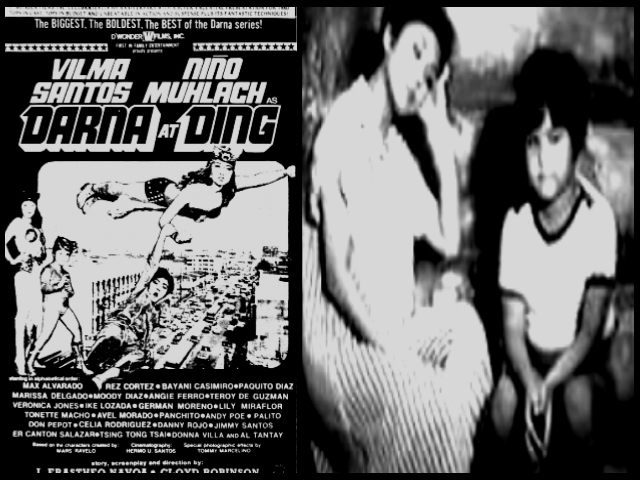
Vilma Santos’ Films (8): (Ang Galing-galing Mo, Mrs. Jones; Darna at Ding; Good Morning, Sunshine; Gusto Ko Siya, Mahal Kita; Langis at Tubig; Miss X; Romansa; Yakapin Mo Ako, Lalaking Matapang) – For Vilma Santos, 1980 was an affirmation of her sexy image, with most of her projects has “adult” theme, “Mrs Jones” and “Miss X” were big hits despite its lack of weak production value. She even wore a sexier Darna outpit, in her fourth Darna franchise, Darna at Ding. Like Nora, she had her share of disappointments, her film with husband, Edu Manzano, “Romansa” was a big flop. Come December, Vilma concentrated on not thinking about winning the best actress award, instead, agreed to do a commercial film with Danny Zialcita, the result was the hit, “Langis at Tubig.” The film earned her some nominations and a best actor trophies to her leading man, Dindo Fernando.

Nora Aunor’s 1980 acting recognition (3) – Best Actress from URIAN and a nominations from the Metro Manila Film Festival and FAMAS, all for “Bona.”

Vilma Santos’ 1980 acting recognition (2) – Best Actress nominations from Metro Manila Film Festival and FAMAS both for “Langis at Tubig.”

Sociological Phenomenon – “…Brocka is one of the most physical of directors. His films are full of scenes of people touching — nervously, tentatively touching one another, and his rapport with actors is tremendous. Nora Aunor is a special case, she’s the Filipino’s favorite movie star, and more. Herself a slum child at 14, she won a singing contest and soon became a film personality, appearing in trivial, successful hit after hit; she now has her own weekly TV show. Aunor is a sociological phenomenon: the first dark-skinned superstar, idolized by the underclasses. Her fan’s devotion is unlimited. A score of them have come to live and work in her house as self-appointed servants. For many, she has the status of a saint. Her role in Bona in Brocka’s movie, which she produced out of her own pocket in order to appear in a serious film, is not unlike that of one of her own fan-servant-slaves. Aunor’s co-star is no less than Phillip Salvador’s glistening body (who was Stanley Kowalski in Brocka’s Tagalog production of Streetcar) which Brocka makes us to see with Bona’s eyes in a dozen bed and bathtub scenes. The camera observes Salvador’s body with something of the meticulous awe with which Von Sternberg and his lenses ogled La Grande Marlene…” – Elliot Stein, Village Voice, September 25, 1984 New York (READ MORE)

Handing Magparaya – “…Muli, binigyan ng magagandang linya si Vilma Santos mula sa umpisa kung saan kinompronta niya ang manloloko niyang ka-live in at sinabing: “namputsa naman nahuli ka na ayaw mo pang aminin” at sa bandang huli nang intindihin niya ang asawa at handing magparaya, sinabi niya “…handa akong magparaya, kung gusto niya isang lingo sa kanya, isang lingo sa akin…” Pero halatang ang pelikulang ito ay pelikula ni Dindo Fernando. Deserving si Dindo sa kanyang pagkapanalo sa Famas bilang pinakamahusay na actor bagamat nang taong ito’y mahusay rin si Christopher Deleon sa Aguila at Taga ng Panahon at Jay Ilagan sa Brutal. Tahimik lang ang pag-arte niya’t makikita ang kanyang intensity sa kanyang eksena kung saan nagtapat na siya sa asawang si Cory tungkol sa kanyang kaso. Mahusay rin siya nang hinarap niya si Pilar at sabihin niyang, “mahal ko kayong dalawa.” Maganda ang location ng pelikula. Makikita ang mga ordinaryong tanawin ng Albay sa Bicol at ang mga ordinaryong manggagawa rito mula sa mga nagtatanim ng palay hanggang sa mga nagtitinda ng mga paninda sa palengke ng bayan. Sa kabila ng ordinaryong istorya ng Langis At Tubig, ang mahusay na direksyon at mahusay na pagkakaganap ng mga artista rito’y nangibabaw ang tunay na karapatan nitong panoorin muli ng mga mahihilig sa pelikulang Pilipino. Sayang nga lang at hindi na gumagawa ng pelikula ang ang gumawa ng obrang ito…” – RV (READ MORE)

Post-1980 – As Brocka’s Bona toured the international festival, it looks like Nora was again in command with the acting contest and Vilma was content in making sure that her films were commercial success. By this time, Vilma’s tax problem has become a number one priority. No longer a teen pop star, both Nora and Vilma’s projects declined. It seems like yesterday, when in early 1970s both were releasing one or two films each month. Now, both have limited film projects and have to be selective to succeed at the box office.

Related Reading:

Vilma…Born Winner (Repost)

And the winner is…Vilma Santos.The U.P. College of Mass Communication announces the choice of Ms. Vilma Santos as the recipient of Gawad Plaridel 2005. Born winner ngang matatawag ang QueenStar na si Vilma Santos dahil halos lahat ng larangan ng kanyang pinasukan ay naging matagumpay,hindi nga lang siguro siya Star for All Seasons and Reasons sa punto ng pagiging aktres. Laging kinikilala sa kanyang kahusayan sa magkakaibang panahon ng pamamayagpag, making her an actress for all seasons, indeed! Like the fabled Midas Touch, Vilma Santos seemingly has that power to transform into gold, whatever her petite hands can touch. In the movies and on television, she is the undisputed Star for All Seasons.On the domestic front, she is victorious mom to Luis and Ryan Christian.

Huling pinasok at sinubukan ni Ate Vi ang magulong daigdig ng pulitika. Sa kanyang huling termino bilang Ina ng Lipa City, pinatunayan niya kung gaano siya kaseryoso bilang aktres ay mas lalong pursigido na mapagbuti ang kalagayan ng kanyang kababayan at nasasakupan. Wala na ngang dapat patunayan pa si Ate Vi, tunay ngang siya’y na namumukod-tangi bilang bituin. Katangi-tangi siya bilang artista at lingkod-bayan. Sa malao’t madali, magbubunga ng maganda ang kanyang pagpupunyagi. Ipinapalagay na kundi man gobernador ng Batangas, nakatakdang tumuntong si Ate Vi sa Senado.

But all things considered, isa lang ang vision nais ni Mayor Vilma in 10 years from now, a place in Malacanang. Ang maging First Lady na hindi malayong mangyari. If ever na matupad, the Vilmanians will rejoice at sasabihing “Heaven.” And “You’re such a victorious lady.” As a star, Vilma Santos, is the last of the great movie queen. As an actress, well, she has nothing to prove anymore. Unarguably, Ate Vi has etched her mark in the local showbiz industry and maintain that status. Already being considered a pillar in the celluloid world, Vilma has claimed not only to great results of her movies, but to the critical acclaim that her movies enjoy.

Even the most rabid Noranians will have to concede to Vilma’s enduring popularity and spell-binding mass appeal. Bluntly and simply stated, Vilma is the country’s reigning movie queen, Sharon Cunetas’ presence notwithstanding. Vilma Santos is undeniably the country’s uncontested Star for All Seasons and QueenStar. Without a modicum of an exaggeration, her lofty achievements in the industry still have to be duplicated nor equalled by anyone. She is definitely one of the highest paid star, darling of the press and without scintilla of a doubt, showbusiness personified. She is the quintessential image of a real movie star-beautiful and glamorous, well-mannered and a seasoned actress. It is easy to be awed by Vilma Santos. The name warrants all caps in the Philippine entertainment: charisma that goes beyond unquestioned talent. – Willie Fernandez, V Magazine 2005 Global Vilmanians

Special Film: Ibong Lukaret

Ibong Lukaret (1975) Vilma witnessed the traumatic death of her mother that made her crazy until she met the murderer again. – RV (READ MORE)

Source: gobitz69

FAIR USE NOTICE (NOT FOR COMMERCIAL USE): This site contains copyrighted materials the use of which has not always been specifically authorized by the copyright owner. We are making such material available in our efforts to preserve the film legacies of actress, Vilma Santos, and to make her career information available to future generations. We believe this is NOT an infringement of any such copyrighted materials as in accordance to the the fair dealing clauses of both the Canadian and U.S. Copyright legislation, both of which allows users to engage in certain activities relating to research, private study, criticism, review, or news reporting. We are making an exerted effort to mention the source of the material, along with the name of the author, performer, maker, or broadcaster for the dealing to be fair, again in accordance with the allowable clauses. – Wikipedia (READ MORE)

RP Cinema’s Best Actress of All Time (Repost)

One of the lingering showbiz debates concerns the choice for the greatest Pinay movie actress. The matter may now be settled with the Gawad Plaridel that the University of the Philippines bestows on outstanding Filipino mass media practitioners.

Established by the UP College of Mass Communication under Dean Nicanor G. Tiongson last year and derived from the nom de plume of Philippine hero and propagandist Marcelo H. del Pilar, Gawad Plaridel is a form of lifetime-achievement honor with the recipient coming from any of the various fields that encompass mass media such as journalism, broadcast arts and, of course, cinema.

The first Gawad Plaridel awardee, Eugenia Apostol, hails from print media. For this year, it has been decided by the Gawad Plaridel organizers to hand out the plum to a film artist. Many welcome the choice of Star for All Seasons Vilma Santos getting the Gawad Plaridel, and many more could not less agree.

With a screen career spanning five decades, Vilma outshines her peers. She has proven herself not only as a consummate actress but also more importantly, a role model and enduring inspiration. The Gawad Plaridel is just the latest in the string of lifetime achievement awards Vilma has received in the course of her stellar career. It was the Film Academy of the Philippines that first extended Vilma such great honor in the early 1990s followed by the Filipino Academy of Movie Arts and Sciences later in the decade and then the Cinemanila International Film Festival a couple of years back.

On top of all these distinguished honors for lifetime contribution to motion-picture arts, Vilma has been proclaimed on various occasions as the country’s premier actress, sole screen diva (*Filipino cinematic diva* as Hollywood bible Variety Magazine exactly put it in 2003), most celebrated actress, best actress for all seasons and reasons, national actress, film actress par excellence, etc. – all in testament to the magnitude of the artistic legacy attributed to the actress-politician idolized by throngs of ardent admirers.

All in all, Vilma has amassed more than four dozen trophies for her sterling performance in a gamut of noteworthy films that automatically form part of the country’s cinematic heritage. She has worked with the best talents that Philippine cinema could boast of, and the Gawad Plaridel accorded to her is in itself an honor Vilma could share with these industry colleagues allied with her.

The Gawad Plaridel citation says it all. Part of it reads: “(The choice of Ms. Vilma Santos as this year’s Gawad Plaridel recipient was) among other reasons for building a brilliant career which saw her grow from popular icon to professional actor through self-discipline and tireless honing of her craft; for bravely using her popularity as an actress to choose roles which bring to the public attention as astounding range of female experiences, as well as an array of problems confronting women of different classes and sectors in contemporary Filipino society; and for bringing to life on screen characters whose stories have the effect of raising or transforming the consciousness of women, leading them a few steps closer to a deeper understanding of their situation vis-à-vis the patriarchy and to the ability to control their own lives and make empowered choices of their own.” – Nonoy L. Lauzon, “Reel Pinoy, RP Real Pinoy” July 2005 (READO MORE)

SI DARNA AT SI ATE VI


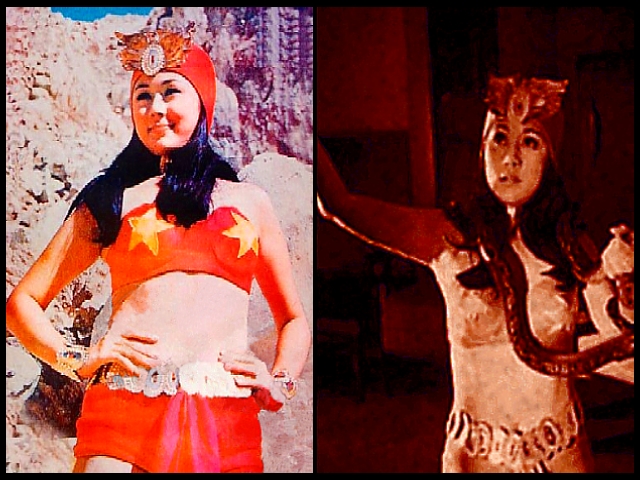
Darna has been portrayed by no less than nine actresses in 12 feature films. Rosa del Rosario first wore the scarlet two-piece in May 1951. She reprised the role after three months. Liza Moreno, Eva Montes and Gina Pareño followed her. The inter-galactic pebble found its way to Vilma Santos’ throat in 1973 via the flick “Lipad, Darna, Lipad!” Santos, now the mayor of Lipa City (As of 2012, she is now the Governor – RV) in Batangas, is probably the most popular Darna, with a total of four movies in a span of seven years. Rio Locsin squeezed in a portrayal in 1979 with “Bira, Darna, Bira!” But Santos made a comeback, with the legendary Niño Muhlach as Ding, in 1980’s “Darna and Ding.”

Lipad, Darna, Lipad (1973) – the quintessential action-fantasy Pinoy flick that appeals to all ages, from generation to generation. This movie is a major milestone for Vilma because it proved that she could really carry a solo movie and bring in the dough (up to now of course!). Vilma’s Darna franchise is the most memorable and successful of all Pinoy fantasy-action genre. Imitated but never equalled, Vilma’s Darna lives on. Unforgettable. Memorable. It grows on you. No Pinoy kid ever grows up without being a part of the Darna magic. Vilma, practically flew at the top of the box office in Sine Pilipino’s trend setting trilogy “Lipad, Darna, Lipad!” Many fans consider Lipad, Darna, Lipad, as one of the most entertaining Darna movies ever. After all, who could forget that climactic aerial battle scene between Darna and the Impakta (Gloria Romero)? That shot of Romero impaled in a giant crucifix ensconced on top of a church tops any gory scene in The Omen. The enormous success of Lipad, Darna, Lipad led to three more Darna movies with Vilma Santos. As a result, the star for all seasons became the star for all Darnas! Santos played her four times, more than any other actress in the superheroine’s history Lipad, Darna, Lipad! were thus divided into three separate segments, directed by three different directors. In Darna’s case, the three directors were Maning Borlaza, Joey Goesiengfao, and Elwood Perez – three names that promised an adventure that could do Andy Warhol proud.

First episode “Ang Impakta” Starring Gloria Romero as Miss Luna, Narda’s school teacher who has a dark secret. She is actually a flying blood sucking creature at night. In this thrilling episode she knows the secret identity of Narda. The most memorable part was when Ms. Luna asked Narda to help her with some paper works. Little that she know, while she was busy checking the papers Ms. Luna excused herself, she then went to the next room and transformed into a scary vampire. Ding found out that Ms. Luna is the vampire and Narda forgot to bring the magical stone , he rushed to her sister who then was being strugled by the monster. As soon as he got there, he threw the stone to her much terrified sister and she immediately changed to Darna. Followed was the famous aerial fight scene. Nanette Medved and Bing Loyzaga tried to copy the infamous fight scene in 1990 Viva films Darna. Episode one was directed by Maning Borlaza. Vilma also had to battle with Celia Rodriguez, who played a campy Valentina, a super- model by day and a snake priestess by night. One scene has the actress naked in bed being caressed by a dozen snakes. Indeed, with the likes of Gosiengfao, Perez, and Borlaza at the helm, Darna is sure to get stuck in grotesque situations reminiscent of the Rocky Horror Movie. Their take on Darna is sometimes too risqué and violent for little children; but as a camp fest, the movie works.

In the next episode, Valentina, tried to steal Narda’s magical stone. Also, there was a scene where Valentina dressed up as Darna. I love the exciting part where Darna and Valentina battled on top of a high rise building. Darna, was almost a no match to her mortal enemy. Dangerously armed with lazer beams coming out from Valentina’s eyes, Darna was helpless and knocked down several times. Until, she stumbled upon into a piece of broken mirror and used it as a shield againts Valentina’s deadly lazer beams. Darna quickly made her looked in the mirror. Her lazer beams bounced back and she turned into a stone. From the roof, Valentina fell hard on the ground and broked into shattered pieces. Anjanette Abayarri and Cherrie Gil almost did the same scene in ” Darna, Ang Pagbabalik ! ” Second Episode was directed by Elwood Perez.

The final episode was “Babaing Lawin” ( Hawk Woman), starring Liza Lorena as Babaing Lawin. I barely remember this one, there was this scene where Narda and Ding got caught and almost drowned in a quick sand. In Hawk Woman’s cave there’s this stream, that can make her wings disappear by walking across to it. There was also this character named Agila, a bird man played by Rod Dasco, he’s like the Hawk Woman’s mate. There was some fight scenes in the cave between Hawk Woman and and Darna. At the end of the story Darna and Hawk Woman, mend their ways. Vilma Santos was the second actress to play both ” Narda and Darna” first was Liza Moreno in Sputnik VS. Darna. The famous expression – “Ding, ang bato…Dali” was originated in “Lipad, Darna, Lipad”. It did not come from the comics.

Vilma did have one important asset that easily made the role all her own – she had the box office clout. Lipad, Darna, Lipad, (1973) was a certified blockbuster, and not just because of the millions of Vilmanians. Local movie fans suddenly seemed to have a penchant for movies about superheroes. Darna And The Giants (Dec. 22,1973) Tagalog Ilang-Ilang Productions, Official Entry for 1973 Manila Film festival. For the second time around Vilma, proves that her first Darna was no fluke. Darna And The Giants vanquished all of her box office competitors. Very creative special effects by Tommy Marcelino consider it was made early in the 70’s. Sex kitten Divina Valencia as one of the giants as well as Ike Lozada, Max Alvarado, Zandro Zamora and many more. Vilma was the third actress to play the dual role of a teen-age Narda, Darna. Gina Pareno had two alter-ego’s in her own version as well as Liza Moreno played Narda and Darna in Sputnik VS. Darna. Vilma also changed Darna’s transformation in all of her Darna films by using a flash of light instead of the thick smoke. She dons a retro version of Darna with shiny gold and red costume and matching platform boots. In this film Vilma was no hold bars. Romy V. Susara and Leody M. Diaz choreograped Darna’s awesome fight scenes.

Darna and The Giants (1973) – Continuing where “Lipad, Darna, Lipad” left off, Narda (Vilma Santos) and Ding (Dondon Nakar) encountered their greatest challenge yet – The Alien Warrior Queen-“X3X” (Helen Gamboa) and her alien minions. In this latest adventure, X3X terrorizes Narda’s village and captures several of the townsfolk and transforming them into mindless Giants who went on a rampage across the countryside in the hopes of conquering the earth without the use of nuclear weapons. When Narda’s suitor Romy (Romeo Miranda) is captured, the threat of the alien Queen becomes personal With a Global threat such as this, will Darna’s courage and powers be up to the challenge? Watch and find out!! “Darna and the Giants” Also stars – Katy Dela Cruz as “Lola”, and an all-star cast of 70’s icons with cameos from Leopoldo Salcedo, Edgar Mortiz, Eddie Peregrina, Nick Romano, Lotis Key, Tony Ferrer (as Falcon) & more. “Darna and the Giants” produced by Tagalog-Ilang Ilang production and directed by Emmanuel H. Borlaza with Darna Theme composed by Sunny Ilacad (Vicor).

Darna VS. The Planet Women (Dec. 25,1975) – Tagalog Ilang-Ilang Productions, Christmas Presentation. In this 1975 film (the 3rd in a 4 Darna film franchise), the story of Darna is rebooted as this new installment is not a continuation of the 1st and 2nd films. In this revamped version, Narda (Vilma Santos) is a cripple who dreams of accomplishing great things for the betterment of humankind despite her physical limitations. One day, she discovers her suitor (Zandro Zamora) paralyzed after having been attacked by a UFO. Together with her brother Ding (Bentot Jr.), she prays for help and offers to sacrifice herself for the sake of her suitor’s survival. A voice from beyond answers and sends her an enchanted amulet of power. The power of Darna contained within the magic pebble. With her newfound powers, she battles The Planet Women-Alien Amazons who are trying to transport the Earth to their own star system.

Darna at Ding (Feb. 8,1980) – Produced by D’ Wonder Films – Vilma Santos donned her Darna costume for the last time in 1980 with Darna at Ding. For the first time, Ding was mentioned in the title. And why not? The kid was now played by Niño Muhlach, the most popular child star of the day. The company that produced it, D?Wonder films, belonged to the Muhlach’s family. The Wonder films tried to captured the magic of 1973 monster hit “Lipad, Darna, Lipad.” By recasting some of the original cast of Vilma’s first Darna movie. Celia Rodriguez declined to play Valentina, instead they tailored a new character for her as Lei Ming the sorceress. Then Veronica Jones was asked to play Valentina but, ended up playing the role of Hawk Woman. Max Alvarado reprised his role as the Giant. Marissa Delgado also joined the cast as Dr. Vontesberg. The movie started on how Narda got her power as Darna. As soon as Narda transformed into Darna, she quickly started her adventure with Ding fighting the Hawk Woman. And soon after Darna and Ding found a giant and both lost the fight to Darna. As the story unfold Dr. Vontesberg pretended as a good samaritan with an evil plan to destroy the towns people who killed her grandfather mistakenly accused as a devil worshipper. Dr. Vontesberg summoned the dead and terrorized the townspeople. Narda was captured by the mad Dr. Vontesberg and showed her how she operates her plans. Ding got on time to rescue her helpless sister and they both stopped Vontesberg evil plans. Then, Darna and Ding flew their way to the city. And on their way, they captured a bunch of loose prisoners, after this scene was a long lots of talking non-action scenes. Finally, Lei Ming and Darna measured their strength and powers. Lei Ming created an evil Darna to destroy the real Darna. At the end Lei Ming lose and took her own life.

Vilma finally relinquished the role of Darna to Sharon Cuneta, who appeared in a cameo role as Darna, in 1986’s Captain Barbel, also a Mars Ravelo classic creation. Years after, Dawn Zulueta was rumored to play Darna but the role of our beloved superheroine went to Nanette Medved who would have preferred to play Valentina.

**************

Vilma Santos was indeed the most successful Darna in history of this franchise. Eric Cueto who is also the web master of the Mars Ravelo (the creator of Darna) web-site interviewed the Star for All Season about her stint as Darna. Here are the highlights and Vilma’s replies:

Favourite Darna: “Syempre Lipad Darna Lipad, yon kasi ang unang Darna ko at maganda talaga. May copy ka ba nito?”

Action stunts: “…may pagka tomboy din ako noong araw kaya madali kong napag aralan (stunts). Actually minsan nga nag karoon ng aksidente na kailangan ko na mag tumbling at sasaluhin ako ng stuntman ang nangyari nasipa ko sya sa mukha kaya putok yong ilong nya at kailangang dalahin sya sa hospital, ako naman nauntog sa bato kaya ang sakit ng ulo ko…”

Snakes: “…Oo totoo yon! natakot ako sa mga ahas first shooting day yata namin yon sa may roof top ng isang building sa may Santa Mesa. Isang lingo akong nagkalagnat yata noon – then bago uulit kami mag shooting pinahahawakan na muna nila sa akin yong mga snakes para masanay na ako…”

Villaines: “…Celia (Rodriguez), she’s really good! and Tita Glo (Gloria Romero) was so scary as Impakta, I love her so much…(and Liza Lorena) She’s good too! I remember ang costume nya ay yong parang sheep skin at may pair of wings sya. Sa may Antipolo kinunan yong episode ng Babaing Lawin…”

Her early exposure of Darna: “…Napanood ko yong Darna ni Eva Montes sa sine at yong Kay Rosa Del Rosario sa TV…”

Body Stockings: “…I remember nag paalam pa ako sa mga madre sa school na pinapasukan ko noon, kasi diba na ka two piece si Darna at okay naman sa kanila, kasi nga hindi naman daw bastos yong character ni Darna, superheroine nga sya eh. Tinanong ko rin yong mga fans noon at medyo nga worried din sila sa costume baka daw bastusin ako. Kaya nga noong una sa pictorials ng promo ng movie naka body stocking ako, kaya lang hindi talaga magandang lumabas nakakataba yong stocking. William Leary and Douglas Quijano convinced me na tangalin ko yong stocking sa press-con ng Darna. I remember nasa bathroom pa nga ako noon at mag papalit na ko ng Darna costume ko, then tinangal ko na rin kasi sabi nila: “Vi, masagwa talaga yong stocking bakit di mo sila gulatin lumabas ka ng walang stocking tutal may ipapakita ka naman” . At yon na lumabas na ko ng walang body stocking…”

Will she plays Impakta: “…Naku mukha na ba akong impakta! (sabay halakhak) actually may ginawa na kong Aswang yong “Anak ng Aswang” pero hindi ako ang aswang si Tita Glo. Actually very interesting yang role na yan at challenging, i don’t mind playing those kind of roles na kontrabida, basta ba maganda ang story…” – Eric Cueto (READ MORE)

Googling Darnas: “…I was watching an interview with Vilma Santos earlier today and she was talking about how great her experiences were being Darna. I got inspired and I started researching about the past Darna movies and franchises. Raymond and I were just telling Dominic yesterday that archiving in the Philippines is horrible. I was glad that when I was googling, there’s this whole site dedicated to Mars Ravelo’s Darna, one of his most famous stories…Anyway, it’s so interesting. I think I’m becoming a fan of Darna. I’ve seen most of the movies. I haven’t seen any of the series though. I like the idea that she really had to be voluptuous. Vilma Santos and Angel Locsin even had to fatten up to gain more muscle for the role. Anyway, here’s my Darna Gallery (I’ll even include the cameos)…The great Vilma Santos. It’s so funny how she’s the first Darna to also play Dyesebel (the second is Marian Rivera) who’s one of her allies. Multi-personality. She’s the easiest Darna to research. During the span of her four Darna films, lots of other adaptations were also released but hers were always best received…” – Sasha Limuy, scottstuart.wordpress.com, 19 September 2009 (READ MORE)

Quotes from Peers (Repost)


Nangangatog ako ng una kong ma-meet si Vilma Santos in person. Ganoon pala talaga ang feeling kapag naka face to face mo ang idol mo. – Ana Capri

Hindi complete at walang katuturan ang pagiging producer ko kung hindi ako makagawa ng pelikula na bida ang hinahangaan kong si Vilma Santos – Donna Villa

Kahit one-fourth lang ng tagumpay ni Ate Vi. Ang marating ko masayang masaya na ako. Talagang idol ko siya. Idol siya ng buong pamilya ko – Kristine Garcia

I first worked with Vilma when she was just a child star. From then, alam kong malayo ang mararating niya as an actor dahil bata pa mahusay na. Hindi ako nagkamali. Hindi lang siya basta naging artista, kundi naging isa sa pinakamahusay at pinakasikat. – Gloria Romero

Simula ng mapanood ko si Vilma sa Trudis Liit naging Vilmanian na ako. Nobody comes close to her. – Armida Siguion Reyna

Naging Huwaran ko si Ate Vi hindi lang sa career ko kundi maging sa personal kong buhay. I am very proud to be a Vilmanian. – Snooky Serna

Bata pa ako hindi pa ako artista talagang idol ko na si ate Vi. Pinupuntahan ko pa yan sa bahay niya para lang makita at maka-usap kahit ako lang mag-isa.- Sharon Cuneta

Vilma is the most versatile actress in our time. Kahit anong role kaya niyang gampanan ng buong husay. Ang sarap makatrabaho ang isang Vilma Santos – Celia Rodriguez

Kung alam lang ni ate Vi kung ilang beses akong nadapa sa paghahabol na makita siya. Siya ang naging inspirasyon ko sa pagpasok ko sa showbiz. – Ai-Ai Delas Alas

Simula noon hanggang ngayon pagbalibaligtarin man ang mundo Vilmanian pa rin ako. – Korina Sanchez

Once you encounter and know ate Vi, you will realized how nice and thoughtful she is. She is always been an inspiration to me. Masarap siyang maging kaibigan. – Kris Aquino

Si Vilma Santos ang idol ko. Maganda na, magaling pa. – Amy Austria

Mahusay talaga si Vilma kahit saang aspeto. Napakagaan niyang katrabaho. Isa sa mga dream ko ang mai-direct si Vi. – Gina Alajar

Vilma Santos can compete with the top caliber actresses in Hollywood. She is an epitome of a real queen of Philippine Cinema. I really look up to her. – Lea Salonga

Makasama ko lang si ate Vi sa pelikula gagawin ko kahit libre. – Dawn Zulueta

Ng makasama ko si Mama Vilma sa pelikula feeling ko puwede na akong mamatay. – Carlos Agassi

Ang isa sa pinakamagandang nangyari sa buhay ko sa pagpasok ko sa showbiz ay ang makasama ang pinakamahusay na aktres na hinahangaan at nirerespeto ng lahat. Marami akong natutuhan kay Mama Vilma – Piolo Pascual

It would be a great fullfilment if I make a movie with my favorite actress Vilma Santos – Alvin Patrimonio

Actually, mag-cousin pa kami ni Ate Vi. Walang hindi Vilmanian sa pamilya namin – Raymart Santiago

Vilma is my favorite actress. She is the only actress I love to watch on local screen. She’s Great. – Martin Nievera

Bago ako naging artista, die hard Vilmanian na ako. Nakikipag-away pa nga ako dahil kay Vilma. – Rosanna Roces

Bata pa ako ginagaya ko na ang mga acting ni Ate Vi. Idol siya ng Nanay ko kaya naging idol namin siya – Glydel Mercado

I am very flattered when Lino Brocka said that I am the next Vilma Santos. But Vilma Santos is Vilma Santos, she is incomparable. – Ruffa Gutierez

Vilma Santos is the Greatest Actress of all times. Walang Katapat – Eric Quizon

Si Vilma ang isa sa madalas magpadala ng tulong kapag may mga pangangailangan o project kami sa Red Cross at Damayan. Iilan lang ang katulad niya na kusang tumutulong na hindi na kailangan pang ipaalam sa publiko. – Ms. Rosa Rosal

I am a closet Vilmanian before, pero ngayon nagladlad na ako. Maraming katangian si Vilma na talagang hahangaan mo – Boots Anson Roa

Type ko siya. Ang husay husay niya. – Rio Locsin

Bago ako pumasok sa showbiz, die hard Vilmanian na ako. Nakikipag-away pa nga ako dahil kay Vilma. – Jaclyn Jose

For me Vilma Santos is the Greatest Actress of all times. – Gabby Concepcion

Somebody would come from the Philippines and they’d bring in Vilma Santos films, and I just remember, ‘Oh, this woman is making me so emotional, I think I’m a Vilmanian. That’s what they call it, I think. – Mig Macario

She crosses over from politics to showbiz and back. She can say one thing and it can be about motherhood, or love, or stardom, or politics….ang taong for all seasons – award season, holiday season, election season, even back-to-school season. Over time I’ve had the chance to meet her, and nabigyan niya ako ng acting tips. She has validated my work and given me her friendship. – Jon Santos

Source: V magazine Volume 1, Issue 4 2005 + Updates 2012

Film Review: Biktima (1974)

FILMS - BIKTIMA

Release Date: June 23, 1974 (Philippines)

The Plot: – In a strange turn of events, Dolores (Vilma Santos) moves in to live with her grandfather, who has sole custody of her ever since her mother was imprisoned for the murder of Dolores’ father. Mystery unfolds as Dolores stays with her grandfather when members of the household are murdered one by one. Will Dolores escape the chaos unraveling around her or will she be the next victim? – Kabayan Central (READ MORE)

The Reviews: – Hired by Don Rafael Valdez (Joe Sison), Attorney Andrade (Leopoldo Salcedo) finally convinced Dolores (Vilma Santos) to live with her rich grandfather, Don Rafael. This is despite the warning of her aunt, Tiya Dadeng (Patria Plata) and the warning of her mother, Lourdes (Perla Bautista) who is in prison. She was framed-up and wrongfully convicted of her father’s death. When Dolores came to her grandfather’s mansion, one by one, people are starting to die. This includes her grandfather’s young wife (Elizabeth Vaughn); Monica Valdez (Celia Rodriguez); Magda (Divina Valencia); the gardener (Yoyoy Villame); and Marita (Helen Gamboa). By the time the last victim died, the surprise killer was expose, the killer was Dolores. She tried to revenge her mother’s imprisonment and her father’s death. It was also revealed that her aunt’s husband (Bert Le Roy Jr.) was the one who killed her father. Her father tried to rape their grandfather’s nurse, Marita (Helen Gamboa), she fought hard and stabbed her father. Bert Leroy Jr. framed-up Dolores’ mother who was the first person on the scene of the crime. In exchange for his silence he blackmailed Marita with sexual favors. Marita didn’t know that Dolores’ father was still alive but Leroy finished the job by stabbing him more.

Written by Jose Flores Sibal with writing credit from the film’s lead star, Vilma Santos, Biktima was surprisingly watchable. Compared to other Vilma Santos films that Nilo Saez directed like Kampanerang Kuba, he did a convincing job in ironing out the many characters of the film (maybe except for Divina Valencia’s role who was one of the first to die). This is perhaps due to the excellent cast. The one who stands out more were Celia Rodriguez and Helen Gamboa. Both gave subdued performances. Edgar Mortiz’ role as assistant investigator was just to appeal to the loyal festival followers of Vi and Bot. By this time, it was clear that Vilma’s career are heading upward while Mortiz was heading to a different path. The ending of the film, showing a bald Vilma Santos in preparation for her demise was the film’s dramatic highlight.