Vilma Santos-Recto is a popular multi-awarded actress and politician in the Republic of the Philippines. *** She is known as "Queen of Philippine Movies," "Queenstar," "Grand Slam Queen," "Box Office Queen," and "Star for All Seasons." *** This website is mostly about her iconic film career.
Basic Information: Direction: Elwood Perez; Cast: Cast: Vilma Santos, Christopher De Leon, Baby Delgado, Roel Vergel de Dios, Freddie Yance, Anita Linda, Romeo Rivera, Tony Carreon, Lily Miraflor, Ven Medina, Jose Villafranca, Nina Lorenzo, Yolanda Luna, Mario Escudero, Jimmy Reyes, Vic Santos, Aring Bautista, Nat Mallares, Josefina Morato, Juanita Rodrigues, Rita Flores, The Thunder Boys; Sound: Lino Torres; Editing: Oscar Dugtong; Cinematography: Gener Bueneseda; Executive Producer: Marichu Perez Maceda; Stroy and Screenplay: Orlando Nadres; Music: Lutgardo Labad; Produced by Sampaguita Pictures Inc.; Theme Songs: Dahil Sa Pag-ibig (Music by Lutgardo Abad, Lyrics by George Canseco, Sung by Aloha, Released by Blackgold Records), Nakawin Natin Ang Bawat Sandali (Music by Lutgardo Abad, Lyrics by Orlando Nadres, Sung by Anthony Castelo, Released by Vicor Music)
Plot Description: “A young couple’s affair is marred by their feuding families and small-town intrigues. They meet years after as successful career people only to be drawn into another scandalous liaison.” Bamboo Gods and Bionic Boys (READ MORE)
Film Achievement: One of seven Perez-Santos collaborations.
Film Review: “…It has a uniformly good performance by the cast which includes Baby Delgado, Roel Vergel de Dios, Anita Linda, Jose Villafranca and the two leads Christopher de Leon and especially Vilma Santos who has done a surprisingly intelligent and affecting character portrayal. Not since Eddie Romero’s Sinong Kapiling, Sinong Kasiping? (1977) have we seen characters who think, behave and react to problems and situations like mature, sensitive and intelligent people. The characters do give way to occasional hysterical outbursts, but they somehow wake up to their senses before they completely forget themselves. And they are people in believable situations with real problems and genuine emotions. When they talk, they are seldom silly and when they are silly, they are aware of it. But even when they are silly or trite, they are never unsympathetic…” – Jojo Devera, Sari-saring Sineng Pinoy (READ MORE)
“…Elwood Perez and Vilma Santos colloborated in seven films (Ibulong Mo Sa Diyos 1988, Lipad Darna Lipad 1973, Magkaribal 1979, Masarap Masakit ang Umibig 1977, Nakawin Natin ang Bawat Sandali 1978, Pakawalan Mo Ako 1981, Pinay American Style 1979). The first one was the trilogy that he co-directed with two other director, Borlaza and Gosiengfiao (these three are the most underrated and under appreciated directors in the Philippines), the remake of Mars Ravelo comic super hero, Darna in Lipad Darna Lipad. The film was a record-breaking hit Box-office Film. They follow this up with a more mature projects as Vilma started to switched her image from sweet to a mature versatile actress, pairing her with Christopher DeLeon in five films starting with Masarap Masakit Ang Umibig in 1977. The Perez-Santos-DeLeon team produced seven blockbuster hits that gave Vilma two FAMAS best actress awards that secured her elevation to FAMAS highest honour, the FAMAS Hall of Fame award. She won in 1979 for Pakawalan Mo Ako and 1988 for Ibulong Mo Sa Diyos…” – RV (READ MORE)
Basic Information: Directed: Al Quinn; Story, screenplay: Maryo De Los Reyes; Cast: Vilma Santos, Christopher De Leon, Victor Laurel, Rio Locsin, Romeo Enriquez, Sandy Garcia, Freddie Aguilar, Sampaguita, Anak Bayan Band; Executive producer: Emilia Blass; Cinematography: Al Quinn, Joe Batac; Film Editing: Nonoy Santillan
Plot Description: Love Triangle (Christopher De Leon-Vilma Santos-Cocoy Laurel) and lots of dancing!
Film Achievement: One of 23 Film collaborations of Christopher and Vilma Santos.
Film Review: “…I was Vilma’s choreographer for her movies (Disco Fever, Good Morning Sunshine, etc.) and at the same time I was also choreographing for Nora on her show Superstar. When Vilma had her own TV show, she got me as choreographer but I stayed with her for only one month. The network bosses told me that I shouldn’t be handling two superstars at the same time. Nora was on Channel 9 and Vilma was on Channel 13. Because of loyalty, I chose to stay with Nora kasi mas nauna naman ako sa kanya. I was with her for four years na at that time. But first, I talked to Vilma who is a ninang of my son Miggy. I left Vilma with a heavy heart…(Asked if she was a Noranian, Geleen thought for a while and smiled), “Noon ‘yon!”…“It’s hard to tell. Nora is good in memorizing dance steps and Vilma is good in the execution.” Other stars Geleen choreographed for included Alma Moreno (for her TV show Loveli-NESS), Maricel Soriano (for Maricel Live! on Channel 13 and Maria, Maria on Channel 4)), Kuh Ledesma and Manilyn Reynes (Manilyn Live!). It was Maribeth Bichara who replaced Geleen as Vilma’s choreographer. Perhaps as an offshoot of their star-mistresses’ rivalry, Geleen (for Nora) and Maribeth (for Vilma) were also pitted against each other and the two dancers tried to ride on the wave of the faked rivalry between them when actually, claimed Geleen, “Maribeth and I were good friends…” – Geleen Eugenio (READ MORE)
“…I’d rather be known as Victor Laurel. But really, this Travolta is a sensation. I met him in Studio 54 and how the crowd loves him. He’s a wonderful actor, singer, and dancer.” Cocoy, too is a seasoned dancer even before the Travolta fever. He has a catlike grace that gives the impression of strenght and his dancing ability has helped tremendously in his career. “The Travolta dance is typical of hero worship even in San Francisco, Los Angeles and other big cities. Mondays, everyone who has caught the fever, even 30 year olds shop and prepare for the disco on Fridays and Saturday and stay up till the wee hours of the morning…We were about to ask another question about Vi, his leading lady in Lea’s Disco Fever but Ate Josie came in to remind Cocoy that the Sampaguita people were waiting with sketches of his costume for Dyesebel, the movie he was going to make for the Gilmore Studio. But didn’t. As a parting shot, Cocoy revealed that he’d soon put a disco. The Third Kind or something in Makati…” – Nena Z. Villanueva, Expressweek, November 16, 1978 (READ MORE)
Basic Information: Directed: Elwood Perez; Story: Orlando Nadres; Screenplay: Elwood Perez, Orlando Nadres; Cast: Vilma Santos, Christopher De Leon, Mat Ranillo III, Amado Cortez, Lilibeth Vera-Perez, Anita Linda, Ma-An Hontiveros, Lillian Laing, Sandy Garcia, Cloyd Robinson, Laila Dee; Executive producer: Marichu Vera Perez; Original Music: Lutgardo Labad; Cinematography: Gener Buenaseda; Film Editing: Jose Tarnate; Production Design: Bobby Bautista
Plot Description: A wealthy couple’s sacrificing adopted son, Alonso (Christopher de Leon) and wayward biological son, Alvaro (Mat Ranillo III) vie for the love of the same woman, Estella (Vilma Santos).
“…Elwood Perez and Vilma Santos colloborated in seven films. The first one was the trilogy that he co-directed with two other director, Borlaza and Gosiengfiao (these three are the most underrated and under appreciated directors in the Philippines), the remake of Mars Ravelo comic super hero, Darna in Lipad Darna Lipad. The film was a record-breaking hit Box-office Film. They follow this up with a more mature projects as Vilma started to switched her image from sweet to a mature versatile actress, pairing her with Christopher DeLeon in five films starting with Masarap Masakit Ang Umibig in 1977. The Perez-Santos-DeLeon team produced seven blockbuster hits that gave Vilma two FAMAS best actress awards that secured her elevation to FAMAS highest honour, the FAMAS Hall of Fame award. She won in 1979 for Pakawalan Mo Ako and 1988 for Ibulong Mo Sa Diyos…Total Number of Films with Vilma Santos: 7 (Ibulong Mo Sa Diyos 1988, Lipad Darna Lipad 1973, Magkaribal 1979, Masarap Masakit ang Umibig 1977, Nakawin Natin ang Bawat Sandali 1978, Pakawalan Mo Ako 1981, Pinay American Style 1979)…” – RV (READ MORE)
Film Reviews: “…Walang ipinagkaiba ang pelikula sa ibang mga sineng tinalakay ang mga suliranin ng pag-ibig at pamilya. Makikitang pinagtuunan ng pansin ni direktor Elwood Perez ang disenyo ng pelikula ngunit hindi naging epektibo ang paggamit nito upang maiusad ang kuwento. Kahit sa pagganap ng mga pangunahing tauhan, animo sila’y nasa entablado. Nanlilisik ang mga mata, walang katapusang pagsisigawan, pagtutulakan at pagbubugbugan. Sa pelikulang ito, unang ipinamalas ang senswalidad ni Vilma Santos. Maraming eksenang sekswal ang aktres at maaari talaga siyang makipagsabayan sa mga tulad nina Alma Moreno at Trixia Gomez. Karamihan ng mga sitwasyong ibinigay sa kanyang karakter ay hindi kapani-paniwala. Nariyang gawin siyang modelo, sa ilang piling tagpo ipinakita din ang pagiging estudyante ni Estella ngunit hindi naman tinahak ang mga ito sa kabuuan ng pelikula. Hindi rin maikakaila ang husay ni Christopher de Leon bilang aktor ngunit sa pelikulang ito ay nasayang lamang ang kanyang pagganap. Hindi nabigyan ng tamang direksyon ang aktor kung kaya’t lumabas na sabog ang kanyang karakterisasyon. Si Mat Ranillo III naman ay tila hindi na natutong umarte. Kadalasa’y pinaghuhubad siya ng direktor sa mga eksena upang mabigyang pansin. Masyadong mahaba ang pelikula dahil na rin siguro sa panghihinayang ni direk Elwood na masayang ang magagandang eksenang kanyang nakunan ngunit hindi naman nakaapekto ang mga ito sa takbo ng istorya. Kadalasa’y nakababad lamang ang kamera at nakatanghod sa susunod na gagawin ng mga artista. Hindi ito nakatulong upang mapabilis ang takbo ng pelikula, nakakainip panoorin ang ganitong mga eksena. Ang Masarap, Masakit Ang Umibig ay basurang nababalot sa kinang ng makintab na sinematograpiya, disenyo at musika na nagbabalatkayong masining na pelikula.” Jojo Devera, Sari-saring Sineng Pinoy (READ MORE)
“…Her metamorphosis began in late 1976 when she agreed to be kissed by Rudy Fernandez in Makahiya at Talahib. It was a “feeler” of sort and when the public clacked its tongue in obvious approval, Vilma shelved her lollipops-and-roses image and proved that she, too, could be a woman – a wise move indeed because at that time her career was on a downswing and her movies were not making money. Then she did Mga Rosas sa Putikan for her own VS Films where she played a country girl forced into prostitution in the big city. The movie did fairly well at the tills. Good sign. And came her romance with Romeo Vasquez, boosting both their stocks at the box office (thier two starrers, Nag-aapoy na Damdamin and Pulot-Gata where Vilma did her own wet style, were big moneymakers). The tandem, although it did help Vilma, actually helped Vasquez more in re-establishing himself at the box office (without Vilma, his movies with other leading ladies hardly create any ripple). In Susan Kelly, Edad 20, Vilma played a notorious-woman role that required her to wear skimpy bikini briefs in some scenes, following it up with two giant sizzlers (Dalawang Pugad, Isang Ibon and Masarap, Masakit ang Umibig) that catapulted her as the newest Bold Queen. Then came Burlesk Queen…” – Ricardo F. Lo, Expressweek Magazine January 19, 1978 (READ MORE)
“…Elwood Perez and Vilma Santos colloborated in seven films (Ibulong Mo Sa Diyos 1988, Lipad Darna Lipad 1973, Magkaribal 1979, Masarap Masakit ang Umibig 1977, Nakawin Natin ang Bawat Sandali 1978, Pakawalan Mo Ako 1981, Pinay American Style 1979). The first one was the trilogy that he co-directed with two other director, Borlaza and Gosiengfiao (these three are the most underrated and under appreciated directors in the Philippines), the remake of Mars Ravelo comic super hero, Darna in Lipad Darna Lipad. The film was a record-breaking hit Box-office Film. They follow this up with a more mature projects as Vilma started to switched her image from sweet to a mature versatile actress, pairing her with Christopher DeLeon in five films starting with Masarap Masakit Ang Umibig in 1977. The Perez-Santos-DeLeon team produced seven blockbuster hits that gave Vilma two FAMAS best actress awards that secured her elevation to FAMAS highest honour, the FAMAS Hall of Fame award. She won in 1979 for Pakawalan Mo Ako and 1988 for Ibulong Mo Sa Diyos…” – RV (READ MORE)
“Rex…anong gagawin mo? Ako anong gagawin ko? Ako ba ang nagpapagulo sa otherwise your perfect world?…sure? Rex ang problem ako hindi lang ako eh…si Teresita rin…nasasaktan ko na siya…anong gagawin ko iwasan kita eh de ako naman ang nasaktan? Shit! Bakit? Ewan…nahihiya nako kay Teresita at saka sa’yo eh!…Rex huwag mong sabihin yan, naiintindihan mo ba ako? I need your presence more than anything else. Sabi nila liberated woman raw ako, front lang, kalog raw, front din…alam mo namang kulang-kulang ako eh sinabi ko na sayo nun pa…ninenerbiyos ako kapag hindi kita kasama eh, baka dapuan ako ng kung ano diyan, bery-bery, typoid fever! Pakiramdam ko safe lang ako kapag nariyan ka eh…pag wala ka,huh, nagwawala ako parang manok takbo ng takbo wala namang ulo!…Rex, anong gagawin mo?” – Sandra
This slideshow requires JavaScript.
Basic Information: Directed, screenplay: Ishmael Bernal; Story: Jose Carreon; Cast: Vilma Santos, Nora Aunor, Christopher De Leon, Nick Romano , Ellen Esguerra, Zandro Zamora, Odette Khan, Charmie Benavidez, Ernie Zarate, Cris Vertido, Anton Juan, Sandy Andolong; Executive producer: Experidion Laxa; Original Music: The Vanishing Tribe; Cinematography: Sergio Lobo; Film Editing: Augusto Salvador; Production Design: Mel Chionglo; Sound: Teddy Ramos, Rolly Ruta
Plot Description: Botanist, Tere’s (Nora Aunor) long stable relationship with business executive Rex (Christopher Deleon) was shaken when Sandra (Vilma Santos) came into their lives. A pill popping liberal career minded, Sandra made Rex’s monotonous life colourful and exciting. He later realized that both women complete his existence. – RV
An unusual story of three people caught in the unexplainable intricacies of love and need. The five year old relationship of Rex and Tere is put to a test as Sandra, the kooky, talented and aggressive designer rocks the picture perfect and peaceful relationship. The solid and unruffled engagement cracks as Rex is immediately smitten by Sandra’s dynamic persona. The film features the superstar team-up of award winning artists Nora Aunor and Vilma Santos and the drama king, Christopher de Leon. – Database of Philippine Movies
Ang ‘Ikaw ang Akin’ ay tungkol sa isang paboritong paKsa sa ating puting-tabing: ang trianggulo ng pag-ibig. Si Rex (Christopher de Leon) ay batambatang tagapamahala ng isang pagawaan ng dyipni. Limang taon na silang magkatipan ni Tere (Nora Aunor), isang dalubhasa sa paghahalaman. Mapayapa at maayos ang kanilang pagsasama hanggang makilala ni Rex si Sandra (Vilma Santos), isang designer. Nagsimulang magkaroon ng sigalot ang pagsasama nina Rex at Tere. Hindi makapagpasiya si Rex kung sino ang pipilijn sa dalawa na kapwa naging matimbang sa kanya. Sa huli, nataios ni Rex na ang pag-ibig at pag-aangkin sa isang nilalang ay isang masalimuot na damdaming hindi nararapat sarilinin ng isang tao lamang. – Manunuri
Tagalog movie’s traditional love triangle is told in a sophisticated, unconventional way. Stars three of the country’s younger superstars – Christopher de Leon torn between a quiet, conservative type played by Nora Aunor, and a contemporary “free spirit”, Vilma Santos. Excellent performances by the three principal players with fine support by Ernie Zarate, Ellen Esguerra, and Rene Requiestas. Earned the critics Urian nominations for best actress (Aunor and Santos), supporting actor (Zarate), screenplay (Jose N. Carreon), cinematorgraphy, editing, sound, direction and best picture. Urian awardees for best actor (De Leon), production design (Mel Chionglo) and musical score (Vanishing Tribe). Directed by Ishmael Bernal for Tagalog Ilang-Ilang. – Trigon Video
Film Achievement: 1978 Gawad URIAN Best Actor – Christopher De Leon; 1978 Gawad URIAN Best Music – “The Vanishing Tribe”; 1978 Gawad URIAN Best Production Design – Mel Chionglo; 1978 Gawad URIAN Nomination Best Actress – Vilma Santos; 1978 Gawad URIAN Nomination Best Actress – Nora Aunor; 1978 Gawad URIAN Nomination Best Cinematography – Sergio Lobo; 1978 Gawad URIAN Nomination Best Director – Ishmael Bernal; 1978 Gawad URIAN Nomination Best Editing – Augusto Salvador; 1978 Gawad URIAN Nomination Best Picture; 1978 Gawad URIAN Nomination Best Screenplay – Jose Carreon; 1978 Gawad URIAN Nomination Best Supporting Actor – Ernie Zarate
Film Reviews: “…After 37 years, Ikaw Ay Akin becomes a materialist indictment of the patriarchal deceit cisgender passion must contend with, opening up the queerness that emerges from feminine confidence as zone of alternative feelings. And, of course, Nora still punctures the assault with an imperturbable will to punctuate the sentence, despite the adages of her time failing to utter competitive affection, convincing Vilma that the encounter isn’t just about female rivalry, but also masculine decadence…” – J. Pilapil Jacobo, Young Critics Circle Film Desk, 21 November 2015 (READ MORE)
“Ikaw ay Akin” is the latest addition to Ishmael Bernal’s continuing attempt to portray how people and relationships are at once simple and complex. It is also the most engaging local movie shown this year, once again proving that the marriage of commerce and art can be remarkably fruitful. Those who expect the film to be one of those triangles of the “Sapagkat Kami’y Tao Lamang” variety will be disappointed. Made with taste and finesse uncommon in Pilipino movies. “Ikaw” surveys the interactions of three people caught in the unexplainable intricacies of need and love.
Rex, the young executive of a jeepney-producing firm, has been going steady with Tere, a demure orchid expert, for five years. Theirs is the kind of self-satisfied relationship that results from along, unruffled engagement. That is until he meets Sandra. An artist-designer, Sandra is kooky, talkative, aggressive career girl who is also neurotic, chain-smoking, tranquilizer-gulping, phobia-laden product of a broken family. Rex is immediately attracted to Sandra’s seemingly boundless energy. Compared to her, Tere is a calm, reserved, efficient, level-headed woman who looks totally in control of herself.
The “menage-a-trois” is then sensitively laid out for viewers to look into the hurts and joys, hesitations and decisions, delights and agonies of each character. At film’s end nothing is really resolved. Most loyal viewers will be revolted by this ambiguity. To get their money’s worth, they feel they must be sure “kung kanino talaga napunta si Christopher, kay Nora ba o Vilma?” But Bernal is not so much concerned with fulfilling audience expectations than with putting across his message: that no one can totally, absolutely, fully own another human being. The best thing is to understand the needs of a person and love him according to his limitations. This is evident in the lines of Rex, whose character we completely grasp only as the film nears its conclusion. Rex tells Tere: “Kailangan ako ni Sandra hindi lamang sa pisikal kundi sa emosyonal din. Tulad ng pangangailangan ko sa iyo. Sa kanya, parang nagkaroon ako ng gamit. Kailangan ko kayong dalawa para mabuo ako.” To Sandra, he says later: “Si Tere, tinaggap nang hindi niya ako maaangkin nang buong-buo. Kung sasabihin mong nakuha mo nang buong-buo ang isang bagay, kulang pa rin.”
Unlike other superstar team-ups that fail to exploit the golden opportunity of pulling in sure audiences to watch a serious work, Bernal’s greatest achievement lies not so much in putting his three big stars together but in making use of them to lure their fans and followers intos eeing a mature, sensible film. And his cast serves Bernal very well. In the hands of a capable director, Christopher de Leon proves that his forgettable appearance in such odious films as “Topo-Topo Barega” and “Disco Fever” are mere lapses in judgment that do not entirely discredit his craft. He also shows enough gallantry by not getting into the way of his leading ladies, whose roles are undoubtedly more demanding than his. As the uptight Sandra, Vilma Santos has the script’s choicest, wittiest lines. She makes the most of them and succeeds in giving a fairly accurate portrait of an emotionally insecure young woman. And when she tells Rex: “sabi nila liberated ako, front lang. Kalog daw, front din. Alam mo namang kulang-kulang ako. Pag wala ka, magkakalat ako. Para akong manok, takbo ng takbo wala namang ulo.” She likewise handles her final breakdown exceedingly well. Nora has less lines but she nevertheless manages to conveys her emotions very effectively. In that family reunion-party which is so engrossed in gossip and banter, she remains so detached, speaking nary a word — a triumph for both Bernal and her. The hurt in her eyes continues to build up until that disrupted dinner scene where she rushes to her room and, unable to contain herself, finally cries. The most stable of the three, you could really believe her when she tells Rex: “Galit ako sa ‘king sarili, dahil sinasaktan mo na ako nang todo-todo pero lalo ka namang napapamahal sa akin.”
The film is greatly enhanced by Jose Carreon’s vibrant script, Mel Chionglo’s superb production design, the Vanishing Tribe’s fine musical score, and Augusto Salvador’s brisk editing (few scenes last longer than a couple of minutes). But the lion’s share of credit goes to Bernal. I particularly like his splendid use of meaningful pauses and oppressive silences, as in Sandra and Tere’s accidental first meeting at Rex’s house, Sandra’s soundless dinner with her father that leads to her breakdown, and the long, quiet ending scene where Sandra and Tere never say a word and yet succeed in finally communicating with each other. Our viewers are discomfited by this exhausting process, what with the underdeveloped tastes of our mass audience perpetuated by irresponsible irectors. But one fervently hopes for Bernal, who apparently believes he owes the audience his best even if they are more likely to love his third best more, that they would get the film’s message and, perhaps, even accept and like it. – Mario E. Bautista, Philippine Daily Express, 1978
“…Mas challenging ang role ni Ate Vi rito kumpara kay nora…mas magaganda ang mga dialogues ni Ate Vi na nakakatuwa at magaling ang pagkakadeliver niya ng mga linya. Sexy siya ha at magaganda ang mga damit na ginamit niya rito. Maigsi ang buhok na medyo curly. Bagay na bagay sa kanya. Komento ko lang ay medyo matinis pa ang boses ni Ate Vi rito…Ok din naman si Nora dito kaso nga gaya nga sabi ko, mas malaman ang role na napunta sa kanyang kumareng Vilma. Asiwa rin ako sa wig niya…teka naka wig nga ba siya rito na mahabang makapal? Di ko lang type ang pag-iyak ni nora…ewan ko ha pero wag naman sanang magagalit ang mga Noranians, medyo napapangitan talaga akong umiyak si Nora kahit noong bata pa ako. Pangit na pangit ako sa pag-iyak niya. Parang pinipilit niyang mag emote. Di rin ako sanay na nakikipaghalikan si Nora sa mga movies, sabagay bibihira naman talaga makipaghalikan si Nora sa mga screen partner niya at usually naman si Boyet ang kahalikan niya pero noong pinapanood ko ang halikan scene nila Nora at Boyet, parang naaasi-wa ako. Ewan ko ba…parang nakakadiring tignan ewan…upps, komento ko lang iyan ha…sa sine parang sa tingin ko ay di sabay ito kinunan sa tingin ko lang ay di sila magkaeksena rito bagamat pareho silang nasa sinehan. b) bahay scene – ang ikli ng pagsasama nilang dalawa rito na parang pinasabik ang mga manonood kung may iringan ba or acting sa acting ang magaganap, pero walang naganap na ganun! c) No Dialogue Scene – Grabe!! Ang galing ng eksenang ito. First time kong makanood ng ganitong ending…walang salitaan, sagutan, walang murahan, walang away, wala as in wala except labanan ng facial expression, eye acting ika nga. Kainis lang ang director na ito kasi pinaglaruan lamang ang imahinasyon ng mga manonood at ng mga Vilmanians-Noranians!!! huh… Mas gusto ko pa rin na marami sana silang eksena na magkasama…sayang!…” – Dream Forest, V magazine Nos. 7 2006
“…Makikita sa Ikaw Ay Akin ang dalawang magkaibang estilo ng pagganap na ipinamalas nina Nora at Vilma at kapwa akmang-akma ito sa buong katauhan ng mga karakter na kanilang ginampanan. Sino ang mas mahusay sa kanilang dalawa? Kani-kaniyang opinyon, depende sa mga nakapanood ng pelikula. Maraming nagsabing mas pinaboran daw ni Bernal si Vilma sa dahilang mas maramin itong mabibigat na eksena kaysa kay Nora, ngunit paano makakalimutan ang huling tagpo sa Ikaw Ay Akin kung saan mahabang katahimikan ang naging daan upang higit na magkaintindihan sina Tere at Sandra tungkol sa kanilang pag-ibig kay Rex. Kung totoong mas pinaboran ng direktor si Vilma ay nakabawi naman ito ng husto kay Nora pagdating sa nabanggit na eksena. Kakaiba din ang husay na ipinamalas ni Christopher de Leon, maaring alam niyang ang Ikaw Ay Akin ay pelikula ng dalawang malalaking aktres kung kaya tama lamang ang bigat ng pagganap na ipinamalas ng aktor sa papel ni Rex. Napagwagihan ni Christopher ang Pinakamahusay Na Pangunahing aktor mula sa Manunuri Ng Pelikulang Pilipino nang sumunod na taon samantalang kapwa nakatanggap ng nominasyon bilang Pinakamahusay Na Pangunahing Aktres sina Nora at Vilma sa Ikaw Ay Akin ngunit kapawa sila natalo ni Beth Bautista para sa kanyang mahusay na pagganap sa Hindi Sa Iyo Ang Mundo, Baby Porcuna. Hindi matatawaran ang tagumpay ng mga manlilikhang bumuo sa Ikaw Ay Akin na nagtaas ng kalidad ng dramatikong pelikulang Pilipino, nagturong umintindi ng husto sa damadamin ng mga taong tunay na nagmamahalan.” – Jojo Devera, Sari-saring Sineng Pinoy (READ MORE)
“…“Ikaw Ay Akin,” 1978, Ishmael Bernal. A refreshing change of role for the superstar, cast here as a smart and sophisticated horticulturist at odds with best friend and real-life rival Vilma Santos. Notable for its experimental and long closing shot of the two friends’ reunion, with only their eyes talking…” – Mario A. Hernando, Philippine Daily Inquirer, 01 October 2011 (READ MORE)
Silent Confrontation – “…The movie brings together fierce cinema rivals Aunor and Vilma Santos as well as Aunor’s then-husband, Christopher de Leon. Skydiving enthusiast Rex (De Leon) and horticulturist Tere (Aunor) are in a stable relationship until the arrival of Sandra (Santos), a liberal-minded artist. Rex embarks on an affair with her, then becomes overcome with guilt when Tere discovers the relationship. Ikaw ay Akin is best known for the “silent” confrontation scene between Aunor and Santos, where neither speak a single line and communicate by just staring at each other…” – Coconuts Manila, 27 July 2018 (READ MORE)
Basic Information: Directed: Elwood Perez; Story, screenplay: Toto Belano; Cast: Vilma Santos, Christopher De Leon, Alma Moreno; Executive producer: Lily Y. Monteverde; Original Music: Ernani Cuenco; Cinematography: Johnny Araojo; Film Editing: Rogelio Salvador
Plot Description: A story of a woman whose closest friend became her worst rival. They were once very close to each other-almost like sisters. She even confides all her troubles and heartaches to this friend. Later, she sensed some changes in her friend’s attitude towards her which became obvious when this friend of hers tried to outshine her in everything. She tried not to mind this but worse came to worst when she discovered that the other woman in her love one’s life is the very same friend thus a never-ending conflict arised. It stars: Vilma Santos, Christopher de Leon, Alma Moreno. – Trigon Video
A story of a woman whose closest friend became her worst rival. They were once very close to each other, almost like sisters. She even confides all her troubles and heartaches to this friend. Later, she sensed some changes in her friend’s attitude towards her which became obvious when this friend of hers tried to outshine her in everything. Philippines Filipino Tagalog movie. – Amazon (READ MORE)
Film Achievement: Box Office Hit of 1979, The title “Magkaribal” was used into TV series that was not related to this film in 2010 by ABS-CBN.
Film Review: “…Christopher de Leon embodies the physicality and psyche of a sexy beast whose complexity is at par with that of a De Niro or Pacino. De Leon, here in his prime epitomizes the dramatic range and animal magnetism akin to Marlon Brando’s Stanley Kowalski. Alma Moreno’s portrayal of a woman who desires a new life in the face of a very uncertain future is competent. The acting method employed here is able to twist the logic of cliché and reconstitutes the drama of yearning with passion and grace. Vilma Santos shows that the strength of women need not come from the repudiation of “feminine” traits and roles. Neither should they come from brute, shrewish adamance as exemplified by the stereotype, nor from machismo as embodied by her husband. Santos demonstrates that the concept of the beautiful, dainty, feminine and strong are not necessarily mutually exclusive. Rather, these form a character that is finally textured, complex and potentially oppositionist. Magkaribal is commendable for staging clever and well-thought out situations partaking of actual tension and punctuated by defamiliarizing comical scenarios and melodramatic circumventions. A certain style of filmmaking based on genre or other considerations is taken as any distinct mode of creating form in film and is made possible only against a background of options that makes a particular choice significant, meaningful and therefore recognizable stylistically. Film artists work within these possibilities in the process of making art, but are never limited to custom and habit…” – Jojo Devera, Sari-saring Sineng Pinoy (READ MORE)
“…Elwood Perez and Vilma Santos colloborated in seven films (Ibulong Mo Sa Diyos 1988, Lipad Darna Lipad 1973, Magkaribal 1979, Masarap Masakit ang Umibig 1977, Nakawin Natin ang Bawat Sandali 1978, Pakawalan Mo Ako 1981, Pinay American Style 1979). The first one was the trilogy that he co-directed with two other director, Borlaza and Gosiengfiao (these three are the most underrated and under appreciated directors in the Philippines), the remake of Mars Ravelo comic super hero, Darna in Lipad Darna Lipad. The film was a record-breaking hit Box-office Film. They follow this up with a more mature projects as Vilma started to switched her image from sweet to a mature versatile actress, pairing her with Christopher DeLeon in five films starting with Masarap Masakit Ang Umibig in 1977. The Perez-Santos-DeLeon team produced seven blockbuster hits that gave Vilma two FAMAS best actress awards that secured her elevation to FAMAS highest honour, the FAMAS Hall of Fame award. She won in 1979 for Pakawalan Mo Ako and 1988 for Ibulong Mo Sa Diyos…” – RV (READ MORE)
“…Back in the late ’70s, “Magkaribal” was the title of a dream project, casting together for the first time the two reigning box office queens at the time, Vilma Santos and Alma Moreno. Cast as opposing women, they fought for the love of one man, played by Christopher de Leon. TV’s “Magkaribal” is not based on the landmark Regal film directed by Elwood Perez and produced by Lily Monteverde. The title was not part of a film package bought by ABS-CBN from Regal Films a few years ago, explains business unit head Deo Endrinal. At best, “Magkaribal,” the teleserye, can be considered an allusion, if not a homage, to the film version, a big box office hit in its time. By the way, the original “Magkaribal” is available on video, capturing the quite young Vilma, Boyet and Alma in their sexiest best…” – Nestor Cuartero, Manila Bulletin, 20 June 2010 (READ MORE)
“I’m PX, short for Paula Xavier, I’m a Filipina…kyontiii…I can understand Tagalog but I’m having a hard time speaking it…actually, I’m not hungry…but on the second thought, why not?” – PX
“one-fourth Japanese, one-fourth Chinese, one-fourth Indonisian, one-fourth Filipino but I was born in Hongkong…you see my mom was a tourist in Hongkong when she met my Japanese father, my Chinese father, my Indonisian father and my Filipino father!” – PX
This slideshow requires JavaScript.
Basic Information: Directed: Elwood Perez; Story, screenplay: Toto Belano; Cast: Vilma Santos, Christopher De Leon, Bembol Roco, Cocoy Laurel, Rosa Mia, Alexandra Dulaney, Nova Villa, Bella Flores, Angge, Filipino Lou, Gloria Gaynor; Executive producer: Lily Monteverde; Original Music: Demetrio Velasquez; Cinematography: Felipe Sacdalan, Johnny Araojo; Editing: Rogelio Salvador; Sound: Luis Reyes, Ramon Reyes; Theme Songs: “Pinay” performed by Florante
Plot Description: PX, short for Paula Xavier (Vilma Santos) was an illegal alien in New York City. She’s broke and waiting for fiancé, Cocoy laurel to fulfill his promise of marriage despite the fact that Cocoy has already married an American to secure a green card. Hiding from the authorities, PX met two men who are willing to take care of her but conflicts arise as the two wanted to maintain a serious relationship with her. Played wonderfully by Christopher Deleon and Bembol Roco, the film resolved the love quadrangle between ex-fiancé, Cocoy Laurel and the two brothers when the jealous Cocoy reported Vilma to the immigration authorities. PX was deported back to the Philippines. But the films didn’t end in a sour note, PX found herself reunited with Christopher Deleon when the later followed her in the Philippines. – RV
Film Achievement: One of eight box office hit films Vilma Santos did in 1979
Film Reviews: Shot in New York City and directed by Elwood Perez, this film seems to be a precursor to Miss X (1980) ’Merika (1984) starring Nora Aunor and Milan (2004), even Anak (2000) and Dubai (2005). Talaga bang masarap ang buhay sa ibang bansa? Bakit nagpapakamatay sa green card ang mga Pinoy? PX, mahal na mahal kita, PX, I love you walang iba. Paula Xavier or PX (Vilma Santos) is a TNT like boyfriend Victor Laurel (what an effective undersated performance) who leaves her as his live-in to be engaged to an American to get a green card who promises Vilma to divorce the White girl and to marry PX so they could live happily forever after. Not. Vilma is pissed that Laurel dropped her for good and he left her with unpaid rent and a broken heart. Enter Boyet De Leon, as Vilma’s next boyfriend who has two jobs who has been around long enough to know what he wants in life – women and the American Dream. Enter Bembol Roco, in a great performance as Boyet’s Kuya who is a bagito green card holder in America. He was in the opening scene of the movie where he owns his business and lives comfortably even have someone to make him coffee. Rosa Mia are Roco and De Leon’s battered mother who suffers from the physically abusive second husband (a geriatric Irishman), and verbalized regrets for leaving the Philippines. She has the best lines in the movie and summarized the movie’s theme: “Kung uuwi ako sa Pilipinas ay kung patay na ako. Ayokong umuwi ng buhay at malaman nila na ang hirap ng buhay dito – kayod ka talaga to survive, at di pinupulot ang dolyar, ubas at mansanas sa daan. Ang dami kong dinaanang hirap para lang magka green card.”
Vilma Santos as PX is most effective in her scenes as a dumped/bitter girlfriend of Laurel, as a conflicted girlfriend of De Leon, and as a grateful soul who thank Roco for saving her from paying her overdue rent to her white landlord. Her PX is a toned down Sandra of Ikaw Ay Akin. She says to Roco: “Dati, sa konting pagkain, I offer myself to be laid. Napakabait mo.” Roco answers back: “Hindi ganoon kababa ang tingin ko sa sarili ko.” You see, Roco falls for the beautiful PX too and was upset to learn that PX is already making it with his brother, which drove him to drink and was depressed for a while. Panoorin na lang ninyo ang movie. The movie’s hopeful view of America begins with Perry Como singing White Christmas as Roco, in a dream scene, cavorts in the snow in slow motion. In his dying scene in the arms of his brother De Leon, Roco whispers “ni hindi ko man lang nakita ang snow”, and the above Winter Wonderland scene was replayed, while Boyet’s cry for help fell on deaf American ears. Vilma was deported after Laurel clandestinely reported her to the INS which arrested her at her birthday party. Her farewell scene with De Leon, handcuffed and all in a train station was one of the best scenes in the movie. The movie has a happy ending, with De Leon finding Santos, a flower picker amidst a field of white daisies with Benguet/Baguio as a backdrop. In a typical Elwood Perez slow mo fashion, amidst the daisy flower plantation, the box office love team of all time hugged and lived happily ever after. As credits rolled, Florante’s song Pinay played on. Pinay, American Style. Ang ganda! Vilma Santos yata iyan! – Mario O. Garces, V Magazine Issue No. 6 2006 (READ MORE)
Vilma was obviously under utilized as PX in these Elwood Perez experiment. Despite this predicament, Vilma was able to give us a splash of her abilities. While Nora was in full bloom as Mila in these quiet Portes film. She gave us a convincing portrayal of lonely woman who realized that she was being used by a man she truly loves. The contrast of style was the main point why I matched these two roles. As PX, Vilma was talkative, hiding her insecurity and vulnerability with her fragile disguise pretending to be a rich New Yorker with almost caricature gestures.
Regal films’ Pinay American Style was as commercial as one can imagine. Regal films producer, Lily Monteverde hired three leading men to support the most bankable actress of 1979, Christopher DeLeon, Bembol Rocco and Victor Cocoy Laurel. It was a period in Vilma’s career where she is doing one commercial films after the other. Two dance/musical hits Swing it Baby and Rock Baby Rock and a string of sexy films like Rubia Servious the previous year, Coed and Magkaribal mostly targeting the mature adult audience established her status as the number one box office superstar of 1978-79. Vilma in 1979 was a picture of self-assured bankable star. She did two movies with Elwood Perez, Magkaribal and Pinay American Style both were box office hits. She also produced an Eddie Rodrigues starrer Halik sa Paa Halik sa Kamay, and teamed-up with comedy king, Dolphy in Buhay Artista. As the year 1979 ends, she battled the drama queen Charito Solis in the local festival entry, Modelong Tanso. The end of the decade marked her stronghold as the box office queen. Clearly, Vilma Santos’ versatility as an actress was the secret weapon of her box office success. And this weapon was in full display in Pinay American Style.
Pinay American Style was the story of PX, an illegal alien or TNT – “tago ng tago.” Her boyfriend played by Victor Laurel abandoned her for a rich American girl mainly to secure a green card. PX met an Americanized Filipino, Christopher DeLeon but found him not serious of having her as a steady girlfriend. It just so happened that PX also met Christopher’s brother, Bembol Rocco, a new immigrant. PX and Bembol fell for each other. And a love triangle surfaced the screen. Adding to the drama was Victor Laurel’s enraged, jealous appearances. Laurel eventually tipped the police ending PX stays in New York. As Bembol Rocco realized that America doesn’t fit his lifestyle, he reconciled with his brother and advised him to follow PX in the Philippines. Christopher and Vilma reconciled in a farm field in the Philippines. The end.
The film was so forgettable that the critics didn’t even bother to write any reviews. The lack of enthusiasm on the part of the critics was compensated with the box office success of the film. Vilma fits the role as the illegal alien, PX. Her attempt to speak fluent English and pretend that she’s rich when she met the boyish looking Christopher was funny and poignant. She was given enough scenes to shine. One was when she was harassed by her landlady, she promised her the rent money the next day and when she’s gone, she opened her refrigerator and found a staled piece of bread. She took bottled water and ate the staled bread, went to the bedroom and found her mom’s letter. Lying down in bed, she started to break down. A quiet scene without dialogue. A contrast from the earlier scenes where she was talkative as she tried to impress Christopher and telling him she’s rich and from a well-known family. It was obvious in 1979, Elwood Perez wasn’t the kind of director you will expect to produce a serious output. He wasn’t a Bernal or Brocka. He’s a commercial director. It was a better effort though, compared to a much more convoluted Magkaribal or their past successful projects like Nakawin natin ang bawat sandali and masakit masarap ang umibig. In Pinay, Toto Belano’s script wasn’t efficient in ironing out the “love quadrangle” plot twists and establishing the characters of four actors. So the blame can’t be put to solely to Perez’ shoulder. There was a scene were Vilma Santos and Christopher were watching a concert which was obviously not part of the script. – RV
“…Pinay, American Style carries such attributes. Shot entirely in America, it depicts the plight of some Filipinos living there – Filipinos who are obsessed with amassing fortunres and landing high-paying jobs and enjoying the dolce vita in the muchballyhooed “land of the brave and home of the free” and the “land of the mighty dollar.” Compared to foreign movies with explicit sex scenes, Pinay… would not even deserve the “For Adults Only” tag or an “X-rated” classification, according to Elwood. Basically, the movie is a relfection of the typical plight of Filipinos living abroad. It is a plight that runs counter to the optimism and false hopes entertained by potential Filipino immigrants. Arriving in the U.S. as tourists, some Filipinos would choose to stay behind in their search for “greener pastures.” Having done so, they have to play hide-and-seek with immigration authorities, accept odd jobs to survive in the asphalt jungle, get married to ward off deportation, and similar evasive maneuvers. These same incidents are what the cast – Vilma Santos, Christopher de Leon, Bembol Roco and Victor “Cocoy” Laurel – portray in Pinay. Pinay is Elwood’s second movie shot abroad after Lollipops…” – Manny B. Fernandez, Expressweek, July 12, 1979 (READ MORE)
“May mga anak ako, Nagtratrabaho ako, Nag-aaral ako tapos lagi pa kaming nag-aaway na mag-asawa. So tense, Minsan gusto ko ng tumalon sa bintana.” – Ellen
“Bakit nababawasan din naman ang pagkatao ko kapag sinisigawan mo ako!” – Ellen
“Ang marriage trinatrabaho yan…twenty four hours…” – Ellen
This slideshow requires JavaScript.
Basic Information: Directed: Ishmael Bernal; Story: Bing Caballero, Jose Carreon; Screenplay: Ishmael Bernal, Bing Caballero, Jose Carreon; Cast:Vilma Santos, Christopher De Leon, Orestes Ojeda, Lito Pimentel, Tessie Tomas, Richard Arellano, Cesar Montano, Len Santos, Ray Ventura, Harlene Bautista; Executive producer: Lily Monteverde; Original Music: Max V. Jocson; Cinematography: Manolo Abaya; Film Editing: Jess Navarro; Production Design: Len Santos; Sound: Rudy Baldovino; Production Co: Regal Films; Release Date: 2 September 1983 (Philippines) – IMDB
Plot Description: Trapped in a world of hectic schedules, pressure and little time for each other, Ellen (Vilma Santos) and Rene (Christopher de Leon) decided to have a temporary separation. One of the things that is against traditional Filipino culture is a marriage break-up. And that is what they went through as their maariage reaches one of its lowes points. Saddled by their two children, Ellen tried her best to live a normal life as possible, eventually finding a prospective lover (Orestes Ojeda). But something is missing from her life that not even a new flame could fill. A self-discovery both for Ellen and Rene, one great film that will surely make you realize the value of marriage. – Regal Films (READ MORE)
After ten years and two children, Rene and Ellen find their marriage on the brink of breaking up. They seem to have fallen out of love and life has become a series of verbal hussies and conflicts. They decide that the only way out is a temporary separation. Rene, a police reporter, and Ellen, who is a television production assistant, begin to live apart from each other. Rene moves into his friend’s apartment while Ellen has to cope with running a household by herself. But they soon begin to feel the effects of their separation. A series of events that follow drastically change their lives. Rene is mauled for his expose of a gambling casino owned by a high ranking government official. He is forced to stay temporarily in the house of Ellen’s mother. As he recuperates from his injuries, both he and Ellen attempt to rebuild their shattered relationship. – Manunuri
Rene (Christopher de Leon) is a police reporter for a daily newspaper married to Ellen (Vilma Santos) who works as TV production assistant. Both are full of enthusiasm, career-conscious individuals who have no time for each other or for their two children, until they are forced to try to live separately. Broken Marriage won awards from the 1983 Urian for best picture, (Ishmael Bernal), best actss (Vilma Santos), best screenplay (Jose N. Carreon), best editing (Jess Navarro), as well as several nominations from the Film Academy Awards and FAMAS. Music by Max Jocson and Cinematography by Manolo Abaya. Also stars Orestes Ojeda and Spanky Manikan. From Regal Films. – Trigon Video
Film Achievement: 1983 Gawad Urian: Best Picture – Regal Films; Best Actress – Vilma Santos; Best Director – Ishmael Bernal; Best Editing – Jess Navarro; Best Screenplay – Jose Carreon, Bing Caballero, Bernal; Best Sound – Rudy Baldovino; Best Actor Nomination – Christopher De Leon; Best Cinematography Nomination – Manolo Abaya; Best Music Nomination – Max V. Jocson; Best Production Nomination – Len Santos; Best Supporting Actor Nomination – Len Santos; Best Supporting Actor Nomination – Ray Ventura; 1983 FAMAS: Best Actor Nomination – Christopher De Leon; Best Actress Nomination – Vilma Santos; 1983 Best Child Actress Nomination – Harlene Bautista; Official Selection: 1984Moscow Film Festival; Prague Film Festival; Vienna Film Festival
Film Reviews: “…Comparisons dawn inexorably: how does Broken Marriage fare as a follow-up to the bravura of Relasyon? This is tough inquiry. If intentions were to be the starting point, then the new movie is a better achievement. Relasyon, judging from its title, was supposed to be about a man and other woman relationship; but the feminist tendencies of our cinema had pinned the movie to a fateful drift: the travails of the modern mistress. Broken Marriage never swerves from its goal; from start to finish it is a portrait of two persons and the bond which they discover smothering and smoldering. But the ordinary moviegoer does not assess by artist’s intentions – he does not even care about the artist (I mean here the one behind the work. On one hand, the film in front of him is the present; and on the other hand, it is the past. Broken Marriage is made to appear to him as a sequel to Relasyon. The process of integrating the past and the present is a challenge for him. For him are opened two avenues: to start with past and proceed with present; or start with present and proceed with past. If he chose the former, the condemnation for Broken Marriage would clang like a wild cymbal. If he chose the latter, the outcome is a laudatory comment). Nonetheless, one has to prove that the new movie can stand on its own feet. What Relasyon sadly lacked (albeit not too sadly) was humor. Broken Marriage has tons of it – the caustic swaps, the funny characterizations, the clever plottings – so that the audience’s conditioned response for a supposedly serious movie shifts irrevocably to playful irreverence. Vintage Ishmael Bernal. It is a masterly stroke – the proverbial Bernal sleight-of-hand at work, this time with more gusto and style. If the Inquisition were still around, he would be branded and burned seven times as a heretic for turning a marriage gone sour into an off-beat frolic suddenly turned sweet – at least, to the viewer’s mirth-hungry belly.
But none may claim that Bernal’s treatment loses its mark of delineating the disadvantages of separation. The humor chisels the message so that it comes to us shining and double-edged, while doing its duty of alleviating an otherwise gloomy impression which accompanies every disillusioning subject matter. Not only does it come through humorously but also simply. Nowhere is the strain which anyone expects from grave subjects present here. It is as if the dreary topic had been borne on the Lord’s shoulders so that the yoke – and audiences love to be martyrs of maudlin tears – becomes, this rare time, light and easy…De Leon adds a boyish smile as if the lesson were amusing. We watch De Leon, elated and entertained: he is never so old as to appear too distant nor is he too young as to seem undocile. Broken Marriage is a gift to this actor. He is not propelled here to be more manly; since his character is made to contribute to a lot of oversights, De Leon’s doesn’t have to put a mask of strength: he just has to be himself and act with ease. Vilma Santos is not about to be a letdown, not this time when the most important female roles are coming her way. A new intelligence she infuses in the character Ellen. Like De Leon, she turns Ellen into a woman-child, but the stress is less on her part as she has done similar roles before. Her beautiful face is flush receptive: the quiet moments of just observing the people around her are moments of perfect acting. Her body moves with an agility that is both funny and dramatic. Her two monologues – the first with her friends in the cafe when she informs them that she is bored, and the second with Rene when she tells him that they are not children anymore – are her best scenes: the camera lingers upon her countenance and she enunciates in return with ironic ease. She should watch out for next year’s awards race – there is simply no stopping her at the moment…” – Joselito Zulueta, Sine Manila – 1983 (READ MORE)
“…Ang sensitibong paglikha ni Vilma Santos kay Ellen ay isang marubdob at personal na layon kung ihahambing sa kanyang pagsasakarakter ng papel ni Marilou bilang kerida sa Relasyon. Hinamon ni Ellen ang kumbensiyonal na depinisyon ng pagiging asawa at pagkaina sa paghahanap ng mga alternatibo sa gitna ng makainang pagpapalaki sa mga anak. Ginawan niya si Ellen ng sariling silid kung saan nakahanap ito ng solitaryong kanlungan nang hindi pinuputol ang pakikipag-ugnayan sa asawa. Iniugnay ni Ellen ang ang kanyang pribadong hapdi sa spectrum ng kanyang relasyon. Samantala, nakatutok ang tunggalian sa Broken Marriage hindi lamang kay Vilma Santos kundi kay Christopher de Leon. Nasa asawang lalaki ang bulto ng suliranin kaya sa kanya umiikot ang kuwento, ang relasyon ni Rene kay Ellen at ang relasyon ni Rene sa kanyang mga anak. Ang maalam na pagpasok ni de Leon sa katauhan ni Rene ang lumiligalig sa mga kontradiksiyong talamak sa sistemang patriarkal. Kaakibat ng Broken Marriage ang manipestasyon ni Bernal sa pagbibigay ng representasyon sa reyalidad at partikular na pagsasaayos ng iba’t-ibang elementong kaagapay sa masining na pagbuo ng pelikula.” – Jojo Devera, Saring Sineng Pinoy (READ MORE)
“…Sa 1983, ang mga mapagpipilian lamang ay Broken Marriage…On a lower rank would be…Minsan Pa Nating Hagkan ang Nakaraan…Ang Broken Marriage ni Ishmael Bernal ay isang masusing pagsusuri sa lumabnaw na pagtitinginan ng isang young married couple; ang problema ng mag-asawa sa kani-kanilang trabaho, ang mga suliranin ng isang working mother, ang iba’t ibang uri ng relationship between spouses and friends, at ang unti-unti’y muling pagkakalapit ng naghiwalay na mag-asawa. Maraming nagrereklamo sa happy ending ng pelikula na para bang masama ang loob nila’t lumigayang muli ang mag-asawa. Pero sa amin, talagang napaghandaan ang masayang eksena sa beach ng buong pamilya dahil sa simula pa lamang ay inuungot na ng mga anak ang pagpunta roon. So, sa wakas, nakapunta rin sila sa beach and it’s a fitting end indeed……Now that we have discussed this year’s better films and the directors who made them, tunghayan natin ang listahan ng best screen performances…Susunod sa aming listahan ay sina Christopher de Leon, ang batambatang amang may problema sa kanyang pamilya sa Broken Marriage…Then there’s Vilma Santos as the working mother who does a tough balancing act in her dedication to her career and to her family in Broken Marriage… ” – Movie Flash Magazine, January 5, 1984 (READ MORE)
“…Though in the last cited awards, Karnal did not make it as best films, it nevertheless gave Broken Marriage a tough fight for the honor, in fact winning more nominations than Berna’s films. It evetually won prizes for performances, cinematography, music and editing…A product of film schools, Marilou earned her M.A. in Film and Television from Loyola Marrymount College in Los Angeles and received a diploma in film from the London Film School. In May, she will be flying to Moscow to attend the Philippine Film Week, where Karnal, Broken Marriage and Soltero will be exhibited. Then it will be Prague and Vienna for both Karnal and Broken Marriage. Her earlier work, Brutal has also been invited to Tokyo’s Pia Film Festival, which is sponsored by critics and journalist to showcase the works of young directors from 10 countries. International may have come her way, but at the moment, Marilou is earnestly preoccupied with starting her latest project, Baby Tsina, which will star two-time Urian best actress Vilma Santos, and written by Marilou’s signature scenarist Ricky Lee. In a few days, the camera are set to start grinding for the director’s new film…” – Justino Dormiendo, Movie Flash Magazine, April 26, 1984 (READ MORE)
“…On a final note, it’s rather unfair that when it comes to actors, Brocka always gets the authority to be called the actor’s director. Not to discredit Brocka of course but Bernal always exceeds Brocka in terms of directing comedies. And humor is only as hard as drama can get; and oftentimes even harder. Ilagan, Andolong, Ranillo, and Locsin may not be the best to portray their roles but their characters don’t need the best—they need believability more, and their youth exudes that, more than their acting chops. They grip on their dialogues so much that watching them is such a delight. There’s this anecdote told by Vilma Santos when she won her grandslam for Relasyon that she walked into Bernal’s shoot a little unmotivated and still high after her big win. She couldn’t get her acting right. And then Bernal said to her, “O, bakit parang lutang ka diyan? Porke’t naka-grand slam ka, feeling mo, magaling ka na?” That’s one-big-“OH”. And to think that Ate Vi was already a big star that time, and getting bigger and bigger thanks to her roles, it does not only give an impression of “katarayan” on Bernal’s part, but more of brilliance…” – Richard Bolisay (READ MORE)
“… Reportedly Ms. Santos, buoyed by the many acting awards earned by the previous film, was so eager to do well in the new production that Bernal got irritated, locked her in a bathroom, and delivered to her an ultimatum: she was not coming out till she got over her ‘hysteria.’ One sees what made the latter so successful, the same time watching this one sees why Bernal didn’t want to simply duplicate that success. Relasyon was a lean and elegantly told melodrama that took a sidelong glance at the institution of Filipino marriage; in Broken Marriage Bernal wanted to examine the institution directly, without the oblique glances. He didn’t want to film some doomed struggle to keep love alive but something less dramatic, far more difficult to capture: the aftermath of a protracted war, where the ultimate casualty is married love. He in effect didn’t want Ms. Santos at her perkiest and most energetic–he wanted her exhausted, looking for a way out, and to her credit Ms. Santos delivers exactly this with her performance…” – Noel Vera, Critique After Dark, 08 April 2012 (READ MORE)
“…In Filipino melodramas, the heroines often lean on against a hostile environment. Some no less combative women have created a permanent place in the film industry of the country…Lino Brocka and Ishmael Bernal devoted themselves repeatedly with a strong social and political consciousness of the popular form of melodrama. More than Brocka himself Bernal frequently focused on strong female characters that need to manage their lives under unfavorable circumstances. In his films female stars in the spotlight, without the problems of everyday life would go by the board. With Vilma Santos in 1982 he turned Relasyon, wherein the main character wants to escape from a stifling marriage and not only emotionally, but also legally reaches its limits (a year later with Santos Bernal turned the thematically similar mounted Broken Marriage). Was produced Relasyon of Lily Monteverde , who plays an influential role in the Philippine film industry today. Already at the beginning of the 20th century there were in the studios and production companies in the country powerful women who ruled with a firm hand and were addressed by their subordinates even as mothers. “Mother Lily” made his mark as a hard nosed business woman, often more economic than artistic interests followed, understandably, not just friends. The young director Raya Martin let her in his short film Long Live Philippine Cinema! (2009) even to death to save the Philippine cinema…” – Michael Kienzl, Critic.de, 10 Sep 2014 (READ THE TRANSLATION)
“Reportedly Ms. Santos, buoyed by the many acting awards earned by Relasyon, was so eager to do well in the new production that Bernal got irritated, locked her in a bathroom, and delivered to her an ultimatum: she was not coming out till she got over her ‘hysteria.’ One sees what made the latter so successful, the same time watching this one sees why Bernal didn’t want to simply duplicate that success. Relasyon was a lean and elegantly told melodrama that took a sidelong look at the institution of Filipino marriage; in Broken Marriage Bernal wanted to focus on the institution sans oblique glances. He didn’t want to film some doomed struggle to keep love alive but something less dramatic, far more difficult to capture: the aftermath of a protracted war, where the ultimate casualty is married love. He in effect didn’t want Ms. Santos at her perkiest and most energetic–he wanted her exhausted, looking for a way out, and to her credit Ms. Santos delivers.” – Noel Vera, Critic After Dark, 13 September 2014 (READ MORE)
Basic Information: Directed: Emmanuel H. Borlaza; Cast: Romeo Vasquez, Vilma Santos, Christopher De Leon, Ripp Rivera, Maila Gumila, Moonie Stevens, Cora Guinto; Original Music: Idan Cortez; Cinematography: Ben Lobo; Film Editing: Edgardo Boy Vinarao
Plot Description: Dingdong (Vilma Santos) finds herself in a romantic fix. On one had is Morris (Christopher de Leon), a handsome young guy, hard-working, responsible, and deeply in love with her. On the other hand is Carlos (Romeo Vasquez) who has abandoned is wife and child for a life in the United States, and is now a man who is financially secure. Will it be Morris or Carlos? This movie was shot against some of the most romantic sites in Northern California, U.S.A. Also stars Rosemarie Gil. Directed by Emmanuel H. Borlaza for Tagalo Ilang-Ilang Productions. – Trigon Video
Film Achievement: No Available Data
Film Review: “…You know, it’s amazing because we’ve never been linked to each other and yet the public loves seeing our movies together. Siguro it’s because we have this unbelievable chemistry. We know each other so well that tinginan lang on screen, we already know what to do to make a take very good…” – Mario E. Bautista (READ MORE)
“Sometime in the mid 70s, matinee idol Romeo Vasquez returned to the movie scene after a long absence, his movie career in limbo after his failed marriage with popular actress Amalia Fuentes. His teamup with Vilma Santos somehow rekindled and revived his career. Their first movie together, Nag-aapoy na Damdamin in 1976 turned out to be a big hit. Despite their age gap, reel and real life sweetheart, Romeo, 34 and Vilma, 23, soon became the hottest love team, doing one hit movies after another…” – Video 48 (READ MORE)
“…Romeo Vasquez is an oddity in Vilma’s life. Hindi akalain ng lahat na ang isang notorious playboy and balikbayan actor would capture the heart of the then elusive Ate Vi. Nagkaroon sila ng affair which lasted for more than a year. Kilala si Bobby sa pagiging bohemyo kaya naman walang kakilala si Ate Vi na bumoto sa aktor. Ate Vi was love struck at talagang na head-over heels in love. Nagsimula ang kanilang affair sa set ng kanilang pelikulang “Nag-aapoy na Damdamin”. True to this title, nagliyab silang dalawa at tunay ngang nag-apoy ang kanilang damdamin. May plano pa nga sila ni Bobby na magpakasal sa Europe. Talagang Ate Vi was ready to give up her life as an actress and would settle with the actor abroad. And with herb relationship with Bobby, nag-surface ang bagong Vilma Santos.Ate Vi realized that she cann’t sacrifice everything for love. Nagising siya sa katotohanan at nagkamali kung kaya nagdesisyon siyang kumalas sa bohemyong aktor…” – Willie Fernandez (READ MORE)
“…But it was with handsome actor Romeo Vasquez that Vilma Santos had her most controversial relationship. Romeo was the former husband of Philippine movie queen Amalia Fuentes. He and Vilma first paired in the movie Nag-aapoy na Damdamin (1976). It was also during this year that they became a couple. They made several movies together, all of which did well at the box-office. Vi and Bobby (Romeo’s nickname) became the most-talked about reel and real love team at the time. The relationship was always on the pages of showbiz magazines and tabloid entertainment section pages because of the intrigues and the personalities who got involved with them…” – Rommel R. Llanes (READ MORE)
“Dinaya n’yo ako! Saan n’yo dinala ang anak ko?…Hindi mo alam…Sinungaling!…Kasabwat ka ng ina mo! Alam ko matagal n’yo nang plano ito!…Dinaya n’yo ako! Mga Traydor Kayo! Traydor kayong lahat!…Wala akong pakialam! Ibalik mo sa akin si Jun Jun! Ibalik mo sa akin ang anak ko! Ibalik mo sa akin si Jun Jun! Ibalik mo sa akin…” – Lisa
This slideshow requires JavaScript.
Basic Information: Directed: Eddie Garcia; Story: Nerissa Cabral; Screenplay: Orlando Nadres; Cast: Vilma Santos, Christopher Deleon, Amy Austria, Jay Ilagan, Peral Bautista, Armida Siguion Reyna, Vic Silayan; Executive producer: Vic Del Rosario; Cinematography: Romy Vitug; Theme Songs: “Paano Ba Ang Mangarap?” performed by Basil Valdez
Plot Description: Despite their different social backgrounds, Lisa (Vilma Santos) and Benny (Jay Ilagan) have found their match in each other. Unfortunately, Benny dies before they could marry, and Lisa is left with no choice but to seek the help of Benny’s parents. But their arrogance is as lofty as their fortune, and to them, Lisa is nothing but an opportunist. Their only concern is their late son’s unborn child that Lisa is carrying in her womb. The only person who treats Liza with kindness is Eric (Christopher de Leon), Benny’s brother, who has secretly fallen in love with her… – Kabayan web-site
Pregnant Lissa’s (Vilma Santos) misery starts when her wealthy boyfriend Benny (Jay Ilagan) dies in a motorcycle accident. Impoverished, Lissa seeks security for her child with Benny’s malevolent mother Doña Francia (Armida Siguion-Reyna). Her one request is to stay at their house until she gives birth, then leave the infant to their care. Doña Francia abuses Lissa who works for her like a maid, leading to the death of Lissa’s mother. Benny’s brother Eric (Christopher De Leon) falls in love with Lissa and marries her to the indignation of Doña Francia who denies Lissa of her son. Lissa marries Eric not for love but to be with her son and eventually gets pregnant but has a miscarriage. Disheartened, Eric turns to her ex-girlfriend Maya (Amy Austria) with whom Eric goes on a world tour. Meanwhile, Doña Francia surreptitiously brings Lissa’s son to the U.S. – TFC Now (READ MORE)
Film Achievement: 1983 FAP Best Cinematography – Romeo Vitug; 1983 FAMAS Best Cinematography – Romeo Vitug; 1983 FAMAS Best Screenplay – Nerissa Cabral, Orlando Nadres; 1983 FAMAS Best Story – Nerissa Cabral; 1983 FAMAS Best Theme Song – George Canseco; 1983 FAMAS nomination Best Director – Eddie Garcia; 1983 FAMAS nomination Best Picture; 1983 FAMAS nomination Best Supporting Actress – Armida Siguion-Reyna
Film Reviews: Paano Ba Ang Mangarap? rates high for its slickness and production gloss, something that its producers, Viva Films, shouldn’t hope would last them more than two seasons. Eddie Garcia is a good director. He stages his scenes well, with a minimum of fuss and a modicum of winning faith in narrative primacy. Viva’s movies are well-structured, well-paced, and at their best show how the cosmopolitan Filipino behaves under romantic stress. But if you get past that level and dig into substance, you encounter that self-same compost pit wherein all the biodegradable scraps of melodrama you can find southeast of your favorite mother’s kitchen have been thrown.
Such is the case, to a most lamentable extreme, with Paano Ba ang Mangarap? It’s well-acted, well-done, tastefully correct in elementary mode. But it is strictly local comics fare, this well-wrought turn of circumstantial twist and escalating conflicts which all spell high drama. Viva makes films that are at best our answer to Hollywoodian slick, the stuff of which The Other Side of Midnight and Imitation of Life are prime generational examples. The Barbra Cartlands and Harold Robbinses turned celluloid; Mills and Boon on the big screen. Here you have two fine actors, Christopher de Leon and Vilma Santos, waxing once again with their special chemistry. Boyet is so good he can, by merely varying his inflection, go through a simple line like “Tama na..” three times and prove positively sensitive and believable each time. Subtlety of feeling is shared equally well by Vilma Santos. They are both aware of the value of underplaying their emotional scenes, so much so that in any confrontation with other thespians who play their role to the hilt, these two, Boyet and Vilma, come out on top through the simple process of undercutting. Vic Silayan and Perla Bautista are equally good in Paano Ba ang Mangarap?, but it is Moody Diaz who wins us over by applying a different tack in her “mayordoma” role, something that is usually played for laughs and other such effects by less gifted, or less imaginative, performers. Armida Siguion-Reyna is hampered by her termagant mother-in-law role, the catch-all character of cruelty spawned by all the soap opera dramas of Philippine comics and radio serials. And she plays this thoroughly unbelievable character, typecast as she already is, much to the hilt. That fantasy scene where she makes out like a satanic figure, though well-shot by Romy Vitug, is quite embarrassing for a picture like this, except of course we know that it is based on a comics serial where such fictive excesses may appear.
Here is where this otherwise finely-crafted film suffers. Viva knew it had to be faithful to the comics serial, so in effect opted for the surefire commercial draw at the expense of a truly artistic, credible film. I’m not saying that a character like Mrs. Monteverde does not, or cannot, exist. Perhaps one in a million. Filipino mothers can be as overbearing, prejudiced, unfeeling, and downright cruel. But to have a situation where an improbable character like her meets up with other improbable characters like the one Vilma and Christopher play, is stacking up the cards too much on the side of atrocious melodrama. Vilma is the martyr type who would subject herself to indignities just so her coming child can have a name and possibly better upbringing. Boyet is the unloved son who would ditch his sophisticated girlfriend (Amy Austria, who is still uncomfortable in such role, so she doesn’t fare too well here) for this martyr-type who’s been impregnated by his brother. Now, any of these characters may exist, if by a long chance. But to have them all together living under the same roof is stretching the bounds of possibility much too much. Furthermore, it could have been a better ending had the Viva bosses decided to stop at that scene where Vilma finds herself left alone on Christmas in the rich surroundings she has always dreamt of. Now only the household help can give her token solace by way of a collective gift. It is a poignant scene, stylistically done to proper effect with the usual Viva-film theme wafting through in support of silent montage. It could have been a good open ending, with overtones of irony laying themselves squarely on Vilma’s character. But no, of course one can’t disappoint the followers of the original comics serial. So the story goes on through further typical maneuverings until we’re given at least a semblance of a happy ending. A missed chance, I say. – “A missed chance” by Alfred A. Yuson, Philippines Daily Inquirer – 17 July 1983
A true blooded Vilmanian will not forget the time when a teaser (a very brief movie trailer – around 20 seconds) was shown to the theatres in the summer of 1983. It was Viva films’ “Paano Ba Ang Mangarap?” Another box office hit from Vilma Santos and Christopher DeLeon. The teaser (almost worth the whole movie ticket) was the scene where Lisa, played by Vilma discovered that her son (to Eric’s brother, Jay Ilagan) was gone courtesy of her evil rich mother-in-law (Armida Sigueon Reyna). Here’s the lines and the explosive acting of the Queen. The scene: After running around looking for the baby in all the rooms in second floor of of this huge mansion, Lisa confronted Eric who were stunned to find Lisa’s hysterics.
Lisa: Dinaya n’yo ako! Saan n’yo dinala ang anak ko?!!! Eric: Hindi ko alam! Lisa: Hindi mo alam…Sinungaling! Eric: Lisa, makinig ka muna… Lisa: Kasabwat ka ng ina mo! Alam ko matagal n’yo nang plano ito!Eric: Ano bang pinagsasabi mo? Lisa: Dinaya n’yo ako! Mga Traydor Kayo! Traydor kayong lahat! Eric: Lisa, huminahon ka baka mapaano ang bata! Lisa: Wala akong pakialam! Ibalik mo sa akin si Jun Jun! Ibalik mo sa akin ang anak ko! Ibalik mo sa akin si Jun Jun! Ibalik mo sa akin…. AHHHH (mahuhulog sa hagdanan)
Just this scene alone, Vilma should be rewarded that year’s best actress award! Bravo! RV
“…The movie showed Garcia’s strengths as a director—able to motivate his actors, frame sequences and scenes, and efficiently tell a story. Those qualities would be very evident in the 1980’s when Eddie Garcia directed the biggest blockbusters of Viva Films…But his best movies were domestic dramas that gripped audiences for their complex take on relationships and their tendencies toward tortured, twisted operations. Hallmarks of this genre were “Sinasamba Kita” in 1982 (Vilma Santos cruelly treating her half-sister), “Paano Ba ang Mangarap?” in 1983 (cruel mom-in-law seizing her grandkid from his mom, played by Santos), and “Magdusa Ka” in 1986 (an illegitimate daughter claims her birthright but finds life in her rich dad’s mansion a cruel torture). His last most significant movie as a director was obviously “Abakada Ina” (2001). In telling the story of an illiterate mother struggling for her children’s attention against her mother-in-law who’s a schoolteacher, Garcia seemed to go back to the standard traits of his best domestic dramas, with their take on the meanness and cruelty that seem to underlie filial relationships…” – Lito B. Zulueta (READ MORE)
“…Despite their different social backgrounds Lisa (Vilma Santos) and Benny (Jay Ilagan) have found their match in each other. Unfortunately Benny dies before they could marry and Liza is left with no choice but to seek the help of Benny’s parents. But hteir arrogance is as lofty as their fortune and to them Liza is nothing but an opportunist. Their only concern is their late son’s unborn child that Liza is carrying in her womb. The only person who treats Liza with kindness is Eric (Christopher de Leon) Benny’s brother who has secretly fallen in love with her…” – Mav Shack (READ MORE)
“Dahil Father’s Day ngayon, nais nating bigyan ng magandang tribute ang nakilala nang ama ng maraming artista ng iba’t ibang henerasyon na si Eddie Garcia. Hindi lang mahusay na bida at kontrabida si Eddie kundi mahusay rin siya bilang isang film director. Taong 1961 nang idirek ni Eddie ang kanyang unang pelikula titled “Karugtong Ng Kahapon” kunsaan bida sina Mario Montenegro, Rita Gomez, Ric Rodrigo at Marlene Dauden. Higit na 36 movies pa ang dinirek ni Eddie na iba-iba ang tema…Paano Ba Ang Mangarap? (1983), Tungkol ito kay Lisa (Vilma Santos) na nabuntis ni Benny (Jay llagan) pero noong mamatay ito sa isang aksidente, ang kapatid nitong si Eric (Christopher de Leon) ang nagpakasal kay Lisa para mabigyan ng pangalan ang bata. Ginawa niya ito kahit na may girlfriend siya na si Maya (Amy Austria). Hindi pabor sa simula pa lang ang ina nila Benny at Eric na si Senyora Francia (Armida Siguion-Reyna) at gumawa ito ng paraan para mailayo kay Lisa ang anak nitong si Jun-Jun. Nanalo ito ng limang FAMAS Awards: Best Picture, Best Story, Best Screenplay, Best Cinematography at Best Theme Song…” – Ruel Mendoza, Abante, 15 June 2019 (READ MORE)
“Kukunin ko ang bayad ng halik! May sukli ka pa!” – Anna
“Puta! Sige ituloy n’yo! Sabihin n’yo! Hindi lang naman kayo ang ang unang nagparatang sa akin ng ganyan. Puta! Puta! Puta! Putang-ina n’yong lahat! Putang-ina n’yong lahat! Sige! Sabihin n’yo! Isigaw n’yo! Kung sa inyo lang ay malinis ang aking konsensiya!” – Anna
This slideshow requires JavaScript.
Basic Information: Directed: Elwood Perez; Story: Pete Lacaba; Screenplay: Jose F. Lacaba, Iskho Lopez, Mauro Gia Samonte; Cast: Vilma Santos, Christopher De Leon, Anthony Castelo, Deborah Sun, Subas Herrero, Mila Ocampo, Ed Villapol; Executive producer: Marichu Maceda; Original Music: Lutgardo Labad; Cinematography: Johnny Araojo; Film Editing: Jose Tarnate; Production Design: Angel Tantoco; Sound: Gaudencio Barredo; Theme Songs: “Dati” performed by Anthony Castello; Production Co: MVP Pictures; Release Date: 29 May 1981 (Philippines) – IMDB
Plot Description: When Ana’s (Vilma Santos) father died they experience hardship. She decided to stop her schooling and work (selling beauty soaps on the street). Despite being poor, she decided not to ask help from her rich boyfriend Freddie Villaseñor (Christopher DeLeon). When the hardship reached its peak, she decided to join her friend, Bernadette Santos (Deborah Sun) as escort girls. There she met Bernard, a son of a rich clan, who courted her when Anna’s relationship with Freddy failed. As it turned out Anna was pregnant and despite the disapproval of Bernard’s rich father (Subas Herrero), they continued their relationship. The continuing harassment of Bernard’s father and his entourage resulted in Bernard being shot as one of the goons tried to rape Anna and was caught by Bernard. Anna was framed and Bernard rich father hired Freddy to prosecute Anna. The film climax with the prosecutor Freddy discovered the bullet that killed Bernard. This was when he decided to visit Ana’s family and met her son. The film ends with Ana being acquitted and Freddy discovered that Ana’s son was his son. – RV
Namatay ang tatay ni Ana (Vilma Santos) at dahil rito’y naghirap sila. Napilitan siyang magtinda ng sabon at tumigil sa pag-aaral. Sa kabila nito hindi siya humingi ng tulong sa katipan na si Freddie Villasenor (Christopher DeLeon). Dahil sa hirap ay napilitang pumasok si Ana sa isang escort service sa tulong ng kanyang kaibigang si Bernadette Santos (Deborah Sun). Nakilala ni Ana si Bernard San Diego (Antony Castelo) sa kanyang trabaho bilang escort girl. Sa gabing iyon nakita siya ng kapatid na babae ni Freddy. Nang yayain ni Freddy si Ana para magpakasal pumayag na ito at pumunta siya sa bahay ni Freddy para makilala ang pamilya ni Freddy. Hindi nila alam ay inimbitahan ng kapatid ni Freddy si Bernard San Diego. At sa hapag ng kainan ay binisto nito ang tunay na trabaho ni Ana. Umalis nang umiiyak si Ana at nagkagalit sila ni Freddy. Pinuntahan ni Bernard si Ana para humingi ng paunmanhin ngunit naabutan sila ni Freddy at nag-away sila ni Bernard. Inakala ni Freddy na talagang may relasyon si Bernard at Ana kung kaya iniwanan niya ito. Nagbalik si Ana sa kanyang trabaho. Nagkaroon ng secret admirer ito. Yung pala ito ay si Bernard. Nalaman rin ni Ana na buntis siya at ang ama ng dinadala niya ay si Freddy. Inalok ni Bernard si Ana ng kasal at pumayag naman ito sa kabila ng pagtutol ng kanyang mayamang ama. Lumaki ang bata at apat na taon na ito nang magdesisyon ang ama ni Bernard na tigilan na ang pagsasama ng dalawa. Inalok si Ana ng malaking halaga ngunit tumutol ito. Nang umalis ang ama ni Bernard ay pinaiwan nito ang isa sa kanyang mga tauhan para gahasain si Ana. Dumating si Bernard at nagaway sila ng tauhan ng kanyang ama. Sa kaguluhan ay nabaril ng tauhan ng kanyang ama si Bernard mismo. Sinet-up ng ama ni Bernard si Ana. Pinakulong at kinuhang abogado si Freddy. Sa hukuman ay nakuhang magduda ni Freddy sa dating katipan. Nagpunta ito sa bahay ng ina ni Ana upang kausapin ang batang anak ni Ana. Natuklasan ni Freddy ang tutuong nangyari at ang testigo ay ang anak ni Ana. Sa closing ng kaso ay inihayag ni Freddy na walang kasalanan si Ana at ang pumatay kay Bernard ay ang tauhan ng sarili nitong ama. Napawalang sala si Ana at nalaman ni Freddy na ang bata’y ang sarili niyang anak. – RV
Film Achievement: 1981 FAMAS Best Actress – Vilma Santos; 1981 FAMAS Best Musical Score – Lutgardo Labad; 1981 FAMAS Best Theme Song – Louie Ocampo; 1981 FAMAS Nomination Best Actor – Christopher De Leon; 1981 FAMAS Nomination Best Director – Elwood Perez; 1981 FAMAS Nomination Best Picture; 1981 FAMAS Nomination Best Supporting Actor – Anthony Castelo; 1981 FAMAS Nomination Best Supporting Actress – Deborah Sun
Film Review: Dalawangpu’t Anim na taon na ang nakakalipas nang una nating napanood ang pelikulang Pakawalan Mo Ako. Tumabo ito sa takilya at nagbunga ng pagkapanalo ni Ate Vi ng Best Actress mula sa Famas para sa taong ito. Prinudyus ng Sampaguita Pictures, ang “Pakawalan Mo Ako” ay isa sa mga pruweba na nasa ikataas na puwesto si Vilma Santos nang bagong dekada otsenta. Mula umpisa hanggang sa huli’y umiikot ang istorya sa karakter ni Vilma bilang si Ana, isang escort girl. Markado ang papel ni Vilma at makikita ito sa mga eksena sa kulungan at hukuman. Ang Pakawalan Mo Ako ay mula sa panulat ni Pete Lacaba at iskrinplay nina Pete Lacaba, Mao Gia Samonte at Isko Lopez. Kung ikukumpara sa mga ibang pelikula ni Elwood Perez mas pulido at makatotohanan ang mga eksena’t dialouge ng pelikula. Tulad ng konprontahin nga ma ni Bernard si Ana sinabi nito na: “Puta, Puta! Puta! Hindi lang naman kayo ang unang nagparatang sa akin ng ganyan! Puta! Puta! Putang Ina n’yong lahat…” At nang unang dalhin ni Bernard si Ana sa bahay nito at pagtangkaang gahasain, pumiglas si Ana at sabay kuha sa pera at sabay sabing: “kukunin ko ang bayad sa halik may sukli ka pa!” At siyempre ang eksena sa hukom kung saan paulit ulit niyang sinasabi ang salitang: “Sinungaling!…” Ang musika ni Lutgardo Labad ay minsan nakakaabala sa tunay na eksena ngunit angkop na angkop ang theme song ng pelikula, ang “Dati” na kinanta mismo ni Antony Castelo. Merong mahahabang linya si Christopher DeLeon sa bandang huli at nakuha naman niyang bigyan ng buhay ang papel niya bilang abogado ng taga-usig kahit na parang pilit ang pagpapalit niya ng panig para sa tagapagtanggol sa bandang huli, sa kanyang closing remarks. Alam niya marahil na talagang pelikula ito ni Ate Vi. Mahusay rin ang pagganap ni Antony Castelo bilang isang matigas na ulong anak ng isang mayaman. Sa papel na ina ni Ana, nakaka-distract ang hindi tunay na boses ni Mila Ocampo. Bilang ama ni Bernard San Diego, very one-dimensional ang papel ni Subas Herrero. Ang pinakanakakatuwang papel ay ang papel na kaibigan ni Ana na ginampanan ni Deborah Sun. Meron siyan eksena sa hukuman kung saan tumistigo siya at natural na natural ang pagkababaeng bakla niya. Mabilis ang pacing ng pelikula at walang mahusay ang pagkakaedit nito. Hindi ako nagtaka kung bakit nanalo si Ate Vi para sa pelikulang ito mula sa Famas. Ito rin ang bale hudyat ng pagsibol ng bagong Vilma Santos pagpasok ng dekada otsenta dahil sa sumunod na taon ay nagkasunod sunod na ang parangal sa pagarte ni Ate Vi mula sa iba’t ibang award giving bodies. – RV
“…Elwood Perez and Vilma Santos collaborated in seven films. The first one was the trilogy that he co-directed with two other director, Borlaza and Gosiengfiao (these three are the most underrated and under appreciated directors in the Philippines), the remake of Mars Ravelo comic super hero, Darna in Lipad Darna Lipad. The film was a record-breaking hit Box-office Film. They follow this up with a more mature projects as Vilma started to switched her image from sweet to a mature/versatile actress, pairing her with Christopher DeLeon in five films starting with Masarap Masakit Ang Umibig in 1977. The Perez-Santos-DeLeon team produced several blockbuster hits and also gave Vilma two FAMAS best actress awards. Both wins contributed to her elevation to the FAMAS’ highest honour, the “Hall of Fame” award she received in 1989. The wins were for Pakawalan Mo Ako (1979) and Ibulong Mo Sa Diyos (1988)…” – RV (READ MORE)
“…The second memorable film experience for me was during early 80s where I saw the free sneak preview of “Pakawalan Mo Ako” at Gotesco Theatre near University of the East. I was one of the lucky ones who managed to get in. My college mates weren’t. They got stocked in the pandemonium outside. I was worried sick as I took the long escalator and saw them being crashed by the crowd. The security guards have to closed the gate of the lobby. Fans became so restless and broke the glass windows (where they displayed posters and still photos) . Inside, It was crowded, hot and wild. We were seeing a more mature Vilma Santos. The moviegoers reacts to every scenes from the very beginning up to the very end (the courtroom scene where Vilma cried and swear, “Liars! Liars! You’re all Lying!”)…” – RV (READ MORE)
“…Natatangi ang pelikulang Pakawalan Mo Ako (MVP Pictures, 1981) dahil sa matagumpay nitong pagtatangkang ilahad ang proseso tungkol sa pag-ibig at pagbabahagi ng sarili nang buo ang pagkatao. Nilinaw ng pelikula ang mga personal at pang-ekonomiyang salik na naghatid sa pangunahing tauhan tungo sa pagpuputa at inilalantad ang bunga nito gaya ng madamdaming pagsasadula ni Vilma Santos. Nang muli silang magkita ng kasintahan, ibang babae na ang kanyang nakatagpo, mas may tiwala sa sarili at mulat na sa kalakaran ng mundo. Nakakaantig ang transpormasyon ng kanyang karakter mula biktima ng nasawing pag-ibig at di-makalingang propesyon tungo sa pagbabago at paninindigan ng kanyang pagiging babae. Mapangumbinsi rin ang pagganap ni Christopher de Leon dahil sa kanyang sensitibong pagpasok sa katauhan ng isang abogadong makiling sa sistema ng batas. Sa unang tingin, tila makababae ang punto de bista ng Pakawalan Mo Ako dahil sa paglalahad ng babae bilang biktima pa rin ng ispontanyong reaksiyon ni Bernard, ang lalaking nagnanasa sa kanyang katawan. Subalit madulas ang daloy ng iskrip nina Pete Lacaba, Mao Gia Samonte at Iskho Lopez, konsistent ang disenyong biswal at sinematograpiya. Malinis ang editing at akmang-akma ang musika. Ngunit habang hinihimay ang naratibo, unti-unting natuklasan ang melodramatikong proposisyong ipinapakain ng pelikula. Isang proposisyong taliwas sa pagnanasang patuloy na makibaka, magmahal at mabuhay…” – Jojo Devera, Sari-saring Sineng Pinoy (READ MORE)
Deborah Sun – “…Bonggang-bongga ang papel ni Deborah Sun sa “Pakawalan Mo Ako.” Even her co-stars here, Vilma Santos, Christopher de Leon, and Anthony Castelo joked na madalas silang maagawan ng eksena ni Deborah. Tila nga lalong tumataas ang career ni Gigi (her monicker in real life). Bukod sa “Pakawalan,” lumabas din siya sa “Rosang Tatak” at sa highly successful na first directorial job ni Bembol Roco, ang “Asal Hayop…” – Artista Magazine, 1981 (READ MORE)
“…One of the pioneers of the indie scene in the 1970s, Perez eventually became one of most bankable directors of that same golden era which spawned the biggest hits of acting superstars Nora Aunor (“Mahal Mo, Mahal Ko,” “Till We Meet Again”) and Vilma Santos (“Pakawalan Mo Ako,” “Ibulong Mo sa Diyos”). “Masarap, Masakit ang Umibig” was screened in the Asia-Pacific Film Fest in Taiwan in 1978 and the Asean Film Fest in Australia in 1981…” – Bayani San Diego Jr., Philippine Daily Inquirer, 11/01/2009

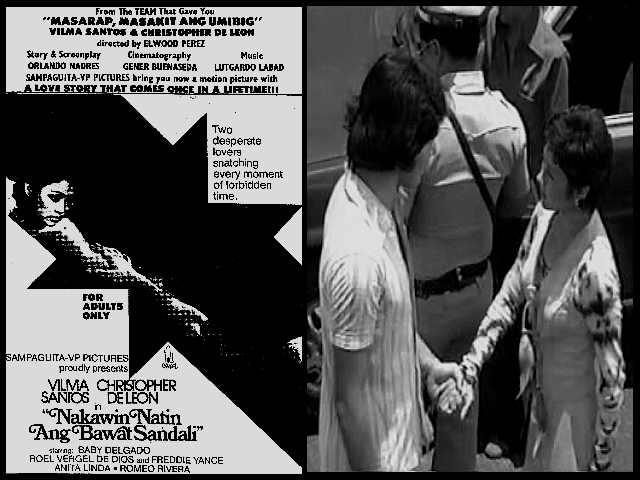

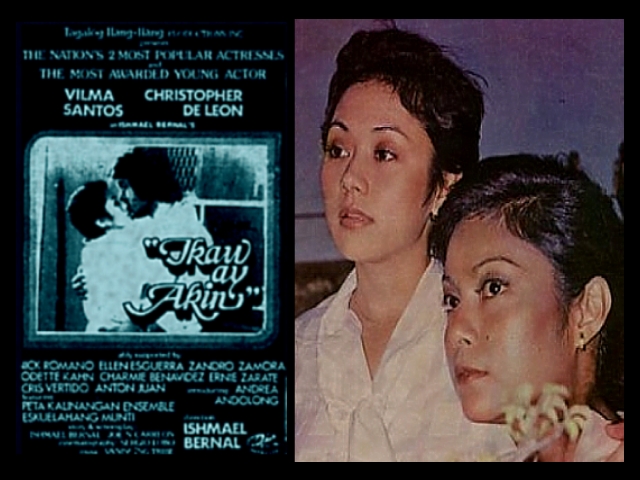
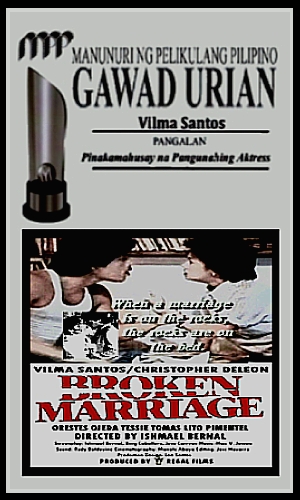
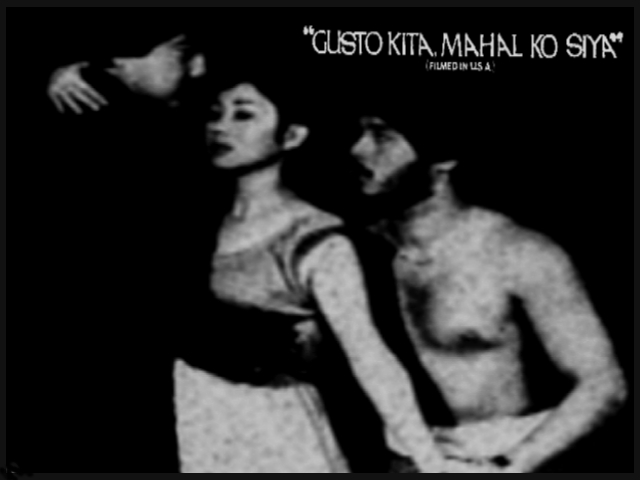
 Star For All Seasons
You must be logged in to post a comment.