Vilma Santos-Recto is a popular multi-awarded actress and politician in the Republic of the Philippines. *** She is known as "Queen of Philippine Movies," "Queenstar," "Grand Slam Queen," "Box Office Queen," and "Star for All Seasons." *** This website is mostly about her iconic film career.
“Dinaya n’yo ako! Saan n’yo dinala ang anak ko?…Hindi mo alam…Sinungaling!…Kasabwat ka ng ina mo! Alam ko matagal n’yo nang plano ito!…Dinaya n’yo ako! Mga Traydor Kayo! Traydor kayong lahat!…Wala akong pakialam! Ibalik mo sa akin si Jun Jun! Ibalik mo sa akin ang anak ko! Ibalik mo sa akin si Jun Jun! Ibalik mo sa akin…” – Lisa
This slideshow requires JavaScript.
Basic Information: Directed: Eddie Garcia; Story: Nerissa Cabral; Screenplay: Orlando Nadres; Cast: Vilma Santos, Christopher Deleon, Amy Austria, Jay Ilagan, Peral Bautista, Armida Siguion Reyna, Vic Silayan; Executive producer: Vic Del Rosario; Cinematography: Romy Vitug; Theme Songs: “Paano Ba Ang Mangarap?” performed by Basil Valdez
Plot Description: Despite their different social backgrounds, Lisa (Vilma Santos) and Benny (Jay Ilagan) have found their match in each other. Unfortunately, Benny dies before they could marry, and Lisa is left with no choice but to seek the help of Benny’s parents. But their arrogance is as lofty as their fortune, and to them, Lisa is nothing but an opportunist. Their only concern is their late son’s unborn child that Lisa is carrying in her womb. The only person who treats Liza with kindness is Eric (Christopher de Leon), Benny’s brother, who has secretly fallen in love with her… – Kabayan web-site
Pregnant Lissa’s (Vilma Santos) misery starts when her wealthy boyfriend Benny (Jay Ilagan) dies in a motorcycle accident. Impoverished, Lissa seeks security for her child with Benny’s malevolent mother Doña Francia (Armida Siguion-Reyna). Her one request is to stay at their house until she gives birth, then leave the infant to their care. Doña Francia abuses Lissa who works for her like a maid, leading to the death of Lissa’s mother. Benny’s brother Eric (Christopher De Leon) falls in love with Lissa and marries her to the indignation of Doña Francia who denies Lissa of her son. Lissa marries Eric not for love but to be with her son and eventually gets pregnant but has a miscarriage. Disheartened, Eric turns to her ex-girlfriend Maya (Amy Austria) with whom Eric goes on a world tour. Meanwhile, Doña Francia surreptitiously brings Lissa’s son to the U.S. – TFC Now (READ MORE)
Film Achievement: 1983 FAP Best Cinematography – Romeo Vitug; 1983 FAMAS Best Cinematography – Romeo Vitug; 1983 FAMAS Best Screenplay – Nerissa Cabral, Orlando Nadres; 1983 FAMAS Best Story – Nerissa Cabral; 1983 FAMAS Best Theme Song – George Canseco; 1983 FAMAS nomination Best Director – Eddie Garcia; 1983 FAMAS nomination Best Picture; 1983 FAMAS nomination Best Supporting Actress – Armida Siguion-Reyna
Film Reviews: Paano Ba Ang Mangarap? rates high for its slickness and production gloss, something that its producers, Viva Films, shouldn’t hope would last them more than two seasons. Eddie Garcia is a good director. He stages his scenes well, with a minimum of fuss and a modicum of winning faith in narrative primacy. Viva’s movies are well-structured, well-paced, and at their best show how the cosmopolitan Filipino behaves under romantic stress. But if you get past that level and dig into substance, you encounter that self-same compost pit wherein all the biodegradable scraps of melodrama you can find southeast of your favorite mother’s kitchen have been thrown.
Such is the case, to a most lamentable extreme, with Paano Ba ang Mangarap? It’s well-acted, well-done, tastefully correct in elementary mode. But it is strictly local comics fare, this well-wrought turn of circumstantial twist and escalating conflicts which all spell high drama. Viva makes films that are at best our answer to Hollywoodian slick, the stuff of which The Other Side of Midnight and Imitation of Life are prime generational examples. The Barbra Cartlands and Harold Robbinses turned celluloid; Mills and Boon on the big screen. Here you have two fine actors, Christopher de Leon and Vilma Santos, waxing once again with their special chemistry. Boyet is so good he can, by merely varying his inflection, go through a simple line like “Tama na..” three times and prove positively sensitive and believable each time. Subtlety of feeling is shared equally well by Vilma Santos. They are both aware of the value of underplaying their emotional scenes, so much so that in any confrontation with other thespians who play their role to the hilt, these two, Boyet and Vilma, come out on top through the simple process of undercutting. Vic Silayan and Perla Bautista are equally good in Paano Ba ang Mangarap?, but it is Moody Diaz who wins us over by applying a different tack in her “mayordoma” role, something that is usually played for laughs and other such effects by less gifted, or less imaginative, performers. Armida Siguion-Reyna is hampered by her termagant mother-in-law role, the catch-all character of cruelty spawned by all the soap opera dramas of Philippine comics and radio serials. And she plays this thoroughly unbelievable character, typecast as she already is, much to the hilt. That fantasy scene where she makes out like a satanic figure, though well-shot by Romy Vitug, is quite embarrassing for a picture like this, except of course we know that it is based on a comics serial where such fictive excesses may appear.
Here is where this otherwise finely-crafted film suffers. Viva knew it had to be faithful to the comics serial, so in effect opted for the surefire commercial draw at the expense of a truly artistic, credible film. I’m not saying that a character like Mrs. Monteverde does not, or cannot, exist. Perhaps one in a million. Filipino mothers can be as overbearing, prejudiced, unfeeling, and downright cruel. But to have a situation where an improbable character like her meets up with other improbable characters like the one Vilma and Christopher play, is stacking up the cards too much on the side of atrocious melodrama. Vilma is the martyr type who would subject herself to indignities just so her coming child can have a name and possibly better upbringing. Boyet is the unloved son who would ditch his sophisticated girlfriend (Amy Austria, who is still uncomfortable in such role, so she doesn’t fare too well here) for this martyr-type who’s been impregnated by his brother. Now, any of these characters may exist, if by a long chance. But to have them all together living under the same roof is stretching the bounds of possibility much too much. Furthermore, it could have been a better ending had the Viva bosses decided to stop at that scene where Vilma finds herself left alone on Christmas in the rich surroundings she has always dreamt of. Now only the household help can give her token solace by way of a collective gift. It is a poignant scene, stylistically done to proper effect with the usual Viva-film theme wafting through in support of silent montage. It could have been a good open ending, with overtones of irony laying themselves squarely on Vilma’s character. But no, of course one can’t disappoint the followers of the original comics serial. So the story goes on through further typical maneuverings until we’re given at least a semblance of a happy ending. A missed chance, I say. – “A missed chance” by Alfred A. Yuson, Philippines Daily Inquirer – 17 July 1983
A true blooded Vilmanian will not forget the time when a teaser (a very brief movie trailer – around 20 seconds) was shown to the theatres in the summer of 1983. It was Viva films’ “Paano Ba Ang Mangarap?” Another box office hit from Vilma Santos and Christopher DeLeon. The teaser (almost worth the whole movie ticket) was the scene where Lisa, played by Vilma discovered that her son (to Eric’s brother, Jay Ilagan) was gone courtesy of her evil rich mother-in-law (Armida Sigueon Reyna). Here’s the lines and the explosive acting of the Queen. The scene: After running around looking for the baby in all the rooms in second floor of of this huge mansion, Lisa confronted Eric who were stunned to find Lisa’s hysterics.
Lisa: Dinaya n’yo ako! Saan n’yo dinala ang anak ko?!!! Eric: Hindi ko alam! Lisa: Hindi mo alam…Sinungaling! Eric: Lisa, makinig ka muna… Lisa: Kasabwat ka ng ina mo! Alam ko matagal n’yo nang plano ito!Eric: Ano bang pinagsasabi mo? Lisa: Dinaya n’yo ako! Mga Traydor Kayo! Traydor kayong lahat! Eric: Lisa, huminahon ka baka mapaano ang bata! Lisa: Wala akong pakialam! Ibalik mo sa akin si Jun Jun! Ibalik mo sa akin ang anak ko! Ibalik mo sa akin si Jun Jun! Ibalik mo sa akin…. AHHHH (mahuhulog sa hagdanan)
Just this scene alone, Vilma should be rewarded that year’s best actress award! Bravo! RV
“…The movie showed Garcia’s strengths as a director—able to motivate his actors, frame sequences and scenes, and efficiently tell a story. Those qualities would be very evident in the 1980’s when Eddie Garcia directed the biggest blockbusters of Viva Films…But his best movies were domestic dramas that gripped audiences for their complex take on relationships and their tendencies toward tortured, twisted operations. Hallmarks of this genre were “Sinasamba Kita” in 1982 (Vilma Santos cruelly treating her half-sister), “Paano Ba ang Mangarap?” in 1983 (cruel mom-in-law seizing her grandkid from his mom, played by Santos), and “Magdusa Ka” in 1986 (an illegitimate daughter claims her birthright but finds life in her rich dad’s mansion a cruel torture). His last most significant movie as a director was obviously “Abakada Ina” (2001). In telling the story of an illiterate mother struggling for her children’s attention against her mother-in-law who’s a schoolteacher, Garcia seemed to go back to the standard traits of his best domestic dramas, with their take on the meanness and cruelty that seem to underlie filial relationships…” – Lito B. Zulueta (READ MORE)
“…Despite their different social backgrounds Lisa (Vilma Santos) and Benny (Jay Ilagan) have found their match in each other. Unfortunately Benny dies before they could marry and Liza is left with no choice but to seek the help of Benny’s parents. But hteir arrogance is as lofty as their fortune and to them Liza is nothing but an opportunist. Their only concern is their late son’s unborn child that Liza is carrying in her womb. The only person who treats Liza with kindness is Eric (Christopher de Leon) Benny’s brother who has secretly fallen in love with her…” – Mav Shack (READ MORE)
“Dahil Father’s Day ngayon, nais nating bigyan ng magandang tribute ang nakilala nang ama ng maraming artista ng iba’t ibang henerasyon na si Eddie Garcia. Hindi lang mahusay na bida at kontrabida si Eddie kundi mahusay rin siya bilang isang film director. Taong 1961 nang idirek ni Eddie ang kanyang unang pelikula titled “Karugtong Ng Kahapon” kunsaan bida sina Mario Montenegro, Rita Gomez, Ric Rodrigo at Marlene Dauden. Higit na 36 movies pa ang dinirek ni Eddie na iba-iba ang tema…Paano Ba Ang Mangarap? (1983), Tungkol ito kay Lisa (Vilma Santos) na nabuntis ni Benny (Jay llagan) pero noong mamatay ito sa isang aksidente, ang kapatid nitong si Eric (Christopher de Leon) ang nagpakasal kay Lisa para mabigyan ng pangalan ang bata. Ginawa niya ito kahit na may girlfriend siya na si Maya (Amy Austria). Hindi pabor sa simula pa lang ang ina nila Benny at Eric na si Senyora Francia (Armida Siguion-Reyna) at gumawa ito ng paraan para mailayo kay Lisa ang anak nitong si Jun-Jun. Nanalo ito ng limang FAMAS Awards: Best Picture, Best Story, Best Screenplay, Best Cinematography at Best Theme Song…” – Ruel Mendoza, Abante, 15 June 2019 (READ MORE)
“Kukunin ko ang bayad ng halik! May sukli ka pa!” – Anna
“Puta! Sige ituloy n’yo! Sabihin n’yo! Hindi lang naman kayo ang ang unang nagparatang sa akin ng ganyan. Puta! Puta! Puta! Putang-ina n’yong lahat! Putang-ina n’yong lahat! Sige! Sabihin n’yo! Isigaw n’yo! Kung sa inyo lang ay malinis ang aking konsensiya!” – Anna
This slideshow requires JavaScript.
Basic Information: Directed: Elwood Perez; Story: Pete Lacaba; Screenplay: Jose F. Lacaba, Iskho Lopez, Mauro Gia Samonte; Cast: Vilma Santos, Christopher De Leon, Anthony Castelo, Deborah Sun, Subas Herrero, Mila Ocampo, Ed Villapol; Executive producer: Marichu Maceda; Original Music: Lutgardo Labad; Cinematography: Johnny Araojo; Film Editing: Jose Tarnate; Production Design: Angel Tantoco; Sound: Gaudencio Barredo; Theme Songs: “Dati” performed by Anthony Castello; Production Co: MVP Pictures; Release Date: 29 May 1981 (Philippines) – IMDB
Plot Description: When Ana’s (Vilma Santos) father died they experience hardship. She decided to stop her schooling and work (selling beauty soaps on the street). Despite being poor, she decided not to ask help from her rich boyfriend Freddie Villaseñor (Christopher DeLeon). When the hardship reached its peak, she decided to join her friend, Bernadette Santos (Deborah Sun) as escort girls. There she met Bernard, a son of a rich clan, who courted her when Anna’s relationship with Freddy failed. As it turned out Anna was pregnant and despite the disapproval of Bernard’s rich father (Subas Herrero), they continued their relationship. The continuing harassment of Bernard’s father and his entourage resulted in Bernard being shot as one of the goons tried to rape Anna and was caught by Bernard. Anna was framed and Bernard rich father hired Freddy to prosecute Anna. The film climax with the prosecutor Freddy discovered the bullet that killed Bernard. This was when he decided to visit Ana’s family and met her son. The film ends with Ana being acquitted and Freddy discovered that Ana’s son was his son. – RV
Namatay ang tatay ni Ana (Vilma Santos) at dahil rito’y naghirap sila. Napilitan siyang magtinda ng sabon at tumigil sa pag-aaral. Sa kabila nito hindi siya humingi ng tulong sa katipan na si Freddie Villasenor (Christopher DeLeon). Dahil sa hirap ay napilitang pumasok si Ana sa isang escort service sa tulong ng kanyang kaibigang si Bernadette Santos (Deborah Sun). Nakilala ni Ana si Bernard San Diego (Antony Castelo) sa kanyang trabaho bilang escort girl. Sa gabing iyon nakita siya ng kapatid na babae ni Freddy. Nang yayain ni Freddy si Ana para magpakasal pumayag na ito at pumunta siya sa bahay ni Freddy para makilala ang pamilya ni Freddy. Hindi nila alam ay inimbitahan ng kapatid ni Freddy si Bernard San Diego. At sa hapag ng kainan ay binisto nito ang tunay na trabaho ni Ana. Umalis nang umiiyak si Ana at nagkagalit sila ni Freddy. Pinuntahan ni Bernard si Ana para humingi ng paunmanhin ngunit naabutan sila ni Freddy at nag-away sila ni Bernard. Inakala ni Freddy na talagang may relasyon si Bernard at Ana kung kaya iniwanan niya ito. Nagbalik si Ana sa kanyang trabaho. Nagkaroon ng secret admirer ito. Yung pala ito ay si Bernard. Nalaman rin ni Ana na buntis siya at ang ama ng dinadala niya ay si Freddy. Inalok ni Bernard si Ana ng kasal at pumayag naman ito sa kabila ng pagtutol ng kanyang mayamang ama. Lumaki ang bata at apat na taon na ito nang magdesisyon ang ama ni Bernard na tigilan na ang pagsasama ng dalawa. Inalok si Ana ng malaking halaga ngunit tumutol ito. Nang umalis ang ama ni Bernard ay pinaiwan nito ang isa sa kanyang mga tauhan para gahasain si Ana. Dumating si Bernard at nagaway sila ng tauhan ng kanyang ama. Sa kaguluhan ay nabaril ng tauhan ng kanyang ama si Bernard mismo. Sinet-up ng ama ni Bernard si Ana. Pinakulong at kinuhang abogado si Freddy. Sa hukuman ay nakuhang magduda ni Freddy sa dating katipan. Nagpunta ito sa bahay ng ina ni Ana upang kausapin ang batang anak ni Ana. Natuklasan ni Freddy ang tutuong nangyari at ang testigo ay ang anak ni Ana. Sa closing ng kaso ay inihayag ni Freddy na walang kasalanan si Ana at ang pumatay kay Bernard ay ang tauhan ng sarili nitong ama. Napawalang sala si Ana at nalaman ni Freddy na ang bata’y ang sarili niyang anak. – RV
Film Achievement: 1981 FAMAS Best Actress – Vilma Santos; 1981 FAMAS Best Musical Score – Lutgardo Labad; 1981 FAMAS Best Theme Song – Louie Ocampo; 1981 FAMAS Nomination Best Actor – Christopher De Leon; 1981 FAMAS Nomination Best Director – Elwood Perez; 1981 FAMAS Nomination Best Picture; 1981 FAMAS Nomination Best Supporting Actor – Anthony Castelo; 1981 FAMAS Nomination Best Supporting Actress – Deborah Sun
Film Review: Dalawangpu’t Anim na taon na ang nakakalipas nang una nating napanood ang pelikulang Pakawalan Mo Ako. Tumabo ito sa takilya at nagbunga ng pagkapanalo ni Ate Vi ng Best Actress mula sa Famas para sa taong ito. Prinudyus ng Sampaguita Pictures, ang “Pakawalan Mo Ako” ay isa sa mga pruweba na nasa ikataas na puwesto si Vilma Santos nang bagong dekada otsenta. Mula umpisa hanggang sa huli’y umiikot ang istorya sa karakter ni Vilma bilang si Ana, isang escort girl. Markado ang papel ni Vilma at makikita ito sa mga eksena sa kulungan at hukuman. Ang Pakawalan Mo Ako ay mula sa panulat ni Pete Lacaba at iskrinplay nina Pete Lacaba, Mao Gia Samonte at Isko Lopez. Kung ikukumpara sa mga ibang pelikula ni Elwood Perez mas pulido at makatotohanan ang mga eksena’t dialouge ng pelikula. Tulad ng konprontahin nga ma ni Bernard si Ana sinabi nito na: “Puta, Puta! Puta! Hindi lang naman kayo ang unang nagparatang sa akin ng ganyan! Puta! Puta! Putang Ina n’yong lahat…” At nang unang dalhin ni Bernard si Ana sa bahay nito at pagtangkaang gahasain, pumiglas si Ana at sabay kuha sa pera at sabay sabing: “kukunin ko ang bayad sa halik may sukli ka pa!” At siyempre ang eksena sa hukom kung saan paulit ulit niyang sinasabi ang salitang: “Sinungaling!…” Ang musika ni Lutgardo Labad ay minsan nakakaabala sa tunay na eksena ngunit angkop na angkop ang theme song ng pelikula, ang “Dati” na kinanta mismo ni Antony Castelo. Merong mahahabang linya si Christopher DeLeon sa bandang huli at nakuha naman niyang bigyan ng buhay ang papel niya bilang abogado ng taga-usig kahit na parang pilit ang pagpapalit niya ng panig para sa tagapagtanggol sa bandang huli, sa kanyang closing remarks. Alam niya marahil na talagang pelikula ito ni Ate Vi. Mahusay rin ang pagganap ni Antony Castelo bilang isang matigas na ulong anak ng isang mayaman. Sa papel na ina ni Ana, nakaka-distract ang hindi tunay na boses ni Mila Ocampo. Bilang ama ni Bernard San Diego, very one-dimensional ang papel ni Subas Herrero. Ang pinakanakakatuwang papel ay ang papel na kaibigan ni Ana na ginampanan ni Deborah Sun. Meron siyan eksena sa hukuman kung saan tumistigo siya at natural na natural ang pagkababaeng bakla niya. Mabilis ang pacing ng pelikula at walang mahusay ang pagkakaedit nito. Hindi ako nagtaka kung bakit nanalo si Ate Vi para sa pelikulang ito mula sa Famas. Ito rin ang bale hudyat ng pagsibol ng bagong Vilma Santos pagpasok ng dekada otsenta dahil sa sumunod na taon ay nagkasunod sunod na ang parangal sa pagarte ni Ate Vi mula sa iba’t ibang award giving bodies. – RV
“…Elwood Perez and Vilma Santos collaborated in seven films. The first one was the trilogy that he co-directed with two other director, Borlaza and Gosiengfiao (these three are the most underrated and under appreciated directors in the Philippines), the remake of Mars Ravelo comic super hero, Darna in Lipad Darna Lipad. The film was a record-breaking hit Box-office Film. They follow this up with a more mature projects as Vilma started to switched her image from sweet to a mature/versatile actress, pairing her with Christopher DeLeon in five films starting with Masarap Masakit Ang Umibig in 1977. The Perez-Santos-DeLeon team produced several blockbuster hits and also gave Vilma two FAMAS best actress awards. Both wins contributed to her elevation to the FAMAS’ highest honour, the “Hall of Fame” award she received in 1989. The wins were for Pakawalan Mo Ako (1979) and Ibulong Mo Sa Diyos (1988)…” – RV (READ MORE)
“…The second memorable film experience for me was during early 80s where I saw the free sneak preview of “Pakawalan Mo Ako” at Gotesco Theatre near University of the East. I was one of the lucky ones who managed to get in. My college mates weren’t. They got stocked in the pandemonium outside. I was worried sick as I took the long escalator and saw them being crashed by the crowd. The security guards have to closed the gate of the lobby. Fans became so restless and broke the glass windows (where they displayed posters and still photos) . Inside, It was crowded, hot and wild. We were seeing a more mature Vilma Santos. The moviegoers reacts to every scenes from the very beginning up to the very end (the courtroom scene where Vilma cried and swear, “Liars! Liars! You’re all Lying!”)…” – RV (READ MORE)
“…Natatangi ang pelikulang Pakawalan Mo Ako (MVP Pictures, 1981) dahil sa matagumpay nitong pagtatangkang ilahad ang proseso tungkol sa pag-ibig at pagbabahagi ng sarili nang buo ang pagkatao. Nilinaw ng pelikula ang mga personal at pang-ekonomiyang salik na naghatid sa pangunahing tauhan tungo sa pagpuputa at inilalantad ang bunga nito gaya ng madamdaming pagsasadula ni Vilma Santos. Nang muli silang magkita ng kasintahan, ibang babae na ang kanyang nakatagpo, mas may tiwala sa sarili at mulat na sa kalakaran ng mundo. Nakakaantig ang transpormasyon ng kanyang karakter mula biktima ng nasawing pag-ibig at di-makalingang propesyon tungo sa pagbabago at paninindigan ng kanyang pagiging babae. Mapangumbinsi rin ang pagganap ni Christopher de Leon dahil sa kanyang sensitibong pagpasok sa katauhan ng isang abogadong makiling sa sistema ng batas. Sa unang tingin, tila makababae ang punto de bista ng Pakawalan Mo Ako dahil sa paglalahad ng babae bilang biktima pa rin ng ispontanyong reaksiyon ni Bernard, ang lalaking nagnanasa sa kanyang katawan. Subalit madulas ang daloy ng iskrip nina Pete Lacaba, Mao Gia Samonte at Iskho Lopez, konsistent ang disenyong biswal at sinematograpiya. Malinis ang editing at akmang-akma ang musika. Ngunit habang hinihimay ang naratibo, unti-unting natuklasan ang melodramatikong proposisyong ipinapakain ng pelikula. Isang proposisyong taliwas sa pagnanasang patuloy na makibaka, magmahal at mabuhay…” – Jojo Devera, Sari-saring Sineng Pinoy (READ MORE)
Deborah Sun – “…Bonggang-bongga ang papel ni Deborah Sun sa “Pakawalan Mo Ako.” Even her co-stars here, Vilma Santos, Christopher de Leon, and Anthony Castelo joked na madalas silang maagawan ng eksena ni Deborah. Tila nga lalong tumataas ang career ni Gigi (her monicker in real life). Bukod sa “Pakawalan,” lumabas din siya sa “Rosang Tatak” at sa highly successful na first directorial job ni Bembol Roco, ang “Asal Hayop…” – Artista Magazine, 1981 (READ MORE)
“…One of the pioneers of the indie scene in the 1970s, Perez eventually became one of most bankable directors of that same golden era which spawned the biggest hits of acting superstars Nora Aunor (“Mahal Mo, Mahal Ko,” “Till We Meet Again”) and Vilma Santos (“Pakawalan Mo Ako,” “Ibulong Mo sa Diyos”). “Masarap, Masakit ang Umibig” was screened in the Asia-Pacific Film Fest in Taiwan in 1978 and the Asean Film Fest in Australia in 1981…” – Bayani San Diego Jr., Philippine Daily Inquirer, 11/01/2009
Film Achievement: The single from the movie, “Yakap” was a hit single of film’s actor, Latin singer, Junior. The song has been covered by several local singers the more recent was by Charice.
Film Review: “…Junior – Now 66 years old (can you believe that?), he was Vilma Santos’ leading man in Good Morning Sunshine in 1980. Born Antonio Morales Barretto, he was born in Manila, but moved to Spain with his family when he was 15. He was already a popular singer in Spain when he tried Pinoy showbiz. After doing a series of local movies (another one of his films was Disco Madhouse with Lorna Tolentino and Rio Locsin) and record albums (Yakap is still memorable to me), he went back to Spain (his wife and kids were all living there) where he continued singing. Eventually, he managed the showbiz career of his wife, Rocio Durcal, but she died of cancer in 2006…” – Butch Francisco (READ MORE)
“…Ate Vi thus became the chief opponent of Nora Aunor as the movie queen of the 1970s. Her edge is that she also became the queen of hit disco movies filled with singing and dancing, like “Swing It, Baby,” “Disco Fever,” “Rock Baby Rock,” “Let’s Do the Salsa,” and the movie she did with Latin idol Junior, “Good Morning Sunshine…” – Mario Bautista (READ MORE)
“…I credit Ronnie Henares for discovering me,” said Geleen. “He saw me in a fashion show in Hyatt in 1978. John Gaddi, my first dancing partner, and I were modeling na pa-sayaw-sayaw. I guess natuwa sa akin si Ronnie so he got me into Penthouse 7 hosted by Archie Lacson…I was Vilma’s choreographer for her movies (Disco Fever, Good Morning Sunshine, etc.) and at the same time I was also choreographing for Nora on her show Superstar. When Vilma had her own TV show, she got me as choreographer but I stayed with her for only one month. The network bosses told me that I shouldn’t be handling two superstars at the same time. Nora was on Channel 9 and Vilma was on Channel 13. Because of loyalty, I chose to stay with Nora kasi mas nauna naman ako sa kanya. I was with her for four years na at that time. But first, I talked to Vilma who is a ninang of my son Miggy. I left Vilma with a heavy heart…” – Ricardo F. Lo (READ MORE)
“…Every aspect of a Bernal film may not always be successfully realized, but his weakness is outshine by his strengths. In every film, he seems to be ready to try something new, whether it be a theme, conflict, character or scene. He is also out of the few major local directors to have covered the broadest range of film genres and theme with varying levels of success, from the historical drama, like the Bonifacio episode in the unreleased multi-million peso omnibus Lahing Pilipino (1976), to the disco musical Good Morning Sunshine (1980) and the personal, experimental films Nunal sa Tubig and Himala…” – Mario A. Hernando (READ MORE)
Plot Description: Ayaw kong maging querida is a story about three people caught in a whirlwind romance bound in the norms of society class. Will love conquer all or will wealth and power dictate their destinies? – Kabayan Central (READ MORE)
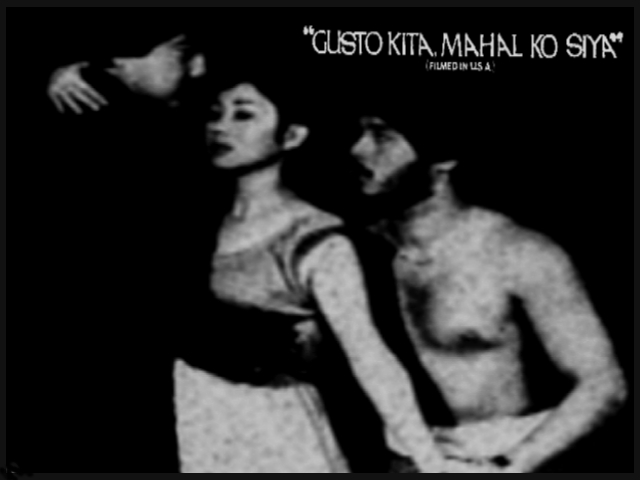
Film Achievement: Total Number of films with Vilma Santos – 11 (Nagaapoy na Damdamin, Pulot-Gata Puwede Kaya?, Dalawang Pugad Isang Ibon, Pinagbuklod ng Pag-ibig, Bakit Kailangan Kita, Pag-ibig Ko Sa Iyo Lang Ibibigay, Swing it Baby, Gusto Kita Mahal Ko Siya, Ayaw Kong Maging Querida, Dugo At Pag-ibig Sa Kapirasong Lupa, Happy Days Are Here Again) – RV (READ MORE)
Film Review: “…Amalia Fuentes’ AM Productions made movies filmed abroad: Sta. Teresa de Avila and those light dramas with Liezl that were shot all over Europe and in the united States. This trend in the movies stopped because of the travel ban during the martial law years, but returned a decade later in the late ‘70s up to the early ‘80s. Vilma Santos did a lot of these films: Pinay American Style, Romansa, and Ayaw Kong Maging Querida in the US and Miss X in the Netherlands…” – Butch Francisco (READ MORE)
“…I was so tense bago kami nagkaharap sa shooting. We worked na together about 30 years ago in ‘Ayaw Kong Maging Kerida’ with Romeo Vasquez, shot in the U.S. Ngayon lang kami uli nagkaharap and I wasn’t sure if she knew me. Pero napakabait niya. Suportahan kami sa aming eksena…” – Showbiz-Portal (READ MORE)
“Sometime in the mid 70s, matinee idol Romeo Vasquez returned to the movie scene after a long absence, his movie career in limbo after his failed marriage with popular actress Amalia Fuentes. His teamup with Vilma Santos somehow rekindled and revived his career. Their first movie together, Nag-aapoy na Damdamin in 1976 turned out to be a big hit. Despite their age gap, reel and real life sweetheart, Romeo, 34 and Vilma, 23, soon became the hottest love team, doing one hit movies after another…” – Video 48 (READ MORE)
“…Romeo Vasquez is an oddity in Vilma’s life. Hindi akalain ng lahat na ang isang notorious playboy and balikbayan actor would capture the heart of the then elusive Ate Vi. Nagkaroon sila ng affair which lasted for more than a year. Kilala si Bobby sa pagiging bohemyo kaya naman walang kakilala si Ate Vi na bumoto sa aktor. Ate Vi was love struck at talagang na head-over heels in love. Nagsimula ang kanilang affair sa set ng kanilang pelikulang “Nag-aapoy na Damdamin”. True to this title, nagliyab silang dalawa at tunay ngang nag-apoy ang kanilang damdamin. May plano pa nga sila ni Bobby na magpakasal sa Europe. Talagang Ate Vi was ready to give up her life as an actress and would settle with the actor abroad. And with herb relationship with Bobby, nag-surface ang bagong Vilma Santos.Ate Vi realized that she cann’t sacrifice everything for love. Nagising siya sa katotohanan at nagkamali kung kaya nagdesisyon siyang kumalas sa bohemyong aktor…” – Willie Fernandez (READ MORE)
“…But it was with handsome actor Romeo Vasquez that Vilma Santos had her most controversial relationship. Romeo was the former husband of Philippine movie queen Amalia Fuentes. He and Vilma first paired in the movie Nag-aapoy na Damdamin (1976). It was also during this year that they became a couple. They made several movies together, all of which did well at the box-office. Vi and Bobby (Romeo’s nickname) became the most-talked about reel and real love team at the time. The relationship was always on the pages of showbiz magazines and tabloid entertainment section pages because of the intrigues and the personalities who got involved with them…” – Rommel R. Llanes (READ MORE)
February 20th – “…Last Jan. 31, the Mowelfund, PMPPA, Film Academy of the Philippines and IMPIDAP threw a cocktail party at the Luzon room of the Philippine Plaza ballroom for the MIFF guests and delegates. Manny de Leon arrived promptly with Tierra Alexandra at 5:30 p.m. but decided to wait at the lobby when he learned there wasn’t anyone yet in the hall except the waiters. The American vice consul arrived next and then Fred Marshall, Hongkong-based correspondent who’s a fixture at Asian film festivals. Aling Miling Blas looked pleased as punch during the affair. She said German buyer bought her Hell Train for $15,000 which was directed by Cirio Santiago last year with American actors and actresses in the cast. She said she nixed another offer of $35,000 for the European territory rights to the film except Germany. Atty. Espiridion Laxa said she could get a higher price for it. Atty. Laxa’s Vilma Santos stateside picture, Ayaw Kong Maging Querida, was already in the can and booked for Feb. 20, he said…Atty. Laxa reminded everybody that the First Lady was expecting to see producers and movie personalities at her Fort Santiago affair at eight that same evening. The coffee shop of the Philippine Plaza was a favorite spot of the movie crowd during the MIFF. After the coctail party, we saw Eddie Garcia in coat and tie dining with attractive girl at the coffee shop. Tony Ferrer later came in with Lando Navarette, Amay Bisaya and several other companions. Then Armida Siguion-Reyna walked in. We were sipping coffee at a table with Manay Ichu Maceda, Jesse Ejercito, Manny Nuqui, Nick Lizaso and Rolfie Velasco when Celso Ad Castillo joined us. The kid seem to have regained his confidence with the success of Virgin People.” – Danny Villanueva, Movie Flash Magazine, 24 February 1983 (READ MORE)
Basic Information: Directed: Marilou Diaz-Abaya; Story: William C. Leary; Screenplay: Ricardo Lee; Cast: Vilma Santos, Rez Cortez, Rolando Tinio, Zeny Zabala, Cecille Castillo, Chanda Romero, Len Santos, Raquel Villavicencio, Johnny Delgado, Phillip Salvador, Caridad Sanchez, Maria Isabel Lopez, Dindo Fernando, Dexter Doria, Mary Walter, Vangie Labalan, Harlene Bautista; Executive producer: Vic del Rosario Jr.; Original Music: Willy Cruz; Cinematography: Manolo Abaya; Film Editing: Ike Jarlego Jr.; Production Design: Fiel Zabat; Art Direction: Charlie Arceo, Melchor Defensor, Jay Lozada; Sound: Vic Macamay
Plot Description: A woman hardened by the underworld, Elena Duavit falls in love with Roy, a notorious gang leader. Elena is raped by members of a rival gang who are killed in a gun battle with the police. Implicated, she goes into hiding with her boyfriend but is captured, resulting to a death sentence for Baby Tsina. This tested team-up of award-winning performers Vilma Santos and Philip Salvador gives credence to this true story that hit the headlines in the 60’s. From the educated direction of Marilou Diaz-Abaya and the cinematography by Manolo Abaya, the story is by perennial contest awardee Ricky Lee. – Pinoy Torrentz (READ MORE)
Film Achievement: 1984 FAP: Best Musical Score – Willy Cruz; Best Production Design – Fiel Zabat; 1984 FAMAS: Best Actor Nomination – Phillip Salvador; Best Supporting Actor Nomination – Dindo Fernando; Best Supporting Actress Nomination – Caridad Sanchez; 1984 Gawad Urian: Best Actor Nomination – Phillip Salvador; Best Cinematography Nomination – Manolo Abaya; Best Director Nomination – Marilou Diaz-Abaya; Best Editing Nomination – Ike Jarlego Jr.; Best Music Nomination – Willy Cruz; Best Production Design Nomination – Fiel Zabat; Best Sound Nomination – Vic Macamay; Best Supporting Actor Nomination – Dindo Fernando; Best Supporting Actor Nomination – Len Santos
Film Reviews: “…Ang istoryang ito ay matagal nang ikinukuwento sa akin ni William. Wala pa akong asawa, pangarap na ni William na magawa ang pelikula. He had the story at hand. Siya talaga ang nag-negotiate para makuha ang istorya. Noong una nga raw, ayaw pumayag ni Baby Tsina at ng kanyang asawa dahil gusto na nilang kalimutan yun. Eh, si William alam ko yan kung magpilit, tsaka personal kasi niyang kilala si Baby Tsina, nakuha rin ang istorya,” salaysay ni Vilma…”Noong una kong mabasa ang script, ayoko sanang maniwala na nangyari talaga yun. Masyadong cinematic, eh. Para bang sa pelikula at sa komiks lang nangyayari. Until the day nga that I met the real Baby Tsina. Nang siya na ang makuwento sa akin ng naging buhay niya, lalo na after the crime at sa loob Correctional, saka ko lang nalaman na ang nakalagay sa script ay kulang pa pala. Mas matindi ang istorya niya, pero hindi na maaring isamang lahat sa pelikula. Baka namang masyadong humaba eh. Malakas ang istorya. I think the story alone will sell the movie. Lalo na kung iisiping isa itong celebrated case at nasundan ng mga tao noon sa mga diyaryo. Front page stories pa raw lagi iyang si Baby Tsina noon eh…” – Ariel Francisco (READ MORE)
“…You know, I did a movie before, Baby Tsina, but I wasn’t really Chinese there. In Mano Po 3, I play Lilia Chong-Yang, a socially conscious anti-crime crusader and I get to know more about Chinese culture. We were even taught how to speak Fookien Chinese by a private tutor. Sa dubbing, the coach was there to make sure we’re perfect with our pronunciation of all our Chinese lines…” – Mario E. Bautista (READ MORE)
“…Marilou Diaz-Abaya will forever live with her magnum opuses like Brutal, Moral, Karnal, Muro Ami, Baby Tsina, Sa Pusod ng Dagat, Bagong Buwan and the multi-awarded period masterpiece Jose Rizal released in the ’90s and still gets screened to this day in schools and historical festivals even abroad…” – Ricardo F. Lo (READ MORE)
“…What Marc found out only recently was that none of the original copies of the films Marilou directed in the 1980s had been preserved. “While movies like ‘Moral’ (1982) and ‘Baby Tsina’ (1984) were all on VCDs, their original reels are nowhere to be found. It’s frustrating. Archiving is really bad here in the Philippines,” he said. Marilou’s debut film, “Tanikala,” was released in 1980…” – Marinel R. Cruz, Philippine Daily Inquirer, August 30, 2012 (READ MORE)
Like A Mother – “…Batangas Governor Vilma Santos, who was directed by Diaz-Abaya in one of her landmark films, said, “Direk Marilou was like a mother to me, especially on the set of ‘Baby Tsina.’ I remember that she would always bring for the cast members pandesal and Spanish sardines, which we ate before shooting. “I love her and her husband, Direk Manolo, who I always requested to be my cinematographer in all of my Eskinol commercials before. “The last time I saw Direk Marilou was at the wake of actor Johnny Delgado. She was already sick then. She was a fighter. She told me, “kaya ko ‘to! I pray for her family and for the eternal repose of her soul…” – Philippine Daily Inquirer, Oct 09 2012 (READ MORE)
“…All the performances in Baby Tsina leave vivid portraits in the mind. Under Abaya’s direction, the actors and actresses do not seem to act, rather we seem to discover them as human beings whom the camera has espied. Vilma Santos projects a lusty but touching portrait of Baby, a victim who greedily looks forward to deliverance from the night-to-night struggle for customers, thrashing about wildly when her savior is killed initiating her into an even more debasing condition. Phillip Salvador weaves in and out of the story capturing the sinister charm of the grubby but good-looking creatures of Manila’s underbelly. Dindo Fernando’s Jorge engages our attention in a portrayal that is by turns comic, caustic and warm indicating an actor governed by intelligence and respect for the dignity of the character he is playing. As Baby’s mother Nena, Caridad Sanchez radiates a tenseness that effectively projects her determination to keep her dignity against all odds. With Abaya as the controlling intelligence behind husband Manolo Abaya’s camera, Fiel Zabat’s sharp eye for the authentic look and detail of the period, the shanties and apartments, the restaurants and the dives, the streets and the alleyways and the teeming crowds that come and go, these are familiar images in Philippine art and life that in Baby Tsina appear more real and feel more real…” – Jojo Devera, Sari-Saring Sineng Pinoy (READ MORE)
“…While there is a palpable sense of femininity in these movies, Abaya abstains from sanctimonious pageantry and puts things in perspective. She raises concerns of women and the violence committed to them, but she also recognizes their shortcomings and susceptibility to moral hypnosis, their fates determined by their resolve or lack thereof. The world is unfair to women, but so is to men.Karnal, for instance, has a strong and suffocating depiction of patriarchy, the overbearing father played by Vic Silayan controlling not just the women of the house but also the men. It’s a horrifying picture of a family maddened by circumstances, and the woman whose importance in the story is emphasized leaves a disturbing impression of subsistence, coming out alive in the end but bereft of spirit. By contrast, Moral is a lighter but sharper piece, one whose observations on the struggles of present-day women, lost in the mazes they create for themselves, are relevant up to now. WhereasBrutal and Alyas Baby Tsina dwell on the criminal and psychological, overplaying hopelessness and suffering, Moral rims its characters by emphasizing their faulty nature, placing them in more realistic situations but with less defined solutions to their problems…” – Richard Bolisay, Lilok Pelikula, Oct 23 2012 (READ MORE)
Grueling Finale – “…Apolinario’s second feature can be regarded as an affirmation of heritage, that of Philippine cinema. Beholding the film’s exposition of life in the Cebu Provincial Detention and Rehabilitation Center, one is reminded that this film operates in Daboy (Rudy Fernandez) territory — wherein the outsider holds his individuality and his dignity amid the dehumanizing confines of prison, and its extension that is Philippine society. Yet for all its filth and insidious atmosphere of violence, there is nothing in this picture that is as harrowing as the prison life one sees in Mario O’Hara’s “Bulaklak sa City Jail,” or in the grueling finale of Marilou Diaz Abaya’s “Alyas Baby Tsina.” The solitary confinement endured, in one interlude, by Dingdong Dantes, Patrick Bergin and Joey Paras could have echoed the grimy horror of such detention as portrayed in “Baby Tsina,” to which its heroine (Vilma Santos) responds with a quiet, defiant fortitude — yet another striking facet of her long career with its comprehensive portrayal of the modern Filipina. Dingdong Dantes and Patrick Bergin, the renowned Irish actor, convey that Vilmanian, shall we say, serenity, amid their harsh confines — which, however, doesn’t look too harsh in this film, when one beholds that beautiful frame of a cockroach in its slow crawl on the dim prison floor…” – Ricky S. Torre, Rappler, 13 June 2013 (READ MORE)
Porcelain Skin – “…This is based on the story of Evelyn Duave, a woman who got sucked into a life of crime and eventually got jailed for murder. The Star For All Seasons plays the woman who was dubbed, “Baby Tsina” (or “Baby China” in court documents), simply because she looked Chinese. Other than that, there are no other Chinese references in the movie. Although, we have to say that Santos can easily pass for Chinese with her petite frame, porcelain skin, and delicate features. However, the movie is anything but delicate—what with the violent content…” – Spot, 23 Jan 2012 (READ MORE)
Production Values – “…Abaya and Lee’s next project, Alyas Baby Tsina/Alias Baby China (1984) was also based on a true legal story, that of Evelyn Duave Ortega, aka Baby Tsina. (She was called this alias in court documents because she looked Chinese. Otherwise there are no references to anything Chinese in her story or the film.) Duave was found guilty in 1971 of murder, and several appeals while on death row culminated in a Supreme Court decision seven years later that declared her innocent and released her from prison. A producer for major production company Viva had purchased the story rights and long wanted to turn the Duave story into an award-winning vehicle for superstar Vilma Santos. Abaya signed on and brought in Lee to adapt the story for film. As it turned out, as happens so often, the film strayed so far from the actual story, the producers might as well have spared themselves from paying story rights in the first place. The documents record that an Alfredo Bocaling was killed one night in a dark street by stabbing and hitting with blunt instruments. Accused of the killing were Baby China, a call girl, and her three male friends. She had allegedly told the men that Bocaling and his friend raped and robbed her and she wanted revenge. Their guilt by murder, adjudged by the Courts of First Instance and Appeal because of the consistency and corroborative nature of the three men’s confessions, were overturned by the Supreme Court due mainly to the inadmissibility of their extra-judicial confessions. The Supreme Court commuted their verdict from murder to homicide and their sentence from death penalty to reclusion perpetua. Baby herself, who did not confess, was found innocent after the extra-judicial confessions of the three men were rejected. One of course should never expect fidelity to an original story source, only a sense of integrity and believability in the adaptation. Did this adaptation succeed?In the struggle to fashion a crowd-pleasing story with an overarching social theme and an award-worthy role for its lead star, the film invented a number of characters and devices not in the actual story.
Baby’s lover Roy (Philip Salvador), with whom she plans to start a new life in America is fictional, and so is Roy’s death by shooting in a chase by rival gang members. In the real story all the principals were apprehended by the police while they were still in hiding. The Bocaling character has morphed into the film’s Toto (Johnny Delgado), a leader of an extortion syndicate that visits a sweeping wave of mass killings and rapes on Baby Tsina and her prostitute friends. The homicide scene of the real Bocaling is pumped up here into a chase and mass confrontation between gun-wielding gangs and the police. Neither did the real Baby (and Roy) seek refuge at the home of a lawyer friend, Jorge (played as an abugadong pulpol/cheap lawyer with sly wit by Dindo Fernando) where they debate the difference between what is law and what is right. When the fictional Baby is eventually committed to prison, she takes on a noble new role as resolute and impassioned advocate of more humane prison treatment for women, at one point making a speech before the whole prison population that spells out her message: “We are not robots that can be switched on and off! … We should be treated like human beings!” The film was a serious attempt to produce a work with significant social import that would be commercially entertaining all at the same time. But shoehorning the original into overused plotlines involving gang rivalries and populist heroine versus the system, add to this the blatant underlining of the “social message,” and credibility is lost, provoking instead a wearying wariness throughout the film. What succeeds in Baby Tsina is the care in production values that became such a prominent hallmark of Abaya’s works. It instilled trust in her, in that whether one liked her latest film or not, the keen attention to production design, lighting and photography at least showed that here was someone who took her craft and her audience seriously. With Baby Tsina, it is this gleaming surface, arising specially from Zabat’s production design and Manolo’s mood-infused lighting, that hints at authenticity and conviction that the narrative glaringly lacks…” – Asian Cine Vision (READ MORE)
Re-shoot of Alyas Baby Tsina – “…Ang payat mo” ang bungad naming bati sa kanya. “Kailangan kasi,” was her reply. “Medyo tumaba na nga ako ngayon. nahinto kasi ang shooting namin ng ilang days. You should’ve seen me a week ako. mas payat ako noon.” But it become her. Mas mukha siyang teenager. She sure that by now, alam na niyang kailangang lang magpapayat ni Vilma Santos para sa kanyang pelikulang ginagawa ngayon, ang Alyas Baby Tsina. Since she is in between pictures, kakaunti ang makikitang artikulo ngayon sa kanya. That’s why we have to write this progress report on her latest films. We asked her kung malapit nang matapos ang Baby Tsina. “Malayo pa eh,”she replied. “Ang dami kasi naming re-shoot. Sabi ni Marilou (Abaya, her director), May nasira raw ang ilang negatibo kaya’t kailangang ulitin. At last week of September, tapos na siguro. Did she like the movie? “Naku, malaking pelikula.”sambit niya. “Three acts kasi ‘yon. Inuna naming i-shoot ‘yung third act nang nakakulong na si Baby sa Correctional. Tapos we went back to perion noong prostiture pa lang siya. Ang hirap maging prostitute! Ngayon, we’re on the second act, love triangle kami nina Dindo Fernando at Philip Salvador…” – Mario E. Bautista, Movie Flash, 1984
“…Isa pang kasaysayan hango sa tunay na buhay, ang pelikulang ito ni Marilou Abaya. Bawat tagpo ay pinalabukan ng mabusising sinematograpiya at detalyadong disenyong pampelikula…” – Star Awards 1984
“…Okay, so you’re fertile and I’m barren…pero sa mga pangyayari…para kang karinderyang bukas sa lahat ng gustong kumain!” – Fina
This slideshow requires JavaScript.
Basic Information: Directed: Eddie Garcia; Story: Nerissa Cabral; Screenplay: Racquel Villavicencio; Cast: Vilma Santos, Dina Bonnevie, Edu Manzano, Cherie Gil, Laurice Guillen, Pepito Rodriguez; Executive producer: Vic del Rosario Jr.; Original Music: George Canseco; Cinematography: Joe Batac Jr.; Film Editing: Ike Jerlego Jr.; Production Design: Peter Perlas; Theme Songs: “Hiram” Composed by George Canseco Performed by Zsa Zsa Padilla
Plot Description: A man whose wife is unable to bear him a child seeks out a professional babymaker and is then forced to choose between his wife or a family with children.
On the outside, it looks like a marriage made in heaven. But inside the thick walls of what they call home, theirs is a relationship waiting to crumble. They have been wanting a child for so long, but the wife does not have the capacity to bear a child. And when her husband cannot take it any longer, he decides to end his misery once and for all. – IMDB
The story is about an infertile couple who never had a child of their own. The husband, frustrated by his wife’s infertility, hired somebody who was willing to carry his child. The hired woman got pregnant but she fell in love with the child’s father. The husband falsely adopted the child, hiding the fact from his wife that the child was his own. All the attention the husband gave to the child drove his wife to jealousy. To complicate things, the husband eventually had a secret affair with the child’s mother, and this affair produced another baby. The mistress left the newborn baby at the footsteps of the husband’s house. The wife then took care of the baby, and the children grew without their adoptive mother knowing that the two kids were fruits of her husband’s secret love affair. – Wikipilipinas
Childless couple Fina (Vilma Santos) and Rodel (Edu Manzano) seek medical help which reveals that Fina has an immature uterus, a condition she has known before their marriage but has kept from Rodel. Rodel’s friends suggest that he adopt his own child with Ditas (Dina Bonnevie), a baby maker they introduce to Rodel. The arrangement is very professional but Fina overhears through a telephone extension that Ditas has given birth. Fina is indignant in thinking that Rodel has been cheating on her. She rejects the child and sends Rodel and his infant son away. Rodel turns to Ditas and stays with her for some time until Fina relents and welcomes Rodel and his son. Then Fina finds an infant girl in her garden because Ditas has decided to leave both Rodel’s children for Fina to raise – TFC Now (READ MORE)
Film Achievement: 1987 FAMAS: Best Musical Score – George Canseco; Best Nomination Best Actor – Edu Manzano; Best Actress Nomination – Vilma Santos; Best Supporting Actress Nomination – Dina Bonnevie
Film Reviews: “…The year was 1986. Palimos Ng Pag-ibig directed by Eddie Garcia was a smashed hit. Vilma co-starred with her soon to be ex husband Edu Manzano and Dina Bonnevie. Despite the mixed reviews from the critics, the film gave us, arguably, one of the most memorable lines in Philippine movie history. The scene was, Vilma, playing Fina was about to leave the house when Ditas, (Edu’s mistress and baby maker) knocked on the door, with her was her husband’s child. She forced herself in. Confronting Ditas, Fina: “Ilang gabi kang binili ni Rodel?” Ditas (Dina): “Isang Gabi lang, malakas ang kanyang punla at nangangailangan lang ng matabang lupa!” Fina: “Okey! So you’re fertile and I’m barren…pero sa mga pangyayari, para kang karinderyang bukas sa lahat ng gustong kumain! Paano mong mapapatunayang ang asawa ko nga ang ama ng batang iyan at wala siyang kasosyong iba?…” – RV (READ MORE)
“…I shot Palimos ng Pagibig (a Viva drama, with Edu Manzano and Dina Bonnevie) at Luis’ house,” added Vilma. “I remember him as sobrang kalog, palabiro. Ang tawag namin kay Tito Luis palengke kasi nga Mercado ang real surname niya. I was nine years old then and he always reminded me to just enjoy everything. We were always shooting dramatic scenes at parati akong iyak nang iyak, but after every take, tawa na kami nang tawa because Tito Luis would start cracking jokes…” – RicoJr (READ MORE)
“…On the outside it looks like a marriage made in heaven. But inside the thick walls of what they call home theirs is a relationship waiting to crumble. They have been waiting a child for so long but the wife (Vilma Santos) does not have the capacity to bear a child. And when her husband (Edu Manzano) cannot take it any it any longer he decides to end his misery once and for all…” – Mav Shack (READ MORE)
Basic Information: Directed: Marilou Diaz Abaya; Story: Carlo J Caparas; Screenplay: Racquel Villavicencio; Cast: Vilma Santos, Christopher De Leon, Eddie Garcia; Executive producer: Vic Del Rosario; Original Music: George Canseco; Cinematography: Manolo Abaya; Film Editing: Mark Tarnate; Theme Songs: “Minsan Pa Nating Hagkan Ang Nakaraan” performed by Basil Valdez
Plot Description: A heart rendering drama of love – resisted and revived. Rod leaves Helen for his career and she falls in love with another. Rod becomes successful and goes back to Helen who obviously still feels strongly for him. An illicit affair ensues. And the resulting conflict revolving around three of the Philippines’ most awarded stars makes this movie one of the most remembered love stories. From the powerful pen of Racquel Villavicencio and the dynamic direction of Marilou Diaz-Abaya. – Pelikula.net (READ MORE)
Helen (Vilma Santos) looks like a woman who has everything, a beautiful home, a loving husband and a baby on the way. But this serenity is only superficial, as the baby’s father is not her husband Cenon (Eddie Garcia) but her lover Rod (Christopher de Leon). Helen and Rod used to be lovers but Helen’s pride could not take Rod’s ambitions so she married Cenon thinking this is the life she wanted. But Rod comes back and refuses to give her up. He worms his way into Helen’s family by offering his services as the architect of their new house. Soon, Rod wants her to leave Cenon and make a new life with him and the baby. But Helen is torn by her loyalty to Cenon and the need to secure her baby’s future. Who will Helen chose? Or will fate choose for her? Award-winning filmmaker Marilou Diaz-Abaya directed this melodrama based from a story by Carlo J. Caparas. Written by Racquel Villavicencio, Minsan Pa Nating Hagkan Ang Nakaraan was produced by Viva Films. – Jojo DeVera
Past lovers, Helen (Vilma Santos) and Rod (Christopher De Leon) revived their affair, complication is, the woman, Helen is now married to a rich old man, Cenon (Eddie Garcia). – RV
Film Review: A heart rendering drama of love – resisted and revived. Rod leaves Helen for his career and she falls in love with another. Rod becomes successful and goes back to Helen who obviously still feels strongly for him. An illicit affair ensues. And the resulting conflict revolving around three of the Philippines’ most awarded stars makes this movie one of the most remembered love stories. From the powerful pen of Racquel Villavicencio and the dynamic direction of Marilou Diaz-Abaya. – Pelikulang Pinoy (READ MORE)
“…Isa pa rin ito sa mga mahalagang pelikulang nagawa ni Ate Vi na nagbigay sa kanya ng karangalan bilang mahusay na aktres sa URIAN and of course kay Boyet bilang mahusay na aktor. Sa Viva Films sila nakagawa ng maraming pelikulang pinagtambalan dahil na rin sa isinasaad ng kani-kanilang mga kontrata. Kaya naman sa pagtatapos ng taong 1983, ginawa nila ni Boyet ang “Minsan Pa Natin Hagkan Ang Nakaraan”, the only movie na namatay silang magkasama kung saan asawa siya ni Eddie Garcia sa pamamahala ni direk Marilou Diaz Abaya…” – Willie Ferrnandez (READ MORE)
“…Sa 1983, ang mga mapagpipilian lamang ay Broken Marriage…On a lower randk would be…Minsan Pa Nating Hagkan ang Nakaraan…Now that we have discussed this year’s better films and the directors who made them, tunghayan natin ang listahan ng best screen performances…ang pinagtaksilang aswang labis ang pagmamahal sa kanyang kabiyaksa Minsan Pa Nating Hagkan ang Nakaraan, ibang uri ng akting ang ipinamalas ni Eddie (Garcia) rito at talaga namang namumukod-tangi ang kanyang pagkakaganap… ” – Movie Flash Magazine, January 5, 1984 (READ MORE)
“…Marilou Diaz-Abaya’s Minsan Pa Nating Hagkan Ang Nakaraan (Viva Films) lingers on the sparks of an emotional connection. As the events turns into something more, the film captures a truth most others only imply. To love someone is an opportunity to rethink who you are, an invitation to shape and refine the self you wish to be….As the film unfolds, split-second decisions carry enormous weight, small gestures mean the world. Character-driven dramas are not supposed to make show of backstory, much of Minsan is devoted to defining these characters or rather to watching how they define themselves in streams of free-flowing but perfectly calibrated talk and in a few candid, tender scenes. A gifted director with an ear for naturalistic dialogue and a shrewd sense of structure, Abaya embeds several discoveries along the way, most crucially, the catch that defines the film’s time frame immediately lending its meandering conversations a heightened urgency. But it’s a testament to Abaya’s skill and maturity that Minsan dosen’t hinge on simple plot points, on will-they-won’t-they suspense on a twist that reveals an unexpected connection between the protagonists. What truly matters here is the vivid sense of individuals going about thoroughly ordinary lives, neither fully satisfied nor exactly depressed engaged in the day-to-day drama of figuring out who they are, in public and in private. While Abaya never turns his characters into mouthpieces, Rod and Helen’s husband, Cenon (Eddie Garcia) to an extent, embody conflicting impulses and Minsan shows that each have their attractions and that both exert a toll. If a film as unassuming as Minsan can feel profound, even downright revelatory, that maybe because the romance genre has never really had the chance to mature. For better and worse, most screen romances have always reflected the gender and sexual attitudes of their times. Minsan Pa Nating Hagkan Ang Nakaraan is a wise, lovely, enormously moving film that’s both timeless and specific. A story about falling in love that is also a tale of identity and self-definition…” – Jojo Devera, Sari-saring Sineng Pinoy (READ MORE)
Romantic Obsession – “…Two of Bernal’s successful domestic dramas, Relasyon/Relationship (1982) and Broken Marriage (1983), would have been in Abaya’s mind when she signed on with major production company Viva for her next project, also a domestic drama, Minsan Pa Nating Hagkan ang Nakaraan/Yesterday’s Kiss… Tomorrow’s Love (1983). Both of Bernal’s films had top-billed two of the country’s most enduring superstars, Vilma Santos and Christopher de Leon, and Abaya’s own project would feature the same actors. That it shared so many common elements as the great master’s works would have been both cause for excitement and trepidation for Abaya. For the script, she hired a young writer, Raquel Villavicencio, who had co-written Relasyon with Bernal and Lee. Based on a story by popular komiks writer Carlo Caparas, the film follows the obsessive relationship between Rod (de Leon) and Helen (Santos) that broke up when Rod left to study in the United States and that reignited as soon as he came back. The only problem is that Helen is now happily married to a much older man, Cenon (Eddie Garcia). At first, Helen resists Rod’s renewed pursuit but her barriers eventually break down and she starts to meet him in guilty trysts. As Helen refuses to leave her husband, Rod insinuates himself into Cenon’s good graces and gets himself hired as architect for a house that Cenon is building for Helen. She tries to break their affair once and for all, but Rod can’t be easily shaken off, especially after Helen gets pregnant and Rod is convinced that the baby is his. This dance of obsession, temptation, and guilt leads the lovers to tragedy. Abaya displayed style and maturity in her handling of a story which in most hands would be an occasion for melodramatic excess. As with the majority of Abaya’s works, the attention to production design, cinematography (by Manolo) and pacing is evident. The film did not reach the sublime elegance and wit of Bernal’s best domestic dramas like Relasyon. But it was a cut above the majority of domestic dramas of the day and need not find an excuse for its unpretentious, modest study of romantic obsession…” – Asian Cine Vision (READ MORE)
Basic Information: Directed, story, screenplay: J. Erastheo Navoa, Cloyd Robinson; Cast: Vilma Santos, Niño Muhlach, Celia Rodriguez, Marissa Delgado, Veronica Jones, Max Alvarado, Panchito, Angie Ferro, Bayani Casimiro, Rez Cortez, Teroy de Guzman, Moody Diaz, Paquito Diaz, Ike Lozada, Lily Miraflor, German Moreno, Palito, Don Pepot, Jimmy Santos, Al Tantay, Tsing Tong Tsai, Donna Villa; Cinematography: Hermo Santos; Film Editing: Eduardo Jarlego Jr.; Production Design: Ruben Arthur Nicdao; Sound: Luis Reyes
Plot Description: Darna at Ding, Vilma’s fourth and final portrayal of Darna, takes her to another wild adventures, this time with her younger brother Ding. When a mysterious rock falls into the hands of Narda, she has no idea that it will change her life forever. Later, she finds out that the rock is an amulet that gives her super power. This is the start of the many adventures of Darna, that have her battling with the evil sorceress Lei Ming and Hawk Woman. A whole new adventue with the popular Philippine heroine, Darna at Ding is another classic worth watching! – Kabayan Central (READ MORE)
Narda (Vilma Santos) and her young brother Ding (Niño Muhlach) find a glowing stone that has fallen from that sky and when swallowed by Narda turns her into a superwoman. From then on, the tandem of Narda and Ding embark into adventures of saving the world from evil. Together they fight the avenging German woman scientist (Marissa Delgado) who turns healthy people into zombies by injecting them with microbes that is transmittable through their saliva. Then Narda and Ding stay with their aunt in Chinatown, Manila where a Chinese witch is kidnapping children. But Ding is made ill by the witch’s sorcery. Will Darna’s power be effective to save her brother against black magic? – TFC Now (READ MORE)
Film Review: “…The climax of this “Darna vs. the Dragon Lady” part of Darna At Ding sees Lei Ming conjure up an evil double of Darna to keep our heroine busy while, elsewhere in her lair, a towering robot bears menacingly down upon Ding. It’s a suitably whiz-bang finale to this loopy, kitchen sink confection, and one that makes the long, strange and circuitous route that we’ve taken to get to it seem perhaps less arduous in retrospect. Still, at a solid two hours, Darna At Ding is an example of a movie that pulls out all the stops, but perhaps shouldn’t have. While it’s combination of horror movie chills, superhero thrills and slapstick spills might have been catnip for the Filipino audience of its day, for the rest of us it might prove mildly exhausting. Nonetheless, I find Vilma Santos so appealing in her role that it’s hard for me to imagine hating any Darna movie that she appears in, and this one’s no exception.” – Todd of “luchadiaries” (READ MORE)
The movie started on how Narda got her power as Darna. As soon as Narda transformed into Darna, she quickly started her adventure with Ding fighting the Hawk Woman. And soon after Darna and Ding found a giant and both lost the fight to Darna. As the story unfold Dr. Vontesberg pretended as a good samaritan with an evil plan to destroy the towns people who killed her grandfather mistakenly accused as a devil worshipper. Dr. Vontesberg summoned the dead and terrorized the townspeople. Narda was captured by the mad Dr. Vontesberg and showed her how she operates her plans. Ding got on time to rescue her helpless sister and they both stopped Vontesberg evil plans. Then, Darna and Ding flew their way to the city. And on their way, they captured a bunch of loose prisoners, after this scene was a long lots of talking non-action scenes. Finally, Lei Ming and Darna measured their strength and powers. Lei Ming created an evil Darna to destroy the real Darna. At the end Lei Ming lose and took her own life. – Super Heroes Lives (READ MORE)
“Due to the Internet, one day soon I’m sure information on all of the cinematic obscurities of the world will be available to us, but at the moment it’s still wonderful to uncover a country’s hidden pop culture hitherto unnoticed by the rest of the planet. Take Video48, a mind-shattering trip into the uncharted realms of Filipino cinema, featuring a menagerie of stills, posters and articles from films I never even dared to dream existed! I stumbled across home-grown super-heroes such as Mars Revelo’s Darna a few years back, and Eric Cueto’s fansite provided a wealth of information on her cinematic adventures, (whilst also revealing tantalising glimpses of her on-screen contemporaries), but I certainly hadn’t realised the extent to which comic book characters pervaded the Philippine big-screen. Chances are the country was second only to Turkey when it came to cinematic Super-heroes – Darna herself has starred in 14 films and two TV series, which certainly puts Wonder Woman to shame…Sadly most of these fantasy films are unlikely to have survived – the condition of the Vilma Santos’ early Darna movies is supposedly so wretched that a DVD release has been permanently canned, and ancient VHS copies of Darna & the Giants and Darna & the Planet Women are jealously guarded by the few collectors who salvaged them from rental shops. Just as in Turkey, these films were probably considered to be as disposable as the comic books on which they were based – but I for one would go ga-ga for a double bill of this years The Dark Knight with 1973’s Fight Batman Fight (fair enough, my brain might melt out of my ears afterwards, but what a way to go…” – Poptique (READ MORE)
Most Popular Darna “…Ding, ang bato!” yells Narda, the adolescent country lass, to her younger brother. Ding obligingly hands over a shiny pebble which Narda swallows to turn herself into the vivacious super-vixen, Darna. Mars Ravelo’s superheroine, clad in crimson bikinis and knee-high stiletto boots, may perhaps be the most famous local fantasy character given life on the silver screen. Though not actually considered a career-defining role, portraying Darna is, nonetheless, highly-coveted. Darna has been portrayed by no less than nine actress in 12 feature films. Rosa del Rosario first wore the scarlet two piece in May 1951. She reprised the role after three months. Liza Moreno, Eva Montes and Gina Pareno followed her. The inter-galactic pebble found its way to Vilma Santos’ throat in 1973 via the flick “Lipad, Darna, Lipad!” Santos, now a two-term mayor of Lipa City in Batangas, is probably the most popular Darna, with a total of four movies in a span of seven years. Some of these were made known to younger generations through afternoon airings on television in the late ’80s. Maybe RPN 9 should do that again so that even younger generations can marvel at Darna’s greatness, albeit antiquated, in such movies as “Darna and the Giants” and “Darna vs. the Planet Women…” – Armin Adina, Philippine Daily Inquirer, June 06, 2003 (READ MORE)
“…That’s not to say that there aren’t fun moments to be had in this twelfth Darna outing – quite the contrary. The opening is fantastically absurd [I really dig those forced perspective giant effects], as is the Darna-versus-Darna battle that serves as the climax. But for every moment of overt glee there are twenty or so more in which nothing happens at all. It’s a pity, really, as the potential for entertainment is certainly there, but remains woefully un-tapped. From a production standpoint Darna at Ding was better than I anticipated, and there was obviously at least a little money put behind it. Special effects were about as good as I expected, and work well enough without becoming entirely embarrassing. The cast is quite good too, paltry as the material they have to work with is. Vilma Santos is always a pleasure to have on screen, and Nino Mulhach never becomes tiresome or annoying as Ding. The giant who sees such little action is familiar as well – Max Alvarado, who would go on to play Columbus, one of the multitude of villains in for y’ur height only. The soundtrack is groovy but of dubious legality. I recognized much of what was played, but could only pin down Pink Floyd’s Time for certain…” – Kevin Pyrtle, WTF-FILM (READ MORE)
Darna is Not a ‘Rip-off” of Wonder Woman – “…Because of the character’s immense popularity, several other studios would license the character and produce more Darna movies throughout the next several decades. After Rosa Del Rosario, Vilma Santos (who first played Darna in 1973’s “Lipad, Darna, Lipad”) would be the most well known and the most in demand to play the character. She starred in a total of 4 Darna movies. Her 4th and final one being in 1980. For years after that, no more Darna movies were produced…” – Raffy Arcega, Comic Book Movie (READ MORE)
Intergalactic Warrior – “…There were comic-inspired franchises that never travelled beyond their own borders, such as the Darna series from the Philippines in the 1970s – she was an intergalactic warrior disguised as an earthling – and which helped actress Vilma Santos turn the fame she achieved into a political career that still sees her serving as governor of Batangas province…” – Matt Scott, South China Morning Post, 20 April, 2014 (READ MORE)
Basic Information: Directed: Eddie Rodriguez; Cast: Beth Bautista, Raul Aragon, Michael de Mesa, Eddie Garcia, Liz Alindogan, Wendy villarica, Rosemarie Gil, Lucita Soriano, Fred Montilla
Plot Description: No Available Data
Film Achievement: No Available Data
Film Review: Luis Enriquez aka Eddie Rodriguez first directed a young Vilma Santos in 1968 Kasalanan Kaya, another love triangle genre starring the dramatic trio of Marlene Dauden, Eddie Rodriguez and Lolita Rodriguez. Vilma received an early acting recognitions from this film by receiving a FAMAS Nomination for Best Supporting Actress. When Enriquez directed Vilma again, it was a calculated risk that allowed a still young Vilma into a bikini-clad lead role opposite his director himself, Eddie Rodriguez. The film, Nakakahiya, a may-december affair between an older man and a young woman was an entry to 1975 Bacolod City Film Festival. Aside from making the the film a smash hit, Vilma received the festival’s Best Actress. Enriquez will direct Vilma in five more films, the last one was ExWife in 1981 where surprisingly Luis used in film credits his screen name, Eddie Rodriguez. Theri total number of colloborations were seven (Ex-Wife 1981, Halik sa Kamay Halik sa Paa 1979, Hindi Nakakahiya 1976, Ikaw Lamang 1971, Kasalanan Kaya? 1968, Nakakahiya? 1975, Simula ng Walang Katapusan) – RV (READ MORE)
“…In 1980, Ate Vi married budding actor Edu Manzano in Las Vegas, USA, while shooting the film, “Romansa.” She was pregnant with Lucky (now called Luis) when she did “Pakawalan Mo Ako” in 1981, for which she won her second FAMAS best actress award. In 1984, her marriage to Edu ended in separation, and she did movies that mirrored her real-life affairs, “Hiwalay” and “Ex-Wife,” both big hits…” – Mario Bautista (READ MORE)
“…The birth of Vilmas son, Lucky, on April 21, 1981 seemed to have harbored more luck for the actress’ career. After Lucky’s birth, more awards and blockbuster movies followed. Her movie Ex-Wife was shown the day after her son was born when all the newspapers in town were carrying Vilma’s delivery on the frontpage, and the movie was an instant hit. How’s that for perfect timing? The string of hits for that year included Pakawalan Mo Ako (where she won her second FAMAS best actress award; the first one for Dama de Noche she received several years earlier – in 1972), Hiwalay and Karma, a festival entry which won for her another best actress trophy…” – Meg Mendoza, Prime Magazine, 14 Nov 1985 (READ MORE)
“…Perhaps Eddie Rodriguez’ best film as director, Ex-Wife was actually a psychological drama about marriage and its players. A woman who became victim to a series of bad relationships. Vilma showcased her acting maturity by portraying a bruised woman. Her scene in the end was reminiscent of Dama De Noche but this time, more restrained and controlled. She was seen, loosing her composure, crying and then laughing in a dinner table. She was a picture of defeat. Another wonderful performance too bad nobody took notice. In 1981, Vilma did four movies, Hiwalay, Pakawalan Mo Ako, Karma and Ex-wife. Pakawalan earned Vilma a FAMAS best actress while Karma gave her another Metro Manila Film Festival best actress. Of the four movies, she did, I believe Ex-Wife should be the one deserving of any awards not Pakawalan (although she’s really good in her court scene there) and not Karma…” – RV (READ MORE)
“Ang hirap dito sa relasyon natin, puro ikaw ang nasusunod, kung saan tayo pupunta, kung anong oras tayo aalis, kung anong kakainin natin, kung anong isusuot ko sa lahat ng oras, ako naman sunod ng sunod parang torpeng tango ng tango yes master yes master!” – Maria Lourdes Castaneda
“Ano ba ako rito istatwa? Eh dinadaan daanan mo na lang ako ah, hindi mo na ako kinakausap hindi mo na ako binabati hindi mo na ako hinahalikan ah…namputsang buhay ‘to. Ako ba may nagawa akong kasalanan hah? Dahil ang alam ko sa relationship, give and take. Pero etong atin, iba eh! Ako give ng give ikaw take ng take! Ilang taon na ba tayong nagsasama? Oo, binigyan mo nga ako ng singsing nuong umpisa natin, pero pagkatapos nuon ano? Wala na! Ni-siopao hindi mo ako binigyan eh dumating ka sa bahay na ito ni butong pakwan hindi mo ako napasalubungan sa akin eh kaya kung tiisin lahat pero sobra na eh…hindi naman malaki hinihingi ko sayo eh konti lang… alam ko kerida lang ako…pero pahingi naman ng konting pagmamahal…kung ayaw mo ng pagmamahal, atleast konsiderasyon man lang. Kung di mo kayang mahalin bilang isang tunay na asawa, de mahalin mo ako bilang isang kaibigan, Kung ayaw mo pa rin nun bigyan mo na lang ako ng respeto bilang isang tao hindi yung dadaan daanan mo lang sa harapan na para kang walang nakikita!” – Maria Lourdes Castaneda
This slideshow requires JavaScript.
Basic Information: Directed: Ishmael Bernal; Story: Ricardo Lee; Screenplay: Ricardo Lee, Raquel Villavicencion, Ishmael Bernal; Cast: Vilma Santos, Christopher De Leon, Jimi Melendez, Ernie Zarate, Lucy Quinto, Manny Castañeda, Beth Mondragon, Bing Fabregas, Olive Madridejos, Augusto Victa, Dante Castro, Tony Angeles, Thaemar Achacoso; Executive producer: Lily Monteverde; Original Music: Winston Raval; Cinematography: Sergio Lobo; Film Editing: Augusto Salvador; Production Design: Benjie De Guzman; Art Direction: Dennis Cid; Sound: Vic Macamay; Theme Songs: “Relasyon” performed by Eva Eugenio
Plot Description: A young woman falls in love with a married man, and they eventually try to live together — may be tame for Western audiences, but director Ishmael Bernal made this film for the Philippines, where divorce is forbidden at this time. Marilou (Vilma Sanders works as a guide in a Planetarium and has an on-going affair with Emil (Christopher de Leon) that neither her family nor friends can condone — Emil is married and has two sons. But when his wife leaves him, Emil and Marilou move in together, and that is when the problems start. She tries to make everything work out perfectly, and Emil, in turn, shows an arrogance that was quite hidden before. Given society’s disapproval of their arrangement in the bargain, their future together hardly seems bright. Ishmael Bernal was one of the most prolific directors in Philippine film history, he died in 1996 after making more than 50 films. – Eleanor Mannikka, All Movie Guide web-site
Emil, a young executive, and his mistress Marilou, a planetarium guide, decide to be live-in partners. In the process, they discover each other’s failing, which result in the strain in their relationship, bringing about their temporary separation. When they finally decide to resume their relationship, under a set-up wherein the man devides his time between his family and mistress, he dies frpm an attack of cerebral aneurysm. The woman decides to start a new life abroad, finding strength in the Jove of her departed lover. – Manunuri web-site
He sees nothing wrong in having a wife and a mistress. She would do anything to make him happy, including putting up with his idiosyncrasies, babysitting his child, and finding loopholes in the law so she could be with him. The characters are so familiar and so realistic that you might see yourself. Vilma Santos and Christopher de Leon star in this very touching story about two people who truly love each other but are trapped by the circumstances. Relasyon is another fine motion picture from director Ishmael Bernal. – Regal Films web-site
“…The story of an adulterous affair, and its implications for the families involved…” – British Film Institute (READ MORE)
Film Achievement: 1982 FAMAS Best Actress – Vilma Santos; 1982 Gawad URIAN Best Actress – Vilma Santos; 1982 Film Academy of the Philipiines Best Actress – Vilma Santos; 1982 Catholic Mass Media Awards Best Actress – Vilma Santos; 1982 The very first “Grand Slam” for Best Actress in Philippine Entertainment history; 1982 RPN Channer 9’s Let’s Talk Movies Awards Best Actress for body of Works – Vilma Santos for Relasyon, Sinasamba Kita, T-Bird At Ako, Never Ever Say Goodbye, Gaano Kadalas Ang Minsan? and Haplos; 1982 FAMAS Nomination Best Actor – Christopher De Leon; 1982 Gawad Urian Nomination Best Direction – Ishmael Bernal; 1982 Gawad Urian Nomination Best Picture; 1982 Gawad Urian Nomination Best Screenplay – Ricardo Lee, Raquel Villavicencio, Ishmael Bernal
Official Selection – 1983 Manila International Film Festival: Restrospective Festival “Focus on the Philippines”; 25 Filipino films shown at Lincoln Center – “In celebration of the 100th year of Philippine Independence, the Film Society of Lincoln Center, in partnership with the Philippine Centennial Commission, the Cultural Center of the Philippines, IFFCOM, the Philippine Information Agency, the Consulate General of the Philippines in New York and the Philippine Centennial Coordinating Council – Northeast USA, presented a series of Filipino films at the Walter Reade Theater of the Lincoln Center. Slated July 31 through August 20, and with a line-up of about 25 films, the series was the most extensive Filipino film retrospective ever to take place in the United States. All prints are subtitled in English. By including old classics as well as contemporary films, the three-week festival brought the country’s centennial commemoration into sharper historical focus. It also featured some of the best works by acclaimed director Lino Brocka, and concluded with the award-winning short films and videos of young, upcoming Filipino and Filipino-American filmmakers. The members of the film selection committee were Richard Peña (Program Director of the Film Society of Lincoln Center), Domingo Hornilla, Jr., Vincent “Ting” Nebrida, and Agustin “Hammy” Sotto. Some of the titles shown in the festival were: In the Classics Category…two films by Mike De Leon: Sister Stella L. starring Vilma Santos and Batch ’81 starring Mark Gil; and three works by Ishmael Bernal namely Nunal sa Tubig (A Speck in the Water) starring Daria Ramirez, Aliw starring Suzette Ranillo and Relasyon starring Vilma Santos…Among Brocka’s films being spotlighted were Maynila sa Mga Kuko ng Liwanag, Insiang, Tinimbang Ka Nguni’t Kulang (You Were Weighed But Was Found Wanting) and Ina, Kapatid, Anak (Mother, Sister, Daughter)…” – Seapavaa Bulletin (READ MORE)
Film Reviews: “…The notion of the martir resurfaces in Relasyon (1982), a stellar example of a mistress movie with genuine depth. It portrays Marilou (Vilma Santos) as not just a mistress, but also a servant for the chauvinistic Emil (Christopher De Leon). There is a poignant scene in the aforementioned: in spite of catering to her lover’s every need, she is still left alone in the house on Christmas Eve, because he really isn’t hers to begin with. Santos’ brilliant, appropriately emotive acting in the movie gave the star her big break. Filipino Department faculty member Jayson Jacobo, PhD expounds on Santos’ role in Philippine media. “[Her] middle period presents us a social sphere of material conditions which articulate the context of amorous situations that persuade a woman to enter and exit a relasyon.” Jacobo finds that more recent mistress films are devoid of the dramatic sophistication that these older films presented. He points out their key faults, saying, “These films of late are too concerned with the calisthenics of sexual encounter, the scandalous confrontation, the fashionable hysteria, the publicity of neurosis and the contrivance of normative resolution…” – Rissa A. Coronel, Katipunan The Guidon Magazine, 30 January 2013 (READ MORE)
Finally in Ishmael Bernal’s Relasyon, we have a film made explicitly for adults. There is no explicit sex sequence (adults don’t really go for that sort of thing, only adolescent boys do). But the psychological problems faced by the film are comprehensible only to adults, those who know what it means to live with someone one loves (or, at least, used to love). This film is, thus, not entertaining in the usual prurient sense, but in a deeper, psychological, intellectual sense.
There are basically two themes that this film tackles: sex roles and divorce. – Vilma Santos represents womanhood in the film: Christopher de Leon represents manhood. The Filipina woman is commonly thought of as a martir or long-suffering masochist. Santos portrays a mistress who is an out-and-out martir. She serves De Leon hand and foot, ministering to his every need, including fetching beer for him, washing his clothes, serving as his shoulder to cry on, even baby-sitting his child. In return, all she gets from De Leon is chauvinistic love, void of tenderness, full of immature aggressiveness.
De Leon represents chauvinist maleness. He portrays a character who is totally insensitive to his woman’s needs. He wants the house done exactly to his own taste. He expects his woman to be there when he needs her, but does not even think that he should be there when she wants him. He finds nothing wrong with having a wife and a mistress at the same time. On the other hand, he sees everything wrong with Santos entertaining suitor Jimi Melendez in the house. He’s even jealous of Manny Castaneda, Santos’ gay acquaintance. In short, he is selfishness personified.
The trouble with sex roles in our society, the film argues, is that they are widely accepted without question. Men are suposed to have mistresses, and women are supposed to be faithful. Men are supposed to make the decisions (about where to live, what job to get, when to dine out), and women are supposed merely to follow. The Philippines may justifiably boast that, in politics, women are almost as powerful as men, but it is undeniable that in every other field including the home, it is the men who are the masters and the women who are the slaves.
The other theme tackled by the film is that of divorce. Again and again, the characters discuss the lack of divorce in the Philippines. If De Leon could only annul his marriage, if he could only divorce his wife, if he could only get to Las Vegas and marry Santos there… Such possibilities remain mere possibilities, because Philippine law, unfortunately, still does not allow for divorce. In the film, it is made clear that the marriage of De Leon and his wife is totally beyond repair. With De Leon, being the male chauvinist pig that he is, and with his wife, being the non-entity that she is, there is no hope for the loveless couple. On the other hand, Santos and De Leon clearly love each other, clearly deserve chance to be man and wife, clearly should be helped (not damned) by society. It is an implicit case for divorce, made even more convincing by the fact that the characters are so familiar, so realistic.
Technically, the film does not rank high in Ishmael Bernal’s canon of films. The production design, presumably middle class, raises questions (especially about the fact that Santos can withdraw a thousand pesos from a bank at a moment’s notice:lower middle class persons do not have that kind of instant money.) The music is undistinguished, and the cinematography sometimes places the actors in shadows. There is one technical achievement worth watching for: De Leon’s death scene, covering more than one minute, is taken with one continuous shot (no cuts). Otherwise, the editing is spotty, especially with one sequence completely out of its proper place (before Santos says in one sequence that they have been together only for eight months, a sequence is shown in which she asks De Leon how many years they have been together, even allowing for hyperbole, that is too much of an exaggeration). Santos’ acting is adequate and extraordinary. De Leon gives another of his solid performances, though he could have worked harder to show how inconsiderate his character is. The supporting cast do not stand out; since two of them are supposed to be mistresses themselves, and the third loses much of her credibility when she starts lecturing on man’s selfishness. – Isagani Cruz, Parade magazine, July 21, 1982
Thee film has unblushingly spoken for the Filipino urban society and its increasing acceptance of adultery as a social habit. It could have been a repetitious tale of a man with two women. But the writers have interestingly conducted the story through the precarious steps of a young, single, beautiful and supposedly decent girl. Marilou (Vilma Santos) has fallen helplessly in love with Emil (Christopher de Leon), a married man. When Emil’s wife decides to leave for Mindanao because she couldn’t stand him anymore, Marilou then decides for them to live together. Overjoyed with the prospect, she presses on to keep their relationship thrilling, warmer and stronger. But her efforts over the months only depresses her as she sees Emil gradually locking himself into a door she couldn’t enter. The mutual delights she had previously imbibed had soured into irritating silence and alienation. Her mounting disillusion flares up into throwing a couple of dishes. She opts for a separation only to yearn for him again. They go back to each other. She becomes pregnant. Suddenly, Emil suffers an attack and dies in her arms. Marilou whirls in grief for a time but bounces back to being “single”, attractive but perhaps no longer “decent”.
The writers have fed significance into the conversations by filling them with popular ideas on marriage and relationships, engaging the viewers to respond with their own beliefs. There is irony though in the confessions of Emil and Marilou – in happier times – that each had been a better person upon being loved by the other. But their life together contradicted that statement. Her selfishness is revealed. “Ikaw lang ang iniintindi mo” he says and it uncovered his insensitivity. “Ako rin, may ego”, She replies. Vilma Santos confidently showed she felt the character she was portraying. Her depiction of feelings and emotions easily involve the viewers to share in her conflicts and joys. In this film, she has peeled-off apprehensions in her acting. Christopher de Leon has also been supportive in emphasizing the characterization of Marilou. He suitably complements Vilma’s acting. The director, Ishmael Bernal, displays his flair for taking scenes of Vilma putting on make-up. Unwittingly, he has suggested that whatever make-up is put on over adultery, it is still adultery. – Lawrence delos Trinos, Star Monthly Magazine, July 1982
Isang mayamang karanasan ang panonood ng pelikula ni Ishmael Bernal. Kahit ikaw ay isang masugid na estudyante ng sining ng pelikula o isang karaniwang tagahanga lamang. Sinasabing ang pelikula ay salamin ng tunay na buhay. Ang mga pelikula ni Bernal ay malilinaw na salamin. Buhay na buhay ang mga tauhan, ang istorya ay pamilyar sa atin at ang leksiyong itinuturo ay simple lang pero hindi direktang isinisermon sa manonood. Ang mga pelikula ni Bernal ay realistikong drama ng buhay. Tulad nitong “Relasyon” na ang mga bida ay sina Vilma Santos, Christopher de Leon at Jimi Melendez. Ito’y mula sa istorya at dulang pampelikula nina Ricky Lee, Ishamel Bernal at Raquel Villavicencio. Pang araw-araw ang drama ng “Relasyon”. Marahil mas komersiyal na titulo nito ang Kerida o kaya’y No. 2. Pero sa aming palagay ay mas makabuluhan ang pamagat na Relasyon dahil higit na malalim ang sinasakop nitong kahulugan. Simple lang ang istorya nito. Dalaga si Marilou (Vilma Santos). Liberated ang orientasyon. Nagtratrabaho sa Planetarium. May-asawa si Emil (Christopher de Leon). May isang anak na lalaki. Nagtratrabaho hanggang hapon, nagtuturo sa gabi. (Hindi tiniyak sa pelikula kung ano ang trabaho ni Christopher at kung ano ang kanyang itinuturo sa gabi.)
Hindi maayos ang takbo ng buhay nilang mag-asawa. Kaya nga bumaling si Emil kay Marilou na pinili ang may-asawa kaysa sa biyudong si Jun-jun (Jimi Melendez) na wala namang matatag na hanapbuhay. Sa simula’y patagpu-tagpo lang sa mga hotel sina Marilou at Emil pero higit na naging kumplikado ang kanilang buhay nang ipasiya nilang kumuha ng isang permanenteng bahay. Dito nagsimula ang kanilang tunay na relasyon. Sa umpisa’y para silang mga bagong kasal pero nang tumagal na, dahil kailangang magtrabaho nag husto si Emil upang masuportahan ang dalawang pamilya, ay naging parang mag-asawa na sila. Nang maging parang “misis” na siya ay doon nagkaproblema si Marilou. Sa paningin ni Emil ay naging mapaghanap ang babae at tinatangkang baguhin siya. Hindi nakatagal si Marilou sa isang relasyong “taken for granted” na siya. Naghiwalay ang dalawa. Bumalik ang asawa ni Emil. Pero dahil tunay na minamahal ni Marilou si Emil ay ipinasya na niyang maging kerida kaysa ganap na mawala ito sa kanyang buhay. Pero hindi lumigayang habang buhay si Marilou. Namatay si Emil at ang kanyang bangkay ay inangkin ng tunay niyang misis. Ipinasiya ni Marilou na humanap ng bagong buhay sa Amerika.
Makatotohanan ang akting sa pelikulang ito. Hindi sila caricature. Sila’y mga karakter na marahil ay mga kapitbahay natin. Muli na namang ipinamalas ni Bernal ang kanyang kakayahan sa pagpapagalaw ng mga artista. Hindi lang akting ang mapapanood mo. Ang nakikita mo ay ang tunay na takbo ng buhay. Nananatili si Christopher bilang isa sa iilan nating mahuhusay na kabataang actor. Makakalimutan mo na siya si Cris at ikaw ay ganap na mabibihag ng karakter na kanyang binubuhay sa aninong gumagalaw. Marahil, higit pa nating mauunawaan sana ang karakter na ginagampanan ni Chris kung nalaman natin kung ano ang kanyang propesyon at nagkaroon pa tayo ng ilang background ng kanyang buhay. Hindi tulad ni Vi na medyo kumpleto ang background. Kaisa-isa siyang anak. Edukada at masasabing liberated o mayroong malayang kaisipan. Sa pamamagitan ng konserbatibong ama ni Vi ay masusuri natin ang kanyang pamilya at kung paano niya haharapin ang mga situwasyon sa buhay. Sinasabi ng mga drumbeater ni Vi na ang kanyang role sa pelikulang ito ay pang-award, pang-FAMAS, pang-URIAN o pang-Film Academy Award kung matutuloy ito. Hindi kami tumututol sa kanilang palagay laluna’t napanood namin ang pelikulang ito. Masuwerte si Vi at sa ganitong maselang role ay dinirek siya ng isang katulad ni Bernal. Tulad nang binigyang diin namin sa unang bahagi, ang mga pelikula ni Bernal, ang “Pagdating sa Dulo”, “Nunal sa Tubig”, “Mister mo, Lover Boy ko” at “City after Dark” ay mga malinaw at makatotohang salamin ng buhay. Kaya sa “Relasyon” ay natural lamang na makakita tayo ng mga sitwasyong tila aktuwal na kinuha sa tunay na buhay at inilipat nang buong-buo sa puting tabing : Ang eksena sa kainan ng mga lovers na sina Vi at Cris; ang pagtratrabaho sa bahay ni Vi; ang usapan ni Vi at ng kanyang mga barkada; ang pagkabagot ni Vi samantalang gusto ng matulog ni Chris at iba pang eksena na karaniwan na sa tunay na mag-asawa.
Napakadramatiko ang pagkompronta ni Vi kay Chris sa direksyon ng kanilang relasyon. Higit sa lahat, sa pamamagitan ng huling eksena, ang pagsasara ni Vi sa pinto ng kanilang bahay, ang pugad ng kanilang “relasyon”, inihayag ni Bernal na ang ganitong relasyon ay may hindi maiiwasang magwakas tulad ng sa tunay na buhay. Maaaring kamatayan o isang panibagong relasyon. Kung ang isang lalaki ay may-asawa, at mayroon na siyang relasyon o nagbabalak pa lang magkaroon ng relasyon sa ibang babae, dapat niya itong panoorin ng dalawang beses. Una, kasama ang kanyang misis at ikalawa, kasama angkanyang no. 2 o magiging ka-relasyon. Sa mga babaing katulad ni Vi sa pelikulang ito, mabuting panoorin ninyo nang nag-iisa ang pelikulang ito upang higit na maunawaan ninyo ang inyong relasyon o magiging relasyon. – Mando Plaridel, Star Monthly Magazine July 10, 1982
Dalawang magagandang pelikula ang sabay na itinatanghal ngayon. Ito’y ang “Relasyon” ni Ishmael Bernal at “Hubad na Gubat” ng baguhang si Lito Tiongson. Sa taong ito, tatlo pa lamang ang talagang namumukod tangi para sa amin. Ang “Ito Ba Ang Ating Mga Anak” ni Bernal, “In This Corner” ni Brocka at ngayon nga’y ang “Relasyon” ni Bernal na naman. Napakahusay ni Vilma Santos sa papel ng pangunahing tauhan, isang dalagang umibig sa isang may asawa. It’s one hell of a role and a heaven of a performance. Kasama si Vilma sa lahat ng eksena sa pelikula at talagang ito na ang pinakamabigat na papel na napaatang sa mga balikat ng isang local actress mula ng gampanan ni Gina Alajar and lead role sa “Salome”. This time, sigurado nang mano-nominate si Vilma sa Urian (ito lamang ang award na hindi niya napapagwagihan) at malamang na ang maging pinakamahigpit niyang kalaban dito ay si Nora Aunor na very demanding din ang role sa “Himala” (na si Bernal din ang direktor). Ito’y kung matatapos ang ECP project na ito sa taong ito na sa palagay nami’y hindi kahit gusto ng ECP na isali ito sa filmfest sa Disyembre. Dinalirot ng “Relasyon” ang lahat ng mga anggulong maaaring suutan ng isang babaing nagiging kerida. Maraming madamdaming tagpo sa pelikula, lalo na ang death scene ni Christopher de Leon na tuhog ang pagkakakuha. Bagay na bagay kay Jimi Melendez ang papel niya bilang torpeng talisuyo ni Vilma. Hit na hit siya sa audience.
Hanggang ngayon ay patuloy na dumarag sa dito sa amin ang mga sulat na pumupuri sa acting ni Vilma Santos sa “Relasyon”. Sabi ni Nelda Santiago ng Arellano St., Marikina : “Napakagaling ni Vilma at kahit hindi pa ako nagiging kerida, para bang na identify ako sa kanya.” Sabi naman ni Hector Cruz ng 14 Malaya St., Q.C. : “Maraming nasasabi ang mga mata ni Vilma lalo sa mga eksenang wala siyang dialogue. Pati pilikmata niya ay umaarte. Dapat lang na magka award siya rito. Magaling din sina Jimi Melendez at Beth Mondragon.” Ayon naman kay H. Santillan III ng UP Village : Hindi kami fan ni Vilma pero kung ganito ng ganito ang performances niya, dapat siguro’y maging fan na nga niya kami. Tour de force ang acting niya at dapat ilagay sa textbook on acting. Hindi mapapantayan ang rapport nila ni Christopher de Leon.” May iba pang mga sulat pero hindi na namin masisipi sa kakulangan ng espasyo. – Mario E. Bautista, People’s Journal, July 1982
“…Sa kabuuan, mahusay ang pagsasalarawan ni Vilma Santos ng kanyang papel bilang Marilou ngunit hindi ito maihahanay sa ibang pelikula kung saan kinakitaan ang aktres ng kaibahan sa kanyang pagganap tulad ng ating nasaksihan sa Dalawang Pugad, Isang Ibon (1977) at Broken Marriage (1983). Samantalang ibayong talino naman ang ipinamalas ni Christopher de Leon bilang Emil. Naipahiwating lang sana ng maayos ang motibo ni Emil sa pakikisama nito kay Marilou. Hindi maitutulad ang aspetong teknikal ng Relasyon sa ibang obra ni Bernal. Ang disenyong pamproduksiyon ni Benjie de Guzman ay hindi kapani-paniwala. Ipinakitang mababa ang estado ng kabuhayan ni Marilou ngunit madalian siyang nakakuha ng isang libong piso sa bangko. Ang mga tulad nito ay karaniwang walang natatagong ganoong kalaking halaga. Halos hindi marining ang musika ni Winston Raval habang ang sinematograpiya ni Sergio Lobo ay kadalasang nababalot ng dilim. Makikita din ang pagkakamali ng editing ni Augusto Salvador. Sa isang tagpo ay ipinakitang walong buwan nang nagsasama sina Marilou at Emil at nang sumunod na mga eksena, tinanong nito si Emil kung ilang taon na silang magkasama. Ngunit sa kabila ng mga pagkukulang na ito, naging matagumpay pa rin si direktor Ishmael Bernal sa kanyang paglalahad ng isang pelikulang sumubok sa ating mga kaalaman at paniniwala.” – Jojo Devera, Sari-saring Sineng Pinoy (READ MORE)
“…For us, sinuman ang manalo kina Vilma Santos o Lorna Tolentino ay okey lang. Both Gina and Nora have won the Urian best actress awards twice. Gina for Brutal and Salome, Nora for Tatlong Taong Walang Diyos and Bona. Napakagaling ni Gina in portraying the role of the trying hard Kathy in Moral. Hindi biru-biro ang ganoong character na gagawin mong sympathetic dahil mas malamang na lumabas itong ridiculous lang kaysa nakakakuha ng simpatiya. But Gina succeeded in making her Kathy both ridiculous and sympathetic. As Elsa, Nora’s case is that of star and role merging into one, fitting into each other perfectly dahil alam nating ang karisma ni Guy sa kanyang fans ay siya ring karisma ni Elsa sa kanyang naging followers. Pero palagay namin, kung hindi magta-tie sina Lorna at Vilma, mananalo ng solo si Vilma Santos. Vi has never won the Urian. She should have gotten it in 1977 for Burlesk Queen but the trophy went to Daria Ramirez in Sinong Kasiping. Maraming acting highlights ang paper ni Vi bilang Marilou sa Relasyon. Sa confrontation scenes nila ni Boyet, superb siya roon sa tagpong sinusumbatan niya ito dahil ginagawa na lamang siyang tau-tauhan. Ang acting niya sa death scene ni Boyet na hindi malaman ang gagawin sa katarantahan is also awesome to behold…” – Mario E. Bautista, Movie Flash Magazine, 1983 (READ MORE)
“…On Relasyon. “I won my first grand slam with this movie. I shot this two months after I gave birth to Lucky. I was besieged with enormous financial problems. I owed the BIR, the banks. Thank you to Manay Ichu and Atty. Esperidion Laxa who guided me through this difficult phase in my life. My loans were re-structured. I produced five films which lost a lot of money. One was Pagputi ng Uwak, Pag-itim ng Tagak which we did in three years. Life was miserable. Hinarap ko lahat ang problema ko. Everything that I earned went straight to the banks to pay off my debts. And I paid all of them. Thank God. So when I was doing Relasyon, I was drawing a lot of emotions from the troubles, the pain I was experiencing. Yes, I will not also forget that tuhog scene I did with Boyet and his death scene. Ishmael Bernal our director was great. And Luis is really lucky…” – Boy Abunda, The Philippine Star, July 31, 2009 (READ MORE)
“…In the documentary, Santos admitted that working with Bernal brought out the best in her as an actress. “She made me do this scene in ‘Relasyon’ that was really tough as it was unpredictable. I think Bernal was the first director to risk putting the character of The Mistress as The Heroine. In the past, the roles of mistresses were mere punching bags of The Wives in many confrontation scenes in Filipino movies,” she added…” – Pablo A. Tariman, VERA Files (READ MORE)
“…On a final note, it’s rather unfair that when it comes to actors, Brocka always gets the authority to be called the actor’s director. Not to discredit Brocka of course but Bernal always exceeds Brocka in terms of directing comedies. And humor is only as hard as drama can get; and oftentimes even harder. Ilagan, Andolong, Ranillo, and Locsin may not be the best to portray their roles but their characters don’t need the best—they need believability more, and their youth exudes that, more than their acting chops. They grip on their dialogues so much that watching them is such a delight. There’s this anecdote told by Vilma Santos when she won her grandslam for Relasyon that she walked into Bernal’s shoot a little unmotivated and still high after her big win. She couldn’t get her acting right. And then Bernal said to her, “O, bakit parang lutang ka diyan? Porke’t naka-grand slam ka, feeling mo, magaling ka na?” That’s one-big-“OH”. And to think that Ate Vi was already a big star that time, and getting bigger and bigger thanks to her roles, it does not only give an impression of “katarayan” on Bernal’s part, but more of brilliance. Salawahan is one of the many proofs…” – Richard Bolisay, Lilok Pelikula (READ MORE)
Musical Scorer – “…The final set briefly harkened back to Raval’s work in the Philippines. When he wasn’t performing at clubs and on the concert stage in the 1970’s and 80’s, Raval composed film scores, most notably for the great filmmaker Ishmael Bernal. He gave his audience on Sunday a taste of that when he played the theme from “Relasyon,” the 1982 film by Bernal that starred Vilma Santos and Christopher de Leon and for which Santos won one of her many best actress awards. Adding an amusing touch to the numbers on Sunday were Raval’s stories of how they came to be and how he came up with the titles. But one song that gave Raval a hard time finding a name for was the first number in the final set—and that’s how he ended up calling it “What’s Your Name,” he said, to the guests’ amusement. “Just Another Standard” and “Rolling Hills, Layered Lives” (“I don’t know what that means,” Raval said cheekily of the song) rounded out the program…” – Lorenzo Paran III, Pinoy in America, Nov 24 2012 (READ MORE)
Querida – “…Patrocinio and Bernal’s own mother, Elena, could very well have been Ishmael’s inspiration for several classics of Philippine movies. In Relasyon, Vilma Santos played the querida who lived up to her name as the beloved, a lady of intellect and fine sensibility; the virtually separated Emil truly loved and preferred her to his legal wife. In Dalawang Pugad, Isang Ibon (Two Nest, One Bird), Bernal explored the male’s polygamous nature, and pitted him against gritty female characters. In these films, Bernal recast the querida different from the stereotype of a family wrecker toward a clear-headed case-by-case realist delineation of the common-law wife. In Relasyon, Bernal can arguably be shown as a champion of the querida as a Filipino director, in depicting Marilou as a principled martyr in a society that wrongfully extols man’s false claim to moral ascendancy. As would be evident in the film, Ishmael saw the injustice done to women in male-dominated society, as he also saw and questioned the morality and rationality of institutionalized but falsely monogamist families…” – Bayani Santos Jr., Manuel L. Quezon University, Bernal as Auteur: Primary Biographical Notes, 2012 (READ MORE)
Hypocritical Religious Piety – “…In Relasyon [The Affair], for example, Marilou, the querida (“common-law wife”) was the conceptual opposite of the stereotype in Philippin movies. She was a home-builder rather than a wrecker, a victim and not a victimizer. Such characterization may be subversive to the Catholicized society outside Bernal’s home, but most family members had always shared those views anyway, and what was queer to them was that “others”failed to see the issues as the family had seen them. Again, in many if his films, Bernal had comically depicted hypocritical religious piety…In Relasyon, Vilma Santos played the querida who lived up to her name as the beloved, a lady of intellect and fine sensibility; the virtually separated Emil truly loved and preferred her to his legal wife. In Dalawang Pugad, Isang Ibon [Two Nests, One Bird], Bernal explored the male’s polygamous nature, and pitted him against gritty female characters. In these films, Bernal recast the querida different from the stereotype of a family wrecker toward a clear-headed case-by-case realist delineation of the common-law wife. In Relasyon, Bernal can arguably be shown as a champion of the querida as a Filipino director, in depicting Marilou as a principled martyr in a society that wrongfully extols man’s false claim to moral ascendancy. As would be evident in the film, Ishmael saw the injustice done to women in male-dominated society, as he also saw and questioned the morality and rationality of institutionalized but falsely monogamist families…” – Bayani Santos, Jr., Kritika Kultura (READ MORE)
“…After years of this unfair competition, Vilma decided to stop playing the also-ran, and opted to essay the roles that Nora preferred not to do, -the other woman, rape victim, burlesque dancer, etc. Vilma’s sexy movies were more suggestive than anything else, but they gave her a new screen persona that made her a distinct movie entity from Nora. Fact is, Nora could also have played sensual characters, but she felt awkward doing so, and Vilma benefited from her reticence. In time, Vilma was also winning acting awards and starring in big hits, so the competition between her and Nora peaked…” – Nestor U. Torre, Philippine Daily Inquirer, 2002 (READ MORE)
“…In my Tuesday column, I listed the names of some of the past Best Actor winners in the Gawad Urian. Below are the Manunuri’s Best Actress winners in the last 25 years:…Nora Aunor is clearly a Manunuri favorite. Most industry members (including Vilma Santos) are aware a lot of Manunuri members are “Noranians.” The Manunuri members, of course, do not necessarily operate on fan mentality. In the acting categories, they choose the ones who really deliver the outstanding performances of the year. In this sense, we can also call Gina Alajar a Manunuri favorite…Vilma Santos, unlike Nora, Gina, Jaclyn and even Chanda Romero (during the Manunuri’s early years), was never known to be a Manunuri favorite. Ironically, she is the one with the most number of Urian acting trophies, seven in all (as of 2013, she has 8). In the ’70s, Vilma a perennial Urian nominee; but also a perennial loser. In 1982, however, she won her first Urian (for Relasyon) and there was no stopping her after that. On record, she is the only actress who has won three Urian acting trophies in a row. After Relasyon she won successively for Broken Marriage and Sister Stella L. Later, she won four more for the following films: Pahiram ng Isang Umaga (1989), Ipagpatawad Mo (1991), Dahil Mahal Kita, The Dolzura Cortez Story (1993) and Bata, Bata, Paano Ka Ginawa? (1998). Like rival, Nora Aunor, Vilma Santos was also declared Best Actress of the decade in the ’80s and ’90s…” – Butch Francisco, May 09, 2002 (READ MORE)
“…Wenn Deramas (Director; Ang Tanging Ina, Praybeyt Benjamin): “Si Vilma Santos ang buong pelikula, maaaring istorya or a day in the life lamang ito ng isang kabit, pero sa sobrang husay ng ibinigay ni Vilma, lumaki ang buong pelikula…” – SCL, “Greatest Pinoy Films Poll,” 07 May 2013, Pinoy films through Pinoy lenses, (READ MORE)
“… Reportedly Ms. Santos, buoyed by the many acting awards earned by the previous film, was so eager to do well in the new production that Bernal got irritated, locked her in a bathroom, and delivered to her an ultimatum: she was not coming out till she got over her ‘hysteria.’ One sees what made the latter so successful, the same time watching this one sees why Bernal didn’t want to simply duplicate that success. Relasyon was a lean and elegantly told melodrama that took a sidelong glance at the institution of Filipino marriage; in Broken Marriage Bernal wanted to examine the institution directly, without the oblique glances. He didn’t want to film some doomed struggle to keep love alive but something less dramatic, far more difficult to capture: the aftermath of a protracted war, where the ultimate casualty is married love. He in effect didn’t want Ms. Santos at her perkiest and most energetic–he wanted her exhausted, looking for a way out, and to her credit Ms. Santos delivers exactly this with her performance…” – Noel Vera, Critique After Dark, 08 April 2012 (READ MORE)
“…Relasyon remains in the Philippines, on the ground of facts. But the film does not end with social criticism. Behind the well-meaning film problem hiding an everyday epic of real existing love, so how and if it is to have in the wrong world. Sometimes this gets epic train of the film with its stated educational content in conflict. Marilou suggests that the advice of the well-informed uncle in the wind, of course, is unreasonable. But it is just their stubborn irrationality adverse circumstances over which so occupies us for it. Therein also lies the quiet, growing with each minute of film Would this really banal figure. At some point, it is sufficient Vilma Santos watch when make-ups – and the heart wants to rip one…” – Nicholas Perneczky, Critic.de, 10 Sep 2014 (READ THE TRANSLATION)
“…In Filipino melodramas, the heroines often lean on against a hostile environment. Some no less combative women have created a permanent place in the film industry of the country…Lino Brocka and Ishmael Bernal devoted themselves repeatedly with a strong social and political consciousness of the popular form of melodrama. More than Brocka himself Bernal frequently focused on strong female characters that need to manage their lives under unfavorable circumstances. In his films female stars in the spotlight, without the problems of everyday life would go by the board. With Vilma Santos in 1982 he turned Relasyon, wherein the main character wants to escape from a stifling marriage and not only emotionally, but also legally reaches its limits (a year later with Santos Bernal turned the thematically similar mounted Broken Marriage). Was produced Relasyon of Lily Monteverde , who plays an influential role in the Philippine film industry today. Already at the beginning of the 20th century there were in the studios and production companies in the country powerful women who ruled with a firm hand and were addressed by their subordinates even as mothers. “Mother Lily” made his mark as a hard nosed business woman, often more economic than artistic interests followed, understandably, not just friends. The young director Raya Martin let her in his short film Long Live Philippine Cinema! (2009) even to death to save the Philippine cinema…” – Michael Kienzl, Critic.de, 10 Sep 2014 (READ THE TRANSLATION)
You must be logged in to post a comment.