Vilma Santos-Recto is a popular multi-awarded actress and politician in the Republic of the Philippines. *** She is known as "Queen of Philippine Movies," "Queenstar," "Grand Slam Queen," "Box Office Queen," and "Star for All Seasons." *** This website is mostly about her iconic film career.
“…Al! Natatako ako, umalis na tayo rito!…Kapag sumama ka sa kanya mamatay ka…” – Cristy
This slideshow requires JavaScript.
Basic Information: Directed: Antonio Jose Perez; Story, screenplay: Ricardo Lee; Cast: Vilma Santos, Christopher De Leon, Rio Locsin, Delia Razon, Eddie Infante, Rez Cortez, Juan Rodrigo, Jaime Fabregas; Original Music: Jun Latonio; Cinematography: Romeo Vitug; Film Editing: Edgardo Jarlego, George Jarlego, Ike Jarlego Jr.; Production Design: Laida Lim-Perez; Sound: Rolly Ruta; Theme Song: “Haplos” performed by Eva Eugenio
Plot Description: Al (Christopher De Leon) is a balikbayan who returns to his former hometown where his mother is buried. There he meets his childhood friend Cristy (Vilma Santos) who works as a counselor for family planning. Eventually they develop a romantic relationship and end up as a couple. However, a mysterious lady appears one day while Al tends to his mother’s grave. Al falls in love with the stranger and is now torn between her and Cristy. Haplos is another cinematic masterpiece by famed screenwriter Ricardo Lee. It is the official entry to the 1982 Metro Manila Film Festival. With Vilma Santos and Christopher De Leon in the lead roles and supported by Rio Locsin, Haplos is a brilliant movie with a mind-boggling twist in the story. It’s a must-see for all Pinoy film buffs. – neTVision
Film Achievement: 1982 Metro Manila Film Festival 3rd Best Picture; 1982 FAMAS Nomination Best Supporting Actress – Rio Locsin
Film Review: “…The movie’s first major flaw is the relationship between Cristy and Al. Virginal Cristy has her first taste at the hands of Al. In one scene, Cristy says that she views the event as isolated, but in another scene, she says she has fallen in love with Al. Between the two scenes, however, she never sees Al. Does perception change with time? In general, yes but only if there is cause to change. Al, for all intents and purposes has disappeared from Cristy’s life after the isolated bed scene. The second major flaw involves the time frame of Auring, the ghost. She was supposed to have been raped and killed during the Japanese occupation. She reappears to select men, in this case Al, in order to seduce them. That was the only logical explanation for the fact that she allows herself to be kissed so quickly. Since she is dead, she should not die again. When the house burns down in the end, therefore, her house should reappear as it does and Auring should reappear but she doesn’t. Where’s the logic?…Because the director does not know how to direct his actors, they end up delivering uninspired performances. Rio Locsin is the best of the leads, with Christopher de Leon a poor second. Vilma Santos apparently cannot decide how to approach her role. Haplos, simply put is a bad horror film.” – Jojo Devera, Sari-saring Sineng Pinoy (READ MORE)
“…Medyo mabagal ang unand bahagi ng pelikula, lalo na kung isa kang viewer na alam nang tungkol sa multo ang istorya dahil sa sunod-sunod na press releases na isinasaad ng buod nito. Sa simula pa lang ng istorya ay inaabang-abangan mo na agad ang multo na kay tagal bago unang lumitaw. Medyo nagda-drag na nga at bigla na lamang na-revive ang aming atensiyon nang lumabas na si Rio Locsin sa eksena. Biglang nabuhay ang pelikula and from thereon ay naging absorbing na. Isang malaking dahilan kung bakit nagtagumpay ang pelikula ay ang pagka-casting kay Rio sa papel na Auring. Ibang-iba ang aura ni Rio sa pelikulang ito. She looks so ethereal, out of this world, ibang-iba kaysa sa mga taong cast din ng pelikula. Terrific ang screen presence ni Rio at talagang she is oozing with sex. Na-eclipse niyang talaga si Vi at Boyet. Kung iisipin mo’y maikli lamang ang role but her memory lingers kahit wala na siya sa eksena. ‘Yung mga pangiti-ngiti niya at patakip-takip ng bibig, very effective talaga. Magaling din sina Vi at Boyet in their respective roles, pero talagang getting attention ang role ng multo at perfect pa ang casting ni Rio rito…Somebody from the ECP script’s screening committee told us na mas maganda raw ang orihinal na script ni Ricardo Lee sa naisapelikula. Isang istudyanteng nagbabakasyon sa lalawigan si Cristy at naging takilyera sa isang sinehan. Pero ipinabago raw ito ni Vilma kaya’t nagmukhang propaganda para sa family planning ang papel niya. Ang orihinal na Cristy ay mahilig mag-fashion model kaya’t hindi katakataka nang isuot niya ang damit ni Auring na nakita niya sa kama nito. May nag-aakalang sa ending ng pelikula ay na-possess si Cristy ng kaluluwa ni Auring but the writer never intended it to be like this…” – Mario E. Bautista, Jingle Extra Hot Magazine, 1982 (READ MORE)
“…Halloween may not be that big of a deal on our tropical shores, but Philippine cinema has had its wealth of scary features in the last 50 years or so. Sure, we have our unique superstitions, supernatural mythology and homegrown ghost stories; yet it is safe to presume that local moviegoers go for cinematic chills due to this universal fact: horror/suspense movies are downright entertaining, if in often perverse ways. The alphabetical list below gathers just 10 of the more memorable Filipino films that are scary in varying degrees — some straight-up gory, others disturbing or creepy; some tacky, others funny; all generally reflecting a sense of moviemaking adventurism that has been lacking in Pinoy filmdom of the last decade or so…Likewise an MMFF entry in its year of release, this Ricky Lee-scripted, Antonio Jose Perez-helmed drama is topbilled by Vilma Santos and Christopher de Leon, a tandem whose prolific body of work together is, in the view of former Philippine Free Press contributing editor-writer Ricky Torre, “akin to the wealth of collaborations between Miles Davis and John Coltrane. The Vi-Boyet oeuvre ably tackled the nuances of human relationships.” Haplos’ key players essentially form a love triangle (Rio Locsin plays the 3rd wheel) but, in the story’s traversing between its present time and the era of the Japanese occupation, it is also, as Torre muses, “a far-out take on the time-space continuum.” The horror element in Haplos is also its twist, one best realized by the uninitiated by scoring it on video CD…” – Bert B. Sulat Jr., Rappler, 10 Oct 2012 (READ MORE)
“Nasa ikatlong araw na ngayon (Monday, Dec 27) ang 1982 Metro Manila Film Festival na nagsimula noong Dec 25, Saturday, at ngayon pa lamang ay nadarama na ng mga producer ang kanilang kapalaran sa takilya. Nakangiti na ‘yong mga nangunguna at lulugo-lugo naman ‘yong kulelat. Subalit hindi pa tapos ang festival. Ngayong gabi, Dec. 27, Monday, ay ang Gabi ng Parangal sa Cultural Center (Main Theater) at dito’y tiyak na lalabas na naman ang dalawang mukha na simbolo ng show business. Isang nakatawa at isang umiiyak. Makikita ngayong gabi ang simbulong ito sa paggagawad ng karangalan sapagkat tiyak na ang mga magwawagi ng mga pangunahing karangalan ay nangakangiti at ‘yong mamalasan ay tutunganga na lang. Sa gabing ito ibabatay ang tunay na kalalabasan ng festival sa susunod pang pitong araw. Dikasi ang magaganap ngayong gabi ang siyang magdudulot ng pagbabago sa takbo ng labanan sa takilya….Sa sampung pelikulang naglalaban-laban, di lang sa takilya kundi sa karangalan, ang unang paboritong magta-top gross ay ang Santa Claus is Coming to Town ng Regal, Panday Ikatlong Yugto ng FPJ, Himala ng ECP, Moral ng Seven Star Films at Haplos ng Mirick Films. Ang mga paborito namang magwawagi ng awards: sa Best Actor, mahigpit ang labanan nina Robert Arevalo sa Santa Claus at Christopher de Leon sa Haplos. Sa Best Actress, labanang umaatikabo rin sina Vilma Santos sa Haplos, Lorna Tolentino sa Moral at Nora Aunor sa Himala…” – Movie Flash Magazine, 1982 (READ MORE)
Basic Information: Directed: Gil Portes; Screenplay: Ricardo Lee; Cast: Vilma Santos, Mark Gil; Executive producer: Jesse Ejercito; Original Music: George Canseco; Theme Songs: “Dito Ba?” performed by Kuh Ledesma
Plot Description: Filipina prostitute living in red district of Amsterdam.
Film Achievement: 1980 FAMAS Best Musical Score – George Canseco
Film Reviews: “…Did you know that as early as the ’80s, nagsusulat na ang award-winning scriptwriter na si Ricky Lee tungkol sa plight ng ating mga OFW (overseas Filipino workers)? He started with Miss X, filmed in Amsterdam in The Netherlands with now Lipa City Mayor Vilma Santos in the title role. For an entire month, namalagi sa Amsterdam si Ricky kasama ang cast and crew ng pelikula. Naging simula ang Miss X ng ilang collaboration sa pagitan nila ng equally award-winning director na si Gil Portes. Ang next movie together nila ni direk Gil was Carnival In Rio, which was filmed naman in Rio de Janeiro. Alma Moreno, who was at the height of her popularity as a bold star then, played the lead role. Then came ’Merika, na isinapelikula naman sa New Jersey and New York with Nora Aunor playing the lead role. “Because of that movie,” ani Ricky, “I was able to explore New York, the city of my dream. After my travels to all these places, I wrote (direk) Gil a letter, thanking him for the rare chance he gave na marating ang mga lugar na ito na ’di ko Inakalang mararating ko,” pahayag ni Ricky. For Anak, which was filmed in Hong Kong, Ricky had the chance na makatrabaho muli si Vilma sa ibang bansa muli. This time, na-renew, wika nga, ang kanilang bonding. Ricky remembered that because Anak was a blockbuster, binigyan ng Star Cinema ng malaking bonus si Ate Vi. Nagulat daw siya when one day, he received a P40,000 check from the actress. Contribution daw ang pera ni Ate Vi sa isinagawa niyang workshop for aspiring scriptwriters….” – Nel AThe People’s Tonight, Aug 31 2005 (READ MORE)
“…For one, hindi masakit sa tenga ang musical scoring ni George Canseco sa pelikulang ito. Hindi yata niya ipinilit na gawing mas malakas pa kaysa mga dialogue ang music niya. Turned-on kami doon sa song na “Amsterdam” yata ang title. Hindi yata inilagay sa credit kung kaninong kanta ‘yun. O baka naman hindi lang namin napansin. Kung ang ultimate goal ng pelikulang ito ay i-discourage ang mga Pinoy from illegally working and living abroad, the movie is almost a complete failure. Ang nakuha naming impresyon ay enjoy na enjoy ang mga Pinoy doon sa Amsterdam. Ang pathetic scene lang nga talaga ay ‘yung bandang ending nang mabaril si…at mag-iiyak si…Madali namang intindihin kung bakit kapos ang mga eksenang nagpapakita ng pamumuhay ng mga Pinoy do’n. Magiging masyadong magastos ang pelikula. Mas marami ang mai-involve na cast. At dahil nga kokonti lang ang ginamit na Pinoy sa cast sa Amsterdam, parang walang relevance kung saan man ginawa ang pelikula. Amsterdam was not meaningfully integrated in the movie. Sure, may mga scenes ng mga windmills, mga flats, mga patio at electric trains, pero hindi ipinakita ng script kung paano nakakaapekto sa buhay ng mga Pinoy na naroroon ang atmosphere ng Amsterdam. It’s almost like the movie has no social-awareness at all. Kaya nga nanghihinayang ‘yung isang tagahanga ni Ricardo Lee sa script niya sa pelikulang ito. Well, it was a good try for Ricardo Lee and director Gil Portes, but there’s really nothing fantastic sa script and direction nilang dalawa. And it’s been a good vehicle for Vi and Mark. It’s also worth your P4.50 dahil hindi naman ito nakakairita tulang ng mga pelikula ni Cloyd Robinson. The movie is credible, despite the shaky script. Dapat panoorin!” – Jingle Extra Hot Magazine, 10 March 1980 (READ MORE)
“…The issue of film spectatorship is also a tenuous one. Gil Portes recalls that his own Munting Tinig (Little Voices, 2003) was not a box-office draw in the Philippines but it made good business abroad. He narrated how the mostly Filipino audience who watched the film when it was shown in New York and California, where a large contingent of Filipinos reside, were reduced to tears after the film screening. Portes himself lives half the time in New York and half the time shuttling between his Manila and Barcelona homes. He made what he considered the first diasporic film called Miss X in 1979, which was followed by his critically-acclaimed ‘Merika in 1982. Both films made box-office profits in the Philippine when they came out because of his strategic casting of two of Philippine cinema’s foremost actresses in both films – Vilma Santos and Nora Aunor. He maintains that his films occasionally borrow from foreign materials for inspiration but it is his job to imbue them with a sensibility that is “uniquely and distinctively Pinoy”. In the case of Munting Tinig, he said he was inspired by Majid Majidi’s Children of Heaven (1997). Although he did not specify what constitutes the ‘Pinoy sensibility’ present in his films, he said that a Filipino film ‘can be shot abroad as long as it is distinctively Pinoy but with a universal message” (Portes interview, 2006). Film historian and self-described ‘filmologist’ Teddy Co insists that “there is no such thing as a pure, unfettered and essentialist Filipino film” because foreign influences are natural and real (Co interview, 2006)…” – Joseph Palis, Cinema Archipelago: A Geography of Philippine Film and the Postnational Imaginary 2008 (READ MORE)
“…In Gil Portes’ Miss X (1980), about a Filipino prostitute working in the red light district of Amsterdam, Gil was cast as the leading man to Vilma Santos, who at that time was already regarded as one of the Philippines’ best actresses. He ably fulfilled Portes’ requirements, churning out a performance that exemplified the grit that the material called for…” – Francis Joseph “Oggs” Cruz, Rappler, 02 Sep 2014 (READ MORE)
“…For the record, here is a quick rundown of last year’s most significant local films…Miss X – the screenplay by Ricky Lee worked despite director Gil Portes’ mangling of it. Vilma Santos gave a credible performance as the ill-fated seeker of fortune. The fact that the producer was willing to spend on a production filmed abroad augured well for the local film industry…” – Isagani R. Cruz, TV Times Magazine, 11-17 January 1980
Mga Kalapati sa Amsterdam – “Okey din naman pala itong utol kong si Ethel Ramos. You see, she went with Vilma Santos to Amsterdam and like a good sister…she sent me these exclusive pictorials of Vilma Santos and that of up-and-coming actor Mark Gil. Mark, as you have probably heard went ahead of Vi to Amsterdam. So, Mark was able to see the rounds of Amsterdam even before Vi came. So impressed was Mark that he almost memorized the favorite spots he went to and volunteered to become Vi’s guide. Sa Damsquare unang ipinasyal ni Mark si Vi. Sa lugar na ito raw malimit na nagpapasyal ang mga tagaroon. Karaniwan na, doon sila nag-papalipas ng maghapon, nakaupo sa mga upuang sadyang ginawa para sa mga turista at kundi nagpapahangin ay nagpapainit kaya. Sa Damsquare ay makikita ang pagkarami-raming kalapati. Kung gusto mong pagkalumpunan ka ng mga kalapati na pagkaaamo, pakainin mo lang sila at pagkakaguluhan ka ng mga ito. Maraming nagtitinda ng mga pagkain ng kapati sa Damsquare. Iyon ang tagpong malimit nating makita sa mga pelikulang English. May eksenang ganito si Vi na mapapanuod natin sa “Miss X” na ginawa nila in its entirety in Amsterdam. “Nakakatuwa si Vi habang pinanonood mo siyang nakikipaglaro sa mga kalapati…” – Article by Chit A. Ramos, Photos: Bing Cruz, first published at Jingle Extra Hot Magazine, 26 November 1979, Posted by James DR, Pelikula (READ MORE)
For Miss X: Off to Amsterdam With Vilma Santos and Party – “Miss Vilma Santos and her entourage which includes her mommy and daddy flew off to Amsterdam one Sunday afternoon para sa pelikulang Miss X ng Sining Silangan which will be shot ther in entirety. The group who saw them off at the airport was headed by Jesse Ejercito and some Sining Silangan bigwigs, fans of Vilma at ilang close friends from the press. Nauna rito ay nagkaroon ng ilang tenaw moments ang mga tao sa likod ng proyektong ito nang kung ilang ulit na mabalam ang pagalis ni Vi. We understand from some sources that the company was about to make a sudden change of decision kaugnay ng roles ni Vi nang biglang makahulagpos ang superstar sa kanyang mga commitments dito at ipasiyang lumipad na nga patungong Amsterdam. Ayon sa aming balita, matapos ang shooting doon ay tutuloy sa Los Angeles si Vi together with her parents upang duon idaos ang kanyang birthday, Nov. 3. This decision of hers of course saddened many of fans here pero parang higit diumano ang axiety ngayon ng Bancom, Regal at Lea dahil umano’y slated si Vi na gumawa ng pelikula sa kanila. Bancom for one is pinning their hopes on the early return of Vi dahil ang pelikulang ito si Charito Solis at siyang isasagupa sa tambalang Nora-Lolita Rodriguez naman ng para rin sa festival.” – Jingle Extra Hot Magazine, October 29, 1979, Posted by James DR, 28 October 2017 (READ MORE)
“…Si Val! Si Val! Si Val! Si Val na walang malay?! Si Val na ang tanging kasalanan ay naging anak ng mommy mo sa ibang lalaki! At nitong nasira na ang kanyang pagiisip…ay alam n’yo bang si Val pa rin ang pinanagot nila sa isang responsibilidad na dapat sana’y ikaw Rick ang nanagot!…ayan ang magaling n’yong apo, itanong n’yo sa kanya kung sinong ama ng batang binigyan ng pangalan ni Val!” – Stella
This slideshow requires JavaScript.
Basic Information: Directed: Eddie Garcia; Story: Gilda Olvidado, serialized in Pogi Komiks; Screenplay: Armando Lao; Cast: Vilma Santos, Ricky Davao, Tonton Gutierrez, Cherrie Gil, Gloria Romero, Alicia Vergel. Alicia Alonzo, Perla Bautista, Jonee Gamboa, Rey Hipolito, Suzanne Gonzales, Eddie Arenas, Rose Rosado, Vangie Labalan; Executive producer: Vic Del Rosario; Original Music: George Canseco; Cinematography: Romy Vitug; Film Editing: Ike Jarlego Jr, George Jarlego; Production Design: Manny Morpe; Sound: Rolly Ruta; Theme Songs: “Saan Nagtatago Ang Pag-ibig?” performed by Basil Valdez
Plot Description: Stella got pregnant by boyfriend Rick. Unfortunately, Rick is not willing to gamble on his inheritance. He is tied up with a promise to his super snotty, super rich old grandmother that he have to finish law school before he can get any money. In order to avoid scandal Stella agreed to be married to Rick’s retarded brother, Val. Together with his adopted family Stella learned to love the retarded Val and at the same time discovered that Val is a product of infidelity that cause the suicide of Rick and Val’s father. Unfortunately Stella’s new found love ended when Val accidentally fell from a window when he had a fight with his irrational brother one night. – RV
Rick (Ricky Davao), an irresponsible, lecherous law student, always makes his brain-damaged half-brother Val (Tonton Gutierrez) his fall guy for fear of losing the inheritance from his wealthy authoritarian grandmother Doña Pacing (Alicia Vergel). This time he makes Val marry his pregnant girlfriend Stella (Vilma Santos) to save her face and to mollify her parents. Bankrupt with their house facing forfeiture, their mother Carmen (Gloria Romero) is completely fearful and subservient to her intimidating mother in-law Doña Pacing who hates and blames her for the suicide of her son due to Carmen’s past indiscretion. Though trapped in her dire circumstances, Stella stays faithful to her marriage and tries to be a good wife by diligently teaching the childlike Val who finds comfort and love for Stella. – TFC Now (READ MORE)
Film Achievement:1987 FAMAS: Best Director – Eddie Garcia; Best Picture – Viva Films; Best Cinematography – Romy Vitug; Best Sound – Rolly Ruta; Best Story – Gilda Olvidado; 1987 FAP: Best Cinematography – Romeo Vitug; Best Director – Eddie Garcia; Best Picture – Viva Films; Best Supporting Actress – Gloria Romero; 1987 STAR: Best Picture – Viva Films; Best Supporting Actress nomination – Gloria Romero; Best Actor nomination – Tonton Gutierrez
One of Vilma Santos and Gloria Romero 13 films – (Anak ang Iyong Ina, Iginuhit ng Tadhana, De Colores, Pinagbuklod ng Langit, Anak ng Aswang, Lipad Darna Lipad, Happy Days are Here Again, Karugtong ang Kahapon, Nakakahiya?, Hindi Nakakahiya, Makahiya at Talahib, Saan Nagtatago Ang Pag-ibig?, Kapag Langit Ang Humatol) – RV (READ MORE)
Star Awards – “Lorna Tolentino leads the list of winners in the PMPC’s fourth Star Awards held last night at the Folk Arts Theater…The other winners are: Best actor – Tonton Gutierez (Saan Nagtatago ang Pag-ibig?); Best picture – Saan Nagtatago ang Pag-ibig? (Viva Films); Best director – Eddie Garcia (Saan Nagtatago ang Pag-ibig?); Best supporting actress – Gloria Romero (Saan Nagtatago ang Pag-ibig?)…Best screenplay (adaptation) – Armando Lao (Saan Nagtatago ang Pag-ibig?); Best cinematographer – Romeo Vitug (Saan Nagtatago ang Pag-ibig?)…” – Manila Standard, Apr 21, 1988 (READ MORE)
Film Reviews: Nang malaman ni Stella na buntis siya ay pinilit niyang managot ang kasintahan nitong si Rick, isang law student na tagapagmana na ariarian ng kanyang matapobreng lola. Dahil sa panakot na mag-i-iskandalo’y ipinakasal nila si Stella sa kapatid ni Rick na retarded upang hindi mawala ang mana nito at kasabay ay maiwasan ang kahihiyan ni Stella na mabuntis ng walang asawa at ama ang kanyang dinadalang bata. Kasabay ng pagbubuntis ni Stella ay natutunan nitong mahalin ang retarded na si Val. Kasabay rin nito’y natuklasan ni Stella na si Val ay anak sa labas ng kanilang ina at ito’y hindi sinilang na kulang-kulang. Dahil sa kalupitan ng matapobreng lola ng mga bata’y nahulog ito sa hagdanan ng pagbintangan si Val ng matandang nagnanakaw ng pera. Nahulog ang batang si Val habang pinapalo ito ng kanyang ina. Isang gabi’y nagwala si Val nang Makita nitong nakikipagtalo si Stella kay Rick. Sinunggaban ni Val si Rick at nagaway sila. Ang naging resulta ng pag-aaway na ito’y aksidenteng nahulog sa balkonahe ang kaawa-awang si Val.
Namatay ito at sa araw ng libing ay dumating ang matapobreng matanda para ibigay ang abuloy nito kay Stella. Isinauli ni Stella ang tseke sa matanda at ipinahayag na si Val ang ginawa nilang ama ng kanyang anak pero ang tutoo’y dahil sa takot na mawalan ng mana’y ito ang pinaako ng responsibilidad ni Rick. Galit na umalis ang matanda at tuluyang naglaho ang mana ni Rick. Nagdesisyon na iwan ni Stella ang bahay kasama ng kanyang anak. Mula sa direksiyon ni Eddie Garcia, ang Saan Nagtatago Ang Pag-ibig ay hango sa komiks. Bagama’t mahahalatang puro isang dimensiyon lamang ang halos lahat na karakter ng pelikula’y mahusay naman naihayag ni Direktor Eddie ang komiks na komiks na istorya nito. Bakit kailangang maging binata si Rick habang nagaaral ito ng abogasya? Bakit napakahalaga ito sa matapobreng si Alicia Vergel? Bakit may nakatakip ang isa sa mata ng matanda na parang bandido? Sa ubod ng yaman ng matanda hindi ba puedeng maglagay ng pekeng mata kesa sa bendang itim? Bagamat nakakatawa ang obserbasyon na ito’y dahil sa bisyuwal na kaanyuan ng matapobreng matanda kung kaya naman epektibong makikita ang pagiging kontrabida nito.
Tulad ng “Paano Ba Ang Mangarap,” merong ‘dream sequence” ang pelikula kung saan kunwari’y hinuhusgahan si Val na isang baliw. Kung puputulin ang eksenang ito’y hindi magiging sagabal sa paglalahad ng buong istorya ni Gilda Olvidado. Mula sa lumang bahay hanggang sa eksena sa libingan ay mahusay ang sinematograpiya ni Romy Vitug at disenyong pangproduksiyon ni Manny Morpe. Mahusay ang mga katulong na artista mula kay Cherrie Gil, Alicia Alonzo at Alicia Vergel. Mahusay rin si Ricky Davao bilang Rick at Gloria Romero bilang ina ni Rick at Val. Ngunit ang pelikulang ito’y tungkol kay Val at bilang si Val ay nabigyan ng mahusay na pagganap ni Tonton Gutierrez ang papel na sinto sinto mula sa pagsasalita na utal utal haggang sa pisikal na mukha at pa-ika-ikang paglalakad. Tulad ng inaasahan, mahusay si Vilma bilang si Stella. At tulad ng maraming pelikulang ginawa niya sa ilalim ng Viva at sa direksiyon ni Eddie Garcia ay merong linya o dayalogo siya na hindi malilimutan, ito ay nang bigkasin niya ang linyang, “…si Val, si val na wala naman malay…” na magpahanggang ngayon ay natanim sa mga Pilipino na mahihilig sa pelikulang tagalog. – RV
“…When Eddie first entered show business, “I said to myself, I’m going to give myself 15 years to be able to direct my first movie. Fortunately, it took me 12 years–or three years earlier than I had planned.” He considers Saan Nagtatago ang Pag-Ibig as his most memorable directorial assignment…” – Sol Jose Vanzi (READ MORE)
“…Ah, how I love the Vilma-Gloria confrontations. “Si Val, si Val, ang kawawang si Val!…” The movie was again a monster hit from Viva Films. FAMAS Best Picture and a supporting actress award for Ms. Romero…” – Mario O. Garces (READ MORE)
“…He explained that a lot of craft likewise went into these glossy dramas. He cited two scenes in the Vilma Santos tearjerker “Saan Nagtatago ang Pag-Ibig,” released in 1987: “Cinematographer Romy Vitug and I waited until late afternoon, when the columns at the back of the Manila Film Center formed long shadows. For another scene, we waited until dusk so the funeral procession would be reflected on a pond in the cemetery…” – Bayani San Diego Jr. (READ MORE)
The Bicol Festival Foundation, in cooperation with Philtanco, is sponsoring the movie premiere of the film Saan Nagtatago ang Pag-ibig?, tonight at 7:30, at the Rizal Theatre in Makati. The movie, directed by Eddie Garcia, stars by Eddie Garcia, stars Vilma Santos, Gloria Romero, Ricky Davao, Cherie Gil, Alicia Vergel and Tonton Gutierrez. The Bicol Festival Foundation is headed by Justice Francis F. Gachitorena of the Sandiganbayan. Film director Garcia who is a Bicolano himself has offered this latest Vilma Santos starrer to the Bicolanos, many of whom have been devastated by typhoon Herming a few weeks ago. He said, ‘This is my little contribution in the Bicolano’s who will be celebrating the Penafrancia Festival next month.” The Bicolanos in Manila will hold teh Grand Bicolandia Festival from September 7-13 at the Manila Garden Hotel in Makati and many activities have been schedule to drum up support for the plight of the Bicolanos in the provinces. Tickets are available a the theater gate at Visual Horizons with telephone no. 815-0024 or Philtranco at telephone no. 833-7180.” – Manila Standard, Sep 01 1987 (READ MORE)
“…For sure, the film has been well-acted. Vilma, once again awes us with her astringent putdowns in her familiar facial expressions and pertinent body language. That long monologue in front of the dying Tonton is an eloquent testimony to her acting talent. Tonton is worthy of notice as the retardate but we have to be assured that he is capable of doing the things he does in the film. Can he really remember the past with such clarity despite his brain damage? Nevertheless, he has captured the mannerisms and speech of the character he portrays. Alicia Vergel comes on too strong as the aristocratic Nyora Pacing who wears an eyepatch and walks with a cane. Ricky Davao vies for attection in his anti-hero role. Cherie Gil as Ricky’s flighty sister is less fierry but more believable. Gloria Romero delivers a sensitive portrayal of the weak mother with a dark past while Alicia Alonzo plays her sister who is privy to the family’s secrets. Eddie Garcia should be commended for toning down his confrontation scenes. His familiarity with this film genre shows in the way he manipulates the characters and builds up the scene. Still, one cannot help but questions the logic behind that sham marriage…” – Luciano E. Soriano (READ MORE)
“…When Gloria Romero won the best supporting actress award in Saan Nagtatago ang Pag-ibig?, she almost ran onstage and was beside herself for atleast three minutes. The ’50s queen of Philippine cinema could just ohh and aah that the audience gladly saved her with a standing ovation. Thirty four years ago, in 1954, she won her first acting award; and now she was lovelier, this second time around. But with an almost sad certainty, she acclaimed, “…To all the press people. I love you! Baka hindi na ako makabalik.” The moment was on overpouring of emotion and elegant hysteria only a true silver screen queen could summon. At least Romero thanked her make-up artist, Monching Morato as if to acknowledge her eternal celluloid persona that had flickered across the screeen and inflamed popular imagination for almost half a century. That was real romance in the movies. And even for a fleeting moment, Romero gave us a vision of what stuff real romance was made of. She made us comprehend that sense of almost indefinable sadness and fragility of life and beauty, a heightened awareness that even the subtlest of things suggested the unalterable rule of fate. Tonton Gutierrez was visibly euphoric when he accepted his best actor award for his performance in Saan Nagtatago ang Pag-ibig? Dutifully, he thanked the movie’s cast and crew, his director, his family; and of course, he never forget to thank God who gave him the talent to uplift, in his own way, the human condition…” – Henry C. Tejero, Manila Standard, Apr 24, 1988 (READ MORE)
“Dahil Father’s Day ngayon, nais nating bigyan ng magandang tribute ang nakilala nang ama ng maraming artista ng iba’t ibang henerasyon na si Eddie Garcia. Hindi lang mahusay na bida at kontrabida si Eddie kundi mahusay rin siya bilang isang film director. Taong 1961 nang idirek ni Eddie ang kanyang unang pelikula titled “Karugtong Ng Kahapon” kunsaan bida sina Mario Montenegro, Rita Gomez, Ric Rodrigo at Marlene Dauden. Higit na 36 movies pa ang dinirek ni Eddie na iba-iba ang tema…Saan Nagtatago Ang Pag-ibig (1987), Kuwento ito ni Estella (Vilma Santos) na nabuntis ng boyfriend niyang si Ric (Ricky Davao), pero hindi ito pinakasal ng kanyang lola (Alicia Vergel) dahil pinapatapos niya ito ng pagiging abogado. Pinakasal nila si Estella kay Val (Tonton Gutierrez) na naging mentally retarded dahil sa isang aksidente sa bahay na pinagsisisihan habambuhay ng kanilang ina na si Carmen (Gloria Romero). Nabaling ang pagmamahal ni Estella kay Val hanggang sa mamatay ito sa isang aksidente nang dahil sa selos ni Ric. Nanalo rito si Eddie bilang Best Director sa FAMAS at FAP Awards. Nanalo namang Best Actor at Best Supporting Actress sina Tonton Gutierrez at Gloria Romero sa Star Awards. Nagwagi naman itong Best Picture sa FAMAS, FAP at Star Awards…” – Ruel Mendoza, Abante, 15 June 2019 (READ MORE)
Basic Information: Directed: Emmanuel H. Borlaza; Story: Mercy Lejarde; Screenplay: Raquel Villavicencio; Cast: Vilma Santos, Gabby Concepcion, Richard Gomez, Gina Pareño, Liza Lorena, Delia Razon, Orestes Ojeda, Gretchen Barretto, Amy Austria, Al Tantay, Romeo Rivera, Joko Diaz, Alfred Barretto, Julio Diaz; Executive producer: Espiridion Laxa; Original Music: Mon del Rosario; Cinematography: Sergio Lobo; Film Editing: Nonoy Santillan; Production Design: Rei Nicolas
Plot Description: “…The neglected wife of a homosexual finds sexual fulfillment with a former boyfriend and student…” – TFC Now (READ MORE)
Film Achievement: 1988 FAMAS Nomination Best Child Actor – Joko Diaz
Film Reviews: “…His films lack the arthouse style and social relevance that critics loves most in a Brocka or Bernal films but who cares about the critics when the paying public loves them. And the producers demand his service, from Doc Perez of Sampaguita Pictures, Atty. Esperidion Laxa of Tagalog Ilang Ilang Productions and later on, Vic Del Rosario of Viva Films and Lily Monteverde of Regal Films. Clearly, his films exists with one purpose, to entertain the masses not to depress or remind them with the country’s sad fate of economy or the below poverty line lives of many. The success of the Vilma-Borlaza films gave Vilma Santos versatility and preparation to a more serious acting career. It also narrowed the popularity gap between her and the musical era’s darling of the 70s, Nora Aunor. These are perhaps, the most significant contributions of Emmanuel Borlaza to Vilma’s career. Vilma who was considered only second to Nora couldn’t matched her singing talent and so, Borlaza countered this lack of singing with films that showcased Vilma’s acting versatility…- RV (READ MORE)
“…Ang tatay ni KC Concepcion na si Gabby Concepcion ay isa rin sa mga kaibigan ni Vi. Ilan ding pelikula ang ginawa ni Vi at Gabby katulad ng Pahiram Ng Isan Umaga, Sinungaling Mong Puso, Hahamakin Lahat, Ibigay Mo Sa Akin Ang Bukas at Asawa Ko Huwag Mong Agawin. Sa pelikulang Bukas Sisikat Din Ang Araw, kung saan si Gabby ang prodyuser ay naging special guest si Vi na sa totoo lang ay halos kasinlaki ang billing niya (Vi) sa mga major characters nito. Isa sa mga anak ni Gabby, anak niya kay Grace Ibuna ay inaanak ni Vi katuwang sina Lorna Tolentino, Alma Moreno, Snooky Serna at Maricel Soriano. Noong last episode ng Vilma show sa GMA 7 ay isa si Gabby sa mga special guests ni Vi at nag-compose pa ng tula si Gabby para kay Vi. Noon namang nagkaroon ng problema si Gabby dahil sa kontrobersiya sa Manila Film Festival noong 1994 ay isa si Vi sa mga naging sabihan niya ng kanyang mga problema. Si Gabby ay naging best supporting actor ng Star Awards for Movies noong 1992 para sa pelikulang Sinungaling Mong Puso, best actor ng Urian noong 1992 para sa Narito Ang Puso Ko at best supporting actor ng Urian para sa pelikulang Makiusap Ka Sa Diyos noong 1991…” – Alfonso Valencia (READ MORE)
“…It seems that Vilma Santos has finally learned her lessons about money matters. The actress is reportedly eyeing a house in Greenmeadows which she plan to buy with her earnings from her latest starrer Ibigay Mo Sa Akin Ang Bukas. “Siguro kung marunong lang kaming mag-ingat ng salapi ng kumare ko (Nora Aunor), pareho na kaming may subdivision sa ngayon,” Santos reportedly said. Now, she insists on knowing where every peso goes. Perhaps, Santos has taken her cue from Amalia Fuentes, said to be the richest actress in the business. The actress, however, will keep her house in Magallanes ‘for luck’…” – JC Nigado, Manila Standard, Mar 6 1987 (READ MORE)
“…At present, Santos is completing Ibigay Mo sa Aking ang Bukas for producer Esperidion Laxa. The movie, slated for opening first week of March, was originally scheduled to be shown this week (simulaneously with Sharon Cuneta’s Kung Aagawin Mo Ang Lahat Sa Akin, but Laxa apparently decided otherwise, “Medyo hilaw pa sa promotion,” said the actress. In the movie, Santos is once again playing the role she’s best known for, that of a liberated woman. “D’yan naman talaga ako nagustuhan ng tao, you know, women who fight for their personal happiness.” She is again paired with Gabby Concepcion, who incidentally, is rumored to be her boyfriend. There is definitely nothing between her and Gabby, she clarified. “Ah, si Mayor?” she gleefully replied to the question, “we’re just comfortable with each other. Minsan na akong napikon sa tsismis na iyan. We’re friends and I hope people would just leave it at that.” “Is she really that liberated in real life?” Parrying the question, Santos rationalized, “Well, I deserve to be happy, too!…” – Mario V. Dumaual Manila Standard, Feb 19, 1987 (READ MORE)
Basic Information: Direction: Emmanuel H. Borlaza; Story: Pablo S. Gomez (based on the novel “Paano Ba Sasabihing Paalam Na”); Screenplay: Jose Javier Reyes, Jake Cocadiz; Cast: Vilma Santos, Amalia Fuentes, Eddie Gutierrez, Gabby Concepcion, Gretchen Barretto, Sheryl Cruz, Elvis Gutierrez, Romeo Rivera, Ramil Rodriguez, Deborah Sun, Debraliz, Noel Colet, Jaime Fabregas, Cris Castillo, Vicky Suba, Ena Alli, Kess Burias, Marie Barbacui, Malen Dela Trinidad, Wilson Ferrer, Reymond Rodriguez, Martin Santos, Archie Delos Santos, Alfred Barretto, Ferdie Fernando; Producer: Lily Y. Monteverde, Malou N. Santos, Charo Santos-Concio; Original Music: Willy Cruz; Cinematography: Rey Lobo; Film Editing: George Jarlego; Art Direction: Nonoy Fuentes; Release Date:1987 (Philippines); Production Company: Regal Films; Theme Song: Sung by Marissa Martin, Composer: Willy Cruz – IMDB (READ MORE)
Plot Description: Ayaw kong maging querida is a story about three people caught in a whirlwind romance bound in the norms of society class. Will love conquer all or will wealth and power dictate their destinies? – Kabayan Central (READ MORE)
A middle-aged martyr wife loses her husband to an equally beautiful but much younger woman. – ABS-CBN (READ MORE)
Film Achievement: No Available Data
Film Review: “…To recall, the senior and junior movie queens appeared in these movies: Bulaklak at Paru-paro (1970), Mga Reynang Walang Trono(1976) and Asawa Ko, Huwag Mong Agawin (1986). Amalia directed Vilma’s episode in Mga Reyna and agreed to second billing to Vilma in Asawa Ko. No doubt about it, Amalia Muhlach Sumilang Fuentes, is a Vilmanian. To seal their sisterhood and camaraderie, Vilma is Ninang to Liezl Martinez and to the latter’s son Alfonso. Why, Liezl even sang a song ’’Wind Beneath My Wings’ to her surprised mother that night which drove the strong-willed and still beautiful Amalia to tears. A Kodak moment, indeed. Priceless! While interviewing the three Muhlach generations, Fuentes, Liezl and young daughter Aliyanna, Amalia revealed to Vilma that she is protective of her ’unica hija’ Liezl. ”Ay naku, I think I also have become like my Mom, I’m also very protective of my children,” Liezl remarks…” – Mario O. Garces (READ MORE)
“…You can never go wrong if you choose a Vilma Santos film and if you want a story that gives a different twist to the “other woman” issue, then Asawa Ko Huwag Mong Agawin might give you the satisfaction you are aiming for. It shows two women in their usual roles and stereotypes: the other woman who knows all about pleasures and the wife who knows all about pain…” – Bon Ching (READ MORE)
“…Ang tatay ni KC Concepcion na si Gabby Concepcion ay isa rin sa mga kaibigan ni Vi. Ilan ding pelikula ang ginawa ni Vi at Gabby katulad ng Pahiram Ng Isan Umaga, Sinungaling Mong Puso, Hahamakin Lahat, Ibigay Mo Sa Akin Ang Bukas at Asawa Ko Huwag Mong Agawin. Sa pelikulang Bukas Sisikat Din Ang Araw, kung saan si Gabby ang prodyuser ay naging special guest si Vi na sa totoo lang ay halos kasinlaki ang billing niya (Vi) sa mga major characters nito. Isa sa mga anak ni Gabby, anak niya kay Grace Ibuna ay inaanak ni Vi katuwang sina Lorna Tolentino, Alma Moreno, Snooky Serna at Maricel Soriano. Noong last episode ng Vilma show sa GMA 7 ay isa si Gabby sa mga special guests ni Vi at nag-compose pa ng tula si Gabby para kay Vi. Noon namang nagkaroon ng problema si Gabby dahil sa kontrobersiya sa Manila Film Festival noong 1994 ay isa si Vi sa mga naging sabihan niya ng kanyang mga problema. Si Gabby ay naging best supporting actor ng Star Awards for Movies noong 1992 para sa pelikulang Sinungaling Mong Puso, best actor ng Urian noong 1992 para sa Narito Ang Puso Ko at best supporting actor ng Urian para sa pelikulang Makiusap Ka Sa Diyos noong 1991…” – Alfonso Valencia (READ MORE)
“…Sa mga Pinoy movie, paboritong tema na ang mga love triangle. Gustong-gusto natin sa mga drama ang mga nagbabangayan na dalawang babae para sa atensyon ng iisang lalaki. Sino ang inagawan at sino ang nang-agaw?…Kaya heto ang ilang pelikula na puwedeng i-connect sa nangyayaring issue ngayon kina Bea, Gerald at Julia…Mula sa direksyon ni Emmanuel Borlaza, kuwento ito ni Cathy (Vilma Santos) na nagkaroon ng hindi magandang pakikipaghiwalay sa kanyang boyfriend na si Mike (Gabby Concepcion). Nakilala niya ang isang may asawang lalaki, Bert Paredes (Eddie Gutierrez) na hindi masaya sa piling ng kanyang misis na si Dr. Alice Paredes (Amalia Fuentes). Pinapakita rito ang epekto ng isang unhappy marriage at pati ang kanilang mga anak (Sheryl Cruz and Gretchen Barretto) ay naaapektuhan sa pagkakaroon ng illicit affair ng kanilang ama.
Heto ang memorable line ni Vilma: “No woman can seduce a happy husband, pag hindi mo pa rin maintindihan ‘yan bakit hindi mo sampalin ang sarili mo para matauhan ka!..” – Ruel Mendoza, Abante, 27 July 2019 (READ MORE)
Basic Information: Directed, screenplay: Carlo J. Caparas; Cast: Eddie Garcia, Ramon Revilla, Vilma Santos, Marianne De La Riva, Raoul Aragon, Joonee Gamboa, Antonio Carreon, Paquito Diaz, Charlie Davao; Executive producer: Donna Villa; Cinematography: Ramon Marcelino
Plot Description: Rizal Alih was a rogue cop who fought with his superior Brig. Gen. Eduardo Batalla in January 1989, then held him and several others hostage in Camp Cawa-Cawa, Zamboanga City. By the time the hostage-taking ended, 19 people were dead, including Batalla…” – Carlo J. Caparas, GMANews.TV The Revenge of Carlo J. Caparas (God Help Us)
Film Achievement: No Available Data
Film Review: “Of all the films he has made, Caparas says the ones he is proudest of are Pieta, Kahit Ako’y Lupa, Bubbles, and Zamboanga Massacre…Zamboanga Massacre was one big testosterone rush. “Hino-hostage pa lang si General Batalla, nagsu-shooting na ako, kasi gusto ko fresh talaga.” (“General Batalla was still being hostaged, I was already shooting because I wanted the footage to be really fresh.”)…(Rizal Alih was a rogue cop who fought with his superior Brig. Gen. Eduardo Batalla in January 1989, then held him and several others hostage in Camp Cawa-Cawa, Zamboanga City. By the time the hostage-taking ended, 19 people were dead, including Batalla.) – Stephanie Dychiu (READ MORE)
“…Why the big fuss over Vilma Santos’ participation in the Risal Alih movie. Bakit pinapalabas nilan isa sa tatlong main stars si Vi, samantalang guest lang pala ito at isang araw lang nag-shooting? Bakit? Ginagamit lang ba nilang box office bait ang aktress?…” – Dennis Adobas, Manila Standard, Mar 9 1989 (READ MORE)
“…He said the policeman later lent him a laptop so he could finally see the movie on Youtube. “I was indeed so shocked, speechless and angry that I was not able to finish watching the entire film,” he said in his complaint. Alih is facing charges in connection with the 1989 siege of Camp Cawa-Cawa in Zamboanga City, which left a number of his supporters and two top police officials dead. In his complaint filed through lawyer Fernando Pena in the Quezon City prosecutors’ office, Alih, 67, said the movie depicted him as having beheaded Gen. Eduardo Batalla during the siege. “The portrayal that I allegedly beheaded Batalla in the movie was utterly baseless, malicious and a downright lie perpetrated in order to make the movie such a big hit and to make a huge profit at the expense of maligning my name and reputation,” he argued. “I was likewise informed that the said film … became a blockbuster movie,” Alih said in his affidavit. “The only way we can rewrite history is file this case in hopes of rectifying a decades-long error,” Pena told reporters in an interview. Pena also maintained that the prescription period for filing a libel complaint is one year from the time the offense was discovered by the complainant, and not from the time of publication or release of the questioned material. Asked why Alih filed the case only now, the lawyer said his client went into hiding in Malaysia for a long time and had no access to traditional media. He said the government even declared Alih dead at one point. The movie had a star-studded cast that included veteran actors like Ramon Revilla Sr. as Rizal Alih, with Eddie Garcia portraying Batalla. Vilma Santos played Alih’s wife…” – Julie M. Aurelio, With a report from Bayani San Diego, Philippine Daily Inquirer, Aug 24 2012 (READ MORE)
“haaahhhh…haaahhhh….di ko sinasadya!…di ko sinasadya!” – Pina
This slideshow requires JavaScript.
Basic Information: Directed: Maryo J. De los Reyes; Story: Via Hoffman; Screenplay: Jake Tordesillas; Cast: Vilma Santos, Michael De Mesa, Miguel Rodriguez, Francis Arnaiz, Richard Gomez, Mark Joseph, Lito Pimentel, Joey Hipolito, Joey Marquez, Tony Santos Sr., Caridad Sanchez, Lucita Soriano, Dante Castro, Bing Davao, Alicia Alonzo, Mia Gutierrez, Raquel Villavicencio; Executive producer: Via Hoffman; Original Music: Jaime Fabregas; Cinematography: Ely Cruz; Film Editing: Jess Navarro; Production Design: Cesar Hernando, Lea Locsin; Sound: Joe Climaco, Jun Martinez
Plot Description: A young Pina was traumatized when her family was murdered while she had her first menstruation. She grown up into a serial killer transforming herself to different personalities as she seduced one man at a time grossly killing them while in the act of sexual pleasure. Eventually Pina was caught by the authorities. Considered by some critics as a feminist movie, Tagos ng Dugo has the feeling of claustrophobic but stylized European slasher movie that showcased the wide acting range of Philippines’ cinematic diva, Vilma Santos. The film lacks the usual long dialogue of her previous films but in this film, she was given a chance to show her body movements and “eye” acting that climaxed with tour de force ending, a mad lion being caught by armed hunters. – RV
Film Achievement: 1987 FAMAS Best Actress – Vilma Santos; 1987 CMMA Best Actress – Vilma Santos; 1987 FAP Best Musical Score – Jaime Fabregas; 1987 FAP Best Actress nomination – Vilma Santos
Film Review: “…In Filipino movies, drama is synonymous with exaggeration. In many films, scenes of cruelty, violence and torrid sex are depicted with little restraint so that they border on distasteful. In Tagos ng Dugo (1987), a young girl is raped after her parents are mudered. While she’s being abused, blood from her murdered mother’s body drips through the ceiling and falls on her forehead. In Kapag Napagod and Puso (1988), a harassed movie director (Christopher de Leon) takes out his frustration on his young wife (Snooky Serna) by smashing her face, pounding her head on the wall and punching her pregnant body black and blue. Once it was sufficient to depict adult activities by implication. To speak of sex on screen, it was enough to show a couple closing a door as they entered a room. A passionate embrace or a kiss is always followed by a quick fade to black. But nowadays, with sexual liberation and the heightened sense of realism demanded by viewers, Filipino movies have become more graphic in their treatment of sexual matters. There is now a greater curiousity for the phenomenon of the woman’s body. It is a must to depict menstruation (Tagos ng Dugo), labor pains (Kapag Napagod ang Puso) and a miscarriage (Burlesque Queen, 1977) by showing blood stains on the garment near the area of the vagina and blood trickling down a woman’s leg. The first signs of pregnancy are always dramtized by showing a woman throwing up in asink (Pasan Ko ang Daigdig, 1987). Abortion scenes have a very clinical look: a woman must be shown lying down with her legs in stirrups as a doctor or quack performs the bloody operation. Since abortion is illegal in the Philippines, it is common to depict abortion scenes ending in tragedy. In Celso Ad. Castillo’s Nympha (1971), a woman is left to die naked, wallowing in her own blood on the floor after doctors fail to stop her bleeding following an abortion. Childbirth scenes are just as graphic. In Nunal sa Tubig (1977), a baby’s head is shown emerging from a vagina…” – Emmanuel Anastacio Reyes, Notes on Philippine Cinema (Collected Writings on Cinema)…” – Emmanuel Anastacio Reyes, Notes on Philippine Cinema Collected Writings on Cinema (READ MORE)
First of all, serial murder is almost alien to Philippine crime journalism, a fact that’s due certainly to our police force’s lack of records on such cases. Now, this police record gap may of course in turn reflect a lack of local police coordination towards (or, worse, capability for) determining crime patterns as possibly serial. Unless those determinations have to do with the usual cop-out that goes like this: “it’s another NPA hit” blah blah blah, or “its another murder similar to the one that happened last week, and this is reflective of pornograhy’s…”. My above statements are meant to illustrate a national wont to demean our own police organization’s capability (or, worse, intelligence) that may neither be fair nor productive, but it would be a habit that certainly is not undeserved given the record — official and memorial — of the police prioritizing its own people’s interests and “rackets”.
Given this background, therefore, Tagos ng Dugo can be said to be a demonstration of serial crimes’ possible placement in local shores, and that would certainly be a valid view. Except, of course, that in effect Tagos is also — and probably should be read primarily as — a demonstration of possiblities other than the merely forensic. I say “should be”, since the police is portrayed fairly in the film, albeit not exactly generously. So what could be all the fuss about Tagos’ value? “Production values” is the often-heard reason, needing elucidation. A breakthrough for Philippine psychological movies? Probably. Let me explore a few other angles on this seeming cross between Francois Truffaut’s “The Bride Wore Black” and Luis Benuel’s “Belle Du Joir” — I don’t know if screenwriter Jake Tordesillas or Delos Reyes himself should be congratulated for the cohesion of multi-resultants in this work. Part of this multi-readings would be the movie as a feminist take on womankind’s monthly pains as a form of excuse for female monthly insanities, insanities our macho’s regard as regular terrorism on the whole of mankind (men or society as a whole).
It is with that reading that the ending apologies, by Vilma Santos in the lead role, might be understood as a plea for understanding of how all of woman’s monthly Eve-behavior should not be seen as a Biblical sin but as an equal (to, say, man’s beastly) naturalness… Another feminist reading, more radical perhaps, would treat the film as a view of how Philippine society (the men in it, primarily) approaches provincial innocence, educational weakness, and “female’s weaker sanity” as stimuli for abuse… There is, however, the possibly more general reading of the film as an apologia for insanity qua itself, how it should be treated as a disease instead of as a monster to be eliminated… And finally, there’s the possiblity that the film is actually a depiction of how crazy the world outside the insane mind really is, albeit this view would probably be the least successful direction for the film… As a bonus, maybe we can also bring the movie to more latent, more philosophical territory, say, how it depicts the sanity of innocence.
But, given the validity and possible weight of all those approaches, what finally makes this movie a jewel in Philippine cinema history is how it brings forth — every time you watch it — its case achievements in directorial and film editing dramaturgy ( including the recurring stage-like choreography, Hitchcockish camera positionings, and acting pacing within). For the serious student of third world filmmaking, here is a requisite Philippine movie from where to cull precious fragments. In these fragments, he/she is sure to find sparkles that are in themselves gems. – Eric Nadurata
The story revolves around Pina, a woman haunted by her past traumatic experiences. She always feels afraid at the sight of blood. Whenever she is physically or emotionally injured, she experiences the so-called “post-traumatic syndrome,” which persuades her to kill every man who has hurt her. She disguises herself as a prostitute with different personalities, and becomes a mysterious murderer.
The Review – The future National Artist for Film and recent U.P. Gawad Plaridel and Gawad Suri awardee Vilma Santos has done a gamut of roles. She is the only Filipina actress on record who has the most impressive resume of great performances (and is credible in any role, including Darna, the Pinoy female version of Superman), and has amassed 50 plus acting trophies. The Variety magazine and the world film community has dubbed her the Filipino Cinematic Diva and the Meryl Streep of the Philippines. If her luck continues, she may end up in Guinness’ Almanac as an actor with the most number of acting awards. One of my favorite Vilma characters is that of Pina, a serial killer, in Tagos ng Dugo. Directed by Mario J. Delos Reyes, it won four best actress awards for Vilma: her second CMMA, fourth FAMAS, and two from magazine polls. When it comes to edgy, neurotic, complex roles, leave it to Versatile Vilma, the Meryl Streep-like cerebral and intuitive actress who was born to play them. Vilma’s foray into the “luka-luka” genre began in Dama De Noche where she plays twin sisters, one of which is, you bet, neurotic.
Bernal’s classic Ikaw Ay Akin is best remembered for the manic-depressive, chain-smoking, Valium-popping, liberated, free-spirit Sandra (Vilma). Says critic Mario Bautista in his review: As the uptight Sandra, Vilma Santos has the script’s choicest, wittiest lines. She makes the most of them and gives a fairly accurate portrait of an emotionally insecure young woman. She likewise handles her final breakdown exceedingly well. There is a common thread in classic films like Broken Marriage, Relasyon, Tagos ng Dugo, Bata, Bata, Dolzura Cortez and Hahamakin Lahat. Outstandingfilms, thanks to Vilma’s perfect portrayal of women on the verge of a nervous breakdown. It is no wonder that the late National Artist Lino Brocka quoted: “Vilma can do any role now. She registers like water, she has overtaken Nora Aunor.” The U.P. MassCom jurors concurred with Brocka and gave Vilma that seal of approval by giving her the National Artist award precursor, the prestigious U.P. Gawad Plaridel for excellence in film acting. And oh yes, let us not forget the Gawad Suri Award. In layman’s terms, she is the best in the business, period!
Back to Tagos ng Dugo. At best, it is Vilma’s most emotionally and physically, albeit, draining role. Maryo J. made Vilma succeed to say more with less as we will find out. In the opening scene, Pina’s medical history is revealed: schizophrenia, painful menstruation, manic-depressive. Then we see the pubescent Pina screaming and writhing in pain on her first menstruation, calls out to her mother: “Inay!” The luminous Alicia Alonzo plays her mother and tells her “dalaga ka na!” Menarche and puberty did not sit well with Pina. While menstruating, she discovers of her father’s affair with a circus girl who her father accidentally kills in the “knife roulette” show, as the victim’s blood spills on her face. The girl’s family gets even, kills her whole family one night, while she gets raped. Tagos ng Dugo. Here’s the message: hell hath no fury than a woman violated while having painful menstruation. She has bridges to burn and many losses in her life. She has become a lost and tormented soul. A victim. A monster is born. Oscar best actress Charleze Theron may have taken an inspiration from Vilma’s Pina. Flash forward: Orphan and just released from a mental institution, the grownup Pina is seen staying with her aunt Caridad Sanchez and her husband, a police officer, Tony Santos, Sr. This is where Pina’s “calvary” as victim (again) begins. So many men, so many abusers, or so we thought. Enter Michael De Mesa, Santos, Sr.’s nephew who has lust at first sight on Pina. “Malagu, ’ne?” (She’s beautiful), De Mesa gushes on the coy and evasive Pina. In Kapampangan, Tony tells De Mesa that she was just released from the mental hospital. Michael attempts to enter Pina’s room one night but is unsuccessful.
Next to Dekada ’70 perhaps, this is one movie where Vilma succeeded in quiet scenes, by just using her eyes. Whether she writhes quietly in pain during her period or is scared of the inevitable such as Michael’s evil intent, this is the vintage Vilma now. Less is more. The triumph of restraint and hard work. Versatile, Inc. She meets the nice and good-looking cop (Francis Arnaiz) in the police station where she works as a sloppy, unfocused canteen helper who gets easily rattled by men around her, earning the ire of her boss Lucita Soriano. “Ano ba Pina, ang tanga-tanga mo. Ang dami mo nang nabasag na baso, hah?” Arnaiz is different: caring, sensitive, a gentleman. She is Pina’s crush and hero. She steals her crush’s photo ID and in her secret hideaway, kisses the photo, followed by a nervous, hysterical laugher, reminiscent of her confrontation scene with Gloria Romero in Kapag Langit ang Humatol? Enter a notorious rapist who is now in jail who held Vilma by the neck and mashes her breasts. Vilma becomes hysterical and cries unconsolably even after Arnaiz and the cops come to her rescue. This scene is again Vintage Vilma. When the rapist is released from prison, he chooses Vilma as his first victim and in the rape attempt, Arnaiz shoots him dead. Again, blood droops on Pina’s face. Tagos ng Dugo. Next thing we know, De Mesa almost succeeds in raping her but falls off the window when Vilma fights back. She uses Michael’s knife to scare him off. Now wiser, stronger, sophisticated and smarter, Pina finds solace and a sanctuary in an abandoned house across from where she lives. She learns how to apply mascara and wig. A serial killer is born.
This is where she plans her revenge. So many men, so little time. It’s payback time. In the wise use of flashbacks, we learn that Pina is violated again and again by the very people who should be helping her cope with her unstable mental status, one of which is the evil warden Lito Pimentel. She falls in love with her therapist who politely turns her down. It is a series of painful abuse and rejection for the sad, sad life of Pina. We also learn that she has a brother/sailor who sends her monthly stipend which she never benefits from and in his last visit, Pina begs him to stay with him. In multiple flashbacks, we see a helpless victim, Pina crying out for love and acceptance. Nobody seems to listen. A dysfunctional family. Abused physically and emotionally. Neglected. Rejected. Unwanted. Tormented. Untreated chemical imbalance. A perfect scenario for the birth of a schizophrenic, manic-depressive serial killer. Disguised as a prostitute, she kills her tormentors one by one with a knife she steals from De Mesa, with the exception of a druggie, the excellent Richard Gomez in cameo role. Here is a performance that is Vilma Santos’ gift to the world, right there in the dark theatre and on the silver screen.
Are killers made or born? Is society or family to blame for sociopaths? Are menarche and the drive to kill symbiotic? In a touching scene where she literally shreds Arnaiz’s stolen photo with her teeth (Arnaiz reconciles with and will marry her fiancée) out of jealousy, and rejection, Pina plans to make it out with Arnaiz in a hotel where the cops hang out to have a good time and where Arnaiz will screw a prosti as the boys’ “gift” to him. Vilma is that prosti. When Aranaiz discovers it is the demented Pina, he takes pity on her and prepares to put on his clothes. What, rejected again? Pina pleads Arnaiz to love her, hug her, kiss her. She will take no for an answer. Like a raving lunatic, she strikes Arnaiz with the knife. Meanwhile, little did Pina know that Caridad and Santos, Jr. discovers her dark secret and desperately calls the boys to watch out for Pina, the deranged murderer who might be stalking on Arnaiz. Sanches and Santos, Jr. either fumbles with the phone number or gets a busy signal. Wala pa kasing cell phone noon, eh! Next thing we know, the cops run to save Arnaiz from Pina. The hunter is now the hunted. What they discover in the room is a wounded but still alive Arnaiz who cries: “Huwag!” as his colleagues aim their guns at the crazed woman with thick mascara and wig. In a memorable and touching scene, the camera pans on a screaming, out of control, bloodied, lost her sanity Pina, angry one moment, repentant (“di ko sinasadya!”) the next, and then mumbles incoherently. Prison bars are etched across her whole body, and the movie ends.
Pina is Vilma and Vilma is Pina. This is their story. This is their movie. This is acting at its best. Thank God, Mayor Vilma Santos has come to the rescue of the Pina’s in this world. Unlike the super heroine and fictitious Darna who kicks butt as she battles with the forces of darkness and defend the people, here is Vilma, the philanthropist and the Mother Theresa of her generation, in the flesh, reaching out to the poorest of the poor of her Lipa constituents. Through her loving heart and helping hands, she has actually helped thousands of society’s outcasts, the poor and the needy. This is the Vilma Santos today: successful, revered, in demand, a winner in all fronts. A National Treasure! Who would have thought that the second fiddle to another actress will become the greatest film practitioner of all time and a capable Mayor? A great actress and an excellent Mayor. Nobody does it better. – “Tagos Ng Dugo: The original Naglalayag Revisited” by Mar Garces, published in V Magazine 2006
First of all, serial murder is almost alien to Philippine crime journalism, a fact that’s due certainly to our police force’s lack of records on such cases. Now, this police-records gap may of course in turn reflect a lack of local police coordination towards (or, worse, capability for) determining crime patterns as possibly serial. Unless those determinations have to do with the usual cop-out that goes like this: “it’s another NPA hit” blah blah blah, or “it’s another murder similar to the one that happened last week, and this is reflective of pornography’s . . .”. My above statements are meant to illustrate a national wont to demean our own police organization’s capability (or, worse, intelligence) that may neither be fair nor productive, but it would be a habit that certainly is not undeserved given the record — official and memorial — of the police’s prioritizing its own people’s interests and “rackets.” Given this background, therefore, Tagos Ng Dugo can be said to be a demonstration of serial crimes’ possible placement in local shores, and that would certainly be a valid view. Except, of course, that in effect Tagos is also — and probably should be read primarily as — a demonstration of possibilities other than the merely forensic. I say “should be,” since the police is portrayed fairly in the film, albeit not exactly generously. So what could be all the fuss about Tagos’ value? “Production values” is the often-heard reason, needing elucidation.
A breakthrough for Philippine psychological movies? Probably. Let me explore a few other angles on this seeming cross between Francois Truffaut’s The Bride Wore Black and Luis Buñuel’s Belle du Jour — I don’t know if screenwriter Jake Tordesillas or De los Reyes himself should be congratulated for the cohesion of multi-resultants in this work. Part of this multi-readings would be the movie as a feminist take on womankind’s monthly pains as a form of excuse for female monthly insanities, insanities our machos regard as regular terrorism on the whole of mankind (men or society as a whole). It is with that reading that the ending apologies, by Vilma Santos in the lead role, might be understood as a plea for understanding of how all of woman’s monthly Eve-behavior should not be seen as a Biblical sin but as an equal (to, say, men’s beastly) naturalness. . . . Another feminist reading, more radical perhaps, would treat the film as a view of how Philippine society (the men in it, primarily) approaches provincial innocence, educational weakness, and “females’ weaker sanity” as stimuli for abuse. . . . There is, however, the possibly more general reading of the film as an apologia for insanity qua itself, how it should be treated as a disease instead of as a monster to be eliminated.
And finally, there’s the possibility that the film is actually a depiction of how crazy the world outside the insane mind really is, albeit this view would probably be the least successful direction for the film. . . . As a bonus, maybe we can also bring the movie to more latent, more philosophical territory, say, how it depicts the sanity of innocence. But, given the validity and possible weight of all those approaches, what finally makes this movie a jewel in Philippine cinema history is how it brings forth — every time you watch it — its case achievements in directorial and film editing dramaturgy (including the recurring stage-like choreography, Hitchcockish camera positionings, and acting pacing within). For the serious student of third-world filmmaking, here is a requisite Philippine movie from where to cull precious fragments. In these fragments, he/she is sure to find sparkles that are in themselves gems. – “Tagos Ng Dugo (1987): Maryo J. de los Reyes’ Jewel” by Vicente-Ignacio S. de Veyra III Geocities web-site (VISV III, July 2002 – April 2004)
“…Sa anggulong ito halos umikot ang kabuuan ng pelikula. Masasabing naging matapang ang mga bumuo ng pelikulang Tagos Ng Dugo dahil sa tahasan nitong tinalakay ang sekswalidad ng mga pangunahing tauhan. Mapapansing pinagtuunan ng pansin ang kabuuan ng karakter ni Pina na buong husay ginampanan ni Vilma Santos. Ang aktres ay halos nasa lahat ng eksena sa pelikula. Maituturing na hysterical ang pag-arte ni Bb. Santos ngunit sa pelikulang ito ay malaki ang naitulong nito upang maipahatid niya ang nararapat na emosyon sa epektibong paraan. Malaki ang naitulong ni Direktor Maryo J. de los Reyes sa pagsasalarawan ng kuwento ni Pina. Nailahad niya ng maayos ang mga problemang sikolohikal hindi lamang ni Pina kundi ng buong lipunan. Makikitang binigyang diin ang posibleng solusyon sa mga suliraning ipinamalas sa pelikula. Maaring may ilang pagkukulang ang pelikula sa naging takbo ng istorya ngunit naisalba ito ng mahusay na pagdidirehe ni de los Reyes. Sa anggulong ito naging malaking bahagi sa tagumpay ng Tagos Ng Dugo ang direktor dahil sa tuwiran niyang naipahayag ang patotoo sa mga isyung tinalakay sa buong pelikula. Dito rin natamo ni Vilma ang kanyang ikaapat na FAMAS Best Actress Award bago siya tuluyang naluklok sa Hall Of Fame nang sumunod na taon.” – Jojo Devera, saringsinengpinoy.blogspot.com READ MORE
“…And what do we make out of Maryo de los Reyes’ Tagos ng Dugo, with its grossly improbable tale of multiple schizophrenia and made all the worse by the director’s penchant for pseudo-character changes? Personally, i would rate Vilma Santos here as having been last year’s most colorul character instead of a consumate performer….” – Justino Dormiendo, Manila Standard, Feb 23, 1988 (READ MORE)
“…She has lost some pounds (due to the gruelling shooting of her recent film, Tagos ng Dugo, but she is still the same radiant beauty…Santos is likewise bugged by the observation (presumably by some Nora Aunor supporters) that her performance in Tagos ng Dugo, wherein she portrayed a psychopath, was “Norang-Nora.” She could not divine how the comment was made in the first place. Was it becauise, in the film, she was handled by Maryo de los Reyes who is known to be a close friend and one of the favorite directors of Nora Aunor? Or, was it because her role in Tagos called for a lot of the so called Nora-style acting -expressive eye movements, prolonged byt quiet crying binges? Is she, in the eyes of some Aunor loyalist, as good as actress now as their idol? “Wala akong ginagaya,” defended the actress. “That was Pina, the role, I was acting out. I did not think of Guy or anybody else when I was doing the film. “But you know, that (comment) is good,” she said as an after thought. “Kinukumpara pa rin kami hanggang ngayon. That means kami pa rin – the rivalry is still strong.” On the other hand, one is hard put to imagine Aunor attempting Santos’ “patented” acting style (the ease and confidence in delivering kilometric line, among others). If and when she does in any of her future films, I told the actress, we would also say “Vilmang-Vilma” siya! She burst out laughing…” – Mario V. Dumaual Manila Standard, Feb 19, 1987 (READ MORE)
“…At first, policemen manning the station likened Pina’s arrival in their canteen as a breath of fresh air in the dirty world they work in. Although she is not entirely all right up there she is pretty and quiet. An industrious helper she only absents herself once a month because of extreme dysmennorhea. Then men started getting killed within the vicinity of the police station. A vacationing overseas worker a prisoner on bail a handsome playboy a drug crazed youth… Is it only a coincidence that the murders seem to happen exactly on the days Pina is experiencing her very painful monthly period?…” – Mav Shack (READ MORE)
“…I had actually intended to evaluate the industry’s artistic accomplishments from January to June this year, but the consideration of causes simply overwhelmed the original subject. Anyway, in providing a listing of the more acceptable items, it would serve our purposes well to keep in mind that these titles were originally greeted with expressions of disappointment and frustration, with only passing acknowledgement of their respective merits – to which I now most carefully give mention…Tagos ng Dugo (Maryo J. de los Reyes, dir.): kinkiness rounded out with psychological backgrounding and propelled forward with a sense of conviction and sympathy for the plight of the subject…” – Joel David, National Midweek, 26 August 26, 1987 (READ MORE)
Basic Information: Directed: Elwood Perez; Story, screenplay: Orlando Nadres; Cast: Vilma Santos, Eric Quizon, Gary Valenciano, Miguel Rodriguez, Eddie Garcia, Nida Blanca, Barbara Perez, Nadia Montenegro, Armida Siguion-Reyna, Perla Bautista, Rachel Ann Wolfe, Deborah Sun, Ruben Rustia, Vangie Labalan, Nena Perez Rubio; Executive producer: Lily Y. Monteverde; Original Music: Jaime Fabregas; Cinematography: Ricardo Jacinto; Film Editing: George Jarlego; Production Design: Ray Maliuanag; Sound: Joe Climaco; Theme Songs: “Ibulong Mo Sa Diyos” performed by Gary Valenciano
Plot Description: When her boyfriend leaves for Japan on a singing contract, a dancer is so distraught she does not see the car that hits her. The driver pretends to be a helpful passer-by; they fall in love and gets married. Only bringing her to a more complicated life. – Regal films
Film Achievement: 1988 FAP: Best Actress Nomination – Vilma Santos; 1988 FAMAS: Best Actress – Vilma Santos; Best Cinematography – Ricardo Jacinto; Best Director – Elwood Perez; Best Editing – George Jarlego; Best Picture; Best Production Design – Ray Maliuanag; Best Supporting Actor – Miguel Rodriguez; Best Theme Song – Gary Valenciano (for the song “Ibulong Mo Sa Diyos”); Best Supporting Actress Nomination – Nida Blanca
Film Review: “…Vilma hit the jackpot. After 11 nominations with four wins, her twelfth nomniation produced her an unexpected win. It elevated her to the hall of fame status. All artist who wins five automatically put them to the hall of fame list. It is a big honour but prohibit any one on the list to compete in the future for the same category. Regal films’ Ibulong Mo Sa Diyos, directed by Elwood Perez was a surprised winner. Not only it earned Vilma her fifth award as best actress, it also gave the late Miguel Rodriguez a best supporting actor award and the best director for Perez. Technical awards were also given to Ricardo Jacinto, cinematography, Rey Maliuanag, production design, Gary Valenciano, theme song, and George Jarlego, editing. The late Nida Blanca was also nominated for best supporting actress…” (READ MORE)
“…Elwood Perez and Vilma Santos colloborated in seven films. The first one was the trilogy that he co-directed with two other director, Borlaza and Gosiengfiao (these three are the most underrated and under appreciated directors in the Philippines), the remake of Mars Ravelo comic super hero, Darna in Lipad Darna Lipad. The film was a record-breaking hit Box-office Film. They follow this up with a more mature projects as Vilma started to switched her image from sweet to a mature versatile actress, pairing her with Christopher DeLeon in five films starting with Masarap Masakit Ang Umibig in 1977. The Perez-Santos-DeLeon team produced seven blockbuster hits that gave Vilma two FAMAS best actress awards that secured her elevation to FAMAS highest honour, the FAMAS Hall of Fame award. She won in 1979 for Pakawalan Mo Ako and 1988 for Ibulong Mo Sa Diyos…” – RV (READ MORE)
“…Shamefully, only the way Vilma Santos is photographed and her face are the film’s glimpses of divine magnificence. She is superficially iridescent here. It’s a pity such iridescence doesn’t emanate from her character’s sould, but from the delightfully overindulgent lights of the cinematographer. Santos does manage, in at least three instances, to emerge from the limbo of her self-consciousness. Still, she largely remains in the dark as to the true significance of divine light in her character’s life. On the whole, the film should have been more effective as a radio show. Cinematic carnage such as this really deserves divine indifference…” – Henry C. Tejeros, Manila Standard, Feb 29, 1987 (READ MORE)
“Again, it was a bad year for the movies in 1988, the industry reached a critical low – a total output of 132 films to 150 of the previous year. Certainly, the situation, has become worse, a foreboding that may prove irreversible unless appropriate measures are instituted…On the other hand, Vilma Santos, although she starred in only one movie, Ibulong Mo sa Diyos, lorded it over in television with the top rated Vilma and a top-rating drama special (Lamat sa Kristal) she herself produced…….” – Mike Feria, Manila Standard, Jan 5 1989 (READ MORE)
“…These songs are all included in Gary V at the Movies. Fans will be glad to know that they now have Kailangan Kita and I Will Be Here in one album! The real gems here though are the oldies, which have also been compiled in a single album for the first time. The only beef I have with the collection is that Sana Maulit Muli, the most enduring Gary V. composition, is presented as a duet with Kayla. I have nothing against Kayla and I agree that the duet version gave a new spin to the old favorite but this is Gary V at the Movies and I would have preferred to get the now classic original rendition of Sana Maulit Muli, from Ibulong Mo Sa Diyos solo by Gary V….” – Baby Gil, Philstar, May 7, 2003 (READ MORE)
Basic Information: Directed: Tony Cruz; Story: Fernando Poe Jr. aka Ronwaldo Reyes; Screenplay: Pablo S. Gomez, Manny R. Buising; Cast: Fernando Poe Jr., Vilma Santos, Maritoni Fernandez, Bob Soler, Paquito Diaz, Max Alvarado, Dencio Padilla, Boy Alano, Bella Flores, Odette Khan, Melisse Santiago, Tony Bernal, Gamaliel Viray, Ruby Rodriguez, Jimmy Santos; Executive producer: Fernando Poe Jr., Susan V. Tagle; Original Music: Jaime Fabregas; Cinematography: Ver Reyes; Film Editing: Augusto Salvador; Production Design: Ben Payumo; Film Poster: Video 48
Plot Description: The King of Philippine movies and the Star for All Seasons team up in this hilarious and heart-warming romatic comedy. FPJ is Pilo, a mild-mannered bodyguard whose only daughter considers every single woman she knows as a prospective new mother. Vilma is Miling, an old-fashioned probinsiyana who stows away when she learns that her aunt has bethroted her to the richest man in town. They meet in the most bungling of situations and they become fast enemies. But when two people are meant to stay together, it doesnt really matter if their first meeting was disastrous. – FPJ Production
In this highly entertaining action flick, Fernando Poe Jr. plays Pilo, a widow driver whose only daughter yearns for a mother. Vilma Santos stars as Miling, a beautiful but combatant single lady who comes to Manila to escape an old man who wants to mary her in the province. She lands a job in a department store owned by Pilo’s employer, Bianca, played by Maritoni Fernandez. The first time Pilo and Milling meet, it starts with a kiss and ends in jail. Pilo’s blunder makes Milling hate his guts, and she demands almost the impossible for her to forgive him. But for Pilo, it’s nothing that cannot be worked out. Bianca starts to notice Pilo’s growing interest in her newly-hired saleslady. Driven by jealousy, she makes life hell for Milling. Things take a turn for the worse when a group of men hunts her down for something she unknowingly possesses. Amidst the chaos, Pilo fights for her life, hoping that this woman he loves will also capture his child’s heart. – DVD Covers
Film Achievement: The last film of FPJ and VSR.
Film Review: “…In 1996 Vilma Santos did “Ikaw Ang Mahal Ko” with the late FPJ. The film did not do well, both critically and commercially. This year also was a bad year for the local entertainment industry as Ishmael Bernal died on June 2nd. It was reported that he was scheduled to direct a film about the life story of Lola Rosa Henson, the comfort woman during the Japanese invasion of the Philippines. The project was also reportedly offered to Vilma Santos. From 1997 to 2009, Vilma Santos completed 6 full featured films, two were considered record breaking films and almost all gave her acting recognitions including two international best actress recognitions…” – RV (READ MORE)
“…Memories! I started reminiscing instantly. I want to ask Ate Susan (Roces, FPJ’s wife) nga for DVD copies of our three movies. I was only 21 when we made “Batya.” Ninety percent of the movie was shot in Hacienda Luisita (Tarlac) where we stayed for two months. He taught me how to swim in the hacienda’s swimming pool. We were with (co-star) Lorna Tolentino then. I admit that I didn’t know how to swim when I did “Dyesebel.” But the most memorable scene [from “Batya”] was the ending, where I ran after him, while he was aboard a train…” – Vilma Santos (READ MORE)
“Fernando Poe Jr. and Vilma Santos were chosen the Box-office Actor and Actress for 1983 by the Metro Manila Theaters Association during the First Cinehan Awards held at the Philippine Plaza Hotel ballroom.” – Simon Santos (READ MORE)
“Action King Fernando Poe, Jr. and Vilma Santos were awarded the Box-Office King and Queen in 1974. That year, both stars starred and appeared in the movie, “Batya’t Palu-Palo,” a sensational hit.” – Simon Santos (READ MORE)
After more than a year’s absence, Vilma Santos is back to where her heart really belongs – show business. “This is my life.” she told us at an informal dinner last Saturday. “I can’t imagine myself not making movies, or being on television.” In fact, the ‘star for all seasons,” as Santos is endearingly referred to, is very visible promoting Ikaw Ang Mahal Ko, the movie that officially signals her return to the big screen. She is reunited with Fernando Poe Jr. 20 years after Bato Sa Buhangin, their second team-up after the box-office smash Batya’t Palu-palo. The multi-awarded actress quit television and the movie last year when she and her husband Batangas Rep. Ralph Recto decided to have a baby. ” I just had to do it because I don’t want other people to accuse me later that I didn’t give importance to my marriage,” she explained. “That’s how I love Ralph so much, I can give up so many things for the sake of our marriage.” At one point, Santos almost gave up hoping that she could have another baby. She had one 15 years ago, Lucky, by then husband Edu Manzano. “But I prayed so hard that I even made a promise to Him to attend Mass every Sunday,” she recalled. I am so glad the Lord answered my prayers.” And, as if to return the favor, the Recto couple named their newborn baby Christian.
Santos remembered being house-bound for almost a year. “I am still lucky I wasn;t totally bedridden,” seh said. “My doctors allowed me some physical movements, although these were vey minimal like bathroom privileges or a short walk around the room. It was so boring I turned into a couch potato. Napanood ko na yat lahat ng palabas sa TV.” But even before she gave birth, she was already being besieged with offers. Santos said she never really intended to quit show business permanently. She studied all those offers carefully during her delicate pregnancy. When she finally emerged from her self-imposed leave, she found herself facing the cameras again. There is a whiff of anticipation in Santos’ eyes, especially on how the audience would react to Ikaw Ang Mahal Ko. Many are expecting to see her onscreen in a dramatic role something she is quite famous for. But to her, playing a light romantic lead to the country’s action king is just the right preparation for heavier stuff in the future. In a way, she is excited about this reunion with Poe. Despite having been together in just two movies, both had ignited a different kind of excitement among their respective fans. Poe feels the audience is ready for another one.
The Last Pinoy Hero – Come to think of it Philippine cinema has only one remaining screen hero – Fernando Poe Jr. His movies no matter how similar the stories and the characters he plays are, have always drawn moviegoers to the theaters nationwide. Many Filipino men look up to him as their role model. Women find him more than just a screen hero. He is to a lot of them, an enigma who subtly seduces them to watch him. Poe is possibly the only actor this side of the world that can slug it out in the local box office with Hollywood heavies like Sylvester Stallone, Arnold Schwarzenneger or Bruce Willis, and, perchance, even survive an alien invasion. He rarely goes on a promo blitz to generate interest in his movies. His leading ladies do the job for him.. But, cash register figures always prove his indubitable and formidable stature as the country’s box-office king. Remember Ang Syota Kong Balikbayan? Every industry doomsayer predicted its plunge in the tills. A least-promoted project, Ang Probinsyano similarly earned a dark forecast. Both, to every pseudopsychic’s shame earned more than what FPJ even expected. Now, will the FPJ enigma woek once again with Ikaw Ang Mahal Ko? Vilma Santos hasn’t made a movie for almost two years and her fans are eagerly awaiting her return. Poe’s fans apparently still enjoy watching their idol terminate his onscreen foes with the now-patented left-hand-multiple jab. – Isah V. Red, Manila Standard, Nov 27, 1996 (READ MORE)
Basic Information: Directed: Chito S. Roño; Story: Bibeth Orteza; Cast: Vilma Santos, Ronnie Ricketts, Cesar Montano, Dencio Padilla, Roldan Aquino, Janine Barredo, Cris Daluz, Mon Fernandez, Vangie Labalan, Josie Tagle, Evelyn Vargas; Executive producer: Tony Gloria; Cinematography: Leodigario B. Dalawis Jr.; Production Design: Charlie Arceo; Theme Songs: “Ikaw lang” Performed by Chad Borja
Plot Description: A librarian’s husband and mother-in-law turn out to be psychotically abusive. When the husband mistakenly thinks he has killed her, he dumps her in a river, where she is saved by a fisherman. Desperate for money and in need of help to take revenge on her husband, she hooks up with a bank robber whom she falls in love with. Together, they return to her husband’s home and kill him. – IMDB
Celina’s (Vilma Santos) husband Alfred (Cesar Montano) and mother-in-law Martha (Zeny Zabala), turn out to be psychotic and abusive. When Alfred thinks he has killed his wife, he dumps Celina in a river, where she was found by a fisherman. Desperate for money, she hooks up with Dalton (Ronnie Ricketts), a bank robber with whom she falls in love. Together, they exact revenge against Alfred. Acclaimed filmmaker Chito S. Roño directed this critically acclaimed drama he co wrote with Gina Tagasa-Gil, Humilde Roxas and Tom Adrales. Ikaw Lang was produced by Moviestars Production, Silver Screen and Cinestars. – Jojo DeVera
Film Achievement: Box office hit of 1993; Produced by actor, Ronnie Rickets.
Film Review: “…Zeny Zabala (born Zeny Ortiz Santos) started her showbiz stint in 1955, when she played the nemesis of drama diva Lolita Rodriguez in Binibining Kalog. Her role in the film was the foundation of her primera contrabida status. Scare tactics: With her haughty features, Zabala often played the stereotypical upper society Filipina “good girl gone bad” during her early days in showbiz. Later on, she even shoved dog food into the mouth of no less than the Star for all Seasons, Vilma Santos, in 1993’s Ikaw Lang. Now that’s ruthless…” – Pietro Santos (READ MORE)
“…That year, dalawang movies ang nagawa ni Ate Vi. Ang isa pa ang ang action-dramang Ikaw Lang ni Chito Roño, na in fairness ay mahusay rin siya sa papel ng battered wife ng baliw na si Cesar Montano an naging bank robber kasama si Ronnie Ricketts…” – Mario E. Bautista (READ MORE)
“Ronnie Rickets has earned his spurs as an action star. His movies earn millions so that producers, astute businessmen that they are, have been willing to stake their millions on his films, confident that their investment can be recouped in no time at all. But Ronnie is also shrewd when it comes to his career, and carefully chooses the films to star in. As a result, Ronnie is now in the league of such local biggies as Rudy Fernandez, Bong Revilla, and Philip Salvador. Moviestars Productions’ Ikaw Lang is a far cry from the usual stories Ronnie has starred in. It is a love-drama, but Ronnie nonetheless accepted it because of the welcome change. First, it headlines him opposite the “Star of All Seasons,” Vilma Santos, one of the very few top actresses he hasn’t done a movie with. He has worked with Vi in a telemovie the much awarded actress produced years ago, but this is the first time they’re together in a film. Ikaw Lang is a welcome departure from a long spate of action flicks he has been identified with. “So people would not get tired watching me in one action picture after another. Para naman hindi pagsawaan,” Ronnie mused. Ronnie is under contract with MovieStars Productions and can’t say no to Mrs.Fely Ong, his producer in Pacwood Films, who gave him one of his best movies in years, Anak ng Dagat. She has been very supportive and treats him like a son. Since action is Ronnie’s forte, there are scenes in Ikaw Lang, about 20 percent of the movie are scenes where he does a bit of action to please his loyal followers. It’s still action for me anytime. But sometimes, like this one, dapat mayroong change. Para naman hindi magsawa ang mga fans,.” Ronnie explained.” – Manila Standard (READ MORE)

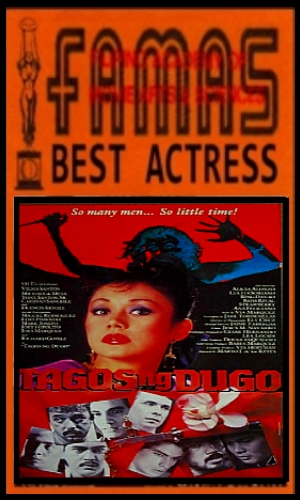

 Star For All Seasons
You must be logged in to post a comment.