Vilma Santos-Recto is a popular multi-awarded actress and politician in the Republic of the Philippines. *** She is known as "Queen of Philippine Movies," "Queenstar," "Grand Slam Queen," "Box Office Queen," and "Star for All Seasons." *** This website is mostly about her iconic film career.
Basic Information: Director: Mario O’Hara; Writing credits: Mario O’Hara, Tito Rey; Cast: Ian De Leon, Lotlot De Leon, Matet De Leon, Caridad Sanchez, Jaime Fabregas, Richard Merck, Ronel Victor, Marilyn Villamayor, Kiko De Leon, Vida Verde, Irma Alegre, Vilma Santos, German Moreno, Romnick Sarmenta, Zorayda Sanchez, Dan Alvaro, Mario Escudero, Tony Angeles, Nora Aunor, Nanette Inventor, Maritess Ardieta, Arthur Cassanova, Lady Guy, Lucy Quinto, Josie Galvez, The Ramon Obusan Dancers, Remy Tabones; Producer: Nora C. Villamayor; Original Music: Demet Velasquez; Cinematography: Johnny Araojo; Art Direction: Julius Dubal; Sound: Antonio Acurin
Plot Description: No Available Data
Film Accomplishments: 1988 FAMAS Best Child Actor Nomination – Ian De Leon
Film Reviews: “…The only evidence that Takot Ako, Eh! could not have been made by just anyone with the right money and resources lies in one extremely exclusive instance. This would take a whole lot of paring down and possibly a radical revision of the exposition, but if our point of reference is Halimaw, then you’d now have the best installment available for that omnibus product. I’m referring to the subplot involving Caridad Sanchez as a way-out househelp, not quite in her right mind yet not quite obtrusive enough to arouse anyone’s suspicions. Before the time machine brings back the Nora Aunor character it first spews out Dracula (a wonderfully with-it Richard Merck), who like all the previous males on the scene doesn’t really fall for the maid’s advances, but, unlike the rest, doesn’t have the advantage of remaining intact during daytime and going without blood. When Sanchez starts turning on the charm for her captive lover, all hell, for him at least, breaks loose, and one wishes for the most part that the final Countdown hadn’t been sooner. And to return to where we started: wasn’t this the kind of role – the maid, I mean in particular – that Nora Aunor became famous for? A character performer like Caridad Sanchez can think of nothing about shifting from serious to comic interpretations within more or less similar characterizations (check out two temporally disparate Lino Brocka films, Santiago and Ano ang Kulay ng Mukha ng Diyos?, plus her critically underrated salvo in Marilou Diaz-Abaya’s Alyas Baby Tsina, for a sober accounting of the lady’s prowess); on the other hand, a Nora Aunor can only work on a highly involved plane of acting, in fact as in film. Forced to a distance (considering her bygone stature as the superstar of Cebuano cinema), Sanchez takes full advantage by playing to the hilt, damn the consequences, and involves everyone else in her having fun even at her own expense; Nora Aunor offers a weak substitute of herself, four of them in fact, and politely takes her place in the background. Somewhere there’s a metaphor for the human capacity for excessive celebrity, and the sadness of losing a precious sort of genius when the condition begins to take its toll…” – Joel David, National Midweek, 25 November 1987 (READ MORE)
1984 PMPC – Star for Movies Best Actress Nomination – Alyas Baby Tsina
1984 PMPC – Star for Movies Best Actress Nomination – Sister Stella L.
1977– six films, highlights: Burlesk Queen and Dalawang Pugad, Isang Ibon signalled her image transformation.
1977 Burlesk Queen – “…an official Entry to the 1978 Festival del film Locarno (Switzerland) …swept the awards in that year’s MMFF, resulting in a controversy that led to the wholesale return of trophies. In spite of the scandal, “Burlesk” is still regarded by critics as the “quintessential” Filipino film. “Hinamon ni Brocka si Tinio ng suntukan (Lino Brocka dared Rolando Tinio to a fight),” Celso remembers. “Tinio, who was the head of the jury, heralded “Burlesk as the most beautiful Filipino film” past, present and future.” Vi’s turnaround: Adding fuel to the fire, ?Burlesk? had stunned moviegoers because it unveiled a new Vilma Santos?from ingénue to wanton woman. Vilma says of “Burlesk?” – “It marked a transition in my career. Working with Celso Kid is a privilege. He’s a genius.” With good humor, Vilma recalls a “quarrel” on the set of “Pagputi ng Uwak, Pag-itim ng Tagak,” which she produced in 1978. “It took so long to finish. I lost money on that. But we’re still friends.” Burlesk and Pagputi brought a lot of honor to me…” (READ MORE)
1977 Dalawang Pugad, Isang Ibon – “…Bernal recieved his first Gawad Urian best director award…Anita Linda and Mary Walter played mother and grandmother to Vilma…” (READ MORE)
1977 Masarap, Masakit ang Umibig – “…an entry to the 1981 ASEAN Film Festival in Sydney Austarlia and Asia-Pacific Film Festival in Taipei Taiwan…the film earned Mat Ranillo III the 1978 FAMAS best supporting actor award…” (READ MORE)
1977 Pulot-gata, Pwede Kaya? – “…Directed by and casted Vi with Romeo Vasquez, Suzanne Gonzalez, Rodolfo Boy Garcia, Tange, Ruel Vernal, Tita De Villa, Paraluman…” (READ MORE)
1977 Apoy sa Ibabaw Apoy sa Ilalim (cameo role) – “…Produced by VS Films, no information available except that the Vilma Santos’ birthday celebration was added as bonus feature of the film….” (READ MORE)
1978– fourteen films, highlights: Lino Brocka’s Rubia Servios and Celso castedillo’s Pagputi ng Uwak, Pag-itim ng Tagak; atleast one film per month; films with Nora Aunor, Ikaw ay Akin, Pinagbuklod ng Pag-ibig and Huwag Hamakin Hostess (Vi in came role).
1978 Mga mata ni Angelita (came role) – “…Julie Vega was only 10 years old when she was launched to full stardom in the 1978 movie, “Mga mata ni Angelita.” …She appeared in previous movie outings as Darling Postigo. The young Vega was ably supported by an all super star casted headed by the King of Philippine Movies, Fernando Poe, Jr. (in the role of Conrado, the ex-convict) and Comedy King Dolphy (as Tacio, the taho vendor). Also appearing in cameo roles…Vilma Santos ( as a worried wife)…” (READ MORE)
1978 Bakit Kailangan Kita? – “…Directed by Emmanuel H. Borlaza and casted Vi with Romeo Vasquez, Vilma Santos, Maan Hontiveros, Laurice Guillen, Romeo Enriquiz, Mary Walter…Leah Navarro’s “Kailangan Kita” was used as the film’s theme song ..” (READ MORE)
1978 Kampus – “…Directed by Emmanuel H. Borlaza and casted Vi with Bembol Roco, Mat Ranillo III, Allan Valenzuela, Liza Lorena, Anita Linda, Lito Lapid…” (READ MORE)
1978 Disco Fever – “…Directed by Al Quinn and casted Vi with Christopher De Leon, Victor Laurel, Rio Locsin…” (READ MORE)
1978 Ikaw ay Akin – “…Nora and Vilma were nominated for their roles in the 1978 Gawad Urian but lost, their leading man Christopher de Leon won the best actor…” (READ MORE)
1978 Pag-ibig ko sa iyo lang Ibibigay – “…Directed by Nilo Saez and casted Vi with Romeo Vasquez, Perla Bautista, Romy Diaz…Flippers’ “Pag-ibig ko sayo ko lang ibibigay” was used as the film’s theme song…” (READ MORE)
1978 Pinagbuklod ng Pag-ibig – “…Directed by Leonardo L Garcia and casted Vi with Romeo Vasquez, Nora Aunor, Tirso Cruz III, Romnick Sarmenta…” (READ MORE)
1978 Promo Girl – “…Directed by Joey Gosiengfiao and casted Vi with Ricky Belmonte, Roel Vergel de Dios, Bembol Rocco, Eddie Gutierrez…” (READ MORE)
1978 Rubia Servios – “…it may not win her the 1978 Metro Manila Film Festival: Best Performer award but Rubia Servios end up as a record breaking earner of the festival…” (READ MORE)
1978 Simula ng Walang Katapusan – “…Directed by Luis Enriquez and casted Vi with Eddie Rodriguez, Carmen Soriano, Lito Anzures, Rio Locsin, Ruben Rustria…” (READ MORE)
1979– eight films, highlights: movies with fim giants: Dolphy in Buhay Artista, Ngayon; Charito Solis in Modelong Tanso.
1979 Buhay Artista, Ngayon – “…Directed by Frank Gray Jr. and casted Vi with Dolphy, Panchito, Babalu, Cachupoy, Bayani Casimiro, Georgie Quizon, Ellen Esguerra, Moody Diaz, Odette Khan, German Moreno, Ike Lozada, Florante, Joe Quirino…” (READ MORE)
1979 Coed – “…Directed by Emmanuel H. Borlaza and casted Vi with Jay Ilagan, Celia Rodriguez, Allan Valenzuela, Jun Soler, Angge…” (READ MORE)
1979 Halik sa Kamay, Halik sa Paa – “…Directed by Luis Enriquez and casted Vi with Ronald Corveau, Eddie Rodriguez, Rosemarie Gil, Roderick Paulate, Angie Ferro, Aurora Salve…produced by Vilma Santos’ VS Films…” (READ MORE)
1979 Magkaribal – “…Directed by Elwood Perez and casted Vi with Christopher De Leon, Alma Moreno …” (READ MORE)
1979 Modelong Tanso – “…Directed by Cirio H. Santiago and casted Vi with Charito Solis, Winnie Santos…” (READ MORE)
1979 Pinay, American Style – “…Directed by Elwood Perez and casted Vi with Christopher De Leon, Bembol Roco, Cocoy Laurel, Rosa Mia…Theme Song, “Pinay” performed by Florante…” (READ MORE)
1979 Rock, Baby, Rock – “…Directed by Oscar Miranda and casted Vi with Junior, Rolly Quizon, Leah Navarro, Tito Sotto, Vic Sotto, Joey de Leon…” (READ MORE)
1979 Swing it, Baby – “…Directed by Al Quinn and casted Vi with Romeo Vasquez, Tito Sotto, Vic Sotto, Joey de Leon, Amy Austria, V.S.T. & Company, Mike Monserrat, Walter Navarro…Theme Songs, “I-swing mo ako” performed by Sharon Cuneta…” (READ MORE)
1980– nine films, highlights: ressurected her Darna role for the last time; bolder stripper roles in Mrs Jones and Miss X.
1980 Darna at Ding – “…Directed by J. Erastheo Navoa and Cloyd Robinson and casted Vi with Niño Muhlach, Celia Rodriguez, Marissa Delgado, Veronica Jones, Rez Cortez, Ike Lozada, German Moreno, Al Tantay, Donna Villa…” (READ MORE)
1980 Good Morning, Sunshine – “…Directed by Ishmael Bernal and casted Vi with Junior, Lloyd Samartino, Sheryl Cruz, Debraliz, Anita Linda, Liza Lorena…” (READ MORE)
1980 Langis at Tubig – “…Directed by Danny Zialcita and casted Vi with Dindo Fernando, Ronaldo Valdez, Amy Austria, Vic Silayan…theme song, “Langis At Tubig” performed by Sharon Cuneta…” (READ MORE)
1980 Miss X – “…Directed by Gil Portes and casted Vi with Mark Gil…theme song, “Dito Ba?” performed by Kuh Ledesma…film shot in the red district of Amsterdam…” (READ MORE)
1980 Romansa – “…Romansa (1980) was the first film of two tha Edu Manzano and Vilma Santos films did together (the other one was Palimos ng Pag-ibig (1986)…” (READ MORE)
1980 Yakapin Mo Ako, Lalaking Matapang – “…Directed by Emmanuel H. Borlaza and casted Vi with Lito Lapid, Chichay, Angie Ferro, Lucita Soriano, Rez Cortez, German Moreno…theme song performed by Lirio Vital…” (READ MORE)
1981– four films, highlights: box office hits – Karma and Pakawalan Mo Ako; Karma, an entry to the 1981 Metro Manila Film Festival earned Vilma the festival’s best actress award.
1981 Hiwalay – “…Directed by Romy Suzara and casted Vi with Dindo Fernando, Eddie Rodriguez, Celia Rodriguez, Anita Linda …” (READ MORE)
1981 Karma – “…Vilma Santos won the 1981 Metro Manila Film Festival Best Actress…” (READ MORE)
1981 Ex-Wife – “…Directed by Eddie Rodriguez and casted Vi with Beth Bautista, Raul Aragon, Michael de Mesa, Eddie Garcia, Liz Alindogan, Wendy villarica, Rosemarie Gil…” (READ MORE)
1982– six films, highlights: Record-breaking hits: Gaano Kadalas ang Minsan? and Sinasamba Kita. Earned rave reviews for her performance in Relasyon; last year’s Pakawalan Mo Ako earned Vilma her second FAMAS best actress (after Dama De Noche in 1972).
1982 Gaano Kadalas ang Minsan? – “…Gaano kadalas ang Minsan grossed 7.3 Million in its few days run in Metro Manila in 1982 outgrossing “Sinasamba Kita” for Philippine movies’ all-time box office tally. With inflation and currency rate in consideration that will be around 95 million. But that’s not the only exciting thing about these film. It was the only film that Vilma Santos and Hilda Koronel did while atleast when Hilda was still at her peak…” (READ MORE)
1982 Haplos – “…Directed by Antonio Jose Perez and casted Vi with Christopher De Leon, Rio Locsin, Delia Razon, Eddie Infante…theme song, “Haplos” performed by Eva Eugenio…” (READ MORE)
1982 Never Ever Say Goodbye – “…Directed by Gil M. Portes and casted Vi with Nonoy Zuniga, Ian Veneracion…theme song, “Never Ever Say Goodbye” performed by Nonoy Zuniga…” (READ MORE)
1982 Relasyon – “…The very first “Grand Slam” for Best Actress in Philippine Entertainment history…” (READ MORE)
1982 Sinasamba Kita – “…They started with 38 theatres, by the weekend (they added more) and became 41 theatres…After 6 days, the film earned P5,207,416.00. After a week’s time, almost P6 million…” (READ MORE)
1982 T-Bird at Ako – “…Directed by Danny Zialcita and casted Vi with Nora Aunor, Dindo Fernando, Tommy Abuel, Anita Linda, Liza Lorena, Rustica Carpio…theme song, “Hiwaga ng Pag-ibig” performed by Nora Aunor…” (READ MORE)
1983 – four films, highlights: box office hits – Minsan Pa Nating Hagkan Ang Nakaraan and Paano Ba Ang Mangarap; received grandslam best actress from previous year’s Relasyon (Winning four best actress from FAMAS, Gawad Urian, CMMA and FAP).
1983 Broken Marriage – “…Vilma Santos won the 1983 Gawad Urian best actress, her second consecutive awards from the local critics…” (READ MORE)
1983 Minsan pa Natin Hagkan Ang Nakaraan – “…Directed by Marilou Diaz Abaya and casted Vi with Christopher De Leon, Eddie Garcia…theme song, “Minsan Pa Nating Hagkan Ang Nakaraan” performed by Basil Valdez…” (READ MORE)
1983 Paano Ba ang Mangarap? – “…Directed by Eddie Garcia and casted Vi with Christopher Deleon, Amy Austria, Jay Ilagan, Peral Bautista, Armida Siguion Reyna, Vic Silayan…theme song, “Paano Ba Ang Mangarap?” performed by Basil Valdez…” (READ MORE)
1984– four films, highlights: films with Brocka, Diaz-Abaya, de Leon in one year; received second consecutive Gawad Urian for last year’s Broken Marriage.
1984 Adultery – “…Directed by Lino Brocka and casted Vi with Phillip Salvador, Tita De Villa, Alvin Enriquez, Anita Linda, Mario Montenegro, Deborah Sun…” (READ MORE)
1984 Alyas Baby Tsina – “…Directed by Marilou Diaz-Abaya and casted Vi with Phillip Salvador, Dindo Fernando, Cecille Castillo, Chanda Romero, Johnny Delgado, Caridad Sanchez, Maria Isabel Lopez, Dexter Doria, Mary Walter, Vangie Labalan, Harlene Bautista…” (READ MORE)
1984 Sister Stella L. – “…Vilma Santos won the 1984 Gawad Urian:best actress…the Philippines’ entry to 1985 Venice International Film Festival…Sister Stella L. was one of 25 Filipino films shown in New York from July 31 to August 1999, organized by the Film Society of Lincoln Center…” (READ MORE)
“Ang hirap dito sa relasyon natin, puro ikaw ang nasusunod, kung saan tayo pupunta, kung anong oras tayo aalis, kung anong kakainin natin, kung anong isusuot ko sa lahat ng oras, ako naman sunod ng sunod parang torpeng tango ng tango yes master yes master!” – Maria Lourdes Castaneda
“Ano ba ako rito istatwa? Eh dinadaan daanan mo na lang ako ah, hindi mo na ako kinakausap hindi mo na ako binabati hindi mo na ako hinahalikan ah…namputsang buhay ‘to. Ako ba may nagawa akong kasalanan hah? Dahil ang alam ko sa relationship, give and take. Pero etong atin, iba eh! Ako give ng give ikaw take ng take! Ilang taon na ba tayong nagsasama? Oo, binigyan mo nga ako ng singsing nuong umpisa natin, pero pagkatapos nuon ano? Wala na! Ni-siopao hindi mo ako binigyan eh dumating ka sa bahay na ito ni butong pakwan hindi mo ako napasalubungan sa akin eh kaya kung tiisin lahat pero sobra na eh…hindi naman malaki hinihingi ko sayo eh konti lang… alam ko kerida lang ako…pero pahingi naman ng konting pagmamahal…kung ayaw mo ng pagmamahal, atleast konsiderasyon man lang. Kung di mo kayang mahalin bilang isang tunay na asawa, de mahalin mo ako bilang isang kaibigan, Kung ayaw mo pa rin nun bigyan mo na lang ako ng respeto bilang isang tao hindi yung dadaan daanan mo lang sa harapan na para kang walang nakikita!” – Maria Lourdes Castaneda
Emil, a young executive, and his mistress Marilou, a planetarium guide, decide to be live-in partners. In the process, they discover each other’s failing, which result in the strain in their relationship, bringing about their temporary separation. When they finally decide to resume their relationship, under a set-up wherein the man devides his time between his family and mistress, he dies frpm an attack of cerebral aneurysm. The woman decides to start a new life abroad, finding strength in the Jove of her departed lover. – Manunuri web-site
“Ok Lang Po, Maam, Part of the Job.” – Loida Malabanana
This slideshow requires JavaScript.
Basic Information: Direction: Jeffrey Jeturian; Writing Credits (story and screenplay): Zig Madamba Dulay, Antoinette Jadaone, Jeffrey Jeturian; Executive Producer: Atty. Joji Alonso; Associate Producer: Ron Capili; Line Producer: Charyl Chan-de Guzman; Executive Producer: Jeffrey Jeturian, Ferdinand Lapuz, Malou N. Santos, Vilma Santos, Charo Santos-Concio, John Victor Tence; Music: Vincent de Jesus, Cinematography: Lee Meily, Lee Briones; Film Editing: Zig Madamba Dulay, Glenn Ituriaga; Production Design: Ericson Navarro, Erwin Sanchez; “Ekstra” – original title; Released: 14 August 2013 (Philippines); Production Co: Cinemalaya Foundation, Quantum Films; Runtime: 111 min
Complete Cast (in order of appearance): Nenita Deanoso, Karen Leslie Dematera, Boobsie Wonderland, Cris Castillo, Cris Ad Castillo, Raymund Ocampo, Abi Niesta, Cherry Pie Picache, Zyrus Imperial, Richard Yap, Ruby Ruiz, Vilma Santos, Ronaline Ronn Enriquez, Rita Rosario G. Carlos, Tart Carlos, Antonette Garcia, Linda Villalobos, Raymond Rinoza, Hazel Faith Dela Cru, Rex Lantano, Martha Comia, Jake Seneres, Ricky Pascua, Zachary Ezekiel Diaz, Angelica Luis, Mhel Seduco, Michael Bayot, Fatima Centena, Almira Alcid, Chris Garrido, Norberto Portales, Marlon Rivera, Sunshine Teodoro, Vincent de Jesus
Louie Kim Sedukis, Miguel Cruz, Bobby Contiga, Piolo Pascual, Orlando Marcos, Paulo Gabriel, Vida Masakayan, Marx Topacio, Marian Rivera, Afi Africa,, Cherie Gil, Nico Antonio, Toni Lopengco, Eula Valdez, Rosejean Sevilla, Salvador Zapanta, Glen Elizalde, Windie Lainie King, Richard Carbajal, Stanley Carvajal, Kerwin Garcia, Albert Lorenzo, Mark Anthony Robrigado, Eden Jaime, Jojo Flores, Pamela Roxas, Pilar Pilapil, Olive Cruz, Tom Rodriguez, Terence Baylon, Red Musni, Alora Mae Sasam, Joy Lomibao, Catherine Reyes, Mae Anne Pineda, John Paul Mendoza , Dyan Mae Mora
Manuel Maputol, Honey Mae Liyagen, Salve Barrientos, Marc Anthony Olata, Jeyean Payawal, Vernadet Fortin, Mico Madrid, Leah Jabonella, Zarah Pagay, Rene Castellano, Liwanag Fortin, Cesar Garbo, Rogelio Itein, Lorevy Paller, Eugine Quijano, Ronald Fortin, Lorna Villanueva, Ivan Gabriel, Willy Concepcion, Jayjay Payawal, Manuel Luis Antonio, Lorraine Anne Caluya, Jack Tan, Anne Mitchelle Utuania, Maricel Gabitanan, Jaime Dyunco, Bambie Apostol, Marie De Guzman, Jayjelon Cruz, Basty Peralta, Maryella Gabitanan, Jerry Pingol, Beau Estera, May Ann Bongearas, Jibb Llansang, Cecille Villar
Melanie Ulang, Jivesh Lansang, Christine Ormilla, Melba Cabaiz, Jhon Fallorina, Evelyn De Guzman, Nancy Villar, Jobie Gregorio, Ever Tan, Nene Felias, John Lloyd Ilagan, Ginelyn Baguturo, Nicah Ariza, John Mark Aqui, Hannah Jessica Amanulla, Nina Bucala, Joren Lansang, Hershey Gregorio, Odette Losing, Ken John Kabayashi, Jamaicca Dayta, Renee Andrea Abuyin, Kershon Bumanlag, Jasmine Abuan, Rio Dela Cruz, Khaled Almohsin, Jenelyn Auste, Roxanne Dela Cruz, Khalil Verzosa, Jessa Bravo, Weng Diaz, Lambert Del Mundo, Jessica Navarro, Aaron Ascano, Lester Paguio, Jonalyn Noleal, Alex Oledan
Loren De Guzman, Judy Ann Noleal, Allaine Garduce, Kaycie Antonio, Andrei Guerrero, Mark Bautista, Kim Villena, Antonio Hernandez, Michael Gillego, Kimberly Alaras, Arjay Abuyin, Nicolas Marquez, Kimberly Ann Baleta, Benjamin Chua, Paul Joseph Emerenciana, Kimberly Cru, Bryan Garduce, Ryan Olayvar, Krizie Peralta, Bryan Perlas, Rey Capaguian, Kylie Dela Cruz, Don Santiago, Rickson Villena, Lesley Anne Datu, Ian Japer Villar, Ruth Villar, Ivan Erazo, Tom Taclindo – IMDB
Plot Description:Ekstra, The Bit Player is a socio-realist drama-comedy film, it follows a seemingly usual day in the life of Loida Malabanan (Vilma Santos) as she embarks on yet another shooting day of a soap opera as an extra. As the shoot goes on, we get a glimpse of the truth in the ruling system of the production as well as the exploitation of the marginalized laborers like her. – Cinemalaya (READ MORE)
Film Achievement: Official Entry to The 2013 Cinemalaya Independent Film Festival: NETPAC Prize, Special Jury Prize, The Audience Choice Award, Best Actress – Vilma Santos, Best Screenplay – Zig Dulay, Antoinette Jadaone, Jeffrey Jeturian, Best Supporting Actress – Ruby Ruiz; 2013 Gawad Tanglaw Best Actress – Vilma Santos; 2013 Gawad Urian: Best Actress Nomination – Vilma Santos, Best Film Nomination – Cinemalaya Foundation and Quantum Films, Best Director Nomination – Jeffrey Jeturian, Best Supporting Actress Nomination – Ruby Ruiz, Best Sound Nomination – Addiss Tabong and Wild Sound, Best Production Design Nomination – Ericson Navarro; FAMAS: Best Picture Nomination; Best Screenplay Nomination; Best Editing Nomination; Best Story Nomination; 11th Golden Screen Awards: Best Motion Picture – Drama Nomination – Cinemalaya Foundation & Quantum Films; Best Performance by an Actress in a Lead Role – Drama – Vilma Santos; Best Performance by an Actress in a Supporting Role Nominations – Drama, Musical or Comedy – Ruby Ruiz and Tart Carlos; Best Performance by an Actor in a Supporting Role Nomination – Drama, Musical or Comedy – Marlon Rivera; Best Direction Nomination – Jeffrey Jeturian; Best Editing Nominations – Zig Dulay, Glenn Ituriaga; FAP 32nd Luna Awards Outstanding Performance Lead Actress Nomination – Vilma Santos; Philippine Cinema Evaluation Board Grade – “A”; NCCA – Ani ng Dangal
NETPAC and Special Jury Prize – “…Vilma Santos was named Best Actress for her role in Jeffrey Jeturian’s Ekstra in the Directors Showcase. She was cited “for her bold decision to deglamorize herself and take on the lowly role of the TV and movie bit player, for her moving portrayal of the unsung hero of show business, for the polish and aplomb with which she essayed the role, and for her powerful cinematic presence.” Ekstra won the Special Jury Prize “for its poignant take on the lowly bit player, the unheralded hero of show business, whose contributions are often ignored in movie and TV credits, for its bittersweet evocation of the magic of cinema, and for its humor, pathos and sheer humanity.”; the NETPAC Award for its “comedic but insightful and touching treatment of a day-in-the-life of a movie bit player, seamlessly woven in the production of a TV soap opera.”; and the Audience Choice Award. Ekstra also won for Ruby Ruiz the Best Supporting Actress award and for Zig Dulay, Antoinette Jadaone and Jeffrey Jeturian the Best Screenplay award…” – Cinemalaya (READ MORE)
Film Reviews: “…Ang strength ng pelikula ay ang script nito (na nakapangalan sa tatlo: Zig Dulay, Antoinette Jadaone at Jeffrey Jeturian). Kahit na nagpaka-real time ito (upang maramdaman ng audience ang exhaustion na hinihingi ng isang bit player) o tipong nagpapaka-a day in the life of lang, ramdam na ramdam na meron itong script. Nai-shoot nito ang point nang lapat na lapat. Klaro ang motivation ng central character kung bakit ginagawa n’ya ang mga bagay na pinaghihirapan n’ya. Isa rin itong dahilan upang samahan natin si Loida (Vilma Santos) sa kanyang pakikipaglaban sa araw na ‘yun. May tendency na magpaliwanag masyado kung anu-ano ang mga ginagawa sa produksyon pero nasolusyunan naman ito sa paggamit ng isang karakter na baguhang ekstra. Maging ‘yung tanong sa dulo bago matapos ang pelikula, naselyuhan nito ang halaga ng ginagawa natin hindi lang bilang isang taga-film production kung hindi bilang trabahador na rin sa Pilipinas sa pangkalahatang perspektibo. Nakuha rin ako ng humor ni Jeturian dito. Tingin ko, sensibilidad n’ya ang ganitong wit at wala akong makitang direktor ngayon na nasa ganitong level. Ngayon na lang ulit ako natawa sa kanya mula roon sa isang eksena sa “Pila Balde” kung saan kumain ng panis na hopya si Estrella Kuenzler. OK naman si Vilma rito. Masayang makita na ang mga shining moment n’ya rito ay ‘yung mga eksenang tumatawa s’ya. Pero dahil Vilmanian si Jeturian, hindi naman puwedeng walang eksena na aangat si Vilma sa mga nakagamayan na. Gusto ko ‘yung nakikipagpagalingan s’ya para sa isang role bilang katulong. Maliban sa larger than life na presence ng bida, umangat din ang mga suporta rito: Marlon Rivera (bilang soap opera director at so far, s’ya ang aking bet para sa Best Supporting Actor sa Directors Showcase), Tart Carlos (bilang kapwa ekstra at sounding board ng bida) at Ruby Ruiz (bilang Josie). Sa side note, ganito palang manood ng Vi movie na ang katabi mo ay isang ultimate Vilmanian. Bago mag-umpisa, hindi mo mahagilap dahil parang bomb specialist na iniisa-isa ang mga entrance at exit ng Main Theater kung saan papasok ang mga artista. At malakas din ang tawa n’ya r’un sa isang linya na “Eh bakit si Nora Aunor?…” – Manuel Pangaruy Jr., Tagailog Specials Presents, 28 July 2013 (READ MORE)
“…Not all is grim in Filipino cinema. Romance and satire abound. Jerrold Tarog expertly avoids the syrupy clichés of mainstream rom-com in his absorbing, bittersweet Sana Dati (If Only). Alvin Yapan’s supernaturally seductive Debosyon (Devotion) explores the ardor between a man and a forest spirit at the kooky crossroads of Catholicism and pre-colonial pagan faiths. Jeffrey Jeturian’s witty The Bit Player (Ekstra) pokes fun at the exploitative telenovela industry, with the renowned Vilma Santos in top form as a desperate extra on a soap opera set Tour de force acting comes not only from the legendary Aunor and Santos and other established luminaries like Cherie Gil, Fides Cuyugan-Asencio, Irma Adlawan and Ping Medina, but also from complete unknowns like the mischievous gang of young boys in a small provincial town in Keith Deligero’s Iskalawags, who idolize action movie stars and adopt their swashbuckling ways to escape the dreariness and the struggles of their own existence. Far more than a charming coming-of-age tale, Iskalawags slyly deprecates Filipino notions of manhood and alludes to the oppressiveness of Tagalog culture as endured by the restless majority who live outside ‘Imperial Manila…” – Carla Escoda, Huffington Post, 12 June 2014 (READ MORE)
“…For most of “Ekstra,” I was only vaguely interested in what was happening. A lot of work, a lot of arguments, a lot of ego, went into the creation of something that was not only valueless to the culture but detrimental. Product placement is the least of it; soap operas, like most movies, sell wish fulfillment. They sell the dream of wealth, beauty, and glamor. At the same time, they sell schadenfreude, as the wealthy, beautiful and glamorous feel the heartache implicit in soap opera storylines. I also objected when Loida began to stumble during her big scene. It felt way too cruel to me. It felt sadistic and/or bathetic. But ultimately Santos has a restraint that makes it work. You sense Loida’s world has crumbled but she doesn’t know what to do. There’s doubt and pain in her eyes now. Interestingly, Santos, who looks like the part she plays—someone passed over by life—is in reality a hugely successful actress and politician. She was the Mayor of Lipa City and the Governor of Batangas, a province in the Philippines. There are four major film awards in the Philippines and only 17 times has someone won all four in the same year. It’s called the Philippines Movie Grand Slam, and Santos was the first to do it in 1982. She’s since done it three more times. No one else in Philippines has done it more than twice. She’s basically the Meryl Streep and the Arnold Schwarzenegger of the Philippines…” – Erik Lundegaard, May 28, 2014 (READ MORE)
“…It’s not easy being an extra. While vital to the authenticity to a filmed project—be it a movie, TV show, or music video—extras, or bit players, are regularly relegated to the sidelines, where they are subjugated, mistreated, underfed, and disrespected, working long hours without any promises of fame, fortune, or respectable paychecks. Such is the life of middle-aged single mother Loida (Vilma Santos), who has yet to catch her big break. Waking up at the crack of dawn, she and a dozen other extras pack themselves like sardines into a van and head out to a remote location shoot for the nightly TV soap opera “Nauna kang nagging Akin” (or “You Were Mine First”). Upon their arrival, they find the set in complete disarray, a frenzied circus of diva behavior, rain delays, and prop mishaps. Over the course of one very long shooting day, the behind-the-scenes chaos become as dramatic, if not more, than the soap opera unfolding before the cameras, but Loida, ever committed to her craft, discovers what could be a glimmer of hope in the form of a small, available speaking role. Santos, who ironically is a cinema megastar in her home country, gives one of the best performances of the Festival, imbuing Loida with a dogged tenacity lying just beneath the surface of her kind but world-weary visage. The film itself strikes a wonderful balance between a screwball showbiz comedy and a compassionate socio-realist drama about the exploitation of labor, equally harsh and hilarious…” – SIFF 2014 (READ MORE)
“…Vilma Santos, the legendary grand dame of Philippine cinema, stars in this bittersweet comedy. A clever satire of the telenovela formula, The Bit Player tells the story of a group of extras on a soap opera, as they patiently wait to be cast as anonymous background actors or in tiny speaking roles. At the very bottom of the showbiz hierarchy (working extremely long hours for very little pay), these extras turn out to be far more dedicated to their work than the egotistical, unreliable stars who are highly paid and constantly fawned over…” – YBCA New Filipino Cinema 2014 (READ MORE)
“…Showbiz royalty Vilma Santos plays a financially challenged bit player named Loida. Strangely, but not surprisingly, the film veteran makes an excellent extra. She is snarky with friends but, ironically, is an awkward mess when put in front of the cameras. Santos is so natural that the lines between acting and reality are blurred. It was no shock that she won this year’s Cinemalaya award for best actress. The film has a star-studded cast consisting of Piolo Pascual, Marian Rivera and Cherie Gil. For once, however, they’re the extras in this movie. The fun part about Ekstra is that it’s witty and it doesn’t take itself too seriously. The “actors” exchange lines oozing with cheese and villainy, complete with telenovela fanfare. The screenplay, a collaboration among Jeturian, Jadaone and Dulay, is smart but accessible. “Crowd din ako dati,” Loida tells a young extra in a scene. “But look at me now: crowd pa rin…” – Paulina F. Ocampo, Katipunan The Guidon Magazine, 07 August 2013 (READ MORE)
“…In a way, Santos can be compared to Susan Sarandon and Jessica Lange; both thespians employ their entire body to bring out the internal turmoil of their characters if necessary. Santos impassioned performance in classic films such as “Broken Marriage” and “Relasyon” demands certain explosiveness. Santos has always played the fighter, never the silent suffering victim. Even powerless, Santos’ characters have trudged on despite obvious defeat. She has always embodied the ferocious female spirit, which I grew up witnessing from the strong females in my family. Fight, survive at all cost. Similarly, Santos can also quietly stand still and let her face do the exposition, “Sister Stella L.” is a perfect example. In both commercially melodramatic and critically acclaimed films, all of the characters in Santos wide repertoire refused to go without a good fight. I have heard other critics call her the “feminists’ actor,” but do not take our word for it, you need to watch her films to verify that. In her latest movie, “Ekstra” (The Bit Player), Santos is back to form after her commercially successful but critically disappointing horror film, “The Healing.” Santos plays Loida, a bit player dreaming of becoming a star despite working in the industry for so long. At first glance, Santos seemed to be miscast as a bit player because she is too fair and beautiful to stay a bit player that long; however, thanks to Jeffrey Jeturian’s clever direction, Santos transcends the obvious. The Santos celebrity persona disappears and we see the face of a bit player being used as a mere tool by an industry hell bent on producing crap. Loida’s triumph lies in Jeturian’s blatant critique of the industry that exploits people for commercial purposes. Loida is not just a real character, she is a symbol. The delightful irony of “Ekstra” is using one of the biggest stars in the industry to play it small…” – Rob San Miguel, Brun Philippines, 18 August 2013 (READ MORE)
“…Vilma Santos may have been the film’s initial main attraction, but we can’t deny the fact that this is the best comedy-drama of the year. Santos proved her star-for-all-seasons status was far from waning, but Jeffrey Jeturian’s film itself is a brilliant achievement. Its portrayal of the television industry’s bit players is both honest and hilarious. With its small scale and grand ambitions, Ekstra brings a different flavor to the usual tale of the downtrodden…” – Paul G. Alcantara, Kara B. Chung, The Guidon on line, 30 December 2013 (READ MORE)
“…Even before Jeffrey Jeturian’s Ekstra was released, naysayers doubted that Vilma Santos would ever be credible as a bit player in TV soaps: “she’s too recognizable,” “she won’t be believable,” “she looks too mayaman (rich).” The only way to silence the doubters is to turn in a nuanced, convincing performance as Loida Malabanan, a single mother who continues to toil in substandard working environments just to fulfill her dream of acting. It’s a testament to Santos’s instinct as an actor that she finds the honest core of Loida and operates from there. Everything else follows…” – Skilty Labastilla, Business World Weekender, 09 January 2014 (READ MORE)
“…The International Film Festival in Goa in November 2013 came alive with young audiences from across the country patiently standing in long lines to watch serious world cinema. They were the real stars of this festival. In many shows, disappointed audiences were turned away because every seat was taken. There is a new audience out there, ready for new ideas, new film grammar, and new reflective cinema. The time is long overdue for a publically financed network of art theatres in every city in the country. In my three days in Goa, I spent most time with the Soul of Asia segment, which introduced me to some fine films described in an earlier column. I recall here a few other films which remain with me even as the weeks pass after the festival…Adopting a diametrically opposite idiom of exuberant comic irony is Philippine director Jeffrey Jeturian’s Ekstra (Extra), an affectionate salute to the underdog. It follows one day in the life of a middle-aged woman extra, a bit player in television soap operas, after she is woken in the early hours of the morning one day to drive to a location shoot in the neighbouring countryside. The director subversively casts one of the Philippines’ best-loved actors, Vilma Santos, in the role of the extra. The viewer for once roots for the anonymous crowd — the farmer on the fields, the domestic help patiently waiting, and the guests in the background of a wedding — while the lead players strut and recite their lines. We watch the class system in the enormous gaps in food and lodging between stars and extras. The film mocks the hilarious script trajectories of the soap opera, and the vanity and fragile egos of its lead players. I often felt that if just the names were changed in the film’s script, it could have been located in India with no substantial changes…” – Harsh Mander, The Hindu, 28 Dec 2013 (READ MORE)
“…I am aware of the Filipino culture and their language which could be one of the reasons why I happened to be amused by Jeffrey Jeturian’s “EKSTRA (The Bit Player)” when I caught it at the 6th Bengaluru Film Festival. But, that is not entirely the reason why the movie works big time! The prime reasons in that order would be…Vilma Santos, a sensational performer. She lives the character of an extra artiste in television soaps. Flawless, compelling and award-worthy, is her turn…To sum it up, Ekstra – The Bit Player is a poignant film which is certainly worth your time…” – Tusshar Sasi, Romancing Cinema, 27 Dec 2013 (READ MORE)
“…The unshakable optimism of a middle-aged extra is the warm heart driving “The Bit Player,” an appealing dramedy that pokes plenty of good-natured fun at TV soap operas. Anchored by a glowing central performance by Filipino screen queen Vilma Santos as the single mother who smiles her way through work-related indignities in order to pay for her daughter’s education, the pic reps a fine feather in the cap of veteran helmer Jeffrey Jeturian. Winner of the audience award for best film in its category at Cinemalaya and a hit in domestic release in August, this crowdpleaser launches on limited North American screens on Sept. 13…Constant chuckles and a fair supply of big belly laughs are the order of the day as Loida, Venus and a lovable collection of fellow nameless wannabees are herded like cattle by Josie, acid-tongued assistant director Vincent (Vincent de Jesus, hilarious) and the super-stressed-out director (Marlon Rivera) of “You Were Mine First.” As expected, much of the fun derives from scenes being shot for the wildly melodramatic “You Were Mine First.” To that end, Jeturian gets great value from guest appearances by a host of big-name local stars including hunky matinee idol Piolo Pascual as troubled groom-in-waiting Brando, Pilar Pilapil as severe matriarch Dona Esmerelda and a wonderfully over-the-top Cherie Gil as gun-toting super-bitch Dona Beatriz. For all the merriment on display, the screenplay never loses sight of the economic and emotional imperatives propelling Loida’s uncomplaining acceptance of her place at the bottom of the entertainment-industry food chain. It’s no surprise when Loida finally gets a chance to make a mark with big speaking role in “You Were Mine First,” but the manner in which this plays out is surprising and genuinely touching…” – Richard Kuipers, Variety Magazine, 11 Sep 2013 (READ MORE)
“…In “Ekstra,” Jeffrey Jeturian points the cameras to the more unheralded members of the film industry, and zooms in on the marginalized life of extras, on and off-screen. Governor Vilma Santos-Recto plays Loida Malabanan, a veteran bit player who, while “fulfilling” her passion for acting, puts up with the extremes of her occupation. She likewise tries to solely raise her daughter with her meager salary her kind often gets. “Ekstra” basically illustrates a day in the lives of the people who literally are “behind-the-scenes.” For one, the Star for All Seasons was able to mesh well with her co-extras (Tart Carlos, Ruby Ruiz), and was able to achieve a semblance of obscurity despite who she is in real life. Second, Ate Vi also managed not to outshine the film’s supposed “lead characters” (Marian Rivera, Piolo Pascual) without sacrificing her acting prowess. Her scenes with Cherie Gil and Pilar Pilapil particularly explore the difficult and precarious reality for minor players (and body doubles, in her case)…” – Pau Aguilera, Manila Bulletin, 02 Aug 2013 (READ MORE)
“…Of course, holding up the film together is Vilma Santos in her first indie film. As Loida Malabanan, the extra, she’s there from start to finish. Her character is so well defined. She’s been an extra all of her life. As a young girl, she fell in love with a cameraman, became a single mom and now has a hard time sending her teenage daughter to college. The movie is one day in the life of Loida, showing her preparing breakfast for her sleeping daughter before she leaves for work, how her day goes on the set, until she returns home to her daughter the next day. Throughout the day, we join Loida in her moments of triumph (she bested another extra in an impromptu contest to be chosen to play the role of a housemaid) and humiliation (she doubles for Eula Valdes and gets mauled by Cherie Gil, she fails to deliver her lines properly in the role of a lady lawyer and was insulted by the director in front of everyone else.) Your heart will really go out for Loida. More than anything else, she’s a very caring mother to her child. She’s also very caring to the younger extras, like a teener who’s working as an extra for the first time and who she advises to focus on her career and not on romance. She was also so affected when another extra faints on the set due to hunger and another one is subjected to heavy prosthetic makeup as a zombie and isn’t even allowed to answer the call of nature, only to be told that her scene won’t be shot anymore.
The final scene is priceless, the most touching of all. Loida attends a party and she gets to watch the crucial sequence she taped the night before on their neighbor’s TV set. She painfully sees the scene where she was supposed to be playing the lawyer now done by another actress. She was still retained in that scene, but only as part of the crowd. She cannot even tell her friends that she was supposed to play the lawyer part but she was kicked out because she couldn’t deliver her lines persuasively. It’s a wordless scene and you can feel Vilma reliving the embarrassment she went through, but she talks only with her eyes brimming with tears and you just want to hug her and comfort her. It’ll be gross injustice if Ate Vi wouldn’t win as best actress in the Cinemalaya Awards Night this Sunday. Tinulak na siya, tinakluban sa ulo, sinipa, pinaso ng sigarilyo, sinampal, hiniya at ininsulto mula ulo hanggang paa. And she is just consistently awesome through it all. All extras in real life will love Jeturian and Ate Vi for showing in this film the humor and the soul of the experiences they go through in the course of their job. What’s nice about the film is that, as a real homage to extras, they listed down the names of all the extras who were involved in the film at the end credits…” – Mario Escobar Bautista, Showbiz Portal, 31 July 2013 (READ MORE)
“… As Loida Malabanan, Ate Vi shines even in anonymity. She is supposed to fade into the background, not outshine the “stars” and just do what is assigned her- to be a bit player. But even in the crowd, Ate Vi makes Loida stand out. She gives Loida the bit player enough motivation, and a poignant love for the acting craft that she has forever changed the image of the bit player, in the same way that she redefined the term “mistress” when she did Ishmael Bernal’s RELASYON way back. For the director, the staff and the big stars, Loida is a nobody. But for us, the audience, we recognize Loida’s magnanimity. Watch out for that pivotal scene in the third act where Loida, and us the audience learns the true meaning of ingratitude in the media. Ekstra is Vilma’s movie. We cannot imagine any other actress for her role. At the end of the day, as Loida descends from the jeepney, and prepares to go to bed just about when everyone is supposed to go to work, we feel exhausted. It’s not the physical work that made us tired, but the system of a dog eat dog society. Filmmaker Jeffrey Jeturian, through Loida exposes the hypocrisy of the thankless and unjust world of entertainment, and after that whole bout of laughing and laughing and crying afterwards, we are forever changed. Yeah right, like you didn’t already know you were gonna cry after seeing the trailer…” – Macky Macarayan, Death of Traditional Cinema, 30 July 2013 (READ MORE)
“…Vilma Santos, as always, exceptionally played the role to a hilt. The world bit players live in is all too jarring, more so because Vilma Santos—THE Vilma Santos—convincingly plays the role of a lowly talent. That might be too hard to accept in real life, but Ate Vi did a great job in fleshing out a character who’s equal parts funny, hopeful, and tragic…The movie features a witty and hilarious script, which is further bolstered by Ate Vi’s great comedic timing. There were no lapses in timing and delivery, and there was a stark contrast between the realistic portrayal of the “normal” characters as opposed to the over-the-top acting featured in their teleserye project…Vilma is at her best at the final scene, where she’s subjected to painfully watch the very episode they just shot. She’s embarrassed and frustrated, and we watch in horror as her eyes well up while she tries to hold everything in. We’ve seen that look several times in Ate Vi’s previous movies, but it still haunts us just the same…” – Myra Grace Calulo, PEP, 30 July 2013 (READ MORE)
“…Ekstra” is a very entertaining film that brings us into the world of a bit player or “ekstra” in the punishing world of television soap operas, where hectic daily shooting deadlines are the norm. This was not only a glimpse for the audience, but more of an immersion. We get an in-depth, no-holds-barred, brutally frank expose on how bit players are treated on and off the set of a location shoot. Loida Malabanan has been a bit player for many years already. This job, however unstable, had enabled her to get her daughter through college even as a single mother, albeit barely…Ms. Vilma Santos is the heart and soul of this film, and she was such a paradox in this role. She portrays her role in the most natural and realistic way, yet we know the character was so NOT her. Ms. Vilma was already the lead star in her very first film, “Trudis Liit”! Incredibly, she was able to successfully dim her megawatt star power to appear inferior in stature to stars like Marian Rivera and Piolo Pascual who were the lead stars of the soap being shot, yet Ms. Vilma still manages to outshine them all. Her most effective scenes had no spoken lines at all. Ms. Cherie Gil was so deliciously campy good in her villainous Doña Beatriz character. Tart Carlos, more popularly known for her role as the ditsy maid Doris on TV’s “Be Careful With My Heart,” has a marked role playing Loida’s friend and co-extra, where her skills in comedy shone. Musical director Vincent de Jesus was very effective as the harried assistant director, scrambling to accomplish all the orders of the impatient director….” – Fred Hawson, ABS-CBN News, 29 July 2013 (READ MORE)
“…From my perspective, I’m not sure if I can now consider this film the parody it’s meant to be, or more of an “exposé” into our real world of soap operas. It reflects many truths of what these extras, or talents, face. I myself, despite my ranting, have softened up to their plight. On one taping day, lo and behold, the first sight that greeted me were some 20 talents sitting on cardboard on the ground, in the heat of the sun, right in front of the main actors’ air conditioned tent. Talk about rubbing the point in. All this for P1,000 a day or P1,500 if you had speaking lines, or if you played a nurse, police or doctor, you get P2,000 because you have to bring your own uniform. A day may mean 28 to 36 hours straight for many of them. I’m fortunate that after decades in the business, I’ve earned a cut-off time of 2 am (which in effect actually helps talents go home earlier, if they’re in my scenes). I realize minimum wage stands at under P500, but these seemingly good talent fees don’t go straight into their pockets. They too have agents or talent suppliers who whittle away their earnings. (Just like we do.) I could be putting myself on a limb here, but I’m going to say it anyway: isn’t it high time we make the working environment in the soap opera world better for all to enjoy the work and find dignity in our choice of profession?…” – Cherie Gil, Rappler 30 March 2013 (READ MORE)
“…the biggest box office hit among the entries is not any of these sex movies but the entry of Gov. Vilma Santos, “Ekstra, The Bit Player”. She didn’t show anything but her acting talent and yet Gov. Vi proves she’s still a top box office drawer. At Trinoma, all the ticket sellers say all of “Ekstra’s” screenings this weekend are sold out in advance. Way to go, Ate Vi! This is not surprising as “Ekstra” is also the best movie she has done in years…” – Showbiz Portal (READ MORE)
“…The irony of Santos, Philippine media’s “Star for All Seasons,” playing a bit player adds to both the film’s hilarity and meaning. It’s almost as if the film is asking this: if seeing someone as respected as Vilma Santos marginalized could only elicit sympathy, what can the people sans Santos’ credentials possibly do to invite empathic thought? The film ended with a question: “Sinong namatay?” It was addressed to Loida but it could possibly be for the audience. It is easy to know who literally dies in a teleserye because it shows it. In real life, those figuratively murdered is silenced to anonymity. What socio-realist films like Ekstra thrive in is lending voice to people and realities made silent. What these films need and have always needed is an audience that will listen. Their taking action is the next best thing.” – Chryssa Celestino, The Lasallian, 4 Aug 2013 (READ MORE)
“…Sa simula pa lang, naipakita na ni Ate Vi ang husay niya sa pag-arte. Pinatawa niya ang audience. Nakiluha rin sa kanya ang mga manonood nang tarayan at pagmumurahin siya ng direktor ng soap sa pelikula (played by Marlon Rivera, last year’s Cinemalaya Best Director for Ang Babae Sa Septic Tank), at nakisimpatiya rin sa kanya ang audience sa eksenang tinadyakan at tinotoo ni Cherie Gil ang pananakit sa kanya. Hindi rin nagpahuli sa akting ang best friend ni Loida (Vilma) na si Venus (played by Tart Carlos na madalas mapanood sa Be Careful with My Heart as yaya). Aliw na aliw ang viewers sa mga punchline na binitiwan niya. Muhusay din ang talent coordinator ng mga ekstra. Magaling din si Vincent de Jesus (bilang AD), Cherie, Pilar Pilapil at iba pang `ekstrang’ katulad nina Marian Rivera, Piolo Pascual at marami pang iba. In short, isa itong ensemble acting. Maganda at maayos ang pagkakasulat ng script na tumuon sa kuwento ng mga taong umeekstraekstra sa mga teleserye. Ang husay ng direksyon ni Direk Jeffrey. Panalo rin ang musical scoring na ginawa rin ni Vincent, nakadadagdag ito sa ganda ng bawat eksena…” – Lito T. Mañago, Balita, 31 July 2013 (READ MORE)
“…What makes the film such a success is the casting coup of having Vilma Santos, one of our true Philippine cinema luminaries, take on the title role of the extra, Loida. Deglamorized to play the role with verisimilitude, Vilma is the centerpiece of a film that realistically shows us the plight of these extras, the people who so often are taken for granted in the industry. It also gives poignant irony when Vilma declaims the lines that critique and poke fun at our star system, and how movies and teleseryes come to life…Co-writing the screenplay with Jeffrey is Antoinette Jadaone, who wrote the other “cinema verite” gem about film extras and bit players, Six Degrees of Separation from Lilia Cuntapay. With the two on board, you know there will be so much insider knowledge, anecdotes and vignettes that will evince, knowing laughter and delicious revelations about the working conditions in our film and TV entertainment industry. There is a rich history both here and abroad of this kind of story — one of my favorites being Dustin Hoffman’s Tootsie. What’s great about Ekstra is how there is no unreal reversal of fortune. Instead, we get so much humor, while the film ends with poignancy that rings true — how at the end of the day, as Loida ruefully remarks early on in the film, if for years she’s been an extra in crowd scenes, she’s now graduated to be an extra for crowd scenes…” – The Philippine Star (READ MORE)
“…Eh talagang hindi dahil karamihan naman sa mga indie film ay puro kahalayan lang ang ipinakikita eh. Tingnan na nga lang ninyo diyan sa katatapos na Cinemalaya kung ano ang usapan? Hindi ba ang pinag-uusapan ay kung ilang artistang lalaki ang ipinakitang nagpapakaligayang mag-isa o may kasama at kung ilang artistang babae ang walang takot ding naghubad? Pero tingnan ninyo, ang sinasabing kumita ay ang Ekstra ni Ate Vi na wala namang ipinakitang kabastusan. Hindi naman kasi gusto ng karamihan sa publiko ang mga pelikulang bastos. Hindi naman likas na bastos ang mga Pilipino. Isa pang sinabi sa amin ni Ate Vi, tinanggap niya ang pelikula dahil naniniwala siya na ang mga pelikulang independent ay kulang nga sa mga star. Umaasa siya noon na kung gagawa nga siya ng isang pelikulang indie, makukumbinsi na rin ang iba pang malalaking artista (iyong kumikita ang mga pelikula ha?) na gumawa na rin ng indie movie para makalaban naman iyon sa mga tunay na pelikula…” – Ed de Leon, Pang-Masa, 6 August 2013 (READ MORE)
“…I was worried coming in that Ekstra was just going to be a less interesting version of 2011’s Six Degrees of Separation from Lilia Cuntapay. It turns out that the fears were unwarranted. The film takes a fairly different approach, following one extra (played by the inimitable Vilma Santos) as she goes through one whole day of being a talent on the set of a popular soap opera. The film is as much about the absurdities that go into the production of one of these shows as it is about its titular subject, spending a good chunk of its time railing against the rampant disregard for any sort of quality on these productions. The film ends up depicting a hierarchy of suffering, with the extras at the bottom rung of a seemingly endless ladder to an unknowable top. The film could probably stand to be a little shorter, perhaps a little more economical in its criticism of the industry. But it’s hard to complain when Jeturian’s satirical instincts are so on point, and Vilma Santos is so affecting…” – Philbert Ortiz Dy, Click The City, 30 July 2013 (READ MORE)
“…It’s a strong theme that is thankfully not spray-painted on the script of Ekstra, but is unmistakably there. Whether we notice it or not, this becomes the overlooked crowd in the background. But if there’s one thing that shouldn’t be overlooked, it’s Santos’ performance. Regardless of your opinion of her as a celebrity or as a politician, Santos remains to be one of the most talented actors in the industry. Ekstra is the kind of Philippine comedy that all other comedies should aspire to be, harnessing great talent with a story that is both thoughtful and entertaining. Hopefully, that kind of sentiment doesn’t fade into the background. The Verdict: Ekstra is an effective Philippine comedy that is not only worthy of the Star for All Seasons, but deserving of movie audiences who want more from their usual slapstick Filipino punchlines…” – Zig Marasigan, Kristn, 14 Aug 2013 (READ MORE)
“…Jeturian effectively keeps the film worth watching from start to end. The witty script features an wide variety of characters that are dedicated, hardworking, diva-ish or self-absorbed. As a film and TV director, he knows his material very well and he does well in presenting the harsh realities of production work in a hilariously dramatic form. His honest depiction of different behind-the-scene situations is both striking and entertaining. He also has tremendous on-screen talents at his disposal. Vilma Santos in the lead makes a great impression, fleshing out an unsung heroine in the very industry where she is now considered a living legend. She succeeds in dimming her megawatt star power to appear properly inferior to the big stars in the story. Interestingly, she manages to outshine them as a lowly main character with great comedic timing and without lapses in pacing and delivery. From energy and excitement to pain and frustration, a gamut of emotions stream across her face…” – Rianne Hill Soriano, Business World, 15 Aug 2013 (READ MORE)
“…Unknown to many, there was a time when Jeturian visited the office of an ad agency to pitch the unpolished gem that was Angel Aquino at the time. Jeturian and Aquino were shown the door. The agency preferred American- and European-looking Filipinas for its beauty product commercials. With the script written by Zig Dulay, Antoinette Jadaone, and Jeturian himself, the director sweetly took his revenge by putting at the center the marginalized bit players and the exploited laborers of the industry. In bravely deglamorizing herself, Santos showed the audience once again what she can accomplish as one of the Philippine’s finest talents, while Ruby Ruiz convincingly and adeptly essayed the role of a talent coordinator, who acts as a “shock absorber” of all harshness inflicted by the studio system on the hapless bit players…” – Ibarra C. Mateo, GMA News, 16 Aug 2013 (READ MORE)
“…We laughed and guffawed at such acting antics, scenes both startling and familiar, stereotypical of TV soaps, with lines we have even come to memorize. But watch out for sly, self-referential moments. When Doris tries to discourage Loida from nursing dreams of eventual stardom, she makes mention of the “typical” talents who make it big in the biz: tall, fair with sharp noses. “But what about Nora Aunor?” asks Loida, to which Doris grants grudging assent. That the line is uttered by Vilma Santos, who for decades has been forced into a running competition against the “Superstar,” is all the more delicious. In fact, Jeturian, in an interview, admits that “Ekstra” could kick-start once more the legendary rivalry between the two. If so, I as a fan of both welcome such a development. As movie audiences we could be in for a rich and satisfying round of out-of-the-box roles for the still-reigning queens of local cinema…” – Rina Jimenez-David, Philippine Daily Inquirer, 19 Aug 2013 (READ MORE)
“…Watching the movie will be like being there on the set as well, feeling the pain and fatigue of the bit player but also enjoying the laughter and the sense of camaraderie that the behind the scenes closeness fosters. Focal to the telling of the story, of course, is none other but Ate Vi. She probably does not give as swashbuckling a performance as she did in, say, ‘Anak.’ That said, Ate Vi is Ate Vi. She is a master in the craft of acting without acting which, in my opinion, makes her among the most gifted and convincing actors in the country…” – Rex Torrecampo Life So Mundane, 16 August 2013 (READ MORE)
“…Told with an eye for the ludicrous excesses and stresses of TV work (one director is tasked with shooting forty set-ups in two days) and the inherently existential comedy of being a stand-in, Jeturian’s film never misses a target. One overly nervous extra loses her dentures during shooting; a neophyte shows up to play a peasant wearing enough makeup to shame RuPaul. At the same time, the film is buoyed with ample affection for the characters’ dreams. After working all day and into the night, the inevitably cheerful Loida is capable of pontificating about the important role the extras play. Skilfully directed by Jeturian, and driven by Santos’ courageous performance and peerless comic timing, The Bit Player is also a kind of tribute to Loida. Even at her lowest point, she never gives up…” – Steve Gravestock, Senior Programmer, TIFF (READ MORE)
“…At the sold-out premiere in Toronto, many in the long lineup awaiting the film’s start were excited to watch it given the critical acclaim at Cinemalaya. Arnold Manalac, a big Santos fan, organized about 20 of his friends to come watch the film. “These are all my college friends, friends here in Toronto, some of my relatives,” he said while pointing out the smiling faces with him, “so we organized and came up with a small group to support this film. The crowd of mostly Filipino-Canadians was abuzz with anticipation, including the very first people in the line, Danny Ong and Ricardo Obusan, who came to support independent Filipino films. Jeturian signed autographs before and after the film’s screening and took questions from the audience. The final showing of Ekstra at TIFF is Sept. 15, but the movie will have a theatrical release in eight Canadian cities including Mississauga and Scarborough from Sept. 13 to 26…” – Dyan Ruiz, The Philippine Reporter, 13 Sept 2013 (READ MORE)
“…The film captures a day in the life of a movies/television soap bit player, Loida Malabanan (played by Santos). It takes off as Loida wakes up early dawn to prepare for another out-of-town shooting for a television drama series as an extra. The film therefore provides a behind-the-scenes look at the travails and the simple joys of Loida and her fellow bit players. Working in an industry dominated by the glamorous and famous, it would seem that bit players have their fair bit of small luxuries, fame and glamour. The movie shatters that impression as it focuses on the sufferings and indignities interspersed with the laughter and friendships of the bit players. In one scene, the bit players have to look for a place to rest in a sun-soaked shooting location and eventually had to share a resting space with a carabao. In another, they literally have to beg for food from a member of the catering crew. The movie is pretty straightforward with no complex subplots, so there were times when I yearned for a sudden twist. I didn’t get what I wanted…Ekstra is really a tribute to the bit players and scoffs at the “system” in the local showbiz industry wherein “star” talents are treated like royalty, while bit players (including those working off-camera such as technicians, custodians, etc) are exploited to the hilt…” – Irish Eden Belleza, Gulf News, 21 September 2013 (READ MORE)
“…In the Directors’ Showcase, Jerrold Tarog’s Sana Dati (literal translation is “Wish It Were Like Before”), swept eight awards, including Best Film and Best Director. Set during a wedding ceremony, a bride disappears to meet her previous true love. Although well crafted and having an interesting premise, I do not think it deserved that many awards. The other real contender in the section was Jeffrey Jeturian’s new film, Ekstra (Bit player), an enjoyable comedy, which paid a sympathetic homage to the shadow “bit players” (or extras) in TV soaps. The film was lifted by the emphatic character of Loida, which was nicely acted by super star Vilma Santos (now Governor of the Batangas province!). Ekstra grabbed the Special Jury prize, Best Actress (Vilma Santos, known as “Ate Vi”), Best Supporting Actress (Ruby Ruiz), and also the Netpac award for that section. The main Jury (Peque Gallaga, Carlitos Siguion Reyna, Ditsi Carolino from the Philippines, Maggie Lee from Hong Kong and Bastian Meiresonne from France) decided not to award the Best Actor prize this year…I have mixed feelings for this edition of Cinemalaya: films were of uneven quality; jury awards were not well distributed. I am glad the Audience awards were given to Ekstra (Directors’ Showcase), Transit (New Breed) and Taya (Shorts). Whatever may happen, Cinemalaya remains the most important cinematic event in the Philippines and all other subsequent festivals are only variations on the format (whether it be Cinema One, Sineng Pambansa, and now Cine Filipino, in September). Let’s just hope that Cinemalaya’s budget will not be shrinking further, as it is the case for many festivals in the world. That would endanger its very existence…” – Max Tessier, NETPAC Bureau, 01 September 2013 (READ MORE)
“…Vilma Santos in her long and illustrious career in cinema has her playing a stripper (BURLESK QUEEN), a dying woman (DAHIL MAHAL KITA, PAHIRAM NG ISANG UMAGA), the other woman (RELASYON), a superhero (DARNA), a freedom fighter (SISTER STELLA L), countless mothers (ANAK, BATA BATA PAANO KA GINAWA, DEKADA ’70, IN MY LIFE) and sometimes even a tormentor (SINASAMBA KITA) yet what Ekstra, her new indie film offers is something we have never seen Vilma do- underacting. The role demands it, and Vilma more than handsomely gives her finest performance as a bit player…As Loida Malabanan, Ate Vi shines even in anonymity. She is supposed to fade into the background, not outshine the “stars” and just do what is assigned her- to be a bit player. But even in the crowd, Ate Vi makes Loida stand out. She gives Loida the bit player enough motivation, and a poignant love for the acting craft that she has forever changed the image of the bit player, in the same way that she redefined the term “mistress” when she did Ishmael Bernal’s Relasyon way back. For the director, the staff and the big stars, Loida is a nobody. But for us, the audience, we recognize Loida’s magnanimity. Watch out for that pivotal scene in the third act where Loida, and us the audience learns the true meaning of ingratitude in the media. Ekstra is Vilma’s movie. We cannot imagine any other actress for her role. At the end of the day, as Loida descends from the jeepney, and prepares to go to bed just about when everyone is supposed to go to work, we feel exhausted. It’s not the physical work that made us tired, but the system of a dog eat dog society…” – Macky Macarayan, Pelikula Pamantasan – PLM Film Society (READ MORE)
“…Vilma Santos, whose star’s premise encompasses age, climate,even time itself, portrays this “extra.” It is time to report that the brilliance has failed. The consistency of her light years has been credited to a vigor whose basis is melodramatic competence. With the genre demolished at primetime, every night of our lives, the actress looks dissipated in the rehearsal, and what she can afford to muster is a middling energy. There was a time when her powers largely depended on this “extra,” which can be derived from the “over-” in her “overacting.” Even without training from the Peking Opera, Santos repeated this shrill technique from one project to another, for the manner somehow worked at the box office. Manner became the mannerism that launched a star most distantiated from the repertoire of an ensemble and the theater of an environment. Ekstra ultimately fails in Santos’s inability to inhabit the supplementation that she has triumphantly supplanted, with total industrial patronage, all these absolutely industrious years. Her “extra” is a “surplus”: a defective product that deserves to be remaindeered. The catatonic performance in last year’s The Healing should have warned us of the affliction in Ekstra. She is never “Loida”; she doesn’t possess the sentimental history to locate the interiority of such victimage. Frame after frame, “Vilma” remains the star who became an actress, by aspiration, then capitalist scheme, and, perhaps, through bureaucratic accident. The only feeling Vilma understands from Loida is despair, having realized that the industry has lost its charms to restore whatever has remained of recognizable talent. We can only hope Santos has known the extent of such violation, with those final eyes of a rather infinite regret…” – J. Pilapil Jacobo, Young Critics Circle Film Desk (READ MORE)
“…Gov. Santos of Batangas province, who stars in Jeffrey Jeturian’s movie Ekstra, won the Best Actress award in the Directors Showcase at the 9th Cinemalaya Awards night held Sunday night. Surprisingly though, no Best Actor Award winner was named. Ekstra also won three other awards including the Best Supporting Actress award for Ruby Ruiz, the Audience Choice award, and the Special Jury Prize. The movie is a socio-realist drama-comedy that follows a seemingly usual day in the life of Loida Malabanan (Vilma Santos) as she embarks on yet another shooting day of a soap opera as an extra. As the shoot goes on, viewers get a glimpse of the truth in the ruling system of the production as well as the exploitation of the marginalized laborers like her…” – Ed Uy, Manila Times, 05 August 2013 (READ MORE)
“…Long vocal about her hesitation to star in an indie movie, Santos had always said she would conquer her fears of trying out the genre given the right script. And yes, Esktra truly got it right. Not only was the Star for All Seasons highly entertained by the amusing yet touching storyline about the travails of a bit player for television—an “ekstra” in showbiz jargon—she was also extremely challenged as an actor to portray the role of Loida Malabanan, and on a much higher level, inspired to pay tribute to the countless and nameless faces she has worked with in the last five decades as a movie star. “Ang pinakamalaking challenge ng role ni Loida Malabanan ay kung kaya ko bang magmukhang at maging isang ekstra sa pelikula,” Santos explained her approach on the Jeffrey Jeturian gem of an indie. “Yun bang hindi ako puwedeng umangat; yung ma-de-glamorize ka na magulo ang buhok mo, ang lalaki ng suot mo; at yung hindi si Vilma Santos ang makita mo kundi isang ekstra…” – Tessa Mauricio-Arriola, Sunday Times Magazine, 10 August 2013 (READ MORE)
“… Anchored by stunning performances from Vilma Santos, Ruby Ruiz, and Marlon Rivera, as well as Jeffrey Jeturian’s compassionate direction, EKSTRA meshes drama and comedy with panache. Vilma Santos always manages to get a very realistic tone to her character, which is quite refreshing. It follows the story of a day in a life of a bit player, Loida Malabanan (Vilma Santos) during the shooting of a popular soap opera. As the shoot progresses, we get a glimpse of how production works, the people ruling it, and how the extras are treated on the set. There are parts that are pretty cliché, but there are also scenes that are fucking flawless. The supporting cast around Santos is amazing including Ruby Ruiz who gives one of her best performances in this film. It has moments of laughter coupled in with drama that explores hope, love and passion, & the hardships of climbing the mountain of both show business & a relationship in a cynical world. The script written by Zig Dulay, Antoinette Jadaone, & Jeffrey Jeturian is absolutely wonderful…” – Chikkaness Avenue, 12 Agosto 2013 (READ MORE)
“…I haven’t come close to seeing everything playing at the St. Louis International Film Festival, but I have seen enough to recommend a few films you might otherwise overlook. One is the Filipino comedy-drama The Bit Player (11/18 Frontenac 4:30 p.m.; 11/20 Frontenac 2:15 p.m.); in fact, the performance of Vilma Santos-Recto alone is reason enough to see this film. Even better, it’s a backstager, offering a look at television production from the point of view of the many underpaid, underappreciated extras who play a vital role in making the programs happen. Santos-Recto is a huge star in her native country (fun fact: she’s also the governor of Batangas province) but perfectly inhabits the life of a middle-aged single mother whose best efforts are required just to stay employed and keep her family afloat…” – Sarah Boslaugh, Playbackstl, 09 Nov 2014 (READ MORE)
“…The TV screening of “Ekstra” heartened Vilma’s fans because it was a bracing departure from her usual starrers. It was strikingly simple and acutely realistic, “daring” to cast her, not as a star, but as a lowly, faceless bit player in the movies. Jeffrey Jeturian’s indie surprised fans with its gutsy decision to cast Vilma in an “everywoman” role that they could fully empathize with. And it delighted TV-film industry insiders even more with its spot-on and satirically “knowing” details about the un-glamorous side of the biz—where extras work for a pittance while waiting for hours and hours for spoiled and overpayed stars to finally deign to show up for their shooting or taping schedules!…It was also such great fun for “real” stars like Piolo Pascual, Marian Rivera, Cherie Gil and Pilar Pilapil to candidly and even ruthlessly spoof themselves and their stellar colleagues, the better to drive home the key and telling point that show biz can be a vicious den of harsh and cruel inequality. “Ekstra” is precisely the kind of film that Vilma should be making at this time in her life, when she’s so busy with other, more political concerns. This way, she can continue to act in at least one significant movie a year, even as she focuses on more nationally “important” pursuits!…” – Nestor U. Torre, Philippine Daily Inquirer, 25 April 2015 (READ MORE)
Basic Information: Directed: Celso Ad. Castillo; Story & Screenplay: Celso Ad. Castillo; Cast: German Moreno (Payaso); Gene Palomo, Monique Castillo, Strawberry, Cris Castillo, Bong Agustin, Jograd de la Torre, Mon Alvir, Gary Lising, Julie Ann Juco, Troy Castillo, Dino Castillo, Darling Sumayao, Ruthie Ann Talplacido, Marife Montilla, Divine Grace Gallardo, Jaycee Castillo, Dave Bronson Tolentino, Myra Rigs Rinion, Wynette Bernardo, Arrizon Matienzo, Dania De Jesus; Guest Roles: (listed alphabetically): Jestoni Alarcon, Jojo Alejar, Nora Aunor, Inday Badiday, Ramon Christopher, Sheryl Cruz, Ricky Davao, Janice de Belen, Pops Fernandez, Rudy Fernandez, Eddie Garcia, Janno Gibbs, Eddie Gutierrez, Michael Locsin, Ike Lozada, William Martinez, Jovit Moya, Arlene Muhlach, Martin Nievera, Zsa Zsa Padilla, Kristina Paner, Ramon ‘Bong’ Revilla Jr., Manilyn Reynes, Ronnie Ricketts, Susan Roces, Miguel Rodriguez, Gloria Romero, Vilma Santos, Snooky Serna, Maricel Soriano, Mely Tagasa, Gary Valenciano, Helen Vela, Ronel Victor, Ivy Violan; Original Music: Vehnee Saturno; Cinematography: Romeo Vitug; Film Editing: Abelardo Hulleza; Production Design: Rod Feleo; Sound: Gaudencio Barredo; Visual Effects: Bobbit Pascual, Boy Quilatan; Stunts: Rod Francisco (IMDB)
Plot Description: “…St. Peter inadvertently lost his heavenly keys that the Almighty sends his jester (German Moreno) on planet earth of all places to search for the misplaced keys. Wandering the streets, the petulant clown is greatly grieved by poverty and the moral degradation of man. Worse, the melancholy clown meets his adversary the red devil armed with supernatural powers. Vulnerable and dejected, the harlequin loses his faith and begrudges his master for flaunting his ministration and faithfulness. He demands to see his master and even dares Him to make his presence felt…” – TFC Now (READ MORE)
Film Accomplishments: 1986 MMFF Best Cinematography – Romeo Vitug
Film Reviews: “…The 1986 Metro Manila Film Festival was considered the worst in the 12-year history of the annual 10-day festival of local films, but it set a precedent; it did not give out the traditional first and second best picture awards. Only a third best picture was cited…Romy Vitug won the best cinematography award for Celso Ad Castillo’s Payaso…No awards were given in two other categories, best story and best screenplay. According to Tingting Cojuangco, one of the jurors, the board decided that not one of this year’s seven official entries deserved these awards. The unprecedented move, according to another juror, Nick Deocampo, was arrived at after a heated discussion. An insider said it was spearheaded by Deocampo and another juror, Justino Dormiendo of the Manunuri. In a prepared statement read by Cojuangco during the ceremonies, the board of jurrors announced: “We, the members of the Board of Jurors of the 1986 Metro Manila Film Festival, would like to express our concern over the current state of the Philippine movie industry as reflected in the entries to this year’s MMFF. It added that the entries “failed to reinforce and inculcate positive Filipino values by portraying negative stereotypes, imitating foreign films and perpetuating commercially-oriented movies. “It is in this light that we, therefore, appeal to the Filipino filmmakers to explore other directions of this powerful medium to entertain, enlighten, educate and become a potent force in social change,” the jurors said…” – J C Nigado (READ MORE)
1. RELASYON (1982) – “Vilma Santos represents womanhood in the film…Santos portrays a mistress who is an out-and-out martir. She serves De Leon hand and foot, ministering to his every need, including fetching beer for him, washing his clothes, serving as his shoulder to cry on, even baby-sitting his child. In return, all she gets from De Leon is chauvinistic love, void of tenderness, full of immature aggressiveness… Vilma Santos’ acting is adequate and extraordinary…” – Isagani Cruz, Parade 01 July 1982.
“Vilma Santos confidently showed she felt the character she was portraying. Her depiction of feelings and emotions easily involve the viewers to share in her conflicts and joys. In this film, she has peeled-off apprehensions in her acting. Christopher de Leon has also been supportive in emphasizing the characterization of Marilou. He suitably complements Vilma’s acting.” – Lawrence delos Trinos, Star Monthly 10 July 1982
”Vilma Santos holds the first ace on acting this year with her terrific performance in Relasyon – the range is wide, the insight deep, hardly a false note in the entire performance – she was always in control, even when she seemed totally lost in her role…basta magaling si Vilma, tapos!“ – Ador Cs Tariman
FACTS: Vilma Santos’s first best actress grand slam win.
FICTION: Vilma Santos’ wins can be attributed to her connection to Imelda Marcos. (That’s absurd.)
2. BURLESK QUEEN (1977) – “…naiiba ang Burlesk Queen, kahit ikumpara sa mga naunang trabaho ni Celso at sa iba pang direktor na nagtangkang tumalakay sa paksang ito. Matagal-tagal na rin namang nauso ang kaputahan sa pelikula, pero walang nakapagbigay ng katarungan sa lahi ni Eba bilang Pilipina at bilang puta… para kay Celso…ang tao ay hindi basta maghuhubad at magtatalik. Maraming pangyayari sa buhay ang dapat munang linawin at unawain, at iyon ang basehan ng kasaysayan.” – Jun Cruz Reyes, MPP, Manila magazine Dec 1977
“(about the hospital scense with Vilma and Leopoldo Salcedo) Tuloy-tuloy ‘yun. nag-experiment ako noong una, kumuha ako ng second take, pero di ko na rin tinapos. Perfect na iyong una. Alam mo bang nang gawin namin ang eksenang iyon tatlo kaming umiiyak sa set? Ako, si Vilma, at si Leopoldo? Dalang-dala si Leopoldo sa pagsasalita ni Vilma, lumuha siya kahit patay siya dapat doon. Buti na lang di siya nakuha ng kamera…(Kung Nahirapan ka ba kay Vilma?) …Oo, hindi sa acting dahil mahusay talaga siya kundi sa scheduling. Alam mo kasi it takes time before I can really get into the mood of a picture, mga two weeks, tapos kapag nandiyan na, that’s the stage when I’m ready to give my life to the project. Tapos biglang walang shooting ng two weeks dahil busy siya sa ibang pelikula…” – Ricardo Lee, Manila magazine Dec. 1977
FACTS: The film won 10 out of 13 Awards at the 1977 Metro Manila film festival including Best Actress for Vilma Santos.
FICTION: All of the awards that’s been given to the film has been given back due to the investigation that the verdict were rigged. (Up to this date, Vilma still has her medal and award.)
3. RUBIA SERVIOS (1978) – “The second rape scene in “Rubia Servios” which stars Vilma Santos, is reminiscent of the rape scene in “Santiago”, shown in 1970. Instead of Caridad Sanchez as the wife who is assaulted in full view of husband Mario O’Hara, it has Vilma Santos and Mat Ranillo III. This coincidence is not surprising since Brocka also directed Santiago, and O’Hara, who has since graduated from supporting roles, is the scriptwriter for “Rubia Servios”. Vilma does not expose much skin and Philip Salvador (as the attacker) has his pants on, but the scene could well be one of the most realistic rape scenes on screen in a long, long time. The anguish in Vilma’s face and the lust in philip’s eyes blended so well the effect was dramatic rather than sensual. The real climax of the film, however, is the killing of Philip by Vilma with a paddle aboard a motorboat at sea. Lino Brocka, who directs Vilma for the first time, succeeded in muffling her sobs even in the most hysterical moments. To our mind, “Rubia Servios” is geared towards mature audiences. It is engrossing despite the lack of fancy camera shots and an almost chronological presentation.” – Ricky Lo
FACTS: Vilma Santos lost The Best Performer Award in this 1978 Metro Manila Film Festival to rival Nora Aunor. Admittedly, this was the most painful lost she experienced in her whole career. With its “For Adults Only rating” in consideration, the film still managed to end up as one of the Festival’s top grosser.
FICTION: Vilma committed suicide after her lost, luckily Manay Ichu, her Rubia Servios producer came and rescued her. (Both Manay Ichu and Vilma managed to get drunk but Vilma did not commit suicide.)
4. DOLZURA CORTEZ (1993) – Dahil Mahal Kita (Because I Love You): The Dolzura Cortez Story 1994, This Philippine drama chronicles the colorful life of Dolzura Cortez, the first publicly recognized AIDS patient in the Philippines. The film begins with a brief examination of Cortez’s pre-AIDS life. Initially she lived in a small village with her cruel husband and three kids. The spunky woman leaves them and moves to the big city where she engages in several affairs. Her second marriage to a rich foreigner does not last long. To support her children, Dolly begins an all woman “contract worker” agency. This also serves to facilitate her love of night-life. Tragedy comes to Dolzura after she collapses on a dance floor one night and learns that she has full-blown AIDS. At a Manila hospital she meets ex-lover Paulo, an AIDS researcher who encourages to tell her story publicly. The courageous woman does and she becomes instrumental in spreading AIDS awareness to the islands. – Sandra Brennan, The New York Times
“Still bearing activist weight is Vilma’s effort in Laurice Guillen’s Dahil Mahal Kita: The Dolzura Cortez Story in which she fleshes out a body and a mind for a person with AIDS. This initiative constitutes an advocacy not only for people afflicted with the dreaded pandemic, but also for women who have to overcome strata of ostracism in the process of survival and resist their being reduced to an aberration, in this case, a pathology.” – Patrick Flores, Manila Standard Today Jan 11, 2003
FACTS: Vilma Santos’ earned her 2nd Best Actress grand slam wins.
FICTION: Dolzura Cortez wanted Nora Aunor to play herself in this film. Aunor declined. (No. No. No. That’s the most ridiculous thing I have ever heard – Simon Cowell from AI)
5. PAHIRAM NG ISANG UMAGA (1989) – “…a striking part of the movie (was when), Juliet watching intently as morticians work on her father’s remains, as everyone weeps when the coffin is lowered to its final resting place, and during the ritualistic pasiyam, the nine-day novena for the dead. It’s as though Juliet can see herself in her father’s lifeless body while mourners mill around it. The attempts to raise the level of the melodrama and present insights on life and death provide the movie its greatest strength – and wide appeal. How strangely ironic that a movie dealing with death could have so much life.” – Mario Hernando, Malaya 05 March 1989
“…Vi goes to the kitchen to prepare breakfast at habang nagbabati siya ng itlog, doon pa lang ipinakitang una siyang nag-breakdown. And this is shown nang nakatalikod siya sa camera. No overly ornate kind of emoting na akting na akting ang dating. Pero damang-dama mo pa rin…she becomes the part (lalo na sa eksena nila ni Gabby Concepcion sa simbahan na binalikan nila kung paano sila nagkasira), and if you notice that she is good, well, salamat po…Sa second viewing ng movie namin lalong napansin ang subtle nuances ng performance ni Vi, up to her death scene which confirms our supposition that the movie is not really so much about death than a celebration of life..’yan ang opinion namin…” – Mario Bautista
FACTS: Vilma Santos won her first PMPC Star Awards Best Actress.
FICTION: Mario Bautista fought hard to make sure Nora Aunor won the Star Awards. (It was actually the opposite!)
6. LIPAD, DARNA, LIPAD (1973) – “the quintessential actionfantasy Pinoy flick that appeals to all ages, from generation to generation. This movie is a major milestone for Vilma because it proved that she could really carry a solo movie and bring in the dough (up to now of course!). Vilma’s Darna franchise is the most memorable and successful of all Pinoy fantasy-action genre. Imitated but never equalled, Vilma’s Darna lives on. Unforgettable. Memorable. It grows on you. No Pinoy kid ever grows up without being a part of the Darna magic. Vilma, practically flew at the top of the box office in Sine Pilipino’s trend setting trilogy “Lipad, Darna, Lipad!” Many fans consider Lipad, Darna, Lipad, as one of the most entertaining Darna movies ever. After all, who could forget that climactic aerial battle scene between Darna and the Impakta (Gloria Romero)? That shot of Romero impaled in a giant crucifix ensconced on top of a church tops any gory scene in The Omen. The enormous success of Lipad, Darna, Lipad led to three more Darna movies with Vilma Santos. As a result, the star for all seasons became the star for all Darnas—Santos played her four times, more than any other actress in the superheroine’s history. “Lipad, Darna, Lipad!” were divided into three separate segments, directed by three different directors. In Darna’s case, the three directors were Maning Borlaza, Joey Goesiengfao, and Elwood Perez—three names that promised an adventure that could do Andy Warhol proud.” – Eric Cueto
FACTS: Lipad Darna Lipad broke all box office records and made Vilma as the most successful Darna to date.
FICTION: Vilma was immediately wanted to wear the two-piece sexy Darna cutomes. (Vilma wore skin coloured suit on top of the Darna custom but after some people who works for TIIP and her entourage convinced her that it looks tacky, she agreed to wear the custom without it.)
7. ANAK (2000) – “Living complex emotions with subtlety and humor, pic resists melodrama until the dam abruptly burst after 90 minutes; ill judged pileup of crying scenes, plot crises and more crying ensues…That’s too bad, since early reels observe parent-child relationships with considerable delicacy… veteran local star Santos is in fine form, while barretto lends impressive shading to what might have been a stock sexy “bad girl” role…” -Dennis Harvey, Variety Magazine 19 March 2001
“The slick production is turned into art by its star Vilma Santos. Her magnetic star quality makes her look so wrong for the part and yet she makes it all her own. She’s a natural comedianne and a great tragedienne-her look of resignation is heartbreaking. Vilma discards the glittering clothes and make-up for Anak, but she still looks youthful. It wouldn’t come as a surprise if the sensitive young actor playing her son would go on to play her leading man a few years from now.” – Dennis Ladaw
FACTS: Official Philippine Entry to the 73rd Academy Awards Best Foreign Film. Anak grosses 14 Million Pesos, a record breaking for a Filipino film!
FICTION: Vilma can’t portray a poverty stricken maid or “atsay” role, that role only suited Nora! (Tell that to the marines!)
8. SISTER STELLA L. (1984) – “…For a heart-warming film, the entire cast deserves congratulations, particularly Vilma Santos who reveals another aspect of her multi-faceted talent. From her usual soft and sweet romantic roles, she can be transformed into a strong and militant woman without losing any of her charm and beauty. Jay Ilagan, Tony Santos, Anita Linda and Liza Lorena are also in their best form. Mike de Leon as director, Jose F. Lacaba as scriptwriter are likewise to be congratulated for making a truly human film and for contributing to the cause of workers for justice and of the religious for the recognition of their social role. Not to be overlooked is the producer Lily Monteverde of Regal Films who has this time shifted from puerile erotic dramas to make a courageous film for which she will always be well remembered.” – Alice G. Guillermo, Who Magazine 30 May 1984
“…De Leon’s film was to have had special screenings, on the unanimous request of the Cannes’ board of critics. Sister Stella L., however, suffered from the rush of subtitling work that descended upon Cannes’ select group of translators and De Leon opted not to show the film without subtitles. He nevertheless had the distinct honor of holding a retrospective under the sponsorship of the French Cinematheque right after the festival. The film eventually competed at the Venice Film Festival. Under its original title Sangandaan (Crossroads), Sister Stella L. was invited to the Venice Film Festival in 1984, the second Filipino film (after Genghis Khan in 1951) to be honored with such recognition.” – Agustin L. Sotto, Pet Cleto, Philippine Panorama 02 December 1984
FACTS: Vilma Santos admittedly confessed SSL was a flop at the box office.
FICTION: Vilma was overshadowed by the supporting cast of this film. (The Urian critics disagreed! They gave Vilma, her third consecutive best actress! Hah! Beat that!)
9. DEKADA 70 (2002) – “Santos’ Amanda effortlessly and movingly chronicles the changed consciousness of the family and the country, with understatement her most reliable tool. Pic begins and ends with images of Santos at the forefront of a political demonstration, and nothing, from first image to last, for 128 minutes, is allowed to spontaneously or slyly deviate from the logic of her consciousness-raising.” – Ronnie Scheib, Variety Magazine “Last seen in ANAK (SFIAAFF ‘01), Vilma Santos delivers an understated, profoundly moving performance as the matriarch whose awakening redefines the traditional mother and wife role she donned for years. This is the story of an incredible character that survived an unforgettable decade.” – Michael Magnaye, The 22nd San Fransisco Asian-American Film Festival 2004
“As Amanda, Vilma Santos shows again why Brocka, before he died, had likened her to water. “She can register anything,” he said. In “Dekada”, its the same Santos of vigor and transparency. The only difference is the depth, the resonance, and the greater confidence. Can she ever go wrong?” – Lito B. Zulueta, Philippine Daily Inquirer 30 December 2002
FACTS: Vilma Santos’ 4th Grand Slam wins for Best Actresses. The film was exhibited in last year’s “Cinema of the world” section at Cannes. Philippines’ Official Entry at the 76th Academy Awards Best Foreign Language Film. Vilma’s 4th Grandslam Best Actress wins.
FICTION: Dekasa 70 was written by Lualhati Bautista for Nora Aunor.
10. BATA BATA PAANO KA GINAWA? (1998) – “Sa tingin ko, sa Bata, Bata… pinakamagaling si Vilma Santos. Sa dami ng kanyang award, may ibubuga pa pala siya. Iba ang akting niya rito…Halatang feel na feel ni Vilma Santos ang kanyang papel dahil, gaya ng karakter ni Lea Bustamante, dalawa ang anak ni Vilma sa magkaibang lalake.” – Marra Pl. Lanot, Diario Uno 16 Sept. 1998
”And Vilma Santosis more than up to the challenge. Gone are the hysterically flapping hands, the melodramatic emoting, all the trademark acting tics. In their place is a heartfelt performance that distills Lea’s essence to an exquisite point-no movements are wasted, no gestures are overwrought. …Vilma rolls them on her tongue like the finest wine; when Lea is on the verge of breaking down, Vilma remains true to the spirit of her character… If the Lipa City mayor decides never to do another movie again, she can retire assured that her last performance-in a career already studded with formidable portrayals-may conceivably have been her best.” – Andrew E. Pardes, Manila Times 13 Sept 1998
FACT: Opening gross was 5.2 million pesos. Another record breaking for Vilma. The film earned her a third grandslam best actress wins and her very first international recognition, winning the Brussel International film festival’s best actress award.
Anak, Ang Iyong Ina (1963) – First movie with Gloria Romero, Eddie Garcia and Rita Gomez
Aninong Bakal (1963) – First movie with Ronald Remy and Carol Varga
Angelica (1971) – Film directed by Emmanuel H Borlaza. Film with Edgar Mortiz, Romy Mallari, Baby DeJesus, Scarlet, Yazmin Romero.
Aloha My Love (1972) – Film location: Hawai. Film directed by Emmanuel H Borlaza. Film with Edgar Mortiz, Josephine Estrada, Ike Lozada, Bryce Curtis.
Ang Kundoktora (1972) – Directed by Romy Zusara. Film with Jay Ilagan.
Anak Ng Aswang (1973) – Directed by Romy Zusara. Film with Edgar Mortiz, Gloria Romero, Nick Romano, Leopoldo Salcedo, Daisy Romualdez, Rosanna Marquez.
Amorseko: Kumakabit, Kumakapit (1978) – Directed by Maria Saret. Film with George Estregan, Ernie Garcia, Rez Cortez, Beth Bautista, Brenda Del Rio.
Ang Galing galing mo, Mrs. Jones (1980) – Directed by Cirio H Santiago. Film with Al Tantay, Mark Gil, Anna Gonzales, Richard Romualdez, Don Pepot, Tintoy.
Ayaw Kong Maging Querida (1983) – Directed by Leonardo L Garcia. Film with Romeo Vasquez, Carmi Martin, Norma Blancaflor, Elizabeth Poe, Ric Arellano.
Adultery: Aida Macaraeg Case No. 7892 (1984) – Directed by Lino Brocka. Film with Phillip Salvador, Mario Montenegro, Deborah Sun, Alvin Enriquez.
Alyas Baby Tsina (1984) – Directed by Marilou Diaz Abaya. Film with Phillip Salvador, Dindo Fernando.
Asawa Ko, Huwag Mong Agawin (1986) – Directed by Emmanuel H Borlaza. Film with Eddie Gutierrez, Amalia Fuentes, Gabby Concepcion.
Anak (2000) – Directed by Rory B Quintos. Film with Claudine Barretto, Joel Torre, Amy Austria, Cherry Pie Picache, Baron Geisler.
B
Batang Iwahig (1966) – First movie with Joseph Estrada and Paquito Diaz.
Baby Vi (1970) – Film with Edgar Mortiz, Ed Finlan.
Because You’re Mine (1970) – Film with Edgar Mortiz, Anita Linda, Ben David, Metring David, Sonny Cortez.
Bulaklak At Paru-Paro (1970) – Film with Amalia Fuentes, Eddie Gutierrez, Edgar Mortiz, Reycard Duet.
Batya’t Palu-Palo (1974) – Directed by Pablo Santiago. Film with Fernando Poe Jr., Fred Montilla, Mila Del Sol, Dencio Padilla.
Biktima (1974) – Film with Edgar Mortiz, Helen Gamboa, Celia Rodriguez, Perla Bautista, Cristina Reyes, Leopoldo Salcedo, Bert Leroy Jr., Tomy Abuel.
Basta’t Isipin Mong Mahal Kita (1975) – Film with Eugene Torre, Coney Reyes, Roldan Aquino, Panchito, Ponga, Ike Lozada.
Bato Sa Buhangin (1976) – Directed by Romwaldo Reyes. Film with Fernando Poe Jr, Milie Mercado, Philip Salvador, Tina Monasterio, Rowell Santiago.
Bertang Kerengkeng (1976) – Directed by Tito C Sanchez. Film with Lito Anzures, Rudy Fernandez, Edna Diaz, Greg Lozano, Nello Nayo, Grace Santos.
Big Ike’s Happening (1976) – Cameo Role.
Burlesk Queen (1977) – Directed by Celso Ad Castillo. Film wih Rolly Quizon, Leopoldo Salcedo, Rosemarie Gil, Dexter Doria.
Bakit Kailangan Kita? (1978) – Directed by Emmanuel H Borlaza. Film with Romeo Vasquez, Maan Honteveros, Laurice Guillen, Romeo Enriquez, Mary Walter.
Buhay Artista Ngayon (1979) – Directed by Frank Gray Jr. Film with Dolphy, Panchito, Babalu, Freddie Quizon, Mary Grace Santos, Eddie San Jose, Chinggoy Alonzo.
Broken Marriage (1983) – Directed by Ishmael Bernal. Film with Christopher De leon, Orestes Ojeda, Tessie Tomas, Lito Pimentel.
Barbi (1988) – Cameo Role.
Bata, Bata…Paano Ka Ginawa? (1998) – Directed by Chito Rono. Film with Albert Martinez, Ariel Rivera, Carlo Aquino, Serena Dalrymple.
C
Cariñosa (1973) – Directed by Romy Zusara. Film with Manny DeLeon, Chanda Romero, Yoyoy Villame, Romeo Miranda.
Coed (1979) – Directed by Emmanuel H Borlaza. Film with Jay Ilagan, Celia Rodriguez, Allan Valenzuela, Romeo Enriquez, Romeo Rivera.
D
Duelo Sa Sapang Bato (1963) – DZXL radio serialized drama
De Colores (1968) – First film with Amalia Fuentes, Leopoldo Salcedo, Perla Bautista, Divina Valencia.
Ding Dong (1970) – Pablo S Gomez’ serialized in comics. Film with Tirso Cruz III, Ike Lozada, German Moreno, Boy Alano.
Dalagang Nayon (1972) – Film with Walter Navarro, Perla Adea, Romy Mallari, Chichay, Bert Tawa Marcelo.
Dama De Noche (1972) – Film directed by Emmanuel H Borlaza. Played the role of ossana/Armida. Film with Edgar Mortiz.
Don’t Ever Say Goodbye (1972) – Film location: Pasadena, Palm Spring, San Francisco USA. Film with Edgar Mortiz, Paul Cassidy, Jeffrey Ayesa, Ike Lozada.
Dulce Corazon (1972) – Directed by Leody M Diaz. Film with Edgar Mortiz, Scarlet, Nympha Bonifacio, Cloyd Robinson, Pons DeGuzman.
Darna And The Giants (1973) – Film with Helen Gamboa, Loretta Marquez, Rossana Marquez, Romeo Miranda, Desirre Destressa, Zandro Zamora, Dondon Nakar.
Dyesebel At Ang Mahiwagang Kabibe (1973) – Film with Divina Valencia, Mina Aragon, Rossana Marquez, Mildred Ortega, Cristina Reyes, Eva Linda, Romeo Miranda.
Darna Vs. The Planetwoman (1975) – Directed by Armando Garces. Film with Rosanna Ortiz, Eva Linda, Lita Vasquez, Lieza Zobel, Diana Villa, Zandro Zamora, Bentot.
Dugo At Pag-ibig Sa Kapirasong Lupa (1975) – An all star cast that includes Nora Aunor, Fernando Poe Jr., Romeo Vasquez.
Dalawang Pugad, Isang Ibon (1977) – Directed by Ishmael Bernal. Film with Romeo Vasquez, Anna Gonzales, Anita Linda, Mat Ranillo III, Roldan Rodrigo, Anne Villegas.
Disco Fever (1978) – Directed by Al Quin. Film with Christopher De Leon, Victor Laurel, Rio Locsin, Freddie Aguilar, Sampaguita, Anak Bayan Band, Rio Locsin.
Darna At Ding (1980) – Directed by Erastheo Navoa & Cloyd Robinson. Film with Nino Muhlach, Celia Rodriguez.
Doctor, Doctor, We Are Sick (1985) – Directed by Mike Relon Makiling. Film with Tito, Vic & Joey, Rowell Santiago, Jobelle Salvador, Francis Magalona.
Dahil Mahal Kita: The Dolzura Cortez Story (1993) – Directed by Laurence Guillen. Film with Christopher De Leon, Charito Solis.
Dekada ’70 (2002) – Directed by Chito Rono. Film with Christopher De Leon, Piolo Pascual.
D’ Lucky Ones (2006) – Cameo Role as herself.
E
Eagle Commandos (1968) – First movie with Max Alvarado, Bernard Belleza.
Edgar Loves Vilma (1970) – Film with Edgar Mortiz, Perla Bautista.
Eternally (1971) – Film with Edgar Mortiz, Jingle.
Ex-Wife (1981) – Directed by Eddie Rodriguez. Film with Beth Bautista, Raul Aragon, Michael De Mesa, Eddie Garcia.
F
From The Bottom Of My Heart (1970) – Film with Romy Mallari, Victor Wood, Edgar Mortiz.
G
Ging (1964) – First movie with Olivia Cenizal, Carlos Padilla Jr, Ramon DaSilva, Aruray
Give Me Your Love (1970) – Film with Tirso Cruz III, Tina Revilla.
Good Morning Sunshine (1980) – Directed by Ishmael Bernal. Film with Llyod Samartino, Junior, Liza Lorena, Sheryl Cruz, Anita Linda, Debraliz.
Gusto Kita, Mahal Ko Siya (1980) – Directed by Emmanuel H Borlaza. Film with Romeo Vasquez, Christopher De Leon, Rosemarie Gil, Maila Gumila, Ripp Rivera.
Gaano Kadalas Ang Minsan? (1982) – Directed by Danny Zialcita. Film with Hilda Koronel, Dindo Fernando, Suzanne Gonzalez, Alvin Joseph Enriquez.
H
Hampaslupang Maton (1966) – First movie with Jun Aristorenas.
Hindi Nahahati Ang Langit (1966) – Second film with the drama triangle of Marlene Dauden, Eddie Rodriguez and Lolita Rodriguez
Hatinggabi Na Vilma (1972) – Film directed by Joey Gosiengfiao. Film with Barbara Perez.
Happy Days Are Here Again (1974) – Directed by Cirio H Santiago. An all star cast that includes Nora Aunor, Tirso Cruz III, Edgar Mortiz.
Hindi Nakakahiya (1976) – Directed by Luis Enriquez. Film with Eddie Rodriguez, Gloria Romero, Marissa Delgado, Ernie Garcia.
Halik Sa Kamay, Halik Sa Paa (1979) – Directed by Luis Enriquez. Film with Eddie Rodriguez, Ronald Corveau.
Hiwalay (1981) – Directed by Romy Suzara. Film with Eddie Rodriguez, Dindo Fernando.
Haplos (1982) – Directed by Antonio Jose Perez. Film with Christopher De Leon, Rio Locsin, Delia Razon, Eddie Infante, Rez Cortez, Juan Rodrigo.
Hahamakin Lahat (1990) – Directed by Lino Brocka. Film with Gabby Concepcion, Snooky Serna, Eric Quizon, Dennis Roldan, Maritoni Fernandez, Perla Bautista.
Hanggang Ngayon Ika’y Minamahal (1997) – Directed by Ike Jarlego Jr. Film with Christopher De Leon, Charito Solis, Pilar Pilapil, Timmy Cruz, Ruby Moreno, Antoinette Taus.
I
Iginuhit Ng Tadhana (1965) – Portrayed Imee Marcos. First movie with Rosa Mia.
Ito Ang Dahilan (1966) – First film with an ALL STAR CAST
Ito Ang Pilipino (1967) – Movie with Joseph Estrada.
I Do Love You (1970) – Film with Eddie Perigrina. Film Title, an Eddie Perigrina recording.
I Love You Honey (1970) – Film with Edgar Mortiz, Esperanza Fabon, Romy Mallari, Tweeny.
Ikaw Lamang (1971) – Film with Paolo Romero, Connie Angeles, Eddie Garcia, Vic Silayan.
Inspiration (1972) – First movie with director Ishmael Bernal. Film with Jay Ilagan.
Ibong Lukaret (1975) – Directed by Tito C Sanchez. Film with George Estregan, Alona Alegre, Nick Romano, Marissa Delgado, Rudy Fernandez, Daria Ramirez.
Ikaw Ay Akin (1978) – Directed by Ishmael Bernal. Film with Christopher De leon, Nora Aunor.
Ibigay Mo Sa Akin Ang Bukas (1987) – Directed by Emmanuel H Borlaza. Film with Gabby Concepcion, Richard Gomez, Gina Pareno, Gretchen Barretto, Amy Austria.
Ibulong Mo Sa Diyos (1988) – Directed by Elwood Perez. Film with Gary Valenciano, Nida Blanca, Miguel Rodriguez, Eric Quizon.
Imortal (1989) – Directed by Eddie Garcia. Film with Christopher De Leon, Cherie Gil, Ricky Davao, Jacklyn Jose.
Ipagpatawad Mo (1991) – Directed by Laurice Guillen. Film with Christopher De Leon, Charito Solis, Bing Loyzaga, Amy Perez.
Ikaw Lang (1993) – Directed by Chito Rono. Film with Ronnie Ricketts, Cesar Montano, Janine Barredo, Dencio Padilla, Zeny Zabala, Vangie Labalan.
Ikaw Ang Mahal Ko (1996) – Directed by Tony Cruz. Film with Fernando Poe Jr, Maritoni Fernandez, Bob Soler, Paquito Diaz, Dencio Padilla, Boy Alano
In My Life (2009) – Directed by Olivia Lamasan. Film with Luis Manzano, John Lyod Cruz.
J
no film title started with this letter
K
King And Queen For A Day (1963) – First movie with Dolphy and Chichay
Kay Tagal Ng Umaga (1965) – First movie with Eddie Rodriguez and Lolita Rodriguez.
Kasalanan Kaya? (1968) – Won Best Supporting Actress – San Beda. Nominated for Best Supporting Actress – FAMAS, 1968 Manila Film Festival.
Kamay Na Gumagapang (1974) – Directed by Tony Cayado. Film with Rosemarie Gil, Romeo Miranda, Alicia Alonzo, Dick Israel, Matimtiman Cruz, Winnie Santos.
Kampanerang Kuba (1974) – Directed by Nilo Saez. Film with Celia Rodriguez, Dindo Fernando, Edgar Motiz, Rossana Marquez, Perla Bautista, Ernie Garcia.
King Khayam And I (1974) – Directed by Cesar Gallardo. Film with Joseph Estrada, Rod Navarro, Lorli Villanueva, Ruben Rustia, Greg Lozano, Anita Linda.
Karugtong Ng Kahapon (1975) – Directed by Fely Crisostomo. Film with Edgar Mortiz, Gloria Romero, Celia Rodriguez, Eddie Garcia, Jay Ilagan, Ronaldo Valdez.
Kampus (1978) – Directed by Emmanuel H Borlaza. Film with Bembol Rocco, Mat Ranillo III, Allan Valenzuela, Freddie Yance, Liza Lorena.
Karma (1981) – Directed by Danny Zialcita. Film with Ronaldo Valdez, Chanda Romero, Tommy Abuel, Suzanne Gonzalez.
Kapag Langit Ang Humatol (1990) – Directed by Laurice Guillen. Film with Richard Gomez, Charo Santos, Gloria Romero, Kristine Garcia, Carmina Villaruel, Eula Valdez.
L
Larawan Ng Pag-ibig (1964) – First movie with Ben David, Martin Marfil, Evan Darren
Longest Hundred Miles (1967) – First film for International film release starring Katherine Ross, Doug McClure, Ricardo Montalban.
Love Is For The Two Of Us (1970) – Film with Helen Gamboa, Ricky Belmonte, Edgar Mortiz.
Love Letters (1970) – Film with Edgar Mortiz, Romy Mallari, Esperanza Fabon, Alona Alegre, Baby DeJesus, Bobby Roldan, Victor Wood.
Leron Leron Sinta (1972) – Film with Edgar Mortiz, Jay Ilagan, Florence Aguilar, Lilian Laing, Beth Manlongat, Angelito.
Little Darling (1972) – Film with Victor Wood.
Lipad Darna Lipad (1973) – Directed by Emmanuel H Borlaza, Elwood Perez, Joey Gosiengfiao. Film with Gloria Romero, Celia Rodriguez, Liza Lorena.
Let’s Do The Salsa (1976) – Directed by Luciano B Carlos. Film with Walter Navarro, Rolly Quizon, Ronnie Henares, Chichay, Winnie Santos, Maribel Aunor.
Langis at Tubig (1980) – Directed by Danny Zialcita. Film with Amy Austria, Dindo Fernando, Ronaldo Valdez, Suzanne Gonzalez.
Lipa: Arrandia Massacre (1994) – Directed by Carlo J Caparas. Film with Joel Torre, John Regala, Angelica Panganiban, Robert Arevalo, Charina Scott.
M
Maria Cecilia (1965) – First movie with Van DeLeon and Jose Mari.
Morena Martir (1965) – First movie with Loreta Marquez.
My Darling Eddie (1969) – First movie with Eddie Perigrina as leading man and love team.
Mardy (1970) – Film with Eddie Perigrina.
May Hangganan Ang Pag-ibig (1970) – Film with Eddie Perigrina, Romy Mallari, Millie Mercado.
Mga Batang Bangketa (1970) – Film with Edgar Mortiz.
Mother Song (1970) – Film with Eddie Perigrina, Millie Mercado and Rosa Mia in a title role.
My Love At First Sight (1971) – Film with Edgar Mortiz, Patria Plata, Joe Sison, Maria Roberta, Scarlet.
My Pledge Of Love (1970) – Film with Romy Mallari, Victor Wood, Edgar Mortiz.
Maria Cinderella (1973) – Directed by Emmanuel H Borlaza. Film with Jay Ilagan, Blanca Gomez, Geena Zablan, Ike Lozada, Winnie Santos, Jingle, Dondon Nakar.
Mga Tigre Ng Sierra Cruz (1974) – Directed by Augusto Buenaventura. Film with Charito Solis, Dante Rivero, Eddie Garcia.
Makahiya At Talahib (1976) – Directed by Emmanuel H Borlaza. Film with Rudy Fernandez, Trixia Gomez, Gloria Romero, Anthony Rodriguez.
Mapagbigay Ang Mister Ko (1976) – Film with Jun Aristorenas.
Mga Reynang Walang Trono (1976) – Film with Amalia Fuentes, Eddie Gutierrez, Robert Arevalo, Eddie Garcia, Rudy Fernandez, Rez Cortez, Greg Lozano, Mar F Cornes.
Mga Rosas Sa Putikan (1976) – Directed by Emmanuel H Borlaza. Film with Celia Rodriguez, Barbara Luna, Trixia Gomez, Merlee Fernandez, Sandy Garcia, Monica Morena.
Masarap, Masakit Ang Umibig (1977) – Directed by Elwood Perez. Film with Christopher De leon, Mat Ranillo III, Maan Monteveros, Anita Linda, Amado Cortez, Lily Miraflor, Laila Dee.
Magkaribal (1979) – Directed by Elwood Perez. Film with Christopher DeLeon, Alma Moreno.
Modelong Tanso (1979) – Directed by Cirio H Santiago. Serialized from comics story of Nerissa Cabral. Film with Charito Solis.
Miss X (1980) – Directed by Gil M Portes. Film Location: Amsterdam, Netherlands. Film with Mark Gil.
Minsan Pa Nating Hagkan Ang Nakaraan (1983) – Directed by Marilou Diaz Abaya. Film with Christopher De Leon, Eddie Garcia.
Muling Buksan Ang Puso (1985) – Directed by Leroy Salvador. Film with Dindo Fernando, Lorna Tolentino, Coney Reyes, Sandy Andolong, Rowell Santiago, Jimi Melendez.
Mano Po 3: My Love (2004) – Directed by Joel Lamangan. Film with Jay Manalo, Christopher De Leon, Sheryl Cruz.
N
Naligaw Na Anghel (1964) – Third Title Role, First movie with Maggie dela Riva, Anita Linda
Nobody’s Child (1970) – Film with Tirso Cruz III, Maritesse, Romy Lapuz.
Now And Forever (1973) – Directed by Ishmael Bernal. Film with Edgar Mortiz, Ernie Zarate, Chanda Romero.
Nakakahiya? (1975) – Directed by Luis Enriquez. Film with Eddie Rodriguez, Gloria Romero, Barbara Perez, Vivian Avila.
Nag-aapoy Na Damdamin (1976) – Directed by Leonardo Garcia. Film with Romeo Vasquez, Aurora Salve, Water Navarro, Tita De Villa.
Nakawin Natin Ang Bawat Sandali (1978) – Directed by Elwood Perez. Film with Christopher De leon, Baby Delgado, Roel Vergel De Dios, Anita Linda, Freddie Yance.
Never Ever Say Goodbye (1982) – Directed by Gil M Portes. Film with Nonoy Zuniga, Jenny Ramirez, Ting Jocson, Allan Bautista, Ian Veneracion.
Nag-iisang Bituin (1994) – Directed by Jose Javier Reyes. Film with Christopher De Leon, Aga Muhlach, Chery Pie Picache, Jao Mapa, Orestes Ojeda.
O
Our Love Affair (1971) – Film with Edgar Mortiz.
Ophelia At Paris (1973) – Directed by Celia Diaz Laurel. Film with Victor Laurel.
P
Pag-ibig, Masdan Ang Ginawa Mo (1969) – First movie with Nida Blanca, Myrna Delgado, Rolly Quizon, Katy DelaCruz, Bayani Casimiro.
Pinagbuklod Ng Langit (1969) – Portrayed Imee Marcos for the second time.
Phantom Lady (1974) – Film with Nick Romano, Paquito Diaz, Rodulfo Boy Garcia, Max Alvarado, Cristina Reyes, Angero Goshi.
Pulot-Gata Pwede Kaya? (1977) – Film with Romeo Vasquez, Suzanne Gonzalez, Ruel Vernal, Paraluman.
Pag-ibig Ko Sa Iyo Lang Ibibigay (1978) – Directed by Nilo Saez. Film with Romeo Vasquez, Richard Romualdez, Dexter Doria.
Pagputi Ng Uwak, Pag-itim Ng Tagak (1978) – Directed by Celso Ad Castillo. First film with Bembol Rocco.
Pinagbuklod Ng Pag-ibig (1978) – Directed by Leonardo Garcia. Film with Romeo Vasquez, Nora Aunor, Tirso Cruz III.
Promo Girl (1978) – Directed by Joey Gosiengfiao. Film with Ricky Belmonte, Roel Vergel De Dios, Eddie Gutierrez, Bembol Rocco.
Pinay, American Style (1979) – Directed by Elwood Perez. Film Location: NYC, USA. Film with Christopher De Leon, Bembol Rocco, Victor Laurel.
Pakawalan Mo Ako (1981) – Directed by Elwood Perez. Film with Christopher De Leon, Anthony Castelo, Subas Herrero.
Paano Ba Ang Mangarap? (1983) – Directed by Eddie Garcia. Film with Christopher De Leon, Jay Ilagan, Armida Siguion Reyna, Vic Silayan, Perla Bautista.
Palimos Ng Pag-ibig (1986) – Directed by Eddie Garcia. Film with Dina Bonevie, Edu Manzano, Laurice Guillen, Pepito Rodriguez, Ronald Corveau, Cherie Gil.
Pahiram Ng Isang Umaga (1989) – Directed by Ishmael Bernal. Film with Gabby Concepcion, Eric Quizon, Zsa Zsa Padilla.
Q
no film title started with this letter
R
Renee Rose (1970) – Mars Ravelos serialized comics directed by Emmanuel H Borlaza. Film with Edgar Mortiz, Romy Mallari.
Remembrance (1972) – Directed by Emmanuel H Borlaza. Film with Edgar Mortiz, Jay Ilagan, Tommy Abuel.
Rubia Servios (1978) – Directed by Lino Brocka. Film with Mat Ranillo III, Philip Salvador.
Rock Baby Rock (1979) – Directed by Oscar Miranda. Film with Junior, Rolly Quizon, Leah Navarro, Tito, Vic & Joey, Lorli Villanueva, Geleen Eugenio, Val Sotto.
Romansa (1980) – Directed by Emmanuel H Borlaza. Film Location: Las Vegas, USA. Film with Edu Manzano, Bobby Gonzales.
Relasyon (1982) – Directed by Ishmael Bernal. Film with Christopher De Leon, Jimi Melendez.
Relaks Ka Lang, Sagot Kita (1994) – Directed by Danny P Cabrera. Film with Ramon Bong Revilla Jr, Anthony Alonzo, Vic Vargas, Tommy Abuel.
S
Sa Bawat Pintig Ng Puso (1964) – First movie with Zaldy Zshornack, Marlene Dauden, Alona Alegre
Sa Baril Magtuos (1965) – Film directed by Ronald Remy. First action movie. First movie with Bob Soler
Sino Ang May Karapatan? (1968) – Third film with the drama triangle, Lolita Rodriguez, Eddie Rodriguez, Marlene Dauden.
Sapagka’t Sila’y Aming Mga Anak (1970) – Film with Tony Ferrer, Gina Alajar, Roderick Paulate, Boots Anson Roa, Edgar Mortiz, Snooky, Arnold Gamboa, Beth Manlongat,Tweeny.
Sixteen (1970) – Vilma’s recorded album. Film with Edgar Mortiz, Norma Blancaflor, Perla Adea, Boy Alano, Raul Aragon.
Songs And Lovers (1970) – Film with Eddie Perigrina, Edgar Mortiz.
Sweethearts (1970) – Film with Edgar Mortiz, Arnold Gamboa, Snooky, Von Serna, Mila Ocampo, Eddie Mercado.
Sweet Sweet Love (1972) – Film with Walter Navarro, Lilian Laing, Lirio Vital, Kiti-kiti.
Susan Kelly, Edad 20 (1977) – Directed by Maria Saret. Film with Dante Rivero, Anthony Alonzo, Sandy Garcia, Cloyd Robinson.
Simula Ng Walang Katapusan (1978) – Directed by Luis Enriquez. Film with Eddie Rodriguez, Carmen Soriano, Lito Anzures, Renato Robles, Nello Nayo, Rio Locsin.
Swing It, Baby (1979) – Directed by Al Quin. Film with Romeo Vasquez, Amy Austria, VST & Co., Tito, Vic & Joey, Mike Monserat, Sandy Garcia.
Sinasamba Kita (1982) – Directed by Eddie Garcia. Film with Christopher De Leon, Lorna Tolentino, Phillip Salvador, Irene Celebre, Kristina Paner.
Sister Stella L (1984) – Directed by Mike De Leon. Film with Jay Ilagan, Gina Alajar, Laurice Guillen, Tony Santos, Anita Linda, Liza Lorena.
Saan Nagtatago Ang Pag-ibig? (1987) – Directed by Eddie Garcia. Film with Gloria Romero, Alicia Vergel, Tonton Gutierrez, Cherie Gil, Ricky Davao, Alicia Alonzo.
Sinungaling Mong Puso (1992) – Directed by Mario De Los Reyes. Film with Aga Muhlach, Alice Dixon, Aiko Melendez, Gabby Concepcion, Ricardo Cepeda.
T
Trudis Liit (1963) – Directed by Jose DeVilla. Film with Lolita Rodriguez, Luis Gonzales, Bella Flores.
The Jukebox King (1969) – First movie with Eddie Perigrina, Edgar Mortiz, Esperanza Fabon.
The Young Idols (1970) – Film with Edgar Mortiz, Reycard Duet, Johnny Delgado, Rosana Ortiz, Ernie White.
Teenage Señorita (1971) – Film with Manny DeLeon, Ike Lozada, Geraldine.
The Sensations (1971) – Film directed by Tony Santos. Film with Edgar Mortiz, Ike Lozada, Perla Adea, Romy Mallari, Ben David, Angge, Scarlet, Baby DeJesus.
Takbo Vilma Dali (1972) – Directed by Joey Gosiengfiao. Film with Rita Gomez, Paquito Diaz, Romeo Rivera, Ernie Garcia.
Tatlong Mukha Ni Rosa Vilma (1972) – Trilogy. Film with Edgar Mortiz, Jay Ilagan, Nick Romano.
Tsismosang Tindera (1973) – Directed by Emmanuel H Borlaza. Film with Jay Ilagan, Chanda Romero, Ike Lozada, German Moreno.
Tok Tok Palatok (1974) – Directed by F H Constantino. Film with Dencio Padilla, Panchito, Bentot, Pugak, Tange, Jojit Paredes.
Twin Fists For Justice (1974) – Film with Meng Fei. Film for international release. Directed by Yang Shih Ching and Danny Ochoa.
Tag-Ulan Sa Tag-Araw (1975) – Directed by Celso Ad Castillo. First film with Christopher DeLeon.
Teribol Dobol (1975) – Directed by Luciano B Carlos. Film with Chiquito, Walter Navarro, Caridad Sanchez, Lorli Villanueva, Roderick Paulate, Nympha Bonifacio.
T-Bird At Ako (1982) – Directed by Danny Zialcita. Film with Nora Aunor, Dindo Fernando, Tommy Abuel, Liza Lorena, Rosemarie Gil, Suzanne Gonzalez.
Tagos Ng Dugo (1987) – Directed by Maryo De Los Reyes. Film with Strawberry, Michael DeMesa, Tony Santos Sr, Caridad Sanchez, Francis Arnaiz.
The Healing (2012) – Film directed by Chito Rono, with Kim Chiu, Janice De Belen, Pokwang, Carmi Martin
U
no film title started with this letter
V
Vilma, My Darling (1970) – Film with Edgar Mortiz, Vic Pacia. Vilma played a nurse.
Vilma & The Beep Beep Minica (1974) – Film with Nick Romano, Romeo Miranda, Ramil Rodriguez, Rudy Fernandez, Max Alvarado.
Vivian Volta (1974) – Directed by Bobby Santiago. Film with Edgar Mortiz, Eddie Garcia, Darios Razon.
Vilma Veinte-Nueve (1975) – Film with Jun Aristorenas, Max Alvarado, Lito Legaspi.
W
Wonderful World Of Music (1971) – Film with Tony Ferrer, Boots Anson Roa, Lourdes Medel, Arnold Gamboa, Snooky, Beth Manlongat, Tweeny, Edgar Mortiz.
Wonder Vi (1973) – Directed by Arsenio Bautista. Film with George Estregan, Nick Romano, Marissa Delgado, Romy Diaz.
X
no film title started with this letter
Y
Young Love (1970) – First movie with Nora Aunor and Tirso Cruz III.
Young Lovers (1971) – Film location, all over the Philippines. Film with Edgar Mortiz, Ike Lozada, Janine Frias, Len Gutierrez, Baby DeJesus, Romy Mallari.
Yakapin mo ako, Lalaking Matapang (Ang senyorita at ang tsuper) (1980) – Directed by Emmanuel H Borlaza. Film with Lito Lapid.
Yesterday, Today & Tomorrow (1986) – Directed by Emmanuel H Borlaza. Film with Snooky, Maricel Soriano, Richard Gomez, Eddie Garcia, Gabby Concepcion.
Basic Information: Filipina prostitute living in red district of Amsterdam. Directed by Gil Portes, written by Ricardo Lee and Cast: Vilma Santos, Mark Gil. The film’s theme song. “Dito Ba?” was composed by George Canseco and performed by Kuh Ledesma. The film won the 1980 FAMAS Best Musical Score for George Canseco.
Basic Information: Direction: Jose Miranda Cruz; Story and Screenplay: Artemio Marquez; Cast: Don Don Nakar, Ike Lozada, Winnie Santos, Luz Fernandez, Mar Quijano, Sylvio Ramiro, Allan Valenzuela; Original Music: Angel Cruz; Cinematography; Eduardo Cabrales; Release Date: 22 October 1976; Production Co: Tropical Films
Plot Description: No Available Data
Film Achievement: No Available Data
Film Review: “…Those who grew up in the 70s would probably remember Winnie Santos and Dondon Nakar. The two belonged to the popular group “Apat na Sikat” with two other teen stars Lala Aunor and Arnold Gamboa…” – Simon Santos, Video 48 (READ MORE)
The Plot – A young Pina was traumatized when her family was murdered while she had her first menstruation. She grown up into a serial killer transforming herself to different personalities as she seduced one man at a time grossly killing them while in the act of sexual pleasure. Eventually Pina was caught by the authorities. Considered by some critics as a feminist movie, Tagos ng Dugo has the feeling of claustrophobic but stylized European slasher movie that showcased the wide acting range of Philippines’ cinematic diva, Vilma Santos. The film lacks the usual long dialogue of her previous films but in this film, she was given a chance to show her body movements and “eye” acting that climaxed with tour de force ending, a mad lion being caught by armed hunters. – RV (READ MORE)
The Reviews: First of all, serial murder is almost alien to Philippine crime journalism, a fact that’s due certainly to our police force’s lack of records on such cases. Now, this police-records gap may of course in turn reflect a lack of local police coordination towards (or, worse, capability for) determining crime patterns as possibly serial. Unless those determinations have to do with the usual cop-out that goes like this: “it’s another NPA hit” blah blah blah, or “it’s another murder similar to the one that happened last week, and this is reflective of pornography’s…My above statements are meant to illustrate a national wont to demean our own police organization’s capability (or, worse, intelligence) that may neither be fair nor productive, but it would be a habit that certainly is not undeserved given the record — official and memorial — of the police’s prioritizing its own people’s interests and “rackets.” Given this background, therefore, Tagos Ng Dugo can be said to be a demonstration of serial crimes’ possible placement in local shores, and that would certainly be a valid view. Except, of course, that in effect Tagos is also — and probably should be read primarily as — a demonstration of possibilities other than the merely forensic. I say “should be,” since the police is portrayed fairly in the film, albeit not exactly generously. So what could be all the fuss about Tagos’ value? “Production values” is the often-heard reason, needing elucidation.
A breakthrough for Philippine psychological movies? Probably. Let me explore a few other angles on this seeming cross between Francois Truffaut’s The Bride Wore Black and Luis Buñuel’s Belle du Jour – I don’t know if screenwriter Jake Tordesillas or De los Reyes himself should be congratulated for the cohesion of multi-resultants in this work. Part of this multi-readings would be the movie as a feminist take on womankind’s monthly pains as a form of excuse for female monthly insanities, insanities our machos regard as regular terrorism on the whole of mankind (men or society as a whole). It is with that reading that the ending apologies, by Vilma Santos in the lead role, might be understood as a plea for understanding of how all of woman’s monthly Eve-behavior should not be seen as a Biblical sin but as an equal (to, say, men’s beastly) naturalness….Another feminist reading, more radical perhaps, would treat the film as a view of how Philippine society (the men in it, primarily) approaches provincial innocence, educational weakness, and “females’ weaker sanity” as stimuli for abuse….There is, however, the possibly more general reading of the film as an apologia for insanity qua itself, how it should be treated as a disease instead of as a monster to be eliminated.
And finally, there’s the possibility that the film is actually a depiction of how crazy the world outside the insane mind really is, albeit this view would probably be the least successful direction for the film….As a bonus, maybe we can also bring the movie to more latent, more philosophical territory, say, how it depicts the sanity of innocence. But, given the validity and possible weight of all those approaches, what finally makes this movie a jewel in Philippine cinema history is how it brings forth — every time you watch it — its case achievements in directorial and film editing dramaturgy (including the recurring stage-like choreography, Hitchcockish camera positionings, and acting pacing within). For the serious student of third-world filmmaking, here is a requisite Philippine movie from where to cull precious fragments. In these fragments, he/she is sure to find sparkles that are in themselves gems. – Vicente-Ignacio S. de Veyra III (READ MORE)
“…Sa anggulong ito halos umikot ang kabuuan ng pelikula. Masasabing naging matapang ang mga bumuo ng pelikulang Tagos Ng Dugo dahil sa tahasan nitong tinalakay ang sekswalidad ng mga pangunahing tauhan. Mapapansing pinagtuunan ng pansin ang kabuuan ng karakter ni Pina na buong husay ginampanan ni Vilma Santos. Ang aktres ay halos nasa lahat ng eksena sa pelikula. Maituturing na hysterical ang pag-arte ni Bb. Santos ngunit sa pelikulang ito ay malaki ang naitulong nito upang maipahatid niya ang nararapat na emosyon sa epektibong paraan. Malaki ang naitulong ni Direktor Maryo J. de los Reyes sa pagsasalarawan ng kuwento ni Pina. Nailahad niya ng maayos ang mga problemang sikolohikal hindi lamang ni Pina kundi ng buong lipunan. Makikitang binigyang diin ang posibleng solusyon sa mga suliraning ipinamalas sa pelikula. Maaring may ilang pagkukulang ang pelikula sa naging takbo ng istorya ngunit naisalba ito ng mahusay na pagdidirehe ni de los Reyes. Sa anggulong ito naging malaking bahagi sa tagumpay ng Tagos Ng Dugo ang direktor dahil sa tuwiran niyang naipahayag ang patotoo sa mga isyung tinalakay sa buong pelikula. Dito rin natamo ni Vilma ang kanyang ikaapat na FAMAS Best Actress Award bago siya tuluyang naluklok sa Hall Of Fame nang sumunod na taon…” – Jojo De Vera, Sari-saring Sineng Pinoy (READ MORE)
“…Pina is Vilma and Vilma is Pina. This is their story. This is their movie. This is acting at its best. Thank God, Mayor Vilma Santos has come to the rescue of the Pina’s in this world. Unlike the super heroine and fictitious Darna who kicks butt as she battles with the forces of darkness and defend the people, here is Vilma, the philanthropist and the Mother Theresa of her generation, in the flesh, reaching out to the poorest of the poor of her Lipa constituents. Through her loving heart and helping hands, she has actually helped thousands of society’s outcasts, the poor and the needy. This is the Vilma Santos today: successful, revered, in demand, a winner in all fronts. A National Treasure! Who would have thought that the second fiddle to another actress will become the greatest film practitioner of all time and a capable Mayor? A great actress and an excellent Mayor. Nobody does it better…” – Mar Garces, V Magazine 2006 (READ MORE)
“…A series of unfortunate events seemed to hound Nora’s career up to this point. October 1, 1989 was to be the last airing date of the 22-year-old musical-variety show Superstar on RPN 9. A month later, it was revived on IBC 13 with a new title, The Legend … Superstar, but this was short-lived lasting only up to early 1990. Naging mas masuwerte si Vilma Santos sa hinu-host na Vilma! on GMA 7, which started in 1981 as VIP (Vilma in Person) ng lumang BBC 2 (naibalik sa Lopez owners ang ABS-CBN after the EDSA Revolution). Nagbida si Vilma sa isa sa mga pinakaimportanteng pelikula ng Dekada ‘80: Regal Films’ Pahiram Ng Isang Umaga (by Ishmael Bernal), na sinimulan in 1988 at ipinalabas in early 1989. In December 1989, Vilma headlined a period romance-drama (Viva Films’ Imortal, megged by Eddie Garcia) at nanalo sila ng kaparehang si Christopher de Leon ng acting plums sa MMFF. Sa awardings for that year, si Vilma ang nanalong Best Actress sa Star Awards (for Pahiram), her first form the Philippine Movie Press Club. ‘Kumpletung-kumpleto na ang career ko!” nasabi ni Vilma as she accepted her trophy. Later, it was Nora’s turn to get a Best Actress trophy for the first time from the Film Academy of the Philippines, for Elwood Perez’s three-year-in-the-making Bilangin Ang Bituin Sa Langit. ‘Kumpletung-kumpleto na ang career ko!” sabi rin niya in her acceptance speech. Na-elevate si Vilma sa FAMAS Hall of Fame, for having bagged five Best Actress statuettes: Dama de Noche, Pakawalan Mo Ako, Relasyon, Tagos ng Dugo, and Elwood Perez’s Ibulong Mo Sa Diyos. Nora won her fourth Best Actress plum sa FAMAS, also for Bilangin. Walang itulak-kabigin sa dalawa, kaya marapat lang na mag-tie sila for Best Actress, as in the 1990 Gawad Urian, na ‘pantay na parangal ”ang ipinagkaloob ng Manunuri kina Nora (for Bilangin Ang Bituin Sa Langit) at Vilma (for Pahiram Ng Isang Umaga)…” – William Reyes (READ MORE)
The Director – Maryo J. De los Reyes is a film and television director from the Philippines. He began his career in the 1970s(Wikipedia). Reyes’ most significant works are the critically acclaimed Magnifico (2004), Tagos Ng Dugo (1987) and the commercial hits, Bagets (1983), Annie Batungbakal (1979) (Wikepedia). In 1987 Maryo De Los Reyes directed Vilma Santos that critics considered one of the shocking film that year, Tagos Ng Dugo. The film was hailed as a feminist film and earned Vilma Santos her fourth FAMAS Best Actress. Ironically, the conservative church award giving body will agree and also gave their 1987 CMMA Best Actress to Vilma Santos. Reyes will again direct Vilma in 1992. (Tagos ng Dugo 1987 and Sinungaling Mong Puso 1992)
The Most Colorful Film Character of the Year – “…The decision of the film critics to inhibit themselves from conferring their annual Urian Awards is unprecedented in the group’s 12-year history…But the case of film year 1987 is truly abysmal. It is, in fact, beyond salvation. True, there were number of worthwhile efforts, in such specific categories as editing, cinematography or sound but again, this is taking film as if it were a highly segmented form, instead of a holistic and integrated medium of communication. The area of screenplay was, to my mind, the most borely abused; I cannot recall any single film where this can be considered outstanding. Blame it on the producers who were more concerned with much momentary fancies as inane fantasies, sexploitation flicks and anachronistic melodramas. Blame it, too, on the governement which doesn’t seem to care and which doesn’t realize the power of the cinema in the value reformation of a natin long shackled in a despotic rule…Then there was the dismal and embarraing Brocka opus, Magin Akin Ka Lamang, which is a far cry from what the director used to do with komiks genre, having elevated it to a level of respectability in Tahan Na Empoy, Tahan and Ang Tatay Kong Nanay, which is good enough melodrama. Even more sordid is his Pasan Ko ang Daigidg, which takes an egregiously compromising view of poverty with its Cinderella-like storyline. Even Ishmael Bernal was not spared of the spirit of idiocy which pervaded the past year and which threatens to hound us this year. Bernal, who often can be relied upon to transcend the limitations of the most trivial of storyline, simply failed to overcome the komiks convolutions of Pinulot Ka Lang sa Lupa. Also, quite unlucky was Peque Gallaga who was in bad shape in Kid, Huwag Kang Susuko, though he managed to score a few precious points in the action film genre. And what do we make out of Maryo de los Reyes’ Tagos ng Dugo, with its grossly improbable tale of multiple schizophrenia and made all the worse by the director’s penchant for pseudo-character changes? Personally, i would rate Vilma Santos here as having been last year’s most colorul character instead of a consumate performer….” – Justino Dormiendo, Manila Standard, Feb 23, 1988 (READ MORE)
“…She has lost some pounds (due to the gruelling shooting of her recent film, Tagos ng Dugo, but she is still the same radiant beauty…Santos is likewise bugged by the observation (presumably by some Nora Aunor supporters) that her performance in Tagos ng Dugo, wherein she portrayed a psychopath, was “Norang-Nora.” She could not divine how the comment was made in the first place. Was it becauise, in the film, she was handled by Maryo de los Reyes who is known to be a close friend and one of the favorite directors of Nora Aunor? Or, was it because her role in Tagos called for a lot of the so called Nora-style acting -expressive eye movements, prolonged byt quiet crying binges? Is she, in the eyes of some Aunor loyalist, as good as actress now as their idol? “Wala akong ginagaya,” defended the actress. “That was Pina, the role, I was acting out. I did not think of Guy or anybody else when I was doing the film. “But you know, that (comment) is good,” she said as an after thought. “Kinukumpara pa rin kami hanggang ngayon. That means kami pa rin – the rivalry is still strong.” On the other hand, one is hard put to imagine Aunor attempting Santos’ “patented” acting style (the ease and confidence in delivering kilometric line, among others). If and when she does in any of her future films, I told the actress, we would also say “Vilmang-Vilma” siya! She burst out laughing…” – Mario V. DumaualManila Standard, Feb 19, 1987 (READ MORE)
“…I had actually intended to evaluate the industry’s artistic accomplishments from January to June this year, but the consideration of causes simply overwhelmed the original subject. Anyway, in providing a listing of the more acceptable items, it would serve our purposes well to keep in mind that these titles were originally greeted with expressions of disappointment and frustration, with only passing acknowledgement of their respective merits – to which I now most carefully give mention…Tagos ng Dugo (Maryo J. de los Reyes, dir.): kinkiness rounded out with psychological backgrounding and propelled forward with a sense of conviction and sympathy for the plight of the subject…” – Joel David, National Midweek, 26 August 26, 1987 (READ MORE)


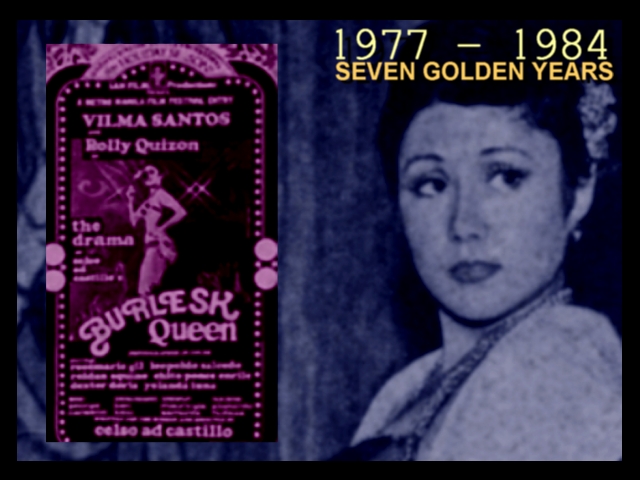
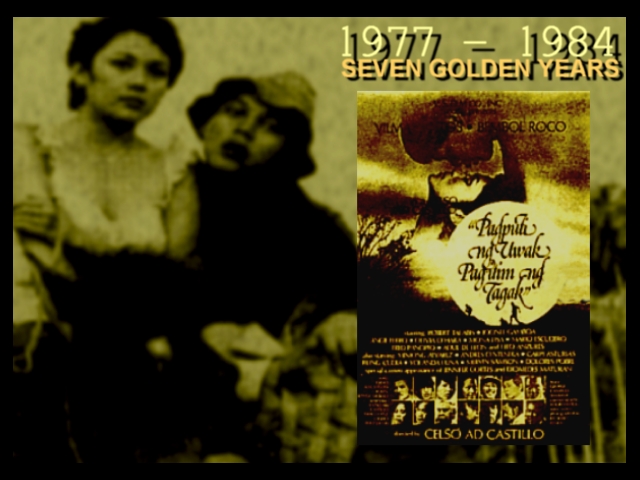


 Star For All Seasons
You must be logged in to post a comment.