Vilma Santos-Recto is a popular multi-awarded actress and politician in the Republic of the Philippines. *** She is known as "Queen of Philippine Movies," "Queenstar," "Grand Slam Queen," "Box Office Queen," and "Star for All Seasons." *** This website is mostly about her iconic film career.
Many have probably observed that not only the superstars’ image are larger than life but also their problems. With their rise to the top, they get to command astronomical fees but their problems also become bigger and pile up on them. Two superstars who have been much talked about as a result of their fights to keep their pretty heads about the troubled waters of their domestic and financial affairs are Nora Aunor and Vilma Santos. Both Guy and Vi conducted a rivalry for the movie queen crown in what seemed like only yesterday – when their days were more care-free and everything came up roses and the world was at their feet. Now the world’s pressing down on them. They have had to contend with sleepless nights and keeping the BIR and creditors from their doors after seeing their marriages go phfft and their careers wax hot and cold. Strange how these two superstars who have captivated the movie audiences as only Rosa del Rosario and Carmen Rosales had done in their heyday could have such parallel ups and downs. Accordign to the latest reports, both Nora and Vilma appeared to have surmounted most of their financial woes or keep them to a manageable level. But on the domestic side, both of them seem to have been faring with little success. Vi is still poles apart from Edu, her hypersensitive husband, but has not ruled out a reconciliation. She has spurned overtures from many roving romeos, emphasizing that she’s a one-man woman, not a one-man-at-a-time woman. In the case of Guy, she has to face the reality of a permanent estrangement with Boyet de Leon, especially now with reports of Sandy Andolong’s expecting a visit with the stork soon.
To top it all, Nora has not been spared from vicious rumors lately. One has to do with her and Christopher de Leon’s marriage being allegedly null and void since the priest who conducted their most unusual wedding rites by the shoreline supposedly wasn’t authorized to do so. In an interview with Inday Badiday, who was a witness to the wedding rites, Guy belied the scuttlebutt. She pointed out that the priest had solemnized other weddings besides theirs. She said that it was her ninang, Kitchie Benedicto, who got the priest. “Mataas ang pagtinging ko kay Ate Kitchie,” Guy said. “Siya’y isang tao na maasahang tama ang gagawin. Ang masasabi ko sa mga taong nagsasabi niyan, tigilan na nila ako. Huwag nang alang-alang sa akin kundi sa aking anak. Baka makaapekto sa bata.” There wasn’t any trace of bitterness in her voice of face when Guy said all these. She was a picture of a woman composed and able to take her dose of medicine. Vi exhibit the same equanimity. They have both apparently learned to take good with the bad, how to handle success and dissabpointments as well. “Mature na ako ngayon,” Guy told Inday Badiday. “Remember, noong araw, kung may problema ako, tinatawagan ko lahat ng kaibigan ko. Nagkukuwentuhan kami sa bahay at pag naubusan ng kuwento, lumalabas kami. Ngayon, kung may problema ako, nagiisa ako sa bahay.” The other rumor has to do with her adopted daughter, Lotlot. The child’s real mother allegedly wanted to claim her back afterl all these years. Our ed, Mar D’Guzman Cruz, was privy to the mother’s signing of Lotlot’s adoption papers at the city jail fo Olongapo about 10 years ago.
The child was about 10 months old at the time and every inched looked undernourixhed. Lotlot, now in the pink of health, shows signs of growing up into a pretty young lady. A fourth graded at St. Paul’s College, she’s been raised in a convivial atmosphere and believing she’s nobody’s child but Nora’s. Now comes this disturbing rumor. Nora is most concerned about it because of its possible traumatc effect on Lotlot’s tender mind. Our ed quoted Nora as reassuring Lotlot. “You and Ian are both my children. The only difference is that Ian came directly from me while you are God’s gift to me. You were given to me by the Sto. Nino.” These unsettling rumors notwithstanding, Nora can look forward to a brighter tomorrow. She expects that her doing the prestigious Himala for the ECP will work wonder for her flagging career. She has learned her lesson about accepting every offer that came her way. At this critical stage of her career, she knows she’ll have to be more discriminating in her choice of offers and make less but more prestigious pictures that will advance her stature as an actress. Vilma voices the same sentiments in this regard. Nora not only sold her Valencia residence but moved out of Corinthian Gardens to a newly constructed house in a subdivision at Tandang Sora, a stone’s throw away from Broadcast City. The pictures of her house, which appeared in Movie Flash, show it is spacious and well appointed in the interior (there’s a giant screen and a Betamax machine in one nook). Two cars are on the driveway – a Datsun 1800 and a Mercedes Benz 230. The new location may be less exclusivistic than her last place of abode but it’s in keeping with her decision to live a less flambouyant lifestyle out of necessity. The BIR agreed to Guy’s settling her tax obligations on a compromise basis.
The same considerations held true in Vi’s tax cases. With no more threats of levies of restraint or destraint on their properties and bankbooks, both of them can now think more positively about a lot of things in their minds. Both Nora and Vilma admitted to having a cavalier attitude on their fortunes as a result of their heady successes as superstars. Both of them thought there was no end to the good days until the heady bubble of their successes burst and they discovered they were back to square one. Vi admitted to being in the red to teh tune of seven million pesos. “How could I have incurred all that debt?” she asked herself askance. Nora must have the same bewildered expression. They made all those millions and had housefuls fo hangerson to cheer them up. Now, there’s only loneliness to keep them company and an uncertain future to look forward to. But one thing in their favor, they’re still young and their careers can easily take an upswing if they put their hearts and minds to it. Vi has been doing exactly this. She set to put her financial record in order. She sold her Tahanan Village house and never mind if she took a loss since she needed the cash. With the success of Sinasamba Kita and producers flocking to her door with offers of two or three pictures contracts, Vi was assured of bailing herself out of her financial straits. But she took care to commit herself cautiously and reserving the right to choose her roles. Now hot again, she was able to make the last payment on her tax arrears. Vi’s now left with two problems to rackle, according to reports. One is a P700,000 debt with a financing company that was due last Oct 10.
The other is her plush Magallanes residence. She wanted to sell it because she has to pay interest on the loan she got to build it and to cut down on her expenses. The house has become impractical to maintain now that her sisters have moved to Papa Santos’ house. And with Edu having flown the coop, there only her, son Lucky and Papa Santos (temporarily keeping them company) at her Magallanes abode. The other rooms in the large house are now empty. Mama Santos left for the States reportedly to work as a credit card analyst and help care for daughter Winnie’s brood. Like Guy, Vi’s looking for smaller place to live in. Vi’s venture into movie production proved disatrous. She burned her fingers with her very first attempt, Pagputi ng Uwak, Pagitim ng Tagak. Guy has had more luck as well as disppointment in her venture as producer. She went to her NV Productions offices which have been lond idled to clean up the premises preparatory to going back into production with a vengeance. Guy’s also mulling putting up her own recording company. As a recording star, Guy made fortune for Buddy de Vera. Vilma also made William Leary happy with her records. Now that she’s got her bearing back, Vi’s determined not to repeat past mistakes. She reportedly got her ninong, Atty. Espiridion Laxa, as legal adviser in her business affairs. There have been offers reportedly made to Vi to team up with Romeo Vasquez and Alona Alegre in a triangle opus. But someone close to Tagalog Ilang-Ilang Productions said Vi’s going to the States this December to attend to some matters and she’ll do a picture there with Romeo Vasquez.
There have been offers also to Nora reportedly to ream up with Tirso Cruz III and Christopher de Leon in a similar triangle-minded flick. These offers are gimmicky, considering that the castings hit close to their homebases. But don’t they affirm the parallel turn of events in their love lives? They say when you’re up there, no other place to go but down. Guy has been in showbusiness for 16 years and her TV show, Superstar, has been running for 15 years. Vi has been in showbusiness even longer, having started out as a child star. She’s also got her own TV show again, V.I.P. Both Guy and Vi have shown great resilliency for two petite and frail-looking beauties. But looks can be deceiving. They are pretty tough inside. They’ve been exposed to the wayward winds of fortune and tempered in the process like well-seasoned bamboo. They will probably survive long after the young pretenders riding the current love bandwagon have spent themselves out like brief, bright shooting stars. – Danny Villanueva, Movie Flash Magazine, November 18, 1982 (READ MORE)
NOTE: As of 2012, Vi is now a certified politician and happily married to Senator Ralph Recto while Guy remained happily single. Now, both in their retirement years, both remained actively in demand in local entertainment scenes.
Pre-1978 – 1977 was a very productive year for Nora Aunor. She did twelve films (Bakya Mo Neneng; Disco Baby; Ibilanggo si Neneng Magtanggol; Little Christmas Tree; Pag-ibig Ko’y Awitin Mo; Panakip-Butas; Pinakasalan Ko ang Ina ng Aking Kapatid; Roma Amor; Sapin-sapin, Patung-patong; Silang Mga Mukhang Pera; Tisoy; Wanakosey), mostly commercial films. The most notable ones were “Little Christmas Tree” with FPJ and “Bakya Mo Neneng” wirh Joseph Estrada. Vilma Santos on the other hand did only five films (Burlesk Queen; Dalawang Pugad, Isang Ibon; Masarap, Masakit ang Umibig; Pulot-gata, Pwede Kaya?; Susan Kelly, Edad 20) all were a smash hits. Vilma ended the year with a triumph at the December festival with her entry, “Burlesk Queen,” earning her a controversial best actress award and the film ended aa the top grosser of all the film entries.
“…In 1977, it was apparent that the actress in Vilma Santos fully emerged when she won the MMFF Best Actress award for the controversial Celso Ad Castillo period drama Burlesk Queen. Unfortunately, her winning was marred by nasty talks (na kesyo binawi ang mga napanalunan ng pelikula, including Vi’s trophy or medallion.) It seems nakaapekto ‘yun sa awarding na pambuong taon: at the FAMAS, Vilma lost to Susan Roces (for Maligno, also by Castillo); and, at the Gawad Urian, to Daria Ramirez (for Eddie Romero’s Sino ’ng Kapiling, Sino’ng Kasiping?). As for Nora Aunor, matapos ang grand entrance niya sa big league bilang major award-winning actress (with a double victory, unmatched at the time), isang actionromance- drama ang kanyang nagging panlaban: Augusto Buenaventura’s Bakya Mo Neneng, which paired her off with Tirso Cruz III and Joseph Estrada. The film won as Best Picture sa FAMAS. Nora’s and Vilma’s starrers were big moneymakers at the 1977 MMFF…” – William Reyes (READ MORE)
The duel of Victim Roles – “…1978, Sa dinami-dami ng natamong karangalan nina Vilma Santos at Nora Aunor, interesting point of discussion pa rin among their followers ang nangyaring acting duel nila in the 1978 MMFF. Vilma was handled for the first time by Lino Brocka in Rubia Servios, produced by Sampaguita-VP Pictures. Vi enacted a rape victim na naghiganti sa kanyang rapist (Phillip Salvador) at napawalang-sala. On the other hand, Nora had Eddie Garcia for her director in Atsay, a serious look on housemaids, as written by the award-winning Edgardo M. Reyes and lensed by ace cinematographer Romeo Vitug. Sa MMFF that year, walang ibang acting category na mapapagwagian maliban sa Best Performer award, na si Nora ang nagwagi. “The triumph of restrained acting!” ayon sa sumunod na ulat matapos ang Gabi ng Parangal. All the while, perhaps almost everyone thought it would be Vilma Santos who’d get the award, dahil si Brocka na ang director niya. May talk show (the late Inday Badiday’s Would You Believe?) na sadyang iniangat ang pag-asa at pag-asam ni Vi na siya ang mananalo. At the awards night, papasok pa lang daw si Vi sa CCP Main Theater (venue ng rites), nilapitan agad siya ni Marichu “Manay Ichu” Perez-Maceda (her producer, na kabilang sa MMFF committee) and whispered: “I’m sorry, Vi, it’s not for you…” Nag-stay si Vi hanggang matapos ang ceremonies; nakipalakpak siya when her rival was declared winner. Katabi niya sa upuan si Christopher de Leon (Garrotte: Jai Alai King), who also lost. Ayon sa grapevine, naglasing si Vilma sa tindi ng siphayo. “Ang sakit, Manay!” Vi reportedly told Ichu, who also produced many of Nora’s earlier movies which made millions of pesos. In the Gawad Urian and FAMAS, naparangalan naman si Vilma, bilang producer ng Pagputi ng Uwak, Pag-Itim ng Tagak which won as Best Picture. That year, mayroong pinagsamahang movie since Nora at Vilma, TIIP’s Ikaw Ay Akin na dinirek ni Ishmael Bernal, for which they were both Best Actress nominees at the Urian, but lost to Beth Bautista (for Danny Zialcita’s Hindi sa Iyo ang Mundo, Babyb Porcuna). Sa FAMAS, hindi rin para kina Vi (Pagputi) at Nora (Atsay) ang Best Actress statuette, kundi kay Susan Roces (for Brocka’s gothic drama Gumising Ka…Maruja!). Fair enough?…” – William Reyes (READ MORE)
Nora Aunor’s Films (11): (Atsay; Bakekang; Das A Las of Nonsense; Huwag Hamakin: Hostess; Ikaw ay Akin; Isinilang Ko ay Hindi Ko Tunay na Anak; Jack N Jill of the Third Kind; Mahal Mo Mahal Ko; Mga Mata ni Angelita; Pinagbuklod ng Pag-ibig; Sa Lungga ng mga Daga) – After the success of Kaming Matatapang ang Apog, Nora Aunor reunited with Dolphy in a smash hit, Jack and Jill of the third Kind, one of the few notable films out of eleven films she did this year. Her year ended with the success of her filmfest entry, Atsay winning her the historical best performer award and beating her rival Vilma.
Vilma Santos’ Films (13): (Mga mata ni Angelita; Amorseko: Kumakabit, Kumakapit; Bakit Kailangan Kita?; Kampus; Disco Fever; Ikaw ay Akin; Nakawin Natin ang Bawat Sandali; Pag-ibig ko sa iyo lang Ibibigay; Pagputi ng Uwak, Pag-itim ng Tagak; Pinagbuklod ng Pag-ibig; Promo Girl; Rubia Servios; Simula ng Walang Katapusan) – Unfortunately, Vilma’s successful year ended in a sour note, as she failed to win the festival award for a film, directed by Lino Brocka despite insider’s predictions. The only consolation again, was that the Rubia Servios remained the top grosser of the festival.
Nora Aunor’s 1978 acting recognition (3) – Best Performer from Metro Manila Film Festial for “Atsay” and Best Actress nominations from FAMAS (“Atsay”) and URIAN (“Ikaw ay Akin”).
Vilma Santos’ 1978 acting recognition (3) – Best Performer nomination from Metro Manila Film Festival for “Rubia Servios” and Best Actress nominations from FAMAS (“Pagputi ng Uwak, Pag-Itim ng Tagak”) and URIAN (“Ikaw ay Akin”).
Victim: Nelia – “…Atsay is remarkable in several ways. It has a strong social message, aimed at primarily those who forget that maids are also human beings…The most grievious sin of all is the ending. In the end, Nelia (Nora Aunor), after having been humiliated, beaten, raped, dehumanized by the vultures of the city, decides to stay in the city anyway in the hope that an impoverished construction worker (Ronald Corveau) will make her live happily ever after. Such ending, while assuring the viewer that human nature is not totally evil, is unmotivated and, in fact, goes against the very theme of the story. For Atsay is the story of how the city dehumanizes, of how human beings become swine (this point is made through blatant symbolism in a shot of Nelia inside a cage-like jeep), of how Manila is a prison (note Vitug’s several shots of cage-like structures). “Atsay” is a story of how individuals are no match against the cruelty of the city. The construction worker, for example, becomes the victim of a construction accident. A young pretty virgin from the province is raped while she’s drugged. A kind-hearted old man is shot down while protesting against exploitation. The ending of Atsay contradicts the film’s affirmations. It would have been much more in keeping with the theme (not to mention the current concerns of the national human settlements program), if Nelia were shown rejecting the city and, in hope, returning to her province for a new life….” – Isagani Cruz, TV Times 1979 (READ MORE)
Victim: Rubia – “…Simplistiko ang materyal at lalong simplistiko ang pamamaraan ni O’Hara sa karakterisasyon. Nagmumukha tanga ang mga tauhan (si Rubia at si Norman) samantalang medical students at naturingang doktor pa naman sial. Tinatakot na sila’y hindi pa sila humingi ng proteksiyon sa pulis. Ginahasa na si Rubia ay nakipagtagpo pa sa sementeryong madilim nang nag-iisa at nagpaganda pa mandin siya nang husto. At ang asawa niya’y wala ring utak. Biro mong sinundan ang asawa sa sementeryo nang nag-iisa! Dapat nga palang magkaganito sila kung napakakitid ng kanilang utak. Sa direksiyon ni Brocka, lumitaw ang galing ni Vilma Santos, at nakontrol ang labis na pagpapagalaw ng kanyang labi. Mahusay din ang eksena ng gahasa. Si Philip Salvador naman ay tulad sa isang masunuring estudyante na sinusunod lahat ang direksiyon ng guro. Kitang-kita mo sa kanyang pagganap ang bawat tagubiling pinaghihirapan niyang masunod: kilos ng mata, buntong-hininga, galaw ng daliri, kislot ng kilay. Limitado ang kanyang kakayahan at makikia ito sa kanyang mukha (na limitado rin). Walang-wala rtio si Mat Ranillo III, na parang pinabayaan para lalong lumitaw ang papel at pag-arte ni Salvador. Samantala, ang kamera ni Conrado Salvador ay hindi gaanong nakalikha ng tension at suspense, bukod sa napakaliwanang ng disenyo ng produksiyon ang pagbabago ng mga tauhan sa loob ng pitong taon batay sa estilo ng damit at buhok…” – Justino M. Dormiendo, Sagisag, February 1979 (READ MORE)
Post-1978 – 1978 confirmed the hot rivalry between Nora and Vilma, and their supremacies in the box office. This year also featured them in three films together, in “Ikaw Ay Akin,” an Ishmael Bernal’s take on a modern love-triangle; “Pinagbuklod ng Pag-ibig,” where they share a few minutes of screen time as the film was basically two parts, one was the story of Nora and Tirso Cruz III and the other was Vi with Romeo Vasques; the last film was the smorgasboard casted, “Mga Mata ni Anghelita,” featuring the late Julie Vega. Vi and Guy did not share a screen time but have a separate segments with the Julie, Guy was the “street sweeper” and Vi was the “worried wife.” The following year, Nora Aunor and Vilma Santos did eight films each. It was Nora Aunor’s turned to be directed by Lino Brocka. She did “Ina Ka ng Anak Mo” with Lolita Rodriguez a festival entry. Vilma’s entry was “Modelong Tanso” directed by Cirio Santiago and with Charito Solis. Nora’s Brocka’s film rewarded her with three accolades, two best actress from FAMAS and the local festival and a nomination from Urian. Vilma’s Modelong Tanso failed to earned her or Charito any acting nods. The only consolation was its one of top grosser at the festival. Vilma’s only acting accolades post Rubia was a nomination from FAMAS for “Halik sa Paa, Halik sa Kamay,” a film directed by the late Eddie Rodriguez.
“…Whew, ang bigat! Talaga nga palang napakahirap ang masabit sa showbiz, lalo pa nga kapag hindi ka sanay sa mga intriga. More pa kung nasa gitna ka ng dalawang nag-uumpugang bato. Mapadikit ka lamang sa isang side, aakalain na ng kabilang bato na kampi ka na sa kaumpugan nila at vice versa. Ito ngayon ang nangyayari sa akin, mula nang mapasabit ang pangalan ko bilang manghuhula kina Vilma Santos at Nora Aunor, pakiramdam ko ba sa sarili ko’y parating nasa alanganin. Dapat nga ay may article akong susulatin na ang pamagat ay “Si Nora Aunor at Vilma Santos…Sa Paningin ng Isang Manghuhula” na lalabas din sana sa komiks magazine na ito, pero dalawang buwan na ang nakakalipas, hindi ko pa maisulat-sulat, kasi nga ayokong masabit sa gulo. Pero ang nangyari, ang kinatatakutan ko’y naganap din. Could be na pag labas ng artikulong ito, mayroon na kayong narinig sa radyo o nabasa sa mga komiks magazines na mga pagpuna sa mga ipinahayag ko sa programa ni Inday Badiday, ang “Would You Believe” noong ako’y mag-guest dito noong August 4, 1978. Although it looked na, I am pro-Vilma, based on my statements on the said program, I am not. In fact, we were never close. Dalawang beses ko lamang siyang nakaharap nang personal at sa dalawang meeting naming iyon, it was a pure psychic-client meeting.
Sa madaling salita, kung paano ko hinaharap bilang manghuhula ang aking mga kliyente ganoon ko din hinarap si Vi. (Si Vi mismo ay makapagpapatunay nito.) Kung madalas man ninyong mabasa sa mga komiks na nakakabit ang pangalan ko kay Vilma, it’s simply because I am close to Cleo Cruz, Vi’s confidante and PRO, and to Chito Memije, Cleo’s hubby. At dahil nga close ako sa dalawang ito, ‘pag may vibes ako sa maaaring mangyari kay Vi, tatawagan ko sila, o kaya naman si Cleo ang tatawag sa akin, kung gusto niyang sumulat tungkol sa mga hula ko kay Vi. Sa awa naman ng Diyos, kung hindi man lahat, at least, halos lahat ng mga inihula ko kay Vi ay nagkatutoo. Siguro, kung may PRO lamang si Guy na malapit sa akin, ginawa ko rin sa kanya ito. Ang kaso, wala eh. Kaya nga, noong unang telecast ng ‘Would You Believe,” nang maging guest din ako, nang mamataan ko sina Baby K. Jimenez at Mercy Lejarde na mga PRO ni Guy, lumapit ako agad at sinabi ko sa kanila ang tungkol sa nabavibes kong maaaring maging sakit ni Nora Aunor sa tiyan. ‘Di ba na-publish pa iyon, nagkatutoo ang sinabi ko, dahil nang magpatingin si Guy sa doktor niya, natuklasang siya ay may slight kidney trouble. ito pa nga rin ang dahilan upang sa pangalawang pagkakataon, pagkaraan ng kung ilang taon, ay maisipang muli ni Guy ang magpahula sa akin.
Ang hulaan session naming iyon ni Guy, siguro, may ilang beses munang na-cancelled bago natuloy. Ako na mismo ang gumawa ng paraan. Kinansela ko ang appointment ko for that day, para lang matuloy ang aming meeting. Sina Deo Fajardo at Mercy Lejarde ang sumundo sa akin ng mga bandang pasado alas-tres na yata ng hapon. Akala ko, sa Valencia residence ni Guy gagawin ang hulaan session, iyon pala’y sa labas ng Maynila. Deep down inside me, during our trip, going to the place where Nora Aunor was taping “Guy and Pip Special,” I felt bad. Naasar ako, kasi wala sa usapan namin na ganoong kalayo ang lugar na aming tagpuan. Sabi ko sa sarili ko, kung mayroon lang akong sariling sasakyan, bumalik na sana ako, hindi na baleng hindi na matuloy ang hulaan at hindi na ako kumita. Halos madilim na nang sapitin namin ang said place. Nang makaharap ko si Guy at batiin niya ako ng “hi, kuya Rene,” para akong nabuhusan ng malamig na tubig, lahat ng inis ko at sama ng loob nawala. Nag-taping pa muna si Nora ng ilang scenes sa tv special nila bago nagpahula. Hindi ko tatalakayin kung ano ang mga hulang iyon dahil tiyak nabasa na ninyo iyon bilang isang article na isinulat ni Mercy Lejarde, I think sapat ng sabihin kong, lahat ng isinulat ni Mercy sa article na iyon ay tutoong sinabi kong lahat.
Pagkatapos ng hulaan namin ni Guy sa Novaliches, together with Mercy, tumuloy kami sa Valencia residence ni Guy. Nilibot ko ang buong kabahayan, pinakiramdaman ko kung may malas sa bahay na iyon. The house itself is not malas, sa katunayan nga, ang atmosphere, hindi lang bahay, talagang home. Anyway, sa paglilibot naming iyon, na-confirm, ang sinabi ko kay Nora na may object sa bahay niya na nagbibigay sa kanya ng kaunting malas noong nasa Novaliches pa kami. “It is,” sabi ko, “isang maliit na swords na naka-display.” Sagot naman ni Guy, “Wala akong matandaan, kuya Rene.” Kaso nga, sa paglilibot namin sa Valencia residence, among her antique collections, nakita namin ang dalawang antique na letter opener na ang hitsura ay talagang maliliit na swords. Past twelve midnight na nang iwanan ko ang Valencia residence. si Guy pa mismo ang nag-asikaso na maghahatid sa aking pag-uwi. Inihatid pa nga niya kami hanggang hindi nakakalabas ng daan ang aming sasakyan. I remember tumawag pa si Douglas Quijano, si Guy pa ang nag-relay ng message, pero dahil gabi na, hindi ko na kinausap si Douglas. With all honesty, I was touched by Nora’s hospitality. More pa, nang nasa bahay na ako at matuklasan kong ang ibinayad pala ni Guy sa akin ay times five ng usual fee na aking tinatanggap ‘pag ako’y nagho-home service.
And would you believe, may tatlong linggo muna ang nagdaan bago ko nagamit ang perang iyon, at sapilitan pa. Siguro, kung hindi ako talagang gipit sa pera ng mga panahong iyon, hanggang ngayon nasa wallet ko pa ang perang ibinayad ni Guy sa akin. Hindi lang bilang souvenir kundi as my lucky money, naniniwala kasi ako na ang suwerte ni Nora Aunor ay likas, at siyempre, anything na galing sa kanya ‘pag bigay niya sa kin, maaaring magbigay rin ng suwerte sa buhay ko. Si Vilma Santos, may ginawa rin ba sa iyo na na-touched ka rin? Marahil maitatanong ninyo. Ang sagot ko, yes. Simple as it may seem, I was really touched when she called me personally just to give her thanks. It happened twice. Iyong una, noong maging guest din ako sa premiere telecast ng ‘Would You Believe” at mayroon isang scribe doon na nagsabi na si Nora Aunor lamang ang maituturing na superstar ng Philippine Movies, umiling ako na tanda nang ‘di ko pagsang-ayon. At ang ikalawa naman ay naganap the following morning after I guested again sa same program, the previous night, na kung saan ko nga ipinahayag na as of now, meaning year 1978, si Vilma Santos ang itinuturing kong superstar ng Philippine Movies. I could still recall, I told Vi during our telephone conversation, na wala siyang dapat na ipagpasalamat sa akin dahil iyon naman ang tutoo.
In short, ang ibig kong iparating kay Vi, I gave those statements not because I wanted to please her or to show to the public that I am a Vilmanian (although parang ganoon nga ang naging impression ng public) kundi dahil bilang isang manghuhula, iyon ang na-vibes kong mga pangyayari sa daigdig ng pelikula. Kung tutuusin nga, inulit ko lang ang statements kong iyon. Late 1967, sinabi ko kay Vi, kay Mama Santos at kay Cleo Cruz, na kung magiging buo at determinado ang isip ni Vilma sa kanyang career, sa mga taong 1977 at 1978, siya ang tatanghaling superstar. Siguro, ngayong naipahayag ko na sa inyo ang mga pangyayari bago naganap ang mga misinterpretation at samaan ng loob na resulta ng pag-guest ko sa “Would You Believe,” makikita ninyo na kahit na kanino sa dalawang ito, kay Vilma at Nora, ay hindi ako naging close. At dahil sa parehong nagpakita ng kabutihan sa akin, wala akong right na bigyan ng sama ng loob kahit na sino sa kanila. Sira na siguro ang ulo ko kapag sinaktan ko ang loob ng kahit na sino sa kanila, and I believe, hindi pa naman ako sira. So, ipinasiya kong kailangang neutral ako. Alam mo palang dapat neutral ka, eh bakit ang mga pahayag mo’y masyadong maka-Vilma. Tiyak iyan ang say ng ilan sa inyo na masama ang loob sa akin. Let me explain. Exactly nine o’clock ng gabi, nang dumating kami sa istudyong pagdadausan ng “Would You Believe.” I remember, I was the one who suggested kay Inday Badiday na tanungin ako tungkol kay Guy at Vi para maging interesting ang subject matter namin ng gabing iyon. Ang talagang plano ko noon, ay para ipakita sa public na sang-ayon sa mga na-vibes ko sa dalawang ito bilang isang manghuhula, bawa’t isa sa kanila ay mayroong kanya-kanyang accomplishments sa movie world, kaya hindi puwedeng paglabanin o kaya naman ay ikumpara si Vi kay Guy, si Guy kay Vi. Kaya nga, nang i-on na ang show at tanungin na ako ni Inday, ang sagot ko’y, “Pareho ko nang nahulaan sina Vi at Guy, at kung tatanungin ninyo ako kung sino ang mas superstar sa kanilang dalawa, para nang itinanong ninyo sa akin kung sino ang mas banal si jesus Christ ba o si Gautama Buddha? “At dahil sa naisip ko na hindi masisiyahan sa ganoong kasagutan ang viewing public, idinugtong ko na sa taong ito 1978, dahil ang suwerte ay nasa side ni Vi, si Vi ang superstar.
Nguni’t hindi nangangahulugang hindi na superstar si Guy, kaya lamang ang taong ito para sa kanya ay hindi gaanong masuwerte, I would say. This is a very emotional year for her, meaning madalas siyang makakaranas ng mga emotional turmoil na maaaring makaapekto sa mga decisions niya na may kinalaman sa kanyang career sa movies. During the show, may isang manghuhula rin na katulad ko na nag-comment, na ang hula naman niya ay hindi na magkakabalikan sina Guy at Boyet. Nang ako naman ang tanungin, ang sagot ko’y may posibilidad na magkabalikan pa, ang ibig kong sabihin hindi tiyak na magkakabalikan pero may pag-asa, ang dahilan ko’y…mas mahal ni Guy si Boyet kaysa kay Pip. Bakit ko nasabi ito, ano ang batayan ko? Well, nang hulaan ko si Guy sa Novaliches, isang quality na na-vibes ko kay Nora na hinangaan ko ay ang kanyang pagiging ina. In other words, handa si Guy na ipagpakasakit ang kanyang pansariling kaligayahan alang-alang sa kanyang anak. Dahilan dito, na-conclude ko na kung kailangan, para kay Ian, muli niyang pakikisamahan si Boyet na siyang ama ng kanyang anak. Siyempre, dahil ama ni Ian, mahal niya. After sometime, the same manghuhula, predicted naman na sa last part daw ng taong ito 1978 hanggang sa susunod na taon 1979, magkakalaban daw sa pagka-superstar sina Charito Solis, Nora Aunor at Alma Moreno, hindi niya binanggit si Vilma Santos.
Nang ibigay naman sa akin ang pagkakataon para magsalita, ang sabi ko’y hindi maaaring labanan nina Guy at Ness si Chato dahil isa na itong institusyon. (Si Inday ang nagsabing institusyon, nang makita niyang hindi ko maapuhap ang right word to describe Charito Solis.) Sabi ko pa, ang magkakalaban-laban sa last part ng taong 1978 ay sina Nora Aunor at Alma Moreno, at dahil nga hindi na-mentioned ang pangalan ni Vi, nawala na rin sa isip ko, hindi ko tuloy nabanggit. Ang dapat talagang sabihin ko’y sina Vilma, Nora at Alma ang maglalaban-laban sa pagka-superstar. Sa pagwawakas ng show, bigla na lamang akong tinanong ni Inday, na sa pandinig ko…ang tanong niya’y, “Rene, as of now, sino para sa iyo ang superstar?’ ang sagot ko, “VILMA SANTOS.” I think na-explain ko na ang dahilan kung bakit nasabi kong si Vi ang superstar, sa bandang kalagitnaan ng article na ito, kaya hindi ko na tatalakayin pang muli. Pero I want to stress the point na hindi porke sinabi kong si Vi ang superstar, hindi na superstar si Guy. Kung itatanong ninyo sa akin, ano si Guy para sa iyo, kung sa ngayon si Vi ang kinu-consider mong Superstar, ang sagot ko, sang-ayon sa mga vibes na na feel ko noong naghuhulaan kami ni Nora. Si Guy lamang ang masasabi kong, sa mga artistang nahulaan ko rin naman, siya lang ang may likas na magandang kapalaran, kaya nga, siya lang ang maituturing kong phenomenal superstar ng Philippine showbiz.
But, and this is with a big BUT…Guy’s strature sa movies (I am sorry to say this but i think I have to) as of now, is dwindling. Ang maipapayo ko kay Guy, kailangang pagbuhusan niya ng buong panahon at konsentrasyon ang pelikula niyang “Atsay” sapagka’t, bilang isang manghuhula ang pelikula niyang ito ang vibes kong maaaring magtaas na muli sa kanyang dating kalagayan. Sa palagay ko, sa pamamagitan ng article kong ito, naayos ko na ang mga kaguluhang nalikha ng pag-appear ko sa “Would You Believe” at sa pagpapahayag ko sa programang ito na si VILMA SANTOS ang Superstar ’78. Ngayon kung sakali naman na may mga tao pang gustong gumawa pa ng pakulo sa bagay na ito, bahala na lang sila. Inuulit ko, wala akong pinapanigan between Vilma and Guy. Hindi ko rin naman kinakaila ang pagka-phemonenal superstar ni Guy at lalong hindi ko mababawi ang sinabi ko bilang isang manghuhula, sa ‘WOULD YOU BELIEVE” noong gabi ng August 4, sapagka’t iyon ang tutoo sang-ayon sa vibes ko, na…it’s VILMA SANTOS, who reigns supreme sa box-office, therefore, siya ang Superstar 1978!…” – Rene Mariano, Weekly Mars Ravelo Komiks, September 7, 1978 (READ MORE)
Figure 1: Best Actress from FAMAS, Gawad Urian, Film Academy of the Philippines, and CMMA
The oldest award giving body in the Philippines was the Filipino Academy of Movie Arts and Sciences simply called FAMAS. It was launch two years after the Maria Clara awards folded in 1951. FAMAS shared the same name with the American film academy; AMPAS until the later complained and the Filipino organization have to change theirs into the current acronym. FAMAS created a history of controversies throughout their more than sixty years in award-giving business mostly due to their questionable selection of winners. In 2006, FAMAS experienced another setback when two groups divided the organization due to a controversial election of its officers. As the legal battle settled, the battling groups decided to just hand out their own awards, one used the name FAMAS and the other the Maria Clara Awards. Like its infancy, the Maria Clara Awards did not reach its maturity and died the second time. This is not the first time FAMAS experience disgruntled “break-away” members forming their own award. Prior to 1976, FAMAS retained their status as the most prestigious recognition a Filipino actor could have. Charito Solis, who won best actress at the Asian Film Festival in 1967 used to proudly bring her FAMAS trophies on the film set to intimidate starlets and to instigate professionalism. The breakaway group of critics wish to distinguish themselves from FAMAS by successfully branded their award as not for actors who overtly act in films, they catered to the ones who are restrained and controlled. Hence, the term “Pang-FAMAS na acting” was born, which means over-acting.
The new group of practicing critics handed out their first award in 1976 and called themselves as the Manunuri ng Pelikulang Pilipino (The Filipino Film Critics) and their awards as Gawad Urian. The critics created a name for its credible choices of winners throughout the years. This untainted reputation made the Gawad Urian, the most sought after award in the Philippines.
Two years after the critics handed out their Gawad Urian, the Catholic Church joined the derby by handing out their own version of movie awards. The Catholic Mass Media Awards came to fruition in 1978 with the late Cardinal Jaime Sin in charge of the ceremony. CMMA honour not only films but also television, print, radio, and recently advertisement.
Five years afterwards, came the establishment of the Philippines’ counterpart of OSCAR. Consists of different guilds, the very first academy awards, now called Luna Awards, handed out in 1983. After 25 years, the Luna Awards cemented a reputation as “the popularity contest awards,” which means each guild votes for their favourites and not necessarily about merits. They tried very hard to adopt a new set of voting rules including different nominating group that represented each guild to resolve this issues but like the OSCAR, the results are sometimes questionable. The common consensus was that the Luna Awards remained far behind Gawad Urian. Two years after the creation of Film Academy of the Philippines’ Luna awards, another group joined the award giving business.
The Philippines Movie Press Club or the PMPC handed out their first Star awards in 1985. The Star awards were considered the Philippines’ counterpart of the Golden Globes. And like the Golden Globes, the Star also honours television. The only difference is that the Star Awards hands out their film and televisions ceremonies separately. Consists of publicists and entertainment writers, who are member of PMPC (Philippine Movie Press Club) the Star Awards followed the footsteps of Gawad Urian with very credible choices of winners but just like FAMAS, the Star Awards experienced the same fate with a disgruntled members formed their own version of the same awards. The Entertainment Press Society was born with their Golden Screen Awards in 2004.
Today, in addition to the Gawad Urian, FAMAS, Luna, CMMA, Star Awards, and Golden Screen, we also have the PASADO awards from an organization of academics; the YCC, Young Critics Circle Awards from a group of film students; the Gawad Tanglaw from an organization of film and arts’ instructors. Lately, the OMG Awards by the internet company, Yahoo Philippines, and the MTRC Awards by the board of censors joined the now, overcrowded award giving bodies.
Before 1982, the word grandslam were only used in sports. The term grandslam according to Wikipedia in terms of tennis is a singles player or doubles team that wins all four major tournaments (Australian, French, Wimbledon, US) in the same calendar year, is said to have achieved the “Grand Slam” or a “Calendar Year Grand Slam,” just like what Steffi Graf, the retired German tennis superstar did in 1988. Meanwhile the American Heritage dictionary described the term “grand slam” as follows: first, the winning of all the tricks during the play of one hand in bridge and other whist-derived card games. Second, the winning of all the major or specified events, especially on a professional circuit. And third, in baseball, a home run hit when three runners are on base. From this set of definitions comes the term “grand slam best actress” which basically winning all the best actresses awards from all major award giving bodies. And in 1983, the four majors were FAMAS, Gawad Urian, CMMA, and the FAP (or Luna now).
The Beginning – The Marcos administration created the Film Academy of the Philippines in 1981 under the guidance of first lady Imelda Marcos and Imee Marcos as Experimental Cinema of the Philippines’ director-general. ECP started to ambitiously produced films to showcase local talents for its inaugural Manila International Film Festival. The organization produced two memorable films, Peque Gallaga’s period film, “Oro, Plata, Mata” and Ishmael Bernal’s French influenced film, “Himala.” Come Gawad Urian night, both films received its stiff competitions from three other films, Mike Deleon’s “Batch ’81,” Lino Brocka’s “Cain at Abel” and Marilou Diaz Abaya’s “Moral.” For the Manunuri, the previous year produced only two stand out films, Mike De Leon’s Kisap Mata and Laurice Guillen’s Salome. A big contradiction this year, as not only they have the tasks of sorting out the best in each categories from these five films mentioned above but also other worthy films. Famous with their long heated debates, the local critics added the following films in their list of best films: Nora Aunor’s “Mga Uod at Rosas,” Vilma Santos’ “Relasyon” and Hilda Koronel’s “PX.” The three were cited not only for the overall production but also for the performances of the film’s lead actresses. Also cited were, ECP’s delicate horror film, “Haplos” directed by Jose Perez and two Lino Brocka films, the comedy “Palipat-lipat, Papalit-palit” and the drama “In this Corner.”
For Vilma Santos, The previous year, Pakawalan Mo Ako was a huge summer hit that earned Vilma a surprised best actress in FAMAS. That year also released Ex-Wife and Hiwalay, about marital problems. Art imitating life, as there were reports that Vilma and now, ex-husband, Edu Manzano were having some marital problems. But Vilma as trooper as she is, any personal troubles were not publicly noticeable as she goes on with her work, business as usual. Also, Vilma gave birth to her eldest son Luis “Lucky” Manzano.
By December of 1981, her film festival entry, Karma earned her another surprise best actress trophy after the FAMAS gave her the nod for Pakawalan Mo Ako. In an unrelated news, the entertainment industry were shocked to found that matinee idol, Alfie Anido died on Dec 31st. Like the death of Julie Vega and Rico Yan, it is still unknown the reason behind Anido’s death.
She is determined to make 1982 another successful year. She released a total of six films, out of six; two were certified record breakers, “Sinasamba Kita (I Idolized You)” released in August and “Gaano Kadalas ang Minsan? (How Many Times is Once),” released in November, both produced by Viva Films. The other four films (Relasyon, T-Bird at Ako, Never Ever Say Goodbye, Haplos) were mild hits. All of her hard work paid off because as early as January of the 1983 she was already poised to reap major awards.
Meanwhile for Nora Aunor, 1982 were a mixed bag of mild hits and failed opportunities. “Mga Uod at Rosas,” her collaboration with Lorna Tolentino and director Romy Zusara produced a mixed reviews from the critics. Her excellent performance did not help as the film were just mild hit with the audience. Her follow up films, “Annie Sabungera” and “Palenke Queen” both comedies also did not do well at the box office making the expectation from her next film higher, as she teamed-up with the hottest star of 1982, her closest rival, Vilma Santos in Danny Zialcita’s fast paced film, “T-bird at Ako.” T-bird’s high expectation wasn’t realized as the film earned just a modest income.
By December, all eyes were focused again on Nora and her most ambitious project to date, Ishmael Bernal’s “Himala,” produced by the Imee Marcos’ Experimental Cinema of the Philippines. The film was an entry to the Metro Manila film festival. Nora Aunor was again proclaimed the “queen of local festival” as she won her third Metro Manila Film Festival best actress. Nora’s momentum was rising and she was conditioned to make some serious dent in the following year’s award giving seasons. Critics were all going “gaga” with Aunor’s gigantic performance as Elsa. They said Himala was very effective in communicating its film’s message; it has moving moments and raw power.
Communicated It Really Well – “…Nestor Torre…he finds Batch ’81 the best movie made in 1982. “The movie had something very important to say and it communicated it very well…As for the best actress, it’s Nora Aunor in Himala. “It was a good role, and she communicated it very well. At least, Nora wasn’t api here for a change, It was quite a complicated role, but she handled it very well….Other choices were Gina Alajar and Lorna Tolentino in Moral…Vilma Santos, Nestor notes, is admittedly a “very hard worker but her physical structure really makes it difficult for her to be really effective—hindi malalim—and her voice is not that expressive.” Nestor adds, though, once in a while, Vilma “transcends her physical limitations, as in Rubia Servios…” – Nestor Torre Jr. (film critic), Parade Magazine, January 19, 1983
Moving Moments – “…Best Films: (in the order of preference) 1. Oro, Plata, Mata and Batch ’81; 2. Relasyon and Himala; 3. Moral. Best Directors: (in no particular order) 1. Ishmael Bernal for Relasyon and Himala; 2. Peque Gallaga for Oro Plata Mata; 3. Mike de Leon for Batch ’81. Actresses: 1. Vilma Santos for Relasyon; 2. Nora Aunor for Himala and Uod at Rosas; 3. Sandy Andolong for Moral and Oro Plata Mata; 4. Gina Alajar for Moral. Actors: 1. Mark Gil for Batch ’81 and Palipat-lipat, Papalit-palit; 2. Joel Torre for Oro Plata Mata; 3. Christopher de Leon for Relasyon. Most movies are usually flawed, and those in my list are no exception. However, apart from the standard criteria I am applying to them (the classic from and content balance), I am giving much weight on impact and emotional power. So, my top two are Oro and Batch. Himala is an ambitious film and much flawed, but it has visual beauty and emotional wallop.
Relasyon is more modest in scope, but I think is more successful on its own terms. Moral has many good things going for it, from direction and writing, to performances, but it does not match the four other films in impact (though it has some moving moments) and originality…” – Mario Hernando (film critic), Parade Magazine, January 19, 1983
Raw Power – “…Ding Nolledo…confesses to liking Himala “very much” but mentions that he hasn’t seen Oro Plata Mata…because the film exudes “raw power,” not to mention the excellent acting and the direction, which was like early Fellini, especially the middle part…Ding doesn’t agree with Moral’s rave reviews because “I’ve seen Moral in about 369 other films.” It’s not that original, he implies. As for best actress, it’ll have to be Nora in Himala. “She reminds me of the young Anna Magnani. Besides, the script fitted her to a T. The role practically coincides with what she is in real life…” – Wilfrido Nolledo (novelist, screenwriter, film critic), Parade Magazine, January 19, 1983
Himala won nine out of eleven local festival awards. A sort of repeat of what Vilma’s “Burlesk Queen” achieved in 1977 but without the complaints or sour grapes.
Body of Work – The success of Himala in the December festival has been overshadowed by the commercial success of Vilma Santos’ body of work. In fact, on Dec 14, 1982, Channel 9’s talk show, Let’s Talk Movies recognized Vilma Santos as their best actress for her body on work. Nora Aunor was nominated for her films excluding her epic movie Himala which was not qualified due to the show’s fiscal year requirements which covers December 1981 to November 1982 (More about this below).
On January 20, 1983, Vilma was crowned the Box Office Queen by the Metro Manila Theaters Association in their very first The 1st Cinehan Awards. Reporter Meg Mendoza wrote in an article for Prime Magazine, “…Vilma gave Viva Films its first biggest hit in Sinasamba Kita earning over P7M in Metro Manila alone. Then came T-Bird at Ako (a mild hit), Never Ever Say Goodbye (a sorry miss), Gaano Kadalas ang Minsan? (her biggest hit for that year) and Haplos. As early as January 20, 1983, Vilma began to reap several victories when she was awarded by the Metro Manila Theaters Association on their first Cinehan Awards together with Fernando Poe, Jr. held at the Philippine Plaza.
National Artist Nick Joaquin, in an article that came out in the Bulletin Today on February 11, 1983 wrote: “By emerging as box-office queen, Vilma Santos proved herself to be the Philippine Cinema’s Superstar – a title, it’s to be realized now, that can be bestowed only by the Cinehan.” So, on Cinehan Awards Night, Vilma was the very picture of the conquering heroine, drawing all eyes as she glowed and glittered, a rapture of radiance in her strapless white gown with lilac sash – and in white gloves yet! In her triumph joined both cinema and cinehan. Her pictures were all well done – and they also did very well at the box-office. In the same awards night, Ambassador Jaime Zobel de Ayala, another recipient of the Cinehan, upon receiving his award from Dean Lucresia Kasilag said: “I’m only a little bit sorry that Vilma didn’t give me the award. But it’s all right, I’ll try again next year. You’re my favorite star, you’re my muse! I’ll suffer in silence…”
Ironically, few weeks after her crowning as box office queen, Vilma released Ayaw Kong Maging Kerida, the result was average, proving the Romeo Vasquez and Vilma Santos screen charisma has subsided immensely.
Not to be outdone with Vilma’s latest feat, Nora’s “Himala” competed in the 1983 Berlin International Film Festival the following month. The film was the Philippines’ sole entry. The rave reviews were solid, Aunor’s performance was recognized by a nomination but unfortunately, according to Bernal, she lost the race by a mere vote. Would a similar fate awaits Aunor as the local award giving seasons begins?
First Major – By late February, the award-giving season in the country started. In their website, the Catholic Mass Media Awards recalled, “…The Archdiocese of Manila, through His Eminence Archbishop Jaime L. Cardinal Sin, organized the Catholic Mass Media Awards (CMMA) in 1978, in observance of the International Social Communication Day (established by the Universal Church to stress the importance of mass media and to instill a sense of responsibility in communicators). An outstanding way, in radio, print, advertising, television, and film. It was first given out in 1978; since then the CMMA was held every year onwards. In 1980, His Holiness Pope John Paul II graced the awarding ceremonies. Handing out personally the trophies to the winners, the Pontiff illustrated the significant place of mass media in today’s society, and its pervasive influence in the lives of the people…”
Just the previous year, the CMMA praised Nora Aunor’s acting in the late Mario O’harra film, “Bakit Bughaw ang Langit?” and she was adjudged their best actress. There is a great chance that Nora would repeat the feat, as many expected the church would favor a well-crafted film with religious theme.
On February 29, 1983, the fight between Nora Aunor’s “goliath” type of performance in “Himala (Miracle)” versus the “davidian” type of performance in Vilma Santos’ “Relasyon (the affair)” begins. The media were partly right, CMMA gave their best picture, screenplay, supporting actor/actress to Himala. But despite its, taboo story of a mistress, the Catholic Church’s award giving body favoured Vilma’s sympathetic performance.
Vilma won the first bout. Nora left empty-handed. The first blood has been drawn and Noranians, Nora Aunor’s fanatic fans were furious. The fight didn’t stop at the Catholic Mass Media Awards. The next one was a big one.
Second Major – Noranians expected a third Urian best actress considering the magnitude of Aunor’s performance in Himala and the positive reviews it received. Positive reviews that were written by the Manunuri critics themselves. Noranians dismissed Vilma’s win at the CMMA and expected that metal sculpted trophy was in the bag already. By the way, who are these critics anyway?
Practicing Film Critics – Movie writer, Billy R. Balbastro described the Manunuris: “…The Manunuri ng Pelikulang Filipino…is an organization of practicing film critics established in 1976. Most came from the Academe then with Nestor U. Torre becoming its first president. The Manunuri had its Gawad Urian in simple one hour-long rites at the CCP then. Dr. Bienvenido Lumbera Jr. became its second president. Other presidents include: Mario Hernando, Butch Francisco, Agustin “Hammy” Sotto, Gigi Javier Alfonso of UP. Each critic-member is expected to write regularly film reviews or film criticism which must be published in national publications. Each year too they give out awards for achievements in the movie industry, thus joining the FAMAS, the Film academy of the Philippines and the Philippine Movie Press Club’s Star Awards in this aspect of endeavor. During their first decade (1976 to 1985), they also came up with their Stars of the Decade: Nora Aunor, Vilma Santos, Vic Silayan and Phillip Salvador. The members of the Manunuri are: Mario Hernando (editor of Sunday Malaya), Bienvenido Lumbera Jr.(1993 Ramon Magsaysay awardee for journalism, literature and creative communication), Nicanor Tiongson (former artistic director of the Cultural Center of the Philippines, and former MTRCB chair), Butch Francisco (TV personality), Agustin “Hammy” Sotto (founding president of the Society of Film Archivists), Paul Daza (columnist), Gigi Javier Alfonso (dean of the UP-Diliman Open University and professor at the UP College of Mass Communication –UP-CMC), Ellen Paglinauan (dean of UP-CMC), Bro. Miguel Rapatan (DLSU), and Lito Zulueta (Inquirer sub-editor and faculty member of the UST Faculty of Arts and Letters)…”
The 1973 Scandal – Speaking of co-winner or “tie,” writer Rolfie Velasco pointed out in his article, “…FAMAS was the sole award-giving body for film in the Philippines from 1952 until 1976, when the Manunuri ng Pelikulang Pilipino (MPP) formed the Gawad URIAN (FAMAS was also contested by the Manila Film Festival, established in the 1960s, but a film festival cannot be considered as a major award-giving body). From 1952 to 1976, FAMAS alone has awarded the most foremost performers and craftsmen of Filipino films, from screen legend Rosa Rosal to master director Gerardo de Leon. Winning a FAMAS Award became the target obsession for many film craftsmen, for it was, after all, the Philippines’ counterpart of the Oscars. The awards itself, then held mostly in the Manila Hotel, was the biggest annual event in the Philippine movie industry…In 1973, the FAMAS was rocked by a terrible scandal. It awarded the first tie in the lead categories in the history of Philippine cinema. Before this, the only recorded tie was in 1968, when Tito Arevalo and Tony Maiquez shared the Best Musical Score honors. Because of the popular nominees with their loyal supporters, the tie in the 1973 best actress category became a hot topic with both Boots Anson-Roa (Tatay Na Si Erap) and Vilma Santos (Dama De Noche) sharing the honors. Because a tie in the lead categories was unheard of, the public dissented the vote. Therefore, for the next years, the FAMAS invited film critics to be members of its nominating and awarding committee. These critics left the FAMAS in 1976 to form MPP and subsequently, the Gawad Urian (Urian Award), named after the Tagalog word for gold standard…”
On April 15, 1983, the Gawad Urian was set to give out their hardware. It was known by many, that the critics or the Manunuris were pro-Nora Aunor. They gave Aunor their very first best actress award in 1976 for her excellent performance in “Tatlong Taong Walang Diyos (three years without God)”. They also gave Aunor a second nod in 1980 in her wonderful performance in “Bona” with Gina Alajar as co-winner.
When the winner was read, even Vilma was surprised. After so many years of snubs, she finally received the recognition she truly deserved. The critics finally came to their senses and recognized Vilma’s explosive and giant killer performance.
By winning the Gawad Urian, Vilma defeated not only Nora but also Lorna Tolentino and Gina Alajar both equally gave a felt performance in the feminist film, “Moral.”
Adding cherry to an already sumptuous plate, at the same night, on April 15, 1983, Vilma have to rush to another ceremony, she was crowned by the Guillermo Mendoza Memorial Foundation as the 1982 – 83 Box Office Queen of Philippine Movies at the Celebrity Sports Plaza with Fernando Poe Jr as the Box Office King, her second crown/title after January’s Cinehan Awards.
This was Vilma’s second major best actress wins in the same calendar year. She was half way there. People are now starts talking about the possibility of Vilma winning all the best actress awards.
Not to be outdone, Noranians regained from their disappointments as Nora Aunor received an award from a socio-political group, the TOWNS on April 23, 1983. Nora Aunor received (The Outstanding Women in the Nation’s Service) or simply TOWNS award from the former first lady, Madame Imelda Romualdez Marcos, at the Plenary Hall of the Philippine Convention Center. With the first lady handing out the TOWNS to Nora, people are started to insinuate that Nora Aunor’s defeat in two previous majors are politically motivated.
Third Major – The next race was the very first Luna Awards, back then, simply called the Film Academy Awards, Philippines’ counterpart of OSCAR.
On April 27, 1983 the First Film Academy of the Philippines Awards were held at the Manila Film Center. The FAP official web site provided some basic information about The Luna Awards, “…Established in 1981 as mandated by Executive Order No. 640-A, the Academy has been able to forge an alliance among the various guilds of the movie industry. Serving as the umbrella organization, the Film Academy oversees the welfare of the guilds thru an assortment of subsidies, projects and opportunities that would bring about the upgrading of the knowledge and expertise of the guild members. The principal function of the Academy is to give awards in recognition of the artistic and technical excellence of the performances and to accentuate the value of quality works of the people behind the outstanding films shown during the year. The Annual Luna Awards is intended to provide the necessary motivation in enhancing the craftsmanship of movie industry workers that will eventually uplift the quality of local films. The Academy also assists in the staging and managing of the annual Metro Manila Film Festival from which proceeds the Film Academy gets a share. Delegates to foreign film festivals are primarily sent thru the intercession of the Academy. The Academy also spearheads the collaboration of the movie industry with government agencies in order to gain opportunities for the guilds and its members…”
Academy insider, Jose N. Carreon wrote: “…At seven o’clock on a Wednesday evening on April 27, 1983, the Film Academy of the Philippines held its first ever awards night for distinguished works and performances in films exhibited in 1982. The venue was the Manila Film Center, one of the cultural edifices that were constructed under the auspices of former First Lady, Madame Imelda Romualdez-Marcos…The first ever Academy award winner was the late Rodolfo ‘Boy’ Garcia who was adjudged the best supporting actor for his role in Ito Ba ang Ating mga Anak?…Liza Lorena was best supporting actress for her role in Oro, Plata, Mata…The late Vic Macamay won the best sound award for Gaano Kadalas ang Minsan?…The best cinematography award was won by Romy Vitug for Sinasamba Kita…Sinasamba Kita by the late George Canseco was voted the best original song…The late Orlando Nadres won the best screenplay adaptation for Sinasamba Kita…Romy Suzara won as best director for Uod at Rosas…Manay Ichu’s MVP Pictures’ Batch ’81 was voted the first best picture of the academy awards…With the stage overflowing with showbiz people, the best actor and best actress awards were announced. Philip Salvador (for Cain at Abel) was declared best actor over Robert Arevalo (Santa Claus is Coming to Town), Mark Gil (Batch ’81), Christopher de Leon (Relasyon) and Joel Torre (Oro, Plata, Mata). The last winner of the night turned out to be Vilma Santos who was best actress for her performance in Relasyon. The other aspirants were Gina Alajar (Moral), Nora Aunor (Himala), Coney Reyes-Mumar (Pedring Taruc) and Lorna Tolentino (Moral). Then everything was history. After 25 years, we remember and we celebrate and we recommit ourselves for another quarter of a century. The Film Academy of the Philippines and its Luna Awards live on…”
Vilma Santos faces again a stiff resistance from Nora Aunor. In the end, Vilma received her fourth best actress award. And like when Nora received her TOWNS award, the former first lady, Imelda Marcos handed out the very first Academy award best actress to Vilma.
Vilma won her third major best actress in the same calendar year. One short of a complete overhaul.
Fourth Major – The award season of 1983 ended with the handing out of the FAMAS. The Manila Film Center was jam packed with not only celebrities but also a boisterous group of Noranians and Vilmanians. Unfortunately, Nora Aunor wasn’t nominated for her gigantic role of Elsa in “Himala” instead, she was nominated for her portrayal of an underdog lover of the late Johnny Delgado in Romy Zusara’s “Mga Uod at Rosas (The Worms and Roses)”. The competition didn’t stop with Vilma’s “Relasyon,” Noranians were worried about the other nominees too. Hilda Koronel was cited for her solo starrer, “PX” and Alma Moreno was nominated for her daring role as Cristina Gaston in the “Diary of Cristina Gaston.” The list of Nominees were completed with the inclusion of two veterans: Mona Lisa for her supposed to be supporting role in “Cain at Abel” and Liza Lorena for her surprising role in “Santa Claus is Coming to Town.” With this list comes a lesser expectation from Noranians, as Nora wasn’t nominated for her more intense role as Elsa. But this didn’t bother them as they raided the Manila Film Centre with so much fanfare.
The unofficial FAMAS website declared the winners, “…The 31st FAMAS Awards was held at the Manila Film Center on May 28, 1983. The Best Picture went to Cine Suerte’s Cain at Abel defeating Gaano Kadalas Ang Minsan [Viva Films], Himala [Experimental Cinema of the Philippines], Ang Panday: Ikatlong Yugto [FPJ Productions] and Sinasamba Kita [Viva Films]. The Best Actor went to Anthony Alonzo for Bambang defeating Christopher de Leon for Relasyon, Dolphy for My Heart Belongs to Daddy, George Estregan for Lalaki Ako, Dindo Fernando for Gaano Kadalas Ang Minsan, Fernando Poe, Jr. for Ang Panday: Ikatlong Yugto, and Philip Salvador for Cain at Abel. The best supporting Actor went to Tommy Abuel for Gaano Kadalas Ang Minsan while the best supporting Actress went to Sandy Andolong for Moral. Eddie Garcia won the best director Sinasamba Kita defeating Marilou Diaz-Abaya for Moral, Ishmael Bernal for Himala, Lino Brocka for Cain at Abel, Fernando Poe, Jr. for Ang Panday: Ikatlong Yugto and Danny Zialcita for Gaano Kadalas Ang Minsan. Gaano Kadalas Ang Minsan also won the best story for Tom Adrales; best screenplay for Tom Adrales and Danny Zialcita; best editing for Ike Jarlego, Jr.; best musical score and theme song for George Canseco and best sound for Vic Macamay. Joseph Estrada received the Hall of Famer Award for winning five times as producer. The most anticipated award was for best actress which went to Vilma Santos for Relasyon defeating Nora Aunor for Mga Uod at Rosas, Hilda Koronel for PX, Mona Lisa for Cain at Abel, Liza Lorena for Santa Claus is Coming to Town, Alma Moreno for The Diary of Cristina Gaston ..”
Unfortunately, for Noranians, their idol went empty handed again for the last time. Vilma claimed her fourth major best actress in one calendar year. The night for Vilmanians didn’t stop from Vilma’s win. Eddie Garcia won the best director award for a Vilma Santos’ blockbuster film, “Sinasamba Kita.”
Noranians were all mad as hell. Writer Bum D. Tenorio Jr., in his article for Philippine Star, described how the feisty Noranians reacted on Vilma’s win on their home turf, the Gawad Urian, “…Talk about Himala, it was because of this movie that two ladies in my neighborhood got into a nasty hair-pulling fight. Nora could have won the grand slam for Best Actress in all the award-giving bodies for this movie in 1982 except that her archrival and now Batangas Gov. Vilma Santos won for the movie “Relasyon” in the Gawad Urian. The feisty Noranians in the neighborhood could not accept this, while the Vilmanians gloated. This irreconcilable difference unfortunately turned ugly. In those days, fans were fiercely loyal. When Vilmanians talked about “Wonder V,” expect Noranians to come up with “Super G.” When Vilmanians mentioned how they got scared in “Phantom Lady,” expect a multitude of Noranians to thwart their claim by discussing “Fe, Esperanza, Caridad,” Nora’s suspense thriller. Even when Nora and Vilma starred together in a movie, say “Pinagbuklod ng Pag-Ibig” or the legendary “T-Bird at Ako,” competition between fans of both camps still raged. But in my community, the Noranians always prevailed!…”
Paranoia seeped in their brain as they hypothesized the reasons why Nora failed to win any awards. Sabotage according to them was the only reason. The political repercussion of the film being made under the Marcos administration resulted Nora Aunor being ignored by all award-giving bodies! Never mind that Vilma Santos deserved all the wins. Vilma Santos swept the entire best actress in four major award-giving bodies in one calendar year. The tag line “grand slam” was born.
In addition to the above majors, talk show, “Let’s talk movies” came up with their own film awards on its anniversary presentation at the end of 1982. The hosts, Behn Cervantes (filmmaker, film critic), Armida Siguion Reyna (film actress, producer) and Mario Bautista (movie reporter, critic, columnist) were quoted as who they think deserve the year’s accolade.
Behn Cervantes: “…Behn’s choice for best movie of 1982 comes easy, with one qualification (he has not seen Oro, Plata, Mata). “It’s Batch ’81 because it was innovative and more daring…As for the choice of best actress, “mahirap iyan,” Behn admits spontaneously. “It’s a difficult choice between Gina Alajar in Moral and Nora Aunor in Himala. Gina was beautifully flamboyant and effective as the funky character in Moral, while Nora was very cinematic in Himala. Nora is one actress who knows how to use her medium…Vilma is also good. She knows her craft, but somehow, at the moment of truth, physically she doesn’t quite hit me. There’s something very cutesified about it…”
Armida Siguion Reyna: “…Armida has said it in her TV show Let’s Talk Movies and she’s saying it again: her choice for best movie not only for the film fest but for the entire 1982 is Moral. “It’s very ‘today,’ NOW. You really get to identify with the characters in the movie…After Moral, Armida chooses Oro, Plata, Mata and Cain at Abel, respectively, as among 1982’s best…Armida chooses Vilma Santos as best actress for her performance in Relasyon. “I can’t explain my choice in the beautiful language of the Manunuri but I go by gut and alam kong maganda.” She is also more inclined toward Vilma because the actress made a number of good movies last year…”
Mario E. Bautista: “…For us, sinuman ang manalo kina Vilma Santos o Lorna Tolentino ay okey lang. Both Gina and Nora have won the Urian best actress awards twice. Gina for Brutal and Salome, Nora for Tatlong Taong Walang Diyos and Bona. Napakagaling ni Gina in portraying the role of the trying hard Kathy in Moral. Hindi biru-biro ang ganoong character na gagawin mong sympathetic dahil mas malamang na lumabas itong ridiculous lang kaysa nakakakuha ng simpatiya. But Gina succeeded in making her Kathy both ridiculous and sympathetic. As Elsa, Nora’s case is that of star and role merging into one, fitting into each other perfectly dahil alam nating ang karisma ni Guy sa kanyang fans ay siya ring karisma ni Elsa sa kanyang naging followers. Pero palagay namin, kung hindi magta-tie sina Lorna at Vilma, mananalo ng solo si Vilma Santos. Vi has never won the Urian. She should have gotten it in 1977 for Burlesk Queen but the trophy went to Daria Ramirez in Sinong Kasiping. Maraming acting highlights ang paper ni Vi bilang Marilou sa Relasyon. Sa confrontation scenes nila ni Boyet, superb siya roon sa tagpong sinusumbatan niya ito dahil ginagawa na lamang siyang tau-tauhan. Ang acting niya sa death scene ni Boyet na hindi malaman ang gagawin sa katarantahan is also awesome to behold…”
Unfortunately, despite their highly praises of Nora Aunor, the talk show hosts gave their nod to Vilma Santos due to their technical rules. An article from Movie Flash explained: “…In celebration of its first anniversary, Channel 9’s Let’s Talk Movies will have a special presentation on December 14 from 9:30 to 11:30 pm. The talk show hosted by Armida Siguion-Reyna, Behn Cervantes and Mario E. Bautista will distribute seven major awards to deserving artists who excelled in local pictures shown from Dec, 1981 to November, 1982. The Let’s Talk Movies awards differ from those of other award-giving bodies in that they honor a director or performer not for just a single work or performance in one movie but for a body of outstanding works or performances shown during the said fiscal year. This is in line with the show’s aim to help uplift local movies. To qualify, a nominee should have at least two significant contributions. Nominees for…best actress…are Gina Alajar (Init o Lamig, Pusong Uhaw), Nora Aunor (Uod at Rosa, T-bird, Rock ‘n Roll, Palengke Queen), Amy Austria (Katas ng Langis, Waywaya, Pusong Uhaw), Vilma Santos (Karma, Relasyon, T-bird, Sinasamba Kita, Never Ever Say Goodbye) and Maricel Soriano (Galawgaw, Mother Dear, Schoolgirls)…An award for best producer will be given to the company which has produced the most number of outstanding films during the year. Special citations will be given to movie personnel who made worthy contributions to the industry during the year…”
While Vilmanians celebrated their idol’s historical win, Nora Aunor redeemed their broken ego by lining up to the 1983 Manila International Film Festival on June 24th, Himala was chosen as the opening gala film together with Hollywood film, Gandhi as the closing.
After the awards season of 1983, Vilma Santos released three more films after the disappointment, Ayaw Kong Maging Kerida.
On June 9th, Viva Films released Paano Ba ang Mangarap? that turned out to be another box office hit. Few months afterwards, Regal films released Bernal’s Broken Marriage, the follow-up film after the successful grand slam film, Relasyon.
Finally, four days after Vi’s birthday, Viva Films released Marilou Diaz-Abaya’s drama, Minsan pa Natin Hagkan Ang Nakaraan, another box office hit. This film plus the two films mentioned above confirmed her bankable status. Not to be outshine again, “Himala” continued its relentless fight for recognition, winning the bronze prize at the 1983 Chicago International Film Festival on November of 1983 (Nov 4-18 1983).
Vilma Santos made history. The first grand slam win of Vilma Santos was repeatedly analyzed over and over again. Mostly to give accolade to Nora Aunor.
Joel David, in his article titled “Performances of the Age” wrote: “…the outstanding performance of the period belongs to that of Nora Aunor in Himala, which was honoured only by the MMFF….In Himala the director and writer seemed to have agreed to a mutual stand-off, thus amplifying the theatrical potential of an expansive locale with a protracted takes; stage-trained talents ensured the competent execution of histrionic stylizations, with the climax set on an open-air platform before a hysterical audience. It was a truly great actress’ opportunity of a lifetime, and Nora Aunor seized it and made it not just her role, but her film as well. Not since Anita Linda in Gerardo de Leon’s Sisa (circa the first Golden Age) had there been such a felicitous exploitation by a performer of ideal filmmaking conditions – and in this instance, Himala has the decided advantage of being major-league and universal….”
Arnel Resma Ramos’ article titled “Himala Revisited” praised Nora’s complex role: “…we believe that Nora Aunor should have swept all the best actress awards for that particular year…Aunor had the more complex role and only an actress of her calibre can pull off the part with much persuasion. It calls for a restrained, self-effacing acting style. And Aunor, the consummate actress that she was…strikes not a false note in her performance. It is, in one word, mesmerizing. And Himala is without a scintilla of a doubt the pinnacle of her cinematic achievements.”
In recent years, Himala was recognized in many film exhibitions around the world. Even international television network fell on the prey and held an international internet poll, raising Himala to its highest glory, proclaiming the film as one of Asia’s best film. They hail, finally, Aunor were given the citations its truly deserved!
Again, never mind that Vilma Santos gave the most effective performance in the history of local movie screen. The fact is, no matter what they do or say they can’t change history. Vilma Santos was the very first “grand slam” best actress winner.
The history continues – Three years after Vilma Santos registered the very first grand slam win, Philip Salvador replicated the honours by winning all the best actor in 1985 via Lino Brocka’s political drama, ‘Bayan Ko kapit sa Patalim.’ Salvador won five majors as Star Awards were added to the four. The next year, 1986, Nida Blanca followed suit with a best supporting actress grand slam for her outstanding performance in the film, “Magdusa Ka.” Then four years after Blanca’s came the most awaited turn for Vilma’s rival.
Noranians were ecstatic as their idol claimed all the best actress hardwares of 1990 for “Andrea Paano Ba Ang Maging Isang Ina.” A deserving consolation as the film bombed at the box office. Nora’s stiffest competition came from Vilma’s two films, Lino Brocka’s “Hahamakin Lahat,” and Laurice Guillen’s “Kapag Langit ang Humatol.” But the table was turned and Nora claimed almost all of the major awards except from CMMA where she was declared runner up to Gina Alajar.
By 1990, CMMA was relegated into the minor league of award giving bodies replaced by much more popular Star Awards. Two years after Nora Aunor claimed the honour as grand slam winner, Lorna Tolentino took the crown for her effective performance in 1992′s “Narito Ang Puso Ko.”
Then back to Vilma again. – In 1993, Vilma Santos successfully relived the life of the first PWA in Laurence Guillen’s “Dahil Mahal Kita: Dolzura Cortez Story.” Not only the film recorded the second grand slam win for Vilma as best actress of 1993, the film was also a smashed hit. The two years intervals prove to be a normal pattern as Vilma’s closest rival took all the trophies again in 1995.
Nora Aunor hit the jackpot via true to life film, the “Flor Contemplacion Story.” And not only did she won the grand slams, she added an international recognition winning the best actress at Cairo International Film Festival. In addition to the majors, Aunor also received the best performer from YCC and the box office queen title from the Guillermo Mendoza Memorial Scholarship Foundation, Inc. (GMMSFI).
The next years, two actresses claimed the grand slam honours. Sharon Cuneta as best actress for her effective performance in “Madrasta (the Stepmother)” and the best supporting actress awards for Gina Alajar in “Mulanay, Sa Pusod Ng Paraiso.”
Then back to Vilma Santos again after two years for the third time. Vilma Santos won all the best actress awards for 1998′s “Bata Bata Paano Ka Ginawa (Lea’s Story)”. Then like Aunor in 1995, she added an international recognition with her grand slam win. Vilma was cited as the best actress at the Brussels International Film Festival. And also received the YCC-Film Desk’s best performer award.
By 1999, the grand slams wins were alive and kicking. Elizabeth Oropeza won all the best actress hardwares for her very intense performance as a prostitute in 1998′s “Bulaklak Ng Maynila.” The same year, an unknown actress Glydel Mercado, surprised everyone as she won all the best supporting actress awards coincidentally from a Nora Aunor comeback vehicle, “Sidhi.”
Then in 2002, Vilma Santos for the fourth time claimed the grand slam title by winning all the best actress awards for her superb performance in the film, “Dekada 70 (the seventies).” At the same time, Vilma’s co-star, Piolo Pascual declared his arrival to the big league of fine acting by winning all the best supporting actor awards. The film also gave Vilma her second international recognition winning the best actress from Cinemanila International Film Festival. In addition, she also received hardwares from PASADO (Pampelikulang Samahan ng mga Dalubguro) and YCC-Film Desk in its annual Circle Citations.
In Conclusion – For Noranians, Nora Aunor should be given the honour as the very first grand slam win in 1976 as they argued Aunor won the best actress from FAMAS and Gawad Urian, the only major award giving bodies back then. Unfortunately, this wins didn’t create the tag line, grand slam. Also, Vilma Santos, as film producer won all the best picture award in 1978 for Pagputi ng Uwak Pagitim ng Tagak from FAMAS and Gawad Urian, still the only major award giving bodies. Unfortunately, no one said this is a grand slam win.
It was only when Vilma Santos won four majors in 1983 did the tag line “grand slam” came to its birth at least in Philippine award giving film history. And so, history will record Vilma’s achievements as the very first actress who claimed all four major best actresses in one calendar year based on the true meaning of the word “grand slam.” She is also the current record holder of the most grand slam wins, four [Relasyon (1982); Dahil Mahal Kita – The Dulzora Cortez Story (1993); Bata, Bata, Paano Ka Ginawa? (1998); and “Dekada 70” (2002)]. – Florencio “Rendt” Viray, V Magazine 2007, (READ MORE)
The Plot: “Botanist, Tere’s (Nora Aunor) long stable relationship with business executive Rex (Christopher Deleon) was shaken when Sandra (Vilma Santos) came into their lives. A pill popping liberal career minded, Sandra made Rex’s monotonous life colourful and exciting. He later realized that both women complete his existence.” – RV (READ MORE)
“An unusual story of three people caught in the unexplainable intricacies of love and need. The five year old relationship of Rex and Tere is put to a test as Sandra, the kooky, talented and aggressive designer rocks the picture perfect and peaceful relationship. The solid and unruffled engagement cracks as Rex is immediately smitten by Sandra’s dynamic persona. The film features the superstar team-up of award winning artists Nora Aunor and Vilma Santos and the drama king, Christopher de Leon.” – Database of Philippine Movies (READ MORE)
“Ang ‘Ikaw ang Akin’ ay tungkol sa isang paboritong paKsa sa ating puting-tabing: ang trianggulo ng pag-ibig. Si Rex (Christopher de Leon) ay batambatang tagapamahala ng isang pagawaan ng dyipni. Limang taon na silang magkatipan ni Tere (Nora Aunor), isang dalubhasa sa paghahalaman. Mapayapa at maayos ang kanilang pagsasama hanggang makilala ni Rex si Sandra (Vilma Santos), isang designer. Nagsimulang magkaroon ng sigalot ang pagsasama nina Rex at Tere. Hindi makapagpasiya si Rex kung sino ang pipilijn sa dalawa na kapwa naging matimbang sa kanya. Sa huli, nataios ni Rex na ang pag-ibig at pag-aangkin sa isang nilalang ay isang masalimuot na damdaming hindi nararapat sarilinin ng isang tao lamang.” – Manunuri (READ MORE)
The Reviews: “…After 37 years, Ikaw Ay Akin becomes a materialist indictment of the patriarchal deceit cisgender passion must contend with, opening up the queerness that emerges from feminine confidence as zone of alternative feelings. And, of course, Nora still punctures the assault with an imperturbable will to punctuate the sentence, despite the adages of her time failing to utter competitive affection, convincing Vilma that the encounter isn’t just about female rivalry, but also masculine decadence…” – J. Pilapil Jacobo, Young Critics Circle Film Desk, 21 November 2015 (READ MORE)
“…Bernal, testing the tensions of triangular love (for geometry books, one of his characters wittily says) for some time now, plunges deeper into character analysis and metaphorizing. In Lumayo, Lumapit ang Umaga, the triangle was unevenly explored: the first love was sketchily drawn. Dalawang Pugad, Isang become a choice for a more stable relationship. Walang Katapusang Tag-araw was a strange reverse of characters for two women and an unusual development of love into hatred and hatred into love, where therefore the triangle was essentially illusions. Ikaw ay Akin finally sets an interlocked triangle on its bases and looks at it (from all 3 angles) squarely in the face. Except for some scenes with overdrawn energy, the viewing is intelligent entertainment. However, after an interesting beginning and development one feels the resolution is too simplified…and too calculated. Charing (Nora) is the confident, authoritative, ultra-responsible mother-figure who fits very nicely with Rex’s (Boyet) tentative character: orphan-psyched, retreating… an incomplete figure. Sandra (Vilma) outs a very colorful character: agressive, creative, lively – but underneath it all, essentially a clinging vine. They are such convincing characters, and all their needing and suffering come accross very easily from the celluloids. With just a few scenes they are rounded out. Charing and her orchids – a reflection of her care for Rex and her discerment between experiment and commitment; Rex and his parachute – a give-away of his secret longing to get away from all the givens of his life (the inherited business, cons of orphan’s loneliness even his 5-year relationship with Charing!) Sandra and her designs – creating is at once product of her character and a need (initiating a realtionship with Rex is expression of need more than any romantic feeling). When Rex, balancing the triangle, verbalizes all these into a very basic “She needs me; I need her needing me plus your caring for me,” clearly sided heavily on Sandra’s side, it is unbelievable that it should all boil down to plain need, that decisions on love could be made this easily. Questions: While one is at verbalizations, why not mention the giving side of love, appraise or even applaud it a little instead of leaving it implicit in Charing’s character – which could be, come to think of it, the key out of tanglejails of possession? Ofcourse Bernal might have been considering less subtlety in a bid for a more popular style. Granting that, one may still appreciate the five selections of environmental details that areally delineate characters and character development – a fine effort to bring setting characters and action into a unified direction – but are triangles the curret favorite in the moviemarket? If this means it is a main concern in many lives today, then…what a hell!…” – Petronila Cleto, Pelikula, Atbp (READ MORE)
“…Unlike other superstar team-ups that fail to exploit the golden opportunity of pulling in sure audiences to watch a serious work, Bernal’s greatest achievement lies not so much in putting his three big stars together but in making use of them to lure their fans and followers intos eeing a mature, sensible film. And his cast serves Bernal very well. In the hands of a capable director, Christopher de Leon proves that his forgettable appearance in such odious films as “Topo-Topo Barega” and “Disco Fever” are mere lapses in judgment that do not entirely discredit his craft. He also shows enough gallantry by not getting into the way of his leading ladies, whose roles are undoubtedly more demanding than his. As the uptight Sandra, Vilma Santos has the script’s choicest, wittiest lines. She makes the most of them and succeeds in giving a fairly accurate portrait of an emotionally insecure young woman. And when she tells Rex: “sabi nila liberated ako, front lang. Kalog daw, front din. Alam mo namang kulang-kulang ako. Pag wala ka, magkakalat ako. Para akong manok, takbo ng takbo wala namang ulo.” She likewise handles her final breakdown exceedingly well. Nora has less lines but she nevertheless manages to conveys her emotions very effectively. In that family reunion-party which is so engrossed in gossip and banter, she remains so detached, speaking nary a word — a triumph for both Bernal and her. The hurt in her eyes continues to build up until that disrupted dinner scene where she rushes to her room and, unable to contain herself, finally cries. The most stable of the three, you could really believe her when she tells Rex: “Galit ako sa ‘king sarili, dahil sinasaktan mo na ako nang todo-todo pero lalo ka namang napapamahal sa akin.” The film is greatly enhanced by Jose Carreon’s vibrant script, Mel Chionglo’s superb production design, the Vanishing Tribe’s fine musical score, and Augusto Salvador’s brisk editing (few scenes last longer than a couple of minutes). But the lion’s share of credit goes to Bernal. I particularly like his splendid use of meaningful pauses and oppressive silences, as in Sandra and Tere’s accidental first meeting at Rex’s house, Sandra’s soundless dinner with her father that leads to her breakdown, and the long, quiet ending scene where Sandra and Tere never say a word and yet succeed in finally communicating with each other. Our viewers are discomfited by this exhausting process, what with the underdeveloped tastes of our mass audience perpetuated by irresponsible irectors. But one fervently hopes for Bernal, who apparently believes he owes the audience his best even if they are more likely to love his third best more, that they would get the film’s message and, perhaps, even accept and like it.” – Mario E. Bautista, Philippine Daily Express, 1978 (READ MORE)
“…Mas challenging ang role ni Ate Vi rito kumpara kay nora…mas magaganda ang mga dialogues ni Ate Vi na nakakatuwa at magaling ang pagkakadeliver niya ng mga linya. Sexy siya ha at magaganda ang mga damit na ginamit niya rito. Maigsi ang buhok na medyo curly. Bagay na bagay sa kanya. Komento ko lang ay medyo matinis pa ang boses ni Ate Vi rito…Vilma-Nora Scenes: a) sa sine parang sa tingin ko ay di sabay ito kinunan sa tingin ko lang ay di sila magkaeksena rito bagamat pareho silang nasa sinehan. b) bahay scene – ang ikli ng pagsasama nilang dalawa rito na parang pinasabik ang mga manonood kung may iringan ba or acting sa acting ang magaganap, pero walang naganap na ganun! c) No Dialogue Scene – Grabe!! Ang galing ng eksenang ito. First time kong makanood ng ganitong ending…walang salitaan, sagutan, walang murahan, walang away, wala as in wala except labanan ng facial expression, eye acting ika nga. Kainis lang ang director na ito kasi pinaglaruan lamang ang imahinasyon ng mga manonood at ng mga Vilmanians-Noranians!…” – Dream Forest, V Magazine Issue No. 7 Literary Issue 2006 (READ MORE)
“…Makikita sa Ikaw Ay Akin ang dalawang magkaibang estilo ng pagganap na ipinamalas nina Nora at Vilma at kapwa akmang-akma ito sa buong katauhan ng mga karakter na kanilang ginampanan. Sino ang mas mahusay sa kanilang dalawa? Kani-kaniyang opinyon, depende sa mga nakapanood ng pelikula. Maraming nagsabing mas pinaboran daw ni Bernal si Vilma sa dahilang mas maramin itong mabibigat na eksena kaysa kay Nora, ngunit paano makakalimutan ang huling tagpo sa Ikaw Ay Akin kung saan mahabang katahimikan ang naging daan upang higit na magkaintindihan sina Tere at Sandra tungkol sa kanilang pag-ibig kay Rex. Kung totoong mas pinaboran ng direktor si Vilma ay nakabawi naman ito ng husto kay Nora pagdating sa nabanggit na eksena. Kakaiba din ang husay na ipinamalas ni Christopher de Leon, maaring alam niyang ang Ikaw Ay Akin ay pelikula ng dalawang malalaking aktres kung kaya tama lamang ang bigat ng pagganap na ipinamalas ng aktor sa papel ni Rex. Napagwagihan ni Christopher ang Pinakamahusay Na Pangunahing aktor mula sa Manunuri Ng Pelikulang Pilipino nang sumunod na taon samantalang kapwa nakatanggap ng nominasyon bilang Pinakamahusay Na Pangunahing Aktres sina Nora at Vilma sa Ikaw Ay Akin ngunit kapawa sila natalo ni Beth Bautista para sa kanyang mahusay na pagganap sa Hindi Sa Iyo Ang Mundo, Baby Porcuna. Hindi matatawaran ang tagumpay ng mga manlilikhang bumuo sa Ikaw Ay Akin na nagtaas ng kalidad ng dramatikong pelikulang Pilipino, nagturong umintindi ng husto sa damadamin ng mga taong tunay na nagmamahalan.” – Jojo Devera, Sari-saring Sineng Pinoy (READ MORE)
“…While the previous year was less productive in terms of quantity, Vilma Santos came back with a big bang the following year with twelve films. Most of these films were adult dramas. Three notable films were the critically acclaimed “Pagputi ng Uwak, Pag-itim ng Tagak” directed by Celso Ad Castillo and produced by Vilma herself. The local film festival entry, “Rubia Servios” directed by the late Lino Brocka. And lastly, “Ikaw ay Akin” directed by Bernal. “Ikaw ay Akin” reunited Vilma with rival, Nora Aunor. The film also featured Christopher De Leon, who won the local critics’ best actor and best actress nominations for Aunor and Santos as well as best director nomination for Bernal. Aside from Ikaw, Bernal also did two other films, both starring Alma Moreno, “Lagi na lamang ba akong babae?” and “Isang gabi sa iyo Isang gabi sa akin” with Elizabeth Oropeza…” – RV (READ MORE)
“…“Ikaw Ay Akin,” 1978, Ishmael Bernal. A refreshing change of role for the superstar, cast here as a smart and sophisticated horticulturist at odds with best friend and real-life rival Vilma Santos. Notable for its experimental and long closing shot of the two friends’ reunion, with only their eyes talking…” – Mario A. Hernando, Philippine Daily Inquirer, 01 October 2011 (READ MORE)
Aside from Gawad Urian, Star Awards, Film Academy Awards and FAMAS, the annual local festival, called MMFF or Metro Manila Film Festival has become a part of Vilma Santos’ film career. From the 70s to the new millennium, Vilma Santos was able to entered memorable films that earned her awards, record-breaking ticket revenues, career breakthrough performances and even some memorable heartache. Spanning four decades, the MMFF earned Vilma 7 acting nominations with four wins.
The Martial Law established the amalgamation of the surrounding cities in Manila. Prior to 1975, three local film festivals showcase Filipino films, Quezon City and Manila each has their own festivities and another one in Southern part of the country, Bacolod City. The local festivals started the acting competition between rival, Vilma Santos and Nora Aunor. In 1970 Manila Film Festival, Nora’s Nora in Wonderland and Young Heart compete with Vilma’s sole entry, Love Letters. Two years afterwards, the acting race will heat up in Quezon City Film Festival when the two collided with Nora’s And God Smiled at Me and Vilma’s Dama De Noche. After the Martial Law, cities were amalgamated with Manila. And the Quezon City Film Festival and the Manila Film Festival ends creating the December festival in 1975. Occasionally, Manila will have their own festival every summer in connection to city’s “Araw Ng Manila” celebration. Tthe last time Vilma entered a film at MFF was in 1993 via Dahil Mahal Kita: The Dolzura Cortez Story where she won the best actress. Meanwhile, Nora Aunor’s last venture to MFF was in 2004’s Naglalayag where like Vilma, she won the best actress too.
The Metropolitan Manila Film Festival, now simply called, MMFF, (the “politan” was dropped eventually) or Metro Manila Film Festival exhibits only local films in all its theatres from Christmas Eve to the first week of the following New Year. The festival has its street parade at the eve of Christmas Day and each films contesting for best float. The festival has its awards night at the third or fourth nights.
Not surprisingly, both Nora and Vilma have competed in the first MMFF. Nora’s entry was her self-produced film directed by Luciano B. Carlos, Batu-Bato sa Langit and Vilma’s entry was the melodrama, Karugtong ang Kahapon. The big winner was the pre-presidential, Joseph Estrada. Directed by Augosto Bunaventura, Estrada’s Diligin Mo ng Hamog ang Uhaw na Lupa won the major awards: Best Picture, Best Director, and Best Actor. Best Actress went to Charito Solis for Araw-Araw, Gabi-Gabi.
The second year, the festival was noticeably the precursor to the awards race. It was a showcase of who’s who in the local film industry. Lino Brocka, Eddie Romero, Lupita Concio were among the big name directors competing. Romero’s Ganito Kami Noon, Paano Kayo Ngayon dominated the awards night winning the best director and Christopher de Leon the best actor. Hilda Koronel was proclaimed the best actress for her impressive performance in Insiang. Concio’s Minsa’y Isang Gamo-gamo, Brocka’s Insiang and Romero’s Ganito will be the top films competing for the first Gawad Urian.
The third MMFF, brought controversy to Vilma Santos. Now starting to accept offbeat roles and learning to adopt versatility to her arsenal, she bravely entered the festival with Celso Ad Castillo’s Burlesk Queen. The gamble paid off as the film became the top grosser and won eight awards out of ten. Burlesk won best picture and best in direction, lead actor, actress, screenplay, supporting actress/actor and cinematography.
Burlesk defeated Lino Brocka’s Inay, Mario O’Hara and Romy Suzara’s Mga Bilanggong Birhen, Mike de Leon’s Kung Mangarap Ka’t Magising, Eddie Romero’s Banta ng Kahapon, Ishmael Bernal’s Walang Katapusang Tag-araw, Joey Gosiengfiao’s Babae, Ngayon at Kailanman, Gil Portes’ Sa Piling ng mga Sugapa. A very impressive list, no wonder some critics loudly complained about the awards results. And according to Armida Sigueon Reyna, in her newspaper column, Brocka walked out the awards night in protest and even cursed the juror on the way out ot the auditorium. It was also reported that the organizer asked the winners to return their medals (they hand out medals that year) but no such things happened, Vilma still has her medal in her fully loaded cabinet of hardwares.
The success of Burlesk Queen commercially and critically brought down some senses to some Nora Aunor followers. Clearly, Vilma Santos’ willingness to accept mature and offbeat roles became a threat to Nora Aunor’s standing as the number one actress. Vilma Santos’ entry was Lino Brocka’s true to life film about rape victim, Rubia Servios. Critics and media have predicted Vilma was dead lock for the best actress. Come awards night, the juries’ award Nora’s film about a maid abused by her employer, Atsay won the major awards including best picture and best director for Eddie Garcia. The top acting award was changed to best performer that Nora Aunor won. A vindication from last year’s result? Wait, there wasn’t even an Aunor film last year. For some consolation, Rubia won two technical awards, one for editing and screenplay for Mario O’Harra. The film also became the top grosser of the festival even with the lost to Aunor. According to Isagani Cruz on his TV Times article in 1979: “…Nora does an excellent acting job; but so does Vilma Santos, and Rubia is a much more demanding and difficult role….Overall, Atsay may be much more impressive than Rubia Servios. In terms of challenging our moral and legal convictions, however, Rubia Servios is much more significant.”
1979 brought the tandem of Charito Solis & Vilma Santos versus Lolita Rodrigues and Nora Aunor. The clear winner was the latter team. Although Solis and Santos film did much better at the box office. Ina Ka Ng Anak Mo, a much better film, directed by Lino Brocka won the major awards, best picture, director and acting awards for Raul Aragon and Nora Aunor. For film aficionado, the scene where Solis slapped Santos in Modelong Tanso was memorable. Many reprised that scene, Vilma did it in Anak (with Claudine) and recently Sharon Cuneta with Heart Evangelist in the recent Mano Po.
By 1980, Nora Aunor kept on pushing for festival supremacy and like last year, she entered two films. This time, with Lino Brocka’s Bona and Laurice Guillen’s Kung Ako’y Iiwan Mo. Vilma’s lone entry was Danny Zialcita’s Langis at Tubig. Nora came up short, as both of her film missed the major awards. The big winner was Christopher De Leon and Bembol Roco’s film Taga Sa Panahon. Taga won the top awards while Marilou Diaz Abaya’s film Brutal won directing and best actress for Amy Austria. Langis At Tubig won best actor Dindo Fernando.
After winning in 1977 and a big loss in 1978, Vilma’s enthusiasm in winning at the MMFF subsided significantly. Her film entries were now focused on entertainment value aimed at getting commercial success instead of awards. 1980 and 1981 was a big example. Danny Zialcita’s Langis At Tubig did very well at the box office in ’80 and her entry the following year was a glossy production, Karma. Karma was a big hit and earned nominations but one film dominated all the 1981’s MMFF, Kisap Mata, directed by Mike De Leon won eight out of ten awards except for best actress, that award went to Vilma Santos. Vilma didn’t attend the ceremony, her co-star, Chanda Romero, accepted the award.
Nora’s absence in 1981 add motivation to her camp, she entered the festival with the epic film, directed by Ishmael Bernal, Himala, now considered by many as one of the best Filipino film of all time. Himala won seven major awards including best picture, director, screenplay and actress. Vilma’s entry Haplos was a distant third, with a win for lead actor, Christopher De Leon. The following year, Himala harvested nominations from four award-giving bodies particularly the best actress nominations for Nora but failed to win any, all the trophies went to Vilma, earning her first grand slam best actress. The next six years, no film by Vilma Santos in the festival. The big winners during these years are: 1983 – Karnal, 1984 – Bulaklak ng City Jail, 1985 – Paradise Inn, 1986 – Halimaw sa Banga, 1987 – Olongapo, 1988 – Patrolman.
The 1989 MMFF brought back the team of Vilma Santos and Christopher De Leon. Viva film’s Immortal directed by Eddie Garcia won major awards including best picture, director and the acting for Christopher and Vilma. Not to be undone, Nora Aunor entered the race the following year via Elwood Perez’ Andrea Paano ba ang Maging Isang Ina. The film won best picture, director and actress for Nora. Best actor went to Dolphy for Espadang Patpat. Then 1991 was a repeat for Nora as her film, again directed by Perez, Ang Totoong Buhay ni Pacita M. won major awards.
The next twelve years seems to be non-existent for Vilma followers as there were no entries from Vilma Santos in these years. There were no films that stands out compare to the high caliber films entered during the peak of the Vilma-Nora rivalry. There are six films that were praised by the critics though, Chito Rono‘s films Nasaan ang Puso (1997) and Bagong Buwan (2001), Marilou Diaz-Abaya’s Jose Rizal (1998) and Muro-ami (1999) and Laurice Guillen’s Tanging Yaman (2000). In the acting category, only Elizabeth Oropesa win in 1999 for Bulaklak ng Maynila and Gloria Romero’s win in 2000 for Tanging Yaman stands out.
By 2002, it was déjà vu all over again, Vilma Santos convinced by many as a sure bet for the best actress lost again for her festival entry, Dekada 70. The award was given to Ara Mina for her supposed to be supporting role in the very first Mano Po. Dekada will dominate the awards race the following year, Vilma will win several best actress awards. Vilma’s co-star, Piolo Pascual will win all the best supporting actor making him a grand slam winner. The next year, Crying Ladies, starring Sharon Cuneta, Hilda Koronel and Angel Aquino won the best picture, best actor for Eric Quizon, best supporting actress for Hilda while Maricel Soriano snatched the best actress for Filipinas. The next year, Vilma came back again with Regal’s third installment to the Mano Po series. Titled, Mano Po 3: My Love and directed by Joel Lamangan, the film won best picture and the lead acting for Vilma and Christopher De Leon. Cesar Montano’s self-produced and directed film, Panaghoy sa Suba won best actor.
No Vilma Santos or Nora Aunor films the next five years. Vilma visibly concentrated with her political career and Nora retired in the United States. The film festival continued its annual fan fare with some memorable films. Zsazsa Padilla and Cherry Pie Picache continued the Mano Po series with a comedy, Ako Legal Wife, Mano Po 4 won the female acting awards in 2005. Judy Ann Santos comedy film, directed Joey Reyes, Kasal, Kasali, Kasalo top the 2006 festival. Maricel Soriano received another best actress the following year for Bahay Kubo, The Pinoy Mano Po. Anne Curtis arrived in the big league as she wins best actress for Baler in 2008 and then this year, Bong Revilla won best actor for Ang Panday and Sharon Cuneta best actor for Mano Po 6: A Mother’s Love, both first time winner.
For some, Vilma Santos MMFF recognitions in terms of awards wasn’t as significant compare to lets say, her number of URIAN or FAMAS awards but all the shortcomings were forgotten when you think about the successful recorded revenue of her festival entries. From Burlesk Queen, Rubia Servios, Karma, Langis at Tubig and to her last one, Mano Po 3, all did very well. At the end of the day, producers would still prefer a little profit than trophies. – RV
When Vilma Santos or Ate Vi, to most of us, was handed the trophy as the 2005 UP Gawad Plaridel awardee, she exclaimed “Wow! Ang Bigat!” I’m sure she meant it literally but it can also mean figuratively. The trophy designed and made by National Artist for Sculpture, Napoleon Abueva, was made of bronze and was really heavy. This is the third Abueva designed trophy that ate Vi has received. She earlier received Abueva made trophies from the CineManila International Film Festival as Best Actress and as Lifetime Achievement awardee. The trophy may be heavy but the prestige that goes with it is heavier! As what the citation says, Gawad Plaridel is the sole award in the University of the Philippines (UP) system given to outstanding media practioners. For this year, the recipient is from film, next year will be from radio, next is television, then new media, print and after 5 years back to film again. Ate Vi is the very first awardee in film and it will take 5 long years before this feat will be duplicated.
The awards rite is scheduled to start at 2pm, and we, my mother and a cousin, whom I asked to take video of the event, arrived just a few minutes before 2. We were welcomed by no less than the Dean of UP-CMC, Dr. Nick Tiongson, ( I must admit, I’m impressed with his memory, dahil natandaan niya ako kahit minsan pa lang kami nag-meet ng ihatid naming ni Jojo (Lim) ang mga materials for lobby display and for the souvenir program), sabi ni Dean, “O, kumusta ka na?” Sagot ko naman, “Heto ho, nanlalamig sa nerbiyos.” Talagang ninenerbiyos ako dahil alam kong hindi lang ito isang ordinaryong award para kay ate Vi. To some extent, kasing ka-prestigious na ito ng National Artist Award. Imagine, ang mga bumoto para sa gawad na ito ay mga professor ng UP na halos lahat ay may PhD! Sumunod na sumalubong ang mga kasamahang vilmanians na sina Jojo, Cesar at Noel, binibiro nga nila ako na nagpa-star for all seasons daw ako. Sabi ko “Bakit andyan na ba si ate Vi?” Chorus nila “Andyan na! 10 minutes ago!” Sa loob-loob ko naman, ganito pala ang feeling ng mag-grand entrance!
Cesar lead us to our assigned seat. Malapit lang kami sa stage which is good para makalapit agad kami ng Mama ko kay Vi after the awards rite. I didn’t know na may naka-assign pala akong seat na mas malapit sa stage, sa tabi nina Jojo at Paolo. This is reserved for those who in one way or the other, have helped in the mini exhibit and the materials used in the souvenir program. Anyways, after my mom was settled sa upuan niya, I went outside of the theatre to buy the souvenir program. The souvenir program is a collector’s item para sa mga Vilmanians at para sa mga Vilma followers. It was very tastefully done, gold ang kulay ng cover at nakasulat lang ang “UP Gawad Plaridel 2005 – College of Mass Communication. Naka-emboss sa cover ang logo ng UP. While reading the messages sa souvenir program, I can’t help but feel very proud of being a vilmanian. Very glowing ang mga messages nila! On my way back to the theatre, naka sabay ko na sina ate Vi escorted by Sen. Ralph. I greeted both of them, na in-acknowledge naman nila, with ate Vi’s very warm smile on her lips. I went inside before them dahil they will march going into the theatre. The processional will start at the back of the theatre going to the stage. First in the processional, were the professors of the College of MassCom, followed by Dean Tiongson, then UP Chancellor Mr. Sergio Cao and UP President Ms. Emerlinda Roman. Next is last year’s awardee Ms. Eugenia Apostol, then this year’s awardee Ms. Ate Vi, no less escorted by her husband, Sen. Ralph Recto.
The program was emceed by Prop. Jane Vinculado, director, Office of Extension and External Affairs. After the National Anthem was sung, nagbigay ng opening remarks si Dr. Tiongson, after which ay naghatid naman ng kanyang mensahe si Dr. Sergio S. Cao, PhD. In his speech, he said that “This is the first time that I saw Ms. Santos in person and I’m starstruck! You are so beautiful!” He even kidded that he had to go to the infirmary to use the nebulizer, dahil nagsikip ang dibdib niya after makita niya si ate Vi! While listening to his speech, I was teary-eyed. Dahil mga salita ito na nagmumula sa isang hindi ordinaryong tao! He said that he was awed by what ate Vi has accomplished both as an actress and as a mayor. He also said that he has not watched many of ate Vi’s films, in fact, he hadn’t seen much Filipino movies, but of the few that he saw, he likes ate Vi’s acting very much, and he specially mentioned “Ikaw ay Akin”, where he said that ate Vi was marvelous! After his speech, ng pabalik na siya sa upuan niya tumayo si ate Vi to greet and thank him, and he planted a kiss on ate Vi’s cheek to the delight of the crowd who cheered him on.
The audience was composed of students from UP, Ateneo, Mirriam College, La Salle-Lipa, PUP, UE and Trinity College, of course hindi mawawala ang mga over loyal, over true Vilmanians. The theatre’s capacity is 800 at punong-puno ang theatre, marami pa ang mga nakatayo sa magkabilang aisle. Sabi nga ng isang staff ng UP, had they known na ganito karami ang attendees, sana ang UP Theatre na lang ang ginamit, which is much bigger. Among the celebrities spotted were Tirso Cruz III and wife Lyn, Charo Santos-Concio, Ricky Lee, Chito Rono, Atty. Laxa, Jerry Sineneng, Laurice Guillen and Chit Guerrero among others. The press was also there led by Ricky Lo, Mario Dumaual, Lhar Santiago, Morly Alinio and Ambet Nabus.
Next in the program, was a song number by Ms. Katrina Saporsantos, a soprano who sang “Ipagpatawad Mo”, next is Dean Ramon Acoymo, a tenor who sang the most moving version of “Sana Maulit Muli”. They then, sang together a medley of “Bato sa Buhangin”, “Tubig at Langis” and “Sinasamba Kita” all theme songs from Vilma’s movies. They were accompanied in the piano by Mr. Jeremiah Calisang.
Next is the documentary entitled “Vilma sa Putting Tabing: Ikaw, Siya, Tayo” . Medyo misty eyed na naman ako dito sa portion na ito dahil sa mga testimonials nina Atty. Laxa, Christopher de Leon, Marra Lanot and others. Meron din portion na in-interview ang kasama nating vilmanians like Jojo Lim, Remy, Cora and Zeny aka Pitimini (ni Kuya Ike Lozada). I wish I can ask for a copy of this docu, sana rin malinaw ang register sa video na nakuhanan namin.
After this documentary, ay iginawad na kay ate Vi ang parangal nina Drs. Roman, Cao and Tiongson. After which ay nagbigay na si ate Vi ng kanyang lecture/speech. She started her speech by saying na kinakabahan siya. Sabi niya sa presentation na ginawa nila para sa kanya, overwhelmed siya talaga! Para daw siyang presidente! She acknowledge all who attended the event, and started to look back on her 42 glorious years in the business. She enumerated some of her landmark films and some notes that go with them, like when Burlesk Queen was offered, she said “Diyos ko, paano ako magsasayaw ng burlesk eh nag-aaral ako sa mga madre!” She was a product of the RVM Sisters which ran the St. Mary’s Academy where she studied from kinder to high school. She also recalled that after winning her very first grandslam for Relasyon, she was scheduled to shoot for another Bernal film, Broken Marriage. Sa isang eksena nila ni Boyet de Leon, naka take 7 siya! Sabi raw ni Bernal, “Ano ka ba, Vi, dapat malungkot ka dito sa eksena eh bakit may stars ang mga mata mo?” Paalala sa kanya ni Bernal, “Hindi por que naka-grandslam ka na ay ikaw na ang pinakamahusay”. Pinapasok daw siya ni Bernal sa comfort room at pinag-jogging siya for 10 minutes, bago kuhanan muli ang eksena which turned out to be perfect. At ito raw ang hanggang sa ngayon ay naging guide niya, kaya hanggang sa ngayon ay patuloy pa rin siyang nag-aaral sa kanyang propesyon. Sabi niya ang pag-arte ay walang katapusang pag-aaral. Kahit daw sa panonood ng news sa TV, iba iba ang pag-iyak ng mga tao, at pinag-aaralan niya ito para hindi rin pare-pareho ang kanyang style ng pag-iyak.
She also recalled how she went to Mother Lily after hearing reports that her Sister Stella L was not as well accepted as Sharon’s Bukas Luluhod ang mga Tala, on which mother Lily anwered “ganyan talaga ang buhay”. She also said that malayong-malayo ang estado ng pelikula noong nagsisimula pa lamang siya at sa ngayon. She said that we used to produced more than 200 movies a year pero last year it was down to just a little more than 50. Sinabi niya na marami sa mga kasamahan niya sa industriya ang walang trabaho. Ang iba nga raw ay nagpupunta pa sa kanya sa Lipa upang humingi ng tulong. Sinabi niya na dapat daw ay mas bigyan ng priority ang ating mga pelikula kaysa sa dayuhang pelikula. She cited Spiderman 2 na nasabay sa isang local movie, syempre panalo ang Spiderman 2 with more than P20M gross sa first day nito sa Metro Manila alone, samantalang ang nakasabay na pelikulang pilipino ay nagpasalamat na sa P5M first day gross nito. Sana raw ay huwag naman sabayan ang playdate ng mga pelikulang pilipino ng malalaking pelikulang dayuhan, after all wala namang pinapalabas na pelikulang tagalog every week. Isa pang problema ng pelikulang pilipino ay over-taxation, mahigit daw 50% ng gross ng pelikulang pilipino ay napupunta sa tax.
Sinabi niya na sila sa Lipa ay nagpasa ng batas na from 35% ay 15% na lang ang ibubuwis sa mga pelikulang pilipinong ipalalabas sa kanilang lunsod, while si Sen. Ralph ay nagpasa ng batas sa senado para sa Film Ratings Board, na nagbibigay ng 100% tax rebate sa rated A films, 50% sa rated B at 25% sa rated C. Sinabi rin niya na willing siyang magbaba ng kanyang talent fee basta maganda at makabuluhan ang proyekto, na sinalubong ng mainit na palakpakan. She also mentioned the problem of film piracy. Kung minsan daw nauuna pa ang pirated VCDs sa commercial theatres, kaya talagang apektado ang mga pelikula. A director once told her that his movie can easily gross an additional 20M if not for the pirated VCD that came ahead of its commercial run. Sa pagtatapos ng kanyang lektyur, binigkas niya uli ang kanyang dialogue sa Sister Stella L – “Na marami pang siyang dapat matutuhan, ngunit hindi na siya nagmamasid lamang. Sabi nga ni Ka Dencio, kung hindi tayo ang kikilos, sino ang kikilos, kung hindi ngayon, kailan pa?”
Umugong ang malakas na palakpakan at karamihan pa ay hindi napigilan ang pagtayo bilang pagbibigay pugay sa isang aktres na naiiba, nag-iisa at patuloy na ginagamit ang kanyang talino para sa kapakanan ng mas nakararami. And mind you, hindi lang mga Vilmanians ang nag-standing ovation! Tunay ka! Iba ang isang Vilma Santos!
Who and How they Voted? – The Second U.P. Gawad Plaridel (2005, Film)For 2005, the award is given to an outstanding film practitioner.The U.P. CMC received nine nominations from various media organizations and academic institutions on April 8, 2005, the deadline for nominations. The nine nominees were Nora Aunor, Celso Ad. Castillo, Ricky Lee, Mike de Leon, Lily Monteverde, Eddie Romero and Vilma Santos.
The first round of deliberations was held on April 19, 2005. The screening committee was composed of the following: Dr. Nicanor G. Tiongson (Dean, U.P. CMC), Dr. Rolando B. Tolentino (Acting Director and Professor, U.P. Film Institute), Dr. Grace J. Alfonso (Professor, U.P. Film Institute), Ms. Eliza Cornejo (Instructor, U.P. Film Institute), Prof. Anne Marie G. de Guzman (Assistant Professor, U.P. Film Institute), Prof. Roehl J. Jamon (Assistant Professor, U.P. Film Institute), Prof. Eduardo J. Lejano (Assistant Professor, U.P. Film Institute), Prof. Eduardo J. Piano (Assistant Professor, U.P. Film Institute), Prof. Arminda V. Santiago (Assistant Professor, U.P. Film Institute). This committee recommended three nominees, Mike de Leon, Eddie Romero and Vilma Santos as finalists for the awards.
The second screening with the representatives of the three departments of the U.P. CMC took place on May 11, 2005. The body, known as the U.P. CMC Gawad Plaridel Faculty Committee, was composed of the following: Dr. Nicanor G. Tiongson (Dean, U.P. CMC and Chair, CMC Faculty Committee), Dr. Lourdes M. Portus (College Secretary, U.P. CMC), Dr. Rolando B. Tolentino (Acting Director and Professor, U.P. Film Institute), Prof. Eduardo J. Lejano (Assistant Professor, U.P. Film Institute), Prof. Victor C. Avecilla (OIC, Dept. of Broadcast Communication), Mr. Fernando A. Austria (Instructor, Dept. of Broadcast Communication), Prof. Ma. Cristina I. Rara (Assistant Professor and Chair, Dept. of Journalism), Prof. Luis V. Teodoro, Jr. (Professor, Dept, of Journalism), Dr. Aleli A. Quirante (Associate Professor, Dept. of Communication Research), Ms. Alexandra More M. San Joaquin (Instructor, Dept. of Communication Research) and Prof. Elizabeth L. Enriquez (Assistant Professor, Dept. of Graduate Studies). After deliberating on the credentials of the three finalists, the committee chose Ms. Rosa Vilma Santos as the recipient of the U.P. Gawad Plaridel for 2005. She is scheduled to received the U.P. Gawad Plaridel trophy and deliver the Second Plaridel Lecture on July 4, 2005 at the Cine Adarna of the U.P. Film Institute.
Message from the Dean of UP-CMC – Traditionally, academia has always kept a discreet distance from show business, and for good reason. For one, academics have always emphasized critical thinking and professional integrity, both of which seem to be rare commodities in a movie world obsessed with instant gold and glamour. For another, the popularity of a movie star, to be sure an unwanted legacy from Hollywood, has been used by producers to cover up for a multitude of their cinematic sins, such as the lack of intelligent scripts, competent directors, and solid production values.But stardom is not a sin in itself. In the hands of film actors who are sincerely committed to their art, popularity can be harnessed to uplift the artistic standards of the whole film industry. In fact, it can contribute significantly and directly to the development of a Filipino national cinema, if the movie star, with cunning and imagination, can use his or her popularity as a way of pressuring filmmakers to create screen characters and stories that reflect and interpret urgent issues and concerns in contemporary Philippine society.In choosing Vilma Santos as the U.P. Gawad Plaridel Awardee for film, the College of Mass Communication would like to offer to the film and media industries incontrovertible and living proof that popularity – and ratings – need not lead to the degradation of media tastes and standards. In fact, they can inspire media practitioners to compete with each other to be the best that they can be and encourage filmmakers to create films that liberate and transform the many levels of consciousness of the Filipino people. – Nicanor G. Tiongson, Dean, College of Mass Communication.
Message from UP Chancellor – Every year the U.P. Gawad Plaridel honors the media person whose work successfully merges the artist and the public servant, and constantly raises standards of artistry by being true to the craft while at the same time challenging the conventional notions of art as being merely “for art’s sake.” This year’s awardee, Ms. Vilma Santos, is one such media person. She has earned recognition here and abroad for her fine and powerful performances as wife, mother, lover, NGO worker, and OFW in films that are now considered modern classics. In the process, she has also redefined womanhood, questioned traditional gender roles, and clarified the relationship of an individual to her society.More importantly perhaps, Ms. Santos has used her status as a celebrity to pursue public service. As Mayor of Lipa City, she has proven that art and politics do not exist in separate planes. She has shown us that women artists can transform society in more ways than one.Congratulations, Ms. Vilma Santos. – Sergio S. Cao, Chancellor, U.P. Diliman.
Gawad Plaridel Citation – Gawad Plaridel CitationFor crafting and creating her varied cinematic roles with consummate artistry, making us empathize with whatever character she is portraying by delineating for us the character’s history, problems, and aspirations, in dynamic interaction with the film’s ensemble of other characters;For bravely using her popularity as an actor to choose roles which brings to the public attention an astounding range of female experiences as well as an array of problems confronting women of different classes and sectors in contemporary Filipino society, even if these experiences or problems would not only not enhance but could even detract from her mass appeal;For bringing to life on screen characters whose stories have the effect of raising or transforming the consciousness of women, leading them a few steps closer to a deeper understanding of their situation vis-à-vis the patriarchy and to the ability to control their own lives and make choices of their own;For courageously playing maverick characters which dared to speak the truth in a period of intense political repression and reprisal, thereby showing a concern not for her own self but for a Filipino society fighting for basic human rights under a dictatorial regime;For building a brilliant career which saw her grow from popular icon to professional actor through self-discipline and tireless honing of her craft, thereby challenging writers, directors, and producers to come up with films that would be worthy of her enormous artistic resources and repaying their efforts with some of the most unforgettable performances in Filipino cinema;For showing that the movie star can place the stamp of her own individuality and talent on the films she choose to make, thereby proving that the star can be regarded as an auteur in her own right;For excellence, integrity, and social responsibility which have distinguished her major performances, and for being a model of professionalism to other actors and technicians engaged in the creation of a Filipino national cinema;The U.P. Gawad Plaridel 2005 is given to Rosa Vilma Santos on the 4th day of July 2005 by the U.P. College of Mass Communication at the Cine Adarna, U.P. Film Institute, University of the Philippines, Diliman, Quezon City. – Signed by: Emerlinda R. Roman, Ph.D.President, University of the Philippines; Sergio S. Cao, Ph.D.Chancellor, U.P. Diliman; Nicanor G. Tiongson, Ph.D.Dean, U.P. College of Mass Communication.
Vilma Santos sa Puting Tabing: Ikaw, Siya, Tayo – My Film 100 professor had said that when you see Vilma Santos in person, it’s really hard not to get starstruck with her stellar appeal. UP Diliman Chancellor Francis Sergio Cao agrees. In his opening remarks at the Gawad Plaridel 2005 Awarding and Lecture, he confessed it was still his first time to see the famed actress in person and just how “starstruck” he was to be near her (two seats away); yeah, I could almost hear him jittering. Well, good for them; they got to be a meter or two away from this still youthful even in her golden age film icon. Me, the closest that I could get was just around 8-10 meters. I was in awe, of course, to have seen one of my favorite older actresses. But not much awe for me to be considered starstruck. I was just way beyond the “Starstruck Radius”.
Multi-awarded Filipino actress Vilma Santos is this year’s UP Gawad Plaridel awardee. The UP College of Mass Communication (my college!) gave her this award for her innumerable and invaluable contribution to the film industry, and mass communication as a whole. Santos was given the award at the Cine Adarna (formerly UP Film Center) just this afternoon, where she also delivered a half-hour lecture, reminiscing her almost fifty-year life as an actress and speaking strongly against the problems that plague the film industry today (lets give one of them a name: piracy). Ms. Santos’ speech, for me, was very profound and candid. I always had great respect and admiration for her as a person, public servant, and actress. After the lecture, that respect and admiration hot-air-ballooned. It became clear to me that even if this person is now worthy of having a constellation named after her, she is still as human and feet-on-the-ground as possible. During the reminiscing part of her speech, she told us about her humble beginnings as an artist, and about her mistakes and the challenges that spiced up her life. There was that time, she confided, when she had just won grandslam best actress and she was filming another movie and she sort of…”laxed” a bit. Her director, whom she had previously worked with, scolded her saying, “di dahil nanalo ka na ng grandslam e magaling ka na!” The director had Vilma Santos jog for 10 minutes to awaken her from her “illusion.”
But aside from Vilma Santos, many prominent people were also present in the occasion. Here’s a list of those I can remember: Sen. Ralph Recto, UP President Emerlinda Roman, National Artist Napoleon Abueva (who sculpted the Gawad Plaridel trophy), ABS-CBN boss Charo Santos-Concio, Eugenia Apostol (Philippine Daily Inquirer founding chairperson and last year’s Gawad Plaridel awardee) and Film director Chito Roño. Members of the media were also there. I even got to see Mario Dumaual, that showbiz reporter in ABS-CBN! It was him whom I got to see closest; he and his crew were shooting a mere meter in front of me. That portion where he is talking, with the stage and the lecturing Ate Vi in the background–I was right at the back of the cameraman. Vilma Santos’ mother was also there. There sure were many film producers and directors present in the affair, it’s just that I forgot their names or they were not acknowledged at all. Students and faculty members from different universities and colleges occupied most of the theater’s seats. And yes, magpapahuli ba ang mga die-hard Vilmanians? They occupied the middle seats; you’ll know its them with their distinctive gray hair. PS. I don’t have a camera to prove that what I say is true (but trust me, it really is true). Thankfully, in less than two months, I’m having my first digital camera! My aunt in Ohio is sending me one (bless her) after a month of grueling “courtship.” So you might as well expect a photoblog from me in August.
On The Prowl Article: How I wish there were more intelligent and passionate individuals like her in local show biz. My long overdue visit to my beloved alma mater, UP’s College of Mass Communication and our tambayan, the Broadcasting Association, was a dejavu of sorts for me, and an overall enjoyable afternoon.
Besides seeing the newer breed of young “broad-assers” as we call them (pardon the term of endearment), as well as my close professor-associates, I also witnessed the awarding of the Gawad Plaridel to the country’s premiere actress, Lipa Mayor Vilma Santos, which my friend Rome Jorge talks about in today’s banner story. Instead, let me fill you in on the glittering list of Ate Vi’s well-wishers that day—from her industry colleagues to the academic multitude to her loyal Vilmanians—who all gave the gem of an artist a standing ovation at the end of her 45-minute speech.
She had of course her husband the Senator Ralph Recto to escort her. I meanwhile, had the privilege of attending the event with the head of the Film Institute Prof. Ed Lejano and his brilliant namesake, my fave, Prof. Ed Piano. The audience, meanwhile, had such bigwig names like Atty. Esperidion Laxa, ABS-CBN and Star Cinema executive Charo Santos-Concio, film director Chito Roño, scriptwriters Ricky Lee and Pete Lacaba, fellow actor Tirso Cruz III, film critics Bienvenido Lumbera and Mario Hernardo, and National Artist Napoleon Abueva, who is the sculptor of the highly revered Gawad Plaridel trophy. To say that Ate Vi’s lecture was powerful is an understatement, as Rome will no doubt tell you. How I wish there were more intelligent and passionate individuals like her in local show biz. Inspiring rather than . . . never mind! Let’s just get on with my prowl! – Amiel Martin Cabanlig Global Vilmanians (to be continued)
Vilma Santos’ triumph as Best Actress – for Mano Po 3 (My Love) – at the Metro Manila Film Festival in December 2004 parallels her greatest rival Nora Aunor’s similar feat at the Manila Film Festival last June, where Nora won for Naglalayag. So it goes without saying Nora and Vilma will once again be major contenders for the top acting honors in this year’s awards season. Nora, for the Maryo J. delos Reyes opus in which she portrayed a lady judge who fell in love with a man half her age; while Vilma, for Joel Lamangan’s romance-drama about a Chinese anti-crime crusader torn between her family and a past love. Nora versus Vilma. Their acting duel is never ending. All these years, their fight for the Best Actress plum in practically all the local award-giving bodies has been much anticipated since.
1972 – 1975 – At the 1972 Quezon City Film Festival, then held every October, Nora’s entry was Sampaguita Pictures’ And God Smiled At Me (directed by Tony Cayado and Danny Holmsen); while Vilma’s banner vehicle was Tagalog Ilang-Ilang Productions’ Dama de Noche (directed by Emmanuel H. Borlaza). And the winner was Nora! May die-hard Vilmanian kaming kaklase sa elementary, ang sabi: ‘Luto ‘yun, dahil malapit si Nora kay QC Mayor Norberto Amoranto!” Such loose talks were never confirmed to be true. Or as Tempo’s veteran movie columnist Ronald K. Constantino avers, ‘Nora never figured in any awards scam!”
1973 – Sa annual Filipino Academy of Movie Arts and Sciences (FAMAS) Awards Night, it was the Vilmanians’ turn to rejoice. Vi was ad-judged Best Actress for Dama de Noche, ka-tie ni Boots Anson-Roa (for JE Productions’ Augusto Buenaventura megger Tatay Na Si Erap). Nora wasn’t nominated for her award-winning starrer at the QC filmfest, but for The Gift of Love kung saan siya gumanap ng dual role: bilang isang cancer-stricken patient at ang kakambal na eventually ay napunta kay Tirso Cruz III. Dama de Noche, which paired Vi with Edgar Mortiz, also had her doing two parts: a baliw and a sane sister.
1974 – 1975 – In the succeeding years, nagkatunggali sina Nora at Vilma, mainly for box-office supremacy. May point na parehong box-office hit ang mga pelikula nina Nora (her own NV Productions’ Banaue) at Vilma (Nakakahiya? for Virgo Films), at nagkalaban sila for Best Actress sa Bacolod City Film Festival in 1975. Si Vilma ang nanalo para sa dinirek ni Eddie Rodriguez (a.k.a. Luis Enriquez), but Nora’s entry – helmed by Gerry de Leon – won as Best Picture. In 1974, Nora did a major dramatic trilogy for Premiere Productions: Fe, Esperanza, Caridad, which was handled by Cirio Santiago, Lamberto V. Avellana and Gerry de Leon. (Avellana and de Leon were to be honored as National Artists for Film in the years to come.) Nora won a FAMAS Best Actress nomination for Fe, Esperanza, Caridad; tulad sa ibang pelikula na nagpamalas siya ng potential bilang mahusay na aktres early on, such as George Rowe’s Paruparong Itim in 1973. Nora, as a deaf-mute blind woman, was beaten by Gloria Sevilla (for Gimingaw Ako, a Visayan movie). Ang notable performances ni Vilma Santos that time were in TIIP films: Biktima and Karugtong Ang Kahapon (by Borlaza), na entries sa MFF in 1974 and the 1st Metro Manila Film Festival in September 1975.
At the first MMFF, Nora’s entry, NV Productions’ Batu-Bato sa Langit (directed by Luciano B. Carlos), was a blockbuster and won as 3rd Best Picture. Kapwa na-hone ang acting potentials nina Guy at Vi (sa tulong din ng kanilang TV drama anthologies – Ang Makulay na Daigdig ni Norang RPN 9 at Dulambuhay ni Rosa Vilma ng BBC 2 – pero sige pa rin ang paggawa nila ng mga pelikulang komersyal dahil sila ang mga reyna ng takilya noon.
1976 -1977 – Nagkakalaban pa rin sina Nora at Vilma sa FAMAS, pero kapwa sila talunan. Especially Vilma, who didn’t win another FAMAS Best Actress trophy until 1982 (with Elwood Perez’s 1981 megger Pakawalan Mo Ako). In 1976, Nora Aunor’s “landmark performance ” in Mario O’Hara’s Tatlong Taong Walang Diyos won nods from the FAMAS voters as well as from the Gawad Urian critic-jurors bilang Best Actress. Hindi si Vilma ang naging mahigpit na kalaban ni Nora, kundi si Hilda Koronel (for Lino Brocka’s Insiang). Sa MMFF in December 1976, si Hilda ang Best Actress, but Nora’s performance in Lupita Kashiwahara’s Minsa’y Isang Gamugamo was equally acclaimed by the critics. (Minsa’y…won as FAMAS Best Picture in 1977.) It was the first year of the Gawad Urian (organized by film critics collectively known as the Manunuri ng Pelikulang Pilipino), at si Nora ang nag-buena-mano as Best Actress. Henceforth, hindi na lamang ang FAMAS ang kinilalang tagapagbigay-parangal sa industriya ng pelikulang lokal. Sa mga sumunod na taon, dumami ang award-giving body sa movie industry. Bukod dito, ang mga filmfest sa iba’t ibang siyudad outside Metro Manila; like in Davao City, where Nora Aunor once won as Best Actress for Tito Sanchez’s Ibilanggo si Neneng Magtanggol.
In 1977, it was apparent that the actress in Vilma Santos fully emerged when she won the MMFF Best Actress award for the controversial Celso Ad Castillo period drama Burlesk Queen. Unfortunately, her winning was marred by nasty talks (na kesyo binawi ang mga napanalunan ng pelikula, including Vi’s trophy or medallion.) It seems nakaapekto ‘yun sa awarding na pambuong taon: at the FAMAS, Vilma lost to Susan Roces (for Maligno, also by Castillo); and, at the Gawad Urian, to Daria Ramirez (for Eddie Romero’s Sino ’ng Kapiling, Sino’ng Kasiping?). As for Nora Aunor, matapos ang grand entrance niya sa big league bilang major award-winning actress (with a double victory, unmatched at the time), isang actionromance- drama ang kanyang nagging panlaban: Augusto Buenaventura’s Bakya Mo Neneng, which paired her off with Tirso Cruz III and Joseph Estrada. The film won as Best Picture sa FAMAS. Nora’s and Vilma’s starrers were big moneymakers at the 1977 MMFF.
1978, Sa dinami-dami ng natamong karangalan nina Vilma Santos at Nora Aunor, interesting point of discussion pa rin among their followers ang nangyaring acting duel nila in the 1978 MMFF. Vilma was handled for the first time by Lino Brocka in Rubia Servios, produced by Sampaguita-VP Pictures. Vi enacted a rape victim na naghiganti sa kanyang rapist (Phillip Salvador) at napawalang-sala. On the other hand, Nora had Eddie Garcia for her director in Atsay, a serious look on housemaids, as written by the award-winning Edgardo M. Reyes and lensed by ace cinematographer Romeo Vitug. Sa MMFF that year, walang ibang acting category na mapapagwagian maliban sa Best Performer award, na si Nora ang nagwagi. “The triumph of restrained acting!” ayon sa sumunod na ulat matapos ang Gabi ng Parangal. All the while, perhaps almost everyone thought it would be Vilma Santos who’d get the award, dahil si Brocka na ang director niya. May talk show (the late Inday Badiday’s Would You Believe?) na sadyang iniangat ang pag-asa at pag-asam ni Vi na siya ang mananalo. At the awards night, papasok pa lang daw si Vi sa CCP Main Theater (venue ng rites), nilapitan agad siya ni Marichu “Manay Ichu” Perez-Maceda (her producer, na kabilang sa MMFF committee) and whispered: “I’m sorry, Vi, it’s not for you …” Nag-stay si Vi hanggang matapos ang ceremonies; nakipalakpak siya when her rival was declared winner. Katabi niya sa upuan si Christopher de Leon (Garrotte: Jai Alai King), who also lost. Ayon sa grapevine, naglasing si Vilma sa tindi ng siphayo. “Ang sakit, Manay!” Vi reportedly told Ichu, who also produced many of Nora’s earlier movies which made millions of pesos. In the Gawad Urian and FAMAS, naparangalan naman si Vilma, bilang producer ng Pagputi ng Uwak, Pag-Itim ng Tagak which won as Best Picture. That year, mayroong pinagsamahang movie since Nora at Vilma, TIIP’s Ikaw Ay Akin na dinirek ni Ishmael Bernal, for which they were both Best Actress nominees at the Urian, but lost to Beth Bautista (for Danny Zialcita’s Hindi sa Iyo ang Mundo, Babyb Porcuna). Sa FAMAS, hindi rin para kina Vi (Pagputi) at Nora (Atsay) ang Best Actress statuette, kundi kay Susan Roces (for Brocka’s gothic drama Gumising Ka … Maruja!). Fair enough?
1979 – 81 In 1979, 1980 and 1981, kapwa maningning ang mga pangalan nina Nora Aunor at Vilma Santos bilang box-office stars at awardwinning actresses. Pero hindi kahigpitan ang labanan nila sa iba’t ibang parangal. May panahong nananalo si Nora na ibang aktres ang mahigpit na kalaban; ganu’n din si Vilma. Nang ma-handle si Nora ni Brocka (in 1979’s Ina Ka ng Anak Mo, produced by Premiere Productions and written by Jose Dalisay Jr.), she was pitted with the formidable Lolita Rodriguez and it was to Nora’s credit na pumantay siya sa parangal – bilang MMFF Best Actress.
Sa 1979 FAMAS, Nora bested Lolita, who, with her performance in Brocka’s Tinimbang Ka Ngunit Kulang, beat Aunor in 1974. Ang “katapat” ng Nora-Lolita duo ay ang acting tandem nina Vilma Santos at Charito Solis in Bancom Audiovision’s Modelong Tanso, directed by Cirio Santiago. Sa 1979 Gawad Urian, it was neither Nora nor Lolita as Best Actress; the award instead went to Charito Solis for Brocka’s Ina, Kapatid, Anak.
In 1980, tatlong pelikula ni Nora Aunor ang maituturing na panlaban: two by Brocka (Nakaw na Pag-ibig and Bona) and the other by Laurice Guillen, Lea Productions’ Kung Ako’y Iiwan Mo. She won the Gawad Urian for Bona. Ang panlaban ni Vilma was Zialcita’s Langis at Tubig. Hindi taon ni Vilma ang 1980, which saw the emergence of other young and talented actresses like Gina Alajar (Brutal), naka-tie ni Nora sa Urian, and Amy Austria, na tumalo kay Aunor sa Metro Manila Film Festival. In the 1980 MMFF, Amy won with a lone entry – Brutal – while Nora got nominated for Bona and Kung Ako’y Iiwan Mo. (A case of split votes.) Sa 1980 Gawad Urian, nominated sina Nora, Gina (eventual winners) at Amy, samantalang si Vilma was “snubbed by the critics.” In 1981, nanalong MMFF Best Actress si Vilma for Zialcita’s Karma, besting Nora’s multi-character portrayal in Maryo J. delos Reyes’ musical-drama Rock ‘N Roll. Vi, however, failed to win any other nomination for that starrer, while Nora went on to win a trophy (Catholic Mass Media Awards) and Best Actress nomination (Gawad Urian) for Mario O’Hara’s Bakit Bughaw ang Langit?
1982, Nauso ang so-called Grand Slam Best Actress in 1983, nang manalo si Vilma Santos for Ishmael Bernal’s Relasyon. That 1982 film was a small, low-budget drama of a husband and his mistress. Nag-hit ang tandem nina Vi at Christopher de Leon, starting in 1978, with Sampaguita Pictures’ Masarap … Masakit ang Umibig and Nakawin Natin ang Bawat Sandali (both by Elwood Perez), after their first pair-up in Celso Ad Castillo’s 1975 romance-drama Tag-Ulan sa Tag-Araw. For Relasyon, Vilma won as Best Actress sa CMMA, Gawad Urian, FAMAS and the debuting Film Academy of the Philippines (FAP) Awards. Maging sa “minor” parangal, like the TV show Let’s Talk Movies ng RPN 9 (hosted by Armida Siguion Reyna, Behn Cervantes and Mario Bautista), si Vilma rin ang Best Actress for the Regal Films drama. With Nora Aunor as Vilma’s main competitor, it was an interesting, but utterly disappointing, acting duel. Sa FAMAS, Nora got nominated for Romy Suzara’s Mga Uod at Rosas – and lost. Sa ibang award-giving bodies, isang malaking pelikula at pagganap ni Nora – sa Himala, as the visionary Elsa – ang natalo kay Vilma. The Ishmael Bernal opus was produced by the Marcos government-established Experimental Cinema of the Philippines (ECP). Some were of the opinion na may bahagi ng pulitika sa pagkatalo ni Nora; marami raw sa movie industry ang anti-administration, kabilang ang sympathizers ng Free the Artists Movement na anti-censors. May malaking rally noon na hindi dinaluhan ni Nora, samantalang nakiisa sa protesta si Vilma. Gayon man, may parangal na natamo si Nora para sa Himala: the 1982 MMFF Best Actress, where it won 9 out of 13 awards, including Best Direction and Best Picture. Naging opening Film ang Himala sa 1983 Manila International Film Festival – organized by then First Lady Imelda Romualdez-Marcos – at inilahok sa Berlin International Film Festival in February 1983. Ayon kay Bernal, Nora lost in Berlin to a Russian actress by a mere vote. Sa 7th Gawad Urian in 1983, nominated in almost all major and minor categories ang Himala but never won a single award. Ilang taon ang lumipas, sa tuwing titingnan ko ang Honor Roll ng Manunuri sa ipinamamahaging souvenir program, sadyang “walang Himala” na nagtamo ng parangal. But in 2002, sa 25th year ng Gawad Urian, kabilang ang Himala sa Pinakamahuhusay (Best Films of the past three decades) na naparangalan, with Nora Aunor personally receiving the overdue award para sa isang totoong klasikong pelikulang Pilipino. At bigla ngang naghimala ang Himala!
1983, Noong 1983 at 1984, nagkalaban uli sina Vilma at Nora, with Vi getting an edge. Bernal’s Broken Marriage won Vi her second Urian trophy, while Nora didn’t get a nomination (“Nora Out,” ayon sa introduction ng Highspeed column ni Ronald K. Constantino tungkol sa pagkaka-release ng Urian nominees for that year.) May drama starrer si Nora in 1983: Maryo J. delos Reyes’ Minsan, May Isang Ina, for which she got nominated sa FAMAS, where Charito Solis (Don’t Cry for Me, Papa) won and got elevated sa Hall of Fame. Taong 1983 nang makamit ni Nora Aunor ang TOWNS (The Outstanding Women in the Nation’s Service) award for her contributions in media arts. Hindi man siya naka-Grand Slam as Best Actress, ang parangal ay natatangi at ipinagkakaloob hanggang ngayon sa outstanding women achievers in different socio-civic fields. Hindi dito natapos ang Nora-Vilma rivalry. Pero ang pagsasama ng dalawang aktres sa isang pelikula was not repeated after Danny Zialcita’s T-Bird at Ako (released in 1982). Their initial appearance together was in 1970’s Young Love; naulit in 1978, sa Ikaw Ay Akin ni Bernal; at mayroon silang tig-isang episode sa Dugo at Pag-Ibig sa Kapirasong Lupa in 1975 at Pinagbuklod ng Pag-Ibig, also released in early 1978.
At the height of the Nora-Vilma rivalry for acting supremacy, ang kanilang mga pelikula, magkahiwalay man sila o magkasama, ang may malaking kinikita for their producers. In 1982 and 1983, Vilma was Box-Office Queen and Urian Best Actress; while Nora did several blockbusters (like Beloved and Till We Meet Again). There was social unrest, following the Ninoy Aquino assassination on Aug. 21, 1983, pero masigla ang daigdig ng TV at pelikula. Sikat pa rin sina Nora at Vilma.
1984 – 85 – In 1984, Nora and Vilma each had three “pang-award” movies. Nora starred in ‘Merika by Gil Portes, Condemned and Bulaklak ng City Jail by Mario O’Hara. The latter was entry in the MMFF, winning Best Picture and Direction at nanalo ring Best Actress si Guy. Si Vilma was in Brocka’s Adultery: Aida Macaraeg, Mike de Leon’s Sister Stella L. and Marilou Diaz-Abaya’s Alyas Baby Tsina. Noong 1985 unang nagbigay ng Star Awards ang Philippine Movie Press Club (PMPC). Para sa taong 1984 ang mga parangal na ipapamahagi, at sina Nora at Vilma lang ang nominated for Best Actress: Guy for all her three starrers, Vilma for Aida Macaraeg and Sister Stella L. Mainitan umano ang nagging deliberation para sa kategoryang Best Actress, which earlier that year was bagged by Vilma (for Sister Stella L. sa Gawad Urian; her third straight win!) and by Nora (for Bulaklak ng City Jail sa CMMA). Sa 1st Star Awards for Movies, it was Nora Aunor who won for ‘Merika. The late movie scribe Frank Mallo, a self-confessed Noranian, fought hard for Aunor to clinch the Best Actress plum, especially for ‘Merika. He even wrote a letter (published in Constantino’s Highspeed column) disputing the Manunuri’s earlier choice of Vilma Santos as Urian Best Actress. Sa taong ito rin ng Gawad Urian nagtamo ng double nomination si Nora – for ‘Merika and Bulaklak ng City Jail. Sa pagtatapos ng award-giving season, si Nora uli ang Best Actress sa FAMAS (her third win) for Bulaklak ng City Jail. Dito niya unang naka-tie si Sharon Cuneta (for Borlaza’s Dapat Ka Bang Mahalin?). Pero hanggang ngayon, nakahihinayang na walang napanalunang award si Nora for Condemned, kung saan she was cited by Tempo entertainment editor Nestor Cuartero for that single scene in which she acted out a “cry of sorrow like no other” upon the death of actor Dan Alvaro who played her brother in that film which was rated “A” by the Film Ratings Board.
1986-88 – Sa mga taong 1986, 1987 and 1988, walang mainitang tunggalian sa acting sina Nora at Vilma. It was the period following the EDSA Revolution in February 1986. Nanamlay ang movie career ni Nora, na noon ay regular na naghu-host ng long-running Superstar show sa RPN 9. Manaka-naka’y she had hit movie – I Love You, Mama/Papa and Sana Mahalin Mo Ako in 1986 and 1988, respectively – and produced Halimaw (dinirek nina Mario O’Hara at Christopher de Leon), na Best Picture sa 1986 Metro Manila Film Festival. Papasikat noon ang mga anak niyang sina Lotlot, Ian Kristoffer, at ang child wonder na si Matet de Leon. Si Vilma ay mas pinalad kesa kay Nora sa awards in 1987 (Best Actress, for Maryo J. delos Reyes’ Tagos Ng Dugo, sa Catholic Mass Media Awards at sa FAMAS). Twenty-fifth anniversary sa showbiz ni Vi that year, at may grand celebration siya sa Vilma! With Nora Aunor as one of her special guests. In 1987, Vilma starred in Viva Films’ Saan Nagtatago ang Pag-ibig? (penned by Armando Lao, megged by Eddie Garcia). The komiks melodrama won a string of Best Picture awards (Star, FAMAS, FAP) sa taon na hindi nagbigay-parangal ang mga Manunuri ng Pelikulang Pilipino (Gawad Urian) sa alinmang kategorya “for lack of deserving winners.” In contrast, hindi markado ang performance ni Nora in the 1987 Mario O’Hara megger Tatlong Ina, Isang Anak, another vehicle for Matet, which pitted Guy against Gina Alajar and Celeste Legaspi.
In 1988, Nora did a guest role in Takot Ako, Eh! (topbilling her popular kids) and produced under her NCV Films outfit the ill-fated Greatest Performance (co-starring her were Tirso Cruz III and Julio Diaz), which was rejected by the executive committee of the 1988 MMFF. Nora then would have debuted as movie director, but unfortunately her Greatest Performance never got shown.
1989, A series of unfortunate events seemed to hound Nora’s career up to this point. October 1, 1989 was to be the last airing date of the 22-year-old musical-variety show Superstar on RPN 9. A month later, it was revived on IBC 13 with a new title, The Legend … Superstar, but this was short-lived lasting only up to early 1990. Naging mas masuwerte si Vilma Santos sa hinu-host na Vilma! on GMA 7, which started in 1981 as VIP (Vilma in Person) ng lumang BBC 2 (naibalik sa Lopez owners ang ABS-CBN after the EDSA Revolution). Nagbida si Vilma sa isa sa mga pinakaimportanteng pelikula ng Dekada ‘80: Regal Films’ Pahiram Ng Isang Umaga (by Ishmael Bernal), na sinimulan in 1988 at ipinalabas in early 1989.
In December 1989, Vilma headlined a period romance-drama (Viva Films’ Imortal, megged by Eddie Garcia) at nanalo sila ng kaparehang si Christopher de Leon ng acting plums sa MMFF. Sa awardings for that year, si Vilma ang nanalong Best Actress sa Star Awards (for Pahiram), her first form the Philippine Movie Press Club. ‘Kumpletung-kumpleto na ang career ko!” nasabi ni Vilma as she accepted her trophy. Later, it was Nora’s turn to get a Best Actress trophy for the first time from the Film Academy of the Philippines, for Elwood Perez’s three-year-in-the-making Bilangin Ang Bituin Sa Langit. ‘Kumpletung-kumpleto na ang career ko!” sabi rin niya in her acceptance speech.
Na-elevate si Vilma sa FAMAS Hall of Fame, for having bagged five Best Actress statuettes: Dama de Noche, Pakawalan Mo Ako, Relasyon, Tagos ng Dugo, and Elwood Perez’s Ibulong Mo Sa Diyos. Nora won her fourth Best Actress plum sa FAMAS, also for Bilangin. Walang itulak-kabigin sa dalawa, kaya marapat lang na mag-tie sila for Best Actress, as in the 1990 Gawad Urian, na ‘pantay na parangal ”ang ipinagkaloob ng Manunuri kina Nora (for Bilangin Ang Bituin Sa Langit) at Vilma (for Pahiram Ng Isang Umaga).
1990, Dalawang malalaking pelikula ang tinampukan ni Vilma: Lino Brocka’s Hahamakin Lahat and Laurice Guillen’s Kapag Langit ang Humatol. Si Nora ay nakahabol sa MMFF with the low-budget social-realist drama Andrea, Paano Ba Ang Maging Isang Ina?, which she co-produced with an independent outfit, MRN Films, and was directed by Gil Portes based on a Ricardo Lee screenplay. Sa mga parangal para sa taong ito, si Nora Aunor ang nagwaging Best Actress sa ‘Movie Magazine” awards (ng GMA 7), Star Awards, FAMAS, FAP at Gawad Urian, making her a Grand Slam honoree. On May 22, 1991, Brocka’s sudden death in a vehiclar accident shocked the movie industry. Nora dedicated her FAP Best Actress award kay Brocka, na siyang dahilan upang maitanghal ang Bona sa Directors Fortnight ng Cannes Film Festival in 1981. May nagsasabing ‘hindi Grand Slam” ang pananalo ni Guy for Andrea dahil, sa CMMA, her costar Gina Alajar was declared Best Actress (with Nora as runner-up). But the CMMA was considered a minor award-giving body, at ‘yung apat na major ang ginagawang batayan for a Grand Slam win. Kaugnay rito, nagsimulang magbigay ng parangal ang UP-Young Critics Circle (YCC-Film Desk) at si Nora ang lone winner for Best Performance, also for Andrea. Hindi na nagbigay ng acting awards ang CMMA the following year, habang aktibo hanggang ngayon ang five major award-giving bodies, na nadagdagan ng iba’t ibang grupo. Nagkaloob ng Gawad Pandekada ang Manunuri – for achievements in acting – at sina Nora, Vilma, Vic Silayan, Phillip Salvador at Gina Alajar ang mga nagging karapat-dapat sa parangal (Nora having won Urian Best Actress trophies for Tatlong Taong Walang Diyos, Bona, Bilangin Ang Bituin Sa Langit and Andrea; Vilma for Relasyon, Broken Marriage, Sister Stella L. and Pahiram ng Isang Umaga).
1991 – 92 – Exciting uli ang labanang Vilma at Nora, para sa masusugid nilang tagahanga, noong 1991. Viva Films’ Ipagpatawad Mo starring Vilma Santos and Christopher de Leon was chosen as 1991 Gawad Urian Best Picture, with Vilma winning as Best Actress. Muli, nagproduce si Nora ng low-budget drama for MRN Films, Elwood Perez’s Ang Totoong Buhay ni Pacita M., na entry sa 1991 Metro Manila Film Festival. Its awards included Best Picture, Best Direction, and Best Actress for Nora Aunor.
In the award-giving season in early 1992, Nora won the Best Actress honors sa Star Awards and FAP, as well as the Best Performance award from the YCC-Film Desk’s 2nd Annual Circle Citations (with co-winner, Aga Muhlach, for Maryo J. delos Reyes’ Joeyboy Munti). Ang Pacita M. ay nanalo rin ng Best Picture and Best Direction among other awards as 1991 FAMAS. Nora scored three consecutive Best Actress triumphs sa FAP Awards: 1989 (Bilangin), 1990 (Andrea) and 1991 (Pacita M.). Ito bale ang katapat ng three straight victories ni Vilma sa Gawad Urian. Nora was elevated sa FAMAS Hall of Fame in 1991 for having copped five Best Actress statuettes: Tatlong Taong Walang Diyos, Ina Ka Ng Anak Mo, Bulaklak Ng City Jail, Bilangin Ang Bituin Sa Langit and Andrea, Paano Ba Ang Maging Isang Ina? Later, nagtamo siya ng Circle of Excellence awards sa FAMAS apara sa mahusay niyang pagganap sa Pacita M. in 1991 at sa The Flor Contemplacion Story in 1995.
To mark her 25th anniversary in show business, Nora starred in PETA’s Minsa’y Isang Gamugamo sa una niyang pagganap sa entablado. The play, an adaptation of Lupita Kashiwahara’s film based on a screenplay by Marina Feleo-Gonzales, was directed by Soxy Topacio mula sa script nina Ricky Lee at Boni Ilagan. It had a successful run at the Tanghalang Raja Sulayman in Fort Santiago in February-March 1991. Nora further acquitted herself in theater in December 1992 (DH by Topacio-Lee) and in the mid-1990s (Trojan Women, na dinirek ng isang Griyego and was staged at the Ninoy Aquino Parks and Wildlife). At tulad ng mga stage play na tinampukan, nagging malaking tagumpay ang unang major concert ni Nora (Handog ni Guy) sa Araneta Coliseum noong May 18, 1991.
1993, Hindi nagtapos ang labanang Nora-Vilma for Best Actress sa pagkaka-elevate nila sa FAMAS Hall of Fame. Dahil sa dumaming award-giving body since the mid-1980s, hindi nakuntento ang respective groups of fans nina Nora at Vilma sa pag-asam na patuloy silang gumawa ng magagandang pelikula na pagtatamuhan nila ng trophies. Sadly, dumating din sila sa punto ng kasalatan, careerwise.
In 1992, wala ni isang pelikulang tinampukan si Nora, samantalang si Vilma starred in only one: Maryo J. delos Reyes’ Sinungaling Mong Puso, na hindi niya pinagtamuhan ng anumang major Best Actress award. In 1993, gumawa si Vilma ng pelikula na ang kuwento’y base sa unang Pilipinang nag-reveal ng pagkakaroon niya ng AIDS (Acquired Immune Deficiency Syndrome), si Dolzura Cortez. Directed by Laurice Guillen for Octoarts Films, Dahil Mahal Kita (The Dolzura Cortez Story) won Vilma the Best Actress honors at the 1993 Manila Film Festival, Star, Gawad Urian and FAP. Si Nora ay gumawa ng Inay for Melanie Marquez’s MM Productions, by veteran megman Artemio Marquez (may-likha ng maraming box-office hit ni
Guy sa Tower Productions in the early 1970s). Natalo si Nora sa MMFF at ibang major awardings ng taon, but she won the Best Performance award, again from the UP-Young Critics Circle (YCC-Film Desk’s 4th Annual Circle Citations), with Aga Muhlach (for Jose Javier Reyes’ Hindi Kita Malilimutan) as co-winner.
1994, Mula 1994 hanggang 2003 ay hindi na nagkatunggali sa Best Actress award sina Nora at Vilma. Early 1994 nang huling magkasabay as contenders for the acting plum sina Nora (Inay) at Vilma (Dahil Mahal Kita). For the whole year, Nora didn’t topbill any movie. She hosted Modern Romance sa Telebisyon on GMA 7 and the monthly special Superstar Beyond Time on RPN 9, and appeared on several telesines and a successful two-night concert at the Mandarin Hotel Ballroom. Naulit ang pangyayari noong 1992 na walang pelikula si Nora (she only appeared in her second stage play, DH, na nag-world-tour in 1993) and this will be repeated 10 years later, when she did the ABS-CBN 2 drama series Bituin that aired from September 2002 to May 2003 and several concerts. Vilma notched two films: Regal’s Nag-iisang Bituin (by Joey Reyes) and Golden Lions’ Lipa Massacre (by Carlo J. Caparas), which won as Best Picture sa FAMAS.
1995 – 97 – Sa mga sumunod an taon, parehong nag-achieve sina Nora at Vilma in local award-giving groups and international film festivals. Nauna si Nora, in 1995, for The Flor Contemplacion Story, kuwento ng Pilipina na nasentensiyahang mamatay by hanging sa Singapore. Late 1995 nang maiulat na si Nora ang nagwaging Best Actress sa Cairo International Film Festival sa Egypt for her performance in the Joel Lamangan megger, which also won as Best Picture. Nanalo si Nora sa YCC-Film Desk’s 6th Annual Circle Citations (Best Performer) at sa Star Awards, FAP at Gawad Urian (Pinakamahusay na Pagganap – Pangunahing Aktres; with co-winner Helen Gamboa for Tikoy Aguiluz’s Bagong Bayani, another Flor Contemplacion filmbio). Top box-office hit ang The Flor Contemplacion Story, for which the Guillermo Mendoza Memorial Scholarship Foundation, Inc. (GMMSFI) chose Nora as Box-Office Queen, the same honor she received in the early 1970s and 1980s. Si Nora ang Best Actress sa 1995 MMFF for Viva Films’ Muling Umawit ang Puso. Sa international filmfests, Nora again won as Best Actress in 1997. She got the Golden Pearl Award in Penang, Malaysia, for Viva’s Bakit May Kahapon Pa? Para sa naturang Lamangan megger, Best Actress din sa Gawad Urian si Nora (with cowinner Sharon Cuneta, for Olive Lamasan’s Madrasta).
1998 – 2001 – Ang international fame, bilang Best Actress, ay nakamit ni Vilma in 1999, when her Star Cinema headliner Bata … Bata … Paano Ka Ginawa? – directed by Chito Rono – was entered as competition entry sa Brussels Film Festival. Released in 1998, Bata won for Vilma the Best Actress honors at the Star Awards, FAP and Gawad Urian, as well as the Best Performance award from the YCC-Film Desk. Dahil nahalal na alkalde ng Lipa City sa Batangas si Vilma Santos-Recto (she married then Batangas Congressman, now Senator Rafael ‘Ralph” Recto in December 1992), naging mas madalang ang paggawa niya ng pelikula. Pero hindi pa rin magmimintis si Vilma na manalo ng acting trophy, kapag din lang may panlabang pelikula, as in 2000 when she did Star Cineman’s Anak by Rory Quintos. Nanalo siyang Best Actress sa Star Awards.
2002, Vilma failed to win as Best Actress sa 2002 MMFF para sa major film na Dekada ‘70, megged by Chito Rono and produced by Star Cinema. Hindi naman nabigo ang Vilmanians sa mga sumunod na awarding, in early 2003, dahil kay Vilma napunta ang Best Actress trophies na kaloob ng Star Awards, FAP at Gawad Urian. Pati ng minor award-giving body na binubuo ng mga academician, ang PASADO (Pampelikulang Samahan ng mga Dalubguro). At ang kanyang ikalawang Best Performance award mula sa YCC-Film Desk in its annual Circle Citations. Panlaban ng bansa ang The Seventies (Dekada ‘70) sa 4th Makati CineManila International Film Festival (organized by Direk Tikoy Aguiluz). The film won a special jury prize at Best Actress award for Vilma (her second claim to international fame). In contrast, malaon nang walang pelikulang panlaban si Nora at this point. After Bakit My Kahapon Pa? In 1996, Nora did minor starrers: MAQ Productions ‘Mama, Dito sa Aking Puso, screenwriter Frank Rivera’s directorial debut; and Lupita Kashiwahara’s megger under Premiere Productions, Babae, an entry to the 1997 MMFF, for which Aunor got several acting nominations. Her last major performance was in Seven Stars Productions’ Sidhi, released in February 1999. Walang napanalunang trophy si Nora for her fourth Lamangan starrer, which was also panned by Manunuri ng Pelikulang Pilipino member Lito B. Zulueta. Both Nora and Vilma, however, were recipients of the Gawad Pan-Dekada (along with Richard Gomez) at the Urian rites in March 2001. Silang dalawa pa rin ang mga aktres na napagkalooban ng natatanging pagkilala ng Manunuri, para sa tigtatlong parangal na natamo nila – in the 1990s – sa kategoryang Pinakamahusay na Pagganap. Aunor won for Andrea, Paano Ba Ang Maging Isang Ina?, The Flor Contemplacion Story, and Bakit May Kahapon Pa?. Santos won for Ipagpatawad Mo, Dahil Mahal Kita and Bata … Bata … Paano Ka Ginawa?
2004, Kung susumahin, mahirap nang dagliang mabilang ang mga award nina Nora at Vilma, through the years, para sa mga pelikulang tinampukan nila. Ito rin ang puntong hindi ang pag-quantify sa mga natamong parangal ang mahalaga, kundi ang pagpapatunay na walang mintis sa kanya-kanyang laban, sa kahusayan, ang dalawang pinakamahigpit na magkaribal sa larangan ng pagganap pampelikula. The End. – “VERY LONG RIVALRY” By William Reyes
As of February 2012, Vilma Santos and Nora Aunor are very much in demand. Aunor finished a teleserye in 2011, “Sa Ngalan Ng Ina” and an unreleased movie with ER Ejercito. She secured a contract for several projects under TV5 that include television projects and two films. She also had a voice treatment (ala-Brit singer, Adele) to restore her much loved voice. Meanwhile Vilma Santos, remained politically involved with her job as the Governor of Batangas. She started a film with Kim Chiu, The Healing and slated to do another film and a semi-biographical book to celebrate her five decades film career. – RV
Rosa Vilma Santos tugged the hearstring of the Filipino moviegoers via Trudis Litt in 1963, her first movie at age nine that gave her the Famas Best Child Actress award. At that tender age, Vilma was also tapped to star with Gloria Romero and Rita Gomez in the movie Anak, Ang Iyong Ina, thus making her busy with two pictures. It might interest non-Vilmanians to know that little Vilma’s auditions for Trudis Liit was accidental. When she went to the Sampaguita compound with her mother, she was prodded to join the queue of hundred kids for an audition. When her turn came, she acted with premier villainess, Bella Flores. The Sampaguita patriarch, Dr. Jose Perez, was so impressed with Vilma’s performance that the plum role had to fall on Vilma’s lap. That was the start of Vilma’s reign up to the early ‘70s with box-office outings via Lipad, Darna, Dyesebel at and Mahiwagang Kabibe, Kampanerang Kuba, Wonder Vi, Anak ng Aswang, Batya’t Palu-Palo, and many more. These pictures were preceded with the tweezum-craze of the period – Teenage Señorita, Young Lovers, The Sensations, The Young Idols, Sixteen, Love at First Sight, My Pledge of Love and other Vi-Bot (Edgar Mortiz) starrers.
Phenomenon – But the early ‘70s saw the emergence of a phenomenon that defied all traditions and stereotypes – Nora Villamayor, the little brown girl from Bicol. Nora Aunor to all of us, practically swept us off our feet and she rose to dizzying heights never before seen in the Philippine cinema. Gifted with a golden voice, Nora is an illustrious alumna of Tawag ng Tanghalan. That was her passport to fame and fortune. Her meteoric ascent to superstardom marked Vilma’s descent to background attraction. Chanteuse Carmen Soriano recommended Nora to Alpha Records. The little brown girl from Bicol broke existing records in the local music industry, which marked the Golden Age of Local Recording. She spawned hits after hits and the airlanes played to the mass in a Nora mania. The next most logical step was to cross borders – to the movies – and this was where the fiercest of competitions began.
The Rivalry – Pitted against Vilma in a musical vs. musical, drama vs. drama, Nora, no doubt, had Vilma struggling for breath. Vi-Bot came a distant to Guy-Pip (Tirso Cruz III). The non-singer could not hold a candle to the gifted, awarded singer. In terms of early movie outputs, Banaue, And God Smiled At Me, showed Nora’s intensity as an actress – profound and eloquent. The eyes showed it all – which Vilma hadn’t really experimented at the beginning, except being hysterical which was taken for good acting. “Trudis Liit” in the battle for movie supremacy had to maneuver herself into a paradigm shift, she dared to tackle roles where Nora feared to tread. That was the spark of Vilma’s own genius. Vilma Santos in a complete turnaround showed ample flesh and gyrated like there was no tomorrow in the controversy-laden Burlesk Queen. She played a rape victim in Lino Brocka’s Rubia Servios – which many observers thought could have won her the Best Actress plum. Nora in Atsay bested her. To Vilmanians and to Vilma herself, that was a bitter pill to swallow. Undaunted, the actress continued improving and reinventing her screen persona. She also did Celso Ad Castillo’s multi-awarded Pagputi ng Uwak, Pag-Itim ng Tagak, and then came Relasyon in 1982, megged by Ismael Bernal, which gave Vilma the Grand Slam from the Urian, FAP, FAMAS, and Catholic Mass Media. The mistress role, which Nora may play with discomfort fitted Vilma to a T. Equally compelling were the roles she essayed in Broken Marriage, Sister Stella L., Tagos Ng Dugo, Pahiram ng Isang Umaga, Imortal, Ipagpatawad Mo, The Dolzura Cortez Story, Bata, Bata, Paano Ka Ginawa (Vilma won as Best Actress in Brussels), Anak,
Dekada ’70, and Mano Po 3. With sch kind of hypnotizing filmography would Vilma accept the backseat – with Nora at the driver’s seat? This is a battleground of cinematic excellence like no other. Nora Aunor, Vilma’s tormentor, chumed out classics like Tatlong Taong Walang Diyos, Bona, Andrea, Paano ang Maging Isang Ina, Bilangin ang Bituin Sa Langit, Ang Totoong Buhay ni Pacita M., The Flor Contemplacion Story, (Nora won as Best Actress in the Cairo International Filmfest.), Bulaklak sa City Jail, Muling Umawit ang Puso, Bakit May Kahapon Pa (another Best Actress for Nora in Malaysia International Filmfest) and of course, Naglalayag, Nora’s starrer which gave her third international Best Actress in Brussels. Lest we forget, Nora Aunor did the Filipinos proud with Bona in Cannes and Himala in Berlin where the actress received Certificates of Honor. With these outstanding accomplishments, couldn’t she claim her place of honor as the “Greatest Filipino Actress” ever? The two icons paired of with the ultimate in Philippine movies – Vilma with FPJ (Fernando Poe Jr.), Nora with Erap (Joseph Estrada) – blockbusters all, but the Vi-FPJ proved the bigger draw.
The Match-up – In terms of film output, Vilma has the slight edge with almost 200 movies to her credit since she started her film career as a child actress. Nora is not far behind though with more than 170 films to her credit. Although they understandably seldom make movies now, there was a time in their careers when Nora and Vilma each did 20 movies or so in a year especially in the early ‘70s during the height of popularity of their loveteams with Pip and Bot, respectively. In terms of film awards, the two are almost even. They are both FAMAS Hall of Fame awardees having won Best Actress five times – Vilma for Dama de Noche (1972), Pakawalan Mo Ako (1981), Relasyon (1982), Tagos ng Dugo (1987), and Ibulong Mo Sa Diyos (1988); Nora Tatlong Taong Walang Diyos (1976), Ina Ka ng Anak Mo (1979), Bulaklak Sa City Jail (1984), Bilangin Ang Bituin Sa Langit (1989), and Andrea, Paano Ba Ang Maging Isa Ina (1990). Not counting the awards season this year. Vilma has more Urian Best Actress trophies than Nora, 8-6, and Star Awards for Movies Best Actress tropies, 5-4; Nora and Vilma have the same number of Film Academy of the Philippines (FAP) trophies, 4-4, and Manila Film Festival trophies, one apiece; Nora, meanwhile, has more Metro Manila Film Festival best Actress trophies, 7-4 and international recognition, 3-2.
Vilma’s Urian trophies were for Relasyon (1982), Broken Marriage (1983), Sister Stella L. (1984), Pahiram ng Isang Umaga (1989), Ipagpatawad Mo (1991), Dahil Mahal Kita; The Dolzura Cortez Story (1983), Bata, Bata, Paano Ka Ginawa? (1998), and Dekada ’70 (2002). Nora won Urian for Tatlong Taong Walang Diyos, Bona (1980) Bilangin ang Bituin sa Langit, Andrea, Paano Ba Ang Maging Isang Ina, The Flor Contemplacion Story (1995), and Bakit May Kahapon Pa (1996). In the FAP Awards, Vilma won for Relasyon, Dolzura Cortez Story, Bata, Bata, Paano Ka Ginawa?, and Dekada ’70. Nora, on the other hand, won for her performances in Bilangin and Bituin Sa Langit, Andrea, Paano Ba ang Maging Isang Ina, Ang Totoong Buhay ni Pacita M. (1991), and The Flor Contemplacion Story. In Star Awards, Vilma was acknowledged for her roles in Pahiram ng Isang Umaga, The Dolzura Cortez Story, Bata, Bata, Paano Ka Ginawa?, Anak (2000), Dekada ’70 and Mano Po 3 (2005). Nora won for Merika (1984), Andrea, Paano Ba ang Maging Isang Ina, Ang Totoong Buhay ni Pacita M., and Muling Umawit Ang Puso (1995). Vilma was adjudged MMFF Best Actress for Burlesk Queen (1977), Karma (1981(, Imortal (1989), and Mano Po 3: My Love (2204).
In Manila Film Festival, Vilma won for Dolzura Cortez Story while Nora won for Naglalayag (2004). Nora boasts three international best actress trophies: Cairo International Film Festival for The Flor Contemplacion Story, Malaysia International Film Festival for Bakit May Kahapon Pa and Brussels International Film Festival for Naglalayag. Likewise, Vilma also has a Best Actress trophy from Brussels International Film Festival for Bata, Bata, Paano Ka Ginawa and another award from CineManila International Film Festival for Dekada ’70. The breakdown of their awards is as of 2004 only and does not include the awards season this year where both Nora and Vilma are frontrunners. We also just mentioned the major award-giving bodies that have television coverage and exclude other award-giving bodies handed out by different critics’ groups.
Their Firsts – Aside from these, Nora and Vilma each registered their own “firsts.” Consider these: Vilma is the first and only actress, so far, to win the prestigious Gawad Urian Best Actress Award for three consecutive years – Relasyon, 1982; Broken Marriage, 1983; Sister Stella L., 1984; the first and only actress to score an unprecedented three-time grand slam win for Best Actress Award – Relasyon, 1982; The Dolzura Cortez Story, 1983; and Bata, Bata, Paano Ka Ginawa?, 1988; the only actress play Darna four times – Lipad, Darna, Lipad and the Giants, Darna vs. the Planetwoman, Darna at Ding, and the first female mayor of Lipa, premier city of Batangas. Nora, on the other hand, is the first Filipina actress to win a number of international Best Actress accolade; the first actress to topple down the box-office supremacy of the bold genre in the ‘70s; the first singer-actress whose discography broke all existing records in the local recording industry; and the first certified “Cinderella of the Philippine Movies.” Until…Nora allowed herself to be bogged won by some domestic problems, which could not be said of archival Vilma Santos, whose professionalism has never been questioned. A character, which in the words of critic Nestor Torre, made Vilma the “Producers’ Choice.”
Somehow, this also affected Nora’s box-office record while Vilma continue to attract moviegoers and, in fact, still managed to be crowned as Box-Office Queen in 2001 with the monstrous hit Anak. Where does the parallelism lie in their married life? With Senator Ralph Rector as Vi’s husband and Nora long estranged from Christopher de Leon, it looks like Vilma has got the upper hand. Not that being estranged is a misfortune, but Nora is perceived to have fallen for the wrong men.
Politics – How about their excursion into the political arena? Though admittedly Nora made a President, she miserably failed her own bid when she miserably failed her own bid when she ran as Governor in her hometown. Whereas Vilma’s political star practically rose brighter and brighter as a three-time Mayor of Lipa City. Vilma is as luminous as ever – the true ‘Star for All Seasons,’ Nora is busy concerting abroad – singing, a craft she excels in where she began and made her the only “Superstar.” Circa 2005 awards season. Nora vies for Naglalayag and Vilma for Mano Po 3. For the nth time, Nora completes with her patent restrained acting, Vilma with her hysterical trademark. Let the competition begin…again! – Source: S Magazine READ MORE





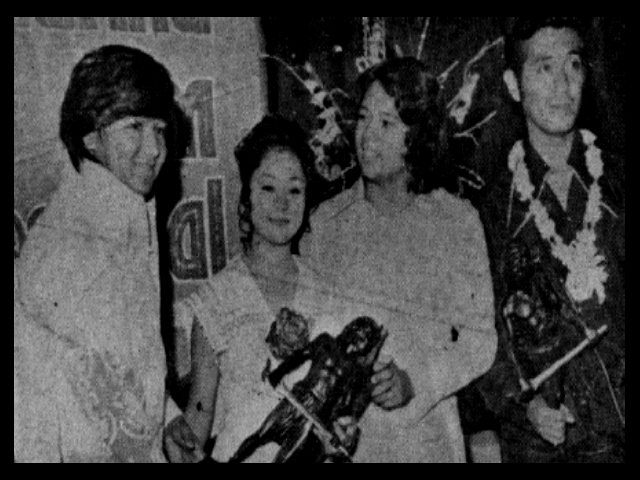




 Star For All Seasons
You must be logged in to post a comment.