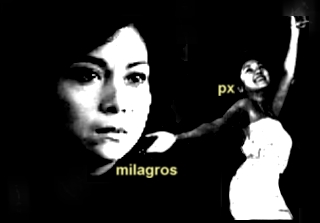
1972 Best Actress


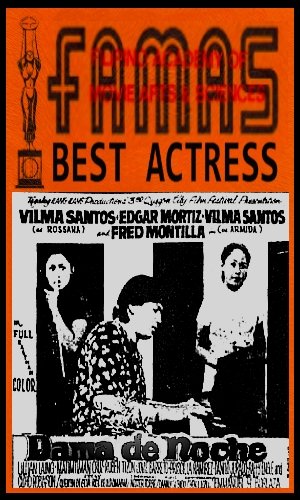
Leading Roles – The year was 1972, FAMAS was still considered the only credible award giving body in the Philippines. The musical still rampant but slowly but surely the young rivalry of Nora Aunor and Vilma Santos is forming another path. The race for who is the better actress started with both teen stars venturing to dramatic film roles. With Nora’s And God Smiled At Me and Vilma’s Dama De Noche, the fight went from box office queens, miss Philippines movies into a more serious title of best actress. The hype started with both entering their films to 1972 Quezon City Film Festival. Nora won the best actress despite a heated protest from Vilma’s camp. Indeed, Nora’s machine of supporters were on top of things. She will venture into several film projects under her own film outfit NV productions and she is well positioned to emerge on top come the yearly acting race. Come, 1973, the 21st FAMAS was indeed a fight between the young stars. Nora wasn’t nominated for And God Smile At Me, instead she was nominated for A Gift of Love, the best actress went into a tie. Considered a veteran, Boots Anson Roa, winner for her comedic performance opposite the very young and still leading actor of this time, Joseph Estrada in Tatay Na Si Erap. Roa shared the honor with Vilma Santos for her portrayal of opposite character twin sister in Dama De Noche. The very first best actress award for Vilma, it was a sweet revenge from the very first battle at the QFF and there will be more to come, not only from FAMAS but the other award giving bodies that will follow. A small note, Nick Romano won best supporting actor for another Vilma Santos film, Tatlong Mukha ni Rosa Vilma (READ MORE).

This is it folks! Nora Aunor vs. Vilma Santos, And God Smiled at Me vs. Dama de Noche. Which one will the FAMAS bless? The awards of the Filipino Academy of Movie Arts and Sciences are still far away though. But not the Quezon City filmfest awards which will be known tonight at the Nation Cinerama theater. One persistent prediction in showbiz is that Vilma will make it, hands down. However, Nora watchers are just as insistent that her ‘inspired’ performance in And God Smiled at Me is simply ‘super’ and worth no less than a best actress award. Dama de Noche is showing in three theaters– Remar, Delta and Sampaguita. It is, Vilma was quoted as saying, her dream role fulfilled. The very professional Vilma has come out with the resolution than henceforth she will demand to see the script and also see that the script is demanding— or she’ll say nix. Well, Dama de Noche is exactly just that: demanding. In it she delineates the twin-sister roles of sweet Armida and deranged Rosanna. Vilma sobs and screams, giggles, and crazy-dances, claws and clowns, sobs again and screams some more. But she does more than all these things. She acts. In the Filipino movieworld where crying is synonymous with acting, that certainly is being ahead of one’s kind. Vilma as Armida is drab and dry, almost a movie prop. It is in the portrayal of Rosanna that Vilma would tear one’s heart away. The many close-ups so effectively used throughout the movie show the unglamorous Vilma: her frowns, her lip-twitching, her uninhibited and stifled sobs.

But Vilma is less successful with the shifty look that is the distinctive trait of the deranged. She compensates for this in the ‘betrayal’ scene when Rosanna suspects that Leo, Armida and the psychiatrist (Fred Montilla) all conspired to imprison her in the hospital. Another outstanding feat is the subdued scene where Rosanna learns that Leo has gone to the Lerma villa to meet Armida.

The vivacious Rosanna is just as winsomely pathetic. Watching her is just like seeing a bosom friend trying to pretend she’s happy when both of you know she’s not only in this case, Rosanna is truly happy. Her non-knowledge of her plight is what is particularly heart-curling. Dama de Noche is Tagalog Ilang-Ilang Production’s entry in the QC filmfest which started on Oct.15. It is a very simple story, almost run-of-the-mill, but Nestor Torre, Jr. who wrote the screenplay saved it with his meaningful and amusing lines. However, the movie is occasionally dragging with the Filipino moviemania for spoonfed sequences. Will the memorable Rosanna win for Vilma the most coveted award tonight? Or will Nora the Superstar make it? The die is cast and tonight is the NIGHT. New Frontier Cinema in Cubao was never before so loaded that the fire exits had to be opened to let in air. It was so badly jampacked, one swore it couldn’t be worse. But it was, a ‘stand-mate’ (there were no seats) quipped, ‘Noong first day, mas grabe.’ And so through a snail-pacing 20-yard pila and after exactly one hour, one got inside the theater, at last!

On the screen: La Aunor doing her thing– praying. A few steps away from the chapel, in their home in Davao, her mother (Naty Santiago) lies dying. Damian (Luis Gonzales) sits by the sickbed, comforting his wife, assuring her she is the only woman he has ever truly loved. The good woman dies and Celina (Nora) is bitter. She had prayed so hard, had run so fast from the chapel home, only to find the elder women reciting the litany of the dead. Here, the first sobs from a woman stand-mate as Celina pounds clenched fists on the door. After the burial, father tells daughter the well-kept secret of her being illegitimate. Celina shows bitterness again, but the good daughter that she is, she soon gets over from the shock and decides to live with it. Damian brings Celina to Manila as his ‘inaanak.’ They’ll wait for the perfect timing, he says and then he’ll tell his wife Olga (Lucita Soriano) everything. The perfect timing never comes. One morning, Celina just can’t help calling him ‘Itay,’ telling him she loves him very much and that he must come home at once, please. The tender moments take too long, and everybody in the theater knows Damian is ‘tsk, tsk, tsk, mamamatay.’ Everybody is right. At the hospital, the secret lets loose as Celina jerks in agony. ‘Itay, Itay,’ she sobs, in the presence of Damian’s wife and two adopted daughters. Here, Nora’s bid for a best actress award really begins.

The three witches (oh, how the fans hated them) now maltreat Celina all the more, slapping her, pulling her hair, kicking her right in the tummy. All through these, Celina’s only consolation is her love for Carding (Tirso Cruz III), the laundry-woman’s (Nenita Jana) son. He is blind. He is desperate. He loves Celina very much but ‘wala akong karapatang umibig.’ And so he contemplates suicide, sneaking out one night, begging between yells of ‘Gusto ko nang mamamatay,’ for a vehicle to run over him. An irked driver shouts at him: ‘Ano ka ba, bulag?’ A woman fan shouted too: ‘wag kayong tumawa, serious yan.’ And then, what do you know, another death: not the blind leading man (that would’ve been a blunder) but his mother, who had followed him. After so much unbearable beating and tearful moments between the lovers, Celina delivers her ultimate prayer — she can’t take it anymore. AND GOD SMILES AT HER. God grants her a golden voice (for a while one thought that was only the beginning of the movie, after no less than two-and-a-half hours) and she sings all her heart at the foot of the altar. And this is not the end of it. Nora Aunor won the Quezon City Film Festival Best Actress award and her movie, “And God Smiled at Me” also took home seven more including the Best Picture and Best Actor awards. In reaction to the article above and the filmfest award results, a reader sent an open letter to the QC Filmfest Judges. Read the text in full and be the judge yourself. However, in 1973, Vilma Santos received the FAMAS Best Actress award (in a tie with Boots Anson-Roa in “Tatay na si Erap”) in the movie “Dama de Noche,” thus avenging her loss to perennial rival, Nora Aunor in the Quezon City Film Festival (READ MORE).

“…I didn’t expect to win, although marami ang nagsasabi sa akin na malaki ang pag-asa ko. Ako naman, I don’t believe anything unless talagang nangyayari. Kasi noon, I expected to win, sa film festival din sa Quezon City, but somebody else did. I was very disappointed. Noong awards night nga, I wasn’t convinced I would win hanggang hindi ko pa hawak ‘yong trophy…” – Ricardo F. Lo, Expressweek Magazine January 19, 1978 (READ MORE)

This slideshow requires JavaScript.

RELATED READING:
1972 FAMAS AWARDS THE 21st FAMAS AWARD WINNERS
Ang Gabi ng Parangal (THE AWARDS NIGHT)
The 21st FAMAS Award Winners
FAMAS Recognitions
List of Neminees and Winners for 1972 FAMAS
The First FAMAS Grand Reunion of Awardees
The 1972 7th Manila Film Festival
And God Smiled at Me vs. Dama de Noche
IMDB: Dama de noche (1972)
IMDB: Emmanuel H. Borlaza
IMDB: Edgar Mortiz
Vilma-Nora Then, Nora-Vilma Now
Filmography: Dama De Noche (1972)
Official Web-site: Nora Aunor ICON
IMDB: Nora Aunor
IMDB: Vilma Santos
Wikipedia: Vilma Santos
Wikipedia: Nora Aunor
Nora Aunor Film Actress
Vilma Santos Film Actress

The Bernal-Santos Collaborations

Considered the number one director of Vilma Santos, National Artist, Ishmael Bernal contributed significantly to her success. Their collaborations as actor and director spanned three decades. Eight films in total, almost a dozen best actress for Santos and a several best director for Bernal not including nominations both locally and internationally. He was quoted saying: “In Ikaw ay Akin, Vilma was already conscious of her own particular style of acting…which can be described as minimal, less is more. The fewer and simpler gestures, the greater effect…(Working in Pahiram Ng Isang Umage, Bernal said)…she had become an artist, no longer a movie star and just following the director’s instructions..” Their films are still relevant, timeless and to this day, being celebrated by many.

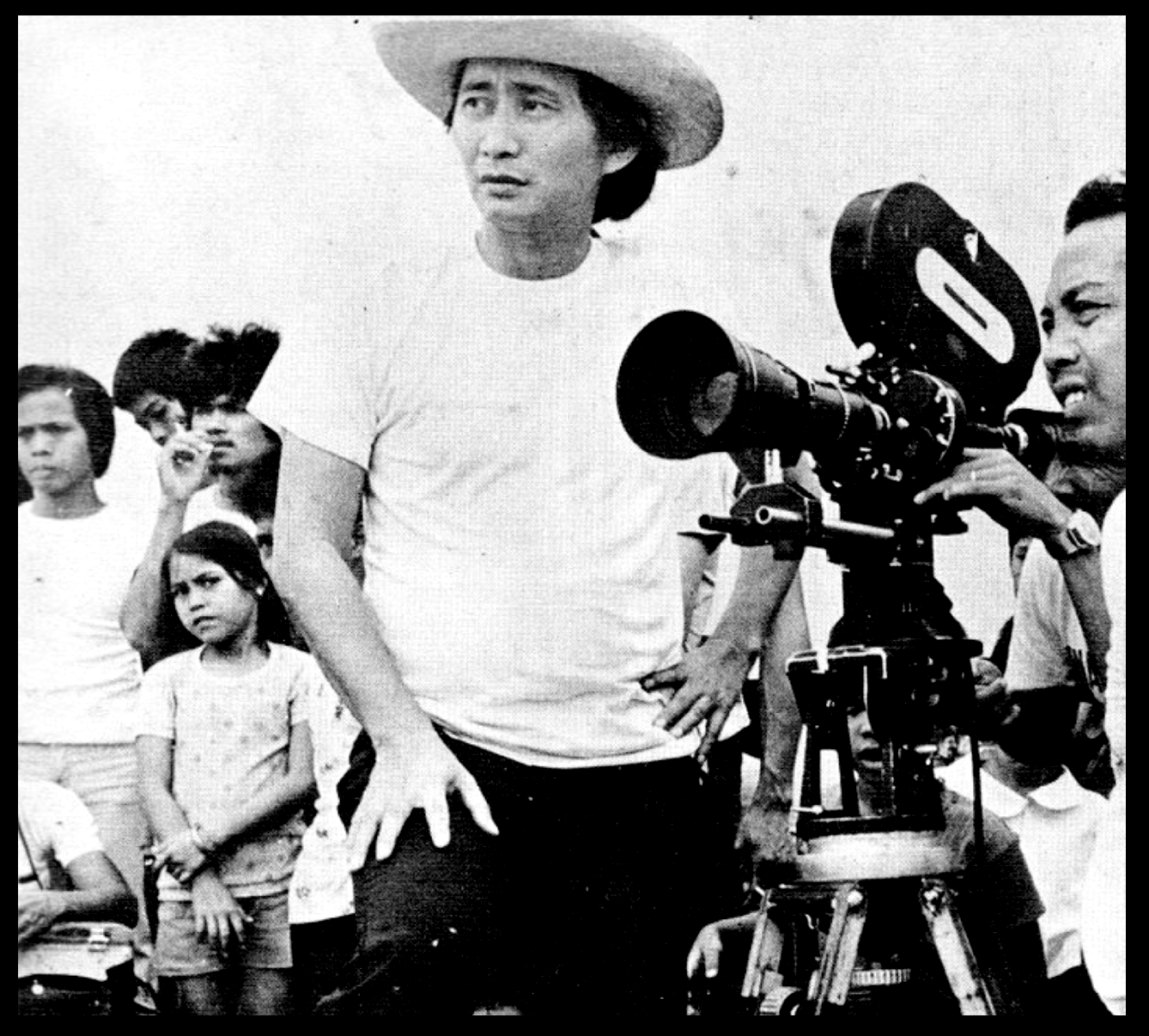
The early seventies brought a new phase in Vilma Santos’ career. Now 18 and after a successful stints as a child actress, she faced the musical trend dominated by singing teen sensations like Perla Adea, Esperanza Fabon, Eddie Perigrina, Edgar Mortiz, Tirso Cruz III and rival, Nora Aunor. She was successful enough that she made nine films (including the film adaptation of the television musical variety show, The Sensations) in 1971, the year Ishmael Bernal started his film career as director. Fresh from film school and at a young age of 33 (he received a Film Directing diploma in Film Institute of India in 1970) directed two full length feature films, “Daluyong!” and “Pagdating sa Dulo.” Daluyong starred Rossana Ortiz, Alona Alegre and Ronaldo Valdez while Pagdating featured the late Miss Rita Gomez and Vic Vargas. Pagdating earned Bernal his first award for best screenplay and a nomination for best director from FAMAS, the local equivalent of OSCAR during that time. Both films, Pagdating sa Dulo and Daluyong were critically acclaimed and commercial success.

The following year, Santos made fourteen films, mostly forgettable musicals. It was also a year where her benefactor started to positioned her as more of a film actress than a singing film star. The results was successful experiments that showcased her comedic ability (Ang Kundoktora), screaming action stunts (Takbo Vilma Dali) and dramatic capability (Dama De Noche). Her followers was delighted when she earned her first acting recognition the next year receiving the FAMAS best actress via Dama De Noche. Most of her films in 1972 were directed by Emmanuel Borlaza however, she was able to do one film with Ishmael Bernal, “Inspiration” with the late Jay Ilagan, one of her regular film partner. According to Bernal, the film wasn’t as successful as what he expected, as the film flopped. Aside from Inspiration, Bernal did two other films, El Vibora (starring Vic Vargas and Boots Anson Roa) and Till Death Do Us Part (starring the young Hilda Koronel and Victor Laurel).

1973 turned out to be a banner year for Vilma Santos as she emerged on top with box office hits one film after another. Nine films altogether that featured her in different genres (comedy – “Tsismosang Tindera;” fantasy – “Maria Cinderella,” “Dyesebel at ang Mahiwagang Kabibe” and ”Ophelia at Paris;” action/fantasy – “Wonder Vi,” “Lipad, Darna, Lipad,” and “Darna and the Giants;” horror – “Anak ng Aswang” and teenybopper – “Carinosa” and “Now and Forever”). While Vilma was productive Bernal, like the past two years did only two films, one was the comedy fantasy starring television host and comedian Ariel Ureta in a spin off of Superman, “Zoom, Zoom, Superman!” and his film wih Vi, “Now and Forever” with Edgar Mortiz.

Vilma’s box office dominance continued the next year with twelve films mostly comedy, horror and action/fantasies. It also gave her the chance to work with veteran actors such as Charito Solis in “Mga Tigre ng Sierra Cruz,” Joseph Estrada in “The King and I,” Fernando Poe Jr. in “Batya’t Palu-palo” and international action star, Meng Fei in “Twin Fists of Justice.” Bernal and Santos will not do any films for a few years as he started directing Vilma’s rival, Nora Aunor in her television drama series Ang makulay na daigdig ni Nora. Aside from his TV work, he did “Pito ang asawa ko” and the film reuniting him with Ariel Ureta, “Si Popeye, atbp” after the success of Zoom Zoom Superman.

1975 was another productive year for Vilma Santos as she did nine films mostly title roles like Vilma Viente Nueve, Darna Vs the Planet Women, and Ibong Lukaret. It was the “prep” stage for the years to come as she was given more mature roles like the local festival entry, “Karugtong ang Kahapon” and Celso Ad Castillo’s “Tag-ulan sa Tag-araw.”  Tagulan was the first film of Vilma and Christopher De Leon. While Vilma was testing the water for more serious mature projects, Ishmael Bernal decided to return to his original forte, drama, after years of doing light comedies and television work. He came up with “Mister Mo, Lover boy Ko” and “Lumapit, Lumayo Ang Umaga.” Both films featured sexy star, Elizabeth Oropeza.

By mid decades, Vilma Santos’ career was gradully moving into dramas catering the adult audience and films with social-adult issues. She did the sequel “Hindi Nakakahiya” and “Nagaapoy na Damdamin” about the affair of a young woman with an older man and “Mga Rosas Sa Putikan” about the lives of prostitutes.  Aside from these films, she also did four light comedies and two notable ones: “Mga Reynang Walang Trono” a comedy with movie queen Amalia Fuentez and “Bato Sa Buhangin,” the box office hit that reunited her with the late Fernando Poe Jr. Bernal on the other hand, cemented his reputation as one of the most serious director with critically appreciated hit films, “Ligaw Na Bulaklak” staring the young sexy star, Alma Moreno and the drama film that featured two dramatic stars, Daria Ramirez and Elizabeth Oropeza in “Nunal Sa Tubig.”  He also directed a light comedy, “Tisoy,” Christopher De Leon in title role.

A turning point in Vilma Santos career came in 1977.  She was no longer the teen idol that Bernal directed in 1972.  She’s now 24 and ready for more serious film projects.  Her film load has dramatically decrease from nine/ten films a year to mere five.  But the films she did were noticeably heavy in terms of relevance and roles.  Aside from the light action, “Susan Kelly Edad 20” her other films were all heavy dramas. One reunited her with Christopher De Leon in “Masarap, Masakit ang Umibig” directed by Elwood Perez.  Another one was the box office hit and critically acclaimed, “Burlesk Queen” directed by Celso Ad Castillo.  The other two films paired her with off screen sweetheart, Romeo Vasquez in “Pulot-gata, Pwede Kaya?” and “Dalawang Pugad, Isang Ibon.” The last film, was directed by Bernal. “Dalawang Pugad” earned Bernal the 1977 best director from Gawad Urian, the Filipino critics’ award giving body. Aside from Dalawang Pugad Bernal also directed “Walang Katapusang Tag-araw” that featured veteran drama queen, Charito Solis.

While the previous year was less productive in terms of quantity, Vilma Santos came back with a big bang the following year with twelve films.  Most of these films were adult dramas.  Three notable films were the critically acclaimed “Pagputi ng Uwak, Pag-itim ng Tagak” directed by Celso Ad Castillo and produced by Vilma herself.  The local film festival entry, “Rubia Servios” directed by the late Lino Brocka. And lastly, “Ikaw ay Akin” directed by Bernal. “Ikaw ay Akin” reunited Vilma with rival, Nora Aunor. The film also featured Christopher De Leon, who won the local critics’ best actor and best actress nominations for Aunor and Santos as well as best director nomination for Bernal.  Aside from Ikaw, Bernal also did two other films, both starring Alma Moreno, “Lagi na lamang ba akong babae?” and “Isang gabi sa iyo Isang gabi sa akin” with Elizabeth Oropeza.

The end of the decade gave Vilma eight more films. Mostly light dramas/comedies.  Some showcased her dancing talents like “Swing it Baby,” “Rock, Baby, Rock” and “Buhay Artista Ngayon.” In terms of notable projects, only four stands out. “Pinay, American Style” filmed in the USA and “Magkaribal” both directed by Elwood Perez. “Halik sa Kamay, Halik sa Paa” directed by the late Eddie Rodriguez. And the smash hit and local festival entry “Modelong Tanso.” Modelong Tanso paired Vilma with drama queen, Charito Solis. Bernal did not direct any Santos film this year instead he did the Nora Aunor film, “Bakit may pag-ibig pa?,” “Menor de edad” and “Salawahan” both films starring Rio Locsin, “Aliw” starring Amy Austria and Lorna Tolentino and “Boy Kodyak” starring Bembol Rocco.

Vilma Santos did seven films in 1980. Mostly light dramas. Two notable films were “Miss X,” the film was shot in Amsterdam and “Langis At Tubig” the local festival entry directed by Danny Zialcita. She also did “Darna at Ding” her fourth and last film as the comic hero, Darna, Filipino version of Wonder Woman/Superman. Despite the lack of serious projects, Vilma did a film with Bernal, the comedy/musical, “Good Morning Sunshine.” In addition to Good Morning, Bernal did the critically acclaimed ensemble film starring Lorna Tolentino, Alma Moreno and Rio Locsin’s “City After Dark,” “Girlfriend” starring Cherie Gil and “Sugat sa Ugat” starring Hilda Koronel and Christopher De Leon.

Bermal and Santos didn’t do any film together the following year. Now 28 and married, Santos has reduced her film projects. She did four films, all showcased her acting talents. “Ex-Wife” directed by Eddie Rodriguez paired her with local critics’ favorite, Beth Bautista. “Pakawalan Mo Ako” a drama directed by Elwood Perez earned her one of her five FAMAS best actress. “Hiwalay” teamed with Eddie Rodriguez this time, as her leading man. Romy Suzara directed the film. Then the local festival entry, “Karma,” the Danny Zialcita film that earned her the festival best actress. While Vilma reduced her film output to four, as usual, Bernal did only two films. Both were not as critically received. “Bihagin: Bilibid Boys” starred the late Alfie Anido “Pabling” the comedy starring teen idol, William Martinez.

Like 1972 of the previous decade, 1982 turned out to be a repeat in terms of success for Vilma Santos. If critics took noticed in 1972, her performance in Dama De Noche, a decade after, the critics went gagah over her performance in ”Relasyon,” directed by Bernal. The film earned Vilma all the local best actress trophies from all award-giving bodies. Aside from this success, she will also be crowned as the box office queen of 1982 (the next year for her body of work this year) because of the financial success of her six films notably, “Sinasamba Kita” a film directed by Eddie Garcia and “Gaano Kadalas ang Minsan?’ directed by Danny Zialcita. Bernal on the other hand not only was credited for Vilma success for “Relasyon” he also received accolades for “Himala” a film by Nora Aunor, Vilma’s rival. Both “Himala” and “Relasyon” were considered two of Bernal’s signature films. In addition to this, he did two Marecel Soriano films, the comedy “Galawgaw” and the drama, “Hindi Kita Malimot” and finally another Cherrie Gil film, “Ito Ba Ang Ating Mga Anak.”

The following year, as Vilma Santos received honors/awards from her works from previous year, she continued her winning streak with four adult dramas: “Ayaw Kong Maging Kerida,” “Paano Ba ang Mangarap?,” “Minsan pa Natin Hagkan Ang Nakaraan,” and “Broken Marriage.” The last one was directed by Ishmael Bernal. The only film he did in 1983. Broken Marriage gave Vilma her second consecutive local critics’ best actress. It also earned Bernal her second best director from the critics and third overall.

The next year Bernal and Santos went separate ways with Vilma doing three films with three equally talented directors: Lino Brocka for “Adultery: Aida Macaraeg,” MiKe De Leon for “Sister Stella L.,” and Marilou Diaz Abaya for “Alyas Baby Tsina.” Meanwhile, Bernal did two films, an episode of the original horror trilogy, “Shake, Rattle & Roll” and the critically acclaimed comedy, “Working Girls.”

The next four years came with both Santos and Bernal in steady film works. In 1985 Santos did the hit “Muling Buksan ang Puso” and the disappointment, “Doctor, Doctor, We Are Sick” while Bernal did the Marecel Soriano melodrama “Hinugot sa langit” and the film starring the unknown Stella Suarez with veteran Rita Gomez “Gamitin mo ako.” Then in 1986 Vilma Santos did three commercial hit films: “Yesterday, Today & Tomorrow,” “Palimos Ng Pag-ibig,” and “Asawa ko, Huwag Mong Agawin.” Bernal did his only film, “The Graduates” starring Regal babies – Snooky Serna, Gabby Concepcion, Maricel Soriano, William Martinez, and Dina Bonnevie.

Another three films for Vilma Santos in 1987, all commercial success. “Tagos ng Dugo” directed by Maryo De Los Reyes was a smash hit and critically well received. Vilma received her fourth FAMAS best actress for this film. “Ibigay Mo Sa Akin Ang Bukas” the last film directed by Emmanuel H. Borlaza before his retirement was a mild hit that paired Vilma with new drama actors, Richard Gomez and Gabby Concepcion. “Saan Nagtatago Ang Pag-ibig?” directed by Eddie Garcia was a big hit. Bernal on the other hand did two films the drama”Pinulot ka lang sa lupa” starring Lorna Tolentino and Marecel Soriano and the sequel comedy “Working Girls 2” The next year, both Bernal and Santos did one film each, both a box office hits, Elwood Perez’ drama, “Ibulong Mo Sa Diyos” was a big hit and at the same time earned Vilma her fifth FAMAS best actress that elevated her to their hall of fame recipient category. Bernal’s only film was “Nagbabagang luha,” another Lorna Tolentino starrer.

The last time Bernal and Santos collaborated was in 1989. Santos, still active with her musical variety television show, did three films, all were commercial success. “Imortal” directed by Eddie Garcia was a local festival entry that earned Santos another local festival best actress. “Rizal Alih, Zamboanga Massacre” was directed by Carlo J Caparas. And “Pahiram Ng Isang Umaga” directed by Bernal. The film earned Santos the local critics best actress and Bernal the best director. Vilma her very first Star best actress, considered the Golden Globe local equivalent at that time. Pahiram also received nominations for best actress for Vilma and best director for Ishmael both from FAP, now the local equivalent of OSCAR.

In 1991, Lino Brocka, Ishmael Bernal closest rival and friend died of car accident. It was a sad event both locally and internationally as Brocka was not only popular locally but in the international festival circuit. It wasn’t clear if his decision was related to the lost of his rival Brocka but Bernal retired his directing chair for the next two years. He went into acting and was the lead role in stage plays like “Kamatayan Sa Isang Anyo Ng Rosas” (Death in the Form of a Rose) in 1991 and “Bacchae” in 1992.  Vilma on the other hand, did “Hahamakin Lahat” in 1990 with Brocka, a year before his untimely death.  She also did “Kapag Langit ang Humatol” directed by Laurice Guillen.  She then reunited with Guillen in “Ipagpatawad Mo” the next year.  By 1992, Bernal and Santos did one film each, unfortunately not together, “Sinungaling Mong Puso” reunited Vilma with her Tagos Ng Dugo director, Maryo De Los Reyes while Bernal directed “Mahal kita walang iba” starring Kris Aquino.

Bernal went back to his semi-retirement the next year (except for a short film as himself in “Truth and Dare”) while Vilma did two films, both commercial hits and critically acclaimed. Chito Rono’s “Ikaw Lang” and the local festival entry, “Dahil Mahal Kita The Dolzura Cortez Story” directed by Laurice Guillen. Dolzura Cortez will earned Santos numerous best actress awards. By 1994, Santos did three films: “Relaks ka Lang, Sagot Kita” with Bong Revilla; “Nag-iisang Bituin” with Aga Muhlach and Christopher De Leon; “Lipa: Arandia Massacre” a film that reunites her with director Carlo J. Caparas. Meanwhile, Bernal did “Wating” his last film. “Wating” starred Richard Gomez.  The next year, Both artists, Santos and Bernal, went on hiatus.

In 1996 Vilma Santos did “Ikaw Ang Mahal Ko” with the late FPJ. The film did not do well, both critically and commercially. This year also was a bad year for the local entertainment industry as Ishmael Bernal died on June 2nd. It was reported that he was scheduled to direct a film about the life story of Lola Rosa Henson, the comfort woman during the Japanese invasion of the Philippines. The project was also reportedly offered to Vilma Santos. From 1997 to 2009, Vilma Santos completed 6 full featured films, two were considered record breaking films and almost all gave her acting recognitions including two international best actress recognitions.

HIGHLIGHTS: Bernal gave Vilma Santos her first grandslam best actress awards and consecutive Gawad Urian best actress (1982 and 1983). Their first film together was Inspiration (1972) and last was Pahiram Ng Isang Umaga (1989).

Writing Credits: 11 – Galawgaw (1982); Relasyon (1982); City After Dark (1980); Girlfriend (1980); Pleasure (1979); Ikaw ay akin (1978); Walang katapusang tag-araw (1977); Dalawang pugad, isang ibon (1977); Lumapit, lumayo ang umaga (1975); Pito ang asawa ko (1974); Reaching the Top (1971)

Directing Credits: 46 and Total Number of Films with Vilma Santos: 8 (Broken Marriage, Dalawang Pugad Isang Ibon, Good Morning Sunshine, Ikaw ay Akin, Inspiration, Now and Forever, Pahiram ng Isang Umaga, Relasyon)

RELATED READINGS:
Wikipedia: Bernal
Ishmael Bernal (1938-1996)
The Films of Ishmael Bernal Circa1971-79, Part One The Films of Ishmael Bernal Circa1980-96, Part Two
Tribute to Ishmael Bernal
The new ‘Working Girls’ front and center
Remember The Face: BERNAL FILM DIRECTOR
Vilma Santos’ Top 10 Film Directors

Filipino Movie Queens with Vilma Santos in Films

This slideshow requires JavaScript.


Gloria Romero (born December 16, 1933) is a Filipino a multi-awarded actress whose career spans 60 years. Acknowledged as the original Queen of Philippine Movies. She hold two record in FAMAS award history: She is the only actress in Philippine movie history to win the FAMAS Best Actress Award for a comedy role and the oldest FAMAS Best Actress winner, receiving the prestigious accolade in 2001 when she was 67 years old. (Wikepedia)

Total Number of films with Vilma: 13 (Anak ang Iyong Ina, Iginuhit ng Tadhana, De Colores, Pinagbuklod ng Langit, Anak ng Aswang, Lipad Darna Lipad, Happy Days are Here Again, Karugtong ang Kahapon, Nakakahiya?, Hindi Nakakahiya, Makahiya at Talahib, Saan Nagtatago Ang Pag-ibig?, Kapag Langit Ang Humatol)

RELATED READING: DIVA TO DIVA: TERMS OF ENDEARMENT

Movie Queens – Vilma Santos & Gloria Romero from SFAS – VSR on Vimeo.


Nora Aunor (born Nora Cabaltera Villamayor on May 21, 1953) is a multi-awarded Filipino actress, singer and producer. Aunor has also topbilled several stage plays, television shows, and concerts. She is regarded as the “Superstar in Philippine Entertainment Industry”. In 1999, Aunor received the Centennial Honor for the Arts awarded by the Cultural Center of the Philippines (CCP). She was the only film actress included in the prestigious list of awardees. In 2010, she was hailed by the Green Planet Awards as one of the 10 Asian Best Actresses of the Decade. (Wikepedia)

Total Number of films with Vilma: 8 (Happy Days are Here Again, Dugo at pag-ibig sa kapirasong lupa, Young Love, Big Ike’s Happening, Mga Mata Ni Angelita, Ikaw ay Akin, Pinagbuklod ng Pag-ibig, T-Bird at Ako)

RELATED READING: Sino ba talaga ang mas mahusay umarte, si Vilma o si Nora?
Vilmanians and Noranians Surveyed
‘VERY LONG RIVALRY”
NORA AND VILMA, APART AND TOGETHER


Marlene Dauden, (born in Philippines) is considered one of the greatest Filipina drama actresses of all time. She achieved her legendary status as a film thespian during her film career that spanned from the 1950s up to the 1970s. During the height of her fame, she was one of the most bankable stars of Sampaguita Pictures, which used to be one of the leading Philippine movie studios of the era. (Wikepedia)

Total Number of films with Vilma: 7 (Sa Bawat Pintig ng Puso, Kay Tagal ng Umaga, Maria Cecilia, Hindi Nahahati ang Langit, Kasalanan Kaya?, Sino ang may Karapatan?, Happy Days are Here Again)

RELATED READING: Marlene Dauden
MARLENE DAUDEN: 50s-60s DRAMA ICON


Charito Solis (6 October 1935 – 9 January 1998) was a FAMAS and Gawad Urian award-winning Filipino film actress. Acknowledged as one of the leading dramatic actresses of post-war Philippine cinema, she was tagged either as the “Anna Magnani of the Philippines” or as “the Meryl Streep of the Philippines. (Wikepedia)

Total Number of films with Vilma: 6 (Happy Days are Here Again, Mga Tigre ng Sierra Cruz, Modelong Tanso, Ipagpatawad Mo, Dahil Mahal Kita The Dolzura Cortez Story, Hanggang Ngayon Ika’y Minamahal)

RELATED READING: Charito Solis, the Empress of Drama
CHARITO SOLIS HALL OF FAME FOR BEST ACTRESS

Movie Queens – Vilma Santos & Charito Solis from SFAS – VSR on Vimeo.


Celia Rodriguez ay isang artista sa Pilipinas. Una siang nakitang gumanap sa mga pelikula ng Premiere Production noong huling dekada 1950. Siya ay nanalo ng apat na FAMAS Awards: isa bilang pinakamahusay na aktres ng 1971 para sa pelikulang Lilet at tatlo pa bilang pinakamahusay na pangalawang aktres ng 1964 (Kulay Dugo ang Gabi), 1966 (The Passionate Strangers) at 2003 (Magnifico). (Wikipedia)

Total Number of films with Vilma: 6 (Lipad Darna Lipad, Biktima, Karugtong ang Kahapon, Mga Rosas sa Putikan, Coed, Darna at Ding)

RELATED READING: Lilet’s Little Secret (Or How Celia Rodriguez made my life worth living.)


Lolita Rodriguez, {Dolores Clark in real life} was born on January 29, 1935 in Urdaneta Pangasinan. In 1953, at the age of 18, she entered the movies. She was given walk-on roles. As an extra, she used to earn 5 pesos per appearance. Her first movie was Ating Pag-ibig, followed by Gorio at Tekla, El Indio, Cofradia, Kiko, Reyna Bandida, Sa Isang Sulyap mo Tita and Diwani. (Video48)

Total Number of films with Vilma: 6 (Trudis Liit, Kay Tagal ng Umaga, Hindi Nahahati ang Langit, Kasalanan Kaya?, Sino ang may Karapatan?, Happy Days are Here Again)

RELATED READING: DRAMA QUEEN LOLITA RODRIGUEZ Circa 1954-60


Amalia Fuentez Amalia Fuentes was born on August 27, 1940 in Philippines and she is a famous TV and film actress. Fuentes started her career in 1956 with the film called “Rodora”. She acted in many other films and TV series such as: “Inang mahal”, “Pretty Boy”, “Kahit isang saglit.” (FamousWhy)

Total Number of films with Vilma: 5 (De Colores, Bulaklak at Paru-paro, Happy Days are Here Again, Mga Reynang Walang Trono, Asawa ko, Huwag Mong Agawin)

RELATED READING: AMALIA FUENTES BIOGRAPHY


Barbarra Perez, dubbed as Audrey Hepburn of the Philippines was a famous Filipina movie star of the fifties and sixties. Born in the year 1938, Barbara is married to another actor Robert Arevalo. Barbara made several hit movies under the defunct Sampaguita Pictures. Both Barbara and her husband won the best actor awards in 1966 for the movie “Daigdig ng mga Api” or the world of the downtrodden. (Wikipilipinas)

Total Number of films with Vilma: 4 (Ito ang Pilipino, Hatinggabi Na Vilma, Nakakahiya?, Ibulong Mo Sa Diyos)

RELATED READING: WHY BARBARA PEREZ SAID NO TO HOLLYWOOD


Nida Blanca Dorothy Acueza Jones, (January 6, 1936 – November 7, 2001) popularly known by her stage name Nida Blanca, was a Filipina actress. She starred in over 163 movies and 14 television shows and received over 16 awards for movies and six awards for television during her 50-year film career. She was named one of 15 Best Actress of all Time by YES magazine. She was stabbed to death in a parking lot in San Juan City on November 7, 2001.

Total Number of films with Vilma: 3 (Ibulong mo sa Diyos, Happy Days Are Here Again, Pag-ibig masdan ang ginawa mo)

RELATED READING: NIDA BLANCA LOOKS BACK


Rita Gomez The first Filipino to be billed with a title before her name. On a comeback stint in the Bomba (Bold) Era of Philippine movies, the title “Ms.” was added by her manager before her name to maintain her stature as one of the Philippines’ most revered actresses. (movie-industry.blogspot.com)

Total Number of films with Vilma: 2 (Anak ang iyong ina!, Takbo Vilma Dali)

RELATED READING: RITA GOMEZ BIOGRAPHY
10 Most Loved Babaeng Bakla

Other Filipino Movie Queens who are still active and who made films with Vilma are: Gina Pareno (Ibigay Mo Sa Akin Ang Bukas), Maricel Soriano (Yesterday, Today and Tomorrown), Lorna Tolentino (Sinasamba Kita), Claudine Baretto (Anak), Alma Moreno (Magkaribal), Rio Locsin (Haplos). Hilda Koronel (Gaano Kadalas Ang Minsan).

RELATED READING: FEMALE COSTARS (PHOTOS)

NORA AND VILMA, APART AND TOGETHER


In the ‘70s and ‘80s, the big stellar rivalry I local show biz was between Nora Aunor and Vilma Santos. The two female superstars have had quite a history together, and their instructive relationship remains interesting to this day.

Child Star – In the ‘70s, Vilma had a head start because she first entered show biz as a child star. By the time she became a teen star and was competing head-on with Nora, Vilma was already an established name and crowd drawer. And yet, the phenomenal Aunor quickly upstaged her. After Nora became the darling of the masses, Vilma had to cope with the harsh reality of playing second fiddle to the brash upstart who had captivated the nation with her golden voice, expressive eyes and volatile temperament. In those days, it looked like Nora could do no wrong. Even if she made quickie films, they would win awards over Vilma’s better-executed starrers. After years of this unfair competition, Vilma decided to stop playing the also-ran, and opted to essay the roles that Nora preferred not to do—the other woman, rape victim, burlesque dancer, etc.

Vilma’s “sexy” movies were more suggestive than anything else, but they gave her a new screen persona that made her a distinct movie entity from Nora. Fact is, Nora could also have played sensual characters, but she felt awkward doing so, and Vilma benefited from her reticence. In time, Vilma was also winning acting awards and starring in big hits, so the competition between her and Nora peaked. Then, in the ‘80s, Nora’s personal problems affected her career, while the more professional Vilma became producers’ actress of choice. Nobody doubted Nora’s talent, but Vilma had talent ‘and’ professionalism, so she soon streaked in front of her archrival. No longer did she compete in areas where she was ‘dehado,’ like singing. Instead, she stressed her dancing ability, sensuality and versatility, and truly came into her own.

Political phase – Then came the two rivals’ ‘political” phase, with Nora successfully boosting Joseph Estrada to the presidency while losing her own bid as governor. On the other hand, Vilma supported her husband’s bid for the senate ‘and” won as mayor of Lipa City. Even in politics, she showed she had the edge. That’s where the two rival superstars are today—Vilma flying high, while Nora is still trying to get her act together for the nth time. We wager, however, that if Nora regains her focus and determination, she can still give Vilma and other female stars a run for their popularity and awards.

First salvo – Nora’s new public service show on TV could be the first salvo in her current bid for recognition and respect in show biz. For her part, Vilma needs to give more importance to her acting career, which she’s tended to neglect in favor of her political obligations. The interesting thing is, all these years, the two archrivals have actually gone beyond competitiveness, and have forged a solid friendship, even if is one between opposites. The competition has just given added excitement to their ‘joint” careers and motivated their respective fans to support them with greater zeal. And both Nora and Vilma have become excellent actresses who still have a number of great performances left in them. May we see some of those memorable new portrayals on the big screen this year. Even better, Nora and Vilma should make another one of their infrequent films together. Now, that would be a great viewing experience that no local film buff would want to miss.  – Nestor U. Torre, Philippine Daily Inquirer, 2002

RELATED READING:
Official Web-site: Vilma Santos Recto
Official Web-site: Nora Aunor ICON
Facebook: Vilma Santos Recto
Facebook: Nora Aunor
Wikipedia: Vilma Santos
Wikipedia: Nora Aunor
Superstar Nora Aunor
Star For All Seasons Vilma Santos
Nora Aunor Film Actress
Vilma Santos Film Actress
And God Smiled at Me vs. Dama de Noche
Vilma-Nora Then, Nora-Vilma Now
Will Vilma Santos do a Nora Aunor?
A Tale of Two Movie Queens
About “Larawan” and Nick Joaquin
T-Bird at Ako (1982) (Video)

VERY LONG RIVALRY

This slideshow requires JavaScript.

Vilma Santos’ triumph as Best Actress – for Mano Po 3 (My Love) – at the Metro Manila Film Festival in December 2004 parallels her greatest rival Nora Aunor’s similar feat at the Manila Film Festival last June, where Nora won for Naglalayag. So it goes without saying Nora and Vilma will once again be major contenders for the top acting honors in this year’s awards season. Nora, for the Maryo J. delos Reyes opus in which she portrayed a lady judge who fell in love with a man half her age; while Vilma, for Joel Lamangan’s romance-drama about a Chinese anti-crime crusader torn between her family and a past love. Nora versus Vilma. Their acting duel is never ending. All these years, their fight for the Best Actress plum in practically all the local award-giving bodies has been much anticipated since.

1972 – 1975

1972 – At the Quezon City Film Festival, then held every October, Nora’s entry was Sampaguita Pictures’ And God Smiled At Me (directed by Tony Cayado and Danny Holmsen); while Vilma’s banner vehicle was Tagalog Ilang-Ilang Productions’ Dama de Noche (directed by Emmanuel H. Borlaza). And the winner was Nora! May die-hard Vilmanian kaming kaklase sa elementary, ang sabi: ‘Luto ‘yun, dahil malapit si Nora kay QC Mayor Norberto Amoranto!” Such loose talks were never confirmed to be true. Or as Tempo’s veteran movie columnist Ronald K. Constantino avers, ‘Nora never figured in any awards scam!”

1973 – Sa annual Filipino Academy of Movie Arts and Sciences (FAMAS) Awards Night, it was the Vilmanians’ turn to rejoice. Vi was ad-judged Best Actress for Dama de Noche, ka-tie ni Boots Anson-Roa (for JE Productions’ Augusto Buenaventura megger Tatay Na Si Erap). Nora wasn’t nominated for her award-winning starrer at the QC filmfest, but for The Gift of Love kung saan siya gumanap ng dual role: bilang isang cancer-stricken patient at ang kakambal na eventually ay napunta kay Tirso Cruz III. Dama de Noche, which paired Vi with Edgar Mortiz, also had her doing two parts: a baliw and a sane sister.

1974 – 1975

In the succeeding years, nagkatunggali sina Nora at Vilma, mainly for box-office supremacy. May point na parehong box-office hit ang mga pelikula nina Nora (her own NV Productions’ Banaue) at Vilma (Nakakahiya? for Virgo Films), at nagkalaban sila for Best Actress sa Bacolod City Film Festival in 1975. Si Vilma ang nanalo para sa dinirek ni Eddie Rodriguez (a.k.a. Luis Enriquez), but Nora’s entry – helmed by Gerry de Leon – won as Best Picture. In 1974, Nora did a major dramatic trilogy for Premiere Productions: Fe, Esperanza, Caridad, which was handled by Cirio Santiago, Lamberto V. Avellana and Gerry de Leon. (Avellana and de Leon were to be honored as National Artists for Film in the years to come.) Nora won a FAMAS Best Actress nomination for Fe, Esperanza, Caridad; tulad sa ibang pelikula na nagpamalas siya ng potential bilang mahusay na aktres early on, such as George Rowe’s Paruparong Itim in 1973. Nora, as a deaf-mute blind woman, was beaten by Gloria Sevilla (for Gimingaw Ako, a Visayan movie). Ang notable performances ni Vilma Santos that time were in TIIP films: Biktima and Karugtong Ang Kahapon (by Borlaza), na entries sa MFF in 1974 and the 1st Metro Manila Film Festival in September 1975.

a 1st MMFF, Nora’s entry, NV Productions’ Batu-Bato sa Langit (directed by Luciano B. Carlos), was a blockbuster and won as 3rd Best Picture. Kapwa na-hone ang acting potentials nina Guy at Vi (sa tulong din ng kanilang TV drama anthologies – Ang Makulay na Daigdig ni Norang RPN 9 at Dulambuhay ni Rosa Vilma ng BBC 2 – pero sige pa rin ang paggawa nila ng mga pelikulang komersyal dahil sila ang mga reyna ng takilya noon.

1976 -1977

Nagkakalaban pa rin sina Nora at Vilma sa FAMAS, pero kapwa sila talunan. Especially Vilma, who didn’t win another FAMAS Best Actress trophy until 1982 (with Elwood Perez’s 1981 megger Pakawalan Mo Ako). In 1976, Nora Aunor’s “landmark performance ” in Mario O’Hara’s Tatlong Taong Walang Diyos won nods from the FAMAS voters as well as from the Gawad Urian critic-jurors bilang Best Actress. Hindi si Vilma ang naging mahigpit na kalaban ni Nora, kundi si Hilda Koronel (for Lino Brocka’s Insiang). Sa MMFF in December 1976, si Hilda ang Best Actress, but Nora’s performance in Lupita Kashiwahara’s Minsa’y Isang Gamugamo was equally acclaimed by the critics. (Minsa’y…won as FAMAS Best Picture in 1977.) It was the first year of the Gawad Urian (organized by film critics collectively known as the Manunuri ng Pelikulang Pilipino), at si Nora ang nag-buena-mano as Best Actress. Henceforth, hindi na lamang ang FAMAS ang kinilalang tagapagbigay-parangal sa industriya ng pelikulang lokal. Sa mga sumunod na taon, dumami ang award-giving body sa movie industry. Bukod dito, ang mga filmfest sa iba’t ibang siyudad outside Metro Manila; like in Davao City, where Nora Aunor once won as Best Actress for Tito Sanchez’s Ibilanggo si Neneng Magtanggol.

In 1977, it was apparent that the actress in Vilma Santos fully emerged when she won the MMFF Best Actress award for the controversial Celso Ad Castillo period drama Burlesk Queen. Unfortunately, her winning was marred by nasty talks (na kesyo binawi ang mga napanalunan ng pelikula, including Vi’s trophy or medallion.) It seems nakaapekto ‘yun sa awarding na pambuong taon: at the FAMAS, Vilma lost to Susan Roces (for Maligno, also by Castillo); and, at the Gawad Urian, to Daria Ramirez (for Eddie Romero’s Sino ’ng Kapiling, Sino’ng Kasiping?). As for Nora Aunor, matapos ang grand entrance niya sa big league bilang major award-winning actress (with a double victory, unmatched at the time), isang actionromance- drama ang kanyang nagging panlaban: Augusto Buenaventura’s Bakya Mo Neneng, which paired her off with Tirso Cruz III and Joseph Estrada. The film won as Best Picture sa FAMAS. Nora’s and Vilma’s starrers were big moneymakers at the 1977 MMFF.

1978, Sa dinami-dami ng natamong karangalan nina Vilma Santos at Nora Aunor, interesting point of discussion pa rin among their followers ang nangyaring acting duel nila in the 1978 MMFF. Vilma was handled for the first time by Lino Brocka in Rubia Servios, produced by Sampaguita-VP Pictures. Vi enacted a rape victim na naghiganti sa kanyang rapist (Phillip Salvador) at napawalang-sala. On the other hand, Nora had Eddie Garcia for her director in Atsay, a serious look on housemaids, as written by the award-winning Edgardo M. Reyes and lensed by ace cinematographer Romeo Vitug. Sa MMFF that year, walang ibang acting category na mapapagwagian maliban sa Best Performer award, na si Nora ang nagwagi. “The triumph of restrained acting!” ayon sa sumunod na ulat matapos ang Gabi ng Parangal. All the while, perhaps almost everyone thought it would be Vilma Santos who’d get the award, dahil si Brocka na ang director niya. May talk show (the late Inday Badiday’s Would You Believe?) na sadyang iniangat ang pag-asa at pag-asam ni Vi na siya ang mananalo. At the awards night, papasok pa lang daw si Vi sa CCP Main Theater (venue ng rites), nilapitan agad siya ni Marichu “Manay Ichu” Perez-Maceda (her producer, na kabilang sa MMFF committee) and whispered: “I’m sorry, Vi, it’s not for you …” Nag-stay si Vi hanggang matapos ang ceremonies; nakipalakpak siya when her rival was declared winner. Katabi niya sa upuan si Christopher de Leon (Garrotte: Jai Alai King), who also lost. Ayon sa grapevine, naglasing si Vilma sa tindi ng siphayo. “Ang sakit, Manay!” Vi reportedly told Ichu, who also produced many of Nora’s earlier movies which made millions of pesos. In the Gawad Urian and FAMAS, naparangalan naman si Vilma, bilang producer ng Pagputi ng Uwak, Pag-Itim ng Tagak which won as Best Picture. That year, mayroong pinagsamahang movie since Nora at Vilma, TIIP’s Ikaw Ay Akin na dinirek ni Ishmael Bernal, for which they were both Best Actress nominees at the Urian, but lost to Beth Bautista (for Danny Zialcita’s Hindi sa Iyo ang Mundo, Babyb Porcuna). Sa FAMAS, hindi rin para kina Vi (Pagputi) at Nora (Atsay) ang Best Actress statuette, kundi kay Susan Roces (for Brocka’s gothic drama Gumising Ka … Maruja!). Fair enough?

1979 – 81

In 1979, 1980 and 1981, kapwa maningning ang mga pangalan nina Nora Aunor at Vilma Santos bilang box-office stars at awardwinning actresses. Pero hindi kahigpitan ang labanan nila sa iba’t ibang parangal. May panahong nananalo si Nora na ibang aktres ang mahigpit na kalaban; ganu’n din si Vilma. Nang ma-handle si Nora ni Brocka (in 1979’s Ina Ka ng Anak Mo, produced by Premiere Productions and written by Jose Dalisay Jr.), she was pitted with the formidable Lolita Rodriguez and it was to Nora’s credit na pumantay siya sa parangal – bilang MMFF Best Actress.

Sa 1979 FAMAS, Nora bested Lolita, who, with her performance in Brocka’s Tinimbang Ka Ngunit Kulang, beat Aunor in 1974. Ang “katapat” ng Nora-Lolita duo ay ang acting tandem nina Vilma Santos at Charito Solis in Bancom Audiovision’s Modelong Tanso, directed by Cirio Santiago. Sa 1979 Gawad Urian, it was neither Nora nor Lolita as Best Actress; the award instead went to Charito Solis for Brocka’s Ina, Kapatid, Anak.

In 1980, tatlong pelikula ni Nora Aunor ang maituturing na panlaban: two by Brocka (Nakaw na Pag-ibig and Bona) and the other by Laurice Guillen, Lea Productions’ Kung Ako’y Iiwan Mo. She won the Gawad Urian for Bona. Ang panlaban ni Vilma was Zialcita’s Langis at Tubig. Hindi taon ni Vilma ang 1980, which saw the emergence of other young and talented actresses like Gina Alajar (Brutal), naka-tie ni Nora sa Urian, and Amy Austria, na tumalo kay Aunor sa Metro Manila Film Festival. In the 1980 MMFF, Amy won with a lone entry – Brutal – while Nora got nominated for Bona and Kung Ako’y Iiwan Mo. (A case of split votes.) Sa 1980 Gawad Urian, nominated sina Nora, Gina (eventual winners) at Amy, samantalang si Vilma was “snubbed by the critics.” In 1981, nanalong MMFF Best Actress si Vilma for Zialcita’s Karma, besting Nora’s multi-character portrayal in Maryo J. delos Reyes’ musical-drama Rock ‘N Roll. Vi, however, failed to win any other nomination for that starrer, while Nora went on to win a trophy (Catholic Mass Media Awards) and Best Actress nomination (Gawad Urian) for Mario O’Hara’s Bakit Bughaw ang Langit?

1982, Nauso ang so-called Grand Slam Best Actress in 1983, nang manalo si Vilma Santos for Ishmael Bernal’s Relasyon. That 1982 film was a small, low-budget drama of a husband and his mistress. Nag-hit ang tandem nina Vi at Christopher de Leon, starting in 1978, with Sampaguita Pictures’ Masarap … Masakit ang Umibig and Nakawin Natin ang Bawat Sandali (both by Elwood Perez), after their first pair-up in Celso Ad Castillo’s 1975 romance-drama Tag-Ulan sa Tag-Araw. For Relasyon, Vilma won as Best Actress sa CMMA, Gawad Urian, FAMAS and the debuting Film Academy of the Philippines (FAP) Awards. Maging sa “minor” parangal, like the TV show Let’s Talk Movies ng RPN 9 (hosted by Armida Siguion Reyna, Behn Cervantes and Mario Bautista), si Vilma rin ang Best Actress for the Regal Films drama. With Nora Aunor as Vilma’s main competitor, it was an interesting, but utterly disappointing, acting duel. Sa FAMAS, Nora got nominated for Romy Suzara’s Mga Uod at Rosas – and lost. Sa ibang award-giving bodies, isang malaking pelikula at pagganap ni Nora – sa Himala, as the visionary Elsa – ang natalo kay Vilma. The Ishmael Bernal opus was produced by the Marcos government-established Experimental Cinema of the Philippines (ECP). Some were of the opinion na may bahagi ng pulitika sa pagkatalo ni Nora; marami raw sa movie industry ang anti-administration, kabilang ang sympathizers ng Free the Artists Movement na anti-censors. May malaking rally noon na hindi dinaluhan ni Nora, samantalang nakiisa sa protesta si Vilma. Gayon man, may parangal na natamo si Nora para sa Himala: the 1982 MMFF Best Actress, where it won 9 out of 13 awards, including Best Direction and Best Picture. Naging opening Film ang Himala sa 1983 Manila International Film Festival – organized by then First Lady Imelda Romualdez-Marcos – at inilahok sa Berlin International Film Festival in February 1983. Ayon kay Bernal, Nora lost in Berlin to a Russian actress by a mere vote. Sa 7th Gawad Urian in 1983, nominated in almost all major and minor categories ang Himala but never won a single award. Ilang taon ang lumipas, sa tuwing titingnan ko ang Honor Roll ng Manunuri sa ipinamamahaging souvenir program, sadyang “walang Himala” na nagtamo ng parangal. But in 2002, sa 25th year ng Gawad Urian, kabilang ang Himala sa Pinakamahuhusay (Best Films of the past three decades) na naparangalan, with Nora Aunor personally receiving the overdue award para sa isang totoong klasikong pelikulang Pilipino. At bigla ngang naghimala ang Himala!

1983, Noong 1983 at 1984, nagkalaban uli sina Vilma at Nora, with Vi getting an edge. Bernal’s Broken Marriage won Vi her second Urian trophy, while Nora didn’t get a nomination (“Nora Out,” ayon sa introduction ng Highspeed column ni Ronald K. Constantino tungkol sa pagkaka-release ng Urian nominees for that year.) May drama starrer si Nora in 1983: Maryo J. delos Reyes’ Minsan, May Isang Ina, for which she got nominated sa FAMAS, where Charito Solis (Don’t Cry for Me, Papa) won and got elevated sa Hall of Fame. Taong 1983 nang makamit ni Nora Aunor ang TOWNS (The Outstanding Women in the Nation’s Service) award for her contributions in media arts. Hindi man siya naka-Grand Slam as Best Actress, ang parangal ay natatangi at ipinagkakaloob hanggang ngayon sa outstanding women achievers in different socio-civic fields. Hindi dito natapos ang Nora-Vilma rivalry. Pero ang pagsasama ng dalawang aktres sa isang pelikula was not repeated after Danny Zialcita’s T-Bird at Ako (released in 1982). Their initial appearance together was in 1970’s Young Love; naulit in 1978, sa Ikaw Ay Akin ni Bernal; at mayroon silang tig-isang episode sa Dugo at Pag-Ibig sa Kapirasong Lupa in 1975 at Pinagbuklod ng Pag-Ibig, also released in early 1978.

At the height of the Nora-Vilma rivalry for acting supremacy, ang kanilang mga pelikula, magkahiwalay man sila o magkasama, ang may malaking kinikita for their producers. In 1982 and 1983, Vilma was Box-Office Queen and Urian Best Actress; while Nora did several blockbusters (like Beloved and Till We Meet Again). There was social unrest, following the Ninoy Aquino assassination on Aug. 21, 1983, pero masigla ang daigdig ng TV at pelikula. Sikat pa rin sina Nora at Vilma.

1984 – 85

In 1984, Nora and Vilma each had three “pang-award” movies. Nora starred in ‘Merika by Gil Portes, Condemned and Bulaklak ng City Jail by Mario O’Hara. The latter was entry in the MMFF, winning Best Picture and Direction at nanalo ring Best Actress si Guy. Si Vilma was in Brocka’s Adultery: Aida Macaraeg, Mike de Leon’s Sister Stella L. and Marilou Diaz-Abaya’s Alyas Baby Tsina. Noong 1985 unang nagbigay ng Star Awards ang Philippine Movie Press Club (PMPC). Para sa taong 1984 ang mga parangal na ipapamahagi, at sina Nora at Vilma lang ang nominated for Best Actress: Guy for all her three starrers, Vilma for Aida Macaraeg and Sister Stella L. Mainitan umano ang nagging deliberation para sa kategoryang Best Actress, which earlier that year was bagged by Vilma (for Sister Stella L. sa Gawad Urian; her third straight win!) and by Nora (for Bulaklak ng City Jail sa CMMA). Sa 1st Star Awards for Movies, it was Nora Aunor who won for ‘Merika. The late movie scribe Frank Mallo, a self-confessed Noranian, fought hard for Aunor to clinch the Best Actress plum, especially for ‘Merika. He even wrote a letter (published in Constantino’s Highspeed column) disputing the Manunuri’s earlier choice of Vilma Santos as Urian Best Actress. Sa taong ito rin ng Gawad Urian nagtamo ng double nomination si Nora – for ‘Merika and Bulaklak ng City Jail. Sa pagtatapos ng award-giving season, si Nora uli ang Best Actress sa FAMAS (her third win) for Bulaklak ng City Jail. Dito niya unang naka-tie si Sharon Cuneta (for Borlaza’s Dapat Ka Bang Mahalin?). Pero hanggang ngayon, nakahihinayang na walang napanalunang award si Nora for Condemned, kung saan she was cited by Tempo entertainment editor Nestor Cuartero for that single scene in which she acted out a “cry of sorrow like no other” upon the death of actor Dan Alvaro who played her brother in that film which was rated “A” by the Film Ratings Board.

1986-88

Sa mga taong 1986, 1987 and 1988, walang mainitang tunggalian sa acting sina Nora at Vilma. It was the period following the EDSA Revolution in February 1986. Nanamlay ang movie career ni Nora, na noon ay regular na naghu-host ng long-running Superstar show sa RPN 9. Manaka-naka’y she had hit movie – I Love You, Mama/Papa and Sana Mahalin Mo Ako in 1986 and 1988, respectively – and produced Halimaw (dinirek nina Mario O’Hara at Christopher de Leon), na Best Picture sa 1986 Metro Manila Film Festival. Papasikat noon ang mga anak niyang sina Lotlot, Ian Kristoffer, at ang child wonder na si Matet de Leon. Si Vilma ay mas pinalad kesa kay Nora sa awards in 1987 (Best Actress, for Maryo J. delos Reyes’ Tagos Ng Dugo, sa Catholic Mass Media Awards at sa FAMAS). Twenty-fifth anniversary sa showbiz ni Vi that year, at may grand celebration siya sa Vilma! With Nora Aunor as one of her special guests. In 1987, Vilma starred in Viva Films’ Saan Nagtatago ang Pag-ibig? (penned by Armando Lao, megged by Eddie Garcia). The komiks melodrama won a string of Best Picture awards (Star, FAMAS, FAP) sa taon na hindi nagbigay-parangal ang mga Manunuri ng Pelikulang Pilipino (Gawad Urian) sa alinmang kategorya “for lack of deserving winners.” In contrast, hindi markado ang performance ni Nora in the 1987 Mario O’Hara megger Tatlong Ina, Isang Anak, another vehicle for Matet, which pitted Guy against Gina Alajar and Celeste Legaspi.

In 1988, Nora did a guest role in Takot Ako, Eh! (topbilling her popular kids) and produced under her NCV Films outfit the ill-fated Greatest Performance (co-starring her were Tirso Cruz III and Julio Diaz), which was rejected by the executive committee of the 1988 MMFF. Nora then would have debuted as movie director, but unfortunately her Greatest Performance never got shown.

1989, A series of unfortunate events seemed to hound Nora’s career up to this point. October 1, 1989 was to be the last airing date of the 22-year-old musical-variety show Superstar on RPN 9. A month later, it was revived on IBC 13 with a new title, The Legend … Superstar, but this was short-lived lasting only up to early 1990. Naging mas masuwerte si Vilma Santos sa hinu-host na Vilma! on GMA 7, which started in 1981 as VIP (Vilma in Person) ng lumang BBC 2 (naibalik sa Lopez owners ang ABS-CBN after the EDSA Revolution). Nagbida si Vilma sa isa sa mga pinakaimportanteng pelikula ng Dekada ‘80: Regal Films’ Pahiram Ng Isang Umaga (by Ishmael Bernal), na sinimulan in 1988 at ipinalabas in early 1989.

In December 1989, Vilma headlined a period romance-drama (Viva Films’ Imortal, megged by Eddie Garcia) at nanalo sila ng kaparehang si Christopher de Leon ng acting plums sa MMFF. Sa awardings for that year, si Vilma ang nanalong Best Actress sa Star Awards (for Pahiram), her first form the Philippine Movie Press Club. ‘Kumpletung-kumpleto na ang career ko!” nasabi ni Vilma as she accepted her trophy. Later, it was Nora’s turn to get a Best Actress trophy for the first time from the Film Academy of the Philippines, for Elwood Perez’s three-year-in-the-making Bilangin Ang Bituin Sa Langit. ‘Kumpletung-kumpleto na ang career ko!” sabi rin niya in her acceptance speech.

Na-elevate si Vilma sa FAMAS Hall of Fame, for having bagged five Best Actress statuettes: Dama de Noche, Pakawalan Mo Ako, Relasyon, Tagos ng Dugo, and Elwood Perez’s Ibulong Mo Sa Diyos. Nora won her fourth Best Actress plum sa FAMAS, also for Bilangin. Walang itulak-kabigin sa dalawa, kaya marapat lang na mag-tie sila for Best Actress, as in the 1990 Gawad Urian, na ‘pantay na parangal ”ang ipinagkaloob ng Manunuri kina Nora (for Bilangin Ang Bituin Sa Langit) at Vilma (for Pahiram Ng Isang Umaga).

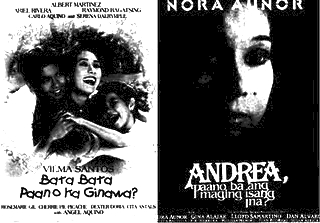
1990, Dalawang malalaking pelikula ang tinampukan ni Vilma: Lino Brocka’s Hahamakin Lahat and Laurice Guillen’s Kapag Langit ang Humatol. Si Nora ay nakahabol sa MMFF with the low-budget social-realist drama Andrea, Paano Ba Ang Maging Isang Ina?, which she co-produced with an independent outfit, MRN Films, and was directed by Gil Portes based on a Ricardo Lee screenplay. Sa mga parangal para sa taong ito, si Nora Aunor ang nagwaging Best Actress sa ‘Movie Magazine” awards (ng GMA 7), Star Awards, FAMAS, FAP at Gawad Urian, making her a Grand Slam honoree. On May 22, 1991, Brocka’s sudden death in a vehiclar accident shocked the movie industry. Nora dedicated her FAP Best Actress award kay Brocka, na siyang dahilan upang maitanghal ang Bona sa Directors Fortnight ng Cannes Film Festival in 1981. May nagsasabing ‘hindi Grand Slam” ang pananalo ni Guy for Andrea dahil, sa CMMA, her costar Gina Alajar was declared Best Actress (with Nora as runner-up). But the CMMA was considered a minor award-giving body, at ‘yung apat na major ang ginagawang batayan for a Grand Slam win. Kaugnay rito, nagsimulang magbigay ng parangal ang UP-Young Critics Circle (YCC-Film Desk) at si Nora ang lone winner for Best Performance, also for Andrea. Hindi na nagbigay ng acting awards ang CMMA the following year, habang aktibo hanggang ngayon ang five major award-giving bodies, na nadagdagan ng iba’t ibang grupo. Nagkaloob ng Gawad Pandekada ang Manunuri – for achievements in acting – at sina Nora, Vilma, Vic Silayan, Phillip Salvador at Gina Alajar ang mga nagging karapat-dapat sa parangal (Nora having won Urian Best Actress trophies for Tatlong Taong Walang Diyos, Bona, Bilangin Ang Bituin Sa Langit and Andrea; Vilma for Relasyon, Broken Marriage, Sister Stella L. and Pahiram ng Isang Umaga).

1991 – 92

Exciting uli ang labanang Vilma at Nora, para sa masusugid nilang tagahanga, noong 1991. Viva Films’ Ipagpatawad Mo starring Vilma Santos and Christopher de Leon was chosen as 1991 Gawad Urian Best Picture, with Vilma winning as Best Actress. Muli, nagproduce si Nora ng low-budget drama for MRN Films, Elwood Perez’s Ang Totoong Buhay ni Pacita M., na entry sa 1991 Metro Manila Film Festival. Its awards included Best Picture, Best Direction, and Best Actress for Nora Aunor.

In the award-giving season in early 1992, Nora won the Best Actress honors sa Star Awards and FAP, as well as the Best Performance award from the YCC-Film Desk’s 2nd Annual Circle Citations (with co-winner, Aga Muhlach, for Maryo J. delos Reyes’ Joeyboy Munti). Ang Pacita M. ay nanalo rin ng Best Picture and Best Direction among other awards as 1991 FAMAS. Nora scored three consecutive Best Actress triumphs sa FAP Awards: 1989 (Bilangin), 1990 (Andrea) and 1991 (Pacita M.). Ito bale ang katapat ng three straight victories ni Vilma sa Gawad Urian. Nora was elevated sa FAMAS Hall of Fame in 1991 for having copped five Best Actress statuettes: Tatlong Taong Walang Diyos, Ina Ka Ng Anak Mo, Bulaklak Ng City Jail, Bilangin Ang Bituin Sa Langit and Andrea, Paano Ba Ang Maging Isang Ina? Later, nagtamo siya ng Circle of Excellence awards sa FAMAS apara sa mahusay niyang pagganap sa Pacita M. in 1991 at sa The Flor Contemplacion Story in 1995.

To mark her 25th anniversary in show business, Nora starred in PETA’s Minsa’y Isang Gamugamo sa una niyang pagganap sa entablado. The play, an adaptation of Lupita Kashiwahara’s film based on a screenplay by Marina Feleo-Gonzales, was directed by Soxy Topacio mula sa script nina Ricky Lee at Boni Ilagan. It had a successful run at the Tanghalang Raja Sulayman in Fort Santiago in February-March 1991. Nora further acquitted herself in theater in December 1992 (DH by Topacio-Lee) and in the mid-1990s (Trojan Women, na dinirek ng isang Griyego and was staged at the Ninoy Aquino Parks and Wildlife). At tulad ng mga stage play na tinampukan, nagging malaking tagumpay ang unang major concert ni Nora (Handog ni Guy) sa Araneta Coliseum noong May 18, 1991.

1993, Hindi nagtapos ang labanang Nora-Vilma for Best Actress sa pagkaka-elevate nila sa FAMAS Hall of Fame. Dahil sa dumaming award-giving body since the mid-1980s, hindi nakuntento ang respective groups of fans nina Nora at Vilma sa pag-asam na patuloy silang gumawa ng magagandang pelikula na pagtatamuhan nila ng trophies. Sadly, dumating din sila sa punto ng kasalatan, careerwise.

In 1992, wala ni isang pelikulang tinampukan si Nora, samantalang si Vilma starred in only one: Maryo J. delos Reyes’ Sinungaling Mong Puso, na hindi niya pinagtamuhan ng anumang major Best Actress award. In 1993, gumawa si Vilma ng pelikula na ang kuwento’y base sa unang Pilipinang nag-reveal ng pagkakaroon niya ng AIDS (Acquired Immune Deficiency Syndrome), si Dolzura Cortez. Directed by Laurice Guillen for Octoarts Films, Dahil Mahal Kita (The Dolzura Cortez Story) won Vilma the Best Actress honors at the 1993 Manila Film Festival, Star, Gawad Urian and FAP. Si Nora ay gumawa ng Inay for Melanie Marquez’s MM Productions, by veteran megman Artemio Marquez (may-likha ng maraming box-office hit ni

Guy sa Tower Productions in the early 1970s). Natalo si Nora sa MMFF at ibang major awardings ng taon, but she won the Best Performance award, again from the UP-Young Critics Circle (YCC-Film Desk’s 4th Annual Circle Citations), with Aga Muhlach (for Jose Javier Reyes’ Hindi Kita Malilimutan) as co-winner.

1994, Mula 1994 hanggang 2003 ay hindi na nagkatunggali sa Best Actress award sina Nora at Vilma. Early 1994 nang huling magkasabay as contenders for the acting plum sina Nora (Inay) at Vilma (Dahil Mahal Kita). For the whole year, Nora didn’t topbill any movie. She hosted Modern Romance sa Telebisyon on GMA 7 and the monthly special Superstar Beyond Time on RPN 9, and appeared on several telesines and a successful two-night concert at the Mandarin Hotel Ballroom. Naulit ang pangyayari noong 1992 na walang pelikula si Nora (she only appeared in her second stage play, DH, na nag-world-tour in 1993) and this will be repeated 10 years later, when she did the ABS-CBN 2 drama series Bituin that aired from September 2002 to May 2003 and several concerts. Vilma notched two films: Regal’s Nag-iisang Bituin (by Joey Reyes) and Golden Lions’ Lipa Massacre (by Carlo J. Caparas), which won as Best Picture sa FAMAS.

1995 – 97

Sa mga sumunod an taon, parehong nag-achieve sina Nora at Vilma in local award-giving groups and international film festivals. Nauna si Nora, in 1995, for The Flor Contemplacion Story, kuwento ng Pilipina na nasentensiyahang mamatay by hanging sa Singapore. Late 1995 nang maiulat na si Nora ang nagwaging Best Actress sa Cairo International Film Festival sa Egypt for her performance in the Joel Lamangan megger, which also won as Best Picture. Nanalo si Nora sa YCC-Film Desk’s 6th Annual Circle Citations (Best Performer) at sa Star Awards, FAP at Gawad Urian (Pinakamahusay na Pagganap – Pangunahing Aktres; with co-winner Helen Gamboa for Tikoy Aguiluz’s Bagong Bayani, another Flor Contemplacion filmbio). Top box-office hit ang The Flor Contemplacion Story, for which the Guillermo Mendoza Memorial Scholarship Foundation, Inc. (GMMSFI) chose Nora as Box-Office Queen, the same honor she received in the early 1970s and 1980s. Si Nora ang Best Actress sa 1995 MMFF for Viva Films’ Muling Umawit ang Puso. Sa international filmfests, Nora again won as Best Actress in 1997. She got the Golden Pearl Award in Penang, Malaysia, for Viva’s Bakit May Kahapon Pa? Para sa naturang Lamangan megger, Best Actress din sa Gawad Urian si Nora (with cowinner Sharon Cuneta, for Olive Lamasan’s Madrasta).

1998 – 2001

Ang international fame, bilang Best Actress, ay nakamit ni Vilma in 1999, when her Star Cinema headliner Bata … Bata … Paano Ka Ginawa? – directed by Chito Rono – was entered as competition entry sa Brussels Film Festival. Released in 1998, Bata won for Vilma the Best Actress honors at the Star Awards, FAP and Gawad Urian, as well as the Best Performance award from the YCC-Film Desk. Dahil nahalal na alkalde ng Lipa City sa Batangas si Vilma Santos-Recto (she married then Batangas Congressman, now Senator Rafael ‘Ralph” Recto in December 1992), naging mas madalang ang paggawa niya ng pelikula. Pero hindi pa rin magmimintis si Vilma na manalo ng acting trophy, kapag din lang may panlabang pelikula, as in 2000 when she did Star Cineman’s Anak by Rory Quintos. Nanalo siyang Best Actress sa Star Awards.

2002, Vilma failed to win as Best Actress sa 2002 MMFF para sa major film na Dekada ‘70, megged by Chito Rono and produced by Star Cinema. Hindi naman nabigo ang Vilmanians sa mga sumunod na awarding, in early 2003, dahil kay Vilma napunta ang Best Actress trophies na kaloob ng Star Awards, FAP at Gawad Urian. Pati ng minor award-giving body na binubuo ng mga academician, ang PASADO (Pampelikulang Samahan ng mga Dalubguro). At ang kanyang ikalawang Best Performance award mula sa YCC-Film Desk in its annual Circle Citations. Panlaban ng bansa ang The Seventies (Dekada ‘70) sa 4th Makati CineManila International Film Festival (organized by Direk Tikoy Aguiluz). The film won a special jury prize at Best Actress award for Vilma (her second claim to international fame). In contrast, malaon nang walang pelikulang panlaban si Nora at this point. After Bakit My Kahapon Pa? In 1996, Nora did minor starrers: MAQ Productions ‘Mama, Dito sa Aking Puso, screenwriter Frank Rivera’s directorial debut; and Lupita Kashiwahara’s megger under Premiere Productions, Babae, an entry to the 1997 MMFF, for which Aunor got several acting nominations. Her last major performance was in Seven Stars Productions’ Sidhi, released in February 1999. Walang napanalunang trophy si Nora for her fourth Lamangan starrer, which was also panned by Manunuri ng Pelikulang Pilipino member Lito B. Zulueta. Both Nora and Vilma, however, were recipients of the Gawad Pan-Dekada (along with Richard Gomez) at the Urian rites in March 2001. Silang dalawa pa rin ang mga aktres na napagkalooban ng natatanging pagkilala ng Manunuri, para sa tigtatlong parangal na natamo nila – in the 1990s – sa kategoryang Pinakamahusay na Pagganap. Aunor won for Andrea, Paano Ba Ang Maging Isang Ina?, The Flor Contemplacion Story, and Bakit May Kahapon Pa?. Santos won for Ipagpatawad Mo, Dahil Mahal Kita and Bata … Bata … Paano Ka Ginawa?

2004, Kung susumahin, mahirap nang dagliang mabilang ang mga award nina Nora at Vilma, through the years, para sa mga pelikulang tinampukan nila. Ito rin ang puntong hindi ang pag-quantify sa mga natamong parangal ang mahalaga, kundi ang pagpapatunay na walang mintis sa kanya-kanyang laban, sa kahusayan, ang dalawang pinakamahigpit na magkaribal sa larangan ng pagganap pampelikula. The End. – William Reyes

NOTE: After their last acting contest (Naglalayag vs Mano Po 3 My Love), the two actresses went separate ways, Vilma decided to do mainstream commercial films widening her demographics (D’ Lucky Ones, cameo role, 2006; In My Life, 2009; The Healing, 2012) and Nora did several indie-art films (Care Home, 2006; Ingrata, 2006; El Presidente, 2012; and Sinapupunan – Thy Womb, 2012).

Boxing Matches 1/7

This slideshow requires JavaScript.

An eye for an eye. Is that biblical? For Vilmanians and Noranians seeing mano de mano is like a historical task. Point by point everyone will fight. Awards to awards, acting to acting, talent to talent. If Nora has three consecutive FAP, Vilma has three consecutive URIAN. If Nora sings, Vilma dance…and so on… for Vilma and Nora’s fans the comparison never ends with statistics. It’s the experiences. Like being part of a boxing matches.

For many Nora Aunor fans, Ate Guy is a picture of a conservative, traditional, restrained- trained artist (just like Lolita Rodriguez). For them, Nora is the ultimate performer. For many Vilma Santos fans, Ate Vi is picture of a liberal, feminist, method-trained artist (just like Charito Solis). For them, Vilma is the ultimate performer. Can we find some solution to figure out who is the ultimate winner that is if this is a boxing match? How many rounds before we can proclaim a winner? What are the boxing rules that we should follow? And what is the reward? Perhaps the title, the best actress of all time? For Vilmanians, the clear winner is Vilma Santos. No doubt. Vilma remained to be an important player in the entertainment industry. Projects lined-up, waiting for her availability. She also stacked up so many honors from getting a doctorate degree to a prestigious Gawad Plaridel to the latest title of “woman of style and substance.” She is indeed the clear winner. For Noranians, being abroad have its disadvantages. Nora continued her controversial stay in the United States with the issues regarding the discovery of her past marriage records in Las Vegas. This was in addition to her completion of the drug rehabilitation program imposed to her in exchange of the dropping of drug possession charge against her. Noranians admitted that her career is currently in downside despite the two digital films she has completed in the past year. So career wise, Vilma Santos remained on top of her game while clearly Nora Aunor’s fame diminished as she retired in foreign country. We have clear winner then but what is the point of this article? Well, let us bring the past and reminisces the once competitive bout of the two hottest actress Philippine cinema ever produced, Vilma Santos and Nora Aunor.

We listed Vilma’s ten best films and matched it with Nora’s. We then came up with analogy of who did well in terms of credible performances. We also tried to switch the roles and see if both actress remained credible. The outcome was incredible.

Nelia & Josie

Atsay versus Anak – Mario Bautista pointed out in his movie review of “Atsay” (Philippine Daily Express, 1978) that Nora Aunor’s performance: “…bears the distinct marks of style and self, welding character and personality. As Nelia, the atsay, she delivers a muted performance that successfully treads the thin, delicate line separating genuine sentiment and mawkishness.”

In 1978, you will not imagine Vilma Santos plays an “Atsay” which could also be said to Nora Aunor, her fans will not imagine Nora played a burlesk dancer or spoiled socialite. After 22 years, fans of Nora Aunor were surprised to find out Vilma Santos played the typical role that’s been identified to Nora. That is the role of an “atsay” or maid or in modern day term, domestic helper of “DH” in short.

And surprise, surprise, Mario Bautista, the same critic who praised Nora’s performance in Atsay was equally convinced of the Vilma’s performance in Anak. And he wrote: “…(Anak) belongs to Vilma, who goes through an entire spectrum of varied emotions as Josie, mula sa katuwaan at excitement niya sa pagbabalik sa Pilipinas (natural na natural ‘yung pagiging aligaga niya habang namamahagi ng pasalubong sa mga anak niya), ang disappointment niya nang matanto niyang hindi na niya kilala ang mga batang binalikan niya, hanggang sa finally ay sumambulat siya sa tagpong pinagsasampal na rin niya si Claudine at pinalalayas. It’s a bravura sequence and the performance is magnificent.”

Atsay was shown in the 1978 Metro Manila Film Festival. The film was a mild hit despite Nora Aunor being proclaimed as the best performer defeating Vilma’s Rubia Servios. Nora didn’t win any awards for Atsay after the controversial wins over Vilma. Anak on the other hand was 2000’s box office record holder. The film also earned Vilma best actress awards from PMPC’s Star Awards and Pasado awards.

Switcheroo – If we switched roles, Vilma Santos would look awkward if she played the role of Nelia in Atsay in 1978. That is not because she was incapable of doing so but because of her youthful look. But what about Nora playing Josie Agbisit in 2000’s Anak? We are sure that Nora will also excel as Josie but would the film be a box office hit? I doubt it.

Reality Checks – Vilma convincingly did a typical Nora Aunor roles in Anak. She proves that she is indeed the most versatile actress we have right now. And that there’s no role that she can’t do justice. Nora can excel acting wise if she did Anak but we are convinced she can’t replicate the box office results that Vilma can do. This is in consideration of the dismal box office results Nora’s past four films prior to year 2000.

Corazon & Chato

Bulesk Queen versus Minsa’y Isang Gamo-Gamo – Both Vilma and Nora did a career milestone films in 1976 and 1977.

Nora Aunor as Cora De La Cruz in Minsa’y Isang Gamo Gamo delivered her famous legendary line: “My brother is Not a Pig!” Nicanor G. Tiongson, one of Aunor’s original drumbeaters wrote in The Philippines Daily Express in 1976 wrote: “Once again, Nora Aunor proves herself to be one of the finest actresses today, with an acting style that is both “raw” and “fine” characterized by a disarming sincerity and force, that can break into an unbelievable number of nuances, shades and colors of emotion. Outstanding is her court scene where her face registers a gamut of emotions — from anger to confusion to depression and despair — in the pace of ten seconds. Like a mature actress, she does not attack dramatic scenes with histrionics or hysteria. Over her brother’s coffin, she curses the Americans who came to pay her family off by screaming “My brother is not a pig” over and over again with mounting intensity.” Despite the praise for Nora’s wonderful performance by many critics, she didn’t win any award for this role.

The following year, it was Vilma Santos turned. As Chato, Vilma Santos gave us one of the most compelling performance of her long stellar career in Burlesk Queen. Ricardo Lee, the writer, interviewed the director Celso Ad Castillo in an article for the Manila Magazine in 1977. Castillo pointed out that all Vilma’s highlights scenes were take one. Her scenes in the hospital with Leopoldo were shot continuously and that Vilma was so good that even Leopoldo can’t controlled his tears. And Leopoldo was supposed to be dead in this scene. Vilma convincingly won the judges’ vote as she won the film festival’s best actress award as Burlesk was entered in the 1977 Metro Manila Film Festival. The film won 10 out of 13 awards that created huge complaints from the other films entered. Burlesk never replicate it’s achievements from the festival jurors as the film was ignored by the other award giving bodies. The sole consolation by Burlesk’s supporter was the box office results of the film. It became the top grosser of the festival.

If Nora produced one of her most memorable lines in 1976 via Minsa’y Isang Gamo-gamo, Vilma on the other hand, created one of the most graphic scenes in the history of Philippine cinema, that’s the ending scene of her Burlesk Queen where she danced away until she bleeds (intended to be an abortion attempt) to her unfortunate demised.

Switcheroo – If we switched roles, will Nora and Vilma give us the milestone performances we witnessed? Will Vilma Santos played more intensely as a nurse in a rural area near the military bases in Pampangga than Nora in Minsan Isang Gamo-gamo? She will indeed be more like Kapangpangan because of her fair complexion. A well-known Kapangpangan physical traits. Given the fact that prior to Burlesk Queen the most serious roles she has done was Castillo’s Tag-ulan Sa Tag-araw and Bernal’s Nag-aapoy na Damdamin, Vilma would definitely do well as Cora De Cruz. The question now is would Nora be physically ready to play the demand of the role of Chato in Burlesk Queen? Acting wise, she would be as intense as Vilma but the role would probably not fit her physically. If the role were given to Nora would she be willing to do the strip tease dances. Would she be willing to show some skin. Despite the fact that the role is not as vulgar as what might the title implied, Burlesk Queen would be too daring for Nora’s image and she would have no guts to play such role.

Reality Checks – Vilma will convincingly play the Kapangpangan Cora De La Cruz. By 1976, Vilma was riped to play an important role and if she did Minsa’y Isang Gamo-gamo, she will equally be convincing as Nora. Nora on the other hand, will be akward to play Chato in Burlesk Queen. The physicality of the role would also play an important factor which will result of her being out of place that is if she plays the role of Chato in Burlesk Queen.

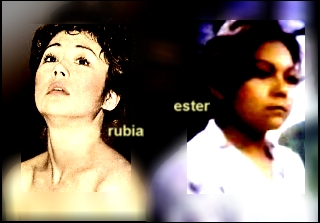
Ester & Rubia

Rubia Servios versus Ina Ka Ng Anak Mo – 1979 produced an incredible collaboration films. Drama queens of yesteryears teamed up with the reigning queens. Vilma Santos did Modelong Tanso with Charito Solis and Nora Aunor did Ina Ka ng Anak mo with Lolita Rodriguez. We all know what the outcome of the films was. Vilma and Chato were satisfied with the box office results of their tandem while Nora and Lolita were happy with their critical results.

Ina Ka Ng Anak Mo directed by Lino Brocka was indeed the better project than Modelong Tanso. Nora once again gave us her famous three syllables line: “hayuuuuppp… Hayuuuupppp… Hayuuuupppp!” Isagani Cruz summed up her performance in his TV Times review: “…Filipino movies are nothing if they do not have confrontations and Ina Ka ng Anak Mo has one confrontation after another. The best one occurs when Aunor sees Rodriguez and the baby for the first time. Aunor silently moves from shock to hurt to rage to hysterics. The scene is spoiled only at the end, when she bursts out that she will see the pair in court; in the heat of such passion, no Filipina will think of impersonal legal proceedings. More characteristic would have been a search for a weapon or for an exit door…Brocka specializes in acting vehicles. Aunor clearly deserves the Best Actress Award. In fact, she deserves it more than Rodriguez, if only because she is younger and has less experience. Before Ina Ka Ng Anak Mo, only Charito Solis could stand up to Rodriguez; now Aunor is on par with both veteran actresses.”

A year before Nora bursted out with her now famous three syllable lines: “hayup, hayuup, hayuuup” Vilma cried out the same line with more anguish in her most demanding role as a rape victim in 1978’s Rubia Servios. Co-incidentally, both Ina Ka Ng Anak Mo and Rubia Servios were directed by Lino Brocka. The failure of Rubia to win Vilma an acting recognition at the hands of the most successful acting director, Brocka was perhaps the most disappointing anecdote in Vilma career and perhaps Brocka’s too.

Ricky Lo’s article titled “Vilma’s Violation” summed-up Vilma’s fans’ perception of her performance: “…The anguish in Vilma’s face and the lust in Philip’s eyes blended so well the effect was dramatic rather than sensual….The real climax of the film, however, is the killing of Philip by Vilma with a paddle aboard a motorboat at sea. Lino Brocka, who directs Vilma for the first time, succeeded in muffling her sobs even in the most hysterical moments…” The climax scene he mentioned here was the scene where she uttered the lines: “hayup… hayuup… hayuuup!”

Switcheroo – If we switched roles, will Vilma be convincing as the daughter of Lolita Rodriguez in Ina Ka Ng Anak Mo? Remember Vilma played Lolita’s daughter in several dramatic films in the 60s. And Vilma admitted that Lolita was one of her early influence when it comes to acting. It is fare enough to say that if Vilma can hold herself when comes to acting with the intensity of a Charito Solis she would be able to stand her ground too with the likes of Lolita Rodriguez. She has done so in her films in the 60s and she will pass with flying colors if she did Ina Ka Ng Anak Mo instead of Nora.

On the other hand, would Nora Aunor be as convincing as Vilma in Rubia Servios? Again, the roles demands physicality. Will Nora Aunor eat her guts out and performed like Vilma? As Rubia she will require to be raped by Philip Salvador twice. Would Nora be as prepared as Vilma to play an object of affection of an obsessed rapist? I doubt if she will be able to convince us with the demand of such role.

Reality Checks – Vilma will hold her ground if she will be given a chance to do Ina Ka Ng Anak Mo against the dramatic legend, Lolita Rodriguez. Considering the fact that both have worked together in several dramatic films in the 60s. Meanwhile Nora Aunor will be out of place if she plays the role of a rape victim in Rubia Servios.

 Boxing Results – Vilma 3, Nora 0  – To be continued…

RELATED READING:
Official Web-site: Vilma Santos Recto
Official Web-site: Nora Aunor ICON
Facebook: Vilma Santos Recto
Facebook: Nora Aunor
Wikipedia: Vilma Santos
Wikipedia: Nora Aunor
Superstar Nora Aunor
Star For All Seasons Vilma Santos
Nora Aunor Film Actress
Vilma Santos Film Actress
And God Smiled at Me vs. Dama de Noche
Vilma-Nora Then, Nora-Vilma Now
Will Vilma Santos do a Nora Aunor?
A Tale of Two Movie Queens
About “Larawan” and Nick Joaquin
T-Bird at Ako (1982) (Video)

Boxing Matches 7/7

We listed Vilma’s ten best films and matched it with Nora’s. We then came up with analogy of who did well in terms of credible performances. We also tried to switch the roles and see if both actress remained credible. The outcome was incredible. The final bout…

Relasyon versus Naglalayag – Two films, two performances…the last bout between Nora and Vilma. We picked two films that becomes significant milestones to both actress. Vilma Santos’ Relasyon earned her the very first of her four “grand slam” best actress wins. Nora Aunor’s Naglalayag earned her the second international recognition in addition to the local awards she already amassed. By the way, she shared the international best actress honor with Sharon Cuneta, a self confessed Vilmanian.

So lets start… In this corner, Nora Aunor for her portrayal of a rich judge in 2004 Manila Film Festival entry, Naglalayag. A May-December love story. Nora fell in love with a poor taxi driver played convincingly by Yul Servo. The film achieved the festival’s best picture honour together with the best director award for Maryo J. delos Reyes and the coveted Best Actress for Nora Aunor. The film was first offered to Vilma Santos but she turned it down and Maryo De Los Reyes decided to give the project to Vilma’s rival, Nora.  In his Inquirer article, Nestor U. Torre wrote: “THE MANILA Film Festival later this month has as one of its highlights the big-screen comeback of superstar Nora Aunor. For years now, Nora has been occasionally starring in films, but most of them haven’t done justice to her well-honed talent. They have either stressed her dated “kawawa” screen persona or put her in exceedingly overwrought scenes that were too self-consciously “dramatic.” Thus, she has failed to rise up to the level of her touchstone performances in movies like “Bona,” “Himala,” “Atsay” and “Tatlong Taong Walang Diyos.” A challenging material would uplift Nora’s sagging career according to Torre… He continued: “…This is a great pity, because we know that, despite her relative drop in popularity, Nora still has some great performances left in her. All she needs is challenging material that’s right for her unique combination of gifts. Why hasn’t she been getting such projects? Because some of her film colleagues are still fixated on her past roles, not realizing that viewers have tired of them-and that, at 50, Nora shouldn’t be expected to merely reprise her past triumphs…” Unfortunately, Torre clearly realized Aunor wasn’t believable as the rich judge…

He wrote: “…To be sure, some elements detract from Nora’s thespic achievement here. For one thing, she is not all that believable as a judge. Yes, it’s true that the similarly petite Esperanza Fabon is a judge in real life, but the problem has less to do with height than more telling background and character traits…Some scenes are acted in too overwrought a manner, especially Nora’s thespic highlight at a funeral parlor. And the lead screen couple’s romantic interludes are sometimes too cutely staged and executed for Nora’s mature character in this movie…” But despite this truthful observation Torre’s adoration to Aunor surfaced as he concluded: “…Despite these flaws, however, Nora’s performance still impresses, moves and illuminates viewers because it is generally natural, insightful and committed. Let’s hope that “Naglalayag” does well at the film fest, so other producers will offer Nora even better and more challenging screen vehicles, for her to truly reemerge as the thespic superstar she once was-and could be again.” Too bad, Torre’s enthusiasm faded as the film closed in numerous theatre on it’s third day of showing. The only significant consolation to the box office results of this film was Aunor’s shared best actress win with Sharon Cuneta at the Brussels International Film Festival. This was her third international recognitions, one award ahead of Vilma’s two.

Meanwhile… In this corner, Vilma Santos as Maria Lourdes, the sympathetic mistress in Bernal’s Relasyon. The film that earned Santos it’s deserving win at the majors – FAMAS, Gawad URIAN, Film Academy of the Phils., Catholic Mass Media Awards and from a minor – Let’s Talk Movies Awards. Santos’ wins resulted in the creation of a new tag line “Grand Slam.” Which basically means a swept wins from all major award giving bodies? The Philippines currently have five major award giving bodies – FAMAS, URIAN, STAR, Golden Screen and Luna Awards. At the Gawad Urian, Aunor was expected to win her third critic’s trophy against Gina Alajar and Lorna Tolentino from the same film, Moral and against Vilma Santos’ tiny film Relasyon. Aunor was conditioned to received the honour because of her tremendous performance as Elsa in ECP’s Himala. But she left empty handed as the critics finally resolved their unfair treatment of Vilma Santos and gave her the long awaited nod. Vilma will win all of the remaining trophies resulting from many Noranians’ speculation of political sabotage. As the film Himala was funded by the Marcos government, the intense resistance against the government resulted from the film being ignored. Never mind that Vilma gave us one of the most moving performance of her already long stellar career.

A critic, Isagani Cruz in his article for Parade magazine analyzed Relasyon’s psychological overtones: “…we have a film made explicitly for adults. There is no explicit sex sequence (adults don’t really go for that sort of thing, only adolescent boys do). But the psychological problems faced by the film are comprehensible only to adults, those who know what it means to live with someone one loves (or, at least, used to love). This film is, thus, not entertaining in the usual prurient sense, but in a deeper, psychological, intellectual sense. There are basically two themes that this film tackles: sex roles and divorce.” He pointed out two opposing views about the two lead characters of the film… Cruz added: “..Vilma Santos represents womanhood in the film: Christopher de Leon represents manhood. The Filipina woman is commonly thought of as a martyr or long-suffering masochist. Santos portrays a mistress who is an out-and-out martyr…De Leon represents chauvinist maleness. He portrays a character that is totally insensitive to his woman’s needs.” He then touches the theme of the film, the flight of a mistress and divorce… He said: “…The trouble with sex roles in our society, the film argues, is that they are widely accepted without question. Men are supposed to have mistresses, and women are supposed to be faithful. Men are supposed to make the decisions (about where to live, what job to get, when to dine out), and women are supposed merely to follow. The Philippines may justifiably boast that, in politics, women are almost as powerful as men, but it is undeniable that in every other field including the home, it is the men who are the masters and the women who are the slaves. The other theme tackled by the film is that of divorce. Again and again, the characters discuss the lack of divorce in the Philippines . If De Leon could only annul his marriage, if he could only divorce his wife, if he could only get to Las Vegas and marry Santos there… Such possibilities remain mere possibilities, because Philippine law, unfortunately, still does not allow for divorce. In the film, it is made clear that the marriage of De Leon and his wife is totally beyond repair. With De Leon , being the male chauvinist pig that he is, and with his wife, being the non-entity that she is, there is no hope for the loveless couple. On the other hand, Santos and De Leon clearly love each other, clearly deserve chance to be man and wife, clearly should be helped (not damned) by society. It is an implicit case for divorce, made even more convincing by the fact that the characters are so familiar, so realistic.” And then concluded: “…technically, the film does not rank high in Ishmael Bernal’s canon of films… There is one technical achievement worth watching for: De Leon’s death scene, covering more than one minute, is taken with one continuous shot (no cuts) Santos’ acting is adequate and extraordinary. De Leon gives another of his solid performances…” I couldn’t agree more. That scene alone won my approval. Vilma’s “tuhog” acting was so effective that by the time its over we were both exhausted and felt her pain. In the next scene, where she was consoled by her family and friends, in the kitchen table, we felt her final resolve, the acceptance of the death of her love one. The naturalness of her acting was very moving and effective.

Switcheroo – In 1982, Vilma Santos has established already her versatility as an actress. Accepting roles that her opponent have reservation of doing. Nora Aunor on the other hand maintained her chosen projects to api-apihan roles and light comedies. She did two important films in 1982, Mga Uod at Rosas where she played another “api-apihan” role and the gigantic Elsa role in Himala. Together with two light comedies, Annie Sabungera and Palenke Queen. And don’t forget her lesbian role in T-bird At Ako with Vilma. Her chosen projects didn’t change the possibility that she might be typecasted in those api-apihan roles. A big mistake considering that in order for an artist to have longevity one must accept roles that will challenge one’s ability and giving something new to your audience will add more interest resulting with continued patronage and loyalty. Vilma Santos has learned this earlier as she tried to surpassed her opponents. Versatility remained to be her greatest weapon. And so if we give the Marilou role to Aunor, would she be as convincing as Vilma? Her ability to be vulnerable was seen in such convincing performance in Mga Uod at Rosas and Himala. The role will also required her to deliver such lines with such feminist overtones. Would she be convincing delivering such kilometric lines? With such strong conviction? I doubt it. By 1982, she wasn’t known for delivering long lines but instead was known for uttering short syllabolic lines. Lines: like: “my brother is not a pig!” or “Hayup…hayup…hayup…” A proof that she will be akward as the insecure mistress in Relasyon.

Meanwhile if we give the Dorinda role to Vilma, in DeLosReyes’ Naglalayag we can honestly say that Vilma will be more successful as the rich, successful judge. She will be more convincing with delivering her lines, with every gestures and posture. She will also excelled in many dramatic highlights of the film. Adopting a more restrained acting that Vilma is now know for, those scenes that only required her to show tears dropping from her eyes just like in Mano Po 3: My Love and Dekada 70. A proof that Vilma after her long acting career has evolved into a more versatile well rounded actress.

Reality Checks – Even Nestor Torre, an ardent Aunor supporter concluded that Aunor was unconvincing as Dorinda, the rich judge in Naglalayag. Santos on the other hand earned her deserving respects from all the award giving bodies in 1982 for her effective portrayal of a mistress in Relasyon. 22 years between the two films and clearly, Vilma Santos transformed herself into a more versatile well rounded actress and Nora Aunor got stucked into an restrictive image. Those roles of the underdog, the api-apihan roles. If we switched roles, Nora Aunor would not be as effective as the mistress in Relasyon while Vilma will excel as the rich judge in Naglalayag.

Boxing Results – In our final bout, Vilma knocked out Nora by a landslide. Vilma 12, Nora 2

Conclusion

Our exercises showed one clear proof. In order for an artist to remained famous and maintained longevity, one must be willing to adapt, learned from the craft and jumped into an unfamiliar territory by accepting challenging roles. Nora Aunor have restricted herself to roles that will typecasted her into one type of roles, that of the “api-apihan” roles. Vilma on the other hand, learned from the very beginning that in order for her to survive the tough competition she have to accept challenging daring roles that will ask her to attack roles out of her comfort zone.

 “Kung hindi tayo kikilos, kalian pa? Kung hindi ngayon, kalian pa?”

“Walang himala…nasa puso…nasa tao ang himala!”

RELATED READING:
IMDB: Nora Aunor
IMDB: Vilma Santos
Official Web-site: Vilma Santos Recto
Official Web-site: Nora Aunor ICON
Facebook: Vilma Santos Recto
Facebook: Nora Aunor
Nora & Vilma No Longer a Rivalry (a special magazine)
Boxing Matches 1/7
Vilmanians and Noranians Surveyed
About “Larawan” and Nick Joaquin
Nora at Vilma sa Gitna ng Basura
Very Long Rivalry (Repost)
Sino ba talaga ang mas mahusay umarte, si Vilma o si Nora?
May be the Philippines’ best film actress of all time 1/3
Vilma-Nora Then, Nora-Vilma Now (Repost)

Boxing Matches 6/7

We listed Vilma’s ten best films and matched it with Nora’s. We then came up with analogy of who did well in terms of credible performances. We also tried to switch the roles and see if both actress remained credible. The outcome was incredible. Boxing Matches Continues with….

Andrea, Paano Ba Ang Making Isang Ina? versus Bata Bata Paano Ka Ginawa? – Both films, Andrea Paano Ba Ang Maging Isang Ina? and Bata Bata Paano Ka Ginawa? earned Nora Aunor and Vilma Santos grand slam wins. Nora Aunor won the 1990 Best Actress from the Metro Manila Film Festival and then swept the best actress honor from Urian, FAP, Star, Famas, and Young Critics Circle. Adding to the significance of this grand slam wins was her elevation the Famas Hall of Famer.  This was her fifth Famas best actress which as stupid as can be required her to be elevated and disqualified her with future wins. In addition to this wonderful honors was the film received its deserving best picture trophies from FAMAS, STAR and of course at the MMFF.

Butch Francisco wrote in his Philippine Star article: “..It is a powerful film mainly because of the performances of the cast and the basic conflict found in the movie. As Andrea, Aunor is a teacher who has chosen the difficult and perilous but crusading path of armed social rebel whose husband is a comrade in the underground. When it is time for her best friend, Gina Alajar, who is married to a guy Lloyd Samartino, who has absolutely no sympathy for the cause which his wife’s friend is fighting for. Childless, Lloyd and Gina get emotionally attached to the baby, especially after the mother temporarily leaves the infant to look into the circumstances of her guerilla husband’s death in the hands of the military. Unfortunately, before she could return to her baby, Nora is arrested and detained in a safe house by military men, who torture her mercilessly. Having lost contact with the freedom-fighter and presuming her to have been killed, the surrogate parents have decided to keep the child as their own and bring him to the United Sates for seven years. When they return to the Philippines for a visit, Nora confronts them and tries to claim her child back. “Andrea” has a most chilling, moving and harrowing climax, one of the best in local movies. Its fearless account of military abuses in both Marcos and Aquino administrations is admirable. From start to finish, it mirrors present Philippine conditions, with special focus on the problems afflicting educators and the government’s counter-insurgency campaign…The film’s cohesive material is given justice by the sterling performances of Nora Aunor and Gina Alajar, both perfectly cast.”

In 1998, Vilma’s Bata Bata Paano Ka Ginawa grossed on its opening day of showing a whooping P 5.2 million pesos. A tabloid article headlined: “Ate Vi sinagip ang naghihingalong movie industry!” A feat that she will surpassed with the another super blockbuster film, Anak the following year. A worthy note, Vilma’s closest rival, Nora Aunor on the other hand was clearly on decline mode as her followed up films after the successful Flor Contemplacion failed miserably at the box office, one film after the other.  Nestor Torre, Nora’s ardent supporter wrote down for Philippine Daily Inquirer “Vilma scores with “Bata, Bata, Paano ka Ginawa?” He elaborated: “…the film based by Lualhati Bautista on her own novel that was published in the ‘80s, Vilma Santos plays Lea Bustamante, an “ordinary” woman who turns out to be an extraordinary Filipina because she has liberated herself from the restrictions that hold some other women back from coming into their own up to this day. She separated from her husband (Ariel Rivera) because he wanted her to subsume her personal goals in his favor. She had a son (Carlo Aquino) by him, and later lived in with another cad (Albert Martinez), who fathered her daughter (Serena Dalrynple). Unhappy with Albert, Vilma fantasizes about getting it on with a third guy (Raymund Bagatsing), but he doesn’t accede to her forthright invitation for them to get between the sheets. That’s one thing with Lea that surprises and perhaps even shocks some members of the audience. Unlike some other women who keep their sexy thoughts to themselves, she articulates them in colorful language, without blushing. This forthrightness has a positive if sometimes “embarrassing” effect on her children, who have been brought up to be similarly forthright and argumentative. Lea also wears her heart on her sleeve in relation to her work, which involves her in helping aggrieved and battered women fight for their rights. Writer Lualhati Bautista and director Chito Rono’s telling and prismatic depiction of Lea’s character is worthy of praise because it is full-bodied and filled with surprises, unlike most other local film characterizations, which are two-dimensional and predictable. The audience’s hearty response to Vilma’s spirited portrayal of Lea is a big change from viewer’s knee-jerk responses to most lead characterizations on the local screen, which fail to delight and surprise because they follow tired, old formats so automatically.”

Torre praised Lualhati Bautista admirable script with…”…Bautista’s plotting is also admirable. She includes many elements from Lea’s personal and working lives and is able to integrate these diverse bits into a fairly unified whole – a tough task for any screenwriter. Lea’s first husband comes back after many years, hoping to take his son with him to the States. Lea’s live-in partner becomes jealous, and yet the two men gang up on Lea when the children are hurt in an accident. Things come to a head until the children have to choose whether to stay with their mother or join their respective father’s new families. Through all of this, Lea has her crying jags, but otherwise remains strong and secure in her self-worth. This is the all-important role model that the character of Lea holds up to the less secure women watching awe-struck in the dark movie house. Let’s hope that at least some of them learn from her example. Of course, the film would have been of greater service to its audience if it had showed why, despite her strength and wisdom, Lea still fell for the self-centered cads with whom she shared her bed.”

He then described Vilma’s performance as…”…But these weaker elements pale in comparison to the movie’s admirable strengths, led by its insightful script and direction, excellent performances by Vilma Santos and Carlo Aquino, and most significant of all, the movie’s evocation of real life being lived with courage and zest….” I can’t agree more… With this description came Vilma Santos third grand slam best actress. Even the pro-Nora Aunor group, Film Desk of the Young Critics Circle or YCC for short confirmed Vilma as their best of 1998. The year gave Vilma her seventh Gawad URIAN as well as the trophies from Star Awards, Film Academy of the Phils., Gawad Sineng-Sine PASADO Awards, Siasi, Jolo.  Critics Awards and because she already a Famas Hall of Famer she’s disqualified in their category. But her disqualification were compensated as she received their Lifetime Achievement Award.

The courageous and unconventional performance of Vilma Santos was again rewarded the following year as she won the top plum award from the Brussels International Film Festival. Armida Siguion-Reyna in her article for People’s Journal wrote: “…Congratulations to Vilma Santos for winning the Best Actress Award and to Chito Rono for the Best Director Award in the 1999 Brussels International Film Festival! Their film “Bata, Bata…Paano ka Ginawa?” (Lea’s Story) is one of the many films now touring the international film festival circuit passed during the term of the present board. Some people feel that the movie could not have been done nor would have passed uncut the MTRCB previously, because of its theme and use of language. Its principal character (played by Vilma) is a mother to two kids by two different men, now seeking solace in the company of a third.”  She pointed out…”…The victories of Vilma and Chito could not have come at a better time for the Filipino movie industry and only shows that the Filipino film artist can meet and even surpassed international standards when given the creative freedom to do so. Of course, we recognize that last year, Albert Martinez, Jun Lana and Ditsi Carolina also won awards in the same festival. I hope the do-gooders who look at the Filipino movie industry with disdain are reading!” Vilma’s Bata was also exhibited at the 44th Asia-Pacific Film Festival in Bangkok , Thailand in November of 1999. The film earned a Special Jury Award – For awareness on woman’s status in Asia-Pacific. Vilma Santos was also nominated as well as Serena Dalrymple as best supporting actress.

Switcheroo – Would Vilma Santos be as successful as Nora in Andrea? And would Nora do the unthinkable as Lea in bata? By this time, both are now matured capable actresses. The only difference was that Vilma Santos remained a bankable star. As we all know Andrea was just a mild hit, a pale in comparison with the outcome of Bata. Would Andrea be more successful at the box office if Vilma was in the lead instead of Nora, a higher feasibility is in order. Nora was already in decline in 1990, the previous year she did only one movie, the mild hit Bilangin Ang Bituin Sa Langit with Tirso Cruz III. She did three more films, all were a dismal failure until she hit a jackpot via Flor Contemplacion in 1995. After Flor her career went downhill. She never recovered even with the two trendy digital offerings. Meanwhile Vilma remained bankable. The end of the 80s gave her opportunity to do only serious films. Even mediocre films like Lipa Masacre was a major hit. The only dent in her strong box office record was the dismal bombed of her film with FPJ in 1996, Ikaw ang mahal ko. But she nicely recovered with a string of hits like Hanggang Ngayon Ika’y Minamahal, Bata Bata Paano Ka Ginawa, Anak, Dekada 70 and Mano Po 3. The question now is if Nora can do such type of role, a liberated matured Lea. Would it fit her image and would the masses like her in such role? A formidable task. Then we can also asked the same with Vilma. Would she performed as intense as Nora in Andrea?

Reality Checks – In 1990, Vilma was clearly the picture of a fine versatile actress. She can do any roles from a militant nun to a cancer stricken career woman to a sympathetic mistress. The Andrea role will add some variety in her already long history of successful roles. We can conclude that she will be successful as Andrea in Andrea Paano Ba Ang Maging Isang Ina. These scenario will even add some glitter to the box office outcome of the film reversing its dismal result under a Nora Aunor starrer. Meanwhile in 1998, Nora Aunor was already in a decline mode. After the successful box office result of the critically acclaimed Flor Contemplacion, the strings of dismal flops in the box office followed. Muling Umawit Ang Puso, Bakit May Kahapon Pa, Mama Dito Sa Aking Puso, Babae and Sidhi all laid an egg at the box office. She eventually decided to try her luck in America. Playing Lea in Bata Bata Paano Ka Ginawa would be a change from her long lists of similar typecasted roles but the outcome would be questionable as we elaborate above. The role will required her to be as liberated, contradicting her virginal, conservative image. The role will also required her to be sexually active, well impliedly and this might turned off her fans and even herself. Nora will not jumped to an unfamiliar territory.

Boxing Results – Vilma win, Nora loss again. Vilma 10, Nora 2 –  To be continued…

RELATED READING:
IMDB: Nora Aunor
IMDB: Vilma Santos
Official Web-site: Vilma Santos Recto
Official Web-site: Nora Aunor ICON
Facebook: Vilma Santos Recto
Facebook: Nora Aunor
Nora & Vilma No Longer a Rivalry (a special magazine)
Boxing Matches 1/7
Vilmanians and Noranians Surveyed
About “Larawan” and Nick Joaquin
Nora at Vilma sa Gitna ng Basura
Very Long Rivalry (Repost)
Sino ba talaga ang mas mahusay umarte, si Vilma o si Nora?
May be the Philippines’ best film actress of all time 1/3
Vilma-Nora Then, Nora-Vilma Now (Repost)

Boxing Matches 4/7

We listed Vilma’s ten best films and matched it with Nora’s. We then came up with analogy of who did well in terms of credible performances. We also tried to switch the roles and see if both actress remained credible. The outcome was incredible. Boxing Matches Continues with….

Pahiram Ng Isang Umaga versus Bona – The intention of Nora Aunor to prove that she is a fine actress continued as she produced projects that can showcase her talent under her own NV productions. And in 1980, “Bona” was conceptualized by director Lino Brocka, producer Aunor and writer Cenen Ramos. It was entered at the 1980 Metro Manila Film Festival together with another Aunor starrer, the soap operatic, Kung Ako’y Iiwan Mo surprisingly directed by Laurice Guillen. Nora’s performance in Bona assured her supporters a win as festival best actress but she left empty handed as the trophy goes to, not to her rival Vilma Santos but to Amy Austria in Marilou Diaz Abaya’s dramatic film, Brutal. The defeat didn’t discouraged her supporters particularly Brocka who brought the film to the 1981 Cannes and received numerous positive reviews.

Nestor U. Torre on his Philippines Daily Express review titled “Obsession” in 1981 described “Bona” as: “…a story of obsession, the tragedy of the fan turned fanatic. It delves into what causes an otherwise sensible girl to throw discretion and self-respect to the wind to serve her beloved.” An accurate description. Torre added: “…Clearly, Brocka, Aunor and writer Cenen Ramos know the phenomenon whereof they speak. The intimate knowledge makes for a film that rings true both for the expert in abnormal psychology and for the ga-ga movie fan reliving his dream and high nightmare in the audience… In the end, the nasty man announces that he’s leaving the country with his latest and wealthiest inamorata. Bona, who has taken all the shit he’s casually thrown her way, can take no more. She kills the bastard. In the process, she has hopefully killed her insane obsession for him. Or maybe she has also killed herself…What a story!…” Strangely enough, Torre wasn’t convinced with Aunor’s performance. He pointed out: “…the best performance in “bona” is turned in, not by Nora Aunor in the title role, but by Phillip Salvador as the bit player who is her idol, her nemesis, and her obsession. Nora is all over the place and gives the role everything she’s got…Trouble is, she is too intelligent for her part. Obsession is born of emotional weakness, a psychological vacuum that the idol is idealized into filling. As Aunor portrays her on screen, Bona is too sensible and savvy a woman to make this act of self-delusion plausible. She is also a mite too old for the role. Granted, there are “diehard-fans in their fifties and sixties, but the character of Bona, as written. Is clearly intended for a young girl (She is supposed to be still a student, for one thing). The character’s innocence would account for much of her naiveté, and Nora does manage the Naïve but, but it feels a little forced. On the other hand, the fact that he, too is no longer a spring chicken helps Salvador in his portrayal of the trying-hard bit player who is destined to be a has-been even before he has been anything at all. His age makes the character even more pathetic. Salvador has a perfect feel for the bit player’s braggadocio in public, his private fears, his dimwitted dreams and his casual cruelty. Stardom is his own obsession, and his failure to achieve it consumes him as much as her failure to possess him consumes Bona in the end. I’m surprised that Salvador didn’t win the Best Actor award at the Metro Film fest last month (so what else is new?)…” So According to Torre, Aunor was too old for the role and didn’t look innocent for the role the required naivety and innocence.

Isagani R. Cruz, another critic, who in 1981 wrote this article for TV Times have a contradicted views: “…The final sequence, where Aunor finally assaults Salvador, is excellent, although it is, of course, in the same vein as Insiang. The typical Filipino film thrives on the theme of revenge. Bona is no exception. When Aunor finally dumps the boiling water on her non-feeling master, the viewer cannot help but be moved. The sequence is effective, perhaps because the rest of the film is not…” Cruz, unlike Torre found Aunor’s acting untouchable…meaning no one can portray Bona as convincing as Nora Aunor! Here’s Mr. Cruz’ opinion: “…Aunor’s acting…saves the film. Despite the incoherent screenplay, the erratic direction, and the irrelevant production design, the film is gripping because Aunor is excellent. Aunor is indeed a signal phenomenon in Philippine film. She broke the color barrier (she is not a mestiza). She broke the marriage barrier (she is not single, nor she is she even happily married). She broke the superstar barrier (before her, superstars were supposed to be beautiful, but not good, actresses). She has now broken the untouchable barrier: in Bona, she is subjected to the most degrading physical abuses. Unlike Hilda Koronel who remained a Madonna even during the rape scene in Angela Markado. Aunor really becomes the penniless, dumb, neurotic alalay Bona is supposed to be. Who can imagine Fernando Poe, Jr. beaten to a pulp by nameless villains? Who can imagine Lloyd Samartino made up to look like a vampire? In Bona, Aunor really looks like an alalay, rather than a superstar. That is why she is, in fact, a superstar.” Wow…nice statements.

Nice because the URIAN can’t get over the same mentality/arguments (the skin color arguments etc) and despite the much more superior acting of Gina Alajar or Amy Austria in Brutal gave Aunor the nod. Actually, Aunor and Alajar tied the honor for the Urian best actress in 1980. Nine years after the Bona was shown, Bernal, Lino Brocka’s closest rival created a much better film. Like Bona, death was evident in this Bernal creation.

Pahiram Ng Isang Umaga was about Juliet, a successful advertising executive who has seven to nine months to live. Cancer stricken Juliet have to take care her responsibilities as a single mother and found herself reconciling with the people who wronged her prior to her diagnosis as cancer victim. The film wasn’t about cancer but about life and death. A very morbid, dreaded topic that very seldom being touch by local filmmakers without being melo-dramatic. Not until Bernal created Pahiram.

Mario A. Hernando, one of URIAN critics summarized splendidly the overall tone of the film, in his Malaya article on March of 1989: “…In the last scene, the imagery and symbolisms of life and death abound. Juliet dies at the break of dawn, the start of a new day (and life), but not without first making her last sentimental paean to life. Supported by the artist, her eyesight having failed completely and with the waves caressing their feet, the weak and dying cancer victim remarks how beautiful life is. True enough, this dying scene set on a beach, with the woman in white, dainty night gown, is one of the most exquisite, breathtaking moments in Philippine movies. But before giving us this grand, highly emotional death scene, the director has gradually introduced various motifs of death, from the artist’s pet black bird which at one point he cruelly squeezes in his hand, to the funeral rituals for Juliet’s father…”

Like the URIAN, the PMPC finally can’t ignore Vilma anymore. They finally rewarded Vilma her first Star Awards for her restrained triumph as Juliet. Mario Bautista, one of its members noted: “…Talaga namang dramatic tour de force for Vilma ang role niya as the dying Juliet. Maihahanay ito sa kanyang best performances in “Relasyon? “Sister Stella L? “Broken Marriage? “Ikaw ay Akin” at “Burlesk Queen? But unlike her spirited performances there, toned down na toned down ang emoting na ginawa niya rito. Iniba ni Ishmael Bernal (who really brings out the best in her)ang estilo ng acting niya. Pati ang crying scenes ay napakatahimik ng dating. ‘Yung tipong basta tumutulo na lang ang luha ni Vilma without much facial and body contortions na gaya ng dati…Dalawang beses kaming cry rito. Una’y nang nagbibilin siya kay Vicky Suba (na napakagaling din kahit walang ginawa kundi mag-react lamang kay Vi.) at sinabi niyang “Ayoko ng mahabang burol.?Isa pa’y nang finally ay magkabati na sila ng estranged sister niyang si Dexter Doria (isa pang napakahusay) na wala nang dialogue at nagyayakapan na lang sila.”

Bautista even went to the extent of writing his belief in his People’s Journal article titled “Mas Mahusay si Vilma kaysa Kay Nora.” He wrote: “…Sa second viewing ng movie namin lalong napansin ang subtle nuances ng performance ni Vi, up to her death scene which confirms our supposition that the movie is not really so much about death than a celebration of life, what with all the panoramic shots showing the beauty of nature and the world around us, na enough reason for anyone to want to survive.” When the PMPC members resolved its long time struggle to give Vilma its deserving recognition, the critics group Manunuri, decided not to ignore Nora Aunor’s mechanical performance in Bilangin Ang Bituin Sa Langit, an Elwood Perez opus. They gave the best actress to both Vilma and Nora.

Switcheroo – If Nora Aunor plays Juliet, the successful advertising executive, she will need to re-invent her image. Sophistication can be done via right wardrobe, make-up and conformability in delivering English or Taglish lines. A tasks that she failed to do before in her long film history. Her last try was in her last full length film, Naglalayag, she was very akward and unconvincing as a successful rich judge. Now, what about Vilma portraying a fanatic “alalay” in Bona? It will be a challenge. But Brocka can do wonders plus the role required for someone who can possessed innocence and naivety as Nestor Torre pointed out. Vilma would excel in these regards.

Reality Checks – As Juliet, Nora would need to work harder to be effective. She failed miserably under Mario DeLosReyes’ direction in Naglalayag. Would she produced the same results under Bernal? Maybe not but in 1989, she remained typecasted into api-apihan roles. The opposite can be said with Vilma if she played Bona. The chemistry between Vilma and Philip Salvador was established already by their successful team-up in another Brocka film, Rubia Servios. In addition Vilma’s much younger look in 1980 will fit the requirements of innocence and naivety that Nora lacks. She will be perfect to play Bona.

Boxing Results – Vilma wins again. Vilma 6, Nora 2 – To be continued…

RELATED READING:
IMDB: Nora Aunor
IMDB: Vilma Santos
Official Web-site: Vilma Santos Recto
Official Web-site: Nora Aunor ICON
Facebook: Vilma Santos Recto
Facebook: Nora Aunor
Nora & Vilma No Longer a Rivalry (a special magazine)
Boxing Matches 1/7
Vilmanians and Noranians Surveyed
About “Larawan” and Nick Joaquin
Nora at Vilma sa Gitna ng Basura
Very Long Rivalry (Repost)
Sino ba talaga ang mas mahusay umarte, si Vilma o si Nora?
May be the Philippines’ best film actress of all time 1/3
Vilma-Nora Then, Nora-Vilma Now (Repost)

Boxing Matches 5/7

We listed Vilma’s ten best films and matched it with Nora’s. We then came up with analogy of who did well in terms of credible performances. We also tried to switch the roles and see if both actress remained credible. The outcome was incredible. Boxing Matches Continues with….

Lipad Darna Lipad versus Super Gee – In 1973, Vilma’s box office clout flew higher and higher as the new Darna, Nora decided to match the new strategy her opponents were bringing in the table by producing her version of super hero via Batman inspired Super Gee. It was a perfect strategy as Vilma’s Darna was like Superman (basically Darna – – can fly), Supergee rode a vehicle, just like Batman! The customer was quite similar too as Super wore a mask, just like Batman.  Just like Darna, Super Gee came from a comics serial. It was a creation by Zoila serialized ironically in “Darna” komiks. Like in Lipad Darna Lipad, Nora casted Celia Rodriguez as her nemesis and hired Armando Garces as director. Unfortunately Nora Aunor can’t replicate the success of Darna even with the presence of Jojit Paredes and teen star Arnold Gamboa. The uninspired direction of Armando Garces didn’t helped the case too. The movie bombed in the box office and the press ridiculed Nora’s Super Gee costumes. Speaking of costumes, Madonna maybe got the inspiration for her cone bra costumes from this film.

Vilma Santos made another milestone career move. She bravely starred as the new Darna despite her lack of height. Past Darnas, From Rosa Del Rosario to Gina Pareno, prior to Vi, were all tall and toned. So the stakes are high as the film were released in March of 1973. Vilma’s supporters were relieved and ecstatic to find out the huge crowed in each theatres. It was reported that the production company, Tagalog Ilang Ilang distributed Darna dolls and Coca-Cola gave Darna masks to thousand filmgoers. Vilma will continue to starred in four more Darna movies while Super Gee quickly disappeared to its deserving death. Lipad, Darna, Lipad were divided into three separate segments with each segments and was directed by three different directors. It its First episode, Emmanuel H. Borlaza handled the exciting fight between Darna and the “Impakta” played with much gusto by Gloria Romero that climaxed into that aerial fight that ends with Gloria falling down into the church’s cross. If the first one was exciting, the second director, Elwood Perez successfully gave us a strangely cold and campy episode. Maybe because Darna’s nemesis Valentina played by Celia Rodriguez were supposed to be a supermodel hence the overtly poised gestures. She turned out to be a snake queen, turning her hair into diabolical snakes with her eyes beams up and turning whatever that touch the beams into stone. The face-off between Darna and Valentina was so stylish, sizing each other by dirty glances. It was like watching a western cowboy movie. When finally Valentina used her beams to turned Darna into stone, she was outsmarted by Darna. Using a mirror Valentina beamed her own self and she turned into stone. Add to her demise, she fell from the building and was shattered into hundred pieces! The last episode directed by the late Joey Goseingfiao featuring Liza Lorena as the hawk lady or “Babaing Lawin.” As expected Darna defeated her third nemesis but compared to the first two episodes, the fight scenes here were less exciting. We both seen Super Gee and Lipad Darna Lipad. Unfortunately, Super Gee was so poorly done that we can’t remember it’s full story. The press were also in agreement with me as there were no articles whatsoever written about this film even via internet.

Switcheroo – Would Vilma gave Super Gee it’s rightful shot in the arm if she did plays the fully clothed super hero? The answer would be yes. Nora lacks physicality that the Super Gee role requires. Vilma’s dancing experience earlier in her career helped her to do the action scenes better than Nora. What about Nora as Darna? Can you imagine Nora in those skimpy two-piece bikini costumes? I don’t think Nora would fit the role of Darna considering the history of physical attributes of past Darnas. A brow-skinned Darna that would be a first. But would the masses accepts this drastic change? Remember this was 1973, segregation in the US was a big social issue. In the Philippines, Nora Aunor may have changed some mind when it comes to the skin color issue but talent and physicality would play an important factor to be convincing as Darna.

Reality Check – Like so many fantasy characters that Vilma did in the 70s (like dyesebel, phantom lady and wonder vi), she will excelled as Super Gee. The opposite can be said with Nora doing the Darna role. Her lack of physical attributes that a Darna role calls will failed her miserably.

Tagos Ng Dugo versus Bulaklak Ng City Jail– Tagos and Bulaklak gave both Vilma and Nora best actress awards from the Catholic Mass Media Awards in 1987 and 1984 respectively. Considering the graphic violence and shady story lines, it was ironic that CMMA gave the nods to both actresses. A proof that despite it’s presumed image (CMMA was a religious organization), deserving performances should be rewarded with its rightful recognitions.  In Tagos Ng Dugo, Vilma Santos gave us another versatile performance. She won her fourth FAMAS best actress in addition to the CMMA and minor awards from the Movie Magazine and Cinemascope for the role of Fina, a distraught woman who becomes a murderer every time her period comes.

A role that was too bold and daring in the eyes of Maricel Soriano. She was initially offered to play the lead role but turned down it down despite previous success with director Maryo De Los Reyes. An unidentified writer analyzed Tagos Ng Dugo as “a breakthrough for Philippine psychological movies.” The writer added that the film was a cross between Francois Truffaut’s “The Bride Wore Black” and Luis Benuel’s “Belle Du Joir.” Films that I have to check out to get the writer’s point. Anyhow, the writer added: “….I don’t know if screenwriter Jake Tordesillas or Delos Reyes himself should be congratulated for the cohesion of multi-resultants in this work. Part of this multi-readings would be the movie as a feminist take on womankind’s monthly pains as a form of excuse for female monthly insanities, insanities our macho’s regard as regular terrorism on the whole of mankind (men or society as a whole). It is with that reading that the ending apologies, by Vilma Santos in the lead role, might be understood as a plea for understanding of how all of woman’s monthly Eve-behavior should not be seen as a Biblical sin but as an equal (to, say, man’s beastly) naturalness… “

Tagos Ng Dugo, a feminist film? The writer pointed out: “…the film as a view of how Philippine society (the men in it, primarily) approaches provincial innocence, educational weakness, and “female’s weaker sanity as stimuli for abuse… There is, however, the possibly more general reading of the film as an apologia for insanity qua itself, how it should be treated as a disease instead of as a monster to be eliminated… And finally, there’s the possibility that the film is actually a depiction of how crazy the world outside the insane mind really is, albeit this view would probably be the least successful direction for the film… As a bonus, maybe we can also bring the movie to more latent, more philosophical territory, say, how it depicts the sanity of innocence.”  The writer obviously seen the film numerous times to appreciate it’s every details. It its final analysis: “…what finally makes this movie a jewel in Philippine cinema history is how it brings forth — every time you watch it — its case achievements in directorial and film editing dramaturgy (including the recurring stage-like choreography, Hitchcockish camera positioning, and acting pacing within). For the serious student of third world filmmaking, here is a requisite Philippine movie from where to cull precious fragments. In these fragments, he/she is sure to find sparkles that are in themselves gems.”

For us, the technical superiority of this film was jus the back drop of the stellar performance of Vilma Santos. Her numerous character changes in accordance to her next sexual victims was choreographed in such intensity that the anguish fate of each of her victims were expected and tragic. When the Final climaxed scene arrives we were so conditioned to see a dead Fina but we were surprised by her strong wailing and maddening facial hatred that we understood her full emotion. A cry for help. It was the most intense scene we ever seen her ever since we started following her movie career.  In 1984, Nora Aunor came-up with another successful run at the local festival. Produced by Cherubim films, Bulaklak Sa City Jail was an entry to that year’s Metro Manila Film fest. The film earned Nora Aunor her deserving trophy as the festival’s best actress and also Mario O Harra the best director as well as the best supporting actress for Celia Rodriguez. Despite its festival success, only the CMMA rewarded Nora as their best actress of 1984.

Mario Bautista in his article for the Philippine Daily Express wrote about the film’s story line as: “Nora is Angela, an orphan who falls for a married man and is later accused of trying to kill his wife. But the film is more than just her story. It is an indictment of a prison system that instead of helping in the rehabilitation of inmates only make them worse.” He praised Nora’s acting as: “…Nora Aunor gives a very moving performance, notwithstanding that zoo childbirth scene specially engineered to endear her to her fans…” He’s probably talking about the numerous facial shots of Nora in the zoo, as if saying, “look at those eyes…Just by this, she should be rewarded.” The film was written by Lualhati Bautista and Mario commended the writer’s excellent script. But with so many characters and plot twists, it was at the hands of the director to fleshes out these challenges. And O Harra succeeded in giving us a much better film compared, according to Bautista, to his previous offering, the equally ambitious Condemned.

Switcheroo – Would Nora be convincing as the murderous Fina in Tagos Ng Dugo? A project that even Maricel Soriano turned down because of its boldness and daring theme. The ability to jumped into unfamiliar territory and Aunor’s restrictive image will frankly played (again!) an important factors in figuring out if Aunor would do justice as Fina. Meanwhile, if Nora will struggle playing such bold and daring roles like Fina in Tagos, Vilma will excel as Angela in Bulaklak, as she played a similar role, as the convicted inmate in period film, Baby Tsina.

Reality Checks – Nora Aunor will turned down Fina. Vilma Santos will prove her versatility as Angela. For Noranians, unfortunately their idol’s lacks of versatility will play an important factor if we switch roles.

Pinay American Style versus Merika – Pinay American Style and Merika were both films were shot on location in the United States. Elwood Perez and Gil Portes, its film directors tackled the flight of two Filipinas, one was an illegal alien and one was an established nurse, both from New York. The technical acting talent of both actress were in full display here.  Vilma was obviously under utilized as PX in these Elwood Perez experiment. Despite this predicament, Vilma was able to give us a splash of her abilities. While Nora was in full bloom as Mila in these quiet Portes film. She gave us a convincing portrayal of lonely woman who realized that she was being used by a man she truly loves. The contrast of style was the main point why I matched these two roles.  As PX, Vilma was talkative, hiding her insecurity and vulnerability with her fragile disguise as rich New Yorker with almost caricature gestures. Quite the opposite of Nora. Nora was Mila, a quiet, stable nurse whose vulnerability raised to its fullness the moment she discovered she’s in loved with an illegal aliens who was just using her to get a green card.

Let’s start with Nora… In 1984, PMPC created their own award giving bodies. They called it the Star Awards. And with much fanfare, they only nominated two actress, Vilma Santos and Nora Aunor. Aunor was nominated for her performances in three films: Bulaklak sa City Jail, Condemned and Merika. Santos was nominated for two films: Baby Tsina and Sister Stella L. The past decades proved to be an advantage for Nora Aunor. She got an excellent stronghold of a group of movie writers who dominated the membership of PMPC. It will take five long years before PMPC evened out Aunor’s stronghold.   It was reported that members of PMPC had a long night debating who will get their first award. Eventually Nora’s quiet performance as Mila in Merika won over the majority of its members. Noranians were ecstatic as Vilma’s lucent transformation in Sister Stella L were ignored. In 1984 Tempo article titled “Tender effort: one from the heart” written by Emmanuel A. Reyes, the dream of many Filipinos to fulfill their American dreams were emphasized.

Reyes said”:’…Merika comes at a trying moment when the foremost thing on people’s minds is to flee the archipelago for more rewarding frontiers. Sadly enough, after 38 years of independence, the Filipino no longer sees his own country as land of opportunity. The promise of progress has gone bust. Traditional values of home, family, and love of country have consequently eroded under the threat of hunger and torment. The need for more money has become apparent. Faced with the need to survive, the Filipino is forced to seek work elsewhere. He is happy for a while to be in another corner of the world. But when he realizes that he is no longer the king of his own culture but a servant of a more affluent race, he starts to dream about home and wish for that life he had left behind.” I can’t agree more…  Reyes pointed out the simplicity of Merika’s production value that adds to its luster as very effective film: “…Merika doesn’t attempt to declare anything big about Filipinos and their life in the United States. It’s a simple story of loneliness and survival in the land of milk and honey… What is clearly admirable about “‘Merika,” is its affecting portrait of loneliness, so thoughtfully realized by Nora Aunor’s touching performance, Gil Portes’s direction and Doy del Mundo and Gil Quito’s homely screenplay. The film does not emphasize a single, urgent cause for Mila’s wanting to go home precisely because such loneliness cannot be quantified. For the migrant Filipino, this kind of loneliness exists in mind and heart but it can never be completely expressed. It’s a feeling so deep seated, it couldn’t be relieved entirely, even by a long-distance call. The film utilizes many images to describe this sad feeling—from chilly scenes of winter to bare trees, disabled senior citizens, to the never-ending pictures on television. It all adds up to a very, very cold account of a life of sacrifice in a country of great expectations.”

Meanwhile if we praised the simplicity of the overall production of Merika, it can’t be said with Regal films’ Pinay American Style. It was as commercial as one can imagine. Regal films hired three leading men to support the most bankable actress of 1979, Christopher DeLeon, Bembol Rocco and Victor Cocoy Laurel. It was a stage in Vilma’s career where she doing one commercial films after the other. Mostly targeting the mature adult audience. A trend that Nora Aunor can’t seem to tap. Aunor has established her clout as a serious actress in 1979 by producing a number of ambitious projects, tapping high caliber directors but was always came-up short when the box office tallies were recorded.  Both Nora and Vilma did eight movies in 1979. Nora did two musicals the hit, Annie Batungbakal and the flop, Disco King. Four were light comedies and two serious drama. Her year ended with a collaboration with Brocka and Lolita Rodriguez in Ina Ka Ng Anak Mo. The film earned Aunor another festival best actress but was unsuccessful to out throne the tandem of Charito Solis and Vilma Santos in their film entry into the same festival in Bancom’s Modelong Tanso.

Vilma in 1979 was a picture of self-assured bankable star. Like Nora, she did two musical, the mild hit, Swing it baby and the blockbuster Rock Baby Rock. She did two movies with Elwood Perez, Magkaribal and Pinay American Style both were box office hits. The rest of her project were a film under her own film company, an Eddie Rodrigues starrer Halik sa Paa Halik sa Kamay, a comedy with Dolphy and the year end explosive, Tanso with drama queen Charito Solis. The end of the decade marked her stronghold as the box office queen. A feat Nora Aunor can’t seem to figure out. Clearly, Vilma Santos’ versatility was the secret weapon. And this weapon was in full display in Perez’ second film with Vilma in 1979.  Pinay American Style was the story of PX, an illegal alien or TNT, tago ng tago. Her boyfriend played by Victor Laurel abandoned her for an rich American girl mainly to secure a green card. PX met an Americanized Filipino, Christopher DeLeon but found him not serious of having her as a steady girlfriend. It just so happened that PX also met Christopher DeLeon’s brother, Bembol Rocco, a new immigrant. PX and Bembol fell for each other. And a love triangle surfaced the screen. Adding to the drama was Victor Laurel’s enraged, jealous appearances. Laurel eventually tipped the police ending PX stays in New York. As Bembol Rocco realized that America doesn’t fit his lifestyle he reconciled with his brother and advised him to follow PX in the Philippines. Both Christopher and Vilma reconciled in a farm field in the Philippines. The end.

The film was so forgettable that the critics didn’t even bother to write any reviews. The lack of enthusiasm on the part of the critics were compensated with the box office success of the film. Vilma fits the role as the illegal alien, PX. Her attempt to speak fluent English and pretend that she’s rich when she met the boyish looking Christopher was funny and poignant. She was given enough scenes to shine. One was the scene after she was harassed by her landlady. She opened her refrigerator and found a staled piece of bread. She took a bottled water and ate the bread, found her mom’s letter and lying down in bed started to break down. A quiet scene without dialogue. A contrast from the earlier scenes where she started to be talkative, as she tried to impress Christopher, telling him she’s rich and from a well-known family. It was obvious in 1979, Elwood Perez wasn’t the kind of director you will expect to produce a serious output. He wasn’t a Bernal or Brocka. He’s a commercial director. It was a better effort though, compared to a much more convoluted Magkaribal or their past successful projects like Nakawin natin ang bawat sandali and masakit masarap ang umibig. In Pinay, Toto Belano’s script wasn’t efficient enough in ironing out the quadrangle plot twists and establishing the characters of four actors. So the blame can’t be put to Perez shoulder alone. There was a scene were Vilma Santos and Christopher were watching a concert which was obviously not part of the script.

Switcheroo – Vilma Santos did a movie, Miss X under Gil Portes prior to Nora Aunor’s 1984 Merika. And she did a wonderful job. The requirement of Mila, the lonely nurse in this film wasn’t new to Vilma. She did a splash of quiet scene ironically in Pinay American Style. And so we concluded that Vilma would do justice to the role of Mila. If we switched roles and Nora played PX in 1979, the film would have a different version. Would she be convincing as a talkative PX, hiding her vulnerability with a delicate facade by pretending she this socialite? It will be a challenge considering that Perez is not Portes.

Reality Checks – Vilma can effectively do a quiet restrained role. She will be effective as Mila in Merika. Nora will have a hard time convincing us as PX.

Boxing Results – Surprisingly, Vilma wins again. Vilma 9, Nora 2 – To be continued…

RELATED READING:
Official Web-site: Vilma Santos Recto
Official Web-site: Nora Aunor ICON
Facebook: Vilma Santos Recto
Facebook: Nora Aunor
Wikipedia: Vilma Santos
Wikipedia: Nora Aunor
Superstar Nora Aunor
Star For All Seasons Vilma Santos
Nora Aunor Film Actress
Vilma Santos Film Actress
And God Smiled at Me vs. Dama de Noche
Vilma-Nora Then, Nora-Vilma Now
Will Vilma Santos do a Nora Aunor?
A Tale of Two Movie Queens
About “Larawan” and Nick Joaquin
T-Bird at Ako (1982) (Video)