Vilma Santos-Recto is a popular multi-awarded actress and politician in the Republic of the Philippines. *** She is known as "Queen of Philippine Movies," "Queenstar," "Grand Slam Queen," "Box Office Queen," and "Star for All Seasons." *** This website is mostly about her iconic film career.
We listed Vilma’s ten best films and matched it with Nora’s. We then came up with analogy of who did well in terms of credible performances. We also tried to switch the roles and see if both actress remained credible. The outcome was incredible. Boxing Matches Continues with….
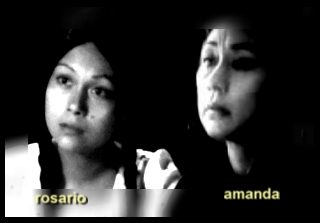
Tatlong Taong Walang Diyos versus Dekada 70 – Two political period films. Tatlong Taong Walang Diyos was about a love triangle set in the Japanese occupation of the Philippines and Dekada 70 was about a family in a society under the Marcos dictatorship.
It was reported that Dekada 70 was first offered to Nora Aunor. Whatever happened to that plan remained just a tiny anecdote to the Dekada’s success. Vilma Santos played the lead role with richness that we could not imagine other actresses playing her role including Nora Aunor. This Chito Rono film garnered Vilma 9 awards for Vilma Santos as Amanda Bartolome. Also, the film was entered to Cannes Film Festival and at Cinemanila International Film Festival where Vilma won her second international best actress. Dekada 70 was also the Philippines entry to the foreign language category of the OSCAR. Not bad for a film not originally intended for Vilma.
Ronnie Schieb of Variety Magazine described the film and Vilma’s performance: “…At the center of the film and the family is Amanda (Filipino cinematic diva Vilma Santos) who vicariously experiences living under a dictatorship through her husband and five sons’ different reactions before coming into her own as a person. Her husband, Julian (Christopher de Leon), seems a walking contradiction: he offers rationalizations for the government while supporting his eldest son’s revolutionary activities, but has a fit when his wife wants a job…As for the sons, firstborn son (Piolo Pascual) joins the guerillas in the mountains. The second son (Carlos Agassi), forced into a shotgun wedding, defiantly works for the American navy. The third son (Marvin Agustin) writes journalistic expose’ he can’t publish, while the fourth son (Danilo Barrios) is a mystery to his family until his brutal, motiveless murder (probably by police) reveals a lost girlfriend. The fifth son (John W. Sace) is still a boy…Santos’ Amanda effortlessly and movingly chronicles the changed consciousness of the family and the country, with understatement her most reliable tool. The film begins and ends with images of Santos at the forefront of a political demonstration, and nothing, from first image to last, for 128 minutes, is allowed to spontaneously or slyly deviate from the logic of her consciousness-raising.”
Tatlong Taong Walang Diyos on the other hand was really conceptualized and produced for Nora Aunor…but wait…she was the producer! In 1976, Mario O’Harra, the director and writer was at his peak of his career. Critics were disappointed with his earlier works because they had high expectations but most were delighted that he redeemed himself by coming up with a superb production and acting in Tatlong Taon. The critics (URIAN) and even Famas rewarded O’Harra with the satisfaction of witnessing the acting recognition of Aunor, his producer. As producer, Nora Aunor’s Tatlong Taong Walang Diyos faced another gigantic film, Ganito Kami Nuon Paano Kayo Ngayon and lost the best picture in both Famas and URIAN.
For many Noranians the failure of the film to win the best picture wasn’t as important as the win of Aunor in both URIAN and Famas. For them this was a grand slam. Never mind that in order to be considered a grand slam it should be four or five majors just like in tennis. The reasoning behind it was that there were only two major award giving bodies back then. But in 1976, no term was given to Nora’s wins. Not until Vilma’s swept of all the best actress awards in 1982 that the term “grand slam” was brought up in papers! She was even given a “Walis” award for this feat.
Pio de Castro III on his article for The Times Journal in 1976 dissected Tatlong Taon with it’s unrealistic theatrical touches in so many scenes but was impressed with the film’s lead actress performance. And he wrote: “…The film recounts the story of Rosario (Nora Aunor), a schoolteacher in a small town in Laguna, whose heart is torn between her romantic love for Crispin (Rafael Roco Jr.), a guerilla who survived Bataan and the Death March, and her realistic love for Masugi (Christopher de Leon), a dashingly handsome Japanese officer born in Manila of a Filipino mother. It is a touching story of private people thrown into unimagined stress during turbulent times of Japanese Occupation. A time when man, woman and child doubted the existence of God because they saw with their own eyes man’s inhumanity to man. It was an era that marked the Filipino’s loss of innocence. It was an era that started rampant corruption, smuggling, arson, robbery, rape and murder. The Filipino way of life was never quite the same again. It was the end of “peace time.” …People who used to smile and wink when they talk of Nora Aunor as an actress should see this film, because the lady is determined to show everybody that she means business both as an actress and as a producer. In this film she is successful as both…”
Switcheroo – In 1976, like Nora Aunor, Vilma Santos produced her own film, titled Mga Rosas Sa Putikan, a less ambition film than Tatlong Taon. She doesn’t have to prove much about acting as Nora Aunor’s whole intention in producing Tatlong Taon. Like the usual suspects, would Vilma be as effective as Nora as probinsiyana in Tatlong Taon? In 1976, her usual roles are either a spoiled brat, socialite modern woman mostly a picture of youthful rebel. This might strikes against her in performing such a serious role like Tatlong Taon. It will take another year before critics takes her seriously as an fine A-1 actress via Burlesk Queen. This is different in the case of Vilma playing Elsa.
Vilma as Elsa in 1982 will be easy because she already discovered her technical camaraderie with Bernal. Her not fitting as probinsiyana will be remedied by the talent of her director Bernal. In this case, would O’Harra be able to make Vilma as Rosario effective as he did with Nora? I doubt it. O”Harra was a die-hard Noranian. He will be ill-equipped to figure out a way for Vilma to do the Rosario role despite the fact that Vilma is equally capable for such role.
It is worth noting that Vilma portrayed a similar “probinsiyana” look two years after in Tatlong Taon were shown, and it her own produced film, in 1978’s Pagputi Ng Uwak Pag-itim Ng tagak. Fast forward to 2002, Star Cinema bought the rights to Lualhati Bautista’s Dekada 70 and gave the project to Vilma Santos. This was after the box office successes of Anak and Bata Bata Paano Ka Ginawa. The film ripped prestige to the film outfit and cemented its reputation as the number one film outfit of the land probably next to Regal films.
Would the same results arise if Nora Aunor starred as Amanda Bartolome in Dekada 70?
Given the fact that Nora is a capable actress and Star Cinema are know to its high quality production, the feasibility is high. BUT…fast forward to another two years, Naglalayag laid an egg in the box office. Amazingly disappointed was the producer who witnessed the closing of many theatres after its only third days of showing of the film. A clear proof that Nora Aunor has lost her clout as a box office drawer.
Reality Checks – No doubt Nora Aunor fits the role of Rosario to a T. Vilma will be out of cast as the provinciana in a Japanese occupation in 1976 if the director remained to be Mario O’Harra. In the case of Nora Aunor playing Amanda Bartolome in Dekada, she is capable of playing the role of the mother in the Marcos society but clearly it will not be as commercially successful given her series of unsuccessful comebacks.
Boxing Results – Nora wins. Vilma 5, Nora 2 – To be continued…
We listed Vilma’s ten best films and matched it with Nora’s. We then came up with analogy of who did well in terms of credible performances. We also tried to switch the roles and see if both actress remained credible. The outcome was incredible. Boxing Matches Continues with….
Sister Stella L versus Himala – Why Himala versus Sister Stella L (instead of Himala versus Relasyon)? Well, I believe they’re match in terms of the seriousness of the projects. Both were directed by a serious director who in 1982 and 1984 were both at their peaks of their careers. Both also earned their leading actress only one award each. Both didn’t fare well at the box office. But lastly, both films did well in the international scenes.
Sister Stella L was invited to Cannes but due technical shortcomings it wasn’t shown in there but at the equally prestigious Venice Film Festival. Himala on the other hand graced the international scene via our very own Manila International Film Festival under the Marcos administration. The dismal box office result of Sister Stella L were compensated by its critical achievements. In Urian alone, it earned 10 awards including a best actress nod to Vilma Santos, completing her three-year consecutive wins. Meanwhile after the success of Himala in the local festival that earned Nora a best actress award, Himala was relegated to runner up as another ECP film, “Oro, Plata, Mata” amassed its rightful honors as the best film of 1982. For many critics, Himala was maybe one of the most underrated film and they gave the film its rightful recognition by recognizing it as one of the best in 80s.
One of the Manunuri critics, Alfred A. Yuson, in his Philippine Daily Express article in 1983 summed-up Nora’s performance as follows: “Nora Aunor is perfect as Elsa; she leaves nothing to be desired in her interiorization and delivery…The brilliant Aunor gets all the solid backing she can ever get, this time from an array of supporters drawn mostly from the Bulwagang Gantimpala stable…”
Next is Vilma, Alice G. Guillermo in her article titled “More than just entertainment” for Who Magazine dated 30 May 1984 chronicled Vilma’s performance as: “..For a heart-warming film, the entire cast deserves congratulations, particularly Vilma Santos who reveals another aspect of her multi-faceted talent. From her usual soft and sweet romantic roles, she can be transformed into a strong and militant woman without losing any of her charm and beauty…”
In 1982, Nora Aunor was conditioned to make some dents in the award giving seasons and yet she went empty handed every time the awards nights were held. The gigantic role as Elsa was slingshot by a tiny film ironically performed
by her rival. Another ironic note was that the film that defeated Himala, Relasyon was also directed by the same director, Bernal.
It was worth the wait for Vilma, her disappointments from previous years of neglect from the award giving bodies were now all gone. She earned her first best actress grand slam. Nora’s “goliath” kind of performance as Elsa reached its match by the “davidian” typed of performance of Vilma in Relasyon. And this adds intensity to the defeats, the wounds. Noranian will never admit the enourmosity of these defeats. This is for the fact that Himala was considered one of the biggest film of 1982 again next to Oro Plata Mata. And that Relasyon is not even at the same league at least in the eyes of Noranians.
As fair as we can be, we accepted the fact that Relasyon wasn’t matched with the scope of Himala. And so I decided to match Himala with Sister Stella L. In 1984, Vilma Santos has arrived in the big-time, A-1 league of fine acting. This was despite her earlier history of dramatic excellence, as a child actress and a teenage supporting actress. Her experiences in getting empty handed come awards nights have evaporated. She became the darling of the awards nights starting from her first grand slam wins. This will confirmed by her three consecutive wins from the critics den, the Gawad Urian. Sister Stella L gave her so much consolation from its dismal box office returns that tainted her illustrious records as the most bankable actress of the 80s. In 1984 URIAN, her most stiff competitions came from the performances of her closest rival, again Nora in two films, Merika and Bulaklak Ng City Jail. And from many awards aficionado, it was a matter of split votes that’s why Nora didn’t win. Nora will win the very first PMPC Star Awards for Merika but in the local critic’s eyes, Vilma’s deep transformation from a blatant observer to a pro-active activist nun was the best of all-best in 1984.
Switcheroo – If we switched roles, Nora Aunor as Sister Stella L and Vilma Santos as Elsa…hmmm we all know that both are well equipped, acting wise and so it is not hard for us to say that both can do justice with each roles. We have seen Nora as a nun in one of her forgettable film in the 70s titled Fe, Esperanza, Caridad. The segment where she played the nun being tempted by the devil played by Ronaldo Valdez was directed by Gerry DeLeon. It was not the serious typed SSL project but a horror experiment. Nora looks comfortable as a nun in Fe, Esperanza, Caridad but would she visibly transformed her looks from innocence to militancy as Sister Stella? It is hard to answer. We are used to see Vilma as SSL. It will be 50-50.
Then Vilma as Elsa. Elsa is a probinsiyana, a devoted Catholic who became a ritualistic faith healer. Would Vilma’s fresh face and urbanites physicality be a barrier for her to do the Elsa role? Remember this is 1982. The answer would be yes but this can be remedied by make-up and proper attire. Bernal have deglamorized Vilma before like in Broken Marriage, no make-up with plain clothes resulted in her effective portrayal of a woman who find herself difficulty balancing career with family life.
The problem arised as like Vilma in SSL, we all identified Elsa with Nora. It is hard for us to imagine Vilma in it. But like I’ve said, proper costumes and make-up and the excellent motivation from Bernal will not stop Vilma to do justice to the role of Elsa. And same can be said with Nora as Sister Stella L.
Reality Checks – We identified Elsa in Himala to Nora Aunor and Sister Stella in Sister Stella L to Vilma Santos. It is hard for someone to see them switched roles but with the technical guidance of Bernal and DeLeon the film directors of the respective films, both Santos and Aunor would undoubtedly do justice to each roles.
Vilma’s urbanites beauty and fresh face in 1982 would not prevent her to do justice to the Elsa role. Her acting technique was in full bloom in 1982. It would be amazing to see how she will attack the role. Nora’s ordinary beauty that the mass can identified will bring different take as SSL. It would be amazing too to see how she will tackle the transformation
that Vilma gave us on screen.
Boxing Results – Nora as SSL – yes it can be achieved. Vilma as Elsa, absolutely. It’s a tie. Vilma 4, Nora 1
Flor Contemplacion Story versus Dahil Mahal kita: the Dolzura Cortez Story – Now let’s take on two true to life films. The social relevance of both Dolzura and Flor was as intense as the performances of the lead actress portraying the lives of these true to life women.
Dolzura’s life as the first publicly known Aids victim in the Philippines was important because of its social message she wanted to conveyed to her fellow countrymen and the promotion of safer sex. Flor’s life on the other hand opened our eyes about the hardship many overseas worker faces in foreign lands.
Both films earned Vilma and Nora critical acclaims. Vilma won her second grand slam best actresses and Nora her first grand slam best actresses with a bonus of her first International recognition from the Cairo International Film Festival.
Emmanuel Levy in his Variety magazine article wrote in 1995: “Aunor invests her role with powerful emotions and utmost conviction, showing how a humble, self-sacrificing mother became a victim of corruption and abuse — and later, a national symbol adored by her countrymen…” The critics, URIAN, couldn’t agree more. They gave Aunor their best actress although she shared the best actress award with Helen Gamboa in ironically for the same story in Bagong Bayani OCW. Aunor will eventually wins solo in Film Academy of the Phils., Star Awards, Young Critics Circle and because she’s already a hall of famer at Famas, she was given a consolation honor via FAMAS Circle of Excellence.
Levy also wrote: “The Flor Contemplacion Story” is an often stirring re-creation of the true-life story of a Filipino maid who was executed in Singapore in 1995 for allegedly killing a co-worker and a young boy. A strong performance by movie star Nora Aunor dominates the film, which is at once a touching family saga and a forceful look at social injustice. However,
unrestrained melodramatics and excessive running time undermine overall impact of a story whose facts are still in dispute. Extreme poverty and an accompanying sense of hopelessness have driven many Filipinos out of their country, seeking employment abroad. The plight of women employed as domestic workers has been a major problem, with many reportedly suffering torture, rape and other abuse from their masters. A devoted mother of four, Flor Contemplacion (Aunor) went to Singapore to work as a maid, where her employers treated her fairly. However, in March 1995, she was arrested and hanged for allegedly murdering another maid, Delia Maga (Amy Austria), and the Singaporean boy Delia
was taking care of. Framed as a mystery, the tale uses flashbacks that not only enrich the story, but successfully move the film beyond a case of social outrage into a heart-wrenching exploration of women’s inferiority in a patriarchal system. Indeed, Flor’s long absences from home drove her weak hubby Efren (Julio Diaz) into an open relationship with a mistress and forced her two older children into early marriages. In one of the film’s many touching scenes, Flor visits her family, but she can’t distinguish between her twins. According to the film, there’s no doubt that Flor was innocent and that her confession was obtained through physical torment. The picture offers political background that implicates the Philippine government with cruel negligence and incompetence in the case.
For giving Vilma her second grand slam wins, Dolzura Cortez’ most relevant exposure was it’s universal appeal to promote safer sex. The film was featured in You and Aids web-site in their arts cape section. Although the web-site didn’t mentioned about the excellent performance Vilma gave us, it mentioned about the films synopsis with some accuracy: “This Philippine drama chronicles the colorful life of Dolzura Cortez, the first publicly recognized AIDS patient in the Philippines . The film begins with a brief examination of Cortez’s pre-AIDS life. Initially she lived in a small village with her cruel husband and three kids. The spunky woman leaves them and moves to the big city where she engages in several affairs. Her second marriage to a rich foreigner does not last long. To support her children, Dolly begins an all woman “contract worker” agency. This also serves to facilitate her love of night-life. Tragedy comes to Dolzura after she collapses on a dance floor one night and learns that she has full-blown AIDS. At a Manila hospital she meets ex-lover Paulo, an AIDS researcher who encourages to tell her story publicly. The courageous woman does and she becomes instrumental in spreading AIDS awareness to the islands…It was the first movie on AIDS in the Philippines that provided ‘a name and a face’ among the 50 recorded lives that were lost to AIDS in 1992. This movie was utilized as a focus of discussion by some health care personnel to express their thoughts, opinions and recommendations regarding the use of cinema as a powerful tool for AIDS information dissemination.”
Switcheroo – We have to be clear here. Both Vilma and Nora didn’t look like Flor and Dolzura in real life. Well, Dolzura and Vilma both have fair skin and petite but that’s all the similarities. Flor and Nora has no similarities in physical features.
It was worth noting that Flor story doesn’t end with this film alone. Her story was similarly penned in Helen Gamboa’s Bagong Bayani and the forgettable film by Elizabeth Oropeza. All of these films didn’t put any physical resemblance to the real life Flor Contemplacion. So, I came to a conclusion that if we switched roles, physical resemblances would not be a big issue.
As we all know Vilma played convincingly a role identified with Nora in Anak. Five years earlier, will Vilma be able to play Flor Contemplacion, a maid in a foreign land? No doubt. Her maturity was all in full displayed in Dolzura Cortez.
In 1995 Nora Aunor’s career has been in decline. Prior to Flor, she did only four films all become failures in the box office. All she needed was a big comeback. And she did it via Flor Contemplacion. Will she able to do justice if she did Dolzura Cortez in 1993? Acting wise, it will be a gutsy move. The film will require her to play a woman who enjoys sex, a sex club owner. Will she be able to do justice to all sex scenes finally getting rid of her virginal image? A question we asked a number of times now
Reality Checks – Sex and Nora Aunor. It’s like water and oil. It doesn’t mix well. Dolzura’s life was full of sex related issues – prostitution, unsafe sex, relationships, poverty. Nora Aunor has the acting equipment to do justice for such role but her image and limitation to jump into an unknown territory always prevented her to do other types of roles. Vilma on the other hand embraced challenges. She will be tested if she’ll do the Flor role. And she will passed the test with flying colors!
Boxing Results Vilma 5, Nora 1 – Nora as Dolzura will be a challenge, a no-no to her restricted image. Vilma on the other hand will jumped into the challenges of becoming Flor. Vilma wins. To be continued…
Basic Information: Produced by Doming Bravo; Musical Director Tito Arevalo; Directors of Photography Loreto Isleta, Ricardo Remias, Sergio Lobo, Freddie Conde, Fermin Pagsisihan, Ben Lobo; Production Company: Bravo Film Productions; Release Date June 12, 1975
Episode 1: Direction Johnny C. Pangilinan; Cast: Dante Rivero, Vic Vargas, Eddie del Mar, Eddie Garcia, Cesar Ramirez, Rosemarie Gil, Barbara Perez, Ruben Rustia, Teody Belarmino, Eddie Arenas, Perry Baltazar, Carlos Salazar, Johnny Monteiro, Celia Fuentes, Mario Escudero, Eddie Nicart, Tony Blade, Mario Montalban, Jerry Bravo, Baby Lalaine
Episode 2: Direction Ding de Jesus; Cast: Ramon Revilla, Liza Lorena, Dante Varona, Ramon Zamora, Lito Legaspi, Desiree Destreza, Max Alvarado, Nello nayo, Anita Linda, Willy Milan, Sancho Tesalona, Virginia Montes, Ric Bustamante, Venchito Galvez, Pat Salvador, Totoy Torrente
Episode 3: Direction Armando Herrera; Cast: Fernando Poe, Jr., Gina Alajar, Zernan Manahan, Mary Walter, Vic Varrion, Danny Rojo
Episode 4: Direction Cesar Gallardo; Cast: Joseph Estrada, Helen Gamboa, George Estregan, Paquito Diaz, Paraluman, Vic Silayan, Leopoldo Salcedo, Jun Mariano, Liza Villa
Episode 5: Direction Romy Suzara; Cast: Nora AUnor, Vilma Santos, Tirso Cruz III, Jay Ilagan, Alona Alegre, Rudy Fernandez, Hilda Koronel, Elizabeth Oropesa, Walter Navarro, Patria Plata, Jose Romulo, Angelo Ventura, Renato Robles, Bomber Moran, Joaquin Fajardo, Tino de Lara – Video48
Plot Description: Dugo at Pagibig sa Kapirasong Lupa is 1975 Epic Film with Star-stunted cast like Fernando Poe Jr, Ramon Revilla, Joseph Estrada, Nora Aunor, Dante Rivero, Eddie Garcia, Vic Vargas, George Estregan, Mary Walter, Gina Alajar and the other all time favorite artist…Filipino People fight against colonialism Spain, Japan and even their fellow Filipinos abusing the power in the government…” – Wikipilipinas (READ MORE)
A Must for the Filipino History Students and for everyone who wants to awaken the innate nationalism in them. These series of stories depicting the fight of the Filipinos against colonialism of Spain, Japan and even their fellow Filipinos abusing the power in the government. A seemingly serious film but spiced with the star-studded cast like Fernando Poe Jr., Ramon Revilla, Joseph Estrada, Nora Aunor, Dante Rivero, Eddie Garcia, Vic Vargas, Goerge Estregan and the other all time favorite artists. This movie even highlighted the comparison between the love of country and the other kind of love we offer to our family and to our beloved as the story featured love stories in the midst of tragic and bloody war happening in our society. – Kabayan Central (READ MORE)
Film Achievement: No Available Data
Film Review: “…Hindi dito natapos ang Nora-Vilma rivalry. Pero ang pagsasama ng dalawang aktres sa isang pelikula was not repeated after Danny Zialcita’s T-Bird at Ako (released in 1982). Their initial appearance together was in 1970’s Young Love; naulit in 1978, sa Ikaw Ay Akin ni Bernal; at mayroon silang tig-isang episode sa Dugo at Pag-Ibig sa Kapirasong Lupa in 1975 at Pinagbuklod ng Pag-Ibig, also released in early 1978. At the height of the Nora-Vilma rivalry for acting supremacy, ang kanilang mga pelikula, magkahiwalay man sila o magkasama, ang may malaking kinikita for their producers. In 1982 and 1983, Vilma was Box-Office Queen and Urian Best Actress; while Nora did several blockbusters (like Beloved and Till We Meet Again). There was social unrest, following the Ninoy Aquino assassination on Aug. 21, 1983, pero masigla ang daigdig ng TV at pelikula. Sikat pa rin sina Nora at Vilma…” – William Reyes (READ MORE)
“…Sa taong 1975 ay nakagawa si Vi ng siyam na pelikula…..Basta’t Isipin Mong Mahal Kita (Enero 24, 1975) kasama sina Eugene Torre at Coney Reyes…..Nakakahiya? (Pebrero 28, 1975) kasama sina Eddie Rodriguez, Gloria Romero at Barbara Perez…..Ibong Lukaret (Abril 25, 1975) kasama sina George Estregan, Alona Alegre, Nick Romano at Rudy Fernandez…..ang all star-cast na Dugo at Pagibig sa Kapirasong Lupa (Hunyo 12, 1975)…..Teribol Dobol (Hunyo 27, 1975) kasama si Chiquito at Walter Navarro…..Vilma 29 (Agosto 29, 1975) kasama si Jun Aristorenas…..Karugtong Ang Kahapon (Setyembre 21, 1975) kasma sina Bobot, Gloria Romero, Celia Rodriguez, Eddie Garcia, Jay Ilagan at Joseph Sytangco…..Tag-ulan Sa Tag-araw (Oktubre 17, 1975) kasama si Christopher de Leon…..at ang pang-Christmas presentation ng TIIP na Darna Vs. The Planetwomen (Disyembre 25, 1975) kasama sina Rossana Marquez at Zandro Zamora. Sa pelikulang Nakakahiya?, si Vi ang nanalong best actress ng Bacolod City Film Festival…” – Alfonso Valencia (READ MORE)
“I hate you…dirty…you’re dirty! I hate youuuu!…huwag n’yo nang mabangit-bangit ang pangalan nyan! Kinasusuklaman ko siya!..ngayon ko lang nakita ang kapangitan ng buhay ang akala ko masaya’t maganda na ang daigdig…” – Tere
This slideshow requires JavaScript.
Basic Information: Directed: Tony Cayado; Story: German Moreno; Screenplay: Medy Tarnate; Cast: Vilma Santos, Nora Aunor, Tirso Cruz III, Edgar Mortiz, Ike Lozada, German Moreno, Raul Aragon, Bella Flores, Etang Discher, Tony Cayado, Evelyn Bonifacio, Tina Lapuz, Arlene Bautista, Angge; Executive producer: Jose Vera Perez; Original Music: Medy Tarnate; Cinematography: Felipe Santiago; Sound: Flaviano Villareal; Theme Songs: “Young Love” performed by Vilma Santos, Nora Aunor, Tirso Cruz III, Edgar Mortiz; Film poster: Video48
Plot Description: Both Nora Aunor and Tirso Cruz III joined a singing contest and won. With a support from friends, Vilma Santos and Edgar Mortiz they became lovers. – RV
Film Achievement: First film of Vilma Santos and Nora Aunor together.
Film Review: Taong 1970. Gumawa si Vilma Santos ng dalawamput isang pelikula na puro musicals. Isa lamang ang nagawa niyang drama (Sapagkat Sila’y Aming Mga Anak). Nakakapagtaka dahil hindi naman siya singer. Marahil ito ay dahil sa love team nila ni Edgar Mortiz at ito ang “trend” ng panahong ito. Pito-pito kung gumawa sila ng pelikula ng panahong iyon kung baga dalawang pelikula ang pinapalabas nila sa loob ng isang buwan. Isa na rito ang pelikula ng Sampaguita Pictures, ang “Young Love” na tinampukan ni Nora Aunor, Tirso Cruz III, Vilma Santos at Edgar Mortiz.
Mapupuna na ang pelikulang ito ay bida si Nora at Tirso at supporting lamang si Vilma at Edgar. Mula sa istorya ni German Moreno at screenplay ni Medy Tarnate ang “Young Love” ay puno ng nakakalokang sitwasyon at napakababaw ng mga eksena at diyalogo. Ang director nito’y si Tony Cayado. At ang mga sayaw ay sa ilalim ng choreography ni Lito Calzado. Hindi natin alam kung bakit tinawag na “Young Love” ang pelikula samantalang hindi naman ito tungkol sa pag-iibigan ng mga kabataan rito kundi tungkol sa singing contest na sinalihan nina Ditas Aunor (Nora Aunor) at Joey Cruz (Tirso Cruz III). Naging tabla ang resulta ng singing contest at ginawa silang mga mainstay singers ng television show. Matapos ng contest ay makikitang naghahabulan na si Ditas at Joey sa may mga puno ng niyog at makikitang nagliligawan rin sina Tere (Vilma Santos) at Buboy (Edgar Mortiz) sabay kanta ang apat ng “Young Love.”
Sa tutoo lang, ito lang ang eksena kung saan maririnig na kumakanta rin si Vilma at nakipagsabayan siya kay Nora. Sa tuwing papasok sa eksena si Bella Flores ay tili ito ng tili at laging sinisigawan si Ditas which was very typical ng mga contrabida nuong panahong ito and very irritating. Narito rin si Etang Discher na isang ulyanin na lola ni Tirso at Vilma. Pilit nitong pinapapunta si Tirso sa Australia pero laging niloloko nito ang matanda at sinasabing natapos na pala ang isang taon at nakabalik na raw ito mula Australia. Tapos nito’y makikita si Ike Lozada na kumakanta sa harap ng mga batang lansangan.
Samantala si Bella Flores ay nakipagayos kay Tom Junes (Raul Aragon) upang sabotahin mismo nito ang show ng kanyang sariling pamangkin. Makikita ang nakakalokang sex scene ng dalawa. At ang sumunod na eksena ay ang drama scene ni Ate Vi. Dahil marahil sa walang eksena si Ate Vi na kumakanta ay binigyan siya ng sariling eksena at katapat ito ng maraming eksena ni Nora na kumakanta. Ito ay nang mahuli ni Ate Vi niya si Tom Junes at Bella Flores na nagse-sex. Takbo ito habang umiiyak. Makikita na dumating ito sa sariling bahay at sa kuwarto nito’y pinagsisira niya ang pictures ni Tom Junes kasama ng album nito. Devoted fan pala siya ni Tom Junes. Cut! Tapos na ang eksena ni Ate Vi. Pasok ang mga musical numbers, kanta ng ilang beses si Nora, Tirso, Edgar and Ike Lozada. Meron ding dance numbers, pero wala si Ate Vi sa mga dance numbers na ito. And then it’s the end. Napapakamot ako sa ulo.
Nakakaloka talaga. Makikitang hindi pinag-isipan ang istorya nito. Ginawa nilang i-showcase ang pagiging singer ni Nora Aunor. Kadalasan ang mga kanta niya ay mga version ng mga English popular cover songs at hindi original Filipino songs. Tulad ng “I Believe” at marami pang iba. Kung tutuusin ito ang trend nuon, ang mga kantang galing sa amerika. So much of the fact that lahat ng mga drum beaters ni Nora ay sinisigaw ang kanyang pagiging isang ulirang Filipina dahil sa kanyang pisikal na itsura. Pero mukha ka ngang dalagang Filipina pero pagbuka naman ng bunganga mo eh lumalabas mga kantang banyaga anong klaseng dalagang Filipina yan? Sa sobrang inpluensiya ng mga banyagang kanta ng kalagitnaan ng dekada 70 ay nagkaroon ng rebelyon sa ere ng mga radyo.
Nauso ang Original Pilipino Music o OPM bilang sagot sa musikang dayuhan. Sumulpot ang mga musikerong Juan DeLaCruz, Hotdog, Cinderella, VST & Co., Sampaguita, Freddy Aguilar, Coritha, Mike Hanopol, at marami pang iba na ang mga kanta ay tagalog at pawang komposisyon ng mga Pilipino. Ang mga kanta ni Nora ay puro mga English kontradiksyon ng mga sinisigaw ng fans niya na isang imahen ng Filipino si Nora. Kung ang itsura man niya ay pilipinang-pilipina ang mga kinakanta naman niya ay – puro kanta ng dayuhan. Ito rin ang dahilan kung bakit wala siyang masasabing signature song dahil puro version niya lamang ang mga kantang ni-record ng panahong iyon. Samatala si Vilma Santos na hindi singer ay nagkaroon ng kanyang sariling signature songs bagamat English ang mga lyrics ng mga ito, original Filipino composition naman ang mga ito tulad ng “Bobby Bobby Bobby” at “Sixteen.” Kasabay nito’y ni-record din niya ang mga tagalog songs na “Isipin Mong bastat mahal kita,” “Bato sa buhangin,” at “Palong-palo.” Nang kalagitanaan ng dekada 70 ay kapunapuna na kaunti na lamang ang mga pelikulang kantahan at hindi na kumikita ang mga ito kung kaya mapupuna na nag-umpisa nang gumawa ng matitinong pelikula kapwa sina Nora Aunor at Vilma Santos.
Ang “Young Love” ay isang halimbawa ng pelikulang gawa ng unang bahagi ng dekada 70. Mabilisang gawa. Mababaw ng istorya at hitik ng mga musical numbers. Mayroon mga nakakatawang eksena tulad ng pagkanta sa mga burulan ng patay basta magkaroon lang ng eksena ng kantahan. Tutoo ito, may mga eksena na nagkakantahan sa ilalim ng punong kahoy. Mga sayawan, habulan, at ligawan sa mga beach at kahuyan. Nag-click ito sa mga tao nang unang bahagi ng dekada sitentat ngunit sinawaan rin ang mga tao at nang dumating na ang huling bahagi ng dekada ay nagbago ito. Dito dumating ang panahon na nagbago na ang imahen ni Vilma Santos at nag-umpisa na itong ungusan ang walang kawawaang pagkanta ni Nora sa mga basurang pelikula niya.
Ang “Young Love” ay puno ng walang kawawaang musical numbers ni Nora Aunor. Puno rin ito ng mga eksenang nakakaloka na kahit na ang batang paslit ay magkakamot ng ulo at sasabihin ang “huh?” Kung hindi mo hahahanapin ang matinong istorya at ang hangad mo lang ay makita kung gaano kagaling kumanta si Nora Aunor kahit pa sa burulan ng patay tiyak na mage-enjoy ka sa pelikulang ito dahil maraming eksena rito si Nora na kumakanta ng walang kawawaang kantang dayuhan. – RV, V Magazine 2007
“…Ipinanganak nga marahil si Ma. Rosa Vilma Tuazon Santos sa show business dahil sa pagitan ng taping ng “Larawan..” ay nagkasunod-sunod na ang kanyang mga pelikula…“My Darling Eddie” ng JBC (Disyembre 16 – 23, 1969, “Mardy” ng JBC (Disyembre 31 – Enero 6, 1969)…hanggang “Young Love” ng VP Enero 1 – 21, 1970) ng lumikha ng rekord sa takilya….Makalipas ang mga tatlong buwan, nakatanggap ng maikling sulat si Mama Santos muka lay G. Agra. Naghahanap ang Sampaguita Picutures ng batang babae na gaganap ng mahalagang papel sa “Anak, Ang Iyong Ina!” at isinali ng amain ang pangalan ni Vi. Hindi puwedeng lumiban si Papa Santos sa pinpasukang government office, at ayaw naman nilang mapahiya ang kamag-anak, kaya napilitan si Mama Santos na humingi ng day=off sa opisina (Aguinaldo’s). Pagdating sa studio, wala si G. Agra at nasa location shooting, ngunit totoong naroroon ang pangalan ni Vi, kaya’t pinapasok sila sa tanggapan. Napadaan sa harapan ni Mama Santos si Bella Flores na dala ang script ng “Trudis Liit.” Nagulumihanan si Mama Santos. Binasa niyang muli ang liham ni G. Agra. Mali yata ang napuntahan nila! Akma niyang tatawagin si Vi na noon ay nkikipaglaro sa iba pang mga bata upang yayain na itong umuwi, nang pumasok sina Mommy Vera, Dr. at Mrs. Perez, at Eddie Garcia. At doon nagsimula ang movie career ni Vi na magpahanggang ngayon ay batbat pa rin ng iba’t ibang panunuri, opinyon at konklusiyon…” – Ched P. Gonzales (READ MORE)
“…The loveteam of Edgar Mortiz and Vilma Santos endured a stiff competition from teeny bopper love team of Nora Aunor and Tirso Cruz III and came up with equal success with string of hit films during the musical era of the 70s. Together they did forgettable but commercial hits and also some hints of the years to come to Vilma Santos’ long career. The most notable one: Dama De Noche. Total Number of films with Vilma Santos – 25 (Young Love, Teenage Jamboree, Songs and Lovers, Renee Rose, My Pledge of Love, Mga Batang Bangketa, Love Is for the Two of Us, I Love You Honey, From the Bottom of My Heart, Baby Vi, Love Letters, The Wonderful World of Music, The Sensations, The Young Idols, Sweethearts, Sixteen, Leron-Leron Sinta, Edgar Love Vilma, Don’t Ever Say Goodbye, Dama de Noche, Anak ng Aswang, Because You Are Mine, Kampanerang Kuba, Kasalanan Kaya, Karugtong ang Kahapon…” – RV (READ MORE)
“…By late 1969, movie producers had been tapping a Vilma Santos-Edgar Mortiz love team. Edgar was a Tawag ng Tanghalan winner. They started to be together in the movies, My Darling Eddie (1969) and The Jukebox King (1969)…In 1970, the love team of Vilma Santos and Edgar “Bobot” Mortiz was officially launched in the movie Young Love, together with the another popular love team during that time, Nora Aunor and Tirso Cruz III. The Vi and Bot love team went on to do 14 more movies in 1970—The Young Idols, Songs and Lovers, Sweethearts, Sixteen, Love Letters, Love is for the Two of Us, Mga Batang Bangketa, My Pledge of Love, Renee Rose, Baby Vi, Because You Are Mine, Edgar Loves Vilma, From the Bottom of My Heart, and I Love You Honey. All did well at the box-office…” – Rommel R. Llanes (READ MORE)
“…Walang makapaniwala na magiging gayon kalakas takilya sina Nora at Tirso. Nagimbal ang mga taga-pelikula. Bakit daw gayon kalaki ang kinikita ng unang dalawang pelikula nina Nora at Tirso? Tsamba lamang daw kaya iyon o biglang nagbago ng panlasa ng mga manonood? Hindi tsamba. Ang mga sumunod pang pelikula nina Nora at Tirso ay mas malaki ang kinita. Daang-libo ang kinita ng “Teenage Excapades” at “Halina, Neneng Ko.” Itinambal ng Towers si Nora sa iba pang kabataang artista, malaki rin ang kinita. Katunayan na malaki ang hukbo ng mga tagahanga ni Nora. Sinubok naman ng Barangay Productions na itambal si Tirso kay Gemma Suzara, hindi gaanong kinagat ng mga fans. Nag-produce ng pelikula ang mag-anak na Cruz, pinagsama sina Ricky Belmonte at Tirso sa “Ricky na, Tirso Pa” isinama naman sa magpinsan si Pilar Pilapil. Tinapatan ng Tower ng isang pelikula ni Nora ang pelikula ng mga Cruz. Resulta: mas maraming nanood sa pelikula ni Nora. Ano ang ibig sabihin nito? Gusto ng mga fans na maging magkatambal sina Nora at Tirso. Sinagot ng VP Pictures ang kahilingang ito sa pamamagitan ng “Young Love.” Bukod kina Tirso at Nora ay isinaman pa ang mga young ones na sina Vilma Santos at Edgar Mortiz. Patok sa takilya!…” – Romy Galang, Pilipino Magazine, 18 February 1970 (READ MORE)
Basic Information: Directed: Pablo Santiago and Bobby Santiago; Writing credits: Tommy C. David, Santiago and Lozada; Cast: Tirso Cruz III, Walter Navarro, Ike Lozada, Aurora Salve, Gina Alajar, Jojit Paredes, Dondon Nakar, Arnold Gamboa, Maribel Aunor, Winnie Santos, German Moreno, Allan Valenzuala, Inday Badiday, Doyet Ilagan, Ben David, Edward Campos, Lilian Laing, Aruray; Special Guest Stars: Vilma Santos, Nora Aunor, Perla Bautista, Charlie Davao, Esperanza Fabon, Bella Flores, Lito Legaspi, Christopher De Leon, Van De Leon, Pinky Montilla, Alma Moreno, Dencio Padilla, Eddie Perigrina, Andy Poe, jerry Pons, Ric Rodrigo, Gloria Romero, Daria Ramirez, Darius Razon, Marianne Dela Riva, Eddie San Jose, Ricky Santiago, Lorna Tolentino, Eddie Villamayor, and Vic Vargas; Executive Producer: Larry Santiago; Original Music: D’Amarillo; Cinematography: Joe Batac Jr.
Plot Description: No Available Data
Film Achievement: Ranked 32nd on Top-US-Grossing Tagalog-Language Feature Films Released In 1976
Film Review: Enrique “Big Ike” Lozada (August 13, 1940-March 8, 1995) was a Filipino comedian, actor and TV host. He was born on August 13, 1940 in Iloilo City. He started acting at the age of 11 on the movie Mga Bituin ng Kinabukasan with the younger Susan Roces. He died on March 10, 1995 in Manila, of heart attack. He was 54. His had lain at Manila Memorial Park in Parañaque City. – Wikipedia (READ MORE)
Basic Information: Directed: Leonardo L Garcia; Story, screenplay: Joeben Miraflor; Cast: Romeo Vasquez, Vilma Santos, Nora Aunor, Tirso Cruz III, Jessica, Rudolfo Boy Garcia, Zandro Zamora, Odette Khan, Chito Guerrero, Rustica Carpio, Babette Villaruel, Estrella Kuenzler, Romnick Sarmenta, Mary Jane; Executive producer: Experidion Laxa; Original Music: Tito Arevalo; Cinematography: Zossimo Corpuz; Film Editing: Edgardo Vinarao
Plot Description: Mina (Vilma Santos) is a commercial model struggling to provide financial assistance to her ill mother when she meets the arrogant painter Dino (Romeo Vasquez). He offers her to be a model for his work of art which she accepted. This has drawn them closer to each other until Mina learns of Dino’s past relationship that eventually becomes a hindrance to their budding romance. Meanwhile, Mina’s best friend Laura (Nora Aunor) has always been in love with Angelo (Tirso Cruz III). However, due to their parent’s rivalry and Angelo’s mother coercing him to become a priest, they separated. During this time, Laura is raped by her long-time suitor which resulted to unwanted pregnancy. Years after, Angelo who fails to endure being away from his true love, Laura, returns to ask for her hand in marriage. Everything seems well for the couple until the real father of Laura’s first child comes back. Angelo is overwhelmed with jealousy that he starts to ruin the picture-perfect family they had before. Find out how the two friends will resolve their trouble relationships in this classic film you’ll never forget.
Film Achievement: 1978 FAMAS Nomination Best Child Actor – Romnick Sarmenta
Film Review: “Sometime in the mid 70s, matinee idol Romeo Vasquez returned to the movie scene after a long absence, his movie career in limbo after his failed marriage with popular actress Amalia Fuentes. His teamup with Vilma Santos somehow rekindled and revived his career. Their first movie together, Nag-aapoy na Damdamin in 1976 turned out to be a big hit. Despite their age gap, reel and real life sweetheart, Romeo, 34 and Vilma, 23, soon became the hottest love team, doing one hit movies after another…” – Video 48 (READ MORE)
“…Romeo Vasquez is an oddity in Vilma’s life. Hindi akalain ng lahat na ang isang notorious playboy and balikbayan actor would capture the heart of the then elusive Ate Vi. Nagkaroon sila ng affair which lasted for more than a year. Kilala si Bobby sa pagiging bohemyo kaya naman walang kakilala si Ate Vi na bumoto sa aktor. Ate Vi was love struck at talagang na head-over heels in love. Nagsimula ang kanilang affair sa set ng kanilang pelikulang “Nag-aapoy na Damdamin”. True to this title, nagliyab silang dalawa at tunay ngang nag-apoy ang kanilang damdamin. May plano pa nga sila ni Bobby na magpakasal sa Europe. Talagang Ate Vi was ready to give up her life as an actress and would settle with the actor abroad. And with herb relationship with Bobby, nag-surface ang bagong Vilma Santos.Ate Vi realized that she cann’t sacrifice everything for love. Nagising siya sa katotohanan at nagkamali kung kaya nagdesisyon siyang kumalas sa bohemyong aktor…” – Willie Fernandez (READ MORE)
“…But it was with handsome actor Romeo Vasquez that Vilma Santos had her most controversial relationship. Romeo was the former husband of Philippine movie queen Amalia Fuentes. He and Vilma first paired in the movie Nag-aapoy na Damdamin (1976). It was also during this year that they became a couple. They made several movies together, all of which did well at the box-office. Vi and Bobby (Romeo’s nickname) became the most-talked about reel and real love team at the time. The relationship was always on the pages of showbiz magazines and tabloid entertainment section pages because of the intrigues and the personalities who got involved with them…” – Rommel R. Llanes (READ MORE)
“Rex…anong gagawin mo? Ako anong gagawin ko? Ako ba ang nagpapagulo sa otherwise your perfect world?…sure? Rex ang problem ako hindi lang ako eh…si Teresita rin…nasasaktan ko na siya…anong gagawin ko iwasan kita eh de ako naman ang nasaktan? Shit! Bakit? Ewan…nahihiya nako kay Teresita at saka sa’yo eh!…Rex huwag mong sabihin yan, naiintindihan mo ba ako? I need your presence more than anything else. Sabi nila liberated woman raw ako, front lang, kalog raw, front din…alam mo namang kulang-kulang ako eh sinabi ko na sayo nun pa…ninenerbiyos ako kapag hindi kita kasama eh, baka dapuan ako ng kung ano diyan, bery-bery, typoid fever! Pakiramdam ko safe lang ako kapag nariyan ka eh…pag wala ka,huh, nagwawala ako parang manok takbo ng takbo wala namang ulo!…Rex, anong gagawin mo?” – Sandra
This slideshow requires JavaScript.
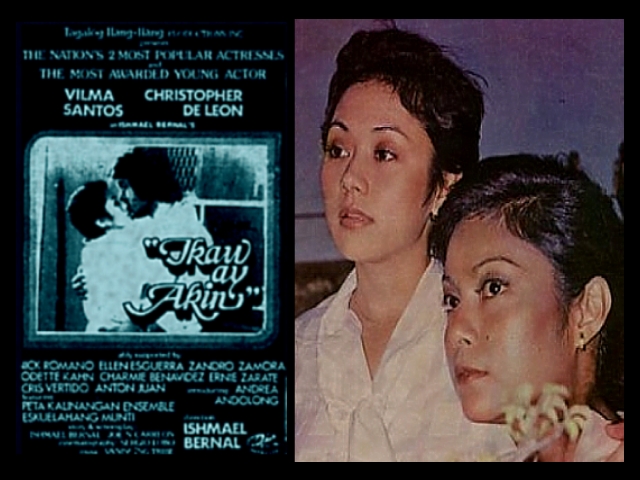
Basic Information: Directed, screenplay: Ishmael Bernal; Story: Jose Carreon; Cast: Vilma Santos, Nora Aunor, Christopher De Leon, Nick Romano , Ellen Esguerra, Zandro Zamora, Odette Khan, Charmie Benavidez, Ernie Zarate, Cris Vertido, Anton Juan, Sandy Andolong; Executive producer: Experidion Laxa; Original Music: The Vanishing Tribe; Cinematography: Sergio Lobo; Film Editing: Augusto Salvador; Production Design: Mel Chionglo; Sound: Teddy Ramos, Rolly Ruta
Plot Description: Botanist, Tere’s (Nora Aunor) long stable relationship with business executive Rex (Christopher Deleon) was shaken when Sandra (Vilma Santos) came into their lives. A pill popping liberal career minded, Sandra made Rex’s monotonous life colourful and exciting. He later realized that both women complete his existence. – RV
An unusual story of three people caught in the unexplainable intricacies of love and need. The five year old relationship of Rex and Tere is put to a test as Sandra, the kooky, talented and aggressive designer rocks the picture perfect and peaceful relationship. The solid and unruffled engagement cracks as Rex is immediately smitten by Sandra’s dynamic persona. The film features the superstar team-up of award winning artists Nora Aunor and Vilma Santos and the drama king, Christopher de Leon. – Database of Philippine Movies
Ang ‘Ikaw ang Akin’ ay tungkol sa isang paboritong paKsa sa ating puting-tabing: ang trianggulo ng pag-ibig. Si Rex (Christopher de Leon) ay batambatang tagapamahala ng isang pagawaan ng dyipni. Limang taon na silang magkatipan ni Tere (Nora Aunor), isang dalubhasa sa paghahalaman. Mapayapa at maayos ang kanilang pagsasama hanggang makilala ni Rex si Sandra (Vilma Santos), isang designer. Nagsimulang magkaroon ng sigalot ang pagsasama nina Rex at Tere. Hindi makapagpasiya si Rex kung sino ang pipilijn sa dalawa na kapwa naging matimbang sa kanya. Sa huli, nataios ni Rex na ang pag-ibig at pag-aangkin sa isang nilalang ay isang masalimuot na damdaming hindi nararapat sarilinin ng isang tao lamang. – Manunuri
Tagalog movie’s traditional love triangle is told in a sophisticated, unconventional way. Stars three of the country’s younger superstars – Christopher de Leon torn between a quiet, conservative type played by Nora Aunor, and a contemporary “free spirit”, Vilma Santos. Excellent performances by the three principal players with fine support by Ernie Zarate, Ellen Esguerra, and Rene Requiestas. Earned the critics Urian nominations for best actress (Aunor and Santos), supporting actor (Zarate), screenplay (Jose N. Carreon), cinematorgraphy, editing, sound, direction and best picture. Urian awardees for best actor (De Leon), production design (Mel Chionglo) and musical score (Vanishing Tribe). Directed by Ishmael Bernal for Tagalog Ilang-Ilang. – Trigon Video
Film Achievement: 1978 Gawad URIAN Best Actor – Christopher De Leon; 1978 Gawad URIAN Best Music – “The Vanishing Tribe”; 1978 Gawad URIAN Best Production Design – Mel Chionglo; 1978 Gawad URIAN Nomination Best Actress – Vilma Santos; 1978 Gawad URIAN Nomination Best Actress – Nora Aunor; 1978 Gawad URIAN Nomination Best Cinematography – Sergio Lobo; 1978 Gawad URIAN Nomination Best Director – Ishmael Bernal; 1978 Gawad URIAN Nomination Best Editing – Augusto Salvador; 1978 Gawad URIAN Nomination Best Picture; 1978 Gawad URIAN Nomination Best Screenplay – Jose Carreon; 1978 Gawad URIAN Nomination Best Supporting Actor – Ernie Zarate
Film Reviews: “…After 37 years, Ikaw Ay Akin becomes a materialist indictment of the patriarchal deceit cisgender passion must contend with, opening up the queerness that emerges from feminine confidence as zone of alternative feelings. And, of course, Nora still punctures the assault with an imperturbable will to punctuate the sentence, despite the adages of her time failing to utter competitive affection, convincing Vilma that the encounter isn’t just about female rivalry, but also masculine decadence…” – J. Pilapil Jacobo, Young Critics Circle Film Desk, 21 November 2015 (READ MORE)
“Ikaw ay Akin” is the latest addition to Ishmael Bernal’s continuing attempt to portray how people and relationships are at once simple and complex. It is also the most engaging local movie shown this year, once again proving that the marriage of commerce and art can be remarkably fruitful. Those who expect the film to be one of those triangles of the “Sapagkat Kami’y Tao Lamang” variety will be disappointed. Made with taste and finesse uncommon in Pilipino movies. “Ikaw” surveys the interactions of three people caught in the unexplainable intricacies of need and love.
Rex, the young executive of a jeepney-producing firm, has been going steady with Tere, a demure orchid expert, for five years. Theirs is the kind of self-satisfied relationship that results from along, unruffled engagement. That is until he meets Sandra. An artist-designer, Sandra is kooky, talkative, aggressive career girl who is also neurotic, chain-smoking, tranquilizer-gulping, phobia-laden product of a broken family. Rex is immediately attracted to Sandra’s seemingly boundless energy. Compared to her, Tere is a calm, reserved, efficient, level-headed woman who looks totally in control of herself.
The “menage-a-trois” is then sensitively laid out for viewers to look into the hurts and joys, hesitations and decisions, delights and agonies of each character. At film’s end nothing is really resolved. Most loyal viewers will be revolted by this ambiguity. To get their money’s worth, they feel they must be sure “kung kanino talaga napunta si Christopher, kay Nora ba o Vilma?” But Bernal is not so much concerned with fulfilling audience expectations than with putting across his message: that no one can totally, absolutely, fully own another human being. The best thing is to understand the needs of a person and love him according to his limitations. This is evident in the lines of Rex, whose character we completely grasp only as the film nears its conclusion. Rex tells Tere: “Kailangan ako ni Sandra hindi lamang sa pisikal kundi sa emosyonal din. Tulad ng pangangailangan ko sa iyo. Sa kanya, parang nagkaroon ako ng gamit. Kailangan ko kayong dalawa para mabuo ako.” To Sandra, he says later: “Si Tere, tinaggap nang hindi niya ako maaangkin nang buong-buo. Kung sasabihin mong nakuha mo nang buong-buo ang isang bagay, kulang pa rin.”
Unlike other superstar team-ups that fail to exploit the golden opportunity of pulling in sure audiences to watch a serious work, Bernal’s greatest achievement lies not so much in putting his three big stars together but in making use of them to lure their fans and followers intos eeing a mature, sensible film. And his cast serves Bernal very well. In the hands of a capable director, Christopher de Leon proves that his forgettable appearance in such odious films as “Topo-Topo Barega” and “Disco Fever” are mere lapses in judgment that do not entirely discredit his craft. He also shows enough gallantry by not getting into the way of his leading ladies, whose roles are undoubtedly more demanding than his. As the uptight Sandra, Vilma Santos has the script’s choicest, wittiest lines. She makes the most of them and succeeds in giving a fairly accurate portrait of an emotionally insecure young woman. And when she tells Rex: “sabi nila liberated ako, front lang. Kalog daw, front din. Alam mo namang kulang-kulang ako. Pag wala ka, magkakalat ako. Para akong manok, takbo ng takbo wala namang ulo.” She likewise handles her final breakdown exceedingly well. Nora has less lines but she nevertheless manages to conveys her emotions very effectively. In that family reunion-party which is so engrossed in gossip and banter, she remains so detached, speaking nary a word — a triumph for both Bernal and her. The hurt in her eyes continues to build up until that disrupted dinner scene where she rushes to her room and, unable to contain herself, finally cries. The most stable of the three, you could really believe her when she tells Rex: “Galit ako sa ‘king sarili, dahil sinasaktan mo na ako nang todo-todo pero lalo ka namang napapamahal sa akin.”
The film is greatly enhanced by Jose Carreon’s vibrant script, Mel Chionglo’s superb production design, the Vanishing Tribe’s fine musical score, and Augusto Salvador’s brisk editing (few scenes last longer than a couple of minutes). But the lion’s share of credit goes to Bernal. I particularly like his splendid use of meaningful pauses and oppressive silences, as in Sandra and Tere’s accidental first meeting at Rex’s house, Sandra’s soundless dinner with her father that leads to her breakdown, and the long, quiet ending scene where Sandra and Tere never say a word and yet succeed in finally communicating with each other. Our viewers are discomfited by this exhausting process, what with the underdeveloped tastes of our mass audience perpetuated by irresponsible irectors. But one fervently hopes for Bernal, who apparently believes he owes the audience his best even if they are more likely to love his third best more, that they would get the film’s message and, perhaps, even accept and like it. – Mario E. Bautista, Philippine Daily Express, 1978
“…Mas challenging ang role ni Ate Vi rito kumpara kay nora…mas magaganda ang mga dialogues ni Ate Vi na nakakatuwa at magaling ang pagkakadeliver niya ng mga linya. Sexy siya ha at magaganda ang mga damit na ginamit niya rito. Maigsi ang buhok na medyo curly. Bagay na bagay sa kanya. Komento ko lang ay medyo matinis pa ang boses ni Ate Vi rito…Ok din naman si Nora dito kaso nga gaya nga sabi ko, mas malaman ang role na napunta sa kanyang kumareng Vilma. Asiwa rin ako sa wig niya…teka naka wig nga ba siya rito na mahabang makapal? Di ko lang type ang pag-iyak ni nora…ewan ko ha pero wag naman sanang magagalit ang mga Noranians, medyo napapangitan talaga akong umiyak si Nora kahit noong bata pa ako. Pangit na pangit ako sa pag-iyak niya. Parang pinipilit niyang mag emote. Di rin ako sanay na nakikipaghalikan si Nora sa mga movies, sabagay bibihira naman talaga makipaghalikan si Nora sa mga screen partner niya at usually naman si Boyet ang kahalikan niya pero noong pinapanood ko ang halikan scene nila Nora at Boyet, parang naaasi-wa ako. Ewan ko ba…parang nakakadiring tignan ewan…upps, komento ko lang iyan ha…sa sine parang sa tingin ko ay di sabay ito kinunan sa tingin ko lang ay di sila magkaeksena rito bagamat pareho silang nasa sinehan. b) bahay scene – ang ikli ng pagsasama nilang dalawa rito na parang pinasabik ang mga manonood kung may iringan ba or acting sa acting ang magaganap, pero walang naganap na ganun! c) No Dialogue Scene – Grabe!! Ang galing ng eksenang ito. First time kong makanood ng ganitong ending…walang salitaan, sagutan, walang murahan, walang away, wala as in wala except labanan ng facial expression, eye acting ika nga. Kainis lang ang director na ito kasi pinaglaruan lamang ang imahinasyon ng mga manonood at ng mga Vilmanians-Noranians!!! huh… Mas gusto ko pa rin na marami sana silang eksena na magkasama…sayang!…” – Dream Forest, V magazine Nos. 7 2006
“…Makikita sa Ikaw Ay Akin ang dalawang magkaibang estilo ng pagganap na ipinamalas nina Nora at Vilma at kapwa akmang-akma ito sa buong katauhan ng mga karakter na kanilang ginampanan. Sino ang mas mahusay sa kanilang dalawa? Kani-kaniyang opinyon, depende sa mga nakapanood ng pelikula. Maraming nagsabing mas pinaboran daw ni Bernal si Vilma sa dahilang mas maramin itong mabibigat na eksena kaysa kay Nora, ngunit paano makakalimutan ang huling tagpo sa Ikaw Ay Akin kung saan mahabang katahimikan ang naging daan upang higit na magkaintindihan sina Tere at Sandra tungkol sa kanilang pag-ibig kay Rex. Kung totoong mas pinaboran ng direktor si Vilma ay nakabawi naman ito ng husto kay Nora pagdating sa nabanggit na eksena. Kakaiba din ang husay na ipinamalas ni Christopher de Leon, maaring alam niyang ang Ikaw Ay Akin ay pelikula ng dalawang malalaking aktres kung kaya tama lamang ang bigat ng pagganap na ipinamalas ng aktor sa papel ni Rex. Napagwagihan ni Christopher ang Pinakamahusay Na Pangunahing aktor mula sa Manunuri Ng Pelikulang Pilipino nang sumunod na taon samantalang kapwa nakatanggap ng nominasyon bilang Pinakamahusay Na Pangunahing Aktres sina Nora at Vilma sa Ikaw Ay Akin ngunit kapawa sila natalo ni Beth Bautista para sa kanyang mahusay na pagganap sa Hindi Sa Iyo Ang Mundo, Baby Porcuna. Hindi matatawaran ang tagumpay ng mga manlilikhang bumuo sa Ikaw Ay Akin na nagtaas ng kalidad ng dramatikong pelikulang Pilipino, nagturong umintindi ng husto sa damadamin ng mga taong tunay na nagmamahalan.” – Jojo Devera, Sari-saring Sineng Pinoy (READ MORE)
“…“Ikaw Ay Akin,” 1978, Ishmael Bernal. A refreshing change of role for the superstar, cast here as a smart and sophisticated horticulturist at odds with best friend and real-life rival Vilma Santos. Notable for its experimental and long closing shot of the two friends’ reunion, with only their eyes talking…” – Mario A. Hernando, Philippine Daily Inquirer, 01 October 2011 (READ MORE)
Silent Confrontation – “…The movie brings together fierce cinema rivals Aunor and Vilma Santos as well as Aunor’s then-husband, Christopher de Leon. Skydiving enthusiast Rex (De Leon) and horticulturist Tere (Aunor) are in a stable relationship until the arrival of Sandra (Santos), a liberal-minded artist. Rex embarks on an affair with her, then becomes overcome with guilt when Tere discovers the relationship. Ikaw ay Akin is best known for the “silent” confrontation scene between Aunor and Santos, where neither speak a single line and communicate by just staring at each other…” – Coconuts Manila, 27 July 2018 (READ MORE)
“Hindi naman ako ipokrita…ke tomboy ka, bakla ka, ok lang sa akin yon! Pareho lang yon! Kung saan ka maligaya duon sila…huwag na nating pakialamanan…alam mo kung nuong una sinabi na niya sa akin kung ano siya hindi na kami nagkaganito eh…akala ko tutoong tao siya!” – Isabella
“Putik nga ito! Pero kahit ganito ako, nagsisimba ako kahit papaano!…ang sabi ng nasa itaas, ang sala sa lamig, sala sa init, iniluluwa ng langit, isinusuka ng diyos!” – Isabella
“…ano ba naman ‘to katawan lang ‘to, ‘konting tubig, ‘konting sabon, wala na…tapusin na natin ang kaso, pagkatapos sabihin mo kung kailan, saan…darating ako, ang katawan ko!” – Isabella
This slideshow requires JavaScript.
Basic Information: Directed: Danny Zialcita; Portia Ilagan; Screenplay: Danny Zialcita, Portia Ilagan; Cast: Vilma Santos, Nora Aunor, Dindo Fernando, Tommy Abuel, Tony Carreon, Baby Delgado, Rosemarie Gil, Suzanne Gonzales, Odette Khan, Liza Lorena, Alvin Enriquez, Adul de Leon, Rustica Carpio, Anita Linda; Original Music: Butch Monserrat; Cinematography: Felizardo Bailen; Film Editing: Ike Jarlego Sr.; Sound: Rudy Baldovino; Theme Songs: “Hiwaga ng Pag-ibig” performed by Nora Aunor
Plot Description: An interesting and witty play of events and characters directed by avant garde filmmaker Danny Zialcita. The story of a woman confused of her sexuality (played by Nora Aunor) who worked in a man’s world as a lawyer. A chance meeting with a bar girl (played by Vilma Santos) who would change the course of her life. The film portrays a woman who runs and holds her life, but when matters of the heart are concerned, she just lets fate takes it toll. She believes to be in love with the bar girl, or she thinks she is! At the end, a sudden twists explodes making her more vulnerable that she has ever imagined. A parody on the comic love and life of people caught up in a the middle of strange questions of gender issues. A seriously funny picture of the drama of life! – Kabayan Central (READ MORE)
Lesbian lawyer Nora, tried to assist the accused dancer, Vilma with her legal battles and unexpectedly, falls in love with her. The poorly written plot compensate with crisped dialogues and fast paced editing from one of the most finest commercial director of the 80s, Danny Zialcita.
Confused lawyer Sylvia Salazar (Nora Aunor) is infatuated by the oozing charm of ago-ago dancer Isabel (Vilma Santos) whom she has volunteered to defend in a criminal case. Sylvia’s persistent and dedicated suitor (Tommy Abuel), another lawyer of intelligence and a strong conviction, however, does not give up on her and resolves to pursue her or wait for that time when she will be more receptive to a man’s affections. Also stars Dindo Fernando, Liza Lorena, Baby Delgado, Leila Hermosa, Suzanne Gonzales and Odette Khan. Written by Portia Ilagan and directed by Danny L. Zialcita for Film Ventures, Inc. – Trigon Video
Film Achievement: The fourth Vilma Santos-Nora Aunor films (the other films are: Young Love, Pinagbuklod ng Pag-ibig, Ikaw Ay Akin.
Film Reviews: “…The remastered version of Danny Zialcita’s T-Bird AT Ako is clearly something that we can be proud of. At an age of total enlightenment, we no longer need to know who’s better between Aunor and Santos. What matters now is that we have a film we can return to, so we can once again, embrace the magic of cinema and understand why it continually touches our lives. Apart from a salute to a director, who has once graced our taste and tickled our sensitivities as Filipinos, it is also a celebration of two great actresses who will ceaselessly make us smile every time we wonder what magic they have that makes us submit to their bidding…”- Orly S. Agawin, Jellicle Blog, 26 February 2015 (READ MORE)
“…The restoration campaign focuses on directors primarily. In the case of the 33-year old ‘T-Bird at Ako,’ it’s vintage Danny Zialcita with his snappy dialogue and witty repartee. It’s also the last time that Nora and Vilma co-starred in a movie and with such a daring theme for its time. “T-Bird at Ako” tells the story of a sexy dancer (Santos) accused of homicide. She is defended by a female lawyer (Aunor) who tries to keep their relationship professional as the latter struggles with confusion as to her sexual preference. T-Bird at Ako is among the 75 films restored by ABS-CBN Film Archives, in collaboration with Central Digital Labs, since it started its restoration project in 2011. Some of these restored films were already screened internationally via film fests, screened locally via red carpet premieres, aired on free-to-air and cable television, viewed via pay-per-view and video-on-demand, distributed on DVD, and downloadable even on iTunes…” – LionhearTV, 26 February 2015 (READ MORE)
“…The 1982 blockbuster T-Bird At Ako was not the first movie to star rival screen icons Nora and Vilma, but it played up the rivalry of the two, even coming up with a circular “billing” so you couldn’t tell whose name appeared first. It also has a titillating premise: Nora Aunor plays Sylvia, a successful lawyer who finds herself sexually attracted to Vilma Santos’s Isabel, a nightclub dancer/hostess accused of murder. The movie is absolutely delightful, and its two stars never looked better, but if you’re looking for a serious discussion of LGBT issues, look elsewhere. As writer Portia Ilagan said in her introduction, she and the director had a spat over the “redeeming” ending, which in the tradition of old Tagalog movies suggests that homosexuality is a temporary phase that can be cured…In T-Bird at Ako, every character is a character, and even the most minor characters get to unleash verbal zingers. Many of these zingers seem like throwaway remarks, so you need to pay close attention. “Saan tayo?” says the taxi driver. “Sa impyerno,” says Vilma Santos, and the movie doesn’t make room for the audience’s laughter but barrels right into the next scene. It occurred to me that Danny Zialcita’s movies, which were marketed as melodramas, are really screwball comedies, the genre I love most in the world. The plots are preposterous, the story is only loosely related to real life, and everyone is clever. It doesn’t try to be like the actual world, it wonders why the world isn’t more fun like a movie…”
“…Nora Aunor has the more difficult role. Her Sylvia is a cerebral woman who has never paid much attention to her feelings and suddenly finds herself swamped with them. Could she be a lesbian? The movie’s timidity and its fear of offending the traditionalist audience doesn’t help her: she is reduced to being petulant and jealous when Vilma’s Isabel stays out late at night. But Nora uses her famous power of understatement to convey the confusion, discomfort, and amazement of emotional awakening. It’s also refreshing to see her play an established, affluent character whom no one would think of oppressing. Make her api at your own risk. Vilma Santos is in her element playing the quintessential Vilma role: the woman of feeling who has no qualms about expressing them. She also has a nightclub dance sequence that, far from portraying her as a downmarket floozy, makes her look like she should be headlining a TV variety show. Oh right, she’s done that. And her line readings are hilarious. Under cross-examination by Tommy Abuel, who asks if she can understand his questions in English, she says, “Opo, hindi naman malalim ang English niyo.” Offhandedly, without turning it into a moment…” – Jessica Zafra, Interaksyon, 27 February 2015 (READ MORE)
“…Ang husay talaga ng director na si Danny Zialcita. And the actors in the movie were equally good. Sa court scene, hindi nagpatalo sina Johnny Wilson at Tommy Abuel as the prosecutors. Ang gagaling nilang magbitaw ng mga dialouges. At hindi rin nagpatalo ang Superstar as the defense lawyer. Superb ang exchange words sa court room. We wondered kung sino ang scriptwriter ng pelikula. But Manay Ethel Ramos said na si Danny Zialcita is an expert on that area. Halos hindi maalis ang tutok ng lahat kay Ate Vi with her sexy dance number and she was in a red skin tight outfit with the lower part exposing very shapely thighs and legs. Sabi nga ng anak naming si Julienne who was with us during the viewing of the film, “Ang ganda ni Vilma lalo na ‘yung ilong niya. Girl na girl talaga siya. Ang ganda rin ni Nora pero pang-masa talaga ang dating niya. Very convincing siya as t-bird. Paglabas ko, Mommy, ng film center, tumatak sa akin na t-bird talaga siya.” Nandun sina Aiza Seguerra at Liza Dino to support the film since the film is about same sex relationship. Nandun din si Direk Perci Intalan who is, as everywone knows, married to writer Jun Lana. Kay Portia Ilagan (the right hand of Sen. Bong Revilla) pala ang kuwento ng T-Bird at Ako. Kuwento diumano ito ng buhay niya. Dahil yung same sex relationship ay hindi pa masyadong accepted nung time na ginawa ang movie, sa ending, hindi nagkatuluyan sina Vilma at Nora. May mga dialouges pa si Ate Vi na “Nandidiri ako sa ‘yo.” nung mag-attempt si Ate Guy na haplusin siya. So, sa ending si Nora ay napunta kay Tommy Abuel at si Vilma naman kay Dindo Fernando. Sey kuno ni Portia sa isa namaing kasamahan sa panulat na nag-interview sa kanya, ang ayaw niya sa ending ay pinag-bestida raw si Ate Guy. She accepted the ending na napunta si Ate Guy kay Tommy Abuel pero ang di niya nagustuhan ay pinagsuot ito ng bestida. In real life kasi, never sigurong nagsuot ng dress si Kabsat Portia…” – Len Ramos Llanes, Bulgar, 27 February 2015 (READ MORE)
“…Na-miss ng film critics at ng showbiz industry ang style ng yumaong Danny Zialcita sa pagdi-direk. Ilan sa kanyang mga obra ay ang Nagalit ang Buwan sa Haba ng Gabi at marami pang iba tulad ng T-Bird at Ako na ipinalabas sa UP Film Center las February 25. Ang bida ng classic film na ito ni Danny ay ang dalawang superstars ng local film na sina Vilma Santos at Nora Aunor. Ang said film ay ilan lang sa mga restored film into its original na gawa ng ABS-CBN Film Restoration. Ang mga nauna nang restored films na ipinalabas sa said venue ay ang tatlong pelikula ni Batangas Governor Vilma Santos-Recto like Bata Bata Paano Ka Ginawa at Anak. Anyway, dumating si Nora sa UP Film Center nang mas maaga sa takdang oras ng palabas na 6pm. Unfortunately, walang Vilma na dumating although nagpasabi ito sa kanyang mga Vilmanians na hindi siya makakarating due to important committment sa Batangas. Bagama’t wala si Ate Vi, kumpleto pa rin ang Vilmanians sa pangunguna ni Jojo Lim na siyang nag-asikaso sa mga press people na kanyang inimbitahan. Pagkatapos ng welcome speech ni Leo Katigbak, ang head ng Kapamilya Film Restoration, sumunod na nagpasalamat si Ate Guy sa mga dumalo sa event, maka-Nora man o Maka-Vilma. Nasa 4th row nakaupo si Ate Guy habang ongoing na ang viewing. Binulungan kami ng aming katabing isang radio host-columnist na “Tumatakas na si Nora.” True, napansin ng lahat na nu’ng ipinapakita ng ilaw, bakante na ang kinauupuan ng Superstar. Tuloy, ‘di na naman nakalusot sa intriga ang bulilit aktress at biro ng aming katabi, “Nag-walkout yat? e, kasi nga, kahit wala si Vilma, mas malakas ang palakpakan sa kanya,”sey ng aming katabi. Bago pa ang screening ng T-Bird at Ako sa UP Film Center, nagpaunlak ng pahayag si Nora at naitanong ng katotong Morly Alinio kung papayag ba ito sakaling magkaroon ng T-Bird At Ako part 2 kahit na pareho na silang may edad? Sagot ni Ate Guy, “Why not? Depende siguro ‘yun sa istorya,” sey sa amin. “Wala namang problema sa amin ng mare ko,”na tinutukoy ay ang Star for all Seasons…” – Ador Saluta, Bulgar, 27 February 2015 (READ MORE)
“…Ang kuwento ng T-Bird At Ako ay tungkol sa isang dancer (Vilma) na naakusahan ng homicide. Ipagtatanggol siya ng isang abogada (Nora) na susubukang panatilihing propesyunal ang kanilang ugnayan habang nilalabanan ang pagkalito sa kanyang sexual preference. Si Portia Ilagan ang sumulat ng script ng T-Bird At Ako at ayon sa kanya, magkakaroon daw ito ng remake. Ang gusto niyang magbida sa bagong version ng pelikula ay sina Angel Locsin (dancer) at Bea Alonzo (lawyer). Gusto rin niyang maging part ng pelikula sina Vilma at Nora, Aiza Seguerra at asawa nitong si Liza Dino…” – Leo Bukas, Journal, 28 February 2015 (READ MORE)
“…Humahantong ang resolusyon ng pelikula sa antas nang mapilitang magkasundo ang mga magkakatunggali. Sa pagtatapos nito ay bumalik si Aunor sa tunay na esensya ng kanyang pagkababae. Nagmula ito sa matagumpay na babaeng nagpasimula sa pagtagumpay ng mga tradisyonal na pagpapahalagang pang-kababaihan. Tulad ng inaasahan, napapalooban ang T-Bird At Ako ng mga kapani-paniwalang pagganap at pagtatapat. Higit na epektibo si Nora Aunor bilang isang lesbiyana sa pagpapahayag ng komplikasyon sa tauhang kanyang ginagampanan. Lubha namang nakakapagod ang pagganap ni Vilma Santos sa pelikula. Hindi makaramdam ng simpatiya ang manonood dito dahilan sa karton ang kanyang karakter. Samantala magiting ang suportang ipinamalas ni Tommy Abuel bilang matiyagang manliligaw ni Aunor, gayundin sina Dindo Fernando at Suzanne Gonzales. Sa maikling paggnap ay lubhang katangi-tangi sina Anita Linda at Odette Khan. Masasabing masinop ang mga elemento ng pelikula sa T-Bird At Ako, maliksi ang galaw ng mga biswal at masigla ang paggamit ng tunog upang mabisang mailarawan ang mundong ginagalawan ng mga tauhan nito.” – Jojo Devera, Sari-saring Sineng Pinoy (READ MORE)
“…Danny Zialcita’s T-Bird at Ako is entertaining cannot be doubted. The plot situations are funny. The lines are witty. The pacing is fast. The lesbian love of Nora Aunor for Vilma Santos, moreover, is extremely clever, since the two superstars in real life would not be caught dead in such a relationship. Zialcita has made a career of doing impossible things. He made he-man Dindo Fernando a homosexual in the Mahinhin series. He now makes Aunor a lesbian. When he tries to make Santos a low-class beerhouse dancer, however, he fails. That makes his record two out of three impossible things, not bad for normally sedate local cinema. This film shows Zialcita at his best – irreverent, tongue-in-cheek, unconcerned with larger themes, focused on obsessive sexual relationships. Let’s take the dialogue first, which cleverly juxtaposes the fiction of the film with the reality of the careers of the two superstars. Thus references are made to Santos’ being a “burlesque queen.” One character is even named “Rubia,” after Rubia Servios (1978), Santos’ competition film against Aunor’s Atsay (1978). More than these allusions, however, the film features sparkling exchanges between Santos and Aunor. Most impressive of all the lines perhaps are those in the court room sequence, since the opposing arguments are easy to follow, yet logical in structure. The direction is tight and masterful. Although one always gets reminded in a Zialcita film of sequences from foreign films, there is a minimum of unmotivated blocking in this film. Each sequence contributes to the whole film (if there is copying, in other words, and I do think there is in this film, the copying is not done simply to be cute or clever, but in accordance with the logical requirements of the plot). The performances, as expected of a Zialcita film, are excellent. Aunor is more effective as the confused lesbian, primarily because Santos is not able to get the rough and ready quality of low-class hospitality girls. Tommy Abuel is terrific in his role as the patient suitor. Fernando is given too little space to develop his character, but what he has, he makes good use of. Captivating is Suzanne Gonzales, though she has to learn to use her face a bit more to express varying emotions. In their brief roles, Anita Linda and Odette Khan are delightful.” – Isagani Cruz, September 22, 1982, Movie Parade Magazine
No More Superstar Image – “…Isa iyong ikslusibong pakikipanayam sa aktress sa set ng “T-Bird,” isang pelikulang tumatalakay sa mariing iksistensiya ng isang tomboy, at sa pagkakataong ito, muli na naman siyang makakasama ang kaytagal na niyang kakontemporaryong aktress, si Vilma Santos. Sa intriga’t kontrobersiya ng naturang pelikula, (sapagkat kamuntik nang hindi matuloy ang proyekto) nagpapasalamat si Nora at nagkaroon din iyon ng katuparan. Nagtapat siya: “Malaki rin ang naitulong nang pagkikita namin ni Vi sa Manila International Film Festival. Kasi, magkatabi kami. Kinabukasan nun, Saturday, meron nang shooting…Tapos, ang laki rin ng tulong nu’n kasi nagkakuwentuhan na rin kami, ang sarap! Ewan ko, ang sarap talaga ng pakiramdam kung halimbawang magkalaban kayo sa career…magkalaban, pagkatapos ang tagal-tagal n’yo, ‘yung ganu’n. ‘Yong bang hindi mo akalain…Kahit nga mga problema nag-kakuwentuhan din kami, eh…So, ‘nu’nung shooting namin, medyo hindi rin ako masyadong nahirapan sa pag-a-adjust…” Ang totoo, ayon kay Nora, medyo ayaw din niyang tanggapin noong una ang papel na iyon sa “T-Bird.” Unang-una naipangako niya sa sariling gagawa lamang siya ng tatlong pelikula para sa 1982, at hindi nakalinya ang obrang iyon ni Danny Zialcita. Isan linggo niyang pinag-isipan ang alok na iyon ay gumuhit nang malalim ang isang intrigang kanya rin napaglabanan, pagkatapos. “Kasi, unang-una, iniisip ko rin naman, siyempre maraming tao na mag-iisip na naman, magsasalita na naman ‘O baka naman tinatanggap ni Nora ‘yan kasi kakapit sa pangalan ni Vilma dahil alam na down na down na siya!…So, ‘yon, nag-worry ako pero pagkatapos kong pagaralan, naisip ko, bakit ko naman pakikialaman ‘yung ibang tao? Sa ngayon naman, nag-matured na kami. Wala na ‘yung mga batang isipan d’yang Superstar image. Unang-una nga, magsasama kami ngayon as actresses. Hindi na mga dating pa-bandying-bandying ang mga pelikula ngayon…saka isa pa, bakit ko ba iintindihin ang mga sasabihin ng tao? Kung maraming mga detractors ang magsasalit at mag-iisip nang ganun, hindi maiiwasan ‘yon. Maski anong paliwanang ang gawin mo, andu’n pa rin ‘yung kaumakalaban sa iyo…” Isang seryosong pelikula ang “T-Bird” at isang seryosong direktor naman si Danny Zialcita. Ang kay Nora ay ang maranasan ang pagpapel ng isang tomboy hindi sa paraang kumedya kundi sa isang paraang dramatika. Gusto rin niyang maranasan kung paano maiderihe ni Danny sa unang pagkakataon…” – Arthur Quinto, photos by Fely Igmat, Artista Magazine, 04 March 1982, Re-posted by James DR, Pelikula Atbp (READ MORE)

 RELATED READING:


 Star For All Seasons
You must be logged in to post a comment.