Vilma Santos-Recto is a popular multi-awarded actress and politician in the Republic of the Philippines. *** She is known as "Queen of Philippine Movies," "Queenstar," "Grand Slam Queen," "Box Office Queen," and "Star for All Seasons." *** This website is mostly about her iconic film career.
Basic Information: Directed: Ishmael Bernal; Story: Ricardo Lee; Screenplay: Ricardo Lee, Raquel Villavicencion, Ishmael Bernal; Cast: Vilma Santos, Christopher De Leon, Jimi Melendez, Ernie Zarate, Lucy Quinto, Manny Castañeda, Beth Mondragon, Bing Fabregas, Olive Madridejos, Augusto Victa, Dante Castro, Tony Angeles, Thaemar Achacoso; Executive producer: Lily Monteverde; Original Music: Winston Raval; Cinematography: Sergio Lobo; Film Editing: Augusto Salvador; Production Design: Benjie De Guzman; Art Direction: Dennis Cid; Sound: Vic Macamay; Theme Songs: “Relasyon” performed by Eva Eugenio
Plot Description: He sees nothing wrong in having a wife and a mistress. She would do anything to make him happy, including putting up with his idiosyncrasies, babysitting his child, and finding loopholes in the law so she could be with him. The characters are so familiar and so realistic that you might see yourself. Vilma Santos and Christopher de Leon star in this very touching story about two people who truly love each other but are trapped by the circumstances. Relasyon is another fine motion picture from director Ishmael Bernal. – Regal Films
Before 1982, the word grandslam were only used in sports. The term grandslam according to Wikipedia in terms of tennis is a singles player or doubles team that wins all four major tournaments (Australian, French, Wimbledon, US) in the same calendar year, is said to have achieved the “Grand Slam” or a “Calendar Year Grand Slam,” just like what Steffi Graf, the retired German tennis superstar did in 1988. Meanwhile the American Heritage dictionary described the term “grand slam” as follows: first, the winning of all the tricks during the play of one hand in bridge and other whist-derived card games. Second, the winning of all the major or specified events, especially on a professional circuit. And third, in baseball, a home run hit when three runners are on base. From this set of definitions comes the term “grand slam best actress” which basically winning all the best actress awards from all major award giving bodies. And in 1983, the four majors were FAMAS, Gawad Urian, CMMA, and the FAP (or Luna now).
The Beginning – The Marcos administration created the Film Academy of the Philippines in 1981 under the guidance of first lady Imelda Marcos and Imee Marcos as Experimental Cinema of the Philippines’ director-general. ECP started to ambitiously produced films to showcase local talents for its inaugural Manila International Film Festival. The organization produced two memorable films, Peque Gallaga’s period film, “Oro, Plata, Mata” and Ishmael Bernal’s French influenced film, “Himala.” Come Gawad Urian night, both films received it’s stiff competitions from three other films, Mike Deleon’s “Batch ’81,” Lino Brocka’s “Cain at Abel” and Marilou Diaz Abaya’s “Moral.” For the Manunuri, the previous year produced only two stand out films, Mike De Leon’s Kisap Mata and Laurice Guillen’s Salome. A big contradiction this year, as not only they have the tasks of sorting out the best in each categories from these five films mentioned above but also other worthy films. Famous with their long heated debates, the local critics added the following fims in their list of best films: Nora Aunor’s “Mga Uod at Rosas,” Vilma Santos’ “Relasyon” and Hilda Koronel’s “PX.” The three were cited not ony for the overall production but also for the performances of the film’s lead actresses. Also cited were, ECP’s delicate horror film, “Haplos” directed by Jose Perez and two Lino Brocka films, the comedy “Palipat-lipat, Papalit-palit” and the drama “In this Corner.”
For Vilma Santos, The previous year, Pakawalan Mo Ako was a huge summer hit that earned Vilma a surprised best actress in FAMAS. That year also released Ex-Wife and Hiwalay, about marital problems. Art immitating life, as there were reports that Vilma and now, ex-husband, Edu Manzano were having some marital problems. But Vilma as trooper as she is, any personal troubles were not publicly noticeable as she goes on with her work, business as usual. Also, Vilma gave birth to her eldest son Luis “Lucky” Manzano.
By December of 1981, her film festival entry, Karma earned her another surprise best actress trophy after the FAMAS gave her the nod for Pakawalan Mo Ako. In an unrelated news, the entertainment industry were shocked to found that matinee idol, Alfie Anido died on Dec 31st. Like the death of Julie Vega and Rico Yan, it is still unknown the reason behind Anido’s death.
She’s determined to make 1982 another successful year. She released a total of six films, out of six, two were certified record breakers, “Sinasamba Kita (I Idolized You)” released in August and “Gaano Kadalas ang Minsan? (How Many Times is Onced),” released in November, both produced by Viva Films. The other four films (Relasyon, T-Bird at Ako, Never Ever Say Goodbye, Haplos) were mild hits. All of her hard work paid off because as early as January of the 1983 she was already poised to reap major awards.
Meanwhile for Nora Aunor, 1982 were a mixed bag of mild hits and failed opportunities. “Mga Uod at Rosas,” her collaboration with Lorna Tolentino and director Romy Zusara produced a mixed reviews from the critics. Her excellent performance did not help as the film were just mild hit with the audience. Her follow up films, “Annie Sabungera” and “Palenke Queen” both comedies also didn’t do well at the box office making the expectation from her next film higher, as she teamed-up with the hottest star of 1982, her closest rival, Vilma Santos in Danny Zialcita’s fast paced film, “T-bird at Ako.” T-bird’s high expectation wasn’t realized as the film earned just a modest income.
By December, all eyes were focused again on Nora and her most ambitious project to date, Ishmael Bernal’s “Himala,” produced by the Imee Marcos’ Experimental Cinema of the Philippines. The film was an entry to the Metro Manila film festival. Nora Aunor was again proclaimed the “queen of local festival” as she won her third Metro Manila Film Festival best actress. Nora’s momentum was rising and she was conditioned to make some serious dent in the following year’s award giving seasons. Critics were all going “gagah” with Aunor’s gigantic performance as Elsa. They said, Himala was very effective in communicating its film’s message, it has moving moments and raw power.
Communicated It Really Well – “…Nestor Torre…he finds Batch ’81 the best movie made in 1982. “The movie had something very important to say and it communicated it very well…As for the best actress, it’s Nora Aunor in Himala. “It was a good role, and she communicated it very well. At least, Nora wasn’t api here for a change, It was quite a complicated role, but she handled it very well….Other choices were Gina Alajar and Lorna Tolentino in Moral…Vilma Santos, Nestor notes, is admittedly a “very hard worker but her physical structure really makes it difficult for her to be really effective—hindi malalim—and her voice is not that expressive.” Nestor adds, though, that, once in a while, Vilma “transcends her physical limitations, as in Rubia Servios…” – Nestor Torre Jr. (film critic), Parade Magazine, January 19, 1983 (READ MORE)
Moving Moments – “…Best Films: (in the order of preference) 1. Oro, Plata, Mata and Batch ’81; 2. Relasyon and Himala; 3. Moral. Best Directors: (in no particular order) 1. Ishmael Bernal for Relasyon and Himala; 2. Peque Gallaga for Oro Plata Mata; 3. Mike de Leon for Batch ’81. Actresses: 1. Vilma Santos for Relasyon; 2. Nora Aunor for Himala and Uod at Rosas; 3. Sandy Andolong for Moral and Oro Plata Mata; 4. Gina Alajar for Moral. Actors: 1. Mark Gil for Batch ’81 and Palipat-lipat, Papalit-palit; 2. Joel Torre for Oro Plata Mata; 3. Christopher de Leon for Relasyon. Most movies are usually flawed, and those in my list are no exception. However, apart from the standard criteria I am applying to them (the classic from and content balance), I am giving much weight on impact and emotional power. So, my top two are Oro and Batch. Himala is an ambitious film and much flawed, but it has visual beauty and emotional wallop. Relasyon is more modest in scope, but I think is more successful on its own terms. Moral has many good things going for it, from direction and writing, to performances, but it does not match the four other films in impact (though it has some moving moments) and originality…” – Mario Hernando (film critic), Parade Magazine, January 19, 1983 (READ MORE)
Raw Power – “…Ding Nolledo…confesses to liking Himala “very much” but mentions that he hasn’t seen Oro Plata Mata…because the film exudes “raw power,” not to mention the excellent acting and the direction, which was like early Fellini, especially the middle part…Ding doesn’t agree with Moral’s rave reviews because “I’ve seen Moral in about 369 other films.” It’s not that original, he implies. As for best actress, it’ll have to be Nora in Himala. “She reminds me of the young Anna Magnani. Besides, the script fitted her to a T. The role practically coincides with what she is in real life…” – Wilfrido Nolledo (novelist, screenwriter, film critic), Parade Magazine, January 19, 1983 (READ MORE)
Himala won nine out of eleven local festival awards. A sort of repeat of what Vilma’s “Burlesk Queen” achieved in 1977 but without the complaints or sourgrapes.
The success of Himala in the December festival has been overshadowed by the commercial success of Vilma Santos’ body of work. In fact, on Dec 14, 1982, Channel 9’s talk show, Let’s Talk Movies recognized Vilma Santos as their best actress for her body on work. Nora Aunor was nominated for her films excluding her epic movie Himala which was not qualified due to the show’s fiscal year requirements which covers December 1981 to November 1982 (More about this below).
On January 20, 1983, Vilma was crowned the Box Office Queen by the Metro Manila Theaters Association in their very first The 1st Cinehan Awards. Reporter Meg Mendoza wrote in an article for Prime Magazine, “…Vilma gave Viva Films its first biggest hit in Sinasamba Kita earning over P7M in Metro Manila alone. Then came T-Bird at Ako (a mild hit), Never Ever Say Goodbye (a sorry miss), Gaano Kadalas ang Minsan? (her biggest hit for that year) and Haplos. As early as January 20, 1983, Vilma began to reap several victories when she was awarded by the Metro Manila Theaters Association on their first Cinehan Awards together with Fernando Poe, Jr. held at the Philippine Plaza. National Artist Nick Joaquin, in an article that came out in the Bulletin Today on February 11, 1983 wrote: “By emerging as box-office queen, Vilma Santos proved herself to be the Philippine Cinema’s Superstar – a title, it’s to be realized now, that can be bestowed only by the Cinehan.” So, on Cinehan Awards Night, Vilma was the very picture of the conquering heroine, drawing all eyes as she glowed and glittered, a rapture of radiance in her strapless white gown with lilac sash – and in white gloves yet! In her triumph joined both cinema and cinehan. Her pictures were all well done – and they also did very well at the box-office. In the same awards night, Ambassador Jaime Zobel de Ayala, another recipient of the Cinehan, upon receiving his award from Dean Lucresia Kasilag said: “I’m only a little bit sorry that Vilma didn’t give me the award. But it’s all right, I’ll try again next year. You’re my favorite star, you’re my muse! I’ll suffer in silence…”
Ironically, few weeks after her crowning as box office queen, Vilma released Ayaw Kong Maging Kerida, the results was average, proving the Romeo Vasquez and Vilma Santos screen charisma has subsided immensely.
Not to be outdone with Vilma’s latest feat, Nora’s “Himala” competed in the 1983 Berlin International Film Festival the following month. The film was the Philippines’ sole entry. The rave reviews were solid, Aunor’s performance was recognized by a nomination but unfortunately, according to Bernal, she lost the race by a mere vote. Would a similar fate awaits Aunor as the local award giving seasons begins?
First Major – By late February, the award-giving season in the country started. In their website, the Catholic Mass Media Awards recalled, “…The Archdiocese of Manila, through His Eminence Archbishop Jaime L. Cardinal Sin, organized the Catholic Mass Media Awards (CMMA) in 1978, in observance of the International Social Communication Day (established by the Universal Church to stress the importance of mass media and to instill a sense of responsibility in communicators). An outstanding way, in radio, print, advertising, television, and film. It was first given out in 1978; since then the CMMA was held every year onwards. In 1980, His Holiness Pope John Paul II graced the awarding ceremonies. Handing out personally the trophies to the winners, the Pontiff illustrated the significant place of mass media in today’s society, and its pervasive influence in the lives of the people…”
Just the previous year, the CMMA praised Nora Aunor’s acting in the late Mario O’harra film, “Bakit Bughaw ang Langit?” and she was adjudged their best actress. There is a great chance that Nora would repeat the feat, as many expected the church would favor a well-crafted film with religious theme.
On February 29, 1983, the fight between Nora Aunor’s “goliath” type of performance in “Himala (Miracle)” versus the “davidian” type of performance in Vilma Santos’ “Relasyon (the affair)” begins. The media were patly right, CMMA gave their best picture, screenplay, supporting actor/actress to Himala. But despite its, taboo story of a mistress, the Catholic Church’s award giving body favoured Vilma’s sympathetic performance.
Vilma won the first bout. Nora left empty-handed. The first blood has been drawn and Noranians, Nora Aunor’s fanatic fans were furious. The fight didn’t stop at the Catholic Mass Media Awards. The next one was a big one.
Second Major – Noranians expected a third Urian best actress considering the magnitude of Aunor’s performance in Himala and the positive reviews it received. Positive reviews that were written by the Manunuri critics themselves. Noranians dismissed Vilma’s win at the CMMA and expected that metal sculted trophy was in the bag already. By the way, who are these critics anyway?
Practicing Film Critics – Writer, Billy R. Balbastro described the Manunuris, “…The Manunuri ng Pelikulang Filipino, on the other hand, is an organization of practicing film critics established in 1976. Most came from the Academe then with Nestor U. Torre becoming its first president. The Manunuri had its Gawad Urian in simple one hour-long rites at the CCP then. Dr. Bienvenido Lumbera Jr. became its second president. Other presidents include: Mario Hernando, Butch Francisco, Agustin “Hammy” Sotto, Gigi Javier Alfonso of UP. Each critic-member is expected to write regularly film reviews or film criticism which must be published in national publications. Each year too they give out awards for achievements in the movie industry, thus joining the FAMAS, the Film academy of the Philippines and the Philippine Movie Press Club’s Star Awards in this aspect of endeavor. During their first decade (1976 to 1985), they also came up with their Stars of the Decade: Nora Aunor, Vilma Santos, Vic Silayan and Phillip Salvador. The members of the Manunuri are: Mario Hernando (editor of Sunday Malaya), Bienvenido Lumbera Jr.(1993 Ramon Magsaysay awardee for journalism, literature and creative communication), Nicanor Tiongson (former artistic director of the Cultural Center of the Philippines, and former MTRCB chair), Butch Francisco (TV personality), Agustin “Hammy” Sotto (founding president of the Society of Film Archivists), Paul Daza (columnist), Gigi Javier Alfonso (dean of the UP-Diliman Open University and professor at the UP College of Mass Communication –UP-CMC), Ellen Paglinauan (dean of UP-CMC), Bro. Miguel Rapatan (DLSU), and Lito Zulueta (Inquirer sub-editor and faculty member of the UST Faculty of Arts and Letters)…”
On April 15, 1983, the Gawad Urian was set to give out their hardware. It was known by many, that the critics or the Manunuris were pro-Nora Aunor. They gave Aunor their very first best actress award in 1976 for her excellent performance in “Tatlong Taong Walang Diyos (three years without God)”. They also gave Aunor a second nod in 1980 in her wonderful performance in “Bona” with Gina Alajar as co-winner.
Speaking of co-winner or “tie,” writer Rolfie Velasco pointed out in his article, “…FAMAS was the sole award-giving body for film in the Philippines from 1952 until 1976, when the Manunuri ng Pelikulang Pilipino (MPP) formed the Gawad URIAN (FAMAS was also contested by the Manila Film Festival, established in the 1960s, but a film festival cannot be considered as a major award-giving body). From 1952 to 1976, FAMAS alone has awarded the most foremost performers and craftsmen of Filipino films, from screen legend Rosa Rosal to master director Gerardo de Leon. Winning a FAMAS Award became the target obsession for many film craftsmen, for it was, after all, the Philippines’ counterpart of the Oscars. The awards itself, then held mostly in the Manila Hotel, was the biggest annual event in the Philippine movie industry…In 1973, the FAMAS was rocked by a terrible scandal. It awarded the first tie in the lead categories in the history of Philippine cinema. Before this, the only recorded tie was in 1968, when Tito Arevalo and Tony Maiquez shared the Best Musical Score honors and also the tie in the best actress category, with both Boots Anson-Roa and Vilma Santos sharing the honors. Because a tie in the lead categories was unheard of, the public dissented the vote. Therefore, for the next years, the FAMAS invited film critics to be members of its nominating and awarding committee. These critics left the FAMAS in 1976 to form MPP and subsequently, the Gawad Urian (Urian Award), named after the Tagalog word for gold standard…”
When the winner was read, even Vilma was surprised. After so many years of snubs, she finally received the recognition she truly deserved. The critics finally came to their senses and recognized Vilma’s explosive and giant killer performance.
By winning the Gawad Urian, Vilma defeated not only Nora but also Lorna Tolentino and Gina Alajar both equally gave a felt performance in the feminist film, “Moral.”
Adding chery to an already sumptous plate, at the same night, on April 15, 1983, Vilma have to rush to another ceremony, she was crowned by the Guillermo Mendoza Memorial Foundation as the 1982 – 83 Box Office Queen of Philippine Movies at the Celebrity Sports Plaza with Fernando Poe Jr as the Box Office King, her second crown/title after January’s Cinehan Awards.
This was Vilma’s second major best actress wins in the same calendar year. She was half way there. People are now starts talking about the possibility of Vilma winning all the best actress awards.
Not to be outdone, Noranians regained from their dissapointments as Nora Aunor received an award from a socio-political group, the TOWNS on April 23, 1983. Nora Aunor received (The Outstanding Women in the Nation’s Service) or simply TOWNS award from no less than the then tirst lady, Mrs. Imelda Romualdez Marcos, at the Plenary Hall of the Philippine Convention Center. With the first lady handing out the TOWNS to Nora, people are started to insinuate that Nora Aunor’s defeat in two previous majors are polically motivated.
Third Major – The next race was the very first Luna Awards, back then, simply called the Film Academy Awards, Philippines’ counterpart of OSCAR.
On April 27, 1983 the First Film Academy of the Philippines Awards were held at the Manila Film Center. The FAP official web-site provided some basic information about The Luna Awards, “…Established in 1981 as mandated by Executive Order No. 640-A, the Academy has been able to forge an alliance among the various guilds of the movie industry. Serving as the umbrella organization, the Film Academy oversees the welfare of the guilds thru an assortment of subsidies, projects and opportunities that would bring about the upgrading of the knowledge and expertise of the guild members. The principal function of the Academy is to give awards in recognition of the artistic and technical excellence of the performances and to accentuate the value of quality works of the people behind the outstanding films shown during the year. The Annual Luna Awards is intended to provide the necessary motivation in enhancing the craftmanship of movie industry workers that will eventually uplift the quality of local films. The Academy also assists in the staging and managing of the annual Metro Manila Film Festival from which proceeds the Film Academy gets a share. Delegates to foreign film festivals are primarily sent thru the intercession of the Academy. The Academy also spearheads the collaboration of the movie industry with government agencies in order to gain opportunities for the guilds and its members…”
Academy insider, Jose N. Carreon wrote: “…At seven o’clock on a Wednesday evening on April 27, 1983, the Film Academy of the Philippines held its first ever awards night for distinguished works and performances in films exhibited in 1982. The venue was the Manila Film Center, one of the cultural edifices that were constructed under the auspices of then First Lady, Madame Imelda Romualdez-Marcos…The first ever Academy award winner was the late Rodolfo ‘Boy’ Garcia who was adjudged the best supporting actor for his role in Ito Ba ang Ating mga Anak?…Liza Lorena was best supporting actress for her role in Oro, Plata, Mata…The late Vic Macamay won the best sound award for Gaano Kadalas ang Minsan?…The best cinematography award was won by Romy Vitug for Sinasamba Kita…Sinasamba Kita by the late George Canseco was voted the best original song…The late Orlando Nadres won the best screenplay adaptation for Sinasamba Kita…Romy Suzara won as best director for Uod at Rosas…Manay Ichu’s MVP Pictures’ Batch ’81 was voted the first best picture of the academy awards…With the stage overflowing with showbiz people, the best actor and best actress awards were announced. Philip Salvador (for Cain at Abel) was declared best actor over Robert Arevalo (Santa Claus is Coming to Town), Mark Gil (Batch ’81), Christopher de Leon (Relasyon) and Joel Torre (Oro, Plata, Mata). The last winner of the night turned out to be Vilma Santos who was best actress for her performance in Relasyon. The other aspirants were Gina Alajar (Moral), Nora Aunor (Himala), Coney Reyes-Mumar (Pedring Taruc) and Lorna Tolention (Moral). Then everything was history. After 25 years, we remember and we celebrate and we recommit ourselves for another quarter of a century. The Film Academy of the Philippines and its Luna Awards live on…”
Vilma Santos faces again a stiff resistance from Nora Aunor. In the end, Vilma received her fourth majors from non other than the first lady Imelda Romouldez Marcos. Like Nora in TOWNS, the first lady, Imelda Marcos handed out the very first Academy award best actress to Vilma.
Vilma won her third major best actress.in the same calendar year. One short of a complete overhaul.
Fourth Major – The award season of 1983 ended with the handing out of the FAMAS. The Manila Film Center was jam packed with not only celebrities but also a boisterous group of Noranians and Vilmanians. Unfortunately, Nora Aunor wasn’t nominated for her gigantic role of Elsa in “Himala” instead, she was nominated for her portrayal of an underdog lover of the late Johnny Delgado in Romy Zusara’s “Mga Uod at Rosas (the worms and roses)”. The competition didn’t stop with Vilma’s “Relasyon,” Noranians were worried about the other nominees too. Hilda Koronel was cited for her solo starrer, “PX” and Alma Moreno was nominated for her daring role as Cristina Gaston in the “Diary of Cristina Gaston.” The list of Nominees were completed with the inclusion of two veterans: Mona Lisa for her supposed to be supporting role in “Cain at Abel” and Liza Lorena for her surprising role in “Santa Claus is Coming to Town.” With this list comes a lesser expectation from Noranians, as Nora wasn’t nominated for her more intense role as Elsa. But this didn’t bother them as they raided the Manila Film Centre with so much fan fare.
The unofficial FAMAS website declared the winners, “…The 31st FAMAS Awards was held at the Manila Film Center on May 28, 1983. The Best Picture went to Cine Suerte’s Cain at Abel defeating Gaano Kadalas Ang Minsan [Viva Films], Himala [Experimental Cinema of the Philippines], Ang Panday: Ikatlong Yugto [FPJ Productions] and Sinasamba Kita [Viva Films]. The Best Actor went to Anthony Alonzo for Bambang defeating Christopher de Leon for Relasyon, Dolphy for My Heart Belongs to Daddy, George Estregan for Lalaki Ako, Dindo Fernando for Gaano Kadalas Ang Minsan, Fernando Poe, Jr. for Ang Panday: Ikatlong Yugto, and Philip Salvador for Cain at Abel. The best supporting Actor went to Tommy Abuel for Gaano Kadalas Ang Minsan while the best supporting Actress went to Sandy Andolong for Moral. Eddie Garcia won the best director Sinasamba Kita defeating Marilou Diaz-Abaya for Moral, Ishmael Bernal for Himala, Lino Brocka for Cain at Abel, Fernando Poe, Jr. for Ang Panday: Ikatlong Yugto and Danny Zialcita for Gaano Kadalas Ang Minsan. Gaano Kadalas Ang Minsan also won the best story for Tom Adrales; best screenplay for Tom Adrales and Danny Zialcita; best editing for Ike Jarlego, Jr.; best musical score and theme song for George Canseco and best sound for Vic Macamay. Joseph Estrada received the Hall of Famer Award for winnign five times as producer. The most anticipated award was for best actress which went to Vilma Santos for Relasyon defeating Nora Aunor for Mga Uod at Rosas, Hilda Koronel for PX, Mona Lisa for Cain at Abel, Liza Lorena for Santa Claus is Coming to Town, Alma Moreno for The Diary of Cristina Gaston ..”
Unfortunately, for Noranians, their idol went empty handed again for the last time. Vilma claimed her fourth major best actress in one calendar year. The night for Vilmanians didn’t stop from Vilma’s win. Eddie Garcia won the best director award for a Vilma Santos’ blockbuster film, “Sinasamba Kita.”
Noranians were all mad as hell. Writer Bum D. Tenorio Jr., in his article for Philippine Star, described how the feisty Noranians reacted on Vilma’s win on their home turf, the Gawad Urian, “…Talk about Himala, it was because of this movie that two ladies in my neighborhood got into a nasty hair-pulling fight. Nora could have won the grand-slam for Best Actress in all the award-giving bodies for this movie in 1982 except that her archrival and now Batangas Gov. Vilma Santos won for the movie “Relasyon” in the Gawad Urian. The feisty Noranians in the neighborhood could not accept this, while the Vilmanians gloated. This irreconcilable difference unfortunately turned ugly. In those days, fans were fiercely loyal. When Vilmanians talked about “Wonder V,” expect Noranians to come up with “Super G.” When Vilmanians mentioned how they got scared in “Phantom Lady,” expect a multitude of Noranians to thwart their claim by discussing “Fe, Esperanza, Caridad,” Nora’s suspense thriller. Even when Nora and Vilma starred together in a movie, say “Pinagbuklod ng Pag-Ibig” or the legendary “T-Bird at Ako,” competition between fans of both camps still raged. But in my community, the Noranians always prevailed!…”
Paranoia seeped in their brain as they hypothesized the reasons why Nora failed to win any awards. Sabotage according to them was the only reason. The political repercussion of the film being made under the Marcos administration resulted Nora Aunor being ignored by all award-giving bodies! Never mind that Vilma Santos deserved all the wins. Vilma Santos swept the entire best actress in four major award-giving bodies in one calendar year. The tag line “grand slam” was born.
In addition to the above majors, talk show, “Lets talk movies” came up with their own film awards on its anniversary presentation at the end of 1982. The hosts, Behn Cervantes (filmmaker, film critic), Armida Siguion Reyna (film actress, producer) and Mario Bautista (movie reporter, critic, columnist) were quoted as who they think deserve the year’s accolade.
Behn Cervantes: “…Behn’s choice for best movie of 1982 comes easy, with one qualification (he has not seen Oro, Plata, Mata). “It’s Batch ’81 because it was innovative and more daring…As for the choice of best actress, “mahirap iyan,” Behn admits spontaneously. “It’s a difficult choice between Gina Alajar in Moral and Nora Aunor in Himala. Gina was beautifully flamboyant and effective as the funky character in Moral, while Nora was very cinematic in Himala. Nora is one actress who knows how to use her medium…Vilma is also good. She knows her craft, but somehow, at the moment of truth, physically she doesn’t quite hit me. There’s something very cutesified about it…”
Armida Siguion Reyna: “…Armida has said it in her TV show Let’s Talk Movies and she’s saying it again: her choice for best movie not only for the filmfest but for the entire 1982 is Moral. “It’s very ‘today,’ NOW. You really get to identify with the characters in the movie…After Moral, Armida chooses Oro, Plata, Mata and Cain at Abel, respectively, as among 1982’s best…Armida chooses Vilma Santos as best actress for her performance in Relasyon. “I can’t explain my choice in the beautiful language of the Manunuri but I go by gut and alam kong maganda.” She is also more inclined toward Vilma because the actress made a number of good movies last year…”
Mario E. Bautista: “…For us, sinuman ang manalo kina Vilma Santos o Lorna Tolentino ay okey lang. Both Gina and Nora have won the Urian best actress awards twice. Gina for Brutal and Salome, Nora for Tatlong Taong Walang Diyos and Bona. Napakagaling ni Gina in portraying the role of the trying hard Kathy in Moral. Hindi biru-biro ang ganoong character na gagawin mong sympathetic dahil mas malamang na lumabas itong ridiculous lang kaysa nakakakuha ng simpatiya. But Gina succeeded in making her Kathy both ridiculous and sympathetic. As Elsa, Nora’s case is that of star and role merging into one, fitting into each other perfectly dahil alam nating ang karisma ni Guy sa kanyang fans ay siya ring karisma ni Elsa sa kanyang naging followers. Pero palagay namin, kung hindi magta-tie sina Lorna at Vilma, mananalo ng solo si Vilma Santos. Vi has never won the Urian. She should have gotten it in 1977 for Burlesk Queen but the trophy went to Daria Ramirez in Sinong Kasiping. Maraming acting highlights ang paper ni Vi bilang Marilou sa Relasyon. Sa confrontation scenes nila ni Boyet, superb siya roon sa tagpong sinusumbatan niya ito dahil ginagawa na lamang siyang tau-tauhan. Ang acting niya sa death scene ni Boyet na hindi malaman ang gagawin sa katarantahan is also awesome to behold…”
Unfortunately, despite their highly praises of Nora Aunor, the talk show hosts gave their nod to Vilma Santos due to their technical rules. An article from Movie Flash explained: “…In celebration of its first anniversary, Channel 9’s Let’s Talk Movies will have a special presentation on December 14 from 9:30 to 11:30 pm. The talk show hosted by Armida Siguion-Reyna, Behn Cervantes and Mario E. Bautista will distribute seven major awards to deserving artists who excelled in local pictures shown from Dec, 1981 to November, 1982. The Let’s Talk Movies awards differ from those of other award-giving bodies in that they honor a director or performer not for just a single work or performance in one movie but for a body of outstanding works or performances shown during the said fiscal year. This is in line with the show’s aim to help uplift local movies. To qualify, a nominee should have atleast two significant contributions. Nominees for…best actress…are Gina Alajar (Init o Lamig, Pusong Uhaw), Nora Aunor (Uod at Rosad, T-bird, Rock ‘n Roll, Palengke Queen), Amy Austria (Katas ng Langis, Waywaya, Pusong Uhaw), Vilma Santos (Karma, Relasyon, T-bird, Sinasamba Kita, Never Ever Say Goodbye) and Maricel Soriano (Galawgaw, Mother Dear, Schoolgirls)…An award for best producer will be given to the company which has produced the most number of outstanding films during the year. Special citations will be given to movie personnel who made worthy contributions to the industry during the year…” (READ MORE)
While Vilmanians celebrated their idol’s historical win, Nora Aunor redeemed their broken ego by lining up to the 1983 Manila International Film Festival on June 24th, Himala was choosen as the opening gala film together with Hollywood film, Gandhi as the closing.
After the awards season of 1983, Vilma Santos released three more films after the dissapointment, Ayaw Kong Maging Kerida.
On June 9th, Viva Films released Paano Ba ang Mangarap? that turned out to be another box office hit. Few months afterwards Regal films released Bernal’s Broken Marriage, the follow-up film after the successful grand slam film, Relasyon.
Finally, four days after Vi’s birthday, Viva Films released Marilou Diaz-Abaya’s drama, Minsan pa Natin Hagkan Ang Nakaraan, another box office hit. This film plus the two films mentioned above confirmed her bankable status. Not to be outshine again, “Himala” continued its relentless fight for recognition, winning the bronze prize at the 1983 Chicago International Film Festival on November of 1983 (Nov 4-18 1983).
Vilma Santos made history. The first grand slam win of Vilma Santos was repeatedly analyzed over and over again. Mostly to give credit to the loser, Nora Aunor.
Joel David, in his article titled “Performances of the Age” wrote: “…the outstanding performance of the period belongs to that of Nora Aunor in Himala, which was honoured only by the MMFF….In Himala the director and writer seemed to have agreed to a mutual stand-off, thus amplifying the theatrical potential of an expansive locale with a protracted takes; stage-trained talents ensured the competent execution of histrionic stylizations, with the climax set on an open-air platform before a hysterical audience. It was a truly great actress’ opportunity of a lifetime, and Nora Aunor seized it and made it not just her role, but her film as well. Not since Anita Linda in Gerardo de Leon’s Sisa (circa the first Golden Age) had there been such a felicitous exploitation by a performer of ideal filmmaking conditions – and in this instance, Himala has the decided advantage of being major-league and universal….”
Arnel Resma Ramos’ article titled “Himala Revisited” praised Nora’s complex role: “…we believe that Nora Aunor should have swept all the best actress awards for that particular year…Aunor had the more complex role and only an actress of her calibre can pull off the part with much persuasion. It calls for a restrained, self-effacing acting style. And Aunor, the consummate actress that she was…strikes not a false note in her performance. It is, in one word, mesmerizing. And Himala is without a scintilla of a doubt the pinnacle of her cinematic achievements.”
In recent years, Himala was recognized in many film exhibitions around the world. Even international television network fell on the prey and held an international internet poll, raising Himala to its highest glory, proclaiming the film as one of Asia’s best film. They hail, finally, Aunor were given the citations its truly deserved!
Again, never mind that Vilma Santos gave the most effective performance in the history of local movie screen. The fact is, no matter what they do or say they can’t change history. Vilma Santos was the very first “grand slam” best actress winner.
In 1981, President Ferdinand Marcos passed Executive Order 640-A, which established the Film Academy of the Philippines, the Philippines’ official counterpart of the United States’ Academy of Motion Picture Arts and Sciences (Wikipedia).
The very first Film Academy of the Philippines’ best actress winner was Vilma Santos in 1982, for Relasyon. Also, two Vilma Santos movies, Sinasamba Kita and Gaano Kadalas Ang Minsan won technical awards for sound, original score, cinematography, and adapted screenplay.
Paano Ba ang Mangarap, a Vilma Santos movie won best cinematography for Romy Vitug the following year.
The third FAP confirmed the arrival of Sharon Cuneta, as she was adjudged by the guilds, their best actress in 1984 beating Vilma and Nora for Sa Hirap At Ginhawa. Vilma’s Sister Stella L director, Mike De Leon won the best director. Vilma’s other film, Alyas Baby Tsina won best in musical score and production design.
Nida Blanca won best actress for Miguelito and Lino Brocka best director for Kapit sa Patalim in 1985.
Vilma’s Saan Nagtatago Ang Pag-ibig won best director for Eddie Garcia and best cinematography for Romy Vitug in 1987. Lorna Tolentino won the best actress for Maging Akin Ka Lamang. Tagos Ng Dugo, Vilma’s winning film at the FAMAS won, best musical score. Veteran actress, Mary Walter received the lifetime achievement award.
Amy Austria and Philip Salvador was the big winner in 1988, for surprisingly for forgettable films, Boy Negro and Celestina Sanchez aka Bubbles respectively.
As both Vilma and Nora shared the best actress at the URIAN, FAP gave the best actress solely to Nora Aunor in 1989. Her film Bilangin Mo Ang Bituin Sa Langit, won best actor, best director as well. Vilma’s film, Pahiram ng Isang Umaga won two, best production design and best sound. Director Lamberto Avellana received the posthumous recognition award and veteran actors, Leopoldo Salcedo and Bella Flores, the lifetime achievement awards. Leopoldo did the memorable film Burlesk Queen with Vilma while Bella Flores was Vilma’s torturer in her very first film as a child actress in Trudis Liit.
As Vilma Santos won three times in rival award giving bodies, URIAN, Nora Aunor did the same with her three consecutive best actress in 89, 90, and 91. Both Vilma and Nora have four Lunas.
Vilma’s Kapag Langit ang Humatol won best story and cinematography and Joseph Estrada received the lifetime achievement award in 1990. Also, this year, the Lamberto Avellana Memorial Award was given to Lino Brocka.
Vilma’s Ipagpatawad Mo won best child performer for Terence Baylon and best Editing while the lifetime achievement award went to Fernando Poe Jr in 1991.
Nora’s three-year feat ends when Lorna Tolentino won the best actress in 1992 for Narito ang Puso Ko.
Vilma won her second best actress after seven nominations in 1993 for Dolzura Cortez Story. The film also won best adaptation story and musical score. Lifetime achievement awards went to Espiridion Laxa and Nora Aunor. Laxa was Vilma’s film producer of so many memorable films like, Dama De Noche and Lipad Darna Lipad.
Nora won her fourth best actress in 1995 for The Flor Contemplacion Story and Sharon Cuneta in 1996 for Madrasta. The 1996 lifetime achievement award went to Anita Linda.
Maricel Soriano’s turn to receive the best actress happened in 1997. She won for Nasaan ang Puso. Also, this year, Vilma Santos received the lifetime achievement award and the posthumous recognition award to Charito Solis.
Vilma Santos won her third best actress in 1998 for Bata, Bata, Paano Ka Ginawa, her co-stars, child actors, Carlo Aquino and Serena Dalrymple won the supporting acting trophies. The film also won best in production design. Vilma’s director in box office hits like Sinasamba Kita and Imortal, Eddie Garcia, received the lifetime achievement award.
Bulaklak ng Maynila win big in 1999, best director (Joel Lamangan), best actor (Christopher de Leon) and best actress (Elizabeth Oropesa). Vilma’s blockbuster movie, Anak won two trophies in 2000: best supporting actress for Amy Austria and best screenplay for Ricardo Lee. Gloria Romero won the best actress for Tanging Yaman. Vilma’s director and co-star in memorable films Nakakahiya and sequeal, Hindi Nakakahiya, Eddie Rodriguez received the lifetime achievement award.
Lorna Tolentino reclaimed her spot in FAP history when she won the following year her second best actress for Abakada Ina.
Vilma won her fourth best actress in 2002 via Chito Rono’s Dekada ’70. Her co-star, Piolo Pascual won the best supporting and the film also won best production design.
Maricel Soriano won again in 2003 for Filipinas while Susan Roces received the lifetime achievement award. The next year, Claudine Barretto won her very first academy award for her film, Milan.
In 2005, the FAP award became, the “Luna Awards.”
In 2006, Nida Blanca and George Canseco received the posthumous recognition award. Nida Blanca co-starred with Vilma in 1988’s Ibulong Mo Sa Diyos. George Canseco created so many memorable songs for films starring Vilma Santos. In 2007, the special posthumous award was given to Armando Garces and Fernando Poe Jr. – RV (READ MORE)
Aside from Gawad Urian, Star Awards, Film Academy Awards and FAMAS, the annual local festival, called MMFF or Metro Manila Film Festival has become a part of Vilma Santos’ film career. From the 70s to the new millennium, Vilma Santos was able to entered memorable films that earned her awards, record-breaking ticket revenues, career breakthrough performances and even some memorable heartache. Spanning four decades, the MMFF earned Vilma 7 acting nominations with four wins.
The Martial Law established the amalgamation of the surrounding cities in Manila. Prior to 1975, three local film festivals showcase Filipino films, Quezon City and Manila each has their own festivities and another one in Southern part of the country, Bacolod City. The local festivals started the acting competition between rival, Vilma Santos and Nora Aunor. In 1970 Manila Film Festival, Nora’s Nora in Wonderland and Young Heart compete with Vilma’s sole entry, Love Letters. Two years afterwards, the acting race will heat up in Quezon City Film Festival when the two collided with Nora’s And God Smiled at Me and Vilma’s Dama De Noche. After the Martial Law, cities were amalgamated with Manila. And the Quezon City Film Festival and the Manila Film Festival ends creating the December festival in 1975. Occasionally, Manila will have their own festival every summer in connection to city’s “Araw Ng Manila” celebration. Tthe last time Vilma entered a film at MFF was in 1993 via Dahil Mahal Kita: The Dolzura Cortez Story where she won the best actress. Meanwhile, Nora Aunor’s last venture to MFF was in 2004’s Naglalayag where like Vilma, she won the best actress too.
The Metropolitan Manila Film Festival, now simply called, MMFF, (the “politan” was dropped eventually) or Metro Manila Film Festival exhibits only local films in all its theatres from Christmas Eve to the first week of the following New Year. The festival has its street parade at the eve of Christmas Day and each films contesting for best float. The festival has its awards night at the third or fourth nights.
Not surprisingly, both Nora and Vilma have competed in the first MMFF. Nora’s entry was her self-produced film directed by Luciano B. Carlos, Batu-Bato sa Langit and Vilma’s entry was the melodrama, Karugtong ang Kahapon. The big winner was the pre-presidential, Joseph Estrada. Directed by Augosto Bunaventura, Estrada’s Diligin Mo ng Hamog ang Uhaw na Lupa won the major awards: Best Picture, Best Director, and Best Actor. Best Actress went to Charito Solis for Araw-Araw, Gabi-Gabi.
The second year, the festival was noticeably the precursor to the awards race. It was a showcase of who’s who in the local film industry. Lino Brocka, Eddie Romero, Lupita Concio were among the big name directors competing. Romero’s Ganito Kami Noon, Paano Kayo Ngayon dominated the awards night winning the best director and Christopher de Leon the best actor. Hilda Koronel was proclaimed the best actress for her impressive performance in Insiang. Concio’s Minsa’y Isang Gamo-gamo, Brocka’s Insiang and Romero’s Ganito will be the top films competing for the first Gawad Urian.
The third MMFF, brought controversy to Vilma Santos. Now starting to accept offbeat roles and learning to adopt versatility to her arsenal, she bravely entered the festival with Celso Ad Castillo’s Burlesk Queen. The gamble paid off as the film became the top grosser and won eight awards out of ten. Burlesk won best picture and best in direction, lead actor, actress, screenplay, supporting actress/actor and cinematography.
Burlesk defeated Lino Brocka’s Inay, Mario O’Hara and Romy Suzara’s Mga Bilanggong Birhen, Mike de Leon’s Kung Mangarap Ka’t Magising, Eddie Romero’s Banta ng Kahapon, Ishmael Bernal’s Walang Katapusang Tag-araw, Joey Gosiengfiao’s Babae, Ngayon at Kailanman, Gil Portes’ Sa Piling ng mga Sugapa. A very impressive list, no wonder some critics loudly complained about the awards results. And according to Armida Sigueon Reyna, in her newspaper column, Brocka walked out the awards night in protest and even cursed the juror on the way out ot the auditorium. It was also reported that the organizer asked the winners to return their medals (they hand out medals that year) but no such things happened, Vilma still has her medal in her fully loaded cabinet of hardwares.
The success of Burlesk Queen commercially and critically brought down some senses to some Nora Aunor followers. Clearly, Vilma Santos’ willingness to accept mature and offbeat roles became a threat to Nora Aunor’s standing as the number one actress. Vilma Santos’ entry was Lino Brocka’s true to life film about rape victim, Rubia Servios. Critics and media have predicted Vilma was dead lock for the best actress. Come awards night, the juries’ award Nora’s film about a maid abused by her employer, Atsay won the major awards including best picture and best director for Eddie Garcia. The top acting award was changed to best performer that Nora Aunor won. A vindication from last year’s result? Wait, there wasn’t even an Aunor film last year. For some consolation, Rubia won two technical awards, one for editing and screenplay for Mario O’Harra. The film also became the top grosser of the festival even with the lost to Aunor. According to Isagani Cruz on his TV Times article in 1979: “…Nora does an excellent acting job; but so does Vilma Santos, and Rubia is a much more demanding and difficult role….Overall, Atsay may be much more impressive than Rubia Servios. In terms of challenging our moral and legal convictions, however, Rubia Servios is much more significant.”
1979 brought the tandem of Charito Solis & Vilma Santos versus Lolita Rodrigues and Nora Aunor. The clear winner was the latter team. Although Solis and Santos film did much better at the box office. Ina Ka Ng Anak Mo, a much better film, directed by Lino Brocka won the major awards, best picture, director and acting awards for Raul Aragon and Nora Aunor. For film aficionado, the scene where Solis slapped Santos in Modelong Tanso was memorable. Many reprised that scene, Vilma did it in Anak (with Claudine) and recently Sharon Cuneta with Heart Evangelist in the recent Mano Po.
By 1980, Nora Aunor kept on pushing for festival supremacy and like last year, she entered two films. This time, with Lino Brocka’s Bona and Laurice Guillen’s Kung Ako’y Iiwan Mo. Vilma’s lone entry was Danny Zialcita’s Langis at Tubig. Nora came up short, as both of her film missed the major awards. The big winner was Christopher De Leon and Bembol Roco’s film Taga Sa Panahon. Taga won the top awards while Marilou Diaz Abaya’s film Brutal won directing and best actress for Amy Austria. Langis At Tubig won best actor Dindo Fernando.
After winning in 1977 and a big loss in 1978, Vilma’s enthusiasm in winning at the MMFF subsided significantly. Her film entries were now focused on entertainment value aimed at getting commercial success instead of awards. 1980 and 1981 was a big example. Danny Zialcita’s Langis At Tubig did very well at the box office in ’80 and her entry the following year was a glossy production, Karma. Karma was a big hit and earned nominations but one film dominated all the 1981’s MMFF, Kisap Mata, directed by Mike De Leon won eight out of ten awards except for best actress, that award went to Vilma Santos. Vilma didn’t attend the ceremony, her co-star, Chanda Romero, accepted the award.
Nora’s absence in 1981 add motivation to her camp, she entered the festival with the epic film, directed by Ishmael Bernal, Himala, now considered by many as one of the best Filipino film of all time. Himala won seven major awards including best picture, director, screenplay and actress. Vilma’s entry Haplos was a distant third, with a win for lead actor, Christopher De Leon. The following year, Himala harvested nominations from four award-giving bodies particularly the best actress nominations for Nora but failed to win any, all the trophies went to Vilma, earning her first grand slam best actress. The next six years, no film by Vilma Santos in the festival. The big winners during these years are: 1983 – Karnal, 1984 – Bulaklak ng City Jail, 1985 – Paradise Inn, 1986 – Halimaw sa Banga, 1987 – Olongapo, 1988 – Patrolman.
The 1989 MMFF brought back the team of Vilma Santos and Christopher De Leon. Viva film’s Immortal directed by Eddie Garcia won major awards including best picture, director and the acting for Christopher and Vilma. Not to be undone, Nora Aunor entered the race the following year via Elwood Perez’ Andrea Paano ba ang Maging Isang Ina. The film won best picture, director and actress for Nora. Best actor went to Dolphy for Espadang Patpat. Then 1991 was a repeat for Nora as her film, again directed by Perez, Ang Totoong Buhay ni Pacita M. won major awards.
The next twelve years seems to be non-existent for Vilma followers as there were no entries from Vilma Santos in these years. There were no films that stands out compare to the high caliber films entered during the peak of the Vilma-Nora rivalry. There are six films that were praised by the critics though, Chito Rono‘s films Nasaan ang Puso (1997) and Bagong Buwan (2001), Marilou Diaz-Abaya’s Jose Rizal (1998) and Muro-ami (1999) and Laurice Guillen’s Tanging Yaman (2000). In the acting category, only Elizabeth Oropesa win in 1999 for Bulaklak ng Maynila and Gloria Romero’s win in 2000 for Tanging Yaman stands out.
By 2002, it was déjà vu all over again, Vilma Santos convinced by many as a sure bet for the best actress lost again for her festival entry, Dekada 70. The award was given to Ara Mina for her supposed to be supporting role in the very first Mano Po. Dekada will dominate the awards race the following year, Vilma will win several best actress awards. Vilma’s co-star, Piolo Pascual will win all the best supporting actor making him a grand slam winner. The next year, Crying Ladies, starring Sharon Cuneta, Hilda Koronel and Angel Aquino won the best picture, best actor for Eric Quizon, best supporting actress for Hilda while Maricel Soriano snatched the best actress for Filipinas. The next year, Vilma came back again with Regal’s third installment to the Mano Po series. Titled, Mano Po 3: My Love and directed by Joel Lamangan, the film won best picture and the lead acting for Vilma and Christopher De Leon. Cesar Montano’s self-produced and directed film, Panaghoy sa Suba won best actor.
No Vilma Santos or Nora Aunor films the next five years. Vilma visibly concentrated with her political career and Nora retired in the United States. The film festival continued its annual fan fare with some memorable films. Zsazsa Padilla and Cherry Pie Picache continued the Mano Po series with a comedy, Ako Legal Wife, Mano Po 4 won the female acting awards in 2005. Judy Ann Santos comedy film, directed Joey Reyes, Kasal, Kasali, Kasalo top the 2006 festival. Maricel Soriano received another best actress the following year for Bahay Kubo, The Pinoy Mano Po. Anne Curtis arrived in the big league as she wins best actress for Baler in 2008 and then this year, Bong Revilla won best actor for Ang Panday and Sharon Cuneta best actor for Mano Po 6: A Mother’s Love, both first time winner.
For some, Vilma Santos MMFF recognitions in terms of awards wasn’t as significant compare to lets say, her number of URIAN or FAMAS awards but all the shortcomings were forgotten when you think about the successful recorded revenue of her festival entries. From Burlesk Queen, Rubia Servios, Karma, Langis at Tubig and to her last one, Mano Po 3, all did very well. At the end of the day, producers would still prefer a little profit than trophies. – RV
Siyam na taong gulang si Vilma Santos nang gawin niya ang kauna-unahang pelikula niya ang “Trudis Liit” ng VP Pictures na itinanghal noong Pebrero 21 – Marso 2, 1963. Naging abala siya pagkatapos sa linguhang taping ng TV series na “Larawan ng Pag-ibig” sa ABS (ang dating KBS sa Roxas Blvd. Noon) kung saan nakasama niya sina Zeny Zabala at Willie Sotelo. Noon pa man, kapuna-puna na madaling kumuha ng direksiyon si Vi, bukod pa sa mabilis itong magmemoya ng linya. Lubha rin siyang maingat sa kanyang pangkalahatang kaanyuhan bago humarap sa kamera. Kapag ang eksena ay sa loob ng tahanan, medyo guguluhin niya ang buhok, titiyakin na may kalumaan ang suot na simpleng damit, pati na ang tsinelas. Kapag sa labas naman ang eksena, pipili siya ng angkop na kasuotan, na para sa kanya ay komportable at simple. Dito sila madalas nagkakaiba ng panlasa ng kanyang ina. Pati na sa ayos ng buhok. Ang kay Vi, ang pananatili pa rin ng dating gawi. Ang sa kanyang mama, artista at kinakailangan nga naman ng kauting pagbabago sa panlabas na kaanyuan. Siyempre, ang kadalasang resulta, ang Mama niya ang nasusunod. After all, mother knows best, hindi ba? Bagay na hanggang nagdalaga si Vi ay muli at muli niyang napatunayan. Anyway, noon pa man, natural lang na mamalas kay Mama Santos ang understandeble pride sa anak, lalo pa’t madalas sabihin nina Zeny at Willie, “Artista talaga! Madali niyang masakyan ang prepesyong ito!” na matinding intriga at kontrobersiya.
Ipinanganak nga marahil si Ma. Rosa Vilma Tuazon Santos sa show business dahil sa pagitan ng taping ng “Larawan..” ay nagkasunod-sunod na ang kanyang mga pelikula: ”Anak, Ang Iyong Ina” ng Sampaguita Pictures (Abril 5 – 13, 1963), “King ang Queen For A Day” (Hulyo 4 – 13, 1963), “Duelo Sa Sapang Bato” ng Larry Santiago Productions (Hulyo 13 – 22, 1963), “Aninong Bakal” ng Vitri Films (Oktubre 9 – 28, 1963), “Ging” ng People’s Pictures (Enero 20 – 29, 1964), “Larawan Ng Pag-ibig” ng Vitri (base sa TV series, Pebrero 19 – 28, 1964), “Naligaw Na Anghel” ng LSP (Agosto 8 – 17, 1964), “Sa Bawa’t Pintig Ng Puso” ng LSP (Nobyemre 16 – 25, 1964), “Sa Baril Magtuos” ng Medallion Films (Abril 12 – 20, 1965), “Maria Cecilia” ng LSP (Mayo 15 – 24, 1965), “Morena Martir” ng VP (Hulyo 20 – Agosto 9, 1965), “Kay Tagal Ng Umaga” ng LSP (Agosto 23 – Setyembre 1, 1965), “Iginuhit Ng Tadhana” ng 777 Films (Setyembre 7 – 15, 1965), “Hindi Nahahati Ang Langit” ng LSP (Enero 9 – 18, 1966), “Hampaslupang Maton” ng JBC (Mayo 5 – 12, 1966), “Ito Ang Dahilan” ng LSP (Agosto 1 – 8, 1966), “Batang Iwahig” ng LSP (Oktubre 21 – 28, 1966), “Ito Ang Pilipino” ng EMAR (Disyembre 30, 1966 – Enero 9, 1967), “The Longest Hundred Miles” ng VIP (Hunyo 18 – 27, 1967), “De Colores” ng Arco-Iris (Marso 30 – April 10, 1968), “Kasalanan Kaya” ng Virgo Films (Hunyo 16 – 28, 1968), “Sino Ang May Karapatan” ng Virgo (Nobyembre 16 – 25, 1968), “Pinagbukold Ng Langit” ng UBP (Agosto 7 – 28, 1969), “Pag-ibig, Masdan Ang Ginawa Mo” ng RVQ Films (Setyembre 7 – 13, 1969), “My Darling Eddie” ng JBC (Disyembre 16 – 23, 1969, “Mardy” ng JBC (Disyembre 31 – Enero 6, 1969) hanggang “Young Love” ng VP Enero 1 – 21, 1970) ng lumikha ng rekord sa takilya.
Ang tutoo niyan, ang pag-aartista ni Vi ay nag-ugat sa isang family reunion na usung-uso sa mga Santoses. Sa isa sa mga ganyang okasyon, nabanggit ng tiyuhin ni Vi, si G. Amaury Agra, (noo’y cameraman ng Sampaguita Pictures) na bakit hindi nito subukin ang pag-aartista. Katuwiran ng amain, lista naman ang pamangkin at napakalimit pa nitong mapasali sa school plays, siyempre, ayaw ng ina ang dating Milagros Tuazon na tubong Cabanatuan, Nueva Ecija. Pag-aaral muna, bago ano pa aman. Iba naman ang reaksiyon ng ama, si Amado Santos ng Bamban, Tarlac. Amused ito at siyempre, nandoon ang parental pride dahil batid niyang maganda, matalino at lista ang anak. Iba pa rin ang reaksiyon ng mag kapatid ni Vi, sina Ma. Michaela (Emelyn) at Ma. Theresa (Maritess). Tuwang-tuwa sila. Masarap nga namang pakinggan iyong may “artista” sa pamilya. Ang dalawang bunso, sina Ma. Norwena (Winnie) at Joel (Sonny Boy) ay mga paslit pa lamang upang maunawaan ang pinag=uusapan. Natapos ang family reunion. Nakalimutan ang suhestiyon.
Makalipas ang mga tatlong buwan, nakatanggap ng maikling sulat si Mama Santos muka lay G. Agra. Naghahanap ang Sampaguita Picutures ng batang babae na gaganap ng mahalagang papel sa “Anak, Ang Iyong Ina!” at isinali ng amain ang pangalan ni Vi. Hindi puwedeng lumiban si Papa Santos sa pinpasukang government office, at ayaw naman nilang mapahiya ang kamag-anak, kaya napilitan si Mama Santos na humingi ng day=off sa opisina (Aguinaldo’s). Pagdating sa studio, wala si G. Agra at nasa location shooting, ngunit totoong naroroon ang pangalan ni Vi, kaya’t pinapasok sila sa tanggapan. Napadaan sa harapan ni Mama Santos si Bella Flores na dala ang script ng “Trudis Liit.” Nagulumihanan si Mama Santos. Binasa niyang muli ang liham ni G. Agra. Mali yata ang napuntahan nila! Akma niyang tatawagin si Vi na noon ay nkikipaglaro sa iba pang mga bata upang yayain na itong umuwi, nang pumasok sina Mommy Vera, Dr. at Mrs. Perez, at Eddie Garcia. At doon nagsimula ang movie career ni Vi na magpahanggang ngayon ay batbat pa rin ng iba’t ibang panunuri, opinyon at konklusiyon.
Pagkatapos ni Vi ng “Young Love,” nagsimula naman ang napakalaking pagbabago sa buhay niya at career life. Ang trend noon ay musicals, kung kaya’t sa kauna-unahang pagkakataon, umawit siya sa pelikula. Sa “My Darling Eddie” ng JBC, inawit niya ang “Devoted To You” ka-dweto si Edgar Mortiz. At dahil kararaos lamang ni Vi ng kanyang 16th birthday, sinulat ni Danny Subido ang awiting “Sixteen” na siyang naging unang plaka ni Vi sa Wilear’s Recording na ang likod ay “Wonderful To Be In Love.” Ang nasabing plaka ay agad naging number one sa loob lamang ng limang araw at tumagal ito sa gayong puwesto nang mahigit sa isang buwan. Noon, malaking rekord na ang gayon.
1970 rin nang magsimula ang professional rivalry nila ni Nora Aunor na lalong lumaganap at tumagal sa tulong ng mga publisidad, mga tagahanga at mga tao sa kani-kanilang paligid. Iisa ang pinagpatahian nila ng damit, ang Torino’s, halos iisa rin ang mga TV programs na dinadaluhan nial, gayon din ang mga movie companies na kanilang pinaglilingkuran, ngunit sa mata ng publiko, lalo na ng kanikanilang mga tagahanga, magkaiba sina Vilma at Nora. Iisa lamang ang dapat nakaupo sa trono ng katanyagan, iisa lamang ang dapat may hawak ng setro ng popularidad, iisa lamang ang puputungan ng korona ng superstardom.
1970 rin nang magsimulang i-ugnay si Vi kay Edgar, na siyang naging kauna-unahang nobyo niya sa tunay na buhay. Sunod-sunod ang kanilang pagtatambal: “Songs and Lovers” ng Tagalog Ilang Ilang Productions, “My Pledge Of Love” ng TIIP, “Love Is For the Two Of Us” ng AM, “From The Bottom of My Heart” ng TIIP at “Sixteen” ng Sampaguita, Ang naging mahigpit na “kalaban” ng kanilang tambalan ay ang love team nina Guy at Pip (Tirso Cruz III).
Dahil sa sunod-sunod na siyuting, hindi lang natigil sa pag-oopisina si Mama Santos, kung hindi nanganib din na matigil sa pag-aaral si Vi na nasa fourth year high school na. Minabuti nilang kumuha ng private tutor, na pinayagan naman ng pamunuan ng St. Mary’s Academy sa Trozo, Tondo, Maynila. Sa kanyang graduation, halata na mahal ng mga madre, guro at kamag-aral si Vi. Nagbalak siyang magpatuloy sa college, kahit na hindi kumpletong units bawa’t semester, ngunit iba pala ang balak ni Atty. Laxa ng TIIP.
1970 pa rin nang unang manibang bansa si Vi. Ginawa nila ni Edgar doon ang “Aloha, My Love” at “Never Say Goodbye.” Pagbalik niya rito, ginawa naman niya ang “Dingdong” ng Sampaguita ng siyang unang pinagtambalan nila ni Pip. Balik-tambalan sila ni Edgar sa “Sweethearts” at “Love Letters” bago niya sinimulan ang una nilang pagtatambal ni Jay Ilagan, ang “Inspirasyon” ng TIIP sa direksiyon ni Ishmael Bernal. Nasundan ito ng pagkakapanalo niya sa FAMAS (“Dama De Noche” ng TIIP) at nagpatuloy na niyang makasama ang iba pang mga batikan sa mga pelikulang tulad ng “Karugtong Ng Kahapon” (Eddie Rodriguez), “Mga Tigre Sa Sirra Cruz” (Charito Solis, direktor Augusto “Totoy” Buenaventura) at “Batya’t Palu-Palo” (Fernando Poe Jr.).
Anupa’t walang naging ibang daigdig ni Vi, mula 1963 kung hindi ang show business. Sabi ng niya sa isang interview: “…ibang-iba talaga. Para bang di man lamang ako dumaan sa pagkabata…heto akong naka-lollipop, and then bigla, ni wala man lamang transition, tumanda na akao, kayod na ako nang kayod, daig ko pa ang isang padre de familia. Noon, hindi ko pa na realiza na parang abnormal pala ang growing-up years ko. Paano, bising-bisi ako lagi sa trabaho. Besides, I was too young to understand about such things then, I ondly got to realiza about the things I’ve missed in life when I saw my younger sisters growing up. Ang saya-saya nila, they’re completely free to do anything they please, ang dami-dami nilang experiences na di mo man lamang naranasan. Somehow, in a way, inggit ako sa kanila. Pero all the same, ang mga nangyari’y nangyari na. Kahit ano pa ba ang gawin mo, di na na babalik ‘yung mga nakalipas na. And then, I’ve also learned it isn’t right to blame other people for what you’ve become. Kasi, ano e, talagang di tama. After all, if you don’t really want to do something, wala namang makakapilit sa’yo a. It’s not right for me to blame my Mama or my Papa dahil they never pushed me into becoming a movie personality. Ang aking pag-aartista’y kagustuhan ko. Lahat naman tayo, we all have to do what we feel we have to do. Everything in this world naman is dedicated by necessity. And yet, at the same time, di naman siguro ako masisisi for feeling cheated about some good things in life that somehow I feel I’ve missed…”
At nagpatuloy ang paggawa niya ng pelikula. Siya’y naging si “Dyesebel,” si “Darna,” si “Wonder Vi,” at ‘Bertang Kerengken” at ang “Kampanerang Kuba.” Nagpatuloy din ang pagsubaybay sa kanya ng publiko, bagama’t ibang aspeto sa buhay ni Vi ang nais laging malaman, ang kanyang love life. Naghiwalay sila ng landas ni Edgar at naging paboritong paksa ng hulaan ay kung sino ang susunod na aangkin sa pag-ibig ni Vi. Lahat halos nang nakatambal niya ay nasali sa “hulaan,” Jojit Paredes, Ronnie Henares, Dave Brodett, Jay Ilagan, Tirso Cruz III, Christopher De Leon, Mat Ranillo III, Bembol Roco, ABM Junior, Romeo Vasquez, Mark Gil at Lito Lapid. Maging sina Fernando Poe Jr., Dolphy at Eddie Rodriguez ay hindi nakaligtas. Ang hindi lamang yata nadawit kay ay sina Mayor Joseph Estrada (“The Sultan and I”), Victor Laurel (“Ophelia at Paris”), Jun Aristorenas (“Mahilig Ang Mister Ko”), Rudy Fernandez (“Makahiya’t Talahib”), Philip Salvador (“Rubia Servios”), Angelo Castro Jr at Ramil Rodriguez (“Modelong Tanso”) at Al Tantay (“Ang Galing Galign Mo Mrs Jones”). Wala isa mang nakakula na si Ronnie Henares ang naging mapalad na pangalawang kasintahan ni Vi.
1975 nang magsimulang magbago ng image si Vi. Pumayag siyang gumanap ng nagdadalang-tao sa “Mahilig…” at makipaghalikan ng lips to lips sa “Tag-ulan sa Tag-araw.” 1976 ay lalong napagtibay ang bold image ni Vi. Nag-prodyus siya at gumanap sa “Mga Rosa Sa Putikan” na sa pamagat lamang ay mahuhulaan kung anong uri ng karakter ang kanyang ginampanan. Ngunit sa kabila ng mga iyan, naroroon pa rin ang “hulaan” sa love life ng dalaga. Lalo pa nga at noong Marso 22, 1976 ay naging panauhin siya ng TV show ni Edgar na “People,” kapalit nung pagtungo nito sa TV show ni Vi, ang “Ayan Eh!” Natural, iisa ang konklusiyon ng karamihan. Magkakabalikan ang dating magkasintahan ng tatlong taon.
Nang sumunod ng taon, 1977, nakilala niya at nakatambal si Romeo Vasquez sa “Nagaapoy Na Damdamin.” Nang mga panahong iyon, nagpasiya na si Vi na bumukod ng tirahan. Ang tanging hangarin niya noon: matutong mamuhay nang mag-isa, magpasiya nang siya lamang ang mananagot sa anumang kahihinatnan, at matikman ang inaakala niyang kalayaan na ganap lamang niyang mapagsasawaan kung siya’y nakahiwalay sa mga magulang at kapatid. Naganap nga ang kanyang kagustuhan, ngunit hungkag pa rin ang kanyang buhay. Walang direksiyon. Ang naging publisidad nang hakbang na ito ni vi ay ang diumano’y pagsasabi niya na “I want to be liberated.” Marami ang nagtaas ng kilay. At lalo nang hindi nila maibaba ito nang mapabalita na si Bobby ay kasintahan na ni Vi. Lalong gumulo na ang iba’t ibang nasulat tungkol sa dalawa. Hanggang sa tuluyan nang maghiwalay sila ng landas.
Muli, pelikula na naman ang nagpaliit ng daigdig ni Vi. Bagama’t ang 1978 ay tinaguriang taon ng mga rosas para kay Vi (panay ang padala ng mga rosas nina Bobby, Christopher, Mar Ranillo, Rolly Quizon at isang nagngangalang Ricky), iyon din ang taong ng “Rubia Servios.” Sa awards night na ginanap noong Enero 3, 1979 sa CCP, marami ang humula na mananalo si Vi. Ngunit si Guy ang nanalo sa “Atsay.”
Ilang araw matapos ang awards night, nabalita na nagtangkang magpakamatay si Vi dahil sa sama ng loob. Paano at saan nagsimula ang balita? Mahirap tukuyin. Ang madali ay ang katotohanan. Pagkagaling sa CCP, nagkita-kita sina Vi at ang kanyang pamilya, Manay Ichu (Marichu Vera Perez), mga kapatid nitong sina Lilibeth at Chona, Cleo Cruz at ang manunulat na ito sa Palamigan Express. Pagkagaling doon, naganyaya si Vi sa kanyang tinutuluyan, sa Tuscanny sa Makati. Hindi sumama si Cleo. Pagdating doon nagpaalam na rin ang mga magulang at kapatid ni Vi. Naiwan ang mga Vera-Perezes, ang alalay noon ni Vi si Viring at ang ang inyong lindkod. Tahasang inamin ni Vi: “Hinangad ko ang manalo, dahil alam kong mahusay ang pagkakaganap ko sa tulong ni direk (Lino Brocka), Ipe (Philip) at Archie (Mat) at iba pang mga kasama. Pero hindi ako umasa. I hoped I’d win, but I did not expect naman. Of course, disappointed ako, masakit, pero kailangang tanggapin…” at iniba na ni Many Ichu ang usapan. Naglabas si Vi ng alak, naging topic ang mga off-the-record na love life at ilang personal na suliranin ni Vi at bago namin namalayan umaga na pala.
Duon, sa Tuscanny, muli naming napatunayan ang isa pang aspeto ng personalidad ni Vi. Ang kanyang pagiging masinop at pagiging systematic. Kung sabagay, noon pa mang nagsisimula pa lamang si Vi, agad mapapansin sa kanya ang breeding, sincerity at pagiging very gracious. Ang ganyang kaugalian ay nadala niya magpahanggang ngayon. Maging nang dumating ang panahon na nagkasabit-sabit ang kanyang mga schedule na naging dahilan nang pagiging unprofessional niya at times. Hindi pa rin nagbago ang kanyang basic and inherit traits.
Ngayon, nahaharap si Vi sa panibagong chapter in her life, ang pagiging isang ina. At sa halip na unawain siya ng iba, ngayon pa lamang hinuhusgahan na siya. May nanghihinayang. May kumukondena. Ngunit sa pagkakatanda namin, noon, ang tanong ay: ano ang pumipigil sa pag-aasawa ni Vi? Tipong inaapura nila ito noon at ngayong magpasiya ang aktres at bigyan daan ang sariling kaligayahan, iba naman ang naging reaksiyon.
The Cover: Anu’t-anuman, sa paglingon ni Vi, taas-noo niyang masasabi na naibahagi niya sa kanyang publiko at tapat na mahabang pagbibigay-kasiyahan sa pamamagitan ng kanyang mga pelikula, plaka, TV shows at personal appearances. Altogether, she gave the best years of her life to her adoring public and it is but her right for her to now give herself the chance to live her life the way she wants it. – Ched P. Gonzales, Vilma Santos: Noon At Ngayon, Modern Romances True Confessions Magazine, December 15, 1980 (READ MORE)
The Plot: A dual role – demented lead. She plays the role of twin sisters, one of whom is a lunatic.
The Reviews: “…Dama de Noche is showing in three theaters– Remar, Delta and Sampaguita. It is, Vilma was quoted as saying, her dream role fulfilled. The very professional Vilma has come out with the resolution than henceforth she will demand to see the script and also see that the script is demanding— or she’ll say nix. Well, Dama de Noche is exactly just that: demanding. In it she delineates the twin-sister roles of sweet Armida and deranged Rosanna. Vilma sobs and screams, giggles, and crazy-dances, claws and clowns, sobs again and screams some more. But she does more than all these things. She acts. In the Filipino movieworld where crying is synonymous with acting, that certainly is being ahead of one’s kind. Vilma as Armida is drab and dry, almost a movie prop. It is in the portrayal of Rosanna that Vilma would tear one’s heart away. The many close-ups so effectively used throughout the movie show the unglamorous Vilma: her frowns, her lip-twitching, her uninhibited and stifled sobs. But Vilma is less successful with the shifty look that is the distinctive trait of the deranged. She compensates for this in the ‘betrayal’ scene when Rosanna suspects that Leo, Armida and the psychiatrist (Fred Montilla) all conspired to imprison her in the hospital. Another outstanding feat is the subdued scene where Rosanna learns that Leo has gone to the Lerma villa to meet Armida. The vivacious Rosanna is just as winsomely pathetic. Watching her is just like seeing a bosom friend trying to pretend she’s happy when both of you know she’s not only in this case, Rosanna is truly happy. Her non-knowledge of her plight is what is particularly heart-curling. Dama de Noche is Tagalog Ilang-Ilang Production’s entry in the QC filmfest which started on Oct.15. It is a very simple story, almost run-of-the-mill, but Nestor Torre, Jr. who wrote the screenplay saved it with his meaningful and amusing lines. However, the movie is occasionally dragging with the Filipino moviemania for spoonfed sequences. Will the memorable Rosanna win for Vilma the most coveted award tonight? Or will Nora the Superstar make it? The die is cast and tonight is the NIGHT. New Frontier Cinema in Cubao was never before so loaded that the fire exits had to be opened to let in air. It was so badly jampacked, one swore it couldn’t be worse. But it was, a ‘stand-mate’ (there were no seats) quipped, ‘Noong first day, mas grabe.’ And so through a snail-pacing 20-yard pila and after exactly one hour, one got inside the theater, at last!…” – The Times Journal (READ MORE)
“…A very young Vilma Santos plays twins—a goody-two shoes and a manic meanie. They fall for the same guy—if I’m not mistaken, a slim Edgar Mortiz. The good twin sings pretty songs, looks morose most of the time, and is often helpless; the bad twin is active, take-charge, and flashes her eyes at the camera a lot. In the end she burns the house down; unfortunately she traps herself in it. Good Vi and Bot escape, and watch the house go down in flames while holding on to each other beside a dama de noche shrub (or at least I assume it’s one). And yes, there is a theme song that goes, “Daaaama de noche… daaaaaaaaamaaaaa de nocheeeeee…” – Joel McVie (READ MORE)
“…We wrote quite a number of scripts for Vilma, including the screenplay for “Dama de Noche,” which turned out to be the first film that gave her an acting award. “This was a big deal for Vi because she was very frustrated at the time due to the fact that she was always losing to Nora in acting derbies in the ’70s. Thus, when she won her Famas trophy, she felt vindicated. It was when “Dama de Noche” was being shot that we had an instructive experience with Vilma. She played a mentally disturbed girl in the story, and there was one scene in which she was supposed to dance her way through a forest. Somebody had interpreted this to mean that the dance would be choreographed number, so a ballet-like dance costume had been made for Vilma! When we got to the movie set that day, Vilma showed us her dance costume, and we were shocked. We explained that the “dance” was supposed to be spontaneous, thus unchoreographed and uncostumed! After our explanation, Vilma returned the costume to the production people, and simply “danced” the scene at her mentally challenged character would, spontaneously. This experience told us that, despite her young age then, Vilma was determined to do her job well, and once she understood how a scene should be done she would insist on doing it the right way, no matter if she ruffled the feelings of some people in the production…” – Nestor U. Torre, Philippine Daily Inquirer, June 6, 2003 (READ MORE)
“…From 1972 to 1988 Vilma Santos were nominated twelve times. Most critics considered this as a huge accomplishments, she won for 1988 (Ibulong Mo Sa Diyos), 1987 (Tagos ng Dugo), 1982 (Relasyon), 1981 (Pakawalan Mo Ako), 1972 (Dama de Noche), but some were worried that this is premature as they expected more breakthrough performances from her young career. Now, 37, Vilma is still honing her craft. The 38th FAMAS Awards held again at the Fiesta Pavilion of Manila Hotel on May 19, 1990 was not only memorable for Vilma Santos but also for her rival, Nora Aunor. Vilma relegated to hall of famer, disqualify her to compete with Nora. Not surprisingly, Nora won her fifth best actress, which also automatically qualifies her as next year’s hall of famer…” – RV (READ MORE)
The Award: The Filipino Academy of Movie Arts and Sciences bestows the Hall of Fame Award to individuals who have displayed mastery over their craft and artistry over their chosen fields in the Philippine motion picture industry. First given in the 24th FAMAS Awards (1975) in 1976 to actor Eddie Garcia, sound engineers Angel Avellana and Demetrio de Santos, director Gerardo de Leon, cinematographer Felipe Sacdalan and musical scorer Tony Maiquez for winning five or more FAMAS Awards in their respective categories, the Hall of Fame Award is a gold-plated FAMAS statuette with two semi-circles of laurel leaves anchored to each of her shoulders and her base. The cylindrical base, on the other hand, contains a gold leaf at the front, which contains the acronym “FAMAS” in big bold letters, the winner’s name, the category in which he or she has won the Hall of Fame Award and the year in which it was given. The original Hall of Fame statuette presented in 1976 was almost identical to the present one, except that the laurel leaves only arched up until the FAMAS lady’s hips. In the 1980s, the redesigned Hall of Fame Award contained the FAMAS lady standing atop a trapezoidal pedestal with two semi-circles of laurel leaves anchored to each of her shoulders and base. The trapezoidal base bore a gold scroll where FAMAS’ name, the name of the winner, the year of bestowing and the category in which it was won was written.
The bestowing of a Hall of Fame Award is determined by the number of FAMAS awards won by a certain individual in a category. To win a Hall of Fame Award, one must have won five FAMAS Awards for a certain competitive category. The Hall of Fame Award is given to an individual on the next awards ceremony following his/her fifth FAMAS Award on a certain category. A Hall of Fame Award signifies the end of one’s chances of nomination for the same category and thus, the end of one’s chances of winning a FAMAS Award for the same category, with the exception of the Best Picture category, since the merits of a Best Picture nomination and win depends on the collaborative effort of many movie artisans rather than a single effort of an individual, which is awarded in the rest of the other categories. This explains why Premiere Productions, Producer Hall of Famer, still had FAMAS Best Picture nominations beyond 1977, its year of receiving the Hall of Fame. The following individuals (and production company) were bestowed a Hall of Fame Award. Each Hall of Fame inductee are grouped according to the category in which they won the award and the calendar year in which they have received their Hall of Fame Award. – FAMAS (READ MORE)
Dama de Noche (1972) “…It is, Vilma was quoted as saying, her dream role fulfilled. The very professional Vilma has come out with the resolution than henceforth she will demand to see the script and also see that the script is demanding— or she’ll say nix. Well, Dama de Noche is exactly just that: demanding. In it she delineates the twin-sister roles of sweet Armida and deranged Rosanna. Vilma sobs and screams, giggles, and crazy-dances, claws and clowns, sobs again and screams some more. But she does more than all these things. She acts. In the Filipino movieworld where crying is synonymous with acting, that certainly is being ahead of one’s kind. Vilma as Armida is drab and dry, almost a movie prop. It is in the portrayal of Rosanna that Vilma would tear one’s heart away. The many close-ups so effectively used throughout the movie show the unglamorous Vilma: her frowns, her lip-twitching, her uninhibited and stifled sobs. But Vilma is less successful with the shifty look that is the distinctive trait of the deranged. She compensates for this in the ‘betrayal’ scene when Rosanna suspects that Leo, Armida and the psychiatrist (Fred Montilla) all conspired to imprison her in the hospital. Another outstanding feat is the subdued scene where Rosanna learns that Leo has gone to the Lerma villa to meet Armida. The vivacious Rosanna is just as winsomely pathetic. Watching her is just like seeing a bosom friend trying to pretend she’s happy when both of you know she’s not only in this case, Rosanna is truly happy. Her non-knowledge of her plight is what is particularly heart-curling…” – The Times Journal (READ MORE)
Pakawalan Mo Ako (1981) “…Mula umpisa hanggang sa huli’y umiikot ang istorya sa karakter ni Vilma bilang si Ana, isang escort girl. Markado ang papel ni Vilma at makikita ito sa mga eksena sa kulungan at hukuman. Ang Pakawalan Mo Ako ay mula sa panulat ni Pete Lacaba at iskrinplay nina Pete Lacaba, Mao Gia Samonte at Isko Lopez. Kung ikukumpara sa mga ibang pelikula ni Elwood Perez mas pulido at makatotohanan ang mga eksena’t dialouge ng pelikula. Tulad ng konprontahin nga ma ni Bernard si Ana sinabi nito na: “Puta, Puta! Puta! Hindi lang naman kayo ang unang nagparatang sa akin ng ganyan! Puta! Puta! Putang Ina n’yong lahat…” At nang unang dalhin ni Bernard si Ana sa bahay nito at pagtangkaang gahasain, pumiglas si Ana at sabay kuha sa pera at sabay sabing: “kukunin ko ang bayad sa halik may sukli ka pa!” At siyempre ang eksena sa hukom kung saan paulit ulit niyang sinasabi ang salitang: “Sinungaling!…” Ang musika ni Lutgardo Labad ay minsan nakakaabala sa tunay na eksena ngunit angkop na angkop ang theme song ng pelikula, ang “Dati” na kinanta mismo ni Antony Castelo. Merong mahahabang linya si Christopher DeLeon sa bandang huli at nakuha naman niyang bigyan ng buhay ang papel niya bilang abogado ng taga-usig kahit na parang pilit ang pagpapalit niya ng panig para sa tagapagtanggol sa bandang huli, sa kanyang closing remarks. Alam niya marahil na talagang pelikula ito ni Ate Vi…” – RV (READ MORE)
Relasyon (1982) “…Like 1972 of the previous decade, 1982 turned out to be a repeat in terms of success for Vilma Santos. If critics took noticed in 1972, her performance in Dama De Noche, a decade after, the critics went gagah over her performance in ”Relasyon,” directed by Bernal. The film earned Vilma all the local best actress trophies from all award-giving bodies. Aside from this success, she will also be crowned as the box office queen of 1982 (the next year for her body of work this year) because of the financial success of her six films notably, “Sinasamba Kita” a film directed by Eddie Garcia and “Gaano Kadalas ang Minsan?’ directed by Danny Zialcita. Bernal on the other hand not only was credited for Vilma success for “Relasyon” he also received accolades for “Himala” a film by Nora Aunor, Vilma’s rival. Both “Himala” and “Relasyon” were considered two of Bernal’s signature films. In addition to this, he did two Marecel Soriano films, the comedy “Galawgaw” and the drama, “Hindi Kita Malimot” and finally another Cherrie Gil film, “Ito Ba Ang Ating Mga Anak…Bernal gave Vilma Santos her first grandslam best actress awards and consecutive Gawad Urian best actress (1982 and 1983). Their first film together was Inspiration (1972) and last was Pahiram Ng Isang Umaga (1989).” – RV (READ MORE)
Tagos ng Dugo (1987) “…So what could be all the fuss about Tagos’ value? “Production values” is the often-heard reason, needing elucidation. A breakthrough for Philippine psychological movies? Probably. Let me explore a few other angles on this seeming cross between Francois Truffaut’s The Bride Wore Black and Luis Buñuel’s Belle du Jour — I don’t know if screenwriter Jake Tordesillas or De los Reyes himself should be congratulated for the cohesion of multi-resultants in this work. Part of this multi-readings would be the movie as a feminist take on womankind’s monthly pains as a form of excuse for female monthly insanities, insanities our machos regard as regular terrorism on the whole of mankind (men or society as a whole). It is with that reading that the ending apologies, by Vilma Santos in the lead role, might be understood as a plea for understanding of how all of woman’s monthly Eve-behavior should not be seen as a Biblical sin but as an equal (to, say, men’s beastly) naturalness…Another feminist reading, more radical perhaps, would treat the film as a view of how Philippine society (the men in it, primarily) approaches provincial innocence, educational weakness, and “females’ weaker sanity” as stimuli for abuse. . . . There is, however, the possibly more general reading of the film as an apologia for insanity qua itself, how it should be treated as a disease instead of as a monster to be eliminated. And finally, there’s the possibility that the film is actually a depiction of how crazy the world outside the insane mind really is, albeit this view would probably be the least successful direction for the film….As a bonus, maybe we can also bring the movie to more latent, more philosophical territory, say, how it depicts the sanity of innocence. But, given the validity and possible weight of all those approaches, what finally makes this movie a jewel in Philippine cinema history is how it brings forth — every time you watch it — its case achievements in directorial and film editing dramaturgy (including the recurring stage-like choreography, Hitchcockish camera positionings, and acting pacing within). For the serious student of third-world filmmaking, here is a requisite Philippine movie from where to cull precious fragments. In these fragments, he/she is sure to find sparkles that are in themselves gems…” – Vicente-Ignacio S. de Veyra III (READ MORE)
Ibulong Mo Sa Diyos (1988) “…Vilma hit the jackpot. After 11 nominations with four wins, her twelfth nomniation produced her an unexpected win. It elevated her to the hall of fame status. All artist who wins five automatically put them to the hall of fame list. It is a big honour but prohibit any one on the list to compete in the future for the same category. Regal films’ Ibulong Mo Sa Diyos, directed by Elwood Perez was a surprised winner. Not only it earned Vilma her fifth award as best actress, it also gave the late Miguel Rodriguez a best supporting actor award and the best director for Perez. Technical awards were also given to Ricardo Jacinto, cinematography, Rey Maliuanag, production design, Gary Valenciano, theme song, and George Jarlego, editing. The late Nida Blanca was also nominated for best supporting actress…” – RV (READ MORE)
“…Elwood Perez and Vilma Santos colloborated in seven films. The first one was the trilogy that he co-directed with two other director, Borlaza and Gosiengfiao (these three are the most underrated and under appreciated directors in the Philippines), the remake of Mars Ravelo comic super hero, Darna in Lipad Darna Lipad. The film was a record-breaking hit Box-office Film. They follow this up with a more mature projects as Vilma started to switched her image from sweet to a mature versatile actress, pairing her with Christopher DeLeon in five films starting with Masarap Masakit Ang Umibig in 1977. The Perez-Santos-DeLeon team produced seven blockbuster hits that gave Vilma two FAMAS best actress awards that secured her elevation to FAMAS highest honour, the FAMAS Hall of Fame award. She won in 1979 for Pakawalan Mo Ako and 1988 for Ibulong Mo Sa Diyos…” – RV (READ MORE)
“…A series of unfortunate events seemed to hound Nora’s career up to this point. October 1, 1989 was to be the last airing date of the 22-year-old musical-variety show Superstar on RPN 9. A month later, it was revived on IBC 13 with a new title, The Legend … Superstar, but this was short-lived lasting only up to early 1990. Naging mas masuwerte si Vilma Santos sa hinu-host na Vilma! on GMA 7, which started in 1981 as VIP (Vilma in Person) ng lumang BBC 2 (naibalik sa Lopez owners ang ABS-CBN after the EDSA Revolution). Nagbida si Vilma sa isa sa mga pinakaimportanteng pelikula ng Dekada ‘80: Regal Films’ Pahiram Ng Isang Umaga (by Ishmael Bernal), na sinimulan in 1988 at ipinalabas in early 1989. In December 1989, Vilma headlined a period romance-drama (Viva Films’ Imortal, megged by Eddie Garcia) at nanalo sila ng kaparehang si Christopher de Leon ng acting plums sa MMFF. Sa awardings for that year, si Vilma ang nanalong Best Actress sa Star Awards (for Pahiram), her first form the Philippine Movie Press Club. ‘Kumpletung-kumpleto na ang career ko!” nasabi ni Vilma as she accepted her trophy. Later, it was Nora’s turn to get a Best Actress trophy for the first time from the Film Academy of the Philippines, for Elwood Perez’s three-year-in-the-making Bilangin Ang Bituin Sa Langit. ‘Kumpletung-kumpleto na ang career ko!” sabi rin niya in her acceptance speech. Na-elevate si Vilma sa FAMAS Hall of Fame, for having bagged five Best Actress statuettes: Dama de Noche, Pakawalan Mo Ako, Relasyon, Tagos ng Dugo, and Elwood Perez’s Ibulong Mo Sa Diyos. Nora won her fourth Best Actress plum sa FAMAS, also for Bilangin. Walang itulak-kabigin sa dalawa, kaya marapat lang na mag-tie sila for Best Actress, as in the 1990 Gawad Urian, na ‘pantay na parangal ”ang ipinagkaloob ng Manunuri kina Nora (for Bilangin Ang Bituin Sa Langit) at Vilma (for Pahiram Ng Isang Umaga)…” – William Reyes (READ MORE)
The Plot: Iginuhit ng Tadhana (Carved by Destiny) is a movie based on the life of Ferdinand Marcos prior to his ascendancy as President of the Philippines. The movie was chronological in setting, featuring Marcos as a young boy in his hometown, as a brilliant student, and up to the time that he was unjustly imprisoned as a suspect in the murder of the political rival of his father. The movie then moves up to his acquittal, his career as a young congressman and senator, and up to the time that he married Imelda Marcos. The movie was shown in Manila as additional campaign material for Marcos’ candidacy for the Presidential race, which he eventually won. The movie portrayed Marcos as a person who is more than just a politician. – Wikipilipinas
The Film: “…Marcos knew the power of the medium of film. Earlier on, Marcos produced a film biography using the most popular stars for his first presidential campaign. He ran against Macapagal who also came up with a film biography to boost his reelection bid. Marcos would also use another film Iginuhit ng Tadhana (Written by Destiny, 1965) to campaign for a second term. The two Marcos film bios would be the only successful political films—commercial and election wise—as other film biographies in the post-Marcos period by senatorial and presidential aspirants would prove dismal, unhelpful for election bids. The post-Marcos period liberalized the political and economic scene. It conventionalized and intensified the election of movie and sports stars, and even television news hosts to national politics. Television stations were sequestered by the government, the largest of which, however, was returned to its pre-martial law owners. ABS-CBN would become the leading television station until after 2000, allowing two of its news anchors to become senators…” – Rolando Tino (READ MORE)
“…In 1965, the Board of Censors suspended the movie exhibition of Iginuhit ng Tadhana (a movie biography of Presidential candidate Ferdinand Marcos). Many believed and suspected that Malacanang had a hand in the board’s decision and such action was a wrong political maneuver and ploy that proved disastrous to the reelection bid of incumbent President Diosadado Macapagal. It practically ensured the Presidential electoral victory of Marcos…The suspension of the showing of a movie on the life of Senate President Ferdinand E. Marcos stirred yesterday a political storm and precipitated the resignation of the chairman of the Board of Censors for Motion Pictures. Officials of the board said that the board voted to suspend the exhibition of the movie, “Iginuhit ng Tadhana” (Destined by Fate) because its producer failed to submit it for preview by the board en banc or by the entire board. The film had been approved for showing by a subcommittee of four headed by Mrs. Rosalina I. Castro last August 24. The board said it interpreted the refusal of the movie company, the 777 Film Productions, to comply with its order as defiance of the Board. The order of the board also suspends the showing of the movie in eight provinces and cities— Camarines Norte, Batangas, Marawi City, Pampanga, Cotabato, Aklan, Masbate, and Sulu. The film has been showing in theaters in these places since Aug. 24, the date of the approval of the picture by the subcommittee of four. In the wake of the suspension of the showing of the film, columnist Jose L. Guevarra, chairman of the board of censors, tendered his resignation. Guevarra did not state his reason for resigning in his letter to President Macapagal, but sources close to him said that the resolution of suspension, which was adopted in his absence, had something to do with it…” – Isagani Yambot, Sept. 3, 1965 (READ MORE)
“…Isa sa paborito ko ay ang Iginuhit ng Tadhana,” ayon pa kay Conrado, “because that film helped President Marcos win the elections in 1965. If you remember, that film was banned by the Macapagal administration and the people naturally became curious. The movie was a big hit.” Iginuhit ng Tadhana was divided into three parts: Marcos as student, Marcos after school and Marcos in his early years in politics. Conrado directed the portion with the President as a young man, during the Nalundasan case, a crucial part in the President’s life. Before he began shooting, according to Conrado, he made his own research and first visited Batac where they shot an important scene…” – Conrado CondeJingle Extra Hot Movie Entertainment Magazine, April 27 1981 (READ MORE)
“This rarely seen, authorized biography of former President Ferdinand Marcos stars Luis Gonzalez, Gloria Romero, Vilma Santos, and Ferdinand “Bongbong” Marcos Jr. as himself. (The film starts with a flash of lighting as he is born on 9/11 in 1917.) ” – Vincent Nebrida (READ MORE)
“…In the 1960’s, Gloria Romero portrayed Imelda Marcos in “Iginuhit ng Tadhana” and “Pinagbuklod ng Langit.” In the 1970’s she starred in two memorable movies: Behn Cervantes’s vanished movie, “Sakada” (1976), and earlier, 1973’s “Lipad, Darna, Lipad,” the biggest movie of its time in which she played a “manananggal” to Vilma Santos’s super heroine. Up to now, she considers the last as one of her most unforgettable…” – Lito Zulueta (READ MORE)
“…And what many people probably didn’t know is that Bongbong played himself in Iginuhit ng Tadhana, produced by Sampaguita Pictures as a campaign pitch for Ferdinand when he first run for president in 1965, with Gloria Romero as Imelda, Luis Gonzales as Ferdinand, (now reelectionist Batangas Gov.) Vilma Santos as Imee and Gina Alajar as Irene (now Mrs. Greggy Araneta). A few years later, a sequel, titled Pinagbuklod ng Langit, was produced also by Sampaguita, directed by Eddie Garcia, with Gloria, Luis, Vilma and Gina reprising their roles and Jose “Jonjie” Aranda (first husband of Bongbong’s fellow Nacionalista, reelectionist Sen. Loren Legarda; their marriage was annulled in 1986) playing Bongbong….” – Ricardo F. Lo (READ MORE)
“…In hid book, Don Jose & The Early Philippine Cinema, Joe Quirino credits jose Nepomuceno pioneer in producing movies that not only entertained but also informed. Wrote Quirino: “His screen adaptation of Noli Me Tangere, Jose Rizal’s novel exposing the social cancer that festered during the Spanish occupation of the Philippines, captured the sardonic and satirical contents of the imflammatory noel.” Satire was a popular device through which producer aired their views on social issues. In 1929, a satirical movie called Patria Amore caught the ire of the local Spanish community who went to court to stop its exhibition. A counterpart incident took place in 1965 when the Liberal Party tried to stop the showing of Iginuhit ng Tadhana, the propagandistic movie of the life of Ferdinand Marcos. The same motion picture propelled Marcos to the presidency. Movies of social significance often face this dillemma on their way to the big screen. Because of their strong public statement, they invite uproar from concerned sectors, an experience that became almost a daily ordeal for the late director, Lino Brocka. In recent years and until his death in 1991, Brocka had been the prime mover of Tagalog movies of social significance. Some of his works that easily fall under this category are, in no particular orderL Orapronobis (about vigilantes and rebels in the countryside), Bayan Ko (on labor unrest), Gumapang Ka sa Lusak and Hahamakin Lahat (on political corruption), Maynila: Sa Mga Kuko ng Liwanag (on moral degradation and exploitation)…” – Nestor Cuartero, Panorama, dated June 13, 1993 (READ MORE)
“…The First Manila Film Festival was held for the first time in 1966. Reserved solely for Hollywood and foreign movies, first-run downtown theaters like Ideal, Odeon, State, Ever, Galaxy, Capitol, Lyric, among others were opened for exhibition to locally-produced or Tagalog movies. The filmfest was the brainchild of then Manila Mayor Antonio Villegas. The 10-day festival which coincided on the city’s foundation day (June 24) was a huge success participated in by big names in the industry…A total of 18 movies (14 new, 4 reissues) were exhibited during the 10-day festival. Iginuhit ng Tadhana, Portrait of the Artist as Filipino and Daigdig ng mga Api, all released in 1965, and Zamboanga, shown a month earlier, were allowed to participate…” – VIdeo48 (READ MORE)
UP honors Vilma Santos with Gawad Plaridel – She was unforgettable as Burlesk Queen, as Sister Stella L and as Dolzura Cortez. On Monday, however, she was Vilma Santos, the artist. “Ako po pala ay nakapag-ambag na sa industriya,” said Rosa Vilma Santos as she accepted the Gawad Plaridel, a citation given by the University of the Philippines to media practitioners who excel in their profession.
The award was named after Filipino propagandist Marcelo del Pilar who used the pen name Plaridel. “Paulit-ulit ko pong binasa ang citation,” Santos said. She is the first artist to receive the award for her contribution to the movie industry. In her lecture on the relevance of the film industry on society, Santos said actors can be role models through the various roles they play. She said she was able to internalize her role in the movie “Sister Stella L.,” a story of a nun who became an activist during the martial law years. “Totoong-totoo ‘yong sinabi ko sa Sister Stella L. na ngayon hindi na lang ako nanonood. Nakikisama na ako at tumutulong sa abot ng aking makakaya,” Santos said. She called on the public to support the local film industry. Santos, who acted in over 200 movies, said she owes her success to the film industry. She is now mayor of Lipa City in Batangas and is supporting the movie business by lowering the amusement tax in Lipa from 30 percent to 15 percent. She started her career when she was nine years old in the movie “Trudis Liit.” She, however, said the turning point came when she did “Burlesk Queen” when she was 23 years old. It was a tough decision, she said. She used to attend a school run by nuns. But it was a good choice, she said. “Ang pelikula pong ito ang nagpamulat sa akin sa maraming bagay,” she said. “Burlesk Queen,” shown in 1970, was a social commentary of the country’s patriarchal society.
Santos movie career, however, was not always happy endings. “Sister Stella L.,” for instance, did not rake in profits compared to the movies of Sharon Cuneta during those days. “Nilangaw po ang pelikula ko,” Santos said, adding that she cried over the box-office flop. It was worth the gamble, however. The movie is now considered a classic. Acting is an endless process of learning, Santos said. Despite the many awards she got she always remembers that she still needs to learn a lot. During the shooting of the movie “Relasyon,” director Ishmael Bernal told her: “Tanggalin ang ilusyon sa iyong sarili.” He ordered her to jog inside the toilet for ten minutes to internalize her role. Santos said she is grateful to the directors who megged her most unforgettable films. She thanked directors Lino Brocka, Ishmael Bernal, Mike de Leon, Laurice Guillen, among other. Among the films that made marks in her acting career were: “Relasyon,” “Broken Marriage,” “Sister Stella L,” “The Dolzura Cortez Story,” “Anak,” and “Bata, Bata, Paano Ka Ginawa?” Bravo Ate Vi! – Vanessa Bago
Recognizing Vilma Santos, thespian and nationalist – She is the grieving mother of sons to the struggle, linking arms and manning the front lines of a peaceful revolt. She is the mistress demanding the dignity deserving of a wife, a friend and a woman. She is the nun preaching the gospel of liberation against a dictatorship. She is the stripper dancing in tears as she lets go a love and a life never meant for one such as her. She is the single mom struggling to keep her wits amid domestic, financial and romantic dilemmas. She is the overseas worker facing down AIDS and its inevitable consequences. And she is Darna, a superhero fighting the giants, saving Ding and flying off to the stars.
Burlesk Queen, Relasyon, Sinasamba Kita, Sister Stella L, Imortal, Dahil Mahal Kita: Dolzura Cortez Story, Bata, Bata . . . Paano Ka Ginawa?, Dekada ’70, not to mention Darna at Ding are just some of her countless films. Vilma Santos is all these and more. From the every woman to the other woman, she elevates every role as worthy of a superstar and every character as deserving of precise and passionate acting. She braves patriarchal traditions and murderous dictatorships to play burlesque dancers, mistresses and activist nuns. “She gambles her popularity to widen her scope as an actress,” proclaims Dr. Nicanor Tiongson, Dean of the College of Mass Communication of the University of the Philippines (UP). He adds, “She proves popularity and ratings need not degrade the craft.” For that and more, Vilma Santos wins the 2005 UP Gawad Plaridel Award.
Santos received the award designed by National Artist for Sculpture Napoleon Abueva on July 4 in ceremonies at the Cine Adarna, UP Film Institute. Besides speeches, renditions of original movie soundtracks from Santos’s best loved films, as well as an insightful audiovisual presentation directed by Jun Austria, regaled audiences comprised of students, entertainment industry luminaries and fans who packed the venue. The Gawad Plaridel is an annual award to honor the exemplary media practitioners of the highest professional integrity in the interest of public service. Adopting the pen name of propagandist and La Solidaridad publisher Marcelo H. del Pilar, the award recognizes those who, like del Pilar, use the media to advocate libertine principles. Newspaper publisher Eugenia Apostol is the award’s first recipient. Now Vilma Santos joins the highly esteemed ranks of nationalist media professionals.
Beyond celebrity – She won despite being a star. Bookish and unglamorous academics instinctively scornful of celebrities and politicians bowed to her stellar performance as thespian, woman, politician, and yes, superstar. Dr. Sergio Cao, chancellor of UP Diliman confessed being a star-struck fan, “I had to nebulize before coming here; I couldn’t breath.” He later thrilled to busing her on the cheek. Nevertheless, Cao sermonized, “Star power is real power. It is the power to move people to tears, to make them cry and laugh and urge them to by with endorsements. It is to make them think what you want them to think, to make them feel what you feel. They should use it wisely, make people do good and aspire for better lives.”
The Gawad Plaridel validated that Santos has done just that. Her multifaceted portrayals of strong independent women have inspired those she has mirrored. Her portrayals of antidictatorship advocates have immortalized unsung heroes of the movement for generations to come. Her fearless gambles at parlaying her celebrity to triumph at portraying the most challenging of roles have set the mark for generations of actors. Vilma Santos is a class act, not by any accident of pedigree, but rather by the brilliance of her artistry and the strength of her convictions. Santos herself credits her success to “nonstop learning.” She remembers basking in the glow of a grand slam win at every major award-giving body for best actress with the movie Burlesk Queen. On her next movie with director Ishmael Bernal, she recalls a humbling experience she remembers to this day: “I took seven takes just for the first scene on the first day. I wasn’t focused. Bernal trapped me in the toilet and ordered me to jog in place to work off many illusions from my grand slam win.” The Gawad Plaridel recognizes Santos as a consummate thespian and nationalist. In an industry marred by dubious awards, it is the academe that remains the unimpeachable judges of exceptional talent and principle.
Tough times – Vilma Santos, ever fearless, used her time at the podium not only to thank the industry and her supporters for her awards; she enumerated specific problems besetting the local cinema and television industry, and more importantly, specified solutions for the current crisis. The problems include the huge entertainment taxes imposed by government; digital video piracy; the lack of spending power of the masses; competition from foreign films that open on the same time as local films; and foreign television drama series that producers find cheaper to import instead producing ones locally. Santos proposes reducing taxes on films and television productions to bring down costs; better scripts and original stories that are distinct from foreign counterparts; lower talent fees for superstars—”Show me the script and we’ll talk about the talent fee,” Santos dares independent filmmakers; and Sen. Ralph Recto, Santos’s husband, passed a law that offers 10- to 50-percent tax rebates on film of worth and quality as adjudged by the Film Rating Board. “We can still overcome,” Santos rallies the Gawad Plaridel audiences. From superstars such as her to the new crop of independent filmmakers now with immortal lines from Sister Stella L. “Kung hindi tayo kikilos, sino? Kung hindi ngayon, kalian pa?” – Rome Jorge
Vilma Santos: Plaridel Awardee 2005 – The UP Gawad Plaridel Awards 2005 is the only award in the University of the Philippines bestowed to outstanding media practitioners. It honors Filipino media practitioners in print, film, radio, television and new media, who have excelled and performed with the highest professional integrity and in the interest of public service. National Artist Napoleon Abueva conceptualized and molded the Plaridel trophy showing Marcelo H. del Pilar (the crusading journalist and editor of the vernacular section of Diariong Tagalog, the first Philippine bilingual newspaper, and the La Solidaridad, the reformist newspaper), which will be given to the awardee plus P100,000. Last year’s awardee was editor and publisher Mrs. Eugenia Duran-Apostol. This year, a film practitioner was to be distinguished among our many outstanding film practitioners.
Vilma Santos was declared the Plaridel awardee for 2005. The actress, now mayor of Lipa City, has received 65 awards from different award-giving bodies including the best actress in the Brussels International Film Festival in 1999, 10 awards from FAMAS, and another 10 best actress Urian awards from the Manunuri ng Pelikulang Pilipino. The other awards are from FAP, the Manila Film Festival, the Metro Manila Film Festival, Star Awards, Catholic Mass Media Awards, CineManila International Film Festival and many others. Her first film, Trudis Liit, garnered for her the best child actress plum 41 years ago, and the rest is “herstory.” She declared that she was very nervous the day she received it. The award, she thought, was so prestigious that it carried with it a lot of responsibilities. But it seems Vilma Santos is used to handling responsibilities. Aside from being an active movie personality, she takes her tasks as city mayor of Lipa seriously.
Sen. Ralph Recto attended the awarding like a proud husband would, attentive in the front row of the theater beside Vilma’s mother as UP President Emerlinda Roman, UP Diliman Chancellor Sergio Cao and Dean Nicanor Tiongson bestowed the Plaridel Award 2005 to Ms. Vilma Santos. President Roman, in her message, said “Because of her dedication to her craft and her portrayal of roles important to women and society, Ms. Santos deserves recognition not only from the viewing public, but also from the academic community.” UP Diliman Chancellor Cao said that he was starstruck and that it was the first time he had seen Vilma in person, adding, “More importantly, Ms. Santos has used her status as celebrity to pursue public service. As mayor of Lipa City, she has proven that art and politics do not exist in separate plains. She has shown us that women artists can transform society in more ways than one.” College of Mass Communications Dean Nicanor Tiongson said, “Traditionally, the academe has always kept a discreet distance from show business and for good reason. For one, academics have always emphasized critical thinking and professional integrity, both of which seem to be rare commodities in a movie world obsessed with instant gold and glamour. For another, the popularity of a movie star, to be sure an unwanted legacy from Hollywood, has been used by producers to cover up for a multitude their cinematic sins. Stardom is not a sin in itself. In the hands of film actors who are sincerely committed to their art, popularity can be harnessed to uplift the standards of the whole film industry. In choosing Vilma Santos as the UP Gawad Plaridel Awardee for Film, the College of Mass Communications would like to offer to film and media industries incontrovertible and living proof that popularity and ratings need not lead to the degradation of media tastes and standards.”
After receiving her trophy, Vilma Santos delivered her Plaridel lecture. She shared her experiences in the industry that she truly loves and expressed her concern for the high taxes on film, dwindling audiences of Filipino films, piracy and the strong competition from foreign films. She spoke to a very attentive audience. The Cine Adarna of the UP Film Institute, which can seat almost a thousand people, was SRO. Ms. Santos has over 200 movies to her name. Some of the more notable ones are: Burlesk Queen, Pagputi ng Uwak, Pag-itim ng Tagak, Ikaw ay Akin, Rubia Servios, Broken Marriage, Relasyon, Sister Stella L, Dahil Mahal Kita, Bata Bata Paano Ka Ginawa, Anak and Dekada 70. Many recognize the value of this “Star for All Seasons.”Writer Lualhati Bautista says, “As an actress Vilma gets into the character she is playing, goes through her experiences and pain.” Feminist Mara Lanot says that, “In all the roles Vilma has played in her films and real life, she chose for herself and got what she wanted, and these characters are strong.” Scriptwriter Ricky Lee explains that “Vilma, by embodying the different images of the Filipina as victim and fighter in the span of three decades, has consistently molded the image of the woman and society that moves forward.” Another writer, Pete Lacaba, admires Vilma for her fearless portrayal of Sister Stella L during martial law years when it could have affected her career and her personal life at the time, and also for courageously using her clout as a big star in the movies to perform roles that are different.
Vilma has worked with many of our reputable directors. Chito Rono sees her as a consummate actor who brings brilliance to her performances, saying, “Sometimes an ordinary role becomes a diamond when she portrays the role.” Maryo de los Reyes says, “As an artist, she has nurtured an aesthetic refinement and has continuously searched for the beauty and the enhancement of her craft. She has maintained her ‘pagiging tao,’ being ‘makatao’ and ‘pakikipagkapwa-tao’ all these years.” Critic Bien Lumbera calls her an “auteur,” one who leaves the mark of her personality in the roles she plays. In her performances, he adds, she manages to bring her audience together with her character’s experiences and ways of looking at things. Another critic, Butch Francisco, explains that, “Vilma took a long time to be recognized as a serious actress. Through the collaborative efforts with top directors, she became one of the greatest actors of Philippine cinem. She tackles scripts with social issues and often times was experimental with her roles.” Producer Atty. Espiridion Laxa says Vilma “has reached this incomparable height of success because of several good traits: her discipline, her determination to excel in her acting profession and her knack for choosing the right roles.” Producer/actress Charo Santos-Concio speaks of her as a “passionate thespian, her filmography boasts of a list of films that are audacious, artistic, classic and socially relevant. Inevitably, she has brought to the limelight ordinary people with extraordinary lives and has created awareness of various socio-political issues.”
Her frequent leading man in her films, Christopher de Leon, has good words to say about her, too: “Vilma Santos is not a selfish actor. For example, if I have a scene that is really meant for me, she will make me shine; she is a very gracious actor. ” He explains that the brilliant performances of the actors who interact with her are evident in her films. To Vilma, congratulations! – Philippine Daily Tribune, July 07 2005 Global Vilmanians
The title, Burlesk Queen, with its Tagalized spelling of “burlesque,” immediately striking up an image of novelty and distinction all its own, and inspired by the actual period of Philippine entertainment in the 50s and 60s, is rooted in concrete historical perspective contributing immensely to its achievement of exemplary unity in film art.
To film buffs like Ricky Lee, who at the time was only just beginning to mull the idea of turning scriptwriter, it became necessary to check the shooting script of Burlesk Queen, ostensibly for the festival committee, but in reality, I didn’t bothered to find out. He didn’t get to realize that with Castillo, what script is written on the typewriter is barely half of the work one gets to finally see on film; the other half is written on the spot as an imperative of the limitations in local filmmaking, like creativity on the set, lack of logistics for production design or camera requirements, etc. That—on the spot scriptwriting—happens to be my cup of tea, which figures perfectly with Castillo’s creative style, method of work, whatever you may want to call it. Lee, definitely, won’t get to first base with Castillo in such a methodology. At any rate, the best proof of the pudding is the tasting, never mind who the baker is.
Burlesk Queen opens with Virgie Knight (Rosemarie Gil) performing onstage. Traditionally movies begin by establishing the main character. Does Virgie’s opening dance defy the tradition? Not at all. Virgie may be taking time a bit too much in her dance so that she impresses the spectator as the main character in the story, but what is transpiring onstage is not an actress delineating a role but rather an image, an idea, of which the dancer is a mere representation. And what is that image, that idea?
Burlesque. And under the principle of montage, when two representations are juxtaposed to each other, i.e., joined together, the juxtaposition produces a qualitatively different theme. By making the idea, image of burlesque as its opening number, Burlesk Queen upholds revered canons for artistic expression. On aesthetics in general, the film conforms perfectly with the Aristotlean test for art: “at once, brilliant, beautiful and whole.” Burlesque is a thematically-hewn visual delight, appearing as sudden as the opening shot.
By literary standard, Burlesk Queen conforms to the dictum of story development proceeding from the development of the main character. The actual start of the story is Chato’s (Vilma Santos’) affectation by the main theme, the burlesque dance. Adherents of montage will amaze at the theme of burlesque, from scene one onward, permeating every scene and every detail of these scenes with astonishing, exquisite, if tedious, consistency.
Note this story flow. After Virgie’s performance, she and Chato take snack at an eatery, Chato expressing her desire to dance burlesque like Virgie so as to earn a big sum by which to buy her crippled father a wheelchair. Coming home, Chato excitedly relates to her father, Mang Roque (Leopoldo Salcedo), how nice Virgie’s dancing is—burlesque. In relating thus, Chato does hip bumps and gyrations— burlesque. Mang Roque expresses aversion to Chato’s job as attendant to—burlesque. All the way to Mang Roque’s distaste for the food pasalubong Chato brings him which he says he cannot stomach for being a proceed of…burlesque.
Even up to this point only, it becomes clear that the film has had a firm grasp of the tenets of montage, has grappled with, and has overcome, the problem of building compositional structure for achieving organic unity. But the extent of such unity must go all the way to the climax where the desired pathos must be experienced, so that the testing of the validity of this observation must be continued all the way to the finale.
What comes next? Virgie goes home to her own third-rate flat, swinging to a boogie tune from a transistor radio slung by a hand on her shoulder. The gait, the sway, the music, including the erratic electric light that goes on and off — all of these effect a retention of the aura of the burlesque theater. The ensuing quarrel between her and lover Ander (Roldan Aquino) centers on Virgie’s failure to get further advance payment for her dancing, what else but burlesque? For failing to give Ander the money he needs, Virgie is deserted by him then and there, and as he steps out of the house (off-frame), banging the door shut, the impact causes the light to turn off for good—certainly the theatrical way of ending an episode of a show as well as a transition to the next episode.
And what transpires next? In a flat-like Virgie’s, the morning after, a rough-edged, if attractive, cheaply-sexy-looking woman who Ander, in his lines, reveals as a nightclub hostess (Dexter Doria) is urging him to get dressed pronto (he is naked in bed, his front covered only with a pillow—isn’t this burlesque!) and accompany her to the dressmaker to get an outfit she had ordered. In one respect, aside from being exposed (his nakedness does this) now as a gigolo victimizing women in the flesh trade, Ander serves as the unifying thread with the immediately preceding scene with Virgie. In another respect, the club hostess’ urging Ander to accompany her to the dressmaker is a crafty method for making the aberrant Ander to stay on-line, i.e., stay within the theme. For at that very moment, who should be figuring in the dressmaker’s shop but, yes, Virgie, trying on a new costume for her stage act, again yes, burlesque.
This dress shop sequence is a particularly interesting specimen for study. What are its elements? Virgie trying on her new costume. Chato snickering at the window with a friend as she exchanges naughty glances with Jessie (Rolly Quizon, presented here for the first time), who is playing pool with barkada across the street. The arrival of Ander and the club hostess, who engages Virgie in a verbal tussle over burlesque. Lowly folks crowding in the surroundings, as audience in a theater. While a pair of musician beggars endlessly play a violin and percussion instrument, rendering music that completes the theater atmosphere.
Truly, indeed, as montage requires, a film to be art must conform to the law governing organic unity in natural phenomena. Lenin, the great leader of the Russian proletarian revolution under whose influence Eisenstein developed the montage theory, puts it this way: “…the particular does not exist outside that relationship which leads to the general. The general exists only in the particular, through the particular.”
Hence in Burlesk Queen, scene after scene, and detail after detail to their minutest proportions within each scene, nothing exists that is not within the central theme of burlesque.
In this dress shop sequence, Virgie makes like unaffected by Ander’s having completely abandoned her for the club hostess, but in the dressing room where she repairs to after the verbal clash, she gives vent to all her sorrow from having lost Ander forever. At precisely this point, Chato is exchanging love gazes with Jessie. Here we have a pretty lucid illustration of a rule in dramaturgy that has been a tradition of Greek tragedies whereby qualitative leaps in thematic development are always in the opposite. Chato’s joy at a nascent love affair with Jessie is contraposed to Virgie’s grief brought about by the end of her relationship with Ander. Yet though such qualitative leaps go separate ways, they stay confined within a seeming thematic parallel by which both leaps contribute to the building of a compositional structure necessary to maintain the organic unity begun earlier on at the opening. Virgie drops into depression and is so drunk during one burlesque presentation in the theater that she is not able to answer the call when her number comes. Now, who should come onstage to take Virgie’s place just so to placate a maddened crowd but a young dancer—Chato!
Love and hate, joy and sorrow, emotions going their separate ways, but perfectly maintained within the never-for-a-moment-missed parameters of the central theme of burlesque. More than bare feelings, the emotions actually represent images building up for another qualitative leap in the drama by which to finally attain, along strict criteria of Greek tragedies, the ultimate height of pathos. – Mao Gia Samonte, Manila Times, Thursday, February 12, 2009


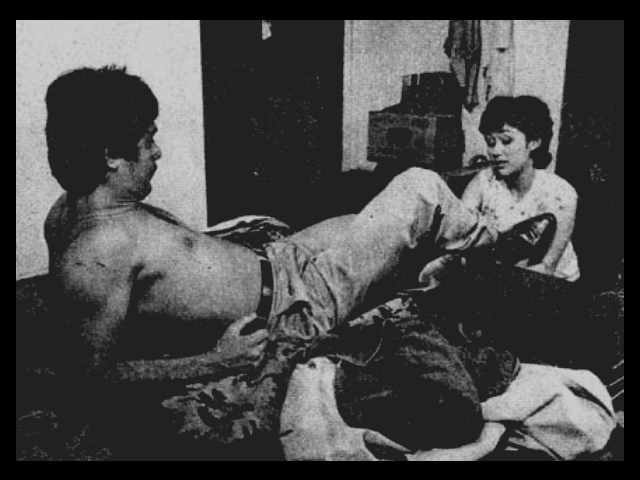 RELATED READING:


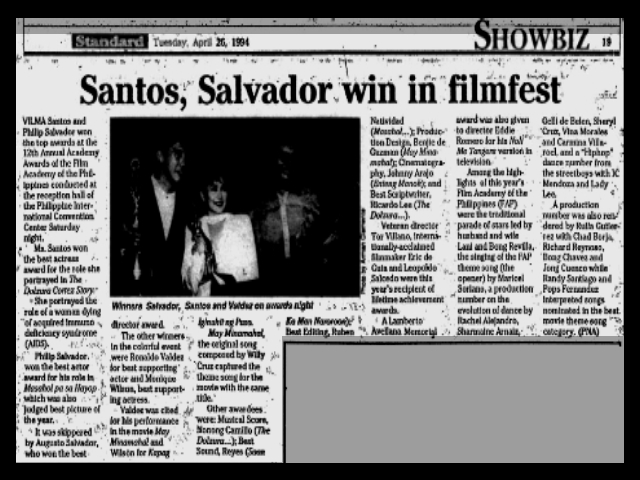

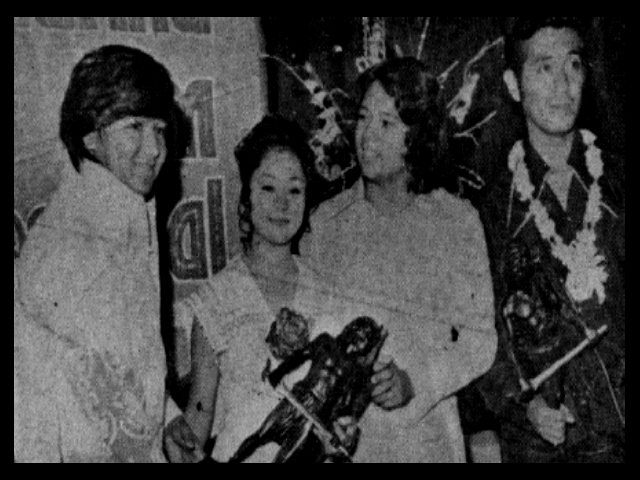

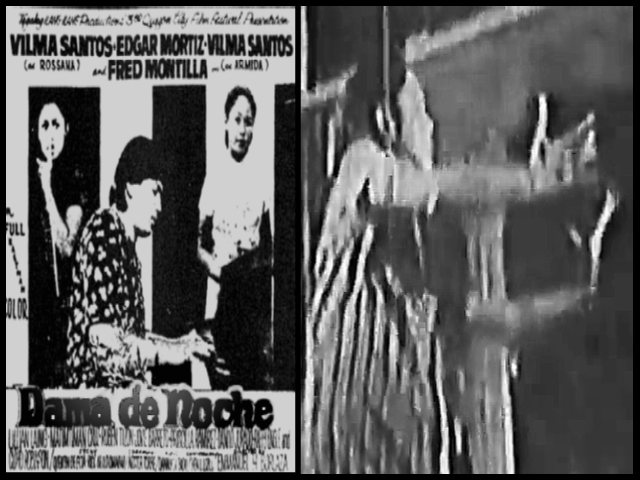



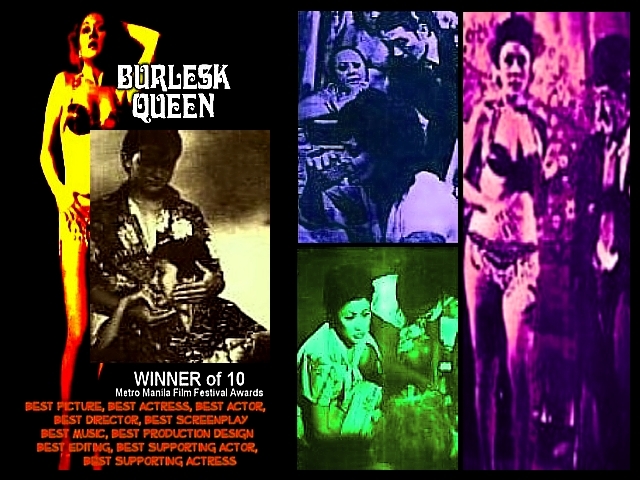
 Star For All Seasons
You must be logged in to post a comment.