The Seasons in Vilma’s life (Repost)


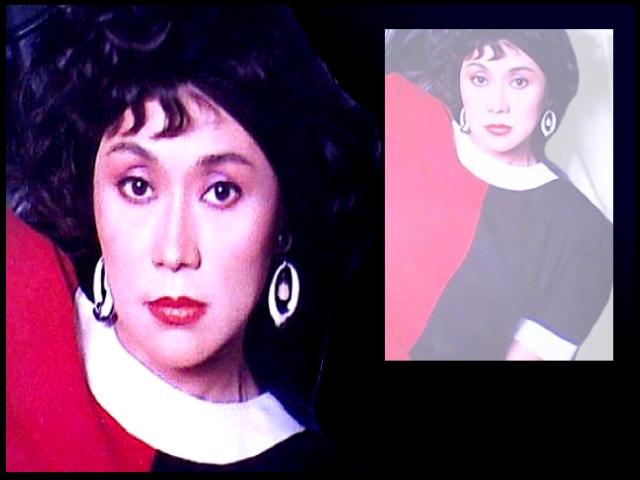
Vilma Santos (with husband Ralph Recto and son Ryan Christian, left) shares her life as a mother, performer and public servant in Vilma: A Woman for all Seasons

The camp of Gov. Vilma Santos credits movie journalist JC Nigado for giving the actress-turned-politician the tag Star for All Seasons. For the longest time — since the early ’70s, rival Nora Aunor was called Superstar. In 1986, Sharon Cuneta was built up as the Megastar and yet Vilma remained untitled.

In 1988, when Vilma marked her 25th year in show business in a PICC extravaganza put up by GMA 7 with the help of Chit Guerrero for her weekly variety show, Vilma!, Nigado wrote a series of articles where he called her Star for All Seasons. Other titles were coined for other stars after that, but only a few managed to maintain those titles and Vilma is undeniably one of them.

Tonight, after Charo Santos’ Maalaala Mo Kaya, ABS-CBN will start airing a five-part special called Vilma: A Woman for All Seasons, which will trace the various facets of her life and career as an actress (the only one with four grand-slam wins), as a TV host and dancer (her Vilma! show on GMA 7 that ran for nine years was the best-produced — without question), as a wife and mother (the first time she is showing her new home in Alabang — a must-see on Aug. 15) and as a public servant (her image as Lipa mayor first and now Batangas governor is untainted). For the final episode on Aug. 29, son Luis Manzano will show viewers some of the behind-the-scenes in the making of their movie All My Life, which will be shown by Star Cinema in September.

I had a reunion with Vilma recently and we both agreed that the title Woman/Star for All Seasons is so apt for her because she had been through all the seasons of life round and round. Together, we sat down to trace the various seasons of her life.

Happiest seasons

“When I gave birth to my son Luis/Lucky — lucky talaga siya.”

“When I evolved as an actress and, modesty aside, started getting those grand-slam awards.”

“When I was given a second chance at marriage. Imagine, si Ralph (her husband, NEDA chief Recto), binata and he inherited an instant family.”

“When I gave birth to my other son, Ryan and he grew up to be a healthy boy,” she still sighs with relief now. “That was a difficult pregnancy that made me stay in bed for months.” The truth is, practically the whole nation prayed for her successful delivery and we are all happy that Ryan has turned into a bright and intelligent teenager.

Saddest seasons

“When I discovered in the late ‘70s that financially I was negative P16-M.” This was due to failed investments and mismanagement, particularly of her movie production outfit, VS Films. “The interest of the bank loans I made, I didn’t realize I had already accumulated — from P2-M, it swelled to P7-M. When I woke up one day, wala na akong ari-arian. All my assets were frozen because I also had problems with the BIR.” To her credit, she slaved it out to be able to recover and pay her bank debts. She did films left and right, but she never enjoyed her talent fees from those blockbusters because all these went straight to the bank and to the BIR. For her upkeep (she had to eat, too, of course and maintain a staff), she accepted the offer to do the BBC-2 variety show V.I.P. (Vilma in Person) that aired live Sundays. Looking back, that contributed to the failure of her first marriage (to Edu Manzano) because she had to sacrifice her Sundays, which was supposed to be family day.

“Also sad was the passing away of my father in 1986.” Even local showbiz mourned the death of Amado Santos because he was a good man and was missed by all.

Frustrating seasons

“When my first marriage failed. But God is good. He gave me another chance — and may bonus pa na another son.”

“When my career went down in the late ‘70s and for that I only blame myself because those were the years I was being unprofessional. For example, there was this Christmas presentation I was supposed to do and I fled to Baguio. I did not show up on the set.” Now, I really salute her because it takes a big person to admit that mistake when she could have passed on the blame on other people and even the system. But that’s Vilma Santos.

Rebellious seasons

“When I put my personal life and happiness over my career. Height ng katigasan ng ulo ko ‘yun. I was doing five to six movies a year and maybe na-burn out din ako. I was looking for independence. I wanted my freedom.” She says that her rebellious years happened when she was between 24 to 27 years old. Actually, if you ask me, she started rebelling late. She must have really been up to here to rebel at that point of her life.

Scariest seasons

“If you want me to panic and get scared, tell me that one of my family members is ill. If one of my children is sick, I don’t work — I don’t even sleep. I stay beside my child all the time.” I witnessed that myself when Luis got sick (was it dengue?) before he reached his teens. Nothing and nobody could make Vilma get out of the hospital room (maybe not even an earthquake) because she wanted to stay with her first-born all throughout the ordeal. No tapings, no shoots. If only for that, she should have been awarded best mother of the year. “Even with Ryan now, kaunting lagnat lang, I take his temperature every hour — until he gets annoyed with me na. Ha! Ha! Ha!”

Most romantic seasons

“All seasons,” she says, letting out a hearty laughter. People have extolled Vilma Santos as a great performer and politician. But has anyone cited her for being witty, too? Source: Written by Butch Francisco, The Philippine Star, August 01, 2009 Philstar.

Vilma Santos: The Best Darna Ever (Videos)


RELATED READING:
Official Mars Ravelo’s Darna Web-site
IMDB: Lipad, Darna, lipad! (1973)
Darna and The Giants (1973)
Fly Darna Fly! (1973) movie series
Vilma Santos: The Best Darna Ever
Celia Rodriguez and Gina Pareno: Memories of Darna
The five Darnas we love!
International Hero: Mars Ravelo’s Darna
Eric Cueto’s Interview with VILMA (Repost)
1st shooting day ng Darna and the Giants
Darna at Ding Philippines 1980
Filmography: Lipad Darna Lipa! (1973)
Filmography: Darna and the Giants (1973)
Filmography: Darna vs. the Planet Women (1975)
Filmography: Darna at Ding (1980)
CLIPS – Eva Linda in Wish Ko Lang (Video)

What Ate Vi gave me on her birthday holiday


I was excited to see a good friend of mine in Malaysia to celebrate her birthday with her family, and to celebrate Ate Aida’s birthday, too.  The only time I have been to Malaysia was on a cruise via Star Cruises, passing through Penang. So finally a trip to see Kuala Lumpur and Genting became a reality.  Even if I was spending only two nights with the Vilma Santos, I welcomed the chance, and the break from the stress of Manila.

Vilma, Ralph, and Ryan planned to celebrate her birthday to be outside the country this time, instead of the usual dinner in her house.  Of course, Ate Emily, Ate Aida, and Sonny (Vi’s brother), plus an entourage of family and friends, were in tow. I wanted to be in Phuket with them for their first stop, but work in Manila prevented me from joining them; I caught up with them in Malaysia.  I missed out on the adventures in Phuket where, I was told, the group rode elephants through the jungle and, on another day, the boys went on a fishing expedition, while the girls had their retail therapy. On the eve of Vilma’s birthday, they had a formal dinner where Ralph surprised her with diamond necklace and earrings. When I ask how much the jewelry cost, all I got was the answer, “You can never put a price tag on love.”  After a week in Phuket, the group flew to Malaysia. Genting is a mountain resort an hour away from Kuala Lumpur, and the highest peak of the mountain resort boasts a complex under the wing of Resorts World. You got it, casino galore!

But Vilma and the crew opted for a more quiet vacation, so they stayed at the mid-levels of the mountain at Awana Golf Resort. I was unfortunate to have the only available room left in the First Hotel. Little did I know I was arriving at the peak of a holiday in Malaysia, and I was greeted by hordes and hordes of tourists in the reception, making me claustrophobic. That’s how crowded Genting Highlands was that day.  Vilma and the girls picked me up after I waited two hours for my room. They were excited to give me a tour of the complex, which was literally a maze within a maze. Each hotel—I know of at least four—are connected in a labyrinth of pathways to food malls, shopping areas, casinos, a theme park, and theaters.  They toured me around, and showed me a hawker’s plaza aptly called “Food for the Seasons”; we all joked that it was named after Vilma Santos herself.  The day ended in a Chinese restaurant Ralph chose. I must say the senator knows his food; I just loved the food there. A nightcap in a sports bar gave us the chance to behave like kids and dance to a few songs before we called it a night.

Retail therapy in KL – The next day Ralph rented two vans to bring us to Kuala Lumpur for a day tour.  First stop was the Petronas Tower, where we all had our souvenir photo. We entered via the Suria Mall, which the girls fondly called, “divi-SURIA.” As girls will be girls, the tour turned into another retail therapy session.  Vilma, who thought that she was not known in KL, walked without care in the world, exploring the shops, only to discover Filipinos working and shopping in the same area.  Initially only a few recognized her and had their photos taken with her. When we sat down in a coffee shop, however, we realized that the number of fans and oglers was growing. The meal became a photo-op, and her anonymity was gone. I joined the fray, and we all made new friends in the end.

Nothing seemed to bother Vi, as she was on vacation mode. She obviously knew how it is to be a celebrity, but still, I was impressed with how patient she was in dealing with different people. She would even ask people who worked there how they were, and if life was good in Kuala Lumpur. She genuinely cared.  As usual, we lost track of time and were a little late for the shuttle back to Genting. We all arrived famished and just ate at Awana.  It was getting late, and I had to pack for my flight the next day. I had to travel three more mountains to my hotel, so I said my goodbyes.  As I was about to leave, Ate Vi offered to take me back to my hotel via the cable car. And that was where the real adventure began.  We got stuck 9,000 feet above the ground, in the cable lines. I videotaped this, and will show it in my podcast, Adventures Behind My Lens, available in iTunes, too. I suggest you wait to see how we survived. I watched the video for the fifth time today, and I still die of laughter every time.

After two nights I had to fly back to Manila, yet already missing the group. Those two days with them left me a valuable lesson. Vilma has been a public figure all her life. Going to the mall, sitting on the sidewalk, eating in a carinderia, even buying street food are things we take for granted. But for Vi, these things are precious moments.  Some say that loss of privacy is a small price to pay for fame and fortune, but let me tell you that her life has not been all fame and fortune. It’s more of work, integrity, and sacrifice. Some people would trade places with her in an instant, but if you knew how she got to where she is now, you would wonder how she ever endured such a life.  She has had really low points in her life. Life is hard enough but it becomes even harder when one is always under microscopic scrutiny. Seeing her enjoy the simple things makes me appreciate the things I take for granted.  Funny that when I flew to Malaysia, I was wondering the birthday gift I could give someone who has everything—only to realize that it was she who gave me something instead: The gift of insight.

Source: Written by Raymund Isaac, Philippine Daily Inquirer, Nov 19, 2011 Telebisyon.net.

Vilma Santos Film Actress (Repost)

In the fickle and uncertain world of showbusiness, there is one name that has remained consistently on top fro the past two decades: Vilma Santos. Hers is an altogether exceptional case as her movie career has brought Santos both popular and critical acclaim. Even more amazing is her star continues to shine more brightly.

In 1963, a chubby, gangling nine-year-old girl was to do a film with Lolita Rodriguez and Luis Gonzales, in Anak ng Iyong Ina. An unexpected turn of events, however, found her auditioning for the lead part of Trudis Liit instead. The movie mogul, Dr. Jose Perez, of Sampaguita Pictures, who was then conducting the audition noticed the girl and thereupon commanded her to act. When she did, the producer was pleased with his find, wasting no time to cast her in the title role. That girl went on to become the first best child actress of the Filipino Academy of Movie Arts and Sciences (FAMAS).

Having hurdled her fist test, the child Santos found herself being cast in the part of the young daughter of the film’s leading adult characters, as in the controversial Iginuhit ng Tadhana, where she portrayed the Marcoses’ eldest daughter, Imee.  At the onset of the popular teenage love teams, who dominated the late sixties and the early seventies, Santos found a loyal screen partner in Edgar Mortiz with whom she would coo and cuddle her way through the fans’ hearts and into the box office. The pair found a worthy match in the Nora Aunor-Tirso Cruz III romantic tandem, which could enviably pave the way for a long-time Santos-Aunor rivalry.

In 1977, Santos found herself gambling with her sweet and virginal image built up by studio machinery by doing the highly controversial Burlesk Queen. With maverick director Celso Ad Castillo at the helm, she essayed the role of a teen-age burlesque dancer in the fifties, who, driven by economic and personal depression, danced her way to the film’s grand finale – an abortion scene. That gamble certainly paid off, for soon after the film’s release, Santos felt that people became increasingly interested in her and more particularly in what she could do, not as a star but as an actress worth her salt, her fans, on the other hand, could only concur in her decision to become a serious thespian.

Her later movies would prove her right. In ht. In Rubia Servios (1978), directed by the top-caliber Lino Brocka, she made people take notice of her acting mettle as she effectively portrayed the harrowing experience of a rape victim. Then, she did Pagputi ng Uwak, Pag-itim ng Tagak (1978), under her own VS film outfit, in the role of a tragic heroine caught in the midst of seething social unrest. Then came the films with director Ishmael Bernal: Ikaw ay Akin (1978), Relasyon (1982) and Broken Marriage (1983). The last two films earned for Santos two consecutive best actress awards from the critics’ body. This was followed by yet another award-winning performance Sister Stella L. (1984) where she did justice to the part of crusading nun who eventually involves herself with the workers’ cause.

Graduating into mature and radically complex roles – away from the mold of which she was typecast – Santos adamantly refused to do the same predictable roles, believing that she would be better off with the then emerging roles of liberated woman and independent minded wife, as the temper of the times so dictated. Her continued popularity in these seemingly novel roles proved that the transition was smooth, and the fans were well-prepared for it.  “If I am still here,” Santos says, “it must be because I am not afraid to take risks in my profession. I also owe it partly to careful planning and getting the right projects. And when I decide to take a chance, and it turns out well, then that would be great. If not, I just have to stand up again.”

Today, the actress is seemingly content with the way her career – and life – has turned out. She continues to get good meaty roles as evidenced by recent pictures such as Baby Tsina, Tagos ng Dugo, Ibulong Mo Sa Diyos, and Pahiram ng Isang Umaga, all of which have earned her both nominations and awards from various award-giving bodies. She continues to strike a happy balance by doing films that would please the critics and her audience of ardent admirers as well.  Now the mother of eight-year old Lucky, her son by estranged actor-husband Edu Manzano, Santos has found newer challenges to keep her weekly musical show, Vilma, which has been accorded recognition by both Star Awards and the Catholic Mass Media Awards. On top of these, she produces occasional drama specials on television, directed by name directors and scriptwriters.  “My career has brought me fame, fortune, and most important of all, professional fulfillment. From the mistakes I have committed in the past, I have emerged a much stronger person,” she says. If she were to live life all over again, Vilma Santos would have no qualms about becoming a movie star all over again.

Source: Written by Justino M. Dormiendo and Photographed by Calixto N. Rodriguez Filipino Heritage

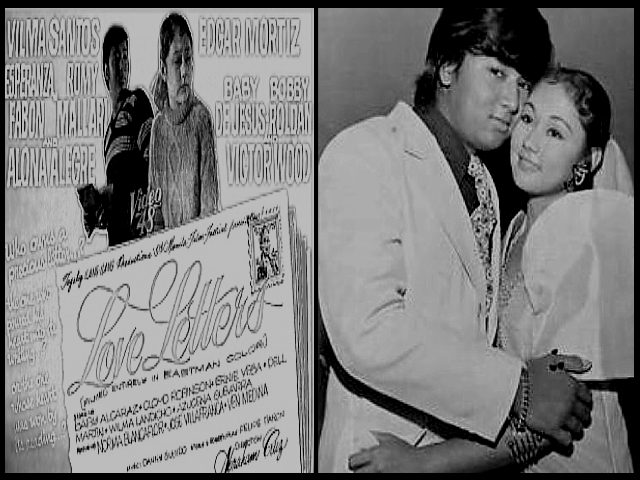
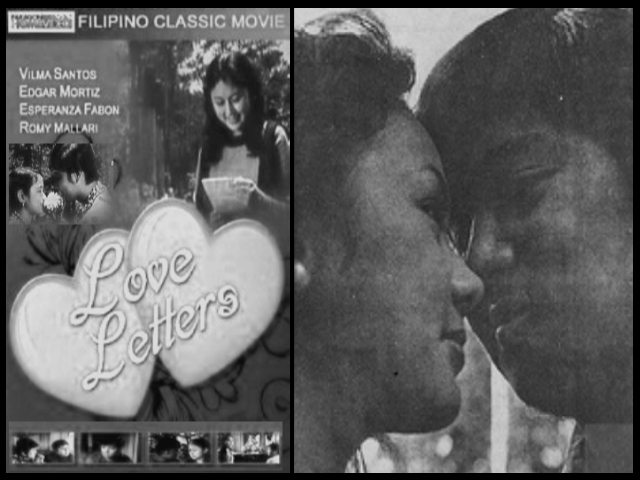
FILM REVIEW: LOVE LETTERS


The Plot: Film-Am Edgar falls in love with Vilma. The two had a set back that ended with Edgar returning all Vilma’s love letters that he regreted and wanted it back. He went to Vilma’s house to retrieve it but was caught and accused of stealing. The whole misunderstanding ended up in court but was settled eventually. Edgar left the country but returned for Alona Alegre’s wedding to Victor Wood. He also reunited Vilma. – RV (READ MORE)

The Reviews: Love Letters started with Vilma entering a living room and Baby De Jesus started playing the piano.  Suddenly, Vilma started singing and after finishing her song, she left the room, while a very young Alona Alegre sitting beside her appeared to be in her own world, as if she heared, nothing.  There were no interaction between the three, no dialouge, making this opening scene quite irritating.  The next scene, we found out that Edgar, played by Edgar Mortiz is a Filipino-American. We assumed that he is vacationing and taking some course. Next scene, Victor Wood is singing on the telephone while Alona Alegre is listening on the other line. Then it Edgar turn to sing.  This time, in the men’s dormitory followed by Baby De Jesus.  Her limited dialouge: she wanted to sing  “to entertain Vilma.”  Then Edgar and Vilma are set to meet in a park but because Vilma was so late, Edgar decided to leave. When she arrived and found no Edgar, she started to cry and ofcourse, she sings!  Not to be outdone, its Romy Mallari’s turn to sing!  Then its Edgar turn to sing again.  Edgar got so mad with Vilma and decided to return all of Vilma’s love letters.  In protest, Vilma returned his gift, a ring and bracelet.

Afterwards she sings the theme song, “Love Letter.” She followed this up with her day dreaming scenes, remeniscing the time when the two of them are singing in the park. She then fell asleep but was awaken by an intruder! Presto! It was Edgar! Stealing their love letters! He escaped when Vilma’s parent caught them talking. The next scenes was a courtscenes. Vilma and Edgar plus Vilma’s parent testified in front of a judge. A phone call from the mayor who is connected to Edgar postponed the judge’s decision.  As turned out, Vilma’s parent also owned some love letters which made them understand what their daughter is now going through. At the breakfast table the next day, Vilma all of the sudden proclaimed that she doesn’t care about Edgar anymore. Then they discovered that Edgar and his friends decided to have a picket line in their house (ala-“Occupy Wall Street”???).  They decided to remained in the picketline over night with more singing.  Sleeping outside, the girls headed by Alona Alegre, decided to join the picketline. Vilma’s parent confronted them and Victor Wood all of the sudden declared that he wanted to marry Alona Alegre! And to add to the drama, Edgar decided to leave the country. The next scenes was Vilma receiving love letters over time. Then finally the promised wedding of Victor Wood and Alona Alegre, Edgar then seranade Alona and Victor.  When Vilma heard and saw Edgar, she run to the church’s balcony.  They reunited with a duet!  The End.

Love Letters is a musical films specially made for the fans of “teeny-bopper” stars – Vi and Bot.  The film was probably shot with improvisations, which means, without a written script.  This was noticeably clear as the film’s main characters and the actual names of the actors were not change at all.  The film’s main plot was the the stealing of love letters that ended in court,  followed by picket line (ala-“Occupy” Wall Street) that was hard to believe.  And also the one-after the other testimonies of Edgar, Vilma and both parents that were irritatingly funny. Although we are used to Vilma’s tolereable singing, we’re more surprise to see a singing Alona Alegre!  She looked more like Eugene Domingo (clearly before her sexy films/image).  One more thing, Alona’s wedding gown was worth a second look, its not like your ordinary wedding gown.  The head piece was a beaded hood that covers her hair and neck.  With so much singing, Baby De Jesus’s voice stands out among the girls but her piano playing acting was over the top. Victor Wood’s duet with Edgar Mortiz, “Beautiful Dreamers” is worth downloading. Danny Subido was responsible for inserting all the musical numbers that was quite a tasks particularly without a well written musical screenplay.  The film was shot in Baguio City and cinematographer, Avelino Peralta’s did a wonderful job showcasing the city on Vilma’s day dreaming except for the akward courtscenes.  Love Letters was produced by Tagalog Ilang-Ilang Production and directed by Abraham Cruz, a forgettable film that only a die hard Vi and Bot fans (and those who loves film nostalgia) can only appreciate. – RV

RELATED READING:
IMDB: Love Letters (1970)
IMDB: Abraham Cruz
IMDB: Edgar Mortiz
IMDB: Esperanza Fabon
IMDB: Romy Mallari
Vilma Santos From Wikipedia
Edgar Mortiz From Wikipedia
Vilma and Edgar Duet (Video)
Clips – Love Letters (Video)
Vilma Santos-Edgar Mortiz Love Team Circa 1970

Eric Cueto’s Interview with VILMA (Repost)

This slideshow requires JavaScript.

Eric C: Ate Vi, ano ang pinaka paborito mo sa lahat ng Darna movies mo? (“Vi, what’s your favorite among your Darna movies?”)

Ate Vi: Syempre Lipad Darna Lipad, yon kasi ang unang Darna ko at maganda talaga. May copy ka ba nito? (Of course, it’s “Lipad, Darna, Lipad” since it was my first. It was really well done. Do you have a copy of it?)

Eric C: Wala din ako nito eh, hayaan mo at kapag naka hanap ako bibigyan kita. Paano ka nag handa sa movie na ito, nagkaroon ka ba ng special training sa mga fight scenes mo dito bago nag umpisa ang filming? I heard si Tony Ferrer daw ang isa sa mga nag guide sa iyo. (I don’t have this movie either. But if I am able to find one, I’ll give you a copy. How did you prepare for this movie? Did you have any special “fight training” before you started filming? I heard that Action Star-Tony Ferrer guided you.)

Ate Vi: Walang training sa set na talaga bago mag umpisa ang shooting namin. Hindi si Tony ang nag guide sa akin, yong mga stuntman lile SOS daredevils. (No, there was no training on the set before filming. It wasn’t Tony Ferrer who guided me but the stuntmen called SOS Daredevils.)

Eric C: Hindi ka ba nahirapan sa mga stunts mo? (Did you have any difficulties with your own stunts?)

Ate Vi: Hindi naman, kasi may pagka tomboy din ako noong araw kaya madali kong napag aralan. Actually, minsan nga nag karoon ng aksidente na kailangan ko na mag tumbling at sasaluhin ako ng stuntman ang nangyari nasipa ko sya sa mukha kaya putok yong ilong nya at kailangang dalahin sya sa hospital, ako naman nauntog sa bato kaya ang sakit ng ulo ko. (Not really. I was a bit of a tomboy in those days so I learned things quickly. Actually, there was a time when an accident occured. I had to go and do the tumbling bit where the stuntman was supposed to catch me. I accidentally kicked him in the face and he got a bloody nose and had to be brought to the hospital. I, on the other hand, hit my head on a rock and got a splitting headache.)

Eric C: I heard din na nilagnat ka noong first time ka eksena mo ay mga ahas? (I head that you developed a fever the first time you had a scene with snakes?)

Ate Vi: Oo totoo yon! natakot ako sa mga ahas first shooting day yata namin yon sa may roof top ng isang building sa may Santa Mesa. Isang lingo akong nagkalagnat yata noon? then bago ulit kami mag shooting pinahahawakan na muna nila sa akin yong mga snakes para masanay na ako. (That’s true! I was terrified of the snakes the first day of shooting on a rooftop of a building in Santa Mesa. I think I kept getting fevers for a week. Then , they let me touch the snakes first before every shoot so that I could get over my fear)

Eric C: how’s Celia as Valentina and Gloria as Impakta?

Ate Vi: Celia, she’s really good! and Tita Glo was so scary as Impakta, I love her so much.

Eric C: How about Liza?

Ate Vi: She’s good too! I remember ang costume nya ay yong parang sheep skin at may pair of wings sya. Sa may Antipolo kinunan yong episode ng Babaing Lawin. (She’s good too! I remember her costume that was made of sheepskin with a pair of wings. We filmed the “Babaing Lawin” episode in Antipolo)

Eric C: May aerial fight scenes ba kayo ni Liza? (Did you have aerial fight scenes with Liza?)

Ate Vi: Wala, sa land lang kami nag laban mostly sa cave. I remember kami ni Tita Glo nag laban kami sa ere, naka tayo kami sa parang stage then madilim yong background at yong kalahati ng katawan ni Tita Glo ay may takip na itim na tela, at may malaking electric fan na naka tapat sa amin. (No we didn’t. We fought on land..mostly in a cave. I remember my aerial fight scene with Gloria (Romero). We were standing on a stage with a dark bacground and there was a black cloth covering the half lower part of her body and there was a large electric fan in front of us)

Eric C: May scene ba dito na nakuha mo yong bato mo sa shooting star? (Was there ever an origin scene where you received the magic stone with the coming of the shooting star?)

Ate Vi: May power na ako ni Darna sa umpisa pa lang ng story, sa Darna VS. The Planetwomen yong may nahulog na bato mula sa sky. (I already had the power of DARNA from the start of the movie. I only had an origin scene in “Darna Vs. the Planet Women” where the magic stone fell from the sky.)

Eric C: Excited ka ba ng i offer sa iyo ang Darna for the first time at may napanood ka ba na Darna movies before your Darna? (Were you excited when the role of Darna was offered to you for the first time? Also- Did you watch any of the Darna movies that came before you were offered the part?)

Ate Vi: Napanood ko yong Darna ni Eva Montes sa sine at yong Kay Rosa Del Rosario sa tv. Napanood ko din yong Darna ang Pagbabalik sa tv, i don’t really care about it, kasi parang tinipid yong movie. Of course excited ako ng I-alok sa akin ang Darna. I remember nag paalam pa ako sa mga madre sa school na pinapasukan ko noon, kasi diba na ka two piece si Darna at okay naman sa kanila, kasi nga hindi naman daw bastos yong character ni Darna, superheroine nga sya eh. Tinanong ko rin yong mga fans noon at medyo nga worried din sila sa costume baka daw bastusin ako. Kaya nga noong una sa pictorials ng promo ng movie naka body stocking ako, kaya lang hindi talaga magandang lumabas nakakataba yong stocking. William Leary and Douglas Quijano convinced me na tangalin ko yong stocking sa press con ng Darna. I remember nasa bathroom pa nga ako noon at mag papalit na ko ng Darna costume ko, then tinangal ko na rin kasi sabi nila ” Vi, masagwa talaga yong stocking bakit di mo sila gulatin lumabas ka ng walang stocking tutal may ipapakita ka naman” . At yon na lumabas na ko ng walang body stocking. (I saw Eva Montes’ “Darna at ang babaing Tuod” at the movies and Rosa Del Rosario’s Darna on TV. I also watched “Darna: Ang Pagbabalik (The Return)” on TV but don’t care for it..it had bad production values. Of course, I was excited when I was offered the role of Darna. I even had to ask permission from the Nuns at my school because of Darna’s 2 piece costume. Besides, there’s nothing obscene about the costume because this is a Superheroine after all. But I asked advice from some fans and they were concerned that I might get criticized for being daring. This is why I wore body stockings in the promotional pics for the movie. It looked so terrible and made me look fat with body stockings. William Leary and Douglas Quijano convinced me to remove the body stockings before the Press Con. I remember changing into my Darna costume and I remember their words telling me- “Vi, the stockings look terrible so why don’t you surprise all of them by not wearing them. Besides, you have the looks anyway.” So there – I was at the Press con without the body stockings.”)

Eric C: What do you think of Angel (Locsin) as Darna?

Ate Vi: She’s doing great sa tv series niya na Darna. Napapanood ko ito at bagay sa kanya tama yong ginagawa nya sa mga fight scenes nya, believable talaga! kasi pag Darna ka kailangan di ka malamya at mai papakita mo na kaya mo talagang mag patumba ng mga kalaban mo. (She’s doing great on the TV series as Darna. I do watch it and she looks great as Darna. Even the fight scenes are believable. That’s because when you’re Darna, you cannot be lethargic. You need to look like you can really knockdown Super-Villains.)

Eric C: Do you mind na mag guest appearance sa Darna movie or tv? (Do you mind making a guest appearance in the Darna movie or on a TV series?)

Ate Vi: I don’t mind basta ba maganda yong role. Noong araw sa Darna ni Dolphy inalok ako na mag pasa ng bato kay Dolphy, pero pregnant ako noon kay Lucky. (I don’t mind as long as the role is good. A long time ago, in Dolphy’s Darna..I was offered the role of Darna turning over the stone to Dolphy’s character. But I was pregnant. (My Baby named Lucky.)

Eric C: Ano pa yong mga memorable experience mo about Darna? (What other memorable experiences did you have as Darna?

Ate Vi: Yong flying scenes, mahirap talaga yon kasi kailangang i balance mo yong katawan sa 3 maninipis na bakal na nakasasalo sa katawan ko, at may malaking electric fan na nakatapat sa may mukha ko kaya sakit talaga sa ulo after takes. Also, natatandaan ko rin yong lumilipad ako papuntang Maynila na background music na My Beautiful Baloon. I also remember si Angelito pa ang Ding ko sa Lipad Darna Lipad. (The flying scenes. That was really hard because you have to balance your body on 3 steel bars while a large electric fan in front of my face which gave me headaches after takes. I also remember the flying scene where Darna was flying towards Manila and the background music was the song – “My Beautiful Balloon”. I remember the boy- Angelito who played “Ding” in “Lipad, Darna, Lipad”.

Eric C: May naitabi ka ba na Darna memorabilla? (Were you able to take some Darna memorabilia?)

Ate Vi: Wala, binabalik namin yon sa studio like costumes. (None. We returned everything to the studios)

Eric C: Ano ang pagkakaiba ng Darna noon at ngayon? (What’s the difference between the your Darna and the version today?)

Ate Vi: Ngayon mas advance na ang technology at computerized na talaga, madali ng gawin yong mga mahihirap na scenes. Noon pag nag Narda ako naka steady talaga yong camera tapos bihis agad balif sa dating pwesto, ngayon halos computer na talaga lahat. (Technology is much more advanced today. The harder scenes are easier to make now. Whenever I shot my scenes as Narda changing to Darna, the camera remains steady as as I get dressed in costume and return to the same spot before the transformation.)

Eric C: Ate Vi, nagawa mo na halos lahat ang hindi na lang is to play the role of Impakta or Aswang, will you consider na lumabas ng isa sa mga villainess sa Darna like Gloria Romero noon? (Vilma, You have done every role already except playing “Impakta” or an “Asuwang”. Would you consider playing a Darna villainess like what Gloria Romero did?)

Ate Vi: Naku! mukha na ba akong impakta? (sabay halakhak) actually may ginawa na kong Aswang yong ” Anak ng Aswang” pero hindi ako ang aswang si Tita Glo. Actually very interesting yang role na yan at challenging, i don’t mind playing those kind of roles na kontrabida, basta ba maganda ang story. (Yikes! Do I already look like a Vampire? (Laughs out loud) Actually I starred in a Vampire movie already “Anak ng Aswang” (Vampire’s Child) but I was not the Vampire. Gloria Romero played the Vampire. Actually I think that’s an interesting role and I don’t mind playing a Villainess as long as it’s a good story.)

Eric C: Teka muna ate Vi, kailan mo ba ipapasa sa akin ang bato? (Jokingly, by the way Vilma, when are you surrendering the “magic stone” to me?)

Ate Vi: ( sabay tawa) Hay naku! hindi pa panahon para ipasa ko sa iyo ang bato. (Laughs) Oh well, it’s not time yet for me to give up the “magic stone” to you.”)

Eric C: Ate for the last time sumigaw ka ng Darna please! (Vilma, could you do the “Darna yell” one last time?)

Ate Vi: Baka magising ang mga tao dito sa hotel madaling araw na. (We might wake up the people in this hotel. It’s really late.)

Eric C: Please ate Vi….Medyo pabiro pang isinigaw ni Ate ang Darna) (Please Vi. (Then Vilma gets playful with the “Darna yell”)

Ate Vi: Jworna (pa cute pa sya dito ha!) then di ba meron pang sumigaw ng Daarnaaa, na parang hirap sya sa pag sigaw di ba? (“Jworna!!! (makes funny expressions) Wasn’t there another Actress who sounded like she was having a difficult time yelling “Darna”??)

Eric C: kilala ko yong mga sumigaw ng ganoon ate Vi. (then finally medyo nag emote muna si ate at sabay taas ng kamay) (I know the actress who did the yell that way. ……….AND THEN….. VILMA REALLY GOT INTO CHARACTER)

Ate Vi: DARNA!!! (DARNA!!!!)

Eric C: no pa naman di halos hinimatay ako sa tuwa imagine in person talaga narinig namin na sumigaw si Ate Vi ng Darna at palakpakan ang mga Vilmanians na nakipag puyatan sa pakikipag chikahan sa Darna for all seasons, na kahit walang make up ay super ganda pa rin. (Hehehe I almost fainted with great joy. Imagine- I got to hear the most famous Darna of them all do the yell… in person !! All the Vilma Fans applauded as we all stayed up late into the early morning with the “DARNA OF ALL SEASONS” (who is still very pretty ..even without make-up) – Eric Cueto, Mars Ravelo Darna web-site

Written by Eric Cueto, Mars Ravelo’s Darna web-site READ MORE

About Darna – Darna is a fictional character and Filipino comics superheroine created by writer Mars Ravelo and artist Nestor Redondo. In her more popular incarnations, she is a deceased warrior from another planet manifesting herself through a girl from Earth, named Narda. She first appeared in Pilipino Komiks #77 (May 13, 1950). Darna is a retooling of Ravelo’s earlier character Varga, whose stories he wrote and illustrated himself. She first appeared in Bulaklak Magazine, Volume 4, #17 (July 23, 1947). Ravelo left Bulaklak due to differences with the editors…Starting in 1951, several Darna movies were made. Some made from 1973 onwards starred the future multi-awarded dramatic actress and politician Vilma Santos. In these 1970s films, Darna’s origin was changed; no longer a little girl, Narda was now in her late teens. Also, she herself becomes Darna, unlike the original where she just “channels” her (not unlike Jason Blood and Etrigan). Only Ding knows her secret in this version. Also, the stone comes out of Narda’s mouth every time she changes back; she has to swallow it every time she wants to transform (This became standard for following versions). Darna is not specified as coming from Marte, just as a “warrior of Light”. This version of Darna became most people’s idea of the character for about 3 decades. A catchphrase popularized by the movies and said by Narda runs, “Ding, ang bato!” (“Ding, [give me] the stone!”) (Wikipedia)

RELATED READING:
Filmography: Lipad Darna Lipa! (1973)
Official Mars Ravelo’s Darna Web-site
IMDB: Lipad, Darna, lipad! (1973)
IMDB: Liza Lorena, Actress
IMDB: Gloria Romero, Actress
IMDB: Celia Rodriguez, Actress
Darna and THE Giants (1973)
Fly Darna Fly! (1973) movie series
Vilma Santos: The Best Darna Ever
Celia Rodriguez and Gina Pareno: Memories of Darna
The five Darnas we love!
International Hero: Mars Ravelo’s Darna

Ricky Lo’s 57 VIPs in Vi’s Life (Repost)

Fifty-seven looking Sweet Sixteen (to borrow the title of her hit song way back when she was, uhm, fresh as a daisy and thought that she could sing. Well, she could carry a tune but she eventually turned out to be not a singer but a great actress who has dozens of awards that have left no more space to display in. Name it, she has won it. Looking at her, it seems unthinkable that Batangas Gov. Vilma Santos, still called simply and fondly Vi for short, is seven years and half a century old on Wednesday, Nov. 3. How does she manage to look so young?  “Positive attitude,” she said. And exercise and a healthy diet.

Did you know that Gov. Vi works out every day in one of the rooms of her houses (one in Corinthian Garden and another in Lipa City where she served as mayor for three terms)? She would close all the windows, turn the aircon off and sweat it out. Some detractors may refute it but Vi insists that every part of her body is original, untampered by needle and scalpel. A member of the household staff gives her a massage after a hard day’s work, whether at the Provincial Capitol or on a movie set. “I eat anything,” she said, “but in moderation.” Asked what her priority is, Vi replied, “Family, Batangas and showbiz.” She and her husband, Sen. Ralph Recto, are partners at home and at work. Her son Luis “Lucky” Manzano (from a previous relationship) is like a friend to her. Ryan Christian, her son by Ralph, is growing up to be the sum total of his parents’ best traits.

Successful as a woman and as an artist, what more can Vi ask for? “Maybe a good sleep,” laughed the former insomniac. The journey from Trudis Liit (which she did for Sampaguita Pictures when she was that little, recently adapted as a teledrama by GMA) to, uhm, Governor Liit was fraught with high drama both on the personal level and the professional level, and all sorts of tests and trials which she survived very beautifully. She’s her own glowing trophy.

To mark the 57th milestone in her life, Conversations asked Vi to do a list of the 57 VIPs in her life. Forever Vilmanian Alan Trambulo, who works at the front desk of Radisson Hotel in Manhattan, helped conceptualized this piece. (As of this writing, Vi and Ralph, with son Ryan Christian and close friends and relatives, are vacationing in Seoul. They came back Friday night.)

    1. Amado Constantino Santos (deceased), my father
    2. Milagros Tuazon Santos, my mother
    3. Luis Philippe S. Manzano, my son
    4. Ryan Christian S. Recto, my son
    5. Ralph Gonzalez Recto, my husband
    6. Emelyn Tuazon Santos, my sister
    7. Ma. Theresa Santos, my sister
    8. Conrad Lopez, my brother-in-law (Ma. Theresa’s husband)
    9. Ana Norwina “Winnie” Santos, my sister
    10. Willie Herber, my brother-in-law (Winnie’s husband)
    11. Joel Tuazon Santos, my only brother (the youngest)
    12. Rafael R. Recto (deceased), my father-in-law
    13. Carmen Gonzalez Recto, my mother-in-law
    14. Dr. Edwin Argonza (my cousin who assisted and attended to me when I gave birth to Luis and Ryan)
    15. Dr. Connie Argonza (same reason as above)
    16. Eduardo “Doods” Barrios Manzano
    17. Adrian Manzano (deceased), Dood’s father
    18. Rosario B. Manzano (deceased), Dood’s mother
    19. Amaury Agra (my uncle who introduced me to Starmaker Dr. Jose R. Perez of Sampaguita Pictures where he was a cameraman)
    20. Dr. Jose “Doc” Perez (deceased), my discoverer
    21. William Leary (deceased), my one and only business & appointments manager
    22. Cardinal Gaudencio M. Rosales (the first church personnel who gave me trust to be a public servant)
    23. Bishop Salvador Quizon (who officiated at my wedding to Ralph)
    24. Monsignor Alfredo Madlangbayan (who also officiated at my wedding to Ralph)
    25. Boss Vic del Rosario Jr. (producer of my Viva films…and thanks to his late better half, Ate Mina del Rosario)
    26. Fr. Lito Malibiran (my adviser, critic and friend)
    27. Atty. Espiridion D. Laxa (deceased), my legal adviser and one of my producers.
    28. (Regal Matriarch) Mother Lily Monteverde (who produced most of my acclaimed films including Relasyon, Broken Marriage and Sister Stella L)
    29. Father Remy Monteverde (Mother Lily’s husband who has also been supportive)
    30. Ishmael Bernal (deceased), who was responsible for my winning my first Best Actress grand slam (for Relasyon)
    31. Lino Brocka (deceased), who directed me in some of my most memorable films including Rubia Servios, Adultery and Hahamakin ang Lahat
    32. Douglas Quijano (deceased), whose well-meaning pieces of advice have paid off
    33. Mina Aragon del Rosario (deceased), my dear Ate Mina who carefully and lovingly chose the scripts and stories for the films that I did for Viva Films
    34. Helen Vela (deceased), my gangmate
    35. Coney Reyes, my gangmate
    36. Tina Revilla, my gangmate
    37. Roderick Paulate, my BFF (Best Friend Forever)
    38. Marichu Vera Perez Maceda, my ever-loving and ever-thoughtful Manay Ichu
    39. Marie Babacui, my companion during my younger years, in my escapades, disappearances and rebellious days
    40. Viring Morada (deceased), another kasama sa lahat ng lakad starting from my younger years
    41. Federico M. Garcia (FMG), who negotiated for my contract with Channel 7 for my TV show VIP right before he transferred to Channel 2
    42. Chit A. Guerrero, my EP (Executive Producer) for 15 years in VIP of Channel 7 and 2
    43. Cory Valenzuela Vidanes, the PA (Production Assistant) at that time who almost caused my rift with Ricky Lo (Note: During her show, Vi made a joke about the sartorial taste of Cory V who was a Valenzuela and not yet a Vidanes at that time; she’s married to TV director Bobit Vidanes. That was in 1986 when Cory Aquino was only a few months into her presidency. I mistook Cory Vidanes for Cory Aquino because Vi didn’t mention Cory V’s surname. Vi lashed back at me on camera, very angry and very hurt. Hehehehe!)
    44. Maribeth Bichara, who honed my dancing prowess
    45. Super Morales, who patiently guarded my diction and my grammar in reading spiels for my variety shows
    46. Christopher de Leon, my perennial leading man with whom I made more than two dozen movies; he’s now OIC governor of Batangas while I am in Korea and Vice Gov. Mark Leviste is in UK
    47. Edgar Mortiz, my first love interest on and off the screen
    48. Jose Mari Chan, one person and gentleman whom I truly admire
    49. Ricardo F. Lo, the very first movie writer who interviewed me when I was 12 pa lang yata and who even paid the fare for the taxi that he, my mom and I took to the Manila Times building on Florentino Torres St. in Sta. Cruz, Manila, where we did the cover pictorial for Variety, one of the paper’s Sunday magazines
    50. Malou N. Santos, whom I thank for believing so much in me
    51. The Star Cinema Team
    52. The Regal Family
    53. Batangueños, my constituents
    54. Movie/Showbiz world — the producers, directors, leading men, co-stars, production staff and crew
    55. The media guys who helped package my career
    56. The Vilmanians whom I thank for their unwavering faithfulness and admiration
    57. And all my friends whose names slip my mind at the moment I’m doing this list and from whom I ask forgiveness even as I thank them because they, too, played a very important part in my life.

Written by Ricky Lo, The Philippine Star, Oct 31, 2010 (Philstar)

FILM REVIEW: KING KHAYAM AND I


The Plot: King Kayam’s search for another wife brought him the escapee, Princess Gracia. She doesn’t want to be wed to a man, she doesn’t love so she left her kingdom and ended up in King Kayam’s kingdom. They met and fell in love. – RV

The Reviews: King Kayam is the playboy king of the Vulcan kingdom played convincingly by the younger action star,  Joseph Estrada. King Kayam has several wives (Marissa Delgado, Lucita Soriano, Rossana Marquez) with several kids, the eldest played by teen star, Dondon Nakar. But with all these wives you might think the king will be satisfied sexually, wrong! He wanted more and asked his disciple (Rod Navarro) to find him more wives. Meanwhile on the kingdom of Salamanca, a young princess named Princess Gracia is being groom to be a wife. Her king father (Ruben Rustia) and queen mother (Anita Linda) are looking for suitable husband. When the princess discovered her three suitors, she decided to eloped. Wearing an ordinary disguise clothes and with the help of her sidekick (Lorli Villanueva), they left the kingdom and reached Vulcan.  Bad luck came into them as they were caught by a bad bandits who are selling slaves into the public by auctioning them into the public market like cattle. When the disguised princess turn to be auction, she caught the attention of the king’s disciple and bought her together with her sidekick.

He brought them to the palace and excitedly present the princess to the king but the princess ugly herself with makeup and the king was turned off. The disciple then madly sent them to kitchen to work. But because of her upbringing she can’t handle the hard work and decided to change her escape tactic by cooperating. The disciple then presented her again to the king and with her real beauty caught the king’s attention. The king and the disguised princess developed a romance. The princess explained to the surprise king that she is actually a real princess and the king agreed to return her to her kingdom in exchange, she will teach him what she knows about running a kingdom. The two went into a disguise and the king saw first hand how the ordinary people in his kingdom lives. With the romance blooming, the wives headed by Marissa Delgado, who is having an affair with the disciple, planned a revolt.  The two entrapped the king.  They jailed the king.  Fortunately, Princess Gracia convinced the other wives to fight back and they freed the King.  With the freed King Kayam, he allowed Princess Gracia to return to her kingdom.  KIng Kayam asked her parent if he can marry her and they agreed. The end.

The Dance

The film started promising with funny scenes of Joseph Estrada facing his people seeking his advice or help. One was when a man presented his new product, a flying magic carpet but when the carpet didn’t fly, the king suggested, avoid a heavy/fat rider. Then a much younger veteran actress Mary Walter appeared, brought her magic lamp. She complain that the seller fooled her to buy a defected product. She demonstrated and caressed the lamp. The genie came out but instead of the expected giant gennie, a midget/dwarf genie came out. Then from this moment the film went downhill. A singing bird, a transsexual Ike Lozada (being auctioned), Rod Navarro’s over the top villain antics, all failed to sustained our attention. The weak storyline did not help. Patterned with the Hollywood film, King Kayam & I’s only saving grace was the acting of its lead stars. Joseph Estrada’s presence was commanding and convincing as the playboy king and Vilma’s charming innocence despite the sexy dance number at the end complimented Joseph’s macho image. The two did three films, although they didn’t shared a single scene in Dugo at Pagibig sa Kapirasong Lupa, King Kayam was their only film together as mature actors. Their first outing was Batang Iwahig, when Vi was just a child star and Joseph was in his early years as a bankable action star. Produced by the late, Experidion Laxa of Tagalog Ilang-Ilang Production, the film was just a mild hit, probably the main reason why there was no follow-up project for the two. Two reasons why the film failed was probably the cheap set decorations and the weak story/screenplay of Nestor U Torre, Jr. The song lyrics of Levi Celerio can’t salvaged the mostly canned music of Resti Umali either. This was despite the splendid musical number in the kitchen (when Vilma protested to the cooks that she was a princess and should be treated like one). Die-hard Vilmanians would probably considered Vilma’s dance number at the very end as the highlight of the film.

RELATED READING:
King Khayam and I (1974)
Pelikula Atbp: King Khayam and I (1974)

FILM REVIEW: SSL


“Ako ay kristyano, higit sa lahat ako ay tao. Kung nandito lamang si kristo sa ibabaw ng lupa alam kong kasama ko siya sa pakikipaglaban.” – Sister Stella Legaspi

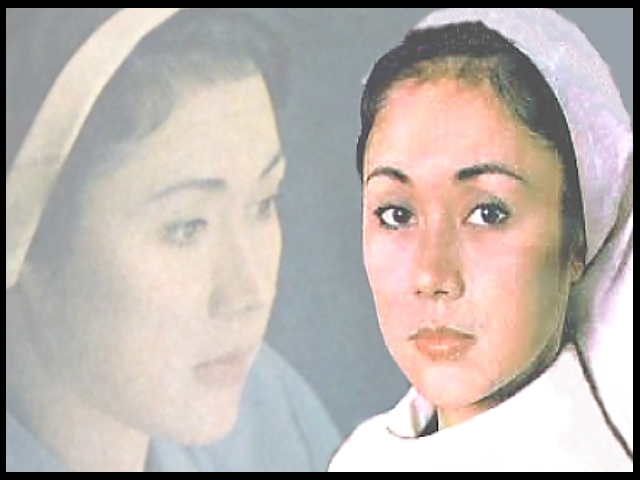
The Plot: After learning about her government’s neglect of the working poor, Sister Stella Legaspi (Vilma Santos) experiences a political awakening and gets involved in a labor walkout in director Mike De Leon’s insightful drama. But when her reporter friend Nick Fajardo (Jay Ilagan) is tortured and a union leader (Tony Santos) is abducted and executed, the activist nun must draw on all her inner strength to continue the fight. Gina Alajar also stars. – Netflix

A nun who acts as a counselor in a home for unwed mother undergoes political awakening when her friend and namesake belonging to the same congregation as hers inspires her to get involved in the struggle for justice and freedom of striking workers in a cooking oil company. – Database of Philippine Movies

Sister Stella L. is the award-winning masterpiece by Mike De Leon. It’s about a nun, Sister Stella Legaspi, who becomes involved in labor strikes after learning about the government’s neglect of the poor and the working class. Her sworn duty to fight for the poor and the oppressed turns personal when her journalist friend Nick Fajardo is tortured and the union leader Dencio is kidnapped and killed. What follows is her eye-opening and the tear-jerking battle against cruelty and injustice. The film broke censorship barriers back in 1984, during the final years of the US-backed Marcos dictatorship, for its realistic portrayal of labor struggles, and extrajudicial killings, hauntingly mirroring the reality of Philippine society today under Gloria Macapagal-Arroyo. – Filipinas for the Rights and Empowerment

The Reviews: Hindi kami nakakilos sa aming inuupuan matapos panoorin ang “Sister Stella L”. Para kaming sinampal, tinamaan ng kidlat right between the eyes. Masyado kaming naapektuhan. Gusto naming sumigaw. Talagang gagalitin ka ng pelikula. Kay raming eksena ang talagang titiim ang bagang mo. Manggigigil ka, magngingitngit ka. At pahahangain ka. Gusto mong sigawan ng bravo, yakapin at suubin ng papuri ang mga gumawa nito. Si Mike de Leon na siyang direktor. Si Lily Monteverde na naglakas loob na I-produce ito. Ang scripwriters, ang mga artista, at lahat na ng kaugnay sa pelikula. Alam mong itinataya nila ang kanilang kaligtasan sa paggawa ng ganitong uri ng pelikula. At bilang manunulat, naroon ang hangarin mo upang tulungan ang pelikulang ito na mapanood ng lalong nakararaming mga pilipino nang walang putol! Ang “Sister Stella L” ay kasaysayan ng isang madre, ng isang Pilipino, at ang pagkakamulat ng kanyang mga mata sa mga kaapihang sosyal na nagaganap sa kanyang paligid. Sa pagsisimula ng istorya as siyam na taon nang naglilingkod sa kumbento ng Caritas si Sister Stella Legaspi (Vilma Santos).

Guidance counselor siya sa mga taong may problema na tulad ni Gigi (Gina Alajar), isang unwed mother. Minsa’y dinalaw siya ni Nick Fajardo (Jay Ilagan), isang peryodistang dati niyang katipan. May sinusulat itong artikulo tungkol sa mga aktibistang pari at madre. Agad inamin ni Stella na siya’y “walang masyadong alam sa socio-political involvement ng mga madre at pari.” Siya ang ginawang ehemplo ni Nick sa artikulo nito ng mga madreng kulang sa kamulatan. Nag-react dito si Stella at sinabi sa kanya: “ Hindi ba involvement din ang trabaho ko rito sa Caritas?” Madalas ma-depress si Gigi at kay Stella ito sumasandal. Nang minsang sabihin sa kanya ni Stella na kaya niyang dalhin ang kanyang mga problema ay sinumbatan siya nito: “Madaling magsalita. Hindi naman ikaw ang nahihirapan. Paano mo alam, hindi ka naman dumaan sa hirap? Nagbuntis ka na ba? Laging masakit ang suso mo. Nahihirapan kang tumae.” At nang patuloy pa ring malamig si Stella ay sinabi nito: “Bakit hindi ka gumaya sa ‘kin? Nagagalit, nagmumura, nagpapabuntis?”

May kaibigang madre si Stella, si Sister Stella Bautista (Laurice Guillen). Involved ito sa social action work at kasalukuyang tumutulong sa Barrio Agoho, isang factory town, na kung saan ang mga manggagawa sa Republic Cooking Oil ay nagbabantang mag-aklas. Naakit si Stella L. na tingnan ang uri ng trabaho roon ni Stella B. Sa araw ng kanyang pagdalaw sa Agoho ay tiyempo namang pagsisimula ng welga roon. Tuwang-tuwa si Stella B. Sumasama raw siya sa picket line dahil “pag may mga madre at pari sa picket line, nahihiyang pumasok ang mga eskirol.” Sa paglapit niya sa picket ay naabutan si Stella L. ng placard at siya man ay napabilang na rin sa welga. Puno pa siya ng mga katanungan: “Ano ba ‘tong napasukan ko? Anong gagawin ko?” Sabi naman ni Stella B.: “Basta gawin mo lang ang gagawin ko.” Sa paglipas ng oras ay nakausap niya ang mga manggagawang nagwewelga, nakitulong siya sa pagsandok ng kanin, sa paghugas ng plato. Nakilala niya ang lider ng mga welgista na si Dencio (Tony Santos) at ang asawa nitong si Auring (Anita Linda).

Nang makita ni Nick ang mga larawang kuha sa welga at kabilang doon si Stella, nasabi nito sa kanyang editor (Liza Lorena): “Kilala ko si Stella. Madali siyang maimpluwensiyahan. Baka kung ano na ang napulot noon sa tokayo niyang radikal.” Nagsimula namang kuwestiyunin ni Stella ang trabaho niya sa Caritas. Binalaan siya ng kanyang superyorang si Juaning (Adul de Leon): “Hindi social action ang linya natin. At tandaan mo ang sabi ng Papa: huwag tayong humalo sa politika.” Sa kanyang mga alinlangan kung tama ang pasiya niyang maglingkod sa Agoho, ito ang payo ni Stella B.: “Paano mo malalaman kung hindi mo susubukan? Hindi ang mga tao ang dapat makinig sa ‘yo, ikaw ang dapat makinig sa kanila.” Dahil sa kanyang karanasan sa Agoho, nasabi ni Stella kay Gigi: “Ang kahirapang nababasa’t naririnig ko lamang ay naging buhay na sa akin. Ako pala’y nangangapa ring tulad mo.” Namulat ang mata niya sa “pang-aabuso sa mga naaapi” at na-touch siya ng “pag-aasikaso ng mga ito.” Aniya: “Sila na ang nangangailangan ay kami pa ang kanilang iniintindi.”

Duda pa rin si Nick sa involvement niya sa welga. Pasulpot-sulpot lang daw siya roon, patulong-tulong. “Kapag nagsawa ka,” anito, “uuwi ka rin sa komportableng kumbento.” Si Stella B. ay kinailangan namang magpunta sa Davao upang tumulong sa isa pa nilang kasamahan doon, lalong nangamba si Stella L. na iiwanan siya nito sa Agoho. “Baka hindi ko kaya,” aniya. Sabi naman ni Stella B. “Puro ka baka, e, kailan mo pa malalaman?” Pinatawag uli si Stella ni Juaning. Sabi nito: “Hindi payag ang kongregasyon sa trabaho mo sa Barrio Agoho.” Sa pagbabalik niya sa Caritas, nagpatiwakal naman si Gigi. Lalong naguluhan si Stella. “Parang bumaliktad ang mundo ko,” aniya. “Marami akong tinatanong. Bakit nga ba ako nag madre?” Sabi naman ni Stella B.: “Madreng lansangan ka pa rin hanggang mamatay ka.” Natuloy ang pag-alis nito, na ang akala’y pinoproblema niya na baka may pagtingin pa rin siya kay Nick. Bilin pa nito: “Kung mahal mo siya, sundin mong feeling mo. Marami namang paraan ngpaglilingkod sa Diyos.” Si Nick ay nagkaroon din ng problema sa trabaho niya. Isang artikulo niya tungkol sa karanasan ni Stella B. sa Isabela na pinamagatan niyang “A Nun’s Story: Military Atrocities” ang hindi pinalathala ng kanilang publisher. “I-rewrite mo,” sabi ng editor niya. “Bawasan mo’ng tapang.” “Ano?” balik niya. “Gawin kong love story?” “Sabi ko, i-rewrite mo, hindi babuyin,” anang editor. Pero sa bandang huli ay nag-give up na rin ito. Tanggapin na raw lamang ang kanilang mga limitasyon. “Hindi lahat ng legal ay makatarungan.” Nagbitiw si Nick sa trabaho niya sa Tribune at lumipat ng pagsusulat sa Malaya.

Nagbalik si Stella L. sa Agoho at naging mas aktibo na siya sa picket line. Nang minsang lalabas ang trak ng mga produkto mula sa pabrika ay siya pa ang nag wika: “Mga kasama, magkapit-bisig tayo.” Samantala’y nagsimula ang pangha-harass kay Dencio at sa pamilya nito. Una’y ginulpi ang anak niyang si Roger, pagkatapos ay binaril ang bahay nila. Ang huli’y kinidnap si Dencio. Nang papaalis na sina Stella at Nick upang humingi ng tulong, sila man ay kinidnap din. Nakita nila ang pagpapahirap kay Dencio. Sila man ay sinaktan din at si Stella ay binastos pa ng mga sanggano. Pinakawalan din sila. Di naglaon, ibinalik si Dencio. Patay na. Sa harap ng mga manggagawa, ipinahayag ng asawa nitong si Auring na tuloy ang welga. Nagsalita rin si Stella at sinabi niya: “Ilang beses akong pinaalalahanan na ako’y isang madre lamang. Pero una sa lahat, ako’y isang tao, ako’y isang Kristiyano.” At isinigaw niya: “Katarungan para kay Ka Dencio. Mabuhay ang uring manggagawa.” Sa last scene ng pelikula’y nagsasalita ng diretso si Stella L. sa mga manonood: “Marami pa akong hindi alam at dapat malaman tungkol sa kasalukuyang kalagayan ng ating sistema ng lipunan. Kailangan pa ‘kong patuloy na mag-aral at matuto. Pero ang mahalaga’y narito na ako ngayon, hindi na nanonood lamang. Nakikiisa sa pagdurusa ng mga di makaimik, tumutulong sa abot ng aking makakaya. Kung hindi tayo ang kikilos, sino ang kikilos? Kung hindi ngayon, kailan pa?”

More than anything else, ipinakita ni Mike de Leon bilang isang socially committed at responsible na director ang iba pang posibilidad ng pelikula bilang art at bilang medium of communication. ‘Yung mga laging pumipintas sa pelikulang lokal at nagsasabing walang kuwenta’t saysay ang mga ito, panoorin ninyo and “Sister Stella L” for it is Filipino moviemaking at its best: aware, concerned, and with a universally relevant message. It also shows that an artistic film can be entertaining and as a matter of fact, is necessarily intellectually entertaining (but an entertaining film is not necessarily an artistic one). The movie succeeds in delivering its message because all the elements that went into its completion are excellently executed. It is that rare kind of movie which has no false moves. The screenplay is brilliantly developed and constructed by Pete Lacaba, Jose Almojuela (who is also the assistant director), and Mike de Leon himself. The cinematography of Rody Lacap deserves nothing but superlatives and the musical score by Ding Achacoso is served in a silver platter (napakagaganda ng mga awiting “Sangandaan” at “Aling Pag-ibig Pa” na nilikha niya para sa pelikula). The editing by Jess Navarro and the production design by Cesar Hernando also deserve the highest commendation. We cannot help but gush dahil lahat ng aspeto ng produksiyong ito ay maganda.

The movie is sure to elicit all sorts of reactions from various quarters. The bigoted and the narrow-minded will no doubt readily brand it as the work of communists and subversives. The involved will merely find it interesting. But the enlightened will declare it as a socially committed work of art. No doubt that some concerned quarters will be offended. Some of the speeches are so frank and fearless. Dencio says in a May 1st rally: “Ang mga manggagawa ang lumilikha ng yaman ng bansa. Panahon na para ipakita ang lakas ng ating pagkakaisa, na makamtan ng bayan ang tunay na kalayaan. Ang manggagawa ang nagpapaandar ng makina, nagpapalago ng puhunan.” Pero ano ang nangyayari? Tayo ang namamatay sa gutom, ang naghihikahos. Hindi magbabago ang ating lipunan kung uupo lang tayo sa isang sulok at maghihimutok. kundi tayo ngayon kikilos, kailan pa?” Nang mamatay siya, sabi naman ng asawa niyang si Auring: “Noon, ang paniwala ko talaga, gano’n ang buhay, may nasa itaas, may nasa ibaba. May nag-uutos at may nagsisilbi. Pero kung tatahimik ka na lang lagi, ang konting meron ka, aagawin pa sa ‘yo. Patay na nga si Dencio pero tuloy ang welga.” Sabi naman ng anak niyang si Roger: “Kung kikilos tayo, dapat ngayon na. Ngayon pa lang, pinapatay na kami. Kaya mas mabuti pang mamatay ng lumalaban kaysa habang buhay kang nagtitiis.”

To make a film like this comes under the heading “they said it couldn’t be done.” Mike de Leon does it, splendidly. In these days when local film faces such problems as exorbitant production cost, commercialism, lack of an intelligent and responsive audience, and censorship, it is heartening to note that movies like this are still being made. Matthew Arnold said that art and society shape each other so artists should deal with serious subjects of moral and social value. This is exactly what Stella L. accomplished, for it allows the viewer to meditate on life and help him gain some insights. Surely no film is an island entire of itself because each movie is made by several men, but the distinguishable personality of an exceptional director is almost always imprinted on his film. We have never really liked the works of Mike de Leon that much and his movies (like “Itim”, “Kung Mangarap Ka’t Magising”, and “Kisapmata”) seemed nothing more to us as exercises in self-indulgence. Starting with “Kakaba-kaba Ka Ba?” though, he demonstrated a newfound cause in making movies, which is further reinforced by “Batch ‘81”. Now, Stella L., offers the pleasure of watching a director as he is hitting full stride, his craft and competence marching in step with history. His deft hand is quickly evident in the cinematography. There is no imposed prettiness in the photography, no straining for arty effects, but the texture is rich and palpable to validate reality, with the effective use of color-acting on the viewer to reinforce the temper and tenor of the story.

De Leon handles his intimate and delicate material powerfully, persuasively and penetratingly. He not only executes the technical aspects marvelously but also knows how to work with his actors, both inpidually and in the here all-important ensembles. The crowd scenes are a delight, with some sequences presented with the veristic quality of a documentary, and each scene is played for maximum impact, immaculately crafted and made with care and conscience, with dedication and devotion. If we now sound so much like an avid de Leon fan, it is because Stella L. is the kind of work that makes a reviewer long for new adjectives of praise. One knows very well that de Leon works for reasons other than money. This makes the strength, sensitivity and symetry of his direction deserve the highest praise and the sweet of music of thunderous applause for it is just better than perfect. Local cinema gives us very few occasions to rejoice and this is one of them. In the large and uniformly excellent supporting cast, Laurice Guillen stands out as Sister Stella B. She is one film director and actress who is really ablaze with talent. As the instrument to Stella L.’s involvement in a much more worthy cause, she imbuesher role with just the right mixture of intensity and charm. Equally memorable are Tony Santos as the beleaguered labor leader, Anita Linda as his courageous wife, and Liza Lorena as the sympathetic magazine editor who is willing to compromise. Gina Alajar is very effective in a very short role as the unwed mother. In the male lead role, Jay Ilagan proves once more that he is indeed one of our most competent young actors available.

And now, Vilma Santos. Playing the title role, Vilma tries a part that is totally different from her past roles and proves that she has indeed become a highly skilled professional. Her role is somewhat reminiscent of Audrey Hepburn’s in Fred Zinnermann’s “The Nun’s Story”, where a young nun discovers in a hospital at the Congo that she is first a nurse and only second a religious. But Stella’s awakening is much more vital and revolutionary than that of Sister Luke in the Hepburn movie. Vilma’s transformation from an innocent bystander to that of an active participant who is audacious enough to be in the thick of battle is truly quite awesome to behold. We could almost see and feel the internal changes in her. In a sense, the role is somewhat tailor made for her because her beauty is appropriate to the part of Stella L., but she also succeeds in transcending her established personality, delivering her lines and gestures with vigorous conviction and playing it to perfection that one can safely predict that she will again be running in the best actress derby come next year. And so, to Vi, Mike and Mother Lily, our heartfelt gratitude for giving us a film that has the power to cause insomnia. – Mario E. Bautista

Must the ability to entertain the audience be the constant guiding criteria in the film and in the performing arts? While certainly, one does not minimize the importance of the entertainment function of the arts, the film Sister Stella L shows that it is not much the ability to entertain that is crucial as the ability to stir and maintain interest. For, as in this film, one cannot really say that the audience is entertained, regaled with spectacular sights, provided a pleasant persion or titillated by teasing or amusing scenes, but the audience is invited, through the skills of the performers and director, to engage in immediate issues which concern us today. This film thus poses a challenge to our usual notions and expectations of Philippine cinema, as it is not a romantic or domestic drama, a comedy or an action film. The fact that such a film as this appears at this point implies a belief in the development and maturity of the local audience who can, at least from the responses of previewers so far, be receptive to harder stuff.

Sister Stella L deals with the contemporary social issues through the experience of various characters, among them Sister Stella L (Vilma Santos) and Nick, her former boyfriend now a journalist (Jay Ilagan), Sister Stella B (Laurice Guillen), the union leader Ka Dencio (Tony Santos) and his wife (Anita Linda). Again, the film differs from most productions nowadays in its immersion in contemporary social reality. The characters, too, possess a strong active aspect of people engaged in a meaningful cause, the people’s struggle for social justice. The nun that Sister Stella B portrays typifies in her strength and honesty the person who has gone beyond purely personal and selfish concerns to embrace the larger role of service to the people. No doubt, it is a refreshing and exhilarating experience to see characters who realize themselves fully as human beings by transcending petty selfish interest and giving of themselves to people in need of support and protection. Because of this, the spirit of the film is highly optimistic and reassuring because it makes us strongly aware of the forces in our midst working for change and of the fact that history is moving forward with these forces assuming the active role.

The central issue of the film has to do with the involvement of religious like Sister Stella L and her senior, Sister Stella B, in socio-political affairs. We know, for instance, that one point of view will have priests and religious secluded behind convent walls where their activity is restricted to praying. They are to have nothing to do with life around them as social and political concerns are thought to corrupt their purity and bring in wordly moral dangers and temptations. Or that priests and religious should remain apolitical, not taking sides in socio-political issues, but as men of God, considering all men as brothers who will, in the end, become docile and receptive to preachings of love and unity. The other point of view believes that it is not as simplistic as all that. In fact, it believes that the adoption of a neutral attitude can only serve to dull one’s moral sensibilities and because one shirks from making moral choices, one also renouces one’s responsibility as a human being. In truth, it is of utmost importance, perhaps particularly so for religious, to have a fine and acute sense of moral discernment as applied to social relations, in which the idea of truth and justice operate. The religious who makes grand sermons on love and unity may not himself understand the meaning of truth and justice, because love and unity do not exist in the abstract but are social ideals possible of attainment – only and only when exploitative relationships are destroyed. Otherwise, one contents oneself with hypocrisies.

What for instance, would be the love of the rich factory owner intent on profits for the worker, and vise versa. Workers’ wages are only to keep workers alive and in a measure of health for him to have enough strength to operate the machines of work in the fields. Is it enough for factory owner and worker to meet in church and perhaps occupy the same pew – or will religious feel sufficiently edified at the sight? But priests and nuns are citizens of this country as much as any of us and are thus part of the body politic in which they have the right to take active part. Likewise, they are as human as anyone else, and as human beings, they have the drive toward concreteness and totality realized only in social interaction. The Church, too, cannot afford to take a position of alienation and withdrawal, because by doing so it will only continually lose its influence in a time of urgent and pressing realities; otherwise, it will only end up as an outmoded medieval institution. The Church is continually called upon to make moral decisions, and it is through these that the people will know whether it truly supports their cause or whether it only acts as a liaison for exploitative interests.

In the film, for instance, there is a conflict between Sister Stella L and her superior who wants her to stay in the convent to act as guidance counsellor and not to engage in labor activities in Barrio Agoho where a strike in an oil factory is taking place. For a while, she obeys her superior to be spiritual adviser to an unwed mother, portrayed by Gina Alajar, who, however, throws her back the question of what does she know at all, as a nun, of human suffering. The task of counselling this inpidual soul lost in her private hell is fruitless and Gina eventually commits suicide, which serves to show the nun the narrow limitation of such a task. Sister Stella L henceforth knows that she must make the choice of the larger and more challenging field of the workers in struggle. It is also important to note that Sister Stella B tells her fellow nun that although her immediate superior may not approve of her social participation, it is possible that higher superiors will – thus showing that such is still possible within the fold of the congregation. Also, at one time, there arises the question of whether Sister Stella L will stick it out as a religious or continue her activities outside the convent. Upon consultation with her friend, Sister Stella B, she decides to carry on the struggle as a nun, and by so doing, show the importance of such a function for her fellow religious, as well as its validity as a position within the religious orders.

The central event in the film is the strike of workers in an oil factory in Barrio Agoho where nuns show their support for the workers by participating in the picket, thereby lending valuable protection. The factory owner (Ruben Rustia) sends goons to harass the picket line, and makes use of the military, which readily lends itself to protect the minority interests of wealthy property owners against the majority interests of the workers. When the strike continues despite inclement weather and hunger, the factory owner resorts to kidnapping the union leader, Sister Stella L, and her journalist friend. All are maltreated and tortured, but the old union leader is finally “salvaged” and thrown into a dump. In the confrontation between the factory owner and Sister Stella L, the former shows himself to be hostile to the workers and to the participation of the nuns: “Kung pati ang mga madre ay nagpapagamit sa mga Komunista, mabuti pang magbago na lang ako ng relihiyon.” To which the nun answers: “Mabuti na ngang magbago kayo ng relihiyon upang hindi parehong Diyos ang sambahin natin.” The murder of the union leader, Ka Dencio, only lends more fuel to the workers’ resolve to continue the strike, which is now led by his wife, with the militant participation of Sister Stella L. The latter’s exhortation to the workers – and by extension to the audience – to engage in the struggle ends the film.

A secondary theme is the issue of press freedom, which is explored, in the first-hand experience of Nick, the young journalist. He writes a series on the politicization of the religious and their active participation in mass actions. In the beginning, his motivations are somewhat confused – and this his editor points out clearly to him – because he may be using this as an excuse to follow and communicate with Sister Stella L, who used to be his girlfriend. The journalist, however, understands the futility of the religious confining themselves within convent walls and poses the challenge for involvement. Sister Stella L takes up the challenge – in fact, the journalist’s articles contribute to her politicization. When she gets more and more involved, he becomes protective and anxious for her safety. His articles on the subject barely squeeze through censorship and he experiences increasing difficulty in getting published. Sister Stella L and he are kidnapped by goons and they are physically assaulted even as they witness the torture of the union leader. Instead of intimidating them, the experience completes their politicization and in the end Sister Stella, militant and committed, finds her true social role.

Because this movie deals with issues, it has more than the usual amount of dialogue compared with other films. This, however, does not work against it. Since what is talked about is drawn from the very stuff of social reality and thus concerns a large number, it is able to sustain interest. Too much dialogue would be a defect if it dwelt on banalities or inanities or if it narrated incidents rather than portrayed them. In this case, dialogue is necessary for the exploration of issues, as well as for the portrayal of how the characters reckon with ideas and develop in their social consciousness. The audience is not bored provided the things talked about in the film have a bearing on their lives. Filipinos, after all, are a talky lot (think of the large amounts of time spent in coffee shops over coffee or beer). Moreover, these are talky times, because the larger public is rapidly developing critical awareness, and there is now a greater need for interaction and exchange in the interest of survival. There are references in the film which may, at first, seem extraneous, such as Sister Stella B’s mission to Davao where she joins a fact-finding group.

However, such references serve to extend the “area of responsibility,” if we may borrow the expression, from Manila to the far-flung provinces. Thus, the unity of the film is not only in the events that engage the characters in Manila but also in a larger over-all spirit of solidarity in which vibrations of sympathy throughout the islands give strength and comfort to those of a common cause. For a heart-warming film, the entire cast deserves congratulations, particularly Vilma Santos who reveals another aspect of her multi-faceted talent. From her usual soft and sweet romantic roles, she can be transformed into a strong and militant woman without losing any of her charm and beauty. Jay Ilagan, Tony Santos, Anita Linda and Liza Lorena are also in their best form. Mike de Leon as director, Jose F. Lacaba as scriptwriter are likewise to be congratulated for making a truly human film and for contributing to the cause of workers for justice and of the religious for the recognition of their social role. Not to be overlooked is the producer Lily Monteverde of Regal Films who has this time shifted from puerile erotic dramas to make a courageous film for which she will always be well remembered. – Alice G. Guillermo, Who Magazine, 30 May 1984

There would have been two important Filipino films in this year’s prestigious Cannes Film Festival: Sister Stella L., directed by Mike de Leon and Kapit sa Patalim, directed by Lino Brocka. Both smuggled out to France and both vitally political in thrust, the two films were reportedly disowned by the Philippine embassy in France. Supposedly under instructions from the Philippine goverment, the embassy sent the following disclaimer to the festival directorate: “There are no Filipino films in the Cannes Film Festival.” The two films nevertheless made it to the festival site, though only one was screened as scheduled. Brocka’s film was in the category “In Competition,” and was tested against the works of such eminent directors as Werner Herzog, Wim Wenders, and Satyajit Ray. Early on, Kapit sa Patalim (which acquired a second title, Bayan Ko, in deference to another film project which had been approved before Brocka’s project) was rumored to be a strong contender for the Best Film award. Critic Bertrand Tavernier was quoted as saying, “It’s a toss-up between Wim Wenders’ Paris Texas and Brockas’s Bayan Ko.” De Leon’s film was to have had special screenings, on the unanimous request of the Cannes’ board of critics. Sister Stella L., however, suffered from the rush of subtitling work that descended upon Cannes’ select group of translators and De Leon opted not to show the film without subtitles. He nevertheless had the distinct honor of holding a retrospective under the sponsorship of the French Cinematheque right after the festival. The film eventually competed at the Venice Film Festival. Under its original title Sangandaan (Crossroads), Sister Stella L. was invited to the Venice Film Festival in 1984, the second Filipino film (after Genghis Khan in 1951) to be honored with such recognition. – Agustin L. Sotto and Pet Cleto, Philippine Panorama – 02 December 1984

Related Reading:
The Continuing Struggle of Sister Stella L.
Mike de Leon’s ‘Sister Stella L.’ 25 Anniversary special screening
Mike De Leon: Director of the Moment (Movie Flash, July 19, 1984)
Behind the scene photos of Philippine cinema’s greatest films
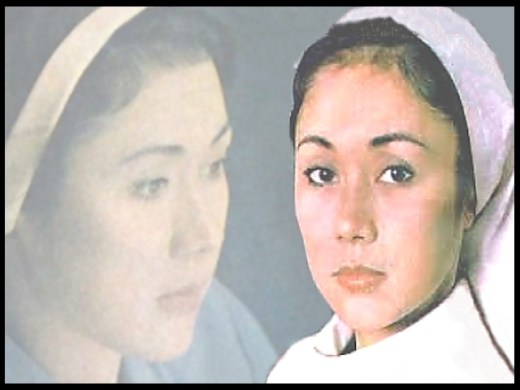

“Kung walang kikilos sino ang kikilos, Kung hindi ngayon Kailan pa…Katarungan para kay Ka Dencio!” – Sister Stella Legaspi


Burlesk Queen Article (Repost)

Source: Manila, Dec 1-31, 1977 – James DR’s Pelikula Atbp

RELATED READING:
Burlesk Queen WINNER of 10 MMFF Awards
1977 Metro Manila Film Festival
Video 48: Vilma Santos As “Burlesk Queen” (1977)
Vilma Santos’ Top 10 Film Directors (part five)
IMDB: Burlesk Queen (1977)
IMDB: Celso Ad. Castillo
IMDB: Rolly Quizon
IMDB: Rosemarie Gil
IMDB: Leopoldo Salcedo (1912–1998)
Pelikula Atbp: Burlesk Queen (1977)
The Kid, uninterrupted
‘Burlesk Queen’ Onto The Height of Pathos
Vilma Santos as Burlesk Queen (1977)
Amanda Page performs a burlesque inspired number for the MMFF Gabi ng Parangal (Video)
The Classic Vilma Santos Movies