Vilma Santos-Recto is a popular multi-awarded actress and politician in the Republic of the Philippines. *** She is known as "Queen of Philippine Movies," "Queenstar," "Grand Slam Queen," "Box Office Queen," and "Star for All Seasons." *** This website is mostly about her iconic film career.
“I did not politicize my position. Even the barangay captains who did not support my candidacy were not deprived of the services their constituencies needed. I will give them what they need because it is the people who will benefit.”
The people of Batangas knew exactly who they wanted for governor – and they made this perfectly clear when they gave VILMA SANTOS-RECTO a landslide victory at the polls last May, giving her 130,000 margin over her closest rival, then incumbent governor Arman Sanchez. Nothing really phenomenal about that in this day and age, women leaders are no longer an “aberration” or “anomaly.”
But unlike other women whose educational credentials could make to her men squirm in embarrassment and insecurity, the new Batangas governor has no college degree to speak of. And what makes her victory even more special is the fact that Santos-Recto, a female, won in a province known as “barako country” – where men are expected to dominate. Two, she is an actress. And like it or not, other showbiz denizens who have thrown their hat into the political arena did not exactly give stellar performances as public servants. In fact, majority of showbiz celebrities who ran for office last May were clobbered at the polls, with some people even snickering at the news of these actors’ defeat.
But not VILMA SANTOS-RECTO. – But then again, Santos-Recto, or “Gov. Vi” to her constituents, did not exactly get the position of governor empty handed. On the contrary, she had already set a record of sorts when she became the first female mayor of Lipa City in 1998. “I must admit that initially, my being an actress was a plus factor, and it was a definite edge when I first ran for mayor of Lipa,” she admits. “But during my first term, some people also underestimated me especially since I was not from Lipa (she is from Pampanga and Nueva Ecija), I was from show business and I was a small woman. Of course it’s different if you have the height”, she laughs, recalling those days when the men would merely give a slight nod of acknowlegement, at times grudgingly, in response to her greetings.
But the multi-awarded actress soon proved that she was not just acting out a role as local chief executive; rather, she meant business, and she was in it for real. During her watch, the economy of Lipa City boomed, with infrastructure improvements that put the city on the radar of the big time developers and investors that steadily increased government revenues year after year. “I eventually earned their respect because they discovered that lalaki akong kausap (I am also a man to talk to) and second, I am straight. If there’s an immediate solution at hand, then let’s not wait for tomorrow or next week to do it. People are tired of waiting and of lip service, so let’s get them what they need if we already can. But if there’s nothing I can do about something at this time, then I tell the people so they will not also keep on hoping,” she discloses.
“If there’s one thing that people appreciated from my administration, it’s the fact that I did not politicize my position. Even the barangay captains who did not support my candidacy were not deprived of the services their constituencies needed. Whether these leaders were political allies or not does not matter – I will give them what they need because it is the people who will benefit.
“Perhaps it’s because I am a woman and a mother. A mother’s heart is different; a woman’s pulse is different,” she adds. Which is probably the reason why one of her priorities is to uplift the quality of education in her province. She recalls a time when, during her tenure as mayor, she was “frustrated when grade school students took this exam and 70 percent did not pass. You know what I did? I give a big allocation to have the day-care centers upgraded to Montessori level. We cooperated with the school of Mrs. (Precious) Soliven of OB Montessori and had the day-care teachers trained by them. Even the educational materials, we upgraded.
“I know how important education is because I am also a mother. I have an 11-year old son (Ryan Christian) and he is number two in class (at De La Salle Zobel in Alabang) so I know if you don’t start early by giving children the right foundation during their formative years, they will have a difficult time coping and competing later.”
“I get my adrenaline, my energy, my inspiration from my family.” Livelihood and other income-generating opportunities are also at the top of her agenda, putting up cooperatives and micro-financing institutions that would give loans at minimal interest to get people started with small business enterprises. “We started with very small amounts like P50,000 to these cooperatives, and before my (third) term as mayor ended, we were giving as much as P500,000. You know why? Because the people paid their loans religiously. I told them that if they did not, then they would be depriving the next person of the opportunity to get a loan as well. Pag ibinitin ninyo ang bayad, ibinibitin niyo rin ang iba. Which is not good.”
She is a “hands-on” type of executive, she admits, and some people even call her makulit (pushy). “That’s because I take note of everything they tell me. I write these down during meetings. If they tell me they can finish a project in two weeks, then I expect them to deliver within that time. I follow up on their commitments because I also base my commitments on what they tell me.”
Before she decided to throw her hat into the political arena, it was her husband former Sen. Ralph Recto who gave it to her straight: Her showbiz career would be affected one way or another, there would be danger not only from political rivals but from drug pushers and all sorts of people who will resent efforts to rid Lipa (and now Batangas) of criminality. In fact, during her first term as mayor, Vilma almost gave up, unnerved by the threats she got. But Ralph reminded her: I told you this was all a part of being a public servant.”
The neophyte politician could not understand why she would become a target. “I was not doing anything wrong, I was just serving the people. I wasn’t part of the syndicate. So Ralph made me go on a two-week leave and I prayed and prayed. Of course I was afraid, I have children, I am a mother and I felt that it was not even worth it to sacrifice my family. But then I also realized that the people who voted for me – I also won by landslide – gave me their trust. They believed in me and were counting on me, so it would not be right to disappoint them, so I went back to work albeit with enhanced security, ” says the governor, who admits that yes, she knows how to use a gun and in fact practices at the shooting range in her Lipa home.
Asked if she misses making movies, the 53-year-old actress gives a big smile. ” I miss acting, I miss my showbiz career. In fact, I already have an offer, but I will have to ask the people of Batangas first like what I used to do in Lipa. Lipeños used to asked me ‘Mayor, why aren’t you making any more movies? We miss seeing you act!” And I would tell them, “You want me to make movies and then you will hit me with rumors that i wasn’t going to work?’ But then during flag ceremonies I would asked them, “Please allow me to make a movie, that’s my racket. I earn a lot there. if you don’t, then I’d steal from you’!” she says in jest.
“Definitely it’s not easy,” she says, admitting that she was rather alarmed that “Luis (Manzano, her son by Optical Media Board chairman Edu Manzano) now pays more taxes than me. I told myself, this is not a good sign anymore, I have no more income! I had so many offers in the past that I could not accept because my priority was my work as mayor since it was already my last term and I wanted to do everything to get a passing grade, so I made sure that all my projects were finished by the time my term ended.”
For someone who started working at the age of nine and has been a virtual public property since her teenage years, the life of VILMA SANTOS-RECTO is an open book. She is a “survivor for all seasons,” as STAR entertainment editor Ricky Lo called her. She was at the height of her career in the ’80s when she found herself bankrupt and facing a possible lawsuit from the Bureau of Internal Revenue, her properties mortgaged. “I was so trusting. I would just sign checks and anything they put before me. So there I was, pregnant with Lucky and I owed Php 9 million without knowing why!” Edu, who was then a budding actor, was very supportive and wanted to get out of her predicament. It took her four years to pay off her obligations (“When I saw the last billing statement of P50,000, you could not imagine the joy and relief I felt!”) – but it cost her marriage to Edu Manzano. But the sad experience taught the actress to be smart with her finances. “Ngayon wala akong utang (I don’t have any debts to this day),” she proudly declares. And it naturally helped that she had her beloved Ralph by her side. While it pains her that her husband lost in his re-election bid as senator, she takes it as a blessing in disguise. “Perhaps the purpose was for him to help me, since this is already the whole Batangas we are talking about. Hindi na biro ito (This is no joke). They say politics and showbiz are the same, but no way, malayo. Show business is more manageable even with all the intrigues. Politics is more tough. If you are not strong, you would buckle under the pressure. The attacks here are more personal, and the system is really different,” she reflects.
Despite the frustrations that go with the job – the governor says she derives her strength from her family. “I get my adrenaline, my energy, my inspiration from my family because I know they are proud of me. They support me and they believe in me, that’s why I always strive to do my best. I know nothing is perfect, but if we can make it almost perfect, then why not?” – written by BING PAREL-SALUD
EDITOR’S NOTE: VI IS FOR VICTORY – “Style is knowing who you are, what you want to say and not giving a damn” – Gore Vidal
She rushed eagerly down the steps of her ranch-style house to greet us at the driveway, like we were long-lost classmates and not intruders into her busy schedule. She was in blue jeans, a white pullover and sunglasses, one of her two material passions (the other being cologne). The “Star for all Seasons” is still in her spring.
It took a lot of convincing to pry newly-elected Gov. VILMA SANTOS-RECTO from her desk at the kapitolyo to our waiting flashbulbs and tape recorders. But oblige us she did in what is probably her first and last glossy magazine cover for the year, Vilma is a winner because she sought out to be someone greater than what she was originally – and succeeded. A child star and teenybooper with a voice that could not rival her archrival’s (Nora Aunor’s), she focused instead on being a dramatic star – and succeeded.Once drawning in debt she clutched at a lifeline of hard work and fiscal discipline to keep her afloat and swimming merrily back to the bank – and succeeded. Having reached her peak as an actress, with virtually every trophy on her shelf except that of best actor, Vilma sought out to be a public servant. What? Vi at City Hall? It was an effort that met some public ridicule – how could an actor, much more an actor without a college degree and administrative experience, run a city?
Vilma says she succeeded because she had an ace up her sleeve, her husband Ralph, a politician from an illustrous clan who not only gave her a pedigreed surname but also the desire to learn more. Encouraged by her mentor Ralph, who is younger than she is, Vilma enrolled in local government management courses at the UP. The tutorials extended to home, during which Ralph would tell her, “No matter how good your intentions, if you are not careful, you will end up with a case at the Ombudsman.”
She also succeeded because she had the passion. “You must have the passion for what you are doing. You must not only be working for the money,” she believes, although there was a time when, mired in debt, she worked hard only for the money. She gets satisfaction from “Seeing the difference I have made in the lives of others.”
“Our people are tired of promises,” she says, twirling some pancit langlang (a Lipa delicacy from her sister Emilyn’s Golden Coco restaurant) around her fork. “If I can get a request moving in a day, like an artesian well, I don’t wait for the end of the week to get it started.” Inspired by his friend Vilma’s passion – even for a shoot she gives her best – and a couple of cups of kapeng Barako (Batangas coffee), a phtographer Raymund Isaac brings out the sunshiny glow in Vilma’s eyes even on a rainy day. We knew immediately that the shoot was a winner. Signed JOAN RAE RAMIREZ.
Source: PEOPLE ASIA SEPTEMBER 2007 issue (Text transcribed and posted by Alfonso Valencia to the five Vilma Santos Yahoo Egroups.)
Christmas special at discography ang tema ng V Magazine No. 13. Yaman din lamang at discography ang isa sa mga tema kaya eto ang aking munting contribution para sa ALAM NYO BA? Pamagatan natin itong SING VILMA SING.
Aminado naman si Vi na hindi siya isang singer na katulad ng mga kasabayan niyang mga young stars noon na sina Nora Aunor, Tirso Cruz III, Edgar Mortiz, Perla Adea, Esperanza Fabon, Eddie Peregrina, Victor Wood, Eva Vivar, Rene Ordoñez, Darius Razon, Rhodora Silva, Geraldine, Neddie Decena, Sonny Cortez at marami pang iba subali’t hindi lang boses nuon ang binabayaran.
Noong Dekada ’70, ang mga young stars ay kailangang marunong kumanta dahil yun ang uso kaya naman nagtayo ng sariling recording company ang nasirang manager ni Vi na si William Leary dahil ayaw niyang pahuhuli sa uso ang kanyang alaga. Ilan sa mga naging recording artists ng WILEARS RECORDS bukod kay Vi ay sina Edgar Mortiz, Ed Finlan, Sahlee Quizon, Hilda Koronel at Esperanza Fabon. According to Vi, kapag nagrerecord siya ng kanta ay nakatalikod siya sa dingding ng recording company at si Bobot ang umaalalay sa kanya. Ang SIXTEEN, na sinulat ni Danny Subido ang unang recording na ginawa ni Vi at ito ay flipsided by It’s So Wonderful To Be In Love. Ang SIXTEEN ay agad naging gold record at dahil dito ay gumawa ng pelikula ang Tagalog Ilang Ilang Productions, ang home studio ni Vi at ito ay ginawa nilang pamagat katambal si Edgar Mortiz. Hindi nyo naitatanong, muntik nang manalo si Vi bilang most promising singer sa AWIT AWARDS noong early ’70s.
Dahil sa naging matagumpay ang awiting SIXTEEN kung kaya’t si Vi ay iginawa ng isang long playing album. SIXTEEN din ang title ng unang long playing album ni Vi na tinatampukan ng mga awiting (bukod sa Sixteen at It’s So Wonderful To Be In Love) Dry Your Eyes, Bring Back Your Love, Raindrops Keep Falling On My Head, When The Clock Strikes One, So With Me, Sometimes, Baby Baby Baby, Sealed With A Kiss, Then Along Came You Edgar at Love Love. Ang Raindrops Keep Falling On My Head ang ginamit na awitin sa kanyang commercial na GLAD raincoat. Ang awiting Then Along Came You Edgar naman ay tinapatan ni Edgar ng awiting VILMA.
Samantala, nasundan ng isa pang long playing album ang SIXTEEN ni Vi at ito ay pinamagatang SWEET, SWEET VILMA. Ito naman ay naglalaman ng mga awiting katulad ng Don’t You Break My Heart, May The Good Lord Bless & Keep You, Mama, Our Day Will Come, Oh Lonesome Me, I’m The One For You, Sad Movies, Among My Souvenir, My Promise To You, Mama Don’t Cry At My Wedding, Drop A Line at A Wonderful Day. Natatandaan ko pa na sa morning program, from 6am to 7am, ni Eddie ‘Lat’ Ilagan sa D’WOW radio ay palaging kasama sa Top Ten Song Of The Day ang mga awiting Sad Movies at Oh Lonesome Me.
Dahil sa tambalang subok na matibay at subok na matatag nina Vilma at Edgar kung kaya’t nagkaroon din sila ng long playing album na may pamagat na SWEETHEARTS (pamagat din ito ng kanilang pelikula sa Tagalog Ilang Ilang Productions) na ini-release noong April 22, 1970. Ito naman ay naglalaman ng mga awiting I Love You Honey, I Believe, Green Green Grass of Home, Always With You, My Rosary, From The Bottom Of My Heart, You Don’t Love Me Anymore, How I Wish I Were A Model, Do Re Mi Fa Sol I Love You, Better Than All, Your Kisses Are Losing Their Sweetness at My First Kiss. Ang I LOVE YOU HONEY at FROM THE BOTTOM OF MY HEART ay isinapelikula din ng Tagalog Ilang Ilang Productions na pinagtambalan din nina Vi at Bot.
Ang pangalawang long playing album nina Vilma at Edgar na ini-release noong January 21, 1971 ay pinamagatang THE SENSATION na hinango sa kanilang top rated tv show sa ABS CBN na later on ay isinapelikula din ng Tagalog Ilang Ilang Productions. Ito naman ay naglalaman ng mga awiting Good Morning Starshine, Spinning Wheel, To Love Again, A Love Unspoken, Anywhere I Wonder, I Wonder Why, Have A Goodtime, Yeahoo, I Have Dream, My Boy Lollipop, Dream at Always. Sa radio program ni Tony Santos, Jr. at ng nasirang Vic Pacia ay pulos duet nina Vi at Bot ang pinatutugtog. Si German Moreno ay meron ding Vi at Bot Portion sa kanyang radio program sa DZTR. Ang Have A Goodtime naman ay pinapatugtog sa Wowowee sa kanilang portion sa Pera o Bayong everytime na nabobokya ang mga kalahok sa game na ito.
Hindi lang long playing album ang ginawa nina Vi at Bot, dahil nagkaroon din sila ng mga mini long playing albums entitled CHRISTMAS TIDINGS AT SOMETHING STUPID. Ang CHRISTMAS TIDINGS ay naglalaman ng mga awiting Silver Bells, I Saw Mommy Kissing Santa Claus, Santa Claus Is Coming To Town at Mary’s Boy Child at ang SOMETHING STUPID naman ay ang mga awiting Something Stupid, I Wonder Why, I Have Dream at Goodnight My Love. Ang SOMETHING STUPID ang naging theme song ng Vi & Bot loveteam. Ang titulo ng isa pang mini long playing album ni Vi ay hango sa kanyang pelikulang tinampukan din nina Bobot at Ed Finlan na BABY VI na nagtatampok ng mga awiting Baby Cakes, Sad Movies, Bobby Bobby Bobby at Seven Lonely Days.
Ang pangatlong long playing album nina Vi at Bot ay ang ALL I SEE IS YOU na ini-release noong August 30, 1971 (kaarawan ni Edgar Mortiz) na binubuo ng medley of songs na Atin Cu Pung Singsing at Leron Leron Sinta, Baby Cakes, Little Brown Gal, Grown Up Like Me, Nine Little Teardrops, Jealous Heart, The Wonderful World Of Music, El Condor Pasa, Hawaiian Wedding Song, I Understand, My Special Angel at Just Say You’ll Be Mine. Ang awiting Butsiki ni Yoyoy Villame ay hinango sa awiting Baby Cakes. Ang THE WONDERFUL WORLD OF MUSIC ay ginawang titulo ng pelikula nina Vi at Bot na inilahok sa 1971 Manila Film Festival kung saan ito ang nakakuha ng Best Musical Film. Kasama nina Vi at Bot sa pelikulang ito ang noo’y batang bata pang si Snooky (Serna).
Ang pang-apat na long playing album nina Vi at Bot ay pinamagatang ALOHA MY LOVE na ini-release noong February 1972 at naglalaman ng mga awiting Hawaiian Medley, Beyond The Reef, All Alone Am I, Why Don’t You Believe Me, Eternally, My World Is My World, Aloha Oe, Seven Lonely Days, Mandolins In The Moonlight, Daddy, Seventeen at Two People In Love. Ang ALOHA MY LOVE ay titulo din ng pelikulang ginawa nina Vi at Bot sa Hawaii. Ang ETERNALLY ay isinapelikula din ng Tagalog Ilang Ilang Productions na tinampukan pa rin nina Vi at Bot.
Napakasuwerte ni Vi dahil nagkaroon ulit siya ng pangatlong solo long playing album na may pamagat na SING VILMA SING. Ito ay binubuo ng mga awiting Da Doo Run Run, Abadaba Honeymoon, Tweedle Dee, Bo Weebel, A Kookie Little Paradise, Bobby Bobby Bobby, A Rick-Tick Song, It’s Been A Long Long Time, Breaking Up Is Hard To Do, You Made Me Love You, The Birds & The Bees at He’s So Near (Yet So Far Away). Ang A Rick-Tick Song ang ginawang theme song ng radio program ni Ric Radam sa DZRH noong early ’70s. Pag pinapatugtog naman ni Ike Lozada sa kanyang radio program na Dambuhalang DJ sa D’WOW radio ang awiting Bobby Bobby Bobby, sinasabi niyang ang title nito ay Bobot Bobot Bobot. Precious pa nga ang tawag ni Ike kay Vi.
Nagkaroon din si Vilma ng mga Tagalog singles na awitin katulad ng Palung Palo Ako flipsided by Walang Umiibig, Isipin Mong Basta’t Mahal Kita flipsided by Mamang Kutsero at Tok Tok Palatok flipsided by Batya’t Palupalo. Ginawa ni Vilma at ng Chess Grandmaster champion na si Eugene Torre kasama si Coney Reyes ang isang pelikulang hango sa awitin ni Vi na ISIPIN MONG BASTA’T MAHAL KITA. Ang awiting TOK TOK PALATOK ay ginawa ring pelikula ng Baby K. Jimenez Productions starring Vilma at Jojit Paredes. Ang PALUNG-PALO AKO ang pangalawang gold record ni Vilma at noong early ’70s sa TOP 20 SONGS OF THE WEEK sa DZRM, ito ay ilang linggo ring namayagpag at nangunguna sa airlanes. Ang awiting PALUNG-PALO pa rin ang tugtog na isinayaw ng mga Vilmanians noong 2006 sa birthday celebration ni Vi sa Lipa City.
Isang long playing album na puro christmas songs ang ginawa ng mga recording artists ng WILEARS RECORDS na may pamagat na CHRISTMAS CAROLS. Ito ay binubuo ng mga awiting Silver Bells, I Saw Mommy Kissing Santa Claus, You’re All I Want For Christmas, Silent Night, Jingle Bell Rock, Rudolf The Red Nose Reindeer, O Holy Night, Jingle Bells, White Christmas, Donde Esta Santa Claus, Santa Claus Is Coming To Town at Mary’s Boy Child. Ang mga umawit naman bukod kay Vi ay sina Edgar Mortiz, Ed Finlan, Hilda Koronel, Sahlee Quizon at Esperanza Fabon.
Ang VICOR RECORDS ay gumawa ng isang long playing album na pulos Tagalog ang mga awitin na may pamagat na MABUHAY at tinatampukan nina Perla Adea (Baka Lumimot Ka), Florence Aguilar (Tanging Ikaw Pa Rin), Zenaida Alcaraz (Pandanggo Sa Kabukiran), D’ Amarillo (Pamulinawen), The Ambivalent Crowd (Ako Ay May Singsing), Ato ang bulag na piyanista (Kapantay Ay Langit), Babsie Chit & Louie (Minamahal Kita), Pilita Corrales (Landas Sa Pag-ibig), Tirso Cruz III (Sinungaling Ka), Neddie Decena (Bibilang Ako Ng Tatlo), Romeo Miranda (Pandora), Edgar Mortiz (Ang Kuwintas Mo Giliw), Carmen Pateña (Bagong Umaga), Victor Wood (Birheng Walang Dambana) at Vilma Santos (Palung-Palo Ako).
Naging cover si Vi ng mga long playing soundtrucks na DISCO FEVER at ROCK BABY ROCK. Ang DISCO FEVER at ROCK BABY ROCK ay mga pelikula ni Vi, kung saan kasama ni Vi sa Disco Fever sina Christopher de Leon at Victor ‘Cocoy’ Laurel at sa Rock Baby Rock sina Junior at Leah Navarro. Ang mga pelikulang ito ay pawang mga certified box office hits.
Ang DISCO FEVER soundtruck ay binubuo ng mga awiting Disco Fever (VST & Company), Hanggang Magdamag (Soul Jugglers), Suplado Ka (Halik), Let’s Boggie Now (Hang Men), Sumayaw, Makinig (Advisors), Sayawan (Sampaguita), Walang Sigla (Solid Band), Ngayon Lang Ako Umibig Ng Ganito (Soul Jugglers), Sexy Baby (Hang Men) at Awitin Mo (VST & Company).
Ang ROCK BABY ROCK soundtruck ay binubuo ng mga awiting Rock Baby Rock (VST & Company), Sexy Lady (Marvic), Huwag Mong Pigilan (Leah Navarro), Ikaw (Nailclippers), Yakap (Junior), May I Have This Dance (Marvic), I-swing Mo Ako (Sharon Cuneta), Kiss Kiss (VST & Company), Excuse Me (Junior) at Halik Lang (Smack).
Sa 40th anniversary ng VICOR RECORDS ay gumawa sila ng CDs ni Vi na pinamagatang VILMA. ito ay naglalaman ng 23 songs ni Vi katulad ng Sixteen, Da Doo Ron Ron, The Birds & The Bees, Tweedle Dee, The Rick-Tick Song, When The Clock Strikes One, Sealed With A Kiss, Sometimes, It’s Wonderful To Be In Love, Then Along Came You Edgar, It’s Been A Long Long Time, You Made Me Love You, Oh Lonesome Me, He’s So Near (Yet So Far Away), Mama Don’t Cry At My Wedding, Don’t You Break My Heart, Mama, Sad Movies Make Me Cry, Raindrops Keep Falling On My Head, Have A Goodtime, Breaking Up Is Hard To Do, My Boy Lollipop at Bobby Bobby Bobby. Naging mabiling mabili ang nasabing CDs.
Hindi nga maituturing na singer si Vi subali’t nakapag-record siya ng mahigit sa limampung awitin. Maraming salamat nga pala kina Eric Nadurata at Nar Santander. – Alfonso Valencia Yahoo Egroup 2007
In 1963, a nine-year-old girl from Trozo, Manila, went to Sampaguita Studios for a movie assignment that her cameraman uncle got her. She was supposed to star in a movie with then big-name actresses Gloria Romero and Rita Gomez. But along the way to the set, she and her mother stopped by an ongoing audition for kid actresses for a new movie. Star-maker and Sampaguita Studios owner Dr. Jose “Doc” Perez saw her and asked her to join the audition. Hesitant at first because she had already committed herself to another movie, she later gave in to Doc Perez’s request. He was the movie company’s owner, after all.
When her turn to act with veteran character actress Bella Flores came, everyone was impressed, including Doc Perez himself. She did not only pass the audition, she also got the lead role.
The movie was titled Trudis Liit (the first of her 196 movies), and the little girl who got the lead role and later got an acting award (the first of her 75 awards) for her performance was Vilma Santos.
Fittingly dubbed as “The Star for All Seasons,” she has maintained her luster despite the years and changes in show business; despite the challenges brought about by the coming of younger stars; despite the intrigues, challenges and personal problems that threatened to rid her of her throne as a queen in Philippine movies.
Vilma Santos maintained her status as a bankable movie star and as a critically-acclaimed actress over the four decades (and still counting) that she has been in show business. Vilma won not only numerous top acting awards, but also the love and loyalty of movie fans who call themselves “Vilmanians.”
This five-foot-flat Scorpio-born also gave a new meaning to the term “versatility.” Adding to her roster of abilities and talents—acting, singing, dancing, producing and hosting—she entered politics and governed first, Lipa City, and eventually the whole province of Batangas, famous for its machismo or “pagiging barako.”
Victorious Vi transformed from an award-winning box-office actress to a well-loved, highly respected public servant—Batangas Governor Vilma Santos-Recto.
URBAN LEGEND: THE “MYSTERIOUS HANKY.” But a legendary star like her is not without naughty rumors, tall tales, or urban legends. Vilma had her share of stories bordering on exaggeration and fallacy.
One such story is the urban legend of Vilma Santos’s “mysterious hanky.”
One tale has it that she always carries a hanky to hide the bulging veins on her left hand. Mischievous rumormongers have another version that says Vilma has very sweaty hands, that’s why she always has this handy hanky—to wipe her hands first before shaking a person’s hand or touching another person.
THE HANKY EXPLAINED. PEP (Philippine Entertainment Portal) sought the help of no other than Jojo Lim, the president of Vilma Santos Solid International, Inc. (VSSI, Inc.), to shed light on this urban legend.
Jojo Lim a Vilmanian since 1978, gave PEP what he knows about the “mysterious hanky” of Ate Vi.
“Ang alam ko, simula pa ‘yan nung bata pa siya. Si Papa [Amado] Santos, lagi siyang pinagbabaon ng lampin para pamunas ng pawis niya,” Jojo narrated.
Jojo continued that Vilma later gave up the “lampin” for soft, signature hankies that matched the color of her clothes in the ‘80s. Clothes that were made by popular designers Danilo Franco, Chiqui Hollman, Steve de Leon, Danny Acuna and Rajo Laurel.
“Since trademark na noon ni Vi yung panyo, kaya yung mga designers niya, kapag iginagawa siya ng damit, lagi nang may katerno yung panyo,” Jojo added.
VSSI auditor Al Valencia, a Vilmanian who fell in love with the Star for All Seasons the moment he first watched her in Lipad Darna Lipad, gave PEP another story about the hanky.
“Nung ‘80s, barkada kasi ni Vi si Coney Reyes. Siya yung nag-suggest kay Vi na lagi na lang magdala ng panyo sa kamay,” began the Vilmanian “Trivia Guy.”
“Si Vi kasi noon, kapag pinupunasan niya ang pawis niya, tissue ang ginagamit. Nag-iiwan tuloy ng himulmol o piraso ng tissue sa mukha niya. So, sinabihan nga siya ni Coney na panyo na lang. So, from then on, lagi nang may dalang panyo si Vilma.”
But the most legit explanation to the “hanky mystery” comes directly from Governor Vilma Santos-Recto herself, when PEP caught up with her in a presscon sponsored by Bear Brand, the milk brand she endorses.
PEP asked her for the story behind her now trademark hanky-on-hand.
“Protection,” the legendary star answered simply. “Protection ko sa pawis, sa alikabok, sa dumi.”
Gov. Vi said she started to always carry a hanky on her left hand during her Vilma! (Vilma on Seven or V.O.S.) days. She now needs to carry it more often than before, now that she’s always on the move, visiting barangays in Batangas in the sun’s heat and the blowing dust to see what the Batangueños need and what she can do to meet their needs. – Rommel R. Llanes, PEP, Sep 9, 2008
The Plot: “…In My Life offers you a different Vilma Santos, a different John Lloyd Cruz and a different Luis Manzano,” said the film’s director, Olivia Lamasan, the woman behind the blockbusters Milan, Sana Maulit Muli, Got 2 Believe and Madrasta. “You have to see the genuine chemistry among these three actors who are together for the first time in a movie. This is also a unique film because it presents a mother in her 50s, thinking that she’s been through all and seen it all, when in actuality, a new chapter in her life is just beginning.” Santos plays Shirley, a public school librarian who wants to be in control of everything. Her unwarranted intervention in the lives of her children and their families leads to their emotional detachment from each other. Feeling she has lost her command over her children, she flies to New York to reunite with his estranged son, Mark (Manzano) only to find out that her son is gay and she has to live with him and his lover, illegal immigrant Noel (Cruz). As Shirley struggles to deal with the situation and with living in the Big Apple, she discovers that being gay is not the only huge secret that Mark is keeping. Discovering what this is will change Shirley’s life forever…” – Manny the Movie Guy (READ MORE)
The Reviews: “…The woman who plays the mother tries hard to be young, which might be the pattern of her recent films. It is not a bad path after all, for one has to graduate from doing the same things for a long time. She has comedic timing, and she has dramatic prowess. When she complains, “Ginagawa niya akong turista! Ikaw ang pinunta ko rito, hindi ‘yung tour!” we laugh because she is witty. When she throws a tantrum after getting lost in the subway, we hate her. Apart from knowing that it was her fault, we can’t stand the charming partner being blamed despite his niceness by an ingrate. It crossed my mind to call her character one of the weakest roles ever written for her, but that’s just because Shirley Templo isn’t too likable. She is repulsive most of the time. Reflecting, the actor has portrayed “unlikable” characters before, even taboo roles for that matter, yet we still like her. But in In My Life, her role tends to go beyond understanding; you just need to be her to understand her. Yet the actor delivers; she deceives us. But the blood of the film flows from the actor who plays the son’s partner. Amid the histrionics and uneven noise of the film in general, he shows his restraint without fuss. Apparently the writers intend to make his character subdued. He exists in the periphery without losing his grip. When he cries at his partner’s back as he hugs him on the bridge, he is the equivalent of sacrifice. Never show the pain, never show the loneliness. That’s us, on the screen. The brief exposure of his family’s life is enough for us to connect with him. Contrary to the emphasis given to the mother’s family, we would like to know him more, know if the lump in his mother’s breast is just a false alarm, know if he’s just fine after crying overnight. We learn about his troubles in staying in the States, how he juggles work and hobby, how he struggles to earn for his marriage. God forbid, we don’t want him to fall into the arms of Pamela. His issues are more interesting, yet what makes him special is that like most people around us, we only get to know him up to a certain extent. He comes and goes. We miss him. We want to see if he’s fine. His distance unsettles us, in a good way…” – Richard Bolisay, Lilok Pelikula (READ MORE)
“…For its exceptional casting alone, In My Life is amazing. Vilma aside, my heart goes out to John Lloyd, that rare dramatic actor who can make you cry just by seeing his eyes well up with tears. He portrays a lover quietly suffering Shirley’s tantrums with restraint and grace, but at the same time, he makes it heartfelt and sincere. I was surprised by John Lloyd and Luis’ screen dynamic as a gay couple. They call each other as Babe, display very romantic photos in their apartment and as the movie ends, they share a tender kiss on Brooklyn Bridge. Onscreen, their love is sweet, hushed and terribly romantic; even more effective and memorable than most hetero screen pairings. As for JLC and Luis being typecast in gay roles or catching social stigma, I have serious doubts about that, for onscreen, they are still as masculine and virile. As for Vilma, she portrayed a multi-dimensional mother who learns to get off her high horse and deal with displaced motherly pride. Later in the movie, Shirley realizes that that even if she’s done everything for her children, she failed to know them as persons. Unlike other mother roles she has done in the past, the Star for All Seasons depicts a flawed mother who eventually finds peace with herself and her past mistakes. Not to be missed is Shirley and Noel’s confrontation wherein the traditional sampalan was reinvented and Noel throws in the lines: “Anak mo lang siya, hindi mo siya pag-aari. Kung ano ang naging siya, dahil ‘yon sa mga taong pumaligid sa kanya, at isa ka lang doon…” – Czeriza Valencia (READ MORE)
“…In “Direk Olive’s ‘In My Life’ is bold and fresh,” by Walden Sadiri (Manila Bulletin, 2009), its director Olive Lamasan is quoted as saying that she helped Santos “rehearse how a librarian walks and looks ‘losyang.’” If this were an article for a scholarly journal, I suppose some questions that could be asked are: Is there such a thing as a “librarian walk”? Are all librarians losyang (Tagalog slang for unglamorous)? But it probably isn’t fair to ask such questions of an article that only seeks to promote the release of a soon-to-be shown film. I think it’s important to remember that Lamasan is talking about a specific character in a particular film. And that it would be a mistake to focus only on this one phrase in the 20-paragraph article or judge the entire movie based on how the librarian is portrayed. I don’t think there was any intention to characterize ALL librarians as losyang. But we also cannot deny that this stereotypical librarian exists. I look at the photo above and remember that more than a few librarians I’ve met dress exactly that way. Should the director perhaps have made sure that all kinds of librarians were represented in her film? It’s not her responsibility to do so and that’s not really how movies are made….” – Filipino Librarian (READ MORE)
“…John Lloyd Cruz as Noel is the archetypal leading man of Star Cinema: a man who loves unconditionally, who suffers for his love, who also happens to be devoted to his parents. He’s predictably given moments to bare his heart out. But Manzano as Mark is the more interesting creation. He’d rather go to the gym than spend time with his Mom, and he makes that strange proposal to her (I won’t give away the surprise), tapping into a son who’s both practical and caring, tough and sweet. Plus, with all that missing sex in the movie, Manzano manages to hint at someone who’s comfortable with it, next to Cruz’s somewhat frozen take on man-to-man touching. But what little gay moments that are permitted to slip through are strong. In one scene, Shirley (Santos) complains that her son never even “came out” to her. In defense, Mark points out the double standard: If his straight siblings were never obligated to declare their straightness, why should he announce his gayness? Lamasan’s co-writers, Raymond Lee and Senedy Que, are minds behind two of the most progressive queer films of our time. (Lee produced Ang Pagdadalaga Ni Maximo Oliveros; Que wrote and directed Dose.) Like those films, In My Life belies a fierce intelligence, wisdom that comes from a place of experience, at least whenever it’s allowed. The film’s most special move is that it roots Mark’s anxiety — He’s never good enough for Mom — to that moment in adolescence when he felt his homosexuality was a disappointment. Like that scene, the best moments in the film are those which meld specific personal experience to the anyone-can-relate universal — which is really the aim of the genre of melodrama. Santos may be a mother to a gay son, but she’s really just any parent who wants to say sorry for her mistakes. Dimples Romana, in a great supporting performance, is any daughter (or son) who felt like a failure. But the makers don’t know when to ease up on the melodramatic conventions, which stall the movie here and there. Shirley’s journey is marked with obvious, rigid plotpoints. She spends the first part whining about America with a capital A, then finds mini-success as a career woman, complete with feel-good montage. There’s an old-fashioned, weary mannerism to Lamasan’s approach, not helped by her visual team. New York is a flat, gray city in the eyes of cinematographer Charlie Peralta, and lifeless and generic according to production designer Elfren Vibar…” – Franc, The Bakla Review (READ MORE)
“…So in the movie, Vilma is “Shirley Templo” (methinks the joke in the character name will be wasted on many of the audience), a separated lady being convinced to sell an old house officially bequeathed to her by her late father-in-law. Knowing this, she buys herself a plane ticket (on a librarian’s salary) to see her gay son in New York, and forces herself upon his life. The writers do their hardest to show that Luis, who plays Vilma’s son, Mark is the busiest man on their side of the planet. But for the most part, Mark (a.k.a. “Lucky”) just succeeds in looking constipated most of the time. Speaking of constipated, Vilma Santos seems to have over-acted in this movie… there’s grit and nails all over the scene whenever she’s there. Even if grit and nails aren’t necessary for the supposed scene. The forced comedy of some parts were obviously…forced…” – Jasper Greek Lao Golangco (READ MORE)
“…We really wanted “In My Life” to be one of the few films that we will always look back on and cherish as a film that brings a glimmer in our eyes. Unfortunately, that dream won’t happen. So what made “In My Life” bad? First, it was definitely not the acting. We all have praises for the three main protagonists. Vilma was just at her best here and John Lloyd showed how much drama he can show out. Luis needs more improvement but he actually performed well being a homosexual so still, props to him. Second, it also wasn’t the lack of drama thereof. There were oodles upon oodles of scenes where tears will fall and we also liked the occasional break from all the heaviness with light comedic scenes scattered all over the film. Unfortunately, even with all the topnotch acting and drama, the simple truth is that “In My Life” left out one big aspect in a film and that is the story/plot. The story of “In My Life” was just too much for us too digest as there are a lot of unnecessary subplots happening all over the place (especially by the end of the film). As a viewer, we just wanted it to end but the film just gave more, more and more. We think the writers just forced it to have lots of dramatic avenues just for the sake that people will cry. As the saying goes, too much of anything is bad and this holds true here as they do not mesh well. Cry you will but you will might also wonder why. Even though it had unusual twists, it will make you think if it was really necessary to have them happen that way as an effective means to move the story forward. For us, they were not…” – Jed and Vit (READ MORE)
“…A mainstream Filipino film “In My Life” that stars the Philippines’ multi-awarded veteran actress Vilma Santos will premiere on September 27 at the Fox Theater in Redwood City at 2pm. The film also stars Santos’ real life son Luis Manzano and Manila’s matinee idol John Lloyd Cruz. The gay-themed movie was filmed both in Manila and in New York City. The setting, which has the backdrop of the Big Apple and the outskirts of Manila revolves around a doting mother and her gay son, who is not out to her yet. She visits the gay son and finds out he lives with a “Best Friend.” The mother cloys and clings with the son until finally the son gives in with a blow of his ailment. A powerful scene between the mother and her son’s partner will surely wrench the viewers’ hearts when they see the movie…” – Marconi Calindas (READ MORE)
“…Vilma Santos has become the poster girl for these cinematic suffering mothers, having played the progressive mother of children from different fathers in Chito Roño’s Bata Bata Paano Ka Ginawa? (Lea’s Story, 1998), the maltreated maid from Hong Kong who returns to Manila to ungrateful children in Anak, and the indefatigable mother in Roño’s 2003 adaptation of Lualhati Bautista’s famous novel Dekada ’70, where a middle class family wades through the turbulent decade and evolves from convenient apathy to activism and awareness. In Olivia Lamasan’s In My Life, she plays Shirley Templo, an effective yet stubborn mother to openly gay Mark (Luis Manzano, Santos’ son in real life). Shirley Templo is the culmination of all the mothers that Santos has played: assured because she can pinpoint every little comfort and pleasure that she dutifully has given up for her children and because of that, feels entitled to her children’s undivided loyalty and attention. Thus, when Shirley decides to move to New York City with Mark after learning that her daughter (Dimples Romana, who does wonders in the little role she has; that scene where she laments of her dissolved dream of becoming a doctor is precious) has decided to migrate elsewhere, Noel (John Lloyd Cruz), Mark’s overly loyal boyfriend who is staying illegally in the United States, suddenly becomes the third wheel in Shirley’s belated attempt to reconnect with her son. There is no denying that Santos is a terrific actress. Recently however, she has limited herself to roles that are quite unvaried, to the point of Santos becoming a predictable if not mechanical performer. Her Shirley Templo, while an always entertaining presence because of her amusing quirks (Santos has exquisite comedic timing) and the skill and experience that Santos gives her during the many emotional highlights in the film, feels more like a derivative of everything the actress has done in the last decade. Fortunately, Cruz, who has graduated from playing charming yet soulless boys next door in the many romantic comedies he starred in, gives formidable support to Santos. The methodical manner Cruz gives life to Noel (the extra split seconds that he has his mouth open after every word that is shouted with subtle inflection; the slight gestures that hint of the femininity underneath the masculine exterior) is complemented by the sensitivity and charisma that the actor naturally exudes. Manzano, although largely inconsistent, does quite well, even alongside more talented and more experienced actors like Santos and Cruz…” – Oggs Cruz (READ MORE)
“…Hindi ko rin talaga alam ito sa pagkakaalam ko kasi magsi-celebrate lang ako ng simple lang. Monday kasi is a working day nagkataon lang na exact date ito ng mismong birthday ko ang dami pala nilang preparation na ginawa. So I’m very, very thankful mga Mayors na andito, department heads at halos lahat ng mga empelyado ay narito at nakiisa sa akin,” masayang panimula iyon ni Ate Vi habang pawisan dahil noong mga sandaling kausapin namin siya ay abala ito sa paglilibot sa mga mesa na kung saan naroon ang kanyang mga kaibigan at kasama sa pulitika. “Now that I’m turning 38 I’m so happy,” biro pa ni Ate Vi. Ayon kay Ate Vi walang pagsidlan ang kanyang kaligayahan dahil hindi daw niya talaga alam na bibigyan siya nang bonggang party ng mga taong nagmamahal sa kanya. At dahil dito ay ipinangako niya na kung paano siyang minamahal ng mga taga Batangas ay higit pa run ang pagmamahal at pagsiserbisyong ibibigay niya sa kanyang mga kababayan. “Nakakahiya naman siguro kung alam mong mahal ka ng mga tao at sinusuportahan tapos wala kang gagawin sa kanila, ‘ay hindi naman siguro puwede ang ganun., Bilang Gobernadora ng bayang ito nais kong ipakita sa kanila at ipadama na rin na ako ay karapat-dapat sa pagtitiwalang ibinigay nila sa akin kung kayat marami pa rin akong magagandang plano sa Batangas, At hindi ko ito basta magagawang mag-isa kung hindi nila ako tutulungan.” Maraming wish si Ate Vi pero hindi para sa pansarili kundi para sa bayan at isa dito ay ang kasaganahan at katahimikan hindi lang ng buong lalawigan ng Batangas kundi nang buong bansa…” – Morly Alinio (READ MORE)
“…This begs the question: should we expect this kind of progressive view on homosexuality from the mainstream in general and In My Life in particular? Perhaps not. In an industry dominated by conservative values—rooted in the ideal economic feasibility of a G-rated film—In My Life’s gay publicity is simply a ruse, the film’s bid to package itself as daring and sensitive, as is fitting for the Star of All Seasons. Vilma Santos’s comeback cannot be centered on anything but her. The film must project Vilma as a daring actress (and liberal-minded politician) willing to tackle controversial roles, while maintaining her palatable sensitivity as the ordinary matriarch of Anak and Dekada ’70 fame. In My Life, then, is ultimately a film about mothers. Though packaged as a queer film, it is actually a family movie, the much-publicized homosexual angle between Cruz and Manzano just one of the many issues mothers like Shirley have to deal with in these times…” – Edgar Allan Paule, Viewer Discretion, 14 Oct 2009 (READ MORE)
Figure 1: Best Actress from FAMAS, Gawad Urian, Film Academy of the Philippines, and CMMA
The oldest award giving body in the Philippines was the Filipino Academy of Movie Arts and Sciences simply called FAMAS. It was launch two years after the Maria Clara awards folded in 1951. FAMAS shared the same name with the American film academy; AMPAS until the later complained and the Filipino organization have to change theirs into the current acronym. FAMAS created a history of controversies throughout their more than sixty years in award-giving business mostly due to their questionable selection of winners. In 2006, FAMAS experienced another setback when two groups divided the organization due to a controversial election of its officers. As the legal battle settled, the battling groups decided to just hand out their own awards, one used the name FAMAS and the other the Maria Clara Awards. Like its infancy, the Maria Clara Awards did not reach its maturity and died the second time. This is not the first time FAMAS experience disgruntled “break-away” members forming their own award. Prior to 1976, FAMAS retained their status as the most prestigious recognition a Filipino actor could have. Charito Solis, who won best actress at the Asian Film Festival in 1967 used to proudly bring her FAMAS trophies on the film set to intimidate starlets and to instigate professionalism. The breakaway group of critics wish to distinguish themselves from FAMAS by successfully branded their award as not for actors who overtly act in films, they catered to the ones who are restrained and controlled. Hence, the term “Pang-FAMAS na acting” was born, which means over-acting.
The new group of practicing critics handed out their first award in 1976 and called themselves as the Manunuri ng Pelikulang Pilipino (The Filipino Film Critics) and their awards as Gawad Urian. The critics created a name for its credible choices of winners throughout the years. This untainted reputation made the Gawad Urian, the most sought after award in the Philippines.
Two years after the critics handed out their Gawad Urian, the Catholic Church joined the derby by handing out their own version of movie awards. The Catholic Mass Media Awards came to fruition in 1978 with the late Cardinal Jaime Sin in charge of the ceremony. CMMA honour not only films but also television, print, radio, and recently advertisement.
Five years afterwards, came the establishment of the Philippines’ counterpart of OSCAR. Consists of different guilds, the very first academy awards, now called Luna Awards, handed out in 1983. After 25 years, the Luna Awards cemented a reputation as “the popularity contest awards,” which means each guild votes for their favourites and not necessarily about merits. They tried very hard to adopt a new set of voting rules including different nominating group that represented each guild to resolve this issues but like the OSCAR, the results are sometimes questionable. The common consensus was that the Luna Awards remained far behind Gawad Urian. Two years after the creation of Film Academy of the Philippines’ Luna awards, another group joined the award giving business.
The Philippines Movie Press Club or the PMPC handed out their first Star awards in 1985. The Star awards were considered the Philippines’ counterpart of the Golden Globes. And like the Golden Globes, the Star also honours television. The only difference is that the Star Awards hands out their film and televisions ceremonies separately. Consists of publicists and entertainment writers, who are member of PMPC (Philippine Movie Press Club) the Star Awards followed the footsteps of Gawad Urian with very credible choices of winners but just like FAMAS, the Star Awards experienced the same fate with a disgruntled members formed their own version of the same awards. The Entertainment Press Society was born with their Golden Screen Awards in 2004.
Today, in addition to the Gawad Urian, FAMAS, Luna, CMMA, Star Awards, and Golden Screen, we also have the PASADO awards from an organization of academics; the YCC, Young Critics Circle Awards from a group of film students; the Gawad Tanglaw from an organization of film and arts’ instructors. Lately, the OMG Awards by the internet company, Yahoo Philippines, and the MTRC Awards by the board of censors joined the now, overcrowded award giving bodies.
Before 1982, the word grandslam were only used in sports. The term grandslam according to Wikipedia in terms of tennis is a singles player or doubles team that wins all four major tournaments (Australian, French, Wimbledon, US) in the same calendar year, is said to have achieved the “Grand Slam” or a “Calendar Year Grand Slam,” just like what Steffi Graf, the retired German tennis superstar did in 1988. Meanwhile the American Heritage dictionary described the term “grand slam” as follows: first, the winning of all the tricks during the play of one hand in bridge and other whist-derived card games. Second, the winning of all the major or specified events, especially on a professional circuit. And third, in baseball, a home run hit when three runners are on base. From this set of definitions comes the term “grand slam best actress” which basically winning all the best actresses awards from all major award giving bodies. And in 1983, the four majors were FAMAS, Gawad Urian, CMMA, and the FAP (or Luna now).
The Beginning – The Marcos administration created the Film Academy of the Philippines in 1981 under the guidance of first lady Imelda Marcos and Imee Marcos as Experimental Cinema of the Philippines’ director-general. ECP started to ambitiously produced films to showcase local talents for its inaugural Manila International Film Festival. The organization produced two memorable films, Peque Gallaga’s period film, “Oro, Plata, Mata” and Ishmael Bernal’s French influenced film, “Himala.” Come Gawad Urian night, both films received its stiff competitions from three other films, Mike Deleon’s “Batch ’81,” Lino Brocka’s “Cain at Abel” and Marilou Diaz Abaya’s “Moral.” For the Manunuri, the previous year produced only two stand out films, Mike De Leon’s Kisap Mata and Laurice Guillen’s Salome. A big contradiction this year, as not only they have the tasks of sorting out the best in each categories from these five films mentioned above but also other worthy films. Famous with their long heated debates, the local critics added the following films in their list of best films: Nora Aunor’s “Mga Uod at Rosas,” Vilma Santos’ “Relasyon” and Hilda Koronel’s “PX.” The three were cited not only for the overall production but also for the performances of the film’s lead actresses. Also cited were, ECP’s delicate horror film, “Haplos” directed by Jose Perez and two Lino Brocka films, the comedy “Palipat-lipat, Papalit-palit” and the drama “In this Corner.”
For Vilma Santos, The previous year, Pakawalan Mo Ako was a huge summer hit that earned Vilma a surprised best actress in FAMAS. That year also released Ex-Wife and Hiwalay, about marital problems. Art imitating life, as there were reports that Vilma and now, ex-husband, Edu Manzano were having some marital problems. But Vilma as trooper as she is, any personal troubles were not publicly noticeable as she goes on with her work, business as usual. Also, Vilma gave birth to her eldest son Luis “Lucky” Manzano.
By December of 1981, her film festival entry, Karma earned her another surprise best actress trophy after the FAMAS gave her the nod for Pakawalan Mo Ako. In an unrelated news, the entertainment industry were shocked to found that matinee idol, Alfie Anido died on Dec 31st. Like the death of Julie Vega and Rico Yan, it is still unknown the reason behind Anido’s death.
She is determined to make 1982 another successful year. She released a total of six films, out of six; two were certified record breakers, “Sinasamba Kita (I Idolized You)” released in August and “Gaano Kadalas ang Minsan? (How Many Times is Once),” released in November, both produced by Viva Films. The other four films (Relasyon, T-Bird at Ako, Never Ever Say Goodbye, Haplos) were mild hits. All of her hard work paid off because as early as January of the 1983 she was already poised to reap major awards.
Meanwhile for Nora Aunor, 1982 were a mixed bag of mild hits and failed opportunities. “Mga Uod at Rosas,” her collaboration with Lorna Tolentino and director Romy Zusara produced a mixed reviews from the critics. Her excellent performance did not help as the film were just mild hit with the audience. Her follow up films, “Annie Sabungera” and “Palenke Queen” both comedies also did not do well at the box office making the expectation from her next film higher, as she teamed-up with the hottest star of 1982, her closest rival, Vilma Santos in Danny Zialcita’s fast paced film, “T-bird at Ako.” T-bird’s high expectation wasn’t realized as the film earned just a modest income.
By December, all eyes were focused again on Nora and her most ambitious project to date, Ishmael Bernal’s “Himala,” produced by the Imee Marcos’ Experimental Cinema of the Philippines. The film was an entry to the Metro Manila film festival. Nora Aunor was again proclaimed the “queen of local festival” as she won her third Metro Manila Film Festival best actress. Nora’s momentum was rising and she was conditioned to make some serious dent in the following year’s award giving seasons. Critics were all going “gaga” with Aunor’s gigantic performance as Elsa. They said Himala was very effective in communicating its film’s message; it has moving moments and raw power.
Communicated It Really Well – “…Nestor Torre…he finds Batch ’81 the best movie made in 1982. “The movie had something very important to say and it communicated it very well…As for the best actress, it’s Nora Aunor in Himala. “It was a good role, and she communicated it very well. At least, Nora wasn’t api here for a change, It was quite a complicated role, but she handled it very well….Other choices were Gina Alajar and Lorna Tolentino in Moral…Vilma Santos, Nestor notes, is admittedly a “very hard worker but her physical structure really makes it difficult for her to be really effective—hindi malalim—and her voice is not that expressive.” Nestor adds, though, once in a while, Vilma “transcends her physical limitations, as in Rubia Servios…” – Nestor Torre Jr. (film critic), Parade Magazine, January 19, 1983
Moving Moments – “…Best Films: (in the order of preference) 1. Oro, Plata, Mata and Batch ’81; 2. Relasyon and Himala; 3. Moral. Best Directors: (in no particular order) 1. Ishmael Bernal for Relasyon and Himala; 2. Peque Gallaga for Oro Plata Mata; 3. Mike de Leon for Batch ’81. Actresses: 1. Vilma Santos for Relasyon; 2. Nora Aunor for Himala and Uod at Rosas; 3. Sandy Andolong for Moral and Oro Plata Mata; 4. Gina Alajar for Moral. Actors: 1. Mark Gil for Batch ’81 and Palipat-lipat, Papalit-palit; 2. Joel Torre for Oro Plata Mata; 3. Christopher de Leon for Relasyon. Most movies are usually flawed, and those in my list are no exception. However, apart from the standard criteria I am applying to them (the classic from and content balance), I am giving much weight on impact and emotional power. So, my top two are Oro and Batch. Himala is an ambitious film and much flawed, but it has visual beauty and emotional wallop.
Relasyon is more modest in scope, but I think is more successful on its own terms. Moral has many good things going for it, from direction and writing, to performances, but it does not match the four other films in impact (though it has some moving moments) and originality…” – Mario Hernando (film critic), Parade Magazine, January 19, 1983
Raw Power – “…Ding Nolledo…confesses to liking Himala “very much” but mentions that he hasn’t seen Oro Plata Mata…because the film exudes “raw power,” not to mention the excellent acting and the direction, which was like early Fellini, especially the middle part…Ding doesn’t agree with Moral’s rave reviews because “I’ve seen Moral in about 369 other films.” It’s not that original, he implies. As for best actress, it’ll have to be Nora in Himala. “She reminds me of the young Anna Magnani. Besides, the script fitted her to a T. The role practically coincides with what she is in real life…” – Wilfrido Nolledo (novelist, screenwriter, film critic), Parade Magazine, January 19, 1983
Himala won nine out of eleven local festival awards. A sort of repeat of what Vilma’s “Burlesk Queen” achieved in 1977 but without the complaints or sour grapes.
Body of Work – The success of Himala in the December festival has been overshadowed by the commercial success of Vilma Santos’ body of work. In fact, on Dec 14, 1982, Channel 9’s talk show, Let’s Talk Movies recognized Vilma Santos as their best actress for her body of work. Nora Aunor was nominated for her films excluding her epic movie Himala which was not qualified due to the show’s fiscal year requirements which covers December 1981 to November 1982 (More about this below).
On January 20, 1983, Vilma was crowned the Box Office Queen by the Metro Manila Theaters Association in their very first The 1st Cinehan Awards. Reporter Meg Mendoza wrote in an article for Prime Magazine, “…Vilma gave Viva Films its first biggest hit in Sinasamba Kita earning over P7M in Metro Manila alone. Then came T-Bird at Ako (a mild hit), Never Ever Say Goodbye (a sorry miss), Gaano Kadalas ang Minsan? (her biggest hit for that year) and Haplos. As early as January 20, 1983, Vilma began to reap several victories when she was awarded by the Metro Manila Theaters Association on their first Cinehan Awards together with Fernando Poe, Jr. held at the Philippine Plaza.
National Artist Nick Joaquin, in an article that came out in the Bulletin Today on February 11, 1983 wrote: “By emerging as box-office queen, Vilma Santos proved herself to be the Philippine Cinema’s Superstar – a title, it’s to be realized now, that can be bestowed only by the Cinehan.” So, on Cinehan Awards Night, Vilma was the very picture of the conquering heroine, drawing all eyes as she glowed and glittered, a rapture of radiance in her strapless white gown with lilac sash – and in white gloves yet! In her triumph joined both cinema and cinehan. Her pictures were all well done – and they also did very well at the box-office. In the same awards night, Ambassador Jaime Zobel de Ayala, another recipient of the Cinehan, upon receiving his award from Dean Lucresia Kasilag said: “I’m only a little bit sorry that Vilma didn’t give me the award. But it’s all right, I’ll try again next year. You’re my favorite star, you’re my muse! I’ll suffer in silence…”
Ironically, few weeks after her crowning as box office queen, Vilma released Ayaw Kong Maging Kerida, the result was average, proving the Romeo Vasquez and Vilma Santos screen charisma has subsided immensely.
Not to be outdone with Vilma’s latest feat, Nora’s “Himala” competed in the 1983 Berlin International Film Festival the following month. The film was the Philippines’ sole entry. The rave reviews were solid, Aunor’s performance was recognized by a nomination but unfortunately, according to Bernal, she lost the race by a mere vote. Would a similar fate awaits Aunor as the local award giving seasons begins?
First Major – By late February, the award-giving season in the country started. In their website, the Catholic Mass Media Awards recalled, “…The Archdiocese of Manila, through His Eminence Archbishop Jaime L. Cardinal Sin, organized the Catholic Mass Media Awards (CMMA) in 1978, in observance of the International Social Communication Day (established by the Universal Church to stress the importance of mass media and to instill a sense of responsibility in communicators). An outstanding way, in radio, print, advertising, television, and film. It was first given out in 1978; since then the CMMA was held every year onwards. In 1980, His Holiness Pope John Paul II graced the awarding ceremonies. Handing out personally the trophies to the winners, the Pontiff illustrated the significant place of mass media in today’s society, and its pervasive influence in the lives of the people…”
Just the previous year, the CMMA praised Nora Aunor’s acting in the late Mario O’harra film, “Bakit Bughaw ang Langit?” and she was adjudged their best actress. There is a great chance that Nora would repeat the feat, as many expected the church would favor a well-crafted film with religious theme.
On February 29, 1983, the fight between Nora Aunor’s “goliath” type of performance in “Himala (Miracle)” versus the “davidian” type of performance in Vilma Santos’ “Relasyon (the affair)” begins. The media were partly right, CMMA gave their best picture, screenplay, supporting actor/actress to Himala. But despite its, taboo story of a mistress, the Catholic Church’s award giving body favoured Vilma’s sympathetic performance.
Vilma won the first bout. Nora left empty-handed. The first blood has been drawn and Noranians, Nora Aunor’s fanatic fans were furious. The fight didn’t stop at the Catholic Mass Media Awards. The next one was a big one.
Second Major – Noranians expected a third Urian best actress considering the magnitude of Aunor’s performance in Himala and the positive reviews it received. Positive reviews that were written by the Manunuri critics themselves. Noranians dismissed Vilma’s win at the CMMA and expected that metal sculpted trophy was in the bag already. By the way, who are these critics anyway?
Practicing Film Critics – Movie writer, Billy R. Balbastro described the Manunuris: “…The Manunuri ng Pelikulang Filipino…is an organization of practicing film critics established in 1976. Most came from the Academe then with Nestor U. Torre becoming its first president. The Manunuri had its Gawad Urian in simple one hour-long rites at the CCP then. Dr. Bienvenido Lumbera Jr. became its second president. Other presidents include: Mario Hernando, Butch Francisco, Agustin “Hammy” Sotto, Gigi Javier Alfonso of UP. Each critic-member is expected to write regularly film reviews or film criticism which must be published in national publications. Each year too they give out awards for achievements in the movie industry, thus joining the FAMAS, the Film academy of the Philippines and the Philippine Movie Press Club’s Star Awards in this aspect of endeavor. During their first decade (1976 to 1985), they also came up with their Stars of the Decade: Nora Aunor, Vilma Santos, Vic Silayan and Phillip Salvador. The members of the Manunuri are: Mario Hernando (editor of Sunday Malaya), Bienvenido Lumbera Jr.(1993 Ramon Magsaysay awardee for journalism, literature and creative communication), Nicanor Tiongson (former artistic director of the Cultural Center of the Philippines, and former MTRCB chair), Butch Francisco (TV personality), Agustin “Hammy” Sotto (founding president of the Society of Film Archivists), Paul Daza (columnist), Gigi Javier Alfonso (dean of the UP-Diliman Open University and professor at the UP College of Mass Communication –UP-CMC), Ellen Paglinauan (dean of UP-CMC), Bro. Miguel Rapatan (DLSU), and Lito Zulueta (Inquirer sub-editor and faculty member of the UST Faculty of Arts and Letters)…”
The 1973 Scandal – Speaking of co-winner or “tie,” writer Rolfie Velasco pointed out in his article, “…FAMAS was the sole award-giving body for film in the Philippines from 1952 until 1976, when the Manunuri ng Pelikulang Pilipino (MPP) formed the Gawad URIAN (FAMAS was also contested by the Manila Film Festival, established in the 1960s, but a film festival cannot be considered as a major award-giving body). From 1952 to 1976, FAMAS alone has awarded the most foremost performers and craftsmen of Filipino films, from screen legend Rosa Rosal to master director Gerardo de Leon. Winning a FAMAS Award became the target obsession for many film craftsmen, for it was, after all, the Philippines’ counterpart of the Oscars. The awards itself, then held mostly in the Manila Hotel, was the biggest annual event in the Philippine movie industry…In 1973, the FAMAS was rocked by a terrible scandal. It awarded the first tie in the lead categories in the history of Philippine cinema. Before this, the only recorded tie was in 1968, when Tito Arevalo and Tony Maiquez shared the Best Musical Score honors. Because of the popular nominees with their loyal supporters, the tie in the 1973 best actress category became a hot topic with both Boots Anson-Roa (Tatay Na Si Erap) and Vilma Santos (Dama De Noche) sharing the honors. Because a tie in the lead categories was unheard of, the public dissented the vote. Therefore, for the next years, the FAMAS invited film critics to be members of its nominating and awarding committee. These critics left the FAMAS in 1976 to form MPP and subsequently, the Gawad Urian (Urian Award), named after the Tagalog word for gold standard…”
On April 15, 1983, the Gawad Urian was set to give out their hardware. It was known by many, that the critics or the Manunuris were pro-Nora Aunor. They gave Aunor their very first best actress award in 1976 for her excellent performance in “Tatlong Taong Walang Diyos (three years without God)”. They also gave Aunor a second nod in 1980 in her wonderful performance in “Bona” with Gina Alajar as co-winner.
When the winner was read, even Vilma was surprised. After so many years of snubs, she finally received the recognition she truly deserved. The critics finally came to their senses and recognized Vilma’s explosive and giant killer performance.
By winning the Gawad Urian, Vilma defeated not only Nora but also Lorna Tolentino and Gina Alajar both equally gave a felt performance in the feminist film, “Moral.”
Adding cherry to an already sumptuous plate, at the same night, on April 15, 1983, Vilma have to rush to another ceremony, she was crowned by the Guillermo Mendoza Memorial Foundation as the 1982 – 83 Box Office Queen of Philippine Movies at the Celebrity Sports Plaza with Fernando Poe Jr as the Box Office King, her second crown/title after January’s Cinehan Awards.
This was Vilma’s second major best actress wins in the same calendar year. She was half way there. People are now starts talking about the possibility of Vilma winning all the best actress awards.
Not to be outdone, Noranians regained from their disappointments as Nora Aunor received an award from a socio-political group, the TOWNS on April 23, 1983. Nora Aunor received (The Outstanding Women in the Nation’s Service) or simply TOWNS award from the former first lady, Madame Imelda Romualdez Marcos, at the Plenary Hall of the Philippine Convention Center. With the first lady handing out the TOWNS to Nora, people are started to insinuate that Nora Aunor’s defeat in two previous majors are politically motivated.
Third Major – The next race was the very first Luna Awards, back then, simply called the Film Academy Awards, Philippines’ counterpart of OSCAR.
On April 27, 1983 the First Film Academy of the Philippines Awards were held at the Manila Film Center. The FAP official web site provided some basic information about The Luna Awards, “…Established in 1981 as mandated by Executive Order No. 640-A, the Academy has been able to forge an alliance among the various guilds of the movie industry. Serving as the umbrella organization, the Film Academy oversees the welfare of the guilds thru an assortment of subsidies, projects and opportunities that would bring about the upgrading of the knowledge and expertise of the guild members. The principal function of the Academy is to give awards in recognition of the artistic and technical excellence of the performances and to accentuate the value of quality works of the people behind the outstanding films shown during the year. The Annual Luna Awards is intended to provide the necessary motivation in enhancing the craftsmanship of movie industry workers that will eventually uplift the quality of local films. The Academy also assists in the staging and managing of the annual Metro Manila Film Festival from which proceeds the Film Academy gets a share. Delegates to foreign film festivals are primarily sent thru the intercession of the Academy. The Academy also spearheads the collaboration of the movie industry with government agencies in order to gain opportunities for the guilds and its members…”
Academy insider, Jose N. Carreon wrote: “…At seven o’clock on a Wednesday evening on April 27, 1983, the Film Academy of the Philippines held its first ever awards night for distinguished works and performances in films exhibited in 1982. The venue was the Manila Film Center, one of the cultural edifices that were constructed under the auspices of former First Lady, Madame Imelda Romualdez-Marcos…The first ever Academy award winner was the late Rodolfo ‘Boy’ Garcia who was adjudged the best supporting actor for his role in Ito Ba ang Ating mga Anak?…Liza Lorena was best supporting actress for her role in Oro, Plata, Mata…The late Vic Macamay won the best sound award for Gaano Kadalas ang Minsan?…The best cinematography award was won by Romy Vitug for Sinasamba Kita…Sinasamba Kita by the late George Canseco was voted the best original song…The late Orlando Nadres won the best screenplay adaptation for Sinasamba Kita…Romy Suzara won as best director for Uod at Rosas…Manay Ichu’s MVP Pictures’ Batch ’81 was voted the first best picture of the academy awards…With the stage overflowing with showbiz people, the best actor and best actress awards were announced. Philip Salvador (for Cain at Abel) was declared best actor over Robert Arevalo (Santa Claus is Coming to Town), Mark Gil (Batch ’81), Christopher de Leon (Relasyon) and Joel Torre (Oro, Plata, Mata). The last winner of the night turned out to be Vilma Santos who was best actress for her performance in Relasyon. The other aspirants were Gina Alajar (Moral), Nora Aunor (Himala), Coney Reyes-Mumar (Pedring Taruc) and Lorna Tolentino (Moral). Then everything was history. After 25 years, we remember and we celebrate and we recommit ourselves for another quarter of a century. The Film Academy of the Philippines and its Luna Awards live on…”
Vilma Santos faces again a stiff resistance from Nora Aunor. In the end, Vilma received her fourth best actress award. And like when Nora received her TOWNS award, the former first lady, Imelda Marcos handed out the very first Academy award best actress to Vilma.
Vilma won her third major best actress in the same calendar year. One short of a complete overhaul.
Fourth Major – The award season of 1983 ended with the handing out of the FAMAS. The Manila Film Center was jam packed with not only celebrities but also a boisterous group of Noranians and Vilmanians. Unfortunately, Nora Aunor wasn’t nominated for her gigantic role of Elsa in “Himala” instead, she was nominated for her portrayal of an underdog lover of the late Johnny Delgado in Romy Zusara’s “Mga Uod at Rosas (The Worms and Roses)”. The competition didn’t stop with Vilma’s “Relasyon,” Noranians were worried about the other nominees too. Hilda Koronel was cited for her solo starrer, “PX” and Alma Moreno was nominated for her daring role as Cristina Gaston in the “Diary of Cristina Gaston.” The list of Nominees were completed with the inclusion of two veterans: Mona Lisa for her supposed to be supporting role in “Cain at Abel” and Liza Lorena for her surprising role in “Santa Claus is Coming to Town.” With this list comes a lesser expectation from Noranians, as Nora wasn’t nominated for her more intense role as Elsa. But this didn’t bother them as they raided the Manila Film Centre with so much fanfare.
The unofficial FAMAS website declared the winners, “…The 31st FAMAS Awards was held at the Manila Film Center on May 28, 1983. The Best Picture went to Cine Suerte’s Cain at Abel defeating Gaano Kadalas Ang Minsan [Viva Films], Himala [Experimental Cinema of the Philippines], Ang Panday: Ikatlong Yugto [FPJ Productions] and Sinasamba Kita [Viva Films]. The Best Actor went to Anthony Alonzo for Bambang defeating Christopher de Leon for Relasyon, Dolphy for My Heart Belongs to Daddy, George Estregan for Lalaki Ako, Dindo Fernando for Gaano Kadalas Ang Minsan, Fernando Poe, Jr. for Ang Panday: Ikatlong Yugto, and Philip Salvador for Cain at Abel. The best supporting Actor went to Tommy Abuel for Gaano Kadalas Ang Minsan while the best supporting Actress went to Sandy Andolong for Moral. Eddie Garcia won the best director Sinasamba Kita defeating Marilou Diaz-Abaya for Moral, Ishmael Bernal for Himala, Lino Brocka for Cain at Abel, Fernando Poe, Jr. for Ang Panday: Ikatlong Yugto and Danny Zialcita for Gaano Kadalas Ang Minsan. Gaano Kadalas Ang Minsan also won the best story for Tom Adrales; best screenplay for Tom Adrales and Danny Zialcita; best editing for Ike Jarlego, Jr.; best musical score and theme song for George Canseco and best sound for Vic Macamay. Joseph Estrada received the Hall of Famer Award for winning five times as producer. The most anticipated award was for best actress which went to Vilma Santos for Relasyon defeating Nora Aunor for Mga Uod at Rosas, Hilda Koronel for PX, Mona Lisa for Cain at Abel, Liza Lorena for Santa Claus is Coming to Town, Alma Moreno for The Diary of Cristina Gaston ..”
Unfortunately, for Noranians, their idol went empty handed again for the last time. Vilma claimed her fourth major best actress in one calendar year. The night for Vilmanians didn’t stop from Vilma’s win. Eddie Garcia won the best director award for a Vilma Santos’ blockbuster film, “Sinasamba Kita.”
Noranians were all mad as hell. Writer Bum D. Tenorio Jr., in his article for Philippine Star, described how the feisty Noranians reacted on Vilma’s win on their home turf, the Gawad Urian, “…Talk about Himala, it was because of this movie that two ladies in my neighborhood got into a nasty hair-pulling fight. Nora could have won the grand slam for Best Actress in all the award-giving bodies for this movie in 1982 except that her archrival and now Batangas Gov. Vilma Santos won for the movie “Relasyon” in the Gawad Urian. The feisty Noranians in the neighborhood could not accept this, while the Vilmanians gloated. This irreconcilable difference unfortunately turned ugly. In those days, fans were fiercely loyal. When Vilmanians talked about “Wonder V,” expect Noranians to come up with “Super G.” When Vilmanians mentioned how they got scared in “Phantom Lady,” expect a multitude of Noranians to thwart their claim by discussing “Fe, Esperanza, Caridad,” Nora’s suspense thriller. Even when Nora and Vilma starred together in a movie, say “Pinagbuklod ng Pag-Ibig” or the legendary “T-Bird at Ako,” competition between fans of both camps still raged. But in my community, the Noranians always prevailed!…”
Paranoia seeped in their brain as they hypothesized the reasons why Nora failed to win any awards. Sabotage according to them was the only reason. The political repercussion of the film being made under the Marcos administration resulted Nora Aunor being ignored by all award-giving bodies! Never mind that Vilma Santos deserved all the wins. Vilma Santos swept the entire best actress in four major award-giving bodies in one calendar year. The tag line “grand slam” was born.
In addition to the above majors, talk show, “Let’s talk movies” came up with their own film awards on its anniversary presentation at the end of 1982. The hosts, Behn Cervantes (filmmaker, film critic), Armida Siguion Reyna (film actress, producer) and Mario Bautista (movie reporter, critic, columnist) were quoted as who they think deserve the year’s accolade.
Behn Cervantes: “…Behn’s choice for best movie of 1982 comes easy, with one qualification (he has not seen Oro, Plata, Mata). “It’s Batch ’81 because it was innovative and more daring…As for the choice of best actress, “mahirap iyan,” Behn admits spontaneously. “It’s a difficult choice between Gina Alajar in Moral and Nora Aunor in Himala. Gina was beautifully flamboyant and effective as the funky character in Moral, while Nora was very cinematic in Himala. Nora is one actress who knows how to use her medium…Vilma is also good. She knows her craft, but somehow, at the moment of truth, physically she doesn’t quite hit me. There’s something very cutesified about it…”
Armida Siguion Reyna: “…Armida has said it in her TV show Let’s Talk Movies and she’s saying it again: her choice for best movie not only for the film fest but for the entire 1982 is Moral. “It’s very ‘today,’ NOW. You really get to identify with the characters in the movie…After Moral, Armida chooses Oro, Plata, Mata and Cain at Abel, respectively, as among 1982’s best…Armida chooses Vilma Santos as best actress for her performance in Relasyon. “I can’t explain my choice in the beautiful language of the Manunuri but I go by gut and alam kong maganda.” She is also more inclined toward Vilma because the actress made a number of good movies last year…”
Mario E. Bautista: “…For us, sinuman ang manalo kina Vilma Santos o Lorna Tolentino ay okey lang. Both Gina and Nora have won the Urian best actress awards twice. Gina for Brutal and Salome, Nora for Tatlong Taong Walang Diyos and Bona. Napakagaling ni Gina in portraying the role of the trying hard Kathy in Moral. Hindi biru-biro ang ganoong character na gagawin mong sympathetic dahil mas malamang na lumabas itong ridiculous lang kaysa nakakakuha ng simpatiya. But Gina succeeded in making her Kathy both ridiculous and sympathetic. As Elsa, Nora’s case is that of star and role merging into one, fitting into each other perfectly dahil alam nating ang karisma ni Guy sa kanyang fans ay siya ring karisma ni Elsa sa kanyang naging followers. Pero palagay namin, kung hindi magta-tie sina Lorna at Vilma, mananalo ng solo si Vilma Santos. Vi has never won the Urian. She should have gotten it in 1977 for Burlesk Queen but the trophy went to Daria Ramirez in Sinong Kasiping. Maraming acting highlights ang papel ni Vi bilang Marilou sa Relasyon. Sa confrontation scenes nila ni Boyet, superb siya roon sa tagpong sinusumbatan niya ito dahil ginagawa na lamang siyang tau-tauhan. Ang acting niya sa death scene ni Boyet na hindi malaman ang gagawin sa katarantahan is also awesome to behold…”
Unfortunately, despite their highly praises of Nora Aunor, the talk show hosts gave their nod to Vilma Santos due to their technical rules. An article from Movie Flash explained: “…In celebration of its first anniversary, Channel 9’s Let’s Talk Movies will have a special presentation on December 14 from 9:30 to 11:30 pm. The talk show hosted by Armida Siguion-Reyna, Behn Cervantes and Mario E. Bautista will distribute seven major awards to deserving artists who excelled in local pictures shown from Dec, 1981 to November, 1982. The Let’s Talk Movies awards differ from those of other award-giving bodies in that they honor a director or performer not for just a single work or performance in one movie but for a body of outstanding works or performances shown during the said fiscal year. This is in line with the show’s aim to help uplift local movies. To qualify, a nominee should have at least two significant contributions. Nominees for…best actress…are Gina Alajar (Init o Lamig, Pusong Uhaw), Nora Aunor (Uod at Rosa, T-bird, Rock ‘n Roll, Palengke Queen), Amy Austria (Katas ng Langis, Waywaya, Pusong Uhaw), Vilma Santos (Karma, Relasyon, T-bird, Sinasamba Kita, Never Ever Say Goodbye) and Maricel Soriano (Galawgaw, Mother Dear, Schoolgirls)…An award for best producer will be given to the company which has produced the most number of outstanding films during the year. Special citations will be given to movie personnel who made worthy contributions to the industry during the year…”
While Vilmanians celebrated their idol’s historical win, Nora Aunor redeemed their broken ego by lining up to the 1983 Manila International Film Festival on June 24th, Himala was chosen as the opening gala film together with Hollywood film, Gandhi as the closing.
After the awards season of 1983, Vilma Santos released three more films after the disappointment, Ayaw Kong Maging Kerida.
On June 9th, Viva Films released Paano Ba ang Mangarap? that turned out to be another box office hit. Few months afterwards, Regal films released Bernal’s Broken Marriage, the follow-up film after the successful grand slam film, Relasyon.
Finally, four days after Vi’s birthday, Viva Films released Marilou Diaz-Abaya’s drama, Minsan pa Natin Hagkan Ang Nakaraan, another box office hit. This film plus the two films mentioned above confirmed her bankable status. Not to be outshine again, “Himala” continued its relentless fight for recognition, winning the bronze prize at the 1983 Chicago International Film Festival on November of 1983 (Nov 4-18 1983).
Vilma Santos made history. The first grand slam win of Vilma Santos was repeatedly analyzed over and over again. Mostly to give accolade to Nora Aunor.
Joel David, in his article titled “Performances of the Age” wrote: “…the outstanding performance of the period belongs to that of Nora Aunor in Himala, which was honoured only by the MMFF….In Himala the director and writer seemed to have agreed to a mutual stand-off, thus amplifying the theatrical potential of an expansive locale with a protracted takes; stage-trained talents ensured the competent execution of histrionic stylizations, with the climax set on an open-air platform before a hysterical audience. It was a truly great actress’ opportunity of a lifetime, and Nora Aunor seized it and made it not just her role, but her film as well. Not since Anita Linda in Gerardo de Leon’s Sisa (circa the first Golden Age) had there been such a felicitous exploitation by a performer of ideal filmmaking conditions – and in this instance, Himala has the decided advantage of being major-league and universal….”
Arnel Resma Ramos’ article titled “Himala Revisited” praised Nora’s complex role: “…we believe that Nora Aunor should have swept all the best actress awards for that particular year…Aunor had the more complex role and only an actress of her calibre can pull off the part with much persuasion. It calls for a restrained, self-effacing acting style. And Aunor, the consummate actress that she was…strikes not a false note in her performance. It is, in one word, mesmerizing. And Himala is without a scintilla of a doubt the pinnacle of her cinematic achievements.”
In recent years, Himala was recognized in many film exhibitions around the world. Even international television network fell on the prey and held an international internet poll, raising Himala to its highest glory, proclaiming the film as one of Asia’s best film. They hail, finally, Aunor were given the citations its truly deserved!
Again, never mind that Vilma Santos gave the most effective performance in the history of local movie screen. The fact is, no matter what they do or say they can’t change history. Vilma Santos was the very first “grand slam” best actress winner.
The history continues – Three years after Vilma Santos registered the very first grand slam win, Philip Salvador replicated the honours by winning all the best actor in 1985 via Lino Brocka’s political drama, ‘Bayan Ko kapit sa Patalim.’ Salvador won five majors as Star Awards were added to the four. The next year, 1986, Nida Blanca followed suit with a best supporting actress grand slam for her outstanding performance in the film, “Magdusa Ka.” Then four years after Blanca’s came the most awaited turn for Vilma’s rival.
Noranians were ecstatic as their idol claimed all the best actress hardwares of 1990 for “Andrea Paano Ba Ang Maging Isang Ina.” A deserving consolation as the film bombed at the box office. Nora’s stiffest competition came from Vilma’s two films, Lino Brocka’s “Hahamakin Lahat,” and Laurice Guillen’s “Kapag Langit ang Humatol.” But the table was turned and Nora claimed almost all of the major awards except from CMMA where she was declared runner up to Gina Alajar.
By 1990, CMMA was relegated into the minor league of award giving bodies replaced by much more popular Star Awards. Two years after Nora Aunor claimed the honour as grand slam winner, Lorna Tolentino took the crown for her effective performance in 1992′s “Narito Ang Puso Ko.”
Then back to Vilma again. – In 1993, Vilma Santos successfully relived the life of the first PWA in Laurence Guillen’s “Dahil Mahal Kita: Dolzura Cortez Story.” Not only the film recorded the second grand slam win for Vilma as best actress of 1993, the film was also a smashed hit. The two years intervals prove to be a normal pattern as Vilma’s closest rival took all the trophies again in 1995.
Nora Aunor hit the jackpot via true to life film, the “Flor Contemplacion Story.” And not only did she won the grand slams, she added an international recognition winning the best actress at Cairo International Film Festival. In addition to the majors, Aunor also received the best performer from YCC and the box office queen title from the Guillermo Mendoza Memorial Scholarship Foundation, Inc. (GMMSFI).
The next years, two actresses claimed the grand slam honours. Sharon Cuneta as best actress for her effective performance in “Madrasta (the Stepmother)” and the best supporting actress awards for Gina Alajar in “Mulanay, Sa Pusod Ng Paraiso.”
Then back to Vilma Santos again after two years for the third time. Vilma Santos won all the best actress awards for 1998′s “Bata Bata Paano Ka Ginawa (Lea’s Story)”. Then like Aunor in 1995, she added an international recognition with her grand slam win. Vilma was cited as the best actress at the Brussels International Film Festival. And also received the YCC-Film Desk’s best performer award.
By 1999, the grand slams wins were alive and kicking. Elizabeth Oropeza won all the best actress hardwares for her very intense performance as a prostitute in 1998′s “Bulaklak Ng Maynila.” The same year, an unknown actress Glydel Mercado, surprised everyone as she won all the best supporting actress awards coincidentally from a Nora Aunor comeback vehicle, “Sidhi.”
Then in 2002, Vilma Santos for the fourth time claimed the grand slam title by winning all the best actress awards for her superb performance in the film, “Dekada 70 (the seventies).” At the same time, Vilma’s co-star, Piolo Pascual declared his arrival to the big league of fine acting by winning all the best supporting actor awards. The film also gave Vilma her second international recognition winning the best actress from Cinemanila International Film Festival. In addition, she also received hardwares from PASADO (Pampelikulang Samahan ng mga Dalubguro) and YCC-Film Desk in its annual Circle Citations.
In Conclusion – For Noranians, Nora Aunor should be given the honour as the very first grand slam win in 1976 as they argued Aunor won the best actress from FAMAS and Gawad Urian, the only major award giving bodies back then. Unfortunately, this wins didn’t create the tag line, grand slam. Also, Vilma Santos, as film producer won all the best picture award in 1978 for Pagputi ng Uwak Pagitim ng Tagak from FAMAS and Gawad Urian, still the only major award giving bodies. Unfortunately, no one said this is a grand slam win.
It was only when Vilma Santos won four majors in 1983 did the tag line “grand slam” came to its birth at least in Philippine award giving film history. And so, history will record Vilma’s achievements as the very first actress who claimed all four major best actresses in one calendar year based on the true meaning of the word “grand slam.” She is also the current record holder of the most grand slam wins, four [Relasyon (1982); Dahil Mahal Kita – The Dulzora Cortez Story (1993); Bata, Bata, Paano Ka Ginawa? (1998); and “Dekada 70” (2002)]. – Florencio “Rendt” Viray, V Magazine 2007, (READ MORE)
From Wikipedia: In 1981, President Ferdinand Marcos passed Executive Order 640-A, which established the Film Academy of the Philippines, the Philippines’ official counterpart of the United States’ Academy of Motion Picture Arts and Sciences.
The very first Film Academy of the Philippines’ best actress winner was Vilma Santos in 1982, for Relasyon. Also, two Vilma Santos movies, Sinasamba Kita and Gaano Kadalas Ang Minsan won technical awards for sound, original score, cinematography, and adapted screenplay.
Paano Ba ang Mangarap, a Vilma Santos movie won best cinematography for Romy Vitug the following year.
The third FAP confirmed the arrival of Sharon Cuneta, as she was adjudged by the guilds, their best actress in 1984 beating Vilma and Nora for Sa Hirap At Ginhawa. Vilma’s Sister Stella L director, Mike De Leon won the best director. Vilma’s other film, Alyas Baby Tsina won best in musical score and production design.
Nida Blanca won best actress for Miguelito and Lino Brocka best director for Kapit sa Patalim in 1985.
Vilma’s Saan Nagtatago Ang Pag-ibig won best director for Eddie Garcia and best cinematography for Romy Vitug in 1987. Lorna Tolentino won the best actress for Maging Akin Ka Lamang. Tagos Ng Dugo, Vilma’s winning film at the FAMAS won, best musical score. Veteran actress, Mary Walter received the lifetime achievement award.
Amy Austria and Philip Salvador was the big winner in 1988, for surprisingly for forgettable films, Boy Negro and Celestina Sanchez aka Bubbles respectively.
As both Vilma and Nora shared the best actress at the URIAN, FAP gave the best actress solely to Nora Aunor in 1989. Her film Bilangin Mo Ang Bituin Sa Langit, won best actor, best director as well. Vilma’s film, Pahiram ng Isang Umaga won two, best production design and best sound. Director Lamberto Avellana received the posthumous recognition award and veteran actors, Leopoldo Salcedo and Bella Flores, the lifetime achievement awards. Leopoldo did the memorable film Burlesk Queen with Vilma while Bella Flores was Vilma’s torturer in her very first film as a child actress in Trudis Liit.
As Vilma Santos won three times in rival award giving bodies, URIAN, Nora Aunor did the same with her three consecutive best actress in 89, 90, and 91. Both Vilma and Nora have four Lunas.
Vilma’s Kapag Langit ang Humatol won best story and cinematography and Joseph Estrada received the lifetime achievement award in 1990. Also, this year, the Lamberto Avellana Memorial Award was given to Lino Brocka.
Vilma’s Ipagpatawad Mo won best child performer for Terence Baylon and best Editing while the lifetime achievement award went to Fernando Poe Jr in 1991.
Nora’s three-year feat ends when Lorna Tolentino won the best actress in 1992 for Narito ang Puso Ko.
Vilma won her second best actress after seven nominations in 1993 for Dolzura Cortez Story. The film also won best adaptation story and musical score. Lifetime achievement awards went to Espiridion Laxa and Nora Aunor. Laxa was Vilma’s film producer of so many memorable films like, Dama De Noche and Lipad Darna Lipad.
Nora won her fourth best actress in 1995 for The Flor Contemplacion Story and Sharon Cuneta in 1996 for Madrasta. The 1996 lifetime achievement award went to Anita Linda.
Maricel Soriano’s turn to receive the best actress happened in 1997. She won for Nasaan ang Puso. Also, this year, Vilma Santos received the lifetime achievement award and the posthumous recognition award to Charito Solis.
Vilma Santos won her third best actress in 1998 for Bata, Bata, Paano Ka Ginawa, her co-stars, child actors, Carlo Aquino and Serena Dalrymple won the supporting acting trophies. The film also won best in production design. Vilma’s director in box office hits like Sinasamba Kita and Imortal, Eddie Garcia, received the lifetime achievement award.
Bulaklak ng Maynila win big in 1999, best director (Joel Lamangan), best actor (Christopher de Leon) and best actress (Elizabeth Oropesa). Vilma’s blockbuster movie, Anak won two trophies in 2000: best supporting actress for Amy Austria and best screenplay for Ricardo Lee. Gloria Romero won the best actress for Tanging Yaman. Vilma’s director and co-star in memorable films Nakakahiya and sequeal, Hindi Nakakahiya, Eddie Rodriguez received the lifetime achievement award.
Lorna Tolentino reclaimed her spot in FAP history when she won the following year her second best actress for Abakada Ina.
Vilma won her fourth best actress in 2002 via Chito Rono’s Dekada ’70. Her co-star, Piolo Pascual won the best supporting and the film also won best production design.
Maricel Soriano won again in 2003 for Filipinas while Susan Roces received the lifetime achievement award. The next year, Claudine Barretto won her very first academy award for her film, Milan. The following year, Vilma received her 13th best actress nomination for Mano Po III: My Love.
In 2005, the FAP award became, the “Luna Awards.”
In 2006, Nida Blanca and George Canseco received the posthumous recognition award. Nida Blanca co-starred with Vilma in 1988’s Ibulong Mo Sa Diyos. George Canseco created so many memorable songs for films starring Vilma Santos. In 2007, the special posthumous award was given to Armando Garces and Fernando Poe Jr.
Highlights: In 1985, the Philippine Movie Press Club initiated the Star Awards for Movies and Television, which is currently the Philippines’ Golden Globes’ counterpart. The very first recipient of Star best actress was Nora Aunor for Merika while Vilma’s movie Sister Stella L. received the movie of the year award. Vilma Santos was nominated for Palimos Ng Pag-ibig in 1986 but failed to win the best actress. Unfaithful Wife was judged the STAR best picture of this year. The next year, Vilma’s film, Saan nagtatago ang pag-ibig was proclaimed the movie of the year. Vilma received a best actress nomination for her FAMAS winning film, Tagos Ng Dugo. The fifth year, Vilma was nominated again, this time for Ibulong Mo Sa Diyos.
PMPC finally gave the trophy to Vilma in 1989 Star Awards. Vilma’s Pahiram Ng Isang Umaga four major awards: actress of the year for Vilma, supporting actor for Eric Quizon, director of the year for Ishmael Bernal, and Movie of the year for Regal films. Pahiram also won technical awards for cinematography, musical score, and production design. The following year, Snooky Serna won the supporting actress for Vilma’s “Hahamakin Ang Lahat.” Vilma was nominated for Hahamakin but the Star went to Nora Aunor for Andrea paano ba ang maging isang ina. Despite the lost, Vilma received a very special award from the PMPC, the “Darling of the Press” award. The next year, 1991, Nora Aunor again received the Star Award Actress of the Year for Ang totoong buhay ni Pacita M. Vilma was nominated for Ipagpatawad Mo. In 1992, Vilma was nominated again, for Sinungaling Mong Puso that Lorna Tolentino won for Narito ang puso ko. After winning her first Star Award in 1989 and nominated three consecutive years, Vilma finally win her second Star in 1993 for Dahil mahal kita: Dolzura Cortez Story. The next year, Vilma was nominated for Nagiisang Bituin but Dawn Zulueta took home the trophy for Buhay ng buhay ko.
In 1995, Nora Aunor was the big winner again with her film, Flor Contemplacion Story. 1996 was Sharon‘s grand slam year. She won the Star for Madrasta with co-star, Christopher De Leon taking the actor of the year. In 1997, Zsa Zsa Padilla defeated Nora, Vilma, Marecel and Sharon for actress of the year for Batang PX. Vilma was nominated for Hanggang Ngayon Ika’y Minamahal. Vilma was the big winner in ’98 for her film, Bata bata paano ka ginawa. She won actress of the year while co-star Serena Dalrymple won the supporting actress. Elizabeth Oropesa followed Vilma’s win the following year via Bulaklak ng Maynila. The new millennium brings another Star to Vilma as she claimed her fifth actress of the year for her film, Anak. The next year the Tuhog was the top film while Snooky Serna won the actress of the year for Habang kapiling ka. Vilma won her sixth actress of the year from Star in 2002 for the film, Dekada ’70. She will win her seventh Star again in 2004 for Mano po III: My love in 2004. The next three years, Judy Ann Santos (Kasal, kasali, kasalo – 2006); Ai-Ai de las Alas (Ang cute ng ina mo! – 2007) and Sharon Cuneta (Caregiver – 2008) received the Star actress of the year. Vilma Santos received the lifetime achievement award in the 2008 Star Awards while Nora Aunor’s film Himala was given a special citation award. By 2010, Vilma received her 18th best actress nominations and won for her 2009 film, In My Life. – RV
Vilma Santos’ STAR for TV Recognition – In the 1980’s, Nora Aunor’s Superstar show was losing viewership and her box-office appeal was also in question. Suddenly, the 70’s superstar was being eclipsed by a non-singer but an excellent dancer and versatile actress Vilma Santos. She has just scored her first of four grand slams for the movie Relasyon and continued to reign as the Longest Box-office Queen of Philippine Cinema. And slowly but surely, her VIP (Vilma In Person) TV show was gaining patronage/high ratings too from the precious class ABC households nationwide, TV advertisers’ prime target audience for their products. There was no stopping Vilma Santos. She was about to conquer the TV musical-variety genre where Nora Aunor ruled for years. Early on, Vilma Santos had rough sailings with her musical variety show. VIP was being broadcast from Channel 2 which had a bad reception among TV homes nationwide, and was no match to the more modern RPN Channel 9 where Nora’s Superstar show was simultaneously shown from Luzon to Mindanao in vivid, crisp color. When VIP moved to GMA Channel 7, it was the best move that Vilma’s think tank ever did. With better satellites, shrewd marketing, state of the art facilities, and more ambitious production numbers and with the Dancing Queen Vilma at the center of it all, and with the genius of Maribeth Bichara’s choreography and musical concepts written all over the show – “Vilma!” became the most watched and the most awarded (SEE LIST BELOW) TV show in the musical/variety category.. (READ MORE).
1987 – Best Musical Variety Show Host
1988 – Best Musical Variety Show Host
1988 – Best Musical Variety Show
1989 – Best Musical Variety Show
1990 – Best Musical Variety Show
1991 – Best Musical Variety Show
1992 – Best Musical Variety Show
1994 – Best Musical Variety Show
1998 – Ading Fernando Lifetime Achievement Award
2006 – Best Actress in a Single TV Performance – MMK: Regalo
Honorary Doctorate Degree in Humanities by the Lipa City Public College
Mayor Vilma Santos-Recto (she is now, the Governor of Batangas) was given an honorary degree of Doctor in Humanities by the Lipa City Public College (LCPC) last November 10, 2005. The Doctorate degree was given after resolution no. 01-05 of the Academic Council was passed. The head of the Academic Council, Dr. Armando Badillo and the Board of Trustees, including City Adminstrator Mr. Pedrito Martin M. Dijan, approved the resolution. The Commission on Higher Education (CHED) also approved the resolution on May 11, 2005. The resolution states that they acknowledge the leadership and talent of Mayor Vi not only in the art of Film, but also her sincerity and effective management as a Mayor and for being a good role model for a new Filipina, beautiful inside and out. It is further stressed in the resolution that the life of Mayor Vi as a public servant and as a multi-awarded actress clearly mirrors her deep understanding of how she can serve the public, her respect for human dignity and her genuine belief in the goodness of men to serve and help one another. Dr. Cristeto Pamplona, Schools division superintendent of DepEd Lipa; Atty. Joel Montealto, City Legal Officer; Lipa City Councilor Romy Macasaet and Ronaldo de Castro, City Personnel Officer completes the LCPC Academic Council. – Eric Nadurata, V magazine Vol 2 No 6 The Valentine’s Day Issue 2005

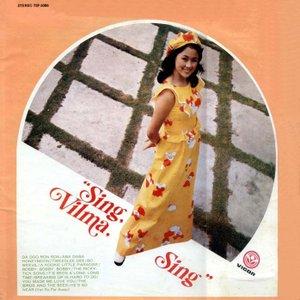


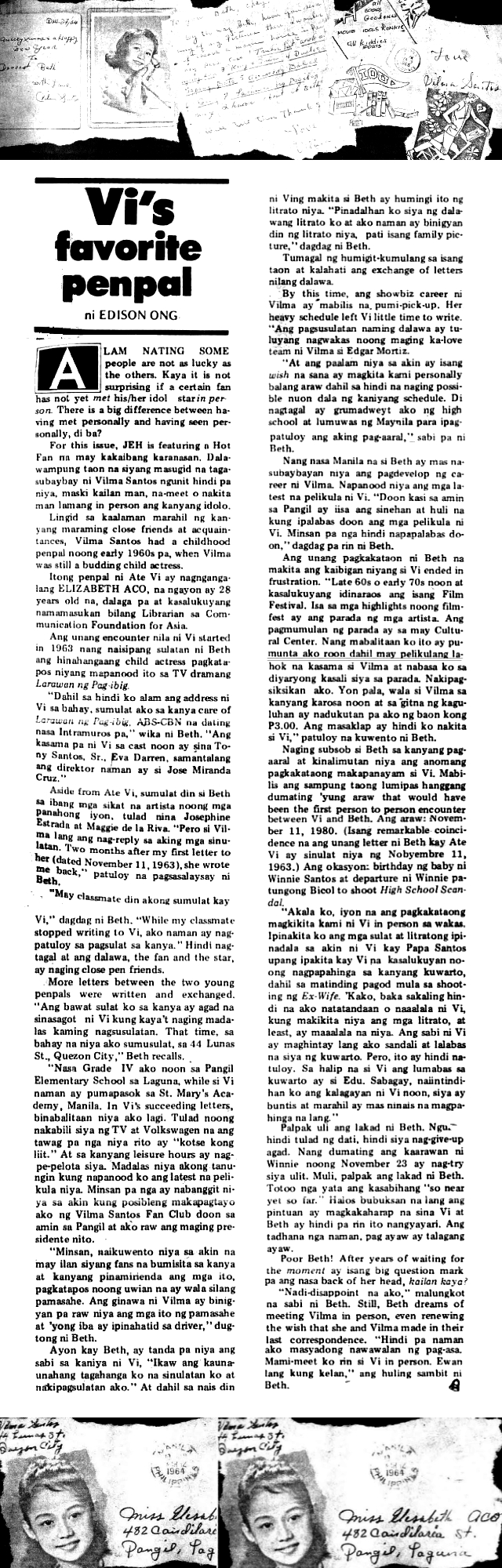






 Star For All Seasons
You must be logged in to post a comment.