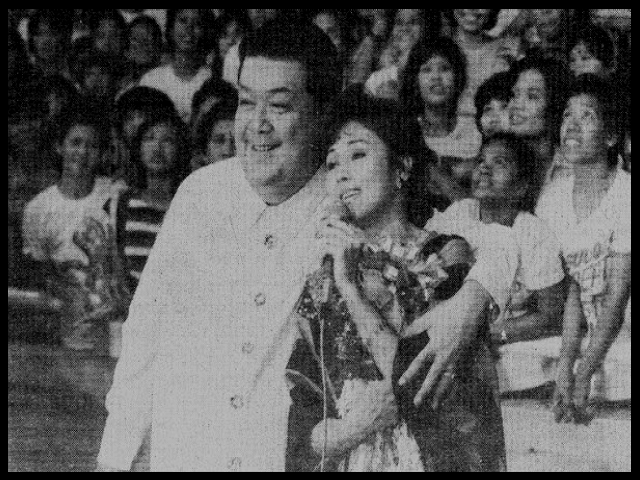
Vilma-Nora Then, Nora-Vilma Now (Repost)

This slideshow requires JavaScript.

Rosa Vilma Santos tugged the hearstring of the Filipino moviegoers via Trudis Litt in 1963, her first movie at age nine that gave her the Famas Best Child Actress award. At that tender age, Vilma was also tapped to star with Gloria Romero and Rita Gomez in the movie Anak, Ang Iyong Ina, thus making her busy with two pictures. It might interest non-Vilmanians to know that little Vilma’s auditions for Trudis Liit was accidental. When she went to the Sampaguita compound with her mother, she was prodded to join the queue of hundred kids for an audition. When her turn came, she acted with premier villainess, Bella Flores. The Sampaguita patriarch, Dr. Jose Perez, was so impressed with Vilma’s performance that the plum role had to fall on Vilma’s lap. That was the start of Vilma’s reign up to the early ‘70s with box-office outings via Lipad, Darna, Dyesebel at and Mahiwagang Kabibe, Kampanerang Kuba, Wonder Vi, Anak ng Aswang, Batya’t Palu-Palo, and many more. These pictures were preceded with the tweezum-craze of the period – Teenage Señorita, Young Lovers, The Sensations, The Young Idols, Sixteen, Love at First Sight, My Pledge of Love and other Vi-Bot (Edgar Mortiz) starrers.

Phenomenon – But the early ‘70s saw the emergence of a phenomenon that defied all traditions and stereotypes – Nora Villamayor, the little brown girl from Bicol. Nora Aunor to all of us, practically swept us off our feet and she rose to dizzying heights never before seen in the Philippine cinema. Gifted with a golden voice, Nora is an illustrious alumna of Tawag ng Tanghalan. That was her passport to fame and fortune. Her meteoric ascent to superstardom marked Vilma’s descent to background attraction. Chanteuse Carmen Soriano recommended Nora to Alpha Records. The little brown girl from Bicol broke existing records in the local music industry, which marked the Golden Age of Local Recording. She spawned hits after hits and the airlanes played to the mass in a Nora mania. The next most logical step was to cross borders – to the movies – and this was where the fiercest of competitions began.

The Rivalry – Pitted against Vilma in a musical vs. musical, drama vs. drama, Nora, no doubt, had Vilma struggling for breath. Vi-Bot came a distant to Guy-Pip (Tirso Cruz III). The non-singer could not hold a candle to the gifted, awarded singer. In terms of early movie outputs, Banaue, And God Smiled At Me, showed Nora’s intensity as an actress – profound and eloquent. The eyes showed it all – which Vilma hadn’t really experimented at the beginning, except being hysterical which was taken for good acting. “Trudis Liit” in the battle for movie supremacy had to maneuver herself into a paradigm shift, she dared to tackle roles where Nora feared to tread. That was the spark of Vilma’s own genius. Vilma Santos in a complete turnaround showed ample flesh and gyrated like there was no tomorrow in the controversy-laden Burlesk Queen. She played a rape victim in Lino Brocka’s Rubia Servios – which many observers thought could have won her the Best Actress plum. Nora in Atsay bested her. To Vilmanians and to Vilma herself, that was a bitter pill to swallow. Undaunted, the actress continued improving and reinventing her screen persona. She also did Celso Ad Castillo’s multi-awarded Pagputi ng Uwak, Pag-Itim ng Tagak, and then came Relasyon in 1982, megged by Ismael Bernal, which gave Vilma the Grand Slam from the Urian, FAP, FAMAS, and Catholic Mass Media. The mistress role, which Nora may play with discomfort fitted Vilma to a T. Equally compelling were the roles she essayed in Broken Marriage, Sister Stella L., Tagos Ng Dugo, Pahiram ng Isang Umaga, Imortal, Ipagpatawad Mo, The Dolzura Cortez Story, Bata, Bata, Paano Ka Ginawa (Vilma won as Best Actress in Brussels), Anak,

Dekada ’70, and Mano Po 3. With sch kind of hypnotizing filmography would Vilma accept the backseat – with Nora at the driver’s seat? This is a battleground of cinematic excellence like no other. Nora Aunor, Vilma’s tormentor, chumed out classics like Tatlong Taong Walang Diyos, Bona, Andrea, Paano ang Maging Isang Ina, Bilangin ang Bituin Sa Langit, Ang Totoong Buhay ni Pacita M., The Flor Contemplacion Story, (Nora won as Best Actress in the Cairo International Filmfest.), Bulaklak sa City Jail, Muling Umawit ang Puso, Bakit May Kahapon Pa (another Best Actress for Nora in Malaysia International Filmfest) and of course, Naglalayag, Nora’s starrer which gave her third international Best Actress in Brussels. Lest we forget, Nora Aunor did the Filipinos proud with Bona in Cannes and Himala in Berlin where the actress received Certificates of Honor. With these outstanding accomplishments, couldn’t she claim her place of honor as the “Greatest Filipino Actress” ever? The two icons paired of with the ultimate in Philippine movies – Vilma with FPJ (Fernando Poe Jr.), Nora with Erap (Joseph Estrada) – blockbusters all, but the Vi-FPJ proved the bigger draw.

The Match-up – In terms of film output, Vilma has the slight edge with almost 200 movies to her credit since she started her film career as a child actress. Nora is not far behind though with more than 170 films to her credit. Although they understandably seldom make movies now, there was a time in their careers when Nora and Vilma each did 20 movies or so in a year especially in the early ‘70s during the height of popularity of their loveteams with Pip and Bot, respectively. In terms of film awards, the two are almost even. They are both FAMAS Hall of Fame awardees having won Best Actress five times – Vilma for Dama de Noche (1972), Pakawalan Mo Ako (1981), Relasyon (1982), Tagos ng Dugo (1987), and Ibulong Mo Sa Diyos (1988); Nora Tatlong Taong Walang Diyos (1976), Ina Ka ng Anak Mo (1979), Bulaklak Sa City Jail (1984), Bilangin Ang Bituin Sa Langit (1989), and Andrea, Paano Ba Ang Maging Isa Ina (1990). Not counting the awards season this year. Vilma has more Urian Best Actress trophies than Nora, 8-6, and Star Awards for Movies Best Actress tropies, 5-4; Nora and Vilma have the same number of Film Academy of the Philippines (FAP) trophies, 4-4, and Manila Film Festival trophies, one apiece; Nora, meanwhile, has more Metro Manila Film Festival best Actress trophies, 7-4 and international recognition, 3-2.

Vilma’s Urian trophies were for Relasyon (1982), Broken Marriage (1983), Sister Stella L. (1984), Pahiram ng Isang Umaga (1989), Ipagpatawad Mo (1991), Dahil Mahal Kita; The Dolzura Cortez Story (1983), Bata, Bata, Paano Ka Ginawa? (1998), and Dekada ’70 (2002). Nora won Urian for Tatlong Taong Walang Diyos, Bona (1980) Bilangin ang Bituin sa Langit, Andrea, Paano Ba Ang Maging Isang Ina, The Flor Contemplacion Story (1995), and Bakit May Kahapon Pa (1996). In the FAP Awards, Vilma won for Relasyon, Dolzura Cortez Story, Bata, Bata, Paano Ka Ginawa?, and Dekada ’70. Nora, on the other hand, won for her performances in Bilangin and Bituin Sa Langit, Andrea, Paano Ba ang Maging Isang Ina, Ang Totoong Buhay ni Pacita M. (1991), and The Flor Contemplacion Story. In Star Awards, Vilma was acknowledged for her roles in Pahiram ng Isang Umaga, The Dolzura Cortez Story, Bata, Bata, Paano Ka Ginawa?, Anak (2000), Dekada ’70 and Mano Po 3 (2005). Nora won for Merika (1984), Andrea, Paano Ba ang Maging Isang Ina, Ang Totoong Buhay ni Pacita M., and Muling Umawit Ang Puso (1995). Vilma was adjudged MMFF Best Actress for Burlesk Queen (1977), Karma (1981(, Imortal (1989), and Mano Po 3: My Love (2204).

In Manila Film Festival, Vilma won for Dolzura Cortez Story while Nora won for Naglalayag (2004). Nora boasts three international best actress trophies: Cairo International Film Festival for The Flor Contemplacion Story, Malaysia International Film Festival for Bakit May Kahapon Pa and Brussels International Film Festival for Naglalayag. Likewise, Vilma also has a Best Actress trophy from Brussels International Film Festival for Bata, Bata, Paano Ka Ginawa and another award from CineManila International Film Festival for Dekada ’70. The breakdown of their awards is as of 2004 only and does not include the awards season this year where both Nora and Vilma are frontrunners. We also just mentioned the major award-giving bodies that have television coverage and exclude other award-giving bodies handed out by different critics’ groups.

Their Firsts – Aside from these, Nora and Vilma each registered their own “firsts.” Consider these: Vilma is the first and only actress, so far, to win the prestigious Gawad Urian Best Actress Award for three consecutive years – Relasyon, 1982; Broken Marriage, 1983; Sister Stella L., 1984; the first and only actress to score an unprecedented three-time grand slam win for Best Actress Award – Relasyon, 1982; The Dolzura Cortez Story, 1983; and Bata, Bata, Paano Ka Ginawa?, 1988; the only actress play Darna four times – Lipad, Darna, Lipad and the Giants, Darna vs. the Planetwoman, Darna at Ding, and the first female mayor of Lipa, premier city of Batangas. Nora, on the other hand, is the first Filipina actress to win a number of international Best Actress accolade; the first actress to topple down the box-office supremacy of the bold genre in the ‘70s; the first singer-actress whose discography broke all existing records in the local recording industry; and the first certified “Cinderella of the Philippine Movies.” Until…Nora allowed herself to be bogged won by some domestic problems, which could not be said of archival Vilma Santos, whose professionalism has never been questioned. A character, which in the words of critic Nestor Torre, made Vilma the “Producers’ Choice.”

Somehow, this also affected Nora’s box-office record while Vilma continue to attract moviegoers and, in fact, still managed to be crowned as Box-Office Queen in 2001 with the monstrous hit Anak. Where does the parallelism lie in their married life? With Senator Ralph Rector as Vi’s husband and Nora long estranged from Christopher de Leon, it looks like Vilma has got the upper hand. Not that being estranged is a misfortune, but Nora is perceived to have fallen for the wrong men.

Politics – How about their excursion into the political arena? Though admittedly Nora made a President, she miserably failed her own bid when she miserably failed her own bid when she ran as Governor in her hometown. Whereas Vilma’s political star practically rose brighter and brighter as a three-time Mayor of Lipa City. Vilma is as luminous as ever – the true ‘Star for All Seasons,’ Nora is busy concerting abroad – singing, a craft she excels in where she began and made her the only “Superstar.” Circa 2005 awards season. Nora vies for Naglalayag and Vilma for Mano Po 3. For the nth time, Nora completes with her patent restrained acting, Vilma with her hysterical trademark. Let the competition begin…again! – Source: S Magazine READ MORE

RELATED READING:

DOCTORATE DEGREES

ARTICLES - Doctorate in Humanities

3rd Doctor of Humanities Honoris Causa – Batangas State University (April 2014)

“Pinangunahan ni Batangas State University President Nora Lumbera Magnaye kasama ang BSU Board of Regents ang Conferment Ceremony of Degree of Doctor of Humanities Honoris Causa kay Batangas Governor Vilma Santos Recto para sa kanyang adbokasiya ng malinis at makataong pamamahala bilang Gobernador ng lalawigan ng Batangas. Ang tagpong ito ay naganap sa isinagawang BSU 46th Commencement Exercise na may temang “Global Mobility; BatStateU Quest towards Excellence” noong ika 2 ng Abril 2014 sa BSU Main campus, Batangas City.” – Elfie ilustre, Province of Batangas, Photo: Edwin Zabarte, 02 April 2014 (READ MORE)

“…Congratulations to Batangas Gov. Vilma Santos who was conferred a Degree of Doctor of Humanities Honoris Causa by the Batangas State University for her clean-governance and humanitarian advocacy. The award was given to her during the university’s 46th Commencement Exercises (with the theme “Global Mobility; BatStateU Quest Towards Excellence”) last April 2 in Batangas City…” – Rikcy Lo, , The Philippine Star, 05 April 2014 (READ MORE)

2nd Doctor of Humanities, Honoris Causa – Univ of North Eastern Philippines Iriga City, Camarines Sur

UNEP to Confer Honorary Degree to Batangas Governor – This City of Superstar will have, as its guest another superstar as the University of Northeastern Philippines (UNEP) is set to confer to Batangas Governor Vilma Santos-Recto the honorary degree of Doctor of Humanities in recognition of her exemplary contributions to Philippine cinema and government service during a fitting ceremony on Nov. 20 at the university gymnasium here. Lawyer Remelisa Alfelor-Moraleda, UNEP president, said the conferment of the honorary degree to Governor Santos was approved by the Commission on Higher Education (CHED) during the commission’s executive board meeting on Feb. 11 this year. Moraleda said UNEP is bestowing the doctor of Humanities, honoris causa to the multi-awarded actress and provincial chief executive as she embodied the true ideals of an empowered woman, who used the powerful medium of cinema for social awakening and as a governor, she exercises the same power to effect positive transformation in the lives of his constituents in the province of Batangas. The Star for All Seasons as the Batangas governor is known in Philippine cinema is a FAMAS Hall of Fame awardee, having been awarded the coveted and prestigious award as Best Actress for five consecutive years. Ate Vi as Governor Vilma Santos- Recto is fondly called by her loyal and avid fans, is also the only actress who was twice given the FAMAS Circle of Excellence Award. Ate Vi is also the recipient of the Lifetime Achievement Award from the Film Academy of the Philippines in 1996 to 1998.Aside from these awards, the Samahan ng Manunuri ng Pelikulang Pilipino (URIAN) honored her as Best Actress in 1982,1983 and 1984. She also received five other similar awards from different award giving bodies including one in 1998 from the Belgium International Film Festival.

An accomplished and famous actress, Ate Vi’s outstanding performance in government service was also widely recognized. She served for three consecutive terms as mayor of Lipa City and now on her second term as governor of Batangas. Among the awards and recognitions she received as a public servant were: Most Outstanding Mayor given by the Civil Service Commission in 2000; Outstanding Mayor in Region IV from the Asusasyon ng Komentarista at Anaunser sa Pilipinas; Best Over-all Local Council Performance by the Boy Scout of the Philippines in 2000; Sandugo Outstanding Local Government Executive from the Department of Health in 2002; Gawad Parangal Award from the Presidential Commission for Urban Poor in 2003; Hall of Fame Regional Sandugo Outstanding Mayor from the Department of Health Region IV-A in 2005; and Gawad Pangulo sa Kapaligiran-Component City Category from the Department of Interior and Local Government Region IV-A in 2005. But it is her being an empowered woman that makes her come into full circle as a person and as an artist. For in this newly found arena called politics, there are no scripts, no rehearsals, no cuts or retakes, For here she was to be judged for her worth beyond the help of makeup, props and sets, magical lights and special effects. For here she was to be measured by the strength of character, drive for competence, and will for compassion. Delicia Alfelor-Tibi, UNEP executive vice president, was all praised to Ate Vi saying that she serves as an exemplar of an empowered career woman whose character as an artist and leader is beyond question.

“In politics, there are no scripts, no rehearsals, no cuts or retakes, here she is to be judged for her worth beyond the help of makeup, props and sets, magical lights and special effects. Here she is to be measured by the strength of character, drive for competence, and will for compassion. Ate Vi passed those tests with flying colors,” Tibi said. She added that UNEP is truly honored and privileged to confer the honorary degree to Ate Vi as it will serve as a motivation and inspiration to the students to emulate her achievements as a Filipina who triumphed over the countless trials and challenges in her life. “Ate Vi is the epitome of what UNEP stands for. Just like her, we want our students not only to become global achievers but to achieve whatever they desire,” Tibi said. – Vox Bikol, November 19, 2009 (READ MORE)

Mayor Vilma Santos-Recto (she is now, the Governor of Batangas) was given an honorary degree of Doctor in Humanities by the Lipa City Public College (LCPC) last November 10, 2005. The Doctorate degree was given after resolution no. 01-05 of the Academic Council was passed. The head of the Academic Council, Dr. Armando Badillo and the Board of Trustees, including City Adminstrator Mr. Pedrito Martin M. Dijan, approved the resolution. The Commission on Higher Education (CHED) also approved the resolution on May 11, 2005. The resolution states that they acknowledge the leadership and talent of Mayor Vi not only in the art of Film, but also her sincerity and effective management as a Mayor and for being a good role model for a new Filipina, beautiful inside and out. It is further stressed in the resolution that the life of Mayor Vi as a public servant and as a multi-awarded actress clearly mirrors her deep understanding of how she can serve the public, her respect for human dignity and her genuine belief in the goodness of men to serve and help one another. Dr. Cristeto Pamplona, Schools division superintendent of DepEd Lipa; Atty. Joel Montealto, City Legal Officer; Lipa City Councilor Romy Macasaet and Ronaldo de Castro, City Personnel Officer completes the LCPC Academic Council. – Eric Nadurata, V magazine Vol 2 No 6 The Valentine’s Day Issue 2005

1st Honorary Doctorate Degree in Humanities by the Lipa City Public College

Remembering Joe Quirino, Inday Badiday, Eddie Ilagan and Ike Lozada

This slideshow requires JavaScript.

I am urging all Vilmanians to say a little prayer to the late Joe Quirino on his 10th death Anniversary.  I just would like to share with you how JQ admired and fought for Ate Vi. During the MMFF when Ate Vi won in Karma.  It was a triple tie between Ate Vi, Gina Alajar and Charo Santos. JQ as one of board of jurors defended why Ate Vi should win. On the second deliberation JQ convinced one of the jurors and Ate Vi won by 1 point.  JQ lambasted on his TV program the jurors in the MMFF when Ate Vi was not even nominated for her performance in Langis At Tubig.  The nominees are Nora Aunor for “Bona” and “Kung Akoy IIwan Mo” and Amy Austria for Brutal.  Its good that Amy won. JQ said that Ate Vi is good in langis compared to Nora in “Kung Akoy IIwan.”  Obiously that was manipulated by Dean Lukresia Kasilag who was the Board Chairman that time and a certified Noranian.  Kawawa talaga si Ate Vi basta involved si Kasilag lagi syang nabibiktima.  Remember Rubia Serbios and Atsay. JQ always regarded Ate Vi as the real Queen of Philippine movies and a certified box Office Queen.  I remember one time in an awarding ceremonies when JQ has to present the Best Actress award with Pilar Pilapil. Nora Aunor won that time. And JQ said before he announce the winner. Sasabihin ko pa ba kung sino ang winner, alam na naman natin kung sino ang panalo. Obviously disappointed s’ya sa results. Nora got mad at JQ kinabukasan sa interview sa kanya. I dont remember what year was that. I remeber when JQ program was No. 1 noon at talagang basta nag guest sa kanya si Ate Vi laging special. Hindi s’ya pumapayag na hindi sasayaw si Ate Vi. JQ said that Ate Vi is the best dancer of all times. Nobody comes close to her said JQ. – Aries aka “egrollon2001”, V Magazine Issue Nos 6 Feb 23, 2005 (READ MORE)

Joe Quirino, more popularly known as Joe Quirino or JQ, was a Filipino entertainment columnist. He was also the host of the 1970s and 1980s television show, “Seeing Stars with Joe Quirino.” – Wikipilipinas (READ MORE)

Isa sa mga naalala ko noon yung radio programs nina Ate Luds, Inday Badiday (RIP) and Eddie Ilagan (is this his last name? where is he now?). Si Ate Luds identified kay Nora at that time. Si Kuya Eddie Ilagan naman maka-vilma. Then nagkagulo noon sina Nora at Ate Luds because of that hula-hula sa TV show ni Ate Luds na si Ate Vi raw ang wagi sa “Rubia Servios” (which unfortunately turned out wrong). However, majority of the movie going public thought that Ate Vi was robbed of the best actress award that year. Di ba nagtampo si Nora kay Ate Luds. One thing led to another and by the time you know it, naging magkaibigan sina Ate Luds and Ate Vi. During this time nagtampo naman si Kuya Eddie kay Ate Vi sa dahilang hindi ko na maalala. Kaya ng nangyari nabaligtad ang kanilang loyalty. Si Ate Luds panay si Ate Vi ang prino-promote sa radio program niya while si Kuya Eddie naman ay napunta kay Nora. Bumibisita ang mga Vilmanians noon sa radio program ni Ate Luds at ang mga Noranians sa radio program ni Kuya Eddie. This was also the time yung kainitan kung sino ang dapat gumanap na Annie Batungbakal. Many believed that na bagay na bagay yung role kay Ate Vi. Since she is considered as the Dancing Queen. But lo and behold, napunta yung role kay Nora. Balita ko she bought the rights to make it into a movie yata. Naalala ko rin noon si Kuya Eddie ilagan panay ang patugtog ng mga kantang ikaw ang superstar ng buhay ko (tama ba ang title, Kuya Charlz?) at yung ngang Anie Batungbakal dedicated kay Nora. Si Ate Luds naman may kantang dedicated kay Ate Vi. If I am not mistaken ito yung kantang “Pinakamagandang babae sa balat ng lupa” (Tama ba yung title, Kambal?) or is it “Ikaw ang Miss Universe ng Buhay Ko?” whatever the song was, palaging pina-patugtog ni Ate Luds iyon dedicated para kay Ate Vi at sa mga Vilmanians as well. Then one day just as nagkabati sina Ate Luds at Nora, nagkabati din sina Ate Vi at Kuya Eddie. So to be fair to both, ang ginawa ni Kuya Eddie Ilagan pinapatugtog niya pareho yung mga kantang dedicated for Ate Vi and Nora.

Then kuya eddie had this idea to have a debate on who is more sikat and mas magaling between Ate Vi and nora (now we know the answer: Ate Vi). Kuya Eddie asked Beth Malongat and his younger sis na artista din at that time na si Dolly Ilagan to have a debate on who is mas sikat at mas magaling kina Ate Vi and Nora. Beth was asked to represent the Vilmanians while Dolly represented the Noranians. Araw-araw yung portion na iyon sa radio program ni Kuya Eddie. Beth will say something good and positive about Ate Vi while Dolly will do the same for Nora. Until one day, they decided to stop it kasi both Beth and Dolly were receiving hate mails/phone calls from the two camps (but now we know kung sino ang mas capable of doing these nasty things, di ba Kuya Mar?) both Beth and Dolly admitted that they were being affected by the negative criticisms, that they are receiving from both groups. After that wala na po akong maalala kahit panay ang kain ko ng kalabasa to sharpen my memory buti na lang hindi panay kalabasa ang mga grades ko sa school at that Liam & Alfons time. Ang buhay talaga, parang life! – Father Juancho Gutierrez, V Magazine Issue Nos 7, Oct 28, 2005 (READ MORE)

Eddie Ilagan “…I have been working since I was 8,” says Eddie Ilagan, “and I haven’t stopped working since then.” Eddie Ilagan is more popularly known to radio listeners and movie fans as “Eddielat:” Isa siya sa anim na anak ng batikang movie direktor na si Conrado Conde, ang panganay sa magkakapatid na Gerry de Leon, Tito Arevalo, Angel Esmeralda at iba pa. Isa si Eddie sa sikat na announcers ng DWWA at mapapakinggan siya araw-araw magmula alas-5 ng hapon hanggang alas-8:30 ng gabi. Puno ng mga balita (mostly movie news) ang kanyang programa at mahilig siyang magbigay ng komentaryo sa mga current events hindi lamang sa movies kundi pati na rin sa ibang fields. Nagsimula si Eddie sa Showbiz bilang child actor at karamihan ng mga ginawa niyang pelikula ay sa ilalim ng Sampaguita Pictures. He did some 20 movies as a child actor and his most important role was in his Uncle Gerry’s Noli Me Tangere where he played the role of Basilio. He also acted in radio shows, a difficult type of acting, according to Eddie, because you portray your character with your voice. “Kaya dapat mahusay ka sa vocal acting para lumabas na malinaw ang role mo,” he says. One of his memorable radio roles was as the sidekick of Kapitan Kidlat. Eddie took up several courses in college – Commerce, Computer Programming, etc. – but he never got to finish one. He also did stints on stage and in television but his world is really radio. “I’ve been a disc jockey since 1967,” Eddie says, “and I enjoy every minute of it.” Soon, if plans push through, Eddie might host a TV variety show to be called Most Beautiful Show, one feature of which is the Most Beautiful Contest he initiated in his radio program…” – Eddie Ilagan, JEH, April 27 1981 (READ MORE)

“…Inday Badiday (a.k.a. Ate Luds) doesn’t remember now who gave her the tableau containing that little prayer (“Ewan ko kung kaaway ko o kaibigan ko”) but that’s beside the point. The tableau stands on her headboard and it’s the first thing Inday sees when she wakes up every morning. Sa totoo lang, Inday has been trying, during the past many years, to observe that prayer — to no avail. “Para akong si Mother Lily,” says Inday, “pag hindi ko binuksan ang bibig ko, magugutom ako, hindi ako kikita. Aray ko!…Remember when Nora Aunor, displeased by a news report which she deemed favored Vilma Santos at her expense, asked her secretary to get back (that same evening!) a P5,000 check she had gifted Inday with a week earlier during the blessing of Inday’s house in Meycauayan, Bulacan?….Inday’s constant reminder to her children is this: “Don’t come to me crying!” That is also what the Ambassador would often tell his children: “Don’t ever come to me crying.” “Military man kasi ‘yon, e.” Inday hasn’t run back to Daddy crying ever since. “Alam mo,” she admits, “people can accuse me of not having been a good wife. Pero walang makapagsasabing hindi ako naging mabuting ina.” And that, would you believe, is the truth and nothing but.” – Ricky Lo, Weekend magazine, March 10 1985 (READ MORE)

Lourdes Jimenez Carvajal (August 6, 1944 – September 26, 2003), better known as Inday Badiday, was a Filipino host and journalist who was known as Philippine television’s “queen of showbiz talk shows” and “queen of intrigues”. Referred to by many in the entertainment industry as “Ate Luds”, Inday began her broadcasting career as a radio host who talked about show business. Her commentary and knowledge about the industry eventually brought her fame. One of her first shows was Nothing but the Truth and later See-True and Eye to Eye, which served as Philippine television’s template for showbiz talk shows. These shows were all produced by GMA News and Public Affairs and her production company, LoCa Productions (LoCa is the combination of the first two letters of her names, Lourdes Carvajal). She made her television comeback in GMA Network in 2002 with the show Inday, Heart to Heart. Inday Badiday died on September 26, 2003, from multiple organ failure due to two strokes at 59 years old, at St. Luke’s Medical Center, Quezon City. She had three children, Dolly Anne and Ricky from a previous marriage, and Clara (Klang-klang) by her beloved Gene “Bo” Palomo, the man Inday referred to in her famous parting shot, “Saranghamnida, Bo” (Korean for “I love you, Bo”) in her program Eye to Eye. She was also the grandmother of Juicy co-host IC Mendoza. – Wikipedia (READ MORE)

Naisip ko bigla si Ike Lozada for some reasons. Sayang kinuha na siya ni Lord, isa pa naman siya sa maituturing na tunay na kaibigan ni Ate Vi at mga Vilmanians. Lagi kong pinapanood ang mga TV shows niya noon, one of them was Big Ike’s Happennings. S’yempre laging guest si Ate Vi (at saka si Winnie). There was a time that he was interviewed about her side defending Ate Vi, the article’s title was “Si Vilma Santos sa paningin ni Ike Lozada” ito yung parang sagot niya sa colum ni Kuya Germs about “Si Nora Aunor sa paningin ni German Moreno.” Nakakatuwa ang mga banat ni Kuya Ike lalo na ng sabihin niyang “Si Vilma talaga dapat ang nanalo sa Rubia Servios sa opinion ko.” There was a time that he wrote a story for Vilma pero hanggang kwento lang siya hindi naman nagmaterialized dahil hindi naman niya ginagawa in writing. Binabangit lang niya sa Radio program niya yung plot ng story like yung “Kulaspira, Basag ang pula.” Kakatawa ang title pero gusto niya na luka-luka daw si Ate Vi dito or something like that. Meron pa ngang Annie Batungbakal na base sa hit song ng Hotdogs pero naunahan siya ng NV production at ginawang movie ni Guy. Inis na inis noon si Ike sa radio program niya pero wala naman siyang laban kasi nga hanggang kwento lang siya sa radio, walang black & white. Sabi pa nga niya si Guy daw ay mahusay kumanta pero sa sayaw daw ay mas bagay kay Vi ang Annie Batungbakal. Gosh, everyday ay naririnig ko sa radio program niya ang plot na plano niya for the said movie, naka-program na nga sa utak ko na para kay Ate Vi yon eh. Pero ganoon talaga, unahan lang yan. Ang isa pang di ko makalimutan ay during the shooting of “Yakapin mo ako Lalaking Matapang.” Vilma-Lito Lapid movie, ang working title noon ay “Ang Senyorita at ang Driver.” S’yempre may-I plug ang Ike sa movie ni Ate Vi kahit filming pa lang ito. Sabi niya “O mga Vilmanians, abangan nyo na ang Senyorita at ang Atsay.” Sabay tawa ng malakas si tabatsoy. “Sorry, slip of the tounge po, Senorita at ang Driver pala”. Hahahaha. Meron pang instance noon na nasa States si Ate Vi while shooting “Pinay American Style” nag-overseas call si Ike, collect pa ha. Tapos syempre on the air ito sa radio program niya. Ang daming kwento ni Ate Vi, nakatutok talaga ko sa radio noon pati Nanay ko. Nung medyo mahaba na ang conversation nila ay nag-paalam na si Kuya Ike kasi daw baka malaki na ang babayaran ni Ate Vi. Hirit naman ni Ate Vi “Ok lang Kuya Ike, akong bahala, mamaya mo na ibaba. Miss ko na kayong lahat eh” Hay naku, ang sarap ng buhay pag may isang Vilma Santos. And yes, miss ko na si Kuya Ike. May you rest in peace. – Franco Gabriel, V Magazine Issue Nos 6 (READ MORE)

Si kuya Ike Lozada ang nagbansag kay Ate Vi ng palayaw na “Precious” marahil dahil sa parang mamahaling kristal si Ate Vi sa paningin ng malusog na radio announcer na ito. Si Kuya Ike isa sa mga naging instrumento kung bakit naging sikat ang tambalang Vi at Bot. Kung si Guy at Pip ay mayroong German Moreno, si Vi at Bot naman ay mayroong Kuya Iking. Sa bawat radio commercial at mga kanta hindi mawawala ang mga balita’t dedikasyon niya sa kanyang nagiisang “precious.” Akmang akma para bigyan natin ng halaga ang isang taong malaking naitulong sa pagsulong ng career ni Ate Vi nuong mga dekada 70 at mga unang taon ng dekada 80. Ang isa pang mahalagang naitulong ni Kuya Ike ay pagpapahalaga niya sa mga Vilmanians. Kung hindi lang siya radio announcer marahil isa siya sa aktibong miyembro ng ating grupo…” – RV, V Magazine Issue Nos 6 (READ MORE)

“…In the early 70s, the local entertainment industry was dominated by the love teams of Nora Aunor-Tirso Cruz and Vilma Santos-Edgar Mortiz. Arnold was a young teenager by the mid 70’s. Ike Lozada, a famous radio and TV host (known for his radio program, “Dambuhalang DJ”) and part-time talent manager conceptualized a junior love team that would target the younger audience and would follow the footsteps of the Nora-Tirso and Vi-Bubot love teams. The young love teams will be introduced in a new TV show which was planned to compete with the Channel 7 show, “Eto Na Kami”, another TV show quite popular with the young generation back then. Ike gathered the team of Arnold and Maribel “Lala” Aunor, Winnie Santos and Dondon Nakar that gave birth to the “Apat na Sikat” in Channel 9. The show was an instant hit not just with teen-agers, but also for older audiences and it quickly acquired a high rating among viewers. It was aired during prime time, and lasted for five years. People who grew up watching “Apat na Sikat” often associate Arnold’s name to the TV show, as it made television history during its prime…“Apat na Sikat” in the 70s was borne out of the imagination of the late Ike Lozada. Ike made quite a name for himself on his TV show “Big Ike’s Happening” and his AM radio program, “Dambuhalang DJ”. Like his colleague, Kuya Germs, Ike was also instrumental in launching the careers of young stars. The four young stars were easily brought to fame, because the two ladies were related to the star of the season. Winnie Santos is the younger sister of Vilma Santos, while Lala Aunor is the first cousin of Nora Aunor…” – Romy R. Protacio (READ MORE)

Enrique “Big Ike” Lozada (August 13, 1940-March 8, 1995) was a Filipino comedian, actor and TV host. He was born on August 13, 1940 in Iloilo City. He started acting at the age of 11 on the movie Mga Bituin ng Kinabukasan with the younger Susan Roces. – Wikipedia (READ MORE)

RELATED READING:

FILM REVIEW: PALIMOS NG PAGIBIG (Video)

This slideshow requires JavaScript.

“Okay you’re fertile and I’m barren…pero sa mga pangyayari…para kang karinderyang bukas sa lahat ng gustong kumain!” – Fina

The Plot: On the outside, it looks like a marriage made in heaven. But inside the thick walls of what they call home, theirs is a relationship waiting to crumble. They have been wanting a child for so long, but the wife does not have the capacity to bear a child. And when her husband cannot take it any longer, he decides to end his misery once and for all. – IMDB

The story is about an infertile couple who never had a child of their own. The husband, frustrated by his wife’s infertility, hired somebody who was willing to carry his child. The hired woman got pregnant but she fell in love with the child’s father. The husband falsely adopted the child, hiding the fact from his wife that the child was his own. All the attention the husband gave to the child drove his wife to jealousy. To complicate things, the husband eventually had a secret affair with the child’s mother, and this affair produced another baby. The mistress left the newborn baby at the footsteps of the husband’s house. The wife then took care of the baby, and the children grew without their adoptive mother knowing that the two kids were fruits of her husband’s secret love affair. – Wikipilipinas

The Reviews: “…Eddie Garcia first directed Vilma in the Marcos film, Pinagbuklod Ng Langit. She reprised the role of eldest of the Marcos children, Imee and again co-starred with movie queen, Gloria Romero and dramatic actor, Luis Gonzales. Garcia directed Vilma again in 1982′s box Office Record Breaker, Sinasamba Kita. Three more hit films follows that gave us memorable movie lines like “Para Kang Karinderyang bukas sa lahat ng gustong kumain” in Palimos Ng Pag-ibig and “Si Val, si Val, si Val na walang malay!…” – (READ MORE)

“…Hit novels serialized in Aliwan Komiks were also adapted into movies:“Blusang Itim” by Elena M. Patron and Joey Celerio;“Pardina” by Jim Fernandez and Sonny Trinidad;“The Family Tree” by Pablo S. Gomez and Louie Celerio;“Palimos ng Pag-ibig” by Nerissa G. Cabral and Ernie H. Santiago;“Anak ni Zuma” by Jim Fernandez and Ben Maniclang;“Kamay ni Hilda” by Pablo S. Gomez and Louie Celerio…” – Wikipilipinas (READ MORE)

“…Palimos ng Pag-ibig (Filipino: “Begging for Love”) was a movie in 1985 and turned into a TV series in 2007 for the first installment of Sineserye Presents. This was from the original story by Nerissa Cabral. This movie was home of the famous tagline: “Para kang karenderiang bukas sa lahat ng gustong kumain!” (You’re like a restaurant that’s open to anyone who wants to eat!), In context of prostitution reference…” – Wikipedia (READ MORE)

“…Ang surrogacy or womb for hire, eh isang katotohanan na na­pagtanto nating lahat. Tinalakay ito in all its melodrama splendor sa Palimos ng Pag-Ibig, ang pelikula nina Vilma Santos, Edu Manzano at Dina Bonnevie. Sa movie, si Fina Alcaraz (Ate Vi) ay may infertile uterus. Desi­rous ang kanyang husband na si Rodel (Doods) to have a biological child so he hired Ditas (Miss D) na isang baby maker for a fee. Walang pros and cons ang surrogacy issue sa movie lalo na’t galing ang material sa komiks. Ang pinaka­memorable sa movie eh ang linya ni Vilma na, “Para kang ka­rinderyang bukas sa lahat ng gustong kumain.” Sosyalera si Ate Vi sa movie pero she can say lines like these…” – Alwin Ignacio, Abante Tonite, 22 March 2015 (READ MORE)

RELATED READING:
IMDB: Palimos ng pag-ibig (1986)
IMDB: Eddie Garcia
IMDB: Dina Bonnevie
IMDB: Edu Manzano
Eddie Garcia From Wikipedia
Vilma Santos’ Top 10 Film Directors (part three)
50 Famous Lines from Pinoy Movies (Video)

FILM REVIEW: BURLESK QUEEN

This slideshow requires JavaScript.

The Plot: To support her paralytic father, Chato (Vilma Santos) works as a utility girl for a burlesque star Virgie Nite (Rosemary Gil). But when Virgie gets drunk on the night of her scheduled show, Chato pitches in for her. And she becomes an instant sensation. Enthused by the initial acceptance of the audience, she defies her father’s admonitions and presents herself to the manager. And thus, becoming the new burlesque queen. – IMDB

To support her paralytic father, Chato (Vilma Santos) works as a utility girl at Inday Theater for a burlesque star Virgie Nite (Rosemary Gil). Chato desperately wants to earn money to help her ailing and paralyzed father. When Virgie gets drunk on the night of her scheduled show, Chato pitches in for her, and she becomes an instant sensation. Enthused by the initial acceptance of the audience, she defies her father’s admonitions and presents herself to the manager, thus, becoming the new burlesque queen. The aberrant lifestyle of a burlesque performer leads Chato to a misguided existence. She becomes pregnant and is abandoned by the father of her baby. Desperate for cash, she agrees to appear in a lavish stage show. In front of a screaming male audience, Chato bumps and grinds in a tour de force performance, unaware of the danger to her pregnancy. – Wikipilipinas

Chato (vilma Santos) performs girl Friday jobs for Virgie Knight (Rosemarie Gil), a burlesue star, to support her paralytic father. Harboring a secret desire to be a burlesque star herself, Chato grabs at her chance one night by taking over when Virgie get herself scandalously drunk because her parasitic lover, Ander (Roldan Aquino), blew out of town with another woman. Mang Roque (Leopoldo Salcedo), Chato’s father, learns about Chato’s onstage performance and vehemently restrains his daughter from doing it again. Chato meekly agrees. The story is set during the 50s, at a time when genuine burlesque, as an art and a form of entertainment, was dying, in large part due to the indefatigable agitation of traditional moralists, and the local politicians’ accommodation to these demands. To circumvent her father’s wishes, Chato and the burlesque show impresario, Louie Fernando (Joonee Gamboa), devise a stage personality for the young girl – she assumes the stage monicker of Tzarina, the masked goddess. Chato is irretrievably drawn into the whirlpool of the burlesque. Meanwhile, she carries on an affair with Jessie (Rolly Quizon), a law student and son of an anspiring politico. Mang Roque, finally burdened by his inutility, commit suicide; Chato and Jessie elope and the girl leaves the burlesque theater, apparently fo good. When Chato’s savings dwindle, Jessie is easily lured by his mother to return home and once again pursue his law studies. Pregnant and abandoned, Chato finds her life seemingly at a deadend. Her situation reflects the tragedy that hovers over Louie’s troupe and theater. Louie decides to hold a grand burlesque show to prove once and for all that burlesque is an art. Chato agrees to dance again in this show of shows. The film ends in a tour de force as Chato’s greatest performance grinds and bumps to a shattering climax. – Video48.blogspot.com

The Reviews: “…1977 propelled Filipino actresses to greater heights in Castillo’s Burlesk Queen which, incidentally made Vilma Santos an indubitable superstar. After Burlesk Queen, every actress then wanted to portray burlesque roles…” – Celso Ad Castillo Web-site (READ MORE).

“I have my own orientation in film criticism…because we’re Third World, to me a film is, first of all, a social document, then an educational tool, and third, an aesthetic experience. If I have to name three important Tagalog movies of all time based on these criteria, they would have to be Brocka’s Maynila sa Mga Kuko ng Liwanag – acutally I can name four – Castillo’s Burlesk Queen, Romero’s Aguila, Gallaga’s Oro, Plata, Mata.” – Rafael Ma. Guerrero, Film critic (READ MORE)

“…Tuloy-tuloy ‘yun…(the hospital scense with Vilma and Leopoldo Salcedo) nag-experiment ako noong una, kumuha ako ng second take, pero di ko na rin tinapos. Perfect na iyong una. Alam mo bang nang gawin namin ang eksenang iyon tatlo kaming umiiyak sa set? Ako, si Vilma, at si Leopoldo? Dalang-dala si Leopoldo sa pagsasalita ni Vilma, lumuha siya kahit patay siya dapat doon. Buti na lang di siya nakuha ng kamera…(Kung Nahirapan ka ba kay Vilma?) …Oo, hindi sa acting dahil mahusay talaga siya kundi sa scheduling. Alam mo kasi it takes time before I can really get into the mood of a picture, mga two weeks, tapos kapag nandiyan na, that’s the stage when I’m ready to give my life to the project. Tapos biglang walang shooting ng two weeks dahil busy siya sa ibang pelikula…” – Ricardo Lee, Manila Magazine, Dec 1- 31, 1977

“…More remarkable than Santos’ portrayal of the doomed burlesque dancer, is Castillo’s filmmaking. Set within the very patriarchal lower class Manila, Castillo posits the burlesque theater as not merely, as impassioned Louie points out, a place for highbrow entertainment for the masses, but also the window for the film’s female lead to become superior to her male oppressors. It’s a difficult metaphor to execute but Castillo successfully does so. The dancer, scantilly clad amidst the cheers and jeers of horny men, is easily regarded as the victim of exploitation. But in the film’s case, the stage becomes the dancer’s opportunity for leverage which is impossible in the outside world. The stage provides Chato ease from the outside world’s patriarchal clutches. She becomes financially stable on her own, temporarily free from her father’s influences, and powerful over thousands of men. Interestingly, Castillo stages a poetically sequenced scene of Chato’s devirginization within the theater. Jessie attempts to make love to Chato inside her dressing room, and the latter submits to the former’s sexual advances. Interspersed between their lovemaking (take note of the ballad that plays in the background as the lyrics talk of love amidst the entire world’s disapproval, very typical of the romantic declarations that inevitably falter over time) are scenes from the stage, a circus act of horrid penetrations: of a woman being juggled by a man, several magic acts, and more importantly, of a man hammering a nail inside his nostril, then puncturing his eye socket with a metal stick, finally commencing with him swallowing a long blade. Castillo’s juxtaposing Chato’s first sexual act with acts of unnatural and bizarre penetrations of the human body impart a clear message of invasion, of Chato’s theater where she is the goddess (her stage name is Tsarina the goddess) and almighty over all the men who watch her. The theater is no longer the same sanctuary; in a way, the theater’s magic has been tainted. She becomes pregnant and decides to stop dancing pursuant to her relationship with Jessie and pregnancy. Her devirginization within the theater becomes symbolic of her surrender to the outside patriarchal forces…Burlesk Queen is much more than a gripping commercial melodrama. It is also a scathing commentary on the sexual politics that has become the atmosphere of Philippine society: of hardworking women and the good-for-nothing men they serve; of a patriarchal society gone awry. It is also a fervent reminder of the redemptive and equalizing power of art. Multi-faceted, committedly acted, and very well-directed, Burlesk Queen, I opine, is an unsung masterpiece.” – Oggs Cruz (READ MORE)

“…Maging ang paglakad ng panahon ay nararamdaman din ng manonood kahit hindi ikuwento o ipakita ang kinagawiang pamamaraan at ulat ng “nalalaglag na dahon ng kalendaryo o dahon ng puno kaya”. Sunod-sunod na cuts na nagpapakita sa uri ng palabas sa tanghalang kinabibilangan ni Vilma ang ginawa ni Celso. Saka ito sinundan ng kuha naman sa bahay nina Vilma at Rollie. Nag-iinit ng tubig si Vilma habang nakikinig ng dula sa radyo tungkol sa buhay ng isang asawang tamad at iresponsable. Ganoon nga ang nangyayari sa buhay ng dalawa, at may kasunod ring “abangan sa susunod na kabanata”. Sa paghihiwalay ng dalawa, sapat na ring iparinig ang awiting You’re All I Want For Christmas, para buhayin ang irony na nagaganap sa relasyon ng dalawa. Kung makinis ang exposition at pagbuhay sa conflict ng istorya, malinaw rin ang paghahanda sa wakas ng pelikula. Si Rose na laos na ay naging mumurahing puta. Si Dexter kahit hindi ipakita ay maliwanag na sumama na sa ibang lalaki. Si Roldan ay may bago nang kabit at napatay sa spiral staircase ng tanghalan na siya rin niyang dinadaanan sa paghahatid sa dalawang naunang kabit. Si Rollie, ang mama’s boy, ay natural bawiin ng ina. Si Vilma ay nagsayaw-nang-nagsayaw. Sa simula’y mahinhin at nakangiti at kaakit-akit hanggang sa pagbilis ng pulso ng tambol at pompiyang ay naubusan ng ngiti, tumagaktak ang pawis at manghina ang ligwak ng kanyang balakang, upang sa pagbuhay sa damdamin ng manonood ay siya namang maging dahilan ng pagkalaglag ng sanggol na kanyang dinadala. Sa labas, matapos ang pagtatanghal, may tatlong bagabundong naiwan na nakatangkod sa larawang pang ‘come on’ ng burlesk queen, habang ang kadilima’y bumabalot sa kapaligiran…” – Jun Cruz Reyes, Miyembro, Manunuri ng Pelikulang Pilipino, Manila magazine December 1977 (READ MORE)

“…It was 1977 with an exceptional film, Burlesk Queen, that Castillo got his fIrst critical recognition. Entered in that year’s Metro Manil Film Festival, it was adjudged the Best Picture, won forhim a Best Director Award as well as nine other artistic awards. It told a young girl in Manila in the 50’s who wanted to become a burlesque dancer. It showed a subdued Castillo. He seemed in this film, to have held back his passion for visual impact to give way to his new mastery of film grammar. His characters cried and whimpered, they did not scream and curse. They delievered dissertations on art, not imprecations of wrath, which had set the pitch of his previous films. The critics fought bitterly over Burlesk Queen. In that festival, he was contending with film makers who enjoyed a high reputation among the country’s most avid film critics. Upon winning the award, Castillo instantly became the favorite beating boy of the critics who did not appreciate Burlesk Queen. To prove to them his worth, Castillo did Pagputi ng Uwak, a 50’s epic set in his favorite Southern Tagalog locale. It was the most lavish of all his productions and had all the elements of a “great” Filipino film. He exploited the many religious and social rituals typical of the region. The film featured the two most critically acclaimed performers of the time, Bembol Roco, Jr. and Vilma Santos, with the cinematography of Romy Vitug complementing Castillo’s visual sense. And it touched on civil unrest to underline the film director’s social awareness. Pagputi ng Uwak was a visual fest, an artistic and socially responsive film aimed at the critics. It was also Castillo’s first commercial failure after a string of more than 20 minor and major box-office hits…In just a decade, Castillo, with all his audacity and dramatic excesses, has claimed his place as one of the most versatile and genuinely interesting filmmakers in the Philippines today…” – Rosauro de la Cruz (READ MORE)

RELATED READING:

FILM REVIEW: PAGPUTI NG UWAK PAGITIM NG TAGAK

This slideshow requires JavaScript.

“…sabi mo pa nga nuon mahal na mahal mo ako…sabi mo pa na hindi magbabago ang pagtingin mo sa akin…dahil papaano mo papatayin ang hangin? Paano mo papatayin ang ulan? Paano mo papatayin ang araw? Sabi mo pa nga hindi mo na ako iiwan kahit na anong mangyari…kaya naisip ko nuon magpaligaw na ako sa’yo…kahit hindi pa pumuputi ang uwak, o umi-itim ang tagak…” – Julie

The Plot: “Pag-puti ng Uwak, Pag-itim ng Tagak” is a pulsating love story that recaptures the nostalgic fifties, the exciting era of mass hysteria, and the golden years of the rock and roll fever inflicted by screaming, wiggling hip-shaking foreign pop idols dominated by Elvis Presley, Bill Haley, Little Richard, Pat Boone, Doris Day and the Platters. “Pag-puti ng Uwak,Pag-itim ng Tagak” is more than a love story. It is also a commentary – a satire rich with humor injected into a moral, psychological, sociological, and cultural aspect, outlook, and values of the said bygone era. “Pag-puti ng Uwak, Pag-itim ng Tagak”, is a poigant rich-girl-meets poor boy love story of Julie Monserat and Candido Ventura – two love-struck starry eyed youths who fought for their right to love each other, here is a story that touches social conflict – the perennial clashes and discrimination between the rich and the poor. Julie grew up under the custody of her two wealthy spinster aunts Beatriz and Miguela Monserrat. Julie enjoyed everything, except the right to love her own father – Maestro Juan Roque, the poor town teacher. Julie met Dido a student-combo player. They fell in love with each other and had secret affairs. The aunts hated Dido for his ” lowly breeding and ear-splitting music”, thus rejecting him in favor of the town mayor’s son. Julie eventually got pregnant. They planned an elopement but was foiled. The conflict between the lovers and the Monserrat exploded into a series of scandals that rocked the whole town of Sta. Inez…” – Celso Ad Castillo (READ MORE)

“…Malakas ang deconstruction ng “Romeo and Juliet” sa obra na ito. Maraming reference (pinaka-given na siguro na ang pangalan ni Vilma Santos dito ay Julie) sa tragedy ni Shakespeare. Dito ko nakita si Celso Ad in a different light. Nage-gets ko ang poesiya ng mga nature shots n’ya sa ibang pelikula pero rito, klarong klaro ang pagkahilig n’ya sa literary classic. Pinakagusto kong shot eh ‘yung terrace scene na malakas maka-tribute. Wala kasi akong katiting na abiso tungkol sa pedigree ng pelikula at masayang naglalaro sa isip ko ang mga reference hanggang sa sumabog ito sa dulo na nagbigay konklusyon sa mga hinagap. Maraming eksena na may kilometric line si Vilma rito. Napaalala rin sa akin ang era kung saan ang sukatan ng isang pagiging aktres ay nasa haba ng mga linya na kayang mamemorya. Pinagsamang sensuality at controlled acting ang pinamalas n’ya. Maigting din ang chemistry nila ni Bembol Roco rito…” – Manuel Pangaruy Jr., Tagailog Specials Presents, 02 August 2013 (READ MORE)

Kuwento ng magkasintahang pinaghiwalay, na ipinaloob sa isang panahong dinadaluyong ang lipunang Pilipinong rebelyong Hukbalahap. Iyan ang buod ng ‘Pagputi ng Uwak, Pag-itim ng Tagak’. Dekada ng 1950 noon, at sa pista ng matandang bay an ng Santa Ines ay nagkatagpu-tagpo sina Julie Monserrat (Vilma Santos), Dido Ventura (Bembol Roco) at Maestro Juan Roque (Joonee Gamboa). Mula sa mayaman at makapangyarihang pamilya si Julie, isang ulilang pinalaki at pinapag-aral sa Maynila ng kanyang mga tiyang matandang dalagang sina Beatriz (Adul de Leon) at Miguela (Angie Ferro). Si Dido ay maralitang binatang ang Ina (Mona Lisa) ay may iwing poot sa mga Monserrat na kumamkam sa kanilang lupain at naging dahilan ng kanilang paghihirap. Si Maestro Roque naman ay kilalang kompositor at biyolinista na umuwi sa Santa Ines upang tapusin ang kanyang sarsuwelang pinamagatang “Pangarap ng Bagong Umaga.” Sa unang pagkikita pa lamang ay napusuan ni Dido si Jutie. Nagkahulihan ng loob ang dalawa, at isang gabi’ypinangahasang akyatin ni Dido si Julie sa kuwarto nito. Ang kanilang pagtatalik ay humantong sa pagtatanan. Nang magbalik ang magkasintahan upang humingi ng pahintulot na sila’y pakasal, si Julie ay pinamili ng kanyang mga tiya sa maginhawang buhay na kanyang kinagisnan, at sa walang-katiyakang hinaharap bilang asawa ni Dido. Nagdalawang-isip si Julie, at pinili niyang manatili sa pangangalaga ng kanyang mga tiya.

Masamang-masama ang loob ni Dido sa nangyari. Nang siya ay laitin ng kanyang kasintahang si Cristy (Olivia O’Hara), sinaktan niya ito. Nalaman ni Claro (Robert Talabis) ang ginawa ni Dido sa kanyang kapatid, at nagharap ang dalawa sa isang labanang mano-a-mano. Napatay ni Dido si Claro. Alkalde ng bayan ang ama (Mervin Samson) nina Cristy at Claro, kaya’t pinakitos nito ang mga pulis upang iligpit si Dido. Nang gabing lihim na kunin si Dido sa kulungan upang patayin, inambus ng mga Huk ang sasakyan ng mga pulis. Tiyo ni Dido ang pinuno ng mga Huk na si Kumander Salome (Lito Anzures). Sumamang namundok si Dido sa kanyang Tiyo. Minsang dumalaw sa bahay ng mga Monserrat si Maestro Roque, siya ay hinamak ng magkapatid na Beatriz at Miguela. Mula na rin sa mga tiya ni Julie, natuklasan niya na anak pala niya si Julie sa patay nang si Ana Monserrat. Nang magkahiwalay sina Julie at Dido, nalaman ni Maestro Roque na buntis si Julie. Ito ay dinalaw niya sa konserbatoryong pinag-aaralan ng dalaga sa pagka-biyolinista. Ipinagtapat niyang siya ang ama ni Julie. Tinalikdan ni Julie ang kanyang ama, subalit ang pagdalaw na iyon ang naging dahilan upang magpasiya ang dalaga na huwag ipaampon ang kanyang anak na isisilang. Nilakad ni Maestro Roque na pagtagpuing muli sina Julie at Dido. Isang gabi ng Mahal na Araw, nagkita ang magkasintahan at nakilala ni Dido ang kanyang anak kay Julie. Natunugan ng mga espiya ng gobyerno ang pagbaba sa bayan ng mga rebeldeng pinamumunuan ni Kumander Salome. Ang uha ng anak nina Julie at Dido ay nangibabaw sa masinsing putukang lumipol kina Dido at mga kasama. – Manunuri (READ MORE)

It is the 1950’s at the height of the Huk (local Communist armed forces) movement, in a part of the country beset with agrarian unrest. During the town fiesta of Santa Ines, Julie Monserrat is introduced to Dido Ventura and Maestro Juan Roque, an old musician. Julie, an orphan who comes from the local aristocracy, is on vacation from school in Manila, and is staying with her two spinster aunts Beatriz and Miguela. Dido Ventura, a young man from a poor family, lives with his mother who nurses an old grievance against the Monserrats; she believes they grabbed the Ventura’s property. Maestro Juan Roque, a well-known composer and violinist, has just returned to Santa Ines to finish a zarzuela he has been planning to write for a long time. Dido falls in love with Julie at their first meeting. One night, he sneaks into the spinsters’ house and spends a passionate night with Julie. The brief liaison leads to their elopement. When the two lovers return to ask for the aunts’ blessing, Julie is made to choose between a life of poverty and uncertainty with Dido, or a life of comfort and respectability with her aunts. Julie chooses to stay with her aunts. Dido is shaken by the turn of events.

He meets Cristy, his girlfriend, who insults him for the embarrassing situation he has gotten himself into. Dido turns roughly against the girl and beats her up. Cristy’s brother finds out about this and challenges him to a fist fight. Dido kills Cristy’s brother. Cristy’s father, who is the town mayor, decides to dispose of Dido immediately. But when his secret police nab Dido one night, the jeep taking them to Dido’s execution is ambushed by a band of Huk rebels led by Kumander Salome, Dido’s uncle. Saved, Dido decides to join his rebel uncle in the mountains. Meanwhile, Maestro Roque, on a visit to the spinsters’ old house to talk about Julie’s violin lessons, finds out that Julie is actually his own daughter by one of the Monserrat sisters now deceased. Julie herself is pregnant with Dido’s child. The old musician’s visit to her house and the ensuing revelatin make he decide to keep the baby. Maestro Roque arranges for Julie and Dido to meet again. On the night of Good Friday, Dido leaves the rebel camp to see his newborn child. Kumander Salome decides to go along with the young man. Government spies learn of this and an ambush is set. The child of Julie and Dido is the only survivor and witness of the masscre that ends the film. – Rosauro de la Cruz (READ MORE)

The Reviews: “…Compared to Burlesk Queen, Pagputi ng Uwak is less of a technical mess. Particularly exceptional are the shots of rustic religious rituals; unfortunately their use does not progress beyond the literal level. This makes for increasing predictability toward the picture’s end, as when the preparations for a military massacre are intercut with recitations of the tribulations of Jesus Christ. Attempts at authenticity appear to have been assiduous, but the project may have also proved too ambitious in this aspect. Thus one can find high-tension wires and Scotch-tinted car windows, not to mention recent beautification accomplishments, making their way into a 1950s period movie. Performance-wise Pagputi ng Uwak leaves a lot more to be desired. Among the cast, only Mona Lisa manages to pull off a convincing characterization as Bembol Roco’s mother. Angie Ferro and Adul de Leon, as Vilma Santos’ spinster aunts, are no better than caricatures: funny maybe, but quite incredible. Joonee Gamboa has mellowed since his rudimental portrayal of an impresario in Burlesk Queen; his role, however, is far less significant this time, reduced as it is to playing the intermediary between star-crossed characters. Executive producer Vilma Santos does better outside camera range. Her production is financially and artistically liberal, the sort the local audience has been deprived of since the dissolution of the previous censors board. Her performance though is about as effective as that of a drama guild’s star performer: she renounces her lover like she would a final exam, and later professors love for him like she would a teen idol. The same applies to Bembol Roco, about whose character more will be said later; suffice it to say that he still has yet to employ under-acting to his advantage. Meanwhile he and Santos are the industry’s star couple, and there one has the trappings of the star system at work again. Is there nothing at all to be said in favor of the movie? Come to think of it, Burlesk Queen did have a saving grace, and it is this same virtue – intention – which redeems Pagputi ng Uwak. In his works Castillo the artist seeks to depict the Filipino as only a fellow Filipino will understand, particularly in terms of pride and sentiment – values associated in Western aesthetics with melodrama. Which is what makes Castillo easy prey for local culture vultures: with technical excellence as a basic requisite for deserving favor, he falls short at first try; infatuation with alien modes of behavior further ensures their alienation from the obviously progressive statements he wishes to make…” – Joel David, Philippine Collegian/The Urian Anthology 1970-1979, 26 July 1978 (READ MORE)

“…Castillo-watchers who had to cringe at the amount of its acting that Castillo allowed or demanded from his actors and actresses, will be gratified at the quiet intensity of the performances in Pagputi ng Uwak. Although one is never convinced that Vilma Santos can indeed bow music out of violin, her characterization of Julie displays the maturing talent of an actress fast learning to explore and shape her emotional resources in creating a character. Bembol Roco is disadvantaged by the script’s focus on Julie, but he impressively communicates the change in Dido from reckless teenager to hardened rebel. The acting highlights in the film, however, are provided by the three capable stage performers playing supporting roles. At long last Jonee Gamboa has been allowed to shed the irritatingly mannered caricatures he has been made to do in his previous films. As Maestro Juan Roque, he gives a serene portrait of a man who sublimates the turmoil of his inner life into the music he plays and composes in a performance memorable for its restraint and sincerity. Angie Ferro tends to be over-empphatic in places, but her portrayal of Miguela effectively keeps the role from degenerating into a contra vida stereotype by touching it up with humor that is broad yet never out of character. It is Adul de Leon, however, who emerges luminously as a character actress of the first magnitude. Her interpretation of Beatriz is a piece of complex character portraiture all the more admirable for having made a role of rather limited range so persuasively human. Good performances are not unusual in Filipino movies. What is rare is that coming together of temperaments and skills that make film art possible. In Pagputi ng Uwak, Castillo’s work does not display anything that he has not already shown in his previous films. The fondness for story material that reeks of social overtones, the lyrical exuberance with which he invests starkly realistic situations, and the intensely theatrical confrontations among his characters – these have been qualities evident even in Castillo’s lesser works, where they are often pushed to absurd lengths. What has happened in Pagput ng Uwak is that the director has been able to bring to a focus his varied talents, and found fellow artists with temperaments congenial to his. With cinematographer Romy Vitug and musical director George Canseco, he seem to have found working partners who share his penchant for the poetic, and their collaboration has resulted in a film where narrative imagery and music fuse into a memorable whole…” – Bienvenido Lumbera (READ MORE)

Putting in place a dialectic that analyzes social reality as at once a corrupted condition and a transformable possibility. In this situation, Dido’s idealism is undercut as an illusion by Julie (Vilma Santos), a jaded but nevertheless sensible young woman who in turn opens herself up to a revision of consciousness. This dialectic, or reflexive reflection is important to scan the contradictions of milieu and to probe the context of whatever human action plays out. Without such dynamic, which eludes most films which dare to tackle historical reality of epochal significance, all manner of practice is ultimately facile and anomalous and rendering romance as a vital agent in the articulation of difference, the engagement with a higher force and the summoning of a love that transcends the limitations of conspiratorial cacophony. A film nourished by this premise cannot fail. The personas of spinster sisters Beatriz (Angie Ferro) and Miguela (Adul de Leon) along with Joonee Gamboa as music teacher and violinist Roque San Victores are rounded out. And society is a charged terrain of armed revolt, state control and resistance. Direction, screenplay, cinematography, editing, production design, music and the performance of a sensitive cast contribute to the comprehensive competence of Pagputi Ng Uwak… Pag-Itim Ng Tagak…” – Jojo De Vera, Sari-saring Sineng Pinoy (READ MORE)

“…This is the one film this year that could have made it to the classics, given good material, Romeo Vitug, and some good acting (Joonie Gamboa and Adul De Leon are stands out). There is too much background however; a weak establishment of relationship; an incredible move from the rebel group risking their lives for a solitary personal interest; the failure to bring out the Maestro’s (Joonie) reaction to the tragedy in an affair in which he is greatly involved. The triangle here is fascinating: arts, politics, and the heart. The maestro’s art recovers for him what frustrations of the heart reduce: the lover’s taking to underground activities plays a similar role; the woman’s art provides escape from emotional confusion. The heart, neglected, must sooner or later take its toll – and politics, strangely, because the least developed angle in the film (Bembol’s character is insufficiently portrayed), simultaneously takes its toll, in tragic proportions. It would be excellent if it were within the directorial intention to comment that, in fact, neglect of the political ultimately destroys everything. Such an extent, however, is believed by the fact that the ideal political figure in the film condones the needless risking of an entire group for a single romantic resolutions. Art, politics, and love come to a bad end, but what are the tones of this fatality? Or is it indeed fatality in the director’s vision? Let us close up on this vision. There are touches that have poetry and economy. The development of the courtship into a certain depth of involvement (undialogued lyrical scenes between Vilma and Bembol); a poignant moment of the affair is visually emphasized in a shot of the stairway, now empty, by which the woman seeks the lover she had just rejected; the agitation and the impending bid for resolution by the two aunts in the car coming from Manila where the heroine had refused to let them have their way in her affair as her mother before her had been too weak to do) – to name a few. It is discordant in a directorial angle that controls such elements rather well to splash local color profusely and allow the heroine’s talky summary in the end. If this show of extremes is calculated, an indication, let us say, of the nature of the Filipino character, the act of indicating is not established. That is, if the Filipino, as Castillo sees in him, is unfortunately often swamped by ceremonies, traditions and the like so much that he loses sense of self-direction, etc., this must be developed, and not slumped upon the final scene when the love-resolution is intruded upon by the pasyon, and finally by the deadly dogma of politics. Of course, again, it might be that this is how the view from the angle is, where by all comes to a tragic end, firstly, against all human idealism and praxis (an option that is too anti-man); sporadic superfluity which gives nothing, not even meaning. Many may not accept this as a valid realism. And, in any case, what happens then to art as an instrument not only of image-reflectiions, but also of reconstruction?” – Petronila Cleto, Pelikula, Atbp (READ MORE)

“…It was 1977 with an exceptional film, Burlesk Queen, that Castillo got his frist critical recognition. Entered in that year’s Metro Manil Film Festival, it was adjudged the Best Picture, won forhim a Best Director Award as well as nine other artistic awards. It told a young girl in Manila in the 50’s who wanted to become a burlesque dancer. It showed a subdued Castillo. He seemed in this film, to have held back his passion for visual impact to give way to his new mastery of film grammar. His characters cried and whimpered, they did not scream and curse. They delievered dissertations on art, not imprecations of wrath, which had set the pitch of his previous films. The critics fought bitterly over Burlesk Queen. In that festival, he was contending with film makers who enjoyed a high reputation among the country’s most avid film critics. Upon winning the award, Castillo instantly became the favorite beating boy of the critics who did not appreciate Burlesk Queen. To prove to them his worth, Castillo did Pagputi ng Uwak, a 50’s epic set in his favorite Southern Tagalog locale. It was the most lavish of all his productions and had all the elements of a “great” Filipino film. He exploited the many religious and social rituals typical of the region. The film featured the two most critically acclaimed performers of the time, Bembol Roco, Jr. and Vilma Santos, with the cinematography of Romy Vitug complementing Castillo’s visual sense. And it touched on civil unrest to underline the film director’s social awareness. Pagputi ng Uwak was a visual fest, an artistic and socially responsive film aimed at the critics. It was also Castillo’s first commercial failure after a string of more than 20 minor and major box-office hits…In just a decade, Castillo, with all his audacity and dramatic excesses, has claimed his place as one of the most versatile and genuinely interesting filmmakers in the Philippines today…” – Rosauro de la Cruz (READ MORE)

RELATED READING: