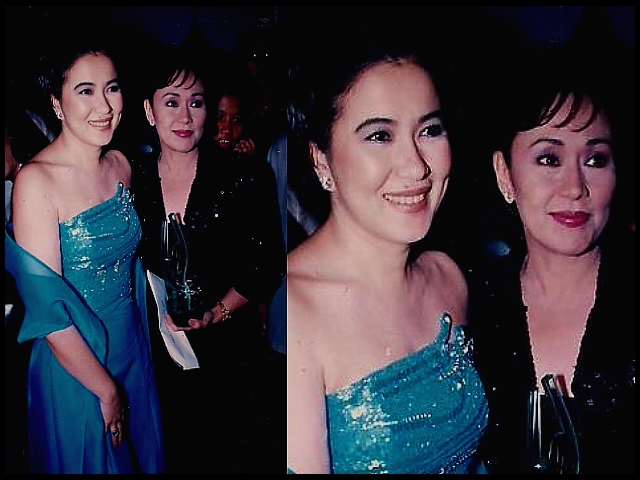
The Gawad Urian Through The Years 1/3

This slideshow requires JavaScript.

1977 – 2002 – “…When the first Gawad Urian was staged in late February 1977, the awards presentation was held at the CCP Little Theater which has a seating capacity of about 700 people (if I’m not mistaken). The awards show had no TV coverage and the first time a television producer dared to touch it was only in 1980 – when Armida Siguion Reyna bought the TV rights for P25,000 (quite a sum in those days). Armida – I’d like to say again – was one of the few producers who did not rip off the Manunuri members (who all have a bad business sense) when it came to financial dealings. In 1983, the Gawad Urian was moved to the Manila Film Center (a mild earthquake shook the city as Best Actress winner, Vilma Santos, walked into the venue). The awards show was produced by a civic organization and I was told (I was not a member yet that time) that this group didn’t bother to pay the Manunuri members for the TV coverage. The following year, the awards presentation was moved to the Rizal Theater, but I’m not sure if that was ever televised. The late Pio de Castro’s wife, the former Joy Soler (the Manunuri First Lady) supposedly stopped the TV coverage because the producer had not given any downpayment minutes before showtime. The awards night returned to the CCP Little Theater in 1985 despite the then oppositions’ call to boycott the Imelda Marcos venues. On the Manunuri’s 10th year in 1986, the awards show was held at the Philamlife Theater because – for the first time – it was held on the month of May and CCP is always closed for renovation during this month (The awards presentation was delayed because of the events before and after EDSA). It was back to the CCP Little Theater the following year, but the year after that, there was no Urian because some (only some) members of the group didn’t think there was any film worthy of an award. The Catholic Mass Media Awards held its own awards night, but did not name a Best Picture that year. After a year’s absence, the Urian returned in 1989 and the show was produced by Dr. Grace Javier Alfonso, who – two years later – would join the group as a member (Starting with her, the Manunuri never had problems anymore collecting payments for TV rights). In 1990, the group took a deep breath and staged the awards presentation at the CCP main theater. To the surprise of even the members, the venue was filled to capacity. The producer that year was Tessie Celestino Howard and she would produce it for the next 12 years. During those 12 years, I have to say that Tessie (with the help of director Al Quinn) did a wonderful job producing the Urian awards night. …” – Butch Francisco, The Star, 11 May 2002 (READ MORE)

Numerous ‘TIEs” – “…On May 1, 1976, ten Filipino critics agreed to discuss the annual award-giving situation in the local industry. All in agreement that there must be an alternative to FAMAS, the only award giving body in the Philippines. The ten critics, mostly academics, were Pio de Castro, Behn Cervantes, Pete Daroy, Mario Hernando, Bien Lumbera, Doy del Mundo, Manny Pichel, Nick Tiongson, Gino Dormiendo, and Nestor Torre. Most of them were part of FAMAS roster of judges. Most, questioned the recent years winners. According to the website, Wikepedia: “The 1972 Best Actress tie that materialized between major star Boots Anson-Roa and then-rising star Vilma Santos” was a good example of the disillusionments experience by the academics. “…the tie was unheard of at that time, which resulted in accusations of lessening prestige on the part of FAMAS.” Ironically, Gawad will have numerous ‘tie” winners in their future set of winners, including a string of ‘tie” involving their early favorite, Nora Aunor. Headed by Nestor Torre, the nine critics agreed to review films and release quarterly citations of best films with the final nominations and winners announce at the end of the year. Over the years, the Manunuri Ng Pelikulang Pilipino (Filipino Film Critics) considered the equivalent of the United States’ New York Film Critics Circle, established themselves as the most credible award giving bodies in the Philippines. They are known for having a long discussion for each of their award categories resulting sometimes in heated debate and unfortunately the unavoidable “tie” between nominees. Since 1976, the group has eluded controversies that rival groups endured. The oldest award, FAMAS has experienced two renegade or break away groups resulting in costly legal battles and low television ratings. Another group, the Philippine Movie Press Club is considered second to Gawad Urian, Star Awards had experience a similar fate, they also had a break away group, creating their own awards, the Golden Screen Awards. With the advent of new awards, now ten, and still counting. Gawad Urian remained strong and the most sought after. Currently, the Manunuri are consists of: Rolando B. Tolentino, Grace Javier Alfonso, Butch Francisco, Mario A. Hernando, Bienvenido Lumbera, Miguel Q. Rapatan, Benilda S. Santos, Dr. Nicanor G. Tiongson, Tito Genova Valiente and Lito B. Zulueta…” – RV (READ MORE)

Pang-FAMAS vs Pang-Urian – “…It was in 1977 that the Manunuris began assigning movies for viewing to each member, to make sure‘that the group would not miss any of the 150 or so films being produced every year. The critics watched on their own time and budget, and recommended for group viewing any film which had any merit at all. To systematize the listing of films the group felt had achievements in any artistic or technical aspect, the MPP began to come out with their quarterly list of citations. The 1977 Urian Awards further established the reputation of the Manunuris as discoverers of new or ignored talents. Word spread around that “you don’t have to spend a cent for PR to win in the Urian” after Daria Ramirez (Sino’ng Kapiling, Sino’ng Kasiping) bested formidable co-nominee Vilma Santos (Burlesk Queen) for the best actress plum. The choice of Ramirez was not a popular one either, for her portrayal of a middle-class wife was devoid of the “pang-FAMAS” hysterics usually equated with good acting in Philippine movies…” – The Urian Anthology 1970-79 (READ MORE)

First Televised – “…It was in 1978 when the MPP reached out towards a larger audience. For one, that year’s Urian awards was televised, giving the Gawad Urian a greater impact on the public and introducing the Manunuris to a bigger audience. For another, it was the year when the Manunuris launched the Urian Film Festival. Co-sponsored by the Cultural Research Association of the Philippines, a group of teachers and scholars of Philippine culture, the festival aimed to show the possibilities of the Filipino film to students of the U.P. and the Ateneo (most of whom ignored the “bakya” Filipino film), and to convince them to support it. Before each screening of the eight Urian-Award-winning films, a Manunuri read a critique of the film explaining to the audience the merits of the film which made it win an Urian award. Eight award-winning films of the first two Urian years composed the line-up of the first Urian Film Festival, while the second film festival held in 1980 included some films nominated that year…” – The Urian Anthology 1970-79 (READ MORE)

Lino Brocka’s Rejection – “…The most severe attack on the Manunuris, however, came at the 1979 Awards night when Lino Brocka ascended the stage not to receive the directorial award for Jaguar, but to reject it. Reading from a prepared speech, he accused the group of prejudice, saying that “under the guise of impartiality they practice their prejudices anyway.” It is more difficult, he said, to combat prejudice than corruption. You can fight money with more money, but how can you, he asked, fight prejudice? He then refused all further awards and nominations from the Manunuris. The magazine and newspaper articles that came out on Lino Brocka’s rejection of the Urian Awards for the next so many months did the Manunuri a lot of good. First, it made the MPP realize that the attack was partly due to the fact that most Manunuris were no longer writing, so that the opinions of the few Manunuris were taken to be the group stand on films reviewed. Second, far from degrading the group, Lino Brocka made the Manunuri a household word….” – The Urian Anthology 1970-79 (READ MORE)

Noranians vs Vilmanians – “…Nora Aunor is clearly a Manunuri favorite. Most industry members (including Vilma Santos) are aware a lot of Manunuri members are “Noranians.” The Manunuri members, of course, do not necessarily operate on fan mentality. In the acting categories, they choose the ones who really deliver the outstanding performances of the year. In this sense, we can also call Gina Alajar a Manunuri favorite…unlike Nora, Gina, Jaclyn and even Chanda Romero (during the Manunuri’s early years) – was never known to be a Manunuri favorite. Ironically, she is the one with the most number of Urian acting trophies…” – Butch Francisco, The Star, 09 May 2002 (READ MORE)

The Gawad Urian Awards are annual film awards in the Philippines held since 1977. It is given by the Manunuri ng Pelikulang Pilipino (the Filipino Film Critics) and is currently regarded as the counterpart of the United States’ New York Film Critics Circle. – Wikipedia (READ MORE)

Related Reading:

Apoy Sa Ibabaw, Apoy Sa Ilalim (1977)


Basic Info: Screenplay, Director: Ben Feleo; Cast: Romeo Vasquez; Chanda Romero; Lorna Tolentino; Barbara Luna; Original Music: Demet Velasquez; Cinematography: Max de la Peña; Release Date: December 9 1977; Production Co: VS Films – IMDB

Plot Description: No information available except that the Vilma Santos’ birthday celebration was added as bonus feature of the film.

Film Achievement: No Available Data

Film Review: “…Ate Vi made around 198 films from 1963 to 2002. This includes cameo appearances in Dugo at Pagibig sa Kapirasong Lupa, Mga Mata ni Angelita, Huwag Hamakin Hostess (with Nora Aunor and Alma Moreno with Vilma getting Orestes Ojeda in the end), Candy, No Other Love, Charot, Rizal Alih, Engkanto, and ‘Bukas Sisikat Din Ang Araw’, a Gabby-Snooky starrer, produced by friend Gabby Concepcion…” – The 28th (READ MORE)

Victoria Lorna Aluquin, better known as Lorna Tolentino, sometimes known as L.T., an abbreviation of her screen name (born December 23, 1961), is a Filipina actress, host, executive producer and widow of actor Rudy Fernandez. Together, they bore two sons named Ralph and Renz. She was born on December 23, 1961 in Concepcion, Tarlac and later moved to Manila. Her dad is from Liliw, Laguna. She is also the stepmother of actor Mark Anthony Fernandez. She is first cousin to actress Amy Austria and a niece of actor Jerry Pons. She was married to Rudy Fernandez from 1983 till his untimely death in 2008. They had two children. She attended the elementary grades at St. Anthony School where she also finished high school She took up a Bachelor of Arts course at St. Paul College in Quezon City, and also at the University of Santo Tomas and Maryknoll College. She started her career as a child actress. Later, she portrayed the young Susan Roces in Divina Gracia and has a total of at least 60 movies. She has won eight film awards and garnered 20 nominations (mostly for Best Actress in FAMAS). She’s also one of the Grandslam actresses in the Philippine Cinema together with Nora Aunor, Vilma Santos and Sharon Cuneta. She won her Grandslam Best Actress for Narito Ang Puso Ko (1993). – Wikipedia (READ MORE)

A Very Long Rivalry – 1980

This slideshow requires JavaScript.

Pre-1980 – The December festival favoured Lolita and Nora. In the festival’s awards Night both were recognized for their effective acting in Ina Ka ng Anak Mo. Meanwhile, their rival, Charito Solis and Vilma Santos, took consolation of the fact that their film, despite losing in the acting contest, remained one of the top revenue earner. It’s the end of the decade and both Nora and Vilma are looking forward to a brighter career. Both wanted to remain as bankable and popular. For Nora, the end of the 70s cemented her reputation as an actress. For Vilma, the end of the decade seem to be a disappointment, atleast in awards derby, as she seems to be ignored by the award giving organizations several times. She has promised herself not to expect to win any award but concentrate on box office results.

Snubbed by the Critics – “…In 1980, tatlong pelikula ni Nora Aunor ang maituturing na panlaban: two by Brocka (Nakaw na Pag-ibig and Bona) and the other by Laurice Guillen, Lea Productions’ Kung Ako’y Iiwan Mo. She won the Gawad Urian for Bona. Ang panlaban ni Vilma was Zialcita’s Langis at Tubig. Hindi taon ni Vilma ang 1980, which saw the emergence of other young and talented actresses like Gina Alajar (Brutal), naka-tie ni Nora sa Urian, and Amy Austria, na tumalo kay Aunor sa Metro Manila Film Festival. In the 1980 MMFF. Amy won with a lone entry, Brutal while Nora got nominated for Bona and Kung Ako’y Iiwan Mo. (A case of split votes.) Sa 1980 Gawad Urian, nominated sina Nora, Gina (eventual winners) at Amy, samantalang si Vilma was “snubbed by the critics…” – William Reyes (READ MORE)

Nora Aunor’s Films (9): (Anak ng Atsay; Bona; Bongga Ka ‘Day; Candy; Darling, Buntis Ka Na Naman; Kastilyong Buhangin; Kung Ako’y Iiwan Mo; Nakaw na Pag-ibig; Reyna ng Pitong Gatang) – After the successful project with Brocka in last year’s local festival, they reunited in two projects, “Nakaw na Pag-ibig,” with Philip Salvador and Hilda Koronel and another festival entry, “Bona.” Nora entered two films in 1980 MMFF, Brocka’s “Bona” and Laurice Guillen’s “Kung Ako’y Iiwan Mo.” With two entries, Nora find herself a stiff competition not from her close rival Vilma but from another Brocka protege, Amy Austria in Marilou Diaz Abaya’s “Brutal.” For Nora, the first year of the new decade was a mix of hit and miss, “Bongga Ka Day” was a successful follow-up to “Annie Batungbakal” but overshadowed by the box office disappointments of “Anak ng Atsay,” “Darling, Buntis Ka Na Naman,” and “Reyna ng Pitong Gatang.”

Vilma Santos’ Films (8): (Ang Galing-galing Mo, Mrs. Jones; Darna at Ding; Good Morning, Sunshine; Gusto Ko Siya, Mahal Kita; Langis at Tubig; Miss X; Romansa; Yakapin Mo Ako, Lalaking Matapang) – For Vilma Santos, 1980 was an affirmation of her sexy image, with most of her projects has “adult” theme, “Mrs Jones” and “Miss X” were big hits despite its lack of weak production value. She even wore a sexier Darna outpit, in her fourth Darna franchise, Darna at Ding. Like Nora, she had her share of disappointments, her film with husband, Edu Manzano, “Romansa” was a big flop. Come December, Vilma concentrated on not thinking about winning the best actress award, instead, agreed to do a commercial film with Danny Zialcita, the result was the hit, “Langis at Tubig.” The film earned her some nominations and a best actor trophies to her leading man, Dindo Fernando.

Nora Aunor’s 1980 acting recognition (3) – Best Actress from URIAN and a nominations from the Metro Manila Film Festival and FAMAS, all for “Bona.”

Vilma Santos’ 1980 acting recognition (2) – Best Actress nominations from Metro Manila Film Festival and FAMAS both for “Langis at Tubig.”

Sociological Phenomenon – “…Brocka is one of the most physical of directors. His films are full of scenes of people touching — nervously, tentatively touching one another, and his rapport with actors is tremendous. Nora Aunor is a special case, she’s the Filipino’s favorite movie star, and more. Herself a slum child at 14, she won a singing contest and soon became a film personality, appearing in trivial, successful hit after hit; she now has her own weekly TV show. Aunor is a sociological phenomenon: the first dark-skinned superstar, idolized by the underclasses. Her fan’s devotion is unlimited. A score of them have come to live and work in her house as self-appointed servants. For many, she has the status of a saint. Her role in Bona in Brocka’s movie, which she produced out of her own pocket in order to appear in a serious film, is not unlike that of one of her own fan-servant-slaves. Aunor’s co-star is no less than Phillip Salvador’s glistening body (who was Stanley Kowalski in Brocka’s Tagalog production of Streetcar) which Brocka makes us to see with Bona’s eyes in a dozen bed and bathtub scenes. The camera observes Salvador’s body with something of the meticulous awe with which Von Sternberg and his lenses ogled La Grande Marlene…” – Elliot Stein, Village Voice, September 25, 1984 New York (READ MORE)

Handing Magparaya – “…Muli, binigyan ng magagandang linya si Vilma Santos mula sa umpisa kung saan kinompronta niya ang manloloko niyang ka-live in at sinabing: “namputsa naman nahuli ka na ayaw mo pang aminin” at sa bandang huli nang intindihin niya ang asawa at handing magparaya, sinabi niya “…handa akong magparaya, kung gusto niya isang lingo sa kanya, isang lingo sa akin…” Pero halatang ang pelikulang ito ay pelikula ni Dindo Fernando. Deserving si Dindo sa kanyang pagkapanalo sa Famas bilang pinakamahusay na actor bagamat nang taong ito’y mahusay rin si Christopher Deleon sa Aguila at Taga ng Panahon at Jay Ilagan sa Brutal. Tahimik lang ang pag-arte niya’t makikita ang kanyang intensity sa kanyang eksena kung saan nagtapat na siya sa asawang si Cory tungkol sa kanyang kaso. Mahusay rin siya nang hinarap niya si Pilar at sabihin niyang, “mahal ko kayong dalawa.” Maganda ang location ng pelikula. Makikita ang mga ordinaryong tanawin ng Albay sa Bicol at ang mga ordinaryong manggagawa rito mula sa mga nagtatanim ng palay hanggang sa mga nagtitinda ng mga paninda sa palengke ng bayan. Sa kabila ng ordinaryong istorya ng Langis At Tubig, ang mahusay na direksyon at mahusay na pagkakaganap ng mga artista rito’y nangibabaw ang tunay na karapatan nitong panoorin muli ng mga mahihilig sa pelikulang Pilipino. Sayang nga lang at hindi na gumagawa ng pelikula ang ang gumawa ng obrang ito…” – RV (READ MORE)

Post-1980 – As Brocka’s Bona toured the international festival, it looks like Nora was again in command with the acting contest and Vilma was content in making sure that her films were commercial success. By this time, Vilma’s tax problem has become a number one priority. No longer a teen pop star, both Nora and Vilma’s projects declined. It seems like yesterday, when in early 1970s both were releasing one or two films each month. Now, both have limited film projects and have to be selective to succeed at the box office.

Related Reading:

Vilma…Born Winner (Repost)

And the winner is…Vilma Santos.The U.P. College of Mass Communication announces the choice of Ms. Vilma Santos as the recipient of Gawad Plaridel 2005. Born winner ngang matatawag ang QueenStar na si Vilma Santos dahil halos lahat ng larangan ng kanyang pinasukan ay naging matagumpay,hindi nga lang siguro siya Star for All Seasons and Reasons sa punto ng pagiging aktres. Laging kinikilala sa kanyang kahusayan sa magkakaibang panahon ng pamamayagpag, making her an actress for all seasons, indeed! Like the fabled Midas Touch, Vilma Santos seemingly has that power to transform into gold, whatever her petite hands can touch. In the movies and on television, she is the undisputed Star for All Seasons.On the domestic front, she is victorious mom to Luis and Ryan Christian.

Huling pinasok at sinubukan ni Ate Vi ang magulong daigdig ng pulitika. Sa kanyang huling termino bilang Ina ng Lipa City, pinatunayan niya kung gaano siya kaseryoso bilang aktres ay mas lalong pursigido na mapagbuti ang kalagayan ng kanyang kababayan at nasasakupan. Wala na ngang dapat patunayan pa si Ate Vi, tunay ngang siya’y na namumukod-tangi bilang bituin. Katangi-tangi siya bilang artista at lingkod-bayan. Sa malao’t madali, magbubunga ng maganda ang kanyang pagpupunyagi. Ipinapalagay na kundi man gobernador ng Batangas, nakatakdang tumuntong si Ate Vi sa Senado.

But all things considered, isa lang ang vision nais ni Mayor Vilma in 10 years from now, a place in Malacanang. Ang maging First Lady na hindi malayong mangyari. If ever na matupad, the Vilmanians will rejoice at sasabihing “Heaven.” And “You’re such a victorious lady.” As a star, Vilma Santos, is the last of the great movie queen. As an actress, well, she has nothing to prove anymore. Unarguably, Ate Vi has etched her mark in the local showbiz industry and maintain that status. Already being considered a pillar in the celluloid world, Vilma has claimed not only to great results of her movies, but to the critical acclaim that her movies enjoy.

Even the most rabid Noranians will have to concede to Vilma’s enduring popularity and spell-binding mass appeal. Bluntly and simply stated, Vilma is the country’s reigning movie queen, Sharon Cunetas’ presence notwithstanding. Vilma Santos is undeniably the country’s uncontested Star for All Seasons and QueenStar. Without a modicum of an exaggeration, her lofty achievements in the industry still have to be duplicated nor equalled by anyone. She is definitely one of the highest paid star, darling of the press and without scintilla of a doubt, showbusiness personified. She is the quintessential image of a real movie star-beautiful and glamorous, well-mannered and a seasoned actress. It is easy to be awed by Vilma Santos. The name warrants all caps in the Philippine entertainment: charisma that goes beyond unquestioned talent. – Willie Fernandez, V Magazine 2005 Global Vilmanians

Remembering George Masangkay Canseco

This slideshow requires JavaScript.

Musical Director – “…Arguably the best composer in the land, George Canseco was born on April 23, 1934. He took Liberal Arts at the University of the East, but did not finish his course…Aside from composing movie theme songs, he has also been musical director for many films, such as “Burlesk Queen,” “Pagputi ng Uwak , Pag-itim ng Tagak,” “Atsay,” and “Miss X.” The great songwriter has won almost every musical award for a composer: best composer, best theme song, song of the year, best musical director, and best musical scoring from several award giving bodies. His best theme song awards were for “Kapantay ay Langit,” 1971, and “Imortal,” 1989, for the Metro Manila Film Festival (MMFF); “Huwag Bayaw,” 1979, “Langis at Tubig,” 1980, “Gaano Kadalas Ang Minsan?” 1982, “Paano Ba ang Mangarap?” 1983, “Dapat Ka Bang Mahalin?” 1984, and “Hihintayin Kita sa Langit,” 1991, all from the Filipino Academy of Movie Arts and Sciences (FAMAS). His other musical directing awards include “Hiram,” Star Awards, 1987 and “Sinasamba Kita,” 1982, “Misis mo, Misis ko,” 1988, and “Hihintayin Kita Sa Langit” from the film academy awards (FAP). He was also chosen as the Best Musical Director by the MMFF for “Bato-bato sa Langit,” 1975; “Burlesk Queen,” 1977; “Pagputi ng uwak, Pag-itim ng Tagak,” 1978, “Huwag Bayaw,” 1979; “Miss X”, 1980, “Gaano Kadalas ang Minsan?” 1982, and “Palimos ng Pag-ibig,” 1988, by the FAP Awards for “Paano Tatakasan ang Bukas,” 1988, and by the Star Awards for “Magdusa Ka!” 1987. Among his award winning songs are “Sinasamba Kita,” 1982, and “Langis at Tubig,” 1983, both chosen by the Cecil Awards as best song written for a motion picture. “Gaano Kadalas ang Minsan?” gave George the Cecil Song of the Year award 1984, and “True love came too late,” Awit Awards’ Song of the year, 1970….” – Carrie B. Yan (READ MORE)

P1.5M for a song – “…Canseco said that Marcos paid him P1.5 million to write the song, which was interpreted by Kuh Ledesma. The song also became the theme for a bank’s television commercial. The songwriter also brought honor to the country by winning in foreign music festivals. The song “Ako ang Nagwagi,” interpreted by Dulce, lost in the Metro Pop Music Festival in 1978. But it brought home top honors for Canseco and the country from the Hong Kong Music Festival the same year. The following year, he bagged the grand prize in the Metro Pop Music Festival with the song “Ngayon,” interpreted by Basil Valdez. He also wrote music for the movies and won countless awards for his scores. However, Canseco was not proud of his movie scores, because “not one of them stands out.” He composed his last film score in 1989 for “Paano Ang Ngayon Kung Wala Nang Bukas,” which starred Kring Kring Gonzales and Ronaldo Valdes. He also wrote the movie’s theme song, “Sana’y Wala Nang Wakas,” sung by Basil. Canseco wrote jingles for radio and television commercials. Like his songs, these jingles were also timeless. A jingle for a cigarette commercial which he wrote in the ’70s is still being used today….” – Nini Valera, Philippine Daily Inquirer, November 20, 2004 (READ MORE)

George Masangkay Canseco (23 April 1934 in Naic, Cavite, Philippines – 19 November 2004 in Manilla, Philippines) was a Filipino song composer…He died on November 19, 2004 in Manila, Philippines due to cancer. – Wikipedia (READ MORE)

George Canseco’s Music in Vilma Santos Films

  • Imortal (1989) – George received the best musical score and best original song from the 1989 Metro Manila Film Festival, Vilma recieve the best actress.
  • Saan nagtatago ang pag-ibig? (1987) – George recieved the FAMAS hall of fame award this year while Vilma Santos recieved her fifth best actress award that elevated her to be the following year’s hall of famer awardee.
  • Palimos ng pag-ibig (1986) – George received the best musical score award from FAMAS while Vilma recieved a best actress nomination.
  • Muling buksan ang puso (1985) – George was ignored by the award giving bodies for his work on this film, Vilma received a nomination from FAMAS.
  • Minsan pa nating hagkan ang nakaraan (1983) – Basil Valdez performed the soundtrack, both George and Vilma weren’t recognized for their work on this Diaz-Abaya film.
  • Paano ba ang mangarap? (1983) – George received the best theme song from FAMAS for the soundtrack, “Paano ba ang mangarap” while Vilma did not received any acting award for this film but was recognized for another film, Bernal’s Broken Marriage.
  • Sinasamba kita (1982) – Both George and Vilma were big winners from the very first Luna Awards. He recieved the Academy Award for best original song for the soundtrack, “Sinasamba Kita” while she received the best actress trophy.
  • Gaano kadalas ang minsan? (1982) – Canseco received the FAMAS best musical score and best theme songs for the soundtrack, “Gaano Kadalas Ang Minsan” while Vilma did not received any acting award for this film but instead recognized for her grand slam film, Bernal’s Relasyon.
  • Langis at tubig (1980) – Canseco received the best theme song from FAMAS for the soundtrack, “Langis at tubig,” performed by a very young, Sharon Cuneta, Vilma received a nomination for best actress from FAMAS.
  • Miss X (1980) – He received the best musical score award from FAMAS while Vilma did not received any acting award for this film but was recognized for Langis at Tubig.
  • Good Morning, Sunshine (1979) – George was credited as contributor lyricist for the single, “Yakap,” one of the soundtrack of this musical and sung by Latin singer, Junior but this clearly needs official citation.
  • Coed (1979) – Both George and Vilma did not received any awards or nomination for this film.
  • Pagputi ng uwak…Pag-itim ng tagak (1978) – George received the best musical score from FAMAS and a nomination from Gawad Urian (Pinakamahusay na Musika) and Vilma received the best picture trophies both from FAMAS and Gawad Urian as the film’s executive producer.
  • Bakit kailangan kita (1978) – The soundtrack, “Kailangan Kita” composed by George and performed by Leah Navarro was this year’s biggest hit song.
  • Burlesk Queen (1977) – Both Vilma and George were big winners at the 1977 Metro Manila Film Festival, she received the best actress while he got the best musical score. They also recieved nominations from Gawad Urian in their respective categories.
  • Mga rosas sa putikan (1976) – Both George and Vilma did not received any awards or nomination for this film but Vi performed the film’s soundtrack, “Mga Rosas sa Putikan.”
  • Vilma and the Beep Beep Minica (1974) – The very first film of Vi and George as actor and musical scorer. Although both did not received any award or nomination on this project, Beep Beep Minica was a huge hit.

Related Reading:

Huwag Hamakin: Hostess (1978)

This slideshow requires JavaScript.

Basic Info: Direction: Joey Gosiengfiao ; Story, Screenplay: Toto Belano, Tito Sanchez; Cast: Nora Aunor, Alma Moreno, Orestes Ojeda, Bella Flores, Vilma Santos; Original Music: Demet Velasquez; Cinematography: Rey de Leon; Film Editing: Segundo Ramos; Release Date: August 25 1978; Production Co: JPM Productions

Plot Description: This is a film directed by Joey Gosiengfiao and features Nora Aunor and Alma Moreno with Orestes Ojeda and Vilma Santos in a controversial guest appearance.

Film Achievement: No Available Data

Film Review: “…Mas dramatiko ring isinakonkreto ito ng mahusay na pagganap ni Nora Aunor bilang katulong na namasukan bilang hostess upang matustusan ang pag-aaral ng lalaking iniibig, pinapanood natin siya habang dumaraan sa proseso ng lumbay, pagkabigo at pagtanggap. Matingkad ang kanyang pagkakaganap dahil hinahatak niya tayong damhin ang kanyang mga dilemma habang nakikibaka siyang matanggap ang pagtataksil ng kasintahan. Katangi-tangi rin ang pagganap ni Alma Moreno at totoong nabawasan ang kanyang hysterical gestures sa pelikulang ito ngunit wala rin naman siyang ipinakitang bagong kakayahan para pangatawanan ang papel ng isang babaeng pilit ibinabangon ang sarili upang di-tuluyang masadlak sa kinagisnang uri ng pamumuhay…” – Jojo De Vera (READ MORE)

“…Si Orestes ay isa sa mga seksing aktor noong kalagitnaan ng dekada 70s kung saan ang dekadang ito ang pinakatugatog ng kanyang katanyagan. Kinahumalinag siya sa pelikula niyang Ang Boyfriend kong Baduy noong 1976 kung saan ipinareha sa kaniya ang limang naggagandahan babae na sina Amalia Fuentes, Barbara Perez, Celia Rodriguez at iba pa. Sa pelikulang Huwag Hamakin: Hostess dalawa sa mga sikat na artista ang itinambal sa kanya na sina Nora Aunor at Alma Moreno na gumanap bilang mga hostess sa kanyang buhay…” – Wikipilipinas (READ MORE)

“…Ate Vi made around 198 films from 1963 to 2002. This includes cameo appearances in Dugo at Pagibig sa Kapirasong Lupa, Mga Mata ni Angelita, Huwag Hamakin Hostess (with Nora Aunor and Alma Moreno with Vilma getting Orestes Ojeda in the end), Candy, No Other Love, Charot, Rizal Alih, Engkanto, and ‘Bukas Sisikat Din Ang Araw’, a Gabby-Snooky starrer, produced by friend Gabby Concepcion…” – The 28th (READ MORE)

“…Do you always succeed in packaging a movie? “Often, yes, But, alas, I have failures too.” For instance? “Well, some reasons for failure are due to wrong chemistry of the cast, to the vehicle (story) and/or unsuitability of both elements. Let’s take the movie, Huwag Hamakin: Hostess, which with solid actresses, a move that proved to be contrary to the image of La Aunor. It would have been all right, if Alma Moreno, Nora’s co-star, was paired with another bold actress. But that, we learned only later and too late! I was aware of Guy’s image. But I wasn’t aware that her image wouldn’t go well with the combination. Not even the controversy of including Vilma Santos in the cast helped. It only antagonized both camps of Nora-Vilma fans…” – Manny B. Fernandez, Expressweek, March 1, 1979 (READ MORE)

“…In the 15 movies he had appeared in since 1972, Orestes feels that he has not done roles that would demand from him the maturity of outlook as an actor…”I like to be known as an actor and not just a bold star. But cinema is a tremendous image-making machine. I realize that I cannot totally turn my back on my bold image,” Orestes lamented…he is back again in his bold role in “Huwag Hamakin: Hostess.” But Orestes is happy about this role. He is paired with Nora Aunor and Alma Moreno. The picture is a tragic-comedy. “I play a bastard-gigolo who lives off two women portrayed by Nora and Vilma. The role offers me romantic and comedy situations. It also calls for some understanding of a misdirected and amoral character and I certainly find it a challenge,” stresses Orestes when we talked in a downtown hotel which was the setting of one of his love trysts with co-star Alma. ” I am centainly very lucky to have Joey Gosiengfial as a director. He has guided me in my interpretation of my roles. And of course, it’s a rare opportunity to be pitted against two real actresses like Nora and Alma and a veteran performer like Bella Flores (who plays Orestes’ sugar mommy in the flick)”, he adds…Observers in the local movie world believe that Orestes can be a good actor. The guy has looks and intelligence…” – Beth U. Castillo, Expressweek Magazine, 29 June 1978 (READ MORE)

Special Film: Ibong Lukaret

Ibong Lukaret (1975) Vilma witnessed the traumatic death of her mother that made her crazy until she met the murderer again. – RV (READ MORE)

Source: gobitz69

FAIR USE NOTICE (NOT FOR COMMERCIAL USE): This site contains copyrighted materials the use of which has not always been specifically authorized by the copyright owner. We are making such material available in our efforts to preserve the film legacies of actress, Vilma Santos, and to make her career information available to future generations. We believe this is NOT an infringement of any such copyrighted materials as in accordance to the the fair dealing clauses of both the Canadian and U.S. Copyright legislation, both of which allows users to engage in certain activities relating to research, private study, criticism, review, or news reporting. We are making an exerted effort to mention the source of the material, along with the name of the author, performer, maker, or broadcaster for the dealing to be fair, again in accordance with the allowable clauses. – Wikipedia (READ MORE)

RP Cinema’s Best Actress of All Time (Repost)

One of the lingering showbiz debates concerns the choice for the greatest Pinay movie actress. The matter may now be settled with the Gawad Plaridel that the University of the Philippines bestows on outstanding Filipino mass media practitioners.

Established by the UP College of Mass Communication under Dean Nicanor G. Tiongson last year and derived from the nom de plume of Philippine hero and propagandist Marcelo H. del Pilar, Gawad Plaridel is a form of lifetime-achievement honor with the recipient coming from any of the various fields that encompass mass media such as journalism, broadcast arts and, of course, cinema.

The first Gawad Plaridel awardee, Eugenia Apostol, hails from print media. For this year, it has been decided by the Gawad Plaridel organizers to hand out the plum to a film artist. Many welcome the choice of Star for All Seasons Vilma Santos getting the Gawad Plaridel, and many more could not less agree.

With a screen career spanning five decades, Vilma outshines her peers. She has proven herself not only as a consummate actress but also more importantly, a role model and enduring inspiration. The Gawad Plaridel is just the latest in the string of lifetime achievement awards Vilma has received in the course of her stellar career. It was the Film Academy of the Philippines that first extended Vilma such great honor in the early 1990s followed by the Filipino Academy of Movie Arts and Sciences later in the decade and then the Cinemanila International Film Festival a couple of years back.

On top of all these distinguished honors for lifetime contribution to motion-picture arts, Vilma has been proclaimed on various occasions as the country’s premier actress, sole screen diva (*Filipino cinematic diva* as Hollywood bible Variety Magazine exactly put it in 2003), most celebrated actress, best actress for all seasons and reasons, national actress, film actress par excellence, etc. – all in testament to the magnitude of the artistic legacy attributed to the actress-politician idolized by throngs of ardent admirers.

All in all, Vilma has amassed more than four dozen trophies for her sterling performance in a gamut of noteworthy films that automatically form part of the country’s cinematic heritage. She has worked with the best talents that Philippine cinema could boast of, and the Gawad Plaridel accorded to her is in itself an honor Vilma could share with these industry colleagues allied with her.

The Gawad Plaridel citation says it all. Part of it reads: “(The choice of Ms. Vilma Santos as this year’s Gawad Plaridel recipient was) among other reasons for building a brilliant career which saw her grow from popular icon to professional actor through self-discipline and tireless honing of her craft; for bravely using her popularity as an actress to choose roles which bring to the public attention as astounding range of female experiences, as well as an array of problems confronting women of different classes and sectors in contemporary Filipino society; and for bringing to life on screen characters whose stories have the effect of raising or transforming the consciousness of women, leading them a few steps closer to a deeper understanding of their situation vis-à-vis the patriarchy and to the ability to control their own lives and make empowered choices of their own.” – Nonoy L. Lauzon, “Reel Pinoy, RP Real Pinoy” July 2005 (READO MORE)

Si Vi at si Erap

This slideshow requires JavaScript.

The Comeback – “…His last movie in 1989, after an eight-year lull, was seen as part of a campaign to stage a political comeback. He’d been unseated in 1986 after serving 16 years as municipal mayor, when the late dictator and his political patron Ferdinand Marcos fled into exile and Corazon Aquino assumed the presidency. Estrada was elected to the Senate in 1987, then vice-president in May 1992 and finally in May 1998 was elected the 13th president of the Philippines. His popularity as an actor is said to have contributed to him winning the largest majority vote in election history. Political pundits say Estrada still believes himself to be a hero in a real-life movie that is reaching its dramatic crescendo with his stepping down as president in January amid a wave of people power…” – Kirsty Alfredson and Rufi Vigilar (READ MORE)

Best Actor “…At first, Joseph wanted to become an engineer just like his hardworking dad. But his restless nature, coupled with his growing interest in acting, brought him to the world of showbiz. He first studied at the Ateneo de Manila University, but he was expelled after picking up a fight with a fellow student. He transferred to Mapua Institute of Technology, but he did not finish his engineering degree. In 1957, he went against the wishes of his parents and started appearing in movies as an “extra.” He quit schooling, pursued acting, and adopted the surname “Estrada.” His father forbade him to use “Ejercito” in his screen name. For his first name, “Erap” the backward spelling of “pare,” which means buddy or friend in English became his friends’ and fans’ preferred nickname for Joseph. In the 1960s, Erap did about 90 films and that’s like having a movie shown almost every month. But it was in Asiong Salonga and Geron Busabos where he was embraced by the masses as their hero. Erap’s movies were notorious for themes inspired by Robin Hood, an anti-hero who becomes a hero himself through his fierce yet understated qualities…

His showbiz career spanned 32 years, and Joseph starred in more than a hundred movies, which include Ito Ang Pilipino, Blacksheep Gang, Cuatro Cantos, Lo Waist Gang, Kandilang Bakal, Sa Baril Mag-Uusap, Moises Padilla Story, Tondo Boy, and Markang Rehas, among many others.
And he was good at his craft. In fact, he was the first FAMAS Hall of Fame awardee for Best Actor (1981), and he also became a Hall of Fame Award winner as a producer (1983).
Moreover, he was also considered as one of the early purveyors of independent filmmaking through JE Productions and EMAR Pictures, his own film outfits. …” – Bong Godinez (READ MORE)

Farming and Retirements “…Vegetable patches cover a portion of one of several hills in the farm. A tractor levels a winding road below leading to the resthouse. A solitary horse, a gift from Ronnie Poe, Joseph’s kumpare, nibbles the grass. The farm was originally 24 hectares, but three hectares of it was eaten up by the national highway which, incidentally, made the dirving to Tanay smooth, pleasant and fast. Joseph says the resthouse is temporary, which explains its light structure, mostly wood. he plans to build a permanent “hideaway” on the next hill, the highest site in the farm. But when is he retiring? “Its still a long way, perhaps 10 years from now. I still have a few things to do, to accomplish. Besides I like to think I’m still too young to consider retirement,” smiles Joseph who, but for thickening of the waistline, has the looks and traits of a young man: smooth skin, quick and easy movements…If and when he finally settles down to his Tanay farm, would he give up politics and movies entirely? “I guess I would. Aside from small-time farming, I’ll branch out to another business, construction. In fact, I’ve started setting up a construction frim. I also plan to put up a piggery, and raise some cattle. I just can’t do it right now as there’s no efficient water system yet in this farm.” Joseph says that in a few years, the seedings he planted will, hopefully, grow firm and tall and bear fruits. A few months ago they harvested corn and some vegetables. “Nothing much really, strictly for own consumption,” he says…” – Ronald K. Constantino (READ MORE)

Joseph “Erap” Ejercito Estrada (born Jose Marcelo Ejercito on April 19, 1937) was the 13th President of the Philippines, serving from 1998 until 2001. Estrada was the first person in the Post-EDSA era to be elected both to the presidency and vice-presidency. Estrada gained popularity as a film actor, playing the lead role in over 100 films in an acting career spanning 33 years. He used his popularity as an actor to make gains in politics, serving as mayor of San Juan for seventeen years, as Senator for one term, then as Vice President of the Philippines under the administration of President Fidel Ramos. Estrada was elected President in 1998 with a wide margin of votes separating him from the other challengers, and was sworn into the presidency on June 30, 1998. In 2000 he declared an “all-out-war” against the Moro Islamic Liberation Front and captured its headquarters and other camps. However, allegations of corruption spawned an impeachment trial in the Senate, and in 2001 Estrada was ousted by “People Power” 2 after the prosecution walked out of the impeachment court when the Senator Judges voted no in the opening of the second envelope. The EDSA 2 protests resulted from the concerted efforts of political, business, military, and church elites who were displeased by Estrada’s policies that included removal of sovereign guarantees on government contracts. In October 2000, the Daily Tribune reported about elite plans to “‘constitutionally’ oust President Estrada under ‘Oplan Excelsis.” Emil Jurado of the Manila Standard reported as early as 1999 about a PR demolition work designed to embarrass Estrada “by attributing to his administration all sorts of perceived faults and scams with the end in view of covering up anomalies and scams also committed during the Ramos administration.” Former First Gentleman Mike Arroyo also admitted in an interview with Nick Joaquin that he and then-Ilocos Sur Gov. Chavit Singson and certain military officials plotted plans to oust Estrada in January 2001, with the alternative plan B being violent “with orders to shoot. And not only in Metro Manila.” In 2007, he was sentenced by the special division of the Sandiganbayan to reclusion perpetua for plunder, but was later granted pardon by President Gloria Macapagal-Arroyo. He ran for president anew in the 2010 Philippine presidential election, but lost to then Senator Benigno Aquino III. – Wikipedia (READ MORE)

Joseph “Erap” Estrada and Vilma Santos

Joseph “Erap” Estrada and Vilma Santos did seven films, three of which were an all star cast that didn’t require them to share screen time. The first two films were in 1966, both a smash hit and critically acclaimed, Vi was just a child star then. Their only significant film as mature actor were in a fantasy film in 1974. The last film that featured them was the late Julie Vega starrer that also featured FPJ.

Mga Mata ni Angelita (1978) – “…The story revolves around that of a blind girl named Anghelita who was given the eyes of the Virgin Mary. But having her sight back, she will see what the world really is, filled with pain and sins. So, in search for her long lost mother, she will be instrumental in changing the lives of people along her way…” – Wikipedia (READ MORE)

Dugo at Pag-ibig sa Kapirasong Lupa (1975) – “…A Must for the Filipino History Students and for everyone who wants to awaken the innate nationalism in them. These series of stories depicting the fight of the Filipinos against colonialism of Spain, Japan and even their fellow Filipinos abusing the power in the government. A seemingly serious film but spiced with the star-studded cast like Fernando Poe Jr., Ramon Revilla, Joseph Estrada, Nora Aunor, Dante Rivero, Eddie Garcia, Vic Vargas, Goerge Estregan and the other all time favorite artists. This movie even highlighted the comparison between the love of country and the other kind of love we offer to our family and to our beloved as the story featured love stories in the midst of tragic and bloody war happening in our society…” – Kabayan Central (READ MORE)

KIng Khayam and I (1974) – “…The film started promising with funny scenes of Joseph Estrada facing his people seeking his advice or help. One was when a man presented his new product, a flying magic carpet but when the carpet didnt fly, Estrada suggested a lighter weight rider. Then veteran actress and much younger, Mary Walter in a cameo role, brought her just bought magic lamp. She complained to the king that the seller fooled her to buy the lamp and wanted a refund. She then caress the lamp and the gennie came out but instead of the expected giant gennie, a midget dwarf came out. Then from this moment the film went downhill. A singing bird, a transexual Ike Lozada being auctioned, Rod Navarro’s over the top villain antics, all failed to sustained our attention. The weak storyline did not help. Patterned with the Hollywood film, King Kayam & I’s only saving grace was the acting of its lead stars. Joseph Estrada’s precense was commanding and convincing as the playboy king and Vilma’s charming innocense despite the sexy dance number at the end complimented Joseph’s macho image…” – RV (READ MORE)

De Colores (1968) – “…An all-star cast flick with such superstars as Joseph Estrada, Amalia Fuentes, and Gloria Romero. Despite multiple episodic stories of this movie about the “cult” “religious” revival among the elite Catholics, Vilma was in a forgettable episode. I wasn’t sure if she played a rebellious daughter turned good via the Cursillo, and whether she shared scenes with Ms. Romero. What mattered was that she bumped into her Tita Gloria on the set…” – Mario O. Garces (READ MORE)

Ito ang Pilipino (1966) – “…In 1966, Estrada was “just” an actor portraying a bandit fighting the Spaniards, led by Eddie Garcia. Directed by Cesar “Chat” Gallardo, an important scene in the film featured the late Vic Silayan telling the young Estrada that he would be the country’s next president-to which, Estrada’s character answered in disbelief, saying it was impossible, because he could neither read nor write! Prophetically, the historical film presaged the actor’s political career. Who would have known that he’d become the 13th president of the Philippines?! At the screening, Estrada’s leading lady, Barbara Perez, who was first seen in 195’6′s “Chabacano,” was in the audience to watch the “lost” film revived by the Society of Filipino Archivists for Film (SOFIA). The actress shares: “Back then, I kept getting in and out show biz, especially when I had to give birth!…” – Rica Arevalo (READ MORE)

Batang Iwahig (1966) – “…Joseph Estrada was at his best appearing in ‘tough guy’ roles after striking it big as “Asiong Salonga” in 1961. He was rough and mean in movies like North Harbor (1961), Pulong Diablo (1963), Basagulero (1963); Geron Busabos: Ang Batang Quiapo (1964); Batang Angustia (1965); Batang Iwahig (1966) and many more where he essayed the role of a ‘kanto boy.’ However in the 70s and 80s, Estrada chose to do light-comedy films (remember the Tatay na si Erap series, Erap is my Guy, Mamang Sorbetero, among others) and more of a Dirty Harry type of movies, where he portrayed a determined and dedicated law enforcer. He did quite a number of these movies starting with Kill the Pushers in 1972 and so on with Panic (1973), Ranson (1974), among others…” – Simon Santos (READ MORE)

Related Reading:

Candy (1980)

This slideshow requires JavaScript.

Basic Info: Direction: Joey Gosiengfiao ; Story: Ely de Guzman; Cast: Sheryl Cruz, Ricky Belmonte, Rosemarie Sonora, Ronaldo Valdez, Chichay, Nora Aunor, Vilma Santos, Aruray; Release Date: 11 April 1980; Production Co: Silver Screen Productions – IMDB (READ MORE)

Plot Description: No Available Data

Film Achievement: 1981 FAMAS Best Child Actress Nomination – Sheryl Cruz; Sheryl Cruz has appeared with Vilma before in Candy (Vilma in a cameo role) and Good Morning Sunshine (1980) directed by Ishmael Bernal and Mano Po 3: My Love (2004) is their third film together.

Film Review: “…Ate Vi made around 198 films from 1963 to 2002. This includes cameo appearances in Dugo at Pagibig sa Kapirasong Lupa, Mga Mata ni Angelita, Huwag Hamakin Hostess (with Nora Aunor and Alma Moreno with Vilma getting Orestes Ojeda in the end), Candy, No Other Love, Charot, Rizal Alih, Engkanto, and ‘Bukas Sisikat Din Ang Araw’, a Gabby-Snooky starrer, produced by friend Gabby Concepcion…Sheryl Cruz has appeared with Vilma before in Candy (Vilma in a cameo role) and Good Morning Sunshine (1980) directed by Ishmael Bernal. Mano Po 3 is their third film together…” – The 28th (READ MORE)

Sheryl Rose Anna Marie Sonora Cruz (born April 5, 1974 in Makati City, Philippines), better known simply as Sheryl Cruz, is a Filipina actress and singer. She is known for her role as Divina Ferrer on 2007’s television drama series Sinasamba Kita and as Valeria on Bakekang and Rosalinda. Cruz started her career at a very young age. She won the FAMAS Best Child Actress award for her portrayal in the movie “Mga Basang Sisiw” opposite Janice de Belen, Che Che and the late Julie Vega. She also won best child actress for the movie “Roman Rapido” opposite her late uncle the King of Filipino Movies, Fernando Poe Jr. She was later contracted by Regal Films along with Kristina Paner and Manilyn Reynes to form the sensational group “TRIPLETS”. Among the three, Manilyn Reynes became the Star of the New Decade and Sheryl Cruz became the Princess of Philippine Cinema. At that time, GMA Network established the youth oriented TV show “That’s Entertainment” hosted by German Moreno, where she became part of the Wednesday group. – Wikipedia (READ MORE)

Aruray was a famous Filipina comedian of the Philippines. She made many movies produced by her home studio Sampaguita Pictures. Born in 1920, she is one of the most successful comedians of the 1950s and 1960s. She was once nominated as Best Supporting Actress in the movie Torkwata. – Wikipilipinas (READ MORE)