Most Memorable Performances

This slideshow requires JavaScript.

When it comes to memorable performances only one actress top my list. Five decades, from being a child phenom to an a-1 caliber actress, Vilma Santos is no doubt the Meryl Streep of the Philippines. And maybe more. Maybe because Ms, Streep, didn’t start her illustrious career as child star.

Vilma Santos endured so many transformations that even Madonna will be pale in comparison. Of course, Vilma is not a singer but Madonna can’t even followed-up her half-decent excursion as Evita. Just a little trivia, Vilma tried successfully to be a singer with her golden album “sixteen” in the 70s but practically decided dancing was her forte hence the successful venture into television musical variety show “Vilma!” in the 80s to 90s. Vilma with her bountiful filmography is second to none. She did a wide variety of roles that even her closest rival can’t match. Listing her most memorable performances is a chore. It will take a true follower to figure out which one should be included in the list. And of course everyone have their favorites particularly Vilmanians who I am dedicating this article.

The fact is Vilma’s closest rival, Nora Aunor who repeatedly ventured into a string of comeback vehicles since the mid 90s failed miserably to capture her lost sparkle. And the fact that her brand of acting have never came to its fruitful evolution since the 70s. Meaning – she became stagnant. As an actress in order to have longevity, one should adapt to changes. Sadly, Nora never learned this concept.

Clearly, if you will list Nora’s best, it will all be films in the 70s and early 80s. Movies like Tatlong Taong Walang and Bona. While Vilma’s list will be from the past five decades. A proof that like Ms. Streep she evolved into much more versatile and serious actress than anyone else in Philippine cinema.

While Vilma is active in public service, film and TV producers are waiting for her availability; and corporate institutions are still lining up for her endorsements. All of these, of course made her still the highest paid actress/product endorser of the land. Should we change her title to the LONGEST REIGNING QUEEN OF PHILIPPINE CINEMA? You be the judge…

Here’s my list of most memorable Vilma Santos performances…

Trudis Liit (1963)The year…an actress was born! Vilma acted like she’s been doing this craft for a long time eclipsing the dramatic tandem of Luis Gonzales and Lolita Rodrigues. Her most memorable scenes were with villainous Bella Flores which secured her winning the FAMAS best child actress of 1963!

Dama De Noche (1972) – Vilma did 14 films this year and only six were musicals which means her career backers are starting to shift her into a more serious brand of acting. It was also evident that the musical genre was in that stage of phasing out. And Vilma embraced this by accepting a variety of projects from comedy (Ang Kundoctora), a light drama (Bernal’s Inspiration), action (Takbo Vilma Dali), horror (Hatinggabi Na Vilma) and drama (Tatlong Mukha Ni Rosa Vilma and Dama De Noche). Vilma’s portrayal of a twin sister in which one was insane in Dama De Noche signaled her willingness to take new daring projects seriously. This Emmanuel Borlaza melodrama showcased her ripe talents which earned her first best actress award.  It maybe not be a full victory for some since she tied her best actress award with Boots Anson Roa but for many it was an honor to share this award to a veteran like Ms. Roa. Ms. Roa later on will confess her admiration for Vilma. She also went on to an extreme degree of explaining Vilma’s brand of acting, her different types of crying. Going back to Dama De Noche, the last scene where Vilma was showed crying and laughing like a true lunatic at the same time came to my mind. This alone, deserved the FAMAS statue all the more.

Lipad Darna Lipad (1973) – The most successful Darna film of all time. Vilma became the standard measurement of success for future Darna. The film was directed by three directors, all successfully gave us three different take on good versus evil, all with three scariest villain portrayed by three multi awardees veterans, Gloria Romero (babaeng impakta), Lisa Lorena (babaeng Lawin) and Celia Rodrigues (babaeng ahas).

Vilma despite her being the shortest darna in history compensate her height with her bubbly almost animated movements which made this film true to its form, like an action hero marvel comics! All the fight scenes minus the high tech computer generated sequences are done the old fashion way, via camera tricks. Even the flying scenes were not bad at all like, I said, considering the medium, they have to use back then.

Ordinary moviegoers will not even think of including this film as one of Ate Vi’s most memorable film/performance but for me, this is one of a good example how versatile Vilma is, even at the start of her illustrious career.

Tag-Ulan Sa Tag-Araw (1975) – All I can remember about this film was Ate Vi’s last scene in a car with her parents controlling her and Christopher De Leon chasing them in the street while rain falls down. A very melodramatic to some and yet very effective. Ate Vi’s portrayal of a girl who happens to be in love with her first cousin was commendable. She should have won an acting award for this. But of course, critics are all intoxicated by her popular nemesis back then. Falling in love with your first cousin was taboo back then and maybe still taboo in Philippine society today, Tag-ulan was the first film of Christopher De Leon and Vilma Santos. And it clearly show the chemistry between the two actors.

It was the most dramatic and down to earth film by director Celso Ad Castillo. Here there is no over the top production design like the one in Pedro Penduko or the overtly sexual innuendo of Pinakamagandang Hayup sa Balat ng Lupa or even a sexual vulgarity of Virgin People. It was a love story based on a real life situation which made the film more realistic.

Of course being a Castillo project, one can’t escape some creative adventure… like the trend back then, Ate Vi did a the “wet look”. Meaning she done a scene where her blouse got wet and you know what that means. To some, it was vulgar, to many, It’s like she’s testing the water. Will her fans accept her in a more mature daring roles? No more sweet image?

Apparently, we will get more of this “testing” in her strings of films like Nakakahiya 1 & 2 (where she did a two-piece bikini) and Nagaapoy Na Damdamin among others. Her next move will shock the local cinema not even her closest rival can replicate. A transformation of great maneuvering. And this time, another Castillo project…

Burlesk Queen (1977) – The test was over. Vilma Santos, the mature A-1 caliber actress has arrived. And she did it with a big bang.

Burlesk Queen became not only the top box office grosser of the 1977 Metro Manila Film Festival, it also became the most awarded. It got 10 awards out of 13. Like typical sour losers, complaints flew and a big scandal came where the press reportedly said the awards were being returned to the festival organizers.

No such thing happened in fact Ate Vi still possessed the medallion and award she received as the festival’s best actress.

For movie critics, Vilma’s portrayal of not so innocent Chato was so revealing even her opponent’s regular drumbeater came to Ate Vi’s defense saying her acting was surprisingly good enough to win the award.

Truth is, even the feminists applaud her matured performance and Times magazine couldn’t agree more, they featured Ate Vi in a short article, the very first for a Filipina actress.

For a shocked Vilmanians, this movie became a revelation that indeed Ate Vi is embracing her independence. She no longer the sweet virginal teen star of the late 60s to early 70s. She is now an actress willing to conquer any roles. And Vilmanians embraced this transformation with pride. Vilmanians are now ready for Ate Vi’s resurgence on top. We are all ready to support her no matter what the other camp will say.

As for her acting in the film, she proved once again that she has the goods. Critics noticed her multi-dimensional portrayal of a woman in pain. Her reluctant choice to survive poverty. Her father’s condemnation of her career choice. Her lover’s abandonment. All of these emotions captured into a superlative acting coup, surprising even her rival and her fans.

Pagputi Ng Uwak, PagItim Ng Tagak (1978) – Following up the success of Burlesk Queen, Celso Ad Castillo ventured into another love story with the backdrop of hukbalahap. It was a common knowledge now that this film costs Vilma and her film company a lot of money. This was due to Celso Ad Castillo’s lack of control over his film budget. His moody and lack of restrain took this film longer to finish. Later on, VS film company did not recuperate its huge capital, as the film was only a mild hit. Despite this, the film was applauded by critics and won Vilma numerous award as producer.

As Julie Monserrat, a music-loving provincial lass raised by her two prudish, wealthy spinsters aunt (Adul De Leon and Angie Ferro), Vilma convincingly portrayed a woman who was very much in love with Dido Ventura (Bembol Rocco), the poor son of embittered woman (Mona Lisa). Like its earlier love story, Tag-ulan sa Tag-araw, the couple have its struggle to remain together.

Aside from the beautiful scenery, Castillo did a wonderful job of combining poetical music to its scenes. And who can forget that kiss? It was said that Celso asked both Vilma and Bembol to put some condensed milk in their mouth prior to do the kissing scene. This was to signify their lust and love to each other as both have to control their desire as what most common in the Filipino society back in that period of time.

Rubia Servios (1978) – For many Vilmanians, Rubia Servios wasn’t given any recognition its truly deserved. Particularly the performance of Vilma Santos. It was a difficult role. A rape victim who managed to fight back at the end and killed her tormentor. Lino Brocka’s first film with Vilma. And he did it with careful manipulation of grief and emotion. A not so good director will falls into melodramatic scenes but Lino manages to showcase Vilma’s vulnerability with restraints with his carefully selected scenes.

The twists at the end where Vilma was once again being raped by the devilish Philip Salvador this time in front of Vilma’s husband played effectively by Mat Ranillo III was brutal and painful to watch. Vilma’s defeat at the hands of Philip was clearly expressed by her lack of facial emotion and then at the nick of time, when she was able to grasp a piece of wood, a paddle in that boat scene, her face was ignited by terror. She showed revenge in her face and moviegoer will root for her. Kill that bastard! Kill that bastard! One might say.

It was a hell of performance. One might assured her winning the best performer of the 1978 Metro Manila Film Festival. But we were all wrong. We were robbed. It was a painful night for many Vilmanians. I wasn’t able to eat and sleep even the following days after the awards night. Vilma accepted her defeat and learned never to expect any more come future awards night. And so, all Vilmanians did that too. Life is too short to cry over a spilled milk.

Miss X (1980) – Filmed on location in Amsterdam, Netherlands, Miss X was a triumph for its director Gil Portes. It was like seeing a dark European film.

Vilma Santos was exposed in a glass window at the red light district of this part of the world. These scenes alone deserve its being included in my list. A very brave act indeed for an actor who was never been to a place where actual sexual trade between people are legal.

Gil Portes showed his masterful skills pre-Munting Tinig fame. Miss X was dark and moody at the same time which made the exposition of a life of a Filipina illegally recruited as prostitute in this country revealing and disheartening.

Ex-Wife (1981) – Perhaps Eddie Rodriguez’ best film as director, Ex-Wife was actually a psychological drama about marriage and its players. A woman who became victim to a series of bad relationships.

Vilma showcased her acting maturity by portraying a bruised woman. Her scene in the end was reminiscent of Dama De Noche but this time, more restrained and controlled. She was seen, loosing her composure, crying and then laughing in a dinner table. She was a picture of defeat. Another wonderful performance too bad nobody took notice.

In 1981, Vilma did four movies, Hiwalay, Pakawalan Mo Ako, Karma and Ex-wife. Pakawalan earned Vilma a FAMAS best actress while Karma gave her another Metro Manila Film Festival best actress. Of the four movies, she did, I believe Ex-Wife should be the one deserving of any awards not Pakawalan (although she’s really good in her court scene there) and not Karma.

Relasyon (1982) – So many times snubbed by the critics, Vilma Santos emerged out of nowhere as the new darling of award giving bodies via Ishmael Bernal’s poignant take of a story of a mistress in Regal films’ Relasyon.

Prior to this, local films always stereotyped the mistress roles as the villain. Never in the history of local cinema that a societal taboo, the life of a mistress can be portrayed in a down to earth, very sympathetic way, only now in Relasyon.

Vilma Santos did a splendid job as Marilou, an independent, insecure, career woman who happened to fell in love with a chauvinistic, egocentric, typical Filipino married man. It was apparent that Relasyon was a Vilma Santos vehicle and Christopher knows this and did a wonderful job supporting her leading lady.

Perhaps the most memorable part of Relasyon was the death scene of Christopher. The scene wasn’t edited in parts but a continuous take from the shot where Christopher fell to the floor to Vilma’s marathon cry. The outcome was exhilarating. What a splendid decision for Bernal to take that scene as normally called in Philippine Cinematic lingo as “tuhog.” After this scene, Vilma’s look was that of a woman at peace with the outcome of her life. Her tired face indicates pain and we felt it too.

Vilma’s performance here was so realistic that even her rival’s epic portrayal of Elsa in Himala was a no match. And we rejoice. She deserve all the awards. No one complained. No awards being confiscated. Vilma finally got her recognition she truly deserved.

Sinasamba Kita (1982) – Before Meryl Streep did a wonderful job as the bitches of all bitches in the movie the Devil Wears Prada, Vilma Santos did a similar type of role. Produced by the house of glossy films, Viva and directed by Eddie Garcia, Sinasamba Kita broke all the local box office records at that time. Proving that by 1982 not only Vilma was the darling of all award-giving bodies, she was also the box office queen!

Derived from a comic serial, Sinasamba Kita contained so many twist and turns that one might have a headache just figuring out what happens next. But to the credit of Garcia, he was able to make all the twists into a realistic, acceptable ones that midway to the film we are all rooting for Nora (Lorna Tolentino) and hating her bitch sister Divina (Vilma Santos).

We are also amazed by the glossiness of the film’s locations (houses) and Vilma’s sophisticated dresses. All this made the film more credible and realistic. By the time, Divina gave way to her sister’s love for Christopher we also made amends and felt sympathy to the bitchy heiress. Making this film and Vilma’s performance a proof of her versatility as an actress that her rival will never – ever achieved.

Broken Marriage (1983) – Bernal at his finest. This was our conclusion after seeing Broken Marriage in 1983. And this time the roles of Christopher De Leon and Vilma Santos were even. Meaning unlike Relasyon which was a one-woman show, Broken Marriage was a two persons story. From the point of view of a man, a husband and a woman, a wife. As the title said, it was a marriage destined for failure. The numerous arguments here about marriage life was carefully written with wit giving both Christopher and Vilma shining moments.

As we are talking about Vilma here, I will concentrate on her, she did portray a woman looking for some justice in this unequal world of men and women in Philippine society. She even willingly did a scene where she doesn’t have any make-up on and the result was a realistic glance of a real life Filipina whose struggles were being exploited very realistically by Bernal.

Vilma effectively did a wonderful job that the Manunuri, the local critics, gave her second consecutive Urian Best Actress.

Sister Stella L (1984) – Most established local directors lined up for their turn to direct her, in Sister Stella L, It was Mike Deleon’s turn. And it was one of the most celebrated film of all time. And this was despite its disappointing result at the box office, Lily Monteverde, the producer of Regal films consolation was the numerous awards SSL earned.

And Vilma’s performance here did not disappoint both the critics and her avid fans. Her take on SSL’s awakening was somewhat lacking in hysterics as what her critics always says, she’s always has the hysterical brand of acting. Here, Vilma’s acting was controlled and restrained even her speech scenes at the rallies were calculated. And these made her performance more effective transcending her character bit by bit from an innocent bystander to a militant activist.

SSL was invited to the Cannes Film Festival in 1984 but due to technical problems the films wasn’t showed in there but at the Venice Film Festival which was equally prestigious. At the Venice, SSL was the second Filipino film after Genghis Khan in 1951 to be officially invited for exhibition.

Tagos Ng Dugo (1987) – originally offered to Maricel Soriano, Tagos proved to be another tour de force performance from Vilma Santos. The film was about the psychological state of being of Pina and her sexual needs that’s ends with her desire to kill her sexual partners. A study of mental state where Pina needs to change her physical looks each time she venture into manhunt.

Vilma exposed herself into different characters. Each bate to a possible sexual mate ends into an erotic sex scenes and its graphic death scenes. Vilma did a good job of portraying an psychotic murderer. But perhaps the most visually effective scenes wasn’t that of the ending where she was finally caught by the authorities, it was the quiet scenes in the dirty bathroom while she’s sitting in the toilet bowl and where she took her slipper and slap a cockroach that was crawling in the ground. The shots started from the ceiling and then zoomed down. Then her face was seen smiling at her latest killing -the cockroach. It was a symbol. That’s just like killing men.

Directed by Maryo DeLos Reyes, Tagos Ng Dugo may not be your typical Vilma movies. It was dark and very violent. It was another testament of how varied Vilma’s filmography is. She won two major awards for this, another best actress from FAMAS which elevated her into FAMAS hall of famer and another best actress from CMMA.

Pahiram Ng Isang Umaga (1989) – As the dying Juliet Vilma Santos gave us another tour de force performance. I know, I have said this line so many times in this article but what can I do? It was indeed another tour de force performance. As the premises of this film was already gloomy, about a cancer victim who died at the end of the film, some mediocre director will fall into a soap opera technique but not Bernal. It was the last Bernal-Santos collaboration before Bernal’s sad demise. Bernal successfully controlled Vilma’s tendency to overreact to dramatic scenes. On Vilma’s part it wasn’t that hard, this was 1989 she already matured into a fine a-1 caliber actress.

Most of Vilma’s scene here were really toned down. It’s like her tears where even choreograph falling down in her cheeks at the right moment. When she talked to the father of her child, asking him to take care of him, her voice trembles with regret and pain at the same time tears falls like in perfect connection to each words she delivered. Pahiram earned Vilma her first Star Award from PMPC. It took her nine years to finally earn their respect. Not surprisingly, PMPC consists of so many fans/reporter of her rival. Nowadays, Vilma has the most Star Awards (six compare to four for her rival). How times changes… for the better.

Ipagpatawad Mo (1991) – It was a different diversion from a company who was known for comics adaptation and glossy commercial movies. Finally, Viva films produced a serious film with a simple story. A story with a social message. Ipagpatawad mo penned by Olivia Lamasan and directed by Laurice Guillen was a story about a couple with an autistic child.

Autistism is a neurological condition that affects children in their early developments. The story focuses on the couples struggles with opposites views in how to deal with this misfortunes. The shame attached to it affects the typical Filipino manhood and the unconditional love typical of a caring Filipina woman hood. Another triumph for Christopher DeLeon and Vilma Santos. Christopher shared the spotlight as the insecure husband with the ever-consistent acting of Vilma Santos.

Dahil Mahal Kita (1993) – Another film with social relevance was this powerful true to life story of a woman who was the first person to publicly admit her sickness of AIDS. Typically stereotyped as gay’s disease, Dahil Mahal Kita tackled the ignorance of many Filipinos regarding this disease. Once again, Laurice Guillen gave us an realistic approach to story telling. She chronicled the life of Dolzura Cortez from her early life as a happy go lucky prostitute to the last stage of her life of giving a face to this deadly disease with a careful hand. Each stages gave us the reason to be compassionate.

Vilma Santos gave a powerful, angry performance. Her delivery of lines were crisped. Her emotion overflowed with question about Dulzora’s mortality, about god’s plan and about the people who will read or see Dulzora’s life story. All of these were convincingly seen in Vilma’s Dolzura.

Bata Bata Paano Ka Ginawa (1998) – re-titled as Lea’s Story for international release, Bata bata paano ka ginawa was one of the most successful film of 1998. That was in terms of critics response and box office returns! Bata was based on the award winning 1983 semi autobiographical novel of Lualhati Bautista. Bautista updated the novel to have a more fresh take.

With a superb cast which includes the irresistible Serena Dalrymple as Maya (she reminded us of that child star in the film, the Goodbye Girl), the very innocent Carlo Aquino as Ojie and of course the men in Lea’s life, Albert Martinez, Ariel Rivera and Raymond Bagatsing. Like many Vilma Santos starrer, Bata bata paano ka ginawa was of course belongs to Vilma. She has become the most effective actress in Philippine cinema. Her choice or roles made her the feminists’ kind of woman and ordinary Filipinas’ role model. Roles that yes, struggles… and vulnerable.. .but roles that shows resistance and fighting spirits.

Bata bata paano ka ginawa was showcased Vilma’s maturity as an actress. A proof that she was indeed in command of her choices of roles. Two traits that has never seen in her closest rival. Bata earned Vilma her first international recognition from the prestigious Brussels International Independent Film Festival.

Anak (2000) – The most successful film at the start of the new millennium in terms of box office returns and critical acclaimed. Anak, directed by Rory Quintos was a story of a domestic helper in Hongkong, Josie Agbisit, played masterfully by Vilma Santos and her family headed by her eldest daughter, Carla, played by Claudine Barretto. The story focuses on the mother and daughter relationship.

Two decades ago, Vilma Santos played an ungrateful daughter to the multi awarded veteran, Charito Solis in a drama titled Modelong Tanso. The films was a big disappointment even with the exploitation of Charito slapping Vilma in the face as their promotional stills.

Now comes year 2000, Vilma nows plays the role of the mother and Claudine as the spoiled brat daughter. Yes, there was a scene where the mother slap her daughters face in Anak but Star Cinema who produced it were smarter. They didn’t exploit these scene instead they promote the film as a story about typical Filipino family. The story was the selling point why Anak became one of the most successful film of Star Cinema and Vilma Santos.

Of course and again, despite the excellent performance of Claudine Barretto, Anak belongs to Vilma. And again, It was a tour de force from start to finish.

Dekada 70 (2002) – Chito Rono’s take on the forgotten 70s and the effects of the Marcos dictatorship in the Philippine society, Dekada 70 turned out to be a realistic adaptation of the lives of typical family back then. It features an excellent cast and performances particularly Vilma Santos and Piolo Pascual. Dekada was originally offered to Nora Aunor but for some reason it didn’t materialize. Following the success of Bata, Bata Paano Ka Ginawa, another lualhati Bautista opus, Dekada was offered to Vilma and accepted the project without any hesitation and despite the fact that she wasn’t the first choice for the role of Amanda Bartolome.

As Amanda Bartolome, Vilma Santos delivered an understated, profoundly moving performance deserving of all the awards. Vilma was once again showed here without make-up. Her scene in a room where she’s holding her son’s clothing after the burial of her son was so moving we couldn’t help but cry our hearts out.

All in all, the film (again) belongs to Vilma. Her transformation here from a bystander mother and wife at start to the end where she became a militant activist was so unexpected that we were convinced that her sufferings made her who she was at the end. Dekada earned Vilma her second international recognition. There. What’s in your list? Rendt Viray, Posted at the Vilma Santos E-group, 08/06/2007  

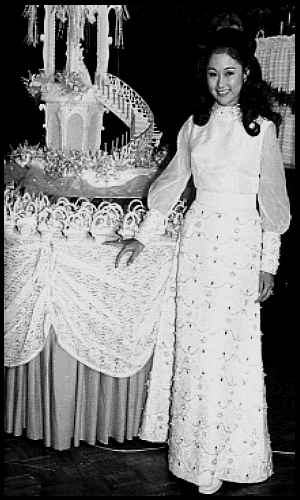
Remembering Vilma’s 18th Birthday!


The year was 1971, when ate Vi celebrated her debut. Ang tagal na pala. Parang kailan lang when I cut these photos sa isang newspaper. I was still in grade school then, at wala pang pambili ng mga magazines. So, I content myself sa newspaper naming sa bahay. As far as I can remember, isang bonggang birthday celebration iyon. Nagkaroon ng isang asalto on the eve of her birthday. Meron din fans party na ginanap sa Mehan garden, pero ang talagang coming-out party niya ay ginanap sa The Plaza restaurant. Wala na itong restaurant na ito ngayon, but it was very popular ng mga panahon na iyon.

The restaurant, which was, located sa Makati, ay siya ring naging venue ng reception ng wedding nina FPJ at Susan Roces. Ang asalto, fans party sa Mehan garden at ang debut party ay added attraction sa movie nina ate Vi at Edgar na “Eternally.” Ang gown ni ate Vi was made by Ben Farrales. Sa isang write-up interview kay Danilo Franco, na siyang gumawa ng wedding gown ni ate Vi, nabanggit nito that he was working for Mang Ben during that time. The white gown bore hand-painted pink roses, which were made by Danilo Franco. Star-studded ang party ni ate Vi. Halos lahat ng young stars of the era ay dumating. Ang mga kasamahan niya sa TV show na The Sensations ang siyang mga kasali sa cotillion.

Dumalo rin ang big stars of the era like sina Rosemarie at Ricky Belmonte, at doon nila inannounce na magpapakasal sila the following month. Special guest din si Mr. Manda Elizalde of Panamin, na tinulungan noon nina ate Vi at Edgar para ikampanya para sa Senado. Dumalo rin ang super big action star noon na si Tony Ferrer kasama ang kanyang misis na si Mutya Ng Pilipinas winner, Alice Crisostomo. Naroon rin ang mga producers ni Ate Vi at ang mga press people. It’s now 2005, 34 years na ang nakakaraan, pero andito pa rin si Ate Vi at siyang nangungunang Reyna ng pelikulang Pilipino. Nawala na ang mga kasabayan niya at maging ang mga sumunod sa kanya, pero nanatiling nag-iisa ang tunay na Reyna ng Pelikulang Pilipino sa lahat ng panahon. – Eric Nadurata, V Magazine 2006

Related Readings:
Vilma Santos-Edgar Mortiz Love Team Circa 1970
Edgar Loves Vilma
IMDB: Edgar Mortiz
Vilma Santos From Wikipedia
Edgar Mortiz From Wikipedia
Vilma Santos-Edgar Mortiz Love Team Circa 1970
The Sweet Voice of Vilma Santos
Vilma Santos’ Sixteen Interview
Discography: Sixteen (1970)
If Vilma comes, can Edgar be far behind?
Love Letters thief
Vi and Bot Photo Album
Ang Makulay na Buhay-Pag-ibig ni Rosa Vilma Santos
Ultimate Scrapbook (Repost)
Pelikula, ATBP’s Nostalgia 2: Vilma and Edgar
Vi And Bot – Sweet Sixteen
Remembering Vilma’s 18th Birthday
Paper Doll by Vilma Santos & Edgar Mortiz Illustrated by Rudy Nebres Kislap, 1974-1975
Nostalgia: Subok na Matibay Subok na Matatag Vilma-Edgar
Top 10 Leading Men
Family Life in the 70s
Love Letters (1970)
Vilma and Edgar Duet (Video)
Sixteen – Vilma Santos (Video)
CLIPS – Sixteen (Video)

How To Identify A Vilmanian

This slideshow requires JavaScript.

Tutoo ka, very high tech na ngayon ang mga fans. Dati nakukuntento na tayo sa pagpunta punta sa mga television station, magbasa ng mga movie magazines at photo pictures nga ating idol sa mga bangketa at bumili ng mga sampaguita para isabit natin sa ating mga idol pero ngayon nakukuha nating mag-communicate sa chat line ng internet, text sa cell phones at various e-groups ng Yahoo! Imagine all of over the globe nakakapagchika-chika at nakakapag-share ng info about our beloved Ate Vi! Sa ilang taon na ring namang pagkabuo ng ating gawi at nakapag-adopt na tayo sa teknolohiya ay kasabay rin ng mga sandali kung saan hindi natin malaman ang tutoong identity ng kausap natin. Katulad ko nakilala n’yo ako nang una bilang si Marcus Peter Lee. Huwag n’yo na akong tanungin kung saan ko nakuha ang name na iyan. Mahabang kuwento. Actually, some of you may still call me by this name. Sa confusion na naging resulta, my apology. Kasi kahit na sino puedeng maging kahit na sino sa hiwaga ng internet! At kasabay nito marami rin tayong na-encounter na mga impostor! Yup, mga nagpapanggap na mga Vilmanians. Mabuti na lang at malakas ang ating radar. Nakukuha nating kilatisin ang mga sumusulpot sa ating tahimik na e-group at nakakalaman natin kung sino ang may itim na dugo na kung tawagin natin ay kampon ng kadiliman! hahahaha! Ang tanong paano ba nating malalaman kung ang isang tao ay isang Vilmanian? Heto ang ilang mga puntos…

1. Panyo – Hindi niya alam na mahalaga sa mga Vilmanian ang panyo. Tulad ng ating idolo nakagawian na ng mga Vilmanians ang makita si Ate Vi na may dalang panyo na terno sa kanyang damit kung kaya karamihan sa mga Vilmanian ay may dalang panyo lalo na kapag lumalabas ng bahay. So kapag nalaman mo na ang impostor ay walang paki kung tumatagaktak na ang pawis niya at nag-comment na bakit ba laging may dalang panyo si Ate Vi, tiyak na itim ang dugo nito. Hindi ito tunay na Vilmanian!

2. Expression – Hindi niya alam ang expression na “heaven!” Ito ang paboritong expression ni Ate Vi kahit magpahanggang ngayon. Signature expression niya ito. Kaya naman pati ang mga Vilmanians kapag nakikita si Ate Vi ang madalas banggitin ng lahat ay “Heaven!” sabay tawa ng malakas. So, kapag ang impostor ay hindi nabanggit man lang ang salitang ito sa kahit na anong conversation, mag-doubt ka na na siya ay may dugo ng kadiliman! Another test: “I love you Lucky!” kapag ang kaharap mo ay hindi alam kung anong ibig sabihin ng “I Love You Lucky!” na comment tiyak na true blooded impostor ito at walang alam sa pagiging isang Vilmanian. Lately alam ng lahat ang expression na “I accept the Challenge!” kapag ang kaharap mo ay nagtanong na “what challenge???” mag-doubt ka na na hindi yan royal blood (Vilmanian)!

3. “Kilo-kilotmetrong Movie dialouge!” – Hindi niya alam o kabisado ang mga kilo-kilometrong line sa mga movie ni Ate Vi. I-test mo siya kung alam niya ang mga lines na: “para kang karinderyang bukas sa lahat ng gustong kumain!”; “para akong manok takbo ng takbo pero wala namang ulo!”; “kung hindi mo ako kayang respetuhen bilang isang kaibigan respetohin mo na lang ako bilang isang tao”; “kung hindi tayo kikilos ngayon kelan pa?”; tanungin mo kung anong title ng mga pelikula hango ang mga lines na iyan. Kapag ang alam niya ay mga short line lang na “hayup” or “my brother is not a pig” tiyak na may dugong kadiliman ang impostor na iyan. Mahalagang malaman mo na ang tunay na Vilmanian ay magaling ang memorya sa mga movie lines ni Ate Vi. Ang iba nga memoryado bawat kataga bawat salita tulad ni Franco Gabriel at Wonder Sam! Kapag ang impostor ay nautal-utal at na-shock sa mga memoryadong lines na binigkas mo sa kanyang harapan tiyak na hindi Vilmanian yan!

4. Style and Manners – Hindi lang ang pagka-peminista ang namana ng mga Vilmanians kay Ate Vi kundi pati na rin ang kanyang personal style at manners. Ang mga Vilmanians ay nanatiling updated sa fashions. Hindi tayo napapahuli kung anong trends mapa-hairstyle o damit. Tulad ng ating idol alam rin natin kung ano ang tamang damit sa tamang okasyon. Kungbaga kung pupunta tayo sa beach at maliligo dala-dala nating ang ating swimming attire. Hindi tayo balot na balot na parang suman kung mag-swimming! Kasabay ng tamang pananamit ay ang ating manners. Kapag nakikipag-usap ang mga Vilmanians tulad ni Ate Vi ay lagi tayong nakakapag-bigay ng mga salita na hindi bastos. Wala ang mapag-kunwaring “po” at “opo” pero hindi nangangahulugang wala ang respeto kapag may kausap tayo. Naruon ang pagbibigay ng mga comento na matalino. Kapag ang inaakal mong impostor ay nagcommento ng wala sa tamang pag-iisip at pabalang-balang kasabay nito ang pananamit na walang style at parang galing sa palengke tiyak na may bahid ng dugo ng kadiliman yan!

5. Information – Tanungin mo kung anong horoscope ni Ate Vi. Anong pangalan ng mga kapatid ni Ate Vi. Ilang silang magkakapatid. Ilang taong gulang na si Ate Vi at saan sila nakatira nuong bata pa si Ate Vi at hindi pa artista! Kapag ang impostor ay nag-isip ng matagal at napanga-nga ang bunganga tiyak na may dugo ng kadiliman ang iyong kaharap!

6. Love life – Isa sa pinakamakulay na bahagi ng pagiging Vilmanian ng isang tao ay ang pagpapahalaga sa naging buhay pag-ibig ni Ate Vi. Hindi niya ito ikinahihiya bagkus ikinararangal niya dahil marami siyang natutunan sa buhay dahil rito. Tanungin mo kung sino sino ang naging boyfriend ni Ate Vi. Kapag ang impostor ay hindi alam kung sino ang tunay na naging boyfriend ni Ate Vi at kung sino ang nakapareha lang niya sa pelikula tiyak na hindi ito tunay na royal blood (Vilmanian) ito bagkus ito ay may dugo ng kadiliman!

7.”Now” – Isa sa karakter ng isang Vilmanian ay lagi itong nagpapahalaga kung ano ang ngayon. Kung baga magandang alalahanin ang nakaraan pero mag mahalaga kung ano ang ngayon. Kung kaya naman ang buhay ng isang Vilmanian marahil ay laging positive. Hindi tayo nabubuhay sa nakaraan. Ang nakaraan ay nakaraan wala na tayong magagawa sa nakalipas maganda man o pangit. Iyan ang pag-iisip na itinanim sa atin ni Ate Vi. Kaya kapag ang kaharap mo ay nag-umpisang maglintaya tungkol sa nakaraang dekada lalo na ang dekada sitenta at nagumpisang magsalita na “I wish it is still the 70s” Tiyak na may bahid ang kalooban nito ng dugong kadiliman. Wala namang masama na magnostalgia paminsan-minsan ngunit kapag ang bukang bibig nito ay ang panahong nakaraan tiyak na may halong dugong kadiliman ang impostor na ito!

8. Dancer – Isa sa pinaka-trade mark ng pagigigng Vilmanian ay ang hilig ng karamihan sa pagsasayaw kaysa pagkangta. Hindi nangangahulugan na hindi mahilig kumanta si Ate Vi katunayan maraming kanta ang identified sa kanya. Tulad ng Bato sa Buhangin, Isipin Mong basta’t Mahal Kita, at iba pa. Katunayan pa rin si Ate Vi ay may signature songs (Sweet Sixteen at Bobby Bobby Bobby among others) kumpara sa mga kanta ng karibal niya na pawang hindi niya signature songs kundi mga version nya lang. Halimbawa ang Handog na lagi niyang kinakanta ay hindi siya ang original at nagpatanyag nito. Kung ang pagkanta man ang porte ng sa kabila ang pagsayaw naman ang forte ni Ate Vi at kung ang kaharap mo ay walang alam sa mga big production number ni Ate Vi tiyak na hindi royal blood (Vilmanian) kundi isang impostor na may dugo ng kadiliman!

9. Professionalism – Another traits na pagiging isang Vilmanian ay ang professionalism. Nasa laging tamang oras at laging handa. Isa sa mga katangian kung bakit magpahanggang ngayon mahal na mahal ng mga producer si Ate Vi dahil hindi ito nagiging cause ng delay ng production. Walang prima-donna attitude si Ate Vi kung kaya naman maging ang mga Vilmanians ay katulad niya. Kung kaya naman ang mga big companies like Star Cinema ay laging ini-imbitahan ang mga Vilmanians na umattend ng kanilang mga premmiere nights. Paano kapag sumuporta ang mga Vilmanians todo-todo. Kapag ang kaharap mo ay puro dada at kulang sa gawa tiyak na may halong dugo ng kadiliman ito. Hindi ito royal blood (Vilmanian)!

10. Humility – Kahit ano pa ang narating ni Ate Vi ay nanatili itong mapag-kumbaba at laging tumatanaw ng utang na loob. Hindi siya “ingrata” kaya wala siyang pelikulang ganyan! Hahahaha! At tulad ni Ate Vi ang mga tagahanga niya ay naging katulad rin niya laging mapagkumbaba at hindi mayabang. Kapag ang kaharap mo ay parang isang bagyo sa pagmamayabang na daig pa ang may ipo-ipo tiyak na may kadudadudang ito ay may dugo ng kadiliman! – RV

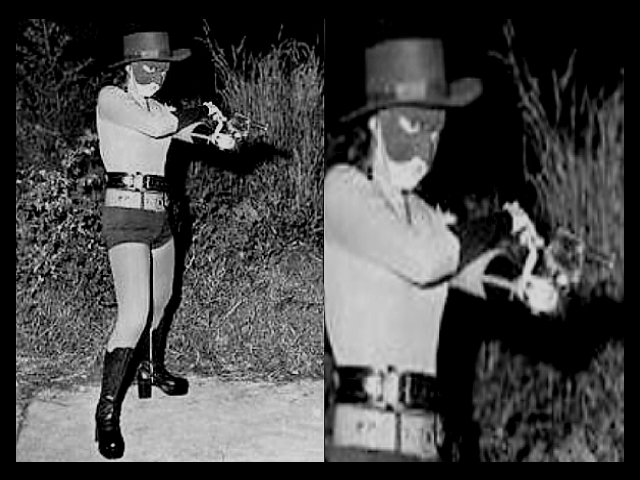
Filmography: Phantom Lady (1974)

This slideshow requires JavaScript.

Basic Information: Director: Leonardo L. Garcia; Writers: Cora M. Crisol (story), Nilo Saez (screenplay); Cast: Vilma Santos, Nick Romano, Paquito Diaz, Rodolfo ‘Boy’ Garcia, Cristina Reyes, Max Alvarado, Angero Goshi, Angel Confiado, Bino Garcia, Greg Lozano, Francisco Cruz, Angelito, Steve Alcarado, Pons De Guzman, Edward Torres, Jack Montes, SOS Daredevils, Pmp Commandos; Music: Tito Arevalo; Cinematography: Ricardo Herrera; Production Co: Silver Film Productions; Released Date: 28 February 1974 (Philippines) (IMDB)

Plot Description: Blind Vilma fights bad guys as Phantom Lady!

Film Achievement: Box Office Hit of 1974

Film Review: “…There was a time in the 70s, particularly in 1973 and 1974, when a spate of Pinoy fantasy films featuring Pinoy superheroes graced our big screens. I think it was Vilma Santos’ Lipad Darna Lipad that started it all. It ushered in this wave of so-called trend in fantasy movies. Besides Darna, Vilma came up with Wonder Vi (1973), Phantom Lady (1974) and Vivian Volta (1974); Nora Aunor had Super Gee (1973) based on a popular komik serial; Superman and Batman had their local counterparts in Zoom, Zoom Superman (1973) with Ariel Ureta and Fight Batman Fight with Victor Wood. Vilma came out with another sequel of Darna titled Darna and the Giants, also in 1973; Dolphy had his own version of Captain Barbell in Captain Barbell Boom (1973). It was the movie, Supergirl (1973) which starred Pinky, that made a major impact among the moviegoers that time. It was a surprise hit that year. It was reshown several times due to insistent public demand…” – Simon Santos (READ MORE)

Filmography: Tok, Tok, Palatok (1974)

This slideshow requires JavaScript.

Basic Information: Directed: F. H. Constantino; Screenplay: Bert R. Mendoza; Cast: Vilma Santos, Panchito, Bentot, Pugak, Dencio Padilla, Tange, Max Alvarado, Jojit Paredes, Ike Lozada, Ponga, Rodolfo boy Garcia, Alicia Alonzo, Mary Walter, Ange; Original Music: D’ Amarillo; Cinematography: Fermin Pagsisihan

Plot Description: Vilma Santos played a twin sister…of a snake.

Film Achievement: No Available Data

Film Review: “…That was not the first time I met her. Actually, I know her way way back when she was only 8 or 9 years old, pumupunta sila sa amin. Kasi regular customer ng Mother ko ang Mama niya sa ready made clothes, yun kasi ang business ng Mother ko noon sa Rustans. I was about 10 or 11 years old then, and while her mom is making the selection of cloth, iniiwan naman niya si Vilma sa living room namin. Minamasdan ko siya, ang ganda-ganda ng mukha niya…Maasikaso sa set, malambing, mabait lalo na sa maliliit na crew. Doon kami nagkaroon ng bonding when we were doing that film. Mabuting tao talaga si Vilma, she has a good heart and always willing to help others. We became very close, di ko makakalimutan na minsan ay nag-drive ako ng 3 hours just to see her…Let’s split it up into two. Personality and how she relates to others. Personality wise, mabuting tao siya, she is so trusting to the extend that it becomes disadvantage on her part , she trusted people so much. About relation to others, she is so approciable, a perfect politician, she’s always ready to help, not skimming, she has social conscience and will do things to achieve her goal…” – Franco Gabriel (READ MORE)

“…And so, to prove them wrong, Vilma’s manager smartly plotted follow-up recordings. Not only did Vilma record her follow-up album, she recorded a string of mini-LPs. Mini-LPs are shorter version of the big vinyl record with two songs on each side. She ventured into Tagalog songs, recording six songs that include instants hits like Isipin Mong Basta’t Mahal Kita, a theme song to a film she did opposite Filipino chess grand master, Eugene Torre; Palong-Palo, where she received a golden record award in 1974 and an up-tempo opm, Tok-Tok Palatok, another theme song from one of her comedy film with the same title opposite Jojit Paredes…” – RV (READ MORE)

“…Very few probably are aware that Ronnie was once a matinee idol in the music profession. He was the other half of the famous singing duo called The Two of Us. His partner was Jojit Paredes, the cousin of Jim Paredes, who was also a kilabot ng mga colegiala as part of the Apolinario Mabini Hiking Society, now better known as the APO. Ronnie and Jojit were schoolmates in La Salle grade school, while Jim and his then large group were from rival Ateneo…After The Two of Us, Jojit eventually disappeared from the scene (he is now in L.A. married to an American and works as an assistant administrator in a hospital), while Ronnie’s popularity lingered, especially when he and Vilma Santos began dating. Ronnie also joined Penthouse 7 as executive producer/dancer and also part of the group was Ida Ramos, who many years later would become his wife. (Ida Henares now heads GMA Artist Center.) In between, he also hosted his own variety shows on TV, primarily in the Broadcast City stations…” – Butch Francisco (READ MORE)

RELATED READING: Interview with Jojit Paredes

Filmography: Biktima (1974)

This slideshow requires JavaScript.

Basic Information: Directed: Nilo Saez; Story: Laura Santos; Screenplay: Jose F Sabal; Cast: Helen Gamboa, Celia Rodriguez, Perla Bautista, Cristina Reyes, Divina Valencia, Leopoldo Salcedo, Bert Leroy Jr., Joe Sison, Tony Santos Jr., Yoyoy Villame, Tommy Abuel, Vilma Santos, Edgar Mortiz, Ike Lozada, German Moreno, Max Alvarado, Renato Robles, Patria Plata, Elizabeth vaughn, Maribel, Danny Rojo, Joaquin Fajardo, Steve Alcarado, Lope Policarpio, Romy Luartes, Lex Amores, Boy Clinton; Executive producer: Espiridion Laxa; Cinematography: Ricardo Dano

Plot Description: In a strange turn of events, Dolores (Vilma Santos) moves in to live with her grandfather, who has sole custody of her ever since her mother was imprisoned for the m rder of Dolores’ father. Mystery unfolds as Dolores stays with her grandfather when members of the household are murdered one by one. Will Dolores escape the chaos unraveling around her or will she be the next victim? – Kabayan Central (READ MORE)

A gripping whodunit with young superstar Vilma Santos at the center of a terrifying murder whirlpool! In the style of Agatha Christie, the story is about Dolores (Vilma Santos), a poor girl who has suddenly found herself a member of a strange but wealthy household, thanks to her newly-discovered sick and aging grandfather. The family members, however, get murdered one by one, making every surviving member a suspect. An all-star cast supports Vilma in this murder mystery, including Helen Gamboa, Celia Rodriguez, Perla Bautista, Edgar Mortiz, Leopoldo Salcedo, Max Alvarado, and Bert Leroy Jr. A Tagalog Ilang-Ilagn Productions presentation. – Trigon Video

Film Achievement: Entry to 1974 Manila Film Festival

Film Review: This was the ending scene (see video below) in the movie “Biktima”, Ate Vi’s entry in the 1974 Manila Film Festival. In the movie, she killed Cristina Reyes, Helen Gamboa, Divina Valencia, Celia Rodriguez, Yoyoy Villame to avenge her mother’s imprisonment who was wrongfully accused of murder. Perla Bautista played Ate Vi’s mother. I think Bobot played as a reporter. Ate Vi was caught and was sentenced to die in the electric chair. That’s why she was bald in the last scene. – moviefan808 (You Tuber)

Filmography: Kampanerang Kuba (1974)

This slideshow requires JavaScript.

Basic Information: Directed: Nilo Saez; Story: Pablo S. Gomez; Screenplay: Nilo Saez, Jose Flores Sibal; Cast: Vilma Santos, Edgar Mortiz, Celia Rodriguez, Dindo Fernando, Rosanna Marquez, Perla Bautista, Max Alvarado, Ernie Garcia, Tony Santos, Jr., Patria Plata, Metring David, Greg Lozano, Joaquin Fajardo, Steve Alcarado, Romy Luartes, Francisco Cruz, Carmen Romasanta, Danny Rojo, Edwin Cruz, SOS Daredevils, P I Boys; Executive producer: Espiridion Laxa; Original Music: Tito Arevalo; Cinematography: Benjamin L. Lobo

Plot Description: Kampanerang Kuba (lit. Hunchbacked Lady Bellringer) was a fantasy soap opera television series broadcast by ABS-CBN in the Philippines. It was inspired by 1973 film with same title, which was starred by Vilma Santos and Bobot Mortiz. It was tagged as Pinoy Disney. It was originally based from a comic book series written by Pablo Gomez. – Wikipedia (READ MORE)

Film Achievement: Film adapted from comics written Pablo S. Gomez; Illustrated by Alex Nino for Planet Komiks, 1971; Remade into TV series in 2005 by ABS-CBN and starring Anne Curtis, Luis Manzano, Jomari Yllana with Edgar Mortiz and directed by Wenn Deramas, Andoy Ranay.

Film Review: Kampanerang Kuba’s convulated, long story maybe attributed to the original comics material of Pablo Gomez. A good director should ironed out all the twists and turns and all its one-dimenssional characters. For example, Celia Rodriguez character, Tateng. She is so masochistic that it is just right to know why she is so mean and that with her towernesque beauty, she decided to remained in the town where everything seems to be so tribial. Nilo Saez (with Jose Flores Sibal adapted the script) failed miserably in this regard. Shot in Nagcarlan Laguna, Kampanerang Kuba showcased the old Filipino beliefs in patron saints, religious rituals and miracles. It also demonstrates that people can be so cruel, can passed judgement, and can asked for forgiveness that quick when confronted with truth. All will be forgiving without taking into account all the harm that they have done. In the real world, these people will be punished. Celia Rodriguez seems to be wooden in so many scenes but equally infuririating when she started to do her verbal and physical abuse of Anda. With limited dialouge, a young Dindo Fernando portrayed Tateng’s lover convincingly. All the other supporting roles including Perla Bautista, Ernie Garcia and others gave a forgettable performances. About the two main lead, Edgar Mortiz and Vilma Santos did what they can to portrayed their roles. Edgar Mortiz seems to be trying very hard to be effective as the priest but acting is clearly not his forte. Would this be different if Jay Ilagan did this role? Vilma Santos succeed more with her solo scenes, talking to the patron saints and the bell tower, eating with her bare hands and trying to beautify her ugly face. – RV, (READ MORE)

“Despite of (or perhaps because of) her hideous appearance, she is held dear by the parish priest Padre Damaso but abhorred by the church caretaker, Edeng who maltreats her at every opportunity. Andang is ugly, ugly, ugly and deserves all the pain she can get…don’t think Mang Martin will give the miracle for free. Vilma emerges as the ugly hunchback Andeng! Sandra is gone! Death to fantasy!…” – Silver Screen Surfer, (READ MORE)

Feast for Eyes, Soul – “With only a little over an hour spent on the road, Lenten pilgrims can explore the heritage churches of Laguna province for the traditional “visita iglesia” (church visit) today. Laguna has 86 Catholic churches, 26 of these built between the 16th and 19th centuries. The churches give pilgrims glimpses of the Catholic faith’s beginnings and its role in the spiritual and cultural development of Laguna. Jerry Gaela, 51, a parish priest administering St. Paul the First Hermit Cathedral in San Pablo City, said that while visita iglesia was not a required practice among Catholics, it was “additional devotion for personal and spiritual growth.” Visita iglesia is traditionally done on the night of Maundy Thursday when the Blessed Sacrament is displayed in the churches. People used to visit seven churches, but now, they would go to as many as 14 churches and pray at the Stations of the Cross. The spirit is “to accompany the Lord in his Passion,” Gaela said. These are seven of Laguna’s heritage churches worth a visit today…San Bartolome Apostol Church, Nagcarlan town, The baroque church, 15 km from San Pablo, was first built in 1583 using light materials. It was in 1752 when the second church was built from stone and brick. However, the structure was damaged by a fire in 1781. A choir loft was added when the church was rebuilt in 1845 by Rev. Vicente Velloc, who also built the nearby Nagcarlan underground cemetery. The church was featured in the 1974 film, “Kampanerang Kuba,” starring now Batangas Rep. Vilma Santos-Recto, and the film’s 2005 television remake of the same title, starring Anne Curtis…” – Kimmy Baraoidan, Philippine Daily Inquirer, 13 April 2017 (READ MORE)

Filmography: Happy Days are Here Again (1974)

This slideshow requires JavaScript.

Basic Information: Directed: Cirio H. Santiago; Cast: All Star Cast; Production Co.: Premiere Productions/LVN Productions/Sampaguita Pictures; Release Date: November 15, 1974

Plot Description: A collections of special film clips, mostly production numbers, from the hit films of the big three, Sampaguita, Premeire, and LVN. Films of the 50s, 60s and 70s narrated by the big studio’s contracts stars like Gloria Romero, Nida Blanca, Eddie Gutierrez and others.

Film Achievement: No Available Data

Film Review: “…In 1974, the Big 3 studios of the 50s, LVN Pictures, Sampaguita Pictures and Premiere Productions reproduced a full-length movie showcasing a compilation of the musical comedies produced by the three studios. It was a painstaking job for the researchers since most of the best musicals produced by the three studios were either lost or destroyed. At the start of the project, director Lamberto V. Avellana was supposed to direct the film but eventually replaced by Cirio Santiago after so many changes in the project including the script. He ended up as consultant of the movie. The film was HAPPY DAYS ARE HERE AGAIN, with brief narrations by movie stars like Gloria Romero, Nida Blanca, Susan Roces, Leopoldo Salcedo, Jaime de la Rosa, Eddie Gutierrez, Tirso Cruz III, Pugo, German Moreno and Ike Lozada…” – Pelikula Atbp (READ MORE)

“Happy Days Are Here Again (Sampaguita Pictures / LVN Studios And Premiere Productions, 1974) proves to cynics that there was a golden age of Filipino movies. From the pre-war era to the early 50’s, the Filipino film industry produced movies with superior techniques and highly entertaining plots. These films were considered a national past-time not only by a common public but also by an elite group who looked upon its stars as peers. If moviegoers nowadays look upon their plots as overused formulas and their gawky sentiments as embarrassments, it is because these films expressed the spirit of their times, an innocence albeit hypocritical, which we have overgrown. Although limited to the output of three major studios LVN, Sampaguita and Premiere, the movie has many memories to offer. If we do let a tear fall, it’s because there has been nothing to replace them. First and foremost of the excerpts is from Giliw Ko (1939), a musical with Mila del Sol being serenaded by Fernando Poe. The movie was restored by The National Film And Sound Archive Of Australia and the Philippine Information Agency in 1998 since most of the pre-war films are either lost or destroyed. Among the other outstanding excerpts are the finale from Nasaan Ka Irog (1957) with Letty Liboon, Diomedes Maturan singing The Rose Tatoo, Nida Blanca’s singing and dancing in Batangueña (1953) and Waray-Waray (1954), Pugo and Togo in scenes from their comedies, Dolphy and Lolita Rodriguez as Jack And Jill (1953), Hollywood actor Don Johnson singing Close To You, a song popularized by The Carpenters to leading lady Nora Aunor in a deleted scene from Lollipops And Roses (1971) and the grand finale from Hawayana (1953)…” – Jojo Devera, Sari-saring Sineng Pinoy (READ MORE)

“…Cirio H. Santiago had grown up in the studio owned by his parents and in 1957, aged only 21, had enough business acumen to forsee the grim future for the Big Three studios. Of particular interest to Santiago were the opportunities to be made in the lucrative and ever-expanding American drive-in circuit. With dreams of taking his films to the world’s screens, and with the American drive-in circuit firmly in his sights, Santiago took a huge financial risk for Premiere: along with Eddie Romero, he set up the Philippines’ first production, The Day Of The Trumpet (1957), for the international market. Santiago himself continued to pursue a career in the international whilst keeping Premiere Productions afloat. By the early Seventies Premiere began seeking out co-production deals with countries including the United States; Premiere, one of the Big Three studios of the Fifties, was rapidly evolving to become primarily, though not exclusively, a production unit for international features and co-productions including those of Roger Corman. In Corman, Santiago found the perfect partner in crime, and would continue a working relationship and close friendship from their first meeting in 1970 until Cirio passed away in 2008…” – Andrew Leavold (READ MORE)

Filmography: Mga Tigre ng Sierra Cruz (1974)

This slideshow requires JavaScript.

Basic Information: Directed: Augusto Buenaventura; Screenplay, story: Augusto Buenaventura, Ruben Rustia; Cast: Charito Solis, Vilma Santos, Dante Rivero, Eddie Garcia, Paquito Diaz, Ruben Rustia, Raul Aragon, Estrella Kuenzler, Ernie Zarate, Mandy Bustamante, Ruel Vernal, Robert Talby, Bert Laforteza, Angero Goshi, George Henson, Sam Jorge, Pons De Guzman, Mary Martin, Lito Cruz, The PMP Boys, The SOS Daredevils; Executive producer: Emilia Blass; Original Music: Restie Umali; Cinematography: Fortunato Bernardo

Plot Description: No Available Data

Film Achievement: One of six (and the first!) Solis and Santos’ collaborations (Happy Days are Here Again, Mga Tigre ng Sierra Cruz, Modelong Tanso, Ipagpatawad Mo, Dahil Mahal Kita The Dolzura Cortez Story, Hanggang Ngayon Ika’y Minamahal) – RV (READ MORE)

Film Review: “Ooops! Keep your cool, dear Noranians, and listen to Charito Solis’ explanation before you accuse her of being, uh, “maka-Vilma. “Vilma has a wider range as an actress while Nora is limited and typecast in certain roles,” Charito said in a tone devoid of intrigue, answering our question in a straightforward, matter-of-fact manner. “Si Vilma, puede kahit anong role, kahit bold. You can’t imagine Nora doing a bold role, can you?” But, and that’s the big but, “Nora has more depth than Vilma,” Charito added, “and it’s because of her expressive eyes. Nora is very effective in scenes where she doesn’t say anything, just act with her eyes, at “yan ang kulang ni Vilma. Vilma has to say something to be effective.” Charito has worked with Vilma twice (in “Mga Tigre ng SierraCruz” and “Modelong Tanso”) and with Nora once (“Minsan May Isang Ina”). Speaking in general now, said Charito, “Vilma is the better actress.” We asked Charito that ticklish question during the lunch presscon for her latest movie, the star-studded Mother’s Day offering of Regal Films titled “Dear Mama,” which also stars Gloria Romero, Laurice Guillen, Snooky, Janice de Belen, Julie Vega, Manilyn Reynes, Jaypee de Guzman, Rey “PJ” Abellana and Alicia Alonzo in the title role. Our own personal opinion somehow jibes with that of Charito whose “throne,” I suppose, will be inherited by Vilma (while Nora will inherit the “throne” of the other drama queen, Lolita Rodriguez).” – Ricardo F. Lo, The Phil. Star April 031984 (READ MORE)

“…To the right are the living quarters, including the high ceiling bedrooms topped with transoms or carved room vents for air circulation. The expansive dining room features an old-fashioned banguerra, where tableware and glasses are left to dry. This area of the house figured prominently in the 1972 shooting of the Vilma Santos-Dante Rivero-Charito Solis war-themed movie, Mga Tigre ng Sierra Cruz…” – Heritage Conservation Society (HCS) (READ MORE)

“…Charito Solis, who initially had a tempestuous and hostile relationship with Vilma while making the ill-fated but box-office MMFF champ Modelong Tanso, had a change of heart when the reborn versatile/professional/charismatic actress Vilma impressed her through the years, at idineklara niya sa buong mundo, without batting an eyelash. na di hamak na mas magaling na aktres si Vilma kaysa kay Nora Aunor. Walang kumontra kay Chato dahil totoo ang sinabi niya, si La Solis yata iyan, at pati nga si Amalia Fuentes, another certified Vilmanian, at “kaaway” na mortal ni La Solis, ay sumang-ayon sa kanya. Si Susan Roces, ano naman kaya ang opinion niya sa obserbasyon ni Chato? Ah, Nida Blanca. Ang dami nilang pinagsamahan ni Vilma, mula TV hanggang sa movies. Dati ay una sa billing si Nida, subali’t dahil nga sa gulong ng buhay ay kailangang maging praktikal at handa ka sa katotohanang magiging second lead ka lang in the future. Walang problema sina Nida at Vilma – ke mag-Ate o mag-Ina sila sa mga proyekto, may chemistry sila and mutual respect. Patok ang kanilang pagsasama. Remember their mother and daughter roles in Ibulong Mo Sa Diyos? Sayang at wala na ang original versatile movie and dancing queen Nida – mapa-aksiyon (Babaing Isputnik), musical (Huwag Kang Sumingit with Gloria Romero), comedy (Waray-waray) at drama (Miguelito at Magdusa Ka!). Kung tutuusin ay tunay na maigsi ang ating hiram na buhay. Kung buhay nga lang ang mga nabanggit sa itaas ay mas lalu sanang makulay ang daigdig ng sining. Subali’t ang lahat ay may katapusan. Ating suriin ang mga sumusunod na talata…” – Mario O. Garces (READ MORE)

“…The best part of the shoot was meeting the stars of the movie in person. I became an instant Ate Vi fan when she obliged the townpeople gathered outside the gate with a personal appearance, waving her hands to the crowd below from the balcony. The whole town just went mad. Later, with my portable cassette recorder, I even managed to interview Ate Vi, asking how she could possibly retain her composure despite her stardom. I asked a lot of showbiz questions that would put Ricky Lo to shame. I kept playing our recorded conversations for months after that, until I lost the cassette tape. Co-starring with Vilma in the movie was another Kapampangan, Dante Rivero (aka, Luisito Mayer Jr., from Floridablanca). Unlike Ate Vi who was always game, Dante was not too accommodating, brushing my request for interview with a terse “Can I talk later?”. But he took a shine to my cousin Beng, who later asked her for a date. I was also luckless with supporting actor Ruel Vernal, who intimidated me with his height. Charito Solis, a co-starrer, was unfortunately not part of any scenes that were for shooting here…When it was all over, the house and its garden were a mess, with most of the flowering plants in the garden dead and trampled. Worse, when the movie was finally shown in local theaters after months of anticipation, the house was just seen on screen for a minute or so, I could barely recognize it. Even the part of the Filipina househelp played by a local Mabalacat girl was edited out, her 15 minutes of fame down the drain. I don’t think “Mga Tigre ng Sierra Cruz” made a killing in the box office, either. Many shootings have been held at the grand Morales mansion since then—the most recent one was undertaken by U.P. film students in March 2009. But old folks who pass by the street still point to the old mansion and refer to it as “the house where they shot the movie ‘Mga Tigre ng Sierra Cruz’ starring Vilma Santos and Dante Rivero…” – Alex R. Castro (READ MORE)

“…The expansive dining room features an old-fashioned banggera, where table ware and glasses are left to air-dry. This area of the house figured prominently in the 1972 shooting of the Vilma Santos-Dante Rivero-Charito Solis war-themed movie, “Mga Tigre ng Sierra Cruz”. A utility wing is conjoined with the dining area. A small veranda and the white-tiled bathroom are found here, complete with claw foot porcelain tubs and modern plumbing. Space flows from one room to another leading you to the kitchen and semi-enclosed azotea with stairs that you down almost down the Sapang Balen bank…” – Alex R. Castro, Views from Pangpang, Dec 10 2008 (READ MORE)

“…She had come to Mabalacat to film the war movie, “Mga Tigre ng Sierra Cruz”and several key scenes were to be filmed in my granduncle’s old house in Sta. Ines, conveniently right next to ours. That meant instant access to the production, as we were the designated caretakers of the Morales mansion. The enviable task of fetching Vilma from an undisclosed hotel to be brought to the house was assigned to my father. To get to the shooting venue without attracting the attention of the motley crowd to get a glimpse of the stars, Vilma was whisked off to our own house which had a connecting passage to my relatives’place. For the next three days, I fell under the spell of Ate Vi—easily transforming me from a Noranian to Vilmanian. More so when, during a lull moment in the shoot, I had the gumption to talk to her (her co-star Dante Rivero refused to be interviewed!), and I even managed to put on tape our short conversation which began with her greeting ”To all the people of Mabalacat, I love you all!!”. Who wouldn’t be charmed by her sweetness? (Though I bet that was a standard line she said to ALL the people in ALL the towns she visited)…” – Alex R. Castro, Views from Pangpang, Sep 10 2012 (READ MORE)

Filmography: Batya’t Palu-Palo (1974)

This slideshow requires JavaScript.

Basic Information: Directed: Pablo Santiago; Screenplay: Fred Navarro; Cast: Fernando Poe Jr., Vilma Santos, Fred Montilla, Mila del Sol, Dencio Padilla, Robert Talabis, Vic Varrion, Janine Frias, Lorna Tolentino, Phillip Salvador, Liza Anzures, Angge, Paquito Diaz, Max Alvarado, Lito Anzures; Executive producer: Fernando Poe Jr.; Original Music: Ernani Cuenco; Cinematography: Sergio Lobo; Film Editing: Augusto Salvador; Production Design: Pete Herrera; Sound: Angel Avellana, Jun Ella; Release Date:4 May 1974 (Philippines); Production Co: FPJ Productions – (IMDB)

Plot Description: “Batya’t Palu Palo,” is a situation comedy about a rich heiress, Estella (Vilma Santos), who disguises as a lowly washerwoman in order to find out for herself the true meaning of love that she found in Berting (Fernando Poe Jr).

Film Achievement: The success of this film resulted with a follow-up film, Bato sa Buhangin (1976), the OPM hit, used as the theme song or soundtrack of this 1974 Box Office Hit. Total Number of Fernando Poe Jr. and Vilma Santos Films: 5 – Batya’t Palu-Palo, Bato sa Buhangin, Ikaw ang Mahal Ko, Dugo At Pag-ibig sa Kapirasong Lupa, Mga Mata ni Angelita

Film Review: “…Recently, we spent an entire afternoon watching replays of three shows from Palibhasa Lalake and one from FPJ. Titled Batya’t Palo-palo, the FPJ film stars Fernando Poe Jr. with Vilma Santos as his leading lady. It presents a love story between Ronnie (Poe’s nickname) who plays a tubero working in the hacienda of the rich Saavedra family whose daughter (Vilma) he meets while she is cleaning her clothes by the river. The twist in the story comes when Ronnie mistakes Vilma for a laundry woman and she plays along, asking the women in the hacienda not to reveal her secret. Ronnie and Vilma begin to take a liking to each other while Vilma’s friends as well as Ronnie’s man Friday cooperate in keeping her secret. The parents of Vilma get wind of the situation, and are outraged that their daughter could fall for a man not in their class. Ronnie, who is unaware of all this secrecy, leaves the farm to board a bus for Manila. Vilma follows him to the station and while the bus is leaving, they get on board to their happy ending. We enjoyed this simple love story with only minimal fight scenes expected of a Ronnie Poe picture. Without question, there was definite magic in the Ronnie-Vilma team-up which kept us glued to the screen…Since these stories are re-runs of those produced many years ago, we can expect negative reactions from today’s young audience. We can already hear the words “unlikely storyline,” “ridiculous costuming” and “outdated locations.” We agree with all these accusations. However, to us such stories represent a period gone by, a part of our history that we should appreciate and be happy that some people took the pains to preserve…” – Bibsy M. Carballo, The Philippine Star, 11 March 2015 (READ MORE)

Two newly-proclaimed box office champions of Philippine movies star in FPJ Productions’ upcoming 13th anniversary presentations, “Batya’t Palu Palo,” a situation comedy about a rich heiress who disguises as a lowly washerwoman in order to find out for herself the true meaning of love. Dilineating the lead roles are Fernando Poe Jr. and Vilma Santos who star for the first time together. Now being filmed among the lush greens of Hacienda Luisita in Tarlac, “Batya’t Palu Palo” hopes to make people forget the humdrum activities of this world. A wholesome family entertainment, the flick will have Ronnie step down from his throne as the country’s number one action star to the down-to-earth role of Berting, a haceinda hand who nevertheless, catches the attention of the young rich and quiete spolied Estella. Directed by ace meg man Pablo Santiago, “Batya’t Palu Palo” is scripted by Fred Navarro, base on a story by Ronwaldo Reyes. – FPJ-Da King Blogspot (READ MORE)

“…Memories! I started reminiscing instantly. I want to ask Ate Susan (Roces, FPJ’s wife) nga for DVD copies of our three movies. I was only 21 when we made “Batya.” Ninety percent of the movie was shot in Hacienda Luisita (Tarlac) where we stayed for two months. He taught me how to swim in the hacienda’s swimming pool. We were with (co-star) Lorna Tolentino then. I admit that I didn’t know how to swim when I did “Dyesebel.” But the most memorable scene [from “Batya”] was the ending, where I ran after him, while he was aboard a train….” – RV (READ MORE)

“…Nang magkita sina Ronnie at Vilma sa first shooting day sa Montalban, Rizal, halos hindi mapatid ang batian, katiyawan at biruan. Pareho silang masayang-masaya. Sapagka’t at long last daw, natuloy din ang kanilang pagtatambal pagkalipas ng halos kulang sa isang taong paghihintay na ma-vacant si Vilma sa dami ng pelikulang ginawa. As sa simula ng siyuting, akala mo hindi sila magkakilala. Dibdiban ang acting at dialogue. Sunod-sunod ang take ng iba’t ibang angulo. Kalahating araw silang walang biruan at nang matapos ang maraming eksena ay saka lamang sila muling nagtawanan. “Mahirap na,” sabi ni Vi, “Kailangang makarami ng scenes para naman makabawi sa akin ang FPJ. Biruin naman ninyong ang tagal din ang ipinaghintay nila sa akin. Nagpapasalamat ako sa napakahabang patience nila. Kung tulad ng iba, baka pinalitan na lamang ako ng ibang leading lady. Masyado silang professional sa pakikipag-deal, lalo na si Ronnie kaya nahihiya man ako sa atraso, hindi naman makapag-back out doon sa mga naka-schedule ko na. Dapat na tapusain ko rin para walang magalit na producer sa akin…” Letty G. Celi (READ MORE)

Related Reading:

#BatyatPaloPalo, #FPJ, #FernandoPoeJr, #VilmaSantos