Vilma Santos-Recto is a popular multi-awarded actress and politician in the Republic of the Philippines. *** She is known as "Queen of Philippine Movies," "Queenstar," "Grand Slam Queen," "Box Office Queen," and "Star for All Seasons." *** This website is mostly about her iconic film career.
Kissing on the park
Hanging on the forth
Holding hand in hand
Down the avenue
Strolling down the lane
A castle in the air
A Kissin’ or lovin’
A kissing’ or lovin’
A kissing all night long
They said I’m only Sweet Sixteen
I’ve never been Kiss
I’ve never been loved
And all I want is Candy
Ice Cream teddy bear Lollipop
Riding on the sun
A lot of things we do
Whispering to my ears
I love you so
Strolling down the lane
A castle in the air
A Kissin’ or lovin’
A kissing’ or lovin’
A kissing all night long
Kissing on the park
Hanging on the forth
Holding hand in hand
Down the avenue
Strolling down the lane
A castle in the air
A Kissin’ or lovin’
A kissing’ or lovin’
A kissing all night long
(fade) Global Vilmanians
Signature Songs – “…As a singer, Vilma’s thin voice didn’t stop her to become a successful singer. Her hard work paid off and earned her a piece of history. The reluctant singer recorded strings of solo albums that created her signature songs, “Sixteen” and “Bobby, Bobby, Bobby.” Signature songs that enlisted her together with famous singers like Imelda Papin (Bakit), Eva Eugenio (Tukso), Claire DeLaFuente (Sayang), Sharon Cuneta (Mr. DJ), Didith Reyes (Nananabik), Aiza Siguerra (Pagdating Ng Panahon), Freddie Aguilar (Anak), Florante (Handog), and Gary Valenciano (Di Na Natuto). Her sweet and child like voice reflected the innocence of her original up-tempo songs that tackles teenage issues like dating, sexual education, body images, and adulthood. Teenage issues that are still remarkably relevant today…” – RV (READ MORE)
Listening to Sixteen – “…Vilma’s first album was pure fun and still very relevant today. Consist of twelve songs six on each side. The vinyl record on side A starts with its carrying single, Sixteen. Composed by Dannie Subido, Sixteen talks about “making out” in the park. This might alarm some of the religious zealots in the 70s but Ate Vi’s wholesome sweet voice makes the song wholesome and child like. The hidden sex – “making out” – kissing and hugging in public place – message of the song would probably the reason why ”Sixteen” became the favorites of teenagers. The song catapulted Vilma’s signature song. A feat that even her closest rival, Nora Aunor can’t replicated (Nora Aunor despite successful singing career lacked a signature song). Remember this is the hippie era and the start of the feminist movement. A clear reason why ”Sixteen” was a major hit with the free love care free young generation of this era. The next songs, Dry your Eyes and Bring Back Your Love both arranged by Dannie Subido are love songs that boils down to frustration of a girl in love. Followed by a turned around in terms of mood with Vi’s version of a Bacharach composition, Raindrops Keep Falling On My Head, a funny but out of place song. One of the two final songs on side A, came as a surprise. “When The Clock Strikes One” was an original composition of Robert Medina and like “Sixteen” was about “making out” – kissing and hugging but this time its more fun because of its unusual up-tempo mood that’s actually more like a hip-hop song.
Side B of Sixteen was pure fun too. Three songs that stands out were the original compositions of Dannie Subido, “Sometimes,” “It is Wonderful to be In Love” and “Then Along Came You Edgar.” The lyrics of these songs are simple and obviously catered to the massive followers of the Edgar – Vilma love team. Before Britney Spears came up with her hit song, “Sometimes,” Vilma has her own song titled “Sometimes.” Both Britney and Vilma’s songs are about teenage love confusion. It’s a Wonderful To Be in Love is self-explanatory, yes Ate Vi is in love and she expressed it nicely in this song. The up-tempo and simple lyrics of this song makes it more like a children rhyme song except that it’s about almost “adult-kind” of love. The puppy love theme of the album continued with an uplifting song, well at least for the Vi and Bot fans with “Then Along Came You, Edgar.” This song confirmed Vi’s puppy love to the dark and handsome but not so tall cutie-pie, Edgar Mortiz. Once again, Dannie Subido’s arrangement and lyrics are simple but playful, a perfect fit to Ate Vi’s sweet range….” – RV (READ MORE)
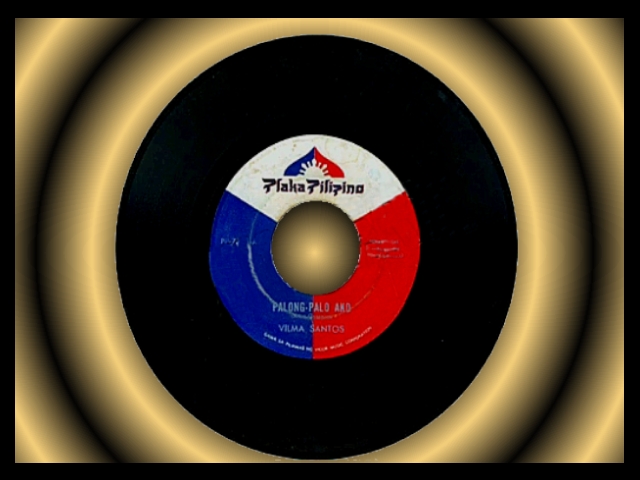
Awards in Recording: – 1970 Sixteen given by Willears Records; 1974 Palong-Palo given by Vicor Records – Wikipedia (READ MORE)
Golden Recording – “…Hindi man masasabing singer subali’t sa pamamagitan ng kanyang manager na si William Leary na nagtayo ng sariling Wilears Records ay nagkaroon ng mga plaka si Vi. Mga mahigit na limampung awitin, na karamihan ay sinulat ni Danny Subido, ang isinaplaka ni Vi kasama na ‘yung mga duet nila ni Edgar Mortiz. Nagkaroon din si Vi ng mga Gold Record katulad ng signature song niya na Sixteen na isinapelikula ng Sampaguita Pictures noong 1970 at Palung-Palo Ako. Bilang singer, ilang long playing albums, mini lps at singles din ang nagawang recording ni Nora sa Alpha Records ni Buddy de Vera. May mga LP siya na ang laman ay puro Tagalog songs, Pilipino dialects, Hawaiian songs, duet nila ni Manny de Leon at iba’t ibang mga adaptations na awitin….” – Alfonso Valencia (READ MORE)
Wilear’s Top Company in Philippine Awards – The third annual presentation of the Awit Awards was held at the Manila Hotel with Senator Doy Laurel of the Philippine Congress as guest of honor and principal speaker. The sponsoring group was the Philippine Academy of Recording Arts and Sciences (PARAS). The event criticized in the local circle because of its unpopular results and deglamourized presentation, gave posthumous awards of merit to Frankie Martin, a juror last year, and Santiago Suarez, one of Filipino musical stalwarts. The founder of the Awit Awards, Billboard correspondent Oskar Salazar, was also honored. Wilear’s Records scored heavily in the awards this year. The foreign division was permanently scrapped. Two major companies, Villar Records and Dyna Products, Inc. did not submit nominations this year. The 1970 winners are: Female Singer (English) – Nora Aunor (Alpha); Male Singer (English) – Eddie Mesa (Grandeur); Female Singer (Vernacular) – Amapola (Lapulapu); Male Singer (Vernacular) – Armando Ramos (Wilear’s). Most Promising Female Singer – Eva Vivar (Alpha); Most Promising Male Singer (tie) – Boy Mondragon (Vicor) and Jonathan Potenciano (D’Swan); Record Company of the Year – Wilear’s Records; Song of the Year – “Forever Loving You” by Bert Dominic (Billboard); Best Single – “Sixteen” by Vilma Santos (Wilear’s); Vocal Group (Vernacular) – D’Big 3 Sullivans (Vicor); Vocal Group (English) – Reycard Duet (Alpha); Instrumental Recording – “Philippine Rondalla” by the Philippine Rondalla (Wilear’s); Original Movie Music Theme – Soundtrack of “Wanted: Perfect Mother” by Danny Subido (Neon); Special Recording – “Philippine Rondalla” (Wilear’s); Instrumental – Eric Dimson (Vicor); Instrumental Group – Pandacan Original Brass Band (Wilear’s); Musical Arranger – Doming Amarillo; Lyricist (Vernacular) – Philip Maninang; Lyricist (English) – Danny Subido; Composer (English) – Robert Dominic; Album Liner Notes (LP & Mini) – “Baby Vi” (Wilear’s); Album Cover (LP) – “I’m Sorry My Love” (Vicor); Mini-Album – “Something Stupid” by (Wilear’s); Album – “Phenomenal Nora Aunor” by Nora Aunor (Alpha). Other Awardees (receiving plaques): Best Recording Studio – Cinema-Audio, Inc.; Best Recording Engineers – Ric Santos (Cinema-Audio, Inc.) and Best Pressing Plant – Home Industries Dev. Corp. Given citations for their support were Tower Productions, stations DZTM and DZTR and Gloria Sevilla, a film producer. – Billboard Magazine, International News Reports, 14 August 1971 (READ MORE)
Local Artists Score in Manila Listing – The July tabulations of the Philippine Record Dealers’ Association, listing the top artsts of the month in the point of sales, only lists two foreign artists, Elvis Presley and Petula Clark. Alpha artist, Nora Aunor, clinches the top spot. She holds the record of the only local artist who won the Awit Awards as best female singer in three consecutive years. Aunor is the highest-paid recording artst, film star, and also radio-tv-stage personality. The top ten artsts: Aunor (Alpha), Tirso Cruz III (Dyna), Presley, Sylvia La Torre (Villar), Victor Wood (Vicor), Clark, Ric Manrique (Villar), Eva Vivar (Alpha) and Mabuhay Singers (Villar). The association also released listings by categories, the top three in each Local Female (English) – Aunor, Vivar and Vilma Santos (Wilear’s); Local male singer (English) – Cruz, Wood and Darius Razon (Alpha); Groups = Mabuhay Singers, D’Big Sullivan (Alpha-Vicor) and Ambivalent Crowd (Vicor); Instrumental: Relly Coloma (Villar), Amormio Cillan, Jr (Dyna) and Eric Dimson (Vicor). – Billboard Magazine, International News Reports, 14 August 1971 (READ MORE)
Sing Vilma Sing (1972)
Side A
1. Da Doo Ron Ron – arranged by Orly Ilacad
2. Aba Daba Honeymoon – arranged by Orly Ilacad
3. Tweedlee Dee – arranged by Orly Ilacad
4. A Kookie Little Paradise – arranged by Orly Ilacad
5. Bobby Bobby Bobby – arranged by Orly Ilacad
6. The Ricky -Tick Song – arranged by Orly Ilacad
Side B
1. It’s Been A Long Long Time – arranged by Orly Ilacad
2. Breaking Up Is Hard to Do – arranged by The Music Machine
3. You Made Me Love you – arranged by Orly Ilacad
4. The Birds And The bees – arranged by The Music Machine
5. He’s so Near ( Yet So Far Away) – arranged by The Music Machine
**********************
Vocal Supervision: Bobby Guzman, Ernie De La Pena
Creative Director: Oscar Salazar
Photography: Vicor Studio
Cover Design: Nick B. Fertierra
Back Cover Notes: Baby A. Gil
Sound Engineer: Ric A. Santos, Jun Orenza, Jess Payumo
Recording Studio: Cinema Audio Inc.
Produced by: Vicor Music Corporation
Back cover LP text: – It is common knowledge that a few years ago, Vilma Santos was regarded solely as an up and coming young actress. Without a doubt, a most talented one, for by that time,she was already holding several acting honors under her belt. Not one to be typed, however she turned to recording. Vilma Santos recordrd “Sixteen” and in the process made recording history. “Sixteen” was that year’s biggest hit and resulting acclaim that came along made a singing star out of the actress. Today Vilma Santos is one of the most fabulous figures in show business. Just a hit short of being legendary. Nearly countless is the number of Vilma’s films which made a magnificent killing at the box office. Now a Famas Best Actress Awardee, Vilma is well on her way to becoming the country’s undisputed movie queen.
As a recording artist, she has her credit several hit albums. A Golden Record Award for the song “Palong Palo Ako” and another possible Golden Record Award for “Tweedlee Dee” – which is one of the songs included in this album. This is how for this young actress has come in the recording field. When Vilma decided to try her hand in recording, she wasn’t by a long shot merely trying to prove her versatility. The truth is the girl-Vilma-loves to sing and she wasn’t about to pass up the chance of waxing some of the songs she loves. In every recording session, there emerges in Vilma the inherent desire of every artist to do her work to the hilt. Vilma is a professional who can’t help but give her best. This comes accross with every movie role, with every performance and in this case with every song. It comes accross distinctly with this L.P. Here, Vilma glistens with a different, dazzling kind of brillance, further intensified by the sparkling beauty of the twelve songs contained in this album.
In “He’s so near (Yet So Far Away)” and “It’s been a long, long time, ” Vilma is wishful, in love. In “Abadaba Honeymoon” and “The Ricky-Tick Song,” she is wacky, a kook, impish, even irrepressible. She is all these in “Sing Vilma Sing.” Vilma Santos is indeed so many things to so many people. Superstar, Award-winning actress. A-one recording artist. She is all these and more. And to think that she’s great as any of them! How many Vilma’s are there? Which is the greater one? Well it really depends on who you’re looking for. Here we present Vilma, the singer. Listen to her to your hearts’ delight. So “Sing Vilma Sing” and make this a brighter, lovelier world to live in.
ALOHA MY LOVE (1972) Edgar Mortiz and Vilma Santos
Side A
1. Hawaiian Medley
2. Beyond The Reef
3. All Alone Am I
4. Why Don’t You Believe Me
5. Eternally
6. My World Is Your World
Side B 1. Aloha Oe
2. Seven Lonely Days
3. Mandolins In The Moonlight
4. Daddy
5. Seventeen
6. Two People In Love
Photos: Nar Santander
The success of Sixteen brings out another facet of Vilma Santos’ talent. Everyone knows that she is a good actress and a wonderful dancer but nobody expects that she will be able to succeed as a singer. At the early stage of her young career, the rivalry between her and a more established singer, Nora Aunor was lapse sided because Aunor was the number one singer in town. The success of Sixteen brings about an even playing field between the two young stars. Vilma’s record breaking sales positioned her career into high grear. She continued to act in several musical films and at the same time recorded fun-filled songs. To her critics, Vilma’s recording success were attributed to pure luck. And so, to prove them wrong, Vilma’s manager smartly plotted follow-up recordings. Not only did Vilma record her follow-up album, she recorded a string of mini-LPs. Mini-LPs are shorter version of the big vinyl record with two songs on each side. She ventured into Tagalog songs, recording six songs that include instants hits like Isipin Mong Basta’t Mahal Kita, a theme song to a film she did opposite Filipino chess grand master, Eugene Torre; Palong-Palo, where she received a golden record award in 1974 and an up-tempo opm, Tok-Tok Palatok, another theme song from one of her comedy film with the same title opposite Jojit Paredes. Vi and Bot also released two mini-LPs, “Something Stupid,” a song that they regularly sings at their TV show, D’Sensations and “Christmas Tiding,” a collection of famous holiday songs like Silver Bells and Vilma’s now famous version of Santa Claus is Coming to Town and Mommy Kissing Santa Claus thats been circulating in the internet in recent years. In addition, Vilma recorded Baby Vi, another mini-LP. She also shared equal billing with Edgar Mortiz, Esperanza Fabon, Ed Finlan, Hilda Koronel and Sahlee Quizon in a Christmas compilation album titled, Christmas Carols.
Willears Records continued Vilma’s recording projects with two albums, Sweethearts and Aloha My Love both featured her with off and on screen love partner, Edgar Mortiz. The company who introduced the resurgent singer, Vilma in Sixteen followed up her solo success with Sweet, Vilma, Sweet, a much more ambitious offering with Vilma doing popular cover songs. Songs that are mostly identified with more established singers, like Nora Aunor. It is worth noting that during the peak of the musical genre in the early 70s, the musical films relied heavily on foreign influence. Maybe this was the reason why Vilma’s rival Nora Aunor doesn’t have a signature song. Recorded songs are mostly versions of the foreign recordings. Tom Jones, Frank Sinatra, Connie Francis, Neil Sedaka are the usual suspects. Instead of original simple composition, Willears selected songs like Mama, Sad Movies, and Our Day Will Come and let Vilma create her own version. The result was a disappointment not because Vilma didn’t work hard for the project but because it lacks the originality of her first album. Vilma’s thin voice also didn’t help.
But despite this visible contrast to her first album, Sweet Vilma Sweet was a successful follow-up. She continued her singing stints with an album most Vilmanians seems to forget, All I See Is You carried the folk song, Ati Cu Pung Sing-sing and Wonderful world of Music. The later song became a title of a musical film that paired Vilma with Edgar and co-starred with Snooky, Tony Ferrer, and Boots Anson Roa. The demand for Vi & Bot’s recordings increased and Willears produced Sweetheart, perhaps a confirmation album of the real score between the two young teen stars. Out of 25 films Vilma and Edgar made in 1970, both Sweethearts and Sixteen stands out as two of their certified hits both as films and recorded albums.
By 1972, Vicor Music Corporation took over Vilma’s singing career and smartly went back to the original fun-loving carefree theme that suited Vilma’s voice and made her a successful recording artist. With the guidance of Orly Ilacad, Vilma recorded original compositions that were light hearted, up-tempo and simple. Sing Vilma Sing arrived at the radio airwaves with the carrying single, “Bobby Bobby Bobby.” Despite the declaration of Martial law in 1972, the album became another instant hit. Also, Vilma and Edgar recorded their third album together, a follow-up with the hit, The Sensations. Aloha My Love came afterwards which also became a film and appropriately shoot entirely in Hawaii. Aloha was artistically packaged and contained Hawaiian and popular cover English songs like All Alone Am I and Eternally.
Unfortunately, all good things must end. By 1973, Vilma made her move. After almost one hundred films with Edgar Mortiz, she decided, it was time to venture out of the love team and test the water as solo star. This move also signaled the end of her singing career. At the same time, the musical genre started to subside as more turmoil politically spreads around the country. The bomba films exploded in mainstream local cinemas in mid 70s. Movie theatre owners illegally inserts porn clips in the middle of film. It was so popular back then that even the first Manila International Film Festival organized by former first lady, Imelda Romualdez Marcos allowed the bomba or sexy films to be shown during the midnight time slots of the festival. The bomba period created a long line up of respectable sexy actress like Elizabeth Oropeza, Daria Ramirez and Chanda Romero. Even former beauty queen, Gloria Diaz ventured into the sexy film. The emergence of sexy or “bold” films as what they referred to by local film buff challenged the now solo superstar, Vilma Santos. Tagalog Ilang Ilang production transformed her into an action super hero as the new Darna, Philippines version of Wonder Woman. Lipad Darna Lipad (Fly Darna Fly) defeated entertainment giants Fernando Poe Jr and Joseph Estrada, both have films being shown at the same time and the usual bomba films. A very long line-up snake down the streets of Claro M. Recto Avenue’s Cinerama theatre. It was recorded that Tagalog Ilang Ilang Production distributed Darna dolls and Coka-Cola bottles to the massive patrons during the film showing. Lipad Darna Lipad became the most successful Darna film ever. It broke box office records and solidified Vilma’s clout as the new box office queen of Philippine movies. Vilma’s stature as the most bankable artist of that time validated her decision to leave her love team with Edgar Mortiz and the singing stints to her closest rival, Nora Aunor. She became more adventurous and accepted roles that showcase her versatility. And this move cemented her position as the actress to watch, the actress on top of her game.
Remarkable History – As a singer, Vilma’s thin voice didn’t stop her to become a successful singer. Her hard work paid off and earned her a piece of history. The reluctant singer recorded strings of solo albums that created her signature songs, “Sixteen” and “Bobby, Bobby, Bobby.” Signature songs that enlisted her together with famous singers like Imelda Papin (Bakit), Eva Eugenio (Tukso), Claire DeLaFuente (Sayang), Sharon Cuneta (Mr. DJ), Didith Reyes (Nananabik), Aiza Siguerra (Pagdating Ng Panahon), Freddie Aguilar (Anak), Florante (Handog), and Gary Valenciano (Di Na Natuto). Her sweet and child like voice reflected the innocence of her original up-tempo songs that tackles teenage issues like dating, sexual education, body images and adulthood. Teenage issues that are still remarkably relevant today. – RV (READ MORE)
Side A
I Love You Honey (Robert Medina)
I Believe (Drake-Graham)
Green Grass Of Home (Putman-Loose)
Always With You (D & M. Subido)
My Rosary
From The Bottom Of my Heart (Danny Subido)
Side B
You Don’t Love Me Any More (D. Subido/ T. Soriano)
How I Wish I Were A Model (F. Lozano/O. Salazar)
Do Re Mi Fa Sol I Love You (Freddie Lozano)
Better Than All
Your Kisses Are Losing Their Sweetness (R Medina)
My First Kiss (Freddie Lozano)
SWEET SWEET VILMA (1971)
Side A Don’t You break My heart
Mama
May The good Lord Bless & Keep You
Our Day Will Come
O’ Lonesome Me
May This Dream Come True
Side B
Sad Movies Makes Me Cry
Among My Souvenir
My Promise To You
Mama Don’t Cry At My Wedding
I Thought I Drop A Line
A Wonderful Day
THE SENSATIONS (1971) Edgar Mortiz and Vilma Santos
Side A
1. Good Morning Starshine (Vi)
2. Spinnig Wheel (Bot)
3. To Love Again (Vi&Bot)
4. A Love Unspoken
5. Anywhere I Wonder
6. I Wonder Why (Vi&Bot)
Side B
7. Have A Goodtime (Vi)
8. Yeahoo… (Vi)
9. I Have Dream (Vi&Bot)
10. My Boy Lollipop (Vi)
11. Dream
12. Always (Vi & Bot)
The success of Sixteen brings out another facet of Vilma Santos’ talent. Everyone knows that she is a good actress and a wonderful dancer but nobody expects that she will be able to succeed as a singer. At the early stage of her young career, the rivalry between her and a more established singer, Nora Aunor was lapse sided because Aunor was the number one singer in town. The success of Sixteen brings about an even playing field between the two young stars. Vilma’s record breaking sales positioned her career into high grear. She continued to act in several musical films and at the same time recorded fun-filled songs. To her critics, Vilma’s recording success were attributed to pure luck. And so, to prove them wrong, Vilma’s manager smartly plotted follow-up recordings. Not only did Vilma record her follow-up album, she recorded a string of mini-LPs. Mini-LPs are shorter version of the big vinyl record with two songs on each side. She ventured into Tagalog songs, recording six songs that include instants hits like Isipin Mong Basta’t Mahal Kita, a theme song to a film she did opposite Filipino chess grand master, Eugene Torre; Palong-Palo, where she received a golden record award in 1974 and an up-tempo opm, Tok-Tok Palatok, another theme song from one of her comedy film with the same title opposite Jojit Paredes. Vi and Bot also released two mini-LPs, “Something Stupid,” a song that they regularly sings at their TV show, D’Sensations and “Christmas Tiding,” a collection of famous holiday songs like Silver Bells and Vilma’s now famous version of Santa Claus is Coming to Town and Mommy Kissing Santa Claus thats been circulating in the internet in recent years. In addition, Vilma recorded Baby Vi, another mini-LP. She also shared equal billing with Edgar Mortiz, Esperanza Fabon, Ed Finlan, Hilda Koronel and Sahlee Quizon in a Christmas compilation album titled, Christmas Carols.
Willears Records continued Vilma’s recording projects with two albums, Sweethearts and Aloha My Love both featured her with off and on screen love partner, Edgar Mortiz. The company who introduced the resurgent singer, Vilma in Sixteen followed up her solo success with Sweet, Vilma, Sweet, a much more ambitious offering with Vilma doing popular cover songs. Songs that are mostly identified with more established singers, like Nora Aunor. It is worth noting that during the peak of the musical genre in the early 70s, the musical films relied heavily on foreign influence. Maybe this was the reason why Vilma’s rival Nora Aunor doesn’t have a signature song. Recorded songs are mostly versions of the foreign recordings. Tom Jones, Frank Sinatra, Connie Francis, Neil Sedaka are the usual suspects. Instead of original simple composition, Willears selected songs like Mama, Sad Movies, and Our Day Will Come and let Vilma create her own version. The result was a disappointment not because Vilma didn’t work hard for the project but because it lacks the originality of her first album. Vilma’s thin voice also didn’t help.
But despite this visible contrast to her first album, Sweet Vilma Sweet was a successful follow-up. She continued her singing stints with an album most Vilmanians seems to forget, All I See Is You carried the folk song, Ati Cu Pung Sing-sing and Wonderful world of Music. The later song became a title of a musical film that paired Vilma with Edgar and co-starred with Snooky, Tony Ferrer, and Boots Anson Roa. The demand for Vi & Bot’s recordings increased and Willears produced Sweetheart, perhaps a confirmation album of the real score between the two young teen stars. Out of 25 films Vilma and Edgar made in 1970, both Sweethearts and Sixteen stands out as two of their certified hits both as films and recorded albums.
By 1972, Vicor Music Corporation took over Vilma’s singing career and smartly went back to the original fun-loving carefree theme that suited Vilma’s voice and made her a successful recording artist. With the guidance of Orly Ilacad, Vilma recorded original compositions that were light hearted, up-tempo and simple. Sing Vilma Sing arrived at the radio airwaves with the carrying single, “Bobby Bobby Bobby.” Despite the declaration of Martial law in 1972, the album became another instant hit. Also, Vilma and Edgar recorded their third album together, a follow-up with the hit, The Sensations. Aloha My Love came afterwards which also became a film and appropriately shoot entirely in Hawaii. Aloha was artistically packaged and contained Hawaiian and popular cover English songs like All Alone Am I and Eternally.
Unfortunately, all good things must end. By 1973, Vilma made her move. After almost one hundred films with Edgar Mortiz, she decided, it was time to venture out of the love team and test the water as solo star. This move also signaled the end of her singing career. At the same time, the musical genre started to subside as more turmoil politically spreads around the country. The bomba films exploded in mainstream local cinemas in mid 70s. Movie theatre owners illegally inserts porn clips in the middle of film. It was so popular back then that even the first Manila International Film Festival organized by former first lady, Imelda Romualdez Marcos allowed the bomba or sexy films to be shown during the midnight time slots of the festival. The bomba period created a long line up of respectable sexy actress like Elizabeth Oropeza, Daria Ramirez and Chanda Romero. Even former beauty queen, Gloria Diaz ventured into the sexy film. The emergence of sexy or “bold” films as what they referred to by local film buff challenged the now solo superstar, Vilma Santos. Tagalog Ilang Ilang production transformed her into an action super hero as the new Darna, Philippines version of Wonder Woman. Lipad Darna Lipad (Fly Darna Fly) defeated entertainment giants Fernando Poe Jr and Joseph Estrada, both have films being shown at the same time and the usual bomba films. A very long line-up snake down the streets of Claro M. Recto Avenue’s Cinerama theatre. It was recorded that Tagalog Ilang Ilang Production distributed Darna dolls and Coka-Cola bottles to the massive patrons during the film showing. Lipad Darna Lipad became the most successful Darna film ever. It broke box office records and solidified Vilma’s clout as the new box office queen of Philippine movies. Vilma’s stature as the most bankable artist of that time validated her decision to leave her love team with Edgar Mortiz and the singing stints to her closest rival, Nora Aunor. She became more adventurous and accepted roles that showcase her versatility. And this move cemented her position as the actress to watch, the actress on top of her game.
Remarkable History – As a singer, Vilma’s thin voice didn’t stop her to become a successful singer. Her hard work paid off and earned her a piece of history. The reluctant singer recorded strings of solo albums that created her signature songs, “Sixteen” and “Bobby, Bobby, Bobby.” Signature songs that enlisted her together with famous singers like Imelda Papin (Bakit), Eva Eugenio (Tukso), Claire DeLaFuente (Sayang), Sharon Cuneta (Mr. DJ), Didith Reyes (Nananabik), Aiza Siguerra (Pagdating Ng Panahon), Freddie Aguilar (Anak), Florante (Handog), and Gary Valenciano (Di Na Natuto). Her sweet and child like voice reflected the innocence of her original up-tempo songs that tackles teenage issues like dating, sexual education, body images and adulthood. Teenage issues that are still remarkably relevant today. – RV (READ MORE)
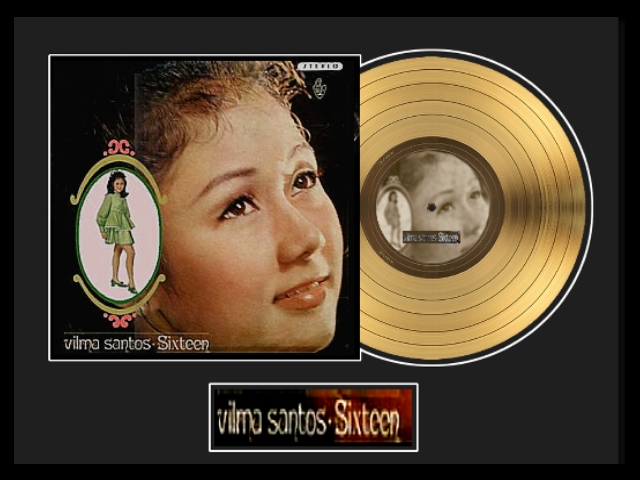
When Vilma Santos released her first album in 1969 under Willears Record, no one expected that her vinyl record would sell 500,000 units making it the company’s surprise record-breaking album of that year. The signature song, “Sixteen” became the most played single of that year proving that Vilma Santos can be as phenomenal as her closest rival and the more established singer, Nora Aunor. The young Vilma won a Golden Record Award for her debut album that comprised of 16 English songs including four original songs composed and arranged by Dannie Subido.
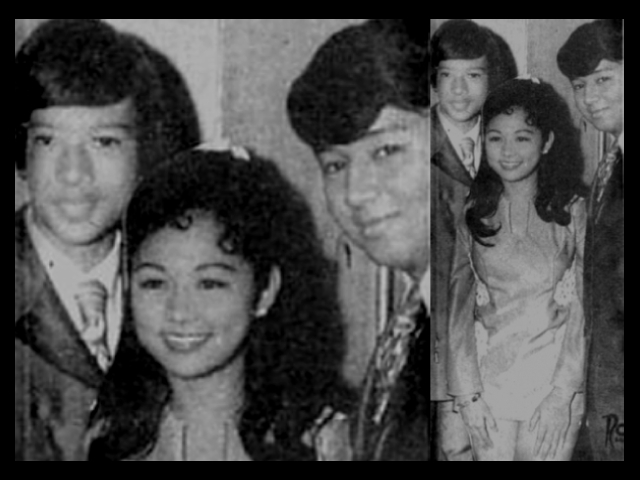
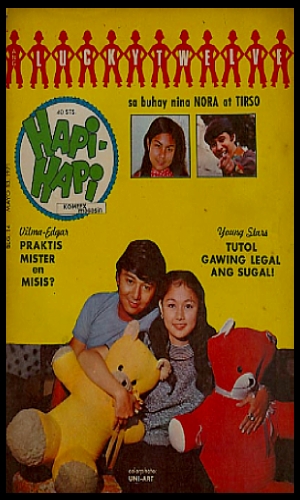
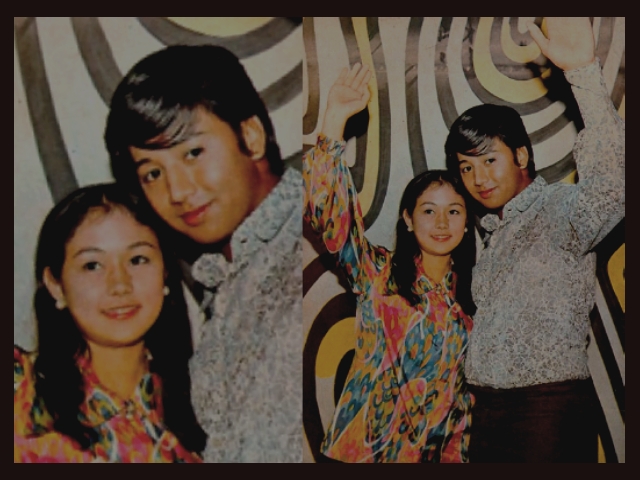
Prior to her debut album, Vilma Santos’ first stint in singing was in her earlier film, 1964’s Ging. She played a child singing sensation opposite drama staple, Olivia Cenizal. Her career continued with string of dramatic roles and when the musical trends started in late 60s her career aspiration become limited mainly because everyone expected young stars to sing well. She admitted her limited range as singer and concentrated with her promising acting talents and dancing. When Vi found commercial success with Edgar Mortiz as her love team, she occasionally sings with him. Their fans did not mind Vilma’s soft thin voice. Actually, Vilma’s sweet tone blends well with Edgar’s balladeer pipes. The success of Vi & Bot love team was evident with numerous films and it was only a matter of time that the idea of having Vilma have her own album came in 1969. There was a market and demand for Vilma’s very own long-playing vinyl. William Leary, Vilma’s manager asked musical director Dannie Subido to gather songs that will suit Vilma’s limited range. It was reported that Subido find the project challenging. They have to find songs that are light but will still give Vilma’s fans enjoyment. They decided to make it fun and sort of child like. They also wanted to make sure that the songs reflect Vilma’s current state of mind, that of a growing teenager. Sort of like early Britney, “no longer a child not yet a woman.” Her promotional interview clearly confirmed some of the issues teenagers are experiencing during this time. Body image, sex education, adulthood, friendship, and dating are some of the topics the album tackled which are topics that are still relevant today. “…as a singer…gosh…I feel a funny thing inside every time na naiisip kong, I was not a born singer. But every time I hear my records play, I couldn’t help but kid myself that I was made after all.” She commented when asked to evaluate herself as singer. What she really meant by that line, “I made it” is that by making her record a success no one cannot say that she cannot be sell records. This success proves that she can be a successful singer like her closest rival, Nora.
Listening to “Sixteen” – Vilma’s first album was pure fun and still very relevant today. Consist of twelve songs six on each side. The vinyl record on side A starts with its carrying single, Sixteen. Composed by Dannie Subido, Sixteen talks about “making out” in the park. This might alarm some of the religious zealots in the 70s but Ate Vi’s wholesome sweet voice makes the song wholesome and child like. The hidden sex – “making out” – kissing and hugging in public place – message of the song would probably the reason why “Sixteen” became the favorites of teenagers. The song catapulted Vilma’s signature song. A feat that even her closest rival, Nora Aunor can’t replicated (Nora Aunor despite successful singing career lacked a signature song). Remember this is the hippie era and the start of the feminist movement. A clear reason why “Sixteen” was a major hit with the free love carefree young generation of this era. The next songs, Dry your Eyes and Bring Back Your Love both arranged by Dannie Subido are love songs that boils down to frustration of a girl in love. Followed by a turned around in terms of mood with Vi’s version of a Bacharach composition, Raindrops Keep Falling On My Head, a funny but out of place song. One of the two final songs on side A, came as a surprise. “When The Clock Strikes One” was an original composition of Robert Medina and like “Sixteen” was about “making out” – kissing and hugging but this time its more fun because of its unusual up-tempo mood that’s actually more like a hip-hop song.
Side B of Sixteen was pure fun too. Three songs that stands out were the original compositions of Dannie Subido, “Sometimes,” “It is Wonderful to be In Love” and “Then Along Came You Edgar.” The lyrics of these songs are simple and obviously catered to the massive followers of the Edgar – Vilma love team. Before Britney Spears came up with her hit song, “Sometimes,” Vilma has her own song titled “Sometimes.” Both Britney and Vilma’s songs are about teenage love confusion. It’s a Wonderful To Be in Love is self-explanatory, yes Ate Vi is in love and she expressed it nicely in this song. The up-tempo and simple lyrics of this song makes it more like a children rhyme song except that it’s about almost “adult-kind” of love. The puppy love theme of the album continued with an uplifting song, well at least for the Vi and Bot fans with “Then Along Came You, Edgar.” This song confirmed Vi’s puppy love to the dark and handsome but not so tall cutie-pie, Edgar Mortiz. Once again, Dannie Subido’s arrangement and lyrics are simple but playful, a perfect fit to Ate Vi’s sweet range.
The success of Sixteen can be attributed to the playfulness and simplicity of the song selections. It suited the sweetness and purity of Vilma’s almost child like voice. The album earned Vilma her first golden record award and a remarkable signature song, “Sixteen.” The album established her as a successful recording artist. If I will compare her to today’s list of contemporary artists, I will compare Vilma to the likes of Jennifer Lopez, Britney Spears, and Madonna. Jennifer, Britney, and Madonna has thin but sweet voices just like Vilma. Like Vilma, these pop superstars have to work hard to achieve almost perfect products that their fans loved. Like Vilma, the three pop stars are great dancers which they all used to the max in their choreographed production numbers.
The reluctant singer came out on top. Vilma Santos’s debut album made history. Sixteen made Vilma Santos a remarkable singer. Here’s Sixteen’s song lyrics:
Sixteen
Kissing on the park – Hanging on the fort – Holding hand in hand
Down the avenue – Strolling down the lane – A castle in the air
A Kissin’ or lovin’ – A kissing’ or lovin’ – A kissing all night long
They said I’m only Sweet Sixteen – I’ve never been Kiss – I’ve never been loved
And all I want is Candy – Ice Cream teddy bear Lollipop – Riding on the sun
A lot of things we do – Whispering to my ears
I love you so – Strolling down the lane – A castle in the air
A Kissin’ or lovin’ – A kissing’ or lovin’ – A kissing all night long
Kissing on the park – Hanging on the fort
Holding hand in hand Down the avenue
Strolling down the lane – A castle in the air A Kissin’ or lovin’
A kissing’ or lovin’ A kissing all night long (fade)
After Sixteen – The success of Sixteen brings out another facet of Vilma Santos’ talent. Everyone knows that she is a good actress and a wonderful dancer but nobody expects that she will be able to succeed as a singer. At the early stage of her young career, the rivalry between her and a more established singer, Nora Aunor was lapse sided because Aunor was the number one singer in town. The success of Sixteen brings about an even playing field between the two young stars. Vilma’s record-breaking sales positioned her career into high gear. She continued to act in several musical films and at the same time recorded fun-filled songs. To her critics, Vilma’s recording success were attributed to pure luck. And so, to prove them wrong, Vilma’s manager smartly plotted follow-up recordings. Not only did Vilma record her follow-up album, she recorded a string of mini-LPs. Mini-LPs are shorter version of the big vinyl record with two songs on each side. She ventured into Tagalog songs, recording six songs that include instants hits like Isipin Mong Basta’t Mahal Kita, a theme song to a film she did opposite Filipino chess grand master, Eugene Torre; Palong-Palo, where she received a golden record award in 1974 and an up-tempo opm, Tok-Tok Palatok, another theme song from one of her comedy film with the same title opposite Jojit Paredes. Vi and Bot also released two mini-LPs, “Something Stupid,” a song that they regularly sings at their TV show, D’Sensations and “Christmas Tiding,” a collection of famous holiday songs like Silver Bells and Vilma’s now famous version of Santa Claus is Coming to Town and Mommy Kissing Santa Claus that’s been circulating in the internet in recent years. In addition, Vilma recorded Baby Vi, another mini-LP. She also shared equal billing with Edgar Mortiz, Esperanza Fabon, Ed Finlan, Hilda Koronel, and Sahlee Quizon in a Christmas compilation album titled, Christmas Carols.
Willears Records continued Vilma’s recording projects with two albums, Sweethearts and Aloha My Love both featured her with off and on screen love partner, Edgar Mortiz. The company who introduced the resurgent singer, Vilma in Sixteen followed up her solo success with Sweet, Vilma, Sweet, a much more ambitious offering with Vilma doing popular cover songs. Songs that are mostly identified with more established singers, like Nora Aunor. It is worth noting that during the peak of the musical genre in the early 70s, the musical films relied heavily on foreign influence. Maybe this was the reason why Vilma’s rival Nora Aunor doesn’t have a signature song. Recorded songs are mostly versions of the foreign recordings. Tom Jones, Frank Sinatra, Connie Francis, Neil Sedaka are the usual suspects. Instead of original simple composition, Willears selected songs like Mama, Sad Movies, and Our Day Will Come and let Vilma create her own version. The result was a disappointment not because Vilma didn’t work hard for the project but because it lacks the originality of her first album. Vilma’s thin voice also didn’t help.
But despite this visible contrast to her first album, Sweet Vilma Sweet was a successful follow-up. She continued her singing stints with an album most Vilmanians seems to forget, All I See Is You carried the folk song, Ati Cu Pung Sing-sing and Wonderful world of Music. The later song became a title of a musical film that paired Vilma with Edgar and co-starred with Snooky, Tony Ferrer, and Boots Anson Roa. The demand for Vi & Bot’s recordings increased and Willears produced Sweetheart, perhaps a confirmation album of the real score between the two young teen stars. Out of 25 films Vilma and Edgar made in 1970, both Sweethearts and Sixteen stands out as two of their certified hits both as films and recorded albums.
By 1972, Vicor Music Corporation took over Vilma’s singing career and smartly went back to the original fun-loving carefree theme that suited Vilma’s voice and made her a successful recording artist. With the guidance of Orly Ilacad, Vilma recorded original compositions that were light hearted, up-tempo and simple. Sing Vilma Sing arrived at the radio airwaves with the carrying single, “Bobby Bobby Bobby.” Despite the declaration of Martial law in 1972, the album became another instant hit. Also, Vilma and Edgar recorded their third album together, a follow-up with the hit, The Sensations. Aloha My Love came afterwards which also became a film and appropriately shoot entirely in Hawaii. Aloha was artistically packaged and contained Hawaiian and popular cover English songs like All Alone Am I and Eternally.
Unfortunately, all good things must end. By 1973, Vilma made her move. After almost one hundred films with Edgar Mortiz, she decided, it was time to venture out of the love team and test the water as solo star. This move also signaled the end of her singing career. At the same time, the musical genre started to subside as more turmoil politically spreads around the country. The bomba films exploded in mainstream local cinemas in mid 70s. Movie theatre owners illegally inserts porn clips in the middle of film. It was so popular back then that even the first Manila International Film Festival organized by former first lady, Imelda Romualdez Marcos allowed the bomba or sexy films to be shown during the midnight time slots of the festival. The bomba period created a long line up of respectable sexy actress like Elizabeth Oropeza, Daria Ramirez, and Chanda Romero. Even former beauty queen, Gloria Diaz ventured into the sexy film. The emergence of sexy or “bold” films as what they referred to by local film buff challenged the now solo superstar, Vilma Santos. Tagalog Ilang Ilang production transformed her into an action super hero as the new Darna, Philippines version of Wonder Woman. Lipad Darna Lipad (Fly Darna Fly) defeated entertainment giants Fernando Poe Jr and Joseph Estrada, both have films being shown at the same time and the usual bomba films. A very long line-up snake down the streets of Claro M. Recto Avenue’s Cinerama theatre. It was recorded that Tagalog Ilang Ilang Production distributed Darna dolls and Coka-Cola bottles to the massive patrons during the film showing. Lipad Darna Lipad became the most successful Darna film ever. It broke box office records and solidified Vilma’s clout as the new box office queen of Philippine movies. Vilma’s stature as the most bankable artist of that time validated her decision to leave her love team with Edgar Mortiz and the singing stints to her closest rival, Nora Aunor. She became more adventurous and accepted roles that showcase her versatility. And this move cemented her position as the actress to watch, the actress on top of her game.
Remarkable History – As a singer, Vilma’s thin voice didn’t stop her to become a successful singer. Her hard work paid off and earned her a piece of history. The reluctant singer recorded strings of solo albums that created her signature songs, “Sixteen” and “Bobby, Bobby, Bobby.” Signature songs that enlisted her together with famous singers like Imelda Papin (Bakit), Eva Eugenio (Tukso), Claire DeLaFuente (Sayang), Sharon Cuneta (Mr. DJ), Didith Reyes (Nananabik), Aiza Siguerra (Pagdating Ng Panahon), Freddie Aguilar (Anak), Florante (Handog), and Gary Valenciano (Di Na Natuto). Her sweet and child like voice reflected the innocence of her original up-tempo songs that tackles teenage issues like dating, sexual education, body images, and adulthood. Teenage issues that are still remarkably relevant today. – Credits: Album texts and Photos: Nar Santander, Eric Nadurata, additional photos: Rene Maximo






 Star For All Seasons

You must be logged in to post a comment.