Vilma Santos-Recto is a popular multi-awarded actress and politician in the Republic of the Philippines. *** She is known as "Queen of Philippine Movies," "Queenstar," "Grand Slam Queen," "Box Office Queen," and "Star for All Seasons." *** This website is mostly about her iconic film career.
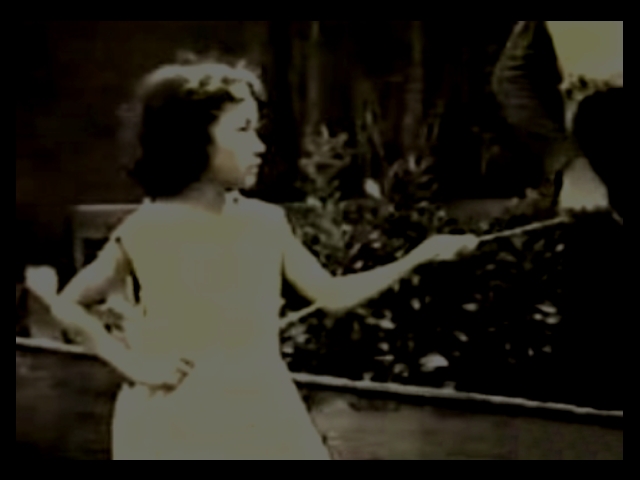
“…Ging (1964) was directed by Cirio Santiago and Teodorico Santos. Although it was made in the old-fashioned way of making films (the flashback scenes in particular), the material used here is timeless – especially since there are more street children in our midst now more than ever. As far as the showbiz scene is concerned, there are still a lot of heartless impresarios today exploiting young talents in the business. But what really made “Ging” a delight to watch was the performance of the very young Vilma Santos. Even at the early age, it was clear that she was already brimming with talent. Vilma, apparently, was born into this world to perform, entertain and make people happy. She was utterly convincing in the dramatic scenes and thoroughly graceful in her musical numbers. Listang-lista – as we’d say in the vernacular. Even then, she was already living up to her showbiz title of “Star for All Seasons” because her performance in “Ging” is not only brilliant, but timeless as well…” – Butch Francisco, People’s Journal 04 March 1999 (READ MORE)
FAIR USE NOTICE (NOT FOR COMMERCIAL USE): This site contains copyrighted materials the use of which has not always been specifically authorized by the copyright owner. We are making such material available in our efforts to preserve the film legacies of actress, Vilma Santos, and to make her career information available to future generations. We believe this is NOT an infringement of any such copyrighted materials as in accordance to the the fair dealing clauses of both the Canadian and U.S. Copyright legislation, both of which allows users to engage in certain activities relating to research, private study, criticism, review, or news reporting. We are making an exerted effort to mention the source of the material, along with the name of the author, performer, maker, or broadcaster for the dealing to be fair, again in accordance with the allowable clauses. – Wikipedia (READ MORE)
Plot Description: In a strange turn of events, Dolores (Vilma Santos) moves in to live with her grandfather, who has sole custody of her ever since her mother was imprisoned for the m rder of Dolores’ father. Mystery unfolds as Dolores stays with her grandfather when members of the household are murdered one by one. Will Dolores escape the chaos unraveling around her or will she be the next victim? – Kabayan Central (READ MORE)
Biktima (1974) In a strange turn of events, Dolores (Vilma Santos) moves in to live with her grandfather, who has sole custody of her ever since her mother was imprisoned for the m rder of Dolores’ father. Mystery unfolds as Dolores stays with her grandfather when members of the household are murdered one by one. Will Dolores escape the chaos unraveling around her or will she be the next victim? – Kabayan Central (READ MORE)
FAIR USE NOTICE (NOT FOR COMMERCIAL USE): This site contains copyrighted materials the use of which has not always been specifically authorized by the copyright owner. We are making such material available in our efforts to preserve the film legacies of actress, Vilma Santos, and to make her career information available to future generations. We believe this is NOT an infringement of any such copyrighted materials as in accordance to the the fair dealing clauses of both the Canadian and U.S. Copyright legislation, both of which allows users to engage in certain activities relating to research, private study, criticism, review, or news reporting. We are making an exerted effort to mention the source of the material, along with the name of the author, performer, maker, or broadcaster for the dealing to be fair, again in accordance with the allowable clauses. – Wikipedia (READ MORE)
Dugo at Pag-ibig sa Kapirasong Lupa (1975) is a must for the Filipino History Students and for everyone who wants to awaken the innate nationalism in them. These series of stories depicting the fight of the Filipinos against colonialism of Spain, Japan and even their fellow Filipinos abusing the power in the government. A seemingly serious film but spiced with the star-studded cast like Fernando Poe Jr., Ramon Revilla, Joseph Estrada, Nora Aunor, Dante Rivero, Eddie Garcia, Vic Vargas, Goerge Estregan and the other all time favorite artists. This movie even highlighted the comparison between the love of country and the other kind of love we offer to our family and to our beloved as the story featured love stories in the midst of tragic and bloody war happening in our society. – Kabayan Central (READ MORE)
FAIR USE NOTICE (NOT FOR COMMERCIAL USE): This site contains copyrighted materials the use of which has not always been specifically authorized by the copyright owner. We are making such material available in our efforts to preserve the film legacies of actress, Vilma Santos, and to make her career information available to future generations. We believe this is NOT an infringement of any such copyrighted materials as in accordance to the the fair dealing clauses of both the Canadian and U.S. Copyright legislation, both of which allows users to engage in certain activities relating to research, private study, criticism, review, or news reporting. We are making an exerted effort to mention the source of the material, along with the name of the author, performer, maker, or broadcaster for the dealing to be fair, again in accordance with the allowable clauses. – Wikipedia (READ MORE)
Plot Description: Narda (Vilma Santos) and her young brother Ding (Niño Muhlach) find a glowing stone that has fallen from that sky and when swallowed by Narda turns her into a superwoman. From then on, the tandem of Narda and Ding embark into adventures of saving the world from evil. Together they fight the avenging German woman scientist (Marissa Delgado) who turns healthy people into zombies by injecting them with microbes that is transmittable through their saliva. Then Narda and Ding stay with their aunt in Chinatown, Manila where a Chinese witch is kidnapping children. But Ding is made ill by the witch’s sorcery. Will Darna’s power be effective to save her brother against black magic? – TFC Now (READ MORE)
Pre-1972 – From late 1960s to 1971, comes the arrival of the musical era and the arrival of the golden of voice of Nora Aunor. Aside from stocking success in music, Nora ventured into films, with string of films that featured other singers like Eddie Peregrina, Edgar Mortiz, Manny de Leon, Victor Laurel and Victor Wood. Films that begin with singing and mostly ends with big production number, all with singing and dancing – ala-Bollywood. Venturing to film making, Nora found her rival, “dramatic-child-star” now a strugling “teen-film-star” in a “musical-era,” Vilma Santos. Although the competition was slightly in favor of Nora, she found herself in numerous occassion, having a strong resistant from Vilma. On 1971, there were atleast one Nora or Vilma film showing in local movie houses. Nora Aunor did seven films (Always in My Heart; Ang Waray at ang Talyada; Guy & Pip; Lollipops and Roses; My Blue Hawaii; My Prayer; The Singing Filipina) and Vilma Santos did nine (Angelica; Eternally; Ikaw Lamang; Love at First Sight; Our Love Affair; Teen-Age Senorita; The Sensations; Wonderful World of Music; Young Lovers), most of these films were musicals. The next year, comes the confirmation of their rivalry.
And God Smiled At Me vs Dama de Noche – “…At the Quezon City Film Festival, then held every October, Nora’s entry was Sampaguita Pictures’ And God Smiled At Me (directed by Tony Cayado and Danny Holmsen); while Vilma’s banner vehicle was Tagalog Ilang-Ilang Productions’ Dama de Noche (directed by Emmanuel H. Borlaza). And the winner was Nora! May die-hard Vilmanian kaming kaklase sa elementary, ang sabi: ‘Luto ‘yun, dahil malapit si Nora kay QC Mayor Norberto Amoranto!” Such loose talks were never confirmed to be true. Or as Tempo’s veteran movie columnist Ronald K. Constantino avers, ‘Nora never figured in any awards scam!…Sa annual Filipino Academy of Movie Arts and Sciences (FAMAS) Awards Night, it was the Vilmanians’ turn to rejoice. Vi was ad-judged Best Actress for Dama de Noche, ka-tie ni Boots Anson-Roa (for JE Productions’ Augusto Buenaventura megger Tatay Na Si Erap). Nora wasn’t nominated for her award-winning starrer at the QC filmfest, but for The Gift of Love kung saan siya gumanap ng dual role: bilang isang cancer-stricken patient at ang kakambal na eventually ay napunta kay Tirso Cruz III. Dama de Noche, which paired Vi with Edgar Mortiz, also had her doing two parts: a baliw and a sane sister…” – William Reyes (READ MORE)
Nora Aunor’s 1972 Films (8): (And God Smiled At Me; Dito Sa Aking Puso; Gift of Love; Kung May Gusot, May Lusot; My Little Brown Girl; Nora, Mahal Kita; Way Out In The Country; Winter Holiday) – Most of her films capitalized on her golden voices and untapped dramatic talents.
Vilma Santos’ 1972 Films (14): (Aloha, My Love; Ang Kundoktora; Dalagang Nayon; Dama De Noche; Don’t Ever say Goodbye; Dulce Corazon; Hatinggabi Na, Vilma; Inspiration; Leron, Leron, Sinta; Little Darling; Remembrance; Sweet, Sweet, Love; Takbo, Vilma, Dali; Tatlong Mukha ni Rosa Vilma) – Most of her films were not focused on singing but more on her versatility.
Nora Aunor’s 1972 acting recognition (2) – Best Actress from Quezon City Film Festival and a nomination from FAMAS both for “And God Smiled At Me.”
Vilma Santos’ 1972 acting recognition (2) – Best Actress from FAMAS (tie with Boots Anson Roa) and a nomination from Quezon City Film Festival both for “Dama de Noche.”
Dual Roles – “…Vilma as Armida is drab and dry, almost a movie prop. It is in the portrayal of Rosanna that Vilma would tear one’s heart away. The many close-ups so effectively used throughout the movie show the unglamorous Vilma: her frowns, her lip-twitching, her uninhibited and stifled sobs. But Vilma is less successful with the shifty look that is the distinctive trait of the deranged. She compensates for this in the ‘betrayal’ scene when Rosanna suspects that Leo, Armida and the psychiatrist (Fred Montilla) all conspired to imprison her in the hospital. Another outstanding feat is the subdued scene where Rosanna learns that Leo has gone to the Lerma villa to meet Armida. The vivacious Rosanna is just as winsomely pathetic. Watching her is just like seeing a bosom friend trying to pretend she’s happy when both of you know she’s not only in this case, Rosanna is truly happy. Her non-knowledge of her plight is what is particularly heart-curling…” – Times Jornal, October 24, 1972 (READ MORE)
Golden Voice – “…They’ll wait for the perfect timing, he says and then he’ll tell his wife Olga (Lucita Soriano) everything. The perfect timing never comes. One morning, Celina just can’t help calling him ‘Itay,’ telling him she loves him very much and that he must come home at once, please. The tender moments take too long, and everybody in the theater knows Damian is ‘tsk, tsk, tsk, mamamatay.’ Everybody is right. At the hospital, the secret lets loose as Celina jerks in agony. ‘Itay, Itay,’ she sobs, in the presence of Damian’s wife and two adopted daughters. Here, Nora’s bid for a best actress award really begins. The three witches (oh, how the fans hated them) now maltreat Celina all the more, slapping her, pulling her hair, kicking her right in the tummy. All through these, Celina’s only consolation is her love for Carding (Tirso Cruz III), the laundry-woman’s (Nenita Jana) son. He is blind. He is desperate. He loves Celina very much but ‘wala akong karapatang umibig.’ And so he contemplates suicide, sneaking out one night, begging between yells of ‘Gusto ko nang mamamatay,’ for a vehicle to run over him. An irked driver shouts at him: ‘Ano ka ba, bulag?’ A woman fan shouted too: ‘wag kayong tumawa, serious yan.’ And then, what do you know, another death: not the blind leading man (that would’ve been a blunder) but his mother, who had followed him. After so much unbearable beating and tearful moments between the lovers, Celina delivers her ultimate prayer — she can’t take it anymore. AND GOD SMILES AT HER. God grants her a golden voice (for a while one thought that was only the beginning of the movie, after no less than two-and-a-half hours) and she sings all her heart at the foot of the altar. And this is not the end of it…” – Times Jornal, October 24, 1972 (READ MORE)
Post-1972 – Nora Aunor did eleven films (Binibini ng Palengke; Carmela; Dalawang Mukha ng Tagumpay; Erap is my Guy; Hindi Kita Malimot; Impossible Dream; Kondesang Basahan; Maalaala Mo Kaya; Paru-parong Itim; Super Gee; Tapat na Pag-ibig), most of these films were a smash hits. Some highlights: “Erap is my Guy,” her film with Joseph Estrada; “Paru-parong Itim,” confirmed her dramatic talents; and “Super Gee,” signalled her entry into the comics-superhero genre. Meanwhile, the same year, Vilma Santos did ten films (Anak ng Aswang; Carinosa; Darna and the Giants; Dyesebel at ang Mahiwagang Kabibe; Lipad, Darna, Lipad; Maria Cinderella; Now and Forever; Ophelia at Paris; Tsismosang Tindera; Wonder Vi), most of these films were also a box office hits. Some highlights: “Anak ng Aswang,” horror film with senior movie queen Gloria Romero; “Dyesebel at ang Mahiwagang Kabibe” (mermaid); “Lipad, Darna, Lipad” and “Darna and the Giants” (Filipino version of Wonder Woman/Superman); “Wonder Vi” (Filipino version of female Tarzan) – confirmed she was the queen of the comics-heroine genre as these films broke box office records. The following year, 1974, Nora Aunor did six films (Aking Maria Clara; As Long As There’s Music; Carnival Song; Fe, Esperanza, Caridad; Happy Days are Here Again; Somewhere Over The Rainbow) While Vilma did twelve films (Batya’t Palu-Palo, film with FPJ; Biktima; Happy Days are Here Again; Kamay na Gumagapang; Kampanerang Kuba; King Khayam and I, film with Joseph Estrada; Mga Tigre ng Sierra Cruz, film with Amalia Fuentez; Phantom Lady; Tok, Tok, Palatok; Twin Fists for Justice; Vilma and the Beep, Beep, Minica; Vivian Volta). Vilma dominated 1974 in terms of total output and notable projects with other big stars like FPJ, Joseph Estrada and Amalia Fuentez. By mid decade, Nora Aunor ended up with eight films (Banaue; Batu-bato sa Langit; Dugo at Pag-ibig sa Kapirasong Lupa; Happy Days are Here Again!; Hello, Goodnight, Goodbye; Hotdog Unang Kagat; Lollipops and Roses at Burong Talangka; Memories of Our Love) while Vilma’s total output was nine films (Basta’t Isipin mong Mahal Kita; Darna vs. the Planetwoman; Dugo at Pag-Ibig sa Kapirasong Lupa; Ibong Lukaret; Karugtong ang Kahapon; Nakakahiya?; Tag-ulan sa Tag-araw; Teribol Dobol; Vilma Viente Nueve). The highlights for both stars were: Nora’s signalling her seriousness in aquiring the services of A-1 directors to honed her dramatic talents for future projects that Gerry de leon’s “Banaue” initiated. Meanwhile, Vilma continued to balance art and commercialism with hit films like “Nakakahiya,” “Karugtong ng Kahapon,” and “Tag-ulan sa Tag-araw.”
Vilma! is a Friday Primetime musical variety show formerly aired by GMA Network from 1986 to 1995 hosted by Vilma Santos. Formerly known as Vilma In Person, Vilma! (also known as Vilma on Seven) was debuted on August 8, 1986, the pilot episode is shown from the Metropolitan Theater as a temporary studio where Vilma Santos and the VIP Dancers are performed there. Until 1987, the Friday Primetime musical variety show moved to Broadway Studios as a new location and it is shown on the first StereoVision format which features dance and love song performances. Vilma! was competed by two other variety shows Loveli-Ness and Dance-2-Nite of ABS-CBN (originally debuted in 1987) as rivals, but the variety show maintained its ratings. Vilma! received four nominations in the PMPC Star Awards for TV from 1988 to 1990, 1992 and 1994, as well as Best Female Musical Variety Show Host from 1987 to 1988, they also produced anniversary and birthday specials from 1987 to 1994 as well. After nine years, Vilma! produced the 479th and the last episode on September 29, 1995, brought many fans and supporters bade farewell to the Star for all seasons, and made as the longest-running Musical Variety Show. Truly, Vilma! was ended on September 29, 1995 and it was replaced by Bubble Gang. – Wikipedia (READ MORE)
Plot Description: An intrigued filled love affair between Baby Abueva a poor lass of Baguio and Teddy Burgos a millionaire from Zamboanga. An affair married with the appearance of Lota. – Kabayan Central (READ MORE)
Plot Description: In a strange turn of events, Dolores (Vilma Santos) moves in to live with her grandfather, who has sole custody of her ever since her mother was imprisoned for the m rder of Dolores’ father. Mystery unfolds as Dolores stays with her grandfather when members of the household are murdered one by one. Will Dolores escape the chaos unraveling around her or will she be the next victim? – Kabayan Central (READ MORE)
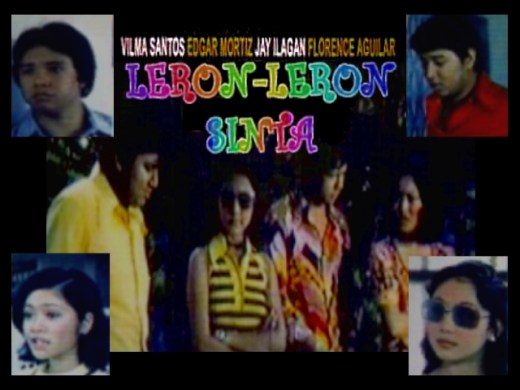
Plot Description: Leron Leron Sinta stars Vilma Santos, Edgar Mortiz, Jay Ilagan, Florence Aguilar, Lillian Laing, Karlo Vero in this film that fuses music and film perfectly. Witness their characters explore the world of love and the beauty and madness that come with it. Watch them as they perform certain scenes with song numbers bringing pleasure and entertainment to the next level. – Kabayan Central (READ MORE)



 Star For All Seasons
You must be logged in to post a comment.