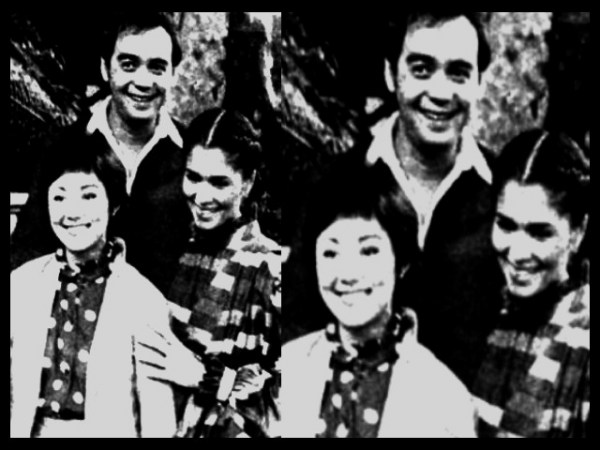
Remembering Bella Flores

This slideshow requires JavaScript.

Hatred (poot) and Jealousy (inggit) – “…In the Joey Reyes short film, Bella gave her audience an idea of how she became a most hated screen villain. On the whole, the film was a funny but down-to-earth crash course on how to achieve immortality as a screen villain. The fool-proof ingredient, according to Bella, was to invest and perfect that art of hatred (poot) and jealousy (inggit) and make use of them to the hilt. Then she added another lesson on the fine art of slapping and hair-pulling and how to produce an equally important wicked laughter as she saw the object of her hatred expire from her equally malevolent stare. Declared Bella in her last film (Kontrabida 101) after dousing wine on the face of the poor waiter: “Bidas (heroines) they come and go. Pero kaming mga kontrabida, we never fade away.” There is a ring of truth in Reyes’s declaration: “There is one and only Bella Flores. She is indeed one of a kind.” Stage director Anton Juan can only agree: “Bella Flores, how many who tried to imitate your art in front of their own mirrors could approximate your wicked eyebrows, flaring nostrils, the sharp-lined lips that formed the word at the edge of gritting teeth, a voice that rasped deep through the breath of smoke. You created the Filipino archetype of the ‘kontrabida’ till your name itself was synonymous with villainy. Rest in peace, Ms. Bella Flores and flowers for you…” – Pablo A. Tariman, The Philippine Star, 20 May 2013 (READ MORE)

Roberta and Trudis – “…Contravida Queen Bella Flores was featured in “Showbiz Central’s” Most Influential segment as she plays a big part in GMA Films’ new movie with Rhian Ramos and Aljur Abrenica, “My Kontrabida Girl.” It’s also a tribute to Bella as she’s celebrating her 60th anniversary in showbiz. The screen name Bella Flores was given to her by the late Sampaguita Pictures’ boss Dr. Jose Perez. “I was so glad when I was told it means beautiful flowers,” she said. Her real name is Remedios Dancel and she was born on Feb. 27, 1936, which means she turned 76 yesterday, Monday (Feb 27/2012). She was only 15 when she did her first villain role maltreating child star Tessie Agana in the blockbuster “Roberta.” She recounted that Vilma Santos auditioned with her for her first movie, “Trudis Liit,” in 1963. “Natakot siya at tumakbo dahil nakita niyang pinahirapan ko ‘yung ibang batang nag-audition,” she said. “Ngayon, governor na siya. Sina Roderick Paulate at Gina Alajar, sa’kin din nagsimula as child stars sa ‘Kaibigan Kong Sto. Nino’…” – Mario Bautista, Malaya (READ MORE)

Female Eddie Garcia – “…There is nothing that I can ask for more,” sambit ni Bella. “I’ve played all kinds of roles. I played the madre roles. Meron akong mga action pictures…plus mga drama. “Even on television, all of my TV shows got the highest ratings. Honest to God! Katulad ngayon, itong Trudis Liit, nakadagdag na naman ako. Nakasama ako sa magandang ratings ng show. “I’m so proud and I’m so happy and so contented that after all those five decades, you know what I mean, I’m still standing up, not sitting down.” Marami nga ang naghahalintulad kay Bella bilang female counterpart ni Eddie Garcia sa patagalan sa showbiz industry. “They compare me always to Eddie Garcia when they interview me. It’s true that we have the most respected names in the world of showbiz. “Kapag sinabi mong Eddie Garcia, sold na lahat. Yari na ang lahat. Wala nang puwedeng ipalit. Ganoon din ang sinasabi nila sa akin,” aniya. Aminado naman si Bella na may mga pagkakataon din na hindi dumarating ang projects sa kanya….” – Paul Mata, PEP, 20 October 2010 (READ MORE)

Miss Bulaklak – “…Acting didn’t run in Bella’s family of eight brothers and seven sisters. Remedios Limson in real life (a mixture of Chinese, Spanish, and German bloods), Bella was a rice vendor on Blumentritt and Antipolo streets in Sta Cruz and eventually became “Miss Bulaklak of 1949” before she invaded the movies. She had her first taste of movies without the knowledge of her parents. “It was only when I arrived home with five stiches on the head I sustained from a freak accident during a shooting that they learned about it. My producer, the late Mommy Dolores H. Vera, took me home. So my parents couldn’t back out anymore!” Bella Flores started out in films as an extra in Ang Lumang Bahay Sa Gulod which was Premiere Productions’ first picture in color and starred Rogelio de la Rosa and Leila Morena. She transferred to Sampaguita Pictures where the late Dr. Jose R. Perez screen named her Bella Flores, which means “magandang bulaklak” in Pilipino. She was to be an extra again in Kilabot Sa Makiling but a sudden twist of fate landed her a longer role as the “other woman.” Bella’s biggest break came when she portrayed the stern and mean aunt to then child stars Tessie Agana and Boy Alano in Roberta, a tearjerker. The sob movie was a smash hit and literally revived Sampaguita Pictures, which was razed by fire in 1951. Bella was then signed up for 13 years and got P500 per picture with a P50 weekly allowance. On top of that, for every picture she made there after, she would be paid P3,000. “During those time, you could already buy a house and lot for only P10,000. Regular taxi fare was P10 and you could go back and forth to studio and home…Age is a state of mind. If you say you’re old, then you’ll look old. Me? I don’t believe I’m old because I always feel young!…” – Manny B. Fernandez, People Magazine, 05 February 1982 (READ MORE)

Bella Flores and Vilma Santos’ Films

  • Ikaw Ang Mahal Ko (1996) – ”…In 1996 Vilma Santos did “Ikaw Ang Mahal Ko” with the late FPJ. The film did not do well, both critically and commercially. This year also was a bad year for the local entertainment industry as Ishmael Bernal died on June 2nd. It was reported that he was scheduled to direct a film about the life story of Lola Rosa Henson, the comfort woman during the Japanese invasion of the Philippines. The project was also reportedly offered to Vilma Santos. From 1997 to 2009, Vilma Santos completed 6 full featured films, two were considered record breaking films and almost all gave her acting recognitions including two international best actress recognitions…” (READ MORE)
  • Pinay, American Style (1979) – “…The film was so forgettable that the critics didn’t even bother to write any reviews. The lack of enthusiasm on the part of the critics was compensated with the box office success of the film. Vilma fits the role as the illegal alien, PX. Her attempt to speak fluent English and pretend that she’s rich when she met the boyish looking Christopher was funny and poignant. She was given enough scenes to shine. One was when she was harassed by her landlady, she promised her the rent money the next day and when she’s gone, she opened her refrigerator and found a staled piece of bread. She took bottled water and ate the staled bread, went to the bedroom and found her mom’s letter. Lying down in bed, she started to break down. A quiet scene without dialogue. A contrast from the earlier scenes where she was talkative as she tried to impress Christopher and telling him she’s rich and from a well-known family. It was obvious in 1979, Elwood Perez wasn’t the kind of director you will expect to produce a serious output. He wasn’t a Bernal or Brocka. He’s a commercial director. It was a better effort though, compared to a much more convoluted Magkaribal or their past successful projects like Nakawin natin ang bawat sandali and masakit masarap ang umibig. In Pinay, Toto Belano’s script wasn’t efficient in ironing out the “love quadrangle” plot twists and establishing the characters of four actors. So the blame can’t be put to solely to Perez’ shoulder. There was a scene were Vilma Santos and Christopher were watching a concert which was obviously not part of the script…” (READ MORE)
  • Huwag hamakin! Hostess (1978) – “…Do you always succeed in packaging a movie? “Often, yes, But, alas, I have failures too.” For instance? “Well, some reasons for failure are due to wrong chemistry of the cast, to the vehicle (story) and/or unsuitability of both elements. Let’s take the movie, Huwag Hamakin: Hostess, which with solid actresses, a move that proved to be contrary to the image of La Aunor. It would have been all right, if Alma Moreno, Nora’s co-star, was paired with another bold actress. But that, we learned only later and too late! I was aware of Guy’s image. But I wasn’t aware that her image wouldn’t go well with the combination. Not even the controversy of including Vilma Santos in the cast helped. It only antagonized both camps of Nora-Vilma fans…” (READ MORE)
  • Big Ike’s Happening (1976) – “…Enrique “Big Ike” Lozada (August 13, 1940-March 8, 1995) was a Filipino comedian, actor and TV host. He was born on August 13, 1940 in Iloilo City. He started acting at the age of 11 on the movie Mga Bituin ng Kinabukasan with the younger Susan Roces. He died on March 10, 1995 in Manila, of heart attack. He was 54. His had lain at Manila Memorial Park in Parañaque City…” (READ MORE)
  • Ding Dong (1970) – “…Ding Dong, adapted into movie from comics written by Pablo S. Gomez; Illustrated by Alfredo P. Alcala for United Komiks, 1970…” (READ MORE)
  • Young Love (1970) – “…The loveteam of Edgar Mortiz and Vilma Santos endured a stiff competition from teeny bopper love team of Nora Aunor and Tirso Cruz III and came up with equal success with string of hit films during the musical era of the 70s. Together they did forgettable but commercial hits and also some hints of the years to come to Vilma Santos’ long career. The most notable one: Dama De Noche. Total Number of films with Vilma Santos – 25 (Young Love, Teenage Jamboree, Songs and Lovers, Renee Rose, My Pledge of Love, Mga Batang Bangketa, Love Is for the Two of Us, I Love You Honey, From the Bottom of My Heart, Baby Vi, Love Letters, The Wonderful World of Music, The Sensations, The Young Idols, Sweethearts, Sixteen, Leron-Leron Sinta, Edgar Love Vilma, Don’t Ever Say Goodbye, Dama de Noche, Anak ng Aswang, Because You Are Mine, Kampanerang Kuba, Kasalanan Kaya, Karugtong ang Kahapon…” (READ MORE)
  • Trudis liit (1963) – “Ang pelikula ni Ate Vi na Trudis Liit ay tandang tanda ng maraming Vilmanians. Nagdulot ito ng unang karangalan para kay Ate Vi at sa murang edad ng siyam. Sa mga Vilmanians ang maraming madramang eksena ni Vilma rito’y natanim sa ating alaala. Ang sabi nga ng isa sa ating Vilmanian na si Henry Llaneza, “the first movie I’ve seen in Black & White TV mula sa bintana ng kapitbahay ay ang “Trudis Liit” na napaiyak ang lahat ng nanonood dito nagsimula ang lahat…” ng kanyang pagiging isang Vilmanian. Katulad ni Henry, dito rin nagsimula ang aking paghanga sa star for all season. Galit na galit ako nuon kay Bella Flores dahil sa pang-aaping ginawa niya kay Trudis. Sa pagkapanalo ni Ate Vi ng FAMAS Best Child Actress sa pelikulang ito, sinundan pa ng Sampaguita Pictures ang tagumpay nito sa pamamagitan ng pelikulang Ging. Dito makikita ang malinaw na talento ni Ate Vi. Hindi lamang sa kanyang hindi pilit na pag-iyak kundi sa pagkanta rin. Dito rin sa pelikulang ito’y nakipagsabayan siya sa pagganap ni Olivia Cenizal at sa pang-aapi ni Carol Varga. Ang dekada ng sisenta ay patuloy na nagbigay ng maraming pelikula kay Ate Vi magmula sa pagiging isang batang artista hanggang sa isang teenager. Umabot ito sa unang karangalan niya bilang isang hindi na batang artista sa pamamagitan ng pagkanominado niya sa Best Supporting Actress muli sa FAMAS at ang kanyang pagkapanalo ng parehong titulo mula naman sa San Beda College…” (READ MORE)

Bella Flores (February 27, 1929 – May 19, 2013), was a FAMAS award-winning Filipino film actress. She was best known for her “iconic” portrayals of film villains. Flores was born in Manila. She was a college sophomore at the Far Eastern University when she appeared in her first film, Tatlong Balaraw (1950), at age 14. Flores was signed by Sampaguita Pictures. She was cast in Roberta as the cruel stepmother of Tessie Agana’s titular character, despite being 15 years old. The film was a box-office success, credited with saving Sampaguita Pictures from bankruptcy after a fire had destroyed its studio. The film’s success also elevated Flores into the upper tier of stars, and typecast her in villainous roles. The film critic Nestor Torre remarked that Flores had “been making life miserable for many generations of hapless stars—all the way back to little Tessie Agana and Boy Alano in ‘Roberta’ in the early 1950s, to her fresh batch of victims in the New Millennium… doing it without skipping a beat—and without aging (much) to boot.” She received the 1967 FAMAS Best Supporting Actress award for her role in Ang Kaibigan Kong Santo Niño. Flores died on May 19, 2013, in Quezon City General Hospital. Her death was a result due to complications from a recent hip surgery. – Wikipedia (READ MORE)

Related Reading:

Remembering Chichay

This slideshow requires JavaScript.

The “Queen” – “…This movie was in tribute of the staff and crew behind the movies produced by Sampaguita Pictures. They were played by Dolphy, Panchito, Chichay and other actors and actresses of the said film outfit. The title was about a popularity contest in the studio where some of the said staff and crew were the candidates. Here, the King of Comedy played a janitor named “Julio Antukin” who became involved in most of the hilarious situations in the movie studio premises like throwing the pin of the grenade instead of the grenade, when he replaced a bit player, at the site where a movie director, played by Ading Fernando, was standing giving instructions about a scene. Another one was when he was assigned in the sound room where his clumsiness in the operation of its equipment caused the switching of the male and the female voices of its contract stars, played by Jose Mari Gonzales and Liberty Ilagan, in a musical number scene. In the end, he redeemed himself, when he was able to help the studio from being robbed by a gang of criminals which made him the “King” while Chichay was the “Queen”. Vilma Santos appeared in this movie as Dolphy’s younger kid sister…” – Melcore’s CinePlex Blog (READ MORE)

Pamosong Komedyante – “…Samantala sa entablado naman ng mga eskuwelahan at sa mga syudad, ipinalabas din ang dulang New Yorker in Tondo, isang komedya tungkol sa isang balikbayan na mas Amerikano pa kaysa Amerikano pero kayumanggi naman. Nauso rin sa radyo ang komedya tulad ng Sebya Mahal Kita na pinalabasan nina Sylvia Guerrero at Eddie San Jose. Ang iba pang pamosong mga komedyante ay sina Oscar Obligacion, Chichay at Aruray atbp…Sa larangan ng pelikula, si Ai-Ai pa rin ang bida sa mga komedya, na marahil ay namana ang kanyang pagiging komedyante sa mga “greats” tulad ni Chichay at Aruray na sumikat noong mga 50′s at hanggang 60′s. Bandang 70′s o 80′s ginawang katatawanan ang isang artista na sobra ang dunong daw…” – Wilhelmina S. Orozco (READ MORE)

Patsy vs Chichay – “…Her best episode in Wanted: Boarders in the old ABS-CBN Channel 4 was when Chichay guested in the show. Chichay had a daughter, singer Geraldine, and Patsy could never pronounce the girl’s name correctly (she kept saying Gungadine). From the start, there was already animosity between Patsy and Chichay. It turned out that Chichay was the ex-girlfriend of Patsy’s husband, Pugo, and it was a riot in the show. That episode was a landmark on Philippine TV because there supposedly was a feud between Chichay and Patsy off-screen. Nobody ever knew if this was true or just a joke between them and no one knew the exact reason why they were feuding in the first place. The public waited for the answer when Patsy was featured as guest in the Joy Virata-Robert Jaworski talk show Celebrity in 1978 on Channel 4 (then already a government studio). Unfortunately, when Ms. Virata asked that question, Patsy evaded it by merely answering: “It’s a military secret.” The year after, Patsy died and buried along with her mortal remains was the mystery about her supposed feud with Chichay. But at the funeral, there was only one celebrity who went, Chichay….” – Butch Francisco, The greatest comedians of all time (Third of a series), Philstar, Aug 19 2006 (READ MORE)

Toothless Miss – “…During her absence, something “that I couldn’t figure out till now” occurred. When she returned, a new Chichay was born: the toothless Miss. By conservative estimate, Chichay has to date 120 photoplays to her credit, the most decisive and memorable of which is Buhay Pilipino, a movie she made with Pancho Magalona and Tita Duran in 1951 because it gave birth to the masungit and tsismosa aunt-image that Chichay is now well-known for. She has a CAT Award (for Best TV Actress of 1967) to attest to her acting ability. Chichay the person is a far cry from Chichay the jester. whenever she is free from commitments (which is very seldom), she stays at home and reads her favorite fun magazines: 1001 Jokes, Mad and Taurus. She is fond of cats. She has not seen any movie for the past five years, even her own films. Her favorite comedienne is Lucille Ball. Fifty years old last January 21, Chichay professes she has a deep-seated devotion to show business: “I want to laugh away the rest of my life…” – Ricardo F. Lo, Sunday Times Variety, April 27 1969 (READ MORE)

Chichay (born Amparo R. Custodio; January 21, 1918 – May 31, 1993) was a Filipino comedienne. Her short and stocky stature, scratchy voice and prematurely aged appearance allowed her to portray grandmothers while only in her thirties. She was born in Tondo, Manila, the daughter of a ship steward, Jose Pacifico Custodio and Maria Robles of Bulacan. In 1945, she married Hercules Saenz Moya of Iloilo. She entered showbusiness as a teen, joining the “Samahang Antonieta” as a singer with her sister Iluminada. She also appeared as a chorus line dancer at the bodabil shows of Katy de la Cruz. Soon a regular at the bodabil circuit, she received her stage name “Chichay” from Atang de la Rama. The name was a corruption of the Japanese word “Chiisai”, meaning “short”, in reference to Chichay’s own short height and she got famous for her toothless appearance but in reality she still got 2 molars left…Chichay remained a contract star with Sampaguita Pictures for almost two decades. After her stint with Sampaguita, she remained in demand as a character actress, often in comic roles. In 1972, she was nominated for a FAMAS Best Supporting Actress award for her role in Bilanguang Puso. She was active in film until her death in 1993. Among her last roles was as Lola Basyang in the 1986 Regal Films fantasy movie, Mga Kuwento ni Lola Basyang. – Wikipedia (READ MORE)

Chichay and Vilma Santos

  • 1980 – Yakapin Mo ‘ko, Lalaking Matapang – Chichay played the grandmother to Vilma Santos, Lito Lapid is Vi’s leading man.
  • 1974 – Happy Days Are Here Again – A collection of film segments of the big three – LVN Films, Premiere Productions and Sampaguita Pictures, Chichay was in Fred Montilla’s segment playing the titular role, “Bondying” while Vilma Santos, now a teen idol, was in the musical segments with her fellow teenstars, Edgar Mortiz, Nora Aunor and Tirso Cruz III.
  • 1963 – King and Queen for a Day – Still a child actor, Vilma Santos played supporting to lead stars, Dolphy and Chichay.

Related Reading:

Pablo S. Gomez and Vilma Santos

This slideshow requires JavaScript.

Golden Age – “…Pablo is the last of the great komiks-writers from the Golden Age of Philippine Komiks, an era when komiks writing reached its pinnacle because of Gomez’ and his contemporaries (Clodualdo del Mundo, Francisco Coching, Mars Ravelo, and Tony Velasquez)writings. Gomez’ more famous komiks-nobelas were Kurdapya, Eva Fonda, Pitong Gatang, MN, Kamay ni Hilda, Recuerdo, Susanang Daldal, Taong Buwaya, Batang Bangkusay, Pagbabalik ng Lawin, and of course, Kampanerang Kuba. “I was writing for as long as I can remember it”, he smiles. “Komiks writing comes naturally for me, its just like a normal thing to do everyday, just like eating” In 1963, when Ace Publications closed down due to labor strike, Gomez started his own publications company, the PSG Publications. It published such titles as United Komiks, Continental Komiks, Universal Komiks, Kidlat Komiks, and Planet Komiks. His publications company started the careers of many great komiks artists and writers like Alex Nino and Carlo J. Caparas, to name a few. For a time, PSG became the biggest rival of GASI, until Pablo was forced to close the company due to the slump in the komiks business because of Martial Law. Yet, he never stopped writing. He has hundreds of stories and scripts still unpublished to this day, all of them he kept stored in his steel file cabinet, or on top of his table, or under his oval bed (which was a gift by his friend Ms. Susan Roces). Up to now, Pablo never gets tired of writing, and everytime I visit him in his home, I usually find him in front of his vintage typewriter creating new stories and plots for the younger generation of komiks readers. One can only wonder at the sheer force of his imagination and the vastness of his knowledge. Indeed, like his craft, Pablo is ageless, and like his greatest works, he is immortal…” – Dennis Villegas, PilipinoKomiks, 07 December 2005 (READ MORE)

Proofreader – “…Gomez started as a radio announcer over DZRH in 1946. Later, he became a stage impressario, touring the entire archipelago. In 1949, he entered an utterly new and altered world: the world of letters. The publication of a prose story started him off, “Ang Baliw sa Libingang Luma”, followed later by a komiks short story, “Putol na Kamay”. The reading public then had interesting glimpses of superb examples of the craft of Pablo S. Gomez. Nevertheless, these were not stories that catapulted him to prominence. But these were enough to land him a job with the Ace Publications as proofreader. After a year, he moved on to become editor of Hiwaga Komiks, at the same time writing for Pilipino Komiks, Tagalog Klasiks and Espesyal Komiks. “Apat na Taga”, his first komiks novel, was such an instant hit that Sampaguita Pictures turned it into a movie. Mars Ravelo was the leading innovator of the era that everyone – including Gomez himself – was haunted by the former’s success. “MN”, “Recuerdo”, “Kurdapya” and “Susanang Daldal” were all calculated to give Ravelo a run for his money…” – Komiklopedia The Philippine Komiks Encyclopedia (READ MORE)

Action Writer – “…Gomez also headed PSG Publishing House, which published titles like United Komiks, Universal Komiks, Kidlat Komiks, Continental Komiks, and Planet Komiks in the 1960s and ‘70s. He was also screenwriter for a number of films starring the late King of Philippine Cinema, Fernando Poe Jr., including Eseng ng Tondo, Probinsyano, Kahit Konting Pagtingin, Sta. Quiteria, Kalibre 45 and Mahal San Ka Nanggaling Kagabi? “I became an action writer for FPJ,” Gomez wrote back in 2004, in an article which appeared in the Film Academy of the Philippines website. “I wrote more than a hundred movies for him.” Gomez was also known for helming the ABS-CBN fantasy television series Wansapanataym and Kampanerang Kuba. In one of his last interviews, Gomez pointed out the irony that komiks were “enjoying a revival on television, the same medium that killed it.” These include some of his own works, such as Petrang Kabayo which is currently on its third movie version, and Juanita Banana which ABS-CBN is producing as a TV show. ABS-CBN is also set to bring Gomez’s Mutya to TV later in 2011…” – Fidelis Angela Tan, The POC, 03 January 2011 (READ MORE)

Best Friend – “…Ever since she started acting and appearing in movies made by Sampaguita Studios, Susan Roces hasn’t changed her style since this was stipulated in the contract she signed that she maintain her pageboy hairstyle. Suan and I became the best of friends and eventhough she got married to FPJ, we still have kept in touch and have been friends ever since. When Susan and ronnie got married, she gave all her personal belongings to me. She gave me her round bed, cabinert, dresser and other things. Many of Susan’s friends were offering to buy these from her while others were asking for them, but she chose to give all of them to me. “I know that you are my friend and you always take good care of the things I give to you, ” Susan told me. Every year when I celebrate my birthday, Susan would visit my home, look in my room and see if the things she gave me years ago are still there. I told her “I will never have them replaced, the things you gave me.” She replied that she was thankful that she didn’t go wrong in choosing me to take care of her treasured possessions.” Susan also loves to eat food and she would join us whenever we would invite her to go out to Muntinlupa, attend a stage show or partake of the delicious food offered to us at a fiesta. Both of us would take the jeepney whenever we would go shopping at Divisoria and people there would not even recognize her. Once you become Susan’s friend, she never forget you because for her, a friend is always a friend. She is always there when you need her help and she never forgets to greet you a happy birthday during your special day. Whe you get sick or hospitalized because of an accident, Susan is always the first by your side, ready to give you help when you need something…” – Pablo S. Gomez, Philippine Free Press, 03 January 2004 (READ MORE)

Pablo S. Gomez and Vilma Santos

  • Mga Batang Bangketa (1970) – Directed by Armando De Guzman and from the original story and screenplay of Pablo S. Gomez, Mga Batang Bangketa was one of the early films of teen stars Vilma Santos and Edgar Mortiz.
  • Ding Dong (1970) – Tirso Cruz III played the title role while Vi was his leading lady. The film was directed by Mar S. Torres from the original story and screenplay of Pablo S. Gomez.
  • Kamay na Gumagapang (1974) – Directed by Tony Cayado and Mauro Bautista adapted screenplay from Pablo S. Gomez original story. Kamay na Gumagapang was first serialized in Pilipino Komiks, a Filipino local comic-magazine. The film featured Vilma Santos with 70s’ singing star, Romeo Miranda as her leaing man.
  • Kampanerang na Kuba (1974) – From the original comic story of Pablo S. Gomez, Kampanerang Kuba was similar to Hunchback of Notre Damme but the gender. The film was directed by Nilo Saez who also credited as one of the scriptwriter who adapted the comic material of Gomez. The other one was Jose Flores Sibal. Vi was in the title role opposite Edgar Mortiz. Celia Rodriguez and Dindo Fernando played supporting roles.
  • Asawa Ko Huwag Mong Agawin (1987) – Pablo S. Gomez’ original novel titled “Paano Ba Sasabihing Paalam Na” was adapted by Jose Javier Reyes and Jake Cocadiz and directed by Emmanuel H. Borlaza. The film featured Vilma Santos and Amalia Fuentez.
  • Ikaw ang mahal ko (1996) – Fernando Poe Jr. and Vilma Santos last film together before his untimely demise in 2004. Gomez wrote the script.

Pablo S. Gomez is one of the top komiks writers in the Philippines. He is also a movie scriptwriter and director. His most popular works include Kurdapya, Petrang Kabayo, among others. Born in Sampaloc, Manila on 25 January 1931, he is the son of Olimpio Gomez and Pacita Salonga. He studied at Legarda Elementary School, Jose Abad Santos High School, National Teachers’ College and Ateneo de Manila University…It was in the 50th FAMAS Awards in 2001 that he was given the Dr. Jose Perez Memorial Award for Journalism. On 26 December 2010, Gomez died due to cardiac and pulmonary arrest. He was 79 years old. – Wikipedia (READ MORE)

Related Reading:

1977 MMFF

This slideshow requires JavaScript.

The 3rd Metro Manila Film Festival was held in the year 1977. Previously known as Metropolitan Film Festival, it was changed to Metro Manila Film Festival. Burlesk Queen grabbed most of the awards. – Wikipedia (READ MORE)

Controversial Awards Night – “…In 1977, it was apparent that the actress in Vilma Santos fully emerged when she won the MMFF Best Actress award for the controversial Celso Ad Castillo period drama Burlesk Queen. Unfortunately, her winning was marred by nasty talks (na kesyo binawi ang mga napanalunan ng pelikula, including Vi’s trophy or medallion.) It seems nakaapekto ‘yun sa awarding na pambuong taon: at the FAMAS, Vilma lost to Susan Roces (for Maligno, also by Castillo); and, at the Gawad Urian, to Daria Ramirez (for Eddie Romero’s Sino ’ng Kapiling, Sino’ng Kasiping?). As for Nora Aunor, matapos ang grand entrance niya sa big league bilang major award-winning actress (with a double victory, unmatched at the time), isang actionromance- drama ang kanyang nagging panlaban: Augusto Buenaventura’s Bakya Mo Neneng, which paired her off with Tirso Cruz III and Joseph Estrada. The film won as Best Picture sa FAMAS. Nora’s and Vilma’s starrers were big moneymakers at the 1977 MMFF…” – William Reyes (READ MORE)

“…Look ninyo kung paanong nag-away at nag-gantihan ang dalawang maka-Nora at maka-Vilma! In 1977, pinakyaw ng Burlesk Queen ni Vilma Santos ang halos lahat ng awards. May tumutol, nag-ingay at nag-away-away (Hello, Lolit! Ang Scam!) kaya nag-utos si Madam Imelda na bawiin ang mga award! Wala namang kumuha uli nu’ng mga tropeo. Parang Vangie Pascual na tumangging bumalik sa Miss World contest to claim her crown bilang pamalit sa nanalong “Miss World” na may anak na pala! Snob?…And so, pinakyaw nga ng Burlesk Queen (1977) ang mga award. Gumanti ng sumunod na taon ang Noranians! Para lang matalbugan at mas mataasan ang napakyaw na awards ni Vilma Santos at ng Burlesk Queen, only a single acting award was given the following year; Best Performer award for Nora Aunor in Atsay! Walang Best Actor, Best Actress, Best Supporting Actor, Best Supporting Actress. Wala. Sabi nang isang award lang ang ibinigay na para bang encompassing ang performance ni Ate Guy more than Ate Vi. Galing?!…” – Alfie Lorenzo, Abante Tonite (READ MORE)

“…Naalaala namin ang “gulo” rin noong 1977 na open ang awayan ni Lino Brocka na director ng Inay at ni Rolando Tinio na isang juror. Muntik pa silang magsuntukan after the awards. Ang dahilan: Nanalo ang Burlesk Queen ni Celso Ad Castillo ng lahat ng awards except three (art direction at cinematography na punta sa Mga Bilanggong Birhen nina Tita Midz at best technical film ni Mike de Leon, Kung Mangarap Ka’t Magising). May favoritism daw. Hate daw ng ilang jurors si Brocka. Dahil sa ingay ng print media, winidraw ng MMDA (si Mrs. Imelda Marcos ang big boss) ang mga tropeo. Ewan kung naisauli nina Celso, Vilma Santos, Rollie Quizon, Joonee Gamboa, Rosemarie Gil at producer Romy Ching ang mga tropeo nila na ‘binale-wala’ ng MMFF 1977 committee. Mabilis ang desisyon. Walang umangal…” – Billy Balbastro, Abante Tonite (READ MORE)

“…On its third year in 1977, the awards – won mostly by Burlesque Queen, were recalled by the organizer, then called the Metro Manila Commission, over some minor furor. I wouldn’t want to elaborate on this scandal anymore because most of the personages involved in the issue have long passed on to the other world. It’s not even clear to this day, in fact, if that recall was official because no trophies were returned and the festival’s annual souvenir program (at least the last time I saw one) still carries Burlesque Queen in its honor roll…” – The Philippine Star (READ MORE)

Award Winners:

Time Magazine – “…The Philippines: Let Them See Films. When politics became pretty much a one-man show in the Philippines, the people lost a prime source of entetainment. Part of the gap has been filled by a burhome-grown film industry, which displayed nine of its new productions at the Manila Film Festival last month. Some 2 million moviegoers saw the films. Some of the movies were historical dramas pointing up the search for a Filipino identity during the long years of Spanish rule. But the most acclaimed were contemporary stories with a heavy populist touch. The festival’s smash hit was Burlesk Queen, starring Filipino Superstar Vilma Santos. It tells the syrupy tale of a poor girl who turns to burlesque dancing to support a crippled father. She falls in love with the son of a politician, elopes with him, and then tragically loses him back to his possessive mother. The treacle is supplemented with some gritty argument about the rights and wrongs of burlesque, with a lefthanded dig at censors. Huffs the burlesque impresario at one point: “Who are they to dictate what the people should see?…” – Time Magazine, Feb. 13, 1978 Vol. 111 No. 7 (READ MORE)

Vi on Burlesk Queen – “…Yes, I will never forget that seven-minute dance in the movie. I postponed the shoot of the scene five times. I was so afraid. I performed the dance in front of a real burlesk show audience. I remember the controversy about the Metro Manila Film Festival Awards and the squabble between Rolando Tinio and Lino Brocka. They wanted us to return the trophies. I didn’t return mine. I deserved it. I worked hard for that trophy…” – Boy Abunda, The Philippine Star, July 31, 2009 (READ MORE)

Foreign Festival – “…One of the first Filipino filmmakers to invade foreign film festivals abroad with such output as Burlesk Queen and Alamat ni Julian Makabayan (Berlin Film Festival and World Film Festival in Montreal) and Nympha (Venice Film Festival), among others, Celso The Kid returned to his hometown Siniloan, Laguna where he led a quiet life while working on his autobiography…His 1977 film, Burlesk Queen, won 10 out of the 11 awards of the 1977 Metro Manila Film Festival but the results were contested by Lino Brocka and defended by juror Rolando Tinio (now National Artists for Film and Theater), respectively. He reflected: “I wanted to vindicate myself as a filmmaker in this movie. The media referred to me as a reluctant artist and a filmmaker who has yet to arrive. Not only did the film run away with awards. It was also the top grosser. It broke the myth that quality films don’s make money in the box-office and commercial films don’t win awards…” – Pablo A. Tariman, The Philippine Star, 28 November 2012 (READ MORE)

Film Entries:

    • Bakya Mo Neneng – Direction: Augusto Buenaventura; Story & Screenplay: Augusto Buenaventura, Diego Cagahastian; Cast: Joseph Estrada, Nora Aunor, Tirso Cruz III, Gloria Sevilla, Angelo Castro Jr., Ramon D’Salva, Angelo Ventura, Romy Medalla, Ernie Zarate, Olivia Sanchez, Ernie Ortega, Boyet Arce, Francisco Cruz, Paquito Salcedo; Original Music: Ernani Cuenco; Cinematography: Fred Conde; Film Editing: Edgardo Vinarao; Production Design: Vicente Bonus; Sound: Gregorio Ella; Production Co: JE Productions
    • Kung Mangarap Ka’t Magising – Direction: Mike De Leon; Story & Screenplay: Mike De Leon, Rey Santayana; Cast: Christopher De Leon, Hilda Koronel, Laurice Guillen, Moody Diaz, Danny Javier, Boboy Garovillo, Bibeth Orteza, Briccio Santos, Oya de Leon, Archie Corteza, Erwin Kilip, Jayjay de los Santos, Bert Miranda, Don Escudero, Sally Santiago, Marietta Sta. Juana, Belen Perez, Wilma Gacayan, Tess Dumo, Carol Gamiao, Joseph Olfindo, Wilma Cunanan, Alfie Alonso, Jojo Nacion, Dorai Montemayor, Annie Lazaro, Rikki Jimenez, Guiller Magalindal, Francis Escaler, Aida Rabara, Carmen Gayman; Executive Producer: Manuel De Leon, Narcisa de Leon; Original Music: Jun Latonio; Cinematography: Mike De Leon, Francis Escaler; Film Editing: Ike Jarlego Jr.; Production Design: Mel Chionglo; Music: Nonong Buencamino; Production Co: LVN Pictures
    • Inay – Direction: Lino Brocka; Story & Screenplay: Jose Dalisay Jr.; Cast: Alicia Vergel, Dindo Fernando, Chanda Romero, Orestes Ojeda, Laurice Guillen, Ace Vergel, Dexter Doria, Fred Montilla; Original Music: Ernani Cuenco; Cinematography: Joe Batac; Film Editing: Augusto Salvador; Production Design: Fiel Zabat; Production Co: Lotus Films
    • Banta ng Kahapon – Direction: Eddie Romero; Story & Screenplay: Eddie Romero; Cast: Vic Vargas, Bembol Roco, Roland Dantes, Chanda Romero, Lito Legaspi, Roderick Paulate, Ruben Rustia, Karim Kiram, Romeo Rivera, Henry Salcedo, Olivia O’Hara, Celita DeCastro; Executive Producer: Antonio Co, Dennis Juban, Jun C. Tavera, Beth Verzosa; Original Music: Vic Santiago, Berg Villapando, Marilyn Villapando; Cinematography: Justo Paulino; Film Editing: Ben Barcelon; Production Design: Gay Dolorfino; Sound: Angel Avellana; Production Co: Hemisphere Pictures
    • Babae… Ngayon at Kailanman – Direction: Joey Gosiengfiao; Story & Screenplay: Amado Daguio, Alberto Florentino, Nick Joaquin, Jose F. Lacaba, Wilfrido Nolledo; Cast: Charito Solis, Gloria Diaz, Chanda Romero, Vivian Velez, Dindo Fernando, Ronaldo Valdez, Tommy Abuel; Original Music: Lutgardo Labad; Cinematography: Jose Austria; Film Editing: Ike Jarlego Jr.; Production Design: Betty Gosiengfiao; Production Co: Melros Productions
    • Walang Katapusang Tag-araw – Direction: Ishmael Bernal; Story & Screenplay: Ishmael Bernal, Oscar Miranda; Cast: Charito Solis, Eddie Garcia, Mat Ranillo III, Liza Lorena, Ruel Vernal, Ingrid Salas, Veronica Palileo, Rustica Carpio, Catherine Santos, Ernie Zarate; Original Music: Willy Cruz; Cinematography: Jun Rasca; Film Editing: Nonoy Santillan; Production Design: Mel Chionglo; Production Co: Lea Productions
    • Sa Piling ng mga Sugapa – Direction: Gil Portes; Story and Screenplay: Clodualdo Del Mundo Jr.; Cast: Mat Ranillo III, Bembol Roco, Chanda Romero, Julie Ann Fortich, Paul Lacanilao, Mely Tagasa, Bongchi Miraflor, Mart Martel, Cris Vertido, Peng Olaguera, Ral Arando, Fred Param, Telly Babasa, Tommy Yap; Original Music: Ramon Santos; Cinematography: Arnold Alvaro; Film Editing: Ben Barcelon; Production Design: Dez Bautista; Production Co: Silangan Films International
    • Mga Bilanggong Birhen (Captive Virgins) – Direction: Mario O’Hara, Romy Suzara; Story and Screenplay: Mario O’Hara; Cast: Alma Moreno; Trixia Gomez; Rez Cortez; Armida Siguion-Reyna; Mario Montenegro; Barbara Luna; Ruffy Mendoza; Leroy Salvador; Monang Carvajal; Rodel Naval; Panggoy Francisco; Ronnie Lazaro; Producer: Armida Siguion-Reyna; Original Music: Ryan Cayabyab; Cinematography: Romeo Vitug; Film Editing: Ike Jarlego Jr.; Production Design: Laida Lim-Perez; Production Co: Pera Films
    • Burlesk Queen – Direction: Celso Ad Castillo; Story: Mauro Gia Samonte, Celso Ad Castillo; Screenplay: Mauro Gia Samonte; Cast: Vilma Santos, Rolly Quizon, Rosemarie Gil, Leopoldo Salcedo, Roldan Aquino, Chito Ponce Enrile, Dexter Doria, Yolanda Luna, Joonee Gamboa; Original Music: George Canseco; Cinematography: Benjamin L. Lobo; Film Editing: Abelardo Hulleza, Joe Mendoza; Production Design: Jose Tamayo Cruz; Sound: Gregorio Ella; Production Co: Ian Films

The Metro Manila Film Festival-Philippines (MMFF-P) is the annual film festival held in Manila. The festival, which runs from the 25th of December to the first week of January, focuses on locally-produced films. The MMFF was established in the year 1975, during which Diligin Mo ng Hamog ang Uhaw na Lupa (Water the Thirsty Earth with Dew) by Augusto Buenaventura won the best film award. During the course of the festival, no foreign movies are shown across the Philippines (except for 3D theaters and IMAX theaters). Moreover, only films approved by the jurors of the MMFF will be shown. One of the festival highlights is the parade of floats during the opening of the festival. The floats, each one representing a movie entry for the festival, parade down Roxas Boulevard, while the stars for films ride on them. On the awards night, the Best Float award is also announced, together with the major acting awards. – Wikipedia (READ MORE)

ARTICLES - MMFF 1977 7Related Reading:

Remembering Carmen Rosales

This slideshow requires JavaScript.

The Dressmaker – “…From Tiya Dely’s account, we learned that the late movie queen was a dressmaker before she auditioned to become a radio singer. “She finished dressmaking at MAFFEI Fashion School,” Magpayo, 84, said. “She was so scared during her audition that she ran from the studio after her number.” Rosales was already a young housewife whe she was offered by an independent movie producer to star in “Mahiwagang Binibini,” based on the sarswela “Ang Kiri,” which zarswela queen and National Artist for Music and Arts Atang dela Rama originally starred in. After the success of her first starrer, Rosales became a contract star of Sampaguita Pictures, the company that made her the undisputed movie queen during the pre/post war era. “Arimunding Munding,” “Takipsilim” (her first team-up with Rogelio dela Rosa), “Senorita,” “Colegiala” and “Lambingan” are only a few of the movies she made before the war…Never before heard anecdotes about Rosales were likewise related by film industry leader and producer Marichu Vera Perez-Maceda. Maceda, quoting an old magazine article, explained how Rosales became a heroine during the war: “Carmen’s husband, Ramon Novales, was killed by the Japanese. So she joined the guerrilla movement and actually participated in encouters with the enemies. There was an incident when the actress, proving she was a sharpshooter, felled a makapili (traitor).” Maceda said the Japanese Imerial Army found it difficult to persuade Carmen to star in “Tatlong Maria.” She was told that all the people in a village in Pangasinan would be killed if she did not accept the offer. Of course, the actress gave in. This could be the reason two Pangasinan towns were named after her, Carmen and Rosales…” – Ernie Pecho, Philippine Daily Inquirer, Mar 13, 2005 (READ MORE)

La Rosales’ Temper – “…Her career spanned five generations of stars and superstars, in this wise: pre-war years – Rosa del Rosario, Rogelio de la Rosa, Leopoldo Salcedo, Jose Padilla, Jr., Fernando Poe, Sr., Angel Esmeralda, Ely Ramos, Corazon Noble, Mona Lisa, Rosario Moreno, Arsenia Francisco, Elsa Oria, Rudy Concepcion, Norma Blancaflor and Paraluman; second generation – Anita Linda, Lilia Dizon, Celia Flor, Lillian Leonardo, Alicia Vergel, Erlinda Cortes, Linda Estrella, Rebecca Gonzales; third generation – Gloria Romero, Nida Blanca, Delia Razon, Nestor de Villa, Tessie Quintana, Charito Solis, Edna Luna, Ric Rodrigo, Rita Gomez, Eddie Rodriguez, Ramon Revilla; fourth generation – Amalia Fuentes, Susan Roces, Marlene Dauden, Barbara Perez, Lita Gutierrez, Mina Aragon, Daisy Romualdez, Romeo Vasquez, Eddie Gutierrez, Jose Mari, Liberty Ilagan, Bernard Bonnin; fifth generation – Josephine Estrada, Rosemarie, Gina Pareño, Blanca Gomez, Loretta Marquez, and others. Carmen’s last movie was Gintong Recuerdo produced in early 1965. She co-starred with the then “Stars ‘66” of SPI. She was still billed above the title, ahead of her co-stars. But Mameng’s most memorable movies, today considered as classics of Philippine movies, in point of prestige and box-office records are Arimunding-munding, Señorita, Probinsiyana, Ang Guerrilyera, Takip-Silim, Debutante, Maalaala Mo Kaya, MN, Kamay Ng Diyos (directed by Eddie Romero), Hindi Kita Malimot, Sandra and Inspirasiyon. The last-mentioned movie won her a FAMAS Best Actress trophy in 1953. Like most artists any where in the world, La Rosales also had a “temper” on the set. “I hate co-stars who arrive late on the set. I arrive early or on time fully made-up,” she said. “I also hate scene-stealers. Kapag frame mo, kahit extra ka lang sa pelikula, e ibibigay ko. Pero kapag frame ko na, you better give what is due me!” But she is a natural scene-stealer. She can steal a scene with just a wink or movement of her eyes – this according to the late Doc Perez…” – Manny B. Fernandez, Pelikula, Atbp. (READ MORE)

The First Bona fide Movie Queen – “…She quit toward the mid-’60s because she wasn’t getting any younger and had to throw in the towel (she had been on top since the pre-war). However, she kept the public interested in her by being a recluse, a la Greta Garbo and everyone kept speculating about her (did she age gracefully or was she in dire straits?). She refused interviews for both print and television and that all the more added to her mystique. For about a quarter of a century, she kept everyone guessing how she looked by hiding (no photographs, please!) from public view. Oh, she would be seen in Uni-Mart from time to time, but it was only people of her generation who recognized her, or maybe they didn’t anymore. The last image moviegoers had of her was when she was still a glamorous movie queen, and she kept it that way. She agreed to a VTR shoot for the FAMAS in 1983, but on the condition that it was just going to be a silhouette shot. But before she passed away in December 1991, she allowed herself to be interviewed by German Moreno and Inday Badiday in 1987 and the curious finally saw how age had caught up with her (she looked like a glamorous grandmother). But the mystery that she allowed to envelop her lustrous Carmen Rosales: First bona fide local movie queenname worked to her favor for more than 25 years and to this day, she is still regarded as the first bona fide movie queen of the local big screen…” – Butch Francisco, The Star, 09 Oct 2010 (READ MORE)

Related to Vi and Chato – “…Si Mameng ay Carmen Keller sa tunay na buhay, bunso sa apat na magkakapatid. “Ang mother ko ay Constantino ang apelyido kaya’t kamag-anak ko sina Charito Solis at Vilma Santos. Constantino ang lola ni Vilma at gan’on din ang lola ni Charito. Kamag-anak ko rin ang direktor na si Felicing Constantino.” Sa ngayon ay masaya na raw siya sa takbo ng kanyang buhay. “Kinatutuwaan ko ngayon ang mag-alaga ng mga manok,” aniya. May mga limang manok nga kaming nakita sa paligid. Parang pets ang pagtingin niya sa mga ito. Ang isang puting tandang ay mabulas ang tindig at pinangalanan niya ng Peter. “Mabagsik ‘yan,” kuwento niya. “’Yan ang watchdog ko rito.” Nang dumating nga kami ay agad itong sumugod at akmang manunuka kundi pinigilan ng katulong. Busy rin si Mameng sa pagtatatag ng bible reading at charismatic movement sa pook nila. “Satisfied ako sa buhay ko at masaya ako sa paggawa ng mga gawaing bahay,” dagdag pa niya. Hindi na ba siya muling magka-comeback sa pelikula? “Last year, may offer sa ‘kin si Atty. Laxa ng Tagalog Ilang-Ilang. Pero tinaasan ko talaga ang presyo ko. Sabi naman niya sa ‘kin, “I cannot blame you, Mameng. You really deserve that much.” Pero ngayon, naisip kong ayoko na talagang bumalik pa sa pelikula. I retired while I was still on top at mataas pa ang rate ko. Gusto kong maging maganda ang alaala kong maiiwan sa publiko. Wala na naman akong dapat pang patunayan kahit kanino…” – Mario E. Bautista, Jingle Extra Hot Magazine (READ MORE)

The biography of Carmen Rosales – “…The Second Lady, Dra. Elenita Binay, and the queen of Philippine movies, Susan Roces, were the guests of honor at the launch March 1 of the biography of Carmen Rosales, “Carmen Rosales: Hindi Kita Malimot,” published by Danny Dolor and written by Manny Fernandez. The launch was held at the Silangan Restaurant of the Cultural Center of the Philippines, which gave guests a spectacular view of Manila Bay and sunset. CCP president delivered the opening remarks and was even prevailed upon to play on the piano two songs identified with Carmen. Rachelle Gerodias and Lemuel de la Cruz sang the themes of three Carmen movies, “Maalaala Mo Kaya,” “Hindi Kita Malimot,” and “Ang Tangi Kong Pag-ibig,” which is the title of the biography, a tribute to the pre-war and post-war movie queen. The book contains rare photos of Carmen and her films, many of them never before published, truly a collector’s copy, available at the CCP bookstore. Movie personalities, socialites, educators, mediamen, among many others attended the book launch. The author, Manny Fernandez, and his wife Aida, flew all the way from Louisiana to grace the event…” – Malaya (READ MORE)

Januaria Keller (1918–1991) was a noted pre-WWII Filipina actress better known as Carmen Rosales and Mameng and is noted for her skill in acting and sweet voice. A native of Pangasinan born to American father and Ilocana mother, Rosales’ film debut was in the 1938 movie Ang Kiri which she made a double to Atang dela Rama. When her friend brought her to Quisumbing the man rejected Rosales because the young woman did not have an aura of an actress. But she became the most famous Filipina actress of the 1940s and 1950s and rivaled Rosa del Rosario at the box-office. She is famous for her sweet voice and recorded numerous songs. Rosales made her first debut in Ang Kiri aka The Flirt under Diwata Pictures. She starred in her first leading role opposite Jose Padilla Jr in Arimunding-Munding 1939. She became the most bankable star in Sampaguita Pictures and the highest paid actress of the 1940s and 1950s. Her unforgettable roles as a martyr lover of Rogelio dela Rosa in Maalaala Mo Kaya 1954 and a club-singer in Ang Tangi Kong Pag-ibig. She got her first Famas Award in 1954 via Inspirasyon opposite Van de Leon and a strict auntie in 1960 movie Estela Mondragon. She garnered fame in a hacendera role in Pablo Gomez’s version of MN. Her last appearance was in Inday Badiday’s Eye to Eye. Arguably, she was the undisputed and lone reigning Queen of Philippine Movies in the 40s. Her films, topbilled by her, were once vehicles that ushered the emerging popularity of Gloria Romero, Amalia Fuentes and Susan Roces, who all later became movie queens themselves decades after. Her royalty has been immortalized by naming a barrio in Rosales, Pangasinan after her, now currently divided into two barangays, Carmen East and Carmen West. – Wikipedia (READ MORE)

Related Reading:

Nana Rosa Henson

ARTICLES - Rosa Henson

Nana Rosa – “…After Rizal and Muro-Ami, I thought you were going to do Larawan (Nick Joaquin’s Portrait of the Artist as Filipino). What happened? “Well, the negotiations (for Larawan) fell through even before the showing of Muro-Ami. After doing Muro-Ami, I thought I was going to die of exhaustion. I was suffering from hypothermia (a condition of abnormally low body temperature); I was pasmado because of all the diving I did during the filming of Muro-Ami (in Bohol). I wanted to go on a sabbatical. Malou (Santos, Star Cinema managing director) asked me what I liked to do for Star Cinema but I begged off because I didn’t feel na kaya ko mag-trabaho in the next two years. What happened was that, naka-sabbatical nga ako, kaya lang sa giyera.” What about the Nana Rosa (the Comfort Woman) project (also for Star Cinema, which would have starred Vilma Santos in the title role)? “I still like the Nana Rosa project, I’m still interested in it, but that might have to come later…” – The Philippine Star, December 09, 2001 (READ MORE)

Comfort Women Slam Japan Apology – “…The Philippine President and Senate leaders hailed Japan’s apology for its actions during World War Two on Tuesday, but Filipinas who were used by Japanese soldiers as sex slaves called it an empty gesture. Senate President Eduardo Angara and Francisco Tatad, head of the Senate foreign relations committee, backed demands for compensation by Filipina “comfort women” who were used by Japanese soldiers as sex slaves in battlefield brothels. About 20 Filipina comfort women held a protest outside the Japanese embassy in Manila said they were not satisfied with Murayama’s apology. The group is demanding $200,000 compensation for each victim. “I’m angry. If he wants to ask for forgiveness but refuses to compensate us, then that’s nothing to us,” said Maria Rosa Luna Henson, spokeswoman for the comfort women. Nelia Sancho, leader of the Lila Filipina women’s group backing the women, estimated up to 20,000 Filipinas were used by Japanese troops as sex slaves during the war, but only 30 percent survived the war. Sancho hopes that the Japanese government will reconsider its position of not providing legal compensation, particularly to the comfort women…” – Reuter (READ MORE)

Rescued by Huk Guerrillas – “…Her ordeal began when she was raped by Japanese soldiers while gathering firewood in what is now Fort Bonifacio. Fearful for her safety, her mother brought her to a village in Pampanga, where Lola Rosa joined the Hukbalahap guerrillas, gathering food and medicine for them, and acting as a courier for messages. While transporting a cartload of guns, she was stopped by a Japanese sentry who forcibly took her to a hospital in Angeles City which had been turned into a garrison. There, at the age of 14, her life as a comfort woman began. For nine months until her rescue by Huk guerrillas, scores of Japanese soldiers raped her everyday. Lola Rosa told no one but her mother of what had been done to her. Not even the man she later married knew; her children found out only after she had come out into the open in 1992. Abandoned by her husband, she raised three children on her own, working as a laundrywoman, and later as a sweeper in a cigarette factory. She did not go mad only through faith and the sheer effort of will, she said. She also vowed to remember. To her dying day, Lola Rosa had a prodigious memory for dates and events. She once said that for her, remembering was the best revenge….” – Philippine Center for Investigative Journalism (READ MORE)

Ipinamana Kay Rory – “…Sa kanyang paghahanda sa “kaganapan” ng kanyang buhay, nakakalungkot mang isipin, ay may mga projects na sana ay gagawin ni Direk Marilou, pero hindi na niya nagawa. “Ikaw Ang Pag-Ibig is my last film. It’s my swan song,” aniya. Binanggit din ni Direk Marilou ang mga bagong project na katuwang na lamang siya sa pagre-reseach at pagsulat ng screenplay. “I wish Olive [Lamasan] would directed John Lloyd Cruz in Juan Luna, which I’m researching on and co-writing with Ricky Lee. “O yung Nana Rosa, ipinamana ko yun kay Rory Quintos. Ang Nana Rosa, base sa totoong kuwento ni Nana Rosa Henson, na naging “comfort woman” noong Second World War sa Pilipinas, ay laan para kay Vilma Santos na ididirek sana ni Ishmael Bernal. Sabi ni Direk Marilou, “Hindi na si Ate Vi [ang gaganap]. Hahanap sila ng bagong artista for Nana Rosa…They wanted me to direct…ipinamamana ko na kina Olive at Rory…Next year, God willing, I was supposed to direct it, but nung nag-stage 4 ako, I told Ricky, ‘Isulat mo na, ako ang magre-research…Wag kang matakot…Tapos, sabi ko, ‘Olive, it’s time for you to do something like this. You do this…She’s ripe na, e,” sabi pa ni Direk Marilou. On her part, nakasulat na rin ng dalawang libro si Direk Marilou habang nasa kundisyong “unreliable” ang kanyang health condition. “The first one is Moonlit Seasons and then Reefs of Paradise. Both [about] underwater ‘yan,” banggit pa niya. Magku-collaborate din daw sila ni Ricky para sa isang “double memoir” na tala ng marami nilang pagsasama sa iba’t ibang proyekto at mga taong naging bahagi niyon…” – William R. Reyes, PEP (READ MORE)

Maria Rosa Luna Henson or “Lola Rosa” (Grandma Rosa) (1927- 1997) was the first Filipina to tell the world of her story as a comfort woman for the Imperial Japanese Army during World War II. In 1992, when Henson was 65, she decided it was time to tell the world about her experience during the Japanese occupation of the Philippines in World War II. Until 1992, only two people had known of her secret, her late mother and her dead husband. After coming out publicly with her story, Lola Rosa decided to write about her war-time experience. The result was the book, Comfort Woman: A Slave of Destiny. In Comfort Woman: A Slave of Destiny, Lola Rosa provided an achingly straightforward voice to the erstwhile silent and invisible existence of Filipino comfort women. Almost 200 Filipino women soon followed Rosa’s example as they decided to reveal themselves and their personal stories for the first time—not only to the world, but to their families as well. Other victims, including those from Korea and China, joined the Filipino women to file a class action lawsuit against the Japanese government. Together, they demanded justice in the form of a formal apology from the Japanese government; the inclusion of all the war-time atrocities committed by the Japanese into Japan’s school history books; and monetary reparations to compensate for all the abuses and violence committed against the women. However, the Japanese government denied legal responsibility and refused to pay the victims. Later, responding to the growing pressure of continued protests and appeals by the survivors and their supporters, Japan finally set up the Asian Women’s Fund (AWF) in 1995 to collect money from private Japanese citizens, and offered them to the victims as “atonement payments.” Henson died of a heart attack in 1997, a year after her autobiography was published, and after she decided to accept the money from the AWF. – Wikipedia (READ MORE)

Related Reading:

Remembering Danny Zialcita

This slideshow requires JavaScript.

Danny’s Film Style – “…Sabi ni Danny, marami siyang naririnig na takot ang mga artista sa kanya dahil sa kakaiba raw niyang working habits. “Iba akong magpatakbo ng set. For those stars I haven’t handled yet, working with me will be like breaking old habits. It doesn’t necessarily mean na ours is the better habit. Iba lang.” Karaniwan, maraming hindi nakagamay sa style ni Danny na walang script. Kay Danny, the script should be just a guide for the sequence ng scenes. Sasabihin lang ni Danny ang situwasyon sa artista, bahala na ang artista sa interpretation at sa dialogue “I allow them to contribute to the interpretation of the story base on their everyday experience. Paglabas natural ang arte nila. Mahirap kung sunod lang nang sunod sa sinasabi ng isang papel,” paliwanag ni Danny. “Ang importante lang,” dagdag ni Danny, “ay alam ng direktor kung saan pupunta ang istorya.” Isa pang style ni Danny na hindi nakukuha ng maraming artista ay ang mabilis na pacing ng kanyang mga pelikula. “Pag sa akin, no long pauses in between dialogue. Brief and concise ang takbo ng ma linya.” Naniniwala si Danny na ang editing ang isa sa mga dahilan ng ikinagaganda ng kanyang mga pelikula. “I’m more of an editor than a director; more of a scriptwriter than a director,” sabi niya. Ang editing ay isang aspeto ng paggawa ng pelikula na talagang pinagaralan ni Danny. Ipinagmamalaki ni Danny na hindi siya aksayado sa film. “I already edit my film while still on the shooting. Nandoon ang concentration ko as director. I hardly expose film.” As a director, naniniwala si Danny na dapat, may malaki siyang papel sa pagpili ng final title ng pelikula. Binibigyan din niya ng importansiya ang music sa pelikual. “I love music, I give room for it in my films…” – Vivienne Rafael, Movie Flash Magazine, December 23, 1982 (READ MORE)

Man starts and God finishes – “…Perhaps, it was because we were his most recent contact from media if one could call five years recent. At that time, he agreed to an interview, asked that we see him at his home and spoke of a project for Gabby Concepcion, which we filed for The Philippine Star. At that time, we wrote: “Gabby’s father Rolly was on the phone talking with Danny and he hands us the phone. Apparently, Rolly has a story for Gabby he wants Danny to direct. Zialcita’s mind was not only as sharp as it was in the past; his excitement at reappearing once again on the scene was infectious. He told us of how God had been guiding his every move in the past. Man starts and God finishes, he stated. He felt this during the peak of his career when he was churning out movie after movie… Nine hits in a row? That couldn’t have been possible without Divine intervention,” he interjects. Upon his death Sunday, we were told his body was cremated and no wake was scheduled. It seemed to us that Danny had directed his final movie. And we remember “Man starts and God finishes…” – Bibsy M. Carballo, The Philippine Star, March 15, 2013 (READ MORE)

Beautiful Women and Cool Wife – “…Zialcita is a son of a banker whose wife took care of the kids and the home. If he had a knack for narrative, it must have come from his paternal grandmother who wrote short stories for Liwayway Magazine. Danny studied at the Ateneo de Manila up to high school before he was sent by his dad to the Sophia University in Japan to take up business management—and to cut the budding romance between his son and the actress Charito Solis. While he was indeed enrolled in a business course in the beginning, he was soon moonlighting in the film editing classes, and ended up just focusing on the latter. He wasn’t able to finish his studies and at 19, got married to Leonor Vergara, a favorite leading lady and then girlfriend of Fernando Poe Jr. Despite Danny’s reputation for being a playboy, the two have been married for 47 years now, and have three grown children. “Ask the girls,” says Mark Gil, with a knowing laugh when I ask him to comment on the director’s ladies’ man image. And Zialcita always had the most beautiful women on the set: Lyka Ugarte, Dang Cecilio, Pinky de Leon, Rio Locsin, Hilda Koronel, and Gloria, of course. “My favorite is still upstairs,” he tells me when asked who among the actresses was his favorite. “I believe in duty, responsibility and continuity…I have a way of hiding what is important.” And then he adds, “Mapagbigay ako.” “He loved women,” says Gloria. “He is very cariñoso, very touchy, laging nakasampay sa’yo. Even with the men.” But Danny never made a move on her. “How can he? We were always shooting in his house; his wife was upstairs.” The Zialcita movie atmosphere, they say, is always relaxed. Mostly because he is the producer of most of his films he can take his time, and he was usually shooting at home, in the old Zialcita mansion on Lee Street in Mandaluyong. “Basta may painting at may salamin, it was shot in Danny’s house,” Mark Gil says. “Kaya ‘yung mga walls namin puro butas,” says daughter Beth. He would just change the paintings and the look of the house for every film. They would also shoot in the house across owned by a relative. “Even while he was doing his bomba movies, he would do it here,” adds Beth. “I would come home from school and see people in the house na walang damit.” While he did collect many paintings, ivories and sculptures not only for his films but also as a personal hobby, Danny also collected still photographs of scantily clad women whose blown-up incarnations Beth would see posted in his private den. His wife Leonor, says Beth, never seemed to mind. “She is a very cool wife…” – Jerome Gomez for Metro Him, ABS-CBN News, 03/12/2013 (READ MORE)

Danny’s Vi and Guy – “…Batangas Gov. Vilma Santos told the Inquirer: “I learned a lot from him. He popularized crispy, witty dialogue that sounded very natural. He was intelligent and clannish. He liked working with the same set of actors. I felt privileged to be among his regulars.” Santos starred in Zialcita’s biggest 1980s hits: “Langis at Tubig,” “Karma,” “Gaano Kadalas ang Minsan” and “T-Bird at Ako.” The last one also top-billed Nora Aunor. Told about the news, Aunor said that, apart from “T-Bird at Ako,” she guested in a Zialcita movie that launched singer Kuh Ledesma in 1982, “Tinimbang ang Langit.” “We also have an unfinished movie ‘Sa Dulo ng Panahon’ (produced by Regal Films in 1988),” said Aunor. “Mahusay siyang direktor. Mabilis mag-isip at magaganda ang mga dialogue namin lagi. He was a great director, quick-witted. He always gave us beautiful lines to deliver…” – Bayani San Diego Jr., Philippine Daily Inquirer, March 14, 2013 (READ MORE)

Dear Sharon – “…None at all. My first single, Tawag ng Pagibig (by Rey Valera), didnít click. It was my second, Mr. Deejay (also by Valera), released six months later, which did. When I was 14, I rode on the float of the movie Langis at Tubig during the parade at the Cebu Film Festival. I sang the theme song of that movie (directed by Danny Zialcita). Ate Vi (Vilma Santos), one of the stars, was pregnant with Lucky so I kind of pinchhit for her. Direk Danny was very impressed by the public reaction. After the parade, he talked to my Mom about the movie Dear Heart. Hindi daw niya itutuloy if he couldnít get me to star in it…Direk Danny wanted my character in the movie to be close to my real self para daw hindi ako mahirapan. So in the movie, I had bodyguards and my father was strict and crazy over me; I even had a yaya who called me Miss Universe. Very real life, di ba? I had crushes and puppy loves even before I met Gabby. Before I joined showbiz, ang crush ko noon ay si Dondon Nakar. But before Dondon, there was Bruce Lee, and now Jet Li. I did have a crush on Albert (Martinez) but not on Gabby. I thought Gabby was mayabang; so among the Regal Babies, mas gusto ko sina Alfie Anido at Jimi Melendez (both dead). In fact, when they asked me who I wanted as my leading man in Dear Heart, I said, “Anybody but Gabby Concepcion.í I found out na mabait naman pala siya when we started shooting…” – Ricky Lo, The Philippine Star, August 11, 2002 (READ MORE)

Comatose – “…Atenean, Danny Zialcita, passed away Monday, March 11 after more than a year of being comatose. He was 73. Director, producer and writer, Zialcita was legendary. He was revered for his glossy movies that often showed middle-class characters delivering witty quips and kilometric dialogues that he often wrote and re-wrote on the set itself. “Lady Killer” was made in 1965 and he went on to make 52 movies, most of which he himself wrote. Among his most famous are “Bakit Manipis ang Ulap,” “Nang Masugatan ang Gabi (1984), “Nagalit ang Buwan sa Haba ng Gabi” (1983), “Gaano Kadalas ang Minsan?” (1982), “Langis at Tubig” “Hindi sa Iyo ang Mundo, Baby Porcuna,” “Ikaw at ang Gabi” (1979). He was credited for plucking the teen recording artist Sharon Cuneta and making her into a star via the teen romance “Dear Heart” (1981), which paired her with Gabby Concepcion. Zialcita and Cuneta would later reunite in 1983 for “To Love Again.” He was also the director of “T-Bird at Ako,” which has the two most awarded Filipina actresses Nora Aunor and Vilma Santos. He was married to former actress of Premiere Productions Leonor Vergara with whom he had a daughter…” – Malaya, March 17 2013 (READ MORE)

Danny Zialcita and Vilma Santos

  • Langis at Tubig (1980) – Zialcita’s first collaboration with Vi. She played the other wife of Dindo Fernando who was had a shotgun wedding to a provincial naivette, played by Amy Austria who he impregnated.
  • Karma (1981) – After the hit, Langis at Tubig, zialcita did Karma with Vi. The film was one of the top grosser in the December festival. It also earned Vi another best actress. Manny A. Valera, writer for Jingle Extra Hot Magazine wrote in December 28, 1981, Vi was so proud of this Zialcita’s directed film she explained: “…Masaya ako ngayon. Sa darating na Filmfest kasi, maganda ang panlaban kong pelikula. Kung nagustuhan ng mga manonood ang Langit at Tubig last year, mas magugustuhan nila ang Karma. Hindi kiyeme-kiyeme ang sinasabi ko. Nakita ko na kasi ang mga rushes, “I consider Danny as one of the best among our movie directors. Pulido siyang magtrabaho. Pari iyong mga bold scenes namin, talagang artistically done. All praises ako sa kanya. Nakasama ko na rin siya before and because of that, may inter-action kaming dalawa. Vibes na vibes kami. Sure ako, hindi ako mapapahiya sa filmfest entry ko. “Karma will be my Christmas gift to all my fans who, until now, have not stopped loving me. Ang pagtingin ko sa kanila ay extra special kaya naman, extra-special ang regalo ko…”
  • T-Bird at Ako (1982) – Aside from several guest appearances in all star cast films like Dugo at Pag-ibig sa Kapirason Lupa, Happy Days Are Here Again and other forgetable films, this is the fourth films that Vi and Guy did together. Zialcita masterfully directed the two and despite the unequal weight in terms of roles, Vi gamely faced Nora in several memorable confrontation scenes that include witty/crisp dialouges, slapping and a kissing scene (well, almost lips to lips, a kiss in a cheek). Art immitating life? We all know that Guy had a rumour gay wedding in the U.S. that she herself briefly discussed in an article years back. And she also candidly admitted several times, she’s also a Vilmanian. Zialcita was way ahead of his time, creating one of few Filipino films about a career minded and succesful lawyer who happens to be a lesbian. Seldom we see such characters in Filipino local films and he has done this several times in films like Mahinhin vs Mahinhn. Despite the dissappointing ending where lesbian Nora agreed to be with her patient suitor, played by Tommy Abuel, instead of Vi, the film has answeared what both Vi and Guy’s fans has been expecting since Bernal’s Ikaw Ay Akin, the typical battle confrontations. It may come probably too late as the film was not as successfull commercially.
  • Gaano Kadalas ang Minsan? (1982) – Zialcita and Vi’s last film together. Hilda was originally cast in Langis at Tubig in 1980 but he took out Hilda and cast Amy Austria instead. He then make-up for this decision by giving Hilda one of the lead in this drama that reminds local film buff of the Lolita-Eddie-Marlene troika in 60s. In an interview by Jerome Gomez, for Metro in 2008, “…From 1979 to 1986, Zialcita was on a roll, doing one film after another, pulling off nine hits in a row beginning with Gaano Kadalas in 1981 up to his sex comedies that include May Lamok Sa Loob ng Kulambo. He could demand anything from a producer and his wish would be granted. When Viva Films asked him to do Gaano Kadalas, he told Vic and Mina del Rosario that he will only do it if they get George Canseco to write the theme song (most of his popular films had songs by Canseco), and that Hilda Koronel would be one of the leads. Viva granted him both, even if it had to pay more for Hilda than for Vilma. “May utang ako kay Hilda eh, I took her out of Langis at Tubig…” Gaano Kadalas broke box office records set by another Vilma starrer, Sinasamba Kita released few months eartlier, it grossed 7.3 Million in its few days run in Metro Manila in 1982, equivalent to 17.4 millions to today’s money.

Danny Zialcita (November 24, 1939 – March 10, 2013) is a fun-loving gifted and colorful filmmaker who left his mark as one of the best in the stimulating era of the ’60s and ’70s. Then without any warning he left the industry. Stories of drug addiction, withdrawal from the world, and worse, loss of sanity dogged his absence until even his colleagues lost touch with him and didn’t know what to believe. Zialcita is a master of improvisation on the set, he also had the knack for casting the right actors, choosing the right material, and pleasing his producers. One of his favorite actors was Dindo Fernando whom he termed “the complete actor” and cast him in such movies as Langis at Tubig, Karma, Gaano Kadalas Ang Minsan, Mahinhin at Mahinhin, its sequel Malakas, si Maganda at si Mahinhin and Ikaw at ang Gabi which gave Dindo his first Urian Best Actor trophy. Other favorites were Vilma Santos cast in Karma, T-Bird at Ako, Langis at Tubig; Pinky de Leon; Laurice Guillen; Ronaldo Valdes; and Beth Bautista who won Best Actress award in Hindi sa Iyo ang Mundo Baby Porcuna. – Bibsy M. Carballo (READ MORE)

Related Reading:

Discography: Sing Vilma Sing

Christmas special at discography ang tema ng V Magazine No. 13. Yaman din lamang at discography ang isa sa mga tema kaya eto ang aking munting contribution para sa Alam Nyo Ba? Part 46. Pamagatan natin itong Sing Vilma Sing. Aminado naman si Vi na hindi siya isang singer na katulad ng mga kasabayan niyang mga young stars noon na sina Nora Aunor, Tirso Cruz III, Edgar Mortiz, Perla Adea, Esperanza Fabon, Eddie Peregrina, Victor Wood, Eva Vivar, Rene Ordoñez, Darius Razon, Rhodora Silva, Geraldine, Neddie Decena, Sonny Cortez at marami pang iba subali’t ang boses na yun ay binabayaran. Noong Dekada ’70, ang mga young stars ay kailangang marunong kumanta dahil yun ang uso kaya naman nagtayo ng sariling recording company ang nasirang manager ni Vi na si William Leary dahil ayaw niyang pahuhuli sa uso ang kanyang alaga. Ilan sa mga naging recording artists ng Willears Records bukod kay Vi ay sina Edgar Mortiz, Ed Finlan, Sahlee Quizon, Hilda Koronel at Esperanza Fabon. According to Vi, kapag nagrerecord siya ng kanta ay nakatalikod siya sa dingding ng recording company at si Bobot ang umaalalay sa kanya. Ang Sixteen, na sinulat ni Danny Subido ang unang recording na ginawa ni Vi at ito ay flipsided by It’s So Wonderful To Be In Love. Ang Sixteen ay agad naging gold record at dahil dito ay gumawa ng pelikula ang Tagalog Ilang Ilang Productions, ang home studio ni Vi at ito ay ginawa nilang pamagat katambal si Edgar Mortiz. Hindi nyo naitatanong, muntik nang manalo si Vi bilang most promising singer sa Awit Awards noong early ’70s.

Dahil sa naging matagumpay ang awiting Sixteen kung kaya’t si Vi ay iginawa ng isang long playing album. Sixteen din ang title ng unang long playing album ni Vi na tinatampukan ng mga awiting (bukod sa Sixteen at It’s So Wonderful To Be In Love) Dry Your Eyes, Bring Back Your Love, Raindrops Keep Falling On My Head, When The Clock Strikes One, So With Me, Sometimes, Baby Baby Baby, Sealed With A Kiss, Then Along Came You Edgar at Love Love. Ang Raindrops Keep Falling On My Head ang ginamit na awitin sa kanyang commercial na GLAD raincoat. Ang awiting Then Along Came You Edgar naman ay tinapatan ni Edgar ng awiting Vilma. Samantala, nasundan ng isa pang long playing album ang Sixteen ni Vi at ito ay pinamagatang Sweet, Sweet Vilma. Ito naman ay naglalaman ng mga awiting katulad ng Don’t You Break My Heart, May The Good Lord Bless & Keep You, Mama, Our Day Will Come, Oh Lonesome Me, I’m The One For You, Sad Movies, Among My Souvenir, My Promise To You, Mama Don’t Cry at My Wedding, Drop A Line at A Wonderful Day. Natatandaan ko pa na sa morning program, from 6am to 7am, ni Eddie ‘Lat’ Ilagan sa D’WOW radio ay palaging kasama sa Top Ten Song Of The Day ang mga awiting Sad Movies at Oh Lonesome Me. Dahil sa tambalang subok na matibay at subok na matatag nina Vilma at Edgar kung kaya’t nagkaroon din sila ng long playing album na may pamagat na Sweethearts (pamagat din ito ng kanilang pelikula sa Tagalog Ilang Ilang Productions) na ini-release noong April 22, 1970. Ito naman ay naglalaman ng mga awiting I Love You Honey, I Believe, Green Green Grass of Home, Always With You, My Rosary, From the Bottom of my Heart, You Don’t Love Me Anymore, How I Wish I Were A Model, Do Re Mi Fa Sol I Love You, Better Than All, Your Kisses Are Losing Their Sweetness at My First Kiss. Ang I Love You Honey at From the Bottom of my Heart ay isinapelikula din ng Tagalog Ilang Ilang Productions na pinagtambalan din nina Vi at Bot.

Ang pangalawang long playing album nina Vilma at Edgar na ini-release noong January 21, 1971 ay pinamagatang The Sensation na hinango sa kanilang top rated tv show sa ABS CBN na later on ay isinapelikula din ng Tagalog Ilang Ilang Productions. Ito naman ay naglalaman ng mga awiting Good Morning Starshine, Spinning Wheel, To Love Again, A Love Unspoken, Anywhere I Wonder, I Wonder Why, Have A Goodtime, Yeahoo, I Have Dream, My Boy Lollipop, Dream at Always. Sa radio program ni Tony Santos, Jr. at ng nasirang Vic Pacia ay pulos duet nina Vi at Bot ang pinatutugtog. Si German Moreno ay meron ding Vi at Bot Portion sa kanyang radio program sa DZTR. Ang Have A Goodtime naman ay pinapatugtog sa Wowowee sa kanilang portion sa Pera o Bayong everytime na nabobokya ang mga kalahok sa game na ito. Hindi lang long playing album ang ginawa nina Vi at Bot, dahil nagkaroon din sila ng mga mini long playing albums entitled Christmas Tidings at Something Stupid. Ang Christmas Tidings ay naglalaman ng mga awiting Silver Bells, I Saw Mommy Kissing Santa Claus, Santa Claus Is Coming To Town at Mary’s Boy Child at ang Something Stupid naman ay ang mga awiting Something Stupid, I Wonder Why, I Have Dream at Goodnight My Love. Ang Something Stupid ang naging theme song ng Vi & Bot loveteam. Ang titulo ng isa pang mini long playing album ni Vi ay hango sa kanyang pelikulang tinampukan din nina Bobot at Ed Finlan na BABY VI na nagtatampok ng mga awiting Baby Cakes, Sad Movies, Bobby Bobby Bobby at Seven Lonely Days.

Ang pangatlong long playing album nina Vi at Bot ay ang All I See Is You na ini-release noong August 30, 1971 (kaarawan ni Edgar Mortiz) na binubuo ng medley of songs na atin Cu Pung Singsing at Leron Leron Sinta, Baby Cakes, Little Brown Gal, Grown Up Like Me, Nine Little Teardrops, Jealous Heart, The Wonderful World of Music, El Condor Pasa, Hawaiian Wedding Song, I Understand, My Special Angel at Just Say You’ll Be Mine. Ang awiting Butsiki ni Yoyoy Villame ay hinango sa awiting Baby Cakes. Ang THE Wonderful World of Music ay ginawang titulo ng pelikula nina Vi at Bot na inilahok sa 1971 Manila Film Festival kung saan ito ang nakakuha ng Best Musical Film. Kasama nina Vi at Bot sa pelikulang ito ang noo’y batang bata pang si Snooky (Serna). Ang pang-apat na long playing album nina Vi at Bot ay pinamagatang Aloha My Love na ini-release noong February 1972 at naglalaman ng mga awiting Hawaiian Medley, Beyond The Reef, All Alone Am I, Why Don’t You Believe Me, Eternally, My World Is My World, Aloha Oe, Seven Lonely Days, Mandolins In The Moonlight, Daddy, Seventeen at Two People In Love. Ang Aloha My Love ay titulo din ng pelikulang ginawa nina Vi at Bot sa Hawaii. Ang Eternally ay isinapelikula din ng Tagalog Ilang Ilang Productions na tinampukan pa rin nina Vi at Bot. Napakasuwerte ni Vi dahil nagkaroon ulit siya ng pangatlong solo long playing album na may pamagat na Sing Vilma Sing. Ito ay binubuo ng mga awiting Da Doo Run Run, Abadaba Honeymoon, Tweedle Dee, Bo Weebel, A Kookie Little Paradise, Bobby Bobby Bobby, A Rick-Tick Song, It’s Been A Long Long Time, Breaking Up Is Hard To Do, You Made Me Love You, The Birds & The Bees at He’s So Near (Yet So Far Away). Ang A Rick-Tick Song ang ginawang theme song ng radio program ni Ric Radam sa DZRH noong early ’70s.

Pag pinapatugtog naman ni Ike Lozada sa kanyang radio program na Dambuhalang DJ sa D’WOW radio ang awiting Bobby Bobby Bobby, sinasabi niyang ang title nito ay Bobot Bobot Bobot. Precious pa nga ang tawag ni Ike kay Vi. Nagkaroon din si Vilma ng mga Tagalog singles na awitin katulad ng Palung Palo Ako flipsided by Walang Umiibig, Isipin Mong Basta’t Mahal Kita flipsided by Mamang Kutsero at Tok Tok Palatok flipsided by Batya’t Palupalo. Ginawa ni Vilma at ng Chess Grandmaster champion na si Eugene Torre kasama si Coney Reyes ang isang pelikulang hango sa awitin ni Vi na Isipin Mong Basta’t Mahal Kita. Ang awiting Tok Tok Palatok ay ginawa ring pelikula ng Baby K. Jimenez Productions starring Vilma at Jojit Paredes. Ang Palung-Palo Ako ang pangalawang gold record ni Vilma at noong early ’70s sa Top 20 Songs of the Week sa DZRM, ito ay ilang linggo ring namayagpag at nangunguna sa airlanes. Ang awiting Palung-Palo pa rin ang tugtog na isinayaw ng mga Vilmanians noong 2006 sa birthday celebration ni Vi sa Lipa City. Isang long playing album na puro christmas songs ang ginawa ng mga recording artists ng Willears Records na may pamagat na Christmas Carols. Ito ay binubuo ng mga awiting Silver Bells, I Saw Mommy Kissing Santa Claus, You’re All I Want For Christmas, Silent Night, Jingle Bell Rock, Rudolf The Red Nose Reindeer, O Holy Night, Jingle Bells, White Christmas, Donde Esta Santa Claus, Santa Claus Is Coming To Town at Mary’s Boy Child. Ang mga umawit naman bukod kay Vi ay sina Edgar Mortiz, Ed Finlan, Hilda Koronel, Sahlee Quizon at Esperanza Fabon.

Ang Vicor Records ay gumawa ng isang long playing album na pulos Tagalog ang mga awitin na may pamagat na Mabuhay at tinatampukan nina Perla Adea (Baka Lumimot Ka), Florence Aguilar (Tanging Ikaw Pa Rin), Zenaida Alcaraz (Pandanggo Sa Kabukiran), D’ Amarillo (Pamulinawen), The Ambivalent Crowd (Ako Ay May Singsing), ato ang bulag na piyanista (Kapantay Ay Langit), Babsie Chit & Louie (Minamahal Kita), Pilita Corrales (Landas Sa Pag-ibig), Tirso Cruz III (Sinungaling Ka), Neddie Decena (Bibilang Ako Ng Tatlo), Romeo Miranda (Pandora), Edgar Mortiz (Ang Kuwintas Mo Giliw), Carmen Pateña (Bagong Umaga), Victor Wood (Birheng Walang Dambana) at Vilma Santos (Palung-Palo Ako). Naging cover si Vi ng mga long playing soundtrucks na Disco Fever at Rock Baby Rock. Ang Disco Fever at Rock Baby Rock ay mga pelikula ni Vi, kung saan kasama ni Vi sa Disco Fever sina Christopher de Leon at Victor ‘Cocoy’ Laurel at sa Rock Baby Rock sina Junior at Leah Navarro. Ang mga pelikulang ito ay pawang mga certified box office hits. Ang Disco Fever soundtruck ay binubuo ng mga awiting Disco Fever (VST & Company), Hanggang Magdamag (Soul Jugglers), Suplado Ka (Halik), Let’s Boggie Now (Hang Men), Sumayaw, Makinig (Advisors), Sayawan (Sampaguita), Walang Sigla (Solid Band), Ngayon Lang Ako Umibig Ng Ganito (Soul Jugglers), Sexy Baby (Hang Men) at Awitin Mo (VST & Company).

Ang Rock Baby Rock soundtruck ay binubuo ng mga awiting Rock Baby Rock (VST & Company), Sexy Lady (Marvic), Huwag Mong Pigilan (Leah Navarro), Ikaw (Nailclippers), Yakap (Junior), May I Have This Dance (Marvic), I-swing Mo Ako (Sharon Cuneta), Kiss Kiss (VST & Company), Excuse Me (Junior) at Halik Lang (Smack). Sa 40th anniversary ng Vicor Records ay gumawa sila ng CDs ni Vi na pinamagatang Vilma. ito ay naglalaman ng 23 songs ni Vi katulad ng Sixteen, Da Doo Ron Ron, The Birds & The Bees, Tweedle Dee, The Rick-Tick Song, When The Clock Strikes One, Sealed With A Kiss, Sometimes, It’s Wonderful To Be In Love, Then Along Came You Edgar, It’s Been A Long Long Time, You Made Me Love You, Oh Lonesome Me, He’s So Near (Yet So Far Away), Mama Don’t Cry at My Wedding, Don’t You Break My Heart, Mama, Sad Movies Make Me Cry, Raindrops Keep Falling On My Head, Have A Goodtime, Breaking Up Is Hard To Do, My Boy Lollipop at Bobby Bobby Bobby. Naging mabiling mabili ang nasabing CDs.
Hindi nga maituturing na singer si Vi subali’t nakapag-record siya ng mahigit sa limampung awitin. Maraming salamat nga pala kina Eric Nadurata at Nar Santander. – Alfonso Valencia (READ MORE)

Vilma Santos: The Star For All Seasons

This slideshow requires JavaScript.

On November 3, 1953 in Trozo, Magdalena, Tondo Manila, a little girl was born, She was a lovely baby with rosy pink cheeks, full ever smiling lips, and a fair skin that nearly bordered on the whiteness of snow. Her name is Maria Rosa Vilma Tuazon Santos. Vilma’s father, Amado Santos, is a native of Bamban, Tarlac while her mother, Milagros Tuazon is from San Isidro, Nueva Ecija. She has four siblings namely: Ma. Michaela(Emelyn), Ma. Theresa (Marites), Ma. Norwina (Winnie) and Joel (Sonny Boy). When she was already of age, Vilma was sent to St. Mary’s Academy for her early schooling. She earned a highschool diploma later on through the private tutorial system. At a tender age of nine, Vilma became a title roler in VP Pictures’ (sister company of Sampaguita Pictures) “Trudis Liit” which was shown at Life Theater from February 21 to March 2, 1963. She won the First Famas Best Child Actress as a maltreated child in the said film. Vilma became a teen icon in the late 60’s until the early 70’s with box-office hits like “Lipad, Darna, Lipad“, “Dyesebal at ang Mahiwagang Kabibe“, “Kampanerang Kuba“, “Wonder Vi” among others. She won her First FAMAS Best Actress at the age of 19 for “Dama De Noche“.

On July 19, 1980, Vilma married Eduardo Luis Barrios Manzano in Las Vegas Nevada, USA. She gave birth to a bouncy bundle of joy named Luis Philippe Manzano on April 21, 1981 at the Cardinal Santos Memorial Hospital. Unfortunately, her marriage to Edu did not last long and was eventually annulled.

It was on December 11, 1992 when Vilma married Ralph Gonzales Recto (now a senator) in a fairytale-like wedding in San Sebastian Cathedral in Lipa City, Batangas. They now have a precocious six-year old son named Ryan Christian Recto who was born on March 29, 1996 at Makati Medical Center.

At present, Vilma is the highly respected and much-revered Mayor of Lipa City, Batangas on her second term (As of 2012, She is the Governor of the Province of Batangas and on her third and final term). She became the First female mayor on the said premier city of Batangas. The actress-politician immersed herself not only with her numerous movie commitments but also with her work on TV as a multi-awarded host/performer via her weekly top-rating musical-variety show VILMA on GMA-7. In the past, she also starred in a soap opera (Larawan ng Pag-ibig), drama anthology (Dalambuhay ni Rosa Vilma) and other musical-variety shows (Ayan eh, VS-Vilma Santos, Very Special).

Vilma Santos most significant films include “Pagputi ng Uwak, Pag Itim ng Tagak” ( Vilma produced this outstanding film directed by the celebrated director Celso Ad Castillo which won the Gawad Urian Best Picture Award), “Relasyon” (she scored the very FIRST GRANDSLAM win for BEST ACTRESS AWARD in the history of Philippine Cinema in this intelligent film directed by National Artist Ismael Bernal for her spellbinding performance in her memorable role as a mistress; she won the Best Actress Award from the Gawad Urian, the First Film Academy of the Philippines, the Catholic Mass Media Awards, and the FAMAS Award), “Burlesk Queen” (her stunning performance as a stripteaser in this Celso Ad Castillo film is considered a turning point in her legendary film career), “Sister Stella L.” (her remarkable portrayal of a radical nun in this acclaimed film directed by film genius Mike De Leon solidifies her status as the country’s premier actress winning her a Gawad Urian Best Actress Award), “Dahil Mahal Kita, The Dolzura Cortez Story” (directed by ace director Laurice Guillen, she scored her 2nd Grand Slam Best Actress win in this unforgettable film about persons with AIDS), “Bata, Bata, Paano ka Ginawa?” (based on the Palanca award-winning Novel by noted writer Lualhati Bautista, this landmark film by acclaimed director Chito Rono gave the legendary actress her 3rd Grandslam win for Best Actress Award and to top it all, an International Best Actress Award (21st INTERNATIONAL FESTIVAL OF INDEPENDENT FILMS, BRUSSELS, BELGIUM), “Anak” (this film by Rory B. Quintos became the highest grossing Filipino Film of all time), her soon-to-be released political film “Dekada ’70” (based on the Palanca award winning novel of Lualhati Bautista set during the Martial Law era) is destined to be another critically-acclaimed and blockbuster hit film and is bound to be another modern Filipino film classic.

The acclaimed actress is also the country’s perennial Box-office Queen. No one can question her mass box-office charisma. Her string of record-breaking, blockbuster hit films through the years can attest to this fact. She’s the lead star os Star Cinema’s “Anak“, now considered as the highest grossing film in the history of Philippine Cinema. It can be noted that Vilma Santos is the first and only actress to win the prestigious Gawad Urian Best Actress Award for 3 consecutive years (1982-“Relasyon,” 1983-“Broken Marriage,” 1984-“Sister Stella L.“) she is also the first and only actress to score an unprecedented 3-time Grandslam win for Best Actress Award (1982”Relasyon,” 1993-“The Dolzura Cortez Story,” 1998-“Bata, Bata, Paano Ka Ginawa?“). Through her God-given, innate talent, sheer hardwork, unwavering dedication to her craft, extreme professionalism, and most importantly, her excellent discipline, Vilma was able to reap all her extraordinary achievements for which she has been praised, idolized, and emulated by her many friends and colleagues in the movie industry, by her ever-loyal and supportive Vilmanians, and most of all by the adoring general moviegoing public who put her to pedestal as their one and only “Star For All Seasons.”

Truly, Vilma Santos, the film icon, is the epitome of a real great filmstar. Her phenomenal career which spans four decades is certainly awe inspiring and exceptional. Thus, her legendary supremacy as the LONGEST REIGNING MOVIE QUEEN will be immortaly etched in the archives of Philippine Cinema History. So, a toast to Miss Vilma Santos brilliant past and more good fortune to the future… – Eric Nadurata (READ MORE)

17th and 18th Birthday Celebrations of Vilma Santos

This slideshow requires JavaScript.

The year was 1971, when ate Vi celebrated her debut. Ang tagal na pala. Parang kailan lang when I cut these photos sa isang newspaper. I was still in grade school then, at wala pang pambili ng mga magazines. So, I content myself sa newspaper naming sa bahay. As far as I can remember, isang bonggang birthday celebration iyon. Nagkaroon ng isang asalto on the eve of her birthday. Meron din fans party na ginanap sa Mehan garden, pero ang talagang coming-out party niya ay ginanap sa The Plaza restaurant. Wala na itong restaurant na ito ngayon, but it was very popular ng mga panahon na iyon. The restaurant, which was, located sa Makati, ay siya ring naging venue ng reception ng wedding nina FPJ at Susan Roces. Ang asalto, fans party sa Mehan garden at ang debut party ay added attraction sa movie nina ate Vi at Edgar na “Eternally.” Ang gown ni ate Vi was made by Ben Farrales. Sa isang write-up interview kay Danilo Franco, na siyang gumawa ng wedding gown ni ate Vi, nabanggit nito that he was working for Mang Ben during that time.

The white gown bore hand-painted pink roses, which were made by Danilo Franco. Star-studded ang party ni ate Vi. Halos lahat ng young stars of the era ay dumating. Ang mga kasamahan niya sa TV show na The Sensations ang siyang mga kasali sa cotillion. Dumalo rin ang big stars of the era like sina Rosemarie at Ricky Belmonte, at doon nila inannounce na magpapakasal sila the following month. Special guest din si Mr. Manda Elizalde of Panamin, na tinulungan noon nina ate Vi at Edgar para ikampanya para sa Senado. Dumalo rin ang super big action star noon na si Tony Ferrer kasama ang kanyang misis na si Mutya Ng Pilipinas winner, Alice Crisostomo. Naroon rin ang mga producers ni Ate Vi at ang mga press people. It’s now 2005, 34 years na ang nakakaraan, pero andito pa rin si Ate Vi at siyang nangungunang Reyna ng pelikulang Pilipino. Nawala na ang mga kasabayan niya at maging ang mga sumunod sa kanya, pero nanatiling nag-iisa ang tunay na Reyna ng Pelikulang Pilipino sa lahat ng panahon. – Eric Nadurata (READ MORE)