Vilma Santos-Recto is a popular multi-awarded actress and politician in the Republic of the Philippines. *** She is known as "Queen of Philippine Movies," "Queenstar," "Grand Slam Queen," "Box Office Queen," and "Star for All Seasons." *** This website is mostly about her iconic film career.
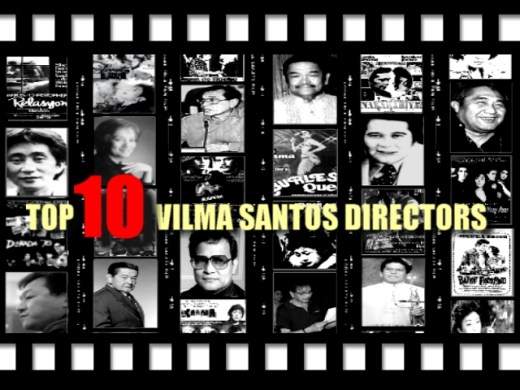
TIE 10. Pablo Santiago was the father of actors Randy, Rowell and Raymart. He was known for his big-budgeted action movies, many of them starring Fernando Poe Jr. He made his directorial debut at 19 with Larry Santiago Productions’ Lo Waist Gang, which catapulted Poe to stardom. For nearly fifty years, Santiago made award-winning films such as Batingaw, Nueva Vizcaya, Perlas ng Silangan, Ibong Adarna and Digmaan ng mga Angkan, a 1974 Metro Manila Film Festival blockbuster starring Ronnie Poe and Joseph Estrada. His last movie starred FPJ opposite Anjanette Abayari in Ang Syota Kong Balikbayan, in 1996. He died in 1998 at the age of 67 from lingering kidney ailment(Sol Jose Vanzi).
HIGHLIGHTS:Santiago first directed Vilma Santos in a Joseph Estrada movie, Batang Iwahig in 1966. Eight years afterward, He will direct Vilma again, this time as the leading lady of the Joseph Estrada’s rival, the late Fernando Poe Jr in light comedy and a smash hit, Batya’t Palo-palo. He will direct three more projects with Vilma, the follow up of the FPJ-Vilma teams in 1976’s Bato Sa Buhangin, the forgetable, Big Ike’s Happening in 1976 and the action film Vilma Vente Nueve in 1975 starring Vilma and action star, Jun Aristorenas.
Total Number of Films in our list of VSR’s Top 50 films = 2 (#37 Bato sa Buhangin 1976, #40 Batya’t Palu-Palo 1974)
TIE 10. Maryo J. De los Reyes is a film and television director from the Philippines. He began his career in the 1970s(Wikipedia). Reyes’ most significant works are the critically acclaimed Magnifico (2004), Tagos Ng Dugo (1987) and the commercial hits, Bagets (1983), Annie Batungbakal (1979).
HIGHLIGHTS: In 1987, Maryo De Los Reyes directed Vilma Santos that critics considered one of the most shocking film that year, “Tagos Ng Dugo.” The film was hailed as feminist as seldom a Filipino woman was seen on screen as a murderous serial killer. It earned Vilma Santos her fourth FAMAS Best Actress. Ironically, the conservative Catholic church’s award giving body, Catholic Mass Media Awards, agreed with the FAMAS. They gave Vi their Best Actress award while the critics’ group, Gawad Urian refused to hand-out their yearly award citing there were no deserving films that year. Reyes last directed Vilma in another memorable off-beat role, the 1992 drama, “Sinungaling Mong Puso.”
7. Eddie Garcia (born Eduardo Verchez García on May 2, 1929 in Sorsogon, Philippines) popularly known as “Manoy” is one of the top Filipino film actors and also a Movie Director. He is the most awarded and nominated person in the long history of the Filipino Academy of Movie Arts and Sciences (FAMAS) Awards. He garnered a total of 34 nominations (13 for Best Supporting Actor, 10 for Best Actor and 11 for Best Director). Out of these, he got 6 Best Supporting Actor wins, 5 Best Actor wins and 5 Best Director wins, 3 Hall of Fame Awards, 1 Lifetime Achievement Award and the Fernando Poe, Jr. Memorial Award. He was awarded his first FAMAS Award in 1957 and his last FAMAS, a Hall of Fame for Best Actor, in 2003 (Wikipedia).
HIGHLIGHTS: Eddie Garcia first directed Vilma in the Marcos film, “Pinagbuklod Ng Langit.” She reprised the role of Imee Marcos and again co-starred with movie queen, Gloria Romero and dramatic actor, Luis Gonzales after “Iginuhit ng Tadhana.” Garcia directed Vilma again in 1982′s record breaker, “Sinasamba Kita.” Overall, the two collaborated in five more films after “Sinasamba,” giving us two of the most memorable Filipino movie lines – confronting the mistress Dina Bonevie, Vi said: “Para Kang Karinderyang bukas sa lahat ng gustong kumain (translated literally into “You are like food restaurant! Open to all who wanted to eat!”) from the movie “Palimos Ng Pag-ibig” and then confronting the rich snotty old Alicia Vergel, Vi said: “Si Val, si Val, si Val na walang malay! (literally translated to “Its Val! its Val!, Its always Val, The one who is innocent!”).
Total Number of Films in our list of VSR’s Top 50 films = 5 (#11 Imortal 1989, #18 Paano Ba ang Mangarap? 1983 #19 Sinasamba Kita, #22 Saan Nagtatago Ang Pag-ibig? 1987, #45 Palimos Ng Pag-ibig 1986)
6. Emmanuel H. Borlaza aka Maning Borlaza is a 1957 Palanca Awardee for “May Pangako ang Bukas” and theaterical drama trained by National Artist Severino Montano. Appointed by Pres. Noy Aquino as Movie and Television Review and Classifications Board (MTRCB) Vice Chairman this year, Borlaza directed 24 films with Vilma Santos and was credited with her transformation to a reluctant singing competitor of Nora Aunor to bankable superstar with such hits like Dyesebel, Lipad Darna Lipad, Darna and the Giants.
HIGHLIGHTS: Borlaza gave Vilma Santos her very first best actress, winning the 1972 FAMAS for via Dama De Noche. He is also credited in narrowing the popularity gap between her and the musical era’s darling of the 70s, Nora Aunor.
Total Number of Films in our list of VSR’s Top 50 films = 4 (#10 Lipad Darna Lipad 1973, #32 Dyesebel at ang Mahiwagang Kabibe 1973, #48 Darna and the Giants 1973, #49 Dama De Noche 1972)
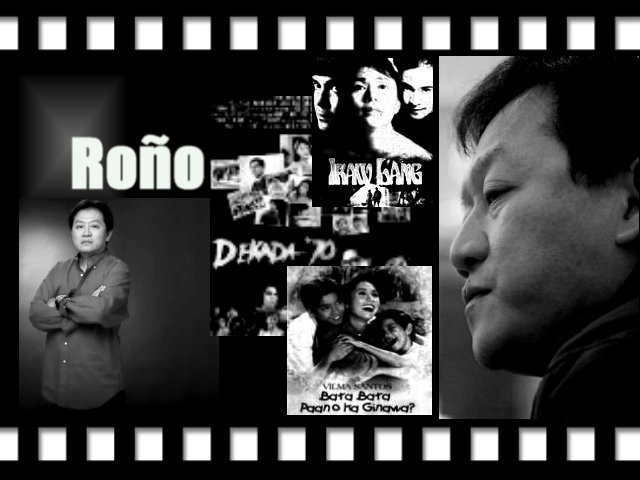
3. Chito S. Roño also known as Sixto Kayko, is a Filipino multi-awarded TV and film director. He is the director of the blockbuster films Feng Shui and Sukob. In 2010, he is one of the directors of the top-rating supernatural–fantasy horror TV series Imortal on ABS-CBN (Wikipedia). In 1984, Roño directed his first feature film, titled “Private Show” starring Jaclyn Jose. It was released locally in 1985 and won Jose the Star award for Best Actress. Chito used the pseudonym Sixto Kayco in the credits.
HIGHLIGHTS: Roño gave Vilma Santos her first international recognition winning the best actress in 1999 Brussels International Festival of Independent Films. At the same time, he was recognized as the festival’s Best Director both for Bata Bata Paano Ka Ginawa. The film also gave Vilma Santos her third grand slam winning all the best actress awards from several local award giving bodies. In 2003, Vilma received another international recognition, this time from Cinemanila International Film Festival winning the Best Actress for Dekada 70. The film was screen in the international film festival circuit and was the official entry of the Philippines in the 76th Academy Awards (OSCAR) for the best foreign language film category.
2. Celso Ad. Castillo began directing films mid-60’s at an early age, but he has since then gained reputation for many other aspects of the craft particularly scriptwriting and acting. In the Filipino movie industry, he holds the unique repuation of being controversial, trendsetter,enfant terrible and messiah of Philippine cinema, and his track record justifies it: he introduced artistry and commercialism in sex films (nympha) when the two were considered incompatible, and introduced sex in artistic projects ( Ang Pinakamagandang Hayop sa Balat ng Lupa/The Most Beautiful Animal on Earth)when moralistic repression was in vogue. An unfortunate and unfair consequence of the controversy is the recognition due him as one of the finest film commentators on the Philippine social scene, with a visual fluency unmatched by any other contemporary filipino film director. – CELSOAD.tripod.com
HIGHLIGHTS: Castillo gave Vilma Santos her first mature role in Burlesk Queen resulting with her first local film festival best actress award. He also directed Pagputi Ng Uwak Pagitim Ng Tagak where Vilma Santos starred and produced. The film received several best picture awards and was considered one of Castillo’s best works.
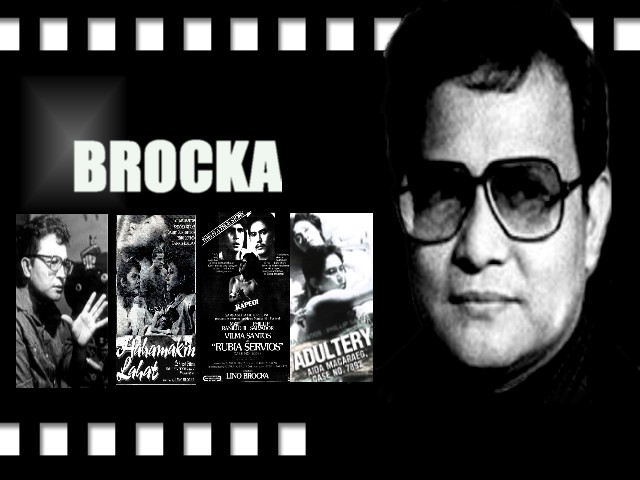
5. Catalino Ortiz Brocka (April 3, 1939–May 21, 1991), director for film and broadcast arts, espoused the term “freedom of expression” in the Philippine Constitution. Brocka took his social activist spirit to the screen leaving behind 66 films which breathed life and hope for the marginalized sectors of society — slumdwellers, prostitute, construction workers, etc. He also directed for theater with equal zeal and served in organizations that offer alternative visions, like the Philippine Educational Theater Association (PETA) and the Concerned Artists of the Philippines (CAP). At the same time, he garnered awards and recognition from institutions like the CCP, FAMAS, TOYM, and Cannes Film Festival. Brocka has left behind his masterpieces, bequeathing to our country a heritage of cinematic harvest; a bounty of stunning images, memorable conversations that speak volumes on love,betrayal and redemption, pestilence and plenty all pointing towards the recovery and rediscovery of our nation. To name a few, Brocka’s films include the following: “Santiago” (1970), “Wanted: Perfect Mother” (1970), “Tubog sa Ginto” (1971), “Stardoom” (1971), “Tinimbang Ka Ngunit Kulang” (1974), “Maynila: Sa Kuko ng Liwanag” (1975), “Insiang” (1976), “Jaguar” (1979), “Bona” (1980), “Macho Dancer” (1989), “Orapronobis” (1989), “Makiusap Ka sa Diyos” (1991) (NCCA.gov.ph). On May 21, 1991 Brocka met an untimely death in a car accident in Quezon City, Metro Manila. In 1997 he was given the posthumous distinction of National Artist for Film.(Wikipedia)
HIGHLIGHTS: Brocka gave Vilma one of the most controversial film after “Burlesk Queen,” her milestone role as a rape victim in 1978′s “Rubia Servios.” The film failed to secure Vilma the local festival’s best performer award after so much speculations despite this, the film was a big hit. Brocka will direct Vi two more times, “Adultery” in 1984 and “Hahamakin Kita” in 1990, a year before his untimely death in May 21, 1991.
4. Laurice Guillen is an award-winning Filipino director and actress. She was born on January 29, 1947 in Butuan City. She is married Johnny Delgado, a notable and prominent actor. Daughters, Anna and Ina Feleo are both into stage acting as well. Laurice won international notice for her direction of the 1981 film, Salome(Wikipilipinas).
HIGHLIGHTS: Guillen gave Vilma her fifth and sixth Gawad Urian Best Actress awards for 1991’s Ipagpatawad Mo and 1993’s Dolzura Cortez. The later also gave Vilma her second grand slam, winning all the best actress awards from local award giving bodies.
Basic Information: Directed: Emmanuel H. Borlaza, Elwood Perez, Joey Gosiengfiao; Story: Mars Ravelo; Screenplay: Joey Gosiengfiao; Cast: Vilma Santos, Gloria Romero, Celia Rodriguez, Liza Lorena, Eddie Garcia, Marissa Delgado, Ernie Garcia, Dick Israel, Ruel Vernal, Angie Ferro, Angelito, Nanette Lizares, Rod Dasco, Cloyd Robinson, Mary Walter, Adul de Leon, Bobby Roldan, Edgar Oira, Karlo Vero, Francisco Cruz, Chanda Romero, Gilda Gomez, Ellen Esguerra, Oskar Peralta, Urduja, Louie Acosta; Executive Producer: Victor Gosiengfiao; Original Music: Jonas Sebastian, Demetrio Velasquez; Cinematography: Rodolfo Diño
Plot Description: After a long period of absence, Vilma Santos resurrected the Filipino version of Wonder Woman, Darna, in a fantastic trilogy. Despite the lack of height familiar with previous Darnas, Vilma Santos’ bubbly youthful portrayal as Darna and the alter ego character Narda radiated the screen against Philippine cinema’s senior screen queens, Gloria Romero as the “Babaing Impakta (Vampire Woman),” Celia Rodriguez as “Babaing Ahas (Snake Woman),” and Liza Lorena as “Babaing Lawin (Hawk Woman).” The film was release on March 23, 1973 to a massive crowd in Metro Manila. Tagalog Ilang Ilang Production who produced the film reportedly distributed Darna dolls and Coca-cola drinks to the moviegoers. The film was a trilogy that focuses on the fights scenes between Darna and her nemesis with great effect and with the help of Darna’s equally perky young brother, Ding portrayed by child star, Angelito. The special effect that was considered way ahead of its time were in full displayed in this film. The goriness make-up, particularly Gloria Romero’s was a proof that Filipinos were creative and talented, way ahead of Hollywood or even Bollywood. – RV
Film Achievement: Top Record-Breaking Box-office Film of 1973; The first of four Darna films starring Vilma Santos; One of Vilma Santos and Gloria Romero 13 films – (Anak ang Iyong Ina, Iginuhit ng Tadhana, De Colores, Pinagbuklod ng Langit, Anak ng Aswang, Lipad Darna Lipad, Happy Days are Here Again, Karugtong ang Kahapon, Nakakahiya?, Hindi Nakakahiya, Makahiya at Talahib, Saan Nagtatago Ang Pag-ibig?, Kapag Langit Ang Humatol) – RV (READ MORE)
Film Review: In the Silver Age era of Darna, the movie “Lipad, Darna, Lipad!” (“Fly, Darna, Fly!” 1973), played by the lovely Vilma Santos, made a new version of the story. In this time, Narda was a teenager in her late teens. She discovered the magic stone after the event of a falling star landed near her home one night. She discovered that the magic pebble gave her superpowers that made her Darna. She and her brother were the only ones who knew the secret and their grandmother was not aware of it in this version. Narda herself becomes Darna and were not two different characters. She was also not from Planet Marte but was just a champion warrior of the forces of light. Every time Darna turns back to her mortal self, the magic stone reappears in her mouth and she takes it out and hides it until she needs it again. Every time the need arises, she has to swallow the pebble again and say Darna to transform. – Silver Age Darna, Supersexyheroines website
In 1951, 2 Darna movies were made starring Rosa Del Rosario, followed by another two starring Liza Moreno in the early 60’s, one by Eva Montes and one by Gina Pareno in 1969. But it was not until 1973’s “Lipad, Darna, Lipad” starring Vilma Santos when “Darna mania” would be rekindled and made this version the highest grossing Darna movie of them all. A feat that has not been equalled to this day. In these 1970s films, Darna’s origin was slightly tweaked with a new twist yet remained faithful to Mars Ravelo’s vision. No longer a little girl, Narda was now in her late teens. Also, she herself becomes Darna, unlike the original where she just “channels” her. Only Ding knows her secret in this version unlike the original where both Ding and their Grandmother knew the secret. Also, the stone comes out of Narda’s mouth every time she changes back from being Darna; she has to swallow it every time she wants to transform (This became standard for following versions). Darna is not specified as coming from Marte, just as a “warrior of Light”. This version of Darna became most people’s idea of the character for about 3 decades. A famous catch phrase by Narda popularized by the movies and NOT the comics version is “Ding, Ang Bato!” (“Ding, the Stone!) – Nostalgia Manila blog site
LIPAD, DARNA, LIPAD (1973) – The quintessential action-fantasy Pinoy flick that appeals to all ages, from generation to generation. This movie is a major milestone for Vilma because it proved that she could really carry a solo movie and bring in the dough (up to now of course!). Vilma’s Darna franchise is the most memorable and successful of all Pinoy fantasy-action genres. Imitated but never equalled, Vilma’s Darna lives on. Unforgettable. Memorable. It grows on you. No Pinoy kid ever grows up without being a part of the Darna magic. The enormous success of Lipad, Darna, and Lipad led to three more Darna movies with Vilma Santos. As a result, the star for all seasons became the star for all Darnas—Santos played her four times, more than any other actress in the super heroine’s history.
Lipad, Darna, Lipad! were thus divided into three separate segments, directed by three different directors. In Darna’s case, the three directors were Maning Borlaza, Joey Goesiengfao, and Elwood Perez—three names that promised an adventure that could do Andy Warhol proud.
First episode: “Ang Impakta” Starring Gloria Romero as Miss Luna, Narda’s school teacher who has a dark secret. She is actually a flying blood sucking creature at night. In this thrilling episode she knows the secret identity of Narda. The most memorable part was when Ms. Luna asked Narda to help her with some paper works. Little that she know, while she was busy checking the papers Ms. Luna excused herself, she then went to the next room and transformed into a scary vampire.
Ding found out that Ms. Luna is the vampire and Narda forgot to bring the magical stone , he rushed to her sister who then was being strugled by the monster. As soon as he got there, he threw the stone to her much terrified sister and she immediately changed to Darna. Followed was the famous aerial fight scene. Nanette Medved and Bing Loyzaga tried to copy the infamous fight scene in 1990 Viva films Darna. Episode one was directed by Maning Borlaza.
Second episode: Vilma also had to battle with Celia Rodriguez, who played a campy Valentina, a supermodel by day and a snake priestess by night. One scene has the actress naked in bed being caressed by a dozen snakes. Indeed, with the likes of Gosiengfao, Perez, and Borlaza at the helm, Darna is sure to get stuck in grotesque situations reminiscent of the Rocky Horror Movie. Their take on Darna is sometimes too risqué and violent for little children; but as a camp fest, the movie works.
In this episode Valentina, tried to steal Narda’s magical stone. Also, there was a scene where Valentina dressed up as Darna. I love the exciting part where Darna and Valentina battled on top of a high rise building. Darna, was almost a no match to her mortal enemy. Dangerously armed with lazer beams coming out from Valentina’s eyes, Darna was helpless and knocked down several times. Until, she stumbled upon into a piece of broken mirror and used it as a shield againts Valentina’s deadly lazer beams. Darna quickly made her looked in the mirror. Her lazer beams bounced back and she turned into a stone. From the roof, Valentina fell hard on the ground and broked into shattered pieces. Anjanette Abayarri and Cherrie Gil almost did the same scene in ” Darna, Ang Pagbabalik! ” Second Episode was directed by Elwood Perez.
Vilma Santos with co stars Ernie Garcia and Celia Rodriguez as Dr. Valentina Vrandakapoor, Phd in reptilian zoology from the University of new Delhi. Not to be overlooked is Darna’s arch-rival Valentina. Celia Rodriguez breathed new life to the term antagonist with her classy portrayal of the serpent-haired villainess. Rodriguez set a new standard by which evil women are to be judged.
Third episode: The final& episode was “Babaing Lawin” ( Hawk Woman), starring Liza Lorena as Babaing Lawin. I barely remember this one, there was this scene where Narda and Ding got caught and almost drowned in a quick sand. In Hawk Woman’s cave there’s this stream, that can make her wings disappear by walking across to it. There was also this character named Agila, a bird man played by Rod Dasco, he’s like the Hawk Woman’s mate. There was some fight scenes in the cave between Hawk Woman and and Darna. At the end of the story Darna and Hawk Woman, mend their ways. – Eric Cueto (READ MORE)
“Due to the Internet, one day soon I’m sure information on all of the cinematic obscurities of the world will be available to us, but at the moment it’s still wonderful to uncover a country’s hidden pop culture hitherto unnoticed by the rest of the planet. Take Video48, a mind-shattering trip into the uncharted realms of Filipino cinema, featuring a menagerie of stills, posters and articles from films I never even dared to dream existed! I stumbled across home-grown super-heroes such as Mars Revelo’s Darna a few years back, and Eric Cueto’s fansite provided a wealth of information on her cinematic adventures, (whilst also revealing tantalising glimpses of her on-screen contemporaries), but I certainly hadn’t realised the extent to which comic book characters pervaded the Philippine big-screen. Chances are the country was second only to Turkey when it came to cinematic Super-heroes – Darna herself has starred in 14 films and two TV series, which certainly puts Wonder Woman to shame…Sadly most of these fantasy films are unlikely to have survived – the condition of the Vilma Santos’ early Darna movies is supposedly so wretched that a DVD release has been permanently canned, and ancient VHS copies of Darna & the Giants and Darna & the Planet Women are jealously guarded by the few collectors who salvaged them from rental shops. Just as in Turkey, these films were probably considered to be as disposable as the comic books on which they were based – but I for one would go ga-ga for a double bill of this years The Dark Knight with 1973’s Fight Batman Fight (fair enough, my brain might melt out of my ears afterwards, but what a way to go…” – Poptique (READ MORE)
“…Vilma, now 20, still looking virginal and sweet kicked 70’s phenomenal superstar Nora’s butt at the boxoffice and earned her box-office wings via this monumental hit. The Emancipation of Baby Vi. Mariah Carey could not agree more. There was no turning back since then. The Fantasy Queen was born. Forty-three year old Tita Gloria gamely and bravely accepted the role of Ms. Luna, teacher by day and Manananggal by night. Movie Queen Gloria was deglamorized and became the evil incarnate as a vampire. Amalia Fuentes was the original movie queen who bravely accepted a daring role such as a vampire that won her a FAMAS statuette in Gerry De Leon’s Ibulong Mo Sa Hangin, and changed her goody-two-shoe image forever. Was she the original queen of reinvention that gave Vilma an idea to do the same via the landmark movie Burlesk Queen? Hmmm…for the first time, La Santos was billed above La Romero. Times have changed. The tables were turned. Vilma Santos is the New Box-Office Champ and Tita Glo and Company could only “bow” to the Reel/Real Queen: Ms. Rita Gomez, Helen Gamboa, Boots Anson-Roa, Barbara Perez and others did not have second thoughts to do a movie with the resurgent Vilma. Who wouldn’t want to be famous again and have fun working with the most hardworking and versatile actress? In my book, the aerial Good versus Evil fight of Vilma and Gloria as Darna and Impakta was one of the most thrilling and unforgettable scenes of my movie-going life. How I wish the movie resurfaces from Indonesia or from Timbuktu and my Vilma collection will be complete. That will be heaven! Where, oh, where is that classic movie? The Manananggal episode of Lipad, Darna, Lipad was so good that the two have to followed up their success via Anak Ng Aswang…” – Mario O. Garces (READ MORE)
“…This four-time FAMAS-winning actress is best remembered for her role as the slithering Dr. Valentina Vrandakapoor in the 1973 film Lipad, Darna, Lipad. In the iconic movie, she donned the reptile headdress for the Medusa-inspired character and gave Darna (Vilma Santos) hell. Although she’s been appearing in less villainous roles, Celia Rodriguez is still active in both movie and television these days. She played a supporting character in Darna’s latest TV incarnation, with Marian Rivera as the superheroine…” – Spot.ph (READ MORE)
Most Popular Darna “…Ding, ang bato!” yells Narda, the adolescent country lass, to her younger brother. Ding obligingly hands over a shiny pebble which Narda swallows to turn herself into the vivacious super-vixen, Darna. Mars Ravelo’s superheroine, clad in crimson bikinis and knee-high stiletto boots, may perhaps be the most famous local fantasy character given life on the silver screen. Though not actually considered a career-defining role, portraying Darna is, nonetheless, highly-coveted. Darna has been portrayed by no less than nine actress in 12 feature films. Rosa del Rosario first wore the scarlet two piece in May 1951. She reprised the role after three months. Liza Moreno, Eva Montes and Gina Pareno followed her. The inter-galactic pebble found its way to Vilma Santos’ throat in 1973 via the flick “Lipad, Darna, Lipad!” Santos, now a two-term mayor of Lipa City in Batangas, is probably the most popular Darna, with a total of four movies in a span of seven years. Some of these were made known to younger generations through afternoon airings on television in the late ’80s. Maybe RPN 9 should do that again so that even younger generations can marvel at Darna’s greatness, albeit antiquated, in such movies as “Darna and the Giants” and “Darna vs. the Planet Women…” – Armin Adina, Philippine Daily Inquirer, June 06, 2003 (READ MORE)
“…And so, yielding to the theory that “misery loves company,” the two failures teamed up. They picked up from where they had left off. Backed up by some enterprising businessmen who firmly believed the duo would make good next time (they were joined by Joey’s brother, Victor, and movie scribe Douglas Quijano and others), they formed Sine Pilipino and turned out the three-episode “Lipad, Darna, Lipad.” Joey and Elwood directed two of the episodes. In an interview, the two directors intimated that, depending on public reaction, it could have been their last stint in the movies. Miracles of miracles, Lipad, Darna,,,broke existing box office records at that time! But alas, despite the movie success, Sine Pilipino closed shop due to “mismanagement.” Undaunted, Elwood and Joey formed another company, this time the Juan de la Cruz Productions. Just the same, the budding outfit folded up because it had a rough time with the Board of Censors. By then, the drive against bomba movies and smut publications were massive and sustained, and the guidelines were different to those of today…” – Manny B. Fernandez, Expressweek, July 12, 1979 (READ MORE)
Darna is Not a ‘Rip-off” of Wonder Woman – “…Because of the character’s immense popularity, several other studios would license the character and produce more Darna movies throughout the next several decades. After Rosa Del Rosario, Vilma Santos (who first played Darna in 1973’s “Lipad, Darna, Lipad”) would be the most well known and the most in demand to play the character. She starred in a total of 4 Darna movies. Her 4th and final one being in 1980. For years after that, no more Darna movies were produced…” – Raffy Arcega, Comic Book Movie (READ MORE)
Gina Pareño – “…Maraming naging Darna sa kani-kanilang panahon pero ang unang inabot naming lumabas na Darna ay si Gina Pareño. Aba, kung nakita ninyo si Gina noong panahong iyon, ang ganda talaga niya at hanep ang katawan. ’Tapos ang maraming Darna movies na napanood namin, ang star ay si Vilma Santos, na nagsimula sa Lipad, Darna, Lipad. Iniba ang title dahil ang sinundang pelikula na Takbo, Vilma, Dali ay naging isang napakalaking hit din noong panahong iyon. Aba, isipin ninyo, noong panahong iyon ay nakakagawa ng isang pelikulang black and white sa halagang P120,000 lamang. Eh kinse pesos lang ang sine noon. Ang Darna ni Vilma kumita ng tatlung daang libong piso sa Metro Manila pa lamang at kakaunti pa ang sinehan noon ha. At kung titingnan naman ninyo si Vilma nung nag-uumpisa — maganda, sexy, at maputi. Kung negra ka, ano ang hitsura mo kung magsusuot ka ng costume ni Darna? Baka mapagkamalan ka pang lumilipad na tuko? Pagkatapos ni Vilma, marami ring naging ibang Darna, pero honestly ni hindi na namin napanood ang mga pelikula. Hindi dahil nagsawa kami sa Darna movies ha. In fact, hanggang ngayon mahilig pa rin kami sa super heroes. Nanonood nga kami ng anime eh. Pero hindi namin nagustuhan ang iba…” – Ed de Leon, Pang-Masa, 08 Oct 2013 (READ MORE)
Valentina – “…Iba talaga si Direk Maryo J. dahil he brings out the best in his actors,” says Katrina, whose daughter Katrence turned one year old last Wednesday. “Dito sa ‘Magkano Ba ang Pag-ibig’, tatlo kaming aktres na nag-Valentina ang nagkasama-sama. Una si Tita Celia Rodriguez na nag-Valentina kay Gov. Vilma Santos sa ‘Lipad Darna Lipad’ in 1973. Then si Alessandra de Rossi na nag-Valentina on TV to Angel Locsin’s Darna noong 2005, at ako na nag-Valentina kay Marian Rivera sa 2009 version ng ‘Darna…” – Mario Bautista, Journal, 23 September 2013 (READ MORE)
Intergalactic Warrior – “…There were comic-inspired franchises that never travelled beyond their own borders, such as the Darna series from the Philippines in the 1970s – she was an intergalactic warrior disguised as an earthling – and which helped actress Vilma Santos turn the fame she achieved into a political career that still sees her serving as governor of Batangas province…” – Matt Scott, South China Morning Post, 20 April, 2014 (READ MORE)
Sa paggawa ng pelikula, kung maringgan man ng pagdaing si Vilma Santos ay bihirang-bihira. Nangyayari lang ito kung ipagpalagay nating siya’y may dinaramdam, hapong-hapo at talagang hindi na makakaya ng katawang humarap sa kamera kahit ibigin niya. Gayon man, kung nagkataong napakahalaga ng eksena at kinakailangang gawin niya, khait anong sama ng pakiramdam niya’y humaharap siay sa kamera. At sa pagtungo niya sa set o location, lagi siyang nasa oras. Kung maatraso ma’y saglit lang. Ganyan ka-professinal si Vilma Santos. Ngunit sa Lipad, Darna, Lipad ay dumaraing siya. Hindi sa hindi niya enjoy gawin ito. Ang totoo’y sa pelikulang ito lang siya na-involved. Ibig na niyang matapos na ito’t makita ang pinagpaguran niya. Talaga palang mahirap gumawa ng costumes picture. Lalo pa’t kung tulad nito! Una ang naging suliranin namin ay ang Darna costumes ko. Kasi kinakailangan maging maliksi ang kilos ko bilang Darna, kaya kailangang alisin na ang padding. Kaso nga lilitaw naman ang malaking bahagi ng aking katawan. Mabuti na lang at sumang-ayon ang aking fans. “Pangalawa, nag-aalala ako sa mga eksenang bakbakan namin nina Gloria Romero, Celia Rodriguez at Liza Lorena. Kasi baka masaktan ko sila nang di sinasadya. Ang pangatlo ay ang likas ng pagkatakot ko…sa mga ahas. Kasi may bahagi roong tungkol sa Babaing Ahas, si Valentina. Dito, laging kailangan ang ahas sa mga eksena. Mga sari-saring ahas. Maliliit at malalaki. At makamandag! Ang pinakamahirap sa lahat ay ang pag-su-shooting. Kailangan naming tapusin ito anuman ang mangyari. Kaya nasasagap ko ang lamig ng gabi at init ng araw. At ang suot ko nga’y labas ang malaking bahagi ng katawan! At alam n’yo namang kailang lang ay naospital ako dahil sa respiratory defects!” Ito ang daing ni Vilma Santos sa pinakamahirap niyang pelikula, ang Lipad, Darna, Lipad. Ngunit mahihinuha naman ninyo na ang pagdaing niya’y parang paglalambing lang. Dinaraan pa nga niyang lahat sa biro. Pagka’t ang tutoo, mahal na mahal niya ang pelikulang ito. Dahil ito nga ang pinakamahirap. At sa isang artista, kung alin ang pinakamahirap ay siya namang pinakamasarap! – Cleo Cruz, Love Story Magazine, 1973
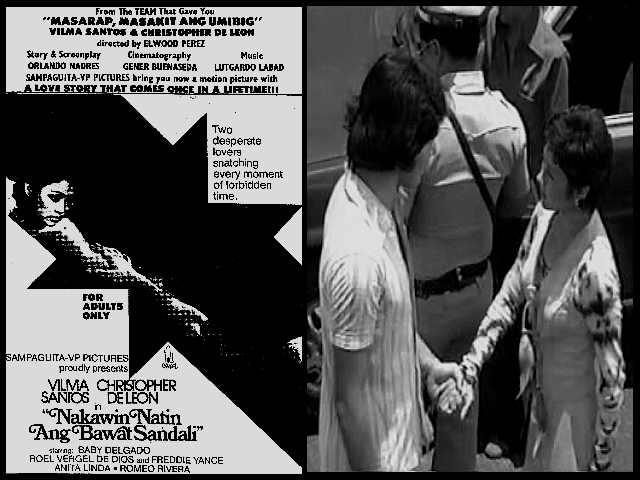
Basic Information: Direction: Elwood Perez; Cast: Cast: Vilma Santos, Christopher De Leon, Baby Delgado, Roel Vergel de Dios, Freddie Yance, Anita Linda, Romeo Rivera, Tony Carreon, Lily Miraflor, Ven Medina, Jose Villafranca, Nina Lorenzo, Yolanda Luna, Mario Escudero, Jimmy Reyes, Vic Santos, Aring Bautista, Nat Mallares, Josefina Morato, Juanita Rodrigues, Rita Flores, The Thunder Boys; Sound: Lino Torres; Editing: Oscar Dugtong; Cinematography: Gener Bueneseda; Executive Producer: Marichu Perez Maceda; Stroy and Screenplay: Orlando Nadres; Music: Lutgardo Labad; Produced by Sampaguita Pictures Inc.; Theme Songs: Dahil Sa Pag-ibig (Music by Lutgardo Abad, Lyrics by George Canseco, Sung by Aloha, Released by Blackgold Records), Nakawin Natin Ang Bawat Sandali (Music by Lutgardo Abad, Lyrics by Orlando Nadres, Sung by Anthony Castelo, Released by Vicor Music)
Plot Description: “A young couple’s affair is marred by their feuding families and small-town intrigues. They meet years after as successful career people only to be drawn into another scandalous liaison.” Bamboo Gods and Bionic Boys (READ MORE)
Film Achievement: One of seven Perez-Santos collaborations.
Film Review: “…It has a uniformly good performance by the cast which includes Baby Delgado, Roel Vergel de Dios, Anita Linda, Jose Villafranca and the two leads Christopher de Leon and especially Vilma Santos who has done a surprisingly intelligent and affecting character portrayal. Not since Eddie Romero’s Sinong Kapiling, Sinong Kasiping? (1977) have we seen characters who think, behave and react to problems and situations like mature, sensitive and intelligent people. The characters do give way to occasional hysterical outbursts, but they somehow wake up to their senses before they completely forget themselves. And they are people in believable situations with real problems and genuine emotions. When they talk, they are seldom silly and when they are silly, they are aware of it. But even when they are silly or trite, they are never unsympathetic…” – Jojo Devera, Sari-saring Sineng Pinoy (READ MORE)
“…Elwood Perez and Vilma Santos colloborated in seven films (Ibulong Mo Sa Diyos 1988, Lipad Darna Lipad 1973, Magkaribal 1979, Masarap Masakit ang Umibig 1977, Nakawin Natin ang Bawat Sandali 1978, Pakawalan Mo Ako 1981, Pinay American Style 1979). The first one was the trilogy that he co-directed with two other director, Borlaza and Gosiengfiao (these three are the most underrated and under appreciated directors in the Philippines), the remake of Mars Ravelo comic super hero, Darna in Lipad Darna Lipad. The film was a record-breaking hit Box-office Film. They follow this up with a more mature projects as Vilma started to switched her image from sweet to a mature versatile actress, pairing her with Christopher DeLeon in five films starting with Masarap Masakit Ang Umibig in 1977. The Perez-Santos-DeLeon team produced seven blockbuster hits that gave Vilma two FAMAS best actress awards that secured her elevation to FAMAS highest honour, the FAMAS Hall of Fame award. She won in 1979 for Pakawalan Mo Ako and 1988 for Ibulong Mo Sa Diyos…” – RV (READ MORE)
Basic Information: Directed: Elwood Perez; Story: Orlando Nadres; Screenplay: Elwood Perez, Orlando Nadres; Cast: Vilma Santos, Christopher De Leon, Mat Ranillo III, Amado Cortez, Lilibeth Vera-Perez, Anita Linda, Ma-An Hontiveros, Lillian Laing, Sandy Garcia, Cloyd Robinson, Laila Dee; Executive producer: Marichu Vera Perez; Original Music: Lutgardo Labad; Cinematography: Gener Buenaseda; Film Editing: Jose Tarnate; Production Design: Bobby Bautista
Plot Description: A wealthy couple’s sacrificing adopted son, Alonso (Christopher de Leon) and wayward biological son, Alvaro (Mat Ranillo III) vie for the love of the same woman, Estella (Vilma Santos).
“…Elwood Perez and Vilma Santos colloborated in seven films. The first one was the trilogy that he co-directed with two other director, Borlaza and Gosiengfiao (these three are the most underrated and under appreciated directors in the Philippines), the remake of Mars Ravelo comic super hero, Darna in Lipad Darna Lipad. The film was a record-breaking hit Box-office Film. They follow this up with a more mature projects as Vilma started to switched her image from sweet to a mature versatile actress, pairing her with Christopher DeLeon in five films starting with Masarap Masakit Ang Umibig in 1977. The Perez-Santos-DeLeon team produced seven blockbuster hits that gave Vilma two FAMAS best actress awards that secured her elevation to FAMAS highest honour, the FAMAS Hall of Fame award. She won in 1979 for Pakawalan Mo Ako and 1988 for Ibulong Mo Sa Diyos…Total Number of Films with Vilma Santos: 7 (Ibulong Mo Sa Diyos 1988, Lipad Darna Lipad 1973, Magkaribal 1979, Masarap Masakit ang Umibig 1977, Nakawin Natin ang Bawat Sandali 1978, Pakawalan Mo Ako 1981, Pinay American Style 1979)…” – RV (READ MORE)
Film Reviews: “…Walang ipinagkaiba ang pelikula sa ibang mga sineng tinalakay ang mga suliranin ng pag-ibig at pamilya. Makikitang pinagtuunan ng pansin ni direktor Elwood Perez ang disenyo ng pelikula ngunit hindi naging epektibo ang paggamit nito upang maiusad ang kuwento. Kahit sa pagganap ng mga pangunahing tauhan, animo sila’y nasa entablado. Nanlilisik ang mga mata, walang katapusang pagsisigawan, pagtutulakan at pagbubugbugan. Sa pelikulang ito, unang ipinamalas ang senswalidad ni Vilma Santos. Maraming eksenang sekswal ang aktres at maaari talaga siyang makipagsabayan sa mga tulad nina Alma Moreno at Trixia Gomez. Karamihan ng mga sitwasyong ibinigay sa kanyang karakter ay hindi kapani-paniwala. Nariyang gawin siyang modelo, sa ilang piling tagpo ipinakita din ang pagiging estudyante ni Estella ngunit hindi naman tinahak ang mga ito sa kabuuan ng pelikula. Hindi rin maikakaila ang husay ni Christopher de Leon bilang aktor ngunit sa pelikulang ito ay nasayang lamang ang kanyang pagganap. Hindi nabigyan ng tamang direksyon ang aktor kung kaya’t lumabas na sabog ang kanyang karakterisasyon. Si Mat Ranillo III naman ay tila hindi na natutong umarte. Kadalasa’y pinaghuhubad siya ng direktor sa mga eksena upang mabigyang pansin. Masyadong mahaba ang pelikula dahil na rin siguro sa panghihinayang ni direk Elwood na masayang ang magagandang eksenang kanyang nakunan ngunit hindi naman nakaapekto ang mga ito sa takbo ng istorya. Kadalasa’y nakababad lamang ang kamera at nakatanghod sa susunod na gagawin ng mga artista. Hindi ito nakatulong upang mapabilis ang takbo ng pelikula, nakakainip panoorin ang ganitong mga eksena. Ang Masarap, Masakit Ang Umibig ay basurang nababalot sa kinang ng makintab na sinematograpiya, disenyo at musika na nagbabalatkayong masining na pelikula.” Jojo Devera, Sari-saring Sineng Pinoy (READ MORE)
“…Her metamorphosis began in late 1976 when she agreed to be kissed by Rudy Fernandez in Makahiya at Talahib. It was a “feeler” of sort and when the public clacked its tongue in obvious approval, Vilma shelved her lollipops-and-roses image and proved that she, too, could be a woman – a wise move indeed because at that time her career was on a downswing and her movies were not making money. Then she did Mga Rosas sa Putikan for her own VS Films where she played a country girl forced into prostitution in the big city. The movie did fairly well at the tills. Good sign. And came her romance with Romeo Vasquez, boosting both their stocks at the box office (thier two starrers, Nag-aapoy na Damdamin and Pulot-Gata where Vilma did her own wet style, were big moneymakers). The tandem, although it did help Vilma, actually helped Vasquez more in re-establishing himself at the box office (without Vilma, his movies with other leading ladies hardly create any ripple). In Susan Kelly, Edad 20, Vilma played a notorious-woman role that required her to wear skimpy bikini briefs in some scenes, following it up with two giant sizzlers (Dalawang Pugad, Isang Ibon and Masarap, Masakit ang Umibig) that catapulted her as the newest Bold Queen. Then came Burlesk Queen…” – Ricardo F. Lo, Expressweek Magazine January 19, 1978 (READ MORE)
“…Elwood Perez and Vilma Santos colloborated in seven films (Ibulong Mo Sa Diyos 1988, Lipad Darna Lipad 1973, Magkaribal 1979, Masarap Masakit ang Umibig 1977, Nakawin Natin ang Bawat Sandali 1978, Pakawalan Mo Ako 1981, Pinay American Style 1979). The first one was the trilogy that he co-directed with two other director, Borlaza and Gosiengfiao (these three are the most underrated and under appreciated directors in the Philippines), the remake of Mars Ravelo comic super hero, Darna in Lipad Darna Lipad. The film was a record-breaking hit Box-office Film. They follow this up with a more mature projects as Vilma started to switched her image from sweet to a mature versatile actress, pairing her with Christopher DeLeon in five films starting with Masarap Masakit Ang Umibig in 1977. The Perez-Santos-DeLeon team produced seven blockbuster hits that gave Vilma two FAMAS best actress awards that secured her elevation to FAMAS highest honour, the FAMAS Hall of Fame award. She won in 1979 for Pakawalan Mo Ako and 1988 for Ibulong Mo Sa Diyos…” – RV (READ MORE)
Basic Information: Directed: Elwood Perez; Story, screenplay: Toto Belano; Cast: Vilma Santos, Christopher De Leon, Alma Moreno; Executive producer: Lily Y. Monteverde; Original Music: Ernani Cuenco; Cinematography: Johnny Araojo; Film Editing: Rogelio Salvador
Plot Description: A story of a woman whose closest friend became her worst rival. They were once very close to each other-almost like sisters. She even confides all her troubles and heartaches to this friend. Later, she sensed some changes in her friend’s attitude towards her which became obvious when this friend of hers tried to outshine her in everything. She tried not to mind this but worse came to worst when she discovered that the other woman in her love one’s life is the very same friend thus a never-ending conflict arised. It stars: Vilma Santos, Christopher de Leon, Alma Moreno. – Trigon Video
A story of a woman whose closest friend became her worst rival. They were once very close to each other, almost like sisters. She even confides all her troubles and heartaches to this friend. Later, she sensed some changes in her friend’s attitude towards her which became obvious when this friend of hers tried to outshine her in everything. Philippines Filipino Tagalog movie. – Amazon (READ MORE)
Film Achievement: Box Office Hit of 1979, The title “Magkaribal” was used into TV series that was not related to this film in 2010 by ABS-CBN.
Film Review: “…Christopher de Leon embodies the physicality and psyche of a sexy beast whose complexity is at par with that of a De Niro or Pacino. De Leon, here in his prime epitomizes the dramatic range and animal magnetism akin to Marlon Brando’s Stanley Kowalski. Alma Moreno’s portrayal of a woman who desires a new life in the face of a very uncertain future is competent. The acting method employed here is able to twist the logic of cliché and reconstitutes the drama of yearning with passion and grace. Vilma Santos shows that the strength of women need not come from the repudiation of “feminine” traits and roles. Neither should they come from brute, shrewish adamance as exemplified by the stereotype, nor from machismo as embodied by her husband. Santos demonstrates that the concept of the beautiful, dainty, feminine and strong are not necessarily mutually exclusive. Rather, these form a character that is finally textured, complex and potentially oppositionist. Magkaribal is commendable for staging clever and well-thought out situations partaking of actual tension and punctuated by defamiliarizing comical scenarios and melodramatic circumventions. A certain style of filmmaking based on genre or other considerations is taken as any distinct mode of creating form in film and is made possible only against a background of options that makes a particular choice significant, meaningful and therefore recognizable stylistically. Film artists work within these possibilities in the process of making art, but are never limited to custom and habit…” – Jojo Devera, Sari-saring Sineng Pinoy (READ MORE)
“…Elwood Perez and Vilma Santos colloborated in seven films (Ibulong Mo Sa Diyos 1988, Lipad Darna Lipad 1973, Magkaribal 1979, Masarap Masakit ang Umibig 1977, Nakawin Natin ang Bawat Sandali 1978, Pakawalan Mo Ako 1981, Pinay American Style 1979). The first one was the trilogy that he co-directed with two other director, Borlaza and Gosiengfiao (these three are the most underrated and under appreciated directors in the Philippines), the remake of Mars Ravelo comic super hero, Darna in Lipad Darna Lipad. The film was a record-breaking hit Box-office Film. They follow this up with a more mature projects as Vilma started to switched her image from sweet to a mature versatile actress, pairing her with Christopher DeLeon in five films starting with Masarap Masakit Ang Umibig in 1977. The Perez-Santos-DeLeon team produced seven blockbuster hits that gave Vilma two FAMAS best actress awards that secured her elevation to FAMAS highest honour, the FAMAS Hall of Fame award. She won in 1979 for Pakawalan Mo Ako and 1988 for Ibulong Mo Sa Diyos…” – RV (READ MORE)
“…Back in the late ’70s, “Magkaribal” was the title of a dream project, casting together for the first time the two reigning box office queens at the time, Vilma Santos and Alma Moreno. Cast as opposing women, they fought for the love of one man, played by Christopher de Leon. TV’s “Magkaribal” is not based on the landmark Regal film directed by Elwood Perez and produced by Lily Monteverde. The title was not part of a film package bought by ABS-CBN from Regal Films a few years ago, explains business unit head Deo Endrinal. At best, “Magkaribal,” the teleserye, can be considered an allusion, if not a homage, to the film version, a big box office hit in its time. By the way, the original “Magkaribal” is available on video, capturing the quite young Vilma, Boyet and Alma in their sexiest best…” – Nestor Cuartero, Manila Bulletin, 20 June 2010 (READ MORE)
“I’m PX, short for Paula Xavier, I’m a Filipina…kyontiii…I can understand Tagalog but I’m having a hard time speaking it…actually, I’m not hungry…but on the second thought, why not?” – PX
“one-fourth Japanese, one-fourth Chinese, one-fourth Indonisian, one-fourth Filipino but I was born in Hongkong…you see my mom was a tourist in Hongkong when she met my Japanese father, my Chinese father, my Indonisian father and my Filipino father!” – PX
This slideshow requires JavaScript.
Basic Information: Directed: Elwood Perez; Story, screenplay: Toto Belano; Cast: Vilma Santos, Christopher De Leon, Bembol Roco, Cocoy Laurel, Rosa Mia, Alexandra Dulaney, Nova Villa, Bella Flores, Angge, Filipino Lou, Gloria Gaynor; Executive producer: Lily Monteverde; Original Music: Demetrio Velasquez; Cinematography: Felipe Sacdalan, Johnny Araojo; Editing: Rogelio Salvador; Sound: Luis Reyes, Ramon Reyes; Theme Songs: “Pinay” performed by Florante
Plot Description: PX, short for Paula Xavier (Vilma Santos) was an illegal alien in New York City. She’s broke and waiting for fiancé, Cocoy laurel to fulfill his promise of marriage despite the fact that Cocoy has already married an American to secure a green card. Hiding from the authorities, PX met two men who are willing to take care of her but conflicts arise as the two wanted to maintain a serious relationship with her. Played wonderfully by Christopher Deleon and Bembol Roco, the film resolved the love quadrangle between ex-fiancé, Cocoy Laurel and the two brothers when the jealous Cocoy reported Vilma to the immigration authorities. PX was deported back to the Philippines. But the films didn’t end in a sour note, PX found herself reunited with Christopher Deleon when the later followed her in the Philippines. – RV
Film Achievement: One of eight box office hit films Vilma Santos did in 1979
Film Reviews: Shot in New York City and directed by Elwood Perez, this film seems to be a precursor to Miss X (1980) ’Merika (1984) starring Nora Aunor and Milan (2004), even Anak (2000) and Dubai (2005). Talaga bang masarap ang buhay sa ibang bansa? Bakit nagpapakamatay sa green card ang mga Pinoy? PX, mahal na mahal kita, PX, I love you walang iba. Paula Xavier or PX (Vilma Santos) is a TNT like boyfriend Victor Laurel (what an effective undersated performance) who leaves her as his live-in to be engaged to an American to get a green card who promises Vilma to divorce the White girl and to marry PX so they could live happily forever after. Not. Vilma is pissed that Laurel dropped her for good and he left her with unpaid rent and a broken heart. Enter Boyet De Leon, as Vilma’s next boyfriend who has two jobs who has been around long enough to know what he wants in life – women and the American Dream. Enter Bembol Roco, in a great performance as Boyet’s Kuya who is a bagito green card holder in America. He was in the opening scene of the movie where he owns his business and lives comfortably even have someone to make him coffee. Rosa Mia are Roco and De Leon’s battered mother who suffers from the physically abusive second husband (a geriatric Irishman), and verbalized regrets for leaving the Philippines. She has the best lines in the movie and summarized the movie’s theme: “Kung uuwi ako sa Pilipinas ay kung patay na ako. Ayokong umuwi ng buhay at malaman nila na ang hirap ng buhay dito – kayod ka talaga to survive, at di pinupulot ang dolyar, ubas at mansanas sa daan. Ang dami kong dinaanang hirap para lang magka green card.”
Vilma Santos as PX is most effective in her scenes as a dumped/bitter girlfriend of Laurel, as a conflicted girlfriend of De Leon, and as a grateful soul who thank Roco for saving her from paying her overdue rent to her white landlord. Her PX is a toned down Sandra of Ikaw Ay Akin. She says to Roco: “Dati, sa konting pagkain, I offer myself to be laid. Napakabait mo.” Roco answers back: “Hindi ganoon kababa ang tingin ko sa sarili ko.” You see, Roco falls for the beautiful PX too and was upset to learn that PX is already making it with his brother, which drove him to drink and was depressed for a while. Panoorin na lang ninyo ang movie. The movie’s hopeful view of America begins with Perry Como singing White Christmas as Roco, in a dream scene, cavorts in the snow in slow motion. In his dying scene in the arms of his brother De Leon, Roco whispers “ni hindi ko man lang nakita ang snow”, and the above Winter Wonderland scene was replayed, while Boyet’s cry for help fell on deaf American ears. Vilma was deported after Laurel clandestinely reported her to the INS which arrested her at her birthday party. Her farewell scene with De Leon, handcuffed and all in a train station was one of the best scenes in the movie. The movie has a happy ending, with De Leon finding Santos, a flower picker amidst a field of white daisies with Benguet/Baguio as a backdrop. In a typical Elwood Perez slow mo fashion, amidst the daisy flower plantation, the box office love team of all time hugged and lived happily ever after. As credits rolled, Florante’s song Pinay played on. Pinay, American Style. Ang ganda! Vilma Santos yata iyan! – Mario O. Garces, V Magazine Issue No. 6 2006 (READ MORE)
Vilma was obviously under utilized as PX in these Elwood Perez experiment. Despite this predicament, Vilma was able to give us a splash of her abilities. While Nora was in full bloom as Mila in these quiet Portes film. She gave us a convincing portrayal of lonely woman who realized that she was being used by a man she truly loves. The contrast of style was the main point why I matched these two roles. As PX, Vilma was talkative, hiding her insecurity and vulnerability with her fragile disguise pretending to be a rich New Yorker with almost caricature gestures.
Regal films’ Pinay American Style was as commercial as one can imagine. Regal films producer, Lily Monteverde hired three leading men to support the most bankable actress of 1979, Christopher DeLeon, Bembol Rocco and Victor Cocoy Laurel. It was a period in Vilma’s career where she is doing one commercial films after the other. Two dance/musical hits Swing it Baby and Rock Baby Rock and a string of sexy films like Rubia Servious the previous year, Coed and Magkaribal mostly targeting the mature adult audience established her status as the number one box office superstar of 1978-79. Vilma in 1979 was a picture of self-assured bankable star. She did two movies with Elwood Perez, Magkaribal and Pinay American Style both were box office hits. She also produced an Eddie Rodrigues starrer Halik sa Paa Halik sa Kamay, and teamed-up with comedy king, Dolphy in Buhay Artista. As the year 1979 ends, she battled the drama queen Charito Solis in the local festival entry, Modelong Tanso. The end of the decade marked her stronghold as the box office queen. Clearly, Vilma Santos’ versatility as an actress was the secret weapon of her box office success. And this weapon was in full display in Pinay American Style.
Pinay American Style was the story of PX, an illegal alien or TNT – “tago ng tago.” Her boyfriend played by Victor Laurel abandoned her for a rich American girl mainly to secure a green card. PX met an Americanized Filipino, Christopher DeLeon but found him not serious of having her as a steady girlfriend. It just so happened that PX also met Christopher’s brother, Bembol Rocco, a new immigrant. PX and Bembol fell for each other. And a love triangle surfaced the screen. Adding to the drama was Victor Laurel’s enraged, jealous appearances. Laurel eventually tipped the police ending PX stays in New York. As Bembol Rocco realized that America doesn’t fit his lifestyle, he reconciled with his brother and advised him to follow PX in the Philippines. Christopher and Vilma reconciled in a farm field in the Philippines. The end.
The film was so forgettable that the critics didn’t even bother to write any reviews. The lack of enthusiasm on the part of the critics was compensated with the box office success of the film. Vilma fits the role as the illegal alien, PX. Her attempt to speak fluent English and pretend that she’s rich when she met the boyish looking Christopher was funny and poignant. She was given enough scenes to shine. One was when she was harassed by her landlady, she promised her the rent money the next day and when she’s gone, she opened her refrigerator and found a staled piece of bread. She took bottled water and ate the staled bread, went to the bedroom and found her mom’s letter. Lying down in bed, she started to break down. A quiet scene without dialogue. A contrast from the earlier scenes where she was talkative as she tried to impress Christopher and telling him she’s rich and from a well-known family. It was obvious in 1979, Elwood Perez wasn’t the kind of director you will expect to produce a serious output. He wasn’t a Bernal or Brocka. He’s a commercial director. It was a better effort though, compared to a much more convoluted Magkaribal or their past successful projects like Nakawin natin ang bawat sandali and masakit masarap ang umibig. In Pinay, Toto Belano’s script wasn’t efficient in ironing out the “love quadrangle” plot twists and establishing the characters of four actors. So the blame can’t be put to solely to Perez’ shoulder. There was a scene were Vilma Santos and Christopher were watching a concert which was obviously not part of the script. – RV
“…Pinay, American Style carries such attributes. Shot entirely in America, it depicts the plight of some Filipinos living there – Filipinos who are obsessed with amassing fortunres and landing high-paying jobs and enjoying the dolce vita in the muchballyhooed “land of the brave and home of the free” and the “land of the mighty dollar.” Compared to foreign movies with explicit sex scenes, Pinay… would not even deserve the “For Adults Only” tag or an “X-rated” classification, according to Elwood. Basically, the movie is a relfection of the typical plight of Filipinos living abroad. It is a plight that runs counter to the optimism and false hopes entertained by potential Filipino immigrants. Arriving in the U.S. as tourists, some Filipinos would choose to stay behind in their search for “greener pastures.” Having done so, they have to play hide-and-seek with immigration authorities, accept odd jobs to survive in the asphalt jungle, get married to ward off deportation, and similar evasive maneuvers. These same incidents are what the cast – Vilma Santos, Christopher de Leon, Bembol Roco and Victor “Cocoy” Laurel – portray in Pinay. Pinay is Elwood’s second movie shot abroad after Lollipops…” – Manny B. Fernandez, Expressweek, July 12, 1979 (READ MORE)
“Kukunin ko ang bayad ng halik! May sukli ka pa!” – Anna
“Puta! Sige ituloy n’yo! Sabihin n’yo! Hindi lang naman kayo ang ang unang nagparatang sa akin ng ganyan. Puta! Puta! Puta! Putang-ina n’yong lahat! Putang-ina n’yong lahat! Sige! Sabihin n’yo! Isigaw n’yo! Kung sa inyo lang ay malinis ang aking konsensiya!” – Anna
This slideshow requires JavaScript.
Basic Information: Directed: Elwood Perez; Story: Pete Lacaba; Screenplay: Jose F. Lacaba, Iskho Lopez, Mauro Gia Samonte; Cast: Vilma Santos, Christopher De Leon, Anthony Castelo, Deborah Sun, Subas Herrero, Mila Ocampo, Ed Villapol; Executive producer: Marichu Maceda; Original Music: Lutgardo Labad; Cinematography: Johnny Araojo; Film Editing: Jose Tarnate; Production Design: Angel Tantoco; Sound: Gaudencio Barredo; Theme Songs: “Dati” performed by Anthony Castello; Production Co: MVP Pictures; Release Date: 29 May 1981 (Philippines) – IMDB
Plot Description: When Ana’s (Vilma Santos) father died they experience hardship. She decided to stop her schooling and work (selling beauty soaps on the street). Despite being poor, she decided not to ask help from her rich boyfriend Freddie Villaseñor (Christopher DeLeon). When the hardship reached its peak, she decided to join her friend, Bernadette Santos (Deborah Sun) as escort girls. There she met Bernard, a son of a rich clan, who courted her when Anna’s relationship with Freddy failed. As it turned out Anna was pregnant and despite the disapproval of Bernard’s rich father (Subas Herrero), they continued their relationship. The continuing harassment of Bernard’s father and his entourage resulted in Bernard being shot as one of the goons tried to rape Anna and was caught by Bernard. Anna was framed and Bernard rich father hired Freddy to prosecute Anna. The film climax with the prosecutor Freddy discovered the bullet that killed Bernard. This was when he decided to visit Ana’s family and met her son. The film ends with Ana being acquitted and Freddy discovered that Ana’s son was his son. – RV
Namatay ang tatay ni Ana (Vilma Santos) at dahil rito’y naghirap sila. Napilitan siyang magtinda ng sabon at tumigil sa pag-aaral. Sa kabila nito hindi siya humingi ng tulong sa katipan na si Freddie Villasenor (Christopher DeLeon). Dahil sa hirap ay napilitang pumasok si Ana sa isang escort service sa tulong ng kanyang kaibigang si Bernadette Santos (Deborah Sun). Nakilala ni Ana si Bernard San Diego (Antony Castelo) sa kanyang trabaho bilang escort girl. Sa gabing iyon nakita siya ng kapatid na babae ni Freddy. Nang yayain ni Freddy si Ana para magpakasal pumayag na ito at pumunta siya sa bahay ni Freddy para makilala ang pamilya ni Freddy. Hindi nila alam ay inimbitahan ng kapatid ni Freddy si Bernard San Diego. At sa hapag ng kainan ay binisto nito ang tunay na trabaho ni Ana. Umalis nang umiiyak si Ana at nagkagalit sila ni Freddy. Pinuntahan ni Bernard si Ana para humingi ng paunmanhin ngunit naabutan sila ni Freddy at nag-away sila ni Bernard. Inakala ni Freddy na talagang may relasyon si Bernard at Ana kung kaya iniwanan niya ito. Nagbalik si Ana sa kanyang trabaho. Nagkaroon ng secret admirer ito. Yung pala ito ay si Bernard. Nalaman rin ni Ana na buntis siya at ang ama ng dinadala niya ay si Freddy. Inalok ni Bernard si Ana ng kasal at pumayag naman ito sa kabila ng pagtutol ng kanyang mayamang ama. Lumaki ang bata at apat na taon na ito nang magdesisyon ang ama ni Bernard na tigilan na ang pagsasama ng dalawa. Inalok si Ana ng malaking halaga ngunit tumutol ito. Nang umalis ang ama ni Bernard ay pinaiwan nito ang isa sa kanyang mga tauhan para gahasain si Ana. Dumating si Bernard at nagaway sila ng tauhan ng kanyang ama. Sa kaguluhan ay nabaril ng tauhan ng kanyang ama si Bernard mismo. Sinet-up ng ama ni Bernard si Ana. Pinakulong at kinuhang abogado si Freddy. Sa hukuman ay nakuhang magduda ni Freddy sa dating katipan. Nagpunta ito sa bahay ng ina ni Ana upang kausapin ang batang anak ni Ana. Natuklasan ni Freddy ang tutuong nangyari at ang testigo ay ang anak ni Ana. Sa closing ng kaso ay inihayag ni Freddy na walang kasalanan si Ana at ang pumatay kay Bernard ay ang tauhan ng sarili nitong ama. Napawalang sala si Ana at nalaman ni Freddy na ang bata’y ang sarili niyang anak. – RV
Film Achievement: 1981 FAMAS Best Actress – Vilma Santos; 1981 FAMAS Best Musical Score – Lutgardo Labad; 1981 FAMAS Best Theme Song – Louie Ocampo; 1981 FAMAS Nomination Best Actor – Christopher De Leon; 1981 FAMAS Nomination Best Director – Elwood Perez; 1981 FAMAS Nomination Best Picture; 1981 FAMAS Nomination Best Supporting Actor – Anthony Castelo; 1981 FAMAS Nomination Best Supporting Actress – Deborah Sun
Film Review: Dalawangpu’t Anim na taon na ang nakakalipas nang una nating napanood ang pelikulang Pakawalan Mo Ako. Tumabo ito sa takilya at nagbunga ng pagkapanalo ni Ate Vi ng Best Actress mula sa Famas para sa taong ito. Prinudyus ng Sampaguita Pictures, ang “Pakawalan Mo Ako” ay isa sa mga pruweba na nasa ikataas na puwesto si Vilma Santos nang bagong dekada otsenta. Mula umpisa hanggang sa huli’y umiikot ang istorya sa karakter ni Vilma bilang si Ana, isang escort girl. Markado ang papel ni Vilma at makikita ito sa mga eksena sa kulungan at hukuman. Ang Pakawalan Mo Ako ay mula sa panulat ni Pete Lacaba at iskrinplay nina Pete Lacaba, Mao Gia Samonte at Isko Lopez. Kung ikukumpara sa mga ibang pelikula ni Elwood Perez mas pulido at makatotohanan ang mga eksena’t dialouge ng pelikula. Tulad ng konprontahin nga ma ni Bernard si Ana sinabi nito na: “Puta, Puta! Puta! Hindi lang naman kayo ang unang nagparatang sa akin ng ganyan! Puta! Puta! Putang Ina n’yong lahat…” At nang unang dalhin ni Bernard si Ana sa bahay nito at pagtangkaang gahasain, pumiglas si Ana at sabay kuha sa pera at sabay sabing: “kukunin ko ang bayad sa halik may sukli ka pa!” At siyempre ang eksena sa hukom kung saan paulit ulit niyang sinasabi ang salitang: “Sinungaling!…” Ang musika ni Lutgardo Labad ay minsan nakakaabala sa tunay na eksena ngunit angkop na angkop ang theme song ng pelikula, ang “Dati” na kinanta mismo ni Antony Castelo. Merong mahahabang linya si Christopher DeLeon sa bandang huli at nakuha naman niyang bigyan ng buhay ang papel niya bilang abogado ng taga-usig kahit na parang pilit ang pagpapalit niya ng panig para sa tagapagtanggol sa bandang huli, sa kanyang closing remarks. Alam niya marahil na talagang pelikula ito ni Ate Vi. Mahusay rin ang pagganap ni Antony Castelo bilang isang matigas na ulong anak ng isang mayaman. Sa papel na ina ni Ana, nakaka-distract ang hindi tunay na boses ni Mila Ocampo. Bilang ama ni Bernard San Diego, very one-dimensional ang papel ni Subas Herrero. Ang pinakanakakatuwang papel ay ang papel na kaibigan ni Ana na ginampanan ni Deborah Sun. Meron siyan eksena sa hukuman kung saan tumistigo siya at natural na natural ang pagkababaeng bakla niya. Mabilis ang pacing ng pelikula at walang mahusay ang pagkakaedit nito. Hindi ako nagtaka kung bakit nanalo si Ate Vi para sa pelikulang ito mula sa Famas. Ito rin ang bale hudyat ng pagsibol ng bagong Vilma Santos pagpasok ng dekada otsenta dahil sa sumunod na taon ay nagkasunod sunod na ang parangal sa pagarte ni Ate Vi mula sa iba’t ibang award giving bodies. – RV
“…Elwood Perez and Vilma Santos collaborated in seven films. The first one was the trilogy that he co-directed with two other director, Borlaza and Gosiengfiao (these three are the most underrated and under appreciated directors in the Philippines), the remake of Mars Ravelo comic super hero, Darna in Lipad Darna Lipad. The film was a record-breaking hit Box-office Film. They follow this up with a more mature projects as Vilma started to switched her image from sweet to a mature/versatile actress, pairing her with Christopher DeLeon in five films starting with Masarap Masakit Ang Umibig in 1977. The Perez-Santos-DeLeon team produced several blockbuster hits and also gave Vilma two FAMAS best actress awards. Both wins contributed to her elevation to the FAMAS’ highest honour, the “Hall of Fame” award she received in 1989. The wins were for Pakawalan Mo Ako (1979) and Ibulong Mo Sa Diyos (1988)…” – RV (READ MORE)
“…The second memorable film experience for me was during early 80s where I saw the free sneak preview of “Pakawalan Mo Ako” at Gotesco Theatre near University of the East. I was one of the lucky ones who managed to get in. My college mates weren’t. They got stocked in the pandemonium outside. I was worried sick as I took the long escalator and saw them being crashed by the crowd. The security guards have to closed the gate of the lobby. Fans became so restless and broke the glass windows (where they displayed posters and still photos) . Inside, It was crowded, hot and wild. We were seeing a more mature Vilma Santos. The moviegoers reacts to every scenes from the very beginning up to the very end (the courtroom scene where Vilma cried and swear, “Liars! Liars! You’re all Lying!”)…” – RV (READ MORE)
“…Natatangi ang pelikulang Pakawalan Mo Ako (MVP Pictures, 1981) dahil sa matagumpay nitong pagtatangkang ilahad ang proseso tungkol sa pag-ibig at pagbabahagi ng sarili nang buo ang pagkatao. Nilinaw ng pelikula ang mga personal at pang-ekonomiyang salik na naghatid sa pangunahing tauhan tungo sa pagpuputa at inilalantad ang bunga nito gaya ng madamdaming pagsasadula ni Vilma Santos. Nang muli silang magkita ng kasintahan, ibang babae na ang kanyang nakatagpo, mas may tiwala sa sarili at mulat na sa kalakaran ng mundo. Nakakaantig ang transpormasyon ng kanyang karakter mula biktima ng nasawing pag-ibig at di-makalingang propesyon tungo sa pagbabago at paninindigan ng kanyang pagiging babae. Mapangumbinsi rin ang pagganap ni Christopher de Leon dahil sa kanyang sensitibong pagpasok sa katauhan ng isang abogadong makiling sa sistema ng batas. Sa unang tingin, tila makababae ang punto de bista ng Pakawalan Mo Ako dahil sa paglalahad ng babae bilang biktima pa rin ng ispontanyong reaksiyon ni Bernard, ang lalaking nagnanasa sa kanyang katawan. Subalit madulas ang daloy ng iskrip nina Pete Lacaba, Mao Gia Samonte at Iskho Lopez, konsistent ang disenyong biswal at sinematograpiya. Malinis ang editing at akmang-akma ang musika. Ngunit habang hinihimay ang naratibo, unti-unting natuklasan ang melodramatikong proposisyong ipinapakain ng pelikula. Isang proposisyong taliwas sa pagnanasang patuloy na makibaka, magmahal at mabuhay…” – Jojo Devera, Sari-saring Sineng Pinoy (READ MORE)
Deborah Sun – “…Bonggang-bongga ang papel ni Deborah Sun sa “Pakawalan Mo Ako.” Even her co-stars here, Vilma Santos, Christopher de Leon, and Anthony Castelo joked na madalas silang maagawan ng eksena ni Deborah. Tila nga lalong tumataas ang career ni Gigi (her monicker in real life). Bukod sa “Pakawalan,” lumabas din siya sa “Rosang Tatak” at sa highly successful na first directorial job ni Bembol Roco, ang “Asal Hayop…” – Artista Magazine, 1981 (READ MORE)
“…One of the pioneers of the indie scene in the 1970s, Perez eventually became one of most bankable directors of that same golden era which spawned the biggest hits of acting superstars Nora Aunor (“Mahal Mo, Mahal Ko,” “Till We Meet Again”) and Vilma Santos (“Pakawalan Mo Ako,” “Ibulong Mo sa Diyos”). “Masarap, Masakit ang Umibig” was screened in the Asia-Pacific Film Fest in Taiwan in 1978 and the Asean Film Fest in Australia in 1981…” – Bayani San Diego Jr., Philippine Daily Inquirer, 11/01/2009






 Star For All Seasons
You must be logged in to post a comment.