Vilma Santos-Recto is a popular multi-awarded actress and politician in the Republic of the Philippines. *** She is known as "Queen of Philippine Movies," "Queenstar," "Grand Slam Queen," "Box Office Queen," and "Star for All Seasons." *** This website is mostly about her iconic film career.
Those who have seen “Sister Stella L.” in its various previews and premieres nights are one the same in their opinion: it is indeed Vilma Santos’ best screen portrayal in the history of her long moive career! Si Vilma mismo ay inamin sa amin ito: “It is a once-in-a-lifetime movie role na talagang puedeng ipagmalaki ng kahit na sinong artista. Ang tagal bago tuluyang naisapelikula at natapos ang “Sister Stella L.” pero talagang mula nang ialok sa akin ‘yan, hindi na naalis sa isip ko. Kung kani-kaninong producer na nga inalok ‘yan. Like sa Viva noon na akala ko’y matutuloy na, pero hindi pa rin pala. Kaya’t kahit anong pelikula ang ginagawa ko noon, at the back of my mind, talagang nakareserba pa rin ang “Sister Stella L.” Itinatabi ko talaga ko ‘yan. Parang dream role na lagi kong binabalik-balikan. At finally, nang gawin na namin sa Regal, nabuhos na talaga ang buong atensiyon ko, ang lahat ng panahon ko. Ang now, after hearing all the favorable comments about the movie, and siyempre about me and my performance too, talagang tumataba ang puso ko at maha-high ako.
First and foremost, talagang it’s a great honor na makatrabaho ang isang direktor like Mike de Leon. Dati ko na siyang nirerespeto, pero after working with him and making “Stella L.”, lalo pang tumaas ang pagtingin ko sa kanya, First rate talaga!” Vilma recognizes the fact that without Mike’s help, she will not be able to give the right characterization that her role required. “Kaya paulit-ulit ko isyang tinatanong kung tama ang mga kilos ko bilang isang madre,” aniya. “and maniniwala ka ba, I met the real Sister Stella L.!” Nakakataw niya pahayag. Nagulat kami. You mean, sabi namin sa kaya, this is really a true story? Na ang kuwento ng madreng naging aktibista sa pelikula ay talagang ibinatay sa totoong tao? Akala namin kasi ay fiction lamang ito. “From what I heard,” sabi ni Vilma, “may kaibigan talagang madre si Mike na siyang naka-inspre sa kanya para gawin ang pelikulang ito. One day, dumating si Mike sa set na kasama niya. She is very pretty. Sa ganda, parang hindi madre.” Akala mo raw ay isa itong socialite. Ayaw sanang ipasabi ni Vi ang tunay na pangalan nito, pero we personally feel na wala namang masama dahil dapat pa nga siyang purihin sa kanyang prinsipyo. Kaya ire-reveal namin sa inyo ang tunay niyang identity. Her name is Sister Consuelo Ledesma, anak ng pinagpipitaganang si Pura Kalaw Ledesma at pamangkin ng ating current censors chief na si Maria Kalaw Katigbag or MKK. Now, isn’t that a very interesting sidelight of the movie? Ayon kay Vilma, tuwang-tuwa siya dahil naaprubahan ang pelikula nang walang anumang putol. “That means the censors now are broadminded enought to realize na wala namang talagang masama sa pelikula,” aniya. “Noon pa man, sinasabi ko nang ang ipinakikita lang ng movie, ‘yung totoong nangyayari, ‘yung mga prinsipyo lang ng taop ngayon. Like ‘yung mga strikes, manonood ka nga ng newscast sa TV, di ba makakapanood ka rin ng mga ganyan? Kaya I’m really very happy na it was passed without any cuts.
Kung pinutulan kasi, parang makukulangan na ‘Yung pelikula.” How does it feel when people keep on saying na siguradong mananalo na naman siya ng best actress award ss susunod na taon? “Naku, ha,” natatawa niyan wika, “ang layu-layo pa noon. Siyempre pa I’m flattered, pero ayaw ko munang isipin ‘yon. Ang tagal pa bago matapos ng 1984 at maraming-marami pang puedeng ibang mangyari. Malay natin kung marami pang ibang magagandang pelikula ang magawa featuring the equally good performaces ng ibang mga artista? Basta natutuwa ako’t ngayon pa lang, may panlaban na ko. ‘Yong lang.” With her fine performances in “Adultery” and “Sister Stella L.”, marami ngang movie insiders ang nagpapalagay that Vilma can easily rest on her laurels for this year. Sabi pa nila: “Maski huwag na siyang gumawa ng ibang pelikula at next year na uli siya magkaroon ng bagong release, okay lang.
For this year, talagang she has already proven herself.” We Believe similarly, too, but Vilma is apparently not content with just two good movies this year kaya she is on her way to making a third one. She is currently doing “Alyas Baby Tsina” for Viva Films. This time, reunited siya with Famas best director Marilou Diaz Abaya. “It’s a period movie, set in 1969-70 when unrest was at its peak,” ani ni Vi. “We’ve started shooting pero ilang ulit ding na-delay dahil ulang nang ulan, e. Tapos, nagkasakit pa ako for three days.” She will be completely deglamorized in the movie. Ang papel niya ay isang babaing naging puta at nabilanggo sa correctional kung kaya’t nilagyan doon ito ng tattoo. In several scenes, wala siyang make-up at ipinakikitang naglilinis ng kubeta. Clearly, this is another challenging acting vehicles for Vilma. Kaya nga may katwiran talagang magreklamo yung mga ibang artistang babae natin. How come she is getting the best roles in the best projects? What did she do to deserve such a wonderful, enviable fate? Vilma dismisses all these with a simple shrug of her frail-looking shoulders. ” I guess I’m just lucky,” aniya. “Talagang Somebody up there loves me. Wala naman kasi akong atraso sa kanya eh.” The bloom in Vilma these days is unminstakable. Talagang lalo siyang gumanda. And whatever joys and good fortune she is enjoying these days, we are sure she deserves all that bounty. – Mario Bautista MovieLIFE Magazine 1984
Basic Information: Director: Danni Caparas; Writing credits: Sherwin Buenvenida, Rolf Mahilom, Divino Reyes, Rhandy Reyes, Woodrow Serafin; Cast: Aga Muhlach, Bayani Agbayani, Edu Manzano, Rica Peralejo, Gloria Romero, Dagul, John Estrada, Erich Gonzales, Darling Lavina, Juliana Palermo, Mariel Rodriguez, Tado, Jeffrey Tam, Nikki Valdez, Onyok Velasco, Arron Villaflor; Producer: Phoebe Anievas, Mark Anthony Gile, Cynthia Jordan; Film Editing: Roy Francia; Release Date:2003 (Philippines); Production Co: ABS-CBN – IMDB (READ MORE)
Reviews: “…With a guest list that includes Sharon Cuneta, Regine Velasquez, Roderick Paulate, and several top-secret guest appearances, OK Fine! Whatevers definitely become a must-see show for ABS-CBNs Tuesday primetime lineup. New cast additions Edu Manzano and Tado have also livened up the OK Fine! mix, as long-lost fraternal twins Michael (Aga Muhlach) and Miguel (Bayani Agbayani) have finally formed a family along with their Lola Barbie (Gloria Romero). Now, Michael is the middleman for the get-richquick schemes of his eccentric new neighbor Junior (Edu Manzano). Junior, elder brother of girl-next-door Icay (Rica Peralejo), can be seen operating a car wash, manned by sexy girls, by day while pursuing his interests in jewelry and archaeology on his off hours. Despite his business sense, Kuya Junior always needs Michaels hand whenever he gets into trouble. Meanwhile, ace mechanic Miguel does miracles with the neighborhood cars. Along for the ride are such characters as Lola Barbies maid Camilla (Nikki Valdez) and all-around sidekicks Dong (Onyok Velasco) and Tado…” – Manila Bulletin (READ MORE)
“…While the initial concept was to stir both curiosity and bewilderment among viewers on how on earth funnyman Bayani Agbayani could be the twin brother of drop-dead gorgeous Aga Muhlach, the show has evolved into some sort of weekly witty exchange of comic punchlines and outrageous situations. This, after the creative team behind the show finally found the right chemistry – meaning, the right people for the right roles. With the inclusion of Edu Manzano, undeniably another drop-dead gorgeous actor (although a bit senior in terms of age and experience, but nevertheless gifted with an endearing and highly intellectual kind of outrageous flair), the Aga-Bayani tandem has expanded into a funny triumvirate. Over dinner with Edu, Aga, Bayani and the show’s executive producer Cynthia Jordan last week, spirits ran high as each shared anecdotes and stories about the show, specifically the special anniversary episodes they have taped. Some of the brightest stars will make rare appearances on the show for the next four weeks. Vilma Santos, Sharon Cuneta, Roderick Paulate, Regine Velasquez will take turns in doling out laughs with Edu, Aga and Bayani, plus the other mainstays who include Gloria Romero, Rica Peralejo, Nikki Valdez, Onyok Velasco and Tado Jimenez…” – The Philippine Star (READ MORE)
It was a sweet sweep for Sister Stella L., the movie which garnered ten of the twelve trophies at stake during Friday night’s 9th Urian Awards rites. The Regal Films production was hailed the Best Fil; Sister Stella L., herself Vilma Santos, Best Actress; Jay Ilagan, Best Actor; Mike De Leon, Best Director; Laurice Guillen, Best Supporting Actress; and Tony Santos, Sr., Best Supporting Actor; Still Stella L’s Jose Lacaba, Jose Almojuella, and Mike De Leon were cited for the Best Screenplay category; Jess Navarro, for Best Editing; Ding Achacoso, for Best Music; and Ramon Reyes, for Best Sound. This is more than enough to compensate for its poor performance at the box office. ECP’s Misteryo sa Tuwa went home with two remaining awards for Best Production Design by Don Escudero and Rodel Cruz; and for Best Cinematography by Rod Ilacad. For his outstanding contribution to the film industry, the Manunuri ng Pelikulang Pilipino bestowed a special award to William Smith for bringing into the country the first colored film laboratory. Some people could use a lesson in courtesy. At his age, Smith, understandably, could harlly walk, speak well or display clarity of thought, therefore, the need for him to read his remark of thanks from a piece of paper. While national artist Lamberto Avellana and veteran actress Mary Walter paid due respect for Smith, a young man seated beside us took note of this and declared, “Pare, ‘yung speech niya binabasa pa niya, o!” Although the presentation ran smoothly and briefly (yes, of long waits and intermission), notable was the marked seriousness about the atmosphere that night. Champoy’s twosome’s (emcee Cherie Gil and Noel Trinidad) efforts to perk up the audience were futile. The Urian show, furthermore, lacked star luster. Several guest stars failed to attend the ceremony as shown by the many vacant seats. Some presentors even had to go upstage twice. Have we suddenly grown weary of awards rites? Even the major awardees were not present to claim their trophies, thus, only Vilma posed for photographers at the end of the show. (Photos: Luis Garcia Jr.)
“I’m Home!” Ito ang unang katagang namutawi sa bibig ni Batangas Governor Vilma Santos-Recto sa ibinigay na presscon ni Mother Lily Monteverde para sa kanya at sa asawang si Sen. Ralph Recto last Wednesday night sa Imperial Palace Suites.
Bilang gobernadora ng Batangas, priority na ni Ate Vi ang pagsisilbi sa constituents kesa sa pag-aartista, aminado siya talagang nami-miss niya ang showbiz lalo pa nga’t dito na siya lumaki, nagdalaga, nagka-asawa, nagkaanak hanggang sa maging public servant.
Bukod sa mag-asawang Vi at Ralph, kasama rin nila ang anak na si Ryan Christian. Hindi na raw nakasama ang panganay ng Star for All Seasons na si Luis Manzano dahil may trabaho, pero early that night, magkasama sila dahil pareho silang tumanggap ng award sa Gawad Tanglaw – si Vi for Best Actress sa In My Life at si Luis ay Best Suppoting Actor for the same movie.
After the open forum, tsumika na ang entertainment press kay Ate Vi kung saan ay sinagot niya ang maraming issues at katanungan.
She was asked kung ano ang masasabi niya sa pagtakbo ng ex-husband niyang si Edu Manzano bilang vice president — isang posisyong kinumpirma niyang inalok sa kanya pero tinanggihan niya.
“Alam niyo, si Eduardo, noong huli kasi kaming nag-usap, ang alam ko, senador ang tatakbuhin. Baka in a way, may pagkabigla ‘yung desisyon na vice president kaagad.
“Hindi madali ‘yon, eh. Pero as I’ve said, may feeling naman ako na kung mabibigyan siya ng chance to serve, definitely, he will do so because he is efficient, matalino, competent.
“Pero ‘yung klase ng kampanyahan ngayon, hindi talaga ganu’n kadali. So, kung anuman ang magiging desisyon ni Edu, hindi ko siya masisisi. Politics is not easy,” pahayag ni ate Vi.
Natanong din siya hinggil sa pagbabalik sa ‘Pinas ng kanyang arch rival, ang Superstar na si Nora Aunor, at sa kanyang reaksyon sa ginawa nitong pagpaparetoke.
“Hindi lang naman ang kumare ko ang gumawa niyan, marami pang iba. Not for anything, mas bata sa amin, nagpapaayos na.
“There’s nothing wrong with that. Kung sa tingin mo, eh, kailangan na, bakit naman hindi? Walang masama na i-enhance mo ‘yung beauty mo, ‘di ba?”
Hinggil sa pagbabalik ni Ate Guy, ani Vi, welcome na welcome ito sa kanya.
“Oo naman! At saka noong magkaroon kami ng premiere night sa L. A. ng In My Life, nagkakausap kami niyan. Dapat nga manonood siya, eh. Kaya lang, biglang nagkaroon ng bisita sa kanila. Kaya ang pinapunta niya, close friends niya, which we accommodated, at nag-thank you siya. “
Tungkol naman sa paggawa ng pelikula, ani Vi, may natitira pang dalawang pelikula sa kontratang pinirmahan niya sa Star Cinema.
Ang isa ay ang pelikulang pagsasamahan nila ni Sharon Cuneta at ang isa ay hindi pa raw alam kung ano.
Tuloy pa rin ba ang pagganap niya bilang Cory Aquino sa filmbio nito na ipo-produce ng Star Cinema?
“Alam niyo, gustung-gusto kong gawin ‘yan. Wala na yatang honor sa isang artista kung hindi ang makaganap ng isang Corazon Aquino.
“Kaya lang, depende ‘yan. Kasi kung gusto na nilang gawin right away para mahabol sa death anniversary at birthday ni Presidente Cory, hindi ako pupuwede,” say pa ni Ate Vi.
Ipinaliwanag din ng gobernadora kung bakit mula sa Lakas-Kampi-CMD ay lumipat silang mag-asawa sa Liberal Party ni presidentiable Noynoy Aquino.
“Maybe, naghahanap na rin ako ng pagbabago, eh. Whether sabihin man nila na parang ginagamit ang magulang, eh, bali-baligtarin man natin, magulang niya talaga ‘yon na dalawang bayani. Kahit na sabihin niyong ginagamit lang, magulang niya, eh.
“Naniniwala ako na kung naghahanap tayo ng pagbabago with the vision na binanggit niya sa amin na tutulungan niya ang Batangas, we’re not saying overnight, may resulta ‘yan, walang himala. Talagang tatrabahuhin ‘yan, may vision ‘yan.
“Pero let’s face it, mag-iisip ka siguro ng dalawa, tatlo hanggang isang daang beses bago ka gumawa ng kalokohan. Kasi, sisirain mo ba nang ganu’n-ganu’n lang ang dalawang magulang mo na bayani?
“Plus, his vision, looking forward na ‘I believe,’ meron pa, kaya pa nating maka-survive. ‘Yun nga lang, may mga bagay tayong dapat i-strengthen, and one of these is corruption talaga. ” – Vinia Vivar, People’s Journal (Telebisyon.net).
The Plot: To support her paralytic father, Chato (Vilma Santos) works as a utility girl for a burlesque star Virgie Nite (Rosemary Gil). But when Virgie gets drunk on the night of her scheduled show, Chato pitches in for her. And she becomes an instant sensation. Enthused by the initial acceptance of the audience, she defies her father’s admonitions and presents herself to the manager. And thus, becoming the new burlesque queen. – IMDB
The Reviews: Si Celso Ad. Castillo ay marami nang naunang eksperimento. Pero pumaltos sa pamantayan ng mga manunuri. Maraming nagsuspetsa na may ibubuga siya, pero hindi lang talaga maibuga nang nasa tiempo. Malimit ang kanyang pelikula ay maingay at maraming sobra. Halimbawa, maraming karahasan na wala namang katuturan ang kanyang Madugong Daigdig ni Salvacion, seksing walang kadahilanan (pinagandang garapal) ang kanyang Pinakamagandang Hayop sa Balat ng Lupa, numero unong manggagaya ang kanyang Maligno, at sabog-sabog ang kanyang pinakamagandang nagawa, ang Daluyong at Habagat. Kung may magkamali mang pumuri kay Celso, iyon nama’y halos pakunsuelo-de-bobo lamang, at hindi ito sapat para itaas ang kanyang pedestal sa ranggo nina Bernal, Brocka at Romero. Wari ngang napako sa komersiyalismo ang direktor na inaabangan maglalabas ng natatagong talino. Lalong nagduda sa kanyang kakayahan ang mga kritiko nang kumalat ang balita na gagawa siya ng serye sa TV na ala Cleopatra Jones na papamagatan naman niyang O’Hara. Pero ang direktor na ipinapalagay na laos ay biglang pumalag nang walang kaabog-abog. Bigla’y nabalitang may inihanda raw itong pang-festival na ikinataas na naman ng kilay ng kanyang mga kritiko. “Aber tingnan,” ang pasalubong sa balita. At sa preview ng kanyang Burlesk Queen, biglang napa-mea culpa ang ayaw maniwalang may ibubuga si Celso.
Tiyak na naiiba ang Burlesk Queen, kahit ikumpara sa mga naunang trabaho ni Celso at sa iba pang direktor na nagtangkang tumalakay sa paksang ito. Matagal-tagal na rin namang nauso ang kaputahan sa pelikula, pero walang nakapagbigay ng katarungan sa lahi ni Eba bilang Pilipina at bilang puta. Sa Burlesk Queen, para kay Celso ay hindi nangangahulugan ng pagpapakita lamang ng utong, puwit o singit, kung hindi isang seryosong pagtalakay sa damdamin ng mga tauhan sa isang kapanipaniwalang dahilan na nangyari sa isang makatotohanang kapaligiran. Sa kanya, ang tao ay hindi basta maghuhubad at magtatalik. Maraming pangyayari sa buhay ang dapat munang linawin at unawain, at iyon ang basehan ng kasaysayan. Simple lamang ang plot. Isang tinedyer si Vilma Santos na alalay ng isang original burlesk queen, si Rosemarie Gil. May tatay na lumpo si Vilma, si Leopoldo Salcedo. Si Rosemarie naman ay may kabit na isang hustler, si Roldan Aquino. Nang iwanan ni Roldan si Rose, nagwala ang huli. Naging lasengga siya at tumangging magsayaw sa tanghalan. Mabibitin ang palatuntunan, kaya’t si Vilma na talaga namang may ambisyong magsayaw ang pumalit. Hit naman sa manonood si Vilma. Sa bahay, pilit kinukumbinsi ni Vilma si Pol na payagan na siyang maging full time dancer. Ayaw ni Pol, mas mahalaga sa kanya ang prinsipyo at delikadesa. Sapagkat wala namang ibang pagkakakitaan, si Vilma rin ang nasunod sa bandang huli. Nag-suicide si Pol nang hindi na niya masikmura ang pasiya ng anak. Si Rollie Quizon naman ang binatilyong masama ang tama kay Vilma. Nagtanan sila at nagsama. Pero hindi sanay sa hirap si Rollie. Sa pagpili sa pag-ibig o ginhawa sa buhay, ang huli ang pinahalagahan niya. Nagkataon namang buntis na si Vilma. Sa pag-iisa sa buhay, nagbalik siya sa pagsasayaw. Nagsayaw siya ng nagsayaw hanggang duguin siya sa tanghalan at malaglag ang kanyang dinadala.
Bagamat simple ang plot ay hindi naman masasabing simple ang pamamaraang ginawa rito ni Celso. Sa kauna-unahang pagkakataon ay nangyari sa isang pelikula ang pagsasama-sama ng magandang istorya, mahusay na direksyon, magaling na pag-arte ng mga tauhan, masinop na musika, magaling na editing at angkop na sinematograpiya. Sa Burlesk Queen ay nagsama-sama ang talino ni Celso (direktor), Mauro Gia Samonte (story and screenplay), George Canseco (musical director), Ben Lobo (cinematographer), at Abelardo Hulleza (editor). Kung may ipipintas sa pelikula, iyon ay ang hindi malinaw na pagbuhay sa panahon na nangyari ang kuwento. Kung minsa’y maiisip na nagyari ito sa panahon ng kasikatan ni Elvis noong 1950s. Pero kapag pinansin na maraming long hair sa extra, may wall paper at synthetic na sako ang bahay nina Vilma ay maaari namang sabihing baka naman pa-Elvis craze lamang ang mga tao roon. Pero may pulitiko, at Yabut, at may dagdag pang Connie Francis bukod sa motorsiklong Lambretta at mga kotseng Buick. Kung sabagay, maliliit na detalye lamang ito na agad makakalimutan kapag ang inasikaso ay pagbuklat sa magagandang punto ng istorya. Tingnan natin ang ilang magandang eksena sa pelikula. Sa ikalawang eksena ay nagtatanong si Vilma kay Rosemarie kung puwede rin siyang maging dancer. Walang malinaw na sagot si Rose, pero ang timing ng background music na It’s Now or Never ay makahulugan. It’s Now or Never nga, payo ni Elvis. At kung kailan siya maaaring mag-umpisa, Tomorrow, sabi ng kanta. Ang ganitong sagot ay nasa mukha ni Rose, pero hindi na kailangang sabihin. Ang ganitong pamamaraan ay tinatawag na creativity ng direktor, na nagdagdag ng ibang pamamaraan sa paghahayag ng damdamin ng tauhan.
Sa paglakad ng istorya, dapat ding pansinin kung paano ang characterization ay binubuhay dito. Halimbawa, sa isang eksena na nangyari sa isang patahian ay nag-abot sina Dexter Doria, ang bagong kabit ni Roldan Aquino, at si Rose. Naroroon din si Vilma at sa hindi kalayuan ay si Rollie. Maliwanag na may kani-kanyang pangangailangan ang mga tauhan at magkakasama sila sa iisang eksena. Walang nakawan ng eksena na naganap dito. Nag-insultuhan sina Dexter at Rose, natameme si Roldan at waring walang pakialam sina Rollie at Vilma na panay na panay ang kindatan. Lalo namang walang pakialam ang dalawang pulubi na tumutugtog ng violin (na siya ring background music) sa mga nangyayari. Limos ang mahalaga sa kanila. Sa eksenang ito’y may gamit ang lahat ng tauhan, wala sa kanilang nagsilbing dekorasyon, walang nag-o.a. at pare-pareho nilang ginawang makatotohanan ang komprontasyon. Magandang halimbawa ito ng synchronized acting. Kung allusions naman ang pag-uusapan, marami ritong mga sariwang metaphor na mababanggit. Isa rito ang mahusay na pagpapakita na birhen pa si Vilma sa sex act nila ni Rollie. Habang nasa likod ng tanghalan ay may nagaganap sa magkasintahan, sa tanghalan ay nang-aliw naman ang mga acrobats na sinundan ng isang madyikero na tumutusok ng sariling noo, nagbabaon ng pako sa ilong at lumululon ng espada. Masakit tingnan iyon. At ganoon din ang nararanasan ni Vilma sa likod ng tanghalan sa piling ni Rollie. Hindi rin madaldal ang pelikula. Kung itatanong kung paano tinanggap ni Pol ang pasiya ng anak, nagtulos na lamang siya ng isang makahulugang kandila sa altar na para na ring sinabing “bahala na ang Diyos sa iyo”. Kung paano naman ipinakitang naging mananayaw na nga si Vilma, sapat nang ipakita ang isang trak na nagbababa ng isang wheel chair na ipapalit sa lumang tumba-tumba ng ama.
Maging ang paglakad ng panahon ay nararamdaman din ng manonood kahit hindi ikuwento o ipakita ang kinagawiang pamamaraan at ulat ng “nalalaglag na dahon ng kalendaryo o dahon ng puno kaya”. Sunod-sunod na cuts na nagpapakita sa uri ng palabas sa tanghalang kinabibilangan ni Vilma ang ginawa ni Celso. Saka ito sinundan ng kuha naman sa bahay nina Vilma at Rollie. Nag-iinit ng tubig si Vilma habang nakikinig ng dula sa radyo tungkol sa buhay ng isang asawang tamad at iresponsable. Ganoon nga ang nangyayari sa buhay ng dalawa, at may kasunod ring “abangan sa susunod na kabanata”. Sa paghihiwalay ng dalawa, sapat na ring iparinig ang awiting You’re All I Want For Christmas, para buhayin ang irony na nagaganap sa relasyon ng dalawa. Kung makinis ang exposition at pagbuhay sa conflict ng istorya, malinaw rin ang paghahanda sa wakas ng pelikula. Si Rose na laos na ay naging mumurahing puta. Si Dexter kahit hindi ipakita ay maliwanag na sumama na sa ibang lalaki. Si Roldan ay may bago nang kabit at napatay sa spiral staircase ng tanghalan na siya rin niyang dinadaanan sa paghahatid sa dalawang naunang kabit. Si Rollie, ang mama’s boy, ay natural bawiin ng ina. Si Vilma ay nagsayaw-nang-nagsayaw. Sa simula’y mahinhin at nakangiti at kaakit-akit hanggang sa pagbilis ng pulso ng tambol at pompiyang ay naubusan ng ngiti, tumagaktak ang pawis at manghina ang ligwak ng kanyang balakang, upang sa pagbuhay sa damdamin ng manonood ay siya namang maging dahilan ng pagkalaglag ng sanggol na kanyang dinadala. Sa labas, matapos ang pagtatanghal, may tatlong bagabundong naiwan na nakatangkod sa larawang pang ‘come on’ ng burlesk queen, habang ang kadilima’y bumabalot sa kapaligiran. Kung matino ang kaanyuan ng pelikula, ay ganoon din ang masasabi sa nilalaman. Makatotohanan at masinop ang pagtalakay sa buhay ng isang abang mananayaw. Tinalakay rin dito kung paano siya tinatanggap ng lipunan at inuusig ng mga tagapangalaga raw ng moralidad. Maging ang empresaryo ng tanghalan na ginampanan ni Joonee Gamboa ay may konsiyensiya rin at nagtatanong sa atin kung anong panoorin ang dapat ibigay sa isang ordinaryong Pilipino na hindi kayang pumunta sa mga mamahaling kainan upang manood tulad halimbawa ng Merry Widow at Boys in the Band. Sila, aniya ng mga ‘dakilang alagad ng moralidad na nagdidikta at kumu-kontrol sa moralidad ng komunidad’, katapat ng munting kasiyahan ng isang Pilipinong hindi ‘kaya ang bayad sa mga ekslusibong palabas ng mayayaman.’ Samantala’y busy tayo sa paglilibang at sa kanila’y walang pakialam ngunit may handang pintas at pula sa mangahas lumabas sa batas ng moralidad ng lipunan. – Jun Cruz Reyes, Manila magazine Dec. 1977 (READ MORE)
Celso Ad. Castillo’s Burlesk Queen (Burlesque Queen) is most famous for Vilma Santos’ noteworthy performance. She plays Chato, daughter of crippled Roque (Leopoldo Salcedo). She works as assistant to Virgie (Rosemarie Gil), current star of the burlesque stage (the film opens with Gil gyrating to the rapid beatings of drums, to the ecstasy of her numerous patrons). Resisting the lofty wishes of her father, Chato succumbs to the lure of the stage and the money it would bring her. It really is a grand performance as Santos was able to deliver the physical requirements of the role with her inate charismatic aura (a skill that earned the actress legions of fans and eventually elected to public office). Santos’ Chato is servile to the men around her (her father, Louie the theater manager (played by Joonee Gamboa in the film’s other equally terrific performance) and Jessie (Rolly Quizon), her boyfriend) but when she dances onstage, it doesn’t come off as merely sensual and titillating. She dances burlesque to make a statement (if there is such a thing), a statement important enough to die for. More remarkable than Santos’ portrayal of the doomed burlesque dancer, is Castillo’s filmmaking. Set within the very patriarchal lower class Manila, Castillo posits the burlesque theater as not merely, as impassioned Louie points out, a place for highbrow entertainment for the masses, but also the window for the film’s female lead to become superior to her male oppressors. It’s a difficult metaphor to execute but Castillo successfully does so. The dancer, scantilly clad amidst the cheers and jeers of horny men, is easily regarded as the victim of exploitation. But in the film’s case, the stage becomes the dancer’s opportunity for leverage which is impossible in the outside world. The stage provides Chato ease from the outside world’s patriarchal clutches. She becomes financially stable on her own, temporarily free from her father’s influences, and powerful over thousands of men.
Interestingly, Castillo stages a poetically sequenced scene of Chato’s devirginization within the theater. Jessie attempts to make love to Chato inside her dressing room, and the latter submits to the former’s sexual advances. Interspersed between their lovemaking (take note of the ballad that plays in the background as the lyrics talk of love amidst the entire world’s disapproval, very typical of the romantic declarations that inevitably falter over time) are scenes from the stage, a circus act of horrid penetrations: of a woman being juggled by a man, several magic acts, and more importantly, of a man hammering a nail inside his nostril, then puncturing his eye socket with a metal stick, finally commencing with him swallowing a long blade. Castillo’s juxtaposing Chato’s first sexual act with acts of unnatural and bizarre penetrations of the human body impart a clear message of invasion, of Chato’s theater where she is the goddess (her stage name is Tsarina the goddess) and almighty over all the men who watch her. The theater is no longer the same sanctuary; in a way, the theater’s magic has been tainted. She becomes pregnant and decides to stop dancing pursuant to her relationship with Jessie and pregnancy. Her devirginization within the theater becomes symbolic of her surrender to the outside patriarchal forces.
The burlesque is in its dying days. Submitting to the very same patriarchal forces that have established strict moral norms and economic systems, the government has deemed the dance to be lewd and illegal. Louis plans that the final burlesque performance be the best and we become witnesses to the plan’s grand execution: a judiciously edited montage of circus acts, musical numbers, costumed dances and finally Chato’s coup de grace to both the theater and to herself. In a hypnotized daze with spotlights concentrating on her rhythmic gyrations, she enchants her audience. Once more, she is a goddess, the most powerful person in that wide area full of men. Her reign is shortlived for she is pregnant with Jessie’s child and starts bleeding. Castillo cuts to Chato’s face, sweaty and in pain and we hear as her heavy breathing joins the rapid beating of the drums. The camera pans down, and we see her belly dangerously shaking as blood continuously flows down her thighs. This is Chato’s repentance, a fatal undoing of her naive betrayal of the stage to succumb to patriarchal forces. Chato reluctantly stops and presumably dies as the crowd cheers on.
A jovial and sweet melody replaces the hurried beating of the drums and the boisterous cheers. The theater is empty. The hundred or so seats have no eager men sitting on them. A dusty curtain covers the once vibrant stage. Pictures of the burlesque dancers, more prominently Chato, are on display. Outside, a couple of players, including the Filipino version of Chaplin (complete with the trademark hat and cane of The Tramp), are waiting. They stand up and trod through the alley. The film closes with them walking away from the theater, reminiscent of the bittersweet finales of Charlie Chaplin’s comedies (more specifically The Circus (1928) and Modern Times (1936)). Of course, Burlesk Queen is nowhere like Chaplin’s films yet the ending feels irresistably apt, an intriguingly ironic hommage. The living remnants of the theater, those bitplayers walking away, have no bright future. Like Chato, the theater is their sanctuary and survival. The real world, the desolate and unfair lower class Manila of which they are ultimately going to, has no place for them. The melody, the memories, and the transient burlesque queen that once charmed a thousand men with the movement of her hips have been drowned by hopelessness. They shall all remain tramps. Burlesk Queen is much more than a gripping commercial melodrama. It is also a scathing commentary on the sarcastic sexual politics that has become the atmosphere of Philippine society: of hardworking women and the good-for-nothing men they serve (in other words, a patriarchal society gone awry). It is also a fervent reminder of the redemptive and equalizing power of art, which is the reason why it will always be a threat to those who hold power. Multi-faceted, committedly acted, and very well-directed, Burlesk Queen, I opine, is an unsung masterpiece. – Max Blog (READ MORE)
“…I have my own orientation in film criticism…because we’re Third World, to me a film is, first of all, a social document, then an educational tool, and third, an aesthetic experience. If I have to name three important Tagalog movies of all time based on these criteria, they would have to be Brocka’s Maynila sa Mga Kuko ng Liwanag – acutally I can name four – Castillo’s Burlesk Queen, Romero’s Aguila, Gallaga’s Oro, Plata, Mata.” – Rafael Ma. Guerrero, Film critic (READ MORE)
“…Tuloy-tuloy ‘yun…(the hospital scense with Vilma and Leopoldo Salcedo) nag-experiment ako noong una, kumuha ako ng second take, pero di ko na rin tinapos. Perfect na iyong una. Alam mo bang nang gawin namin ang eksenang iyon tatlo kaming umiiyak sa set? Ako, si Vilma, at si Leopoldo? Dalang-dala si Leopoldo sa pagsasalita ni Vilma, lumuha siya kahit patay siya dapat doon. Buti na lang di siya nakuha ng kamera…(Kung Nahirapan ka ba kay Vilma?) …Oo, hindi sa acting dahil mahusay talaga siya kundi sa scheduling. Alam mo kasi it takes time before I can really get into the mood of a picture, mga two weeks, tapos kapag nandiyan na, that’s the stage when I’m ready to give my life to the project. Tapos biglang walang shooting ng two weeks dahil busy siya sa ibang pelikula…” – Ricardo Lee, Manila Magazine, Dec 1- 31, 1977
“…More remarkable than Santos’ portrayal of the doomed burlesque dancer, is Castillo’s filmmaking. Set within the very patriarchal lower class Manila, Castillo posits the burlesque theater as not merely, as impassioned Louie points out, a place for highbrow entertainment for the masses, but also the window for the film’s female lead to become superior to her male oppressors. It’s a difficult metaphor to execute but Castillo successfully does so. The dancer, scantilly clad amidst the cheers and jeers of horny men, is easily regarded as the victim of exploitation. But in the film’s case, the stage becomes the dancer’s opportunity for leverage which is impossible in the outside world. The stage provides Chato ease from the outside world’s patriarchal clutches. She becomes financially stable on her own, temporarily free from her father’s influences, and powerful over thousands of men. Interestingly, Castillo stages a poetically sequenced scene of Chato’s devirginization within the theater. Jessie attempts to make love to Chato inside her dressing room, and the latter submits to the former’s sexual advances. Interspersed between their lovemaking (take note of the ballad that plays in the background as the lyrics talk of love amidst the entire world’s disapproval, very typical of the romantic declarations that inevitably falter over time) are scenes from the stage, a circus act of horrid penetrations: of a woman being juggled by a man, several magic acts, and more importantly, of a man hammering a nail inside his nostril, then puncturing his eye socket with a metal stick, finally commencing with him swallowing a long blade. Castillo’s juxtaposing Chato’s first sexual act with acts of unnatural and bizarre penetrations of the human body impart a clear message of invasion, of Chato’s theater where she is the goddess (her stage name is Tsarina the goddess) and almighty over all the men who watch her. The theater is no longer the same sanctuary; in a way, the theater’s magic has been tainted. She becomes pregnant and decides to stop dancing pursuant to her relationship with Jessie and pregnancy. Her devirginization within the theater becomes symbolic of her surrender to the outside patriarchal forces…Burlesk Queen is much more than a gripping commercial melodrama. It is also a scathing commentary on the sexual politics that has become the atmosphere of Philippine society: of hardworking women and the good-for-nothing men they serve; of a patriarchal society gone awry. It is also a fervent reminder of the redemptive and equalizing power of art. Multi-faceted, committedly acted, and very well-directed, Burlesk Queen, I opine, is an unsung masterpiece.” – Oggs Cruz (READ MORE)
“(about the hospital scense with Vilma and Leopoldo Salcedo) Tuloy-tuloy ‘yun. nag-experiment ako noong una, kumuha ako ng second take, pero di ko na rin tinapos. Perfect na iyong una. Alam mo bang nang gawin namin ang eksenang iyon tatlo kaming umiiyak sa set? Ako, si Vilma, at si Leopoldo? Dalang-dala si Leopoldo sa pagsasalita ni Vilma, lumuha siya kahit patay siya dapat doon. Buti na lang di siya nakuha ng kamera…(Kung Nahirapan ka ba kay Vilma?) …Oo, hindi sa acting dahil mahusay talaga siya kundi sa scheduling. Alam mo kasi it takes time before I can really get into the mood of a picture, mga two weeks, tapos kapag nandiyan na, that’s the stage when I’m ready to give my life to the project. Tapos biglang walang shooting ng two weeks dahil busy siya sa ibang pelikula…” – Ricardo Lee, Manila magazine Dec. 1- 31, 1977 (READ MORE)
“…When Burlesk Queen was offered to her, Vilma bided her time until she talked with her parents. “Okay,” her Mama agreed, “as long as the sexy scenes would be treated well.” Says Vilma: “I am liberated in the sense that I have moved out of the family residence. Why did I do it? Because I feel I am old enough to take care of myself, gusto ko namang masubukan ang independence. I feel that I am old enough to know what I want. “Ngayon,” she adds, “anu’t-ano pa man ang mangyari, buhay ko na ito. Kung madapa man ako, sisikapin ko nang bumangon ng sarili ko.” Her kind of liberation includes freedom to choose her dates and to go out unchaperoned. To criticisms about her going out with a married man, Vilma snorts: “Ako naman, I don’t care whether a man is a sinner or a saint. Basta niri-respeto niya ako at ang pamilya ko, niri-respeto ko rin siya…It took us almost seven nights, shooting straight, to finish that sequence. I learned the dance from an expert real-life burlesque dancer. During shootings, palaging close-door. My God, I couldn’t have done it with so many people around.” She had to take several shots of brandy before the shooting. “Otherwise, I could have died from nervousness. ”According to Romy Ching, producer of Burlesk Queen, he didn’t really have the Metro Filmfest in mind because he had a November 25 playdate. But when he saw the rushes, he changed plans. “Hindi ka magsisisi na tinanggap mo ito,” he told Vilma, “it will be worth it.” Says Vilma: “I didn’t expect to win, although marami ang nagsasabi sa akin na malaki ang pag-asa ko. Ako naman, I don’t believe anything unless talagang nangyayari. Kasi noon, I expected to win, sa film festival din sa Quezon City, but somebody else did. I was very disappointed. Noong awards night nga, I wasn’t convinced I would win hanggang hindi ko pa hawak ‘yong trophy…” – Ricardo F. Lo, Expressweek Magazine January 19, 1978 (READ MORE)
“…When she cried foul when Rollie Quizon left her for his domineering mother in Burlesk Queen, Filipino women can relate with her anguish. A mama’s boy leaving his striper lover to go back to the luxury of home. Chato still very relevant today. The beerhouses and burlesk clubs no longer a major force in Ermita, now a toro-toro replaced them but the flight of Chato still very much existed with her story line of her decision to have an abortion symbolically reflected to its last few scenes. Her dancing to her death, bleeding to show the cruelty of her life. Vilma’s portrayal, subtle, physical and deeply emoted in her dialogues and eyes. Leopoldo Salcedo’s refusal to admit his daughter became like her mother but her disability and financial situation prevented him to control her dauther’s fate. Poverty one of issue that Mayor Vi has to tackled, very evident in Burlesk Queen….” – RV (READ MORE)
“Vilma is the first Filipino actress to be featured in Time Magaziine. – The Philippines: Let Them See Films. When politics became pretty much a one-man show in the Philippines, the people lost a prime source of entetainment. Part of the gap has been filled by a burhome-grown film industry, which displayed nine of its new productions at the Manila Film Festival last month. Some 2 million moviegoers saw the films. Some of the movies were historical dramas pointing up the search for a Filipino identity during the long years of Spanish rule. But the most acclaimed were contemporary stories with a heavy populist touch. The festival’s smash hit was Burlesk Queen, starring Filipino Superstar Vilma Santos. It tells the syrupy tale of a poor girl who turns to burlesque dancing to support a crippled father. She falls in love with the son of a politician, elopes with him, and then tragically loses him back to his possessive mother. The treacle is supplemented with some gritty argument about the rights and wrongs of burlesque, with a lefthanded dig at censors. Huffs the burlesque impresario at one point: “Who are they to dictate wha the people should see?” ” – Time Magazine Feb. 13, 1978 Vol. 111 No. 7 (READ MORE)
“…Truly, indeed, as montage requires, a film to be art must conform to the law governing organic unity in natural phenomena. Lenin, the great leader of the Russian proletarian revolution under whose influence Eisenstein developed the montage theory, puts it this way: “…the particular does not exist outside that relationship which leads to the general. The general exists only in the particular, through the particular.” Hence in Burlesk Queen, scene after scene, and detail after detail to their minutest proportions within each scene, nothing exists that is not within the central theme of burlesque. In this dress shop sequence, Virgie makes like unaffected by Ander’s having completely abandoned her for the club hostess, but in the dressing room where she repairs to after the verbal clash, she gives vent to all her sorrow from having lost Ander forever. At precisely this point, Chato is exchanging love gazes with Jessie. Here we have a pretty lucid illustration of a rule in dramaturgy that has been a tradition of Greek tragedies whereby qualitative leaps in thematic development are always in the opposite. Chato’s joy at a nascent love affair with Jessie is contraposed to Virgie’s grief brought about by the end of her relationship with Ander. Yet though such qualitative leaps go separate ways, they stay confined within a seeming thematic parallel by which both leaps contribute to the building of a compositional structure necessary to maintain the organic unity begun earlier on at the opening. Virgie drops into depression and is so drunk during one burlesque presentation in the theater that she is not able to answer the call when her number comes. Now, who should come onstage to take Virgie’s place just so to placate a maddened crowd but a young dancer—Chato!…” – Mao Gia Samonte, Manila Times February 12, 2009 (READ MORE)
Movies: “…The loveteam of Edgar Mortiz and Vilma Santos endured a stiff competition from teeny bopper love team of Nora Aunor and Tirso Cruz III and came up with equal success with string of hit films during the musical era of the 70s. Together they did forgettable but commercial hits and also some hints of the years to come to Vilma Santos’ long career. The most notable one: Dama De Noche. Total Number of films with Vilma Santos – 25 (Young Love, Teenage Jamboree, Songs and Lovers, Renee Rose, My Pledge of Love, Mga Batang Bangketa, Love Is for the Two of Us, I Love You Honey, From the Bottom of My Heart, Baby Vi, Love Letters, The Wonderful World of Music, The Sensations, The Young Idols, Sweethearts, Sixteen, Leron-Leron Sinta, Edgar Love Vilma, Don’t Ever Say Goodbye, Dama de Noche, Anak ng Aswang, Because You Are Mine, Kampanerang Kuba, Kasalanan Kaya, Karugtong ang Kahapon…” – (READ MORE)
Music: As a singer, Vilma’s thin voice didn’t stop her to become a successful singer. Her hard work paid off and earned her a piece of history. The reluctant singer recorded strings of solo albums that created her signature songs, “Sixteen” and “Bobby, Bobby, Bobby.” Signature songs that enlisted her together with famous singers like Imelda Papin (Bakit), Eva Eugenio (Tukso), Claire DeLaFuente (Sayang), Sharon Cuneta (Mr. DJ), Didith Reyes (Nananabik), Aiza Siguerra (Pagdating Ng Panahon), Freddie Aguilar (Anak), Florante (Handog), and Gary Valenciano (Di Na Natuto). Her sweet and child like voice reflected the innocence of her original up-tempo songs that tackles teenage issues like dating, sexual education, body images, and adulthood. Teenage issues that are still remarkably relevant today – (READ MORE)
Television and Radio: Vilma Santos’ long successful television career started with musical variety show, The Sensations with love team, Edgar Mortiz and other teen singing sensations like Perla Adea, Esperanza Fabon, Rommy Mallari and Eddie Peregrina. She followed this up, with a drama anthology in Dalambuhay ni Rosa Vilma. The mid to late 70s, Vilma ventured again into the musical variety genre with a string of shows like, Ayan Eh, Vilma Santos Special Engagements and Vilma In Person until settling down with her top rated long-running show, Vilma! – (READ MORE)
The Plot: Directed by Cirio H Santiago. Serialized from comics story of Nerissa Cabral. Film with Charito Solis.
The Reviews: “…The multi-awarded actress even related her personal experience about feeling inadequate when she did the 1979 movie Modelong Tanso with the late Charito Solis who played her mom in the story. “Ako ang naintimidate noon. Naranasan ko yun noong araw kay Ms. Charito Solis na ngayon parang yun naman ang nangyayari sa akin [with the young stars.] So tinuro ko sa kanila na kahit may ka-eksena kayo na senior stars, kapag sinabi ng direktor ni’yo na kailangan niyong sampalin/sigawan sila, wala kayong choice. Gawin ni’yo yun, kahit sabihin niyong senior or respected star man yun, hindi kayo pwedeng magpa-intimidate. Kasi lahat sila kinakabahan lalo na nung pinapasampal ako kay Megan…” – Rachelle Siazon (READ MORE)
“…Sa 1979 FAMAS, Nora bested Lolita, who, with her performance in Brocka’s Tinimbang Ka Ngunit Kulang, beat Aunor in 1974. Ang “katapat” ng Nora-Lolita duo ay ang acting tandem nina Vilma Santos at Charito Solis in Bancom Audiovision’s Modelong Tanso, directed by Cirio Santiago. Sa 1979 Gawad Urian, it was neither Nora nor Lolita as Best Actress; the award instead went to Charito Solis for Brocka’s Ina, Kapatid, Anak…” – William Reyes (READ MORE)
“…the film that defined her 1970s career was not an adult film, but a dramatic film, her specialty. Pitted with the “other dramatic empress” Lolita Rodriguez, she contrasted her usual acting style with Rodriguez’ restrained, quiet style in Ina, Kapatid, Anak (1979). At that time already acknowledged as Philippine Cinema’s Hall of Famer for Best Actress, Charito Solis showed her acting prowess in a way that did not swallow Rodriguez nor did not allow to be shadowed by Rodriguez’ subtle style. Come FAMAS time, she had another Best Actress nod but lost to Nora Aunor for Ina Ka ng Anak Mo, but the “other” awards, the Gawad Urian, granted her its Gawad para sa Pinakamahusay na Pangunahing Aktres (Best Actress). Interesting enough, her penchant for top-billing persisted: the usual tool for billing two actresses demanding top billing was employed (see left). She also appeared with Vilma Santos in Modelong Tanso, a pale competitor to Rodriguez’ and Nora Aunor’s Ina Ka ng Anak Mo. Because Vilma Santos was another actress known for her penchant with billing, the same tool was used…The 1990s saw Charito Solis graduate to mother and grandmother roles, which she had done with frequency in the 1980s. In another nod to her age, she finally allowed herself to be billed above Vilma Santos, then acknowledged as the Longest-Reigning Box Office Queen of Philippine Movies, albeit above-the-title in films such as Ipagpatawad Mo (1992) and Dahil Mahal Kita: The Dolzura Cortez Story (1993)…Charito Solis’ “antics” were the toast of the tabloids when she was younger, from the admirable to the ridiculous. Her volatile outbursts on sets when professionalism was not observed was a common story written in the movie magazines. Ever a stickler for promptness and professionalism, she was said not to allow any one to make a noise during her performances because it detracts from her concentration. She would even go to the lengths of bringing her acting trophies on movie sets so that she can show the younger stars that they were dealing with a competent and award-winning actress that they have to respect in terms of promptness and performance. Both Vilma Santos and Nora Aunor, future FAMAS Hall of Famers, were said to have experienced this…” – FAMAS (READ MORE)
“…Charito Solis, who initially had a tempestuous and hostile relationship with Vilma while making the ill-fated but box-office MMFF champ Modelong Tanso, had a change of heart when the reborn versatile/professional/charismatic actress Vilma impressed her through the years, at idineklara niya sa buong mundo, without batting an eyelash. na di hamak na mas magaling na aktres si Vilma kaysa kay Nora Aunor. Walang kumontra kay Chato dahil totoo ang sinabi niya, si La Solis yata iyan, at pati nga si Amalia Fuentes, another certified Vilmanian, at “kaaway” na mortal ni La Solis, ay sumang-ayon sa kanya. Si Susan Roces, ano naman kaya ang opinion niya sa obserbasyon ni Chato? Ah, Nida Blanca. Ang dami nilang pinagsamahan ni Vilma, mula TV hanggang sa movies. Dati ay una sa billing si Nida, subali’t dahil nga sa gulong ng buhay ay kailangang maging praktikal at handa ka sa katotohanang magiging second lead ka lang in the future. Walang problema sina Nida at Vilma ke mag-Ate o mag-Ina sila sa mga proyekto, may chemistry sila and mutual respect. Patok ang kanilang pagsasama. Remember their mother and daughter roles in Ibulong Mo Sa Diyos? Sayang at wala na ang original versatile movie and dancing queen Nida mapa-aksiyon (Babaing Isputnik), musical (Huwag Kang Sumingit with Gloria Romero), comedy (Waray-waray) at drama (Miguelito at Magdusa Ka!). Kung tutuusin ay tunay na maigsi ang ating hiram na buhay. Kung buhay nga lang ang mga nabanggit sa itaas ay mas lalu sanang makulay ang daigdig ng sining. Subalit ang lahat ay may katapusan. Ating suriin ang mga sumusunod na talata….” – Mario O. Garces (READ MORE)
“…Vilma in 1979 was a picture of self-assured bankable star. She did two movies with Elwood Perez, Magkaribal and Pinay American Style both were box office hits. She also produced an Eddie Rodrigues starrer Halik sa Paa Halik sa Kamay, and teamed-up with comedy king, Dolphy in Buhay Artista. As the year 1979 ends, she battled the drama queen Charito Solis in the local festival entry, Modelong Tanso. The end of the decade marked her stronghold as the box office queen. Clearly, Vilma Santos’ versatility as an actress was the secret weapon of her box office success. And this weapon was in full display in Pinay American Style…” – RV (READ MORE)
“Ooops! Keep your cool, dear Noranians, and listen to Charito Solis’ explanation before you accuse her of being, uh, maka-Vilma. “Vilma has a wider range as an actress while Nora is limited and typecast in certain roles,” Charito said in a tone devoid of intrigue, answering our question in a straightforward, matter-of-fact manner. “Si Vilma, puede kahit anong role, kahit bold. You can’t imagine Nora doing a bold role, can you?” But, and that’s the big but, “Nora has more depth than Vilma,” Charito added, “and it’s because of her expressive eyes. Nora is very effective in scenes where she doesn’t say anything, just act with her eyes, at “yan ang kulang ni Vilma. Vilma has to say something to be effective.” Charito has worked with Vilma twice (in “Mga Tigre ng SierraCruz” and “Modelong Tanso”) and with Nora once (“Minsan May Isang Ina”). Speaking in general now, said Charito, “Vilma is the better actress.” We asked Charito that ticklish question during the lunch presscon for her latest movie, the star-studded Mother’s Day offering of Regal Films titled “Dear Mama,” which also stars Gloria Romero, Laurice Guillen, Snooky, Janice de Belen, Julie Vega, Manilyn Reynes, Jaypee de Guzman, Rey PJ Abellana and Alicia Alonzo in the title role. Our own personal opinion somehow jibes with that of Charito whose “throne,” I suppose, will be inherited by Vilma (while Nora will inherit the “throne” of the other drama queen, Lolita Rodriguez).” – Ricardo F. Lo, The Phil. Star April 031984 (READ MORE)
“…what the non-winning dramatic films (Modelong Tanso, Alabok na Ginto, and Julian Makabayan) have in common are disappointments. Cirio H. Santiago’s Modelong Tanso is another of those Electra-complex explorations which lately have become so strangely fashionable in local cinema: in fact one of the festival winners, Ina Ka, falls in the same category. Modelong Tanso is about the conflict between a materialistic mother and an idealistic daughter, each of whom gets what she wants and pays the proper price for it. Santiago also pays a price: stereotypical acting, carelessly executed multiple roles, and embarrassing approximations of social sophistication. As in the other entries, Modelong Tanso attempts at significance through developmentalisms (i.e., favorable references to the barangay and the Bagong Lipunan Sites and Services program); as in the other entries, the attempts deservedly fail. Antonio C. Martinez’s Alabok na Ginto may have been the festival’s dark horse, a love triangle consistent in many ways, mostly technical. Thematically, it falls short of realizing the ambitious statements it makes about fairness (or the lack of it) in love and war. As its title suggests, the movie glitters, but it certainly isn’t gold. As least it is better than the uneven alloy Modelong Tanso turned out to be…” – Joel David, WHO, 19 January 1980 (READ MORE)
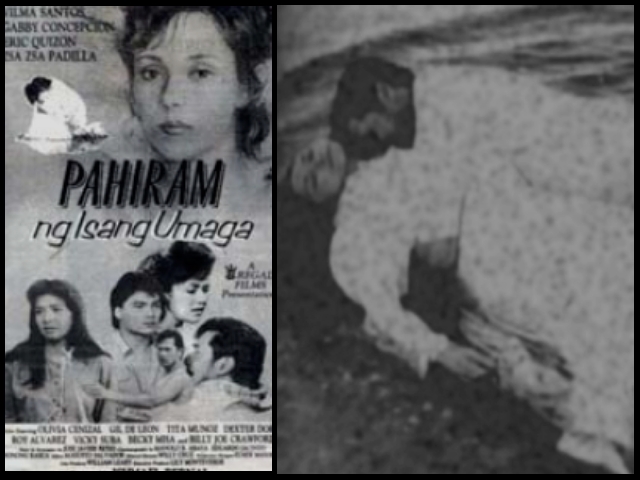
The Plot: Pahiram Ng Isang Umaga revolves around Juliet (Vilma Santos), who finds herself struggling against an ever-escalating series of problems. A determined single parent, she manages to raise a child while remaining successful in her career as an advertising executive. Everything in her life seems to go well until she is diagnosed with a terminal disease. For her son’s sake, and without revealing her condition, she is forced to resolve her most important life relations: rekindling first her connections with her parents, and then with the very man who fathered her son. In the twilight of her life, she meets and falls in love with a beleaguered artist, Ariel (Eric Quizon), who is constantly depressed and perpetually contemplating suicide. She slowly loses her health but unknowingly reawakens Ariel desire to live, and they both engage in a meaningful affair – one that makes each day they live through together more meaningful than the last. – Regal Films
The Reviews: Weepies are a common movie fare in the Philippines, along with extremely violent action thrillers and trite youth comedies. It is, therefore, a cause for cheer when a filmmaker tries to elevate the very common genre of the melodrama into a rich and intellectually rewarding film experience, such as director Ishmael Bernal has done with his Pahiram ng Isang Umaga. Director Ishmael Bernal has seen in the material an opportunity to put substance to what has often been denigrated as the unthinking man’s entertainment, and to a considerable degree, his attempt has been a success. Pahiram is both effective as a tearjerker and meaningful as a depiction of people in crisis. Using a traditional element of the genre, the theme of death, Bernal and writer Jose Javier Reyes probe into the life of a woman who has been told that the end is near. Juliet (Vilma Santos, one of the two reigning Philippine female superstars for the past two decades now) is told that she has eight or maybe seven months to live. As a progressive advertising creative director who has been promoted (rather late) as vice president of her company, she has the means to attend to the less mundane demands of life, examine what may have been an unexamined life, and make the most of the limited time left. In all these, Bernal explores the emotional and psychological condition of the person who lives on borrowed time. Naturally visible here are the many symbols not only of death but also of life to serve as some kind of counterpoint or irony. Sometimes, they blend with each other, and at other times, they contradict.
From the peasants’ ritualistic rice planting to the backyard harvesting of sun-dried patola cultivated as life-giving seedlings, the evidence of life renewing itself could hardly be ignored. Then there are the more obvious symbols of fire, daybreak and persistent rains (the latter of which are used to reinforce the gloomier mood at the second half of the movie, and also suggest the rains’ refreshing and replenishing results). But the most eloquent symbol here of life is the process of artistic creation, personified – again paradoxically – by the expressionist painter Ariel who befriends and then is smitten by Juliet. There are ironies here. The painter creates life through his art, but at the same time, psychologically tormented, he wants to end his own life. Such a restless, free soul, grappling with the complexities of life, he has a whole life ahead of him, his artistic world limited only by his imagination, and yet he wants to quit. In contrast, Juliet who is dying, wants to live. Here is a woman who saves a man’s life (the artist’s) but cannot save her own. The idea of art as life or art vs. life is examined at length. Asked by the boy why he has to put on canvas the seascape, the artist makes the clarification that he is not copying the scenery. Ostensibly, he is recreating it on a different plane, art being something else, with a life of its own. This is suggested by the portrait the artist is making of Juliet. The model may soon die, as she will, but the portrait will live on. Life may indeed be short, an idea which used to be stated directly in previous Bernal movies, but art endures. It is the one thing in this world which is eternal. The briefness of life is suggested with the graphic sight of wet sand dripping down from the hand.
Bernal and Reyes go farther by including a scene in which the artist explains the origins of art. By the fireside at the beach, and watching the flame cast a glow on them, he notes that prehistoric men “discovered” art when they made outlines of shadows on the caves. Those artworks, though crude and primitive, still exist. Implicitly, Juliet’s death, no matter how saddening, is not going to be the end. Philosophical musings like these are not standard soap opera fare, and may alienate a lot of ordinary moviegoers (even the more cerebral ones who cannot accept the conventions of the soap opera genre). Woven unobtrusively into the plot, however, they add texture and enrich the drama. Juliet in a way will continue to live – in that portrait, in her young son who will survive her and hopefully continue her legacy whatever it may be, and in her good deeds. In the last scene, the imagery and symbolisms of life and death abound. Juliet dies at the break of dawn, the start of a new day (and life), but not without first making her last sentimental paean to life. Supported by the artist, her eyesight having failed completely and with the waves caressing their feet, the weak and dying cancer victim remarks how beautiful life is.
True enough, this dying scene set on a beach, with the woman in white, dainty night gown, is one of the most exquisite, breathtaking moments in Philippine movies. But before giving us this grand, highly emotional death scene, the director has gradually introduced various motifs of death, from the artist’s pet black bird which at one point he cruelly squeezes in his hand, to the funeral rituals for Juliet’s father. This is a striking part of the movie, Juliet watching intently as morticians work on her father’s remains, as everyone weeps when the coffin is lowered to its final resting place, and during the ritualistic “pasiyam,” the nine-day novena for the dead. It’s as though Juliet can see herself in her father’s lifeless body while mourners mill around it. The attempts to raise the level of the melodrama and present insights on life and death provide the movie its greatest strength – and wide appeal. How strangely ironic that a movie dealing with death could have so much life- – Mario A. Hernando, “A Look at Death and the Affirmation of Life,” Malaya, 5 March 1989
“…In Pahiram Ng Isang Umaga, Ishmael Bernal’s very competent handling of the material, coupled with Santos’ intelligent portrayal of Juliet, a terminally ill cancer victim, saved the film from becoming a glorified soap opera…” – Jojo Devera, Sari-Saring Sineng Pinoy 03 Nov 2009
“…A series of unfortunate events seemed to hound Nora’s career up to this point. October 1, 1989 was to be the last airing date of the 22-year-old musical-variety show Superstar on RPN 9. A month later, it was revived on IBC 13 with a new title, The Legend … Superstar, but this was short-lived lasting only up to early 1990. Naging mas masuwerte si Vilma Santos sa hinu-host na Vilma! on GMA 7, which started in 1981 as VIP (Vilma in Person) ng lumang BBC 2 (naibalik sa Lopez owners ang ABS-CBN after the EDSA Revolution). Nagbida si Vilma sa isa sa mga pinakaimportanteng pelikula ng Dekada ‘80: Regal Films’ Pahiram Ng Isang Umaga (by Ishmael Bernal), na sinimulan in 1988 at ipinalabas in early 1989. In December 1989, Vilma headlined a period romance-drama (Viva Films’ Imortal, megged by Eddie Garcia) at nanalo sila ng kaparehang si Christopher de Leon ng acting plums sa MMFF. Sa awardings for that year, si Vilma ang nanalong Best Actress sa Star Awards (for Pahiram), her first form the Philippine Movie Press Club. ‘Kumpletung-kumpleto na ang career ko!” nasabi ni Vilma as she accepted her trophy. Later, it was Nora’s turn to get a Best Actress trophy for the first time from the Film Academy of the Philippines, for Elwood Perez’s three-year-in-the-making Bilangin Ang Bituin Sa Langit. ‘Kumpletung-kumpleto na ang career ko!” sabi rin niya in her acceptance speech. Na-elevate si Vilma sa FAMAS Hall of Fame, for having bagged five Best Actress statuettes: Dama de Noche, Pakawalan Mo Ako, Relasyon, Tagos ng Dugo, and Elwood Perez’s Ibulong Mo Sa Diyos. Nora won her fourth Best Actress plum sa FAMAS, also for Bilangin. Walang itulak-kabigin sa dalawa, kaya marapat lang na mag-tie sila for Best Actress, as in the 1990 Gawad Urian, na ‘pantay na parangal ”ang ipinagkaloob ng Manunuri kina Nora (for Bilangin Ang Bituin Sa Langit) at Vilma (for Pahiram Ng Isang Umaga)…” – William Reyes (READ MORE)
“…Vi goes to the kitchen to prepare breakfast at habang nagbabati siya ng itlog, doon pa lang ipinakitang una siyang nag-breakdown. And this is shown nang nakatalikod siya sa camera. No overly ornate kind of emoting na akting na akting ang dating. Pero damang-dama mo pa rin…she becomes the part (lalo na sa eksena nila ni Gabby Concepcion sa simbahan na binalikan nila kung paano sila nagkasira), and if you notice that she is good, well, salamat po…Sa second viewing ng movie namin lalong napansin ang subtle nuances ng performance ni Vi, up to her death scene which confirms our supposition that the movie is not really so much about death than a celebration of life..’yan ang opinion namin…” – Mario Bautista, People Journal 1989 (READ MORE)
“…The only thing I can say about this film is that of its performances – from Vilma Santos (as the woman who spends her last days on earth looking for love) and Eric Quizon (as the ill painter who falls in love with Santos). This film is best fitted for a made-for-TV slot, considering its premise (which may attract mothers). Passable…” – Oscar 99, IMDB web site, September 13, 1999, Manila,Philippines (READ MORE)
“…The last time Bernal and Santos collaborated was in 1989. Santos, still active with her musical variety television show, did three films, all were commercial success. “Imortal” directed by Eddie Garcia was a local festival entry that earned Santos another local festival best actress. “Rizal Alih, Zamboanga Massacre” was directed by Carlo J Caparas. And “Pahiram Ng Isang Umaga” directed by Bernal. The film earned Santos the local critics best actress and Bernal the best director. Vilma her very first Star best actress, considered the Golden Globe local equivalent at that time. Pahiram also received nominations for best actress for Vilma and best director for Ishmael both from FAP, now the local equivalent of OSCAR…Bernal gave Vilma Santos her first grandslam best actress awards and consecutive Gawad Urian best actress (1982 and 1983). Their first film together was Inspiration (1972) and last was Pahiram Ng Isang Umaga (1989).” – RV (READ MORE)
“…Eric’s role in “Pahiram Ng Isang Umaga” is the manic-depressive love of Vilma Santos. He was contrapuntal to Vilma’s existence who wanted to prolong her life while he wanted to end his. But the Method Acting-oriented scribes at teh Philippine Movie Pres Club saw in Eric the mere physicality in his attack of the role. No anxiety in the eyes; all overt body movements to the point of the Nora Aunor anxiety-laden eyes. Eric rationalizes; “That was exactly how I was supposed to attack my role according to Direk Ishmael Bernal – overacting at physical level lang talaga. Wala nang pa-anxiety-anxiety pa. All the other major characters in “Pahiram…” were already making lupasay na with heavy emotions. From Vilma to Zsa Zsa Padilla to Vicky Suba to Gabby Concepcion – silang lahat emotionally loaded na. If I do the same, boring di ba? Ayaw ni Direk Bernal na pa-heavy emotion approach for my role. But you know my homework for that role was to watch several English sad movies on tapes and was told to cry with the characers if I wanted to or feel like crying. I felt so stupid talaga, but that exercise paid off I tell you.” If you have watched “Pahiram…,” the scene where Eric has to strangle a Myna bird was such a memorable highlight. Eric recalls; “I had to do an improvisation for that scene. Sabi ni Direk Bernal, don’t plan anything with the bird. Basta you just confront the bird at bahala ka na sa sarili mo. So what I did was to make mura and kind of strangle pero acting lang out of my supposed madness. You know what happened? The day after, nagpakamatay ‘yung bird. Nagtampo siguro ‘yun. Kasi raw ang Myna bird ay very sensitive, di ba? Sayang ‘yung bird, ano?…” – George Vail Kabristante, Manila Standard, Feb 20, 1990 (READ MORE)
“When I was small, we stayed on teh second floor of a moviehouse in Cagayan where my uncle owns a chain of moviehouses. During mealtime, I would eat at the balcony section so I could watch a movie at the same time. Noon, ang pelikula ay parang isang visionary world, parang it’s so far away and so high up there. I was fascinated no end by how a movie was made. I told myself, someday I too will make a movie.”
There are three important periods in Joey Gonsiengfiao’s life as a director: his UE period when he shuttled between classroom and stage, trying to finish AB while presenting one big play on campus every semester; his Tower Periiod when he socialized in the show-biz circles and made abortive movie debut; and his Sine Pilipino Period when he learned from his past mistakes, helped form a trend-setting box-office movie director.
UE Period – One remembers Joey as that diminutive, chinky-eyed fellow who would come panting to the Literary Criticism class at UE where he was a dropout and over-stayed for 10 years (1959-1969). Together with a big guy named Elwood Perez (now also a movie director), Joey would dominate the class discussions. The two were campus celebrities of sorts; Elwood wrote movie reviews for his column in Dawn, the college paper, while Joey directed stage plays (Becket, The Lark, My Fair Lady, Gigi, and The Glass Menagerie, which starred his signature actor Nestor Torre). Joey was forever rehearsing and his classes were such a hassle that he would drop all of his subjects every semester. He was a scholar.
“The nearest visionary world to movies for me was the stage,” Joey says. “As a kid, I wanted to act in plays. Kapag hindi ako kasali sa bilada, aba, kinakausap ko ang titser.” At UE, Joey attended workshops and seminars and studied under Rolando Tinio, his mentor. Foundationd Day celebrations were never complete without a Joey Gosiengfiao play. What he learned on campus came in handy when he was assigned by Cecile Guidote to the Balentataw drama series on the defunct Channel 5, the TV arm of PETA.
Tower Period – His Tower Period began in 1970 when he bumped into PR Man Douglas Quijano of Tower Productions. It was Joey’s introduction to the glamour-and-glitter whirl – “it was my “socializing” days,” Joey put it more aptly. “I had fun with my new-found friend movie scribes.” One morning, Joey woke up to realize that his contemporaries had all made their maiden movie ventures: Lino Brocka was being lauded for his Wanted: Perfect Mother, Ishmael Bernal for his critically and commercially successful Pagdating sa Dulo. Even his UE buddy Elwood managed to wrap up his own, Blue Boy, a dud. Joey approached Douglas and wailed, “Ay naku, Douglas, mamamatay na ako pag wala akong pelikula. Maloloko na ako. Mayroon an silang lahat, ako na alng ang wala.” Two weeks later, Temyong Marquez, Big Boss of Tower, surprised Joey with an assignment – “Nora Aunor pa mandin,” Joey recalls, “at pagka-ganda-ganda ng pamagat, Beautiful Love. It was my first film and I was excited. I wrote the script at nagulat pa ako dahil approved kaagad ni Director Marquez before he even read the script.”
The film didn’t come out beautifully. After shooting some scenes in Manila, the Tower entourage went for location filming in Iriga, Camarines Sur, hometown of Nora. The movie was barely one-third through when Nora Aunor dropped the bomb that nearly shattered Tower to pieces: “Tumakas ang Nora, hindi natuloy ang pelikula.” That was the time when Tower and Sampaguita were having a tug-of-war over La Aunor. The abortive screen debut didn’t bruise Joey’s ego a bit. His wits recovered, Joey tackled his next assignment: Funny Girl, starring international teenage hearthrob Sajid Khan and local glamour girl Tina Revilla. It was a financial flop. To nurse his disappointment, Joey sought solace in directing TV shows. “Those two films were a bakya compromise,” Joey says. “I have learned my lesson, that is never to compromise. Everybody was telling me noon, “Hoy, Joey, kailangan gumawa ka ng…hindi naman mediocre movie…but something with mass appeal. Kailangan kumita ang pelikula mo kung hindi wala ka nang pelikulang susunod.” Kaya nagisip-isip ako, sabi ko, why not? One movie critic called Funny Girl the total concept of a bakya production, which it was. Bakya nga, pero hindi rin naman nag-click. So I resolved to do what I believe will make good at the box-office.”
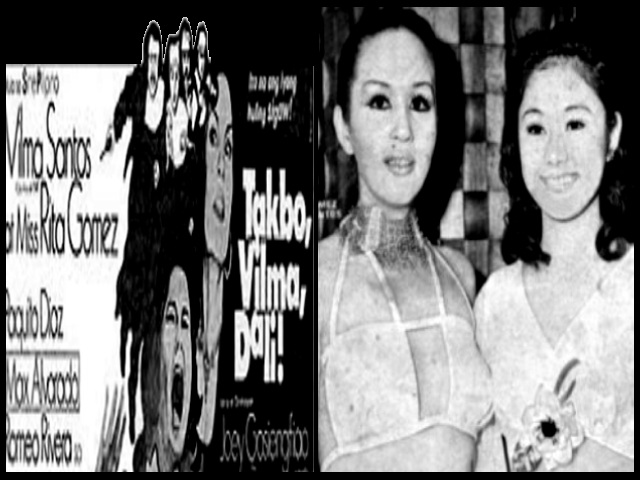
Sine Pilipino Period – Joey re-emerged in the movie scene in 1972, bristling with fresh ideas. This time he made a big gamble by helping his brother Victor and some friends put up Sine Pilipino, the company that would revolutionize trends in local movie-making. SP specializes in campy, stylish movies with imperative, three-word titles: Takbo, Vilma, Dali; Hatinggabi na, Vilma; Zoom, Zoom Superman!l; Si Popeye Atbp.; and Sunugin Ang Samar. Except for the last mentioned which was an action saga, the four SP flicks were spoofs characterized by madness. They revived the all-star casting system, lumping together in one movie several big stars. The flicks made money. Joey Gosiengfiao had his “sweet revenge.” “It was not wasy for us in the beginning,” Joey relates. “Just before the showing of our first film, Takbo, Vilma Dali!, Martial Law was declared. There were no newspapers then so we had to post bills all over the city, hanggang Pasay nagdidikit kami nina Douglas. We also distributed hand bills. Sa awa ng Diyos, kumita ang pelikula.” Of the films he has done, Joey considers Sunugin Ang Samar as the most difficult, not only because of its scope but also because action is not his forte. It took him three months to make the movie because the script (by Wilfrido Nolledo) called for different settings and they had to move from one place to another. Joey didn’t exactly follow Nolledo’s script but he saw to it that “the spirit was retained.” Of late, Joey has organized his own company called Juan de la Cruz Productions together with Elwood and Douglas. Their inital production, Asawa Mo, Asawa KO, was a moneymaker. SP specializes in home-movie types while JC makes more of the woman’s movie, “that’s because we are not good for action pictures.” Joey is now connected with SP only as a director.
“My main purpose as a director is to entertain the public,” say Joey. “It’s very rare that I put in any social message. JC movie deal with the individual rather than the social, more on the problems of the individual which may not be very relevant to society.”
As a producer, Joey knows the high cost of production so he tries to economize on negative by practising what he calls the “pre-editing method.” He makes sure that every shot is good, that no footage is wasted. Luckily for Joey, he never has any encounter with obdurate stars; all those he has worked with are easy to handle and cooperative. His favourite actress is, obviously, Celia Rodriguez whom he has directed twice before and who is cast in her secon-starring role in La Paloma, JC’s latest offering (also scripted by Nolledo). La Paloma is a bold experimental film for two reasong: (1) it’s done in black and white (which is a big risk in these time of color films), and (2), it boasts no box-office stars. “Celia is nice and difficult to work with,” says Joey, “nice because we communicate and difficult because, like all good natural actresses, she has her insecurities and tantrums which result in misbehavior and antipathy. Pero hindi naman siya antipatika, ha. Madalas kaming magsigawan sa set; sometimes, gusto niya mauna siyang mag-shooting pero hindi naman puede dahil kailangan mayroon mauuna. Ayan, we would shout at each other na, “Please naman Celia,” I would scream, “don’t give me any more problems, marami na nga akong problema, mabuti kung ikaw lang ang mayroon.” Pero after a while, kiss and make up na kami…” Joey Gosiengfiao has a last found true happiness. Expressweek, December 12 1974




 Star For All Seasons
You must be logged in to post a comment.