Vilma Santos-Recto is a popular multi-awarded actress and politician in the Republic of the Philippines. *** She is known as "Queen of Philippine Movies," "Queenstar," "Grand Slam Queen," "Box Office Queen," and "Star for All Seasons." *** This website is mostly about her iconic film career.
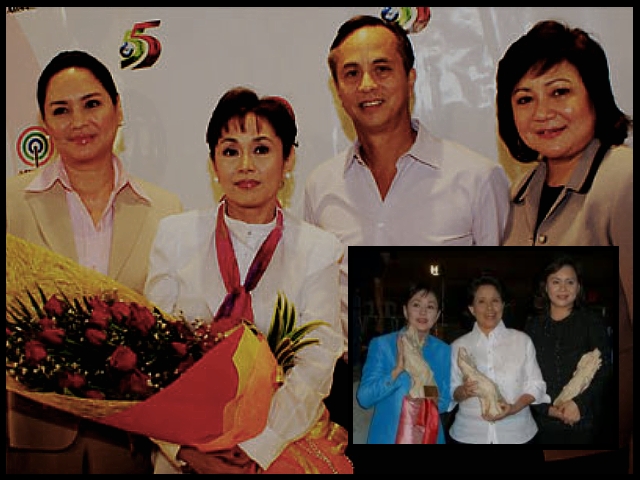
In “MMK Dalawang Dekada,” a two-hour documentary special to be aired this Sept.25 in “Sunday’s Best,” a journey of the show’s success will be recollected featuring Batangas Gov. Vilma Santos, actress par excellance, grilling host Charo Santos about the show. It features how loyal viewers are glued to every episode not only because of the lead stars but more importantly, because of the content of the story and the lessons learned by the letter senders. (READ MORE).
the story behind paper clip – One of the highlights of the documentary featured Batangas Governor Vilma Santos-Recto having a chat with the face behind MMK, ABS-CBN President Charo Santos-Concio. Governor Vi asked Ms. Charo: What’s the story behind paper clip? The senior executive narrated with a smile, “My bosses thought wala akong alam sa telebisyon…Sa pelikula, may play date. You can postpone your play date. Pero sa television, the show must go on everyday. Wala kang dead air…Tinanong kita kung anong programang ang pwede mong ipalit bukas, anong ideyang ibibigay mo? Sabi ko, ‘I’ll think about it. Give me a week’ [Sabi nila], ‘Ano? One week, hindi ganyan sa telebisyon. Now na.'” “Nakita ko yung paper clip on top of the table. Sa nerbiyos ko, napahawak ako sa paper clip. Maaring ang silbi nito ay para sa functional use…But sa ibang tao, may kwento, behind this.” “Maaring ginamit niya ito noong nagtanan siya ng kanyang mahal at magbukas ng pinto.We can dramatize true-to-life stories from letter senders. Anong title na ibibigay mo diyan? Among my souvenirs…” (READ MORE)
Daisy Hernandez (Vilma Santos), a mother must divide her time between work and taking care of her daughter April (Maja Salvador) who has cerebral palsy. Daisy’s heart is wrenched every time she sees her eldest child suffer because of her illness. But Daisy never loses hope, and April manages to live a normal life until she is 18. Just when Daisy thought things are doing fine with her daughter’s disability, a tragedy will further test her faith (Wikepedia).
Maalaala Mo Kaya (lit. Would You Remember) is a Philippine drama anthology series broadcast on ABS-CBN every Saturday evening and being hosted by Charo Santos-Concio. Currently, it became the longest-running drama anthology on Philippine television and on Asia. The program features weekly real life stories or anecdotes of common people or even famous celebrities and personalities through letter sending. The series has a counterpart radio program being broadcast on DZMM called “Maalaala Mo Kaya sa DZMM”, a paperback (“pocketbooks”) adaption and a comic book adaptation under Mango Comics & Sterling. The program is named after the song, “Maalaala Mo Kaya” by Constancio de Guzman, which also serves as the program’s main theme song which was performed by Dulce. During 2000’s airing of the program until now, the main theme song was covered by Carol Banawa replacing Dulce’s version. Notable episodes: “Regalo” (Gift) MMK episode topbilled by Vilma Santos, Ricky Davao and Maja Salvador and considered as one of the most critically successful episode (Wikepedia).
Basic Info: Director: Christopher Strauss De Leon; Cast: Vilma Santos, Tirso Cruz III, Christopher De Leon, Ian De Leon, Renato Del Prado, Aiza Marquez, Mandy Ochoa; Producer: Sandy Andolong, Lyn Ynchausti
Plot Summary: Bugso is the GMA-7 telesine that Christopher De Leon directed (he also does a bit part in it as Vilma’s dead husband). It’s not correct to say that Bugso is television version of the classic Audrey Hepburn starrer Wait Until Dark, although, like Audrey, Vilma also played a blind lady toyed around by greedy relatives (Tirso Cruz III being one of them) who wanted the inheritance all to themselves.
Achievement: One of De Leon’s directorial projects (Maalaala mo kaya (2009), Bugso (2002), Huwag mong salingin ang sugat ko (1991), Halimaw – “komiks”segment (1986)
Review: “…When we arrived before lunchtime (good timing!), direk Christopher had already wrapped several scenes and he was working double time to finish the rest of the day-effect scenes before dusk fell. Because they were limited to only two shooting days, opting for Lipa as location in deference to Mayor Vilma who couldnt be away from the city of her affection, direk Christopher said that he had to do away with some of the night scenes without disrupting the flow of the suspense-thriller. Direk Christopher was a delight to watch at work, very different from when he’s only acting. Bugso is not his first directorial job, having already megged Komiks (part of a twin bill produced by ex-wife Nora Aunor, starring a very young Ian de Leon as a komiks freak), part of Kislap sa Dilim which he took over from Lino Brocka who died in a car accident before putting the movie to can and all of Huwag Mo Akong Salingin, the other movie Lino was supposed to start shooting three days before his untimely death. Bugso is made more interesting by the fact that, besides being a “family affair,” three of the people whose lives have been inter-twined with that of Nora Aunor are involved in the project – Christopher is Nora’s ex-husband, Tirso is Noras ex-boyfriend and Vilma, although a kumare, is considered until now to be Nora’s arch rival. (Vilmanians will insist, however, that Vilma has beaten her kumare by miles, with Vilma still enjoying a well-oiled career, a happy family life and a successful transition from showbiz to politics, a field Nora has failed miserably to conquer.)…” READ MORE
“…Seen in more than a dozen successful big-screen projects (among them Relasyon, Broken Marriage and Ipagpatawad Mo), Lipa City Mayor Vilma Santos and Christopher “Boyet” de Leon are together again but on another level this time and on the small screen, she as the lead actress and he as the director. The telemovie is entitled Bugso, with Tirso Cruz III and Ian de Leon as the other members of the cast. The suspense-thriller is being produced for GMA 7 (telecast is slated middle of next month) by Tirso’s wife Lyn Ynchausti. Shooting will take two days in, as per Mayor Vi’s request, Lipa City, with some of the highlights shot at the beautiful resthouse of STAR columnist and art patron Danny Dolor (who is hosting a lunch for the Bugso cast and some special friends from Manila on the last shooting day)…” – Ricardo F. LoREAD MORE
“A telemovie of GMA productions was shown during the Holy Week and man… it really sucks! Well, I don’t want to sound too mean but have you ever heard of a blind woman able to kill a psychotic murderer on the loose? The twists in the movie were also pathetic and predictable! Guess what? There are three killers and the only thing that made this difficult was to know who killed whom? There are no surprising twists and even the fighting scenes stink. In some part of the teemovie the flow of the story was so slow, too slow. Maybe this is just the director’s, Christopher de Leon, style but I guess this slow phase was not really necessary because it could be a reason to lose their viewers attention. Vilma Santos played the lead role of a blind woman who became a house’s breadwinner. Vilma’s character is actually rich and she is sustaining her sister’s family. Vilma is a really good actress but I was not impressed by her portrayal of a blind woman. The sister’s husband, portrayed by Tirso Cruz III was actually the one who hired the psychotic murderer to kill his family for fifty thousand pesos. The psychotic murderer, portrayed by Ian de Leon, did his job but when the Tirso’s character asked Vilma’s character to sign the papers that will turn her treasures to him, Vilma thought that he was the one killed his family. Tirso got insane and Vilma noticed it. She was able to call a police and a fighting scene happened. Tirso got hit and before he died he revealed that he hired Ian de Leon’s character to kill her and that Vilma’s safety is still not for sure. This was really funny you know. The man who hired a murderer to kill Vilma was suddenly caring for her safety. Maybe the part that I really enjoyed is when Ian was hunting to kill Vilma. This part made me scream for Vilma, shouting that she should run faster or do this and that. But when the part that she stabbed Ian with an axe in his back made me laugh! It was as if she could see Ian after all, that she was not blind. I don’t know how she did it but it certainly made Vilma’s blindness obviously fake…” – bluedison23
“…Bugso is a noun that roughly translates into “gust,” as in a quick attack of wind or some such. Sometimes, the word is also used in the context of having extremely strong and sudden feelings, reactions or urges. The movie is about the conspiracy of three men, each of whom have a different motive, to kill the family of Miss Ancheta (Vilma Santos) – so she would be left alone and helpless to sign some papers that would turn over all her money and property to Tirso Cruz III‘s character, her devious cousin-in-law. Tirso’s character is one of the three schemers. Such was his greed that he came to the point of killing off his own wife and stepchildren for the sake of material wealth. The other two men involved in the plan are the non-speaking semi-psychopath Nanding (Ian de Leon) and the aging foreman of the Ancheta farm, Ka Matias. The former does it for the money and the thrill of the kill. The latter has cheated the Ancheta family by stealing the title to the farm land and then pawning it for money for his own caprices. Ka Matias realizes that he cannot hide such a secret for long and believes that the best way to clear himself of it was to resort to murder and force. The approach of the whole television movie was suspense-mystery. The story was driven by dark intentions set against the idyllic countryside. All of it revolves around the decisions and chutzpah of a proud, blind heroine. I have to admit this may be a bit formulaic, with so many murder-mysteries and their respective slightly incapacitated heroines, but Bugso possesses an appeal all its own, sourced for the most part from its actors. Vilma Santos is heart-wrenchingly bittersweet and annoyingly stubborn. Tirso Cruz III is ever the Juancho-like bastard (Juancho is his villain character from the GMA-7 soap opera Sana Ay Ikaw Na Nga). However, my favorite is definitely the dark, mentally-disturbed Ian de Leon, who exudes menace just by sitting in the shadows and eyeing the heroine with bloodlust. Director Christopher de Leon did a good job with the transition of scenes, especially when the action starts to heat up. The way he constructs the angles and the movements of the characters mirrors the varying moods…” – Madame Shi
There was a time when a fan’s devotion to his or her idol wasn’t measured by how much they’ve spent on all the advertised merchandise made available to the public. Not every fan was able to afford the style of clothes sported by the stars, let alone be able to purchase the latest glossy magazine with their idol’s perfect smile on the cover. It was a time when making a scrapbook was enough to call one a devotee. Chosen photos collected from all sorts of publications were recycled, and carefully pasted on a simple spiral ring notebook. This would be one of many treasured volumes of personalized scrapbooks that would be shared, traded, and admired by other adoring fans. Here’s a look at an original late 60’s scrapbook made by a Vilma Santos fan. Many thanks to our good friend Edward De Los Santos for sharing scans of this amazing Vilma Santos scrapbook. For the best source of classic records, vintage magazines, and other amazing vintage collectibles, visit his Ebay stores: philippine.music (Ebay Philippines), and oldbestseller (Ebay USA). – Nostalgia Manila web-site (READ MORE)
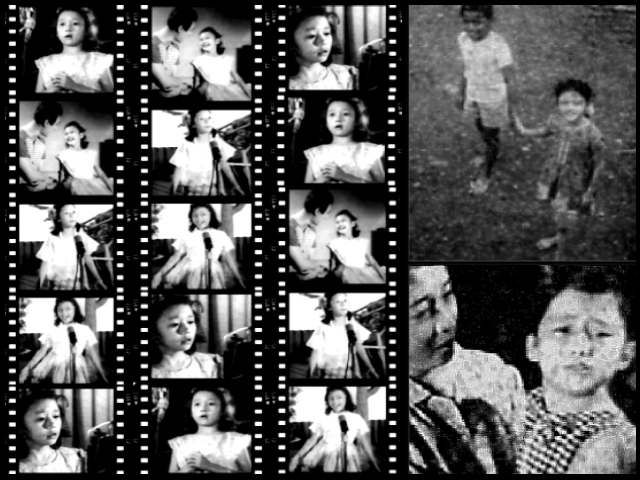
All Vilmanians and even those who just love watching old Tagalog movies must have been glued to their TV screens last Thursday afternoon when Channel 9’s “Premiere Pilipino Klasiks” aired “Ging”, Vilma Santos’ follow-up movie after she was introduced in Sampaguita Pictures’ “Trudis Liit”. Produced by Premiere Productions when Vilma was only 10 (circa 1963), “Ging” casts the now-Star for All Seasons (and Lipa City Mayor, too! (now Governor of Batangas-FRV)) as a street child who is in charge of taking care of her invalid mother, played by Olivia Cenizal.
In flashback fashion, we find out that Ms. Cenizal was once a big movie star who fell in love and married a young rich man (portrayed in the film by Jose Padilla, Jr.) Padilla’s aristocratic mother (Etang Discher), unfortunately, breaks up the union and the two lovers go their separate ways. Vilma, as Ging, was born shortly after. While begging for food scraps from customers at the restaurant of the Chinese Ponga (I doubt if today’s generation have any idea who he is or how he looks like), she is spotted by Ramon D’Salva and his wife, Carol Varga. The couple immediately express their wish to adopt her. Vilma was hesitant at first at the idea – until she was promised by D’Salva that she would be sent to school, and her mother, to the hospital for medical treatment. Once she is in the D’Salva home, the couple show their true colors. They exploit her by making her perform in vaudeville presentations.
Although she is a hit and a top money maker, she is still badly treated by Varga. For one, she is not given proper nutrition to stunt her growth (child stars are supposed to be cute and small). Little Vilma rebels when she finds out that D’Salva does not fulfill his promise of sending her mother to the hospital for treatment. She runs away and in the process bumps into people related to her biological father. Padilla and Cenizal are reunited and the little heroine lives happily ever after with her parents. “Ging” was directed by Cirio Santiago and Teodorico Santos. Although it was made in the old-fashioned way of making films (the flashback scenes in particular), the material used here is timeless – especially since there are more street children in our midst now more than ever.
As far as the showbiz scene is concerned, there are still a lot of heartless impresarios today exploiting young talents in the business. But what really made “Ging” a delight to watch was the performance of the very young Vilma Santos. Even at the early age, it was clear that she was already brimming with talent. Vilma, apparently, was born into this world to perform, entertain and make people happy. She was utterly convincing in the dramatic scenes and thoroughly graceful in her musical numbers. Listang-lista – as we’d say in the vernacular. Even then, she was already living up to her showbiz title of “Star for All Seasons” because her performance in “Ging” is not only brilliant, but timeless as well.
Source: Written by Butch Francisco, Mar 04 1999 People’s Journal
From the chubby faced cry baby of TRUDIS LIIT in 1962 to the chinky eyed teener of THE SENSATIONS fame ululating the words of “Sweet 16” and “Sad Movies Make Me Cry”, Vilma Santos blossomed into an actress, star and entertainer in her own right. She finally emerged from the overpowering shadow of her touted arch rival, the Superstar, when she gyrated her way to immortality via the definitive Celso Ad. Castillo masterpiece BURLESK QUEEN.
Then she paired up with Christopher de Leon, and together they produced a string of box office and critical triumphs. Among them were RELASYON and BROKEN MARRIAGE, Ishmael Bernal’s paeans to domestic turmoil, and roles which earned her back-to-back Urian Best Actress Awards, and forever ingrained her image as the archetype of the long-suffering wife in the consciousness of Filipino moviegoers. True, the rest of the 80s would be no picnic for Vilma. However, she had also entered the field of variety and drama anthology television and was determined to keep up the pace of her achievements.
Vilma Santos is among the last of the real stars. Unlike the celebrities of today, she never needed the packaging, the publicity blitz or even the programmed gimmickry to keep the public interested in her. With more than 36 dozen acting citations to her credit, she continues to remind one and all that talent must be deeply rooted, developed, nurtured and disciplined. Above all, she never sat back and accepted the appellation that she was only number 2. Vilma is Vilma — a star of the first magnitude, brilliant, glamorous enough to hold her own against anybody else. Out of her struggles in the cruel world of showbusiness, she emerged a resilient, confident lady. It would only be fitting to say that she carved her own throne – not to be better than anyone else but because she knew that film artistry is the very essence of her being, the why and wherefore of her existence. None of this was for the fans but for her own completion and fulfilment.
Yet like everyone else, she longed for greater meaning. After her marriage with Edu Manzano failed, she had to find once more the man of her dreams, the man who was worth giving up even her career in entertainment. It all climaxed in a storybook wedding in Lipa Cathedral. Then another chance at mother hood required some great sacrifices including her withdrawal from the Friday night variety program, Vilma. Time was of the essence. Motherhood overrode the mundane details of a showbiz career. Time slowed for Vilma as she bowed out of the limelight. It was not the death of a career but a pregnant pause – waiting for something bigger and better in the coming days.
Then Vilma returned, a mother. She tried television for 13 weeks, but that was far more than her pace as woman, mother and star can carry her through. Was the star for all seasons ready for a truly big comeback? Sadly, the answer was: not yet. She paired up once more with Christopher de Leon and then action king Fernando Poe Jr in a two lackluster hits that only confirmed that it was not yet time to return. In the wake of those forgettable films, the tragedy of Nana Rosa, WWII comfort woman, whose story with all the makings of a grand masterpiece was slowly taking shape only to be shelved in the end. It really wasn’t meant to be, but she needed an ace to show all that she still has the touch of an actress. Strident and confident as she is, she kept all these things in her and bided her time. People hardly expected it, but another facet of Vilma was about to show itself.
Vilma, wife of a prominent congressman, had allowed the reality of the unshod masses in her adopted home of Lipa City to touch her heart. From her heart came the fount of compassion. “This was not playing big actress on the silver screen,” she declared. “This was coming face to face with a reality on a day to day basis. You literally have to learn to deal with the children who walked around barefoot, naked and dirty,” she went on. The national elections of 1998 were fast approaching, and Vilma was each day strengthening her chances of taking over City Hall. “People tend to look up to you because you are a star in their eyes, the one who embodies their dreams and aspirations” she explained. There was no escaping that reality, reluctant as she was to take on the challenge of populist politics where she and many others were jeered at as brainless entertainers who cannot think up pro-people programs, ready to be forgotten after the last meeting de avance.
Yet she was not to be easily dismissed. After all, experience counted for something. Neither was she intellectually gifted to handle the finer rudiments of ward politics – like the Umali family which had kept a stranglehold on the mayorship of Lipa and who now treated her as a potentially dangerous rival in their continuing quest for political control. It was not her entertaining skills that ruffled their feathers. It was the very fact that Vilma had faced the people and begun winning their hearts through her kindness, notwithstanding her limited resources as a congressman’s spouse.
As she touched the hearts of her fellow Lipenos, the acclaim for her to sit as the new mayor grew. Even rival political parties from out of town thought nothing about asking for her endorsement. She was never interested in endorsements; all she knew was that she wanted to serve the people of Lipa City. “It was these people who asked for medicine, food, even money to keep their small businesses going. You had to face them, to know who they are and to be wise because being accommodating to everyone is not necessarily good for everyone. If someone holds an unfair advantage over everyone else, I was willing to fight tooth and nail for the common good of all. This is the heart of my mission,” announced Vilma. True enough, she kept the faith with her people. She was keenly aware of her limits, but she knew that nothing could make her fail to respond to their needs the way she can.
Then in the middle of all this came BATA, BATA PAANO KA GINAWA? from Lualhati Bautista’s classic novel. The role seemed to embody everything she has lived through the years. It’s not a perfect film, but one that will surely reinforce her legacy as woman, mother, wife, politician and actress. Surely, the most meticulous preparations went in this Star Cinema production. We can be certain though that the one thing that will emerge is Vilma, glistening like a diamond on her cosmic throne. This time the stakes are far deeper than just thepopularity polls and awards derbies. It will be Vilma Santos the person who will be shining through. And truly, it will be a fitting urrah! – Written by Alex Jimenez, Newsflash
Rosa Vilma Santos tugged the hearstring of the Filipino moviegoers via Trudis Litt in 1963, her first movie at age nine that gave her the Famas Best Child Actress award. At that tender age, Vilma was also tapped to star with Gloria Romero and Rita Gomez in the movie Anak, Ang Iyong Ina, thus making her busy with two pictures. It might interest non-Vilmanians to know that little Vilma’s auditions for Trudis Liit was accidental. When she went to the Sampaguita compound with her mother, she was prodded to join the queue of hundred kids for an audition. When her turn came, she acted with premier villainess, Bella Flores. The Sampaguita patriarch, Dr. Jose Perez, was so impressed with Vilma’s performance that the plum role had to fall on Vilma’s lap. That was the start of Vilma’s reign up to the early ‘70s with box-office outings via Lipad, Darna, Dyesebel at and Mahiwagang Kabibe, Kampanerang Kuba, Wonder Vi, Anak ng Aswang, Batya’t Palu-Palo, and many more. These pictures were preceded with the tweezum-craze of the period – Teenage Señorita, Young Lovers, The Sensations, The Young Idols, Sixteen, Love at First Sight, My Pledge of Love and other Vi-Bot (Edgar Mortiz) starrers.
Phenomenon – But the early ‘70s saw the emergence of a phenomenon that defied all traditions and stereotypes – Nora Villamayor, the little brown girl from Bicol. Nora Aunor to all of us, practically swept us off our feet and she rose to dizzying heights never before seen in the Philippine cinema. Gifted with a golden voice, Nora is an illustrious alumna of Tawag ng Tanghalan. That was her passport to fame and fortune. Her meteoric ascent to superstardom marked Vilma’s descent to background attraction. Chanteuse Carmen Soriano recommended Nora to Alpha Records. The little brown girl from Bicol broke existing records in the local music industry, which marked the Golden Age of Local Recording. She spawned hits after hits and the airlanes played to the mass in a Nora mania. The next most logical step was to cross borders – to the movies – and this was where the fiercest of competitions began.
The Rivalry – Pitted against Vilma in a musical vs. musical, drama vs. drama, Nora, no doubt, had Vilma struggling for breath. Vi-Bot came a distant to Guy-Pip (Tirso Cruz III). The non-singer could not hold a candle to the gifted, awarded singer. In terms of early movie outputs, Banaue, And God Smiled At Me, showed Nora’s intensity as an actress – profound and eloquent. The eyes showed it all – which Vilma hadn’t really experimented at the beginning, except being hysterical which was taken for good acting. “Trudis Liit” in the battle for movie supremacy had to maneuver herself into a paradigm shift, she dared to tackle roles where Nora feared to tread. That was the spark of Vilma’s own genius. Vilma Santos in a complete turnaround showed ample flesh and gyrated like there was no tomorrow in the controversy-laden Burlesk Queen. She played a rape victim in Lino Brocka’s Rubia Servios – which many observers thought could have won her the Best Actress plum. Nora in Atsay bested her. To Vilmanians and to Vilma herself, that was a bitter pill to swallow. Undaunted, the actress continued improving and reinventing her screen persona. She also did Celso Ad Castillo’s multi-awarded Pagputi ng Uwak, Pag-Itim ng Tagak, and then came Relasyon in 1982, megged by Ismael Bernal, which gave Vilma the Grand Slam from the Urian, FAP, FAMAS, and Catholic Mass Media. The mistress role, which Nora may play with discomfort fitted Vilma to a T. Equally compelling were the roles she essayed in Broken Marriage, Sister Stella L., Tagos Ng Dugo, Pahiram ng Isang Umaga, Imortal, Ipagpatawad Mo, The Dolzura Cortez Story, Bata, Bata, Paano Ka Ginawa (Vilma won as Best Actress in Brussels), Anak,
Dekada ’70, and Mano Po 3. With sch kind of hypnotizing filmography would Vilma accept the backseat – with Nora at the driver’s seat? This is a battleground of cinematic excellence like no other. Nora Aunor, Vilma’s tormentor, chumed out classics like Tatlong Taong Walang Diyos, Bona, Andrea, Paano ang Maging Isang Ina, Bilangin ang Bituin Sa Langit, Ang Totoong Buhay ni Pacita M., The Flor Contemplacion Story, (Nora won as Best Actress in the Cairo International Filmfest.), Bulaklak sa City Jail, Muling Umawit ang Puso, Bakit May Kahapon Pa (another Best Actress for Nora in Malaysia International Filmfest) and of course, Naglalayag, Nora’s starrer which gave her third international Best Actress in Brussels. Lest we forget, Nora Aunor did the Filipinos proud with Bona in Cannes and Himala in Berlin where the actress received Certificates of Honor. With these outstanding accomplishments, couldn’t she claim her place of honor as the “Greatest Filipino Actress” ever? The two icons paired of with the ultimate in Philippine movies – Vilma with FPJ (Fernando Poe Jr.), Nora with Erap (Joseph Estrada) – blockbusters all, but the Vi-FPJ proved the bigger draw.
The Match-up – In terms of film output, Vilma has the slight edge with almost 200 movies to her credit since she started her film career as a child actress. Nora is not far behind though with more than 170 films to her credit. Although they understandably seldom make movies now, there was a time in their careers when Nora and Vilma each did 20 movies or so in a year especially in the early ‘70s during the height of popularity of their loveteams with Pip and Bot, respectively. In terms of film awards, the two are almost even. They are both FAMAS Hall of Fame awardees having won Best Actress five times – Vilma for Dama de Noche (1972), Pakawalan Mo Ako (1981), Relasyon (1982), Tagos ng Dugo (1987), and Ibulong Mo Sa Diyos (1988); Nora Tatlong Taong Walang Diyos (1976), Ina Ka ng Anak Mo (1979), Bulaklak Sa City Jail (1984), Bilangin Ang Bituin Sa Langit (1989), and Andrea, Paano Ba Ang Maging Isa Ina (1990). Not counting the awards season this year. Vilma has more Urian Best Actress trophies than Nora, 8-6, and Star Awards for Movies Best Actress tropies, 5-4; Nora and Vilma have the same number of Film Academy of the Philippines (FAP) trophies, 4-4, and Manila Film Festival trophies, one apiece; Nora, meanwhile, has more Metro Manila Film Festival best Actress trophies, 7-4 and international recognition, 3-2.
Vilma’s Urian trophies were for Relasyon (1982), Broken Marriage (1983), Sister Stella L. (1984), Pahiram ng Isang Umaga (1989), Ipagpatawad Mo (1991), Dahil Mahal Kita; The Dolzura Cortez Story (1983), Bata, Bata, Paano Ka Ginawa? (1998), and Dekada ’70 (2002). Nora won Urian for Tatlong Taong Walang Diyos, Bona (1980) Bilangin ang Bituin sa Langit, Andrea, Paano Ba Ang Maging Isang Ina, The Flor Contemplacion Story (1995), and Bakit May Kahapon Pa (1996). In the FAP Awards, Vilma won for Relasyon, Dolzura Cortez Story, Bata, Bata, Paano Ka Ginawa?, and Dekada ’70. Nora, on the other hand, won for her performances in Bilangin and Bituin Sa Langit, Andrea, Paano Ba ang Maging Isang Ina, Ang Totoong Buhay ni Pacita M. (1991), and The Flor Contemplacion Story. In Star Awards, Vilma was acknowledged for her roles in Pahiram ng Isang Umaga, The Dolzura Cortez Story, Bata, Bata, Paano Ka Ginawa?, Anak (2000), Dekada ’70 and Mano Po 3 (2005). Nora won for Merika (1984), Andrea, Paano Ba ang Maging Isang Ina, Ang Totoong Buhay ni Pacita M., and Muling Umawit Ang Puso (1995). Vilma was adjudged MMFF Best Actress for Burlesk Queen (1977), Karma (1981(, Imortal (1989), and Mano Po 3: My Love (2204).
In Manila Film Festival, Vilma won for Dolzura Cortez Story while Nora won for Naglalayag (2004). Nora boasts three international best actress trophies: Cairo International Film Festival for The Flor Contemplacion Story, Malaysia International Film Festival for Bakit May Kahapon Pa and Brussels International Film Festival for Naglalayag. Likewise, Vilma also has a Best Actress trophy from Brussels International Film Festival for Bata, Bata, Paano Ka Ginawa and another award from CineManila International Film Festival for Dekada ’70. The breakdown of their awards is as of 2004 only and does not include the awards season this year where both Nora and Vilma are frontrunners. We also just mentioned the major award-giving bodies that have television coverage and exclude other award-giving bodies handed out by different critics’ groups.
Their Firsts – Aside from these, Nora and Vilma each registered their own “firsts.” Consider these: Vilma is the first and only actress, so far, to win the prestigious Gawad Urian Best Actress Award for three consecutive years – Relasyon, 1982; Broken Marriage, 1983; Sister Stella L., 1984; the first and only actress to score an unprecedented three-time grand slam win for Best Actress Award – Relasyon, 1982; The Dolzura Cortez Story, 1983; and Bata, Bata, Paano Ka Ginawa?, 1988; the only actress play Darna four times – Lipad, Darna, Lipad and the Giants, Darna vs. the Planetwoman, Darna at Ding, and the first female mayor of Lipa, premier city of Batangas. Nora, on the other hand, is the first Filipina actress to win a number of international Best Actress accolade; the first actress to topple down the box-office supremacy of the bold genre in the ‘70s; the first singer-actress whose discography broke all existing records in the local recording industry; and the first certified “Cinderella of the Philippine Movies.” Until…Nora allowed herself to be bogged won by some domestic problems, which could not be said of archival Vilma Santos, whose professionalism has never been questioned. A character, which in the words of critic Nestor Torre, made Vilma the “Producers’ Choice.”
Somehow, this also affected Nora’s box-office record while Vilma continue to attract moviegoers and, in fact, still managed to be crowned as Box-Office Queen in 2001 with the monstrous hit Anak. Where does the parallelism lie in their married life? With Senator Ralph Rector as Vi’s husband and Nora long estranged from Christopher de Leon, it looks like Vilma has got the upper hand. Not that being estranged is a misfortune, but Nora is perceived to have fallen for the wrong men.
Politics – How about their excursion into the political arena? Though admittedly Nora made a President, she miserably failed her own bid when she miserably failed her own bid when she ran as Governor in her hometown. Whereas Vilma’s political star practically rose brighter and brighter as a three-time Mayor of Lipa City. Vilma is as luminous as ever – the true ‘Star for All Seasons,’ Nora is busy concerting abroad – singing, a craft she excels in where she began and made her the only “Superstar.” Circa 2005 awards season. Nora vies for Naglalayag and Vilma for Mano Po 3. For the nth time, Nora completes with her patent restrained acting, Vilma with her hysterical trademark. Let the competition begin…again! – Source: S Magazine READ MORE
3rd Doctor of Humanities Honoris Causa – Batangas State University (April 2014)
“Pinangunahan ni Batangas State University President Nora Lumbera Magnaye kasama ang BSU Board of Regents ang Conferment Ceremony of Degree of Doctor of Humanities Honoris Causa kay Batangas Governor Vilma Santos Recto para sa kanyang adbokasiya ng malinis at makataong pamamahala bilang Gobernador ng lalawigan ng Batangas. Ang tagpong ito ay naganap sa isinagawang BSU 46th Commencement Exercise na may temang “Global Mobility; BatStateU Quest towards Excellence” noong ika 2 ng Abril 2014 sa BSU Main campus, Batangas City.” – Elfie ilustre, Province of Batangas, Photo: Edwin Zabarte, 02 April 2014 (READ MORE)
“…Congratulations to Batangas Gov. Vilma Santos who was conferred a Degree of Doctor of Humanities Honoris Causa by the Batangas State University for her clean-governance and humanitarian advocacy. The award was given to her during the university’s 46th Commencement Exercises (with the theme “Global Mobility; BatStateU Quest Towards Excellence”) last April 2 in Batangas City…” – Rikcy Lo, , The Philippine Star, 05 April 2014 (READ MORE)
2nd Doctor of Humanities, Honoris Causa – Univ of North Eastern Philippines Iriga City, Camarines Sur
UNEP to Confer Honorary Degree to Batangas Governor – This City of Superstar will have, as its guest another superstar as the University of Northeastern Philippines (UNEP) is set to confer to Batangas Governor Vilma Santos-Recto the honorary degree of Doctor of Humanities in recognition of her exemplary contributions to Philippine cinema and government service during a fitting ceremony on Nov. 20 at the university gymnasium here. Lawyer Remelisa Alfelor-Moraleda, UNEP president, said the conferment of the honorary degree to Governor Santos was approved by the Commission on Higher Education (CHED) during the commission’s executive board meeting on Feb. 11 this year. Moraleda said UNEP is bestowing the doctor of Humanities, honoris causa to the multi-awarded actress and provincial chief executive as she embodied the true ideals of an empowered woman, who used the powerful medium of cinema for social awakening and as a governor, she exercises the same power to effect positive transformation in the lives of his constituents in the province of Batangas. The Star for All Seasons as the Batangas governor is known in Philippine cinema is a FAMAS Hall of Fame awardee, having been awarded the coveted and prestigious award as Best Actress for five consecutive years. Ate Vi as Governor Vilma Santos- Recto is fondly called by her loyal and avid fans, is also the only actress who was twice given the FAMAS Circle of Excellence Award. Ate Vi is also the recipient of the Lifetime Achievement Award from the Film Academy of the Philippines in 1996 to 1998.Aside from these awards, the Samahan ng Manunuri ng Pelikulang Pilipino (URIAN) honored her as Best Actress in 1982,1983 and 1984. She also received five other similar awards from different award giving bodies including one in 1998 from the Belgium International Film Festival.
An accomplished and famous actress, Ate Vi’s outstanding performance in government service was also widely recognized. She served for three consecutive terms as mayor of Lipa City and now on her second term as governor of Batangas. Among the awards and recognitions she received as a public servant were: Most Outstanding Mayor given by the Civil Service Commission in 2000; Outstanding Mayor in Region IV from the Asusasyon ng Komentarista at Anaunser sa Pilipinas; Best Over-all Local Council Performance by the Boy Scout of the Philippines in 2000; Sandugo Outstanding Local Government Executive from the Department of Health in 2002; Gawad Parangal Award from the Presidential Commission for Urban Poor in 2003; Hall of Fame Regional Sandugo Outstanding Mayor from the Department of Health Region IV-A in 2005; and Gawad Pangulo sa Kapaligiran-Component City Category from the Department of Interior and Local Government Region IV-A in 2005. But it is her being an empowered woman that makes her come into full circle as a person and as an artist. For in this newly found arena called politics, there are no scripts, no rehearsals, no cuts or retakes, For here she was to be judged for her worth beyond the help of makeup, props and sets, magical lights and special effects. For here she was to be measured by the strength of character, drive for competence, and will for compassion. Delicia Alfelor-Tibi, UNEP executive vice president, was all praised to Ate Vi saying that she serves as an exemplar of an empowered career woman whose character as an artist and leader is beyond question.
“In politics, there are no scripts, no rehearsals, no cuts or retakes, here she is to be judged for her worth beyond the help of makeup, props and sets, magical lights and special effects. Here she is to be measured by the strength of character, drive for competence, and will for compassion. Ate Vi passed those tests with flying colors,” Tibi said. She added that UNEP is truly honored and privileged to confer the honorary degree to Ate Vi as it will serve as a motivation and inspiration to the students to emulate her achievements as a Filipina who triumphed over the countless trials and challenges in her life. “Ate Vi is the epitome of what UNEP stands for. Just like her, we want our students not only to become global achievers but to achieve whatever they desire,” Tibi said. – Vox Bikol, November 19, 2009 (READ MORE)
Mayor Vilma Santos-Recto (she is now, the Governor of Batangas) was given an honorary degree of Doctor in Humanities by the Lipa City Public College (LCPC) last November 10, 2005. The Doctorate degree was given after resolution no. 01-05 of the Academic Council was passed. The head of the Academic Council, Dr. Armando Badillo and the Board of Trustees, including City Adminstrator Mr. Pedrito Martin M. Dijan, approved the resolution. The Commission on Higher Education (CHED) also approved the resolution on May 11, 2005. The resolution states that they acknowledge the leadership and talent of Mayor Vi not only in the art of Film, but also her sincerity and effective management as a Mayor and for being a good role model for a new Filipina, beautiful inside and out. It is further stressed in the resolution that the life of Mayor Vi as a public servant and as a multi-awarded actress clearly mirrors her deep understanding of how she can serve the public, her respect for human dignity and her genuine belief in the goodness of men to serve and help one another. Dr. Cristeto Pamplona, Schools division superintendent of DepEd Lipa; Atty. Joel Montealto, City Legal Officer; Lipa City Councilor Romy Macasaet and Ronaldo de Castro, City Personnel Officer completes the LCPC Academic Council. – Eric Nadurata, V magazine Vol 2 No 6 The Valentine’s Day Issue 2005
1st Honorary Doctorate Degree in Humanities by the Lipa City Public College
I am urging all Vilmanians to say a little prayer to the late Joe Quirino on his 10th death Anniversary. I just would like to share with you how JQ admired and fought for Ate Vi. During the MMFF when Ate Vi won in Karma. It was a triple tie between Ate Vi, Gina Alajar and Charo Santos. JQ as one of board of jurors defended why Ate Vi should win. On the second deliberation JQ convinced one of the jurors and Ate Vi won by 1 point. JQ lambasted on his TV program the jurors in the MMFF when Ate Vi was not even nominated for her performance in Langis At Tubig. The nominees are Nora Aunor for “Bona” and “Kung Akoy IIwan Mo” and Amy Austria for Brutal. Its good that Amy won. JQ said that Ate Vi is good in langis compared to Nora in “Kung Akoy IIwan.” Obiously that was manipulated by Dean Lukresia Kasilag who was the Board Chairman that time and a certified Noranian. Kawawa talaga si Ate Vi basta involved si Kasilag lagi syang nabibiktima. Remember Rubia Serbios and Atsay. JQ always regarded Ate Vi as the real Queen of Philippine movies and a certified box Office Queen. I remember one time in an awarding ceremonies when JQ has to present the Best Actress award with Pilar Pilapil. Nora Aunor won that time. And JQ said before he announce the winner. Sasabihin ko pa ba kung sino ang winner, alam na naman natin kung sino ang panalo. Obviously disappointed s’ya sa results. Nora got mad at JQ kinabukasan sa interview sa kanya. I dont remember what year was that. I remeber when JQ program was No. 1 noon at talagang basta nag guest sa kanya si Ate Vi laging special. Hindi s’ya pumapayag na hindi sasayaw si Ate Vi. JQ said that Ate Vi is the best dancer of all times. Nobody comes close to her said JQ. – Aries aka “egrollon2001”, V Magazine Issue Nos 6 Feb 23, 2005 (READ MORE)
Joe Quirino, more popularly known as Joe Quirino or JQ, was a Filipino entertainment columnist. He was also the host of the 1970s and 1980s television show, “Seeing Stars with Joe Quirino.” – Wikipilipinas (READ MORE)
Isa sa mga naalala ko noon yung radio programs nina Ate Luds, Inday Badiday (RIP) and Eddie Ilagan (is this his last name? where is he now?). Si Ate Luds identified kay Nora at that time. Si Kuya Eddie Ilagan naman maka-vilma. Then nagkagulo noon sina Nora at Ate Luds because of that hula-hula sa TV show ni Ate Luds na si Ate Vi raw ang wagi sa “Rubia Servios” (which unfortunately turned out wrong). However, majority of the movie going public thought that Ate Vi was robbed of the best actress award that year. Di ba nagtampo si Nora kay Ate Luds. One thing led to another and by the time you know it, naging magkaibigan sina Ate Luds and Ate Vi. During this time nagtampo naman si Kuya Eddie kay Ate Vi sa dahilang hindi ko na maalala. Kaya ng nangyari nabaligtad ang kanilang loyalty. Si Ate Luds panay si Ate Vi ang prino-promote sa radio program niya while si Kuya Eddie naman ay napunta kay Nora. Bumibisita ang mga Vilmanians noon sa radio program ni Ate Luds at ang mga Noranians sa radio program ni Kuya Eddie. This was also the time yung kainitan kung sino ang dapat gumanap na Annie Batungbakal. Many believed that na bagay na bagay yung role kay Ate Vi. Since she is considered as the Dancing Queen. But lo and behold, napunta yung role kay Nora. Balita ko she bought the rights to make it into a movie yata. Naalala ko rin noon si Kuya Eddie ilagan panay ang patugtog ng mga kantang ikaw ang superstar ng buhay ko (tama ba ang title, Kuya Charlz?) at yung ngang Anie Batungbakal dedicated kay Nora. Si Ate Luds naman may kantang dedicated kay Ate Vi. If I am not mistaken ito yung kantang “Pinakamagandang babae sa balat ng lupa” (Tama ba yung title, Kambal?) or is it “Ikaw ang Miss Universe ng Buhay Ko?” whatever the song was, palaging pina-patugtog ni Ate Luds iyon dedicated para kay Ate Vi at sa mga Vilmanians as well. Then one day just as nagkabati sina Ate Luds at Nora, nagkabati din sina Ate Vi at Kuya Eddie. So to be fair to both, ang ginawa ni Kuya Eddie Ilagan pinapatugtog niya pareho yung mga kantang dedicated for Ate Vi and Nora.
Then kuya eddie had this idea to have a debate on who is more sikat and mas magaling between Ate Vi and nora (now we know the answer: Ate Vi). Kuya Eddie asked Beth Malongat and his younger sis na artista din at that time na si Dolly Ilagan to have a debate on who is mas sikat at mas magaling kina Ate Vi and Nora. Beth was asked to represent the Vilmanians while Dolly represented the Noranians. Araw-araw yung portion na iyon sa radio program ni Kuya Eddie. Beth will say something good and positive about Ate Vi while Dolly will do the same for Nora. Until one day, they decided to stop it kasi both Beth and Dolly were receiving hate mails/phone calls from the two camps (but now we know kung sino ang mas capable of doing these nasty things, di ba Kuya Mar?) both Beth and Dolly admitted that they were being affected by the negative criticisms, that they are receiving from both groups. After that wala na po akong maalala kahit panay ang kain ko ng kalabasa to sharpen my memory buti na lang hindi panay kalabasa ang mga grades ko sa school at that Liam & Alfons time. Ang buhay talaga, parang life! – Father Juancho Gutierrez, V Magazine Issue Nos 7, Oct 28, 2005 (READ MORE)
Eddie Ilagan “…I have been working since I was 8,” says Eddie Ilagan, “and I haven’t stopped working since then.” Eddie Ilagan is more popularly known to radio listeners and movie fans as “Eddielat:” Isa siya sa anim na anak ng batikang movie direktor na si Conrado Conde, ang panganay sa magkakapatid na Gerry de Leon, Tito Arevalo, Angel Esmeralda at iba pa. Isa si Eddie sa sikat na announcers ng DWWA at mapapakinggan siya araw-araw magmula alas-5 ng hapon hanggang alas-8:30 ng gabi. Puno ng mga balita (mostly movie news) ang kanyang programa at mahilig siyang magbigay ng komentaryo sa mga current events hindi lamang sa movies kundi pati na rin sa ibang fields. Nagsimula si Eddie sa Showbiz bilang child actor at karamihan ng mga ginawa niyang pelikula ay sa ilalim ng Sampaguita Pictures. He did some 20 movies as a child actor and his most important role was in his Uncle Gerry’s Noli Me Tangere where he played the role of Basilio. He also acted in radio shows, a difficult type of acting, according to Eddie, because you portray your character with your voice. “Kaya dapat mahusay ka sa vocal acting para lumabas na malinaw ang role mo,” he says. One of his memorable radio roles was as the sidekick of Kapitan Kidlat. Eddie took up several courses in college – Commerce, Computer Programming, etc. – but he never got to finish one. He also did stints on stage and in television but his world is really radio. “I’ve been a disc jockey since 1967,” Eddie says, “and I enjoy every minute of it.” Soon, if plans push through, Eddie might host a TV variety show to be called Most Beautiful Show, one feature of which is the Most Beautiful Contest he initiated in his radio program…” – Eddie Ilagan, JEH, April 27 1981 (READ MORE)
“…Inday Badiday (a.k.a. Ate Luds) doesn’t remember now who gave her the tableau containing that little prayer (“Ewan ko kung kaaway ko o kaibigan ko”) but that’s beside the point. The tableau stands on her headboard and it’s the first thing Inday sees when she wakes up every morning. Sa totoo lang, Inday has been trying, during the past many years, to observe that prayer — to no avail. “Para akong si Mother Lily,” says Inday, “pag hindi ko binuksan ang bibig ko, magugutom ako, hindi ako kikita. Aray ko!…Remember when Nora Aunor, displeased by a news report which she deemed favored Vilma Santos at her expense, asked her secretary to get back (that same evening!) a P5,000 check she had gifted Inday with a week earlier during the blessing of Inday’s house in Meycauayan, Bulacan?….Inday’s constant reminder to her children is this: “Don’t come to me crying!” That is also what the Ambassador would often tell his children: “Don’t ever come to me crying.” “Military man kasi ‘yon, e.” Inday hasn’t run back to Daddy crying ever since. “Alam mo,” she admits, “people can accuse me of not having been a good wife. Pero walang makapagsasabing hindi ako naging mabuting ina.” And that, would you believe, is the truth and nothing but.” – Ricky Lo, Weekend magazine, March 10 1985 (READ MORE)
Lourdes Jimenez Carvajal (August 6, 1944 – September 26, 2003), better known as Inday Badiday, was a Filipino host and journalist who was known as Philippine television’s “queen of showbiz talk shows” and “queen of intrigues”. Referred to by many in the entertainment industry as “Ate Luds”, Inday began her broadcasting career as a radio host who talked about show business. Her commentary and knowledge about the industry eventually brought her fame. One of her first shows was Nothing but the Truth and later See-True and Eye to Eye, which served as Philippine television’s template for showbiz talk shows. These shows were all produced by GMA News and Public Affairs and her production company, LoCa Productions (LoCa is the combination of the first two letters of her names, Lourdes Carvajal). She made her television comeback in GMA Network in 2002 with the show Inday, Heart to Heart. Inday Badiday died on September 26, 2003, from multiple organ failure due to two strokes at 59 years old, at St. Luke’s Medical Center, Quezon City. She had three children, Dolly Anne and Ricky from a previous marriage, and Clara (Klang-klang) by her beloved Gene “Bo” Palomo, the man Inday referred to in her famous parting shot, “Saranghamnida, Bo” (Korean for “I love you, Bo”) in her program Eye to Eye. She was also the grandmother of Juicy co-host IC Mendoza. – Wikipedia (READ MORE)
Naisip ko bigla si Ike Lozada for some reasons. Sayang kinuha na siya ni Lord, isa pa naman siya sa maituturing na tunay na kaibigan ni Ate Vi at mga Vilmanians. Lagi kong pinapanood ang mga TV shows niya noon, one of them was Big Ike’s Happennings. S’yempre laging guest si Ate Vi (at saka si Winnie). There was a time that he was interviewed about her side defending Ate Vi, the article’s title was “Si Vilma Santos sa paningin ni Ike Lozada” ito yung parang sagot niya sa colum ni Kuya Germs about “Si Nora Aunor sa paningin ni German Moreno.” Nakakatuwa ang mga banat ni Kuya Ike lalo na ng sabihin niyang “Si Vilma talaga dapat ang nanalo sa Rubia Servios sa opinion ko.” There was a time that he wrote a story for Vilma pero hanggang kwento lang siya hindi naman nagmaterialized dahil hindi naman niya ginagawa in writing. Binabangit lang niya sa Radio program niya yung plot ng story like yung “Kulaspira, Basag ang pula.” Kakatawa ang title pero gusto niya na luka-luka daw si Ate Vi dito or something like that. Meron pa ngang Annie Batungbakal na base sa hit song ng Hotdogs pero naunahan siya ng NV production at ginawang movie ni Guy. Inis na inis noon si Ike sa radio program niya pero wala naman siyang laban kasi nga hanggang kwento lang siya sa radio, walang black & white. Sabi pa nga niya si Guy daw ay mahusay kumanta pero sa sayaw daw ay mas bagay kay Vi ang Annie Batungbakal. Gosh, everyday ay naririnig ko sa radio program niya ang plot na plano niya for the said movie, naka-program na nga sa utak ko na para kay Ate Vi yon eh. Pero ganoon talaga, unahan lang yan. Ang isa pang di ko makalimutan ay during the shooting of “Yakapin mo ako Lalaking Matapang.” Vilma-Lito Lapid movie, ang working title noon ay “Ang Senyorita at ang Driver.” S’yempre may-I plug ang Ike sa movie ni Ate Vi kahit filming pa lang ito. Sabi niya “O mga Vilmanians, abangan nyo na ang Senyorita at ang Atsay.” Sabay tawa ng malakas si tabatsoy. “Sorry, slip of the tounge po, Senorita at ang Driver pala”. Hahahaha. Meron pang instance noon na nasa States si Ate Vi while shooting “Pinay American Style” nag-overseas call si Ike, collect pa ha. Tapos syempre on the air ito sa radio program niya. Ang daming kwento ni Ate Vi, nakatutok talaga ko sa radio noon pati Nanay ko. Nung medyo mahaba na ang conversation nila ay nag-paalam na si Kuya Ike kasi daw baka malaki na ang babayaran ni Ate Vi. Hirit naman ni Ate Vi “Ok lang Kuya Ike, akong bahala, mamaya mo na ibaba. Miss ko na kayong lahat eh” Hay naku, ang sarap ng buhay pag may isang Vilma Santos. And yes, miss ko na si Kuya Ike. May you rest in peace. – Franco Gabriel, V Magazine Issue Nos 6 (READ MORE)
Si kuya Ike Lozada ang nagbansag kay Ate Vi ng palayaw na “Precious” marahil dahil sa parang mamahaling kristal si Ate Vi sa paningin ng malusog na radio announcer na ito. Si Kuya Ike isa sa mga naging instrumento kung bakit naging sikat ang tambalang Vi at Bot. Kung si Guy at Pip ay mayroong German Moreno, si Vi at Bot naman ay mayroong Kuya Iking. Sa bawat radio commercial at mga kanta hindi mawawala ang mga balita’t dedikasyon niya sa kanyang nagiisang “precious.” Akmang akma para bigyan natin ng halaga ang isang taong malaking naitulong sa pagsulong ng career ni Ate Vi nuong mga dekada 70 at mga unang taon ng dekada 80. Ang isa pang mahalagang naitulong ni Kuya Ike ay pagpapahalaga niya sa mga Vilmanians. Kung hindi lang siya radio announcer marahil isa siya sa aktibong miyembro ng ating grupo…” – RV, V Magazine Issue Nos 6 (READ MORE)
“…In the early 70s, the local entertainment industry was dominated by the love teams of Nora Aunor-Tirso Cruz and Vilma Santos-Edgar Mortiz. Arnold was a young teenager by the mid 70’s. Ike Lozada, a famous radio and TV host (known for his radio program, “Dambuhalang DJ”) and part-time talent manager conceptualized a junior love team that would target the younger audience and would follow the footsteps of the Nora-Tirso and Vi-Bubot love teams. The young love teams will be introduced in a new TV show which was planned to compete with the Channel 7 show, “Eto Na Kami”, another TV show quite popular with the young generation back then. Ike gathered the team of Arnold and Maribel “Lala” Aunor, Winnie Santos and Dondon Nakar that gave birth to the “Apat na Sikat” in Channel 9. The show was an instant hit not just with teen-agers, but also for older audiences and it quickly acquired a high rating among viewers. It was aired during prime time, and lasted for five years. People who grew up watching “Apat na Sikat” often associate Arnold’s name to the TV show, as it made television history during its prime…“Apat na Sikat” in the 70s was borne out of the imagination of the late Ike Lozada. Ike made quite a name for himself on his TV show “Big Ike’s Happening” and his AM radio program, “Dambuhalang DJ”. Like his colleague, Kuya Germs, Ike was also instrumental in launching the careers of young stars. The four young stars were easily brought to fame, because the two ladies were related to the star of the season. Winnie Santos is the younger sister of Vilma Santos, while Lala Aunor is the first cousin of Nora Aunor…” – Romy R. Protacio (READ MORE)
Enrique “Big Ike” Lozada (August 13, 1940-March 8, 1995) was a Filipino comedian, actor and TV host. He was born on August 13, 1940 in Iloilo City. He started acting at the age of 11 on the movie Mga Bituin ng Kinabukasan with the younger Susan Roces. – Wikipedia (READ MORE)










 Star For All Seasons
You must be logged in to post a comment.