
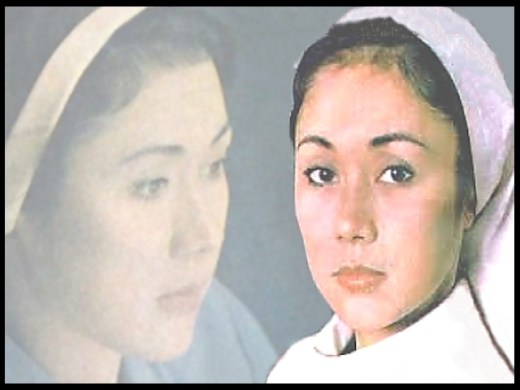
Orihinal Sa Pag-arte


Magmula pa nang magsimula si Vilma Santos sa pag-arte, sa munting edad na siyam, ipinakita na niya na nasa puso niya ang pag-ganap. Sa “Trudis Liit” makikita ang kusang pag-patak ng luha at tamang pagbibigay ng emosyon. Ito ay likhang talento na hindi makikita sa ibang mga batang artista ngunit hindi rin ito sapat upang sa paglaki mo’y manatili ang talento nakagisnan mo nang kabataan. Mangilan-ngilan lamang ang namulat sa katotohanang hindi hanggang sa pagtanda ay mananatili kang magaling sa pagganap. Hindi nga ba’t hindi naging isang mahusay na artista si Nino Muhlach nang itoy maging isang binata na. Si Snooky Serna na kailangan ng mahusay na direktor upang mapalabas ang tunay na tinatagong galing. Nasaan na si Connie Angeles, si liezl (na anak ni Amalia), si Bentot Jr at marami pang hindi malilimutang mga batang aktor na nagpakitang gilas. Ang katotohanan ay kailangang patuloy ang pag-aaral sa pag-ganap. Ang katotohanan ay ang paghahanda sa pagbabago ng imahen at pagtanggap ng mga naiibang papel. Upang patuloy ang paghasa ng talentong kinagisnan mula pa nuong kabataan. Iyan ang sikreto ni Vilma Santos. Mula pa nang Trudis Liit, umikot ang mundo ni Rosa Vilma. Sinagupa niya ang labanan sa pag-arte ng buong tapang. Ito ang tunay na marka ng mahusay na aktor. Walang papel na maliit, walang papel na hindi puedeng kakaiba ang pagganap. Ilang pelikula ang nagmarka sa lipunan. Nagbigay ito ng kahulugan sa mga pakay ng ordinaryong buhay ng mga pilipino.

Pumaimbulog ang kakaibang pagarte niya sa Dama De Noche. Maalala ng lahat ang pagsusuot niya ng “two-piece bikini” sa Nakakahiya ngunit ang pagganap niya bilang “spoiled brat” na umiibig sa mas matandang lalaki ang dapat bigyan ng pansin. Matapang na unang pag-iiba ng imahen. Senyales ng Masagana’t markadong mga papel na darating. Bago pa man nauso ang mga pelikulang “horror-scream fest” ay naging tatak na ito ni Rosa Vilma. Mula sa mga patok sa takilya na “takbo Vilma Dali”, “Hatinggabi na Vilma” at “Anak ng Aswang.” Sinundan pa ito ng mga pelikulang pang-aksiyon at pantasya na nagbigay ng kayamanan sa Tagalog Ilang Ilang Production. Katulad ng “Wonder Vi”, “Dyesebel”, “Phantom Lady,” “Kampanerang Kuba” at ang pinakamatagumpay ng Darna na hindi na mapapantayan pa, “Lipad Darna Lipad”. Hindi maitatago ang tagumpay ng mga pelikula niya magmula pa ng tumigil na ang mga pelikulang “musikal”. Ito ang naging hugyat ng pagbaba ng kasikatan ng mga kakontemporaryo niya. Nang dumating ang huling parte ng dekad 70 kung saan ang mga pelikulang musikal ay hindi na kumikita, ang mga pelikulang komersiyal na tinatampukan ni Vilma Santos ang nanguna at masasabing naging sulosyon sa papahinang kita ng mga pelikula nuon. Kasabay pa nito ang pagrami ng mga pelikulang banyaga.

Ang pagdating na dekada 80 ay naging isang patunay na ang sinasabing “Superstar” na kalaban ay hindi na kapantay ng sinasabi nilang “poor second.” Mabibilang lamang sa kamay ang mga pelikualang ginawa niya na hindi naging matagumpay sa takilya. Magmula ng huling parte ng dekada 70 at sa pagpapatuloy ng mga pelikula niya sa dekada 80, ang mga markadong papel na ginampanan ni Vilma ay naging isang pagpapatunay ng kanyang patuloy na paghuhudyat ng kanyang galing sa pag-arte. Ng patuloy niyang paghuhubog sa kanyang sining. Ng patuloy na pag-aaral hanggang sa marating niya ang halos perpektong pagganap. Hanggang sa marating niya ang malalim na kahulugan ng bawat papel. Si Chato, Rubia, Marilou…Baby Tsina, Fina, Aida…si Stella, Dolzura, Leah, Amanda…hanggang kay Josie at kay Lilian…makikita mo ang iba’t ibang lalim ng pagganap na kung ang isang ordinaryong artista lamang ang gaganap ay hindi makikita ang epektibo, hindi mo makikita ang tunay na katauhan. Ang mga pelikulang ginampanan niya, makikita mo ang mga katauhan, hindi mo makikita si Vilma Santos kundi ang mga babae kanyang buong tapang na isinalarawan sa puting telon. Kapag pagarte ang pag-uusapan, ano ba ang kaibahan ng isang Vilma Santos. Ang sagot: siya ay isang orihinal. Hindi siya isang kahawig lamang ng ibang artista. Makikita sa kanyang buongbugong pagganap. Magmula sa kanyang likuran, tuktok, paa, kamay, mukha, luha at mga salita, ang makikitang gumaganap ay ang kanyang buong katauhan. Sa ilang dekadang ibinigay niya sa ating mga tagasubaybay, eto ang ilang markang Vilma Santos na hindi makikita sa iba o kung Makita man ay pilit na tinutularan.

Kamay sa mukha habang umiiyak – Ilang beses nang pinagbawalan ng mga direktor ang habituwal na kamay ni Vilma na madalas makita sa kanyang mukha habang umiiyak. Magmula kay Lino Brokha, pilit nilang inaalis ang markang Vilma Santos na ito. Pero ang katotohanan, kapag umiiyak ang isang ordinaryong tao, mapapansin na ang ating mga kamay ay laging napupun a sa ating mukha upang magkaroon ng kaunting kontrol sa anumang pinagdadalamhati natin. Natural na habitwal ng isang ordinaryong tao. Ito marahil ay pagpapatunay lamang na kuhang kuha ni Vilma ang tunay na gawi at kilos ng isang ordinaryong tao na umiiyak. Magmula kay Julia Roberts hanggang kay Natali Portman ang markang kamay ni Vilma sa pagiyak ay makikita sa mga banyagang pelikula. Sa ating lokal na pelikula, magmula kay Sharon Cuneta hanggang kay Claudine Barreto o Judy Ann Santos, makikita na mayroong kahawig sa kanilang pagiyak sa mga pelikula kung saan ang kanilang mga kamay ay makikitang humahaplos sa kanilang mga mukha?t mata habang dumadaloy ang mga luha. Maling mali ang mga kritiko nuong panahon nila Broka at Bernal kung ganoon. Ang markang kamay sa mukha habang umiiyak ni Vilma ay hindi distraksyon sa pagganap kundi isang patunay ng tunay na gawi ng isang ordinaryong tao habang umiiyak. Makikita sa pagarte ni Nora Aunor sa “Ina Ka Ng Anak Mo” kung saan nakapokos ang kamera sa kanyang mukha (sa kanyang mga mata) habang nag-e-emote nang mahuli nito ang pagtataksil ng kanyang asawa at ng kanyang ina. Makikitang umiiyak ito sa harap ng kamera. Ito ay isang arte na hindi makatotohanan. Kung nangyari ito sa tutoong buhay marahil ang mga sandaling pageemote ay makikitang sinasabunutan nito ang inang walang kahihiyan at malaking away ang magaganap. Sa halip iniksployt ni Brokha ang mga mata ni Nora dahil nga ang usapan nuon ay magaling ang mata ni Nora, yun lang at tama na. Ang naging bunga naman nitoy hindi makatototohan at hindi hango sa tunay na buhay na paglalarawan ng isang babaeng pinagtaksilan. Kung pag-aaralan nating buong buo, makikitang ang mga kamay sa mukha habang umiiyak ni Vilma ay mas epektibong paglalarawan ng tunay ng nagdadalamhating ordinaryong tao kaysa sa ipinopokus na mga mata ni Nora. Ito marahil ang dahilan kung bakit hanggang ngayon ay makikita sa mga pelikula, lokal o banyaga ang markang Vilma na ito at wala kang makikitang pelikulang lokal man o banyaga na nagpopokus lamang sa mga mata habang umiiyak dahil itoy hindi epektibong at hindi makatotohanang pagganap.

Mga kilo-kilometrong linya at tono – Kung hindi man magaling kumanta si Vilma, binawi niya ito sa kanyang orihinal na talento sa pagbibitaw ng kilo-kilometong linya at sa iba’t ibang tono ng pagbibitaw at pagbibigkas ng mag linyang ito. Bago pa man nauso ang mahahabang linya sa mga pelikulang The English Patient at Magkapatid, pina-uso na ito ni Vilma. Magmula sa eksena ni Chato sa Burlesk Queen kung saan kinakausap niya ang patay niyang tatay sa ospital hanggang sa konprontasyon ni Josie sa suwail na anak na ginampanan ni Claudine Baretto, milya milyang linya ang binitawan ni Vilma. Kung pagdudugtungin lahat ng mga linya niya parang lubid, marahil aabot ito sa buong mundo papunta at pabalik. At hindi lamang basta bastang linya kundi mga linyang tumatanim sa iyong utak. Magmula sa linyang “Ding ang Bato Dali!” hanggang sa “para kang karinderyang bukas sa lahat ng gustong kumain”…at sa “Katarungan para kay Ka Dencio”…at sa “kung hindi mo kayang respetohin ako bilang isang ina…respetohin mo ako bilang isang tao!” Maalala mo itong mga linyang ito kapag narinig mo ang pangalang Vilma Santos. At hindi mo ito basta basta makakalimutan dahil sa bawat salita nito’y may katumbas na kakaibang tunog, diin at lalim ng kahulugan. Hindi nga ba’t hindi natin malilimutan ang halos pabulong niyang mga linya sa may tabing dagat sa “Pahiram ng Isang Umaga” kung saan binitawan niya ang mga linyang…”ang sarap mabuhay…” o ang matalim na pagtatanong niya sa ospital sa Dulzura ng mga linyang “…Bakit diyos ka ba? Sino Ka ba? Ikaw ba ang nagbigay buhay sa akin? Sino ka ba?!” Kung kaya ang bawat magsasabi ng mga linyang ito, ay pumapailalim sa kakaibang karakter. Kung ibang artista lamang ang bumigkas o nagbitiw ng mga linyang ito, marahil ay hindi magiging epektibo at hindi matatanim sa mga ordinaryong tao. Hindi nga ba’t ilang dekada na ang dumaan ngunit nanatili pa rin sa ating mga alaala ang mga linyang binitiwan ni Vilma sa mga pelikulang Sister Stella L, Pahiram ng Isang Umaga, Gaano Kadalas Ang Minsan, Sinasamba Kita, Muling Buksan Ang Puso, Anak at marami pang iba na kung ililista natin ay kulang pa ang isang pahina? Tatak Vilma Santos, ang pagbibitaw ng kilo-kilometrong linya na may lalim at galling, may puso at tapang.
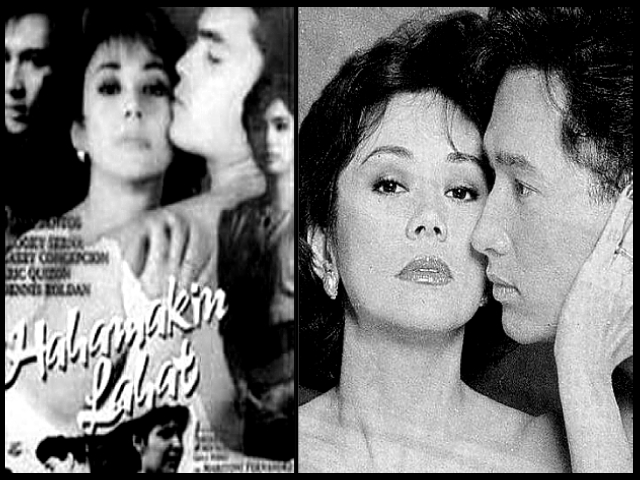
Mataray na Karakter – Nag-umpisa marahil sa pag-iiba ng karakter bilang hindi laging martir sa pagganap si Carmen Rosales ngunit ang nagpauso nito sa mga hindi makakalimutang komersiyal na pelikulang lokal ay walang iba kundi si Vilma Santos. Siya ang nagpa-uso o nagpasikat ng mga bida/kontrabidang papel. Bago pa man ginawa ni Demi More sa “Disclosure” o nitong huli si Meryl Streep sa “The Devil Wears Prada” ginawa na niya ito sa mga pelikulang “Sinasamba Kita,” “Hahamakin Lahat” at sa iba pang pelikula kung saan ang bida ay hindi pa-martir habang inaapi ng mga kontrabidang walang ginawa kundi magsisigaw o manakit. Kung iisipin marahil kung sinuman ang sumulat ng pelikula ni Meryl Streep (the Devil wears Prada) ay isang Vilmanian o napanood ang pelikula ni Ate Vi na Sinasamba Kita. Ang karakter ni Meryl sa pelikula ay isang “cold-low-tone-bitch” ganitong ganito kung magsalita at umarte si Vilma sa Sinasamba Kita. Kung tinaray tarayan ni Meryl si Anne Hathaway sa kanyang pananamit, ganuon rin si Vilma sa pa nanamit ni Lorna. Sa tono ng pagsasalita ni Meryl na monotone at talangang mararamdaman mo ang bichy attitude nito, ganito rin ang mararamdaman mo sa pelikula ni Vilma. Kung iisipin ang pagganap ni Vilma sa maraming pelikulang naglalarawan sa iba’t ibang klase ng babae sa lipunan ay nagpabago sa kaisipan ng marami. Naunawaan natin ang kalagayan ng mga kabit lang na babae sa mga pelikula ni Vilma. Naunawaan natin na hindi perpekto ang buhay ng mga mayayamang babae. Ginampanan ni Vilma ang mga papel na matataray, mayaman, sosyal na mga babae pero sa likod nito’y pareho lamang ang nais nila tulad ng mga ordinaryong mahirap na mga babae. Ito ay ang mainitindihan sila’t mahalin. Kung iisipin sa ilang dekadang ibinigay sa atin ni Vilma hindi natin masasabing iisang papel or karakter lamang ang binigay niya sa mga pelikula niya. Kung ang kakontemporaryo niya, masasabing halos lahat ng pelikula’y naging pa-martir at laging api, si Vilma’y kasalungat o higit pa rito ang nagampanan. Iba’t ibang putahe ngunit hindi api-apihan kundi ang karakter ng isang taong lumalaban sa buhay, isang mataray, isang bida/contrabida, markang Vilma. Kung ang kamay sa mukha habang umiiyak, kilo-kilometrong linya at mataray na karakter ay mga tunay na markang Vilmang-Vilma, marami pang maidadagdag natin sa mga unang nabanggit ko. Sa loob ng apat na dekada patuloy ngayon sa bagong milenyo, pumapaindayog pa rin ang orihinal at kakaibang uri ng pag-arte ng isang Vilma Santos.
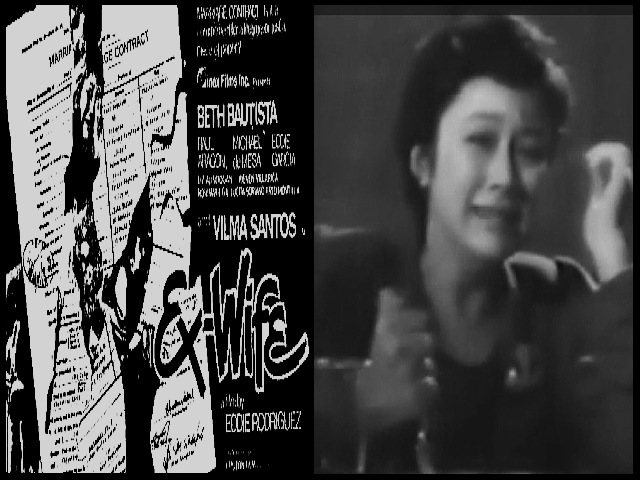
Gripo – Sinabi ni Binibining Boots Anson Roa sa isang artikulo na kakaiba ang isang Vilma Santos dahil kakayahan niyang magkaroon ng iba’t ibang klase ng luha. Sinabi ng beteranang aktress na kapag umiyak si Vilma’y mayroong pumapatak lang ang luha, mayroong tuloytuloy ng pagpatak ng luha at mayroong parang gripo. Ito ay kusang nagagawa ni Vilma dahil sa kanyang malalim na talento sa pagganap. Matatandaan na magmula pa sa murang edad na siyam ay taglay na ni Vilma ang kakayahan sa pag-iyak ngunit paano niya ito nanantili ay ang tanong. Marahil sa mga malulungkot niyang karanasan hinihigop niya ang mga eksenang nangangailangan ng iba’t ibang klase ng pag-iyak. Kung sinasabi nila na laging kontrolado ang pag-arte ng mahigpit niyang kalaban dahil sa mga mata nito’y ang sagot naman ng mga taga-subaybay ni Vilma’y ang kontroladong kakayahan nito sa iba’t ibang klase ng pag-iyak. Kung ikukumpara mo ang pag-iyak ni Nora sa Naglalayag at ang mga eksena ni Vilma sa Mano Po 3, makikita ang katotohanang ang pag-iyak ni Nora na pawang ngumangawa’t naglulupasay ay taliwas sa iwinawagayway na argumento ng kanyang mga tagasubaybay na ang pagarte nito’y laging kontrolado. Samantala sa maraming eksena ni Vilma na umiiyak sa Mano Po 3, makikita ang iba’t ibang klaseng pag-iyak. Nariyan ang untiunting tumutulo ang luha sa eksena sa ospital kung saan namatay si Jay Manalo, ang eksena sa simbahan kung saan ang luha ni Vilma’y kusang umaagos habang dinarasal nito na tulungan siya sa kanyang magiging desisyon. Ang halos bumagsak na luha habang sinasabi niya sa kanyang anak na babae nang lisanin siya sa hapag kainan: “aalis ka rin ba katulad nila?…iyan ang storya ng buhay ko…” Hanggang sa eksenang nagmamakaawa siya dahil sa pagkabaril ni Jay, umaagos ang luha niya, parang gripo ngunit may kontrol at alam mo na may katapusan ang pag-iyak. Marahil iisipin ng marami ng kaya rin ng mga kalaban ni Vilma sa pagganap ang iba’t ibang klaseng pag-iyak na ito. Ngunit mananatiling kulang pa rin ito sa mga sangkap na kaya lang ibigay ng isang Vilma Santos. Ang iba’t ibang klase ng pag-iyak kasabay ng epektibong pagbibigay ng malalim na bigkas sa mga kilokilometrong linya kasabay ng pisikal na galaw at pag-aaral ng papel (mataray, pa-martir o palaban), ito ang mga tatak o markang Vilma na hindi kailanman matutumbasan ng kahit na sinong artista, kasama na riyan ang mahigpit niyang karibal, si Nora Aunor.

Istilo sa pananamit – Sinasabi nila na ang tamang damit o kustom ng mga papel na ginagampanan ng isang artista ay nakakatulong sa epektibong pagganap. Ito marahil ang isa sa mga dahilan kung bakit ilang beses ko na sinabi na hindi epektibo ang pagganap ni Nora Aunor sa Naglalayag dahil sa ang isang mayamang hukom ay dapat lamang na magsuot ng mga tamang damit, ang isang eksena kung saan ito ay dapat nakasuot ng damit pampaligo sa sariling “swimming pool” ngunit nakasuot lang ito ng t-shirt. Ang kustom ni Nora sa Super Gee marahil ang dahilan kung bakit sumemplang ito sa takilya samantalang ang mga kustom ni Vilma sa Darna, Wonder Vi at maging sa Dyesebel at Kampanerang Kuba ay nakatulong lahat upang magampanan ni Vilma ang mga komersyal na papel na ito na epektibo’t naging patok sa takilya. Kung ang pagbabatayan ay ang mga damit na suot ng mga artista’y maraming mga pelikula kung saan nakatulong ang tamang istilo sa mga matatagumpay na pelikula ni Vilma. Sa mga papel na ito binigyan ni Vilma ang kanyang manonood ng iba’t ibang klase ng istilo sa pananamit. Sa Burlesk Queen hindi lamang ang makikinang na seksing damit ng isang mananayaw kundi ibang klaseng istilo kung saan makikita sa maraming eksena na naka-“short-sleeve-polo-shirt” siya na halatang panglalaki at nakatupi ang laylayan ng sleeve. Isang senyales ng pagka-peminista ng papel na ito. Kasabay pa nito ang maikling buhok ni Vilma na may mahabang patilya. Sinadya ba ito o talagang ito ay isang hudyat ng liberasyon ni Vilma bilang isang modernong pilipina na patapos na ang dekada 70? Istilong Vilma, epektibong panglahok sa epektibong pagganap. Sa dekada 70 pa rin binigyan niya tayo ng magagandang istilo sa pananamit na makikita sa mga papel niyang ginampanan tulad ng mga damit niya sa Rubia Servious, Nag-aapoy na Damdamin, Ikaw Ay Akin at marami pang iba. Natatandaan n’yo ba ang damit ni Vilma nang gabi ng parangal, nuong Rubia bersus Atsay? Napakaganda ni Vilma. Makikita ang kakaibang pananamit na nagsasabing “to hell to all of you”, malaya akong gagawin ang sa tingin ko’y nabubuti sa akin. Malaya sa pag-iisip at ito ay makikita sa mga aksesorya niya tulad ng mga perlas na hikaw at mahahabang kwintas. Ang pagpasok ng dekada 80 ay naghudyat na panibagong Vilma Santos. Ginamit niya ang makabagong pananamit sa maraming makukulay, matitingkad na komersiyal ng pelikula niya sa Viva at Regal. Kung konserbatibo ang mga damit niya sa “Gaano Kadalas Ang Minsan,” kabaligtaran naman ang mga damit niya sa “Sinasamba Kita.” Sa dekada ring ito’y naghudyat ang maraming papel na nangangailangan ng ibang klaseng istilo sa pananamit. Katulad ng mga damit niya sa Baby Tsina. Mahusay na isinuot niya ang maraming “mini skirt” bilang patunay na ito ang uso ng panahong iyon. Samantala’y narumihan ang puting damit niyang sinuot habang nakikibaka sa pelikulang Sister Stella L. Sinong makakalimot sa puting “night gown” niya sa tabing dagat sa eksenang kasama si Eric Quizon sa Pahiram Ng Isang Umaga. Hindi rin natin malilimutan ang mga “power suit”, mga pasosyal niyang damit at mga high heels niya sa “Sinungaling Mong Puso.” Hindi lang naman puro mga magagandang damit ang ibigay niya sa atin. Makikita rin siya sa ordinaryong “daster” na pambahay sa Relasyon o nitong huli bilang katulong na nagtratrabaho sa Hongkong sa pelikulang Anak. At isa rin sa mga dahilan kung bakit ko pina-ulitulit na sabihing ang pagganap ni Vilma sa Mano Po 3 ay mas epektibo dahil sa mga pananamit pa lamang makikita natin na ang napapanood natin sa telon ay hindi si Vilma kundi si Lilian Cheong Yang. Ito’y makikita sa tamang pananamit at istilo na ankop na pinag-aralan at hindi basta basta ipinagpaliban lamang. Ang isang Vilma Santos ay nagiisip ng tamang istilo ng pananamit upang maging epektibo ang paglalarawan ng mga papel sa telon. Ito ay isa sa tatak Vilma na hindi matu tularan ng iba.
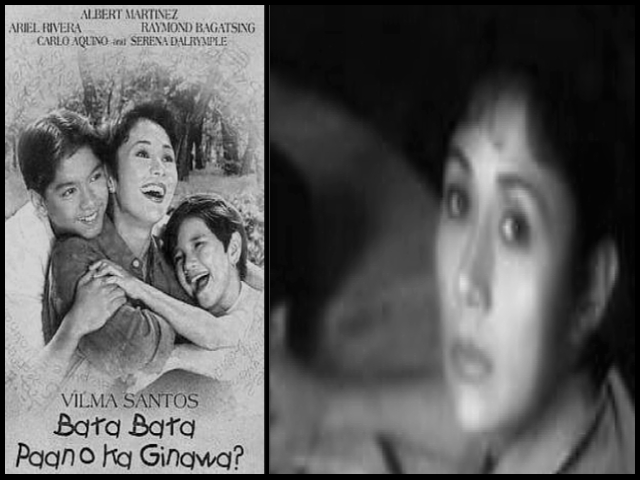
Klase ng pag-arte – Merong iba’t ibang klase ng pag-arte. Nuong dekada 70, pinagbasihan ang mga klaseng kontroladong pagarte bersus pisikal na pagarte. Sinabi nila na si Nora Aunor at Lolita Rodriguez ang magkahawig dahil sa kanilang kontroladong pag-arte samantala si Vilma Santos at Charito Solis ang magkasama dahil sa kanilang pisikal na pagarte. Alin sa dalawang uri ng pagarte ang makakatotohanan at hango sa tunay na buhay? Depende kung sino ang tatanungin mo. Unang-una, kung ang pagbabasihan ay ang “longevity” at tagumpay sa kani-kanilang karir. Masasabing pawang mahina or tuluyang nawala na ang kinang ng karir ni Nora at Lolita. Samantala’y aktibo pa rin si Charito bago pa man ito sumakabilang buhay at tatanungin pa ba natin ang lagay ng karir ng isang Vilma Santos? Hanggang ngayon siya lamang ang nag-iisang nakatayong reyna na nanggaling sa dekada 70. Balikan natin ang ating tanong, alin sa dalawang uri ng pagarte ang mas epektibo? Nuong panahon nila Lino Brocka, madalas nilang sabihin na ang tahimik at kontroladong pag-arte ay mas epektibo ngunit hindi n’yo ba napupuna na hanggang sa bandang huli halimbawa sa huling pelikula ni Nora Aunor sa Naglalayag ay taliwas ang ginawang pagarte nito? Ang ibig kong sabihin naiba ang klase ng pagarte niya’t parang ginaya niya ang pagka-pisikal na pagarte. Sino ang hindi mababaliw sa parang may epelepsi niyang pag-iika-ika, pag-ngingisay-ngisay at pagbubunganga sa sinasabi nilang eksena sa burolan sa Naglalayag. Minsan pang iniksployt ng direktor ang sinasabi nilang galing ni Nora Aunor ngunit sa ganang akin, ang naging resulta ay maliwanag na “uma-arte” si Nora at walang makikitang kahit isang katiting na natural na pag-arte. Ang pisikal na pag-arte ni Vilma ay kakaiba. Hindi ito lutong-luto kung baga sa pagkain. Halimbawa, nang malaman niyang pinatay ang anak niya sa Dekada 70. Hindi siya nagngangawa at nagsalita ng kung ano-anong pagmumura o anumang salita sa halip hinimatay siya. Sa iba isang kakulangan ito. Sasabihing anong klaseng pag-arte ito? Pero sa tutoong buhay, ito ang talagang mas epektibong paglalarawang kung paano mo makakayanang malamang ang sarili mong anak ay pinaslang.

Isa pang halimbawa ng pisikal na pag-arte ni Vilma na epektibo ay ang eksenang nagbabati siya ng itlog siya sa Pahiram ng Isang umaga, kaka-alam lang niya na may sakit siyang kanser at unti-unting pumapasok sa kanyang kaisipan na mayroong posibilidad na mamatay siya ng maaga. Ipinapakita sa eksenang ang bigat ng kanyang dinadala. Hindi lamang ang mga huling pelikula ni Vilma ipinakita niya ang kakaibang pisikal na pag-arte na hindi lutong-luto kundi tamang-tama lang ang timpla. Halimbawa, habang gumagapang siya sa lupa pagkatapos pagsamantalahan ni Philip Salvador sa Rubia Servious. Paano mo ipapakita ang sakit ng katawang inabot niya sa sadistang si Philip? Makikita sa kanyang mukha ang hapdi hindi lang na inabot niya sa katawan kundi ang bangis ng ruming ibinigay ni Philip sa kanyang isip at puso. Hindi na siya malinis at kitang kita sa kanyang mga mata. Sa bandang huli makikita ang puot sa kanyang mukha habang pinapalo niya ng sagwan ang manggagahasang si Philip. Pagpupunyagi ang madarama mo, “sige patayin mo ang hayup na iyan!” ang paulit-ulit kong binibigkas sa eksenang ito. Kung ibinansag ng mga grupo na ang klase ng pag-arte ni Vilma’s pisikal, aking sinasabing hindi ito tutoo. Ang katotohanan ay ang pagarte ni Vilma’y kumbinasyon ng dalawang klase. At ito ang dahilan kung bakit naiiba ang markang Vilmang klase ng pag-arte. Halimbawa, sa Dekada 70, maraming eksena ang tahimik lamang at kontrolado ang pag-arte niya. Nang makita niya ang anak niya sa detensyon na puro pasa at iika-ika dahil sa “torture” na sinapit nito, makikitang tumayo lamang ito sa kinaka-upuan at yinakap ang anak habang umiiyak ito. Ang eksena sa kuwarto habang yakap yakap nito ang damit ng namatay na anak. Ngunit nang mamulat na siya sa konsepto na kailangang kumilos siya upang maging makabuluhan ang kanyang lagay bilang tao sa lipunan, nagsimula na siyang magsalita, magbigay ng opinyon sa mundo ng mga lalaki. Unti-unting nakikita ang pisikal niyang pag-arte. Pisikal na tamang-tama lang. Hindi niya kailangang mag-ngingisay-ngisay at magwala katulad ni Nora sa Naglalayag upang masabing umaarte siya. Hindi mo na kailangang maging isang kritiko Santos. Ito ay kumbinasyon na maraming klase na natutunan niya sa iba’t ibang direktor. Makikita mo na hindi mawawala ang pagka-pisikal niyang pag-arte at makikita mo rin ang mga tahimik na eksena.

Anong bago – Sa hinaba-haba ng mga pelikulang ibinigay niya sa kanyang mga taga-subaybay, ang laging tanong ng mga manunulat ay “Anong bago sa pelikulang ito?” Iyan marahil ang isa sa mga unang katanungan kung paano tinatanggap ni Vilma ang kanyang mga proyekto. Kung susumahin, naranasan ni Vilma ang gumawa ng sampu samperang pelikula nuong dekada 70. Nariyang kumanta siya’t sumayaw makipagsabayan sa kanyang mahigpit na kalaban at ito marahil ay ang naging daan kung bakit nalagpasan niya ang lahat ng mga kasabay niyang artista. Ang isa pang sangkap ng tagumpay ni Vilma ay ang pagyakap niya sa mga pagbabago. Nang hindi na uso ang mga musikal na mga pelikula naging matapang ito sa pagtanggap ng iba’t ibang klaseng pelikula. Nariyan ang mga pelikulang kakatakutan, mga pantasya’t kakatawanan. Nariyang maging serena siya, tinderang tsismosa, anak ng aswang o maging isang malditang anak. Buong tapang niyang ginampanan ang iba’t ibang klaseng papel na sumasagot sa katanungan, anong kakaibang aliw ang maibibigay ko sa aking mga taga-subaybay. Sa mga kasabay niya’t karibal, otsenta porsiyento na ang mga naging pelikula’y halos pare-pareho. Katulad ng mga pelikula ni Nora Aunor. Naging sagabal sa kanyang pag-unlad ang hindi nito pagtanggap ng matatapang na papel. Laging pa-martir at api-apihan ang mga papel na ginampanan nito. Walang pagbabago kasabay ng hindi nito pagtanggap ng katotohanang ang pag-arte ay patuloy na pag-aaral. At hindi palaging sa bawat pelikula’y kailangang ifokos ang “over-rated” niyang mga mata. Ang isang markang Vilma na hindi maitatanggi maging ng kanyang mga kalaban ay ang laging sariwang pananaw nito sa mga proyektong kanyang ginagawa. Kung kaya naman halos lahat ng pelikulang ginawa niya ay naging matagumpay sa takilya. Dahil sa laging mayroong bagong makikita ang mga manonood. Dahil ibang “aliw” ang kanilang malalasap. Ang mga markang Vilmang-Vilma: kamay sa mukha habang umiiyak, kilo-kilometrong linya, mga makukulay na karakter sa pagganap, Iba’t ibang klase ng pag-iyak, iba’t ibang istilo ng pananamit, Iba’t ibang kumbinasyon ng klase ng pag-arte at ang maaasahang bagong sangkap ng pelikula. Eto ang mga dahilan kung bakit orihinal sa pag-arte ang taglay ni Vilma Santos. Sa buong tapang niyang sinagupa ang mga kalaban, sa halos maglilimang dekada niya sa larangan ng pagganap, nag-iisa lamang siyang natitirang nakatayo sa itaas. Nag-iisang pagpupugay sa lahat ng mga taong sumubaybay sa kanyang kasikatan mula sa Trudis Liit hanggang sa Regalo. Buong pagpapakumbaba niyang pinahahalagahan ang mga taong tumulong sa kanya upang hubugin ang kakayahan niya sa pagganap. Kung bibigyan laman ako ng kapangyarihan upang magdagdag ng salita sa diksyunaryo, aking isasama ang salitang “Vilma.” Ang salitang Vilma na ibig sabihin ito ay “orihinal sa pag-arte,” natatanging katauhan ng isang mahusay na alagad ng sining. Katulad ng ginawa nila kay Imelda Marcos (ang salita “Imeldific”). Tunay, ka, ang isang Vilma Santos ay nag-iisa. Isang orihinal na kayamanan na hindi matutumbasan ng kahit na sinong artista nuon at ngayon. – RV, V Magazine Issue Nos 10 (READ MORE)

Noon At Ngayon

This slideshow requires JavaScript.

Siyam na taong gulang si Vilma Santos nang gawin niya ang kauna-unahang pelikula niya ang “Trudis Liit” ng VP Pictures na itinanghal noong Pebrero 21 – Marso 2, 1963. Naging abala siya pagkatapos sa linguhang taping ng TV series na “Larawan ng Pag-ibig” sa ABS (ang dating KBS sa Roxas Blvd. Noon) kung saan nakasama niya sina Zeny Zabala at Willie Sotelo. Noon pa man, kapuna-puna na madaling kumuha ng direksiyon si Vi, bukod pa sa mabilis itong magmemoya ng linya. Lubha rin siyang maingat sa kanyang pangkalahatang kaanyuhan bago humarap sa kamera. Kapag ang eksena ay sa loob ng tahanan, medyo guguluhin niya ang buhok, titiyakin na may kalumaan ang suot na simpleng damit, pati na ang tsinelas. Kapag sa labas naman ang eksena, pipili siya ng angkop na kasuotan, na para sa kanya ay komportable at simple. Dito sila madalas nagkakaiba ng panlasa ng kanyang ina. Pati na sa ayos ng buhok. Ang kay Vi, ang pananatili pa rin ng dating gawi. Ang sa kanyang mama, artista at kinakailangan nga naman ng kauting pagbabago sa panlabas na kaanyuan. Siyempre, ang kadalasang resulta, ang Mama niya ang nasusunod. After all, mother knows best, hindi ba? Bagay na hanggang nagdalaga si Vi ay muli at muli niyang napatunayan. Anyway, noon pa man, natural lang na mamalas kay Mama Santos ang understandeble pride sa anak, lalo pa’t madalas sabihin nina Zeny at Willie, “Artista talaga! Madali niyang masakyan ang prepesyong ito!” na matinding intriga at kontrobersiya.

Ipinanganak nga marahil si Ma. Rosa Vilma Tuazon Santos sa show business dahil sa pagitan ng taping ng “Larawan..” ay nagkasunod-sunod na ang kanyang mga pelikula: ”Anak, Ang Iyong Ina” ng Sampaguita Pictures (Abril 5 – 13, 1963), “King ang Queen For A Day” (Hulyo 4 – 13, 1963), “Duelo Sa Sapang Bato” ng Larry Santiago Productions (Hulyo 13 – 22, 1963), “Aninong Bakal” ng Vitri Films (Oktubre 9 – 28, 1963), “Ging” ng People’s Pictures (Enero 20 – 29, 1964), “Larawan Ng Pag-ibig” ng Vitri (base sa TV series, Pebrero 19 – 28, 1964), “Naligaw Na Anghel” ng LSP (Agosto 8 – 17, 1964), “Sa Bawa’t Pintig Ng Puso” ng LSP (Nobyemre 16 – 25, 1964), “Sa Baril Magtuos” ng Medallion Films (Abril 12 – 20, 1965), “Maria Cecilia” ng LSP (Mayo 15 – 24, 1965), “Morena Martir” ng VP (Hulyo 20 – Agosto 9, 1965), “Kay Tagal Ng Umaga” ng LSP (Agosto 23 – Setyembre 1, 1965), “Iginuhit Ng Tadhana” ng 777 Films (Setyembre 7 – 15, 1965), “Hindi Nahahati Ang Langit” ng LSP (Enero 9 – 18, 1966), “Hampaslupang Maton” ng JBC (Mayo 5 – 12, 1966), “Ito Ang Dahilan” ng LSP (Agosto 1 – 8, 1966), “Batang Iwahig” ng LSP (Oktubre 21 – 28, 1966), “Ito Ang Pilipino” ng EMAR (Disyembre 30, 1966 – Enero 9, 1967), “The Longest Hundred Miles” ng VIP (Hunyo 18 – 27, 1967), “De Colores” ng Arco-Iris (Marso 30 – April 10, 1968), “Kasalanan Kaya” ng Virgo Films (Hunyo 16 – 28, 1968), “Sino Ang May Karapatan” ng Virgo (Nobyembre 16 – 25, 1968), “Pinagbukold Ng Langit” ng UBP (Agosto 7 – 28, 1969), “Pag-ibig, Masdan Ang Ginawa Mo” ng RVQ Films (Setyembre 7 – 13, 1969), “My Darling Eddie” ng JBC (Disyembre 16 – 23, 1969, “Mardy” ng JBC (Disyembre 31 – Enero 6, 1969) hanggang “Young Love” ng VP Enero 1 – 21, 1970) ng lumikha ng rekord sa takilya.

Ang tutoo niyan, ang pag-aartista ni Vi ay nag-ugat sa isang family reunion na usung-uso sa mga Santoses. Sa isa sa mga ganyang okasyon, nabanggit ng tiyuhin ni Vi, si G. Amaury Agra, (noo’y cameraman ng Sampaguita Pictures) na bakit hindi nito subukin ang pag-aartista. Katuwiran ng amain, lista naman ang pamangkin at napakalimit pa nitong mapasali sa school plays, siyempre, ayaw ng ina ang dating Milagros Tuazon na tubong Cabanatuan, Nueva Ecija. Pag-aaral muna, bago ano pa aman. Iba naman ang reaksiyon ng ama, si Amado Santos ng Bamban, Tarlac. Amused ito at siyempre, nandoon ang parental pride dahil batid niyang maganda, matalino at lista ang anak. Iba pa rin ang reaksiyon ng mag kapatid ni Vi, sina Ma. Michaela (Emelyn) at Ma. Theresa (Maritess). Tuwang-tuwa sila. Masarap nga namang pakinggan iyong may “artista” sa pamilya. Ang dalawang bunso, sina Ma. Norwena (Winnie) at Joel (Sonny Boy) ay mga paslit pa lamang upang maunawaan ang pinag=uusapan. Natapos ang family reunion. Nakalimutan ang suhestiyon.

Makalipas ang mga tatlong buwan, nakatanggap ng maikling sulat si Mama Santos muka lay G. Agra. Naghahanap ang Sampaguita Picutures ng batang babae na gaganap ng mahalagang papel sa “Anak, Ang Iyong Ina!” at isinali ng amain ang pangalan ni Vi. Hindi puwedeng lumiban si Papa Santos sa pinpasukang government office, at ayaw naman nilang mapahiya ang kamag-anak, kaya napilitan si Mama Santos na humingi ng day=off sa opisina (Aguinaldo’s). Pagdating sa studio, wala si G. Agra at nasa location shooting, ngunit totoong naroroon ang pangalan ni Vi, kaya’t pinapasok sila sa tanggapan. Napadaan sa harapan ni Mama Santos si Bella Flores na dala ang script ng “Trudis Liit.” Nagulumihanan si Mama Santos. Binasa niyang muli ang liham ni G. Agra. Mali yata ang napuntahan nila! Akma niyang tatawagin si Vi na noon ay nkikipaglaro sa iba pang mga bata upang yayain na itong umuwi, nang pumasok sina Mommy Vera, Dr. at Mrs. Perez, at Eddie Garcia. At doon nagsimula ang movie career ni Vi na magpahanggang ngayon ay batbat pa rin ng iba’t ibang panunuri, opinyon at konklusiyon.

Pagkatapos ni Vi ng “Young Love,” nagsimula naman ang napakalaking pagbabago sa buhay niya at career life. Ang trend noon ay musicals, kung kaya’t sa kauna-unahang pagkakataon, umawit siya sa pelikula. Sa “My Darling Eddie” ng JBC, inawit niya ang “Devoted To You” ka-dweto si Edgar Mortiz. At dahil kararaos lamang ni Vi ng kanyang 16th birthday, sinulat ni Danny Subido ang awiting “Sixteen” na siyang naging unang plaka ni Vi sa Wilear’s Recording na ang likod ay “Wonderful To Be In Love.” Ang nasabing plaka ay agad naging number one sa loob lamang ng limang araw at tumagal ito sa gayong puwesto nang mahigit sa isang buwan. Noon, malaking rekord na ang gayon.

1970 rin nang magsimula ang professional rivalry nila ni Nora Aunor na lalong lumaganap at tumagal sa tulong ng mga publisidad, mga tagahanga at mga tao sa kani-kanilang paligid. Iisa ang pinagpatahian nila ng damit, ang Torino’s, halos iisa rin ang mga TV programs na dinadaluhan nial, gayon din ang mga movie companies na kanilang pinaglilingkuran, ngunit sa mata ng publiko, lalo na ng kanikanilang mga tagahanga, magkaiba sina Vilma at Nora. Iisa lamang ang dapat nakaupo sa trono ng katanyagan, iisa lamang ang dapat may hawak ng setro ng popularidad, iisa lamang ang puputungan ng korona ng superstardom.

1970 rin nang magsimulang i-ugnay si Vi kay Edgar, na siyang naging kauna-unahang nobyo niya sa tunay na buhay. Sunod-sunod ang kanilang pagtatambal: “Songs and Lovers” ng Tagalog Ilang Ilang Productions, “My Pledge Of Love” ng TIIP, “Love Is For the Two Of Us” ng AM, “From The Bottom of My Heart” ng TIIP at “Sixteen” ng Sampaguita, Ang naging mahigpit na “kalaban” ng kanilang tambalan ay ang love team nina Guy at Pip (Tirso Cruz III).

Dahil sa sunod-sunod na siyuting, hindi lang natigil sa pag-oopisina si Mama Santos, kung hindi nanganib din na matigil sa pag-aaral si Vi na nasa fourth year high school na. Minabuti nilang kumuha ng private tutor, na pinayagan naman ng pamunuan ng St. Mary’s Academy sa Trozo, Tondo, Maynila. Sa kanyang graduation, halata na mahal ng mga madre, guro at kamag-aral si Vi. Nagbalak siyang magpatuloy sa college, kahit na hindi kumpletong units bawa’t semester, ngunit iba pala ang balak ni Atty. Laxa ng TIIP.

1970 pa rin nang unang manibang bansa si Vi. Ginawa nila ni Edgar doon ang “Aloha, My Love” at “Never Say Goodbye.” Pagbalik niya rito, ginawa naman niya ang “Dingdong” ng Sampaguita ng siyang unang pinagtambalan nila ni Pip. Balik-tambalan sila ni Edgar sa “Sweethearts” at “Love Letters” bago niya sinimulan ang una nilang pagtatambal ni Jay Ilagan, ang “Inspirasyon” ng TIIP sa direksiyon ni Ishmael Bernal. Nasundan ito ng pagkakapanalo niya sa FAMAS (“Dama De Noche” ng TIIP) at nagpatuloy na niyang makasama ang iba pang mga batikan sa mga pelikulang tulad ng “Karugtong Ng Kahapon” (Eddie Rodriguez), “Mga Tigre Sa Sirra Cruz” (Charito Solis, direktor Augusto “Totoy” Buenaventura) at “Batya’t Palu-Palo” (Fernando Poe Jr.).

Anupa’t walang naging ibang daigdig ni Vi, mula 1963 kung hindi ang show business. Sabi ng niya sa isang interview: “…ibang-iba talaga. Para bang di man lamang ako dumaan sa pagkabata…heto akong naka-lollipop, and then bigla, ni wala man lamang transition, tumanda na akao, kayod na ako nang kayod, daig ko pa ang isang padre de familia. Noon, hindi ko pa na realiza na parang abnormal pala ang growing-up years ko. Paano, bising-bisi ako lagi sa trabaho. Besides, I was too young to understand about such things then, I ondly got to realiza about the things I’ve missed in life when I saw my younger sisters growing up. Ang saya-saya nila, they’re completely free to do anything they please, ang dami-dami nilang experiences na di mo man lamang naranasan. Somehow, in a way, inggit ako sa kanila. Pero all the same, ang mga nangyari’y nangyari na. Kahit ano pa ba ang gawin mo, di na na babalik ‘yung mga nakalipas na. And then, I’ve also learned it isn’t right to blame other people for what you’ve become. Kasi, ano e, talagang di tama. After all, if you don’t really want to do something, wala namang makakapilit sa’yo a. It’s not right for me to blame my Mama or my Papa dahil they never pushed me into becoming a movie personality. Ang aking pag-aartista’y kagustuhan ko. Lahat naman tayo, we all have to do what we feel we have to do. Everything in this world naman is dedicated by necessity. And yet, at the same time, di naman siguro ako masisisi for feeling cheated about some good things in life that somehow I feel I’ve missed…”

At nagpatuloy ang paggawa niya ng pelikula. Siya’y naging si “Dyesebel,” si “Darna,” si “Wonder Vi,” at ‘Bertang Kerengken” at ang “Kampanerang Kuba.” Nagpatuloy din ang pagsubaybay sa kanya ng publiko, bagama’t ibang aspeto sa buhay ni Vi ang nais laging malaman, ang kanyang love life. Naghiwalay sila ng landas ni Edgar at naging paboritong paksa ng hulaan ay kung sino ang susunod na aangkin sa pag-ibig ni Vi. Lahat halos nang nakatambal niya ay nasali sa “hulaan,” Jojit Paredes, Ronnie Henares, Dave Brodett, Jay Ilagan, Tirso Cruz III, Christopher De Leon, Mat Ranillo III, Bembol Roco, ABM Junior, Romeo Vasquez, Mark Gil at Lito Lapid. Maging sina Fernando Poe Jr., Dolphy at Eddie Rodriguez ay hindi nakaligtas. Ang hindi lamang yata nadawit kay ay sina Mayor Joseph Estrada (“The Sultan and I”), Victor Laurel (“Ophelia at Paris”), Jun Aristorenas (“Mahilig Ang Mister Ko”), Rudy Fernandez (“Makahiya’t Talahib”), Philip Salvador (“Rubia Servios”), Angelo Castro Jr at Ramil Rodriguez (“Modelong Tanso”) at Al Tantay (“Ang Galing Galign Mo Mrs Jones”). Wala isa mang nakakula na si Ronnie Henares ang naging mapalad na pangalawang kasintahan ni Vi.

1975 nang magsimulang magbago ng image si Vi. Pumayag siyang gumanap ng nagdadalang-tao sa “Mahilig…” at makipaghalikan ng lips to lips sa “Tag-ulan sa Tag-araw.” 1976 ay lalong napagtibay ang bold image ni Vi. Nag-prodyus siya at gumanap sa “Mga Rosa Sa Putikan” na sa pamagat lamang ay mahuhulaan kung anong uri ng karakter ang kanyang ginampanan. Ngunit sa kabila ng mga iyan, naroroon pa rin ang “hulaan” sa love life ng dalaga. Lalo pa nga at noong Marso 22, 1976 ay naging panauhin siya ng TV show ni Edgar na “People,” kapalit nung pagtungo nito sa TV show ni Vi, ang “Ayan Eh!” Natural, iisa ang konklusiyon ng karamihan. Magkakabalikan ang dating magkasintahan ng tatlong taon.

Nang sumunod ng taon, 1977, nakilala niya at nakatambal si Romeo Vasquez sa “Nagaapoy Na Damdamin.” Nang mga panahong iyon, nagpasiya na si Vi na bumukod ng tirahan. Ang tanging hangarin niya noon: matutong mamuhay nang mag-isa, magpasiya nang siya lamang ang mananagot sa anumang kahihinatnan, at matikman ang inaakala niyang kalayaan na ganap lamang niyang mapagsasawaan kung siya’y nakahiwalay sa mga magulang at kapatid. Naganap nga ang kanyang kagustuhan, ngunit hungkag pa rin ang kanyang buhay. Walang direksiyon. Ang naging publisidad nang hakbang na ito ni vi ay ang diumano’y pagsasabi niya na “I want to be liberated.” Marami ang nagtaas ng kilay. At lalo nang hindi nila maibaba ito nang mapabalita na si Bobby ay kasintahan na ni Vi. Lalong gumulo na ang iba’t ibang nasulat tungkol sa dalawa. Hanggang sa tuluyan nang maghiwalay sila ng landas.

Muli, pelikula na naman ang nagpaliit ng daigdig ni Vi. Bagama’t ang 1978 ay tinaguriang taon ng mga rosas para kay Vi (panay ang padala ng mga rosas nina Bobby, Christopher, Mar Ranillo, Rolly Quizon at isang nagngangalang Ricky), iyon din ang taong ng “Rubia Servios.” Sa awards night na ginanap noong Enero 3, 1979 sa CCP, marami ang humula na mananalo si Vi. Ngunit si Guy ang nanalo sa “Atsay.”

Ilang araw matapos ang awards night, nabalita na nagtangkang magpakamatay si Vi dahil sa sama ng loob. Paano at saan nagsimula ang balita? Mahirap tukuyin. Ang madali ay ang katotohanan. Pagkagaling sa CCP, nagkita-kita sina Vi at ang kanyang pamilya, Manay Ichu (Marichu Vera Perez), mga kapatid nitong sina Lilibeth at Chona, Cleo Cruz at ang manunulat na ito sa Palamigan Express. Pagkagaling doon, naganyaya si Vi sa kanyang tinutuluyan, sa Tuscanny sa Makati. Hindi sumama si Cleo. Pagdating doon nagpaalam na rin ang mga magulang at kapatid ni Vi. Naiwan ang mga Vera-Perezes, ang alalay noon ni Vi si Viring at ang ang inyong lindkod. Tahasang inamin ni Vi: “Hinangad ko ang manalo, dahil alam kong mahusay ang pagkakaganap ko sa tulong ni direk (Lino Brocka), Ipe (Philip) at Archie (Mat) at iba pang mga kasama. Pero hindi ako umasa. I hoped I’d win, but I did not expect naman. Of course, disappointed ako, masakit, pero kailangang tanggapin…” at iniba na ni Many Ichu ang usapan. Naglabas si Vi ng alak, naging topic ang mga off-the-record na love life at ilang personal na suliranin ni Vi at bago namin namalayan umaga na pala.

Duon, sa Tuscanny, muli naming napatunayan ang isa pang aspeto ng personalidad ni Vi. Ang kanyang pagiging masinop at pagiging systematic. Kung sabagay, noon pa mang nagsisimula pa lamang si Vi, agad mapapansin sa kanya ang breeding, sincerity at pagiging very gracious. Ang ganyang kaugalian ay nadala niya magpahanggang ngayon. Maging nang dumating ang panahon na nagkasabit-sabit ang kanyang mga schedule na naging dahilan nang pagiging unprofessional niya at times. Hindi pa rin nagbago ang kanyang basic and inherit traits.

Ngayon, nahaharap si Vi sa panibagong chapter in her life, ang pagiging isang ina. At sa halip na unawain siya ng iba, ngayon pa lamang hinuhusgahan na siya. May nanghihinayang. May kumukondena. Ngunit sa pagkakatanda namin, noon, ang tanong ay: ano ang pumipigil sa pag-aasawa ni Vi? Tipong inaapura nila ito noon at ngayong magpasiya ang aktres at bigyan daan ang sariling kaligayahan, iba naman ang naging reaksiyon.

The Cover: Anu’t-anuman, sa paglingon ni Vi, taas-noo niyang masasabi na naibahagi niya sa kanyang publiko at tapat na mahabang pagbibigay-kasiyahan sa pamamagitan ng kanyang mga pelikula, plaka, TV shows at personal appearances. Altogether, she gave the best years of her life to her adoring public and it is but her right for her to now give herself the chance to live her life the way she wants it. – Ched P. Gonzales, Vilma Santos: Noon At Ngayon, Modern Romances True Confessions Magazine, December 15, 1980 (READ MORE)

Rosa Rosal 2012 Gawad Plaridel

This slideshow requires JavaScript.

Gawad Plaridel – The University of the Philippines (UP) College of Mass Communica-tion (CMC) is pleased to announce the recipient of the 2012 UP Gawad Plaridel in the person of Florence Danon Gayda, better known as Rosa Rosal. Rosal was chosen for her outstanding contributions to the broadcasting industry, particularly in the field of television. An accomplished film and television actress whose career spans six decades. Rosal is best known for her tireless work with the Philippine Red Cross serving as a volunteer-member for its blood program in the 1950s and later elected to its Board of Governors in 1965. She has been in the board up to the present. Her committed philanthropic work led to her receiving the 1999 Ramon Magsaysay Award for Public Service. The UP CMC is honoring Rosal with the 2012 Gawad Plaridel for her contribution to the Philippine television industry, particularly in affecting media for public service. Rosal utilized her popularity and successfully employed television to benefit the less fortunate without fanfare and sensationalism. Her public service program has set the standard for genuine public service in the television industry. Ms. Rosal’s unquestionable integrity, unceasing and genuine volunteerism, and tireless humanitarian work and advocacy epitomize the value that other public persons have forgotten or taken for granted.

The Gawad Plaridel award comes with a trophy specially designed by National Artist, Dean Napoleon Abueva, which will be awarded to Ms. Rosal by UP president Alfredo Pascual and UP Diliman chancellor Caesar Saloma in ceremonies on July 31 at 2 p.m. at the UP Film Institute Film Center’s Cine Adarna. Ms. Rosal will deliver a lecture on using television for public service and humanitarian work during the ceremonies. Established by the UP CMC, the annual UP Gawad Plaridel recognizes Filipino media practitioners who have excelled in any of the media (print, radio, film, and television) and have performed with the highest level of professional integrity in the interest of public service. Its roster of honorees include Eugenia Duran-Apostol (2004), Vilma Santos (2005), Fidela “Tiya Dely” Magpayo (2006), Cecilia “Cheche” Lazaro (2007), Pachico Seares (2008), Kidlat Tahimik (2009) and Eloisa “Lola Sela” Canlas (2011). – Tribune, June 22 2012 (READ MORE)

“…In an interview with ABS-CBN News, Rosal said she is truly grateful to be given the award because all she really wanted was to be of help to other people. “Noon ang gusto ko lang makakuha ng maraming dugo at pera para sa Red Cross. Iyan ang aking pangarap sa buhay. I hope the government would have a steady income for the blood donors,” she said. “Hindi ko na kailangan ng title. Ang importante sa akin, anong maitutulong natin sa bayan kagaya ng blood donation,” she added. Rosal also said she is hoping her legacy will live on even when she passes away. “The Lord can take me home anytime… sana kahit mamatay na ako, may mga magpapatuloy nitong legacy na iniwanan ko. I have no regrets in my life. I have so much blessings. Sana may mga kabataan na artista na susunod sa yapak ko,” she said. During the awarding ceremony held in UP, Rosal received her trophy, which was designed by National Artist Napoleon V. Abueva. It was awarded to her by UP president Alfredo E. Pascual and UP Diliman chancellor Caesar A. Saloma. Last year, the award was given to Eloisa C. Canlas (a.k.a. Lola Sela) for her outstanding contributions in the field of radio…” – ABS-CBN News, Jul 31 2012 (READ MORE)

Red Cross – “…She now wears braces to hold her body (I’m afraid that she’s getting frailer and frailer) and her knees got all worn out from soliciting contributions for the Red Cross. Do you think she is charging any government agency to reimburse her for her medical bills? That is after giving all her life to charity — and after being there in the middle of a calamity (typhoons, earthquakes, name it) or even those EDSA revolutions. That was the only headache she gave her late mother, who had always feared for Rosa Rosal’s safety during these emergency cases and crises. Her mother and then, later, daughter Toni Rose Gayda, would always want her to just stay put at home when there was danger outside, but she would find a way to escape and her loved ones would just see her on TV riding an amphibian tank – like that time during the great flood that hit Central Luzon in 1972…” – Butch Francisco (READ MORE)

The Roles – “…Two memorable scenes in Filipino movies. Rosa Rosal, as the proverbial prostitute with a golden heart in Bert Avellana’s “Anak Dalita,” being confronted by a jealous Tony Santos. Avellana’s camera seamlessly tracking Tony Santos as he demands where Rosal had been and the near-frozen close-up of that pair of grief-stricken, haunting eyes of arguably the finest dramatic actress that has ever graced the local screen. In sharp contrast is the practically static camera work of Behn Cervantes as Rosal stands behind Roberto Arevalo, her hands on his shoulders as they both contemplate the inexorable unfolding of the doomed sugar plantation workers’ uprising in “Sakada.” Those heart-wrenching eyes again, seeing in the morrow a repetition in the son of the tragedy that has befallen the father…” – Sol Jose Vanzi (READ MORE)

Remarkable Legacy “…Rosa Rosal She may have made it to the top on a stack of villainess roles making life miserable for the leading lady but she made so many films for LVN Pictures and became extremely popular that no less than a fan magazine declared her the year’s top movie queen so early in her career. And today, Rosa Rosal will be the one member of entertainment who will leave a most remarkable legacy, not only as a performer, but as a humanitarian as well (after all, she is a Ramon Magsaysay awardee and recently voted Reader’s Digest’s Most Trusted). There is no greater way to be remembered than the option she took and this was to do charity work…” – Butch Francisco (READ MORE)

Five Days Bride – “…I was married for five days only,” she says bravely, with none of the sadness, much less bitterness, she has every right to still feel. “He looked like Clark Gable, this American-Polish man who was a very good pilot. His name was Walter Gayda. We met in Hong Kong. I had long black hair and a 22-inch waistline. After three months of courtship, we got married. I was 28, he was 15 years older.” If the name of the church was a portent of things to come, then the union was doomed from the start. They wed at the church of Our Lady of Sorrows. No invites were sent out, only phone calls were made. But Rosa Rosal was already a big star then and her celebrity ensured that the church was packed to the brim. She remembers a statue falling because of the crowd that had gathered. “It was a bad omen,” she says, shaking her head. When Walter Gayda saw the crowd, he turned to his very new bride and told her, “I will take you to Hawaii.” They honeymooned at the Bayview Hotel and flew out after one day. As the plane hovered over the landing strip in Hawaii they looked out their plane window, wondering why there were photographers waiting. For whom, the newlyweds wondered. As it turned out, the press people were looking out for her. This displeased Walter Gayda all over again, although his new bride had yet to find out just how much. As we talk, Tita Rose gives more random details of her very brief marriage. “The straw that broke the camel’s back was a TV guesting while we were there. I remember going back to the hotel after appearing on the show and he was very, very cold. I could not understand where that coldness was coming from. The next day, I woke up early. I looked for Walter because we were going to have breakfast together, or so I thought. His friend went up to me and said, “Rose, pack your bags. Don’t call him anymore, he has left you…” – Lucy Gomez (READ MORE)

On Vilma Santos – “…Si Vilma ang isa sa madalas magpadala ng tulong kapag may mga pangangailangan o project kami sa Red Cross at Damayan. Iilan lang ang katulad niya na kusang tumutulong na hindi na kailangan pang ipaalam sa publiko…” – Global Vilmanians (READ MORE)

Trivia

  • Aside from sharing the name “Rosa,” Gawad Plaridel Awardees, Rosa Rosal (2012) and Vilma Santos (2005) are Kapangpangans.
  • Both Rosa Rosal and Vilma Santos co-starred with the late Tony Santos Sr and earned critical success. Rosal for Biyaya ng Lupa and Santos for Sister Stella L.
  • In 2010, a survey proclaimed Rosa Rosal as the most trusted woman in the Philippines, not too far behind is Vilma Santos at number 17.
  • Even with her long years of public services, Vilma Santos admitted she’s still not as deserving as Dolphy and Rosa Rosal for the National Artist honors and suggested this honor be given to the two ahead of her.
  • Public servants, Rosa Rosal and Vilma Santos received a doctorate Degrees of Humanities honoris causa, Rosal from Far Eastern University (2005) and Santos from the University of Northeastern Philippines (2009) and the Lipa City Public College (2005).
  • Rosa Rosal is the mother of TV host Toni Rose Gayda while Vilma Santos is the mother of TV host Luis Manzano.
  • In 1993 Rosa Rosal appeared in TV drama series, Maala-ala Mo Kaya, entitled “Baby Picture.” Thirteen years after, Vilma Santos appeared in the same drama series. The episode was titled, “Regalo.”
  • In 1947, Rosa Rosal was cast opposite Leopoldo Salcedo in Kamagong (1947), her first film. In 1977, Vilma Santos was cast together with Leopoldo Salcedo in Burlesk Queen, her milestone career transformation.
  • Rosa Rosal recieved the FAMAS Best Actress in 1955 for Sonny Boy, while Vilma Santos received her first FAMAS Best Actress in 1972 for Dama de Noche.
  • In 1976, Rosa Rosal did Behn Cervantes’s Sakada, a socio-political film which was banned by the martial law government of President Ferdinand Marcos (It was shown finally in 2005). In 1984, Vilma Santos did Mike de Leon’s Sister Stella L, a socio-political film shot post-martial law and the ending era of the Marcos administration. Both Sakada and Sister Stella L are about labour unrest.
  • Rosa Rosal did “Balintataw,” a drama series on ABC-5 (now TV5) in the 1960’s and “Iyan ang Misis Ko,” a family-oriented sitcom with Ronald Remy in 1970’s. Also in the 70’s, Vilma Santos did “Dulambuhay ni Rosa Vilma” on ABS-CBN 2 and a several musical variety shows. Both artists, received Ading Fernando Lifetime Achievement Award for television body of work, Rosal in 2008 and Santos in 1998.

Florence Danon Gayda (born October 16, 1931), better known as Rosa Rosal, is a FAMAS award-winning Filipino film actress dubbed as the “original femme fatale of Philippine cinema”.[1][2] She is also known for her work with the Philippine National Red Cross. For her humanitarian activities, she received the 1999 Ramon Magsaysay Award for Public Service,[3] an award widely considered as Asia’s Nobel Prize.[4][5][6] She is the mother of TV host Toni Rose Gayda. – Wikipedia (READ MORE)

Related Reading

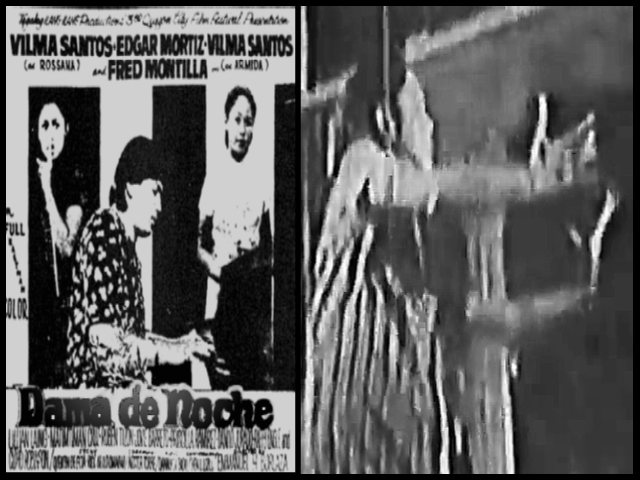
FILM REVIEW: DAMA DE NOCHE


The Plot: A dual role – demented lead. She plays the role of twin sisters, one of whom is a lunatic.

The Reviews: “…Dama de Noche is showing in three theaters– Remar, Delta and Sampaguita. It is, Vilma was quoted as saying, her dream role fulfilled. The very professional Vilma has come out with the resolution than henceforth she will demand to see the script and also see that the script is demanding— or she’ll say nix. Well, Dama de Noche is exactly just that: demanding. In it she delineates the twin-sister roles of sweet Armida and deranged Rosanna. Vilma sobs and screams, giggles, and crazy-dances, claws and clowns, sobs again and screams some more. But she does more than all these things. She acts. In the Filipino movieworld where crying is synonymous with acting, that certainly is being ahead of one’s kind. Vilma as Armida is drab and dry, almost a movie prop. It is in the portrayal of Rosanna that Vilma would tear one’s heart away. The many close-ups so effectively used throughout the movie show the unglamorous Vilma: her frowns, her lip-twitching, her uninhibited and stifled sobs. But Vilma is less successful with the shifty look that is the distinctive trait of the deranged. She compensates for this in the ‘betrayal’ scene when Rosanna suspects that Leo, Armida and the psychiatrist (Fred Montilla) all conspired to imprison her in the hospital. Another outstanding feat is the subdued scene where Rosanna learns that Leo has gone to the Lerma villa to meet Armida. The vivacious Rosanna is just as winsomely pathetic. Watching her is just like seeing a bosom friend trying to pretend she’s happy when both of you know she’s not only in this case, Rosanna is truly happy. Her non-knowledge of her plight is what is particularly heart-curling. Dama de Noche is Tagalog Ilang-Ilang Production’s entry in the QC filmfest which started on Oct.15. It is a very simple story, almost run-of-the-mill, but Nestor Torre, Jr. who wrote the screenplay saved it with his meaningful and amusing lines. However, the movie is occasionally dragging with the Filipino moviemania for spoonfed sequences. Will the memorable Rosanna win for Vilma the most coveted award tonight? Or will Nora the Superstar make it? The die is cast and tonight is the NIGHT. New Frontier Cinema in Cubao was never before so loaded that the fire exits had to be opened to let in air. It was so badly jampacked, one swore it couldn’t be worse. But it was, a ‘stand-mate’ (there were no seats) quipped, ‘Noong first day, mas grabe.’ And so through a snail-pacing 20-yard pila and after exactly one hour, one got inside the theater, at last!…” – The Times Journal (READ MORE)

“…A very young Vilma Santos plays twins—a goody-two shoes and a manic meanie. They fall for the same guy—if I’m not mistaken, a slim Edgar Mortiz. The good twin sings pretty songs, looks morose most of the time, and is often helpless; the bad twin is active, take-charge, and flashes her eyes at the camera a lot. In the end she burns the house down; unfortunately she traps herself in it. Good Vi and Bot escape, and watch the house go down in flames while holding on to each other beside a dama de noche shrub (or at least I assume it’s one). And yes, there is a theme song that goes, “Daaaama de noche… daaaaaaaaamaaaaa de nocheeeeee…” – Joel McVie (READ MORE)

“…We wrote quite a number of scripts for Vilma, including the screenplay for “Dama de Noche,” which turned out to be the first film that gave her an acting award. “This was a big deal for Vi because she was very frustrated at the time due to the fact that she was always losing to Nora in acting derbies in the ’70s. Thus, when she won her Famas trophy, she felt vindicated. It was when “Dama de Noche” was being shot that we had an instructive experience with Vilma. She played a mentally disturbed girl in the story, and there was one scene in which she was supposed to dance her way through a forest. Somebody had interpreted this to mean that the dance would be choreographed number, so a ballet-like dance costume had been made for Vilma! When we got to the movie set that day, Vilma showed us her dance costume, and we were shocked. We explained that the “dance” was supposed to be spontaneous, thus unchoreographed and uncostumed! After our explanation, Vilma returned the costume to the production people, and simply “danced” the scene at her mentally challenged character would, spontaneously. This experience told us that, despite her young age then, Vilma was determined to do her job well, and once she understood how a scene should be done she would insist on doing it the right way, no matter if she ruffled the feelings of some people in the production…” – Nestor U. Torre, Philippine Daily Inquirer, June 6, 2003 (READ MORE)

FAMAS HALL OF FAME – BEST ACTRESS

This slideshow requires JavaScript.

“…From 1972 to 1988 Vilma Santos were nominated twelve times. Most critics considered this as a huge accomplishments, she won for 1988 (Ibulong Mo Sa Diyos), 1987 (Tagos ng Dugo), 1982 (Relasyon), 1981 (Pakawalan Mo Ako), 1972 (Dama de Noche), but some were worried that this is premature as they expected more breakthrough performances from her young career. Now, 37, Vilma is still honing her craft. The 38th FAMAS Awards held again at the Fiesta Pavilion of Manila Hotel on May 19, 1990 was not only memorable for Vilma Santos but also for her rival, Nora Aunor. Vilma relegated to hall of famer, disqualify her to compete with Nora. Not surprisingly, Nora won her fifth best actress, which also automatically qualifies her as next year’s hall of famer…” – RV (READ MORE)

The Award: The Filipino Academy of Movie Arts and Sciences bestows the Hall of Fame Award to individuals who have displayed mastery over their craft and artistry over their chosen fields in the Philippine motion picture industry. First given in the 24th FAMAS Awards (1975) in 1976 to actor Eddie Garcia, sound engineers Angel Avellana and Demetrio de Santos, director Gerardo de Leon, cinematographer Felipe Sacdalan and musical scorer Tony Maiquez for winning five or more FAMAS Awards in their respective categories, the Hall of Fame Award is a gold-plated FAMAS statuette with two semi-circles of laurel leaves anchored to each of her shoulders and her base. The cylindrical base, on the other hand, contains a gold leaf at the front, which contains the acronym “FAMAS” in big bold letters, the winner’s name, the category in which he or she has won the Hall of Fame Award and the year in which it was given. The original Hall of Fame statuette presented in 1976 was almost identical to the present one, except that the laurel leaves only arched up until the FAMAS lady’s hips. In the 1980s, the redesigned Hall of Fame Award contained the FAMAS lady standing atop a trapezoidal pedestal with two semi-circles of laurel leaves anchored to each of her shoulders and base. The trapezoidal base bore a gold scroll where FAMAS’ name, the name of the winner, the year of bestowing and the category in which it was won was written.

The bestowing of a Hall of Fame Award is determined by the number of FAMAS awards won by a certain individual in a category. To win a Hall of Fame Award, one must have won five FAMAS Awards for a certain competitive category. The Hall of Fame Award is given to an individual on the next awards ceremony following his/her fifth FAMAS Award on a certain category. A Hall of Fame Award signifies the end of one’s chances of nomination for the same category and thus, the end of one’s chances of winning a FAMAS Award for the same category, with the exception of the Best Picture category, since the merits of a Best Picture nomination and win depends on the collaborative effort of many movie artisans rather than a single effort of an individual, which is awarded in the rest of the other categories. This explains why Premiere Productions, Producer Hall of Famer, still had FAMAS Best Picture nominations beyond 1977, its year of receiving the Hall of Fame. The following individuals (and production company) were bestowed a Hall of Fame Award. Each Hall of Fame inductee are grouped according to the category in which they won the award and the calendar year in which they have received their Hall of Fame Award. – FAMAS (READ MORE)

Dama de Noche (1972) “…It is, Vilma was quoted as saying, her dream role fulfilled. The very professional Vilma has come out with the resolution than henceforth she will demand to see the script and also see that the script is demanding— or she’ll say nix. Well, Dama de Noche is exactly just that: demanding. In it she delineates the twin-sister roles of sweet Armida and deranged Rosanna. Vilma sobs and screams, giggles, and crazy-dances, claws and clowns, sobs again and screams some more. But she does more than all these things. She acts. In the Filipino movieworld where crying is synonymous with acting, that certainly is being ahead of one’s kind. Vilma as Armida is drab and dry, almost a movie prop. It is in the portrayal of Rosanna that Vilma would tear one’s heart away. The many close-ups so effectively used throughout the movie show the unglamorous Vilma: her frowns, her lip-twitching, her uninhibited and stifled sobs. But Vilma is less successful with the shifty look that is the distinctive trait of the deranged. She compensates for this in the ‘betrayal’ scene when Rosanna suspects that Leo, Armida and the psychiatrist (Fred Montilla) all conspired to imprison her in the hospital. Another outstanding feat is the subdued scene where Rosanna learns that Leo has gone to the Lerma villa to meet Armida. The vivacious Rosanna is just as winsomely pathetic. Watching her is just like seeing a bosom friend trying to pretend she’s happy when both of you know she’s not only in this case, Rosanna is truly happy. Her non-knowledge of her plight is what is particularly heart-curling…” – The Times Journal (READ MORE)

Pakawalan Mo Ako (1981) “…Mula umpisa hanggang sa huli’y umiikot ang istorya sa karakter ni Vilma bilang si Ana, isang escort girl. Markado ang papel ni Vilma at makikita ito sa mga eksena sa kulungan at hukuman. Ang Pakawalan Mo Ako ay mula sa panulat ni Pete Lacaba at iskrinplay nina Pete Lacaba, Mao Gia Samonte at Isko Lopez. Kung ikukumpara sa mga ibang pelikula ni Elwood Perez mas pulido at makatotohanan ang mga eksena’t dialouge ng pelikula. Tulad ng konprontahin nga ma ni Bernard si Ana sinabi nito na: “Puta, Puta! Puta! Hindi lang naman kayo ang unang nagparatang sa akin ng ganyan! Puta! Puta! Putang Ina n’yong lahat…” At nang unang dalhin ni Bernard si Ana sa bahay nito at pagtangkaang gahasain, pumiglas si Ana at sabay kuha sa pera at sabay sabing: “kukunin ko ang bayad sa halik may sukli ka pa!” At siyempre ang eksena sa hukom kung saan paulit ulit niyang sinasabi ang salitang: “Sinungaling!…” Ang musika ni Lutgardo Labad ay minsan nakakaabala sa tunay na eksena ngunit angkop na angkop ang theme song ng pelikula, ang “Dati” na kinanta mismo ni Antony Castelo. Merong mahahabang linya si Christopher DeLeon sa bandang huli at nakuha naman niyang bigyan ng buhay ang papel niya bilang abogado ng taga-usig kahit na parang pilit ang pagpapalit niya ng panig para sa tagapagtanggol sa bandang huli, sa kanyang closing remarks. Alam niya marahil na talagang pelikula ito ni Ate Vi…” – RV (READ MORE)

Relasyon (1982) “…Like 1972 of the previous decade, 1982 turned out to be a repeat in terms of success for Vilma Santos. If critics took noticed in 1972, her performance in Dama De Noche, a decade after, the critics went gagah over her performance in ”Relasyon,” directed by Bernal. The film earned Vilma all the local best actress trophies from all award-giving bodies. Aside from this success, she will also be crowned as the box office queen of 1982 (the next year for her body of work this year) because of the financial success of her six films notably, “Sinasamba Kita” a film directed by Eddie Garcia and “Gaano Kadalas ang Minsan?’ directed by Danny Zialcita. Bernal on the other hand not only was credited for Vilma success for “Relasyon” he also received accolades for “Himala” a film by Nora Aunor, Vilma’s rival. Both “Himala” and “Relasyon” were considered two of Bernal’s signature films. In addition to this, he did two Marecel Soriano films, the comedy “Galawgaw” and the drama, “Hindi Kita Malimot” and finally another Cherrie Gil film, “Ito Ba Ang Ating Mga Anak…Bernal gave Vilma Santos her first grandslam best actress awards and consecutive Gawad Urian best actress (1982 and 1983). Their first film together was Inspiration (1972) and last was Pahiram Ng Isang Umaga (1989).” – RV (READ MORE)

Tagos ng Dugo (1987) “…So what could be all the fuss about Tagos’ value? “Production values” is the often-heard reason, needing elucidation. A breakthrough for Philippine psychological movies? Probably. Let me explore a few other angles on this seeming cross between Francois Truffaut’s The Bride Wore Black and Luis Buñuel’s Belle du Jour — I don’t know if screenwriter Jake Tordesillas or De los Reyes himself should be congratulated for the cohesion of multi-resultants in this work. Part of this multi-readings would be the movie as a feminist take on womankind’s monthly pains as a form of excuse for female monthly insanities, insanities our machos regard as regular terrorism on the whole of mankind (men or society as a whole). It is with that reading that the ending apologies, by Vilma Santos in the lead role, might be understood as a plea for understanding of how all of woman’s monthly Eve-behavior should not be seen as a Biblical sin but as an equal (to, say, men’s beastly) naturalness…Another feminist reading, more radical perhaps, would treat the film as a view of how Philippine society (the men in it, primarily) approaches provincial innocence, educational weakness, and “females’ weaker sanity” as stimuli for abuse. . . . There is, however, the possibly more general reading of the film as an apologia for insanity qua itself, how it should be treated as a disease instead of as a monster to be eliminated. And finally, there’s the possibility that the film is actually a depiction of how crazy the world outside the insane mind really is, albeit this view would probably be the least successful direction for the film….As a bonus, maybe we can also bring the movie to more latent, more philosophical territory, say, how it depicts the sanity of innocence. But, given the validity and possible weight of all those approaches, what finally makes this movie a jewel in Philippine cinema history is how it brings forth — every time you watch it — its case achievements in directorial and film editing dramaturgy (including the recurring stage-like choreography, Hitchcockish camera positionings, and acting pacing within). For the serious student of third-world filmmaking, here is a requisite Philippine movie from where to cull precious fragments. In these fragments, he/she is sure to find sparkles that are in themselves gems…” – Vicente-Ignacio S. de Veyra III (READ MORE)

Ibulong Mo Sa Diyos (1988) “…Vilma hit the jackpot. After 11 nominations with four wins, her twelfth nomniation produced her an unexpected win. It elevated her to the hall of fame status. All artist who wins five automatically put them to the hall of fame list. It is a big honour but prohibit any one on the list to compete in the future for the same category. Regal films’ Ibulong Mo Sa Diyos, directed by Elwood Perez was a surprised winner. Not only it earned Vilma her fifth award as best actress, it also gave the late Miguel Rodriguez a best supporting actor award and the best director for Perez. Technical awards were also given to Ricardo Jacinto, cinematography, Rey Maliuanag, production design, Gary Valenciano, theme song, and George Jarlego, editing. The late Nida Blanca was also nominated for best supporting actress…” – RV (READ MORE)

“…Elwood Perez and Vilma Santos colloborated in seven films. The first one was the trilogy that he co-directed with two other director, Borlaza and Gosiengfiao (these three are the most underrated and under appreciated directors in the Philippines), the remake of Mars Ravelo comic super hero, Darna in Lipad Darna Lipad. The film was a record-breaking hit Box-office Film. They follow this up with a more mature projects as Vilma started to switched her image from sweet to a mature versatile actress, pairing her with Christopher DeLeon in five films starting with Masarap Masakit Ang Umibig in 1977. The Perez-Santos-DeLeon team produced seven blockbuster hits that gave Vilma two FAMAS best actress awards that secured her elevation to FAMAS highest honour, the FAMAS Hall of Fame award. She won in 1979 for Pakawalan Mo Ako and 1988 for Ibulong Mo Sa Diyos…” – RV (READ MORE)

“…A series of unfortunate events seemed to hound Nora’s career up to this point. October 1, 1989 was to be the last airing date of the 22-year-old musical-variety show Superstar on RPN 9. A month later, it was revived on IBC 13 with a new title, The Legend … Superstar, but this was short-lived lasting only up to early 1990. Naging mas masuwerte si Vilma Santos sa hinu-host na Vilma! on GMA 7, which started in 1981 as VIP (Vilma in Person) ng lumang BBC 2 (naibalik sa Lopez owners ang ABS-CBN after the EDSA Revolution). Nagbida si Vilma sa isa sa mga pinakaimportanteng pelikula ng Dekada ‘80: Regal Films’ Pahiram Ng Isang Umaga (by Ishmael Bernal), na sinimulan in 1988 at ipinalabas in early 1989. In December 1989, Vilma headlined a period romance-drama (Viva Films’ Imortal, megged by Eddie Garcia) at nanalo sila ng kaparehang si Christopher de Leon ng acting plums sa MMFF. Sa awardings for that year, si Vilma ang nanalong Best Actress sa Star Awards (for Pahiram), her first form the Philippine Movie Press Club. ‘Kumpletung-kumpleto na ang career ko!” nasabi ni Vilma as she accepted her trophy. Later, it was Nora’s turn to get a Best Actress trophy for the first time from the Film Academy of the Philippines, for Elwood Perez’s three-year-in-the-making Bilangin Ang Bituin Sa Langit. ‘Kumpletung-kumpleto na ang career ko!” sabi rin niya in her acceptance speech. Na-elevate si Vilma sa FAMAS Hall of Fame, for having bagged five Best Actress statuettes: Dama de Noche, Pakawalan Mo Ako, Relasyon, Tagos ng Dugo, and Elwood Perez’s Ibulong Mo Sa Diyos. Nora won her fourth Best Actress plum sa FAMAS, also for Bilangin. Walang itulak-kabigin sa dalawa, kaya marapat lang na mag-tie sila for Best Actress, as in the 1990 Gawad Urian, na ‘pantay na parangal ”ang ipinagkaloob ng Manunuri kina Nora (for Bilangin Ang Bituin Sa Langit) at Vilma (for Pahiram Ng Isang Umaga)…” – William Reyes (READ MORE)

FILM REVIEW: IGINUHIT NG TADHANA


The Plot: Iginuhit ng Tadhana (Carved by Destiny) is a movie based on the life of Ferdinand Marcos prior to his ascendancy as President of the Philippines. The movie was chronological in setting, featuring Marcos as a young boy in his hometown, as a brilliant student, and up to the time that he was unjustly imprisoned as a suspect in the murder of the political rival of his father. The movie then moves up to his acquittal, his career as a young congressman and senator, and up to the time that he married Imelda Marcos. The movie was shown in Manila as additional campaign material for Marcos’ candidacy for the Presidential race, which he eventually won. The movie portrayed Marcos as a person who is more than just a politician. – Wikipilipinas

The Film: “…Marcos knew the power of the medium of film. Earlier on, Marcos produced a film biography using the most popular stars for his first presidential campaign. He ran against Macapagal who also came up with a film biography to boost his reelection bid. Marcos would also use another film Iginuhit ng Tadhana (Written by Destiny, 1965) to campaign for a second term. The two Marcos film bios would be the only successful political films—commercial and election wise—as other film biographies in the post-Marcos period by senatorial and presidential aspirants would prove dismal, unhelpful for election bids. The post-Marcos period liberalized the political and economic scene. It conventionalized and intensified the election of movie and sports stars, and even television news hosts to national politics. Television stations were sequestered by the government, the largest of which, however, was returned to its pre-martial law owners. ABS-CBN would become the leading television station until after 2000, allowing two of its news anchors to become senators…” – Rolando Tino (READ MORE)

“…In 1965, the Board of Censors suspended the movie exhibition of Iginuhit ng Tadhana (a movie biography of Presidential candidate Ferdinand Marcos). Many believed and suspected that Malacanang had a hand in the board’s decision and such action was a wrong political maneuver and ploy that proved disastrous to the reelection bid of incumbent President Diosadado Macapagal. It practically ensured the Presidential electoral victory of Marcos…The suspension of the showing of a movie on the life of Senate President Ferdinand E. Marcos stirred yesterday a political storm and precipitated the resignation of the chairman of the Board of Censors for Motion Pictures. Officials of the board said that the board voted to suspend the exhibition of the movie, “Iginuhit ng Tadhana” (Destined by Fate) because its producer failed to submit it for preview by the board en banc or by the entire board. The film had been approved for showing by a subcommittee of four headed by Mrs. Rosalina I. Castro last August 24. The board said it interpreted the refusal of the movie company, the 777 Film Productions, to comply with its order as defiance of the Board. The order of the board also suspends the showing of the movie in eight provinces and cities— Camarines Norte, Batangas, Marawi City, Pampanga, Cotabato, Aklan, Masbate, and Sulu. The film has been showing in theaters in these places since Aug. 24, the date of the approval of the picture by the subcommittee of four. In the wake of the suspension of the showing of the film, columnist Jose L. Guevarra, chairman of the board of censors, tendered his resignation. Guevarra did not state his reason for resigning in his letter to President Macapagal, but sources close to him said that the resolution of suspension, which was adopted in his absence, had something to do with it…” – Isagani Yambot, Sept. 3, 1965 (READ MORE)

“…Isa sa paborito ko ay ang Iginuhit ng Tadhana,” ayon pa kay Conrado, “because that film helped President Marcos win the elections in 1965. If you remember, that film was banned by the Macapagal administration and the people naturally became curious. The movie was a big hit.” Iginuhit ng Tadhana was divided into three parts: Marcos as student, Marcos after school and Marcos in his early years in politics. Conrado directed the portion with the President as a young man, during the Nalundasan case, a crucial part in the President’s life. Before he began shooting, according to Conrado, he made his own research and first visited Batac where they shot an important scene…” – Conrado CondeJingle Extra Hot Movie Entertainment Magazine, April 27 1981 (READ MORE)

“This rarely seen, authorized biography of former President Ferdinand Marcos stars Luis Gonzalez, Gloria Romero, Vilma Santos, and Ferdinand “Bongbong” Marcos Jr. as himself. (The film starts with a flash of lighting as he is born on 9/11 in 1917.) ” – Vincent Nebrida (READ MORE)

“…In the 1960’s, Gloria Romero portrayed Imelda Marcos in “Iginuhit ng Tadhana” and “Pinagbuklod ng Langit.” In the 1970’s she starred in two memorable movies: Behn Cervantes’s vanished movie, “Sakada” (1976), and earlier, 1973’s “Lipad, Darna, Lipad,” the biggest movie of its time in which she played a “manananggal” to Vilma Santos’s super heroine. Up to now, she considers the last as one of her most unforgettable…” – Lito Zulueta (READ MORE)

“…And what many people probably didn’t know is that Bongbong played himself in Iginuhit ng Tadhana, produced by Sampaguita Pictures as a campaign pitch for Ferdinand when he first run for president in 1965, with Gloria Romero as Imelda, Luis Gonzales as Ferdinand, (now reelectionist Batangas Gov.) Vilma Santos as Imee and Gina Alajar as Irene (now Mrs. Greggy Araneta). A few years later, a sequel, titled Pinagbuklod ng Langit, was produced also by Sampaguita, directed by Eddie Garcia, with Gloria, Luis, Vilma and Gina reprising their roles and Jose “Jonjie” Aranda (first husband of Bongbong’s fellow Nacionalista, reelectionist Sen. Loren Legarda; their marriage was annulled in 1986) playing Bongbong….” – Ricardo F. Lo (READ MORE)

“…In hid book, Don Jose & The Early Philippine Cinema, Joe Quirino credits jose Nepomuceno pioneer in producing movies that not only entertained but also informed. Wrote Quirino: “His screen adaptation of Noli Me Tangere, Jose Rizal’s novel exposing the social cancer that festered during the Spanish occupation of the Philippines, captured the sardonic and satirical contents of the imflammatory noel.” Satire was a popular device through which producer aired their views on social issues. In 1929, a satirical movie called Patria Amore caught the ire of the local Spanish community who went to court to stop its exhibition. A counterpart incident took place in 1965 when the Liberal Party tried to stop the showing of Iginuhit ng Tadhana, the propagandistic movie of the life of Ferdinand Marcos. The same motion picture propelled Marcos to the presidency. Movies of social significance often face this dillemma on their way to the big screen. Because of their strong public statement, they invite uproar from concerned sectors, an experience that became almost a daily ordeal for the late director, Lino Brocka. In recent years and until his death in 1991, Brocka had been the prime mover of Tagalog movies of social significance. Some of his works that easily fall under this category are, in no particular orderL Orapronobis (about vigilantes and rebels in the countryside), Bayan Ko (on labor unrest), Gumapang Ka sa Lusak and Hahamakin Lahat (on political corruption), Maynila: Sa Mga Kuko ng Liwanag (on moral degradation and exploitation)…” – Nestor Cuartero, Panorama, dated June 13, 1993 (READ MORE)

“…The First Manila Film Festival was held for the first time in 1966. Reserved solely for Hollywood and foreign movies, first-run downtown theaters like Ideal, Odeon, State, Ever, Galaxy, Capitol, Lyric, among others were opened for exhibition to locally-produced or Tagalog movies. The filmfest was the brainchild of then Manila Mayor Antonio Villegas. The 10-day festival which coincided on the city’s foundation day (June 24) was a huge success participated in by big names in the industry…A total of 18 movies (14 new, 4 reissues) were exhibited during the 10-day festival. Iginuhit ng Tadhana, Portrait of the Artist as Filipino and Daigdig ng mga Api, all released in 1965, and Zamboanga, shown a month earlier, were allowed to participate…” – VIdeo48 (READ MORE)

RELATED READING:

Kim Chiu in The Healing – July 25 2012

This slideshow requires JavaScript.

Gerald Anderson – “…Abala muna si Kim sa shooting ng horror film na The Healing, kung saan gumaganap siya bilang anak ng Star for All Seasons na si Vilma Santos. First time ni Kim na gumawa ng isang horror film kaya aminado siyang nahirapan. “Medyo mahirap lang kasi horror ‘tapos may mga effects-effects, kaya ayun, nakakapanibago,”sabi ni Kim nang makausap ng PEP.ph (Philippine Entertainment Portal) kahapon, March 11, pagkatapos ng ASAP 2012. Aminado si Kim na noong una ay medyo nahihiya siya sa mga eksena nila ni Ate Vi, pero ngayon ay wala na raw siyang ilang na nararamdaman dito. “Mabait naman kasi talaga siya, e,” pagtukoy niya sa Batangas governor. “‘Pag na-meet mo siya, close na kayo agad. Parang ganoon. Ganoon ang personality niya.” Si Chito Roño ang director ng The Healing. Kamusta namang katrabaho si Direk Chito? “Maayos naman siyang magdirek. Nakakatakot, pero at least, matututo ka,” sabi ni Kim…Kasi siyempre, two years na rin ang nakalipas. “Kaya ayun, kailangan na rin ng inspirasyon.” Ang ibig sabihin ni Kim dito ay dalawang taon na ang nakalipas mula nang mabalitang naghiwalay sila ni Gerald Anderson. Posible ba na si Xian na ang susunod niyang maging boyfriend? “Ay, ayoko namang sabihin kasi nakakahiya. Basta!…” – Rommel Placente (READ MORE)

Fuller and Gorgeous – “…Everyone gushes that pretty as she was, the new fuller Kim Chiu is now even more gorgeous. It all started with her role in the 2011 ABS-CBN television series My Binondo Girl where she likened her role to Disney’s Mulan. She had to appear stronger, fiercer. She was determined to gain weight and so she went to the gym. It was in the same show that the public warmed up on her team-up with Xian Lim, also a Star Magic talent. I invited myself to one of the photo shoots featuring the famous love team and they filled me in on how they keep fit. My daughter reminded me to tell Kim and Xian that I am one of the avid fans of their team-up. Endearing as they were on television, I walked out of the shoot liking them a lot more. Star Magic, now celebrating its 20th year in managing talents, has done a remarkable job not only in developing talents but also in nurturing great character. Kim was everything she was on TV – sweet, kind, friendly, charming, real, and funny. Her personal trainer Boyet Trinidad describes Kim as a model client. “She is very committed. She hits the gym thrice a week despite being extremely busy. She follows the exercise regimen without any complaint. She has gained pounds already, improved her cardio, strength, and has developed muscle endurance. She can now run 3k on the treadmill…” – Mylene Mendoza-Dayrit (READ MORE)

The Ultimate ‘It’ Girl – “…Kim looked exhausted from taping, but still agreed to do the photo shoot on a Sunday when she should have been resting. She arrived on time and smiled at everyone on the set, even to some fans. Kim showed energy posing for the camera, changing outfits, and sitting down for an interview…She considers having legions of fans, most of which are young girls, as a great blessing. Being famous, she is often allowed to cut into the front of the line or avail of a discount when she shops in stores. But in spite all these, Kim doesn’t see herself as a superstar. “I’m an actress,” as she prefers to be called…Kim confessed that when she has nothing else to do, she would splurge on shopping. She also revealed that when she chooses items, she doesn’t look at the price tag. Kim doesn’t have a stylist, so she relies on her own taste to come up with a look from head to toe. “I mix and match my own clothes. I like colorful dresses that are unique.” She admitted she feels uneasy if she doesn’t have lipstick in her purse. “Kahit maiwan na ang powder o ang concealer, basta huwag lang ang lipstick.”…Kim is constantly on her cellphone and the Internet to keep in touch with family and friends. “I ask them (older brothers) what they are having for dinner and what are they doing. For my friends, I invite them to join me at tapings to keep me company…” – Napoleon Quintos (READ MORE)

The Role – “…While filming the movie, there were moments wherein she felt intimidated by Vilma’s stature as an actress, which made it a bit difficult for her to deliver certain scenes. But Kim was grateful to Vilma because the latter encouraged her to stay focused in her role. “Sabi niya gawin mo dapat mong gawin sa isang eksena. Huwag mong sasayangin. Paulit-ulit niyang sinasabi na sayang yung eksena.” Vilma was equally very taken with Kim ever since they did a sample of a confrontation scene for Vilma: A Woman For All Seasons (a five-part TV special in 2009). In the meantime, Kim is gearing up for her newest soap Ina, Kapatid, Anak which also top-bills Maja Salvador, Xian Lim, and Enchong Dee. Aside from her easy camaraderie with fellow young stars, she is also excited to play Cherry Pie Picache’s daughter in the story. “It’s different dynamic. First time namin magkatrabaho ni Ms. Pie na mag-ina kami. Madaming beses na kaming nagkasama sa teleserye pero hindi siya yung kakampi ko. Yun ang isa sa mga dapat abangan ng viewers dito…” – Rachelle Siazon (READ MORE)

Kim Chiu (born Kimberly Sue Yap Chiu on April 19, 1990 in Tacloban/Chinese name: Zhang Jinzhu, Chinese characters, is a Filipino-Chinese actress. She lived in Cebu City before she went to Manila for Pinoy Big Brother. Chiu was the first winner of Pinoy Big Brother: Teen Edition and is currently part of ABS-CBN’s Star Magic contract artists. She is also a recording artist, having launched her only album entitled ‘Gwa Ai Di.’…Chiu is slated to do a horror film with Vilma Santos titled, The Healing and a reunion movie project with perrenial leading man, Anderson tentatively titled, For The Sake Of Love. Chiu will also be starring in a new upcoming drama entitled, Ina, Kapatid, Anak with Xian Lim, Maja Salvador and Enchong Dee and set to do a romantic-comedy movie with Xian Lim. – Wikipedia (READ MORE)

Kim Chiu and Vilma Santos

The Healing (2012) – “…Stories about the Filipino tradition of going to faith healers for guidance and treatment of ailments have not yet been tackled in-depth in movies. And in our film, the viewers will not just be horrified, they’ll somehow be challenged to think as to how faith healing has already been part of our culture…” – ABS-CBN News (READ MORE)

Related Reading:

Martin del Rosario in The Healing – July 25 2012

This slideshow requires JavaScript.

Challenging Roles – “…It’s “those eyes” that became Martin’s asset in fleshing out his roles that are more daring than those young stars like him would take the risk of doing, such as a teener raped by his own father, an autistic, a drug addict, a teenager who takes his father’s mistress as his lover to save their family and a gay sampaguita vendor, all in Charo Santos Concio’s long-running, top-rating 20-year-old ABS-CBN drama anthology Maalaala Mo Kaya (MMK). Martin was nominated for that gay role. Then, he won Best Supporting Actor for the indie Dagim, directed by Joaquin Valdez for Cinema One, not just once but twice, first in the Star Awards for Movies of the Philippines Movie Press Club (PMPC) and then from the Golden Screen Awards given by Enpress (Entertainment Press, the movie reporters’ breakaway group). In Dagim, Martin plays one of two brothers looking for their missing father until they end up with a tribe that turns out to be cannibals. “I love doing challenging roles, ‘yung mga off-beat,” said Martin whose father Robert del Rosario, and late uncle, Joey del Rosario, briefly did supporting roles (in Waywaya and Bagets) during their high school days at Aquinas in San Juan City. Martin has other showbiz relatives: Connie Sison is his aunt (Martin’s father’s youngest sister) and his mom, Maria Teresa Mangay, is the younger sister of Ces Quesada. After winding up work in the just-concluded ABS-CBN soap Minsan Lang Kita Iibigin (where he played Coco Martin’s rival for Andi Eigenmann), Martin is now cast in the reteam-up yet untitled movie (for Star Cinema) of Sarah Geronimo and Gerald. A Sagittarian (born Nov. 25, 1992), Martin stands 5’7.5”; weighs 130 lbs.; and wears small-size shirt, medium-size briefs and size-9.5 shoes….” – Ricardo F. Lo (READ MORE)

First Award – “…Sa ginanap na press conference kahapon, Abril 5, para sa endorsement niyang BNY Jeans, lubos pa rin ang pasasalamat ng 18-year-old actor sa natamong pagkilala sa kanyang kakayahan sa pag-arte. “Tuwang-tuwa ako kasi first time ko ‘yon na-receive. Unang acting award sa buhay ko ‘yon!” nakangiting sambit ni Martin…Pero parang nawala lahat ng hirap noong nalaman ko na nanalo ako ng Best Breakthrough Performance as an Actor. “Parang nakaka-inspire na ipagpatuloy, pagbutihan pa ‘yong mga ginagawa kong project.” Sa halip na kabahan sa mga susunod pang trabaho dahil sa nakuhang award, mas nagiging inspirasyon pa raw ito upang paghusayin pa ang kanyang kakayahan bilang aktor. Para kay Martin, “Siguro hindi ito pressure, but more on to inspire. As of now, medyo fresh pa ‘yong award na ‘yon, puro congratulations pa lang ang natatanggap ko. “Wala pang ‘dapat i-maintain,’ wala pang gano’n sa utak ko. Pero more than pressure, it’s an inspiration talaga…Aminado ang binatang artista na mahirap pagsabayin ang pag-aaral at trabaho. Gayunman, ginagawan niya ito ng paraan upang maiwasan ang sobrang pagod na dulot nito. Kuwento pa niya, “Kahit na pagod na pagod, wala akong magagawa. “Sina Mama pa, kunwari kahit makita na nilang hinang-hina ako, ‘Pasok ka sa school.”…Hangga’t maari, iniiwasan ni Martin na huminto muna sa pag-aaral upang maibigay ang kanyang buong atensiyon sa pag-arte. Aniya, “Basta ayaw ko totally na mawala ‘yong school. “Kasi, sabi ng ibang artista, nakakabobo raw kapag hindi ka na bumalik, tatamarin ka. “So, ako, kahit eight years pa akong nasa UP, basta masasabi kong nag-aaral ako…” – Nerisa Almo (READ MORE)

Dramatic Actor – “…Martin recalled his enthusiasm when he learned that he was working with his idol, Coco Martin. “Kasi before [our teleserye] nakita ko [na umarte] si Coco, ang galing na aktor talaga,” beamed Martin. “Grabe ang galing-galing niya.” Tinuturuan din nga niya ako eh. Kunwari sa scene sinasabi niya sa akin, ‘Huwag mag-monotone ‘pag character.’ ‘No, hindi mo character ‘yan dapat ganito ka.’” The 18-year-old actor continued that one more thing he admires about the versatile actor is his humility despite his stellar status. While he is flattered to be called the next Coco Martin, Martin pointed out that he prefers to carve out his own niche in showbiz. “Ayoko namang maging Coco Martin talaga. Siyempre gusto ko rin bago, although gusto ko rin makilala as a dramatic actor. Pero siyempre ayoko naman ‘yung parehong pareho, baka isipin, ay parang si Coco lang.” Martin has already bagged two awards for his portrayal in the indie film Dagim, the Breakthrough Performance by an Actor trophy from the Golden Screen Awards and New Movie Actor of the Year award from the PMPC Star Awards for Movies. Martin has yet to be paired with a leading lady and the closest he has gotten to that was when he played the third wheel in the Coco Martin-Andi Eigenmann love team in Minsan Lang Kita Iibigan. However, the young actor said he prefers to be teamed up with different leading ladies. He explained that apart from getting the chance to work with different actresses, this will also enhance his versatility as an actor. Given the chance, he would like to be teamed up with friends Jessy Mendiola and Julia Montes, whom Martin described as both pretty and good actresses…” – Bernie Franco (READ MORE)

Most Beautiful – “…Kabilang si Martin sa pinarangalan sa nakaraang 100 Most Beautiful Stars ng YES! magazine para sa Filmfest Stars category, along with Paulo Avelino, Rocco Nacino, and Edgar Allan Guzman. Aniya, “Second time ko na ito, last year nasama din ako. “Actually nakakatuwa, nakaka-flatter kasi iba ang category ko ngayon. “Kung before heartthrob, ngayon Filmfest Stars category. “I’m overwhelmed. Sobrang nakakatuwa kasi pinili pa rin nila ako. Nakaka-inspire lang…” – Melba Llanera (READ MORE)

Martin del Rosario (born November 25, 1992) is a Filipino actor. Martin del Rosario met Jun Reyes, his manager, on his way to Lourdes School of Quezon City, his highschool alma mater -in the summer of 2007. Reyes, who was in the area at that time to buy lechon for Gerald Anderson’s birthday, came to him and asked if he wanted to be an actor. He replied ‘No’ but Reyes left him a calling card and asked for his phone number. He gave Jun Reyes his mom’s phone number. He then went to ABS-CBN for acting workshops. After this, he was launched as one of the new talents launched of Star Magic on its 15th anniversary last May 2007. – Wikipedia (READ MORE)

Martin del Rosario and Vilma Santos

“…Tinanong namin ang aktor kung anong preparasyon ang ginawa niya para sa series. “Siguro studying the script, tapos magpapayat, magmukhang bata. Nag-gym ako, new hairstyle, pampa-bata.” Since may pagka-sexy nga ang tema ng “Pintada,” nangangahulugan kaya ito na handa na rin rumampa si Martin sa Cosmpolitan Bachelor Bash? “Okay naman sa akin kung rampa lang. Di pa ako nakaka-rampa, sa akin wala namang problema. Open ako to that,” aniya…Tinatapos ni Martin ang pelikulang The Healing ng Star Cinema kung saan makakasama niya sila Kim Chiu at Governor Vilma Santos. Nagbigay siya ng update sa pelikula. “Tapos na. Malapit na siyang ipalabas. Siyempre nakakatuwa kasi matagal-tagal naming shinoot yun. Since last year pa, magkakasamana kami. “Two weeks ago, natapos na kami. It’s a horror movie na talagang nakakatakot. “Halos lahat ng eksena ko kasama ko si Ate Vi. Sobrang bait niya. Tinuturuan niya ako sa bawat eksena,” ang sabi ni Martin. “Madalas ko ring kasama si Kim Chiu sa mga scenes. Masaya. Naging close na rin kami. Nakilala namin ang isa’t-isa kasi kapatid ko siya [sa pelikula]…” – Melba R. Llanera (READ MORE)

“…Pero ang mas ipinagmamalaki nga ni Martin ngayon ay ang pagkakataong ibinigay sa kanya ng Star Cinema para makatrabaho sa isang pelikula ang Star for All Seasons at Batangas Governor na si Vilma Santos-Recto. The Healing ang working title ng horror movie nila kung saan kasama rin sa cast si Kim Chiu. Anak ni Vilma ang papel na ginagampanan ni Martin. Nakapag-first shooting day na raw sila at kaeksena niya kaagad si Ate Vi. Ano naman ang pakiramdam na makatrabaho ang Star for All Seasons? “Natakot po ako nung una kasi kaeksena ko agad si Ms. Vilma. “Tapos may eksena po kami na hihilahin ko siya. Horror po kasi yung ginagawa namin e.” Ipinagmamalaki ba niya na kasama niya si Ate Vi sa pelikula? “Very proud kasi bihira namang makatrabaho ng mga artista si Ms. Vilma. “Ang alam ko po kasi matagal na rin siyang hindi gumagawa ng movie. Ngayon na lang po siya yata gumawa ulit. “Tapos kasama pa ako. Bumilib po talaga ako sa kanya. Magaling po siyang umarte.” Nakakausap ba niya si Ate Vi sa set? “Opo, napakabait po niya. Ang dami rin po naming pinagkukuwentuhan e…”Nagbibigay din po siya ng advice sa acting. One time nga nag-sorry ako sa kanya kasi hahatakin ko siya sa hagdan. “Sabi niya, ‘Hindi, okay lang. Dapat nga ganyan e…” – Glen P. Sibonga (READ MORE)

The Healing (2012) – “…Stories about the Filipino tradition of going to faith healers for guidance and treatment of ailments have not yet been tackled in-depth in movies. And in our film, the viewers will not just be horrified, they’ll somehow be challenged to think as to how faith healing has already been part of our culture…” – ABS-CBN News (READ MORE)

Related Reading:

Janice de Belen in The Healing – July 25 2012

This slideshow requires JavaScript.

Rebuilding Relationship – “…There was never really an issue” between the two of them, Janice maintained, even when Charlene married Aga in 2001. “Siguro nagkakaron lang ng issue whenever it’s being talked about that way kahit wala naman talaga. “Seriously, it was okay. Ako kasi, ‘pag tapos na, ‘di ba, move on na… ‘Pag may kinasal, wala nang drama. Kasi ‘yun na, ‘pag naghiwalay kayo, naghiwalay na kayo. So dapat maisip mo na ‘yon na, ito na ‘yung mga posibleng mangyari. It’s really fine,” she said. The returning Kapamilya actress also encourages Luigi, who now has a family of his own, to “rebuild” his relationship both with Aga and Charlene. “I have no problems with that. I tell Luigi, ‘Go to your dad, go to your Tita Charlene. Always be there, because [it’s making up for] lost time. We’ve been together for a long time, I think it’s time you start rebuilding your relationship with your dad and with your Tita Charlene and with your brother (Andres) and sister (Atasha),’” she said…Aga and I have no problem. Whatever differences we may have had in the past, tapos na ‘yon. I guess we’re mature na rin. Diyos ko, matanda na kami eh. May mga apo na nga kaming dalawa, ‘di ba?” she said…” – Rowena Joy A. Sanchez (READ MORE)

Innate Sensitivity and Warmth – “…Interestingly enough, at this early stage, the most exceptional performance in “Budoy” is turned in, not by Anderson, but by Janice de Belen as his surrogate mother. The new drama series benefits greatly from having De Belen play her pivotal role, because the actress has the vast experience and innate sensitivity and warmth to make her scenes with Budoy moving and memorable. It’s instructive to note that De Belen played a TV waif for years (on “Flordeluna”), so she knows how those handkerchief teleseryes operate. But the quality and affective worth of her portrayal go beyond TV smarts-they’re more the result of her acute “emotional understanding” of her character’s own loneliness, thus her ability to feel for and with the “reject” she’s chosen to mother…” – Nestor U. Torre (READ MORE)

Floredeluna – “…Dahil sa TV soap opera na “Flordluna,” ang longest running at most popular TV soap opera sa buong Pilipinas sa kasalukuyan, nakilala si Janice ng masa. Hindi lamang siya nakilala kundi higit sa lahat, siya ay hinangaan at minahal. Si Janice bilng “Flordeluna” ay simbolo ng kabutihan sa makasalanang daigidig. Siya ay sagisag ng pag-asa hindi lamang sa mga kababaihan kundi higit sa lahat ay sa mga kabataan. Sa gitna ng cass materialism at kalupitan ng mga tao sa kanyang kapuwa, na siyang tema ng ibang mga soap operang paatuloy na nilalason ang isip ng masa at ng mga kabataaan, si “Flordeluna” ay isang mood. Isang pedestal na kumakatawan sa lahat ng bagay na mabuti at maganda. Ang sweet at immaculate image ni “Flordeluna” (bagama’t mayroon ding sumpong at kapintasan) na buong katapatang binibigyan ng buhay ni Janice sa loob ng halos tatlong taon ngayon ay isang hiyas. Isang brilyante sa lipunang pinapamayagpagan ng mga huwad. Ang kanyang pagiging matiisin at makatao ay siyang ikinikintal ng mga educators sa mga estudyante sa elementary at high school level. Ang kanyang mga positive values na winawasak ng ibang soap operas sa ngalang ng sensayonalismo at realismo (raw) upang sila’y panoorin ay kailangan-kailangan sa ating kasalukuang henerasyon. Si “Flordeluna” ay catalyst ng kabitihan, ng anumang bagay na mabuti at maganda. Ganyan si Janice…” – Fundador Soriano, Artista Magazine, September 17, 1981 (READ MORE)

Farmhouse – “…Hindi ba tatlong buwan pa lamang ang nakalilipas mula nang buong kadramahan niyang ipinahayag sa madla na she is quitting showbiz for good? Marami siyang pinahanga sa deklarasyon niyang iyon: na sawa na siya sa mga intriga, gusto naman niyang magbalik sa dati niyang buhay na normal, gusto niyang tumawa’t sumimangot kung kailan niya gustong tumawa’t sumimangot at hindi ‘yung lagi siyang nakangiti…sikat na sikat siya, she’s at the peak of her career, tapos, buong tatag ng loob na tatalikuran niya ang showbiz…Siguro ay pinili niyang maging isang mabuting anak at sundin ang payo na kanyang mga magulang (lalo na ng kanyang ama) na ipagpatuloy na lamang ang kanyang pag-aaral…Pero lahat ng mga iyan ay tubig na lamang na dumaan sa ilalim ng tulay sa ngayon. Paano’y biglang kumambiyo si Janice at nagbago ng kanyang pasiya. Tiyak na lahat ng mga humahanga sa kanya ay mata-turn off. At kahit itatwa pa niya, lalabas at lalabas na nanggi-gimmick lamang pala siya, na niloloko lamang niya tayo. Such a kid, mautak na pala sa ganitong klase ng panlilinlang! But ultimately, she might find out that the rug she pulled off was not from under our feet but hers. Ngayong nagdeklara na siyang babalik sa showbiz through a TV show in such a short time…”I want a farmhouse. This will cost so much so I’ll have to work hard to have money to buy it with. I will have a swimming pool in front, a stable of hourse in the back…” – Mario E. Bautista, Movie Flash Magazine, October 6, 1983 (READ MORE)

Her Karma – “…Janice started as a child newscaster in “Newswatch Junior Edition” and hit it big as a child star in “Flor de Luna”. At 18, she had son Luigi with Aga Muhlach. She later married John Estrada and they have four kids. It was not an easy ride for Janice as a mom. She admitted in “SIR” that Luigi got into drugs, sent into rehab and she was not in favor when he became a dad and got married at 22, but having his own family no doubt straightened out Luigi. We cannot blame him if he went astray as he comes from a dysfunctional family. He saw his mom having her own family and also his dad with his own family, and no matter what you say, he must’ve felt like an outsider hovering somewhere in between. Janice was honest enough to admit that her problems with Luigi must’ve been her karma for her own sins that made her parents cry when she got pregnant out of wedlock. “It was so hard for me as a parent na tanggaping hindi ko siya napalaki nang maayos. Kasi ‘pag single parent ka, ‘pag maayos ‘yung nangyayari sa anak mo, hindi mo naman nakukuha ‘yung credit nang solo eh. Pero ‘pag napariwara ‘yung anak mo, ikaw lang mag-isa ang may kasalanan niyan.” But somehow, it ended well for Luigi, who finished culinary arts and now has his own restaurant. He has given Janice two grandchildren so far….” – Mario Bautista (READ MORE)

Catherine Janice Yap de Belen or Janice de Belen is a Filipina actress, commercial model and television host who was a GMA Network contract artist. She returns back to ABS-CBN via Budoy. She is currently part of ABS-CBN contract actresses. She was born November 9, 1968 to Philip de Belen and the former Susan Yap. She has a younger sister Gelli who is also an actress. At the age of nine, she became a newscaster for the RPN 9’s Newswatch Junior Edition. She got her biggest break from the same channel when she got the lead role in the soap opera Flordeluna. Two years later, she entered the movies via her launch movie Mga Basang Sisiw. Janice is also credited as co-writer of Joey Albert’s smash hit It’s Over Now. – Wikipedia (READ MORE)

Janice de Belen and Vilma Santos

“…Ang nasabing pelikula ay ang The Healing, tungkol sa paniniwala ng ilan sa atin sa faith healers. Kuwento ni Janice, “It’s with Vilma Santos. Ang role ko rito ay friend of Vilma. Makakasama rin namin dito sina Kim Chiu, Pokwang, Mark Gil and Chris Villanueva, directed by Chito Roño.” Na-miss kaya niya ang paggawa ng mga ganitong klaseng pelikula? Tugon nito, “May mga indie ako, pero ‘yung mainstream film parang ngayon lang uli ako gagawa ng mainstream film.” Hindi naman daw ito ang unang pagkakataong makakasama niya ang Star for All Seasons, pero excited daw siya dahil si Ate Vi ang pangarap ng karamihan na makatrabaho kahit isang beses man lang sa kanilang mga career. Masayang sagot ni Janice, “I worked with her before ‘di ba? Dati may show siya ‘yung VIP, pagka mga holidays, meron silang parang nagda-drama sila, I worked with her there. “Iba ‘tong movie na ‘to saka many years after, sobrang many years after I think mga 20 years ago na ‘yun, so to work with Vilma now na parang napaka-exciting, ‘di ba? Oo, masabi ko man lang na nakatrabaho ko si Vilma Santos, si Ate Guy (Nora Aunor) nakatrabaho ko na siya. Gusto ko man lang once in my career masabi ko ‘yun…” – Arnel Serato (READ MORE)

The Healing (2012) – “…Stories about the Filipino tradition of going to faith healers for guidance and treatment of ailments have not yet been tackled in-depth in movies. And in our film, the viewers will not just be horrified, they’ll somehow be challenged to think as to how faith healing has already been part of our culture…” – ABS-CBN News (READ MORE)

Payaso (1986) – “…The 1986 Metro Manila Film Festival may have been the worst in the 12-year history of the annual 10-day festival of local films, but it set a precedent; it did not give out the traditional first and second best picture awards…Romy Vitug won the best cinematography award for Celso Ad Castillo’s Payaso and Chris Ad Castillo, the director’s son, ran away with the best supporting actor award…The unprecendented move, according to another juror, Nick Deocampo, was arrived at after a heated discussion. An insider said it was spearheaded by Deocampo and another juror, Justino Dormiendo of the Manunuri. In a prepared statement read by Cojuangco during ceremonies, the board of juror annouced: “We, the members of the Board of Jurors of the 1986 Metro Manila Film Festival, would like to express our concern over the current state of the Philippine movie industry as reflected in the entires to this year’s MMFF. It added that the entries “failed to reinforced and inculcate positive Filipino values by portraying negative stereotypes, imitating foreign films and perpetuating commercially-oriented movies…” – JC Nigado (READ MORE)

Related Reading:

Pokwang in The Healing – July 25 2012

This slideshow requires JavaScript.

Reincarnation of Aruray – “…In 1998 while she was working in Abu Dhabi, Pokwang received the sad news that her son died of a congenital brain ailment. “Of course, I felt guilty na wala man lang ako sa tabi ng anak ko nang kailangang-kailangan niya ako,” admitted Pokwang, the wacky comedienne (suspected to be the “reincarnation” of Aruray) who in real life is a serious mother. She changed moods from sadly reflective to hilariously comedic. “Shin was made in the Philippines, pero assembled by a Japanese. I met his father here before I went to Japan. Magulo ang relasyon namin. Away kami nang away, nagbabatuhan kami ng kung anu-ano, nagsasakitan kami talaga, that’s why the baby inside me was badly affected. Kawawa naman siya. When the baby was born, kami ng ama niya nagbabatuhan kami ng crib.” Ria Mae was also sired by a Japanese whom Pokwang met in Japan where she worked as a dancer. “I never lived with my children’s fathers,” Pokwang said. “Nabuntis lang nila ako.” Still haunted by the death of Shin, Pokwang is over-protective of Ria. In the four-storey house that she has built in Antipolo City, Ria has her own room but she’d rather sleep with her mom — “Malambing siya because I’m always out of the house working and we seldom see each other.”…” – Ricardo F. Lo (READ MORE)

Komiks Character – “…The name Pokwang (given to her by a friend who got it from a Universal Komiks character) must have proven a lucky charm to the woman who was born to make people laugh. “According to my mother, I was so malikot inside her stomach that when I was born, nahulog ako sa sahig.” Her victory as the Clown in a Million has radically changed the life of Pokwang and that of her family. They used to live in a humble hut several minutes walk (they couldn’t afford to ride the tricycle, you know) from the highway but near the Hinulugang Taktak. That has drastically undergone an overall improvement. Pokwang doesn’t have to walk the distance now nor ride the tricycle. She now goes around in an Adventure bought on installment basis. “That’s why I have a lot to be thankful for this Christmas,” she said. “And I’ll start by giving orphans a merry Christmas…” – Ricardo F. Lo (READ MORE)

Hard Work – “…“It’s Pokwang’s time to shine. Nora Aunor made an OFW film, ‘The Flor Contemplacion Story,’ in 1995. Vilma Santos did ‘Anak’ in 2000. Eleven years later, Pokwang comes up with this. We want to update the stories of OFWs. A lot has happened including the 9/11 bombing that brought major changes.” In spite of favorable reactions from viewers abroad, Pokwang says she’s still nervous to know how the local audience would react to the film. “I kept thinking, people know me as a comedienne, so how would they respond to seeing me doing drama? It helps that I’ve done five episodes of ‘Maalaala Mo Kaya.’ I learned a lot from the experience,” she says. “Even though I gave this project my all, I’m still feeling the pressure.” Pokwang claims she is not expecting an acting award for her performance. “Our focus right now is to let the people know that a film like this exists. We want to open the eyes of OFW parents about the repercussions of leaving their kids alone at home. We also want to teach kids of OFWs to give importance to their parents’ hard work…” – Marinel R. Cruz (READ MORE)

Aruray ni Dolphy – “…Aruray pala ang binansag ni Mang Dolphy kay Pokwang. Ito ay ikinuwento ni Pokwang sa preskon ng The Healing kung saan si Governor Vilma Santos ang bida. Aru kung tawagin ni Mang Dolphy si Pokwang. Sino nga ba si Aruray? Siya po ang komedyante noong araw na matagal na ring namayapa. Kahawig nga ni Pokwang si Aruray pero siyempre mas maganda si Pokwang, in all fairness. Bumunghalit ng tawa si Governor Vi nang marinig ang kuwento ni Pokwang na binansagan siyang Aru ni Mang Dolphy. Hindi naman makapag-react si Kim Chiu dahil hindi niya kilala si Aruray. Hindi pa yata siya ipinanganak nang mamatay si Aruray…” – Joe Barrameda (READ MORE)

Pokwang Marietta Subong (born August 27, 1970), better known by the mononym Pokwang is a Filipina comedienne, actress, TV host, singer, impersonator and salon co-owner. She started in a reality show in ABS-CBN and subsequently appeared in dramas and sitcoms of the network. She also received the Best Comedy Actress award from the Philippine Movie Press Club for her portrayal in the sitcom Aalog-Alog and the Best Female Comedian award from People’s Choice Awards. She became a host of the variety show Wowowee,”Pilipinas Win na Win” and “Happy Yipee Yehey”. She is also known for impersonating actress Annabelle Rama, Dionisia Pacquiao (Manny Pacquiao’s mother), and Marlene Aguilar, the sister of singer Freddie Aguilar. Pokwang is a member of ABS CBN’s Star Magic group of entertainers. She is currently residing in Antipolo. – Wikipedia (READ MORE)

Pokwang and Vilma Santos

“…Nakaka-amaze siyang ka-trabaho (Vilma Santos). Madami kang matututunan hindi lang bilang artista kung hindi bilang tao,” Pokwang said. “Natutunan ko sa kanya ‘yung talagang magandang pinaghihirapan mo ang lahat ng bagay. At kita naman sa na-achieve niya. Alam mo napakagaan niyang ka-trabaho, ang sarap sarap. Tapos ang hilig pang magpakain. Makuwento din siya,’ yung mga masasayang nangyari sa buhay,” she added. Asked if she feels intimidated working with Santos, Pokwang replied: “Noong una. Pero ipaparamdam niyang kumportable siya kapag ka-eksena mo siya…” – ABS-CBN (READ MORE)

The Healing (2012) – “…Stories about the Filipino tradition of going to faith healers for guidance and treatment of ailments have not yet been tackled in-depth in movies. And in our film, the viewers will not just be horrified, they’ll somehow be challenged to think as to how faith healing has already been part of our culture…” – ABS-CBN News (READ MORE)

D’Lucky Ones (2006) – “…Then there’s the silly subplot where the two friends, while trying to search for Lucky Girl, somehow fall in with a handsome young man, and both of them are fighting each other for his attention. It’s clear that he has no romantic interest in either one, who are both old enough to be his mother, but he’s hanging around as a friend. The two mothers go to a bar and join in a dance contest to impress the young man. They make their two children look incredibly mature by comparison. There’s one intense scene between Lucky Girl and her mother where Lucky Girl learns that her South Korean father abused her mother, and all the inlaws hated her because she was Filipino rather than Korean. Many times they would not allow her stay in the house with her daughter, but she begged for food on the streets. Watching Vilma Santos movies was her escape from this reality. This may also make Lucky Girl rethink her preference for living in South Korea over The Philippines (she’d been planning to return to the only country she knew as home. Heck, she only knew how to speak Tagalog from her mother forcing her to watch Vilma Santos movies.) The ending is obvious. Send the Vilma Santos fans to a Vilma Santos reunion party and get Ate Vi (Older Sister Vi) to patch up the two friends. And then everybody gets to dance. Hey, it’s The Philippines…” – That Awesome TV (READ MORE)

Related Reading: