Vilma Santos-Recto is a popular multi-awarded actress and politician in the Republic of the Philippines. *** She is known as "Queen of Philippine Movies," "Queenstar," "Grand Slam Queen," "Box Office Queen," and "Star for All Seasons." *** This website is mostly about her iconic film career.
Basic Information: Directed: Al Quinn; Story, screenplay: Maryo De Los Reyes; Cast: Vilma Santos, Christopher De Leon, Victor Laurel, Rio Locsin, Romeo Enriquez, Sandy Garcia, Freddie Aguilar, Sampaguita, Anak Bayan Band; Executive producer: Emilia Blass; Cinematography: Al Quinn, Joe Batac; Film Editing: Nonoy Santillan
Plot Description: Love Triangle (Christopher De Leon-Vilma Santos-Cocoy Laurel) and lots of dancing!
Film Achievement: One of 23 Film collaborations of Christopher and Vilma Santos.
Film Review: “…I was Vilma’s choreographer for her movies (Disco Fever, Good Morning Sunshine, etc.) and at the same time I was also choreographing for Nora on her show Superstar. When Vilma had her own TV show, she got me as choreographer but I stayed with her for only one month. The network bosses told me that I shouldn’t be handling two superstars at the same time. Nora was on Channel 9 and Vilma was on Channel 13. Because of loyalty, I chose to stay with Nora kasi mas nauna naman ako sa kanya. I was with her for four years na at that time. But first, I talked to Vilma who is a ninang of my son Miggy. I left Vilma with a heavy heart…(Asked if she was a Noranian, Geleen thought for a while and smiled), “Noon ‘yon!”…“It’s hard to tell. Nora is good in memorizing dance steps and Vilma is good in the execution.” Other stars Geleen choreographed for included Alma Moreno (for her TV show Loveli-NESS), Maricel Soriano (for Maricel Live! on Channel 13 and Maria, Maria on Channel 4)), Kuh Ledesma and Manilyn Reynes (Manilyn Live!). It was Maribeth Bichara who replaced Geleen as Vilma’s choreographer. Perhaps as an offshoot of their star-mistresses’ rivalry, Geleen (for Nora) and Maribeth (for Vilma) were also pitted against each other and the two dancers tried to ride on the wave of the faked rivalry between them when actually, claimed Geleen, “Maribeth and I were good friends…” – Geleen Eugenio (READ MORE)
“…I’d rather be known as Victor Laurel. But really, this Travolta is a sensation. I met him in Studio 54 and how the crowd loves him. He’s a wonderful actor, singer, and dancer.” Cocoy, too is a seasoned dancer even before the Travolta fever. He has a catlike grace that gives the impression of strenght and his dancing ability has helped tremendously in his career. “The Travolta dance is typical of hero worship even in San Francisco, Los Angeles and other big cities. Mondays, everyone who has caught the fever, even 30 year olds shop and prepare for the disco on Fridays and Saturday and stay up till the wee hours of the morning…We were about to ask another question about Vi, his leading lady in Lea’s Disco Fever but Ate Josie came in to remind Cocoy that the Sampaguita people were waiting with sketches of his costume for Dyesebel, the movie he was going to make for the Gilmore Studio. But didn’t. As a parting shot, Cocoy revealed that he’d soon put a disco. The Third Kind or something in Makati…” – Nena Z. Villanueva, Expressweek, November 16, 1978 (READ MORE)
Basic Information: Directed: Elwood Perez; Story: Orlando Nadres; Screenplay: Elwood Perez, Orlando Nadres; Cast: Vilma Santos, Christopher De Leon, Mat Ranillo III, Amado Cortez, Lilibeth Vera-Perez, Anita Linda, Ma-An Hontiveros, Lillian Laing, Sandy Garcia, Cloyd Robinson, Laila Dee; Executive producer: Marichu Vera Perez; Original Music: Lutgardo Labad; Cinematography: Gener Buenaseda; Film Editing: Jose Tarnate; Production Design: Bobby Bautista
Plot Description: A wealthy couple’s sacrificing adopted son, Alonso (Christopher de Leon) and wayward biological son, Alvaro (Mat Ranillo III) vie for the love of the same woman, Estella (Vilma Santos).
“…Elwood Perez and Vilma Santos colloborated in seven films. The first one was the trilogy that he co-directed with two other director, Borlaza and Gosiengfiao (these three are the most underrated and under appreciated directors in the Philippines), the remake of Mars Ravelo comic super hero, Darna in Lipad Darna Lipad. The film was a record-breaking hit Box-office Film. They follow this up with a more mature projects as Vilma started to switched her image from sweet to a mature versatile actress, pairing her with Christopher DeLeon in five films starting with Masarap Masakit Ang Umibig in 1977. The Perez-Santos-DeLeon team produced seven blockbuster hits that gave Vilma two FAMAS best actress awards that secured her elevation to FAMAS highest honour, the FAMAS Hall of Fame award. She won in 1979 for Pakawalan Mo Ako and 1988 for Ibulong Mo Sa Diyos…Total Number of Films with Vilma Santos: 7 (Ibulong Mo Sa Diyos 1988, Lipad Darna Lipad 1973, Magkaribal 1979, Masarap Masakit ang Umibig 1977, Nakawin Natin ang Bawat Sandali 1978, Pakawalan Mo Ako 1981, Pinay American Style 1979)…” – RV (READ MORE)
Film Reviews: “…Walang ipinagkaiba ang pelikula sa ibang mga sineng tinalakay ang mga suliranin ng pag-ibig at pamilya. Makikitang pinagtuunan ng pansin ni direktor Elwood Perez ang disenyo ng pelikula ngunit hindi naging epektibo ang paggamit nito upang maiusad ang kuwento. Kahit sa pagganap ng mga pangunahing tauhan, animo sila’y nasa entablado. Nanlilisik ang mga mata, walang katapusang pagsisigawan, pagtutulakan at pagbubugbugan. Sa pelikulang ito, unang ipinamalas ang senswalidad ni Vilma Santos. Maraming eksenang sekswal ang aktres at maaari talaga siyang makipagsabayan sa mga tulad nina Alma Moreno at Trixia Gomez. Karamihan ng mga sitwasyong ibinigay sa kanyang karakter ay hindi kapani-paniwala. Nariyang gawin siyang modelo, sa ilang piling tagpo ipinakita din ang pagiging estudyante ni Estella ngunit hindi naman tinahak ang mga ito sa kabuuan ng pelikula. Hindi rin maikakaila ang husay ni Christopher de Leon bilang aktor ngunit sa pelikulang ito ay nasayang lamang ang kanyang pagganap. Hindi nabigyan ng tamang direksyon ang aktor kung kaya’t lumabas na sabog ang kanyang karakterisasyon. Si Mat Ranillo III naman ay tila hindi na natutong umarte. Kadalasa’y pinaghuhubad siya ng direktor sa mga eksena upang mabigyang pansin. Masyadong mahaba ang pelikula dahil na rin siguro sa panghihinayang ni direk Elwood na masayang ang magagandang eksenang kanyang nakunan ngunit hindi naman nakaapekto ang mga ito sa takbo ng istorya. Kadalasa’y nakababad lamang ang kamera at nakatanghod sa susunod na gagawin ng mga artista. Hindi ito nakatulong upang mapabilis ang takbo ng pelikula, nakakainip panoorin ang ganitong mga eksena. Ang Masarap, Masakit Ang Umibig ay basurang nababalot sa kinang ng makintab na sinematograpiya, disenyo at musika na nagbabalatkayong masining na pelikula.” Jojo Devera, Sari-saring Sineng Pinoy (READ MORE)
“…Her metamorphosis began in late 1976 when she agreed to be kissed by Rudy Fernandez in Makahiya at Talahib. It was a “feeler” of sort and when the public clacked its tongue in obvious approval, Vilma shelved her lollipops-and-roses image and proved that she, too, could be a woman – a wise move indeed because at that time her career was on a downswing and her movies were not making money. Then she did Mga Rosas sa Putikan for her own VS Films where she played a country girl forced into prostitution in the big city. The movie did fairly well at the tills. Good sign. And came her romance with Romeo Vasquez, boosting both their stocks at the box office (thier two starrers, Nag-aapoy na Damdamin and Pulot-Gata where Vilma did her own wet style, were big moneymakers). The tandem, although it did help Vilma, actually helped Vasquez more in re-establishing himself at the box office (without Vilma, his movies with other leading ladies hardly create any ripple). In Susan Kelly, Edad 20, Vilma played a notorious-woman role that required her to wear skimpy bikini briefs in some scenes, following it up with two giant sizzlers (Dalawang Pugad, Isang Ibon and Masarap, Masakit ang Umibig) that catapulted her as the newest Bold Queen. Then came Burlesk Queen…” – Ricardo F. Lo, Expressweek Magazine January 19, 1978 (READ MORE)
“…Elwood Perez and Vilma Santos colloborated in seven films (Ibulong Mo Sa Diyos 1988, Lipad Darna Lipad 1973, Magkaribal 1979, Masarap Masakit ang Umibig 1977, Nakawin Natin ang Bawat Sandali 1978, Pakawalan Mo Ako 1981, Pinay American Style 1979). The first one was the trilogy that he co-directed with two other director, Borlaza and Gosiengfiao (these three are the most underrated and under appreciated directors in the Philippines), the remake of Mars Ravelo comic super hero, Darna in Lipad Darna Lipad. The film was a record-breaking hit Box-office Film. They follow this up with a more mature projects as Vilma started to switched her image from sweet to a mature versatile actress, pairing her with Christopher DeLeon in five films starting with Masarap Masakit Ang Umibig in 1977. The Perez-Santos-DeLeon team produced seven blockbuster hits that gave Vilma two FAMAS best actress awards that secured her elevation to FAMAS highest honour, the FAMAS Hall of Fame award. She won in 1979 for Pakawalan Mo Ako and 1988 for Ibulong Mo Sa Diyos…” – RV (READ MORE)
Basic Information: Directed: Leonardo L. Garcia; Story, screenplay: Bert R. Mendoza; Serialized in Wakasan Komiks Magazine published by Nestor Leonidez; Cast: Romeo Vasquez, Vilma Santos, Suzanne Gonzalez, Rodolfo Boy Garcia, Tange, Ruel Vernal, Ricky Manalo Jr., Vanessa Lopez, Tita De Villa, Richard Santiago, Paraluman, Palito; Original Music: Restie Umali; Cinematography: Ricardo Herrera
Plot Description: An intrigued filled love affair between Baby Abueva a poor lass of Baguio and Teddy Burgos a millionaire from Zamboanga. An affair married with the appearance of Lota. – Kabayan Central (READ MORE)
Film Achievement: No Available Data
Film Review: “…And came her romance with Romeo Vasquez, boosting both their stocks at the box office (their two starrers, Nagaapoy Na Damdamin and Pulot-Gata where Vilma did her own wet style, were big moneymakers). The tandem, although it did help Vilma, actually helped Vasquez more in reestablishing himself at the box office (without Vilma, his movies with other leading ladies hardly create any ripple). In Susan Kelly, Edad 20, Vilma played a notorious-woman role that required her to wear skimpy bikini briefs in some scenes, following it up with two giant sizzlers (Dalawang Pugad Isang Ibon and Madakit Masarap Ang Umibig) that catapulted her as the newest Bold Queen…” – Ricardo F. Lo, Expressweek, Jan 19 1978 (READ MORE)
“…Pulot-Gata was one of the several hit films of Romeo Vasquez and Vilma Santos. And one of the forgettable ones. It exploits their real and reel life relationships. Despite the film’s poor material, you can see their screen chemistry in several light comedic scenes. Ruel Vernal’s fight scene with Vasques can be shortened or edited out. Ditto with Susane Gonzales scenes in the hotel room, attempting to seduce back her ex-fiance. In addition to some comedic scenes that can be edited, Vilma’s dramatic scene near end, can also be shortened. A more watchable film of Vi and Romeo were “Dalawang Pugad Isang Ibon” and “Nag-aapoy na Damdamin.” After watching “Pulot-Gata, Puede Kaya?” (literally means, “Sweet-Coconut, Can it be?” which can be assumed about the May-December affair of Santos and Vasquez), one can clearly say, “YES” to the real relationship of Vi and Romeo but NO to this films…” – RV (READ MORE)
Basic Information: Direction, Screenplay and Original Story: Ishmael Bernal; Cast: Romeo Vasquez, Vilma Santos, Mat Ranillo III, Ana Gonzales, Anita Linda, Fred Montilla, Mary Walter, Laila Dee, Roldan Rodrigo, Ann Villegas, Ernie Zarate, Catherine Santos, Val Mallari, Oscar Miranda, Ursula Carlos, Rene Magno, SOS Daredevils, Danie Ramirez, Danny Franco and Rheez Chua’s Models; Art Director: Bobby Bautista; Assistant Art Directors: Emiliano Gonzales, Virgilio Sanchez, and Bert Isleta; Electricians and Gripmen: Corpuz, Romeo Dueñas, Narsiso David, Mariano Guzman, Irinio Flores; Unit Driver: Jose Maigapo; Color Processed: LVN Laboratory; Director of Cinematography: Nonong Rasca; Assistant Cameraman: Felizardo Anastacio; Sound: Luis Reyes; Field Soundman: Jose Fortuno; Boomman: Alberto Dueñas; SFX Technician: Jun Martinez; Film Editor: Nonoy Santillian; Senior Editor: Ruben Pantua; Assistant Editors: Rico Salas, Ariel Quicho, Jun Calaguan; Music: The Vanishing Tribe; Theme Songs: “Puso’y Alinlangan” performed by Vilma Santos, “Torn Between Two Lovers” performed by Gracie Rivera, Dyna Records; Guest Choroeographer: Peter Estocado; Make-up Artists: Dading Ravela and Virgie F. Capulong; Legman: Rodolfo Basco; Publicities: Teresa Santos Blas, Beth Castillo; Stills: Ben Nollora and Lito Morales; Layout Artist: Hannibal Cambel; Title Designer: Marvin B. Panganiban; Production Manager and Assistant Director: Dante Javier; Production Staff: Nelson Sia, Ruben Fernandez, Gloria B. Agustin; Administrative and Sales: Jon Santos Blas, Estrella T. Mendoza, Lea Santos, Fidelio Santos, Julie S. Enriquez; Executive Production: T. Buhain Santos; Executive Producer: Emilia Santos Blas; Produced by Lea Production; 15th Years Anniversary Production; Film Poster Archived: Video48
Plot Description: Dalawang Pugad, Isang Ibon is a 1977 drama film directed by Ishmael Bernal. The film analyzes adultery in a mature way and presents reasons why many modern marriages in bourgeois families slowly dissipate into alienation and lead to adultery. The movie’s main plot involves a fashion model (Vilma Santos) who is torn between two men: her young boyfriend, who is a self-centered, airheaded fashion model (Mat Ranillo III), and an older married man (Romeo Vasquez), who is estranged from his domineering wife (Anna Gonzales). – Wikipilipinas
Film Achievement: 1977 Gawad Urian: Best Director – Ishmael Bernal; Best Editing Nomination – Nonoy Santillan; Best Picture Nomination; Best Production Design Nomination – Bobby Bautista; Best Screenplay Nomination – Ishmael Bernal; Best Sound Nomination – Luis Reyes; Best Supporting Actor Nomination – Mat Ranillo III
Film Review: “…Bernal, testing the tensions of triangular love (for geometry books, one of his characters wittily says) for some time now, plunges deeper into character analysis and metaphorizing… In Lumayo, Lumapit ang Umaga, the triangle was unevenly explored: the first love was sketchily drawn. Dalawang Pugad, Isang become a choice for a more stable relationship. Walang Katapusang Tag-araw was a strange reverse of characters for two women and an unusual development of love into hatred and hatred into love, where therefore the triangle was essentially illusions. Ikaw ay Akin finally sets an interlocked triangle on its bases and looks at it (from all 3 angles) squarely in the face…” – Petronila CletoPelikula, Atbp (READ MORE)
“…Her metamorphosis began in late 1976 when she agreed to be kissed by Rudy Fernandez in Makahiya at Talahib. It was a “feeler” of sort and when the public clacked its tongue in obvious approval, Vilma shelved her lollipops-and-roses image and proved that she, too, could be a woman – a wise move indeed because at that time her career was on a downswing and her movies were not making money. Then she did Mga Rosas sa Putikan for her own VS Films where she played a country girl forced into prostitution in the big city. The movie did fairly well at the tills. Good sign. And came her romance with Romeo Vasquez, boosting both their stocks at the box office (thier two starrers, Nag-aapoy na Damdamin and Pulot-Gata where Vilma did her own wet style, were big moneymakers). The tandem, although it did help Vilma, actually helped Vasquez more in re-establishing himself at the box office (without Vilma, his movies with other leading ladies hardly create any ripple). In Susan Kelly, Edad 20, Vilma played a notorious-woman role that required her to wear skimpy bikini briefs in some scenes, following it up with two giant sizzlers (Dalawang Pugad, Isang Ibon and Masarap, Masakit ang Umibig) that catapulted her as the newest Bold Queen. Then came Burlesk Queen…” – Ricardo F. Lo, Expressweek Magazine January 19, 1978 (READ MORE)
“Sometime in the mid 70s, matinee idol Romeo Vasquez returned to the movie scene after a long absence, his movie career in limbo after his failed marriage with popular actress Amalia Fuentes. His teamup with Vilma Santos somehow rekindled and revived his career. Their first movie together, Nag-aapoy na Damdamin in 1976 turned out to be a big hit. Despite their age gap, reel and real life sweetheart, Romeo, 34 and Vilma, 23, soon became the hottest love team, doing one hit movies after another…” – Video 48 (READ MORE)
“…Romeo Vasquez is an oddity in Vilma’s life. Hindi akalain ng lahat na ang isang notorious playboy and balikbayan actor would capture the heart of the then elusive Ate Vi. Nagkaroon sila ng affair which lasted for more than a year. Kilala si Bobby sa pagiging bohemyo kaya naman walang kakilala si Ate Vi na bumoto sa aktor. Ate Vi was love struck at talagang na head-over heels in love. Nagsimula ang kanilang affair sa set ng kanilang pelikulang “Nag-aapoy na Damdamin”. True to this title, nagliyab silang dalawa at tunay ngang nag-apoy ang kanilang damdamin. May plano pa nga sila ni Bobby na magpakasal sa Europe. Talagang Ate Vi was ready to give up her life as an actress and would settle with the actor abroad. And with herb relationship with Bobby, nag-surface ang bagong Vilma Santos.Ate Vi realized that she cann’t sacrifice everything for love. Nagising siya sa katotohanan at nagkamali kung kaya nagdesisyon siyang kumalas sa bohemyong aktor…” – Willie Fernandez (READ MORE)
“…But it was with handsome actor Romeo Vasquez that Vilma Santos had her most controversial relationship. Romeo was the former husband of Philippine movie queen Amalia Fuentes. He and Vilma first paired in the movie Nag-aapoy na Damdamin (1976). It was also during this year that they became a couple. They made several movies together, all of which did well at the box-office. Vi and Bobby (Romeo’s nickname) became the most-talked about reel and real love team at the time. The relationship was always on the pages of showbiz magazines and tabloid entertainment section pages because of the intrigues and the personalities who got involved with them…” – Rommel R. Llanes (READ MORE)
The first nine months fo 1977 saw the release of bad local movies that are unbelievable for their sheer contempt of the moviegoer and even more unbelievable for their increasing popularity. The few decent ones include Robert Arevalo’s Hubad na Bayani, Eddie Romero’s Sinong Kapiling, Sinong Kasiping, Manuel Cinco’s Hostage…Hanapin si Batuigas, Briccio Santos’ Manikang Papel and Luis Enriquez Malayo Man Malapit Din. These are films that respect their audiences and treat them not just paying patrons but also as thinking individuals. For the past two weeks, however, a film that say something and says it right have been packing moviehouses in competition with the James Bond movie, other “adults” local picture and the Dolphy-Nida comedy. This is a cheerful occassion for the local movie industry because rarely does a director hit two birds with one stone; that is Dalawang Pugad…Isang Ibon, a love-triangle drama that was a pre-sold on account of the publicity generated by the oprivate lives of its two principal stars. Its director and scriptwriter, Ishmael Bernal, however, deserves the greater part of the credit for the picture’s commercial and artistic success. For Beranal has done what was dismissed before as an impossibility – a good Vilma Santos-Romeo Vasquez movie. Dalawang Pugad is not just a good movie, it is a superior movie and the year’s best so far (and take this from one who earlieer wanted to avoid the movie like the plague). It has uniformly good performance by the cast, which includes Mat Ranillo III, Anita Linda, Fred Motnilla, Anna Gonzales, Laila Dee, Mary Walter, Ann Villegas, and the two lead, Vasquez and especially Vilma Santos who has done a surprisingly intelligent and affecting character portrayal.
Not since Romero’s Sinong Kapiling have we seen screen characters who think and behave and react to situations and problems like mature, sensitive and intelligent people. The characters do give way to occassional hysterical outbursts, but they somehow wake up to their senses before they forget themselves completely. And they are people in believable situations with real problems and genuine emotions. When they talk, they are seldom silly, and when they are silly, they are aware of it. But even when they’re silly or trite, they are never unsympathetic. Their conversations, in fact, are the most sophisticated heard in a local movie in a long time – shrewd, wry, loving, crisp and smart. You have to hand it to Bernal for making even a casual advertisement for motorcycle brand sound so much like an indispensable part of the dialogue. The story is simple enough, but the details can be so complicated. Twenty three year old Terry (Vilma) abandons her immature boyfriend and runs away with a married man against the vehement protestations of her parents. This is a common plot reworked to death in other movies. In another writer-director’s hans, the story would walk the tightrope between stale romantic melodrama and sensationalized New Morality expose, but Bernal invests it with such subtlety, sympathy, affection and full understanding, though inevitably with some slight cynicism, too, that he actually elevates the story into a search by intelligent people for meaning in human and personal relationships. – Mario A. Hernando, The Philippines Daily Express, Oct 21 1977 (READ MORE)
“…The 1977 Urian Awards further established the reputation of the Manunuris as discoverers of new or ignored talents. Word spread around that “you don’t have to spend a cent for PR to win in the Urian” after Daria Ramirez (Sino’ng Kapiling, Sino’ng Kasiping) bested formidable co-nominee Vilma Santos (Burlesk Queen) for the best actress plum. The choice of Ramirez was not a popular one either, for her portrayal of a middle-class wife was devoid of the “pang-FAMAS” hysterics usually equated with good acting in Philippine movies. The most significant event of 1977, however, was the debate on which criterion should take precedence in choosing the best film: cinematic style or filmic content? It had been decided before that if two films were equally well-made, the film with the more significant content would be chosen. But the application of the criterion became very difficult with the two films being deliberated on: Robert Arevalo’s Hubad na Bayani and Ishmael Bernal’s Dalawang Pugad, Isang Ibon. Hubad is a truthful portrayal of the peasant uprisings of the 30’s, but it was marred by technical flaws. Dalawang Pugad, centering on the problem of infidelity, was narrower in scope but was just as truthful in its portrayal. Hubad had its good moments but was uneven as a whole, while Dalawang Pugad had a tighter orchestration of cinematic elements. Which film should be given more weight? To an observer, the answer would have been obvious, but, taken in context, at the time when so many tired formula films on “the other woman” were being made, the achievement of Bernal’s film could not be underestimated. The upshot was that Hubad won as best picture and Bernal was awarded best director for Dalawang Pugad…” – The Urian Anthology 1970-79, Video 48, 24 May 2011 (READ MORE)
“…sabi mo pa nga nuon mahal na mahal mo ako…sabi mo pa na hindi magbabago ang pagtingin mo sa akin…dahil papaano mo papatayin ang hangin? Paano mo papatayin ang ulan? Paano mo papatayin ang araw? Sabi mo pa nga hindi mo na ako iiwan kahit na anong mangyari…kaya naisip ko nuon magpaligaw na ako sa’yo…kahit hindi pa pumuputi ang uwak, o umi-itim ang tagak…” – Julie
This slideshow requires JavaScript.
Basic Information: Directed, story: Celso Ad. Castillo; Screenplay: Celso Ad. Castillo, Iskho Lopez, Lando Jacob, Ruben Arthur Nicdao; Cast: Vilma Santos, Bembol Roco, Robert Talabis, Joonee Gamboa, Angie Ferro, Olivia O’Hara, Mona Lisa, Mario Escudero, Fred Panopio, Adul de Leon, Lito Anzures, Miniong Alvarez, Andres Centenera, Carpi Asturias, Filing Cudia, Yolanda Luna, Mervyn Samson, Dolores Pobre, Jennifer Cortez, Diomedes Maturan; Executive producer: Vilma Santos; Original Music: George Canseco; Cinematography: Romeo Vitug; Film Editing: Celso Ad. Castillo; Production Design: Peter Perlas; Sound: Gaudencio Barredo; English Title: “When the Crow Turns White, When the Heron Turns Black”; Soundtracks: “Pagputi ng Uwak Pag-itim ng Tagak” Sung by Belinda Jimenez; Lyrics & Music by George Canseco
Plot Description: It is the 1950’s at the height of the Huk (local Communist armed forces) movement, in a part of the country beset with agrarian unrest. During the town fiesta of Santa Ines, Julie Monserrat is introduced to Dido Ventura and Maestro Juan Roque, an old musician. Julie, an orphan who comes from the local aristocracy, is on vacation from school in Manila, and is staying with her two spinster aunts Beatriz and Miguela. Dido Ventura, a young man from a poor family, lives with his mother who nurses an old grievance against the Monserrats; she believes they grabbed the Ventura’s property. Maestro Juan Roque, a well-known composer and violinist, has just returned to Santa Ines to finish a zarzuela he has been planning to write for a long time. Dido falls in love with Julie at their first meeting. One night, he sneaks into the spinsters’ house and spends a passionate night with Julie. The brief liaison leads to their elopement. When the two lovers return to ask for the aunts’ blessing, Julie is made to choose between a life of poverty and uncertainty with Dido, or a life of comfort and respectability with her aunts. Julie chooses to stay with her aunts. Dido is shaken by the turn of events.
He meets Cristy, his girlfriend, who insults him for the embarrassing situation he has gotten himself into. Dido turns roughly against the girl and beats her up. Cristy’s brother finds out about this and challenges him to a fist fight. Dido kills Cristy’s brother. Cristy’s father, who is the town mayor, decides to dispose of Dido immediately. But when his secret police nab Dido one night, the jeep taking them to Dido’s execution is ambushed by a band of Huk rebels led by Kumander Salome, Dido’s uncle. Saved, Dido decides to join his rebel uncle in the mountains. Meanwhile, Maestro Roque, on a visit to the spinsters’ old house to talk about Julie’s violin lessons, finds out that Julie is actually his own daughter by one of the Monserrat sisters now deceased. Julie herself is pregnant with Dido’s child. The old musician’s visit to her house and the ensuing revelatin make he decide to keep the baby. Maestro Roque arranges for Julie and Dido to meet again. On the night of Good Friday, Dido leaves the rebel camp to see his newborn child. Kumander Salome decides to go along with the young man. Government spies learn of this and an ambush is set. The child of Julie and Dido is the only survivor and witness of the masscre that ends the film. – Rosauro de la Cruz (READ MORE)
Film Achievement: Official Selection – 1983 Manila International Film Festival: Restrospective Festival “Focus on the Philippines”; Official Philippines Entry – The Latin American Film Festival – Sao Paolo, Brazil; Official Philippines Entry – The 1981 Asean Film Conference; 1978 FAMAS: Best Picture – Vilma Santos (producer); Best Art Direction – Peter Perlas; Best Cinematography – Romeo Vitug; Best Director – Celso Ad. Castillo; Best Music – George Canseco; Best Story – Celso Ad. Castillo, Ruben Arthur Nicdao; Best Supporting Actress – Angie Ferro; Best Actress Nomination – Vilma Santos; Best Screenplay Nomination – Castillo, Jacob, Iskho Lopez, Ruben Arthur Nicdao; Best Supporting Actor Nomination – Joonee Gamboa; 1978 Gawad URIAN: Best Director – Celso Ad. Castillo; Best Picture – Vilma Santos (producer); Best Screenplay – Castillo, Lando Jacob, Iskho Lopez, Ruben Arthur Nicdao; Best Sound – Gaudencio Barredo; Best Supporting Actor – Joonee Gamboa; Best Cinematography Nomination – Romeo Vitug; Best Music Nomination – George Canseco; Best Supporting Actress Nomination – Adul de Leon
The Reviews: “…Compared to Burlesk Queen, Pagputi ng Uwak is less of a technical mess. Particularly exceptional are the shots of rustic religious rituals; unfortunately their use does not progress beyond the literal level. This makes for increasing predictability toward the picture’s end, as when the preparations for a military massacre are intercut with recitations of the tribulations of Jesus Christ. Attempts at authenticity appear to have been assiduous, but the project may have also proved too ambitious in this aspect. Thus one can find high-tension wires and Scotch-tinted car windows, not to mention recent beautification accomplishments, making their way into a 1950s period movie. Performance-wise Pagputi ng Uwak leaves a lot more to be desired. Among the cast, only Mona Lisa manages to pull off a convincing characterization as Bembol Roco’s mother. Angie Ferro and Adul de Leon, as Vilma Santos’ spinster aunts, are no better than caricatures: funny maybe, but quite incredible. Joonee Gamboa has mellowed since his rudimental portrayal of an impresario in Burlesk Queen; his role, however, is far less significant this time, reduced as it is to playing the intermediary between star-crossed characters. Executive producer Vilma Santos does better outside camera range. Her production is financially and artistically liberal, the sort the local audience has been deprived of since the dissolution of the previous censors board. Her performance though is about as effective as that of a drama guild’s star performer: she renounces her lover like she would a final exam, and later professors love for him like she would a teen idol. The same applies to Bembol Roco, about whose character more will be said later; suffice it to say that he still has yet to employ under-acting to his advantage. Meanwhile he and Santos are the industry’s star couple, and there one has the trappings of the star system at work again. Is there nothing at all to be said in favor of the movie? Come to think of it, Burlesk Queen did have a saving grace, and it is this same virtue – intention – which redeems Pagputi ng Uwak. In his works Castillo the artist seeks to depict the Filipino as only a fellow Filipino will understand, particularly in terms of pride and sentiment – values associated in Western aesthetics with melodrama. Which is what makes Castillo easy prey for local culture vultures: with technical excellence as a basic requisite for deserving favor, he falls short at first try; infatuation with alien modes of behavior further ensures their alienation from the obviously progressive statements he wishes to make…” – Joel David, Philippine Collegian/The Urian Anthology 1970-1979, 26 July 1978 (READ MORE)
“…Malakas ang deconstruction ng “Romeo and Juliet” sa obra na ito. Maraming reference (pinaka-given na siguro na ang pangalan ni Vilma Santos dito ay Julie) sa tragedy ni Shakespeare. Dito ko nakita si Celso Ad in a different light. Nage-gets ko ang poesiya ng mga nature shots n’ya sa ibang pelikula pero rito, klarong klaro ang pagkahilig n’ya sa literary classic. Pinakagusto kong shot eh ‘yung terrace scene na malakas maka-tribute. Wala kasi akong katiting na abiso tungkol sa pedigree ng pelikula at masayang naglalaro sa isip ko ang mga reference hanggang sa sumabog ito sa dulo na nagbigay konklusyon sa mga hinagap. Maraming eksena na may kilometric line si Vilma rito. Napaalala rin sa akin ang era kung saan ang sukatan ng isang pagiging aktres ay nasa haba ng mga linya na kayang mamemorya. Pinagsamang sensuality at controlled acting ang pinamalas n’ya. Maigting din ang chemistry nila ni Bembol Roco rito…” – Manuel Pangaruy Jr., Tagailog Specials Presents, 02 August 2013 (READ MORE)
“…Pagputi Ng Uwak, Pagitim Ng Tagak is another ambitious epic movie that succeeds on many film levels. The story is about the love affair between a young woman belonging to a rich and powerful family, and a poor man whose mother is still bitter about having her land property snatched from her by the other family. This simple conflict develops into bigger, more significant ones, and they are all integrated within the framework of the story and the different elements of the film. It opens on a festive scene that seems to go on foreever, but this gradually changes the mood of the story until it ends a bloody climax. Indulgent as the individual aspects of the film may be, they all fit director Castillo’s grand and elaborate design at story-telling, encompassing various Filipino seasons, holidays and range of experiences. Romy Vitug’s cinematography is spectacular, and the cast, headed by Vilma Santos and Rafael Roco, Jr., are marvelous…” – Expressweek, Urian – Kolum ng Manunuri ng Pelikulang Pilipino, January 10, 1980 (READ MORE)
“…Kuwento ng magkasintahang pinaghiwalay, na ipinaloob sa isa ng panahong dinadaluyong ang lipunang Pilipinong rebelyong Hukbalahap. Iyan ang buod ng ‘Pagputi ng Uwak, Pag-itim ng Tagak’. Dekada ng 1950 noon, at sa pista ng matandang bay an ng Santa Ines ay nagkatagpu-tagpo sina Julie Monserrat (Vilma Santos), Dido Ventura (Bembol Roco) at Maestro Juan Roque (Joonee Gamboa). Mula sa mayaman at makapangyarihang pamilya si Julie, isang ulilang pinalaki at pinapag-aral sa Maynila ng kanyang mga tiyang matandang dalagang sina Beatriz (Adul de Leon) at Miguela (Angie Ferro). Si Dido ay maralitang binatang ang Ina (Mona Lisa) ay may iwing poot sa mga Monserrat na kumamkam sa kanilang lupain at naging dahilan ng kanilang paghihirap. Si Maestro Roque naman ay kilalang kompositor at biyolinista na umuwi sa Santa Ines upang tapusin ang kanyang sarsuwelang pinamagatang “Pangarap ng Bagong Umaga.” Sa unang pagkikita pa lamang ay napusuan ni Dido si Jutie. Nagkahulihan ng loob ang dalawa, at isang gabi’ypinangahasang akyatin ni Dido si Julie sa kuwarto nito. Ang kanilang pagtatalik ay humantong sa pagtatanan. Nang magbalik ang magkasintahan upang humingi ng pahintulot na sila’y pakasal, si Julie ay pinamili ng kanyang mga tiya sa maginhawang buhay na kanyang kinagisnan, at sa walang-katiyakang hinaharap bilang asawa ni Dido. Nagdalawang-isip si Julie, at pinili niyang manatili sa pangangalaga ng kanyang mga tiya. Masamang-masama ang loob ni Dido sa nangyari. Nang siya ay laitin ng kanyang kasintahang si Cristy (Olivia O’Hara), sinaktan niya ito. Nalaman ni Claro (Robert Talabis) ang ginawa ni Dido sa kanyang kapatid, at nagharap ang dalawa sa isang labanang mano-a-mano. Napatay ni Dido si Claro. Alkalde ng bayan ang ama (Mervin Samson) nina Cristy at Claro, kaya’t pinakitos nito ang mga pulis upang iligpit si Dido. Nang gabing lihim na kunin si Dido sa kulungan upang patayin, inambus ng mga Huk ang sasakyan ng mga pulis. Tiyo ni Dido ang pinuno ng mga Huk na si Kumander Salome (Lito Anzures). Sumamang namundok si Dido sa kanyang Tiyo. Minsang dumalaw sa bahay ng mga Monserrat si Maestro Roque, siya ay hinamak ng magkapatid na Beatriz at Miguela. Mula na rin sa mga tiya ni Julie, natuklasan niya na anak pala niya si Julie sa patay nang si Ana Monserrat. Nang magkahiwalay sina Julie at Dido, nalaman ni Maestro Roque na buntis si Julie. Ito ay dinalaw niya sa konserbatoryong pinag-aaralan ng dalaga sa pagka-biyolinista. Ipinagtapat niyang siya ang ama ni Julie. Tinalikdan ni Julie ang kanyang ama, subalit ang pagdalaw na iyon ang naging dahilan upang magpasiya ang dalaga na huwag ipaampon ang kanyang anak na isisilang. Nilakad ni Maestro Roque na pagtagpuing muli sina Julie at Dido. Isang gabi ng Mahal na Araw, nagkita ang magkasintahan at nakilala ni Dido ang kanyang anak kay Julie. Natunugan ng mga espiya ng gobyerno ang pagbaba sa bayan ng mga rebeldeng pinamumunuan ni Kumander Salome. Ang uha ng anak nina Julie at Dido ay nangibabaw sa masinsing putukang lumipol kina Dido at mga kasama…” – Manunuri
“…Furor is really an understatement. “Burlesk” swept the awards in that year’s MMFF, resulting in a controversy that led to the wholesale return of trophies. In spite of the scandal, “Burlesk” is still regarded by critics as the “quintessential” Filipino film. “Hinamon ni Brocka si Tinio ng suntukan (Lino Brocka dared Rolando Tinio to a fight), ” Celso remembers. “Tinio, who was the head of the jury, heralded “Burlesk as the most beautiful Filipino film” past, present and future.” Vi’s turnaround: Adding fuel to the fire, “Burlesk” had stunned moviegoers because it unveiled a new Vilma Santos “from ingénue to wanton woman. Vilma says of “Burlesk?” – “It marked a transition in my career. Working with Celso Kid is a privilege. He’s a genius.” With good humor, Vilma recalls a “quarrel” on the set of “Pagputi ng Uwak, Pag-itim ng Tagak,” which she produced in 1978. “It took so long to finish. I lost money on that. But we’re still friends.” Burlesk and Pagputi brought a lot of honor to me…” – Bayani San Diego Jr. (READ MORE)
“…It was 1977 with an exceptional film, Burlesk Queen, that Castillo got his frist critical recognition. Entered in that year’s Metro Manil Film Festival, it was adjudged the Best Picture, won forhim a Best Director Award as well as nine other artistic awards. It told a young girl in Manila in the 50’s who wanted to become a burlesque dancer. It showed a subdued Castillo. He seemed in this film, to have held back his passion for visual impact to give way to his new mastery of film grammar. His characters cried and whimpered, they did not scream and curse. They delievered dissertations on art, not imprecations of wrath, which had set the pitch of his previous films. The critics fought bitterly over Burlesk Queen. In that festival, he was contending with film makers who enjoyed a high reputation among the country’s most avid film critics. Upon winning the award, Castillo instantly became the favorite beating boy of the critics who did not appreciate Burlesk Queen. To prove to them his worth, Castillo did Pagputi ng Uwak, a 50’s epic set in his favorite Southern Tagalog locale. It was the most lavish of all his productions and had all the elements of a “great” Filipino film. He exploited the many religious and social rituals typical of the region. The film featured the two most critically acclaimed performers of the time, Bembol Roco, Jr. and Vilma Santos, with the cinematography of Romy Vitug complementing Castillo’s visual sense. And it touched on civil unrest to underline the film director’s social awareness. Pagputi ng Uwak was a visual fest, an artistic and socially responsive film aimed at the critics. It was also Castillo’s first commercial failure after a string of more than 20 minor and major box-office hits…In just a decade, Castillo, with all his audacity and dramatic excesses, has claimed his place as one of the most versatile and genuinely interesting filmmakers in the Philippines today…” – Rosauro de la Cruz (READ MORE)
“…Celso Ad. Castillo’s Pagputi ng Uwak, Pag-itim ng Tagak (When the Crow Turns White, When the Heron Turns Black) injects political overtones into its story, about a poor young man (Bembol Roco) who, when abandoned by his upper-class lover (Vilma Santos), joins the Hukbalahap rebels. Ad. Castillo in this film demonstrates an amazing visual language–not flashy, but quietly, lyrically brilliant. He also demonstrates a more masterful grasp of music and song than possibly any other Filipino director–the film is a model on how to use kundimans, ballads, pop songs to differentiate social classes, to satirize and comment on the narrative action.” – Noel Vera
“…Celso Ad Castillo’s epic masterpiece of romantic love, family relationships, class struggle and political rebellion, Vilma Santos star as Julie Monserrat, a music-loving provincial lass raised by her two prudish, wealthy spinsters aunt (Adul De Leon and Angie Ferro) Julie falls in love w/ Dido Ventura (Bembol Rocco) the poor son of embittered woman (Mona Lisa) who holds grudge against the Monserrats for wrong doing several years earlier. Other memorable characters populate this beautifully photographed drama, among them Maestro Roque (Jhoonee Gamboa) a composer-violinist and huk Kumander Salome (Lito Anzures), Dido’s freedom-fighting uncle. rich in texture and full color, charm love and joy, tenderness, violence and despair and hope. The movie won critics awards and stars Yolanda Luna, Marvin Samson, Mario Escudero, Olivia O’ Hara and Robert Talabis. Cinematograhy by Romy Vitug. Produced by VS film…” – IMDB
“…This veritable spiritual co-ownership ostensibly has enriched us all, Asians or Asean. It is no mark of a monarchical hauteur to say, for instance, that the films of Celso Ad Castillo, once dubbed as the Messiah of Filipino movies, are contemporaneous in their being a classic. If all these seem contradictory, Celso can easily point to his filmography to prove that there has always been, and will always be, fire in his filmmaker’s eyes. His “Burlesk Queen” and “Pagputi ng Uwak, Pag-itim ng Tagak,” (When the Crow Turns White, When the Heron Turns Black) for one, are now a classic, conscience-searing sociological film tractatus on structutal violence and institutional injustice that probed into the hearts of little people amidst a third world setting as encapsulated in the microscopic life of a poverty-stricken, young woman. It’s Rossellini, you would say? Think again…Pagputi ng Uwak, Pag-itim ng Tagak was sent to Sao Paolo, Brazil for the Latin American Film Festival and represented the Philippines at the Asean Film Conference in 1981…” – Celso Ad Castillo Presents web-site (READ MORE)
“…Celso Ad. Castillo, known as L’Enfant Terrible of Philippine Cinema, was best remembered with his fully independent spirit and out of the box ideas both on narrative and style. I always remember an Ad. Castillo film watching was always crazy in different ways. From the mock-tribal language of Snake Sisters (1984), the living house in Mga Lihim ng Kalapati (1987), to his melodramas charged with socio-political statements (Ang Alamat ni Julian Makabayan (1979), Burlesk Queen, (1977)). His ideas has always been crazy and there are some of those “first” experiences that was only given by his films: the first to see Fernando Poe Jr. die on a film (Asedillo), the first surrealist Filipino film I saw (Mga Lihim ng Kalapati(1987)), and also the first to see historical parallelism realized on both narrative and it’s image (Ang Alamat ni Julian Makabayan (1979)) which he probably used on remaking his own films (Nympha (1971, 2003), Ang Lihim ni Madonna (1979)). Being a lover and creator of Genre, he thinks that aiming for box office success was never a hindrance to make a good film. This he has proven on his body of work. I remember Burlesk Queen as one the film with the best performances ever, both from Vilma Santos and Joonie Gamboa. Especially Joonie Gamboa. Santos starred as Chato, once was an assistant of a dancer on a burlesque bar dreams also of being in the limelight even though her father won’t approve. Chato went from this dilemma to failed relationships until finally realizing her dream. Contains a lot of powerful scenes that would drove my emotions into a mixed state. Burlesk Queen is the proof of Celso’s vision: a success on the artistry and mass reception. Other Celso Ad. Castillo Films to prioritize: Ang Alamat ni Julian Makabayan, Payaso, Pagputi ng Uwak, Pag-itim ng Tagak, Asedillo…” – Epoy Deyto, Kawts Kamote, September 12, 2013 (READ MORE)
Basic Information: Directed: Leonardo L Garcia; Story, screenplay: Joeben Miraflor; Cast: Romeo Vasquez, Vilma Santos, Nora Aunor, Tirso Cruz III, Jessica, Rudolfo Boy Garcia, Zandro Zamora, Odette Khan, Chito Guerrero, Rustica Carpio, Babette Villaruel, Estrella Kuenzler, Romnick Sarmenta, Mary Jane; Executive producer: Experidion Laxa; Original Music: Tito Arevalo; Cinematography: Zossimo Corpuz; Film Editing: Edgardo Vinarao
Plot Description: Mina (Vilma Santos) is a commercial model struggling to provide financial assistance to her ill mother when she meets the arrogant painter Dino (Romeo Vasquez). He offers her to be a model for his work of art which she accepted. This has drawn them closer to each other until Mina learns of Dino’s past relationship that eventually becomes a hindrance to their budding romance. Meanwhile, Mina’s best friend Laura (Nora Aunor) has always been in love with Angelo (Tirso Cruz III). However, due to their parent’s rivalry and Angelo’s mother coercing him to become a priest, they separated. During this time, Laura is raped by her long-time suitor which resulted to unwanted pregnancy. Years after, Angelo who fails to endure being away from his true love, Laura, returns to ask for her hand in marriage. Everything seems well for the couple until the real father of Laura’s first child comes back. Angelo is overwhelmed with jealousy that he starts to ruin the picture-perfect family they had before. Find out how the two friends will resolve their trouble relationships in this classic film you’ll never forget.
Film Achievement: 1978 FAMAS Nomination Best Child Actor – Romnick Sarmenta
Film Review: “Sometime in the mid 70s, matinee idol Romeo Vasquez returned to the movie scene after a long absence, his movie career in limbo after his failed marriage with popular actress Amalia Fuentes. His teamup with Vilma Santos somehow rekindled and revived his career. Their first movie together, Nag-aapoy na Damdamin in 1976 turned out to be a big hit. Despite their age gap, reel and real life sweetheart, Romeo, 34 and Vilma, 23, soon became the hottest love team, doing one hit movies after another…” – Video 48 (READ MORE)
“…Romeo Vasquez is an oddity in Vilma’s life. Hindi akalain ng lahat na ang isang notorious playboy and balikbayan actor would capture the heart of the then elusive Ate Vi. Nagkaroon sila ng affair which lasted for more than a year. Kilala si Bobby sa pagiging bohemyo kaya naman walang kakilala si Ate Vi na bumoto sa aktor. Ate Vi was love struck at talagang na head-over heels in love. Nagsimula ang kanilang affair sa set ng kanilang pelikulang “Nag-aapoy na Damdamin”. True to this title, nagliyab silang dalawa at tunay ngang nag-apoy ang kanilang damdamin. May plano pa nga sila ni Bobby na magpakasal sa Europe. Talagang Ate Vi was ready to give up her life as an actress and would settle with the actor abroad. And with herb relationship with Bobby, nag-surface ang bagong Vilma Santos.Ate Vi realized that she cann’t sacrifice everything for love. Nagising siya sa katotohanan at nagkamali kung kaya nagdesisyon siyang kumalas sa bohemyong aktor…” – Willie Fernandez (READ MORE)
“…But it was with handsome actor Romeo Vasquez that Vilma Santos had her most controversial relationship. Romeo was the former husband of Philippine movie queen Amalia Fuentes. He and Vilma first paired in the movie Nag-aapoy na Damdamin (1976). It was also during this year that they became a couple. They made several movies together, all of which did well at the box-office. Vi and Bobby (Romeo’s nickname) became the most-talked about reel and real love team at the time. The relationship was always on the pages of showbiz magazines and tabloid entertainment section pages because of the intrigues and the personalities who got involved with them…” – Rommel R. Llanes (READ MORE)
“Rex…anong gagawin mo? Ako anong gagawin ko? Ako ba ang nagpapagulo sa otherwise your perfect world?…sure? Rex ang problem ako hindi lang ako eh…si Teresita rin…nasasaktan ko na siya…anong gagawin ko iwasan kita eh de ako naman ang nasaktan? Shit! Bakit? Ewan…nahihiya nako kay Teresita at saka sa’yo eh!…Rex huwag mong sabihin yan, naiintindihan mo ba ako? I need your presence more than anything else. Sabi nila liberated woman raw ako, front lang, kalog raw, front din…alam mo namang kulang-kulang ako eh sinabi ko na sayo nun pa…ninenerbiyos ako kapag hindi kita kasama eh, baka dapuan ako ng kung ano diyan, bery-bery, typoid fever! Pakiramdam ko safe lang ako kapag nariyan ka eh…pag wala ka,huh, nagwawala ako parang manok takbo ng takbo wala namang ulo!…Rex, anong gagawin mo?” – Sandra
This slideshow requires JavaScript.
Basic Information: Directed, screenplay: Ishmael Bernal; Story: Jose Carreon; Cast: Vilma Santos, Nora Aunor, Christopher De Leon, Nick Romano , Ellen Esguerra, Zandro Zamora, Odette Khan, Charmie Benavidez, Ernie Zarate, Cris Vertido, Anton Juan, Sandy Andolong; Executive producer: Experidion Laxa; Original Music: The Vanishing Tribe; Cinematography: Sergio Lobo; Film Editing: Augusto Salvador; Production Design: Mel Chionglo; Sound: Teddy Ramos, Rolly Ruta
Plot Description: Botanist, Tere’s (Nora Aunor) long stable relationship with business executive Rex (Christopher Deleon) was shaken when Sandra (Vilma Santos) came into their lives. A pill popping liberal career minded, Sandra made Rex’s monotonous life colourful and exciting. He later realized that both women complete his existence. – RV
An unusual story of three people caught in the unexplainable intricacies of love and need. The five year old relationship of Rex and Tere is put to a test as Sandra, the kooky, talented and aggressive designer rocks the picture perfect and peaceful relationship. The solid and unruffled engagement cracks as Rex is immediately smitten by Sandra’s dynamic persona. The film features the superstar team-up of award winning artists Nora Aunor and Vilma Santos and the drama king, Christopher de Leon. – Database of Philippine Movies
Ang ‘Ikaw ang Akin’ ay tungkol sa isang paboritong paKsa sa ating puting-tabing: ang trianggulo ng pag-ibig. Si Rex (Christopher de Leon) ay batambatang tagapamahala ng isang pagawaan ng dyipni. Limang taon na silang magkatipan ni Tere (Nora Aunor), isang dalubhasa sa paghahalaman. Mapayapa at maayos ang kanilang pagsasama hanggang makilala ni Rex si Sandra (Vilma Santos), isang designer. Nagsimulang magkaroon ng sigalot ang pagsasama nina Rex at Tere. Hindi makapagpasiya si Rex kung sino ang pipilijn sa dalawa na kapwa naging matimbang sa kanya. Sa huli, nataios ni Rex na ang pag-ibig at pag-aangkin sa isang nilalang ay isang masalimuot na damdaming hindi nararapat sarilinin ng isang tao lamang. – Manunuri
Tagalog movie’s traditional love triangle is told in a sophisticated, unconventional way. Stars three of the country’s younger superstars – Christopher de Leon torn between a quiet, conservative type played by Nora Aunor, and a contemporary “free spirit”, Vilma Santos. Excellent performances by the three principal players with fine support by Ernie Zarate, Ellen Esguerra, and Rene Requiestas. Earned the critics Urian nominations for best actress (Aunor and Santos), supporting actor (Zarate), screenplay (Jose N. Carreon), cinematorgraphy, editing, sound, direction and best picture. Urian awardees for best actor (De Leon), production design (Mel Chionglo) and musical score (Vanishing Tribe). Directed by Ishmael Bernal for Tagalog Ilang-Ilang. – Trigon Video
Film Achievement: 1978 Gawad URIAN Best Actor – Christopher De Leon; 1978 Gawad URIAN Best Music – “The Vanishing Tribe”; 1978 Gawad URIAN Best Production Design – Mel Chionglo; 1978 Gawad URIAN Nomination Best Actress – Vilma Santos; 1978 Gawad URIAN Nomination Best Actress – Nora Aunor; 1978 Gawad URIAN Nomination Best Cinematography – Sergio Lobo; 1978 Gawad URIAN Nomination Best Director – Ishmael Bernal; 1978 Gawad URIAN Nomination Best Editing – Augusto Salvador; 1978 Gawad URIAN Nomination Best Picture; 1978 Gawad URIAN Nomination Best Screenplay – Jose Carreon; 1978 Gawad URIAN Nomination Best Supporting Actor – Ernie Zarate
Film Reviews: “…After 37 years, Ikaw Ay Akin becomes a materialist indictment of the patriarchal deceit cisgender passion must contend with, opening up the queerness that emerges from feminine confidence as zone of alternative feelings. And, of course, Nora still punctures the assault with an imperturbable will to punctuate the sentence, despite the adages of her time failing to utter competitive affection, convincing Vilma that the encounter isn’t just about female rivalry, but also masculine decadence…” – J. Pilapil Jacobo, Young Critics Circle Film Desk, 21 November 2015 (READ MORE)
“Ikaw ay Akin” is the latest addition to Ishmael Bernal’s continuing attempt to portray how people and relationships are at once simple and complex. It is also the most engaging local movie shown this year, once again proving that the marriage of commerce and art can be remarkably fruitful. Those who expect the film to be one of those triangles of the “Sapagkat Kami’y Tao Lamang” variety will be disappointed. Made with taste and finesse uncommon in Pilipino movies. “Ikaw” surveys the interactions of three people caught in the unexplainable intricacies of need and love.
Rex, the young executive of a jeepney-producing firm, has been going steady with Tere, a demure orchid expert, for five years. Theirs is the kind of self-satisfied relationship that results from along, unruffled engagement. That is until he meets Sandra. An artist-designer, Sandra is kooky, talkative, aggressive career girl who is also neurotic, chain-smoking, tranquilizer-gulping, phobia-laden product of a broken family. Rex is immediately attracted to Sandra’s seemingly boundless energy. Compared to her, Tere is a calm, reserved, efficient, level-headed woman who looks totally in control of herself.
The “menage-a-trois” is then sensitively laid out for viewers to look into the hurts and joys, hesitations and decisions, delights and agonies of each character. At film’s end nothing is really resolved. Most loyal viewers will be revolted by this ambiguity. To get their money’s worth, they feel they must be sure “kung kanino talaga napunta si Christopher, kay Nora ba o Vilma?” But Bernal is not so much concerned with fulfilling audience expectations than with putting across his message: that no one can totally, absolutely, fully own another human being. The best thing is to understand the needs of a person and love him according to his limitations. This is evident in the lines of Rex, whose character we completely grasp only as the film nears its conclusion. Rex tells Tere: “Kailangan ako ni Sandra hindi lamang sa pisikal kundi sa emosyonal din. Tulad ng pangangailangan ko sa iyo. Sa kanya, parang nagkaroon ako ng gamit. Kailangan ko kayong dalawa para mabuo ako.” To Sandra, he says later: “Si Tere, tinaggap nang hindi niya ako maaangkin nang buong-buo. Kung sasabihin mong nakuha mo nang buong-buo ang isang bagay, kulang pa rin.”
Unlike other superstar team-ups that fail to exploit the golden opportunity of pulling in sure audiences to watch a serious work, Bernal’s greatest achievement lies not so much in putting his three big stars together but in making use of them to lure their fans and followers intos eeing a mature, sensible film. And his cast serves Bernal very well. In the hands of a capable director, Christopher de Leon proves that his forgettable appearance in such odious films as “Topo-Topo Barega” and “Disco Fever” are mere lapses in judgment that do not entirely discredit his craft. He also shows enough gallantry by not getting into the way of his leading ladies, whose roles are undoubtedly more demanding than his. As the uptight Sandra, Vilma Santos has the script’s choicest, wittiest lines. She makes the most of them and succeeds in giving a fairly accurate portrait of an emotionally insecure young woman. And when she tells Rex: “sabi nila liberated ako, front lang. Kalog daw, front din. Alam mo namang kulang-kulang ako. Pag wala ka, magkakalat ako. Para akong manok, takbo ng takbo wala namang ulo.” She likewise handles her final breakdown exceedingly well. Nora has less lines but she nevertheless manages to conveys her emotions very effectively. In that family reunion-party which is so engrossed in gossip and banter, she remains so detached, speaking nary a word — a triumph for both Bernal and her. The hurt in her eyes continues to build up until that disrupted dinner scene where she rushes to her room and, unable to contain herself, finally cries. The most stable of the three, you could really believe her when she tells Rex: “Galit ako sa ‘king sarili, dahil sinasaktan mo na ako nang todo-todo pero lalo ka namang napapamahal sa akin.”
The film is greatly enhanced by Jose Carreon’s vibrant script, Mel Chionglo’s superb production design, the Vanishing Tribe’s fine musical score, and Augusto Salvador’s brisk editing (few scenes last longer than a couple of minutes). But the lion’s share of credit goes to Bernal. I particularly like his splendid use of meaningful pauses and oppressive silences, as in Sandra and Tere’s accidental first meeting at Rex’s house, Sandra’s soundless dinner with her father that leads to her breakdown, and the long, quiet ending scene where Sandra and Tere never say a word and yet succeed in finally communicating with each other. Our viewers are discomfited by this exhausting process, what with the underdeveloped tastes of our mass audience perpetuated by irresponsible irectors. But one fervently hopes for Bernal, who apparently believes he owes the audience his best even if they are more likely to love his third best more, that they would get the film’s message and, perhaps, even accept and like it. – Mario E. Bautista, Philippine Daily Express, 1978
“…Mas challenging ang role ni Ate Vi rito kumpara kay nora…mas magaganda ang mga dialogues ni Ate Vi na nakakatuwa at magaling ang pagkakadeliver niya ng mga linya. Sexy siya ha at magaganda ang mga damit na ginamit niya rito. Maigsi ang buhok na medyo curly. Bagay na bagay sa kanya. Komento ko lang ay medyo matinis pa ang boses ni Ate Vi rito…Ok din naman si Nora dito kaso nga gaya nga sabi ko, mas malaman ang role na napunta sa kanyang kumareng Vilma. Asiwa rin ako sa wig niya…teka naka wig nga ba siya rito na mahabang makapal? Di ko lang type ang pag-iyak ni nora…ewan ko ha pero wag naman sanang magagalit ang mga Noranians, medyo napapangitan talaga akong umiyak si Nora kahit noong bata pa ako. Pangit na pangit ako sa pag-iyak niya. Parang pinipilit niyang mag emote. Di rin ako sanay na nakikipaghalikan si Nora sa mga movies, sabagay bibihira naman talaga makipaghalikan si Nora sa mga screen partner niya at usually naman si Boyet ang kahalikan niya pero noong pinapanood ko ang halikan scene nila Nora at Boyet, parang naaasi-wa ako. Ewan ko ba…parang nakakadiring tignan ewan…upps, komento ko lang iyan ha…sa sine parang sa tingin ko ay di sabay ito kinunan sa tingin ko lang ay di sila magkaeksena rito bagamat pareho silang nasa sinehan. b) bahay scene – ang ikli ng pagsasama nilang dalawa rito na parang pinasabik ang mga manonood kung may iringan ba or acting sa acting ang magaganap, pero walang naganap na ganun! c) No Dialogue Scene – Grabe!! Ang galing ng eksenang ito. First time kong makanood ng ganitong ending…walang salitaan, sagutan, walang murahan, walang away, wala as in wala except labanan ng facial expression, eye acting ika nga. Kainis lang ang director na ito kasi pinaglaruan lamang ang imahinasyon ng mga manonood at ng mga Vilmanians-Noranians!!! huh… Mas gusto ko pa rin na marami sana silang eksena na magkasama…sayang!…” – Dream Forest, V magazine Nos. 7 2006
“…Makikita sa Ikaw Ay Akin ang dalawang magkaibang estilo ng pagganap na ipinamalas nina Nora at Vilma at kapwa akmang-akma ito sa buong katauhan ng mga karakter na kanilang ginampanan. Sino ang mas mahusay sa kanilang dalawa? Kani-kaniyang opinyon, depende sa mga nakapanood ng pelikula. Maraming nagsabing mas pinaboran daw ni Bernal si Vilma sa dahilang mas maramin itong mabibigat na eksena kaysa kay Nora, ngunit paano makakalimutan ang huling tagpo sa Ikaw Ay Akin kung saan mahabang katahimikan ang naging daan upang higit na magkaintindihan sina Tere at Sandra tungkol sa kanilang pag-ibig kay Rex. Kung totoong mas pinaboran ng direktor si Vilma ay nakabawi naman ito ng husto kay Nora pagdating sa nabanggit na eksena. Kakaiba din ang husay na ipinamalas ni Christopher de Leon, maaring alam niyang ang Ikaw Ay Akin ay pelikula ng dalawang malalaking aktres kung kaya tama lamang ang bigat ng pagganap na ipinamalas ng aktor sa papel ni Rex. Napagwagihan ni Christopher ang Pinakamahusay Na Pangunahing aktor mula sa Manunuri Ng Pelikulang Pilipino nang sumunod na taon samantalang kapwa nakatanggap ng nominasyon bilang Pinakamahusay Na Pangunahing Aktres sina Nora at Vilma sa Ikaw Ay Akin ngunit kapawa sila natalo ni Beth Bautista para sa kanyang mahusay na pagganap sa Hindi Sa Iyo Ang Mundo, Baby Porcuna. Hindi matatawaran ang tagumpay ng mga manlilikhang bumuo sa Ikaw Ay Akin na nagtaas ng kalidad ng dramatikong pelikulang Pilipino, nagturong umintindi ng husto sa damadamin ng mga taong tunay na nagmamahalan.” – Jojo Devera, Sari-saring Sineng Pinoy (READ MORE)
“…“Ikaw Ay Akin,” 1978, Ishmael Bernal. A refreshing change of role for the superstar, cast here as a smart and sophisticated horticulturist at odds with best friend and real-life rival Vilma Santos. Notable for its experimental and long closing shot of the two friends’ reunion, with only their eyes talking…” – Mario A. Hernando, Philippine Daily Inquirer, 01 October 2011 (READ MORE)
Silent Confrontation – “…The movie brings together fierce cinema rivals Aunor and Vilma Santos as well as Aunor’s then-husband, Christopher de Leon. Skydiving enthusiast Rex (De Leon) and horticulturist Tere (Aunor) are in a stable relationship until the arrival of Sandra (Santos), a liberal-minded artist. Rex embarks on an affair with her, then becomes overcome with guilt when Tere discovers the relationship. Ikaw ay Akin is best known for the “silent” confrontation scene between Aunor and Santos, where neither speak a single line and communicate by just staring at each other…” – Coconuts Manila, 27 July 2018 (READ MORE)
Basic Information: Directed: Maria Saret; Story, screenplay: Ruben Arthur Nicdao; Cast: Vilma Santos, George Estregan, Ernie Garcia, Rez Cortez, Beth Bautista, Cloyd Robinson, Dick Israel, Laila Dee, Brenda Del Rio, Angie Ferro, Mary Walter, Odette Khan, Jarro Joaquin, Anita Linda; Original Music: Totoy Nuke; Cinematography: Vic Anao; Film Editing: Edgardo Vinarao
Plot Description: No Available Data
Film Revies: No Available Data
Film Achievement: “…Estregan won critical acclaim for many of his performances. In 1972, he was named FAMAS Best Actor for Sukdulan, and would win two other FAMAS Awards for Best Supporting actor for Kid Kaliwete (1978) and Lumakad Kang Hubad sa Mundong Ibabaw (1980). He was nominated for the FAMAS Award three other times, as Best Actor for Lumapit, Lumayo ang Umaga (1975) and Lalake Ako (1982), and for Best Supporting Actor in Magkayakap sa Magdamag (1986). He also received a nomination from the Gawad Urian as Best Actor for Hostage: Hanapin si Batuigas (1977)…” – Wikipedia (READ MORE)
“Nahihibang ako sa pagnanasa sa iyo, ilang libong beses na kitang hinuhubaran sa aking isipan, pinagsasamantalahan sa aking pangarap!…Ito’y isang pagsubok sa ating pagmamahalan, kahit ano pa ang nangyari sa iyo, mahal kita, kailangan kita!…” – Willie Trizon
This slideshow requires JavaScript.
Basic Information: Direction: Lino Brocka; Screenplay: Mario O’Hara; Cast: Vilma Santos, Mat Ranillo III, Phillip Salvador, Estrella Kuenzler, Esther Chaves, Carpi Asturias, Jess Ramos, Leah de Guzman, Mark Verzosa; Cinematography: Conrado Baltazar; Editing: Jose H. Tarnate; Music: Freddie Aguilar; Production Company: Sampaguita Pictures, Inc.; Release Date: December 25, 1978; “Rubia Servios (Case No. 63572)” (1978); Office Entry to The 4th (1978) Metro Manila Film Festival Entry; Based on an “Unforgettable Legal Story” by Aida Sevilla Mendoza; Theme Song: “Pag-subok” composed and sang by Freddie Aguilar
Plot Description: Medical intern Rubia Servios (Vilma Santos) is engaged to Dr. Norman Ignacio (Mat Ranillo III), but persistent suitor Willy Trison (Phillip Salvador) refuses to give up. On the day of the death of Norman’s father, she is abducted by Willy and brought to an island. She is repeatedly raped and offered marriage by Willy. She turns him down and warns him that she will bring matters to the police. However, he is confident that she will not press a case against him as she will not want the stigma of a rape victim. Rubia is released and she brings him to court. Willy is sentenced to six to ten years in prison. Rubia discovers she is pregnant and the steadfast Dr. Norman Ignacio proposes marriage. She gives birth to Willy’s daughter, Vivian, and they leave for Canada. Rubia wants a child by Norman and they have a son. Years later, they return to Manila. There are mysterious calls on the telephone. It is Willy and he wants his daughter. Rubia and Norman hide Vivian and plan to leave for the American continent. However, Willy is able to kidnap the child with the help of an ice cream vendor. She is brought to the island and she begins to look to him as her real father. But she also wants her mother. Willy calls Rubia and tells her to join them in the island. Rubia refuses. There is a confrontation between Norman and Willy. Norman is beaten up. Still Rubia is adamant. She becomes terrified when Willy sets up a headless child in a remote area, the discovery of which is sensationalized in the tabloids. Finally Rubia agrees to join him. She takes the motorized banca with Willy as the pilot. In the middle of the sea, she takes a paddle and hits Willy. Willy falls into the water. Rubia takes her gun and shoots him. The banca reaches the island. Rubia is happy to see Vivian alive. As an epilogue, Rubia and Norman leave for the States where they are presently residing. – Lino Brocka: The Artist and His Times, reposted Simon Santos, Video48, 29 December 2018 (READ MORE)
Sa umpisa ng pelikula, makikitang nag-aaral pa lamang si Rubia (Vilma Santos), Norman Ignacio (Mat Ranillo III) at Willie Trizon (Philip Salvador). Masugid na manliligaw ni Rubia si Willie kahit na alam na nito na may nobyo na siya’t pakakasal na sila sa pagkatapos ng taon. Nang malaman ni Willie na pakakasal na si Rubia ay naging desperado ito’t plinano na kidnapin si Rubia. Isang araw habang naghihintay ito ng taxi sa kalye ay hinablot siya nga pat na lalaki na tauhan ni Willie. Dinalo siya ni Willie sa isang cottage sa Cavite. Nagtangka si Rubia na tumakas at tumakbo sa labas. Duon siya ginahasa ni Willie sa tabing dagat. Matapos gahasain ay nagtangkang magpakalunod si Rubia ngunit pinigil siya ni Willie at binalik sa cottage. Pinag-isipan ni Rubia kung paano niya mapipilit si Willie na pawalan siya. Tinanong niya si Willie kung anong gusto nitong mangyari. Sinabi nitong gusto niyang pakasalan siya. Pumayag si Rubia na magpakasal ngunit kailangan nitong ipaalam sa kanyang mga magulang ang nangyari sa kanya. Natagpuan naman ng pamilya ni Rubia siya sa ospital at duon nito nagpasya na maghabla. Matapos ang hearing sa korte sa kabila ng pagmamakaawa ng pamilya ni Willie ay nasentensiyahan siya ng anim na taon sa bilanguan at magbayad ng 70,000 pesos. Samantala nanatiling nakakulong sa kuwarto si Rubia matapos ang kaso. Pinilit ni Norman na kausapin ang katipan at dito nalaman niya na ang dahilan ng pagkukulong sa kuwarto ni Rubia’y buntis ito. Pinasya ni Norman na bigyan ng pangalan ang pinabuntis ni Rubia at nagpakasal ang dalawa.
Nanatiling tahimik ang buhay ng dalawa’t nagkaroon pa sila ng isa pang anak. Nang 3 years old na ang batang naging anak niya kay Willie’y nag-umpisang mangulo na naman ito. Si Willie’y nakalabas ng kulungan pagkatapos ng tatlong taon lamang. Nung una’y pinagkaila ni Rubia sa asawa ang mga tawag ni Willie. Ngunit napuna na rin ito ni Norman nang mapuna niyang madalas ang asawa na umuuwi ng maaga sa bahay at nag-umpisang uminom ng valium at naging magugulatin ito. Pinagtapat na rin ni Rubia sa asawa ang panggugulo ni Willie at pumayag ito na payagan si Rubia na makipagkita kay Willie. Nang malaman ni Rubia kung saan sila magkikita’y si Norman ang pumunta sa usapan. Ang resulta’y nabugbog ito ng mga tauhan ni Willie. Dahil rito’y naging maliwanag na hindi sila titigilan ni Willie lalo pa’t minsa’y takutin si Rubia nang wala si Norman sa bahay at pumunta si Willie’t pinatay ang aso nila. Wala naman magawa ang mga polis dahil wala silang hard evidence na si Willie nga’y nanggugulo sa buhay nila. Pinasya ni Norman at Rubia na umalis na nang bansa at bumalik sa Canada kung saan sila ilang taon ring nag-aral bago naging doctor. Pinasya rin nila na ibigay sa kanyang mga magulang ang dalawang bata para sa kanilang safety.
Sa kasamaang palad, kinidnap ni Willie ang anak nila ni Rubia na si Vivian. Nagpunta sila sa mga pulis ngunit wala pa ring magawa ang mga ito dahil wala silang ebidensiya. Kinontak ni Willie si Vivian at gusto nitong makipagkita siya rito. Pumayag si Norman ngunit sumonod rin ito sa usapan. Kasama ng kanyang mga alagad iniwanan ni Willie ang magasawa at binantaan na sa susunod magsisisi sila sa kanilang ginawa dahil nga ang usapan ay si Rubia lamang ang gusto niyang makita. Tinakot pa ni Willie si Rubia’t kumuha ito ng bankay na bata at isinuot ang damit ng anak ni Rubia. Nalathala ito sa mga diyaryo at pinuntahan ni Rubia ang bankay laking pasasalamat nito’t hindi ang anak ang bangkay. Dahil rito’y nagpasya na si Rubia na kitain si Willie na hindi alam ni Norman. Kinita nga ni Rubia si Willie ngunit nasundan rin pala si Rubia ni Norman. Sa tulong ng mga alagad ni Willie ay itinali ng mga ito sa puno si Norman at muling ginahasa nito si Rubia sa harap ni Norman. Nagsisigaw ito ngunit walang siyang nagawa. Kahit ayaw ni Rubia ay napapayag rin siya dahil papatayin ni Willie ang kanyang asawa. Pagkatapos nito’y binugbog ng mga tauhan ni Willie si Norman at sinama si Rubia papunta sa kanilang anak. Sa dagat papunta sa isla kung saan naruon si Vivian ay kinausap ni Willie ang dino-dios niyang si Rubia. Pinangako nito na matututunan rin niyang mahalin siya. Hindi napansin ni Willie na nakahawak si Rubia sa sagwan ng bangka at ilang ulit nitong pinalo sa ulo ang nabiglang si Willie habang sinasabi ang salitang “hayup!” Hinanap nito ang baril at pinagbabaril rin niya ang nahulog sa dagat na si Willie. Narating ni Rubia ang isla at duon nito nakita ang kanyang anak na buhay na buhay at tinatawag ang kanyang pangalan. The End. – RV
Film Achievement: 1978 FAMAS: Best Picture Nomination; 1978 Gawad Urian: Best Cinematography Nomination – Conrado Baltazar; Best Editing Nomination – Jose Tarnate; 1978 Metro Manila Film Festival: Best Performer Nomination – Vilma Santos; Best Editing – Jose Tarnate; Best Screenplay – Mario O’Hara; Box Office Revenue – Top Grosser
Film Reviews: Mula sa screenplay ni Mario O”hara, ang Rubia Servios ay may mabilis na paglalahad ng buhay ni Rubia at ang mga kahayupang dumating sa kanya sa palad ng isang anak ng makapangyarihan pamilya. Halatang binusisi ni Lino Brockha ang pelikula’t binigyang pansin ang mga eksenang may pagkabayolente. Dalawang beses na ginahasa ni Philip si Vilma at sa bawat eksena’y makikita ang kahalayan at pagnanasa sa mga mata ni Philip at makikita ang sakit na dulot nito sa katauhan ni Vilma. Maraming eksena kung saan inalagaan ni Lino ang pagarte ni Vilma. Hindi lamang sa rape scenes kungdi sa mga tahimik na eksena. Una na nang umagang gumising siya pagkatapos ng unang rape scene. Makikita sa mukha ni Vilma ang pagkalito at ilang sandali pa’y ang pagtanggap ng nangyari sa kanya ng gabing una siyang ginaahasa sa tabing dagat. Pangalawa, nang pumayag si Philip na pakawalan si Rubia at mapunta ito sa ospital. Pagkabukas nang kanyang mata at makita si Norman, makikita sa mga mata niya ang hirap na dinanas. Sa court scene kung saan sinasabi niya na “gusto ko siyang patayin” ng paulit-ulit. Sa bandang huli kung saan nalaman niya na hindi ang anak niya ang putol putol na batang bangkay makikita sa mata niya’t mukha ang biglang pagkatuwa’t hindi ito ang kanyang anak. At sa bandang huli pa rin kung saan ginahasa siya muli sa harap ng kanyang asawa. Makikita ang pagsuko niya’t pagkatalo. Makikita sa kanyang mukha ang pagod at hirap hanggang sa boat scene kung saan pinalad siyang makuha ang sagwan at nagkaroon ng pagkakataong paluin si Willie ng pa-ulit-ulit at hindi pa ito nasiyahan at binaril pa niya ang nangahasa sa kanya. Sa eksenang ito makikita ang kaibahan ng kakayahan sa pagarte ni Vilma. Sa eksenang ito kung saan sinasabi niya ang salitang “hayup!” sabay palo sa nabiglang si Willie. Buong katawan niya ang umaarte. Ito ay hango sa tunay na buhay. Hindi katulad ng arte ni Nora Aunor sa Ina Ka Ng Anak Mo kung saan nahuli niyang nagsiping ang kanyang asawa sa kanyang ina. Nakapokos ang kamera sa mukha niya at nag-emote ng parehong salita: “Hayup!” ang paulit-ulit niyang salita. Aba kung sa tunay na buhay iyan eh nagkasabunutan na at nagwala na ang mag-ina!
Para sa akin naging matagumpay si Vilma sa kanyang pagganap bilang si Rubia Servios. Isang tour de force. Nuong una ko itong napanood sa Avenida ay namangha ako sa kanyang galing. Ngayon pagkatapos ng dalawanput siyam na taon pinanood ko muli ito’y hindi nababawasan ang aking pagkamangha sa galing niya. Paano mo ba isasalarawan ang babae na nagahasa? Paano mo ba isasalarawan ang babaeng nakidnapan ng anak at muling nagahasa sa harap pa mismo ng asawa mo? Isang mahirap na papel. At naisalarawan ito ni Vilma nang makatotohanan. Walang mga pagpopokos ng kamera para mag-emote. Makatotohanang pagganap. Special mention sina Mat Ranillo III at Philip Salvador. Dapat ay napahalagahan sila sa pamamagitan ng nomination subalit naging maramot ang organisasyon ng pestibal at isang acting awards lamang ang binigay nila. Panalo sana si Philip Salvador ng best actor award rito dahil damang dama mo ang kanyang karakter. Makikita rin kung gaano kaganda ng kanyang katawan. Meron eksena siya na nakaswimming trunks lang at talagang alaga pa niya ang kanyang katawan nuon. Si Mat naman ay sana nanominate bilang best supporting actor. Mahusay rin siya lalo na sa eksena kung saan nakatali siya sa puno at wala siyang nagawa ng pagsamantalahan muli si Rubia sa harapan niya ni Philip.
Technically, nang panoorin ko itong pelikulang ito ay maganda ang resulta ngunit nang panoorin ko muli ng ilang beses ngayon ay makikita ang ilang flaws. Una na ang cinematography ni Conrado Baltazar. Maraming eksena ay hindi nasa tamang angulo. Merong eksena na nagsasalita si Ate Vi pero ang nakikita lamang ay ang kanyang nuo. Ang musical score ni Freddie Aguilar ay parang hindi bagay sa tema ng pelikula. Pati ang theme song na “Pagsubok” parang pang-politika at very “folksy” ang dating. Merong isang butas ang screenplay ni Mario O Harra. Nang umalis si Philip para iwanan si Vivian, ang anak niyang kinidnap, nang umalis ito’y sumakay ito ng kotse, pagkatapos nang dalhin niya si Rubia sa banding huli’y sumakay naman sila ng boat. Medyo nakaligtaan nila ang isang detalye na ito. Mabilis ang pacing na pelikula at maraming mga eksena talaga si Vilma na makikita mo ang pagaalaga ni Lino. Sayang nga lamang at hindi ito nakita ng mga hurado ng pestibal at maging ang mga manunuri ng taong iyon. – RV
Undoubtedly, the two best entries in the 1978 Metro Manila Film Festival are Atsay and Rubia Servios. Atsay is remarkable in several ways. It has a strong social message, aimed at primarily those who forget that house cleaners are also human beings. In the character of Mrs. Anton (Angie Ferro), screenwriter Edgar M. Reyes is able to embody the thousand faults which middle-class housewives are heir to. Atsay can also pride itself on being truly Filipino. Its mood is set by its Pilipino credits (in sharp contrast to the English credits of the other entries). The film deliberately exploits local color, dwelling not only on rural but also on picturesque urban scenes. The story, needless to say, can happen only in the Philippines, where domestics and beerhouses are national institutions. But the most striking thing about Atsay is its cinematography (Romeo Vitug). The slow dissolves, the multiple exposures (such as the brilliant train sequence), the surprising angles, the flawless composition—this border on genius. The cinematography is so extraordinary, in fact, that it covers a multitude of sins. The most grievous sin of all is the ending. In the end, Nelia (Nora Aunor), after having been humiliated, beaten, raped, dehumanized by the vultures of the city, decides to stay in the city anyway in the hope that an impoverished construction worker (Ronald Corveau) will make her live happily ever after. Such ending, while assuring the viewer that human nature is not totally evil, is unmotivated and, in fact, goes against the very theme of the story. For Atsay is the story of how the city dehumanizes, of how human beings become swine (this point is made through blatant symbolism in a shot of Nelia inside a cage-like jeep), of how Manila is a prison (note Vitug’s several shots of cage-like structures). “Atsay” is a story of how individuals are no match against the cruelty of the city. The construction worker, for example, becomes the victim of a construction accident. A young pretty virgin from the province is raped while she’s drugged. A kind-hearted old man is shot down while protesting against exploitation. The ending of Atsay contradicts the film’s affirmations. It would have been much more in keeping with the theme (not to mention the current concerns of the national human settlements program), if Nelia were shown rejecting the city and, in hope, returning to her province for a new life.
Rubia Servios, on the other hand, does not dilute the message. Willy (Phillip Salvador), the son of a powerful and wealthy figure, is portrayed as totally evil, devoid of any redeeming quality. To screenwriter Mario O’Hara and director Lino Brocka, the province is the same as the city. Rubia Servios (Vilma Santos) is raped both in the city and in the country. Rubia kills Willy in the country. Violence unites all places. It is the “unity” of conception, scripting, design, and direction, in fact, that Rubia Servios is superior to Atsay. Lino Brocka does not waste shots in his attempt to create a Filipino classical tragedy. He subordinates everything to the building up of one emotion in the viewer, that of hatred of Willy. So despicable does Willy become at the end that, when he is murdered by Rubia, no viewer can say that Rubia is at fault. And yet, morally speaking, no one is allowed to take the law into his own hands. The law, in fact, put Willy in prison for the first rape. There is no reason to think that the law will not put Willy to death for the second rape. By conditioning the reader to condone Rubia’s revenge, Brocka succeeds in questioning one of our deeply rooted moral beliefs. The unity that characterizes Rubia Servios contrasts sharply with the tendency of Eddie Garcia in Atsay to exploit Vitug’s versatility even at the expense of tightness. There are shots in Atsay, for example, which could easily be cut without hurting the film’s integrity. Even the train sequence, one of the best sequences in Atsay, is far too long. Rubia Servios is Lino Brocka’s film; Atsay is Romeo Vitug’s. Nora does an excellent acting job; but so does Vilma Santos, and Rubia is a much more demanding and difficult role. Edgardo M. Reyes is an established literary figure, but Mario O’Hara is much better screenwriter. Overall, Atsay may be much more impressive than Rubia Servios. In terms of challenging our moral and legal convictions, however, Rubia Servios is much more significant. – Isagani Cruz, TV Times, 1979
Kung uri ang paguusapan, de-kalidad ang Rubia Servios. Kaya lamang, may sabit. Maraming butas ang iskrip ni mario O’Hara. Ang istorya ng Rubia Servios ay batay sa mga legal story ni Aida Sevilla Mendoza, at ito’y pumapaksa sa babaeng ginahasa ng kanyang masugid na manliligaw. Si Rubia (Vilma Santos) ay isang medical student na may kasintahang kaeskuweala, si Norman (Mat Ranillo III). Balak nilang magpakasal pagkatapos ng kanilang pag-aaral. Karibal ni Norman si Willie (Philip Salvador) na ayaw tumanggap ng kabiguan sa pag-ibig. Anak siya ng mayaman at maipluwensiyang pamilya sa Kabite. Kaya nang tapatin siya ng dalaga na wala siyang maaasahan, kinidnap niya si Rubia sa isang bahay-bakasyunan at ginahasa ito. Nang magkaroon ng pagkakataon ang babae, tumakas ito at isinuplong si Willie. Idinemanda ang lalaki at nahatulang mabilanggo ng anim na taon. Paglabas ng lalaki sa bilangguan, ginulo na naman niya ang buhay ng babae na ngayo’y asawa na ni Norman at may dalawang anak (ang una’y anak niya kay Willie). Dahil sa pananakot ng hui, nakipagtagpo si Rubia, at muli na namang ginahasa sa sementeryo sa harapan pa naman ng asawa. Kinidnap ni Willie ang anak niya para gawing pain sa pagtatagpo nila ni Rubia at para sumama na tio sa kanya. Ngunit nagkakaroon na naman ng pagkakaton ang babae na lumaban at sa bangka, hinampas niya si Willie ng sagwan, at pagkatapos ay binaril ang lalaki hanggang sa ito’y tuluyan nang malunod.
Simplistiko ang materyal at lalong simplistiko ang pamamaraan ni O’Hara sa karakterisasyon. Nagmumukha tanga ang mga tauhan (si Rubia at si Norman) samantalang medical students at naturingang doktor pa naman sial. Tinatakot na sila’y hindi pa sila humingi ng proteksiyon sa pulis. Ginahasa na si Rubia ay nakipagtagpo pa sa sementeryong madilim nang nag-iisa at nagpaganda pa mandin siya nang husto. At ang asawa niya’y wala ring utak. Biro mong sinundan ang asawa sa sementeryo nang nag-iisa! Dapat nga palang magkaganito sila kung napakakitid ng kanilang utak. Sa direksiyon ni Brocka, lumitaw ang galing ni Vilma Santos, at nakontrol ang labis na pagpapagalaw ng kanyang labi. Mahusay din ang eksena ng gahasa. Si Philip Salvador naman ay tulad sa isang masunuring estudyante na sinusunod lahat ang direksiyon ng guro. Kitang-kita mo sa kanyang pagganap ang bawat tagubiling pinaghihirapan niyang masunod: kilos ng mata, buntong-hininga, galaw ng daliri, kislot ng kilay. Limitado ang kanyang kakayahan at makikia ito sa kanyang mukha (na limitado rin). Walang-wala rtio si Mat Ranillo III, na parang pinabayaan para lalong lumitaw ang papel at pag-arte ni Salvador. Samantala, ang kamera ni Conrado Salvador ay hindi gaanong nakalikha ng tension at suspense, bukod sa napakaliwanang ng disenyo ng produksiyon ang pagbabago ng mga tauhan sa loob ng pitong taon batay sa estilo ng damit at buhok. – Justino M. Dormiendo, Sagisag, February 1979 (READ MORE)
“…Mula sa isang real life legal story ang Rubia Servios, namumuhunan ito sa ideya na ang masasaksihan ng mga manonood sa iskrin ay hindi likhang-isip lamang kundi talagang nangyari sa tunay na buhay. Hinimok ni Lino Brocka sa kanyang pelikula na pagmasdan ang babae sa konteksto ng ating lipunan. Bakit ganito ang nangyayari sa kababaihan? Dahil tinatanggap nating maging ganoon ang kanilang kundisyon sa lipunan. Kung pagkakasala ang pabayaang maghari ang mayayamang may kapangyarihan, nararapat lamang na ituwid ang pagkakasalang ito. Sa mga nakakaalam ng mga pelikula ni Brocka, pamilyar ang paggamit sa estratehiya ng melodrama. Sa ganitong paraan, ang focus ay ang paghihirap na pinagdaraanan ng pangunahing tauhang babae at ito ang nakababagbag sa damdamin ng manonood. Ngunit sa pagpuntirya ng emosyon, hindi matamaan ang paglinaw sa tunay na isyu. Si Vilma Santos bilang Rubia Servios ay hindi lamang mahusay na gumanap sa buhay ni Rubia kundi naging isa ring makapangyarihang talinghaga na nakapagpalusog sa teksto ng pelikula. Sa kabuuan, inaangkin ng pelikulang Rubia Servios ang kapangyarihan nitong lumikha ng katotohanan mula sa masalimuot na materyal ng reyalidad. Sa ganitong proseso, nailalantad ang isang piraso ng reyalidad upang mapanood, masuri at mabigyang-kahulugan. Sa kabilang banda, hindi rin makakatakas ang pelikula sa mga diskursong kumakanlong sa mismong puinupuna at tinutuligsa nito…” – Jojo Devera, Sari-saring Sineng Pinoy (READ MORE)
The Screenplay – “…Mario Herrero O’Hara (born April 20, 1946 – died 26 June 2012) was an award-winning Filipino film director, film producer and screenwriter known for his sense of realism often with dark but realistic social messages…In 1978, he wrote the screenplay for Lino Brocka’s Rubia Servos. This led to the first award in his film career (Best Screenplay at the Metro Manila Film Festival)…” – Wikipedia (READ MORE)
“…There are certain themes that keep the public captive and enthralled through relentless manufacture of a thematic repertoire which ensures the preponderance of sex in stories and daily narratives. These themes need not be perceived as always proferring false consciousness, but as reiterating the social problems implicated by cinematic and industrial mediation of sexual expression. The theme of rite of passage, from innocence and youth to carnal knowledge, fastens the narrative to the body of the virgin whose initiation into the desires of the world transforms her into a “whore.” The stigma of this rite of passage is exploited from every possible angle, from ablutions in the river to rape scenes and on to the erstwhile virgin suddenly craving flesh herself…Rape likewise presents an occasion for baring the body. Brutal (1980), Rubia Servios (1978), Angela Markado (1980), and even the massacre films hatched in the bizarre mind of Carlo J. Caparas discuss rape almost clinically and therefore subject the body of the woman to another round of autopsy, this time through the prying eyes of a public reared in a daily history of sex…” – Patrick D. Flores, Bodies of Work: Sexual Circulations in Philippine Cinema (READ MORE)
New Screen Persona – “…After years of this unfair competition, Vilma decided to stop playing the also-ran, and opted to essay the roles that Nora preferred not to do, -the other woman, rape victim, burlesque dancer, etc. Vilma’s sexy movies were more suggestive than anything else, but they gave her a new screen persona that made her a distinct movie entity from Nora. Fact is, Nora could also have played sensual characters, but she felt awkward doing so, and Vilma benefited from her reticence. In time, Vilma was also winning acting awards and starring in big hits, so the competition between her and Nora peaked…” – Nestor U. Torre, Philippine Daily Inquirer, 2002 (READ MORE)
“Kung Inutil kayo, Di Inutil kayo. Wala naman tayong magagawa kung yan ang gusto ng Diyos para sa inyo.” – Chato
This slideshow requires JavaScript.
Basic Information: Directed: Celso Ad Castillo; Story: Mauro Gia Samonte, Celso Ad Castillo; Screenplay: Mauro Gia Samonte; Cast: Vilma Santos, Rolly Quizon, Rosemarie Gil, Leopoldo Salcedo, Roldan Aquino, Chito Ponce Enrile, Dexter Doria, Yolanda Luna, Joonee Gamboa; Original Music: George Canseco; Cinematography: Benjamin L. Lobo; Film Editing: Abelardo Hulleza, Joe Mendoza; Production Design: Jose Tamayo Cruz; Sound: Gregorio Ella
Plot Description: To support her paralytic father, Chato (Vilma Santos) works as a utility girl at Inday Theater for a burlesque star Virgie Nite (Rosemary Gil). Chato desperately wants to earn money to help her ailing and paralyzed father. When Virgie gets drunk on the night of her scheduled show, Chato pitches in for her, and she becomes an instant sensation. Enthused by the initial acceptance of the audience, she defies her father’s admonitions and presents herself to the manager, thus, becoming the new burlesque queen. The aberrant lifestyle of a burlesque performer leads Chato to a misguided existence. She becomes pregnant and is abandoned by the father of her baby. Desperate for cash, she agrees to appear in a lavish stage show. In front of a screaming male audience, Chato bumps and grinds in a tour de force performance, unaware of the danger to her pregnancy. – wikipilipinas
Film Achievements: Philippines’ Official Entry to the 1978 Berlin Film Festival (official citation not verified); Official Entry to the 1978 Festival del film Locarno (Switzerland); 1977 Metro Manila Film Festival: Festival Revenue Top Grosser; Best Actress – Vilma Santos; Best Picture – Ian Films; Best Actor – Rolly Quizon; Best Director – Celso Ad Castillo; Best Supporting Actress – Rosemarie Gil; Best Supporting Actor – Johnee Gamboa; Best Screenplay – Celso Ad Castillo, Mauro Gia Samonte; Best Production Design – Jose Tamayo Cruz; Editing – Abelardo Hulleza, Joe Mendoza; Best Musical Score – George Canseco; 1977 FAMAS: Best Actress Nomination – Vilma Santos; Best Supporting Actress Nomination – Rosemarie Gil; 1977 Gawad Urian: Best Picture Nomination – Ian Films; Best Actress Nomination – Vilma Santos; Best Director Nomination – Celso Ad Castillo; Best Supporting Actress Nomination – Rosemarie Gil; Best Supporting Actor Nomination – Rolly Quizon; Best Screenplay Nomination – Mauro Gia Samonte; Best Music Nomination – George Canseco; Best Sound Nomination – Gregorio Ella
Film Review: “…Celso Ad. Castillo’s Burlesk Queen (Burlesque Queen) is most famous for Vilma Santos’ noteworthy performance. She plays Chato, daughter of crippled Roque (Leopoldo Salcedo). She works as assistant to Virgie (Rosemarie Gil), current star of the burlesque stage (the film opens with Gil gyrating to the rapid beatings of drums, to the ecstasy of her numerous patrons). Resisting the lofty wishes of her father, Chato succumbs to the lure of the stage and the money it would bring her. It really is a grand performance as Santos was able to deliver the physical requirements of the role with her inate charismatic aura (a skill that earned the actress legions of fans and eventually elected to public office). Santos’ Chato is servile to the men around her (her father, Louie the theater manager (played by Joonee Gamboa in the film’s other equally terrific performance) and Jessie (Rolly Quizon), her boyfriend) but when she dances onstage, it doesn’t come off as merely sensual and titillating. She dances burlesque to make a statement (if there is such a thing), a statement important enough to die for…Burlesk Queen is much more than a gripping commercial melodrama. It is also a scathing commentary on the sarcastic sexual politics that has become the atmosphere of Philippine society: of hardworking women and the good-for-nothing men they serve (in other words, a patriarchal society gone awry). It is also a fervent reminder of the redemptive and equalizing power of art, which is the reason why it will always be a threat to those who hold power. Multi-faceted, committedly acted, and very well-directed, Burlesk Queen, I opine, is an unsung masterpiece…” – Francis “Oggs” Cruz, Lesson from The School Innattention (READ MORE)
“…Simple lamang ang plot. Isang tinedyer si Vilma Santos na alalay ng isang original burlesk queen, si Rosemarie Gil. May tatay na lumpo si Vilma, si Leopoldo Salcedo. Si Rosemarie naman ay may kabit na isang hustler, si Roldan Aquino. Nang iwanan ni Roldan si Rose, nagwala ang huli. Naging lasengga siya at tumangging magsayaw sa tanghalan. Mabibitin ang palatuntunan, kaya’t si Vilma na talaga namang may ambisyong magsayaw ang pumalit. Hit naman sa manonood si Vilma. Sa bahay, pilit kinukumbinsi ni Vilma si Pol na payagan na siyang maging full time dancer. Ayaw ni Pol, mas mahalaga sa kanya ang prinsipyo at delikadesa. Sapagkat wala namang ibang pagkakakitaan, si Vilma rin ang nasunod sa bandang huli. Nag-suicide si Pol nang hindi na niya masikmura ang pasiya ng anak. Si Rollie Quizon naman ang binatilyong masama ang tama kay Vilma. Nagtanan sila at nagsama. Pero hindi sanay sa hirap si Rollie. Sa pagpili sa pag-ibig o ginhawa sa buhay, ang huli ang pinahalagahan niya. Nagkataon namang buntis na si Vilma. Sa pag-iisa sa buhay, nagbalik siya sa pagsasayaw. Nagsayaw siya ng nagsayaw hanggang duguin siya sa tanghalan at malaglag ang kanyang dinadala…Kung matino ang kaanyuan ng pelikula, ay ganoon din ang masasabi sa nilalaman. Makatotohanan at masinop ang pagtalakay sa buhay ng isang abang mananayaw. Tinalakay rin dito kung paano siya tinatanggap ng lipunan at inuusig ng mga tagapangalaga raw ng moralidad. Maging ang empresaryo ng tanghalan na ginampanan ni Joonee Gamboa ay may konsiyensiya rin at nagtatanong sa atin kung anong panoorin ang dapat ibigay sa isang ordinaryong Pilipino na hindi kayang pumunta sa mga mamahaling kainan upang manood tulad halimbawa ng Merry Widow at Boys in the Band. Sila, aniya ng mga ‘dakilang alagad ng moralidad na nagdidikta at kumu-kontrol sa moralidad ng komunidad’, katapat ng munting kasiyahan ng isang Pilipinong hindi ‘kaya ang bayad sa mga ekslusibong palabas ng mayayaman.’ Samantala’y busy tayo sa paglilibang at sa kanila’y walang pakialam ngunit may handang pintas at pula sa mangahas lumabas sa batas ng moralidad ng lipunan…” – Jun Cruz Reyes, Miyembro, Manunuri ng Pelikulang Pilipino, Manila magazine December 1977 (READ MORE)
“…Furor is really an understatement. “Burlesk” swept the awards in that year’s MMFF, resulting in a controversy that led to the wholesale return of trophies. In spite of the scandal, “Burlesk” is still regarded by critics as the “quintessential” Filipino film. “Hinamon ni Brocka si Tinio ng suntukan (Lino Brocka dared Rolando Tinio to a fight),” Celso remembers. “Tinio, who was the head of the jury, heralded “Burlesk as the most beautiful Filipino film” past, present and future.” Vi’s turnaround: Adding fuel to the fire, “Burlesk” had stunned moviegoers because it unveiled a new “Vilma Santos” from ingénue to wanton woman. Vilma says of “Burlesk” – “It marked a transition in my career. Working with Celso Kid is a privilege. He’s a genius.” With good humor, Vilma recalls a “quarrel” on the set of “Pagputi ng Uwak, Pag-itim ng Tagak,” which she produced in 1978. “It took so long to finish. I lost money on that. But we’re still friends.” Burlesk and Pagputi brought a lot of honor to me…” – Bayani San Diego Jr. (READ MORE)
“…It was 1977 with an exceptional film, Burlesk Queen, that Castillo got his first critical recognition. Entered in that year’s Metro Manil Film Festival, it was adjudged the Best Picture, won forhim a Best Director Award as well as nine other artistic awards. It told a young girl in Manila in the 50’s who wanted to become a burlesque dancer. It showed a subdued Castillo. He seemed in this film, to have held back his passion for visual impact to give way to his new mastery of film grammar. His characters cried and whimpered, they did not scream and curse. They delievered dissertations on art, not imprecations of wrath, which had set the pitch of his previous films. The critics fought bitterly over Burlesk Queen. In that festival, he was contending with film makers who enjoyed a high reputation among the country’s most avid film critics. Upon winning the award, Castillo instantly became the favorite beating boy of the critics who did not appreciate Burlesk Queen. To prove to them his worth, Castillo did Pagputi ng Uwak, a 50’s epic set in his favorite Southern Tagalog locale. It was the most lavish of all his productions and had all the elements of a “great” Filipino film. He exploited the many religious and social rituals typical of the region. The film featured the two most critically acclaimed performers of the time, Bembol Roco, Jr. and Vilma Santos, with the cinematography of Romy Vitug complementing Castillo’s visual sense. And it touched on civil unrest to underline the film director’s social awareness. Pagputi ng Uwak was a visual fest, an artistic and socially responsive film aimed at the critics. It was also Castillo’s first commercial failure after a string of more than 20 minor and major box-office hits…In just a decade, Castillo, with all his audacity and dramatic excesses, has claimed his place as one of the most versatile and genuinely interesting filmmakers in the Philippines today…” – Rosauro de la Cruz (READ MORE)
Restoration – “…Two decades ago, it would have cost P15 million to restore an old movie; but with digital technology, the cost of saving our cinematic gems has become less prohibitive. Leo Katigbak, head of ABS-CBN Film Archives, had always wanted to upgrade the network’s library, home to such classics as Peque Gallaga’s “Oro, Plata, Mata” and Ishmael Bernal’s “Himala.” He recalled, “It always boiled down to a question of costs…One film that can never be restored, sadly, is Celso Ad. Castillo’s “Burlesk Queen,” starring Vilma Santos. “The only remaining copy we have of ‘Burlesk Queen’ is on video,” said Katigbak. We can’t restore material that’s on video. We have to go back to the negatives or master print…” – Bayani San Diego Jr. (READ MORE)
Devoid of the “pang-FAMAS” – “…The 1977 Urian Awards further established the reputation of the Manunuris as discoverers of new or ignored talents. Word spread around that “you don’t have to spend a cent for PR to win in the Urian” after Daria Ramirez (Sino’ng Kapiling, Sino’ng Kasiping) bested formidable co-nominee Vilma Santos (Burlesk Queen) for the best actress plum. The choice of Ramirez was not a popular one either, for her portrayal of a middle-class wife was devoid of the “pang-FAMAS” hysterics usually equated with good acting in Philippine movies…” – The Urian Anthology 1970-79 (READ MORE)
“…On Burlesk Queen. “Yes, I will never forget that seven-minute dance in the movie. I postponed the shoot of the scene five times. I was so afraid. I performed the dance in front of a real burlesk show audience. I remember the controversy about the Metro Manila Film Festival Awards and the squabble between Rolando Tinio and Lino Brocka. They wanted us to return the trophies. I didn’t return mine. I deserved it. I worked hard for that trophy…” – Boy Abunda, The Philippine Star, July 31, 2009 (READ MORE)
“…This veritable spiritual co-ownership ostensibly has enriched us all, Asians or Asean. It is no mark of a monarchical hauteur to say, for instance, that the films of Celso Ad Castillo, once dubbed as the Messiah of Filipino movies, are contemporaneous in their being a classic. If all these seem contradictory, Celso can easily point to his filmography to prove that there has always been, and will always be, fire in his filmmaker’s eyes. His “Burlesk Queen” and “Pagputi ng Uwak, Pag-itim ng Tagak,” for one, are now a classic, conscience-searing sociological film tractatus on structutal violence and institutional injustice that probed into the hearts of little people amidst a third world setting as encapsulated in the microscopic life of a poverty-stricken, young woman. It’s Rossellini, you would say? Think again…Pagputi ng Uwak, Pag-itim ng Tagak was sent to Sao Paolo, Brazil for the Latin American Film Festival and represented the Philippines at the Asean Film Conference in 1981…” – Celso Ad Castillo Presents web-site (READ MORE)
“…One of the first Filipino filmmakers to invade foreign film festivals abroad with such output as Burlesk Queen and Alamat ni Julian Makabayan (Berlin Film Festival and World Film Festival in Montreal) and Nympha (Venice Film Festival), among others, Celso The Kid returned to his hometown Siniloan, Laguna where he led a quiet life while working on his autobiography…His 1977 film, Burlesk Queen, won 10 out of the 11 awards of the 1977 Metro Manila Film Festival but the results were contested by Lino Brocka and defended by juror Rolando Tinio (now National Artists for Film and Theater), respectively. He reflected: “I wanted to vindicate myself as a filmmaker in this movie. The media referred to me as a reluctant artist and a filmmaker who has yet to arrive. Not only did the film run away with awards. It was also the top grosser. It broke the myth that quality films don’s make money in the box-office and commercial films don’t win awards…” – Pablo A. Tariman, The Philippine Star, 28 November 2012 (READ MORE)
“…Rosemarie Gil, like her daughter Cherie, was known for her rich socialite-villain roles, but surprisingly, she was introduced in a religious movie in 1958, in the title role of “Santa Rita de Casia (Patrona ng Imposible)”, opposite Lauro Delgado, who portrayed the saint’s wayward husband. This movie turned out to be a hit, but in the 60s, she married Eddie Mesa (Eddie Eigenmann, in real life), putting her stardom on hold, while her husband, known as the Philippines’ Elvis Presley, enjoyed a flourishing career as a singer and actor. The couple would eventually settle in the U.S., separate and then reconcile. Rosemarie went back to make movies for international release in the 1970s, starting with “Manda” (1970), “Night of the Cobra Woman” (1972), “Master Samurai” (1974), and the remake of “Siete Infantes de Lara” (1973). It was in 1977 that she made her presence felt in the 1977 critically-acclaimed “Burlesk Queen”, starring Vilma Santos. For her role as Virgie Nite, Rosemarie earned a Gawad Urian nomination the following year…” – Alex R. Castro, Views from Pangpang, Feb 21 2011 (READ MORE)
“…Celso Ad. Castillo, known as L’Enfant Terrible of Philippine Cinema, was best remembered with his fully independent spirit and out of the box ideas both on narrative and style. I always remember an Ad. Castillo film watching was always crazy in different ways. From the mock-tribal language of Snake Sisters (1984), the living house in Mga Lihim ng Kalapati (1987), to his melodramas charged with socio-political statements (Ang Alamat ni Julian Makabayan (1979), Burlesk Queen, (1977)). His ideas has always been crazy and there are some of those “first” experiences that was only given by his films: the first to see Fernando Poe Jr. die on a film (Asedillo), the first surrealist Filipino film I saw (Mga Lihim ng Kalapati(1987)), and also the first to see historical parallelism realized on both narrative and it’s image (Ang Alamat ni Julian Makabayan (1979)) which he probably used on remaking his own films (Nympha (1971, 2003), Ang Lihim ni Madonna (1979)). Being a lover and creator of Genre, he thinks that aiming for box office success was never a hindrance to make a good film. This he has proven on his body of work. I remember Burlesk Queen as one the film with the best performances ever, both from Vilma Santos and Joonie Gamboa. Especially Joonie Gamboa. Santos starred as Chato, once was an assistant of a dancer on a burlesque bar dreams also of being in the limelight even though her father won’t approve. Chato went from this dilemma to failed relationships until finally realizing her dream. Contains a lot of powerful scenes that would drove my emotions into a mixed state. Burlesk Queen is the proof of Celso’s vision: a success on the artistry and mass reception. Other Celso Ad. Castillo Films to prioritize: Ang Alamat ni Julian Makabayan, Payaso, Pagputi ng Uwak, Pag-itim ng Tagak, Asedillo…” – Epoy Deyto, Kawts Kamote, September 12, 2013 (READ MORE)
“…As for his masterpiece Burlesk Queen (1977)–here’s an excerpt of what I wrote about a moment in the film (Chato’s deflowering), for Chris Fujiwara’s The Little Black Book of Movies: “Celso uses Jessie’s smooth back as both veil and metaphor for Chato’s nudity, the clothes dropping from overhead hangers as metaphor for her failing inhibitions; what makes the scene erotic and nakedly emotional is Chato’s face, glimpsed over Jessie’s left shoulder as terror (the widened eyes), greed (the remote expression, as if she were a starving man wolfing down a steak), pain (the startled look of one who has been kicked in the crotch), guilt (the tears) and finally pleasure (the bit lower lip) flit across and mingle in her eyes.” Ad Castillo was not a genius; he was more interesting than that. His films were often incoherent, often inconsistent, sometimes because he didn’t have the money, sometimes because he told stories that way–apparently narrative was secondary to him, an excuse to flex his prodigious filmmaking muscles. Of his greatest works–which include but are not limited to Ang Alamat ni Julian Makabayan; Pagputi ng Uwak, Pagitim ng Tagak; and Burlesk Queen–his imagery burned incandescent, his filmmaking technique was second to none. If Mike De Leon is Philippine Cinema’s mad intellectual, Lino Brocka its fiery social realist, Ishmael Bernal its skeptic-satirist, Mario O’Hara its nightmare scenarist, Celso was its poet laureate–his images were Filipino lyricism incarnate. His passing is an unimaginable loss…” – Noel Vera, Critique After Dark, 06 December 2012 (READ MORE)

 RELATED READING:
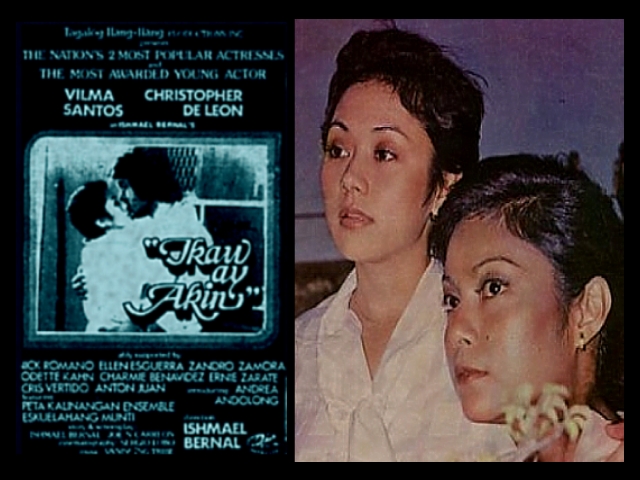
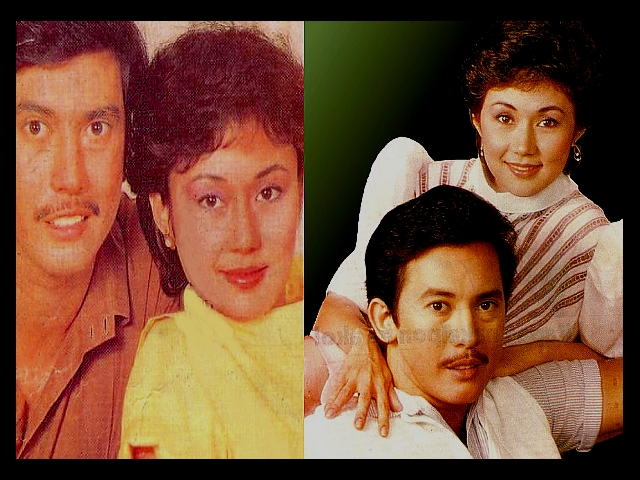

 Star For All Seasons
You must be logged in to post a comment.