Vilma Santos-Recto is a popular multi-awarded actress and politician in the Republic of the Philippines. *** She is known as "Queen of Philippine Movies," "Queenstar," "Grand Slam Queen," "Box Office Queen," and "Star for All Seasons." *** This website is mostly about her iconic film career.
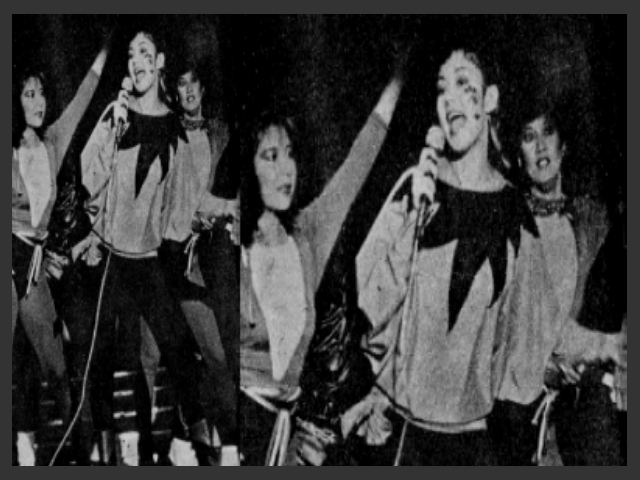
Vilma! is a Friday Primetime musical variety show formerly aired by GMA Network from 1986 to 1995 hosted by Vilma Santos. Formerly known as Vilma In Person, Vilma! (also known as Vilma on Seven) was debuted on August 8, 1986, the pilot episode is shown from the Metropolitan Theater as a temporary studio where Vilma Santos and the VIP Dancers are performed there. Until 1987, the Friday Primetime musical variety show moved to Broadway Studios as a new location and it is shown on the first StereoVision format which features dance and love song performances. Vilma! was competed by two other variety shows Loveli-Ness and Dance-2-Nite of ABS-CBN (originally debuted in 1987) as rivals, but the variety show maintained its ratings. Vilma! received four nominations in the PMPC Star Awards for TV from 1988 to 1990, 1992 and 1994, as well as Best Female Musical Variety Show Host from 1987 to 1988, they also produced anniversary and birthday specials from 1987 to 1994 as well. After nine years, Vilma! produced the 479th and the last episode on September 29, 1995, brought many fans and supporters bade farewell to the Star for all seasons, and made as the longest-running Musical Variety Show. Truly, Vilma! was ended on September 29, 1995 and it was replaced by Bubble Gang. – Wikipedia (READ MORE)
Vilma! is a Friday Primetime musical variety show formerly aired by GMA Network from 1986 to 1995 hosted by Vilma Santos. Formerly known as Vilma In Person, Vilma! (also known as Vilma on Seven) was debuted on August 8, 1986, the pilot episode is shown from the Metropolitan Theater as a temporary studio where Vilma Santos and the VIP Dancers are performed there. Until 1987, the Friday Primetime musical variety show moved to Broadway Studios as a new location and it is shown on the first StereoVision format which features dance and love song performances. Vilma! was competed by two other variety shows Loveli-Ness and Dance-2-Nite of ABS-CBN (originally debuted in 1987) as rivals, but the variety show maintained its ratings. Vilma! received four nominations in the PMPC Star Awards for TV from 1988 to 1990, 1992 and 1994, as well as Best Female Musical Variety Show Host from 1987 to 1988, they also produced anniversary and birthday specials from 1987 to 1994 as well. After nine years, Vilma! produced the 479th and the last episode on September 29, 1995, brought many fans and supporters bade farewell to the Star for all seasons, and made as the longest-running Musical Variety Show. Truly, Vilma! was ended on September 29, 1995 and it was replaced by Bubble Gang. – Wikipedia (READ MORE)
”…As far as he can recall, his first gay outing was in the critically acclaimed High School Circa ’65. “Doon naman, I was nominated for Best Supporting Actor considering na 15 or 16 pa lang ako noon. I was the comic relief of the movie.” Bibeth Orteza, who played a teacher in High School Circa ’65, created a gay character for him in the sitcom “Tepok Bunot.” “Nag-hit ‘yon,” says Roderick. Then a producer gave him the lead role in Charot, a movie inspired by Dustin Hoffman’s gender-bending performance in Tootsie. Before Roderick knew it, other offers to do gay roles started coming his way, with one of them from a very persuasive line producer-actress. “After Charot, ayoko munang tanggapin ang mga gay-gay roles,” he says. “But it was Charo Santos who convinced me to do a gay movie where I would be paired with Maricel (Soriano).” The project was Regal Films’ Inday, Inday sa Balitaw which ended up being a huge success. “The rest is history!” Roderick exclaims. “Yun na! Sunud-sunud na sa box-office…” (READ MORE)
Maryo J. delos Reyes was born on October 12, 1952 in Sta. Cruz, Manila, Philippines. He finished his primary education at Malate Catholic School and when he reached high school, he decided to give priesthood a chance and graduated at the Our Lady of Guadalupe Minor Seminary. His dream of being a director never left him so he enrolled at the Institute of Mass Communications of the University of the Philippines where he graduated with honors. While in school, he became active with PETA, the country’s premiere theater group in the seventies. He started handling acting workshops and a scriptwriter for the film Disco Fever. He then became the creative head of Agrix Films where he directed High School Circa ’65, his first directorial venture in 1979. He received nominations for his work on this film. Since then, he has directed 56 feature films, several television programs and specials, commercials and stage plays. – Tiburon Film Festival (READ MORE)
FAIR USE NOTICE (NOT FOR COMMERCIAL USE): This site contains copyrighted materials the use of which has not always been specifically authorized by the copyright owner. We are making such material available in our efforts to preserve the film legacies of actress, Vilma Santos, and to make her career information available to future generations. We believe this is NOT an infringement of any such copyrighted materials as in accordance to the the fair dealing clauses of both the Canadian and U.S. Copyright legislation, both of which allows users to engage in certain activities relating to research, private study, criticism, review, or news reporting. We are making an exerted effort to mention the source of the material, along with the name of the author, performer, maker, or broadcaster for the dealing to be fair, again in accordance with the allowable clauses. – Wikipedia (READ MORE)
204 films, 70 directors, 5 decades, Vilma Santos, one of the original Philippine movie queens, rose up to become the versatile actress that has been given the fitting title of “Star for All Seasons” because of her capacity to adapt to the changing mores and values of the Filipino woman, giving a face to their plight and struggles, albeit in success both critically and box-office wise in some of Philippine cinema’s classics such as Trudis Liit (1963), Lipad, Darna, Lipad (1973), Burlesk Queen (1977), Relasyon (1982), Sister Stella L. (1984), Alyas Baby Tsina (1984), Pahiram ng Isang Umaga (1989), Dahil Mahal Kita: The Dolzura Cortez Story (1993), Anak (2000) and Dekada ’70 (2002). This are top ten directors who contributed to her success. – RV (READ MORE)
His films lack the arthouse style and social relevance that critics loves most in a Brocka or Bernal films but who cares about the critics when the paying public loves them. And the producers demand his service, from Doc Perez of Sampaguita Pictures, Atty. Esperidion Laxa of Tagalog Ilang Ilang Productions and later on, Vic Del Rosario of Viva Films and Lily Monteverde of Regal Films. Clearly, his films exists with one purpose, to entertain the masses not to depress or remind them with the country’s sad fate of economy or the below poverty line lives of many. The success of the Vilma-Borlaza films gave Vilma Santos versatility and preparation to a more serious acting career. It also narrowed the popularity gap between her and the musical era’s darling of the 70s, Nora Aunor. These are perhaps, the most significant contributions of Emmanuel Borlaza to Vilma’s career. Vilma who was considered only second to Nora couldn’t matched her singing talent and so, Borlaza countered this lack of singing with films that showcased Vilma’s acting versatility.
From the folklore mermaid in Dyesebel at ang Mahiwagang Kabibe to fighting giants in Darna and the Giants to a fast-talker-gossip-mongering vendor in Tsismosang Tindera and to good-hearted prostitutes in Mga Rosas sa Putikan, Borlaza let Vilma Santos experience a wide range of roles, from comedic fantasy to dramatic adult roles. These experiments prepared her to a later more serious and versatile acting career. Their success made other directors interested in giving her roles oftenly considered for her closest rivals. Projects lined up and awaits her availability. Borlaza and Santos’ collaboration produced a string of box office hits from early 70s’ Dama De Noche to their last outing in late 80s’ Ibigay Mo Sa Akin Ang Bukas. Their success established their career as one of the most bankable and in-demand director/actor team, making her the longest reighning box office queen of all time and him a money maker director.
When time for Vilma to moved on with other collaborators, Borlaza handled other stars with much success! He directed Alma Moreno in smash hit, Eva Fonda 16; Sharon Cuneta in her memorable rag to riches films, Bituin Walang Ningning and Bukas Luluhod Ang Mga Tala; Snooky Serna in her fantasy hit, Blusang Itim and Marecel Soriano as the spoiled brat in Yesterday Today and Tomorrow. These films gave us some of the most memorable movie lines that most Filipinos would still remember like Cherie Gil’s campy dialouge: “You’re Nothing but second rate Trying hard, Copy Cat!” or Sharon’s promise of revenge: “pinapangako ko inay…bukas luluhod ang mga tala! (I’ll promise you mother, tommorow the stars will kneel down, something to that effect, litterally.)” – RV (READ MORE)
Emmanuel H. Borlaza aka Maning Borlaza is a 1957 Palanca Awardee for “May Pangako ang Bukas” and theaterical drama trained by National Artist Severino Montano. Appointed by Pres. Noy Aquino as Movie and Television Review and Classifications Board (MTRCB) Vice Chairman this year, Borlaza directed 24 films with Vilma Santos and was credited with her transformation to a reluctant singing competitor of Nora Aunor to bankable superstar with such hits like Dyesebel, Lipad Darna Lipad, Darna and the Giants. – IMDB (READ MORE)
Plot Description: Wrongfully convicted Arturo (Rudy Fernandez) escaped from prison and went back to his hometown for revenge but was further framed by the same gang who initially concocted a crime that sent him to jail. Aurora (Vilma Santos), Arturo’s girlfriend tried to convince him to surrender but it was too late, he was killed. – RV (READ MORE)
204 films, 70 directors, 5 decades, Vilma Santos, one of the original Philippine movie queens, rose up to become the versatile actress that has been given the fitting title of “Star for All Seasons” because of her capacity to adapt to the changing mores and values of the Filipino woman, giving a face to their plight and struggles, albeit in success both critically and box-office wise in some of Philippine cinema’s classics such as Trudis Liit (1963), Lipad, Darna, Lipad (1973), Burlesk Queen (1977), Relasyon (1982), Sister Stella L. (1984), Alyas Baby Tsina (1984), Pahiram ng Isang Umaga (1989), Dahil Mahal Kita: The Dolzura Cortez Story (1993), Anak (2000) and Dekada ’70 (2002). This are top ten directors who contributed to her success. – RV (READ MORE)
His films lack the arthouse style and social relevance that critics loves most in a Brocka or Bernal films but who cares about the critics when the paying public loves them. And the producers demand his service, from Doc Perez of Sampaguita Pictures, Atty. Esperidion Laxa of Tagalog Ilang Ilang Productions and later on, Vic Del Rosario of Viva Films and Lily Monteverde of Regal Films. Clearly, his films exists with one purpose, to entertain the masses not to depress or remind them with the country’s sad fate of economy or the below poverty line lives of many. The success of the Vilma-Borlaza films gave Vilma Santos versatility and preparation to a more serious acting career. It also narrowed the popularity gap between her and the musical era’s darling of the 70s, Nora Aunor. These are perhaps, the most significant contributions of Emmanuel Borlaza to Vilma’s career. Vilma who was considered only second to Nora couldn’t matched her singing talent and so, Borlaza countered this lack of singing with films that showcased Vilma’s acting versatility.
From the folklore mermaid in Dyesebel at ang Mahiwagang Kabibe to fighting giants in Darna and the Giants to a fast-talker-gossip-mongering vendor in Tsismosang Tindera and to good-hearted prostitutes in Mga Rosas sa Putikan, Borlaza let Vilma Santos experience a wide range of roles, from comedic fantasy to dramatic adult roles. These experiments prepared her to a later more serious and versatile acting career. Their success made other directors interested in giving her roles oftenly considered for her closest rivals. Projects lined up and awaits her availability. Borlaza and Santos’ collaboration produced a string of box office hits from early 70s’ Dama De Noche to their last outing in late 80s’ Ibigay Mo Sa Akin Ang Bukas. Their success established their career as one of the most bankable and in-demand director/actor team, making her the longest reighning box office queen of all time and him a money maker director.
When time for Vilma to moved on with other collaborators, Borlaza handled other stars with much success! He directed Alma Moreno in smash hit, Eva Fonda 16; Sharon Cuneta in her memorable rag to riches films, Bituin Walang Ningning and Bukas Luluhod Ang Mga Tala; Snooky Serna in her fantasy hit, Blusang Itim and Marecel Soriano as the spoiled brat in Yesterday Today and Tomorrow. These films gave us some of the most memorable movie lines that most Filipinos would still remember like Cherie Gil’s campy dialouge: “You’re Nothing but second rate Trying hard, Copy Cat!” or Sharon’s promise of revenge: “pinapangako ko inay…bukas luluhod ang mga tala! (I’ll promise you mother, tommorow the stars will kneel down, something to that effect, litterally.)” – RV (READ MORE)
Teen Films “…By late 1969, movie producers had been tapping a Vilma Santos-Edgar Mortiz love team. Edgar was a Tawag ng Tanghalan winner. They started to be together in the movies, My Darling Eddie (1969) and The Jukebox King (1969)…In 1970, the love team of Vilma Santos and Edgar “Bobot” Mortiz was officially launched in the movie Young Love, together with the another popular love team during that time, Nora Aunor and Tirso Cruz III. The Vi and Bot love team went on to do 14 more movies in 1970—The Young Idols, Songs and Lovers, Sweethearts, Sixteen, Love Letters, Love is for the Two of Us, Mga Batang Bangketa, My Pledge of Love, Renee Rose, Baby Vi, Because You Are Mine, Edgar Loves Vilma, From the Bottom of My Heart, and I Love You Honey. All did well at the box-office…” – Rommel R. Llanes (READ MORE)
“…Noong Dekada ’70, ang mga young stars ay kailangang marunong kumanta dahil yun ang uso kaya naman nagtayo ng sariling recording company ang nasirang manager ni Vi na si William Leary dahil ayaw niyang pahuhuli sa uso ang kanyang alaga. Ilan sa mga naging recording artists ng WILEARS RECORDS bukod kay Vi ay sina Edgar Mortiz, Ed Finlan, Sahlee Quizon, Hilda Koronel at Esperanza Fabon. According to Vi, kapag nagrerecord siya ng kanta ay nakatalikod siya sa dingding ng recording company at si Bobot ang umaalalay sa kanya. Ang SIXTEEN, na sinulat ni Danny Subido ang unang recording na ginawa ni Vi at ito ay flipsided by It’s So Wonderful To Be In Love. Ang SIXTEEN ay agad naging gold record at dahil dito ay gumawa ng pelikula ang Tagalog Ilang Ilang Productions, ang home studio ni Vi at ito ay ginawa nilang pamagat katambal si Edgar Mortiz. Hindi nyo naitatanong, muntik nang manalo si Vi bilang most promising singer sa AWIT AWARDS noong early ’70s…” – Alfonso Valencia (READ MORE)
“…Si Edgar Mortiz ang unang nakapareha ni Vilma Santos as a teen star. Nakilala sila as the “Subok na Matibay, Subok na Matatag” loveteam called Vi and Bot at naging magka-steady sila sa tunay na buhay. Marami silang ginawang pelikula as teen stars in the early 70s…” – Showbiz Portal (READ MORE)
“…Sa tuwing sumasapit ang Christmas at valentine’s Day ay nagtatapatan ang mga pelikula nila. Nang ginawa nina Guy at Pip sa Hawai ang pelikulang Blue Hawai, hindi nagpatalo ang Vilma at Edgar. Nagtungo rin sila sa Hawai at ginawa nila ang pelikulang Aloha, My Love bilang pantapat sa pelikula nina Nora at Tirso. Ganyan talaga kainit ang labanan noon ng dalawang parehang ito. Pagkatapos ipalabasa ang mga pelikulang Blue Hawai at Aloha My Love na parehong kumita sa takilya, nagtungo rin ang dalawang pangkat sa USa para gawin naman nila ang pang-Valentine’s Day offering nila. Don’t Ever Say Goodbye ang kina Vilma at Edgar, samantalang ang kina Guy at Pip naman ay ang Gift of Love. Hindi lang iyan. Tuwing sasapit naman ang Metro Manila Film Festival ay nagkakaroon din sila ng kanya-kanyang entry under their respective production companies – ang Tagalog Ilang Ilang for Vi and Bot at Sampaguita Pictures kina Guy at Pip. Halos sila na lang ang siyang pinapanood at iniidolo ng fans…” – Ely S. Sablan (READ MORE)
“..I didn’t expect to win, although marami ang nagsasabi sa akin na malaki ang pag-asa ko. Ako naman, I don’t believe anything unless talagang nangyayari. Kasi noon, I expected to win, sa film festival din sa Quezon City, but somebody else did. I was very disappointed. Noong awards night nga, I wasn’t convinced I would win hanggang hindi ko pa hawak ‘yong trophy…” – Ricardo F. Lo (READ MORE)
“…Pagkagaling nila Vi & Bot sa Amerika para sa shooting ng “Don’t Ever Say Goodbye”, ay sinayaw ni Vi sa The Sensations ang The Shaft na usong sayaw noon sa U.S., agad nagustuhan ng mga tao ang dancing skills ni Vi at nauso lagi ang mga sayaw ni Vi at mula noon ay kinilala ang charisma, grace, at natural dancing prowess ni Vi na later on ay pinakita niya at tampok lagi at inaabangan ng mga tao sa kanyang top rated musical variety shows na ang pinakahuli ay ang Vilma!…” – Jojo V. Lim (READ MORE)
“…Remembrance,” another film musical, was chosen “best musical” in the Manila Film Festival. The film stars Vilma Santos (Wilear’) and Edgar Mortiz (Wilear’s). The film also won in the categories of best film editing, best sound and best script…” – Oskar Salazar (READ MORE)
Fantasy Films “…Sine Pilipino got then hot young star Vilma Santos to essay the role of Darna. But the problem was, Vilma was hesitant to wear the two-piece costume. So, during their photo shoot for the publicity photos of the new Darna movie, she wore the Darna costume on top of her body stocking. Vilma was finally convinced by producers Douglas Quijano and William Leary to lose the body stocking and wear just the costume on the day of the press conference. The press people were surprised on seeing how sexy Vilma was in her Darna costume, which was back to the original red bikini and gold stars. Lipad, Darna, Lipad! (1973) is the first and only trilogy of the superheroine. It was a box-office hit on its first day of showing and considered a turning point in Vilma’s career. It was also the first Darna movie where Darna and Narda was played by the same actress. Unfortunately, there is no existing copy left of this classic film. Vilma starred in three more Darna films: Darna and the Giants (1974) and Darna vs. the Planetwomen (1975), which were both under Tagalog Ilang-Ilang Productions, and Darna and Ding (1980) under Niño Muhlach’s D’Wonder Films. Darna and the Giants was the continuation of Vilma’s first Darna movie and Darna again wore the gold bikini costume, while Darna vs. the Planetwomen was a rebooted version of the Darna origin, with Vilma’s Narda this time portrayed as a crippled teenager who was given a magical stone by a mysterious source. The costume is back to red this time with the stars on Darna’s bra also colored red and the headpiece, all gold. Darna and Ding was the last time Vilma played Darna. Her costume this time was sexier and more revealing. In this movie, she was joined by Ding who now has his own superpowers…” – Rico J Rod (READ MORE)
“The quintessential action-fantasy Pinoy flick that appeals to all ages, from generation to generation. This movie is a major milestone for Vilma because it proved that she could really carry a solo movie and bring in the dough (up to now of course!). Vilma’s Darna franchise is the most memorable and successful of all Pinoy fantasy-action genres. Imitated but never equalled, Vilma’s Darna lives on. Unforgettable. Memorable. It grows on you. No Pinoy kid ever grows up without being a part of the Darna magic. The enormous success of Lipad, Darna, and Lipad led to three more Darna movies with Vilma Santos. As a result, the star for all seasons became the star for all Darnas—Santos played her four times, more than any other actress in the super heroine’s history…” – Eric Cueto (READ MORE)
Maturing Dramas“…In 1980, Ate Vi married budding actor Edu Manzano in Las Vegas, USA, while shooting the film, “Romansa.” She was pregnant with Lucky (now called Luis) when she did “Pakawalan Mo Ako” in 1981, for which she won her second FAMAS best actress award. In 1984, her marriage to Edu ended in separation, and she did movies that mirrored her real-life affairs, “Hiwalay” and “Ex-Wife,” both big hits…” – Mario Bautista (READ MORE)
“…To recall, the senior and junior movie queens appeared in these movies: Bulaklak at Paru-paro (1970), Mga Reynang Walang Trono(1976) and Asawa Ko, Huwag Mong Agawin (1986). Amalia directed Vilma’s episode in Mga Reyna and agreed to second billing to Vilma in Asawa Ko. No doubt about it, Amalia Muhlach Sumilang Fuentes, is a Vilmanian. To seal their sisterhood and camaraderie, Vilma is Ninang to Liezl Martinez and to the latter’s son Alfonso. Why, Liezl even sang a song ’’Wind Beneath My Wings’ to her surprised mother that night which drove the strong-willed and still beautiful Amalia to tears. A Kodak moment, indeed. Priceless! While interviewing the three Muhlach generations, Fuentes, Liezl and young daughter Aliyanna, Amalia revealed to Vilma that she is protective of her ’unica hija’ Liezl. ”Ay naku, I think I also have become like my Mom, I’m also very protective of my children,” Liezl remarks…” – Mario O. Garces (READ MORE)
“…Why Borlaza? Because Emmanuel H. Borlaza is a formula director, a tried and tested moneymaker for local film companies and an example of a commercial success who also hungers for artistic fullfillment. It was Maning Borlaza who directed the box-office hit revival of Darna and Dyesebel, those heroines of less demanding times, and followed of less demanding times, and followed them with more Vilma Santos-Edgar Mortiz starrers and such crowd-drawers as Kapatid Ko Ang Aking Ina; Artista And Aking Asawa; and I Love Mama, I Love Papa. Very recently, despite his many obvious fumblings, his Mrs. Eva Fonda, 16 raked in the moolah, as entertainemtn columnist would put it. Whether the lure was really Borlaza and not Vilma (as Darna) or Alma (as Eva), one would still not find out in Makahiya at Talahib, the Goodwill production that Maning is directing as a filmfest bet. Vilma is starring, you see, opposit Rudy Fernandez who portrays the man on the run. Maning, however, has been quoted to have said that “My next 20 years are modestly provided for, I don’t think I will live more than that. Henceforth, I will split my movie work to what I want to do and what the public likes. He wants, it seems, to recover his old self, the Borlaza who filmed Pyscho-Maniac, a suspense thriller which cast Divina Valencia, Dindo Fernando and Ray Marcos and won him the Academy’s best screenplay award in ’68, who packed so much good action in Mindanao, the movie that bagged four statuettes in the Manila Filmfest of the same year, and who directed Vilma Santos’s way to the FAMAS best actress award for the performance in Dama de Noche. And yet, he is not that keen to do films that might suffer the fate of O’Hara’s Mortal or Bernal’s Nunal sa Tubig. “Their box-office results are not encouraging,” says Maning. He admits he still goes a little commercial. That is why there is a love scene between Vilma and Rudy in Makahiya that Maning expects people might be talking about, more than the torrid shots of Rudy and Trixia Gomez. The 41-year old director also wrote the story and screenply of Makahiya. Writing was something that didn’t interest Maning while he was enrolled in Dr. Severino Montano’s Arena theater at the same time that he was majoring in English at the Manuel Luis Quezon University.
“Dr. Montano was the rave of the drama world at that time,” recalls Maning. “That’s where I bumped into Lino Brocka, Behn Cervantes, Joonee Gamboa…they were coming in when I was leaving the group. I got much too engrossed in acting becaused I got good roles I didn’t write anything.” From acting in theater, however, Borlza switched to writing in the movies. To his credit are some 300 stories and screenplays from which Sampaguita stalwarts Carlos Vander Tolosa and Octavio Silos directed. But after 12 long years of scriptwriting, Maning struck up a partnership with ’60s bombshell Divina Valencia and formed the Queen Vi production on which he now says he lost a lot of money. Their first movie, Psycho-Maniac, was also Maning’s first directorial attempt. Another person would have thought things over and concentrated on scriptwriting instead after a victory like that but Borlaza was decided: he was going to make movies, not just write them. Nowadays, he even makes two pictures at a time. “I just finished Makahiya and Teatro Manila. It’s cheaper that way. You don’t waste any calendar day. No stars available for Makahiya, we would work on Teatro.” Work means gearing up in a sleeveless top and a pair of short shorts that expose his long smooth legs. Maning, in case you didn’t hear his very casual cofession on Inday Badiday’s Nothing But the Truth, is “gay.” “That was the first time I opened up to the public,” he explaines. I thought if I didn’t open up, what’s the use of coming to a show like that?” Homosexuals are actually spilling all over the movie world, just as they do in other creative fields. One of these days, Emmanuel H. Borlaza might just completea consciousness-raising classic and we’ll say it can happen to anyone regardless of sex…” – Chelo R. Banal, Philippine Panorama Magazine, 26 December 1976 (READ MORE)
YEAR
FILM TITLES (click title for link to available film info)
Emmanuel H. Borlaza aka Maning Borlaza is a 1957 Palanca Awardee for “May Pangako ang Bukas” and theaterical drama trained by National Artist Severino Montano. Appointed by Pres. Noy Aquino as Movie and Television Review and Classifications Board (MTRCB) Vice Chairman this year, Borlaza directed 24 films with Vilma Santos and was credited with her transformation to a reluctant singing competitor of Nora Aunor to bankable superstar with such hits like Dyesebel, Lipad Darna Lipad, Darna and the Giants. – IMDB (READ MORE)
“…But the biggest fear of Borlaza was when Agrix Films’ Kampus? (1978) was booked one week after the opening of VS Films’ Pagputi ng Uwak, Pagitim ng Tagak. The Celso Ad. Castillo film was an artistic triumph, and Borlza felt following it up with another Vilma-Bembol starrer would put them at a great disadvantage. The Vilma-Bembol fans might still be raving over Pagputi… instead of discussing Kamput? As it turned out, people let Pagputi…pass and waited for Kampus? judging from the comparative gate receiots of the two movies…Sabi ni Mama Santos, ako daw ang “pumatay” sa kanilang Pagputi…eto ang parusa ko, bigyan ko daw sila ng isang Kampus? so I’m making for them Coed. You see, when I was working on Kampus? at UP Los Banos, I realized their problems and lifestyle can be a source of even 10 movie materials. At kapag ang student force pala ang nag-patronize sa Tagalog movie, ang laki ng audience!” Borlaza revealed…I’m very meticulous about is: the audience were to identify itself with my main character, will it be happy with the poetic justice I execute? Will they find it correct and realistic? In Kampus? for instance, students who were pleased with the movie told me they liked the ending very much. They agreed with it. Vilma was bedded first by Mat Ranillo III, but ended up with Bembol who was the right choice after all. They say in real life, the man you walk down the aisle with is not necessarily the first man you had sex with. Also they say the dialouges were very in – like the way actual students would speak them. Siguro, once they sit in the theater, they are not bothered by such questions as ‘Why” or “how come?” Is the star value the main thing in selling movies? “In the case of Kampus?, yes, because Vilma Santos was my main star and she’s the current box office queen …” – Manny B. Fernandez, Expressweek, November 9, 1978 (READ MORE)
FAIR USE NOTICE (NOT FOR COMMERCIAL USE): This site contains copyrighted materials the use of which has not always been specifically authorized by the copyright owner. We are making such material available in our efforts to preserve the film legacies of actress, Vilma Santos, and to make her career information available to future generations. We believe this is NOT an infringement of any such copyrighted materials as in accordance to the the fair dealing clauses of both the Canadian and U.S. Copyright legislation, both of which allows users to engage in certain activities relating to research, private study, criticism, review, or news reporting. We are making an exerted effort to mention the source of the material, along with the name of the author, performer, maker, or broadcaster for the dealing to be fair, again in accordance with the allowable clauses. – Wikipedia (READ MORE)
204 films, 70 directors, 5 decades, Vilma Santos, one of the original Philippine movie queens, rose up to become the versatile actress that has been given the fitting title of “Star for All Seasons” because of her capacity to adapt to the changing mores and values of the Filipino woman, giving a face to their plight and struggles, albeit in success both critically and box-office wise in some of Philippine cinema’s classics such as Trudis Liit (1963), Lipad, Darna, Lipad (1973), Burlesk Queen (1977), Relasyon (1982), Sister Stella L. (1984), Alyas Baby Tsina (1984), Pahiram ng Isang Umaga (1989), Dahil Mahal Kita: The Dolzura Cortez Story (1993), Anak (2000) and Dekada ’70 (2002). This are top ten directors who contributed to her success. – RV (READ MORE)
Brocka gave Vilma one of the most controversial film after “Burlesk Queen,” her milestone role as a rape victim in 1978′s “Rubia Servios.” The film failed to secure Vilma the local festival’s best performer award after so much speculations despite this, the film was a big hit. Brocka will direct Vi two more times, “Adultery” in 1984 and “Hahamakin Kita” in 1990, a year before his untimely death in May 21, 1991. – RV (READ MORE)
Rubia Servios (1978) – “…Rubia Servios, on the other hand, does not dilute the message. Willy (Phillip Salvador), the son of a powerful and wealthy figure, is portrayed as totally evil, devoid of any redeeming quality. To screenwriter Mario O’Hara and director Lino Brocka, the province is the same as the city. Rubia Servios (Vilma Santos) is raped both in the city and in the country. Rubia kills Willy in the country. Violence unites all places. It is the “unity” of conception, scripting, design, and direction, in fact, that Rubia Servios is superior to Atsay. Lino Brocka does not waste shots in his attempt to create a Filipino classical tragedy. He subordinates everything to the building up of one emotion in the viewer, that of hatred of Willy. So despicable does Willy become at the end that, when he is murdered by Rubia, no viewer can say that Rubia is at fault. And yet, morally speaking, no one is allowed to take the law into his own hands. The law, in fact, put Willy in prison for the first rape. There is no reason to think that the law will not put Willy to death for the second rape. By conditioning the reader to condone Rubia’s revenge, Brocka succeeds in questioning one of our deeply rooted moral beliefs. The unity that characterizes Rubia Servios contrasts sharply with the tendency of Eddie Garcia in Atsay to exploit Vitug’s versatility even at the expense of tightness. There are shots in Atsay, for example, which could easily be cut without hurting the film’s integrity. Even the train sequence, one of the best sequences in Atsay, is far too long. Rubia Servios is Lino Brocka’s film; Atsay is Romeo Vitug’s. Nora does an excellent acting job; but so does Vilma Santos, and Rubia is a much more demanding and difficult role…” – Isagani Cruz (READ MORE)
Adultery (Aida Macaraeg Case No. 7892) (1984) – “…Napakahusay ni Vilma sa mga eksenang nagngingitngit siya sa mga kapatid niya sa pagkawala ng uniporme o muling pagbubuntis ng mga ito. You can really feel the sense of rage, and futility that she is experiencing. Pero maging sa iba pang quiet scenes ay mahusay rin siya, o kaya y maging doon sa eksenang muntik na siyang mabuko ni Mario, at nang magkomprontasyon na sila ni Phillip. Pero, sa tingin namin, mas lumutang si Phillip sa pelikulang ito at tiyak na in the running na naman siya for best actor next year. Kung minsan ay mata lamang ang kanyang pinaaarte at wala siyang dialogue (like nang mabasa niyang nakunan si Aida o nang makita niya itong sinasalubong si Mario sa gate). Very touching din ang final scene na tinanong siya ni Vi: “Ano ng nangyari sa ‘tin?” At sumagot siya ng: “Huwag mo nang itanong. Baka mas masakit kung malaman natin ang sagot.” Maraming iba pang magagandang touches ang pelikula, tulad ng pagdalaw ng mga babaing taga-block rosary kina Aida at ang sagutan sa court scenes…” – Mario E. Bautista (READ MORE)
Hahamakin lahat (1990) – “…Brocka did Hahamakin Lahat (1990) for Regal Films. This was his third movie with Vilma Santos. The role called for Vilma to be dark, daring and innovative, a complete deviation from characters usually portrayed by the sweet-faced Star for All Seasons. It showed a heroine entering into a marriage of convenience with a ruthless, scheming mayor, a character Brocka created to expose the hypocrisy and corruption of society…” – Paul Mata and F. Caagusan (READ MORE)
Lino Brocka Catalino Ortiz Brocka (April 3, 1939–May 21, 1991), director for film and broadcast arts, espoused the term “freedom of expression” in the Philippine Constitution. Brocka took his social activist spirit to the screen leaving behind 66 films which breathed life and hope for the marginalized sectors of society — slumdwellers, prostitute, construction workers, etc. He also directed for theater with equal zeal and served in organizations that offer alternative visions, like the Philippine Educational Theater Association (PETA) and the Concerned Artists of the Philippines (CAP). At the same time, he garnered awards and recognition from institutions like the CCP, FAMAS, TOYM, and Cannes Film Festival. Brocka has left behind his masterpieces, bequeathing to our country a heritage of cinematic harvest; a bounty of stunning images, memorable conversations that speak volumes on love,betrayal and redemption, pestilence and plenty all pointing towards the recovery and rediscovery of our nation. To name a few, Brocka’s films include the following: “Santiago” (1970), “Wanted: Perfect Mother” (1970), “Tubog sa Ginto” (1971), “Stardoom” (1971), “Tinimbang Ka Ngunit Kulang” (1974), “Maynila: Sa Kuko ng Liwanag” (1975), “Insiang” (1976), “Jaguar” (1979), “Bona” (1980), “Macho Dancer” (1989), “Orapronobis” (1989), “Makiusap Ka sa Diyos” (1991) (NCCA.gov.ph). On May 21, 1991 Brocka met an untimely death in a car accident in Quezon City, Metro Manila. In 1997 he was given the posthumous distinction of National Artist for Film – Wikipedia (READ MORE)
Makahiya at Talahib (1976) – “…Arturo (Rudy Fernandez) is a convict on the run after being framed for rape. Aurora (Vilma Santos), a sculptress at odds with her overbearing mother (Gloria Romero), falls for him and is convinced of his innocence. When Arturo takes revenge on those who framed him, Aurora helps him plot his escape. This, while her sister Beatriz (Trixia Gomez) has a brief affair with Arturo…” – Music & Laughter TV (READ MORE)
Rodolfo “Rudy” Padilla Fernandez, screen name Rudy Fernandez (March 3, 1952 – June 7, 2008), also known as “Daboy”, was a multi-awarded Filipino actor and producer. He came to prominence as an action star in the Philippine cinema during the 1980s up to the early 1990s. – Wikipedia (READ MORE)
FAIR USE NOTICE (NOT FOR COMMERCIAL USE): This site contains copyrighted materials the use of which has not always been specifically authorized by the copyright owner. We are making such material available in our efforts to preserve the film legacies of actress, Vilma Santos, and to make her career information available to future generations. We believe this is NOT an infringement of any such copyrighted materials as in accordance to the the fair dealing clauses of both the Canadian and U.S. Copyright legislation, both of which allows users to engage in certain activities relating to research, private study, criticism, review, or news reporting. We are making an exerted effort to mention the source of the material, along with the name of the author, performer, maker, or broadcaster for the dealing to be fair, again in accordance with the allowable clauses. – Wikipedia (READ MORE)
204 films, 70 directors, 5 decades, Vilma Santos, one of the original Philippine movie queens, rose up to become the versatile actress that has been given the fitting title of “Star for All Seasons” because of her capacity to adapt to the changing mores and values of the Filipino woman, giving a face to their plight and struggles, albeit in success both critically and box-office wise in some of Philippine cinema’s classics such as Trudis Liit (1963), Lipad, Darna, Lipad (1973), Burlesk Queen (1977), Relasyon (1982), Sister Stella L. (1984), Alyas Baby Tsina (1984), Pahiram ng Isang Umaga (1989), Dahil Mahal Kita: The Dolzura Cortez Story (1993), Anak (2000) and Dekada ’70 (2002). This are top ten directors who contributed to her success. – RV (READ MORE)
In 1987, Maryo De Los Reyes directed Vilma Santos that critics considered one of the most shocking film that year, “Tagos Ng Dugo.” The film was hailed as feminist as seldom a Filipino woman was seen on screen as a murderous serial killer. It earned Vilma Santos her fourth FAMAS Best Actress. Ironically, the conservative Catholic church’s award giving body, Catholic Mass Media Awards, agreed with the FAMAS. They gave Vi their Best Actress award while the critics’ group, Gawad Urian refused to hand-out their yearly award citing there were no deserving films that year. Reyes last directed Vilma in another memorable off-beat role, the 1992 drama, “Sinungaling Mong Puso.” – RV (READ MORE)
Tagos ng Dugo (1987) – “…A breakthrough for Philippine psychological movies? Probably. Let me explore a few other angles on this seeming cross between Francois Truffaut’s The Bride Wore Black and Luis Buñuel’s Belle du Jour — I don’t know if screenwriter Jake Tordesillas or De los Reyes himself should be congratulated for the cohesion of multi-resultants in this work. Part of this multi-readings would be the movie as a feminist take on womankind’s monthly pains as a form of excuse for female monthly insanities, insanities our machos regard as regular terrorism on the whole of mankind (men or society as a whole). It is with that reading that the ending apologies, by Vilma Santos in the lead role, might be understood as a plea for understanding of how all of woman’s monthly Eve-behavior should not be seen as a Biblical sin but as an equal (to, say, men’s beastly) naturalness. . . . Another feminist reading, more radical perhaps, would treat the film as a view of how Philippine society (the men in it, primarily) approaches provincial innocence, educational weakness, and “females’ weaker sanity” as stimuli for abuse… There is, however, the possibly more general reading of the film as an apologia for insanity qua itself, how it should be treated as a disease instead of as a monster to be eliminated….” – Vicente-Ignacio S. de Veyra (READ MORE)
Sinungaling Mong Puso (1992) – “…Magaling sina Aga Muhlach at Vilma Santos bilang nagtatagong magkasintahan. Lutang na lutang ang pag-arte ng dalawa at nakakatuwa sila sa kanilang mga eksena na nagtatagpo ng palihim tulad ng mag-kita sila sa department store. Dumating si Vilma at hinahanap niya si Aga, hindi nya makita ito hanggang sa mamataan niya ang binata na nakaupo sa may display area. Kinindatan ni Jason si Clara at napatawa na lang ang babae. Mararamdaman mo ang excitement ng mga pagkikitang ito. Nang mahuli ni Ana ang asawa at mag-iskandalo ito, nang umalis na ang asawa at balikan ni Jason si Clara sa loob ng apartment, makikita sa mukha ni Vilma ang pagtatapos ng kanilang affair. Ang sabi niya: “ Hinintay lang kita, gusto kong maghiwalay tayo ng maayos…” Bukod sa maraming eksena na lutang na lutang ang pag-arte ni Vilma marahil ang pinaka-memorable ay ang eksena kung saan binaril ni Vilma si Gabby at sabihin niya ang line na: “mamatay kang kasama ng mga baboy mo…” ito ang pagpapatunay na talagang napakahusay niyang artista.” – RV (READ MORE)
Maryo J. de los Reyes is a film and television director from the Philippines. He began his career in the 1970s. – Wikipedia (READ MORE)

 Related Reading:


 Star For All Seasons
You must be logged in to post a comment.