Vilma, the Glad Girl

This slideshow requires JavaScript.

Unlike Nora la Dolorosa, the durable Vi Santos has made happiness her career By Quijano De Manila

Durable is a word that shifts nuance when applied to Vilma Santos. Yes, you can say that, for instance, Gloria Romero, Nida Blanca and Charito Solis are durable because they are still on view as performers, if no longer at center stage. But when you say that Vilma Santos is durable you mean she is still at center, in front, on top. Now that’s phenomenal because in Philippine cinema 10 years seems to be the limit for female stardom. After 10 years you slip to character and supporting roles. But Vilma is on her 28th year in showbiz and the spotlight is hers yet as leading lady, the only one to match the record of Dolphy and Ronnie Poe. When she started out, Amalia Fuentes and Susan Roces were the glamour queens. Then she and Nora outshone them. Today, after several changings of the guard, the prima donnas are Sharon Cuneta and Gretchen Barretto. Nora Aunor is no longer in the running, at least not at the moment. But Vilma is. Very much so. And she can romance a whole new generation of leading men like Gabby Concepcion and Richard Gomez with no sense of strain or disparity.

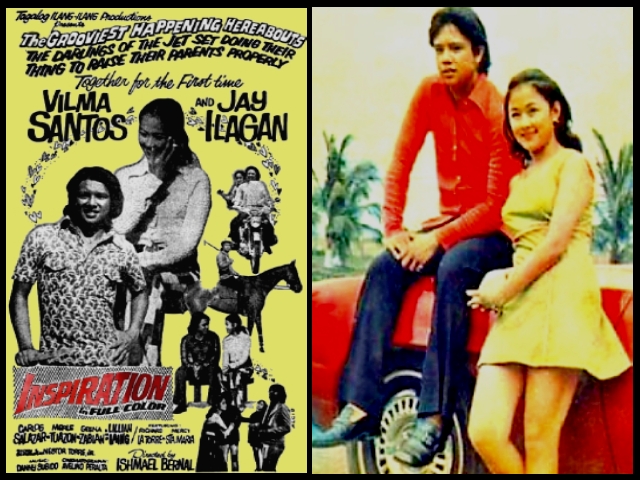
Ishmael Bernal, who claims to have directed Vilma’s best pictures, believes she has endured because she has physical, emotion and mental endurance. ‘She could work for 24 hours straight without getting tired, without flagging in her acting. There were times when we had to shoot for three or four successive days, getting very little sleep, but there Vilma would be: fresh, enthusiastic, rarin’ to go. Physical endurance is very important to a star. Another thing I noticed was her strong sense of competition. At that time, though of course, she didn’t say so, it was Nora she wanted to beat. Vilma was out to be the bigger star, the better actress. And so she geared her career for a zoom to the top.” Bernal first directed her in Inspiration (1971), produced by Tagalog Ilang-Ilang from a script by Nestor Torre. ‘This was at the height of the Nora-Vilma rivalry and the competing love teams were Nora-Tirso[Cruz] and Vilma-Edgar[Mortiz]. But in Inspiration, Atty. Laxa decided to pair Vilma with a rising new star: Jay Ilagan. That early, I noted that Vilma had the potential to become a great dramatic star. At that time she was not yet doing actress roles, only juvenile fan movies. Her assets were the expressiveness of her eyes, very important for the camera; the creaminess of her complexion, very important on the screen; and the ability to make her audience sympathize if not identify with her. Another thing I noticed was that she’s perfectly relaxed in front of the camera: no sense of compulsion. She just stands there and with a flick of the eye, a movement of the hand, she communicates whatever emotion has to be communicated to the audience. Unlike theater actors who feel they have to use the entire body to communicate, she achieves her effects with the simplest gestures. She already had perfect timing.” 

Inspiration was a comedy and Vilma, to Bernal’s delight, needed very little rehearsal. ‘She didn’t enjoy too much rehearsing, preferring to give all on take one, confident in her spontaneity. Which was what her director wanted. Another thing I remember about the early Vilma: she was a travelling department store. She had a van that looked like the fourth floor of Rustan’s filled with clothes, clothes, clothes, and hundreds of shoes, hats, bras, panties, and costume jewels, all of them nursed by loving alalays who followed her everywhere she went. If the director required an evening gown, a negligee, a pajama top, she had it in her van.” Bernal next worked with Vilma in 1972, on Now and Forever, scripted by Rolando Tinio and co-starring her with Edgar Mortiz and Tommy Abuel. It was a dismal flop, says Ishmael Bernal: ‘So let’s not talk about it.” It wasn’t until six years later that he and Vilma worked together again, on Dalawang Pugad, Isang Ibon. ‘It was written by Jose Nadal Carreon, the former police reporter and UP literary apprentice, and currently one of our best directors. It was an adult film and it started a new trend for Vilma: playing the other woman. The film was very hot copy because it was the comeback vehicle of Romeo Vasquez, with whom she was then having an affair. I found Vilma different: she had already matured. She must have been around 23 or 24. She was up in the clouds, being very much in love with Romeo Vasquez, and having already beaten Nora in the game of Who’s No. 1? This was in 1978. Nora was doing action movies like Super Gee that were flopping miserably. But Vilma’s career had taken a new path: heavy drama.”

The change in Vilma was not all to be good. ‘I noticed that she was often tired, often had difficulty keeping up her energy or concentration. The message projected was that the business of acting and the pressures of showbiz in general were beginning to tell on her.” The prime reason was the exhausting affair with Romeo Vasquez. ‘That affair was blown up by the press to scandalous proportions and I could feel that she was under pressure. Still, she tried to keep up a brave front, to be always polite: the smiling professional, and to hide from the public her inner turmoil. She was getting a bad press because of this affair with an older man, a notorious playboy, but the affair was a big factor in the maturing of Vilma Santos. When she made Dalawang Pugad, Isang Ibon she was saying goodbye to adolescence. She was saying: ‘I am a woman, I am entitled to happiness, I am entitled to the love of the man I want to love!’ It was during this period she uttered the most famous of Vilma quotes when she said of those who were bad-mouthing her: ‘To hell with all of them!’ this was her declaration of independence, of adulthood, of resistance. The film proved to be a very big success, nominated for various awards, though she didn’t gain an acting award.”

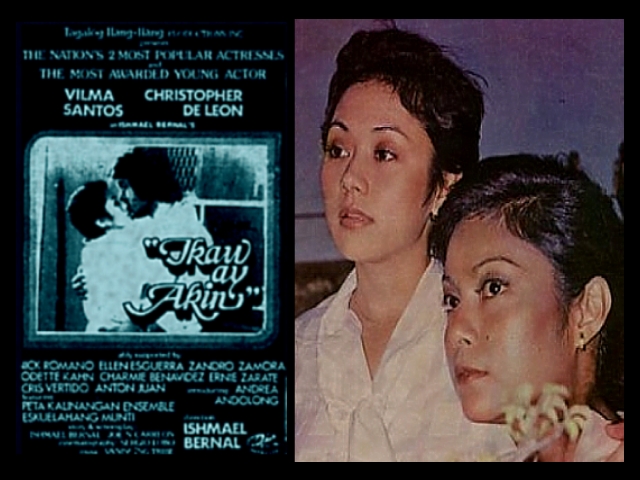
Vilma’s next Bernal film was 1978’s Ikaw ay Akin, again scripted by Joe Carreon, and starring Vilma and Nora together, with Christopher de Leon as their leading man. In this film, says Bernal, was set the persona Vilma would portray in a series of sex melodramas. ‘She played a liberated woman who had grown up in the States: very witty, very nervous, very aggressive, a chain smoker and fast talker, who’s trying to steal Christopher de Leon from Nora Aunor. Her character was neurotic, a free spirit, unpredictable; and I noticed again that Vilma herself was on edge from too much hard work. I could understand her arriving late on the set because I knew she was doing four or five movies at the same time. She would just sleep in the car while rushing from one location to another and she would arrive looking groggy and exhausted. Sometimes she would just give up and beg that the shooting be postponed because her body just couldn’t take it any more.”

She was then the top box-office queen and the top dramatic actress and it’s always a strain to keep on top. But the ‘glad girl” that’s the basic Vilma Santos continued to shine through the murk of those harrowing days, as Bernie Bernal recalls. ‘However tired or sleepy, she remained carinosa, always polite, and all smiles to the crew. She would buy them merienda and at the end of shooting would throw a feast for them: lechon and pancit. She was always considerate with the crew.

Some movie stars get carried away by a sense of their importance: they know they are carrying the movie, are responsible for its success, are making big money for their producers. And so they become temperamental. Vilma is quite aware of her importance and make no mistake about it: she has the qualities needed for survival in a cruel ungrateful world. She is a fighter, she has a killer instinct. All movie stars, especially the superstars, necessarily have this instinct. But in Vilma it goes with a real concern for others. And she wants her public image to be positive.”

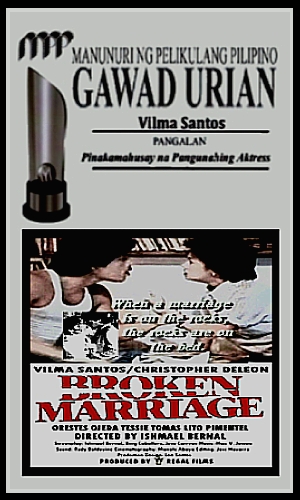
So, even in a time of crisis, Vilma preserved her image as a glad girl – while Nora was busy setting herself up, or down, as la Dolorosa. If Vilma works at happiness, Nora has made a career of masochism. Bernal says that in Ikaw ay Akin Vilma was already conscious of her own particular style of acting, which can be described as minimal: less is more. The fewer and simpler the gestures, the greater the effect. The stripped style won her a grandslam when she did Relasyon with Bernie, which he rates as her most memorable film. It got her all the awards on the market. ‘In Relasyon Vilma made the character of a mistress very human and sympathetic, not just a contravida. The film was her comeback after her pregnancy. She and Edu Manzano had just had their baby boy, Lucky. Her next film, Broken Marriage, set another trend for her; the role of a modern urban working girl, as sophisticated as her Makati office and her personal problems. Her fans are growing up and Vilma’s image is becoming more and more complicated.

But it was in the last film we did together, 1988’s Pahiram ng Isang Umaga, that I noticed the big change in Vilma. She had become an artist. She was no longer just a movie star following the director’s instructions. She was very hyper, very high, eager to experiment: a cooperative and mature actress. She had studied the script in advance and she had sensible suggestions about it. I felt I was no longer working with a movie star but that she and I were two artists collaborating on an objective statement about life and death and human relationships.” How did a girl who began as purely ‘pang-masa” develop into so fine an artist? Vilma herself gives the credit to her willingness to learn. The process was sometimes painful but, says Vilma, she knew it was all part of her education. I am now 28 years in this business and everything I have learned has made me a stronger woman. Even the troubles, the intrigues – they have made me a stronger woman. I’m always learning. For example, there was a part of my career that was for me a very expensive education.” She had set up a production company of her own that, it turned out, was mostly producing debts.‘ That was about 15 years ago. I tried producing and I made about five movies for VS Films, my own outfit. It was managed by my mother, not by me personally, and Mama is so good people take advantage of her. Before I knew it I was drowning in debt. I was pregnant at the time, 1980, when I learned I had a debt of six million pesos! And I didn’t even know if, after giving birth, audiences would still accept me. How was I to survive? I prayed; I told God I was willing to work, sarado ang mata, just to pay off all those debts. And with his blessings I was given a second chance. After giving birth to my son, my career got a second chance and became even more successful: not only did I continue to be box-office but I was winning awards right and left.”

Before Lucky’s birth she had no contract with any studio but after his birth the two leading studios, Regal and Viva, asked to place her under contract and she signed up with both! ‘It was arranged that everything they paid me went straight to the banks, to pay off my debts. Not a centavo of my movie earnings passed through my hands. We lived on my television earnings. I had been offered this TV show, VIP Vilma in Person. It was a Sunday show and Sunday was the only day I could spend with my family but I had to sacrifice my day with them because that weekly show provided us with maintenance money. Unfortunately, my marriage suffered because of that. At that time, Edu wasn’t active in the movies yet; he was working in an office and, of course, his schedules and my schedules were in conflict. I think he suffered some kind of culture shock. Oh, he tried to be understanding but imagine him coming home at seven o’clock in the evening and me coming home at four o’clock in the morning. That won’t work – but I had to work.” She says

she didn’t feel guilty about the marriage breaking up. ‘Definitely not. If that was bound to happen to our life, what could I do? Even if I had just stayed at home, our marriage would have suffered, because of all my debts. And what would have happened to us without any money?” She knows the importance of money because she grew up in security and has learned that insecurity is being without money. ‘I wasn’t born poor but I wasn’t born rich either. I had a comfortable childhood. I went to a private school, St. Mary’s Academy, and I had a new pair of shoes whenever the school year opened. We could buy what we liked and though our house wasn’t very big it was a cozy home.” Her father was in the government service and she had an uncle, Maurie Agra, who was a cameraman for Sampaguita Pictures.

It was this uncle who got her to audition for Sampaguita when she was only nine years old. ‘Whenever he came to the house I’d sing and dance for him. I loved to watch TV and listen to radio dramas and at school I was always on the programs. Once, my uncle watched me imitating Pilita Corrales, a white sheet all over me for evening gown, and he asked would I be interested in going into showbiz and I said I’d just love to become an artista.” The role she was called to Sampaguita to test for was as Rita Gomez’s daughter in Anak, ang Iyong Ina, but on the same day Sampaguita was testing about a hundred other children for the role of Trudis Liit, a komiks character. The little Vilma kept wandering into that larger group where, as her mother kept telling her, she didn’t belong. But here was Doc Perez himself, head of Sampaguita, beckoning to the child. ‘Mama says I don’t belong there,”said the little Vilma. ‘But I want you,” said Doc Perez. Ang Mama consenting, Vilma took the test for Trudis Liit: speaking a line or two of dialogue, crying out when hit by Bella Flores, even ad-libbing already. ‘And I was chosen to play Trudis Liit! So, my first time in movies, I was into two movies right away: Trudis Liit and Anak, ang Iyong Ina. And I got the Tessie Agana treatment: chicken and apples every lunch. Sampaguita was very nice to me. I was its baby.”

And she was its No. 1 fan, gaping to see Gloria Romero passing by and chasing after Amalia Fuentes for her autograph. ‘Ate Nena snubbed me. She just said: ‘Later!’ But I loved her and we’re very close now.” Vilma the child star was in a string of movies playing the daughter of Lolita Rodriguez or Luis Gonzales or Dolphy. And she was also in the TV soap opera Larawan ng Pag-ibig with Rosita Noble, Willie Sotelo and Eva Darren. That six o’clock p.m. tearjerker rose to No. 1 in the ratings. Meanwhile, what was happening to Vilma the growing girl? ‘What was happening was a lot of school absences and a lot of special exams. The Sisters at St. Mary’s were very understanding: if I had too many absences, they gave me special exams. But when I was in fourth year high school I was practically not attending classes any more because that was the height of the Nora-Vilma competition. What was done, with the permission of the Bureau of Education, was that I had a tutor during shootings and then I was given the test for the last grading period. Thanks to God, I passed it and I got my high school diploma. But there could be no thought of going on to college.” She had by then graduated from child star to teenage superstar.

‘Despite showbiz, I was able to enjoy my childhood. It was my teens that suffered. Those were the days of jam sessions (no discos yet) and I missed them. I was dying to attend but I couldn’t. I was too busy promoting my love team with Bobot Mortiz. So I didn’t have the chance to be a teenager. But when I reached my 20s that was when I experienced iyong being a woman: going out on dates, candlelight dinners, enjoying life. I enjoyed my 20s.” During her teens she was mostly a song-and-dance girl on the screen, but after seeing The Miracle Worker she dreamed of tackling roles like the one done by Patty Duke in that film.  However, she felt her true line was dancing: ‘Definitely not singing; I sing just for the sake of my fans.” Doing pop teen movies by the score, would she ever have a chance to act like Patty Duke in The Miracle Worker?

Loveteams were then the wheels of teenage superstardom. Vilma and Edgar Mortiz were a prize pair of wheels. The Nora-Tirso tandem formed the rival pair of wheels. It was an endless frenzied race. Vilma says that during her Bobot Mortiz phase she was doing multiple movies at the same time. ‘Actually Edgar didn’t start with me. He started with Nora and Tirso: they were a triangle. My loveteam then was with Jay Ilagan: we were doing Operetang Putol-Putol on the radio and going out on personal appearances for the fans. Jay was still slim then, very good-looking. Bobot was already chubby but not as fat as he would become later: he was guapo and moreno. Tirso was truly the mestizo type. Nora was even shorter than me though I think she’s older by a year; she was very thin then, with long hair. It’s our complexion that’s usually compared: she is kayumanggi and they say I am fair. Edgar dropped out from their triangle when it was noted that the public preferred Nora to be paired with Tirso. And Jay Ilagan dropped out when I was paired with Edgar. So when we all went on TV, on rival programs, it was the loveteam of Bobot and me versus the loveteam of Guy and Pip. That was in 1967.”

Inevitably, Bobot Mortiz came to share more than the spotlight with Vilma. ‘He was my first boyfriend, though ours was no more than puppy love. He’s a nice guy, very intelligent. In fact, I suspect that the ideas in Going Bananas are mostly his. No, we never talked marriage. We were a team for about five years. Then I did movies solo.” More serious was her next love affair, with Ronnie Henares, son of the famed news columnist. ‘I met Ronnie on TV, when he was guesting on shows with Jojit Paredes. He started courting me – this was in the early ‘70s – and our relationship had the blessings of our families. His family and mine became very close. We planned to marry but I felt I was not ready yet: I was still too concentrated on my career – though at the time the movies I was doing were merely pang-masa, nonsense musical like Lets’ Do the Salsa. I was not yet very conscious of artistic cinema: I wanted my movies to be for the boxoffice, Ronnie was the kind of boyfriend who gifts you not with rings or flowers but with books. I never went to college but Ronnie was a good equivalent: I learned a lot from him. He corrected my English, improved my pronunciation, and introduced me to new words, all through the use of cue cards that he made for me and made me read aloud to him. He gave me books to read and helped me understand them by explaining their meaning. Our relationship lasted a year and a half. We had our lover’s quarrels and the sweet thing is that even during our breaks our families stayed close. And Ronnie and I are still friends today. He composed a song for me.”

Tantamount to the Erap episode in Nora’s life is Vilma’s moment of appasionata with Romeo Vasquez, an older man with a past. ‘Romeo Vasquez was a turning point in my personal life. I really gambled with my life when I fell in love with him. He had come back to the country after being away for years. He was already separated from Amalia. Then I met him and we were offered a movie to do together: Nag-aapoy na Damdamin, for the Santiagos. The time we were together he was okay. We also did Dalawang Pugad, Isang Ibon, and Pulot-gata. And the movie that had him and me together with Nora nad Tirso: Pinagbuklod ng Pag-ibig. Our relationship lasted two years. Even after we parted, we still did a movie together.”

Vilma dismisses as mere chismis the rumor that Ronnie Poe became wildly enamored of her after they did Batya’t Palupalo and Bato sa Buhangin. But local cinema legend has the King coming to blows with Romeo Vasquez because of this jealous rivalry. Even the scene of the duel is specified: the lawns of a Joseph Estrada abode, during an Erap birthday party. An amused Vilma, however, shakes her head in denial. ‘Fernando Poe and I became close but we did not have any relationship. I’ll admit I was very impressed by him when we made our movies together. Totoong humanga ako sa kanya. He knows how to ‘carry’ people, how to deal with them in such a way as to command their respect. He is really the King. We became very very close: he’d send me food, like a dish of fish, during shootings. But that was all.”

While recovering from Romeo Vasquez, Vilma became a disco habitue, and in these excursions to the haunts of night people she often bumped into a young man who thus became a nodding acquaintance: someone she knew by face long before she knew him by name. One movie she did during this period was Yakapin Mo Ako, Lalaking Matapang, with Lito Lapid, which was shot in Cebu City. And as usual at night she went disco-hopping. And one night, at one disco, there he was again, this young man who had become a nodding acquaintance: Edu Manzano. ‘That was the first time we had a chance to talk. He’s really a charming guy and very handsome. We danced, we chatted, we danced – gano’n. Then I went back to my hotel.” She was getting ready for bed when the phone rang: Mr. Edu Manzano calling. ‘But how did you get my number?” ‘You know me, I’m resourceful. When do you go back to Manila?” ‘Tomorrow,” said Vilma. ‘What time is your flight?” ‘Two o’clock. What time is your flight?” ‘Three o’clock,” said Edu. ‘Bon voyage. And good night.” Next day, loaded with the mandatory hojaldres and rosquillos, she boarded the afternoon plane for Manila. And who should be sitting across the aisle from her but Mr. Manzano. Well! He really was resourceful. But they couldn’t converse. She was sitting beside Lito Lapid; Edu was sitting beside an Iranian. Only upon landing could they snatch a moment of exchange. Of course he wanted to know if he could date her.  “Can I invite you out or do you have a boyfriend?” “No.” “No, I can’t take you out?” “No, I don’t have a boyfriend.”

But a week passed; two weeks; a whole month – and no word from Edu. He’s not taking me seriously, shrugged Vilma. ‘Ako naman, at that time,” she says now, ‘I wasn’t taking him seriously either.” Then one night, at the Alibi Bar, she saw him again. But she was with a date with whom she went nightclub-hopping until four in the morning. When she came back to her hotel, there was a note from Edu: he was waiting in the lobby. She went down to see him, and he invited her to breakfast. What a terrific topping for the night before and her morning after. ‘So we stepped out again and had breakfast at the Manila Hotel. We talked and talked until daylight. Then he brought me back to my hotel. And that was how it started. After that, we were seeing each other every day.” During the Grand Passion that was Romeo Vasquez, her critics had hooted that she was Vilma the mad girl. But La Belle, La Perfectly swell, Romance with Edu Manzano was the real coming-out party for Vilma the Glad Girl. Miss twinkletoes had met the boy next door. Of the men in her life, Vilma Santos says it was Edu Manzano who had the most stunning style of courtship. He didn’t treat her like the superstar, the love goddess, the sex symbol, the glamour queen that she was; he treated her as if she was an ordinary kanto girl.‘ He didn’t take me to dine at five-star hotels; we ate at small pizza houses. We didn’t go dancing at elegant ballrooms; he took me to little discos. It was completely the opposite of how I had been treated by other suitors: kabaligtaran ng lahat. And how I loved it! Once, early in our relationship, he invited me to lunch. I assumed we would be going to a luxury bistro and so I dressed to the teeth. But he arrived on a motorcycle, wearing Levi’s and rubber shoes. When he saw me in all my finery, he flipped. He told me to go back up and change. So I change to jeans and rubbers. And off we sped on his motorcycle, me behind clinging to him.” Naturally, all those who spotted her – bus passengers, street vendors, pedestrians on the sidewalks – could hardly believe their eyes. ‘Si Vilma! Si Vilma!” they cried in amazement. And there indeed was the superstar, the love goddess, the sex symbol, the glamour queen, in jeans and rubber shoes, riding bumper on a motorcycle.  Vilma says it was as if she had moved into another world. ‘I really enjoyed it: riding on his motorcycle, walking in the rain. And then, after three months, he asked me to marry him. This was in 1980.” She was about to leave for the United States, to shoot a movie. She said to him: ‘Let’s give ourselves time, let’s test each other. This movie will take two months to do over there. If after two months we still feel this way, then we are really meant for each other. And we’ll get married. But not now, not right now when I’m going away.”

The decision was to make no decision yet. And Vilma left for California. She really was testing herself, for the stateside movie she was doing was with Romeo Vasquez. Had she really and truly got over him? Was she really and truly in love with Edu? The answer hit her like a bolt from the blue when Edu Manzano suddenly showed up on location and she felt, not annoyed, but enraptured, though he had broken their agreement to stay apart for two months. That he had so impulsively followed her bespoke ardor on his part. She did wonder if her producer, Atty. Espiridion Laxa, had anything to do with the surprise. But: ‘Definitely, it pleased me!” The news that lover boy Edu had leapt across the Pacific to join his lady love had Philippine moviedom ga-ga with the thought of how bigger a blockbuster than a Vilma-Romeo movie would be a Vilma-Edu picture.

The Vilmanians, as her fans are tagged when arrayed against la Aunor’s Noranians, were clamoring for a view of their glamour queen’s consort. Vilma, ever astute as businesswoman, was only too glad to deliver. ‘But before making that movie, we got married in the States.” Actually, it was an elopement. ‘My Mama didn’t know about it. Edu and I simply ran away. We got wedded in Las Vegas and we honeymooned in Disneyland and at Knottsberry Farm. Two weeks we were in hiding. Then we went back to Los Angeles. And that was when we broke the news to Mama. She cried. Oh, my Mama is good: sobrang bait nga. She was never a stage mother – except in the matter of singing, which she was always pushing me into. ‘Go ahead, sing,’ she would tell me, even if I didn’t want to. Maybe I used to be too dependent on her, as in the time of VS Films, when her goodness was being abused and when I learned about that it was too late.  One thing about my marriage; there were never any differences between Mama and Edu.”

In Los Angeles Vilma really worked at housekeeping. ‘Edu and I made a home for ourselves, just for the two of us. And I was a real housewife. I made the beds, I swept the floor, I did the cooking, or tried to. But in the States you can buy everything ready to cook. I had to be housewife because Edu is conservative and I had to be the kind of wife he wants for a wife. He called me Babes, I called him Doods.” She says that as a husband Edu was ‘mabait’. ‘He had already done a movie, Alaga, but was not yet well known. I promised him that on returning home I would lie low as movie star and just attend to being housewife. Unfortunately, on arriving in Manila, I found I was pregnant: Lucky is a honeymoon baby. At the same time I learned I had a six-million -peso debt. I told Edu about it and he said he would find some way we could work it out. But there was really not much he could do about so huge a debt. So, after giving birth to my son, I returned to work. Of course, that meant I had little time for my husband and my baby. There was a yaya to take care of the baby and as much as possible I tried to mother him but of course I couldn’t give him one hundred percent attention. Edu wanted me to be home at least by ten o’clock in the evening but it was oftener four o’clock in the morning before I could rush home.” With her feeling so exhausted and him feeling so neglected, impatience could not but become their ambiance during their four years of marriage.‘ 

In fairness to Edu, he did try to understand the situation. And he did care for me. But I simply couldn’t give up my career until I had paid off my debts. I only finished paying in 1987. And by that time Edu had left.” Possibly, for Edu Manzano, the real cruz of the marriage was having to suffer being Mr. Vilma Santos. But she says that theirs was a very loving parting. ‘We had a beautiful talk, the two of us. We agreed that our love was still there but, because we kept clashing, we shouldn’t wait until we started hating each other. We should give ourselves time to breathe and to think, apart from each other. That was already our fifth separation; the first, second, third and fourth had all ended within two months. I was expecting the fifth to end just as quickly but when it had lasted eight months already I wondered if we had not indeed gone our separate ways. Kanya-kanyang buhay na. Then I learned he had a girlfriend. He was first.” If she had hoped for a happy ending to their fifth separation it was for the sake of their son. ‘ Before Edu and I parted, we stepped out, the three of us: Lucky was then four years old. And we explained to him what was happening. We felt it was better to be honest with the child: when he grew up he would understand. He himself would not be affected: Edu and I assured him that both of us would take care that he was not affected. He is nine years old now and his name is Louis Philippe Manzano. He weighed 7.7 pounds when he was born on April 21 – and 21 is a multiple of 7. That’s why we call him Lucky.”

Vilma says she felt bad when she heard that Edu was running around with another girl. ‘I said to myself: ‘My God, why should I go on suffering like this: I’ll only grow old.’ I decided I’d like to run around too, enjoy myself. So I went out but I chose a safe place: King Kong, a club frequented by movie people, owned by Marilou Diaz-Abaya. That was the first time I had stepped out since the separation and that was the first time I met Ralph Recto. He’s a nice young man, very intelligent, very down to earh. He has a degree in economics and is taking his masters now, at the UP. I learn a lot from him, my substitute for college, like Ronnie Henares. He is very interested in politics but I don’t meddle in his politics. Our relationship is now on its sixth year. When we met, Lucky was only four and now he is nine. Lucky and Ralph are very close. No, we don’t talk marriage.” The decade since her marriage has seen Vilma developing, as Ishmael Bernal says, into an artist. Vilma smiles to recall that she started out just wanting to dance. What’s singular about Vilma’s career is that, as a child star, she went through no awkward age, and now, as superstar, she seems to have been set no deadline.

The nine-year-old who starred in Trudis Liit had a steady four years of playing little daughter of Lolita Rodriguez and Marlene Dauden but never suffered an ugly-duckling phase of no-longer-a-child and not-yet-a-teener. The difficult 13-14-15 period was smoothly bridged by roles like that of Imee Marcos in Iginuhit ng Tadhana and Pinagbuklod ng Langit. And right afterwards she became the teen queen in the pop entertainments she did with Bobot Mortiz. Then at 19 she began to veer towards heavy drama. ‘I was 19 when I made a film with Eddie Rodriguez, playing a girl falling in love with an older married man. The wife was Barbara Perez. If I remember right, that was the first time I wore a bikini.” Nary a hitch in the Vilma career; no pauses in the action as she grows up from child to girl, or from sweet young thing to red-hot mama. Or from innocuous movies to daring films. ‘Compared to my teenage partners, Eddie Rodriguez was far and away the leading man, the actor, the gentleman. Very different in manner, in the way he moved, the way he carried his clothes. He helped me refine my acting and little by little I learned poise.”

The decisive divergence is Burlesk Queen. ‘I took a risk playing Burlesk Queen, Celso Ad. Castillo directing. I was 24. My American manager, William Leary, had persuaded me to accept the role. He had been my manager since he convinced me to do a record, Sixteen, that made good. I was no longer with Sampaguita but I went back there from time to time to make sweet sweet movies or musicals. That was my style. Then I did Burlesk Queen. It turned out to be a turning point. I won an acting award. Suddenly I was the drama queen. Celso Ad. Castillo is really good. In a way it was that film that made me a real actress. It changed my sweet image. And it made good at the boxoffice. ”However, later relations with Castillo proved to be painful. ‘I already had my production company, VS Films, and I got him as director for Pagputi ng Uwak. He really gave me a hard time on that film: it was two years in the making! And it sank VS Films into debt. Celso and I had a fight. As a director he’s very good but as an artist he has his quirks: merong sumpong. I hear he now works in Malaysia: sayang, he was good for Philippine movies. Pagputi ng Uwak nearly ruined me, financially and mentally, but it turned out to be a firstrate film and it won a lot of awards, it won VS Films a lot of prestige. But I still prefer Burlesk Queen.” The five productions of VS Films, which included Rosas sa Putikan, directed by Maning Borlaza, and Halik sa Paa, Halik sa Kamay, costarring Vilma with Eddie Rodriguez, all made money, including Pagputi ng Uwak. Nevertheless, by the time she had to shut it down, VS Films had her drowning in six million pesos’ worth of red ink. It took her some seven years to pay off that montrous debt. And it meant having to go back to making movies that were ‘pambata at pangmasa” movies like Darna and Dyesebel and Wonder Vi.

Still, this ‘comeback’ period (after the birth of Lucky) was also the start of a series of vintage pictures, beginning with Relasyon, where she played a free soul living in with her lover. The lover was played by her most compatible co-star, Christopher de Leon. ‘Christopher, of all my leading men, is the one I’m most comfortable with. We really make a team. And yet we never had any relationship, except on the screen.  Just how comfortable I am with him can be seen in the fact that it’s with him I have made the biggest number of movies: around 18 or 20. There was a year when we made four movies together! So often did we play opposite each other that we felt we had to vary the situations, to avoid becoming monotonous. We’d say: Let’s sit down and think of a new situation in which to find ourselves. But there came a time when we simply could no longer think of anything new for us to play. We seemed to have exhausted all the possible love angles. And that’s when we decided to stop teaming up for a while. I went on to trying other leading men. Actually it’s not I who choose my leading men but the producers. I just accept whoever they pick for me.” A kind of homage is paid her when she’s paired with younger stars like Eric Quizon and Aga Muhlach.

‘Definitely, I feel flattered. But then I feel very very secure in my age and with myself. It’s a matter of self-confidence, of knowing that when they look at you they see a woman, period. Age doesn’t matter: I have no insecurities about it.” She knows she can look as young as, or younger than, her new leading men – as long as she herself feels young inside. Her effect on the folk around her has been most graphically expressed by, of all people, director Lino Brocka, who directed her in three of her most applauded vehicles: Rubia Servios, Adultery and Hahamakin Lahat. ‘When you work with Vilma,” says Brocka, ‘you get this feeling of having just emerged from a bath and of being drenched all over with Johnson’s baby cologne. You feel so fresh, so youthful.” He adds that when they first worked together she seemed scared of him. Now he gushes: ‘Ang sarap niyang katrabaho.” The chief reason, of course, is: ‘She has matured and grown up as an actress. At this point of her career, she is very good, she is really big. Before, she had a hard time making herself cry, but now how fast she can do it. And she has become sensitive to direction: in that repect she has overtaken Nora.” Brocka says that the sensitivity he noticed at once in Nora Aunor was what he missed when he started directing Vilma. ‘So I assumed that, as an actress, she was really just second to Nora. But Vilma takes good care of herself not only physically – there’s always this aura about her – but intellectually too: so she grows and develops tremendously. The second time I worked with her, in Adultery, I realized she had become as good as Nora, or better. And by the time of Hahamakin Lahat there was the complete sensibility already – a difference in the way she expressed pain and hurt. Talent was welling out like spring water, and flowing from her most naturally, no longer courtesy of Vicks or whatever.”

What would explain this outburst of talent? ‘Possibly her coming of age as a woman. She had become more sure of herself. And this self-confidence grew as her private life became calmer, as she found herself with fewer problems, both financially and emotionally. How a director would feel about her at the moment is that he can do anything with her now. She has become so supple that his tendency would be to challenge her still further, make her come up still higher, open up more doors. She can give you so much more now.” Brocka snorts at the complaint Vilma is currently making: that so utterly has she done all the roles she can do there’s no new role left for her to do. ‘She can do the same role over and over again as long as, with the right direction, she does it always a bit more profoundly than the last time and makes it a bit more complex than the last time. She should have no problem at all with roles. In fact, I would advise her now to play roles that are not glamorous. Yes, she’s too associated with glamour to do that. But maybe in another year or two she can afford to take off her make up and act her age. Then she’ll really be on par with Nora, whose chief concern is seldom her looks. With Nora, it’s not her face that’s on sale. The problem with Vilma is that she feels she has to live up to her image as The Glamour Girl. I’m waiting for the day when glamour will have no truck -walang pakialam! – with the acting.

Bemusing how up to now Vilma continues to be bracketed together with Nora, so that to speak of Vilma is to speak of Nora. They have been rivals, opponents, antagonists for so long that it’s impossible to tell their careers apart. Spur to each other from the start, they have realized they need each other as goad and goal, the achievement of one goading the other to an equal, or greater, achievement. Vilma-Nora is the back-to-back monster of Pinoy showbiz. Vilma sees it as sibling rivalry. ‘If Vilma is there, Nora is there. There was a point in our career [note that Vilma uses the collective singular] when we were both so affected that the rivalry became a personal feud between us. There was even a point in our career when we were fighting each other – for honors, for awards, for acting prizes. But there also came a point in our career when we realized we were not getting any younger and we started becoming very close. I think that was the time her father died and I went to the wake. We hadn’t been together since we did a movie together when we were feuding hotly: no talking to each other during the shooting; she stayed on one side with her fans, and I stayed on the other side with my fans: no communication. But when I attended her father’s wake, that was when we realized we could be friends. And we started helping each other: she’d invite me to guest on her TV show, and vice-versa. Then her mother died and again I went to the wake. And that was the time when Nora and I became so close we were telling each other the most intimate details of our life.”

And the details range from ledger to boudoir. ‘Today Nora and I are still competing but it’s a friendly competition now; in fact, I’m the godmother of her adopted child. We want that there should still be a competing between us, but with nothing personal to it. So it has become a healthy competition. Nora is a very sensitive person. Me, I’m not very sensitive. But make no mistake about Nora: she is also a strong woman. What I know of Nora: though there may be many advising her, ultimately it’s her own feelings she follows. She does what she wants to do; it’s herself she obeys: that’s her attitude. I guess what she needs at present is the right person. Nora is 37 years old now. I am 36 – a true friend who loves her. A friend who will love her whether she’s down, whether she’s up, or whatever.”

What puzzles is the difference in image between Nora la Dolorosa and Vilma the Glad Girl despite the fact that actually both of them underwent very similar experiences: rash infatuations, career ups-and-downs, a failed marriage, business fiascos, the heavy cross of huge debts. Why did such ordeals produce the sad look in one but a glad look in the other? To be sure, there are those who say that Vilma’s image as the Glad Girl is just that: an image; and that the reality behind it may not be quite as pleasant. The real Vilma, aver these know-it-all’s, is cold-blooded: sweet na sweet pero deadly; nothing matters to her but her career. She was playing herself ruthless in films like Hahamakin Lahat. When she found she couldn’t displace Nora as the nation’s sweetheart, she did violence to her own persona by enacting Burlesk Queen, the kind of role Nora cannot do: she risked her career because that was the only way to beat Nora. Vilma herself shrugs off such misreadings of her history with the remark that the intrigues of others only help her become ‘a stronger woman.” Even the world’s malice can’t be made useful in building up character. ‘I am Rosa Vilma Santos, who grew up in Bambang, Trozo, and then in La Loma, and my life is an open book. What people say about me – that’s a problem I must live with. I guess it’s the price I pay for my career: the price of no privacy. I can’t do anything about that anymore. However I may want to keep my personal life private, it’s impossible: lalabas at lalabas talaga. However discreet I may try to be, I’m sure to be found out.” So she chooses to let it all hang out. ‘Of course, I hate having no privacy: I’m really suffering from that. Sometimes I wish I were an ordinary person so I can go where I like, go shopping for groceries with my son, go for a walk and enjoy it. But how can you enjoy it when you’re always getting mobbed? But, as I said, that’s the price you pay.” And certainly she has no intention of retiring just to gain that precious privacy. ‘Nor no plans either of getting married. Not yet. maybe someday, yes. As of now, I’m very comfortable and happy with my personal life. But another marriage? I’m not prepared for that.” 

What she’s prepared for right now is more career. ‘I have reached a position when I’m not contented with just acting: I’d like to experience all the other works of moviemaking. But most of all I want to be a director. I want to be given a chance to direct a movie. So that this time I myself will be the captain. I have ideas I want to try out.” She confounds the Cassandras by expressing hope and confidence in the Philippine cinema. ‘There has been progress, there has been improvement. We started in black-and-white: now we’re in color. Yes, there are frustrations. It’s frustrating to come up with a film of relevance, to upgrade the cinema in general, and see it fail at the box-office. A painful experience – like my movie Sister Stella L. I felt bad when it didn’t make good because I like that movie very much. It wasn’t my first time to do a quality movie that had to be yanked out in seven days. You can’t blame the producers: it’s their money at stake. If I were in their place, would I risk my money on something that won’t sell? And yet how I wish there were some producers willing to risk their money on movies with significance… I hear even the scriptwriters are feeling frustrated because, when they do a quality script, they only see it changed into something with lots of shrieking and slapping. But those are the movies that sell.” Nevertheless, she looks forward to a classier tomorrow for Philippine cinema.

‘And what’s tomorrow for Vilma Santos? I’m trying to be more stable because I know that show business is not stable. I’m planning to produce a movie next year. This time I’ll manage production myself. I’ve already started with telemovies. The first was Lamat sa Kristal, with Richard Gomez. Next was Katuparan, directed by Marilou Diaz-Abaya. And the third is this one I’m doing right now with Aga Muhlach, Once There Was a Love, directed by Maryo J. delos Reyes.” Her own TV show just celebrated its 10th anniversary – and with a scandal yet. It got kicked out of its usual venue, the Metropolitan Theater, because, complained the Met honchos, Vilma’s live audiences wrought havoc with the Met’s upholstery. Which, to take the Pollyanna, or Glad girl, approach, proves that Vilma’s audiences today are not matrons and seniors but still the young, the wild, the reb. She says she has no hang ups about age. But how does she keep herself looking young? ‘I don’t know. I don’t do anything special. I used to swim but I don’t have the time now. I don’t cut down on anything. I drink occasionally but I’m not really a drinker. My true enemy is tobacco:

I smoke. Aside from that, I know no other vices. On facing the camera, whether movie or TV, I put on make up. But Vilma Santos the person, when in her house, puts nothing on her face.” She is positive it’s not make-up that makes her go over on the little or big screen as young-looking. ‘But like the old beauties of Sampaguita Studios. I know that someday I will be the ex-superstar. When that time arrives, I hope I’ll be stable – financially stable enough to ensure a future for my son, present comfort for my family, and for myself a personal life that’s tranquil because I have a stable business and a comfortable income. Those are my dreams now that I am 36.” Not that she has any complaints about the present tense. ‘More than half of my life has been spent in show business,” says the Glad Girl. ‘For all the blessings I am enjoying, I should be thankful!” Happiness, Inc.

Publisher’s Note:  Quijano de Manila (Nick Joaquin) is a National Artist for Literature, while both Ishmael Bernal and Lino Brocka are National Artist for Film.  Our cover story is about the indestructible and unfading screen beauty, Vilma Santos, who has become even more accomplished and seductive as the years pass. Quijano de Manila (Nick Joaquin in journalistic disguise) captures the secrets and the charms of this enduring beauty, a triumph of art over time. – Juan P. Dayang

Source: Written by Quijano De Manila (Nick Joaquin), Philippine Graphic Magazine 05 November 1990
Filmography: Now And Forever (1973)

This slideshow requires JavaScript.

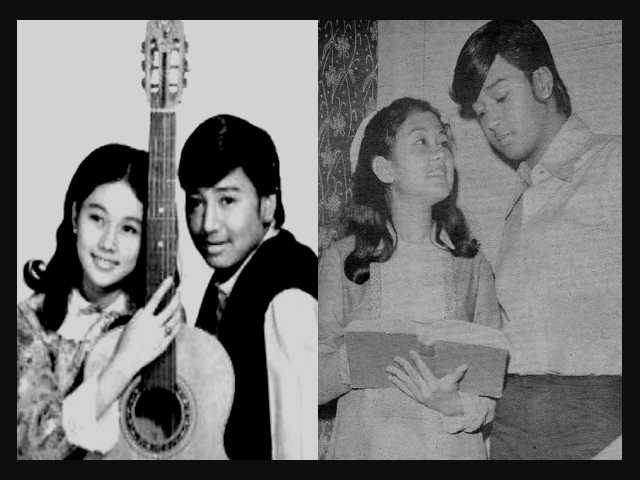
Basic Information: Directed: Ishmael Bernal; Cast: Vilma Santos, Edgar Mortiz, Tommy Abuel, Mercy Pantamaria, Lorli Villanueva, Ernie Zarate, Buth Josue, Jaime Asensio, Ed Villapol, Tony Carrion, Carmen Jiongco, Chito Guerero, Chanda Romero, Elizabeth Vaughn, Randy Robledo; Executive producer: Espiridion Laxa; Cinematography: Benjamin Lobo

Plot Description: No Available Data

Film Achievement: Total Number of Bernal directed films = 8 (Broken Marriage, Dalawang Pugad Isang Ibon, Good Morning Sunshine, Ikaw ay Akin, Inspiration, Now and Forever, Pahiram ng Isang Umaga, Relasyon)

Film Review: “…By late 1969, movie producers had been tapping a Vilma Santos-Edgar Mortiz love team. Edgar was a Tawag ng Tanghalan winner. They started to be together in the movies, My Darling Eddie (1969) and The Jukebox King (1969)…In 1970, the love team of Vilma Santos and Edgar “Bobot” Mortiz was officially launched in the movie Young Love, together with the another popular love team during that time, Nora Aunor and Tirso Cruz III. The Vi and Bot love team went on to do 14 more movies in 1970—The Young Idols, Songs and Lovers, Sweethearts, Sixteen, Love Letters, Love is for the Two of Us, Mga Batang Bangketa, My Pledge of Love, Renee Rose, Baby Vi, Because You Are Mine, Edgar Loves Vilma, From the Bottom of My Heart, and I Love You Honey. All did well at the box-office…” – Rommel R. Llanes (READ MORE)

“…Noong Dekada ’70, ang mga young stars ay kailangang marunong kumanta dahil yun ang uso kaya naman nagtayo ng sariling recording company ang nasirang manager ni Vi na si William Leary dahil ayaw niyang pahuhuli sa uso ang kanyang alaga. Ilan sa mga naging recording artists ng WILEARS RECORDS bukod kay Vi ay sina Edgar Mortiz, Ed Finlan, Sahlee Quizon, Hilda Koronel at Esperanza Fabon. According to Vi, kapag nagrerecord siya ng kanta ay nakatalikod siya sa dingding ng recording company at si Bobot ang umaalalay sa kanya. Ang SIXTEEN, na sinulat ni Danny Subido ang unang recording na ginawa ni Vi at ito ay flipsided by It’s So Wonderful To Be In Love. Ang SIXTEEN ay agad naging gold record at dahil dito ay gumawa ng pelikula ang Tagalog Ilang Ilang Productions, ang home studio ni Vi at ito ay ginawa nilang pamagat katambal si Edgar Mortiz. Hindi nyo naitatanong, muntik nang manalo si Vi bilang most promising singer sa AWIT AWARDS noong early ’70s…” – Alfons. Valencia (READ MORE)

“…The loveteam of Edgar Mortiz and Vilma Santos endured a stiff competition from teeny bopper love team of Nora Aunor and Tirso Cruz III and came up with equal success with string of hit films during the musical era of the 70s. Together they did forgettable but commercial hits and also some hints of the years to come to Vilma Santos’ long career. The most notable one: Dama De Noche. Total Number of films with Vilma Santos – 25 (Young Love, Teenage Jamboree, Songs and Lovers, Renee Rose, My Pledge of Love, Mga Batang Bangketa, Love Is for the Two of Us, I Love You Honey, From the Bottom of My Heart, Baby Vi, Love Letters, The Wonderful World of Music, The Sensations, The Young Idols, Sweethearts, Sixteen, Leron-Leron Sinta, Edgar Love Vilma, Don’t Ever Say Goodbye, Dama de Noche, Anak ng Aswang, Because You Are Mine, Kampanerang Kuba, Kasalanan Kaya, Karugtong ang Kahapon…” – RV (READ MORE)

“…The following year, Santos made fourteen films, mostly forgettable musicals. It was also a year where her benefactor started to positioned her as more of a film actress than a singing film star. The results was successful experiments that showcased her comedic ability (Ang Kundoktora), screaming action stunts (Takbo Vilma Dali) and dramatic capability (Dama De Noche). Her followers was delighted when she earned her first acting recognition the next year receiving the FAMAS best actress via Dama De Noche. Most of her films in 1972 were directed by Emmanuel Borlaza however, she was able to do one film with Ishmael Bernal, “Inspiration” with the late Jay Ilagan, one of her regular film partner. According to Bernal, the film wasn’t as successful as what he expected, as the film flopped. Aside from Inspiration, Bernal did two other films, El Vibora (starring Vic Vargas and Boots Anson Roa) and Till Death Do Us Part (starring the young Hilda Koronel and Victor Laurel). 1973 turned out to be a banner year for Vilma Santos as she emerged on top with box office hits one film after another. Nine films altogether that featured her in different genres (comedy – “Tsismosang Tindera;” fantasy – “Maria Cinderella,” “Dyesebel at ang Mahiwagang Kabibe” and ”Ophelia at Paris;” action/fantasy – “Wonder Vi,” “Lipad, Darna, Lipad,” and “Darna and the Giants;” horror – “Anak ng Aswang” and teenybopper – “Carinosa” and “Now and Forever”). While Vilma was productive Bernal, like the past two years did only two films, one was the comedy fantasy starring television host and comedian Ariel Ureta in a spin off of Superman, “Zoom, Zoom, Superman!” and “Now and Forever” the film that reunited him with Jay Ilagan and Vilma…” – RV (READ MORE)

RELATED READING:

Filmography: Inspiration (1972)

This slideshow requires JavaScript.

Basic Information: Directed: Ishmael Bernal; Story, screenplay: Nestor Torre Jr.; Cast: Vilma Santos, Jay Ilagan, Carlos Salazar, Merle Tuazon, Geena Zabian, Lilian Laing, Richard La Torre, Mercy Sta Maria; Original Music: Danny Subido; Cinematography: Avelino Peralta

Plot Description: Gina (Vilma Santos), a pleasant and witty young lady and Danny (Jay Ilagan), a suave, attractive young lad live parallel lives nurtured by single parents. In series of events, their parents meet and fall in love. Gina and Danny, though despising each other completely, are determined to separate their parents in the desire to win back their parents attention. Despite their efforts, their parents marry leaving Gina and Danny to live under one roof. Will this wreak havoc in the new household or will they learn to grow fond of each other? – Kabayan Central (READ MORE)

An entertaining romantic movie featuring two couples in love. The first couple is an elderly pair, he (Carlos Salazar) who has a possessive daughter, and she (Merle Tuazon) who has an equally possessive son. With the children played by Vilma Santos and Jay Ilagan, one feels he could predict the funny, wonderful ending of this joyous movie. Before the story is concluded, however, it unravels enough unexpected plot twists, and throws zingy one-liners that make the movie a pleasure to watch. Superstar Vilma Santos and Jay Ilagan are appealing actress, who delivers the most impressive performance with her controlled and understated acting style. Also stars Lilian Laing, Richard la Torre, and Gina Zablan. Directed by ace director Ishmael Bernal for Tagalog Ilang-Ilang Productions. – Trigon Video

Film Achievement: No available data

Film Review: In a musical era of 1970s, “Inspiration” was quite an experimental film, with no musical numbers, better screenplay, well-written characters. Nestor and Bernal works well in establishing the character of Jay and Vilma. Their dialouges are not “corny” and very realistic. There is no over the top dramatic scenes inserted between musical numbers here. The parent played wonderfully by Merle Tuazon and Carlos Salazar were convincing. Although both Vilma and Jay played their roles effectively, Lilian Laing steals the film as Lola Jane. She was bubly and funny, a sex-starved, karate black belter, polo game afficianado, who loves life and considering she playing the old grandma who is also the solution to all the complication in life. Bernal was on his element here, a good story teller, pre-“Dalawang Pugad Isang Ibon, Pahiram Ng Isang Umaga and Relasyon.” Although he is directing a light comedy, written by Nestor Torre Jr., he managed to established all the characters without relying on corny dialouges common in this era. – RV, (READ MORE)

“…Jay was more talented than most. He looked cute as heck, but he also had a lot of depth to him. That unusually compelling combination of stellar attributes wasn’t lost on film people and the viewing public, and Jay went from one stellar assignment to the next with no end in sight—until his unfortunate weight gain. It was a truly tragic turn of events, because even his most avid fans among the country’s top filmmakers were forced to replace him with newer actors. For instance, in Lino Brocka’s “Tinimbang Ka Ngunit Kulang,” the male lead role went to Christopher de Leon. And, in “Maynila, Sa Mga Kuko ng Liwanag,” it was assigned to Bembol Roco. If the show biz grapevine is to be believed, therefore, it’s no exaggeration to say that, if Jay hadn’t gained all those pounds, there may not have been a Christopher or a Bembol—not as early as when they became stars on the rebound, anyway. We were fortunate to work with Jay in the early ’70s, when we directed him and his “secret love,” Hilda Koronel, in a Lea Productions photoplay. Their love affair was absolutely forbidden by their producer, but they were such good actors that they fooled everybody! Later, we wrote the script for “Inspiration” for Ishmael Bernal, and Jay starred in that memorable movie too, that time with Vilma Santos…” – Nestor U. Torre, Philippine Daily Inquirer, 24 Jan 2014 (READ MORE)

RELATED READING:

Filmography: Dalawang Pugad, Isang Ibon (1977)

This slideshow requires JavaScript.

Basic Information: Direction, Screenplay and Original Story: Ishmael Bernal; Cast: Romeo Vasquez, Vilma Santos, Mat Ranillo III, Ana Gonzales, Anita Linda, Fred Montilla, Mary Walter, Laila Dee, Roldan Rodrigo, Ann Villegas, Ernie Zarate, Catherine Santos, Val Mallari, Oscar Miranda, Ursula Carlos, Rene Magno, SOS Daredevils, Danie Ramirez, Danny Franco and Rheez Chua’s Models; Art Director: Bobby Bautista; Assistant Art Directors: Emiliano Gonzales, Virgilio Sanchez, and Bert Isleta; Electricians and Gripmen: Corpuz, Romeo Dueñas, Narsiso David, Mariano Guzman, Irinio Flores; Unit Driver: Jose Maigapo; Color Processed: LVN Laboratory; Director of Cinematography: Nonong Rasca; Assistant Cameraman: Felizardo Anastacio; Sound: Luis Reyes; Field Soundman: Jose Fortuno; Boomman: Alberto Dueñas; SFX Technician: Jun Martinez; Film Editor: Nonoy Santillian; Senior Editor: Ruben Pantua; Assistant Editors: Rico Salas, Ariel Quicho, Jun Calaguan; Music: The Vanishing Tribe; Theme Songs: “Puso’y Alinlangan” performed by Vilma Santos, “Torn Between Two Lovers” performed by Gracie Rivera, Dyna Records; Guest Choroeographer: Peter Estocado; Make-up Artists: Dading Ravela and Virgie F. Capulong; Legman: Rodolfo Basco; Publicities: Teresa Santos Blas, Beth Castillo; Stills: Ben Nollora and Lito Morales; Layout Artist: Hannibal Cambel; Title Designer: Marvin B. Panganiban; Production Manager and Assistant Director: Dante Javier; Production Staff: Nelson Sia, Ruben Fernandez, Gloria B. Agustin; Administrative and Sales: Jon Santos Blas, Estrella T. Mendoza, Lea Santos, Fidelio Santos, Julie S. Enriquez; Executive Production: T. Buhain Santos; Executive Producer: Emilia Santos Blas; Produced by Lea Production; 15th Years Anniversary Production; Film Poster Archived: Video48

Plot Description: Dalawang Pugad, Isang Ibon is a 1977 drama film directed by Ishmael Bernal. The film analyzes adultery in a mature way and presents reasons why many modern marriages in bourgeois families slowly dissipate into alienation and lead to adultery. The movie’s main plot involves a fashion model (Vilma Santos) who is torn between two men: her young boyfriend, who is a self-centered, airheaded fashion model (Mat Ranillo III), and an older married man (Romeo Vasquez), who is estranged from his domineering wife (Anna Gonzales). – Wikipilipinas

Film Achievement: 1977 Gawad Urian: Best Director – Ishmael Bernal; Best Editing Nomination – Nonoy Santillan; Best Picture Nomination; Best Production Design Nomination – Bobby Bautista; Best Screenplay Nomination – Ishmael Bernal; Best Sound Nomination – Luis Reyes; Best Supporting Actor Nomination – Mat Ranillo III

Film Review: “…Bernal, testing the tensions of triangular love (for geometry books, one of his characters wittily says) for some time now, plunges deeper into character analysis and metaphorizing… In Lumayo, Lumapit ang Umaga, the triangle was unevenly explored: the first love was sketchily drawn. Dalawang Pugad, Isang become a choice for a more stable relationship. Walang Katapusang Tag-araw was a strange reverse of characters for two women and an unusual development of love into hatred and hatred into love, where therefore the triangle was essentially illusions. Ikaw ay Akin finally sets an interlocked triangle on its bases and looks at it (from all 3 angles) squarely in the face…” – Petronila CletoPelikula, Atbp (READ MORE)

“…Her metamorphosis began in late 1976 when she agreed to be kissed by Rudy Fernandez in Makahiya at Talahib. It was a “feeler” of sort and when the public clacked its tongue in obvious approval, Vilma shelved her lollipops-and-roses image and proved that she, too, could be a woman – a wise move indeed because at that time her career was on a downswing and her movies were not making money. Then she did Mga Rosas sa Putikan for her own VS Films where she played a country girl forced into prostitution in the big city. The movie did fairly well at the tills. Good sign. And came her romance with Romeo Vasquez, boosting both their stocks at the box office (thier two starrers, Nag-aapoy na Damdamin and Pulot-Gata where Vilma did her own wet style, were big moneymakers). The tandem, although it did help Vilma, actually helped Vasquez more in re-establishing himself at the box office (without Vilma, his movies with other leading ladies hardly create any ripple). In Susan Kelly, Edad 20, Vilma played a notorious-woman role that required her to wear skimpy bikini briefs in some scenes, following it up with two giant sizzlers (Dalawang Pugad, Isang Ibon and Masarap, Masakit ang Umibig) that catapulted her as the newest Bold Queen. Then came Burlesk Queen…” – Ricardo F. Lo, Expressweek Magazine January 19, 1978 (READ MORE)

“Sometime in the mid 70s, matinee idol Romeo Vasquez returned to the movie scene after a long absence, his movie career in limbo after his failed marriage with popular actress Amalia Fuentes. His teamup with Vilma Santos somehow rekindled and revived his career. Their first movie together, Nag-aapoy na Damdamin in 1976 turned out to be a big hit. Despite their age gap, reel and real life sweetheart, Romeo, 34 and Vilma, 23, soon became the hottest love team, doing one hit movies after another…” – Video 48 (READ MORE)

“…Romeo Vasquez is an oddity in Vilma’s life. Hindi akalain ng lahat na ang isang notorious playboy and balikbayan actor would capture the heart of the then elusive Ate Vi. Nagkaroon sila ng affair which lasted for more than a year. Kilala si Bobby sa pagiging bohemyo kaya naman walang kakilala si Ate Vi na bumoto sa aktor. Ate Vi was love struck at talagang na head-over heels in love. Nagsimula ang kanilang affair sa set ng kanilang pelikulang “Nag-aapoy na Damdamin”. True to this title, nagliyab silang dalawa at tunay ngang nag-apoy ang kanilang damdamin. May plano pa nga sila ni Bobby na magpakasal sa Europe. Talagang Ate Vi was ready to give up her life as an actress and would settle with the actor abroad. And with herb relationship with Bobby, nag-surface ang bagong Vilma Santos.Ate Vi realized that she cann’t sacrifice everything for love. Nagising siya sa katotohanan at nagkamali kung kaya nagdesisyon siyang kumalas sa bohemyong aktor…” – Willie Fernandez (READ MORE)

“…But it was with handsome actor Romeo Vasquez that Vilma Santos had her most controversial relationship. Romeo was the former husband of Philippine movie queen Amalia Fuentes. He and Vilma first paired in the movie Nag-aapoy na Damdamin (1976). It was also during this year that they became a couple. They made several movies together, all of which did well at the box-office. Vi and Bobby (Romeo’s nickname) became the most-talked about reel and real love team at the time. The relationship was always on the pages of showbiz magazines and tabloid entertainment section pages because of the intrigues and the personalities who got involved with them…” – Rommel R. Llanes (READ MORE)

The first nine months fo 1977 saw the release of bad local movies that are unbelievable for their sheer contempt of the moviegoer and even more unbelievable for their increasing popularity. The few decent ones include Robert Arevalo’s Hubad na Bayani, Eddie Romero’s Sinong Kapiling, Sinong Kasiping, Manuel Cinco’s Hostage…Hanapin si Batuigas, Briccio Santos’ Manikang Papel and Luis Enriquez Malayo Man Malapit Din. These are films that respect their audiences and treat them not just paying patrons but also as thinking individuals. For the past two weeks, however, a film that say something and says it right have been packing moviehouses in competition with the James Bond movie, other “adults” local picture and the Dolphy-Nida comedy. This is a cheerful occassion for the local movie industry because rarely does a director hit two birds with one stone; that is Dalawang Pugad…Isang Ibon, a love-triangle drama that was a pre-sold on account of the publicity generated by the oprivate lives of its two principal stars. Its director and scriptwriter, Ishmael Bernal, however, deserves the greater part of the credit for the picture’s commercial and artistic success. For Beranal has done what was dismissed before as an impossibility – a good Vilma Santos-Romeo Vasquez movie. Dalawang Pugad is not just a good movie, it is a superior movie and the year’s best so far (and take this from one who earlieer wanted to avoid the movie like the plague). It has uniformly good performance by the cast, which includes Mat Ranillo III, Anita Linda, Fred Motnilla, Anna Gonzales, Laila Dee, Mary Walter, Ann Villegas, and the two lead, Vasquez and especially Vilma Santos who has done a surprisingly intelligent and affecting character portrayal.

Not since Romero’s Sinong Kapiling have we seen screen characters who think and behave and react to situations and problems like mature, sensitive and intelligent people. The characters do give way to occassional hysterical outbursts, but they somehow wake up to their senses before they forget themselves completely. And they are people in believable situations with real problems and genuine emotions. When they talk, they are seldom silly, and when they are silly, they are aware of it. But even when they’re silly or trite, they are never unsympathetic. Their conversations, in fact, are the most sophisticated heard in a local movie in a long time – shrewd, wry, loving, crisp and smart. You have to hand it to Bernal for making even a casual advertisement for motorcycle brand sound so much like an indispensable part of the dialogue. The story is simple enough, but the details can be so complicated. Twenty three year old Terry (Vilma) abandons her immature boyfriend and runs away with a married man against the vehement protestations of her parents. This is a common plot reworked to death in other movies. In another writer-director’s hans, the story would walk the tightrope between stale romantic melodrama and sensationalized New Morality expose, but Bernal invests it with such subtlety, sympathy, affection and full understanding, though inevitably with some slight cynicism, too, that he actually elevates the story into a search by intelligent people for meaning in human and personal relationships. – Mario A. Hernando, The Philippines Daily Express, Oct 21 1977 (READ MORE)

“…The 1977 Urian Awards further established the reputation of the Manunuris as discoverers of new or ignored talents. Word spread around that “you don’t have to spend a cent for PR to win in the Urian” after Daria Ramirez (Sino’ng Kapiling, Sino’ng Kasiping) bested formidable co-nominee Vilma Santos (Burlesk Queen) for the best actress plum. The choice of Ramirez was not a popular one either, for her portrayal of a middle-class wife was devoid of the “pang-FAMAS” hysterics usually equated with good acting in Philippine movies. The most significant event of 1977, however, was the debate on which criterion should take precedence in choosing the best film: cinematic style or filmic content? It had been decided before that if two films were equally well-made, the film with the more significant content would be chosen. But the application of the criterion became very difficult with the two films being deliberated on: Robert Arevalo’s Hubad na Bayani and Ishmael Bernal’s Dalawang Pugad, Isang Ibon. Hubad is a truthful portrayal of the peasant uprisings of the 30’s, but it was marred by technical flaws. Dalawang Pugad, centering on the problem of infidelity, was narrower in scope but was just as truthful in its portrayal. Hubad had its good moments but was uneven as a whole, while Dalawang Pugad had a tighter orchestration of cinematic elements. Which film should be given more weight? To an observer, the answer would have been obvious, but, taken in context, at the time when so many tired formula films on “the other woman” were being made, the achievement of Bernal’s film could not be underestimated. The upshot was that Hubad won as best picture and Bernal was awarded best director for Dalawang Pugad…” – The Urian Anthology 1970-79, Video 48, 24 May 2011 (READ MORE)

RELATED READING:

Filmography: Ikaw ay Akin (1978)

“Rex…anong gagawin mo? Ako anong gagawin ko? Ako ba ang nagpapagulo sa otherwise your perfect world?…sure? Rex ang problem ako hindi lang ako eh…si Teresita rin…nasasaktan ko na siya…anong gagawin ko iwasan kita eh de ako naman ang nasaktan? Shit! Bakit? Ewan…nahihiya nako kay Teresita at saka sa’yo eh!…Rex huwag mong sabihin yan, naiintindihan mo ba ako? I need your presence more than anything else. Sabi nila liberated woman raw ako, front lang, kalog raw, front din…alam mo namang kulang-kulang ako eh sinabi ko na sayo nun pa…ninenerbiyos ako kapag hindi kita kasama eh, baka dapuan ako ng kung ano diyan, bery-bery, typoid fever! Pakiramdam ko safe lang ako kapag nariyan ka eh…pag wala ka,huh, nagwawala ako parang manok takbo ng takbo wala namang ulo!…Rex, anong gagawin mo?” – Sandra

This slideshow requires JavaScript.

Basic Information: Directed, screenplay: Ishmael Bernal; Story: Jose Carreon; Cast: Vilma Santos, Nora Aunor, Christopher De Leon, Nick Romano , Ellen Esguerra, Zandro Zamora, Odette Khan, Charmie Benavidez, Ernie Zarate, Cris Vertido, Anton Juan, Sandy Andolong; Executive producer: Experidion Laxa; Original Music: The Vanishing Tribe; Cinematography: Sergio Lobo; Film Editing: Augusto Salvador; Production Design: Mel Chionglo; Sound: Teddy Ramos, Rolly Ruta

Plot Description: Botanist, Tere’s (Nora Aunor) long stable relationship with business executive Rex (Christopher Deleon) was shaken when Sandra (Vilma Santos) came into their lives. A pill popping liberal career minded, Sandra made Rex’s monotonous life colourful and exciting. He later realized that both women complete his existence. – RV

An unusual story of three people caught in the unexplainable intricacies of love and need. The five year old relationship of Rex and Tere is put to a test as Sandra, the kooky, talented and aggressive designer rocks the picture perfect and peaceful relationship. The solid and unruffled engagement cracks as Rex is immediately smitten by Sandra’s dynamic persona. The film features the superstar team-up of award winning artists Nora Aunor and Vilma Santos and the drama king, Christopher de Leon. – Database of Philippine Movies

Ang ‘Ikaw ang Akin’ ay tungkol sa isang paboritong paKsa sa ating puting-tabing: ang trianggulo ng pag-ibig. Si Rex (Christopher de Leon) ay batambatang tagapamahala ng isang pagawaan ng dyipni. Limang taon na silang magkatipan ni Tere (Nora Aunor), isang dalubhasa sa paghahalaman. Mapayapa at maayos ang kanilang pagsasama hanggang makilala ni Rex si Sandra (Vilma Santos), isang designer. Nagsimulang magkaroon ng sigalot ang pagsasama nina Rex at Tere. Hindi makapagpasiya si Rex kung sino ang pipilijn sa dalawa na kapwa naging matimbang sa kanya. Sa huli, nataios ni Rex na ang pag-ibig at pag-aangkin sa isang nilalang ay isang masalimuot na damdaming hindi nararapat sarilinin ng isang tao lamang. – Manunuri

Tagalog movie’s traditional love triangle is told in a sophisticated, unconventional way. Stars three of the country’s younger superstars – Christopher de Leon torn between a quiet, conservative type played by Nora Aunor, and a contemporary “free spirit”, Vilma Santos. Excellent performances by the three principal players with fine support by Ernie Zarate, Ellen Esguerra, and Rene Requiestas. Earned the critics Urian nominations for best actress (Aunor and Santos), supporting actor (Zarate), screenplay (Jose N. Carreon), cinematorgraphy, editing, sound, direction and best picture. Urian awardees for best actor (De Leon), production design (Mel Chionglo) and musical score (Vanishing Tribe). Directed by Ishmael Bernal for Tagalog Ilang-Ilang. – Trigon Video

Film Achievement: 1978 Gawad URIAN Best Actor – Christopher De Leon; 1978 Gawad URIAN Best Music – “The Vanishing Tribe”; 1978 Gawad URIAN Best Production Design – Mel Chionglo; 1978 Gawad URIAN Nomination Best Actress – Vilma Santos; 1978 Gawad URIAN Nomination Best Actress – Nora Aunor; 1978 Gawad URIAN Nomination Best Cinematography – Sergio Lobo; 1978 Gawad URIAN Nomination Best Director – Ishmael Bernal; 1978 Gawad URIAN Nomination Best Editing – Augusto Salvador; 1978 Gawad URIAN Nomination Best Picture; 1978 Gawad URIAN Nomination Best Screenplay – Jose Carreon; 1978 Gawad URIAN Nomination Best Supporting Actor – Ernie Zarate

Film Reviews: “…After 37 years, Ikaw Ay Akin becomes a materialist indictment of the patriarchal deceit cisgender passion must contend with, opening up the queerness that emerges from feminine confidence as zone of alternative feelings. And, of course, Nora still punctures the assault with an imperturbable will to punctuate the sentence, despite the adages of her time failing to utter competitive affection, convincing Vilma that the encounter isn’t just about female rivalry, but also masculine decadence…” – J. Pilapil Jacobo, Young Critics Circle Film Desk, 21 November 2015 (READ MORE)

“Ikaw ay Akin” is the latest addition to Ishmael Bernal’s continuing attempt to portray how people and relationships are at once simple and complex. It is also the most engaging local movie shown this year, once again proving that the marriage of commerce and art can be remarkably fruitful. Those who expect the film to be one of those triangles of the “Sapagkat Kami’y Tao Lamang” variety will be disappointed. Made with taste and finesse uncommon in Pilipino movies. “Ikaw” surveys the interactions of three people caught in the unexplainable intricacies of need and love.

Rex, the young executive of a jeepney-producing firm, has been going steady with Tere, a demure orchid expert, for five years. Theirs is the kind of self-satisfied relationship that results from along, unruffled engagement. That is until he meets Sandra. An artist-designer, Sandra is kooky, talkative, aggressive career girl who is also neurotic, chain-smoking, tranquilizer-gulping, phobia-laden product of a broken family. Rex is immediately attracted to Sandra’s seemingly boundless energy. Compared to her, Tere is a calm, reserved, efficient, level-headed woman who looks totally in control of herself.

The “menage-a-trois” is then sensitively laid out for viewers to look into the hurts and joys, hesitations and decisions, delights and agonies of each character. At film’s end nothing is really resolved. Most loyal viewers will be revolted by this ambiguity. To get their money’s worth, they feel they must be sure “kung kanino talaga napunta si Christopher, kay Nora ba o Vilma?” But Bernal is not so much concerned with fulfilling audience expectations than with putting across his message: that no one can totally, absolutely, fully own another human being. The best thing is to understand the needs of a person and love him according to his limitations. This is evident in the lines of Rex, whose character we completely grasp only as the film nears its conclusion. Rex tells Tere: “Kailangan ako ni Sandra hindi lamang sa pisikal kundi sa emosyonal din. Tulad ng pangangailangan ko sa iyo. Sa kanya, parang nagkaroon ako ng gamit. Kailangan ko kayong dalawa para mabuo ako.” To Sandra, he says later: “Si Tere, tinaggap nang hindi niya ako maaangkin nang buong-buo. Kung sasabihin mong nakuha mo nang buong-buo ang isang bagay, kulang pa rin.”

Unlike other superstar team-ups that fail to exploit the golden opportunity of pulling in sure audiences to watch a serious work, Bernal’s greatest achievement lies not so much in putting his three big stars together but in making use of them to lure their fans and followers intos eeing a mature, sensible film. And his cast serves Bernal very well. In the hands of a capable director, Christopher de Leon proves that his forgettable appearance in such odious films as “Topo-Topo Barega” and “Disco Fever” are mere lapses in judgment that do not entirely discredit his craft. He also shows enough gallantry by not getting into the way of his leading ladies, whose roles are undoubtedly more demanding than his. As the uptight Sandra, Vilma Santos has the script’s choicest, wittiest lines. She makes the most of them and succeeds in giving a fairly accurate portrait of an emotionally insecure young woman. And when she tells Rex: “sabi nila liberated ako, front lang. Kalog daw, front din. Alam mo namang kulang-kulang ako. Pag wala ka, magkakalat ako. Para akong manok, takbo ng takbo wala namang ulo.” She likewise handles her final breakdown exceedingly well. Nora has less lines but she nevertheless manages to conveys her emotions very effectively. In that family reunion-party which is so engrossed in gossip and banter, she remains so detached, speaking nary a word — a triumph for both Bernal and her. The hurt in her eyes continues to build up until that disrupted dinner scene where she rushes to her room and, unable to contain herself, finally cries. The most stable of the three, you could really believe her when she tells Rex: “Galit ako sa ‘king sarili, dahil sinasaktan mo na ako nang todo-todo pero lalo ka namang napapamahal sa akin.”

The film is greatly enhanced by Jose Carreon’s vibrant script, Mel Chionglo’s superb production design, the Vanishing Tribe’s fine musical score, and Augusto Salvador’s brisk editing (few scenes last longer than a couple of minutes). But the lion’s share of credit goes to Bernal. I particularly like his splendid use of meaningful pauses and oppressive silences, as in Sandra and Tere’s accidental first meeting at Rex’s house, Sandra’s soundless dinner with her father that leads to her breakdown, and the long, quiet ending scene where Sandra and Tere never say a word and yet succeed in finally communicating with each other. Our viewers are discomfited by this exhausting process, what with the underdeveloped tastes of our mass audience perpetuated by irresponsible irectors. But one fervently hopes for Bernal, who apparently believes he owes the audience his best even if they are more likely to love his third best more, that they would get the film’s message and, perhaps, even accept and like it. – Mario E. Bautista, Philippine Daily Express, 1978

“…Mas challenging ang role ni Ate Vi rito kumpara kay nora…mas magaganda ang mga dialogues ni Ate Vi na nakakatuwa at magaling ang pagkakadeliver niya ng mga linya. Sexy siya ha at magaganda ang mga damit na ginamit niya rito. Maigsi ang buhok na medyo curly. Bagay na bagay sa kanya. Komento ko lang ay medyo matinis pa ang boses ni Ate Vi rito…Ok din naman si Nora dito kaso nga gaya nga sabi ko, mas malaman ang role na napunta sa kanyang kumareng Vilma. Asiwa rin ako sa wig niya…teka naka wig nga ba siya rito na mahabang makapal? Di ko lang type ang pag-iyak ni nora…ewan ko ha pero wag naman sanang magagalit ang mga Noranians, medyo napapangitan talaga akong umiyak si Nora kahit noong bata pa ako. Pangit na pangit ako sa pag-iyak niya. Parang pinipilit niyang mag emote. Di rin ako sanay na nakikipaghalikan si Nora sa mga movies, sabagay bibihira naman talaga makipaghalikan si Nora sa mga screen partner niya at usually naman si Boyet ang kahalikan niya pero noong pinapanood ko ang halikan scene nila Nora at Boyet, parang naaasi-wa ako. Ewan ko ba…parang nakakadiring tignan ewan…upps, komento ko lang iyan ha…sa sine parang sa tingin ko ay di sabay ito kinunan sa tingin ko lang ay di sila magkaeksena rito bagamat pareho silang nasa sinehan. b) bahay scene – ang ikli ng pagsasama nilang dalawa rito na parang pinasabik ang mga manonood kung may iringan ba or acting sa acting ang magaganap, pero walang naganap na ganun! c) No Dialogue Scene – Grabe!! Ang galing ng eksenang ito. First time kong makanood ng ganitong ending…walang salitaan, sagutan, walang murahan, walang away, wala as in wala except labanan ng facial expression, eye acting ika nga. Kainis lang ang director na ito kasi pinaglaruan lamang ang imahinasyon ng mga manonood at ng mga Vilmanians-Noranians!!! huh… Mas gusto ko pa rin na marami sana silang eksena na magkasama…sayang!…” – Dream Forest, V magazine Nos. 7 2006

“…Makikita sa Ikaw Ay Akin ang dalawang magkaibang estilo ng pagganap na ipinamalas nina Nora at Vilma at kapwa akmang-akma ito sa buong katauhan ng mga karakter na kanilang ginampanan. Sino ang mas mahusay sa kanilang dalawa? Kani-kaniyang opinyon, depende sa mga nakapanood ng pelikula. Maraming nagsabing mas pinaboran daw ni Bernal si Vilma sa dahilang mas maramin itong mabibigat na eksena kaysa kay Nora, ngunit paano makakalimutan ang huling tagpo sa Ikaw Ay Akin kung saan mahabang katahimikan ang naging daan upang higit na magkaintindihan sina Tere at Sandra tungkol sa kanilang pag-ibig kay Rex. Kung totoong mas pinaboran ng direktor si Vilma ay nakabawi naman ito ng husto kay Nora pagdating sa nabanggit na eksena. Kakaiba din ang husay na ipinamalas ni Christopher de Leon, maaring alam niyang ang Ikaw Ay Akin ay pelikula ng dalawang malalaking aktres kung kaya tama lamang ang bigat ng pagganap na ipinamalas ng aktor sa papel ni Rex. Napagwagihan ni Christopher ang Pinakamahusay Na Pangunahing aktor mula sa Manunuri Ng Pelikulang Pilipino nang sumunod na taon samantalang kapwa nakatanggap ng nominasyon bilang Pinakamahusay Na Pangunahing Aktres sina Nora at Vilma sa Ikaw Ay Akin ngunit kapawa sila natalo ni Beth Bautista para sa kanyang mahusay na pagganap sa Hindi Sa Iyo Ang Mundo, Baby Porcuna. Hindi matatawaran ang tagumpay ng mga manlilikhang bumuo sa Ikaw Ay Akin na nagtaas ng kalidad ng dramatikong pelikulang Pilipino, nagturong umintindi ng husto sa damadamin ng mga taong tunay na nagmamahalan.” – Jojo Devera, Sari-saring Sineng Pinoy (READ MORE)

“…“Ikaw Ay Akin,” 1978, Ishmael Bernal. A refreshing change of role for the superstar, cast here as a smart and sophisticated horticulturist at odds with best friend and real-life rival Vilma Santos. Notable for its experimental and long closing shot of the two friends’ reunion, with only their eyes talking…” – Mario A. Hernando, Philippine Daily Inquirer, 01 October 2011 (READ MORE)

Silent Confrontation – “…The movie brings together fierce cinema rivals Aunor and Vilma Santos as well as Aunor’s then-husband, Christopher de Leon. Skydiving enthusiast Rex (De Leon) and horticulturist Tere (Aunor) are in a stable relationship until the arrival of Sandra (Santos), a liberal-minded artist. Rex embarks on an affair with her, then becomes overcome with guilt when Tere discovers the relationship. Ikaw ay Akin is best known for the “silent” confrontation scene between Aunor and Santos, where neither speak a single line and communicate by just staring at each other…” – Coconuts Manila, 27 July 2018 (READ MORE)

RELATED READING:

Filmography: Broken Marriage (1983)

“May mga anak ako, Nagtratrabaho ako, Nag-aaral ako tapos lagi pa kaming nag-aaway na mag-asawa. So tense, Minsan gusto ko ng tumalon sa bintana.” – Ellen

“Bakit nababawasan din naman ang pagkatao ko kapag sinisigawan mo ako!” – Ellen

“Ang marriage trinatrabaho yan…twenty four hours…” – Ellen

This slideshow requires JavaScript.

Basic Information: Directed: Ishmael Bernal; Story: Bing Caballero, Jose Carreon; Screenplay: Ishmael Bernal, Bing Caballero, Jose Carreon; Cast:Vilma Santos, Christopher De Leon, Orestes Ojeda, Lito Pimentel, Tessie Tomas, Richard Arellano, Cesar Montano, Len Santos, Ray Ventura, Harlene Bautista; Executive producer: Lily Monteverde; Original Music: Max V. Jocson; Cinematography: Manolo Abaya; Film Editing: Jess Navarro; Production Design: Len Santos; Sound: Rudy Baldovino; Production Co: Regal Films; Release Date: 2 September 1983 (Philippines) – IMDB

Plot Description: Trapped in a world of hectic schedules, pressure and little time for each other, Ellen (Vilma Santos) and Rene (Christopher de Leon) decided to have a temporary separation. One of the things that is against traditional Filipino culture is a marriage break-up. And that is what they went through as their maariage reaches one of its lowes points. Saddled by their two children, Ellen tried her best to live a normal life as possible, eventually finding a prospective lover (Orestes Ojeda). But something is missing from her life that not even a new flame could fill. A self-discovery both for Ellen and Rene, one great film that will surely make you realize the value of marriage. – Regal Films (READ MORE)

After ten years and two children, Rene and Ellen find their marriage on the brink of breaking up. They seem to have fallen out of love and life has become a series of verbal hussies and conflicts. They decide that the only way out is a temporary separation. Rene, a police reporter, and Ellen, who is a television production assistant, begin to live apart from each other. Rene moves into his friend’s apartment while Ellen has to cope with running a household by herself. But they soon begin to feel the effects of their separation. A series of events that follow drastically change their lives. Rene is mauled for his expose of a gambling casino owned by a high ranking government official. He is forced to stay temporarily in the house of Ellen’s mother. As he recuperates from his injuries, both he and Ellen attempt to rebuild their shattered relationship. – Manunuri

Rene (Christopher de Leon) is a police reporter for a daily newspaper married to Ellen (Vilma Santos) who works as TV production assistant. Both are full of enthusiasm, career-conscious individuals who have no time for each other or for their two children, until they are forced to try to live separately. Broken Marriage won awards from the 1983 Urian for best picture, (Ishmael Bernal), best actss (Vilma Santos), best screenplay (Jose N. Carreon), best editing (Jess Navarro), as well as several nominations from the Film Academy Awards and FAMAS. Music by Max Jocson and Cinematography by Manolo Abaya. Also stars Orestes Ojeda and Spanky Manikan. From Regal Films. – Trigon Video

Film Achievement: 1983 Gawad Urian: Best Picture – Regal Films; Best Actress – Vilma Santos; Best Director – Ishmael Bernal; Best Editing – Jess Navarro; Best Screenplay – Jose Carreon, Bing Caballero, Bernal; Best Sound – Rudy Baldovino; Best Actor Nomination – Christopher De Leon; Best Cinematography Nomination – Manolo Abaya; Best Music Nomination – Max V. Jocson; Best Production Nomination – Len Santos; Best Supporting Actor Nomination – Len Santos; Best Supporting Actor Nomination – Ray Ventura; 1983 FAMAS: Best Actor Nomination – Christopher De Leon; Best Actress Nomination – Vilma Santos; 1983 Best Child Actress Nomination – Harlene Bautista; Official Selection: 1984 Moscow Film Festival; Prague Film Festival; Vienna Film Festival

Film Reviews: “…Comparisons dawn inexorably: how does Broken Marriage fare as a follow-up to the bravura of Relasyon? This is tough inquiry. If intentions were to be the starting point, then the new movie is a better achievement. Relasyon, judging from its title, was supposed to be about a man and other woman relationship; but the feminist tendencies of our cinema had pinned the movie to a fateful drift: the travails of the modern mistress. Broken Marriage never swerves from its goal; from start to finish it is a portrait of two persons and the bond which they discover smothering and smoldering. But the ordinary moviegoer does not assess by artist’s intentions – he does not even care about the artist (I mean here the one behind the work. On one hand, the film in front of him is the present; and on the other hand, it is the past. Broken Marriage is made to appear to him as a sequel to Relasyon. The process of integrating the past and the present is a challenge for him. For him are opened two avenues: to start with past and proceed with present; or start with present and proceed with past. If he chose the former, the condemnation for Broken Marriage would clang like a wild cymbal. If he chose the latter, the outcome is a laudatory comment). Nonetheless, one has to prove that the new movie can stand on its own feet. What Relasyon sadly lacked (albeit not too sadly) was humor. Broken Marriage has tons of it – the caustic swaps, the funny characterizations, the clever plottings – so that the audience’s conditioned response for a supposedly serious movie shifts irrevocably to playful irreverence. Vintage Ishmael Bernal. It is a masterly stroke – the proverbial Bernal sleight-of-hand at work, this time with more gusto and style. If the Inquisition were still around, he would be branded and burned seven times as a heretic for turning a marriage gone sour into an off-beat frolic suddenly turned sweet – at least, to the viewer’s mirth-hungry belly.

But none may claim that Bernal’s treatment loses its mark of delineating the disadvantages of separation. The humor chisels the message so that it comes to us shining and double-edged, while doing its duty of alleviating an otherwise gloomy impression which accompanies every disillusioning subject matter. Not only does it come through humorously but also simply. Nowhere is the strain which anyone expects from grave subjects present here. It is as if the dreary topic had been borne on the Lord’s shoulders so that the yoke – and audiences love to be martyrs of maudlin tears – becomes, this rare time, light and easy…De Leon adds a boyish smile as if the lesson were amusing. We watch De Leon, elated and entertained: he is never so old as to appear too distant nor is he too young as to seem undocile. Broken Marriage is a gift to this actor. He is not propelled here to be more manly; since his character is made to contribute to a lot of oversights, De Leon’s doesn’t have to put a mask of strength: he just has to be himself and act with ease. Vilma Santos is not about to be a letdown, not this time when the most important female roles are coming her way. A new intelligence she infuses in the character Ellen. Like De Leon, she turns Ellen into a woman-child, but the stress is less on her part as she has done similar roles before. Her beautiful face is flush receptive: the quiet moments of just observing the people around her are moments of perfect acting. Her body moves with an agility that is both funny and dramatic. Her two monologues – the first with her friends in the cafe when she informs them that she is bored, and the second with Rene when she tells him that they are not children anymore – are her best scenes: the camera lingers upon her countenance and she enunciates in return with ironic ease. She should watch out for next year’s awards race – there is simply no stopping her at the moment…” – Joselito Zulueta, Sine Manila – 1983 (READ MORE)

“…Ang sensitibong paglikha ni Vilma Santos kay Ellen ay isang marubdob at personal na layon kung ihahambing sa kanyang pagsasakarakter ng papel ni Marilou bilang kerida sa Relasyon. Hinamon ni Ellen ang kumbensiyonal na depinisyon ng pagiging asawa at pagkaina sa paghahanap ng mga alternatibo sa gitna ng makainang pagpapalaki sa mga anak. Ginawan niya si Ellen ng sariling silid kung saan nakahanap ito ng solitaryong kanlungan nang hindi pinuputol ang pakikipag-ugnayan sa asawa. Iniugnay ni Ellen ang ang kanyang pribadong hapdi sa spectrum ng kanyang relasyon. Samantala, nakatutok ang tunggalian sa Broken Marriage hindi lamang kay Vilma Santos kundi kay Christopher de Leon. Nasa asawang lalaki ang bulto ng suliranin kaya sa kanya umiikot ang kuwento, ang relasyon ni Rene kay Ellen at ang relasyon ni Rene sa kanyang mga anak. Ang maalam na pagpasok ni de Leon sa katauhan ni Rene ang lumiligalig sa mga kontradiksiyong talamak sa sistemang patriarkal. Kaakibat ng Broken Marriage ang manipestasyon ni Bernal sa pagbibigay ng representasyon sa reyalidad at partikular na pagsasaayos ng iba’t-ibang elementong kaagapay sa masining na pagbuo ng pelikula.” – Jojo Devera, Saring Sineng Pinoy (READ MORE)

“…Sa 1983, ang mga mapagpipilian lamang ay Broken Marriage…On a lower rank would be…Minsan Pa Nating Hagkan ang Nakaraan…Ang Broken Marriage ni Ishmael Bernal ay isang masusing pagsusuri sa lumabnaw na pagtitinginan ng isang young married couple; ang problema ng mag-asawa sa kani-kanilang trabaho, ang mga suliranin ng isang working mother, ang iba’t ibang uri ng relationship between spouses and friends, at ang unti-unti’y muling pagkakalapit ng naghiwalay na mag-asawa. Maraming nagrereklamo sa happy ending ng pelikula na para bang masama ang loob nila’t lumigayang muli ang mag-asawa. Pero sa amin, talagang napaghandaan ang masayang eksena sa beach ng buong pamilya dahil sa simula pa lamang ay inuungot na ng mga anak ang pagpunta roon. So, sa wakas, nakapunta rin sila sa beach and it’s a fitting end indeed……Now that we have discussed this year’s better films and the directors who made them, tunghayan natin ang listahan ng best screen performances…Susunod sa aming listahan ay sina Christopher de Leon, ang batambatang amang may problema sa kanyang pamilya sa Broken Marriage…Then there’s Vilma Santos as the working mother who does a tough balancing act in her dedication to her career and to her family in Broken Marriage… ” – Movie Flash Magazine, January 5, 1984 (READ MORE)

“…Though in the last cited awards, Karnal did not make it as best films, it nevertheless gave Broken Marriage a tough fight for the honor, in fact winning more nominations than Berna’s films. It evetually won prizes for performances, cinematography, music and editing…A product of film schools, Marilou earned her M.A. in Film and Television from Loyola Marrymount College in Los Angeles and received a diploma in film from the London Film School. In May, she will be flying to Moscow to attend the Philippine Film Week, where Karnal, Broken Marriage and Soltero will be exhibited. Then it will be Prague and Vienna for both Karnal and Broken Marriage. Her earlier work, Brutal has also been invited to Tokyo’s Pia Film Festival, which is sponsored by critics and journalist to showcase the works of young directors from 10 countries. International may have come her way, but at the moment, Marilou is earnestly preoccupied with starting her latest project, Baby Tsina, which will star two-time Urian best actress Vilma Santos, and written by Marilou’s signature scenarist Ricky Lee. In a few days, the camera are set to start grinding for the director’s new film…” – Justino Dormiendo, Movie Flash Magazine, April 26, 1984 (READ MORE)

“…On a final note, it’s rather unfair that when it comes to actors, Brocka always gets the authority to be called the actor’s director. Not to discredit Brocka of course but Bernal always exceeds Brocka in terms of directing comedies. And humor is only as hard as drama can get; and oftentimes even harder. Ilagan, Andolong, Ranillo, and Locsin may not be the best to portray their roles but their characters don’t need the best—they need believability more, and their youth exudes that, more than their acting chops. They grip on their dialogues so much that watching them is such a delight. There’s this anecdote told by Vilma Santos when she won her grandslam for Relasyon that she walked into Bernal’s shoot a little unmotivated and still high after her big win. She couldn’t get her acting right. And then Bernal said to her, “O, bakit parang lutang ka diyan? Porke’t naka-grand slam ka, feeling mo, magaling ka na?” That’s one-big-“OH”. And to think that Ate Vi was already a big star that time, and getting bigger and bigger thanks to her roles, it does not only give an impression of “katarayan” on Bernal’s part, but more of brilliance…” – Richard Bolisay (READ MORE)

“… Reportedly Ms. Santos, buoyed by the many acting awards earned by the previous film, was so eager to do well in the new production that Bernal got irritated, locked her in a bathroom, and delivered to her an ultimatum: she was not coming out till she got over her ‘hysteria.’ One sees what made the latter so successful, the same time watching this one sees why Bernal didn’t want to simply duplicate that success. Relasyon was a lean and elegantly told melodrama that took a sidelong glance at the institution of Filipino marriage; in Broken Marriage Bernal wanted to examine the institution directly, without the oblique glances. He didn’t want to film some doomed struggle to keep love alive but something less dramatic, far more difficult to capture: the aftermath of a protracted war, where the ultimate casualty is married love. He in effect didn’t want Ms. Santos at her perkiest and most energetic–he wanted her exhausted, looking for a way out, and to her credit Ms. Santos delivers exactly this with her performance…” – Noel Vera, Critique After Dark, 08 April 2012 (READ MORE)

“…In Filipino melodramas, the heroines often lean on against a hostile environment. Some no less combative women have created a permanent place in the film industry of the country…Lino Brocka and Ishmael Bernal devoted themselves repeatedly with a strong social and political consciousness of the popular form of melodrama. More than Brocka himself Bernal frequently focused on strong female characters that need to manage their lives under unfavorable circumstances. In his films female stars in the spotlight, without the problems of everyday life would go by the board. With Vilma Santos in 1982 he turned Relasyon, wherein the main character wants to escape from a stifling marriage and not only emotionally, but also legally reaches its limits (a year later with Santos Bernal turned the thematically similar mounted Broken Marriage). Was produced Relasyon of Lily Monteverde , who plays an influential role in the Philippine film industry today. Already at the beginning of the 20th century there were in the studios and production companies in the country powerful women who ruled with a firm hand and were addressed by their subordinates even as mothers. “Mother Lily” made his mark as a hard nosed business woman, often more economic than artistic interests followed, understandably, not just friends. The young director Raya Martin let her in his short film Long Live Philippine Cinema! (2009) even to death to save the Philippine cinema…” – Michael Kienzl, Critic.de, 10 Sep 2014 (READ THE TRANSLATION)

“Reportedly Ms. Santos, buoyed by the many acting awards earned by Relasyon, was so eager to do well in the new production that Bernal got irritated, locked her in a bathroom, and delivered to her an ultimatum: she was not coming out till she got over her ‘hysteria.’ One sees what made the latter so successful, the same time watching this one sees why Bernal didn’t want to simply duplicate that success. Relasyon was a lean and elegantly told melodrama that took a sidelong look at the institution of Filipino marriage; in Broken Marriage Bernal wanted to focus on the institution sans oblique glances. He didn’t want to film some doomed struggle to keep love alive but something less dramatic, far more difficult to capture: the aftermath of a protracted war, where the ultimate casualty is married love. He in effect didn’t want Ms. Santos at her perkiest and most energetic–he wanted her exhausted, looking for a way out, and to her credit Ms. Santos delivers.” – Noel Vera, Critic After Dark, 13 September 2014 (READ MORE)

RELATED READING:

Filmography: Good Morning, Sunshine (1980)

This slideshow requires JavaScript.

Basic Information: Direction: Ishmael Bernal; Story: Rolando Tinio; Screenplay: Rolando Tinio, Ishmael Bernal; Cast: Vilma Santos, Junior, Lloyd Samartino, Sheryl Cruz, Debraliz, Anita Linda, Liza Lorena; Production Co.: Lea Production; Release Date: February 1, 1980

Plot Description: No Available Data

Film Achievement: The single from the movie, “Yakap” was a hit single of film’s actor, Latin singer, Junior.  The song has been covered by several local singers the more recent was by Charice.

Film Review: “…Junior – Now 66 years old (can you believe that?), he was Vilma Santos’ leading man in Good Morning Sunshine in 1980. Born Antonio Morales Barretto, he was born in Manila, but moved to Spain with his family when he was 15. He was already a popular singer in Spain when he tried Pinoy showbiz. After doing a series of local movies (another one of his films was Disco Madhouse with Lorna Tolentino and Rio Locsin) and record albums (Yakap is still memorable to me), he went back to Spain (his wife and kids were all living there) where he continued singing. Eventually, he managed the showbiz career of his wife, Rocio Durcal, but she died of cancer in 2006…” – Butch Francisco (READ MORE)

“…Ate Vi thus became the chief opponent of Nora Aunor as the movie queen of the 1970s. Her edge is that she also became the queen of hit disco movies filled with singing and dancing, like “Swing It, Baby,” “Disco Fever,” “Rock Baby Rock,” “Let’s Do the Salsa,” and the movie she did with Latin idol Junior, “Good Morning Sunshine…” – Mario Bautista (READ MORE)

“…I credit Ronnie Henares for discovering me,” said Geleen. “He saw me in a fashion show in Hyatt in 1978. John Gaddi, my first dancing partner, and I were modeling na pa-sayaw-sayaw. I guess natuwa sa akin si Ronnie so he got me into Penthouse 7 hosted by Archie Lacson…I was Vilma’s choreographer for her movies (Disco Fever, Good Morning Sunshine, etc.) and at the same time I was also choreographing for Nora on her show Superstar. When Vilma had her own TV show, she got me as choreographer but I stayed with her for only one month. The network bosses told me that I shouldn’t be handling two superstars at the same time. Nora was on Channel 9 and Vilma was on Channel 13. Because of loyalty, I chose to stay with Nora kasi mas nauna naman ako sa kanya. I was with her for four years na at that time. But first, I talked to Vilma who is a ninang of my son Miggy. I left Vilma with a heavy heart…” – Ricardo F. Lo (READ MORE)

“…Every aspect of a Bernal film may not always be successfully realized, but his weakness is outshine by his strengths. In every film, he seems to be ready to try something new, whether it be a theme, conflict, character or scene. He is also out of the few major local directors to have covered the broadest range of film genres and theme with varying levels of success, from the historical drama, like the Bonifacio episode in the unreleased multi-million peso omnibus Lahing Pilipino (1976), to the disco musical Good Morning Sunshine (1980) and the personal, experimental films Nunal sa Tubig and Himala…” – Mario A. Hernando (READ MORE)

Filmography: Relasyon (1982)

“Ang hirap dito sa relasyon natin, puro ikaw ang nasusunod, kung saan tayo pupunta, kung anong oras tayo aalis, kung anong kakainin natin, kung anong isusuot ko sa lahat ng oras, ako naman sunod ng sunod parang torpeng tango ng tango yes master yes master!” – Maria Lourdes Castaneda

“Ano ba ako rito istatwa? Eh dinadaan daanan mo na lang ako ah, hindi mo na ako kinakausap hindi mo na ako binabati hindi mo na ako hinahalikan ah…namputsang buhay ‘to. Ako ba may nagawa akong kasalanan hah? Dahil ang alam ko sa relationship, give and take. Pero etong atin, iba eh! Ako give ng give ikaw take ng take! Ilang taon na ba tayong nagsasama? Oo, binigyan mo nga ako ng singsing nuong umpisa natin, pero pagkatapos nuon ano? Wala na! Ni-siopao hindi mo ako binigyan eh dumating ka sa bahay na ito ni butong pakwan hindi mo ako napasalubungan sa akin eh kaya kung tiisin lahat pero sobra na eh…hindi naman malaki hinihingi ko sayo eh konti lang… alam ko kerida lang ako…pero pahingi naman ng konting pagmamahal…kung ayaw mo ng pagmamahal, atleast konsiderasyon man lang. Kung di mo kayang mahalin bilang isang tunay na asawa, de mahalin mo ako bilang isang kaibigan, Kung ayaw mo pa rin nun bigyan mo na lang ako ng respeto bilang isang tao hindi yung dadaan daanan mo lang sa harapan na para kang walang nakikita!” – Maria Lourdes Castaneda

This slideshow requires JavaScript.

Basic Information: Directed: Ishmael Bernal; Story: Ricardo Lee; Screenplay: Ricardo Lee, Raquel Villavicencion, Ishmael Bernal; Cast: Vilma Santos, Christopher De Leon, Jimi Melendez, Ernie Zarate, Lucy Quinto, Manny Castañeda, Beth Mondragon, Bing Fabregas, Olive Madridejos, Augusto Victa, Dante Castro, Tony Angeles, Thaemar Achacoso; Executive producer: Lily Monteverde; Original Music: Winston Raval; Cinematography: Sergio Lobo; Film Editing: Augusto Salvador; Production Design: Benjie De Guzman; Art Direction: Dennis Cid; Sound: Vic Macamay; Theme Songs: “Relasyon” performed by Eva Eugenio

Plot Description: A young woman falls in love with a married man, and they eventually try to live together — may be tame for Western audiences, but director Ishmael Bernal made this film for the Philippines, where divorce is forbidden at this time. Marilou (Vilma Sanders works as a guide in a Planetarium and has an on-going affair with Emil (Christopher de Leon) that neither her family nor friends can condone — Emil is married and has two sons. But when his wife leaves him, Emil and Marilou move in together, and that is when the problems start. She tries to make everything work out perfectly, and Emil, in turn, shows an arrogance that was quite hidden before. Given society’s disapproval of their arrangement in the bargain, their future together hardly seems bright. Ishmael Bernal was one of the most prolific directors in Philippine film history, he died in 1996 after making more than 50 films. – Eleanor Mannikka, All Movie Guide web-site

Emil, a young executive, and his mistress Marilou, a planetarium guide, decide to be live-in partners. In the process, they discover each other’s failing, which result in the strain in their relationship, bringing about their temporary separation. When they finally decide to resume their relationship, under a set-up wherein the man devides his time between his family and mistress, he dies frpm an attack of cerebral aneurysm. The woman decides to start a new life abroad, finding strength in the Jove of her departed lover. – Manunuri web-site

He sees nothing wrong in having a wife and a mistress. She would do anything to make him happy, including putting up with his idiosyncrasies, babysitting his child, and finding loopholes in the law so she could be with him. The characters are so familiar and so realistic that you might see yourself. Vilma Santos and Christopher de Leon star in this very touching story about two people who truly love each other but are trapped by the circumstances. Relasyon is another fine motion picture from director Ishmael Bernal. – Regal Films web-site

“…The story of an adulterous affair, and its implications for the families involved…” – British Film Institute (READ MORE)

Film Achievement: 1982 FAMAS Best Actress – Vilma Santos; 1982 Gawad URIAN Best Actress – Vilma Santos; 1982 Film Academy of the Philipiines Best Actress – Vilma Santos; 1982 Catholic Mass Media Awards Best Actress – Vilma Santos; 1982 The very first “Grand Slam” for Best Actress in Philippine Entertainment history; 1982 RPN Channer 9’s Let’s Talk Movies Awards Best Actress for body of Works – Vilma Santos for Relasyon, Sinasamba Kita, T-Bird At Ako, Never Ever Say Goodbye, Gaano Kadalas Ang Minsan? and Haplos; 1982 FAMAS Nomination Best Actor – Christopher De Leon; 1982 Gawad Urian Nomination Best Direction – Ishmael Bernal; 1982 Gawad Urian Nomination Best Picture; 1982 Gawad Urian Nomination Best Screenplay – Ricardo Lee, Raquel Villavicencio, Ishmael Bernal

Official Selection – 1983 Manila International Film Festival: Restrospective Festival “Focus on the Philippines”; 25 Filipino films shown at Lincoln Center – “In celebration of the 100th year of Philippine Independence, the Film Society of Lincoln Center, in partnership with the Philippine Centennial Commission, the Cultural Center of the Philippines, IFFCOM, the Philippine Information Agency, the Consulate General of the Philippines in New York and the Philippine Centennial Coordinating Council – Northeast USA, presented a series of Filipino films at the Walter Reade Theater of the Lincoln Center. Slated July 31 through August 20, and with a line-up of about 25 films, the series was the most extensive Filipino film retrospective ever to take place in the United States. All prints are subtitled in English. By including old classics as well as contemporary films, the three-week festival brought the country’s centennial commemoration into sharper historical focus. It also featured some of the best works by acclaimed director Lino Brocka, and concluded with the award-winning short films and videos of young, upcoming Filipino and Filipino-American filmmakers. The members of the film selection committee were Richard Peña (Program Director of the Film Society of Lincoln Center), Domingo Hornilla, Jr., Vincent “Ting” Nebrida, and Agustin “Hammy” Sotto. Some of the titles shown in the festival were: In the Classics Category…two films by Mike De Leon: Sister Stella L. starring Vilma Santos and Batch ’81 starring Mark Gil; and three works by Ishmael Bernal namely Nunal sa Tubig (A Speck in the Water) starring Daria Ramirez, Aliw starring Suzette Ranillo and Relasyon starring Vilma Santos…Among Brocka’s films being spotlighted were Maynila sa Mga Kuko ng Liwanag, Insiang, Tinimbang Ka Nguni’t Kulang (You Were Weighed But Was Found Wanting) and Ina, Kapatid, Anak (Mother, Sister, Daughter)…” – Seapavaa Bulletin (READ MORE)

Film Reviews: “…The notion of the martir resurfaces in Relasyon (1982), a stellar example of a mistress movie with genuine depth. It portrays Marilou (Vilma Santos) as not just a mistress, but also a servant for the chauvinistic Emil (Christopher De Leon). There is a poignant scene in the aforementioned: in spite of catering to her lover’s every need, she is still left alone in the house on Christmas Eve, because he really isn’t hers to begin with. Santos’ brilliant, appropriately emotive acting in the movie gave the star her big break. Filipino Department faculty member Jayson Jacobo, PhD expounds on Santos’ role in Philippine media. “[Her] middle period presents us a social sphere of material conditions which articulate the context of amorous situations that persuade a woman to enter and exit a relasyon.” Jacobo finds that more recent mistress films are devoid of the dramatic sophistication that these older films presented. He points out their key faults, saying, “These films of late are too concerned with the calisthenics of sexual encounter, the scandalous confrontation, the fashionable hysteria, the publicity of neurosis and the contrivance of normative resolution…” – Rissa A. Coronel, Katipunan The Guidon Magazine, 30 January 2013 (READ MORE)

Finally in Ishmael Bernal’s Relasyon, we have a film made explicitly for adults. There is no explicit sex sequence (adults don’t really go for that sort of thing, only adolescent boys do). But the psychological problems faced by the film are comprehensible only to adults, those who know what it means to live with someone one loves (or, at least, used to love). This film is, thus, not entertaining in the usual prurient sense, but in a deeper, psychological, intellectual sense.

There are basically two themes that this film tackles: sex roles and divorce. – Vilma Santos represents womanhood in the film: Christopher de Leon represents manhood. The Filipina woman is commonly thought of as a martir or long-suffering masochist. Santos portrays a mistress who is an out-and-out martir. She serves De Leon hand and foot, ministering to his every need, including fetching beer for him, washing his clothes, serving as his shoulder to cry on, even baby-sitting his child. In return, all she gets from De Leon is chauvinistic love, void of tenderness, full of immature aggressiveness.

De Leon represents chauvinist maleness. He portrays a character who is totally insensitive to his woman’s needs. He wants the house done exactly to his own taste. He expects his woman to be there when he needs her, but does not even think that he should be there when she wants him. He finds nothing wrong with having a wife and a mistress at the same time. On the other hand, he sees everything wrong with Santos entertaining suitor Jimi Melendez in the house. He’s even jealous of Manny Castaneda, Santos’ gay acquaintance. In short, he is selfishness personified.

The trouble with sex roles in our society, the film argues, is that they are widely accepted without question. Men are suposed to have mistresses, and women are supposed to be faithful. Men are supposed to make the decisions (about where to live, what job to get, when to dine out), and women are supposed merely to follow. The Philippines may justifiably boast that, in politics, women are almost as powerful as men, but it is undeniable that in every other field including the home, it is the men who are the masters and the women who are the slaves.

The other theme tackled by the film is that of divorce. Again and again, the characters discuss the lack of divorce in the Philippines. If De Leon could only annul his marriage, if he could only divorce his wife, if he could only get to Las Vegas and marry Santos there… Such possibilities remain mere possibilities, because Philippine law, unfortunately, still does not allow for divorce. In the film, it is made clear that the marriage of De Leon and his wife is totally beyond repair. With De Leon, being the male chauvinist pig that he is, and with his wife, being the non-entity that she is, there is no hope for the loveless couple. On the other hand, Santos and De Leon clearly love each other, clearly deserve chance to be man and wife, clearly should be helped (not damned) by society. It is an implicit case for divorce, made even more convincing by the fact that the characters are so familiar, so realistic.

Technically, the film does not rank high in Ishmael Bernal’s canon of films. The production design, presumably middle class, raises questions (especially about the fact that Santos can withdraw a thousand pesos from a bank at a moment’s notice:lower middle class persons do not have that kind of instant money.) The music is undistinguished, and the cinematography sometimes places the actors in shadows. There is one technical achievement worth watching for: De Leon’s death scene, covering more than one minute, is taken with one continuous shot (no cuts). Otherwise, the editing is spotty, especially with one sequence completely out of its proper place (before Santos says in one sequence that they have been together only for eight months, a sequence is shown in which she asks De Leon how many years they have been together, even allowing for hyperbole, that is too much of an exaggeration). Santos’ acting is adequate and extraordinary. De Leon gives another of his solid performances, though he could have worked harder to show how inconsiderate his character is. The supporting cast do not stand out; since two of them are supposed to be mistresses themselves, and the third loses much of her credibility when she starts lecturing on man’s selfishness. – Isagani Cruz, Parade magazine, July 21, 1982

Thee film has unblushingly spoken for the Filipino urban society and its increasing acceptance of adultery as a social habit. It could have been a repetitious tale of a man with two women. But the writers have interestingly conducted the story through the precarious steps of a young, single, beautiful and supposedly decent girl. Marilou (Vilma Santos) has fallen helplessly in love with Emil (Christopher de Leon), a married man. When Emil’s wife decides to leave for Mindanao because she couldn’t stand him anymore, Marilou then decides for them to live together. Overjoyed with the prospect, she presses on to keep their relationship thrilling, warmer and stronger. But her efforts over the months only depresses her as she sees Emil gradually locking himself into a door she couldn’t enter. The mutual delights she had previously imbibed had soured into irritating silence and alienation. Her mounting disillusion flares up into throwing a couple of dishes. She opts for a separation only to yearn for him again. They go back to each other. She becomes pregnant. Suddenly, Emil suffers an attack and dies in her arms. Marilou whirls in grief for a time but bounces back to being “single”, attractive but perhaps no longer “decent”.

The writers have fed significance into the conversations by filling them with popular ideas on marriage and relationships, engaging the viewers to respond with their own beliefs. There is irony though in the confessions of Emil and Marilou – in happier times – that each had been a better person upon being loved by the other. But their life together contradicted that statement. Her selfishness is revealed. “Ikaw lang ang iniintindi mo” he says and it uncovered his insensitivity. “Ako rin, may ego”, She replies. Vilma Santos confidently showed she felt the character she was portraying. Her depiction of feelings and emotions easily involve the viewers to share in her conflicts and joys. In this film, she has peeled-off apprehensions in her acting. Christopher de Leon has also been supportive in emphasizing the characterization of Marilou. He suitably complements Vilma’s acting. The director, Ishmael Bernal, displays his flair for taking scenes of Vilma putting on make-up. Unwittingly, he has suggested that whatever make-up is put on over adultery, it is still adultery. – Lawrence delos Trinos, Star Monthly Magazine, July 1982

Isang mayamang karanasan ang panonood ng pelikula ni Ishmael Bernal. Kahit ikaw ay isang masugid na estudyante ng sining ng pelikula o isang karaniwang tagahanga lamang. Sinasabing ang pelikula ay salamin ng tunay na buhay. Ang mga pelikula ni Bernal ay malilinaw na salamin. Buhay na buhay ang mga tauhan, ang istorya ay pamilyar sa atin at ang leksiyong itinuturo ay simple lang pero hindi direktang isinisermon sa manonood. Ang mga pelikula ni Bernal ay realistikong drama ng buhay. Tulad nitong “Relasyon” na ang mga bida ay sina Vilma Santos, Christopher de Leon at Jimi Melendez. Ito’y mula sa istorya at dulang pampelikula nina Ricky Lee, Ishamel Bernal at Raquel Villavicencio. Pang araw-araw ang drama ng “Relasyon”. Marahil mas komersiyal na titulo nito ang Kerida o kaya’y No. 2. Pero sa aming palagay ay mas makabuluhan ang pamagat na Relasyon dahil higit na malalim ang sinasakop nitong kahulugan. Simple lang ang istorya nito. Dalaga si Marilou (Vilma Santos). Liberated ang orientasyon. Nagtratrabaho sa Planetarium. May-asawa si Emil (Christopher de Leon). May isang anak na lalaki. Nagtratrabaho hanggang hapon, nagtuturo sa gabi. (Hindi tiniyak sa pelikula kung ano ang trabaho ni Christopher at kung ano ang kanyang itinuturo sa gabi.)

Hindi maayos ang takbo ng buhay nilang mag-asawa. Kaya nga bumaling si Emil kay Marilou na pinili ang may-asawa kaysa sa biyudong si Jun-jun (Jimi Melendez) na wala namang matatag na hanapbuhay. Sa simula’y patagpu-tagpo lang sa mga hotel sina Marilou at Emil pero higit na naging kumplikado ang kanilang buhay nang ipasiya nilang kumuha ng isang permanenteng bahay. Dito nagsimula ang kanilang tunay na relasyon. Sa umpisa’y para silang mga bagong kasal pero nang tumagal na, dahil kailangang magtrabaho nag husto si Emil upang masuportahan ang dalawang pamilya, ay naging parang mag-asawa na sila. Nang maging parang “misis” na siya ay doon nagkaproblema si Marilou. Sa paningin ni Emil ay naging mapaghanap ang babae at tinatangkang baguhin siya. Hindi nakatagal si Marilou sa isang relasyong “taken for granted” na siya. Naghiwalay ang dalawa. Bumalik ang asawa ni Emil. Pero dahil tunay na minamahal ni Marilou si Emil ay ipinasya na niyang maging kerida kaysa ganap na mawala ito sa kanyang buhay. Pero hindi lumigayang habang buhay si Marilou. Namatay si Emil at ang kanyang bangkay ay inangkin ng tunay niyang misis. Ipinasiya ni Marilou na humanap ng bagong buhay sa Amerika.

Makatotohanan ang akting sa pelikulang ito. Hindi sila caricature. Sila’y mga karakter na marahil ay mga kapitbahay natin. Muli na namang ipinamalas ni Bernal ang kanyang kakayahan sa pagpapagalaw ng mga artista. Hindi lang akting ang mapapanood mo. Ang nakikita mo ay ang tunay na takbo ng buhay. Nananatili si Christopher bilang isa sa iilan nating mahuhusay na kabataang actor. Makakalimutan mo na siya si Cris at ikaw ay ganap na mabibihag ng karakter na kanyang binubuhay sa aninong gumagalaw. Marahil, higit pa nating mauunawaan sana ang karakter na ginagampanan ni Chris kung nalaman natin kung ano ang kanyang propesyon at nagkaroon pa tayo ng ilang background ng kanyang buhay. Hindi tulad ni Vi na medyo kumpleto ang background. Kaisa-isa siyang anak. Edukada at masasabing liberated o mayroong malayang kaisipan. Sa pamamagitan ng konserbatibong ama ni Vi ay masusuri natin ang kanyang pamilya at kung paano niya haharapin ang mga situwasyon sa buhay. Sinasabi ng mga drumbeater ni Vi na ang kanyang role sa pelikulang ito ay pang-award, pang-FAMAS, pang-URIAN o pang-Film Academy Award kung matutuloy ito. Hindi kami tumututol sa kanilang palagay laluna’t napanood namin ang pelikulang ito. Masuwerte si Vi at sa ganitong maselang role ay dinirek siya ng isang katulad ni Bernal. Tulad nang binigyang diin namin sa unang bahagi, ang mga pelikula ni Bernal, ang “Pagdating sa Dulo”, “Nunal sa Tubig”, “Mister mo, Lover Boy ko” at “City after Dark” ay mga malinaw at makatotohang salamin ng buhay. Kaya sa “Relasyon” ay natural lamang na makakita tayo ng mga sitwasyong tila aktuwal na kinuha sa tunay na buhay at inilipat nang buong-buo sa puting tabing : Ang eksena sa kainan ng mga lovers na sina Vi at Cris; ang pagtratrabaho sa bahay ni Vi; ang usapan ni Vi at ng kanyang mga barkada; ang pagkabagot ni Vi samantalang gusto ng matulog ni Chris at iba pang eksena na karaniwan na sa tunay na mag-asawa.

Napakadramatiko ang pagkompronta ni Vi kay Chris sa direksyon ng kanilang relasyon. Higit sa lahat, sa pamamagitan ng huling eksena, ang pagsasara ni Vi sa pinto ng kanilang bahay, ang pugad ng kanilang “relasyon”, inihayag ni Bernal na ang ganitong relasyon ay may hindi maiiwasang magwakas tulad ng sa tunay na buhay. Maaaring kamatayan o isang panibagong relasyon. Kung ang isang lalaki ay may-asawa, at mayroon na siyang relasyon o nagbabalak pa lang magkaroon ng relasyon sa ibang babae, dapat niya itong panoorin ng dalawang beses. Una, kasama ang kanyang misis at ikalawa, kasama angkanyang no. 2 o magiging ka-relasyon. Sa mga babaing katulad ni Vi sa pelikulang ito, mabuting panoorin ninyo nang nag-iisa ang pelikulang ito upang higit na maunawaan ninyo ang inyong relasyon o magiging relasyon. – Mando Plaridel, Star Monthly Magazine July 10, 1982

Dalawang magagandang pelikula ang sabay na itinatanghal ngayon. Ito’y ang “Relasyon” ni Ishmael Bernal at “Hubad na Gubat” ng baguhang si Lito Tiongson. Sa taong ito, tatlo pa lamang ang talagang namumukod tangi para sa amin. Ang “Ito Ba Ang Ating Mga Anak” ni Bernal, “In This Corner” ni Brocka at ngayon nga’y ang “Relasyon” ni Bernal na naman. Napakahusay ni Vilma Santos sa papel ng pangunahing tauhan, isang dalagang umibig sa isang may asawa. It’s one hell of a role and a heaven of a performance. Kasama si Vilma sa lahat ng eksena sa pelikula at talagang ito na ang pinakamabigat na papel na napaatang sa mga balikat ng isang local actress mula ng gampanan ni Gina Alajar and lead role sa “Salome”. This time, sigurado nang mano-nominate si Vilma sa Urian (ito lamang ang award na hindi niya napapagwagihan) at malamang na ang maging pinakamahigpit niyang kalaban dito ay si Nora Aunor na very demanding din ang role sa “Himala” (na si Bernal din ang direktor). Ito’y kung matatapos ang ECP project na ito sa taong ito na sa palagay nami’y hindi kahit gusto ng ECP na isali ito sa filmfest sa Disyembre. Dinalirot ng “Relasyon” ang lahat ng mga anggulong maaaring suutan ng isang babaing nagiging kerida. Maraming madamdaming tagpo sa pelikula, lalo na ang death scene ni Christopher de Leon na tuhog ang pagkakakuha. Bagay na bagay kay Jimi Melendez ang papel niya bilang torpeng talisuyo ni Vilma. Hit na hit siya sa audience.

Hanggang ngayon ay patuloy na dumarag sa dito sa amin ang mga sulat na pumupuri sa acting ni Vilma Santos sa “Relasyon”. Sabi ni Nelda Santiago ng Arellano St., Marikina : “Napakagaling ni Vilma at kahit hindi pa ako nagiging kerida, para bang na identify ako sa kanya.” Sabi naman ni Hector Cruz ng 14 Malaya St., Q.C. : “Maraming nasasabi ang mga mata ni Vilma lalo sa mga eksenang wala siyang dialogue. Pati pilikmata niya ay umaarte. Dapat lang na magka award siya rito. Magaling din sina Jimi Melendez at Beth Mondragon.” Ayon naman kay H. Santillan III ng UP Village : Hindi kami fan ni Vilma pero kung ganito ng ganito ang performances niya, dapat siguro’y maging fan na nga niya kami. Tour de force ang acting niya at dapat ilagay sa textbook on acting. Hindi mapapantayan ang rapport nila ni Christopher de Leon.” May iba pang mga sulat pero hindi na namin masisipi sa kakulangan ng espasyo. – Mario E. Bautista, People’s Journal, July 1982

“…Sa kabuuan, mahusay ang pagsasalarawan ni Vilma Santos ng kanyang papel bilang Marilou ngunit hindi ito maihahanay sa ibang pelikula kung saan kinakitaan ang aktres ng kaibahan sa kanyang pagganap tulad ng ating nasaksihan sa Dalawang Pugad, Isang Ibon (1977) at Broken Marriage (1983). Samantalang ibayong talino naman ang ipinamalas ni Christopher de Leon bilang Emil. Naipahiwating lang sana ng maayos ang motibo ni Emil sa pakikisama nito kay Marilou. Hindi maitutulad ang aspetong teknikal ng Relasyon sa ibang obra ni Bernal. Ang disenyong pamproduksiyon ni Benjie de Guzman ay hindi kapani-paniwala. Ipinakitang mababa ang estado ng kabuhayan ni Marilou ngunit madalian siyang nakakuha ng isang libong piso sa bangko. Ang mga tulad nito ay karaniwang walang natatagong ganoong kalaking halaga. Halos hindi marining ang musika ni Winston Raval habang ang sinematograpiya ni Sergio Lobo ay kadalasang nababalot ng dilim. Makikita din ang pagkakamali ng editing ni Augusto Salvador. Sa isang tagpo ay ipinakitang walong buwan nang nagsasama sina Marilou at Emil at nang sumunod na mga eksena, tinanong nito si Emil kung ilang taon na silang magkasama. Ngunit sa kabila ng mga pagkukulang na ito, naging matagumpay pa rin si direktor Ishmael Bernal sa kanyang paglalahad ng isang pelikulang sumubok sa ating mga kaalaman at paniniwala.” – Jojo Devera, Sari-saring Sineng Pinoy (READ MORE)

“…For us, sinuman ang manalo kina Vilma Santos o Lorna Tolentino ay okey lang. Both Gina and Nora have won the Urian best actress awards twice. Gina for Brutal and Salome, Nora for Tatlong Taong Walang Diyos and Bona. Napakagaling ni Gina in portraying the role of the trying hard Kathy in Moral. Hindi biru-biro ang ganoong character na gagawin mong sympathetic dahil mas malamang na lumabas itong ridiculous lang kaysa nakakakuha ng simpatiya. But Gina succeeded in making her Kathy both ridiculous and sympathetic. As Elsa, Nora’s case is that of star and role merging into one, fitting into each other perfectly dahil alam nating ang karisma ni Guy sa kanyang fans ay siya ring karisma ni Elsa sa kanyang naging followers. Pero palagay namin, kung hindi magta-tie sina Lorna at Vilma, mananalo ng solo si Vilma Santos. Vi has never won the Urian. She should have gotten it in 1977 for Burlesk Queen but the trophy went to Daria Ramirez in Sinong Kasiping. Maraming acting highlights ang paper ni Vi bilang Marilou sa Relasyon. Sa confrontation scenes nila ni Boyet, superb siya roon sa tagpong sinusumbatan niya ito dahil ginagawa na lamang siyang tau-tauhan. Ang acting niya sa death scene ni Boyet na hindi malaman ang gagawin sa katarantahan is also awesome to behold…” – Mario E. Bautista, Movie Flash Magazine, 1983 (READ MORE)

“…On Relasyon. “I won my first grand slam with this movie. I shot this two months after I gave birth to Lucky. I was besieged with enormous financial problems. I owed the BIR, the banks. Thank you to Manay Ichu and Atty. Esperidion Laxa who guided me through this difficult phase in my life. My loans were re-structured. I produced five films which lost a lot of money. One was Pagputi ng Uwak, Pag-itim ng Tagak which we did in three years. Life was miserable. Hinarap ko lahat ang problema ko. Everything that I earned went straight to the banks to pay off my debts. And I paid all of them. Thank God. So when I was doing Relasyon, I was drawing a lot of emotions from the troubles, the pain I was experiencing. Yes, I will not also forget that tuhog scene I did with Boyet and his death scene. Ishmael Bernal our director was great. And Luis is really lucky…” – Boy Abunda, The Philippine Star, July 31, 2009 (READ MORE)

“…In the documentary, Santos admitted that working with Bernal brought out the best in her as an actress. “She made me do this scene in ‘Relasyon’ that was really tough as it was unpredictable. I think Bernal was the first director to risk putting the character of The Mistress as The Heroine. In the past, the roles of mistresses were mere punching bags of The Wives in many confrontation scenes in Filipino movies,” she added…” – Pablo A. Tariman, VERA Files (READ MORE)

“…On a final note, it’s rather unfair that when it comes to actors, Brocka always gets the authority to be called the actor’s director. Not to discredit Brocka of course but Bernal always exceeds Brocka in terms of directing comedies. And humor is only as hard as drama can get; and oftentimes even harder. Ilagan, Andolong, Ranillo, and Locsin may not be the best to portray their roles but their characters don’t need the best—they need believability more, and their youth exudes that, more than their acting chops. They grip on their dialogues so much that watching them is such a delight. There’s this anecdote told by Vilma Santos when she won her grandslam for Relasyon that she walked into Bernal’s shoot a little unmotivated and still high after her big win. She couldn’t get her acting right. And then Bernal said to her, “O, bakit parang lutang ka diyan? Porke’t naka-grand slam ka, feeling mo, magaling ka na?” That’s one-big-“OH”. And to think that Ate Vi was already a big star that time, and getting bigger and bigger thanks to her roles, it does not only give an impression of “katarayan” on Bernal’s part, but more of brilliance. Salawahan is one of the many proofs…” – Richard Bolisay, Lilok Pelikula (READ MORE)

Musical Scorer – “…The final set briefly harkened back to Raval’s work in the Philippines. When he wasn’t performing at clubs and on the concert stage in the 1970’s and 80’s, Raval composed film scores, most notably for the great filmmaker Ishmael Bernal. He gave his audience on Sunday a taste of that when he played the theme from “Relasyon,” the 1982 film by Bernal that starred Vilma Santos and Christopher de Leon and for which Santos won one of her many best actress awards. Adding an amusing touch to the numbers on Sunday were Raval’s stories of how they came to be and how he came up with the titles. But one song that gave Raval a hard time finding a name for was the first number in the final set—and that’s how he ended up calling it “What’s Your Name,” he said, to the guests’ amusement. “Just Another Standard” and “Rolling Hills, Layered Lives” (“I don’t know what that means,” Raval said cheekily of the song) rounded out the program…” – Lorenzo Paran III, Pinoy in America, Nov 24 2012 (READ MORE)

Querida – “…Patrocinio and Bernal’s own mother, Elena, could very well have been Ishmael’s inspiration for several classics of Philippine movies. In Relasyon, Vilma Santos played the querida who lived up to her name as the beloved, a lady of intellect and fine sensibility; the virtually separated Emil truly loved and preferred her to his legal wife. In Dalawang Pugad, Isang Ibon (Two Nest, One Bird), Bernal explored the male’s polygamous nature, and pitted him against gritty female characters. In these films, Bernal recast the querida different from the stereotype of a family wrecker toward a clear-headed case-by-case realist delineation of the common-law wife. In Relasyon, Bernal can arguably be shown as a champion of the querida as a Filipino director, in depicting Marilou as a principled martyr in a society that wrongfully extols man’s false claim to moral ascendancy. As would be evident in the film, Ishmael saw the injustice done to women in male-dominated society, as he also saw and questioned the morality and rationality of institutionalized but falsely monogamist families…” – Bayani Santos Jr., Manuel L. Quezon University, Bernal as Auteur: Primary Biographical Notes, 2012 (READ MORE)

Hypocritical Religious Piety – “…In Relasyon [The Affair], for example, Marilou, the querida (“common-law wife”) was the conceptual opposite of the stereotype in Philippin movies. She was a home-builder rather than a wrecker, a victim and not a victimizer. Such characterization may be subversive to the Catholicized society outside Bernal’s home, but most family members had always shared those views anyway, and what was queer to them was that “others”failed to see the issues as the family had seen them. Again, in many if his films, Bernal had comically depicted hypocritical religious piety…In Relasyon, Vilma Santos played the querida who lived up to her name as the beloved, a lady of intellect and fine sensibility; the virtually separated Emil truly loved and preferred her to his legal wife. In Dalawang Pugad, Isang Ibon [Two Nests, One Bird], Bernal explored the male’s polygamous nature, and pitted him against gritty female characters. In these films, Bernal recast the querida different from the stereotype of a family wrecker toward a clear-headed case-by-case realist delineation of the common-law wife. In Relasyon, Bernal can arguably be shown as a champion of the querida as a Filipino director, in depicting Marilou as a principled martyr in a society that wrongfully extols man’s false claim to moral ascendancy. As would be evident in the film, Ishmael saw the injustice done to women in male-dominated society, as he also saw and questioned the morality and rationality of institutionalized but falsely monogamist families…” – Bayani Santos, Jr., Kritika Kultura (READ MORE)

“…After years of this unfair competition, Vilma decided to stop playing the also-ran, and opted to essay the roles that Nora preferred not to do, -the other woman, rape victim, burlesque dancer, etc. Vilma’s sexy movies were more suggestive than anything else, but they gave her a new screen persona that made her a distinct movie entity from Nora. Fact is, Nora could also have played sensual characters, but she felt awkward doing so, and Vilma benefited from her reticence. In time, Vilma was also winning acting awards and starring in big hits, so the competition between her and Nora peaked…” – Nestor U. Torre, Philippine Daily Inquirer, 2002 (READ MORE)

“…In my Tuesday column, I listed the names of some of the past Best Actor winners in the Gawad Urian. Below are the Manunuri’s Best Actress winners in the last 25 years:…Nora Aunor is clearly a Manunuri favorite. Most industry members (including Vilma Santos) are aware a lot of Manunuri members are “Noranians.” The Manunuri members, of course, do not necessarily operate on fan mentality. In the acting categories, they choose the ones who really deliver the outstanding performances of the year. In this sense, we can also call Gina Alajar a Manunuri favorite…Vilma Santos, unlike Nora, Gina, Jaclyn and even Chanda Romero (during the Manunuri’s early years), was never known to be a Manunuri favorite. Ironically, she is the one with the most number of Urian acting trophies, seven in all (as of 2013, she has 8). In the ’70s, Vilma a perennial Urian nominee; but also a perennial loser. In 1982, however, she won her first Urian (for Relasyon) and there was no stopping her after that. On record, she is the only actress who has won three Urian acting trophies in a row. After Relasyon she won successively for Broken Marriage and Sister Stella L. Later, she won four more for the following films: Pahiram ng Isang Umaga (1989), Ipagpatawad Mo (1991), Dahil Mahal Kita, The Dolzura Cortez Story (1993) and Bata, Bata, Paano Ka Ginawa? (1998). Like rival, Nora Aunor, Vilma Santos was also declared Best Actress of the decade in the ’80s and ’90s…” – Butch Francisco, May 09, 2002 (READ MORE)

“…Wenn Deramas (Director; Ang Tanging Ina, Praybeyt Benjamin): “Si Vilma Santos ang buong pelikula, maaaring istorya or a day in the life lamang ito ng isang kabit, pero sa sobrang husay ng ibinigay ni Vilma, lumaki ang buong pelikula…” – SCL, “Greatest Pinoy Films Poll,” 07 May 2013, Pinoy films through Pinoy lenses, (READ MORE)

“… Reportedly Ms. Santos, buoyed by the many acting awards earned by the previous film, was so eager to do well in the new production that Bernal got irritated, locked her in a bathroom, and delivered to her an ultimatum: she was not coming out till she got over her ‘hysteria.’ One sees what made the latter so successful, the same time watching this one sees why Bernal didn’t want to simply duplicate that success. Relasyon was a lean and elegantly told melodrama that took a sidelong glance at the institution of Filipino marriage; in Broken Marriage Bernal wanted to examine the institution directly, without the oblique glances. He didn’t want to film some doomed struggle to keep love alive but something less dramatic, far more difficult to capture: the aftermath of a protracted war, where the ultimate casualty is married love. He in effect didn’t want Ms. Santos at her perkiest and most energetic–he wanted her exhausted, looking for a way out, and to her credit Ms. Santos delivers exactly this with her performance…” – Noel Vera, Critique After Dark, 08 April 2012 (READ MORE)

“…Relasyon remains in the Philippines, on the ground of facts. But the film does not end with social criticism. Behind the well-meaning film problem hiding an everyday epic of real existing love, so how and if it is to have in the wrong world. Sometimes this gets epic train of the film with its stated educational content in conflict. Marilou suggests that the advice of the well-informed uncle in the wind, of course, is unreasonable. But it is just their stubborn irrationality adverse circumstances over which so occupies us for it. Therein also lies the quiet, growing with each minute of film Would this really banal figure. At some point, it is sufficient Vilma Santos watch when make-ups – and the heart wants to rip one…” – Nicholas Perneczky, Critic.de, 10 Sep 2014 (READ THE TRANSLATION)

“…In Filipino melodramas, the heroines often lean on against a hostile environment. Some no less combative women have created a permanent place in the film industry of the country…Lino Brocka and Ishmael Bernal devoted themselves repeatedly with a strong social and political consciousness of the popular form of melodrama. More than Brocka himself Bernal frequently focused on strong female characters that need to manage their lives under unfavorable circumstances. In his films female stars in the spotlight, without the problems of everyday life would go by the board. With Vilma Santos in 1982 he turned Relasyon, wherein the main character wants to escape from a stifling marriage and not only emotionally, but also legally reaches its limits (a year later with Santos Bernal turned the thematically similar mounted Broken Marriage). Was produced Relasyon of Lily Monteverde , who plays an influential role in the Philippine film industry today. Already at the beginning of the 20th century there were in the studios and production companies in the country powerful women who ruled with a firm hand and were addressed by their subordinates even as mothers. “Mother Lily” made his mark as a hard nosed business woman, often more economic than artistic interests followed, understandably, not just friends. The young director Raya Martin let her in his short film Long Live Philippine Cinema! (2009) even to death to save the Philippine cinema…” – Michael Kienzl, Critic.de, 10 Sep 2014 (READ THE TRANSLATION)

RELATED READING:

Filmography: Pahiram Ng Isang Umaga (1989)

“Irene…Di ko kaya ang walong buwan! Kung mamatay rin lang ako…mamatay na ako ngayon o bukas o sa linggo pero hindi ko kaya ang walong buwan!” – Juliet Espiritu

“…Irene, ayoko ng mahabang burol kung maari kinabukasan rin ipalibing mo na ako.” – Juliet Espiritu

“Ayoko ko pang mamatay…paano si Chad?…hahanapin ako ng anak ko, hindi siya sanay ng wala ako…Ariel…gusto ko pang mabuhay, kahit ilang araw lang, kahit konting oras lang, kahit isang umaga lang…” – Juliet Espiritu

“Ariel maliwanag na ba?…anong kulay ng langit?…at ang dagat?…ang mga mangingisda nandiyan na ba?…Ariel…ang ganda ng mundo!…ang sarap mabuhay!” – Juliet Espiritu

This slideshow requires JavaScript.

Basic Information: Directed: Ishmael Bernal; Story, screenplay: Jose Javier Reyes; Cast: Vilma Santos, Gabby Concepcion, Eric Quizon, Zsa Zsa Padilla, Billy Crawford, Olivia Cenizal, Tita Muñoz, Gil de Leon, Dexter Doria, Vicky Suba, Subas Herrero, Cris Vertido, Toby Alejar, Tony Angeles, Symon Soler, Gina Perez, Alma Lerma, Roy Alvarez, Becky Misa; Executive producer: Lily Monteverde; Original Music: Willy Cruz; Cinematography: Manolo Abaya, Eduardo Jacinto, Nonong Rasca; Film Editing: Augusto Salvador; Production Design: Elmer Manapul; Sound: Joe Climaco; Theme Songs: “Pahiram Ng Isang Umaga” performed by Zsa Zsa Padilla

Plot Description: Pahiram Ng Isang Umaga (English title: “To Live Another Day,” “On Borrowed Time” or “Lend Me One Morning”) revolves around Juliet (Vilma Santos), who finds herself struggling against an ever-escalating series of problems. A determined single parent, she manages to raise a child while remaining successful in her career as an advertising executive. Everything in her life seems to go well until she is diagnosed with a terminal disease. For her son’s sake, and without revealing her condition, she is forced to resolve her most important life relations: rekindling first her connections with her parents, and then with the very man who fathered her son. In the twilight of her life, she meets and falls in love with a beleaguered artist, Ariel (Eric Quizon), who is constantly depressed and perpetually contemplating suicide. She slowly loses her health but unknowingly reawakens Ariel desire to live, and they both engage in a meaningful affair – one that makes each day they live through together more meaningful than the last. – DVD cover description

After getting bumped up to vice president at her advertising firm, Juliet (Vilma Santos) is floating on cloud nine, but fate soon delivers a brutal shock that knocks her off her perch: a diagnosis of terminal brain cancer. With just eight months to live, Juliet embarks on a mental and physical journey to erase her regrets. Along the way, she meets a painter (Eric Quizon) who changes her outlook in this poignant drama. – Netflix

To Live Another Day (Pahiram ng Isang Umaga) revolves around Juliet, who finds herself struggling against an ever-escalating series of problems. A determined single parent, she manages to raise a child while remaining successful in her career as an advertising executive. Everything in her life seems to go well until she is diagnosed with a terminal disease. For her son’s sake, and without revealing her condition, she is forced to resolve her most important life relations: rekindling first her connections with her parents, and then with the very man who fathered her son. In the twilight of her life, she meets and falls in love with a beleaguered artist, Ariel, who is constantly depressed and perpetually contemplating suicide. She slowly loses her health but unknowingly reawakens Ariel’s desire to live, and they both engage in a meaningful affair – one that makes each day they live through together more meaningful than the last. – Cine Filipino/Unico Home Entertainment

Film Achievements: 1989 URIAN: Best Actress – Vilma Santos; Best Cinematography – Manolo Abaya, Eduardo Jacinto, Nonong Rasca; Best Director – Ishmael Bernal; Best Picture – Lily Monteverde, Regal Films; Best Screenplay – Jose Javier Reyes; Best Supporting Actor – Eric Quizon; 1989 STAR: Best Picture – Lily Monteverde, Regal Films; Best Actress – Vilma Santos; Best Cinematography – Manolo Abaya, Eduardo Jacinto, Nonong Rasca; Best Director – Ishmael Bernal; Best Musical Score – Willy Cruz; Best Supporting Actor – Eric Quizon; 1989 FAMAS: Best Musical Score – Willy Cruz; Best Theme Song – Willy Cruz; 1989 FAP: Best Sound – Joe Climaco

Other Film Achievements 1989 FAP: Best Actress nomination – Vilma Santos; 1989 URIAN: Best Actor nomination – Gabby Concepcion; Best Editing nomination – Augusto Salvador; Best Music nomination – Willy Cruz; Best Production Design nomination – Elmer Manapul; Best Sound nomination – Joe Climaco; Best Supporting Actress nomination – Vicky Suba; 1989 FAMAS: Best Child Actor nomination – Billy Crawford; Best Director nomination – Ishmael Bernal; Best Picture nomination – Lily Monteverde, Regal Films; Best Supporting Actor nomination – Eric Quizon

Film Reviews: A Look at Death and the Affirmation of LifeWeepies are a common movie fare in the Philippines, along with extremely violent action thrillers and trite youth comedies. It is, therefore, a cause for cheer when a filmmaker tries to elevate the very common genre of the melodrama into a rich and intellectually rewarding film experience, such as director Ishmael Bernal has done with his Pahiram ng Isang Umaga.

Director Ishmael Bernal has seen in the material an opportunity to put substance to what has often been denigrated as the unthinking man’s entertainment, and to a considerable degree, his attempt has been a success. Pahiram is both effective as a tearjerker and meaningful as a depiction of people in crisis. Using a traditional element of the genre, the theme of death, Bernal and writer Jose Javier Reyes probe into the life of a woman who has been told that the end is near. Juliet (Vilma Santos, one of the two reigning Philippine female superstars for the past two decades now) is told that she has eight or maybe seven months to live. As a progressive advertising creative director who has been promoted (rather late) as vice president of her company, she has the means to attend to the less mundane demands of life, examine what may have been an unexamined life, and make the most of the limited time left.

In all these, Bernal explores the emotional and psychological condition of the person who lives on borrowed time. naturally visible here are the many symbols not only of death but also of life to serve as some kind of counterpoint or irony. Sometimes, they blend with each other, and at other times, they contradict. From the peasants’ ritualistic rice planting to the backyard harvesting of sun-dried patola cultivated as life-giving seedlings, the evidence of life renewing itself could hardly be ignored. Then there are the more obvious symbols of fire, daybreak and persistent rains (the latter of which are used to reinforce the gloomier mood at the second half of the movie, and also suggest the rains’ refreshing and replenishing results). But the most eloquent symbol here of life is the process of artistic creation, personified – again paradoxically – by the expressionist painter Ariel who befriends and then is smitten by Juliet.

There are ironies here. The painter creates life through his art, but at the same time, psychologically tormented, he wants to end his own life. Such a restless, free soul, grappling with the complexities of life, he has a whole life ahead of him, his artistic world limited only by his imagination, and yet he wants to quit. In contrast, Juliet who is dying, wants to live. Here is a woman who saves a man’s life (the artist’s) but cannot save her own. The idea of art as life or art vs. life is examined at length. Asked by the boy why he has to put on canvas the seascape, the artist makes the clarification that he is not copying the scenery. Ostensibly, he is recreating it on a different plane, art being something else, with a life of its own. This is suggested by the portrait the artist is making of Juliet. The model may soon die, as she will, but the portrait will live on. Life may indeed be short, an idea which used to be stated directly in previous Bernal movies, but art endures. It is the one thing in this world which is eternal. The briefness of life is suggested with the graphic sight of wet sand dripping down from the hand.

Bernal and Reyes go farther by including a scene in which the artist explains the origins of art. By the fireside at the beach, and watching the flame cast a glow on them, he notes that prehistoric men “discovered” art when they made outlines of shadows on the caves. Those artworks, though crude and primitive, still exist. Implicitly, Juliet’s death, no matter how saddening, is not going to be the end. Philosophical musings like these are not standard soap opera fare, and may alienate a lot of ordinary moviegoers (even the more cerebral ones who cannot accept the conventions of the soap opera genre). Woven unobtrusively into the plot, however, they add texture and enrich the drama. Juliet in a way will continue to live – in that portrait, in her young son who will survive her and hopefully continue her legacy whatever it may be, and in her good deeds. In the last scene, the imagery and symbolisms of life and death abound. Juliet dies at the break of dawn, the start of a new day (and life), but not without first making her last sentimental paean to life. Supported by the artist, her eyesight having failed completely and with the waves caressing their feet, the weak and dying cancer victim remarks how beautiful life is. True enough, this dying scene set on a beach, with the woman in white, dainty night gown, is one of the most exquisite, breathtaking moments in Philippine movies.

But before giving us this grand, highly emotional death scene, the director has gradually introduced various motifs of death, from the artist’s pet black bird which at one point he cruelly squeezes in his hand, to the funeral rituals for Juliet’s father. This is a striking part of the movie, Juliet watching intently as morticians work on her father’s remains, as everyone weeps when the coffin is lowered to its final resting place, and during the ritualistic “pasiyam,” the nine-day novena for the dead. It’s as though Juliet can see herself in her father’s lifeless body while mourners mill around it. The attempts to raise the level of the melodrama and present insights on life and death provide the movie its greatest strength – and wide appeal. How strangely ironic that a movie dealing with death could have so much life. – Mario A. Hernando, Malaya – 5 March 1989

“…Epektibo ang Pahiram Ng Isang Umaga bilang isang tuwirang dramatikong pelikula naglalahad ng suliranin ng mga taong pumapasailaim sa isang krisis. Sa paggamit ng tradisyonal na pamamaraaan ukol sa tema ng kamatayan, si Bernal at ang manunulat nitong si Jose Javier Reyes ay sumilip sa buhay ng isang babaeng nalalapit na sa kanyang huling hantungan. Napag-alaman ni Juliet (Vilma Santos) mula sa kanyang doktor na mayroon siyang pito hanggang walong buwang palugit sa kanyang buhay at ninais nitong isaayos ang mga suliraning bumabalot sa kanyang buong pagkatao sa loob ng maikling panahong ilalagi niya sa mundo. Lahat ng emosyonal at sikolohikal na kundisyon ng isang taong nabubuhay na lamang sa hiram na panahon ay tahasang ipinakita ni Bernal sa mga manonood. Mababanaag dito amg iba’t-ibang simbulo ng pumapaimbulog sa konsepto ng kamatayan. Kadalasa’y naangkop ito sa mga situwasyong dinaranas ng karakter ni Juliet at taliwas din kung minsan. Mula sa pagtatanim ng mga magbubukid hanggang sa pag-ani nito bilang simbulo ng pagkabuhay ay mahirap maitanggi. May mga tagpong ipnapakita ang paglubog ng araw, at ang walang patumanggang pag-ulan ay pagpapahiwatig ng pagbuhos ng bagong hinaharap. Ngunit isang mariing simbulong ginamit sa pelikula ay ang proseso ng paglikha ng sining sa katauhan ng pintor na si Ariel (Eric Quizon) na kinaibigan ni Juliet. Maraming maihahalintulad dito. Sinasalamin ng pintor ang buhay sa pamamgitan ng paglikha ng mga larawang kadalasan ay naglalahad ng gulo at pagkalitong umabot sa pagnanasa nitong kitlin ang sariling buhay, dahilan sa hindi niya makayanan ang pakikipagsapalaran sa buhay. Napapalibutan ng imahinasyon ang kanyang mundo ngunit nais pa rin niya itong talikuran. ito naman ang pagkakaiba ni Ariel kay Juliet na gagawin ang lahat upang madugtungan ang nauudlot na buhay…” – Jojo Devera, Sari-saring Sineng Pinoy (READ MORE)

Mas Mahusay si Vilma Kaysa kay Nora – Vi goes to the kitchen to prepare breakfast at habang nagbabati siya ng itlog, doon pa lang ipinakitang una siyang nag-breakdown. And this is shown nang nakatalikod siya sa camera. No overly ornate kind of emoting na akting na akting ang dating. Pero damang-dama mo pa rin…she becomes the part (lalo na sa eksena nila ni Gabby Concepcion sa simbahan na binalikan nila kung paano sila nagkasira), and if you notice that she is good, well, salamat po…Sa second viewing ng movie namin lalong napansin ang subtle nuances ng performance ni Vi, up to her death scene which confirms our supposition that the movie is not really so much about death than a celebration of life..’yan ang opinion namin…” – Mario Bautista, People Journal 1989

“…Topping Vilma Santos’ showbiz career for 1988 was her winning the “best tv host” title and her tv program Vilma as the best musical variety show from the Star Awards of the Philippine Movie Press Club. Vilma is a constant top rater. Nobody can question the result of the survey for its popularity, because everybody could see the glitter of the show with all the grand seting, artistic costumes, and selected celebrities as guests plus Santos’ vibrance, enthusiasm and untiring efforts in entertaining her audience. The actress is meticulous even in the selection of the color scheme of her costumes. For 1989, Santos promises a much better show for Vilma with more expensive props, more interesting musical numbers and some attractive numbers and novelties to render it a delightful viewing. The actress is now resuming shooting of Pahiram ng Isang Umaga which did not make it at the recently concluded Metro Manila Film Festival due to certain delays, like Ibulong Mo sa Diyos her current movie Pahiram… is supposed to be Regal Films’s first main attraction for 1989. Some of the scenes were filmed in the virgin forest of Botolan, Zambales. The serenity of the rustic place enabled the actress to re-evaluate her life before the New Year sets in. Santos has Gabby Concepcion and Eric Quizon for leading men in the movie. Quizon has admitted that so far this is his most challenging role in his entire movie career. The drama flick is expected to be another blockbuster and will reap acting honors for the actress. She is back with Ishmael Bernal in this movie, the same director who made possible her bagging all the best actress awards in 1982 for the movie Relasyon…” – Eddie O. Libo-on, Manila Standard, Jan 9, 1989 (READ MORE)

“…Koronel is all set to do a film for Viva and we’re sure her fans are all agog about it. Will she be a threat to the throne now occupied by Vilma Santos as “The Actress” to be reckoned with? If we’d make a guess, Lino Brocka’s the right director for the first comeback film of this actress. There’s a certain chemistry between them in the same way there’s an “artistic symbiosis” between Santos and Ishmael Bernal. And speaking of the last duo, we finally got to see “Pahiram ng Isang Umaga” and it’s true what they were all raving about. It’s Vilma’s best to date and we’re willing to bet that she’ll garner another grand slam next year for this movie. Ditto with Bernal. It’s not only an artistic movie; It’s very commercial. Only we should have brought a towel instead of a hankie…” – Nena Z. Villanueva, Manila Standard, Mar 2, 1989 (READ MORE)

“…Eric’s role in “Pahiram Ng Isang Umaga” is the manic-depressive love of Vilma Santos. He was contrapuntal to Vilma’s existence who wanted to prolong her life while he wanted to end his. But the Method Acting-oriented scribes at teh Philippine Movie Pres Club saw in Eric the mere physicality in his attack of the role. No anxiety in the eyes; all overt body movements to the point of the Nora Aunor anxiety-laden eyes. Eric rationalizes; “That was exactly how I was supposed to attack my role according to Direk Ishmael Bernal – overacting at physical level lang talaga. Wala nang pa-anxiety-anxiety pa. All the other major characters in “Pahiram…” were already making lupasay na with heavy emotions. From Vilma to Zsa Zsa Padilla to Vicky Suba to Gabby Concepcion – silang lahat emotionally loaded na. If I do the same, boring di ba? Ayaw ni Direk Bernal na pa-heavy emotion approach for my role. But you know my homework for that role was to watch several English sad movies on tapes and was told to cry with the characers if I wanted to or feel like crying. I felt so stupid talaga, but that exercise paid off I tell you.” If you have watched “Pahiram…,” the scene where Eric has to strangle a Myna bird was such a memorable highlight. Eric recalls; “I had to do an improvisation for that scene. Sabi ni Direk Bernal, don’t plan anything with the bird. Basta you just confront the bird at bahala ka na sa sarili mo. So what I did was to make mura and kind of strangle pero acting lang out of my supposed madness. You know what happened? The day after, nagpakamatay ‘yung bird. Nagtampo siguro ‘yun. Kasi raw ang Myna bird ay very sensitive, di ba? Sayang ‘yung bird, ano?…” – George Vail Kabristante, Manila Standard, Feb 20, 1990 (READ MORE)

RELATED READING: