Vilma Santos-Recto is a popular multi-awarded actress and politician in the Republic of the Philippines. *** She is known as "Queen of Philippine Movies," "Queenstar," "Grand Slam Queen," "Box Office Queen," and "Star for All Seasons." *** This website is mostly about her iconic film career.
First Film – “…Diaz directed her first feature film, “Tanikala,” in 1980. But her follow-up movies, “Brutal,” “Moral,” “Karnal” and “Alyas Baby Tsina” quickly established her reputation as one of the country’s most exciting filmmakers. Her most famous movie is arguably the biopic “Jose Rizal” with Cesar Montano as the national hero, released in 1998 in time for the country’s centennial celebrations. This marked the start of her successful collaboration with Montano, who starred in her succeeding movies, “Muro Ami,” about the problem of dynamite fishing; and “Bagong Buwan,” which addressed the conflict in Mindanao. Montano said the Philippine movie industry has lost a “rare gem.” In a statement after learning of Diaz-Abaya’s death, Montano said: “This is a very, very sad day for us and the movie industry. We lost not only a dear friend and family but also a rare gem in the industry.” “Direk Marilou fought the good fight. She will always be remembered for all her contribution to the industry and the excellence by which she rendered all those,” he added. “She will always be an inspiration.” Diaz-Abaya’s last movie was last year’s “Ikaw Ang Pag-ibig,” released by Star Cinema…” – ABS-CBN News, Oct 08 2012 (READ MORE)
Last Film – “…Sa kanyang paghahanda sa “kaganapan” ng kanyang buhay, nakakalungkot mang isipin, ay may mga projects na sana ay gagawin ni Direk Marilou, pero hindi na niya nagawa. “Ikaw Ang Pag-Ibig is my last film. It’s my swan song,” aniya. Binanggit din ni Direk Marilou ang mga bagong project na katuwang na lamang siya sa pagre-reseach at pagsulat ng screenplay. “I wish Olive [Lamasan] would directed John Lloyd Cruz in Juan Luna, which I’m researching on and co-writing with Ricky Lee. “O yung Nana Rosa, ipinamana ko yun kay Rory Quintos. Ang Nana Rosa, base sa totoong kuwento ni Nana Rosa Henson, na naging “comfort woman” noong Second World War sa Pilipinas, ay laan para kay Vilma Santos na ididirek sana ni Ishmael Bernal. Sabi ni Direk Marilou, “Hindi na si Ate Vi [ang gaganap]. Hahanap sila ng bagong artista for Nana Rosa…They wanted me to direct…ipinamamana ko na kina Olive at Rory…Next year, God willing, I was supposed to direct it, but nung nag-stage 4 ako, I told Ricky, ‘Isulat mo na, ako ang magre-research…Wag kang matakot…Tapos, sabi ko, ‘Olive, it’s time for you to do something like this. You do this…She’s ripe na, e,” sabi pa ni Direk Marilou. On her part, nakasulat na rin ng dalawang libro si Direk Marilou habang nasa kundisyong “unreliable” ang kanyang health condition. “The first one is Moonlit Seasons and then Reefs of Paradise. Both [about] underwater ‘yan,” banggit pa niya. Magku-collaborate din daw sila ni Ricky para sa isang “double memoir” na tala ng marami nilang pagsasama sa iba’t ibang proyekto at mga taong naging bahagi niyon…” – William R. Reyes, PEP (READ MORE)
Marilou Diaz Abaya’s Vilma Santos Films
Minsan pa nating hagkan ang nakaraan (1983) – “…Sa 1983, ang mga mapagpipilian lamang ay Broken Marriage…On a lower randk would be…Minsan Pa Nating Hagkan ang Nakaraan…Now that we have discussed this year’s better films and the directors who made them, tunghayan natin ang listahan ng best screen performances…ang pinagtaksilang aswang labis ang pagmamahal sa kanyang kabiyaksa Minsan Pa Nating Hagkan ang Nakaraan, ibang uri ng akting ang ipinamalas ni Eddie (Garcia) rito at talaga namang namumukod-tangi ang kanyang pagkakaganap… ” – Movie Flash Magazine, Jan 05 1984 (READ MORE)
Baby Tsina (1984) – “…Marilou Diaz-Abaya will forever live with her magnum opuses like Brutal, Moral, Karnal, Muro Ami, Baby Tsina, Sa Pusod ng Dagat, Bagong Buwan and the multi-awarded period masterpiece Jose Rizal released in the ’90s and still gets screened to this day in schools and historical festivals even abroad…” – Ricardo F. Lo (READ MORE)
Marilou Diaz-Abaya (March 7, 1955 – October 8, 2012) was a multi-awarded film director in the Philippines. She was the founder and president of the Marilou Diaz-Abaya Film Institute and Arts Center, a film school based in Antipolo City, Philippines. She was the director of the 1998 film José Rizal, a biopicture on the Philippines’ national hero. – Wikipedia (READ MORE)
Basic Information: Directed: Tata Esteban; Cast (in credits order) Vilma Santos, Robin Padilla, Roderick Paulate, Raul Zaragosa, Janice de Belen, Susan Lozada, Francis Magalona, Maila Gumila, Cita Astals, Tanya Gomez, Evelyn Vargas; Original Music: Jaime Fabregas; Cinematography: Vic Anao
Plot Description: As modern man continues to plunder our environment, the Engkantos prepare for battle to protect what is left. Always remember: We are not alone in this world! – Kabayan Central (READ MORE)
Film Accomplishments: 1992 Metro Manila Film Festival Third Best Picture
Film Reviews: “…He gave free passes to people from the showbiz industry to earn more clout in the business. He met Celso Ad Castillo, Lino Brocka and Mario O’Hara who opened for him a new world: directing. In 1985, at age 29, he directed his first movie, “Alapaap,” starring Tanya Gomez. It won 13 awards in the Metro Manila Film Festival and was bought later to Japan for the Tokyo Film Festival. Tata Esteban discovered that he had the gift. He was proud of his achievements. “I became a star builder,” he says. “I made many actresses, bold stars, famous. I gave them movies and built their names…” – Aliwan Avenue (READ MORE)
“Lea Salonga’s leading men in Bakit Labis Kitang Mahal, Aga Muhlach and Ariel Rivera won as best actor and best supporting actor in the Metro Manila Film Festival’s Gabi ng Parangal Monday night. Gina Alajar was Best Actress….best supporting actress went to Sylvia Sanchez…Although the Eddie Garcia-Eddie Gutierrez starrer Andres Manambit did not win acting awards, the movie nevertheless won the most number of awards, including the plum Best Picture that came with P250,000.00 cash…Second best picture and P150,000.00 went to Takbo, followed by Engkanto which received P100,000.00 as third best picture…” – Manila Standard, Dec 28, 1992 (READ MORE)
“…Maribuhok is an enchanted place deep in the mountains. The dwellers of Maribuhok are engkantos (nature spirits or elementals) tasked to protect nature. They are headed by Uban (Francis Magalona) the deity of animals and Yorac (Roderick Paulate) the deity of plants. Uban rejuvenates as a young man and proceeds to reinvent himself as a star specializing on cause-oriented environmental songs. He neglects his kingdom and his daughter Karina (Janice de Belen) grows up away from his guidance. Meanwhile illegal loggers continue to denude the forests and Yorac decides to do something about it. He holds some loggers hostages including Carlo (Raul Zaragosa) Karina’s boyfriend. Karina discovers the land of her birth including the fact that Uban is her father. She asks his help regarding Carlo. But Yorac remains unyielding. Uban and Yorac gear up for a showdown until Mother Nature (Vilma Santos) herself intervenes. Her meaningful lesson? We must all work for the preservation of our environment before it is too late…” – Mav Shack (READ MORE)
Body of Work – “…Sa 1983, ang mga mapagpipilian lamang ay…Karnal…Now that we have discussed this year’s better films and the directors who made them, tunghayan natin ang listahan ng best screen performances…Kung ang paraan sa paghatol sa Best Actress ay for the actress with most commendable body of work, tiyak nang ang mananalo, hands down, ay si Charito Solis. Charito Solis is very good as the bitter lola in Boyfriend Kong Kano, laudable as the stern mother who nearly ruined her children in Minsan May Isang Ina, terrific as the impoverished mom who slowly loses her sanity in Don’t Cry For Me, Papa and simply pathetic as the derange ex-prostitute in the released Pusakal. Idagdag pa nga rito ang matindi rin niyang pagkakaganap sa Karnal, talagang top contender si Chato for best actress this year…” – Movie Flash Magazine, January 5, 1984 (READ MORE)
Acting Trophies – “…Charito Solis’ “antics” were the toast of the tabloids when she was younger, from the admirable to the ridiculous. Her volatile outbursts on sets when professionalism was not observed was a common story written in the movie magazines. Ever a stickler for promptness and professionalism, she was said not to allow any one to make a noise during her performances because it detracts from her concentration. She would even go to the lengths of bringing her acting trophies on movie sets so that she can show the younger stars that they were dealing with a competent and award-winning actress that they have to respect in terms of promptness and performance. Both Vilma Santos and Nora Aunor, future FAMAS Hall of Famers, were said to have experienced this. She was also said to “meddle” with directors in terms of movie directing, an accusation that she had denied and explained: she was not meddling with the direction of the film but with the direction of her acting. She was an active artist; she would suggest ways on how to better her performance, but the director’s approval was needed to seal it, which she obeyed. She was just disappointed that because she was Charito Solis that her directors usually do not bring out the best in her, believing and excusing themselves that what she was giving was already the best. Other tabloid rumors were that she slept in a temperature-controlled room to preserve her beauty and that she brought her own arinola (potty) on film sets as she refused to use public toilets. She is also known to drum up interest with her name through her personal makings, such as the beggar garb in the 1968 FAMAS Awards. Her career was top one in her life, a probable reason why she never married. After her death, it was revealed that the only boyfriends she ever had were the King of Philippine Movies Fernando Poe, Jr. when they were both starting out and film director Danny Zialcita…” – Gypsy Baldovino and Yolly Tiangco (READ MORE)
Lolita Rodriguez – “…Lolita and Charito maintained mutual respect and fondness, unusual to find in top actresses. Actually, the “clashes” exist largely in the minds of the public. Lolita says she has always been in the best of terms with LVN stars, among them Charito. Echoing the same sentiment, Charito say she works well with professionals “and who can be more professional than Lolita?” In the “clashes” in Larawanm one couldn’t say who really “won.” Lolita, having the stronger role (Candida) and being more familiar with the medium, dominated Larawan. But Charito turned her awkwardness with the stage into a virtue. She gave Paula an endearing quality…” – Ronald K. Constantino, Expressweek Magazine, April 19, 1979 (READ MORE)
Ishmael Bermal – “…So far, lahat naman siguro ng magagaling na directors noong araw, I’ve worked with na. Sa bagay, iba rin ang style nila noon, iba kaysa sa ngayon. At iba’ng galing nila, iba rin naman ang galing ng mga director ngayon.:” She paused and thinks awhile. “But I take special note of Bernie (Ishmael Bernal, who directed her late last year in “Walang Katapusang Tag-araw). Ibang klase siyang director, e. ‘yung bang pipigain ka niya nang husto. When he doesn’t like what you’re doing, he tells you. Kasi, kadalasan ang mga director ngayon, ano, just because I’m Charito Solis, it seems they don’t even bother to correct me. ‘Yung bang kundi pa ko magtatanong, hindi pa nila sasabihin. Si Bernie he can even tell me, “O, wala ka yata sa mood ngayon, a.” Things like that. And he really insists on what he wants you to do “hanggang sa makuha mo. Okey lang yon. Meron din naman akong ka-vives na director, kasundo ko sa shooting, I like him pero I cannot really, honestly respect him as a director, ganyan. Sa LVN din noon, iba. Mahigpit sila diyan. Hindi puwede ‘yung pa-wise guy wise guy ka. You have to obey everything they tell you…” – Mario E. Bautista, Philippines Daily Express, October 5, 1978 (READ MORE)
Better Actress – “…Oops! Keep your cool, dear Noranians, and listen to Charito Solis’ explanation before you accuse her of being, uh, “maka-Vilma.” “Vilma has a wider range as an actress while Nora is limited and typecast in certain roles,” Charito said in a tone devoid of intrigue, answering our question in a straightforward, matter-of-fact manner. “Si Vilma, puede kahit anong role, kahit bold. You can’t imagine Nora doing a bold role, can you?” But, and that’s the big but, “Nora has more depth than Vilma,” Charito added, “and it’s because of her expressive eyes. Nora is very effective in scenes where she doesn’t say anything, just act with her eyes, at ‘yan ang kulang ni Vilma. Vilma has to say something to be effective.” Charito has worked with Vilma twice (in “Mga Tigre ng SierraCruz” and “Modelong Tanso”) and with Nora once (“Minsan May Isang Ina”). Speaking in general now, said Charito, “Vilma is the better actress.” We asked Charito that ticklish question during the lunch presscon for her latest movie, the star-studded Mother’s Day offering of Regal Films titled “Dear Mama”, which also stars Gloria Romero, Laurice Guillen, Snooky, Janice de Belen, Julie Vega, Manilyn Reynes, Jaypee de Guzman, Rey “PJ” Abellana and Alicia Alonzo in the title role. Our own personal opinion somehow jibes with that of Charito whose “throne”, I suppose, will be inherited by Vilma (while Nora will inherit the “throne” of the other drama queen, Lolita Rodriguez)…” – Ricardo F. Lo, The Phil. Star, 03 April 1984 (READ MORE)
Charito Solis (6 October 1935 – 9 January 1998) was a FAMAS and Gawad Urian award-winning Filipino film actress. Acknowledged as one of the leading dramatic actresses of post-war Philippine cinema, she was tagged either as the “Anna Magnani of the Philippines” or as “the Meryl Streep of the Philippines. – Wikipedia (READ MORE)
Charito Solis and Vilma Santos Trivia
Contrary to popular belief, Charito Solis and Vilma Santos’ first project together wasn’t the festival entry, Modelong Tanso (this was their second film), It was a Cultural Center of the Phillipines’ passion play titled, “Ang Hari.”
According to film critic, Mario Bautista, on his interview with the screen legend, Carmen Rosales, both Santos and Solis are distant relative to her.
Charito Solis was one of the instigator of the Ralph Recto and Vilma Santos romance, she insisted on Vilma to give Ralph a chance after he asked her for a dance inside Kingkong Disco owned by director, Marilou Diaz Abaya. The group was unwinding after the rigid night of television work.
Charito Solis and Vilma Santos joined forces for the second time in the hit film, Modelong Tanso where Charito slapped Vilma several times. This scene was used to promote the film.
While Vilma Santos tried to be sexy in several films, it was Charito Solis who exposed herself literally. Her film, Igorota required her to show her breast, a very controversial scandal during that perod.
During her heyday and to make a point about professionalism, Charito Solis will bring her FAMAS trophies to the set, saying: “…tapatan mo ang mga trophies na yan (match these trophies),” probably insinuating, before you act like a diva, match these trophies! And Vilma Santos took noticed, she surpassed La Solis, in quantities and qualities.
Charito Solis and Vilma Santos both started their career through the help of their respective uncle, both connected in film productions.
Charito Solis played mother to Vilma Santos five times.
In 1963, Charito Solis won her third FAMAS best actress for Angustia and Vilma Santos her very first as best child actress for Trudis Liit.
Charito Solis and Vilma Santos both FAMAS Hall of Fame awardees
Charito Solis won the FAMAS best actress for: Kundiman ng Lahi, 1959; Emily, 1960; Angustia, 1963; Igorota, 1968; Don’t Cry for Me Papa, 1983 (also, she received 14 Best Actress nominations and 2 Best Supporting Actress nominations
Vilma Santos won the FAMAS best actress for: Dama de Noche, 1972; Pakawalan Mo Ako, 1981; Relasyon, 1982; Tagos Ng Dugo, 1987; Ibulong Mo Sa Diyos, 1988 (also, she received 12 Best Actress nominations, 2 Best Supporting Actress Nominations and won one Best Child Actress award).
Because of their talent, versatility and several acting awards, both Charito Solis and Vilma Santos are tagged at one point in their career, as the Meryl Streep of the Philippines.
Charito Solis’ Dahil sa Isang Bulaklak, was the Philippines’ entry to the Oscar’s best foreign film of 1969 while Vilma Santos’ Dekada 70 and Anak were the Philippines entries in 2003 and 2000.
Also in 1969, Charito Solis won the Asian Film Festival’s best actress honor for Dahil sa Isang Bulaklak (Because of One Flower) while Vilma Santos surpassed this by winning the best actress trophies in 1999 Brussels Festival of International Independent Films, for Bata, Bata…Paano Ka Ginawa? (Leah’s Story) and 2003 CinaManila International Films Festival, for Dekada ’70 (The Seventies).
Both Charito Solis and Vilma Santos did drama anthologies on small screen. Solis did “The Charito Solis show” while Santos did “Ang Talambuhay ni Rosa Vilma” both for ABS-CBN. Solis stiff competition was Marlen Dauden’s “Salamisim” while Santos’ was Nora Aunor’s “Makulay na Daigdig ni Nora,” these shows were from rival station, RPN channel 9.
Charito Solis and Vilma Santos transformed themselves into mature actress venturing into the sexy films, Solis via Araw-Araw, Gabi-Gabi and Santos via Burlesk Queen, both films were entries to the Metro Manila Film Festival. They both won the best actress awards.
Charito Solis and Vilma Santos portrayed the role of a burlesk dancer, Charito in Huwad na Mananayaw and Vilma in Burlesk Queen.
While Charito Solis did two films with Japanese actor Kojiro Hongo in 1960 (The Life of Gautama Budha) and 1961 (The Princess and I), Vilma Santos did Twin Fist of Justice in 1975, with Chinese actor, Meng Fei.
Charito Solis and Vilma Santos Films
Hanggang Ngayon Ika’y Minamahal (1997) – “…You know, it’s amazing because we’ve never been linked to each other and yet the public loves seeing our movies together. Siguro it’s because we have this unbelievable chemistry. We know each other so well that tinginan lang on screen, we already know what to do to make a take very good…” – Mario E. Bautista (READ MORE)
Dahil Mahal Kita: The Dolzura Cortez Story (1993) – “…The 1990s saw Charito Solis graduate to mother and grandmother roles, which she had done with frequency in the 1980s. In another nod to her age, she finally allowed herself to be billed above Vilma Santos, then acknowledged as the Longest-Reigning Box Office Queen of Philippine Movies, albeit above-the-title in films such as Ipagpatawad Mo (1992) and Dahil Mahal Kita: The Dolzura Cortez Story (1993)…” – Gypsy Baldovino and Yolly Tiangco (READ MORE)
Ipagpatawad Mo (1991) – “…Ninety percent of these autistic children are very good-looking and are good in numbers but they have a world of their own. If you teach them something, yon kung ang alam nila, no other world exists. Autism is like virus and it is not hereditary. Hindi malalaman na autistic ang isang bata until they are about three or four years old. But doctors know, when a baby is born that he or she is autistic, only they don’t dare tell the parents about it. This movie should be an eye opener for such doctors and parents…” – Nena Z. Villanueva, Manila Standard, Oct 28 1991 (READ MORE)
Modelong Tanso (1979) – “…The multi-awarded actress even related her personal experience about feeling inadequate when she did the 1979 movie Modelong Tanso with the late Charito Solis who played her mom in the story. “Ako ang naintimidate noon. Naranasan ko yun noong araw kay Ms. Charito Solis na ngayon parang yun naman ang nangyayari sa akin [with the young stars.] So tinuro ko sa kanila na kahit may ka-eksena kayo na senior stars, kapag sinabi ng direktor ni’yo na kailangan niyong sampalin/sigawan sila, wala kayong choice. Gawin ni’yo yun, kahit sabihin niyong senior or respected star man yun, hindi kayo pwedeng magpa-intimidate. Kasi lahat sila kinakabahan lalo na nung pinapasampal ako kay Megan…” – Rachelle Siazon (READ MORE)
Happy Days Are Here Again (1974) – “…In 1974, the Big 3 studios of the 50s, LVN Pictures, Sampaguita Pictures and Premiere Productions reproduced a full-length movie showcasing a compilation of the musical comedies produced by the three studios. It was a painstaking job for the researchers since most of the best musicals produced by the three studios were either lost or destroyed. At the start of the project, director Lamberto V. Avellana was supposed to direct the film but eventually replaced by Cirio Santiago after so many changes in the project including the script. He ended up as consultant of the movie. The film was HAPPY DAYS ARE HERE AGAIN, with brief narrations by movie stars like Gloria Romero, Nida Blanca, Susan Roces, Leopoldo Salcedo, Jaime de la Rosa, Eddie Gutierrez, Tirso Cruz III, Pugo, German Moreno and Ike Lozada…” – Pelikula Atbp (READ MORE)
Mga Tigre ng Sierra Cruz (1974) – “…Charito Solis, who initially had a tempestuous and hostile relationship with Vilma while making the ill-fated but box-office MMFF champ Modelong Tanso, had a change of heart when the reborn versatile/professional/charismatic actress Vilma impressed her through the years, at idineklara niya sa buong mundo, without batting an eyelash. na di hamak na mas magaling na aktres si Vilma kaysa kay Nora Aunor. Walang kumontra kay Chato dahil totoo ang sinabi niya, si La Solis yata iyan, at pati nga si Amalia Fuentes, another certified Vilmanian, at “kaaway” na mortal ni La Solis, ay sumang-ayon sa kanya. Si Susan Roces, ano naman kaya ang opinion niya sa obserbasyon ni Chato? Ah, Nida Blanca. Ang dami nilang pinagsamahan ni Vilma, mula TV hanggang sa movies. Dati ay una sa billing si Nida, subali’t dahil nga sa gulong ng buhay ay kailangang maging praktikal at handa ka sa katotohanang magiging second lead ka lang in the future…” – Mario O. Garces (READ MORE)
The Plot: The movie started on how Narda got her power as Darna. As soon as Narda transformed into Darna, she quickly started her adventure with Ding fighting the Hawk Woman. And soon after Darna and Ding found a giant and both lost the fight to Darna. As the story unfold Dr. Vontesberg pretended as a good samaritan with an evil plan to destroy the towns people who killed her grandfather mistakenly accused as a devil worshipper. Dr. Vontesberg summoned the dead and terrorized the townspeople. Narda was captured by the mad Dr. Vontesberg and showed her how she operates her plans. Ding got on time to rescue her helpless sister and they both stopped Vontesberg evil plans. Then, Darna and Ding flew their way to the city. And on their way, they captured a bunch of loose prisoners, after this scene was a long lots of talking non-action scenes. Finally, Lei Ming and Darna measured their strength and powers. Lei Ming created an evil Darna to destroy the real Darna. At the end Lei Ming lose and took her own life. – Super Heroes Lives (READ MORE)
Upon Narda (Vilma Santos) and her younger brother Ding’s (Niño Muhlach) discovery of a glowing stone from the sky, Narda’s life is changed as she turns into a superwoman. From then on, the tandem of Narda and Ding embark on adventures, saving the world from evil. Together, they battle German scientist Dr. Vontesberg (Marissa Delgado), who turns healthy people into zombies. Narda and Ding also take on Chinese witch Lei Ming (Celia Rodriguez), who is out to kidnap children. (READ)
The Reviews: “…On it’s 11th year of presenting Asian cinema to Czech audiences, 2015 FilmAsia, the Czech Republic’s premier Asian film festival, is putting Filipino cinema in focus for the first time. Initiated by Czech Embassy in Manila, in cooperation with the Film Development Council of the Philippines (FDCP), this year’s FilmAsia premieres six Filipino feature films, old and new. Among the films brought to Prague are the recently rediscovered and restored classic Genghis Khan (1950) directed by Manuel Conde which opened the festival on Dec. 4, and the acclaimed political family drama Dekada ’70 (2002) based on the novel by Lualhati Bautista, a film which mirrors the similar experience of the Czechs, who were also fighting for their democracy in the 1970s and 1980s while under communist rule. “As only a single Philippine film, The King of Sulu and the Emperor of China by Eddie Romero, ever entered the Czech film distribution [system] as long as a quarter a century ago, and not more than a dozen, often independent, films have been screened at Czech film festivals in recent years, this very first Philippine selection will be a unique glimpse into otherwise unknown cinematography in my country,” said Czech Ambassador to the Philippines Jaroslav Olša, Jr. The core of the Philippine focus are three independent Filipino films namely Lihis (2013), Sonata (2013), and Badil (2013), all co-produced by the FDCP. And to give the Czech audiences a glimpse of Philippine superhero films, the iconic Philippine superheroine will get the opportunity to fly over Prague with the Czech premier of Darna, starring Vilma Santos. “As the only Asian film festival in the Czech Republic, FilmAsia offers Czechs a glimpse of the best of what Asian cinema can offer,” said Karla Stojáková, the festival´s director and producer who has a long history of cooperation with Asian filmmakers. “Therefore I was happy to share the idea of Ambassador Jaroslav Olša, Jr. to present Filipino cinematography for the very first time in our country. Our festival is entering second decade this year and so it is symbolic and oportunity for our film enthusiasts to discover another Asian cinematography.” In previous years, FilmAsia has featured award-winning works by notable directors in the Asian region, among them Park Chan-wook, Kim Ki-duk, Hou Hsia-hsien, Johnnie To, Wong Kar-wai, Tsai Ming-liang, and Takashi Miike…” – Interaksyon, 07 December 2015 (READ MORE)
“…On it’s 11th year of presenting Asian cinema to Czech audiences, 2015 FilmAsia, the Czech Republic’s premier Asian film festival, is putting Filipino cinema in focus for the first time. Initiated by Czech Embassy in Manila, in cooperation with the Film Development Council of the Philippines (FDCP), this year’s FilmAsia premieres six Filipino feature films, old and new. Among the films brought to Prague are the recently rediscovered and restored classic Genghis Khan (1950) directed by Manuel Conde which opened the festival on Dec. 4, and the acclaimed political family drama Dekada ’70 (2002) based on the novel by Lualhati Bautista, a film which mirrors the similar experience of the Czechs, who were also fighting for their democracy in the 1970s and 1980s while under communist rule. “As only a single Philippine film, The King of Sulu and the Emperor of China by Eddie Romero, ever entered the Czech film distribution [system] as long as a quarter a century ago, and not more than a dozen, often independent, films have been screened at Czech film festivals in recent years, this very first Philippine selection will be a unique glimpse into otherwise unknown cinematography in my country,” said Czech Ambassador to the Philippines Jaroslav Olša, Jr. The core of the Philippine focus are three independent Filipino films namely Lihis (2013), Sonata (2013), and Badil (2013), all co-produced by the FDCP. And to give the Czech audiences a glimpse of Philippine superhero films, the iconic Philippine superheroine will get the opportunity to fly over Prague with the Czech premier of Darna, starring Vilma Santos. “As the only Asian film festival in the Czech Republic, FilmAsia offers Czechs a glimpse of the best of what Asian cinema can offer,” said Karla Stojáková, the festival´s director and producer who has a long history of cooperation with Asian filmmakers. “Therefore I was happy to share the idea of Ambassador Jaroslav Olša, Jr. to present Filipino cinematography for the very first time in our country. Our festival is entering second decade this year and so it is symbolic and oportunity for our film enthusiasts to discover another Asian cinematography.” In previous years, FilmAsia has featured award-winning works by notable directors in the Asian region, among them Park Chan-wook, Kim Ki-duk, Hou Hsia-hsien, Johnnie To, Wong Kar-wai, Tsai Ming-liang, and Takashi Miike…” – Interaksyon, 07 December 2015 (READ MORE)
“Darna at Ding, Vilma’s fourth and final portrayal of Darna, takes her to another wild adventure, this time with her younger brother Ding. When a mysterious stone falls into the hands of Narda, she finds out that the stone is an amulet that gives her super power. This is the start of the many adventures of Darna, that have her battling with the evil sorceress Lei Ming and Hawk Woman. A whole new adventure with the popular Philippine heroine, Darna at Ding is another classic worth watching.” – UP (READ MORE)
“…The famous child actress Vilma Santos grew up as a beautiful young star and was able to maintain popularity from the ’70’s up to the present. Her title “Star for all Seasons” fits her well because among her contemporaries, she is the only one who stays on top. She can choose the roles that she wants, and is still deluge with movie offers complete with top billing and huge talent fee, that even the likes of Claudine or Judy Ann can only hope for. And why not? She is the Queen! And she deserves nothing less! She is considered the Box Office Queen of all time. Blessings continued to pour for Vilma, from film awards to public service recognitions. She is also the only actor to have crossed over from showbiz to politics and was graded satisfactorily. And like what Mar Garces, our famous house writed said, “you ain’t see nothing yet, the best is yet to come.” What do they have in common (Vilma and Nino)? They are both considered as among the richest celebrities in local industry. In wrapping up, we can say that Nino started as a child wonder & ended up as a successful businessman; he is now accepting small roles. Vilma Santos on the other hand, continues to shine her star and is considered as the longest reigning Queenstar of all time. To you Darna at Ding.” – Franco Gabriel, V Magazine Issue No. 5 (READ MORE)
“…produced by D’ Wonder Films Vilma Santos donned her Darna costume for the last time in 1980 with Darna at Ding. For the first time, Ding was mentioned in the title. And why not? The kid was now played by Niño Muhlach, the most popular child star of the day. The company that produced it, DWonder films, belonged to the Muhlachs family. The Wonder films tried to captured the magic of 1973 monster hit “Lipad, Darna, Lipad.” By recasting some of the original cast of Vilma’s first Darna movie. Celia Rodriguez declined to play Valentina, instead they tailored a new character for her as Lei Ming the sorceress. Then Veronica Jones was asked to play Valentina but, ended up playing the role of Hawk Woman. Max Alvarado reprised his role as the Giant. Marissa Delgado also joined the cast as Dr. Vontesberg. The movie started on how Narda got her power as Darna. As soon as Narda transformed into Darna, she quickly started her adventure with Ding fighting the Hawk Woman. And soon after Darna and Ding found a giant and both lost the fight to Darna. As the story unfold Dr. Vontesberg pretended as a good samaritan with an evil plan to destroy the towns people who killed her grandfather mistakenly accused as a devil worshipper. Dr. Vontesberg summoned the dead and terrorized the townspeople. Narda was captured by the mad Dr. Vontesberg and showed her how she operates her plans. Ding got on time to rescue her helpless sister and they both stopped Vontesberg evil plans. Then, Darna and Ding flew their way to the city. And on their way, they captured a bunch of loose prisoners, after this scene was a long lots of talking non-action scenes. Finally, Lei Ming and Darna measured their strength and powers. Lei Ming created an evil Darna to destroy the real Darna. At the end Lei Ming lose and took her own life. Vilma finally relinquished the role of Darna to Sharon Cuneta, who appeared in a cameo role as Darna, in 1986’s Captain Barbel, also a Mars Ravelo classic creation. Years after, Dawn Zulueta was rumored to play Darna but the role of our beloved superheroine went to Nanette Medved who would have preferred to play Valentina…” – Eric Cueto (READ MORE)
“…The climax of this “Darna vs. the Dragon Lady” part of Darna At Ding sees Lei Ming conjure up an evil double of Darna to keep our heroine busy while, elsewhere in her lair, a towering robot bears menacingly down upon Ding. It’s a suitably whiz-bang finale to this loopy, kitchen sink confection, and one that makes the long, strange and circuitous route that we’ve taken to get to it seem perhaps less arduous in retrospect. Still, at a solid two hours, Darna At Ding is an example of a movie that pulls out all the stops, but perhaps shouldn’t have. While it’s combination of horror movie chills, superhero thrills and slapstick spills might have been catnip for the Filipino audience of its day, for the rest of us it might prove mildly exhausting. Nonetheless, I find Vilma Santos so appealing in her role that it’s hard for me to imagine hating any Darna movie that she appears in, and this one’s no exception.” – Todd Stadtman of “luchadiaries” (READ MORE)
“…Darna at Ding is a bit of a mess, even by nonsensical low-budget fantasy standards. The tone is incredibly inconsistent, ranging from broad slapstick comedy [as seen in a Benny Hill inspired speed-up sequence showing townspeople running from zombies], spooky horror [Ding nearly killed by voodoo], and violent action. The segue between the two wildly disparate plots, in which Darna must fend off a truck load of escaped convicts, seems particularly off key with its graphic Peckinpah-esque slow motion shotgun blast and neck-snapping conclusion. Children’s fare this certainly isn’t, though it plays as such for a good chunk of its two hour running time. Frequent shifts in tone and random outbursts of comedy/horror/violence I can deal with, but the sluggish plots really bog Darna at Ding down. The first narrative, in particular, just seems to drag on and on, with various groups of locals running into zombies, getting scared, and running away over and over again. I, for one, could have done with a lot less of that and a lot more of Darna kicking escaped convict ass. And there I think is the film’s biggest flaw – there’s just not nearly enough of Darna in it. She appears at the beginning, middle, and end for a few minutes each and in highly enjoyable setups, but the remaining four fifths of the film is left to languish in entertainment limbo without her.
That’s not to say that there aren’t fun moments to be had in this twelfth Darna outing – quite the contrary. The opening is fantastically absurd [I really dig those forced perspective giant effects], as is the Darna-versus-Darna battle that serves as the climax. But for every moment of overt glee there are twenty or so more in which nothing happens at all. It’s a pity, really, as the potential for entertainment is certainly there, but remains woefully un-tapped. From a production standpoint Darna at Ding was better than I anticipated, and there was obviously at least a little money put behind it. Special effects were about as good as I expected, and work well enough without becoming entirely embarrassing. The cast is quite good too, paltry as the material they have to work with is. Vilma Santos is always a pleasure to have on screen, and Nino Mulhach never becomes tiresome or annoying as Ding. The giant who sees such little action is familiar as well – Max Alvarado, who would go on to play Columbus, one of the multitude of villains in for y’ur height only. The soundtrack is groovy but of dubious legality. I recognized much of what was played, but could only pin down Pink Floyd’s Time for certain…” – Kevin Pyrtle, WTF-FILM (READ MORE)
197 films, 70 directors, 5 decades, Vilma Santos, one of the original Philippine movie queens, rose up to become the versatile actress that has been given the fitting title of “Star for All Seasons” because of her capacity to adapt to the changing mores and values of the Filipino woman, giving a face to their plight and struggles, albeit in success both critically and box-office wise in some of Philippine cinema’s classics such as Relasyon (1982), Pahiram ng Isang Umaga (1989), Broken Marriage (1984) and Ikaw ay Akin (1978). This is the number one director who contributed to her success.
Considered the number one director of Vilma Santos, National Artist, Ishmael Bernal contributed significantly to her success. Their collaborations as actor and director spanned three decades. Eight films in total, almost a dozen best actress for Santos and a several best director for Bernal not including nominations both locally and internationally. He was quoted saying: “In Ikaw ay Akin, Vilma was already conscious of her own particular style of acting…which can be described as minimal, less is more. The fewer and simpler gestures, the greater effect…(Working in Pahiram Ng Isang Umage, Bernal said)…she had become an artist, no longer a movie star and just following the director’s instructions..” Their films are still relevant, timeless and to this day, being celebrated by many. READ MORE
Ishmael Bernal – A filmmaker of the first order and one of the very few who can be truly called a maestro. Critics have hailed him as “the genius of Philippine cinema.” He is recognized as a director of films that serve as social commentaries and bold reflections on the existing realities of the struggle of the Filipino. His art extends beyond the confines of aesthetics. By polishing its visuals, or innovating in the medium, he manages to send his message across: to fight the censors, free the artists, give justice to the oppressed, and enlighten as well as entertain the audience. Among his notable films are “Pahiram ng Isang Umaga” (1989), “Broken Marriage” (1983), “Himala” (1981), “City After Dark” (1980), and “Nunal sa Tubig” (1976). He was recognized as the Director of the Decade of the 1970s by the Catholic Mass Media Awards; four-time Best Director by the Urian Awards (1989, 1985, 1983, and 1977); and given the ASEAN Cultural Award in Communication Arts in 1993 (NCCA.gov.ph). Bernal was born in Manila on September 30, 1938, the son of Elena Bernal and Pacifico Ledesma. He studied at Burgos Elementary School and Mapa High School before entering the University of the Philippines, and graduated in 1962 with a degree of Bachelor of Arts degree in English. For a time he worked with Lamberto Avellana’s documentary outfit. He went on to earn his Licentiate in French Literature and Philosophy at the University of Aix-en-Prevence in France, and then in 1970 his Diplomate in Film Directing at the Film Insititue of India in Poona, under the Colombo plan scholarhip. Bernal was a board member of the Concerned Artists of the Philippines and the Directors Guild of the Philippines, Inc., an organization that studies the role of film as an instrument of entertainment, education and development. He actively crusaded for the rights and welfare of artists for as long as he lived. He died in Quezon City on June 2, 1996 (Wikipilipinas).
HIGHLIGHTS: Bernal gave Vilma Santos her first grandslam best actress awards and consecutive Gawad Urian best actress (1982 and 1983). Their first film together was Inspiration (1972) and last was Pahiram Ng Isang Umaga (1989).
Ishmael Bernal, 58, leading Filipino movie director who made about 60 films on social injustice. He studied diplomacy at the University of the Philippines and was in the diplomatic service until he switched to filmmaking in the early 1970s. Over the last quarter-century, he used satire to describe social and political problems, often angering the late President Ferdinand Marcos and his wife, Imelda. The couple often had large portions of Bernal’s films cut by censors, including 1982’s “Manila by Night,” a film illustrating the poverty that drives people to act irresponsibly. Bernal overcame the censorship by having his films shown in their entirety at film festivals around the world. On Sunday in Manila of a heart attack. – L. A. Times, June 08, 1996 (READ MORE)
Worthy Films “…Of the 39 films he has made, at least 20 are worthy of his name, out of which seven are quite good, nine others are very good or outstanding – Pagdating sa Dulo (1971), Ligaw na Bulaklak (1975), Nunal sa Tubig (1976), Dalawang Pugad Isang Ibon (1977), Ikaw ay Akin (1978), Aliw (1979), City After Dark (1980, and Relasyon and Himala (1982). With all these films to his credit, Bernal has already assured himself of a prominent position in the history of Philippine cinema even if he decides to stop working now. as many of these films prove, he has done what was earlier cosidered to be impossible – reconcile the box-office with aesthetic daring and intellectual dynamism, virtues hardly found together before in Philippines movies…Every aspect of a Bernal film may not always be successfully realized, but his weakness is outshine by his strengths. In every film, he seems to be ready to try something new, whether it be a theme, conflict, character or scene. He is also out of the few major local directors to have covered the broadest range of film genres and theme with varying levels of success, from the historical drama, like the Bonifacio episode in the unreleased multi-million peso omnibus Lahing Pilipino (1976), to the disco musical Good Morning Sunshine (1980) and the personal, experimental films Nunal sa Tubig and Himala…” – Mario A. Hernando (READ MORE)
Hataw Na! – “…Direk Joey has fond memories of the legendary Bernal whom he worked with as screenwriter for ‘Pahiram ng Isang Umaga” in 1989…Since I was a screenwriter during the Second Golden Age of Philippine cinema, I met Bernal, along with Lino Brocka. The only script of mine that Bernal directed, “Pahiram ng Isang Umaga,” won for me my first Urian (critics’ award) for Best Screenplay. I will never forget how Bernal sent a message to my Pocketbell unit, congratulating me for “Hataw Na!” in 1995. (He was a big fan of Gary Valenciano kasi.) Or how he hugged me after seeing “Iisa Pa Lamang,” the second film I wrote and directed in 1992. A director like Bernal is a rarity. He saw his peers not as competition, but as comrades. His life to the very end was to inspire young filmmakers to be original and to fight for their identities. Apart from “Working Girls,” what are your favorite Bernal films? “Relasyon,” “Broken Marriage,” “Manila by Night” are three films that have sunk into my very being. [They represent] the image of the ultimate Filipino filmmaker….” – Bayani San Diego Jr., Philippine Daily Inquirer, Apr 18 2010 (READ MORE)
Last Film – “…Bernal’s film career was characterized by a highly successful combination of form and content. He was as passionate about the techniques of scriptwriting and camera movement as he was about the use of his art to impart scathing social commentary. As is usual in the film industry, Bernal started out with commercially-oriented films before he could venture into cause-oriented cinema. In fact, even when he was already identified with socially-committed film, he did a commercially-oriented film every now and then. But he took care not to make films that ran counter to his basic principles. Thus, even as he occasionally made commercially-oriented films, he made sure they were not films that reinforced the societal values he abhorred. Socially committed films—the likes of his classics “Nunal sa Tubig,” “Manila After Dark,” “Himala,” and “Wating” — made the bulk of his work. The ruling classes’ employment of deceit to make the people accept social injustice, the hypocritical values that prevail in society, unequal gender relations—these were the themes he frequently dealt with. He is best known for the 1980 film “Manila by Night,” a film that depicts the decadence of the night life in Manila. In the 1990s, he got disillusioned with the trend of degeneration in the film industry which started in the late 1980s—a reversal of what he and his contemporaries Lino Brocka, Behn Cervantes, and Mike de Leon had achieved in the 1970s. After making his last film, “Wating,” an action movie which is at the same time an attack on the religious establishment, he decided to quit filmmaking. He turned to theater and directed plays for the militant mass movement while occasionally making television commercials…” – Alexander Martin Remollino, Bulatlat.com (READ MORE)
Bernal and Rodriguez – “…After he got back from India, Manila’s art scene reverted to its “normal” state of inspired insanity, and he went about trying to get his movie produced. No, I told the film students—and they were “shocked” to hear it—it wasn’t “Pagdating sa Dulo,” as they had been taught in their film history subjects, but a Virgo Productions movie titled (take a deep breath) “Ah, Ewan, Basta sa Maynila Pa Rin Ako!” Virgo, by the way, was the production company of “drama king” Eddie Rodriguez. Ishmael’s brilliance, wit, loquaciousness and volatility had impressed Eddie, and he agreed to produce the first Bernal opus, which was meant to be a “loving” satire on the city of Manila. During the production’s shooting phase, Ishmael invited us to watch some rushes with him, and we were delighted at how funny and spot-on his satirical scenes were. We remember one series of sequences in particular in which Ishmael spoofed the many vendors who came up to cars and other vehicles caught in traffic, selling all sorts of wares, from apples to zebras (well, you get the picture). In one especially droll scene, a vendor lugged an entire aparador past the camera! In another, the traffic jam took so long to unravel that, by the time it flowed again, the little seedling a vendor had sold a customer had grown into—a tree! Really outrageously funny stuff like that…But it turned out that, while we were laughing our heads off, the producer wasn’t having such a fun time. The way we see it now, he may have been worried that Ishmael’s acerbic kind of wit would not be all that easy for ordinary local moviegoers (used to more slapstick stuff, perhaps) to relate to. So, it appears that he and his young writer–director had a talk, during which he asked for changes—and the result was, Ishmael bowed out of the project! That’s right, with the movie not completely finished, it lost its director, and Eddie had to finish shooting the movie himself. We watched “Ah, Ewan…” when it opened in theaters, and quite expectedly, it was pretty much a mish-mash that didn’t amount to much. What was interesting and instructive to us was the fact that we could readily tell which scenes had been shot by Bernal, and which had been appended by Rodriguez. Eventually Ishmael got over his unfortunate first experience in filmmaking and went on to do “Pagdating sa Dulo,” which was a singular success, along with the many other fine films that followed…” – Nestor U. Torre, Philippine Daily Inquirer, September 18, 2011 (READ MORE)
Bernal’s Family – “…Ishmael Bernal grew up in the Santa Mesa district where a mestizo streak persists to date, with his mother Elena Bernal, in an extensible family setup under the proximate wings of a maternal grandfather Lope K. Santos, who had survived a jazz age image of a man in white sharkskin, beloved of ideologues and obreros, Rizalistas and fragile Spanish-speaking Tagalas. They lived not far from where the conquistadores had built in late-18th century a pied-a-terre, its back to a river which bisects the city before debouching into Manila Bay. It would pass on to American civil governors at the turn of the 20th century and to Filipino presidents since the end of the Pacific War, as the Yanks reference the backdrop to the Filipinos’ cameo role in a theater of World War II. But a more important landmark than Malacanang Palace to Bernal was Embassy theater, a minute’s dash from his childhood niche, which provided him with an early arsenal of images to use later in what we called Project Wham+a, for Winning Hearts and Minds plus arse, after an American hybrid of Madison Avenue stratagems vis-a-vis the exigencies of the war in VietNam where victory was elusive in the 60’s. We affixed arse as a realistic ancillary target and motivation of a film director’s career…For some years after we first met Ishmael never mentioned his father. He did make brief references to an uncle in Mariano Toledo to whom his mother was married: a tall man who lumbered unsmiling across our field of vision for many years, at their house in Caloocan, whose windows he would shut when Nena would play an opera; then upstairs of When It Is a Grey November in Your Soul Coffee Shop in Malate, where I often crashed in the late Sixties, before Ishmael left for India and the Poona Film Institute.
I would be a conspirator in the task of making it known to Nena that her only child had long known who his biological father was; that they had met ( I tried to annoy him by asking if it was like James Dean in a scene from East of Eden but I never succeeded) before he went aboard a cargo ship that would take him to France (among the passengers was an Indian who would borrow his toothbrush) to get a licentiate in French at Aix-en-Provence; and that cinema was instrumental in introducing him to his father’s family as well as in getting him to call Tio Mar “Father” toward the end of their lives which had come in fairly quick succession, for Nena died within a year of Ishmael (I could not bear to see her, she was never quite the same, she told someone who had asked her why she never visited Ishmael’s old room that she would not be responsible if she never came down again), and Tio Mar within a year of the woman he had taken care of with unquestioning devotion. Bernal used to say, in getting me to agree to write his biography, that there was nothing I forgot and pretended to overlook the fact that I remembered only odds and ends and irrelevant details. He tempted me with the admonition to by all means “Tell all”. He even agreed to record a number of conversations on subjects usually considered germane to a biography. The tapes were mercifully lost in a fire that destroyed everything I had ever owned except what I was wearing and, by happenstance, a suitcase bursting with Bernal’s photos, notes, and occasional journals, enough surely to start a bio….” – Jorge Arago (READ MORE)
Cinema Bernal “…As artist lock horns with Malacanang and the Church over freedom of expression, a novelist, an experssionist painter, a dramatist and a filmmaker have been named the country’s newest Natiional Artists…Ironically, one of the newest National Artist, Bernal had had a storied career battling state censors over the social content and sexy scenes of his movies which had won acclaime here and abroad. Bernal (1938-1995) studied literature at the University of the Philippines and obtained a licentiate in French literature and philosophy at the Universtiy of Aix-en-Provence in France. He became a Colombo Plan scholar and studeied film directing at the Film Institute of India in Poona, under the tutelage of the Indian master Satyajit Ray. Returning to the PHilippines, Bernal established himself early on as a leading voice of the cinema with his first movie, “Pagdating sa Dulo” (1971), a gritty movie about the “bomba” (soft-porn) film industry before martial law. Starring the irreverent Rita Gomez in what was perhaps the high point of her career, the movie had the hall marks of what was to become the cinema of Bernal: campy wit, accerbic dialogue, sexy tenor, trenchat characterization, and inventive camera work. In the following years, Bernal, together with Lino Brocka (who was also awarded the National Artist posthumously) made some of the most memorable films of so-called second golden age of Philippine cienma. He directed the innovative “Nunal Sa Tubig,” which despite the criticism of conservative groups, went on to win the best picture in the Catholic Mass Media Awards in 1977and was named one of the top international movies of the 1970s by the Internatinal Catholic Committee of the Cinema. Bernal’s other notable films were “City After Dark” (1980), “Himala” (1982), “Relasyon” (1982), and “Broken Marriage” (1983), Last Saturday, the Manunuri ng Pelikulang Pilipino named, “Wating,” Bernal’s last movie as one of the best movies of the 1990s…” – Lito B. Zulueta, Philippine Daily Inquirer, March 27, 2001 (READ MORE)
Ishmael Bernal and Vilma Santos
Bernal gave Vilma Santos her first grandslam best actress awards and two consecutive Gawad Urian best actress (1982 and 1983). Their first film together was Inspiration (1972) and last was Pahiram Ng Isang Umaga (1989).
Inspiration (1972) – “…In a musical era of 1970s, “Inspiration” was quite an experimental film, with no musical numbers, better screenplay, well-written characters. Nestor and Bernal works well in establishing the character of Jay and Vilma. Their dialouges are not “corny” and very realistic. There is no over the top dramatic scenes inserted between musical numbers here…” – RV (READ MORE)
Now and Forever (1973) – “…1973 turned out to be a banner year for Vilma Santos as she emerged on top with box office hits one film after another. Nine films altogether that featured her in different genres (comedy – “Tsismosang Tindera;” fantasy – “Maria Cinderella,” “Dyesebel at ang Mahiwagang Kabibe” and ”Ophelia at Paris;” action/fantasy – “Wonder Vi,” “Lipad, Darna, Lipad,” and “Darna and the Giants;” horror – “Anak ng Aswang” and teenybopper – “Carinosa” and “Now and Forever”). While Vilma was productive Bernal, like the past two years did only two films, one was the comedy fantasy starring television host and comedian Ariel Ureta in a spin off of Superman, “Zoom, Zoom, Superman!” and his film wih Vi, “Now and Forever” with Edgar Mortiz…” – RV (READ MORE)
Dalawang Pugad Isang Ibon (1977) – “…Bernal, testing the tensions of triangular love (for geometry books, one of his characters wittily says) for some time now, plunges deeper into character analysis and metaphorizing… In Lumayo, Lumapit ang Umaga, the triangle was unevenly explored: the first love was sketchily drawn. Dalawang Pugad, Isang become a choice for a more stable relationship. Walang Katapusang Tag-araw was a strange reverse of characters for two women and an unusual development of love into hatred and hatred into love, where therefore the triangle was essentially illusions. Ikaw ay Akin finally sets an interlocked triangle on its bases and looks at it (from all 3 angles) squarely in the face…” – Petronila Cleto, Pelikula Atbp (READ MORE)
Ikaw ay Akin (1978) – “…The film is greatly enhanced by Jose Carreon’s vibrant script, Mel Chionglo’s superb production design, the Vanishing Tribe’s fine musical score, and Augusto Salvador’s brisk editing (few scenes last longer than a couple of minutes). But the lion’s share of credit goes to Bernal. I particularly like his splendid use of meaningful pauses and oppressive silences, as in Sandra and Tere’s accidental first meeting at Rex’s house, Sandra’s soundless dinner with her father that leads to her breakdown, and the long, quiet ending scene where Sandra and Tere never say a word and yet succeed in finally communicating with each other. Our viewers are discomfited by this exhausting process, what with the underdeveloped tastes of our mass audience perpetuated by irresponsible irectors. But one fervently hopes for Bernal, who apparently believes he owes the audience his best even if they are more likely to love his third best more, that they would get the film’s message and, perhaps, even accept and like it…” – Mario E. Bautista, Philippine Daily Express, 1978 (READ MORE)
Good Morning Sunshine (1980) – “…Junior – Now 66 years old (can you believe that?), he was Vilma Santos’ leading man in Good Morning Sunshine in 1980. Born Antonio Morales Barretto, he was born in Manila, but moved to Spain with his family when he was 15. He was already a popular singer in Spain when he tried Pinoy showbiz. After doing a series of local movies (another one of his films was Disco Madhouse with Lorna Tolentino and Rio Locsin) and record albums (Yakap is still memorable to me), he went back to Spain (his wife and kids were all living there) where he continued singing. Eventually, he managed the showbiz career of his wife, Rocio Durcal, but she died of cancer in 2006…” – Butch Francisco (READ MORE)
Relasyon (1982) – “…The writers have fed significance into the conversations by filling them with popular ideas on marriage and relationships, engaging the viewers to respond with their own beliefs. There is irony though in the confessions of Emil and Marilou – in happier times – that each had been a better person upon being loved by the other. But their life together contradicted that statement. Her selfishness is revealed. “Ikaw lang ang iniintindi mo” he says and it uncovered his insensitivity. “Ako rin, may ego”, She replies. Vilma Santos confidently showed she felt the character she was portraying. Her depiction of feelings and emotions easily involve the viewers to share in her conflicts and joys. In this film, she has peeled-off apprehensions in her acting. Christopher de Leon has also been supportive in emphasizing the characterization of Marilou. He suitably complements Vilma’s acting. The director, Ishmael Bernal, displays his flair for taking scenes of Vilma putting on make-up. Unwittingly, he has suggested that whatever make-up is put on over adultery, it is still adultery…” – Lawrence delos Trinos, Star Monthly Magazine, July 1982 (READ MORE)
Broken Marriage (1983) – “…Vilma Santos is not about to be a letdown, not this time when the most important female roles are coming her way. A new intelligence she infuses in the character Ellen. Like De Leon, she turns Ellen into a woman-child, but the stress is less on her part as she has done similar roles before. Her beautiful face is flush receptive: the quiet moments of just observing the people around her are moments of perfect acting. Her body moves with an agility that is both funny and dramatic. Her two monologues – the first with her friends in the cafe when she informs them that she is bored, and the second with Rene when she tells him that they are not children anymore – are her best scenes: the camera lingers upon her countenance and she enunciates in return with ironic ease. She should watch out for next year’s awards race – there is simply no stopping her at the moment…” – Joselito Zulueta, Sine Manila – 1983 (READ MORE)
Pahiram ng Isang Umaga “…Director Ishmael Bernal has seen in the material an opportunity to put substance to what has often been denigrated as the unthinking man’s entertainment, and to a considerable degree, his attempt has been a success. Pahiram is both effective as a tearjerker and meaningful as a depiction of people in crisis. Using a traditional element of the genre, the theme of death, Bernal and writer Jose Javier Reyes probe into the life of a woman who has been told that the end is near. Juliet (Vilma Santos, one of the two reigning Philippine female superstars for the past two decades now) is told that she has eight or maybe seven months to live. As a progressive advertising creative director who has been promoted (rather late) as vice president of her company, she has the means to attend to the less mundane demands of life, examine what may have been an unexamined life, and make the most of the limited time left…” – Mario A. Hernando, Malaya – 5 March 1989 (READ MORE)
Physical Endurance – “…Ishmael Bernal, who claims to have directed Vilma’s best pictures, believes she has endured because she has physical, emotion and mental endurance. ‘She could work for 24 hours straight without getting tired, without flagging in her acting. There were times when we had to shoot for three or four successive days, getting very little sleep, but there Vilma would be: fresh, enthusiastic, rarin’ to go. Physical endurance is very important to a star. Another thing I noticed was her strong sense of competition. At that time, though of course, she didn’t say so, it was Nora she wanted to beat. Vilma was out to be the bigger star, the better actress. And so she geared her career for a zoom to the top.” Bernal first directed her in Inspiration (1971), produced by Tagalog Ilang-Ilang from a script by Nestor Torre. ‘This was at the height of the Nora-Vilma rivalry and the competing love teams were Nora-Tirso[Cruz] and Vilma-Edgar[Mortiz]. But in Inspiration, Atty. Laxa decided to pair Vilma with a rising new star: Jay Ilagan. That early, I noted that Vilma had the potential to become a great dramatic star. At that time she was not yet doing actress roles, only juvenile fan movies. Her assets were the expressiveness of her eyes, very important for the camera; the creaminess of her complexion, very important on the screen; and the ability to make her audience sympathize if not identify with her. Another thing I noticed was that she’s perfectly relaxed in front of the camera: no sense of compulsion. She just stands there and with a flick of the eye, a movement of the hand, she communicates whatever emotion has to be communicated to the audience. Unlike theater actors who feel they have to use the entire body to communicate, she achieves her effects with the simplest gestures. She already had perfect timing…” – Quijano De Manila (Nick Joaquin), Philippine Graphic Magazine 05 November 1990 (READ MORE)
The Mistress as The Heroine – “…In the documentary, Santos admitted that working with Bernal brought out the best in her as an actress. “She made me do this scene in ‘Relasyon’ that was really tough as it was unpredictable. I think Bernal was the first director to risk putting the character of The Mistress as The Heroine. In the past, the roles of mistresses were mere punching bags of The Wives in many confrontation scenes in Filipino movies,” she added…” – Pablo A. Tariman, VERA Files (READ MORE)
Ishmael Bernal, a filmmaker of the first order and one of the very few who can be truly called a maestro. Critics have hailed him as “the genius of Philippine cinema.” He is recognized as a director of films that serve as social commentaries and bold reflections on the existing realities of the struggle of the Filipino. His art extends beyond the confines of aesthetics. By polishing its visuals, or innovating in the medium, he manages to send his message across: to fight the censors, free the artists, give justice to the oppressed, and enlighten as well as entertain the audience. Among his notable films are “Pahiram ng Isang Umaga” (1989), “Broken Marriage” (1983), “Himala” (1981), “City After Dark” (1980), and “Nunal sa Tubig” (1976). He was recognized as the Director of the Decade of the 1970s by the Catholic Mass Media Awards; four-time Best Director by the Urian Awards (1989, 1985, 1983, and 1977); and given the ASEAN Cultural Award in Communication Arts in 1993 (NCCA.gov.ph). Bernal was born in Manila on September 30, 1938, the son of Elena Bernal and Pacifico Ledesma. He studied at Burgos Elementary School and Mapa High School before entering the University of the Philippines, and graduated in 1962 with a degree of Bachelor of Arts degree in English. For a time he worked with Lamberto Avellana’s documentary outfit. He went on to earn his Licentiate in French Literature and Philosophy at the University of Aix-en-Prevence in France, and then in 1970 his Diplomate in Film Directing at the Film Insititue of India in Poona, under the Colombo plan scholarhip. Bernal was a board member of the Concerned Artists of the Philippines and the Directors Guild of the Philippines, Inc., an organization that studies the role of film as an instrument of entertainment, education and development. He actively crusaded for the rights and welfare of artists for as long as he lived. He died in Quezon City on June 2, 1996. – Wikipilipinas (READ MORE)
197 films, 70 directors, 5 decades, Vilma Santos, one of the original Philippine movie queens, rose up to become the versatile actress that has been given the fitting title of “Star for All Seasons” because of her capacity to adapt to the changing mores and values of the Filipino woman, giving a face to their plight and struggles, albeit in success both critically and box-office wise in some of Philippine cinema’s classics such as Relasyon (1982), Pahiram ng Isang Umaga (1989), Broken Marriage (1984) and Ikaw ay Akin (1978). This is the number one director who contributed to her success.
Considered the number one director of Vilma Santos, National Artist, Ishmael Bernal contributed significantly to her success. Their collaborations as actor and director spanned three decades. Eight films in total, almost a dozen best actress for Santos and a several best director for Bernal not including nominations both locally and internationally. He was quoted saying: “In Ikaw ay Akin, Vilma was already conscious of her own particular style of acting…which can be described as minimal, less is more. The fewer and simpler gestures, the greater effect…(Working in Pahiram Ng Isang Umage, Bernal said)…she had become an artist, no longer a movie star and just following the director’s instructions..” Their films are still relevant, timeless and to this day, being celebrated by many. READ MORE
HIGHLIGHTS: Bernal gave Vilma Santos her first grandslam best actress awards and consecutive Gawad Urian best actress (1982 and 1983). Their first film together was Inspiration (1972) and last was Pahiram Ng Isang Umaga (1989).
Inspiration (1972) – “…In a musical era of 1970s, “Inspiration” was quite an experimental film, with no musical numbers, better screenplay, well-written characters. Nestor and Bernal works well in establishing the character of Jay and Vilma. Their dialouges are not “corny” and very realistic. There is no over the top dramatic scenes inserted between musical numbers here. The parent played wonderfully by Merle Tuazon and Carlos Salazar were convincing. Although both Vilma and Jay played their roles effectively, Lilian Laing steals the film as Lola Jane. She was bubly and funny, a sex-starved, karate black belter, polo game afficianado, who loves life and considering she playing the old grandma who is also the solution to all the complication in life. Bernal was on his element here, a good story teller, pre-”Dalawang Pugad Isang Ibon, Pahiram Ng Isang Umaga and Relasyon.” Although he is directing a light comedy, written by Nestor Torre Jr., he managed to established all the characters without relying on corny dialouges common in this era…” READ MORE
Now And Forever (1973) – Produced by Tagalog Ilang-Ilang Productions, Now and Forever was the lesser know Bernal-Santos collaboration. Vilma was teamed-up with teen idol, Edgar Mortiz. READ MORE
Dalawang Pugad, Isang Ibon (1977) – “…Dalawang Pugad, Isang Ibon is a 1977 drama film directed by Ishmael Bernal. The film analyzes adultery in a mature way and presents reasons why many modern marriages in bourgeois families slowly dissipate into alienation and lead to adultery. The movie’s main plot involves a fashion model (Vilma Santos) who is torn between two men: her young boyfriend, who is a self-centered, airheaded fashion model (Mat Ranillo III), and an older married man (Romeo Vasquez), who is estranged from his domineering wife (Anna Gonzales)…” READ MORE
Ikaw ay Akin (1978) – “…Unlike other superstar team-ups that fail to exploit the golden opportunity of pulling in sure audiences to watch a serious work, Bernal’s greatest achievement lies not so much in putting his three big stars together but in making use of them to lure their fans and followers intos eeing a mature, sensible film. And his cast serves Bernal very well. In the hands of a capable director, Christopher de Leon proves that his forgettable appearance in such odious films as “Topo-Topo Barega” and “Disco Fever” are mere lapses in judgment that do not entirely discredit his craft. He also shows enough gallantry by not getting into the way of his leading ladies, whose roles are undoubtedly more demanding than his. As the uptight Sandra, Vilma Santos has the script’s choicest, wittiest lines. She makes the most of them and succeeds in giving a fairly accurate portrait of an emotionally insecure young woman. And when she tells Rex: “sabi nila liberated ako, front lang. Kalog daw, front din. Alam mo namang kulang-kulang ako. Pag wala ka, magkakalat ako. Para akong manok, takbo ng takbo wala namang ulo.” She likewise handles her final breakdown exceedingly well. Nora has less lines but she nevertheless manages to conveys her emotions very effectively. In that family reunion-party which is so engrossed in gossip and banter, she remains so detached, speaking nary a word — a triumph for both Bernal and her. The hurt in her eyes continues to build up until that disrupted dinner scene where she rushes to her room and, unable to contain herself, finally cries. The most stable of the three, you could really believe her when she tells Rex: “Galit ako sa ‘king sarili, dahil sinasaktan mo na ako nang todo-todo pero lalo ka namang napapamahal sa akin.” The film is greatly enhanced by Jose Carreon’s vibrant script, Mel Chionglo’s superb production design, the Vanishing Tribe’s fine musical score, and Augusto Salvador’s brisk editing (few scenes last longer than a couple of minutes). But the lion’s share of credit goes to Bernal. I particularly like his splendid use of meaningful pauses and oppressive silences, as in Sandra and Tere’s accidental first meeting at Rex’s house, Sandra’s soundless dinner with her father that leads to her breakdown, and the long, quiet ending scene where Sandra and Tere never say a word and yet succeed in finally communicating with each other…” READ MORE
Good Morning, Sunshine (1980) – The 80’s first Santos-Bernal film, GMS stars Vi with musical idol, Junior and with veteran Liza Lorena and Anita Linda. READ MORE
Relasyon (1982) – “…The writers have fed significance into the conversations by filling them with popular ideas on marriage and relationships, engaging the viewers to respond with their own beliefs. There is irony though in the confessions of Emil and Marilou – in happier times – that each had been a better person upon being loved by the other. But their life together contradicted that statement. Her selfishness is revealed. “Ikaw lang ang iniintindi mo” he says and it uncovered his insensitivity. “Ako rin, may ego”, She replies. Vilma Santos confidently showed she felt the character she was portraying. Her depiction of feelings and emotions easily involve the viewers to share in her conflicts and joys. In this film, she has peeled-off apprehensions in her acting. Christopher de Leon has also been supportive in emphasizing the characterization of Marilou. He suitably complements Vilma’s acting. The director, Ishmael Bernal, displays his flair for taking scenes of Vilma putting on make-up. Unwittingly, he has suggested that whatever make-up is put on over adultery, it is still adultery…” READ MORE
Broken Marriage (1983) – “…Bernal shows Ellen’s retrospective mood minus the conventional flashback: her younger sister is engaged to be married, and Ellen watches the two lovebirds running like children, with a bright but painful smile, even with jealousy, knowing that after the ceremonies, the two will lose the innocence which tradition stifles. This is a repetition of the technique Bernal used in Relasyon – the mistress attending the wedding of her cousin – with just the same effect, namely, sympathy. The screenplay plunges right into the boiling point, the issues hurled to the foreground like machine-gun fire, the familiar scenes of hatred and division treated like aimless confetti so that the audience neither breathes nor is excused. It jolts us at the outset and after the terrible whipping, when the squabbles lessen and finally ebb into peace, we realize that these two handsome people must have had only one tragic flaw: they did not keep mum for a while. Manolo Abaya’s cinematography dances with the jetstyle rhythm of the two protagonists. From the clever blocking of the morningjumble scenes to the hurried bustle of the television studio, Abaya’s camera sweeps avidly and flawlessly. In his hands, the incessant quarrels of Rene and Ellen seem like a vengeful lovemaking. The long shots, conventions of a Bernal, are more developed here. Above all, Abaya’s camera has humor and pathos. The production design never digresses from its limited scope but manages to make poetry out of cluttered rooms and artificial television set-ups. The claustrophobia one feels at the outset of the movie with the couple’s disorderly room easily renders the hopelessness of the two people’s situation. The music filters the emotions of the characters with a detached but effective air. Jesus Navarro’s splendid editing is a breathless canvass of cosmopolitan animation…” READ MORE
Pahiram Ng Isang Umaga (1989) – “…Vi goes to the kitchen to prepare breakfast at habang nagbabati siya ng itlog, doon pa lang ipinakitang una siyang nag-breakdown. And this is shown nang nakatalikod siya sa camera. No overly ornate kind of emoting na akting na akting ang dating. Pero damang-dama mo pa rin…she becomes the part (lalo na sa eksena nila ni Gabby Concepcion sa simbahan na binalikan nila kung paano sila nagkasira), and if you notice that she is good, well, salamat po…Sa second viewing ng movie namin lalong napansin ang subtle nuances ng performance ni Vi, up to her death scene which confirms our supposition that the movie is not really so much about death than a celebration of life..’yan ang opinion namin…” READ MORE
The Plot: Ang Trudis Liit ay isang pelikulang Drama kung saan inaapi ang kaawa-awang si Trudis (Vilma Santos) ng kanyang madrasta (Bella Flores). Ito ay ipinalabas noong Pebrero 21, taong 1963. – Wikipedia (READ MORE)
The Reviews: “This is, of course, Vilma’s first film and it has all the elements of a melodrama – the good guys and one extremely bad woman (Bella Flores). This early, you can already tell that Vilma was to the acting profession born. (She won FAMAS Best Child Actress for this film). She doesn’t allow herself to be eclipsed by her veteran co-stars: Luis Gonzales and the Lolita Rodriguez. But with due respect to Vilma, even if she is the one who plays the title role here and is undeniably good in this Sampaguita Pictures box-office hit, the one who leaves a really lasting impression in the minds of most viewers is the character played by Connie Angeles – Oreng. After all, wasn’t it this girl who gets chewed up by a German Shepherd in the film?” – Butch Francisco, Newsflash.org Feb 2004 (READ MORE)
“Nakihalo lang ako doon sa mga nag-a-audition sa Trudis Liit [1963],” pagbabalik-tanaw ng aktres kung paano siya napasok sa showbiz at naging bida nga kaagad sa nabanggit niyang proyektong iyon. Hindi ako dapat talaga doon [sa audition na iyon]. Nakipila lang ako. Pagpila ko, tinatawag ako ng mommy ko na, ‘Hindi ka diyan! Sabi ko, ‘Andito na, e!’ Makulit na ako no’ng time na ‘yon! So, anyway, tinawag ako ni Doc Perez [of Sampaguita Pictures] at that time. Pinaarte ako. Nag-adlib-adlib pa ako. Nakuha naman ako. So, when I started, dalawa kaagad ang pelikula ko—Trudis Liit at Anak, Ang Iyong Ina [1963]. Ang naaalala ko lang tungkol sa maaga kong pagpasok sa pag-aartista, parang laro lang sa akin iyon. Parang naglalaro lang ako noon kaya hindi trabaho sa akin iyon, e. So, very-very memorable sa akin iyon. At saka no’ng Trudis Liit, every lunch, lagi akong may apple. Lagi akong may chicken. Every lunch talaga ‘yon. Parang… Siguro bata, so ibibigay nila ‘yong gano’ng ano sa ‘yo. Parang may prize ka, gano’n. So, memorable sa akin iyon.” – Vilma Santos (READ MORE)
“This is, of course, Vilma’s first film and it has all the elements of a melodrama – the good guys and one extremely bad woman (Bella Flores). This early, you can already tell that Vilma was to the acting profession born. (She won FAMAS Best Child Actress for this film). She doesn’t allow herself to be eclipsed by her veteran co-stars: Luis Gonzales and the Lolita Rodriguez. But with due respect to Vilma, even if she is the one who plays the title role here and is undeniably good in this Sampaguita Pictures boxoffice hit, the one who leaves a really lasting impression in the minds of most viewers is the character played by Connie Angeles – Oreng. After all, wasn’t it this girl who gets chewed up by a German Shepherd in the film?…” – Butch Francisco, Philippine Star November 3, 2005 (READ MORE)
“Throughout the years, the local film industry saw a continuous parade of child actors and actresses who eventually became adult performers to take their rightful places in the pantheon of movie stars. Hereunder are some of those phenomenal thespian-turned-stars:..Vilma Santos—She was the original Trudis Liit in 1963. Paired with Edgar Mortiz as a loveteam, they appeared in Our Love Affair, My Love at First Sight, Don’t Ever Say Goodbye and Young Love. But her filmography is filled with outstanding films directed by top-notch directors. Her unforgettable films included: Bata..Bata..Paano Ka Ginawa? (Chito Rono) which won for her a best actress award from Belgium directed by Chito Roño; Anak (Rory Quintos); Dekada 70 (Chito Rono) with Christopher de Leon; Pahiram ng Isang Umaga (Ishmael Bernal); Relasyon (Ishmael Bernal) which gave her a gand slam of all local best actress awards from FAP,FAMAS, Star; Broken Marriage (Ishmael Bernal); Hahamakin Lahat (Lino Brocka); Rubia Servios (Lino Brocka); Kapag Langit ang Humatol (Laurence Guillen); Pagputi ng Uwak, Pag-Itim ng Tagak (Celso Ad. Castillo); Burlesk Queen (Celso Ad. Castillo) and Sister Stella L. (Mike de Leon)…” – FAP (READ MORE)
“…Contravida Queen Bella Flores was featured in “Showbiz Central’s” Most Influential segment as she plays a big part in GMA Films’ new movie with Rhian Ramos and Aljur Abrenica, “My Kontrabida Girl.” It’s also a tribute to Bella as she’s celebrating her 60th anniversary in showbiz. The screen name Bella Flores was given to her by the late Sampaguita Pictures’ boss Dr. Jose Perez. “I was so glad when I was told it means beautiful flowers,” she said. Her real name is Remedios Dancel and she was born on Feb. 27, 1936, which means she turned 76 yesterday, Monday (Feb 27/2012). She was only 15 when she did her first villain role maltreating child star Tessie Agana in the blockbuster “Roberta.” She recounted that Vilma Santos auditioned with her for her first movie, “Trudis Liit,” in 1963. “Natakot siya at tumakbo dahil nakita niyang pinahirapan ko ‘yung ibang batang nag-audition,” she said. “Ngayon, governor na siya. Sina Roderick Paulate at Gina Alajar, sa’kin din nagsimula as child stars sa ‘Kaibigan Kong Sto. Nino’…” – Mario Bautista (READ MORE)
“Ang pelikula ni Ate Vi na Trudis Liit ay tandang tanda ng maraming Vilmanians. Nagdulot ito ng unang karangalan para kay Ate Vi at sa murang edad ng siyam. Sa mga Vilmanians ang maraming madramang eksena ni Vilma ritoy natanim sa ating alaala. Ang sabi nga ng isa sa ating Vilmanian na si Henry Llaneza, “the first movie I’ve seen in Black & White TV mula sa bintana ng kapitbahay ay ang “Trudis Liit” na napaiyak ang lahat ng nanonood dito nagsimula ang lahat…” ng kanyang pagiging isang Vilmanian. Katulad ni Henry, dito rin nagsimula ang aking paghanga sa star for all season. Galit na galit ako nuon kay Bella Flores dahil sa pang-aaping ginawa niya kay Trudis. Sa pagkapanalo ni Ate Vi ng FAMAS Best Child Actress sa pelikulang ito, sinundan pa ng Sampaguita Pictures ang tagumpay nito sa pamamagitan ng pelikulang Ging. Dito makikita ang malinaw na talento ni Ate Vi. Hindi lamang sa kanyang hindi pilit na pag-iyak kundi sa pagkanta rin. Dito rin sa pelikulang ito’y nakipagsabayan siya sa pagganap ni Olivia Cenizal at sa pang-aapi ni Carol Varga. Ang dekada ng sisenta ay patuloy na nagbigay ng maraming pelikula kay Ate Vi magmula sa pagiging isang batang artista hanggang sa isang teenager. Umabot ito sa unang karangalan niya bilang isang hindi na batang artista sa pamamagitan ng pagkanominado niya sa Best Supporting Actress muli sa FAMAS at ang kanyang pagkapanalo ng parehong titulo mula naman sa San Beda College…” – RV (READ MORE)
“…Vilma was talking about Trudis Liit, the ’60s Sampaguita tearjerker in which she played the title role, with Luis playing her father, now US-based Lolita Rodriguez her mother and Bella Flores as the kontrabida. Luis, whose real surname is Mercado, died of complications of pneumonia at 11:30 Thursday night, March 15, at the Makati Medical Center where he was confined for the last time (he had been in and out of the hospital). As in the case of movie greats, Luis’ age is confidential and maybe not even his wife Vina Concepcion, who belongs to the clan that owns Concepcion Industries, and their three children can be forced to reveal it. After Trudis Liit, Vilma would star with Luis years later when she was already a teenager, in Iginuhit ng Tadhana and in Pinagbuklod ng Langit, produced by Sampaguita Pictures, believed to have helped Ferdinand Marcos win when he ran for President and then for reelection. In both movies, Luis plays Marcos, with Gloria Romero as First Lady Imelda Marcos and Vilma as Imee Marcos (now Ilocos Norte Governor). In the second, Gina Alajar plays as Irene Marcos (Mrs. Greggy Araneta), Now-Sen. Bongbong Marcos plays himself in the first movie (it was Jonjie Aranda, ex-husband of Sen. Loren Legarda, who plays Bongbong in the second). “I shot Palimos ng Pagibig (a Viva drama, with Edu Manzano and Dina Bonnevie) at Luis’ house,” added Vilma. “I remember him as sobrang kalog, palabiro. Ang tawag namin kay Tito Luis palengke kasi nga Mercado ang real surname niya. I was nine years old then and he always reminded me to just enjoy everything. We were always shooting dramatic scenes at parati akong iyak nang iyak, but after every take, tawa na kami nang tawa because Tito Luis would start cracking jokes…” – RicoJr (READ MORE)
The Plot: A young Vilma Santos starred as Ging. A smart mouth street kid who have to beg for money to support her crippled mother. She was adopted by a deceitful couple who heard her sing in a restaurant. The couple made Ging into a singing sensation but abuse her, limiting her food intake and sleep to prevent her to grow. Ging eventually left them and surprisingly discovered her father. She reconciled with him and her crippled mother.
The Reviews: Ang sarap balikan ng mga pelikula ng the Premier Acress of the Land. Mga pelikulang may mga temang napapanahon kahit sabihin pang luma na ang mga ito. May tatak Vilma Santos. GING (1964) – all of 11 years, here is the newly-crowned FAMAS best child actress sa isa sa mga title roles niya bilang anak ng laos na artista (Olivia Cenizal) na nalumpo after she gave birth to Ging (Vilma). Ang ama ni Ging ay isang bit player na Mama’s boy, si Jose Padilla, Jr.(SLN) whose mother is the screen’s perennial conravida, Etang Discher (SLN), mother of the late Panchito. Padilla abandoned Ging and her mother on her mother’s wishes so he won’t be dropped from her “pamana” (will). Mother and daughter lived in a slum area. Their squalid lives are made bearable with the presence of a cantankerous neighbor Aruray and her son who was sired by a black G.I. named George. Aruray’s son is about Ging’s age. They practically were street urchins who beat the other kids in soliciting alms, thanks to Ging’s histrionics: she would fake syncope (play dead) and “kawawa” by relating her sad plight as an abandoned poor daughter with a paraplegic of a mother – through a song that would drive her audience at a restaurant to tears and pity – and would give her free food and money. The ploy works all the time. Little did Ging realize that an unscupulous couple, racketeers Ramon D’Salva and Carol Varga were observing her in a restaurant and saw in her a goldmine: they would adopt her and make them rich as her talent manager. Talk of child exploitation. Reluctant at first, Ging agrees to go with the evil couple provided she would go to shool and that they would send her alcoholic mother (bagay na bagay ito sa isang artista) to the hospital for treatment. Of course, the evil and scheming couple reneged on their promises. They exploited Ging by forcing her to work overtime and would starve her so she wouldn’t grow up and lose her audience. Luckily, she has a guardian angel in Georgie Quizon, Dolphy’s erthswhile brother who, along with Aruray provided comic relief, and who would protect Vilma from her exploiters. Young Vilma’s raw, innate talent surfaces most especially in her scenes where she vacllates or mulls in leaving her mother. Her final goodbye scene with her mother is heartbreaking, enough a motivation for a Vilma fan Nora Aunor in Iriga city to follow in her footsteps. “One day, I wanna be like Vilma, I will sing and make people cry. Love that “gripo” princess to death. Idol ko siya.” Shot in black and white and adapted from the comics to the screen by Mars Ravelo, the movie was directed by Cirio Santiago and Teodorico Santos. The movie is a must have for any true blue Vilmanian. Listang-lista at ang husay ni Vilma rito. Naroong kumanta siya (the voice over seemed like her singing voice), sumayaw at nagdrama. Luma si Madonna doon sa isang parang La Isla Bonita number niya. One memorable scene was when she was singing her signature song to the audience of her longing to see her mother and her father – the camera captures her pain and agony and the deep wound she suffers from her abusers – a poignant scene, complete with tears and and a well-internalized acting. Bravo! Karapat-dapat na U.P. Gawad Plaridel Awardee – maliit pa lang ang dyaske, ang husay talaga. Sa katunayan, some scenes from Ging were included in the audio-visual presentation at both the FAMAS Hall of Fame awards and the recent U.P. Gawad Plaridel coronation of the Summa Cum Laude of All Philippine Actors. Ang galing-galing mo talaga, Rosa Vilma Tuazon Santos-Recto! – Mario Garces, V magazine 2006
All Vilmanians and even those who just love watching old Tagalog movies must have been glued to their TV screens last Thursday afternoon when Channel 9’s “Premiere Pilipino Klasiks” aired “Ging”, Vilma Santos’ follow-up movie after she was introduced in Sampaguita Pictures’ “Trudis Liit.” Produced by Premiere Productions when Vilma was only 10 (circa 1963), “Ging” casts the now-Star for All Seasons (and Batangas Governor, too!) as a street child who is in charge of taking care of her invalid mother, played by Olivia Cenizal. In flashback fashion, we find out that Ms. Cenizal was once a big movie star who fell in love and married a young rich man (portrayed in the film by Jose Padilla, Jr.) Padilla’s aristocratic mother (Etang Discher), unfortunately, breaks up the union and the two lovers go their separate ways. Vilma, as Ging, was born shortly after. While begging for food scraps from customers at the restaurant of the Chinese Ponga (I doubt if today’s generation have any idea who he is or how he looks like), she is spotted by Ramon D’Salva and his wife, Carol Varga. The couple immediately express their wish to adopt her. Vilma was hesitant at first at the idea – until she was promised by D’Salva that she would be sent to school, and her mother, to the hospital for medical treatment. Once she is in the D’Salva home, the couple show their true colors. They exploit her by making her perform in vaudeville presentations. Although she is a hit and a top money maker, she is still badly treated by Varga. For one, she is not given proper nutrition to stunt her growth (child stars are supposed to be cute and small). Little Vilma rebels when she finds out that D’Salva does not fulfill his promise of sending her mother to the hospital for treatment. She runs away and in the process bumps into people related to her biological father. Padilla and Cenizal are reunited and the little heroine lives happily ever after with her parents. “Ging” was directed by Cirio Santiago and Teodorico Santos. Although it was made in the old-fashioned way of making films (the flashback scenes in particular), the material used here is timeless – especially since there are more street children in our midst now more than ever. As far as the showbiz scene is concerned, there are still a lot of heartless impresarios today exploiting young talents in the business. But what really made “Ging” a delight to watch was the performance of the very young Vilma Santos. Even at the early age, it was clear that she was already brimming with talent. Vilma, apparently, was born into this world to perform, entertain and make people happy. She was utterly convincing in the dramatic scenes and thoroughly graceful in her musical numbers. Listang-lista – as we’d say in the vernacular. Even then, she was already living up to her showbiz title of “Star for All Seasons” because her performance in “Ging” is not only brilliant, but timeless as well. – Butch Francisco, People’s Journal March 04 1999
Basic Information: Directed: Mike De Leon; Story: Jose Almojuela, Mike De Leon, Jose F. Lacaba; Screenplay: Ricardo Lee; Cast: Vilma Santos, Jay Ilagan, Gina Alajar, Laurice Guillen, Tony Santos Sr., Anita Linda, Liza Lorena, Ruben Rustia, Eddie Infante, Adul de Leon, Rody Vera, Pen Medina; Executive producer: Lily Y. Monteverde; Original Music: Ding Achacoso; Cinematography: Rody Lacap; Film Editing: Jess Navarro; Production Design: Cesar Hernando; Sound: Ramon Reyes; Theme Songs: “Sangandaan”, “Aling Pag-ibig Pa?” performed by Pat Castillo
Plot Description: Labor, politics and religion are the issues that come in conflict in Sister Stella L. The film tells the story of Sister Stella Legaspi, a nonpartisan religious, whose pacifist stance is challenged by an older radical colleague, her namesake, and Nick Fajardo, a concerned journalist, her ex-boyfriend, in response to the injustice being perpetrated on a group of factory workers in Barrio Aguho. When a strike is declared at the local oil factory, the young nun is thrown into the thick of the strike and leaves her convent work to help the workers in their efforts against unfair labor practices. While she looks upon the matter as an opportunity to put into practice the teachings of Christ, the strikers on the other hand are quick to realize the strategic advantage of having nuns at the picket line. This utilitarian stage gradually develops into a relationship of deep involvement. Sister Stella begins to think like a worker. She learns to identify with their cause. Denounced by corporate officials, the strikers and the nuns align themselves together to fight off harrassment from management and, para-military agents. On order from higher-up, the group’s labor leader, Ka Dencio, is abducted, tortured, and killed. But his death fails to destroy the spirit of the protest. The workers, Sister Stella L, and the journalist, resolve to carry on the fight. – MPP




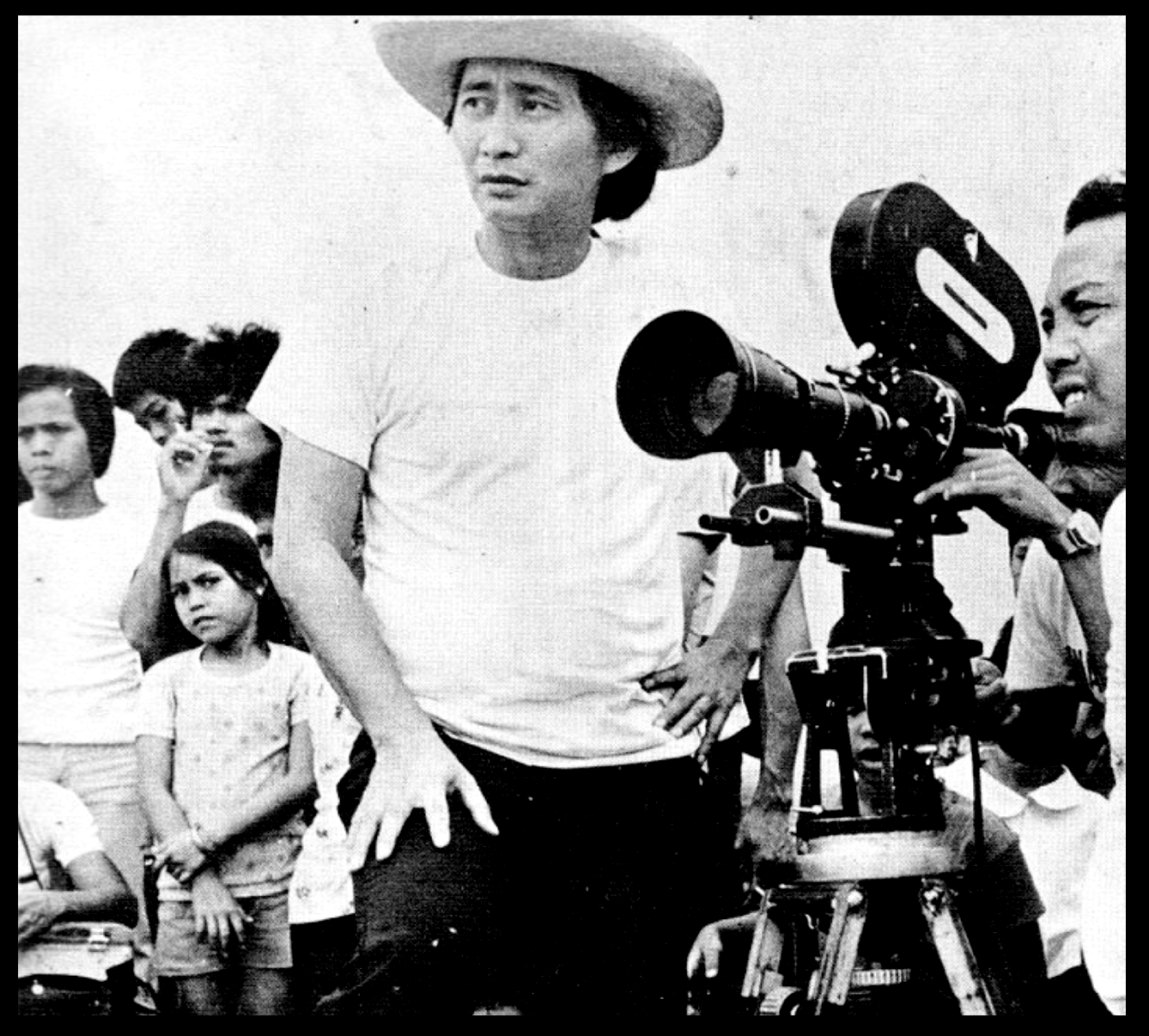

 Star For All Seasons
You must be logged in to post a comment.