FILM REVIEW: BATA, BATA…PAANO KA GINAWA?

This slideshow requires JavaScript.

The Plot: “A women’s rights activist and mother of two, Lea has been abandoned by the fathers of her children. Her daughter and son are at crucial transitional ages and she struggles to provide for them while maintaining her hectic job at a woman’s crisis center. Soon though, the job and her budding romance with co-worker Johnny threaten Lea’s role as mother when her children’s fathers return to accuse her of neglect.” – The NY Times (READ MORE)

“Lea is a mother of two children from different fathers. She works in a woman’s shelter and helps victims of domestic violence. Her sons are hurt riding their bikes. At the hospital, her principles are threatened when both fathers question her ability as a parent. This film is based on the best-selling Philippine novel of the same name and takes a look at the problems of single mother’s trying to balance work with family.” – Fukuoka (READ MORE)

The Reviews: “Sa tingin ko, sa Bata, Bata… pinakamagaling si Vilma Santos. Sa dami ng kanyang award, may ibubuga pa pala siya. Iba ang akting niya rito…Halatang feel na feel ni Vilma Santos ang kanyang papel dahil, gaya ng karakter ni Lea Bustamante, dalawa ang anak ni Vilma sa magkaibang lalake.” – Marra Pl. Lanot, Diario Uno, Sept. 1998 (READ MORE)

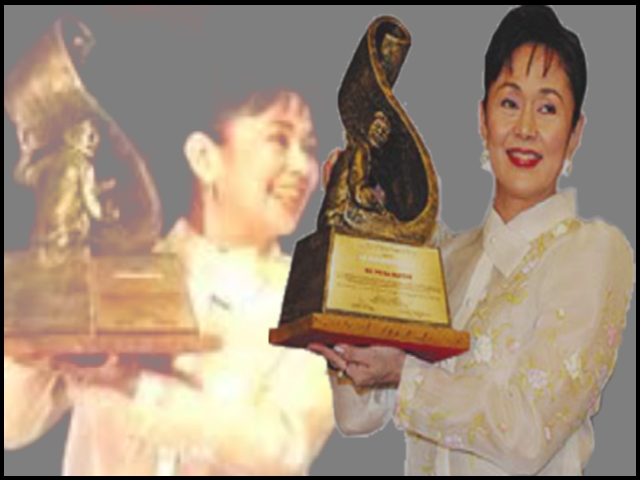
“…Ang international fame, bilang Best Actress, ay nakamit ni Vilma in 1999, when her Star Cinema headliner Bata … Bata … Paano Ka Ginawa? – directed by Chito Rono – was entered as competition entry sa Brussels Film Festival. Released in 1998, Bata won for Vilma the Best Actress honors at the Star Awards, FAP and Gawad Urian, as well as the Best Performance award from the YCC-Film Desk. Dahil nahalal na alkalde ng Lipa City sa Batangas si Vilma Santos-Recto (she married then Batangas Congressman, now Senator Rafael ‘Ralph” Recto in December 1992), naging mas madalang ang paggawa niya ng pelikula. Pero hindi pa rin magmimintis si Vilma na manalo ng acting trophy, kapag din lang may panlabang pelikula, as in 2000 when she did Star Cineman’s Anak by Rory Quintos. Nanalo siyang Best Actress sa Star Awards…” – William Reyes (READ MORE)

“…And Vilma Santosis more than up to the challenge. Gone are the hysterically flapping hands, the melodramatic emoting, all the trademark acting tics. In their place is a heartfelt performance that distills Lea’s essence to an exquisite point-no movements are wasted, no gestures are overwrought. …Vilma rolls them on her tongue like the finest wine; when Lea is on the verge of breaking down, Vilma remains true to the spirit of her character… If the Lipa City mayor decides never to do another movie again, she can retire assured that her last performance-in a career already studded with formidable portrayals-may conceivably have been her best…” – Andrew E. Pardes, Manila Times, Sept 1998 (READ MORE)

“A fiercely independent and unflinchingly candid woman connected with a women’s crisis and survival center has to raise her two kids with different fathers. Her first husband has left her when their career options failed to converge. She is now stuck in an extramarital arrangement with another man who cannot bring himself to respect and commit to their quite unorthodox relationship. – Databases of Philippine Movies (READ MORE)

“A women’s rights activist and mother of two, Lea has been abandoned by the fathers of her children. Her daughter and son are at crucial transitional ages and she struggles to provide for them while maintaining her hectic job at a woman’s crisis center. Soon though, the job and her budding romance with co-worker Johnny threaten Lea’s role as mother when her children’s fathers return to accuse her of neglect.” – Baseline Studio Systems (READ MORE)

“The movie “Bata Bata Paano Ka Ginawa?” is a movie which deals not only with the pains a mother and a wife goes through but also with the people around her as well. The movie which was originally based on the novel of the same title written by Lualhati Bautista, is such a wonderful story. Though it was written during the 1980’s, the material still hasn’t lost it’s appeal and connection to the people, considering that were almost entering the new millenium. What fascinates about the movie is that it did not only revolve around Lea but with the other characters as well. I really felt that all of the actors and actreses in the movie connected with one another. Each of the actors and actresses in the movie had a different story to tell. The movie would not have been as wonderful as it is, had it not been for the stellar performances given by the actors and actresses in the movie. There would be no question in terms of Vilma Santos’ acting prowess. Indeed she has proven be one of the fine actreses this country could ever had. I believe that nobody could ever give justice to the role of Lea had it been portryed by another actress other than Vilma Santos. Most noticeable were the performances given by the two kids. Serena Dalrymple and Carlo Aquino’s performance were just unbelievable. Considering that the two kids’ age and considering that there just neophytes in the acting scene.” – Skyinet (READ MORE)

“In one of the most remarkable performances in Filipino film history, Vilma Santos plays Lea, a woman who defiantly rejects social convention to experience life on her own terms. A woman’s rights activist and mother of two, Lea has been abandoned by the fathers of her children. Her daughter and son are at crucial, transitional ages and she struggles to provide for them while maintaining her hectic job at a women’s crisis center. Soon, however, the job and her budding romance with co-worker Johnny threaten Lea’s role as mother. When the children’s fathers turn up to accuse her of neglect, she must ask herself whether her independence is worth the possibility of losing her children? What role–motherhood or lover–will best satisfy the deepest needs of her soul?” – The 35th Chicago International Film Festival (READ MORE)

“…Lea’s Story, based on Lualhati Bautista’s award-winning novel “Bata, bata paano ka ginawa,” tells the story of Lea, a strong and independent woman who defiantly rejects social conventions to live life on her own terms. Lea, a woman’s rights activist and single mother of two, struggles desperately to provide for her children by working at a woman’s crisis center. Soon her job and romance with a co-worker are threatened when her estranged husband comes back into Lea’s life, accusing her of neglect and abuse. Last year, Lea’s Story swept the Filipino Academy Awards by winning Best Picture, Best Actress, Best Screenplay and Best Director. It stars the Philippines’ top actress and actor, Vilma Santos and Raymond Bagatsing respectively…” – Asian American Film News (READ MORE)

“…As much as people think that this is Vilma Santos’ movie, I beg to disagree. Me thinks it was the children’s show. Serena Dalrymple and Carlo Aquino gave two of the best child acting performances ever. Serena as Maya was a chatty young kid, whose bluntness, frankness, and honesty come across as cute and comical however one can still question as to how she was brought up. Carlo Aquino’s Ojie is a more mature kid, he understood what was going on and was rebelling to the fucked-up-ness of their situation. What pisses me off is that today, there hardly is a movie that Carlo Aquino is in, except maybe for last year’s “Carnivore, “where he was superb in again. Aquino is one of the few great young actors of his time that still is a great actor up to know. He is just not that present anymore. And I kinda wish that he makes more movies, because I know that he is a superb actor…” – Douglas Racso (READ MORE)

“…A free-spirited woman and madre de familia runs her life and raises her children unconventionally. It is one of the best films that espouses feminism without being didactic and self-righteous. Humorous, poignant and insightful, it features a yet-another dazzling performance by Vilma Santos…” – Mario A. Hernando (READ MORE)

“…To best understand how Filipino women have changed in the course of time, let us quote Lea’s final words: “OO, natuklasan ko ang mga bagay na hindi ko siguro natuklasan kung pinahawakan ko lang sa iba ang pagkatao ko. Hindi ako nagpakulong, sinikap kong lumaya. At mula sa paglaya ko sa makitid na papel ng isang babae, natiyak ko na ang kalayaan nga pala, sa higit na pangmalawakang kahulugan nito, ay hindi nahihingi kundi ipinakikipaglaban. Hindi lahat ng hinuhuli’y kriminal, at hindi lahat ng diyos ay may dangal! Hindi ako natatako. Babae ako at malakas ako. Ako ang tagapagsilang ng tao, pambuhay ng sanggol ang dibdib ko. Hindi porke ina na ‘ko’y tumigil na ‘ko sa paglaki. Hindi porke babae ako’y maiiwan ako sa labanan. Para sa kaligtasan ng lipunan at kinabukasan ng mga anak ko sa digmaan ng mga uri’t prinsipyo, sa mapayapa man o madugong pagbabago, magtiwala kayo…sasama ako!” We need more Josies adn Leas in our society tody, The time is ripe for Filipino women to rise above the society’s traditional views and coventions. Although ultimate freedom and due recognition of gender equlity remain a struggle and a serious concern, Filipino women are slowly gaining a strong foothold. In a book dedication written by Bautista to this writer, she wroteL “Ang mga kamay na nag-uugoy ng duyan ay kaya ring magtumba ng alon sa dagat.” And we belive that a freer woman is better mother. And every Filipino family needs her. Every family must have her. We remember what Vilma said in our interview with her during the last shooting day of her film “Bata, Bata…” “I would like to be remembered as a mother who would give her life to her children anytime…” She’s an accomplished actress, and many will remember her for that. But Vilma would rather be a mother in her films, in her life…” – Veron Dionisio, Philippine Daily Inquirer, Jul 29, 2000 (READ MORE)
Remembering Mary Walter

This slideshow requires JavaScript.

First Movie – “…The cameras in those days of the silent screen were hand-cranked, and the lights were of the noisy, sparkling carburo type. Only the director had a script, and he would explain the story to the players, who usually spoke in English or (as in the case of Mary) in Spanish. The subtitles or dialogue were in English, although the titles were in Tagalog. Her first movie (apart from her dancing role in “Lillies of Benguet”) was “Lumang Simbahan”, which paired her with Gregorio Fernandez. It was the story of a girl who, faced with the prospect of a lovelss marriage, runs off with her real love; the two then find, literally, a pot of gold. Her first movie included a kissing scene between Mary and Gregorio Fernandez, and it turned out to be an ordeal of sorts for all concerned. Mary kept pushing her leading man away, saying “nobody has kissed me before except my papa!” and director Nepomuceno would remonstrate with her, “but May, you’re a movie star now and he’s supposed to be your husband.” It took ten takes to shoot the brief scene. Mary earned 200 pesos per picture during her years with Malayan Movies, a princely sum in those times, and she would go home feeling like a millionaires; later she worked for Banahaw Films. Then came the talkies, which revolutionized the movie industry, and Mary’s voice had to be taked to see if it was suitable for the movies…” – Amadis Ma. Guerrero, Philippines Daily Express, Sept. 28-29, 1978 (READ MORE)

Character Actress – “…Yes at 16 or even earlier, this beauteous Bicolana of Bacon, Sorsogon knew herself that she wanted to act. “I really wanted to be an actress. I do not know why. I just love to act,” explains Mary, who at 67, is still lovely and slim. “Nobody in the family was in the movies,” adds she, though she says she had appeared on stage, either dancing or singing, during school programs…”Ang Lumang Simbahan,” opposite Gregorio Fernandez, was her first picture. Interestingly, this movie already included a kissing scene between Mary and her leading man whom she kept pushing away from her. Well, not that Mary was naive or somthing but simply because it was her first time to kissed by another man (aside from her father) and on screen yet! The director would remind her that Gregorio was supposed to be her husband . Only after 10 takes was he able to shout “Cut!”…In 1949, after doing “Maliit Lang Ang Daigdig” for Premiere Productions, Mary took a long leave of absence from the movies and went home to Bacon, Sorsogon to be with her daughter, Charito, then a growning teen-ager. She did not go back to the movies until 1957, when she did “Kastilaloy” with Nida Blanca and Armando Goyena. By the 50s and 60s, Mary had become known as a character actress specializing in mother roles but, as Mary points out, she had been a character actress almost from the start. In her third movie, “Nanay Ko,” for example, she essayed a dual role (mother and daughter), a difficult feat that she would repeat in later years…..

…Mary is at her best when she portrays women of great strength and character, and she thrives on kontrabida roles. “Here you get some real acting” she says, “and they’re move challenging than the goody-goody roles wherein you’re just called upon to be patient and cry a little.” Coincidentally, one of her favorite roles is that of the formidable mother of Susan Roces in the original “Maruja”, and she reappears in the current “Gumising Ka, Maruja”, this time as an apparition from the past. She and Susan were the only original members of the cast of the old ‘Maruja’…Comparing the old days with today’s movie scene, Mary finds the present sadly wanting and deplores the lack of professionalism prevailing today. “You have to wait for the star, you have to wait for everything and it really gets your goat…during my time you couldn’t do anything like that. Now, even the make-up takes long, whereas before we had no make-up artist and we only used grease paint.” The fans, too, have grown more unruly. “The fans before were more decent,” Mary notes. “When we would make personal appearances in the provinces, they would just shake our hands, give us flowers and then let us pass. No grabbing and pulling, like today. I noticed that when we arrived in Bacolod (for the location shooting of “Gumising Ka, Maruja”), where the fans were so rude….At the same time, Mary finds movie scripts today a bit unrealistic, unlike before when they were down-to-earth and (except for horror stories and the like) based on the life of the Filipino people…As for the present crop of directors, Mary find them more learned in the sense that they have more tools of the craft to work with. “But you cannot compare the old ones because the young ones have modern ideas…” – Visitacion DeLa Torre, Expressweek, December 20 1979 (READ MORE)

Impressive Films – “…Just before the outbreak of the war, she made Niña Bonita for LVN. It was shown during the war along with the second version of Prinsipe Teñoso, directed by Manuel Conde. After the war, Mary made several comebacks. She appeared as the mother of Efren Reyes in the late forties and the mother of Fernando Poe Jr. and Zaldy Zshornack in the late fifties and early sixties. In the seventies, she appeared in many of the films of Lino Brocka: Stardoom, Santiago, Lumuha Pati Mga Angel, Cadena de Amor. She gave one of her most memorable performances in Tatlo, Dalawa, Isa as the possessive mother who pretends to be a cripple so that her daughter, Lolita Rodri-quez, would renounce marriage. She was also impressive in other directors’ films. In Elwood Perez’s Isang Gabi, Tatlong Babae, she injected humor in her role as the lesbian lover of Amalia Fuentes. In Boy Negro, she was the understanding septuagenarian matriarch of Phillip Salvador’s family. In her late age, Mary Walter is still active in movies and television. Her body of works has spanned several generations. This is indeed proof of her durability as a movie actress…” – Agustin Sotto (READ MORE)

Mary Walter (September 10, 1912 – February 25, 1993) was a Filipino actress whose 8 decade-long film acting career saw her transformation from a romantic lead in the silent film era into a wizened fixture in horror movies in the late 1980s and early 1990s. For her body of work accomplished in an especially long career, she was honored with the Lifetime Achievement Award from both the Filipino Academy of Movie Arts and Sciences and the Gawad Urian. – Wikipedia (READ MORE)

Mary Walter and Vilma Santos

Alyas Baby Tsina (1984) – “…You know, I did a movie before, Baby Tsina, but I wasn’t really Chinese there. In Mano Po 3, I play Lilia Chong-Yang, a socially conscious anti-crime crusader and I get to know more about Chinese culture. We were even taught how to speak Fookien Chinese by a private tutor. Sa dubbing, the coach was there to make sure we’re perfect with our pronunciation of all our Chinese lines…” – Mario E. Bautista (READ MORE)

Bakit Kailangan Kita? (1978) – “…Romeo Vasquez is an oddity in Vilma’s life. Hindi akalain ng lahat na ang isang notorious playboy and balikbayan actor would capture the heart of the then elusive Ate Vi. Nagkaroon sila ng affair which lasted for more than a year. Kilala si Bobby sa pagiging bohemyo kaya naman walang kakilala si Ate Vi na bumoto sa aktor. Ate Vi was love struck at talagang na head-over heels in love. Nagsimula ang kanilang affair sa set ng kanilang pelikulang “Nag-aapoy na Damdamin”. True to this title, nagliyab silang dalawa at tunay ngang nag-apoy ang kanilang damdamin. May plano pa nga sila ni Bobby na magpakasal sa Europe. Talagang Ate Vi was ready to give up her life as an actress and would settle with the actor abroad. And with herb relationship with Bobby, nag-surface ang bagong Vilma Santos.Ate Vi realized that she cann’t sacrifice everything for love. Nagising siya sa katotohanan at nagkamali kung kaya nagdesisyon siyang kumalas sa bohemyong aktor…” – Willie Fernandez (READ MORE)

Dalawang pugad, isang ibon (1977) – “…Bernal, testing the tensions of triangular love (for geometry books, one of his characters wittily says) for some time now, plunges deeper into character analysis and metaphorizing… In Lumayo, Lumapit ang Umaga, the triangle was unevenly explored: the first love was sketchily drawn. Dalawang Pugad, Isang become a choice for a more stable relationship. Walang Katapusang Tag-araw was a strange reverse of characters for two women and an unusual development of love into hatred and hatred into love, where therefore the triangle was essentially illusions. Ikaw ay Akin finally sets an interlocked triangle on its bases and looks at it (from all 3 angles) squarely in the face…” – Petronila Cleto (READ MORE)

Dugo at Pag-ibig sa Kapirasong Lupa (1975) – “…A Must for the Filipino History Students and for everyone who wants to awaken the innate nationalism in them. These series of stories depicting the fight of the Filipinos against colonialism of Spain, Japan and even their fellow Filipinos abusing the power in the government. A seemingly serious film but spiced with the star-studded cast like Fernando Poe Jr., Ramon Revilla, Joseph Estrada, Nora Aunor, Dante Rivero, Eddie Garcia, Vic Vargas, Goerge Estregan and the other all time favorite artists. This movie even highlighted the comparison between the love of country and the other kind of love we offer to our family and to our beloved as the story featured love stories in the midst of tragic and bloody war happening in our society…” – Kabayan Central (READ MORE)

Tok Tok Palatok (1974) – “…And so, to prove them wrong, Vilma’s manager smartly plotted follow-up recordings. Not only did Vilma record her follow-up album, she recorded a string of mini-LPs. Mini-LPs are shorter version of the big vinyl record with two songs on each side. She ventured into Tagalog songs, recording six songs that include instants hits like Isipin Mong Basta’t Mahal Kita, a theme song to a film she did opposite Filipino chess grand master, Eugene Torre; Palong-Palo, where she received a golden record award in 1974 and an up-tempo opm, Tok-Tok Palatok, another theme song from one of her comedy film with the same title opposite Jojit Paredes…” – RV (READ MORE)

KIng Khayam and I (1974) – “…The film started promising with funny scenes of Joseph Estrada facing his people seeking his advice or help. One was when a man presented his new product, a flying magic carpet but when the carpet didnt fly, Estrada suggested a lighter weight rider. Then veteran actress and much younger, Mary Walter in a cameo role, brought her just bought magic lamp. She complained to the king that the seller fooled her to buy the lamp and wanted a refund. She then caress the lamp and the gennie came out but instead of the expected giant gennie, a midget dwarf came out. Then from this moment the film went downhill. A singing bird, a transexual Ike Lozada being auctioned, Rod Navarro’s over the top villain antics, all failed to sustained our attention. The weak storyline did not help. Patterned with the Hollywood film, King Kayam & I’s only saving grace was the acting of its lead stars. Joseph Estrada’s precense was commanding and convincing as the playboy king and Vilma’s charming innocense despite the sexy dance number at the end complimented Joseph’s macho image…” – RV (READ MORE)

Lipad, Darna, lipad! (1973) – “…Ding, ang bato!” yells Narda, the adolescent country lass, to her younger brother. Ding obligingly hands over a shiny pebble which Narda swallows to turn herself into the vivacious super-vixen, Darna. Mars Ravelo’s superheroine, clad in crimson bikinis and knee-high stiletto boots, may perhaps be the most famous local fantasy character given life on the silver screen. Though not actually considered a career-defining role, portraying Darna is, nonetheless, highly-coveted. Darna has been portrayed by no less than nine actress in 12 feature films. Rosa del Rosario first wore the scarlet two piece in May 1951. She reprised the role after three months. Liza Moreno, Eva Montes and Gina Pareno followed her. The inter-galactic pebble found its way to Vilma Santos’ throat in 1973 via the flick “Lipad, Darna, Lipad!” Santos, now a two-term mayor of Lipa City in Batangas, is probably the most popular Darna, with a total of four movies in a span of seven years. Some of these were made known to younger generations through afternoon airings on television in the late ’80s. Maybe RPN 9 should do that again so that even younger generations can marvel at Darna’s greatness, albeit antiquated, in such movies as “Darna and the Giants” and “Darna vs. the Planet Women…” – Armin Adina, Philippine Daily Inquirer, June 06, 2003 (READ MORE)

Ophelia at Paris (1973) – “…Mars Ravelo’s Ophelia & Paris: Prinsipe Paris Walang Kaparis (December 10, 1973) ay handog ng VL Productions na tinampukan nina Vi, Victor Laurel, Marissa Delgado, German Moreno, Rodolfo Boy Garcia, Mary Walter, Subas Herrero, Joonee Gamboa, Celia Diaz Laurel at Ronald Remy sa direksiyon ni Celia Diaz Laurel…” – Alfonso Valencia (READ MORE)

Dulce Corazon (1972) – “…By late 1969, movie producers had been tapping a Vilma Santos-Edgar Mortiz love team. Edgar was a Tawag ng Tanghalan winner. They started to be together in the movies, My Darling Eddie (1969) and The Jukebox King (1969)…In 1970, the love team of Vilma Santos and Edgar “Bobot” Mortiz was officially launched in the movie Young Love, together with the another popular love team during that time, Nora Aunor and Tirso Cruz III. The Vi and Bot love team went on to do 14 more movies in 1970—The Young Idols, Songs and Lovers, Sweethearts, Sixteen, Love Letters, Love is for the Two of Us, Mga Batang Bangketa, My Pledge of Love, Renee Rose, Baby Vi, Because You Are Mine, Edgar Loves Vilma, From the Bottom of My Heart, and I Love You Honey. All did well at the box-office…” – Rommel R. Llanes (READ MORE)

Edgar Loves Vilma (1970) – “…The loveteam of Edgar Mortiz and Vilma Santos endured a stiff competition from teeny bopper love team of Nora Aunor and Tirso Cruz III and came up with equal success with string of hit films during the musical era of the 70s. Together they did forgettable but commercial hits and also some hints of the years to come to Vilma Santos’ long career. The most notable one: Dama De Noche. Total Number of films with Vilma Santos – 25 (Young Love, Teenage Jamboree, Songs and Lovers, Renee Rose, My Pledge of Love, Mga Batang Bangketa, Love Is for the Two of Us, I Love You Honey, From the Bottom of My Heart, Baby Vi, Love Letters, The Wonderful World of Music, The Sensations, The Young Idols, Sweethearts, Sixteen, Leron-Leron Sinta, Edgar Love Vilma, Don’t Ever Say Goodbye, Dama de Noche, Anak ng Aswang, Because You Are Mine, Kampanerang Kuba, Kasalanan Kaya, Karugtong ang Kahapon…” – RV (READ MORE)

I Do Love You (1970) – “…Peregrina’s popularity was high, particularly among masses. Jukebox, the coin-operated machine which plays selected music, was said to have attained much popularity as well because of continuous requests of Peregrina’s songs. His fame surge even more among the Filipino masses when he became movie star, cast with the leading ladies of the 1970s, including Esperanza Fabon and Nora Aunor, with whom he had a TV show entitled The Eddie-Nora Show on Channel 9 in the 1960s. Among his movies included Mardy, Memories of Our Dreams with Esperanza Fabon. He co-starred with his wife Lyn Salazarin in Batul of Mactan in 1974. He was also the leading man in Dito sa Aking Puso (1970) with Nora Aunor and with Vilma Santos in Mardy. Most of his films were produced by JBC Productions, which invariably paired him with Vilma Santos, Edgar Mortiz, Esperanza Fabon, and directed by Bebong Osorio. When not busy attending show business commitments, he managed his own business, including Edviper Records and the Pervil Photo Studio…” – Wikepedia (READ MORE)

My Darling Eddie (1969) – “…”During the early 60’s, a singer’s popularity was practically determined by the jukebox, a coin-operated machine that can play specially selected songs from self-contained media. It was a period when fans dropped 20 centavos in a jukebox to listen to Timi Yuro’s “Crazy” or Matt Monro’s “Walk Away” and “Before You Go.” Of course, Eddie’s songs like “Together Again,” “Two Lovely Flowers,” “Mardy” and “I Do Love You” were such national anthems and outdid their foreign counterparts not only in the jukebox market but also on the airwaves, in restaurants and well…the local cabaret…” – Gypsy Baldovino (READ MORE)

Hindi Nahahati Ang Langit (1966) – “…In 1963, two great Sampaguita talents, Lolita Rodriguez and Marlene Dauden and drama king Eddie Rodriguez starred in Sapagka’t Kami’y Tao Lamang, the movie that turned out to be a sensational and phenomenal hit. The movie garnered the year’s top FAMAS awards— Best Actor for Eddie Rodriguez; Best Supporting Actress for Marlene Dauden; Best Director for Armando De Guzman. It started the series of the so-called love triangle movies featuring the three dramatic icons in Philippine movies. Ms. Dauden was memorable in such dramas as Anino ni Bathala (1958) and Kamandag (1959). In both films, Marlene won the FAMAS best supporting actress trophies. She was also awarded the FAMAS Best Actress awards twice: Sa Bawa’t Pintig ng Puso (1964) and Kapag Puso’y Sinugatan (1967)…” – Simon Santos (READ MORE)

“…Mary Walter joined the movies in 1928 at the age of 15. Since then, she had played a variety of roles ranging from a blushing bride to an anxious mother to a domineering grandmother, often playing the role of a woman of great strength and character. She thrived on the kontrabida role. Mary was the first aswang in Philippine movies, who played the role in Manananggal. Discovered by the late Jose Nepomuceno, her first movie in a starring role was Lumang Simbahan, directed by Gregorio Fernandez. She made over 250 movies. She was one, if not the last, of the few actresses who made the transition from silent movies to the talkies. Mary said old age is not an impediment to her profession. As she put it: “I don’t mind being old. It comes to everyone. I have been playing mamas or grandmas since the start. I just love character roles. I feel young…” – Jose N. Carreon (READ MORE)

Related Reading:

FILM REVIEW: SINUNGALING MONG PUSO


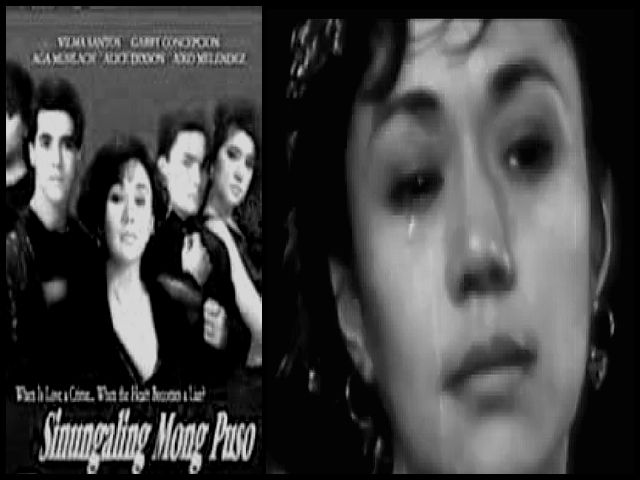
The Plot: An endearing romantic drama that tells of a very curious affair between an older woman (Vilma Santos) and a young unhappily married boy (Aga Muhlach). In between them are Vilma’s husband, Gabby Concepcion and Aiko Melendez as Aga’s wife. All told, the movie proves once again that love does not only happen in the most unexpected times and places. It also makes people do the strangest things. – Regal Films

The Review: Nagsimula ang movie with Clara (Vilma) had a visitor in a jail, ito ay ang ex-wife ng asawa niya. Kasabay nito’y nag-flashback na ang pelikula. Bakit nakulong si Clara? Unang nagkakilala sa isang disco sina Jason at Clara. Inalok ng batang-batang si Jason si Clara ng sayaw ngunit inignore lang nito ang istudyante. Makikita agad na parehong hindi masaya sa buhay may asawa si Clara (Vilma Santos) at Jason (Aga Muhlach). Si Clara ay asawa ng isang malupit at babaerong negosyate, si Roman (Gaby Concepcion). Samantalay si Jason naman ay laging nina-nag ng kasing edad niyang asawa na si Aiko Melendez at pati ang kani-kanilang mga magulang ay nadadaway at madalas na nase-sermunan si Jason dahil rito. Kasabay na pinakita ang problema sa pagaasawa’y ipinakita rin ang mga taong nasasangkot sa pag-iibigan ni Clara at Jason. Ang asawa ni Clara na si Roman ay ubod ng lupit, minsan ay may nahuli ang mga tauhan nito na nagnanakaw sa kanilang bahay ay binaril nito ang magnanakaw. Bukod sa kalupitan ay marami ring naanakan siya at ang laging solusyon nito ay perahan ang mga babae para manahimik ang mga ito.

Nang bumalik sa Pilipinas ang kanyang ex wife na si Leda (Alice Dixon), muling gustong makipagrelasyon ito. Dahil sa mga pambabae ni Roman ay gusto rin sanang makaganti ito sa asawa at maraming mga lalaki na gustong makipagrelasyon sa kanya ngunit napipigilan pa rin nito ang sarili ngunit nang makilala niya minsan ang batang-batang si Jason (Aga) ay hindi na nito napigilan ang sarili. Muling pinagtagpo si Clara at Jason nang masiraan itong una sa kalye at nagkataon na naruon si Jason at tinulungan siya na humantong sa isang dinner date. Nagkaroon sila ng relasyon at nagkikita sa isang apartment na pagaari ng kaibigan ni Clara. Sa kabila ng agwat ng kanilang edad at estado’y natutong mahalin ng dalawa ang kanilang isa’t isa hanggang sa matuklasan ng asawa ni Jason ang relasyon at mag-iskandalo pa ito sa harap ng mga tao’t sa apartment na tagpuan ng dalawa. Bukod sa iskandalo ay nagsumbong pa ito sa asawa ni Clara. Ang naging resulta ng pagsusumbong na ito’y ang pagkakabugbog ni Jason sa malupit na kamay ni Roman. Sinadista nito ang kaawa-awang si Jason. Nang malaman ni Clara ay hindi niya napigilan ang nangyari sa katipan at nang mapuntahan niya’y natuklasan niya ang sinapit ni Jason. Binaril niya ang asawa at pinatay. Dito siya nakulong.

Maayos na nailahad ni Maryo Delosreyes ang istorya nang pag-iibigan ni Clara at Jason. Ito marahil ang dahilan kung bakit tinangihan ni Vilma ang pelikulang Naglalayag na halos kapareho ng istorya, ang pag-ibigan ng isang batang lalaki sa nakakatandang babae. Merong mga eksena rito na hindi kapanipaniwala katulad ng bakit nabuhay pa si Aga Muhlach sa bandang huli dahil nakakapagtaka na sa kabila na sobrang torture na natanggap niya mula sa sadistang si Roman ay nabuhay pa ito. Hindi rin na-isplika ng pelikula kung bakit gustong balikan ni Roman ang ex-wife niyang si Leda (Alice Dixon). Mahusay ang cast ng pelikula, magagalit ka talaga sa kalupitan ni Gabby Concepcion at makikita mo rin na believable siya bilang isang babaerong negosyante. Bilang ex-wife ni Roman, parang tuod si Alice Dixon wala siyang kabuhay buhay na magdeliver ng mga lines. Samantala, litaw na litaw naman ang role ni Aiko Melendez bilang Ana, ang asawa ni Jason. Halos lahat ng eksena niya ay mahusay niyang nagampanan maliban sa bandang huli yung reconciliation scene niya kay Vilma kung saan hindi bagay ang lines niya ba…”pareho natin siyang minahal… blah blah blah…”

Magaling sina Aga Muhlach at Vilma Santos bilang nagtatagong magkasintahan. Lutang na lutang ang pag-arte ng dalawa at nakakatuwa sila sa kanilang mga eksena na nagtatagpo ng palihim tulad ng mag-kita sila sa department store. Dumating si Vilma at hinahanap niya si Aga, hindi nya makita ito hanggang sa mamataan niya ang binata na nakaupo sa may display area. Kinindatan ni Jason si Clara at napatawa na lang ang babae. Mararamdaman mo ang excitement ng mga pagkikitang ito. Nang mahuli ni Ana ang asawa at mag-iskandalo ito, nang umalis na ang asawa at balikan ni Jason si Clara sa loob ng apartment, makikita sa mukha ni Vilma ang pagtatapos ng kanilang affair. Ang sabi niya: “ Hinintay lang kita, guston kong maghiwalay tayo ng maayos…” Bukod sa maraming eksena na lutang na lutang ang pag-arte ni Vilma marahil ang pinaka-memorable ay ang eksena kung saan binaril ni Vilma si Gabby at sabihin niya ang line na: “mamatay kang kasama ng mga baboy mo…” ito ang pagpapatunay na talagang napakahusay niyang artista. – RV

“…In 1992, wala ni isang pelikulang tinampukan si Nora, samantalang si Vilma starred in only one: Maryo J. delos Reyes’ Sinungaling Mong Puso, na hindi niya pinagtamuhan ng anumang major Best Actress award. In 1993, gumawa si Vilma ng pelikula na ang kuwento’y base sa unang Pilipinang nag-reveal ng pagkakaroon niya ng AIDS (Acquired Immune Deficiency Syndrome), si Dolzura Cortez. Directed by Laurice Guillen for Octoarts Films, Dahil Mahal Kita (The Dolzura Cortez Story) won Vilma the Best Actress honors at the 1993 Manila Film Festival, Star, Gawad Urian and FAP…” – William Reyes (READ MORE)

“…Dahil sa tagumpay sa box-office ng pelikulang “Just A Stranger” nina Anne Curtis at Marco Gumabao, muling nauuso ang mga May-December affair film. Sa Urban Dictionary, ang meaning ng “May-December affair” is a relationship between two people where one partner is in the “winter” of their life (old) and the other partner in the relationship is in the “spring” of their life (young). May/December relationships can either be superficial or serious – so the term doesn’t itself say anything about the status of the relationship…Kung tutuusin ay noon pa uso ang May-December affair films at ang iba rito ay naging award-winning pa…Heto nga ang mga pelikulang nagpakilala sa landian, lambingan, harutan ng mga babae/lalaki na may edad sa mga mas batang-batang nilalang…Sinungaling Mong Puso (1992) – Kuwento ito ni Clara (Vilma Santos) na hindi na masaya sa pagsasama nila ng malupit at babaero niyang mister na si Roman (Gabby Concepcion). Nagkataon na nakilala niya ang young father na si Jason (Aga Muhlach) na hindi rin masaya sa nagging wife niyang si Anna (Aiko Melendez). Nabuo ang isang sikretong relasyon na nauwi sa isang madugong trahedya. Mula sa direksyon ni Maryo J. Delos Reyes, nanalo rito si Aga bilang FAMAS Best Actor…” – Anonymous, Abante, 07 Sep 2019

FILM REVIEW: LIPAD DARNA LIPAD


The Plot: After a long period of absence, Vilma Santos resurrected Filipino version of Wonder Woman, Darna, in a fantastic trilogy. Despite the lack of height familiar with previous Darnas, Vilma Santos’ bubbly youthful portrayal as Darna and the alter ego character Narda radiated the screen against Philippine cinema’s senior screen queens, Gloria Romero as the “Babaing Impakta (Vampire Woman),” Celia Rodriguez as “Babaing Ahas (Snake Woman),” and Liza Lorena as “Babaing Lawin (Hawk Woman).” The film was release on March 23, 1973 to a massive crowd in Metro Manila. Tagalog Ilang Ilang Production who produced the film reportedly distributed Darna dolls and Coca-cola drinks to the moviegoers. The film was a trilogy that focuses on the fights scenes between the Darna and her nemesis with great effect and with the help of Darna’s equally perky young brother, Ding portrayed by child star, Angelito. The special effect that’s way ahead of its time in were in full bloom in this film and the make-up goriness particularly Gloria Romero’s was a proof that Filipinos are creative and talented way ahead of Hollywood or even Bollywood. – RV (READ MORE)

The Reviews: In the Silver Age era of Darna, the movie “Lipad, Darna, Lipad!” (“Fly, Darna, Fly!” 1973), played by the lovely Vilma Santos, made a new version of the story. In this time, Narda was a teenager in her late teens. She discovered the magic stone after the event of a falling star landed near her home one night. She discovered that the magic pebble gave her superpowers that made her Darna. She and her brother were the only ones who knew the secret and their grandmother was not aware of it in this version. Narda herself becomes Darna and were not two different characters. She was also not from Planet Marte but was just a champion warrior of the forces of light. Every time Darna turns back to her mortal self, the magic stone reappears in her mouth and she takes it out and hides it until she needs it again. Every time the need arises, she has to swallow the pebble again and say Darna to transform. – Supersexyheroines.com (READ MORE)

In 1951, 2 Darna movies were made starring Rosa Del Rosario, followed by another two starring Liza Moreno in the early 60’s, one by Eva Montes and one by Gina Pareno in 1969. But it was not until 1973’s “Lipad, Darna, Lipad” starring Vilma Santos when “Darna mania” would be rekindled and made this version the highest grossing Darna movie of them all. A feat that has not been equalled to this day. In these 1970s films, Darna’s origin was slightly tweaked with a new twist yet remained faithful to Mars Ravelo’s vision. No longer a little girl, Narda was now in her late teens. Also, she herself becomes Darna, unlike the original where she just “channels” her. Only Ding knows her secret in this version unlike the original where both Ding and their Grandmother knew the secret. Also, the stone comes out of Narda’s mouth every time she changes back from being Darna; she has to swallow it every time she wants to transform (This became standard for following versions). Darna is not specified as coming from Marte, just as a “warrior of Light”. This version of Darna became most people’s idea of the character for about 3 decades. A famous catch phrase by Narda popularized by the movies and NOT the comics version is “Ding, Ang Bato !” (“Ding, the Stone!) – Nostalgia Manila (READ MORE)

The quintessential action-fantasy Pinoy flick that appeals to all ages, from generation to generation. This movie is a major milestone for Vilma because it proved that she could really carry a solo movie and bring in the dough (up to now of course!). Vilma’s Darna franchise is the most memorable and successful of all Pinoy fantasy-action genres. Imitated but never equalled, Vilma’s Darna lives on. Unforgettable. Memorable. It grows on you. No Pinoy kid ever grows up without being a part of the Darna magic. The enormous success of Lipad, Darna, and Lipad led to three more Darna movies with Vilma Santos. As a result, the star for all seasons became the star for all Darnas—Santos played her four times, more than any other actress in the super heroine’s history. Lipad, Darna, Lipad! were thus divided into three separate segments, directed by three different directors. In Darna’s case, the three directors were Maning Borlaza, Joey Goesiengfao, and Elwood Perez—three names that promised an adventure that could do Andy Warhol proud.

First episode: “Ang Impakta” (Vampire Woman) – Starring Gloria Romero as Miss Luna, Narda’s school teacher who has a dark secret. She is actually a flying blood sucking creature at night. In this thrilling episode she knows the secret identity of Narda. The most memorable part was when Ms. Luna asked Narda to help her with some paper works. Little that she know, while she was busy checking the papers Ms. Luna excused herself, she then went to the next room and transformed into a scary vampire. Ding found out that Ms. Luna is the vampire and Narda forgot to bring the magical stone , he rushed to her sister who then was being strugled by the monster. As soon as he got there, he threw the stone to her much terrified sister and she immediately changed to Darna. Followed was the famous aerial fight scene. Nanette Medved and Bing Loyzaga tried to copy the infamous fight scene in 1990 Viva films Darna. Episode one was directed by Maning Borlaza.

Second episode: “Valentina” (Snake Woman) – Vilma also had to battle with Celia Rodriguez, who played a campy Valentina, a supermodel by day and a snake priestess by night. One scene has the actress naked in bed being caressed by a dozen snakes. Indeed, with the likes of Gosiengfao, Perez, and Borlaza at the helm, Darna is sure to get stuck in grotesque situations reminiscent of the Rocky Horror Movie. Their take on Darna is sometimes too risqué and violent for little children; but as a camp fest, the movie works. In this episode Valentina, tried to steal Narda’s magical stone. Also, there was a scene where Valentina dressed up as Darna. I love the exciting part where Darna and Valentina battled on top of a high rise building. Darna, was almost a no match to her mortal enemy. Dangerously armed with lazer beams coming out from Valentina’s eyes, Darna was helpless and knocked down several times. Until, she stumbled upon into a piece of broken mirror and used it as a shield againts Valentina’s deadly lazer beams. Darna quickly made her looked in the mirror. Her lazer beams bounced back and she turned into a stone. From the roof, Valentina fell hard on the ground and broked into shattered pieces. Anjanette Abayarri and Cherrie Gil almost did the same scene in ” Darna, Ang Pagbabalik ! ” Second Episode was directed by Elwood Perez. Vilma Santos with co stars Ernie Garcia and Celia Rodriguez as Dr. Valentina Vrandakapoor, Phd in reptilian zoology from the University of new Delhi. Not to be overlooked is Darna’s arch-rival Valentina. Celia Rodriguez breathed new life to the term antagonist with her classy portrayal of the serpent-haired villainess. Rodriguez set a new standard by which evil women are to be judged.

Third episode: “Babaing Lawin” (Hawk Woman) – Starring Liza Lorena as Babaing Lawin. I barely remember this one, there was this scene where Narda and Ding got caught and almost drowned in a quick sand. In Hawk Woman’s cave there’s this stream, that can make her wings disappear by walking across to it. There was also this character named Agila, a bird man played by Rod Dasco, he’s like the Hawk Woman’s mate. There was some fight scenes in the cave between Hawk Woman and and Darna. At the end of the story Darna and Hawk Woman, mend their ways. – Eric Cueto, Mars Ravelo Darna (READ MORE)

“…In the 1960’s, Gloria Romero portrayed Imelda Marcos in “Iginuhit ng Tadhana” and “Pinagbuklod ng Langit.” In the 1970’s she starred in two memorable movies: Behn Cervantes’s vanished movie, “Sakada” (1976), and earlier, 1973’s “Lipad, Darna, Lipad,” the biggest movie of its time in which she played a “manananggal” to Vilma Santos’s super heroine. Up to now, she considers the last as one of her most unforgettable…” – MPP (READ MORE)

“…Vilma, now 20, still looking virginal and sweet kicked 70’s phenomenal superstar Nora’s butt at the boxoffice and earned her box-office wings via this monumental hit. The Emancipation of Baby Vi. Mariah Carey could not agree more. There was no turning back since then. The Fantasy Queen was born. Fortythree year old Tita Gloria gamely and bravely accepted the role of Ms. Luna, teacher by day and Manananggal by night. Movie Queen Gloria was deglamorized and became the evil incarnate as a vampire. Amalia Fuentes was the original movie queen who bravely accepted a daring role such as a vampire that won her a FAMAS statuette in Gerry De Leon’s Ibulong Mo Sa Hangin, and changed her goody-two-shoe image forever. Was she the original queen of reinvention that gave Vilma an idea to do the same via the landmark movie Burlesk Queen? Hmmm… For the first time, La Santos was billed above La Romero. Times have changed. The tables were turned. Vilma Santos is the New Box-Office Champ and Tita Glo and Co. could only “bow” to the Reel/Real Queen: Ms. Rita Gomez, Helen Gamboa, Boots Anson-Roa, Barbara Perez and others did not have second thoughts to do a movie with the resurgent Vilma. Who wouldn’t want to be famous again and have fun working with the most hardworking and versatile actress? In my book, the aerial Good versus Evil fight of Vilma and Gloria as Darna and Impakta was one of the most thrilling and unforgettable scenes of my movie-going life. How I wish the movie resurfaces from Indonesia or from Timbuktu and my Vilma collection will be complete. That will be heaven! Where, oh, where is that classic movie? The Manananggal episode of Lipad, Darna, Lipad was so good that the two have to followed up their success via Anak Ng Aswang…” – Mario Garces (READ MORE)

“1972 – Lipad, Darna, Lipad…di ko na nakuhang mag-supper and hurriedly went to Coronet 2 bagama’t the film had already started eh uber sa dami ang mga fans sa loob at labas ng sinehan. nakapwesto ako sa dilantera ng sinehan para malapitan kong matanaw sa pagdaan si Ate Vi dahil premier night ng pelikulang Lipad Darna. Nagsalubong ang kilay ko in exasperation nang lapitan ako ng mayordoma ni Johnny Wilson na kalapit-bahay namin sa Paco. May mga kasama sya at tinanong kung Vilmanian din daw ako. Sabi ko’y napadaan lang ako at paalis na nga. tiempong gumagawi ako sa may likuran nang biglang nagkagulo ang mga tao sa pagdating ni Vilma. Ang ganda nya! naka-costume pero naka-kapa para di gaanong malantad ang katawan nya. tuwang-tuwa pa naman ako nang muntik na akong masagasaan. Nasa gitna na pala ako ng E. Rodriguez at namura pa ako ng driver. Potah! Gumawi tuloy ako sa kabilang kalye at kahit malayo ako’y masaya pa rin ako. Sa pakiramdam ko’y ako ang kinakawayan nya. mangilan-ngilan kami sa kabilang kalye na kakaway-kaway rin sa kanya. i went home happy but bone-weary and hungry. kaya lang, nasinturon ako ng tatay ko. Di tuloy ako nakakakain. This sucks! But i will tell nothing of the story of Lipad, Darna, Lipad. Alam kong napanood na yon ng sambayanan. I just have to say kudos to Ate Vilma, she’s so awesome as Darna. There were Gloria, Celia and Liza…all of the evil creatures you need to see in order to make them truly appear as the antagonists of Darna. The story itself is too rich and wonderful, just enough of humor, just enough of banter. The box-office result made history. Almost everyone joined the jubilant partying that is Vilma. She worked hard for it…and effectively captured our national psyche…on her way on top. Some actresses also dared Darna roles, unfortunately, they lacked originality and creativity that we might just view them as a form of flattery. Iba pa rin ang Vilma! Inevitably, it was time for Vilma to take the helm, talagang panahon na nya at wala ng makakaawat pa sa kanyang pagsikat… She was set to eclipse her contemporaries, including the brown girl from Iriga City.” – Bobby Lopez (READ MORE)

“…Maturing as a scriptwriter and film director, in 1973, commercially successful Lipad, Darna Lipad! was released. Award-winning actress Celia Rodriguez essayed the role of Medusa-like villainess, Valentina, nubile Vilma Santos played the Filipino supergirl (a role that launched her in a series of Darna flicks). To Filipino film industry insiders, Perez is known as the most sought-after movie director of his generation…” – Nickie Wang (READ MORE)

“…Elwood Perez and Vilma Santos colloborated in seven films (Ibulong Mo Sa Diyos 1988, Lipad Darna Lipad 1973, Magkaribal 1979, Masarap Masakit ang Umibig 1977, Nakawin Natin ang Bawat Sandali 1978, Pakawalan Mo Ako 1981, Pinay American Style 1979). The first one was the trilogy that he co-directed with two other director, Borlaza and Gosiengfiao (these three are the most underrated and under appreciated directors in the Philippines), the remake of Mars Ravelo comic super hero, Darna in Lipad Darna Lipad. The film was a record-breaking hit Box-office Film. They follow this up with a more mature projects as Vilma started to switched her image from sweet to a mature versatile actress, pairing her with Christopher DeLeon in five films starting with Masarap Masakit Ang Umibig in 1977. The Perez-Santos-DeLeon team produced seven blockbuster hits that gave Vilma two FAMAS best actress awards that secured her elevation to FAMAS highest honour, the FAMAS Hall of Fame award. She won in 1979 for Pakawalan Mo Ako and 1988 for Ibulong Mo Sa Diyos…” – RV (READ MORE)

Sa paggawa ng pelikula, kung maringgan man ng pagdaing si Vilma Santos ay bihirang-bihira. Nangyayari lang ito kung ipagpalagay nating siya’y may dinaramdam, hapong-hapo at talagang hindi na makakaya ng katawang humarap sa kamera kahit ibigin niya. Gayon man, kung nagkataong napakahalaga ng eksena at kinakailangang gawin niya, khait anong sama ng pakiramdam niya’y humaharap siay sa kamera. At sa pagtungo niya sa set o location, lagi siyang nasa oras. Kung maatraso ma’y saglit lang. Ganyan ka-professinal si Vilma Santos. Ngunit sa Lipad, Darna, Lipad ay dumaraing siya. Hindi sa hindi niya enjoy gawin ito. Ang totoo’y sa pelikulang ito lang siya na-involved. Ibig na niyang matapos na ito’t makita ang pinagpaguran niya. Talaga palang mahirap gumawa ng costumes picture. Lalo pa’t kung tulad nito! Una ang naging suliranin namin ay ang Darna costumes ko. Kasi kinakailangan maging maliksi ang kilos ko bilang Darna, kaya kailangang alisin na ang padding. Kaso nga lilitaw naman ang malaking bahagi ng aking katawan. Mabuti na lang at sumang-ayon ang aking fans. “Pangalawa, nag-aalala ako sa mga eksenang bakbakan namin nina Gloria Romero, Celia Rodriguez at Liza Lorena. Kasi baka masaktan ko sila nang di sinasadya. Ang pangatlo ay ang likas ng pagkatakot ko…sa mga ahas. Kasi may bahagi roong tungkol sa Babaing Ahas, si Valentina. Dito, laging kailangan ang ahas sa mga eksena. Mga sari-saring ahas. Maliliit at malalaki. At makamandag! Ang pinakamahirap sa lahat ay ang pag-su-shooting. Kailangan naming tapusin ito anuman ang mangyari. Kaya nasasagap ko ang lamig ng gabi at init ng araw. At ang suot ko nga’y labas ang malaking bahagi ng katawan! At alam n’yo namang kailang lang ay naospital ako dahil sa respiratory defects!” Ito ang daing ni Vilma Santos sa pinakamahirap niyang pelikula, ang Lipad, Darna, Lipad. Ngunit mahihinuha naman ninyo na ang pagdaing niya’y parang paglalambing lang. Dinaraan pa nga niyang lahat sa biro. Pagka’t ang tutoo, mahal na mahal niya ang pelikulang ito. Dahil ito nga ang pinakamahirap. At sa isang artista, kung alin ang pinakamahirap ay siya namang pinakamasarap! – Cleo Cruz, Love Story Magazine, 1973

RELATED READING:

Tribute to Atty. Espiridion D. Laxa

This slideshow requires JavaScript.

Revenue and Prestige “…Former movie producer, lawyer Espiridion Laxa explains that, during the festival, since no foreign movies are shown, Philippine movies invariably rake it in. Laxa is the MMFF executive committee’s chair on legal affairs and rules and regulations. Production costs are huge, especially for ambitious films shot on locations abroad, or those employing expensive digital effects. “For example,” Laxa recounts, “for the air raid scene in Regal Films’ ‘Yama$hita,’ they had to digitally create the airplanes. The scene lasted six minutes on screen, but the effect alone cost P14 million.” But the investment paid off, he said, since “Yama$hita” was named Best Picture of the 2001 MMFF. The trophy came with a hefty cash prize. Besides, just being included in the festival lineup already earns much-needed subsidy for the producer. “The festival committee gives the subsidy so that better-quality films will be made,” said Laxa. “President Gloria Arroyo gave P50 million in 2002. Out of that, P4 million went to the producers of each of the film entries. Last year, the film producers received P1 million each from what was left of the 2002 subsidy.” This year, producers received a subsidy, too, but Laxa did not disclose the amount. Finally, producers are after the prestige. Being included in the MMFF’s lineup puts the movies, and the producers, way ahead of the pack. In short, Laxa says, “It’s image-building. Producers want the honor of being included in the filmfest. The perception is that (if your movie is in the MMFF) you’re good…” – Philippine Daily Inquirer, Dec 15, 2004 (READ MORE)

Laxa on FPJ’s death on films: “…When an owner of several theaters in Mindanao learned that Fernando Poe Jr. was making a movie for Atty. Espiridion Laxa, the owner immediately called the respected producer to ask what will happen to FPJ at the end of the movie, will he live or die? When Atty. Laxa answered that FPJ will live when the movie ends, the theater owner heaved a big sigh of relief. He was doubly glad to learn that the King of local movies is playing a Muslim cop in said movie, “Muslim Magnum 357.” Why is it important for the theater owner to know if FPJ is going to live or die in his latest movie? Well, you see, several years back when an FPJ film in which he died at the end was shown in one of the theaters of the said owner, the patrons, which were mostly Muslims, almost created a riot, threw things at the moviehouses’ screen, destroyed the seats and stopped other moviegoers from entering the theater…In fact, it’s not only his Muslim fans who don’t want to see FPJ dead in his movies, but almost all his followers all over the country. But why? Here’s how Atty. Laxa explained this sort of FPJ cult: “In real and reel life, FPJ epitomizes the champion of the small people, the common tao, especially the underdog, who are victims of injustice and abuses. It is as if they see in him, on-and-off screen, their own dreams and aspirations. To the youth, he is a living idol. For almost three decades, FPJ has become a folk hero and heroes don’t die.” – Tony S. Mortel (READ MORE)

Pillar of Local Movies – “…If Jose Nepomuceno was acknowledged the Father of Philippine Movies, Atty. Espiridion Laxa became the Pillar of Local Movies since the mid-50s. At the time LVN Pictures, Sampaguita Pictures and Premiere Productions were about to cease from producing films, Atty. Laxa founded Tagalog Ilang Ilang outfit. He re-established Fernando Poe Jr., Joseph Estrada, Jun Aristorenas, Jess Lapid Sr., Tony Ferrer in starrers Mga Tigreng Tagabukid, Suicide Commandos, Kardong Kidlat, Dugong Tigre and Leon at Tigre. Atty. Laxa launched his brother Tony Ferrer as the local James Bond via the blockbusters Sabotage and Crisis which were critically acclaimed also. The reteaming of top love team then Amalia Fuentes and Romeo Vasquez came to the fore through Atty. Laxa’s project Ako’y Iyung-Iyo which was the top moneymaker then. His firm launched sexy stars to stardom, the foremost were Divina Valencia and Stella Suarez, highlighted by their team up in Labanang Babae, a box office hit. That ushered in the popular song about the duo. In the tune of Hard Day’s Night, with the lyrics Divina Valencia, Stella Suarez nagbu-burlesk. That even kids loved to belt that time, much to the chagrin of elders. However, Atty. Laxa became more respected as adviser, legal counsel . trouble shooter of problems existing within showbiz people. It ignited when Amalia was sued by Sampaguita Pictures’ Jose Perez for breach of contract. With his therapeutic words Atty. Laxa was able to iron the kinks between them out of court. From then on, practically everyone would love to seek his assistance and advice whether personal or about local movies. Not surprisingly, he was chosen the president of the Philippine Motion Pictures Association for decades. Later, then president of the country Joseph Estrada appointed Atty. Laxa the chairman of the Movie Workers Welfare Foundation (Mowelfund), showbiz’s counterpart for SSS. The more he turned out to be a pillar of the movie industry. One of those who had categorically benefited from Atty. Laxa’s fold was Vilma Santos. She rose from a sweetie type of star into a highly respected and controversial figure off-screen. Her private life had been guided with care by no less than Atty. Laxa. The reason why Vilma considered him a second father to her. Exactly the same treatment showered to him by most of the stars and movie people, led by FPJ, Erap, Amalia and others. When given a chance to work as his firm’s publicist starting with the FPJ starrer Mabuting Kaibigan, Masamang Kaaway in the ‘90s, this writer was boggled with his big-heartedness and extreme compassion for his workers. Sadly, I was already in Canada during his demise and in his wake some years back. Nonetheless, the legacy Atty. Laxa left behind in showbiz will be instilled not only in my mind but to everyone connected in showbiz or those who had capacious time spent with him…” – Paul F. dela Cruz (READ MORE).

Produced atleast 100 films – “…Laxa’s Tagalog Ilang-Ilang Productions Inc. and EDL Productions produced some 100 films that were headlined by the action stars of Philippine cinema like Fernando Poe Jr., ex-President Joseph Estrada. Jess Lapid Sr. and Jun Aristorenas. He encouraged his lead stars to put up their own film companies. His films also included drama films that starred Nora Aunor and Vilma Santos. He was responsible for casting together the superstars of Philippine cinema during the 60s to the 90s. Some of the TIIP films included FPJ starrers like Hari sa Barilan and Fandong Asintado, Sabotage with Tony Ferrer as Agent X-44, Markang Rehas with Joseph Estrada, the Nora Aunor-Vilma Santos film Ikaw ay Akin and several Darna films with Vilma Santos. At the time of his death, he was also the chairman of the Movie Workers’ Welfare Foundation (MOWELFUND) and the Motion Picture Anti-Film Piracy Council, Inc. He was also a director of the board of the Film Development Council of the Philippines. Atty. Laxa hailed from Macabebe, Pampanga and took his law studies at the Far Eastern University and Philippine Law School. He passed the bar examinations in 1955. He was co-founder with the late Mayor Antonio Villegas of the Manila Film Festival in 1966 where he served as co-chairman for the periods 1966-69, 1972-74 and 1992-99. He was the chairman of the Rules and Regulations of Legal Affairs Committee of the Metro Manila Film Festival since 1998. Laxa was given the Lifetime Achievement Award of the FAP in 1993, the same year he was awarded the Patnubay ng Sining at Kalinangan for Film by the City of Manila. In 2004, he was given a special recognition award by the Metro Manila Film Festival. For the years 1987 to 1990, Atty. Laxa was the president of the ASEAN Movie Producers’ Association…” (Film Academy of the Philippines, Sep 16, 2009)

Si Falcon at si Darna “…First to speak was Tony Ferrer, the younger brother of Atty. Laxa who used to play the role of Agent X-44 Tony Falcon, our local James Bond. He thanked the people who supported them in their time of bereavement. Tony reminisced the days when his elder brother reprimanded him. “Pumuti ang buhok ko hindi dahil sa trabaho. Ikaw ang nagpaputi ng buhok ko, Tony, kaya itigil mo na ang mga kalokohan mo.” Tony couldn’t control his tears when he said, “Hindi lang ako nawalan ng kapatid. Nawalan din ako ng ama.” Atty. Laxa had taken care of his siblings in the absence of their parents…Marichu Maceda talked at length on the accomplishments of Atty. Laxa in the movie industry. “Pag may taong kakausapin, hinahatak ko siya (Atty. Laxa). Siya kasi ang pambato ko sa casting.” Manay Ichu and Atty. Laxa were the prime movers in the establishment of the Film Academy of the Philippines. Manay Ichu also mentioned the time when Vilma Santos was having a problem with the BIR (Bureau of Internal Revenue). “Inabot ng one and a half years ang pag-audit kay Vilma. Si Attorney ang taga-busisi, taga-double check ng mga figures.” MMDA Chairman Bayani Fernando also took the podium. Before handing an envelope as his donation of sympathy to the family of the late FAP chairman, BF took a one last look at the coffin. Atty. Laxa was a member of the Metro Manila Film Festival’s executive committee of which BF heads. BF made a reference to the issue of the MMFF execom giving him a birthday gift (monetary) every year. And since the funds came from the MMFF coffers, it is now the subject of a senate committee inquiry chaired by Sen. Jinggoy Estrada. The corruption issue is being aimed at Atty. Laxa because, it seemed that, he instigated the gift-giving.  Ric Camaligan, the SVP of SM Entertainment, rectified that notion. “Hindi po si Atty. Laxa ang pasimuno ng regalo. Kami po ang talagang may idea noon,” Camaligan stressed in taking the blame away from Atty. Laxa…First to be seen that night was Vilma Santos who went straight to the coffin. She had many films with TIIP (Tagalog Ilang-Ilang Productions), the production outfit of Atty. Laxa. Incidentally Vilma’s latest movie, In My Life, was said to have earned 20 million on the first day of showing…” – Alex J. Socorro, FAP, Sep 23, 2009 (READ MORE)

Espiridion Laxa (December 18, 1929 – September 15, 2009) was a Filipino lawyer, film producer, Metro Manila Film Festival executive committee member. He was also Chairman of the Film Academy of the Philippines. He also founded the now defunct Tagalog Ilang-Ilang Productions,[1] which produced Ibigay mo sa akin ang bukas (1986) Boy Tornado (1987) Alyas Pogi (Birador ng Nueva Ecija) (1990) and Mabuting Kaibigan, Masamang Kaaway (1991). A lawyer by profession, Laxa served as senior partner at Laxa, Mapile & Associates. He was best known as a film producer and official of various movie organizations, such as the Film Academy of the Philippines, Philippine Motion Picture Producer Association and the Motion Picture Anti-Film Piracy Council Inc (Wikepedia).

Accomplishments

  • Member (Integrated Bar of the Philippines)
  • Senior Partner (Laxa, Mapile & Associates Law Office)
  • President (Soliman Lawyers)
  • Legal Adviser (Kapisanan ng mga Sinehan sa Pilipinas)
  • Legal Cousel (Several Corporations)
  • President (Tagalog Ilang-Ilang Production Inc. / EDL Prod)
  • Chairman (Film Academy of the Philippines)
  • Chairman (Philippine Motion Picture Producer Association)
  • Chairman (Motion Picture Anti-Film Piracy Council Inc)
  • Director (Premiere Entertainment Productions Inc)
  • Lifetime Achievement Award (Film Academy of the Philippines)
  • Dr. Ciriaco Santiago Memorial Award (FAMAS)
  • Manila’s 1993 Awardee (Patnubay ng Sining at Kalinangan)
  • Awardee for Flavio Macaso Memorial Award (FAMAS)
  • Outstanding Manilan
  • Manila’s Diwa ng Lahi Awardee
  • FAMAS President’s Awardee

Source: FAP

RELATED READING:

longest-reigning Philippine movie queen


In the finicky and unstable world of Philippine show business, Vilma Santos (Rosa Vilma Tuazon Santos-Recto born on November 3, 1953 in Manila) has remained on top as the longest-reigning Philippine movie queen. Known everywhere as the “Star For All Seasons,” her career longevity and phenomenal staying power from the 1960s up to the present is the envy of many because she has been able to maintain her stature as a top actress for the past four decades by combining artistic acclaim and commercial success having been a Best Actress and Box-Office Queen Hall of Fame awardee. Her immense talent and incredible range as an actress, charisma and excellent public relations, hard work, dedication and commitment to her craft have made her one of the most respected, admired and beloved actresses in Philippine movies.

Of major and significant importance in setting Vilma apart from her contemporaries and peers in the movie industry are her inherent traits of internal discipline and selflessness, her physical, emotional and mental endurance (as described by the late National Artist Ishmael Bernal) and her excellent choice of talented and wellknown film collaborators (directors, writers, producers) through the years which enabled her to make noteworthy and highly-successful film projects and thereby achieve one of the most successful careers in local show business. Vilma has worked with the biggest film producers in the country namely Star Cinema, Viva Films and Regal Entertainment and her continuing association with the best people in the business has brought out the best in her as a person, actress and public servant.

The late starbuilder, Dr. Jose Perez, saw Vilma when she was 9 yrs old and realized early on her potential as an actress when she auditioned and eventually won the title role in Mars Ravelo’s “Trudis Liit” (1963) produced by Vera Perez Pictures where Vilma won her first acting award as Best Child Actress from the FAMAS. In her teenage years, Vilma was signed into a contract by Atty. Espiridion Laxa, her friend and mentor, who produced most of her movies as a top teen idol with favorite screen partner, Edgar Mortiz, under Tagalog Ilang-Ilang Productions. The most memorable films were “Inspiration,” Vilma’s first actress-director collaboration with the late National Artist (Film) Ishmael Bernal and “Dama de Noche,” directed by Emmanuel H. Borlaza where Vilma won her first Best Actress award from the FAMAS in 1972 at the age of 19. In an unprecedented career move, Vilma went solo in 1973 and eclipsed all her contemporaries when she agreed to play “Darna,” another Mars Ravelo heroine and the local version of Wonder Woman, in the hugely successful landmark film “Lipad, Darna, Lipad” which broke all existing box-office records. Produced by Sine Pilipino, the movie’s monumental success elevated Vilma to the enviable position of Philippine Movie Queen. Proving further her utmost versatility, Vilma successfully graduated to adult roles when she played a tragic stripteaser in “Burlesk Queen” (1977), a dramatic period movie set in the 1950s. The film, conceived and directed by Celso Ad Castillo, was highly acclaimed and won 10 awards in the Metro Manila Film Festival including the Best Actress Award for Vilma and Best Director for Castillo.

In the years that followed, Vilma carefully chose her film projects and came up with some of the most memorable characters onscreen – an avenging rape victim in “Rubia Servios” (1978) directed by National Artist (Film) Lino Brocka; a sympathetic mistress in “Relasyon” (1982) directed by National Artist Ishmael Bernal where she won her first acting award grandslam; a politicized nun in “Sister Stella L.” (1984) directed by Mike de Leon; and a homicidal nymphomaniac in “Tagos ng Dugo” (1987) directed by Maryo de los Reyes. By demonstrating her range, depth and intensity as an actress in many of her films, Vilma delivered some of the most compelling performances and most unforgettable acting moments ever witnessed on the local screen and firmly established herself as one (of a few) of local cinema’s greatest actresses.

The late National Artist Lino Brocka likened Vilma’s acting abilities to water because according to him “she can register anything.” She has been called “the Meryl Streep of the Philippines” and US Variety Magazine described her as the Ultimate Philippine Cinematic Diva. Her stature as a great actress was further confirmed when > independent-minded career woman in “Bata, Bata Paano Ka Ginawa” (1998) directed by Chito Rono and based on the Palanca award-winning novel by Lualhati Bautista; a suffering overseas worker in “Anak” (2000) directed by Rory Quintos; a mother who evolves during Martial Law in “Dekada ‘70” (2002) also directed by Rono and written by Bautista; and a Filipino-Chinese anti-crime crusader in “Mano Po III: My Love” (2004) directed by Joel Lamangan.

On July 4, 2005, Vilma was given the prestigious Gawad Plaridel (Film) by the University of the Philippines for her outstanding achievements in film and her social responsibility in bringing onscreen, especially during the past few years, the changing role of the Filipina in today’s society who is critical and vigilant, liberative and transformative, free and independent. Named after Marcelo H. del Pilar who believed in a progressive society and a socially-responsible media, Vilma received her award in glittering ceremonies at the Cine Adarna of the University of the Philippines and delivered a well-received and highly-inspiring lecture on her unparalleled career as an actress and how she was able to use her stature and popularity as a movie queen in choosing carefully her roles that showed the modern Filipina in today’s society.

In his article “The Actor as Role Model,” noted writer and film critic Gino Dormiendo said that “what makes her reign more phenomenal is that today, with over 200 movies to her name, Vilma Santos, star and actor, continues to shine luminously, an enduring and truly endearing figure in the movies, recognized for her outstanding record as an actor and a sterling symbol of professionalism to her colleagues in the industry.” Vilma’s excellent film output especially during the last few years is a shining testament to her maturity as a film artist which the late National Artist Ishmael Bernal confirmed after working with Vilma in some of their best films together.
Bernal witnessed first-hand her evolution from actress to artist from the first time they worked together in “Inspiration” (1971) until their final collaboration in “Pahiram ng isang Umaga” (1989).

Vilma’s recent multi-faceted roles showing Filipinas to be independent-minded fighters capable of finding their rightful place in society highlighted the importance of woman empowerment. Dormiendo further wrote that “in her continuing evolution, she has chosen to play her most coveted performance as a role model for Filipino women and, in today’s global village, a shining symbol of courage and integrity for all women everywhere.” Indeed, Vilma is a shining example of the brilliant multi-tasker by being able to successfully do a balancing act and perform with diligence, dignity and grace her various roles in society – as a wife and mother; an actress, film artist and movie queen; and a highly-regarded and much-admired public servant. In this regard, Vilma is truly the definitive modern Filipino woman of our times and for all seasons. – Paolo Salas, Celebrity Chronicle, Nov 2006

All about awards


Our maiden issue (V Mag) is about “Awards”; it is very timely since its still award season in our country. We are very hopeful that Ate Vi will reaped more awards due to her impressive performance in MP3. Who can forget 1983? It’s probably the ultimate win for our idol. 1982 ended with Nora Aunor winning the December film festival (for Himala) and everyone were predicting about her winning all the awards for that year. But Vilma is Nora’s true tormentor because as the award season in 1983 begins (remember they honoring the films from the previous year), all award giving bodies lined up and unanimously gave the best actress awards to Vilma! Bernal may have been a true actor’s director but without ate Vi’s maturing talent, no one can perform Marilou as effective as Vilma in Relasyon! And FAMAS, CMMA, URIAN and FAP, all agreed resulting a true GRAND SLAM! Impressive indeed. This is a vindication of all the heartaches she suffered in the 70s.

The Milestone Move – No longer a sweet teenager, Vilma’s milestone, career move was through Burlesk Queen. By 1977, Vilma’s transformation began with her feminist look at her personal life. She no longer care about the gossips/bad publicity created with past relationships concentrating instead with serious projects. Vilma accepted daring roles like “Dalawang Pugad, Isang Ibon,” “Nag-aapoy Na Damdamin,” “Tagulan sa Tag-araw.” And also, as producer, she created some of the best films of that decade, like “Mga Rosas Sa Putikan,” “Halik sa Paa, Halik sa Kamay,” and the ultimate, “Pagputi Ng Uwak, PagItim ng Tagak” (an almost grand slam winner for best picture). She is one of the very first independent producer in the country. But the most daring of them all was Burlesk Queen. Ian films bet all of its money to this project and it paid off because not only it is the top grosser of the film festival it also reaped almost all of the festival’s awards! Sourgraping, the Nora Aunor camp complained but to no avail, all awards were never returned as what the news said few days after it was given. Burlesk Queen established Vilma Santos name as the number one actress in the Philippines. She was featured in Times Magazine in its coverage of the news around the globe.

The hurtful Lost – Ironically, the following year Ian films went to the other camp and produced one of the most stereotypical film of all times, “Atsay.” Directed by Eddie Garcia, Nora Aunor gave her most over rated performance of all time. Avoiding the scandal of the previous years and aim at vindicating Nora Aunor, the local festival judges gave her the best performer award over Vilma Santos’ impressive performance in “Rubia Servios.” Isagani Cruz, a well respected critics during that time emphasized that Rubia was far more superior than Atsay. Cruz even pointed out that although “Nora and Vilma both gave splendid performances, Vilma’s role was far more demanding and difficult.” And so, as history will tell, it was the “sweetest” victory of Nora Aunor and Noranians over us (the Vilmanians). It was also hurtful because as the victory spread around the archipelago, the news about Ate Vi committing suicide came out. True it was a big disappointment and Marichu Vera Perez attested, she and Vilma cried all night after the awards night but the suicide rumor was just a myth. Vilma will learned from this lost and as we all remember, “lesson learned,” she will never expect to win. She’ll do her job and let them (or fate) decide if she is deserving of their accolades. The 80’s will proves to be more fruitful and kind. Her film efforts gave her fans and movie aficionados every cent of the movie tickets they buy.

From fantasy to reality – As the 70’s Box Office Queen, Vilma reinvented herself so many times. She was the disco queen (Rock Baby Rock, Good Morning Sunshine, Disco Fever), the action hero (Darna, Vivian Volta, Wonder Vi), a hunch back bell ringer (Kampanerang Kuba), and a mermaid (Dyesebel) to name a few. But her most significant career changes was her decision to accept mature roles. Roles that gave her gave her so many acting awards (almost 70 to this date!). Speaking of these roles, theres an intrinsic value, most can be viewed as feminism. Roles that gave way for activism and advocacy to further the cause of women, particularly Filipino women. From the ill fated dancer, Chato in “Burlesk Queen,” to the liberal-minded, suicidal designer, Sandra in “Ikaw Ay Akin” to rebellious-wife, Ellen in “Broken Marriage,” Vilma gave us a true-to-life depictions of what are the most common sufferings of Filipino women.

She also educated us with societal social afflictions with her tour de force portrayals of a modern mistress in “Relasyon,” an activist nun in “Sister Stella L,” a cancer-stricken-career woman in “Pahiram ng Isang Umaga,” a mother of autistic child in “Ipagpatawad Mo,” an AIDS patient in “Dahil Mahal Kita: The Dolzura Cortez Story,” and an awakened mother in “Dekada 70.” From fantasy to reality, her body of works deserves the most important award, the National Artist honor.

The Future – As we all know Vilma has surpassed all of her contemporaries, including Nora Aunor. The future for our idol has become more exciting than ever. Vilma admittedly said that she wanted to stay in show business for as long as she still enjoys it, just like her idol, Gloria Romero, playing grandmother roles. But that’s not gonna happen right now, Vilma still commands the leading roles. She can still carry a film and projects are still pouring-in. And again, unlike her contemporaries, she remained choosy and committed to do “never been done” projects, a well-known secret of her longevity. Indeed, her future remained bright and truly exciting! – RV (READ MORE)

RELATED READING:

Remembering Vic Silayan

“Mr. Silayan, I would like to do a documentary on your career as an actor.” “A what?” came his voice over the telephone. “A documentary – on your life.” This was June of 1984. Sadly, he was perplexed at the idea of committing his life story for the screen. He didn’t know who I was and my request was even stranger. He hesitated for a few seconds. “Why don’t we talk about it. Are you busy right now?” “No,” I replied. ‘Why don’t you come over?” I got on the first bus to the Villamore Driving Range. It was his “office.” People who needed to get in touch with him called or went to this place. When I arrived, he was watching some golfers practice. Later, I found out that he spent most of his time in the driving range just watching. “I’m not allowed to play. I haven’t played in two years. Doctor’s orders, you see.” His heart trouble prevented him from doing a lot of things. Including accepting certain movie roles. But despite his precarious health, he persisted on taking certain risks. For instance, he drove his own car. I introduced myself as a preservor of films from De La Salle University. Our first meeting, a short one we both assessed, stretched to four hours. He was a fascinating storyteller. With some prodding, he unleashed a storm of details about his youth, his experiences in the war and his work in the movies. He capped the meeting with a fervid account of his close brush with death which happened towards the end of the second world war. “I was talking to a group of friends when a bomb exploded a ten meters away from where we were seated.” He was 16 at that time. “I remember getting up from my seat when the explosions came. As I was being helped back to the house, all I could hear was a sharp ringing sound in my ear. As we entered, my sister saw me and they started screaming. Later, they told me that while I was trying to explain what has happened, blood was profuse coming out from mouth.” he has shown wound all over his body. His right leg got partly burned and he lost his toenails. I remember the day flies crawling on the wounds on my upper legs. (later, he grew a mustache to cover the scar.) I was brought to San Lazaro where the doctors tried pulling the steel wires that got embedded in my chest. They pulled me up as they tried to pull out the wires.” Born in Manila on Jan. 31, 1929, Vic Silayan is unquestionably one of the finest Filipino actors of this century. A Bachelor of Arts graduate from Ateneo, 1951, he once said that his education had a strong influence on his acting style. As an actor, he is a multi-media talents: be excelled on stage, on radio, on TV and in film. “Acting came naturally to me.” He had done Shakespeare, Arthur Miller and even Broadway musicals. In the times that we met during and after the making of the documentary, he often talked about his own feeling about performing and creating character before an audience.

Among his early plays, Cyrafina J. Bergerac (1952), where he did the starring role, comes foremost to mind. “I remember the applause even though one is exhausted, the applause fills the heart. I remember Carlos P. Romulo being in the audience. I also remember Hilarion Henares, Sr. talking about Jose Ferrer’s Broadway performance and how I compared to it; he said the limited budget did not diminish the impact of my performance at all. I only overheard it and I cried in the dark.” A legend in his own time, Vic Silayan’s film career began in 1953 when he was cast by director Lamberto Avellana to appeal in the role of a PC captain in the film Huk sa Bagong Pamumuhay. Since then he has appeared in over 300 films some of which where foreign production. Often, he was cast as a bad guy, a part which according to him, is more difficult to portray. Needless to say, he was a victim of typecasting – for a time he was the film industry’s favorite Japanese officer. But it’s to his credit that he has managed to make a mark in several Filipino classic. Among them are Anak Dalita, Badjao and Malvarosa. However, he is best remembered for his role of a psychologically imbalanced retired policeman in Mike de Leon’s Kisapmata. In the film, he portrays an over possessive father who murders his whole family and eventually kills himself. “I didn’t like the person I portrayed in that film,” the actor once said. “There have been bad-men roles that I liked. But that one I didn’t like. May diperensiya siya. He was mean to other people who couldn’t fight back.” Nonetheless, it was performance that earned him an Urian best actor award, his second. (In 1983, he won best supporting actor honors for Marilou Diaz Abaya’s Karnal.) Aside from his work as an actor, many remember him for the rich, deep quality of his voice. Yet, he is modest about it.

“My father had a better voice. He was good in public speaking. He spoke excellent English. He even had a good singing voice but he refused to sing professionally.” I say Vic Silayan for the last time at the Kidney Center, three weeks before he died. Obviously, his health had deteriorated – he had lost so much weight and he had difficulty in breathing. With his weak voice, he asked me how I was. I said, “Fine.” “It’s my heart,” he mumbled. “The doctors said they couldn’t do anything for me anymore.” He had aneurism, a lump on a blood vessel in his heart, which he said could rupture anytime and kill him. I promised to do all the talking that afternoon. And as if on cue, I started out on the subject of old movies, a subject which he always relished. Despite his condition, he tried recalling some films that he had seen as a boy. He also tried his best to show me that his memory has not failed him. We ended our talk on the subject of Filipino short films. “It’s quite promising,” I assured him. Before we parted, he asked me, “Do you think I should start thinking about another career?” “Why not try writing?” I replied. “I don’t know. Sometimes it’s fear that stops people from trying anything. Maybe I should.” When I learned about his death last August 30, my mind raced back to the time after we had our first meeting. At that time, a thought crossed my mind: If I had lived just to hear him tell his own story, I believe it was worth it. The same thought still holds true today. – Emmanuel A. Reyes, Manila Standard, Sep 06 1987 (READ MORE)

Vic Silayan and Vilma Santos

  • Paano Ba Ang Mangarap (1983) – Vic Silayan played the husband of domineering snotty rich, Armida Sigueon Reyna and Vilma Santos played the unwed pregnant fiance of their son, played by the late Jay Ilagan.
  • Sinasamba Kita (1982) – Vic Silayan played the rich death-stricken father of Vilma Santos whose last wish is for Vilma to find her illigitimate daughter played by Lorna Tolentino.
  • Karma (1981) – Vic Silayan played a hypnotist/psychiatrist who explained to Ronaldo Valdez the concept of reincarnation. Vilma played the lover of Ronaldo Valdez.
  • Langis at tubig (1980) – Vic Silayan played the judged who convict the bigamist, Dindo Fernando. Vilma played one fo the two wives Dindo wed.
  • Ang galing-galing mo, Mrs. Jones (1980) – Vic Silayan played a conniving politician who abuse, Mrs Jones played by Vilma Santos.
  • Dugo at pag-ibig sa kapirasong lupa (1975) – Vic Silayan played a forgettable role in one of the four segments, so as Vilma.
  • Ikaw lamang (1973) – Vic Silayan played the supporting role to the new team of Paolo Romero and Vilma Santos.
  • Ito ang Pilipino (1966) – Vic Silayan played one of the major role in this Joseph Estrada-Barbara Perez film. Vilma Santos played a minor child star role with another child protege, Jay Ilagan.

Victor Payumo Silayan (popularly known as Vic Silayan) is a veteran movie-stage Filipino actor. He was born in Manila on January 31, 1929 and died on August 30, 1987 due to heart attack. His acting prowess has been higlighted in the movie, Kisapmata where he played a man who had an incestuous attraction to his daughter, traumatizing everyone around them. Silayan’s sterling portrayals have earned him four awards. – Wikipilipinas (READ MORE)

Pinagtibay ng Panahon 1/2


Ang tambalang Vilma-Boyet ay pinagtibay ng panahon. Hindi basta-basta na maigugupo ng kahit sino o ng kahit anong tambalan. Tulad din ng alak na habang tumatagal ay lalong sumasarap. There have been many loveteams in Philippine cinema but the tandem of Vilma Santos and Christopher de Leon has chalked up the longest list of movies that have been given awards and made good records at the boxoffice. Until now, their tandem has been unsurpassed. Their loveteam is the most enduring tandem in local cinema. Siguro may iba pang loveteam na nakagawa ng mas maraming pelikula kaysa sa kanila like during the height of the Vi and Bot and Nora-Tirso but theirs did not span decades, nakakaahon lang sila within the short period of time at the height of their popularity. Hindi man naging magkapalad sina Vi at Boyet bilang lovers sa tunay na buhay ay nagklik naman sila sa masa bilang lovers sa pelikula. Matatandaan na sumibol din ang tambalang Nora-Boyet noon sa pelikula at kapag-daka’y nauwi sa totohanan. Sa kabila ng katotohanang ito ay hindi gaanong tinanggap ng publiko ang kanilang pareha sa puting tabing.

They were first paired in 1975 in Celso Ad Castillo’s Tag-ulan sa Tag-araw, as first cousins who fall in love with each other. With the success at the tills of the movie, sinundan pa ito ng sunud-sunod na pelikula that crossed over the 80’s, the 90’s and up until this new millennium. Ilan sa mga pelikulang ginawa nila sa bakuran ng Sampaguita Pictures na mahirap malimutan ay ang Masarap, Masakit ang Umibig, taong 1977 kung saan ka-triangle ang sumisikat na aktor noong si Mat Ranillo. Sinundan ito ng Nakawin Natin ang Bawat Sandali ng VP Pictures, taong 1978 na pinamahalaan ng batikang director na si Elwood Perez, Disco Fever; (a rare Vi-Boyet musical); at Ikaw Ay Akin (with Nora Aunor megged by the late Ishmael Bernal). Nang kalagitnaan ng taong 1980, ipinadala si Ate Vi sa States ng Tagalog Ilang-Ilang boss na si Atty.Laxa para gumawa ng reunion movie with Romeo Vasques and Boyet, ang “Gusto Kita, Mahal Ko Siya”. Habang buntis noon kay Luis ay ginawa ni Ate Vi ang “Pakawalan Mo Ako”, taong 1981 sa direksyon ni Elwood Perez at nanalo siya ng second FAMAS Best Actress award sa role bilang babaeng idiniin ng kanyang biyenan sa pagpatay sa asawang si Anthony Castelo. Pinaka-memorable naman para kay Ate Vi ang pelikulang Relasyon na idinerek ng mahusay na Ishmael Bernal sa ilalim ng Regal Films, taong 1982.Sa pelikulang ito nagtamo ng kanyang unang grandslam si Ate Vi bilang Best Actress sa lahat ng award giving bodies. Later, kinuha ang serbisyo ng aktres ng Viva Films na katatatag lamang noon at ginawa nila ni Boyet ang isang commercial hit movie na “Sinasamba Kita”. Komersyal na komersyal ang dating ng pelikula ito na hindi lamang umani ng tagumpay sa takilya, kungdi pati na rin sa mga kritiko. Taong 1983 nang gawin nila ni Boyet ang record-breaker na “Paano Ba ang Mangarap” kung saan papel ng isang api-apihang manugang ni Armida Siguion Reyna ang kanyang ginampanan. Sinundan naman agad ng “Broken Marriage” under Regal Films at sa direksyon pa rin ni Ishmael Bernal, ang director to whom Ate Vi is very much indebted dahil sa mga natamong best actress awards sa mga pelikulang idinirehe nito. Isa pa rin ito sa mga mahalagang pelikulang nagawa ni Ate Vi na nagbigay sa kanya ng karangalan bilang mahusay na aktres sa URIAN and of course kay Boyet bilang mahusay na aktor. Sa Viva Films sila nakagawa ng maraming pelikulang pinagtambalan dahil na rin sa isinasaad ng kani-kanilang mga kontrata. Kaya naman sa pagtatapos ng taong 1983, ginawa nila ni Boyet ang “Minsan Pa Natin Hagkan Ang Nakaraan”, the only movie na namatay silang magkasama kung saan asawa siya ni Eddie Garcia sa pamamahala ni direk Marilou Diaz Abaya.

Taong 1989 nang gawin naman nila ni Boyet ang Imortal na kung saan natamo ni Ate Vi ang Metro Manila Film Festival Best Actress at si Boyet naman ang tinanghal na Best Actor. Muling naulit ang kanilang pagtatambal ng taong 1991 sa pelikulang “Ipagpatawad Mo” ng Viva Films,sa direksyon ni Laurice Guillen at sa pagkakaga-nap niya bilang supportive mother of an autistic child ay napagwagian niya ang ikalimang URIAN Best Actress award. Taong 1993, nang gawin naman nila ang award winning movie na “Dahil Mahal Kita, Dolzura Cortez” sa ilalim ng OctoArts films at sa pamamahala ni direk Laurice Guillen na nagbigay kay Ate Vi ng ikalawang Grand Slam Best Actress award. Sinundan ito ng “Nag-iisang Bituin” under Regal Films na ka-triangle naman ang mahusay na aktor na si Aga Muhlach under the helm of Jose Javier Reyes. Muling naulit ang kanilang pagtatambal noong 1997 nang gawin nila ang “Hanggang Ngayon Ika’y Minamahal” ng Neo Films na pinamahalaan naman ni direk Ike Jarlego Jr. Limang taon ang nakalipas at muling nagpugay ang kanilang tambalan sa pelikulang “Dekada ’70″ ng Star Cinema sa direksyon ng award winning director na si Chito Rono. Sa pelikulang ito nanalo si Ate Vi ng kanyang ika-apat na Grand Slam Best Actress.

Mano Po 3, My Love is Vilma’s 22nd film with Boyet kung saan nagwagi ang numero unong aktres ng MMFF, Gawad Tanglaw, Gawad Suri at Star Awards ng Best Actress awards. In most of these films, either Best Actress si Ate Vi(Relasyon, Broken Marriage, Pakawalan Mo Ako, Imortal, Ipagpatawad Mo, Dulzura Cortez, Dekada ’70 at Mano Po 3) at si Boyet naman sa Best Actor ( Broken Marriage, Haplos, Imortal, Ipagpatawad Mo, Dolzura Cortez at Dekada). Sa dami ng pelikulang ginawa nilang dalawa na pawang big hits at nagbigay sa kanila ng acting recognitions, hindi tuloy maiwasang itanong ng karamihan kung ano ang sikreto ng kanilang matagumpay na tambalan. “We’ve never been linked to each other and yet the public loves seeing our movies together. Siguro it’s because we have this unbelievable chemistry. We know each other so well that tinginan lang on screen, we already know what to do to make a take very good.” Ate vi relates. “Siguro yung respeto sa isa’t-isa at pagiging professional ni Boyet. Kapag trabaho, seryoso siya talaga. Ang galing niyang magdala. Alam niya kung paano niya ako sasaluhin kapag nahalata niyang nawawala na ako.” sabi pa ng actress-politician. In an interview, Boyet was asked why does he think his partnership with Vilma continues to thrive even after 30 years? “I just love working with Vi because she is such a giving co-actor. Hindi siya nangaagaw ng eksena. If the scene is yours, susuportahan ka niya nang husto for you to shine. You can’t help but get carried away kapag siya ang kaeksena mo dahil napakahusay niya..O di ba, very well said. Ang trabaho kina Ate Vi at Boyet ay hindi kailanman nahaluan ng malisya. They have over the years worked strictly on the professional level. Off camera ay best friends sila. Sa katunayan nga, si Boyet ang unang aktor na pinagtapatan ni Ate Vi na magpapakasal kay Senator Ralph at ng kanyang pagbubuntis kay Ryan. Platonic daw ang tawag sa uri ng relasyong namagitan kina Ate Vi at Boyet in the sense na alam nila kung hanggang saan ang limitasyon ng closeness nila. Platonic dahil hindi na kailangan an0g anumang physical contact upang ipahayag ang kanilang nararamdaman para sa isa’t isa.

Subok na Matibay, Subok na Matatag ang tambalang VILMA-BOYET. No other loveteam can compile such successes,award wise and box-office wise. Their tandem spells capital B-I-G-H-I-T at the box-office. Mula nang gawin nila ang first movie nila noong late 70’s hanggang ngayon ay hindi pa rin pinagsasawaan at patuloy na tinatangkilik ng publiko at kanilang mga tagasubaybay na mapanood sila sa silver screen.Loveteam for all seasons, ika nga.O may hihirit pa ba? – Willie Ferrnandez, V Magazine, Dec 2006

The List
01. Tag-ulan sa Tag-araw (1976) – Directed by Celso Ad Castillo
02. Masarap, Masakit ang Umibig (1977) – Directed by Elwood Perez
03. Ikaw ay Akin (1978) – Directed by Ishmael Bernal
04. Disco Fever (1978) – Directed by Al Quinn
05. Nakawin Natin ang Bawa’t Sandali (1978) – Directed by Elwood Perez
06. Magkaribal (1979) – Directed by Elwood Perez
07. Pinay American Style (1980) – Directed by Elwood Perez
08. Gusto Kita, Mahal ko Siya (1980) – Directed by Emmanuel H. Borlaza
09. Pakawalan Mo Ako (1981) – Directed by Elwood Perez
10. Karma (1981) (Christopher De Leon in cameo role) – Directed by Danny Zialcita
11. Relasyon (1982) – Directed by Ishmael Bernal
12. Sinasamba Kita (1982) – Directed by Eddie Garcia
13. Haplos (1982) – Directed by Antonio Jose Perez
14. Paano ba ang Mangarap? (1983) – Directed by Eddie Garcia
15. Broken Marriage (1983) – Directed by Ishmael Bernal
16. Minsan Pa Nating Hagkan ang Nakaraan (1983) – Directed by Marilou Diaz Abaya
17. Imortal (1989) – Directed by Eddie Garcia
18. Ipagpatawad Mo (1991) – Directed by Laurice Guillen
19. Dahil Mahal Kita: The Dolzura Cortez Story (1993) – Directed by Laurice Guillen
20. Nagiisang Bituin (1994) – Directed by Jose Javier Reyes
21. Hanggang Ngayon Ika’y Minamahal (1997) – Directed by Ike Jarlego Jr.
22. Dekada ’70 (2002) – Directed by Chito S. Rono
23. Mano Po 3: My Love (2004) – Directed by Joel Lamangan

GO TO PART TWO

Pinagtibay ng Panahon 2/2


Ang tambalang Vilma-Boyet ay pinagtibay ng panahon. Hindi basta-basta na maigugupo ng kahit sino o ng kahit anong tambalan. Tulad din ng alak na habang tumatagal ay lalong sumasarap. There have been many loveteams in Philippine cinema but the tandem of Vilma Santos and Christopher de Leon has chalked up the longest list of movies that have been given awards and made good records at the boxoffice. Until now, their tandem has been unsurpassed. Their loveteam is the most enduring tandem in local cinema. Siguro may iba pang loveteam na nakagawa ng mas maraming pelikula kaysa sa kanila like during the height of the Vi and Bot and Nora-Tirso but theirs did not span decades, nakakaahon lang sila within the short period of time at the height of their popularity. Hindi man naging magkapalad sina Vi at Boyet bilang lovers sa tunay na buhay ay nagklik naman sila sa masa bilang lovers sa pelikula. Matatandaan na sumibol din ang tambalang Nora-Boyet noon sa pelikula at kapag-daka’y nauwi sa totohanan. Sa kabila ng katotohanang ito ay hindi gaanong tinanggap ng publiko ang kanilang pareha sa puting tabing. – Willie FerrnandezREAD MORE

The List
01. Tag-ulan sa Tag-araw (1976) – Directed by Celso Ad Castillo
02. Masarap, Masakit ang Umibig (1977) – Directed by Elwood Perez
03. Ikaw ay Akin (1978) – Directed by Ishmael Bernal
04. Disco Fever (1978) – Directed by Al Quinn
05. Nakawin Natin ang Bawa’t Sandali (1978) – Directed by Elwood Perez
06. Magkaribal (1979) – Directed by Elwood Perez
07. Pinay American Style (1980) – Directed by Elwood Perez
08. Gusto Kita, Mahal ko Siya (1980) – Directed by Emmanuel H. Borlaza
09. Pakawalan Mo Ako (1981) – Directed by Elwood Perez
10. Karma (1981) (Christopher De Leon in cameo role) – Directed by Danny Zialcita
11. Relasyon (1982) – Directed by Ishmael Bernal
12. Sinasamba Kita (1982) – Directed by Eddie Garcia
13. Haplos (1982) – Directed by Antonio Jose Perez
14. Paano ba ang Mangarap? (1983) – Directed by Eddie Garcia
15. Broken Marriage (1983) – Directed by Ishmael Bernal
16. Minsan Pa Nating Hagkan ang Nakaraan (1983) – Directed by Marilou Diaz Abaya
17. Imortal (1989) – Directed by Eddie Garcia
18. Ipagpatawad Mo (1991) – Directed by Laurice Guillen
19. Dahil Mahal Kita: The Dolzura Cortez Story (1993) – Directed by Laurice Guillen
20. Nagiisang Bituin (1994) – Directed by Jose Javier Reyes
21. Hanggang Ngayon Ika’y Minamahal (1997) – Directed by Ike Jarlego Jr.
22. Dekada ’70 (2002) – Directed by Chito S. Rono
23. Mano Po 3: My Love (2004) – Directed by Joel Lamangan


TAGULAN SA TAGARAW


MASARAP MASAKIT ANG UMIBIG


IKAW AY AKIN


MAGKARIBAL


PINAY AMERICAN STYLE


PAKAWALAN MO AKO


RELASYON


SINASAMBA KITA


HAPLOS


PAANO BA ANG MANGARAP


BROKEN MARRIAGE


MINSAN PA NATING HAGKAN ANG NAKARAAN


IPAGPATAWAD MO


DEKADA 70


MANO PO 3: MY LOVE

GO TO PART ONE