Darna vs Super Gee

This slideshow requires JavaScript.

Super Power/Weakness: Superman-like power (yes, she can fly). Unlike Superman, she have to swallow her magic stone to transform herself into Darna.

DARNA

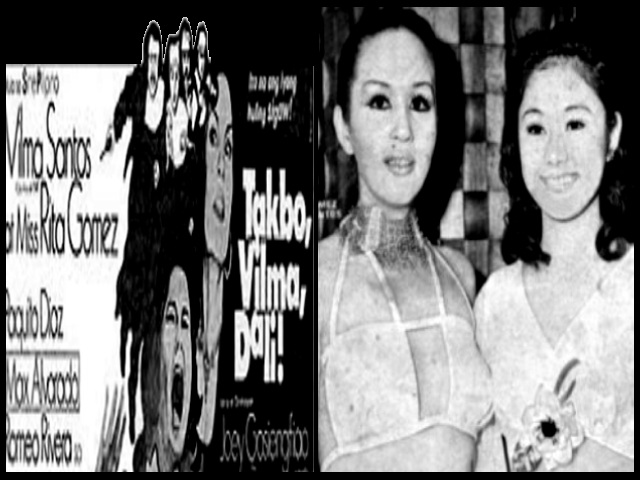
Basic Info: Vilma Santos played Darna in the following films: Darna at Ding (1980); Darna vs. the Planet Women (1975); Darna and the Giants (1973); Lipad Darna Lipad (1973). According to Wikipedia, Darna is a fictional character and Filipino comics superheroine created by writer Mars Ravelo and artist Nestor Redondo. In her more popular incarnations, she is a deceased warrior from another planet manifesting herself through a girl from Earth, named Narda. She first appeared in Pilipino Komiks #77 (May 13, 1950).  Darna is a retooling of Ravelo’s earlier character Varga, whose stories he wrote and illustrated himself. She first appeared in Bulaklak Magazine, Volume 4, #17 (July 23, 1947). Ravelo left Bulaklak due to differences with the editors…Starting in 1951, several Darna movies were made. Some made from 1973 onwards starred the future multi-awarded dramatic actress and politician Vilma Santos. In these 1970s films, Darna’s origin was changed; no longer a little girl, Narda was now in her late teens. Also, she herself becomes Darna, unlike the original where she just “channels” her (not unlike Jason Blood and Etrigan). Only Ding knows her secret in this version. Also, the stone comes out of Narda’s mouth every time she changes back; she has to swallow it every time she wants to transform (This became standard for following versions). Darna is not specified as coming from Marte, just as a “warrior of Light”. This version of Darna became most people’s idea of the character for about 3 decades. A catchphrase popularized by the movies and said by Narda runs, “Ding, ang bato!” (“Ding, [give me] the stone!”). (READ MORE)

Film Review: “…Most people nowadays remember this 1974 “Silver age” re-invented version by legendary actress, Vilma Santos. Vilma Santos played both “Darna” and “Narda”. This practice continued in every movie version that followed after. Although Vilma didn’t possess Rosa Del Rosario’s goddess-like physique in the 1951 original, she made up for it in characterization and acting chops. Vilma Santos’ version became the template and few people remember the original where the part of Narda was played by a young girl actress, and the beautiful Rosa played the grown-up Darna …” – International Hero (READ MORE)

SUPER GEE

Super Power: Batman-like power (yes, she drive, a motorbike and helicopter!). Unlike Darna she doesnt have magical power, her strenght are more human, just like Batman.

Basic Info: Nora Aunor played Super Gee in 1973. Created by writer Zoila Meneses (or simply Zoila) and artist Rudy V. Villanueva, Super Gee originally ran in the pages of Darna Komiks from 1972 to 73. The character is best known for having been portrayed by the Superstar of Philippine movies, Nora Aunor, in a 1973 film adaptation. The heroine was revived in a sequel series, Supergee II, which ran from 1987 to 88 in Super Action Komiks (formerly Pocketkomiks), published by Atlas Publishing Co., Inc. Zoila returned as writer, while Romy T. Gamboa took over as artist….Supergee almost appeared on television in a 2006 episode of the ABS-CBN series Komiks. Starring actress Judy Ann Santos in the title role, the episode had actually been filmed, but was never aired. In 2009, US-based Filipino artist Dell Barras posted designs he had made for a proposed Supergee revival. You can view the rest of his designs on his blog Sketchpad…” – Aris B. Panganiban (READ MORE)

Film Review: “…Sa panahon ng aking pagsusulat, nakita ko na si Zoila Meneses o mas kilala sa Zoila lamang ng kanyang mga tagasubaybay sa komiks. Siya ang nakikita ko noong writer na may puting buhok. Sa mga hindi nakakaalam, si Zoila ay naging editor sa loob ng 14 years kaya hindi mapagdududahan ang kanyang kakayahan sa pagsusulat. Marami na rin siyang naging hit sa panahon ng pagsusulat niya ng nobela sa komiks. Ilan sa kanyang mga obrang sinulat ay ang “Naghihintay ang Kahapon” with Nar Castro sa Pilipino Reporter ng Affiliated Publication, “Horse-Man” , Super Action Komiks (1988) , “ Isinusumpa Kita” sa Tagalog Klasiks (1992), “Super Gee”, sa Darna Komiks, (1972, 1987) at marami pang iba. Hindi lang sa komiks, nagsusulat din ng mga romance pocket book novel si Zoila at aktibo pa rin sa kanyang writing career. Sa isang tabloid newspaper ay may nobelang serye rin siyang pinatatakbo sa kasalukuyan…” – Arman T. Francisco (READ MORE)

DARNA vs SUPER GEE

In 1973, Vilma’s box office clout flew higher and higher as the new Darna, Nora decided to match the new strategy her opponents were bringing in the table by producing her version of super hero via Batman inspired Super Gee. It was a perfect strategy as Vilma’s Darna was like Superman (basically Darna – – can fly), Supergee rode a vehicle, just like Batman! The customer was quite similar too as Super wore a mask, just like Batman. Just like Darna, Super Gee came from a comics serial. It was a creation by Zoila serialized ironically in “Darna” komiks. Like in Lipad Darna Lipad, Nora casted Celia Rodriguez as her nemesis and hired Armando Garces as director. Unfortunately Nora Aunor can’t replicate the success of Darna even with the presence of Jojit Paredes and teen star Arnold Gamboa. The uninspired direction of Armando Garces didn’t helped the case too. The movie bombed in the box office and the press ridiculed Nora’s Super Gee costumes. Speaking of costumes, Madonna maybe got the inspiration for her cone bra costumes from this film.

Vilma Santos made another milestone career move. She bravely starred as the new Darna despite her lack of height. Past Darnas, From Rosa Del Rosario to Gina Pareno, prior to Vi, were all tall and toned. So the stakes are high as the film were released in March of 1973. Vilma’s supporters were relieved and ecstatic to find out the huge crowed in each theatres. It was reported that the production company, Tagalog Ilang Ilang distributed Darna dolls and Coca-Cola gave Darna masks to thousand filmgoers. Vilma will continue to starred in four more Darna movies while Super Gee quickly disappeared to its deserving death. Lipad, Darna, Lipad were divided into three separate segments with each segments and was directed by three different directors. It its First episode, Emmanuel H. Borlaza handled the exciting fight between Darna and the “Impakta” played with much gusto by Gloria Romero that climaxed into that aerial fight that ends with Gloria falling down into the church’s cross. If the first one was exciting, the second director, Elwood Perez successfully gave us a strangely cold and campy episode. Maybe because Darna’s nemesis Valentina played by Celia Rodriguez were supposed to be a supermodel hence the overtly poised gestures. She turned out to be a snake queen, turning her hair into diabolical snakes with her eyes beams up and turning whatever that touch the beams into stone. The face-off between Darna and Valentina was so stylish, sizing each other by dirty glances. It was like watching a western cowboy movie. When finally Valentina used her beams to turned Darna into stone, she was outsmarted by Darna. Using a mirror Valentina beamed her own self and she turned into stone. Add to her demise, she fell from the building and was shattered into hundred pieces! The last episode directed by the late Joey Goseingfiao featuring Liza Lorena as the hawk lady or “Babaing Lawin.” As expected Darna defeated her third nemesis but compared to the first two episodes, the fight scenes here were less exciting. We both seen Super Gee and Lipad Darna Lipad. Unfortunately, Super Gee was so poorly done that we can’t remember it’s full story. The press were also in agreement with me as there were no articles whatsoever written about this film even via internet. – RV (READ MORE)

Wonder “V” and Super “G”“…Talk about Himala, it was because of this movie that two ladies in my neighborhood got into a nasty hair-pulling fight. Nora could have won the grand-slam for Best Actress in all the award-giving bodies for this movie in 1982 except that her archrival and now Batangas Gov. Vilma Santos won for the movie “Relasyon” in the Gawad Urian. The feisty Noranians in the neighborhood could not accept this, while the Vilmanians gloated. This irreconcilable difference unfortunately turned ugly. In those days, fans were fiercely loyal. When Vilmanians talked about “Wonder V,” expect Noranians to come up with “Super G.” When Vilmanians mentioned how they got scared in “Phantom Lady,” expect a multitude of Noranians to thwart their claim by discussing “Fe, Esperanza, Caridad,” Nora’s suspense thriller. Even when Nora and Vilma starred together in a movie, say “Pinagbuklod ng Pag-Ibig” or the legendary “T-Bird at Ako,” competition between fans of both camps still raged. But in my community, the Noranians always prevailed!…” – Bum D. Tenorio Jr. (READ MORE)

Vilma Santos: “…I saw Eva Montes’ “Darna at ang babaing Tuod” at the movies and Rosa Del Rosario’s Darna on TV. I also watched “Darna: Ang Pagbabalik (The Return)” on TV but don’t care for it… it had bad production values. Of course, I was excited when I was offered the role of Darna. I even had to ask permission from the Nuns at my school because of Darna’s 2 piece costume. Besides, there’s nothing obscene about the costume because this is a Superheroine after all. But I asked advice from some fans and they were concerned that I might get criticized for being daring. This is why I wore body stockings in the promotional pics for the movie. It looked so terrible and made me look fat with body stockings. William Leary and Douglas Quijano convinced me to remove the body stockings before the Press Con. I remember changing into my Darna costume and I remember their words telling me- “Vi, the stockings look terrible so why don’t you surprise all of them by not wearing them. Besides, you have the looks anyway.” So there I was at the Press con without the body stockings…” – Eric Cueto (READ MORE)
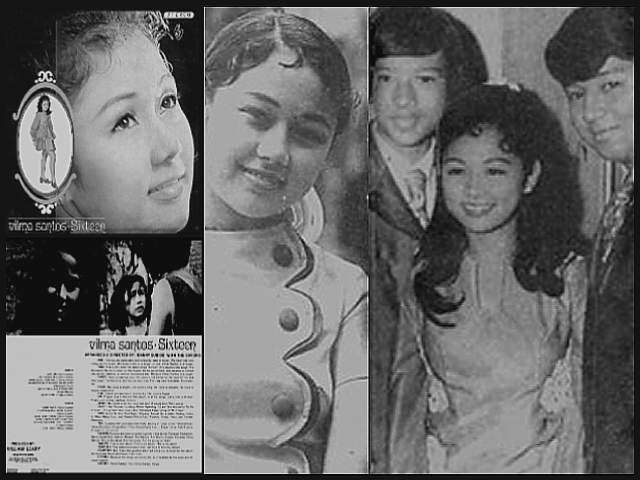

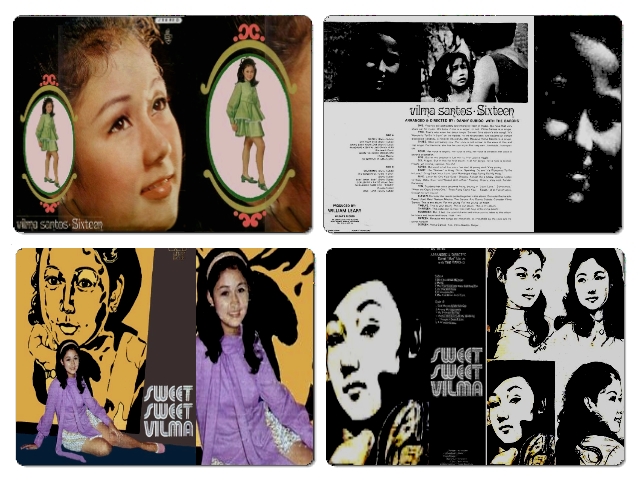
Discography: SIXTEEN (1970) Vilma Santos “Sixteen” Interview

What does Vilma Santos think of Vilma Santos now? At Sixteen, I guess is far cry from the Vilma Santos I’ve known eight years ago. I remember I was very childish and too carefree then, pretty naïve to what life would seem to offer and…oh yes, physically, I was skinny. But now, in such a little period of time, I’ve learned so many things about life really is, the differences between winning and losing…the many faces of happiness and success and yes, from a skinny girl…uh, what d’ya know, I fully bloomed into…ugh, would you believe fastest weight gainer! Gee whiz, it makes me feel sick everyday. I wonder how I will look come eight years more and the next to come. But one thing is sure, by that time I’m already a full-grown woman.

Do you have many friends? What king people do you choose for friends? I have lots of friends. But real friends, I doubt if there are many. I admire persons who know how to mingle with anybody and everybody. I despise the opportunist and the unkind.

At present, do you think people you meet are interested in you only as Vilma Santos, the movie star? Nope and…well, yes. There are some. I just don’t know the others.

Does acting come easy for you? Well, for me it’s only a matter of little concentration. I study the part I play and try to feel it in more realistic way. Emotion easily gets me you know, especially when I’m already in front of the camera.

How do you evaluate yourself as an actress? As a singer? I can act, yes but I don’t consider myself a very good actress yet. I guess, I have to learn more, especially in dealing with everybody, with people who support me and work with me and most especially I still have to learn how to accept criticism open-mindedly, gratefully and patiently in which some of the blasts you’ll deserve, many you won’t. And as a singer, gosh…I feel a funny thing inside everytime na naiisip kong I was not a born singer. But everytime I hear my records play, I couldn’t help but kid myself, that I was made after all.

What kind of reaction did you have when your first recording became a hit? Ofcourse I was very very very happy…overwhelmed with joy, for somehow, I didn’t fail my producer William Leary, and the great song writer, Dannie Subido.

Did you feel pressure in preparing your LP album, Sixteen? I’ve felt pressure ever since I began to work in show business. Let’s just say, I was a little nervous.

Is it true that after you were given five complimentary copies of your first LP album, you immediately gave them to five special people closest to your heart, and the two of them were Jay Ilagan and Edgar Mortiz? Yes, but it didn’t mean anything on my part. It’s just a sort of a token of friendship. Just like when they also gave me a copy of their first record.

Is it true that one of your favorite songs which is entitled “Dry Your Eyes” reminds you of Jay Ilagan? Why? Well, its not exactly that way. I mean, kayak o lang nasabi youn kasi… kuwan, ;yon bang…tsk. Kasi kuwa, e ah it reminds me of Jay, because I was deeply touched sa mga write-ups na nababasa ko tungkol sa kanya – na gusto raw niya akong maging ka-love team. But it seems, as he himself said before, were not meant for each other even in real life that’s why I couldn’t help but dedicate the lyrics fo that song to him which goes like this…”Look around, never try to run, for the things to come could be your chance. You’re still young to suffer and to cry, don’t you deny, for I know your part and don’t be afraid to be alone.” And that’s it.

Is it also true that Jay and Edgar are two of your most ardent suitors in real life? Hmmm….yes….

Between Edgar and Jay, who of the two do you think has the greater chance of winning your heart? I haven’t thought about it yet. And besides, I enjoy life as it is now – – being free from love worries. Just wait na lang till I have enough time to study the matter closely, huh?

Speaking of Jay, how did you feel when you were separated as loveteam in Bata-Batuta? I felt sad, not because si Edgar ang ipinalit sa kanya. It was not Edgar’s fault, nor Jay’s or mine. But I was happy, too not because nagkahiwalay kami ni Jay. Tsk…you see, it’s hard to explain eh! Some people might misunderstand me, so let’s better not talk about it anymore, okay?

But do you also dream of working with Jay someday? Yes, why not? Kung may alok, that is. I think Jay is a very nice guy to work with and I’ll look forward to make picture with him in the near future.

Why is it that Edgar reportedly always gets jealous everytime you talk with other boys? I don’t know that! All I know is that I’m free to talk with anybody, and I guess, I have all the freedom to do so.

What qualities of Edgar do you find most attractive? Ditto with Jay Ilagan? They are different personalities. And qualities too. But I like them both, as friends, that is.

Lastly, at what age do you want to go steady with somebody? After my 18th birthday. But it all depends upon the situation, you know. Maybe this year, maybe next year…or maybe never.  END.  –  Published in V Magazine 2006, courtesy of Alan Trambulo.

Batangas Governor Vilma Santos: Sharing HEARTS for Progress

In her heart of HEARTS, the heroine of the celluloid world who stands by the right and plight of the underprivileged, has lent her heart to make the HEARTS program available to her constituents in the province of Batangas. The charm and charisma that endeared this actress-turnedpolitician to her millions of fans when she started her career in Philippine filmdom at age 9 is still embodied in Gov. Vilma Santos as she meets people, as she faces the challenges of her office. “Monday is people’s day. That’s the time when I get to meet and find out the needs of my constituents from various sectors.They follow up their requests, ask for assistance. Others just want to see me for picture-taking,” she pauses, smiles and adds, “There were many cases when they still demanded to see me personally even if I had already assisted them in one way or another. They just wanted to see me and thank me. Well, it’s part of my job. It’s physically draining, but the Vilma is still there.” Health & Home staffers and others witnessing the interview nod their heads in agreement. With regard to the urgent need of her constituency, the governor stresses that it is still the basic needs and these are what her government needs to address and enhance. “There are many problems, left and right, up and down. But it’s still the basic needs that are important and they are contained in our HEARTS program.”

This program, she clarifies, was not invented. “It was given enough study time when I won the mayorship in Lipa in 2007, with the help of my husband, Senator Ralph Recto.” The HEARTS Program Health, Education and environment, Agriculture, Roads, Tourism and technology, and Social service and security. For her health program, the governor says her government has many projects. “I’ll give only one. We have 12 district hospitals. One perfect example is the Lipa District Hospital. All of them [hospitals] were rehabilitated and expanded, and we bought new equipment and facilities and distributed Philhealth cards.” She further explains that even though these are district hospitals, people should pay. “We can’t subsist if everything is free. How can you maintain a hospital if everything is free?” (Purchase this H&H Magazine to further read on the article, please feel free to contact the Marketing Department or call us at (632) 364-5205) Jose F. Sarsoza Jr. is editor in chief of Health & Home. – Jose F. Sarsoza Jr. (READ MORE)

Vilma Santos, Ang Ulirang Ina

ARTICLES - Mother Vilma 2

Whether in reel or real life, Vilma Santos is an epitome of an ideal mother. This is my tribute to Vilma Santos, ang Ulirang Ina.  She has had faults or wrong choices in life. Like her, we all make mistakes. As the years go by, we learn from those missteps, wisen up and change for the better.  I could write a book about Vilma, and perhaps one of the most poignant chapters will be about her as a mother. Oh yeah, we’ve had ‘mother’ role figures in showbiz via the late Ms. Rita Gomez, the original bad girl, or her ‘arch rival’ Ms. Celia Rodriguez.  Then there’s Mother Lily, the matriarch of Regal studios.  There is the protective Amalia Fuentes, who at daughter Liezl’s prime, was the best known mother/actress of the Philippines.  At one time, Nora Aunor was a picture of a happy family with real son Ian De Leon and a battalion of adopted children who appeared on movies together with either Christopher De Leon or Tirso Cruz as father figures.  In films, some of Nora’s most memorable characters are mothers: Bulaklak sa City Jail, Andrea, and Pacita Madrigal.

But no one is as beloved a Mother Figure than the QueenStar, Ms. Vilma Santos.  Remember the “I love you Lucky!” days when, after a grueling VIP/Vilma live show, mother Vi would say those endearing words to her son waiting at home?  Those were the most famous greetings that were heard every Friday, from Luzon to Mindanao, year after year.  “I love you, Lucky!” The words say it all, from a loving, doting, responsible mother. At the height of her TV (top rating Vilma!) and movie career (prime movie roles and box-office triumphs in the 90’s), Vilma mad a tough choice: to give new husband Sen. Ralph Recto a child.  In her farewell Vilma! show, she tearfully said goodbye to fame and fortune, and her fans, to give way to family/motherhood. Why even megastar Sharon Cuneta was all praises to the Real Queen for the tough but wise decision she ever made.  No success in life can ever replace a failed family. Even then, Ms. Vilma Santos was admirable for her brave, smart decisions.  Risking her career, even her life, she went through a most delicate pregnancy the Philippines had been a voyeur to.  She had to be literally carried to the bathroom in order not to bleed and lose the baby.  What a sacrifice from a mother and wife.  And how God blessed her with a new son, Ryan Christopher Recto.  And oh how avid fan Sharon Cuneta followed in her idol’s footsteps. Two great mothers.  Two great superstars.  When they appear in a film 2gether?

As to films, no other actress has essayed a gamut of credible mother roles, than Vilma Santos.

  • “Broken Marriage” – failure as a wife, but Never as a mother.
  • “Aida Macaraeg” – her poignant moments with her son, unforgettable. Lino Brocka could not have found a better Macaraeg.
  • “Dolzura Cortez” – on her deathbed, dying from AIDS, she tells her mother Charito Solis (SLN) – “ang mga anak ko, huwag ninyong pababayaan ang mga anak ko.” Urian was won over. Bow! Award, oh! Grand slam number two, oh!
  • “Saan Nagtatago ang Pag-Ibig?” – as a ‘surrogate’ mother to Val (Tonton Gutierrez). Remember the lines, “si Val, si Val!?” Best picture!
  • “Ipagpatawad Mo” – “si Jun-Jun!”. Ugrian jurors made the right choice. Best actress of ’91.
  • As Lea in “Bata Bata Paano Ka Ginawa” – son screams “hindi totoo ‘yan. ‘hindi totoo ‘yan!” Mother and son scenes. Mother and daughter scenes. Mother and children scenes. Unforgettable. Grand slam nga, eh! Number three!
  • As Josie in “Anak” – wa na ko say. BOW! WOW! POW! PMPC Star, PASADO and CMMA did the right thing. Awards! Oscar foreign language film entry.
  • Amanda Bartolome in “Dekada ’70” – Mother Courage, Nestor Torre describes Vilma of her character and brilliant performance. Grand slam number four. Second trip to the Oscar foreign language film category as an entry.
  • Lilia “Mano Po 3” – “Pati ba ikaw iiwan mo ako? Sabagay, sanay na ako ng iniiwan?” A well written role for Vilma (si Nestor Torre ulit, oh!) as mother, wife, abandoned girlfriend, anti-crime crusader.

The envelope, please! Kayo, may maidadagdag pa ba kayo? Vilma Santos has done it all. Been there, done that. Next stop, the MMK role as mother to a child with cerebral palsy. And the mother of three gay sons in Flores de Mara. Kapanapanabik! As for me, Vilma’s best mother role is that of being mother to sons Lucky and Ryan, and to her constituents in Lipa city who voted her, in a landslide, three times, for being an excellent, incomparable Ina Ng Lipa. Bow! Happy Mother’s Day, Mayor Vilma Santos-Recto! – Mar Garces, V Magazine, April – May 2005 (READ MORE)

ARTICLES - Mother Vilma 1

The Sweet Voice of Vilma Santos (Repost)


When Vilma Santos released her first album in 1969 under Willears Record, no one expected that her vinyl record would sell 500,000 units making it the company’s surprise record-breaking album of that year. The signature song, “Sixteen” became the most played single of that year proving that Vilma Santos can be as phenomenal as her closest rival and the more established singer, Nora Aunor. The young Vilma won a Golden Record Award for her debut album that comprised of 16 English songs including four original songs composed and arranged by Dannie Subido.

Prior to her debut album, Vilma Santos’ first stint in singing was in her earlier film, 1964’s Ging. She played a child singing sensation opposite drama staple, Olivia Cenizal. Her career continued with string of dramatic roles and when the musical trends started in late 60s her career aspiration become limited mainly because everyone expected young stars to sing well. She admitted her limited range as singer and concentrated with her promising acting talents and dancing. When Vi found commercial success with Edgar Mortiz as her love team, she occasionally sings with him. Their fans did not mind Vilma’s soft thin voice. Actually, Vilma’s sweet tone blends well with Edgar’s balladeer pipes.

The success of Vi & Bot love team was evident with numerous films and it was only a matter of time that the idea of having Vilma have her own album came in 1969. There was a market and demand for Vilma’s very own long-playing vinyl. William Leary, Vilma’s manager asked musical director Dannie Subido to gather songs that will suit Vilma’s limited range. It was reported that Subido find the project challenging. They have to find songs that are light but will still give Vilma’s fans enjoyment. They decided to make it fun and sort of child like. They also wanted to make sure that the songs reflect Vilma’s current state of mind, that of a growing teenager. Sort of like early Britney, “no longer a child not yet a woman.” Her promotional interview clearly confirmed some of the issues teenagers are experiencing during this time. Body image, sex education, adulthood, friendship, and dating are some of the topics the album tackled which are topics that are still relevant today. “…as a singer…gosh…I feel a funny thing inside every time na naiisip kong, I was not a born singer. But every time I hear my records play, I couldn’t help but kid myself that I was made after all.” She commented when asked to evaluate herself as singer. What she really meant by that line, “I made it” is that by making her record a success no one cannot say that she cannot be sell records. This success proves that she can be a successful singer like her closest rival, Nora.

Vilma’s first album was pure fun and still very relevant today. Consist of twelve songs six on each side. The vinyl record on side A starts with its carrying single, Sixteen. Composed by Dannie Subido, Sixteen talks about “making out” in the park. This might alarm some of the religious zealots in the 70s but Ate Vi’s wholesome sweet voice makes the song wholesome and child like. The hidden sex – “making out” – kissing and hugging in public place – message of the song would probably the reason why “Sixteen” became the favorites of teenagers. The song catapulted Vilma’s signature song. A feat that even her closest rival, Nora Aunor can’t replicated (Nora Aunor despite successful singing career lacked a signature song). Remember this is the hippie era and the start of the feminist movement. A clear reason why “Sixteen” was a major hit with the free love carefree young generation of this era. The next songs, Dry your Eyes and Bring Back Your Love both arranged by Dannie Subido are love songs that boils down to frustration of a girl in love. Followed by a turned around in terms of mood with Vi’s version of a Bacharach composition, Raindrops Keep Falling On My Head, a funny but out of place song. One of the two final songs on side A, came as a surprise. “When The Clock Strikes One” was an original composition of Robert Medina and like “Sixteen” was about “making out” – kissing and hugging but this time its more fun because of its unusual up-tempo mood that’s actually more like a hip-hop song.

Side B of Sixteen was pure fun too. Three songs that stands out were the original compositions of Dannie Subido, “Sometimes,” “It is Wonderful to be In Love” and “Then Along Came You Edgar.” The lyrics of these songs are simple and obviously catered to the massive followers of the Edgar – Vilma love team. Before Britney Spears came up with her hit song, “Sometimes,” Vilma has her own song titled “Sometimes.” Both Britney and Vilma’s songs are about teenage love confusion. It’s a Wonderful To Be in Love is self-explanatory, yes Ate Vi is in love and she expressed it nicely in this song. The up-tempo and simple lyrics of this song makes it more like a children rhyme song except that it’s about almost “adult-kind” of love. The puppy love theme of the album continued with an uplifting song, well at least for the Vi and Bot fans with “Then Along Came You, Edgar.” This song confirmed Vi’s puppy love to the dark and handsome but not so tall cutie-pie, Edgar Mortiz. Once again, Dannie Subido’s arrangement and lyrics are simple but playful, a perfect fit to Ate Vi’s sweet range.

The success of Sixteen can be attributed to the playfulness and simplicity of the song selections. It suited the sweetness and purity of Vilma’s almost child like voice. The album earned Vilma her first golden record award and a remarkable signature song, “Sixteen.” The album established her as a successful recording artist. If I will compare her to today’s list of contemporary artists, I will compare Vilma to the likes of Jennifer Lopez, Britney Spears, and Madonna. Jennifer, Britney, and Madonna has thin but sweet voices just like Vilma. Like Vilma, these pop superstars have to work hard to achieve almost perfect products that their fans loved. Like Vilma, the three pop stars are great dancers which they all used to the max in their choreographed production numbers. The reluctant singer came out on top. Vilma Santos’ debut album made history. Sixteen made Vilma Santos a remarkable singer.

After Sixteen – The success of Sixteen brings out another facet of Vilma Santos’ talent. Everyone knows that she is a good actress and a wonderful dancer but nobody expects that she will be able to succeed as a singer. At the early stage of her young career, the rivalry between her and a more established singer, Nora Aunor was lapse sided because Aunor was the number one singer in town. The success of Sixteen brings about an even playing field between the two young stars. Vilma’s record-breaking sales positioned her career into high gear. She continued to act in several musical films and at the same time recorded fun-filled songs. To her critics, Vilma’s recording success were attributed to pure luck. And so, to prove them wrong, Vilma’s manager smartly plotted follow-up recordings. Not only did Vilma record her follow-up album, she recorded a string of mini-LPs. Mini-LPs are shorter version of the big vinyl record with two songs on each side. She ventured into Tagalog songs, recording six songs that include instants hits like Isipin Mong Basta’t Mahal Kita, a theme song to a film she did opposite Filipino chess grand master, Eugene Torre; Palong-Palo, where she received a golden record award in 1974 and an up-tempo opm, Tok-Tok Palatok, another theme song from one of her comedy film with the same title opposite Jojit Paredes. Vi and Bot also released two mini-LPs, “Something Stupid,” a song that they regularly sings at their TV show, D’Sensations and “Christmas Tiding,” a collection of famous holiday songs like Silver Bells and Vilma’s now famous version of Santa Claus is Coming to Town and Mommy Kissing Santa Claus that’s been circulating in the internet in recent years. In addition, Vilma recorded Baby Vi, another mini-LP. She also shared equal billing with Edgar Mortiz, Esperanza Fabon, Ed Finlan, Hilda Koronel, and Sahlee Quizon in a Christmas compilation album titled, Christmas Carols.

Willears Records continued Vilma’s recording projects with two albums, Sweethearts and Aloha My Love both featured her with off and on screen love partner, Edgar Mortiz. The company who introduced the resurgent singer, Vilma in Sixteen followed up her solo success with Sweet, Vilma, Sweet, a much more ambitious offering with Vilma doing popular cover songs. Songs that are mostly identified with more established singers, like Nora Aunor. It is worth noting that during the peak of the musical genre in the early 70s, the musical films relied heavily on foreign influence. Maybe this was the reason why Vilma’s rival Nora Aunor doesn’t have a signature song. Recorded songs are mostly versions of the foreign recordings. Tom Jones, Frank Sinatra, Connie Francis, Neil Sedaka are the usual suspects. Instead of original simple composition, Willears selected songs like Mama, Sad Movies, and Our Day Will Come and let Vilma create her own version. The result was a disappointment not because Vilma didn’t work hard for the project but because it lacks the originality of her first album. Vilma’s thin voice also didn’t help.

But despite this visible contrast to her first album, Sweet Vilma Sweet was a successful follow-up. She continued her singing stints with an album most Vilmanians seems to forget, All I See Is You carried the folk song, Ati Cu Pung Sing-sing and Wonderful world of Music. The later song became a title of a musical film that paired Vilma with Edgar and co-starred with Snooky, Tony Ferrer, and Boots Anson Roa. The demand for Vi & Bot’s recordings increased and Willears produced Sweetheart, perhaps a confirmation album of the real score between the two young teen stars. Out of 25 films Vilma and Edgar made in 1970, both Sweethearts and Sixteen stands out as two of their certified hits both as films and recorded albums.

By 1972, Vicor Music Corporation took over Vilma’s singing career and smartly went back to the original fun-loving carefree theme that suited Vilma’s voice and made her a successful recording artist. With the guidance of Orly Ilacad, Vilma recorded original compositions that were light hearted, up-tempo and simple. Sing Vilma Sing arrived at the radio airwaves with the carrying single, “Bobby Bobby Bobby.” Despite the declaration of Martial law in 1972, the album became another instant hit. Also, Vilma and Edgar recorded their third album together, a follow-up with the hit, The Sensations. Aloha My Love came afterwards which also became a film and appropriately shoot entirely in Hawaii. Aloha was artistically packaged and contained Hawaiian and popular cover English songs like All Alone Am I and Eternally.

Unfortunately, all good things must end. By 1973, Vilma made her move. After almost one hundred films with Edgar Mortiz, she decided, it was time to venture out of the love team and test the water as solo star. This move also signaled the end of her singing career. At the same time, the musical genre started to subside as more turmoil politically spreads around the country. The bomba films exploded in mainstream local cinemas in mid 70s. Movie theatre owners illegally inserts porn clips in the middle of film. It was so popular back then that even the first Manila International Film Festival organized by former first lady, Imelda Romualdez Marcos allowed the bomba or sexy films to be shown during the midnight time slots of the festival. The bomba period created a long line up of respectable sexy actress like Elizabeth Oropeza, Daria Ramirez, and Chanda Romero. Even former beauty queen, Gloria Diaz ventured into the sexy film. The emergence of sexy or “bold” films as what they referred to by local film buff challenged the now solo superstar, Vilma Santos. Tagalog Ilang Ilang production transformed her into an action super hero as the new Darna, Philippines’ version of Wonder Woman. Lipad Darna Lipad (Fly Darna Fly) defeated entertainment giants Fernando Poe Jr and Joseph Estrada, both have films being shown at the same time and the usual bomba films. A very long line-up snake down the streets of Claro M. Recto Avenue’s Cinerama theatre. It was recorded that Tagalog Ilang Ilang Production distributed Darna dolls and Coka-Cola bottles to the massive patrons during the film showing. Lipad Darna Lipad became the most successful Darna film ever. It broke box office records and solidified Vilma’s clout as the new box office queen of Philippine movies. Vilma’s stature as the most bankable artist of that time validated her decision to leave her love team with Edgar Mortiz and the singing stints to her closest rival, Nora Aunor. She became more adventurous and accepted roles that showcase her versatility. And this move cemented her position as the actress to watch, the actress on top of her game.

Remarkable History – As a singer, Vilma’s thin voice didn’t stop her to become a successful singer. Her hard work paid off and earned her a piece of history. The reluctant singer recorded strings of solo albums that created her signature songs, “Sixteen” and “Bobby, Bobby, Bobby.” Signature songs that enlisted her together with famous singers like Imelda Papin (Bakit), Eva Eugenio (Tukso), Claire DeLaFuente (Sayang), Sharon Cuneta (Mr. DJ), Didith Reyes (Nananabik), Aiza Siguerra (Pagdating Ng Panahon), Freddie Aguilar (Anak), Florante (Handog), and Gary Valenciano (Di Na Natuto). Her sweet and child like voice reflected the innocence of her original up-tempo songs that tackles teenage issues like dating, sexual education, body images, and adulthood. Teenage issues that are still remarkably relevant today. – RV Album album text and photos: Nar Santander, Eric Nadurata; Additional photos: Rene Maximo READ MORE

RELATED READING:

Queen Vi (Repost)

This slideshow requires JavaScript.

Scene: struggling with her emotion, she kneels beside the bed where her father lies dead. The crippled old man couldn ’t accept the fact that his daughter was dancing for a living. Earlier, they had a quarrel and when she left the house, the old man had killed himself. “Bakit naman hindi n’yo ako hinintay?” she’s now whispering to him in remorse, “hindi naman talaga ako galit sa ‘yo, a. Di ba kayo rin kung minsan nakapagsasalita kayo ng masakit sa akin pero naintindihan kita dahil alam ko galit ka at hindi mo sinasadya. Dapat naman sana naintindihan mo rin ako,” she continues, breaking into sobs, “dadalawa na nga lang tayo sa buhay iniwanan mo pa ako. Hindi naman tama ‘yon!” And with the camera fixed on her in a semi-closeup shot, she weeps through her kilometric dialogues with startling spontaneity, the scene lasting all of ten minutes.

The scene is one of Vilma Santos’ high moments in Burlesk Queen, Celso Ad. Castillo’s magnum opus which earned for Vilma the Best Actress award in the Metro Manila Film Festival concluded last week. It’s a difficult scene and an actress of lesser skill could have buckled along the way and wasted rolls of precious film, but not Vilma who acquitted herself beautifully well in just one take. “Halos wala kaming rehearsal,” Vilma recalls, “kasi si Direk ayaw ng masyadong rehearsal dahil nagiging mechanical daw ang labas. Gusto niya after one rehearsal, take na kaagad because he believes that the first take is always the best.” Then she adds as an afterthought: “Nakakapagod ang eksenang ‘yon. Emotionally, that is.” Had she done the role of a burlesque dancer three years ago, Vilma would have stirred a big hornet’s nest among her loyal diehards… she would have been burned in effigies in indignant rallies all over the country… but no such untoward reaction happened, thank heavens. “My fans have grown up with me,” Vilma says, “they have matured. Besides, I’m already 24 and I’m not getting any younger. Ayoko naman nang palagi na lang akong naka-ribbon sa buhok at nalo-lollipop. Hindi na ako ang dating sweet-sweet. Come to think of it, mas mahirap mag-maintain ng sweet image dahil kaunting mali mo lang nama-magnify na kaagad, pinalalaki kaagad.”

Her metamorphosis began in late 1976 when she agreed to be kissed by Rudy Fernandez in Makahiya at Talahib. It was a “feeler” of sort and when the public clacked its tongue in obvious approval, Vilma shelved her lollipops-and-roses image and proved that she, too, could be a woman – a wise move indeed because at that time her career was on a downswing and her movies were not making money. Then she did Mga Rosas sa Putikan for her own VS Films where she played a country girl forced into prostitution in the big city. The movie did fairly well at the tills. Good sign. And came her romance with Romeo Vasquez, boosting both their stocks at the box office (thier two starrers, Nag-aapoy na Damdamin and Pulot-Gata where Vilma did her own wet style, were big moneymakers). The tandem, although it did help Vilma, actually helped Vasquez more in re-establishing himself at the box office (without Vilma, his movies with other leading ladies hardly create any ripple). In Susan Kelly, Edad 20, Vilma played a notorious-woman role that required her to wear skimpy bikini briefs in some scenes, following it up with two giant sizzlers (Dalawang Pugad, Isang Ibon and Masarap, Masakit ang Umibig) that catapulted her as the newest Bold Queen. Then came Burlesk Queen.

Scene: she comes home one night to find the mother of her week-old husband packing his clothes. He has eloped with her but he’s a Mama’s boy, a backbone-less guy when face-to-face with his mother, and he has now agreed to go home with Mama. She couldn’t persuade him to stay. As mother and son descend the long flight of stairs, the burlesk queen is left all alone in her room, in tears, with nothing and no one to clutch on to. At first she pleads with him but realizing the futility of it all, she proceeds to mock him and humiliate him, “Sige, she yells at him, “magsama na kayong dalawa, magsiping pa kayong dalawa, wala na akong pakialam. Ikaw, Jessie, wala ka namang paninindigan. Sige, magsama na kayo ng mama mo. Sige, gawin mong babae si Jessie, gawin mo siyang bakla!” Vilma’s change of image is part of her newly-found “liberation.” Liberation from what? “From many things,” Vilma answers. “From fear of being criticized, from fear of what people would say about me, from certain restrictions and inhibitions, from everything that was slowly choking me.” That exactly was how she felt early last year: all choked up.

So she slipped into a private hole after a quarrel with her Mama, refusing to be seen in public and thus setting off speculations that she was in hiding because she was on the family way. “No such thing,” says Vilma who had posed in a pair of bikinis to disprove the rumor. “Na-rumor pa na nagpa- abort daw ako at kung anu-ano pa, na nagwawala na raw ako. Pero ako naman hindi ko na iniintindi ang mga tsismis, bale wala na sa akin. Basta ako, I tell the truth and if people don’t believe me, okay lang. Dati-rati, nagri-react kaagad ako, pero ngayon, sanay na ako.” She was so confused and depressed at that time, “so filled up to my neck with problems and the pressure of too much work,” that Vilma was all set to kiss the movies goodbye. “Nakahanda na akong mamuhay ng tahimik noon, as an ordinary person.”

And how was he able to overcome that blue period? “Well, when they let me alone, nang payagan akong magsarili, that’s when everything seemed to loosen up. That’s the time I really felt free. Now, I have all the privacy I want, sa bahay ko, that is.” Although she now lives by herself in a single-girl’s pad, Vilma still runs home to Mama and Papa when she has to make important decisions. When Burlesk Queen was offered to her, Vilma bided her time until she talked with her parents. “Okay,” her Mama agreed, “as long as the sexy scenes would be treated well.” Says Vilma: “I am liberated in the sense that I have moved out of the family residence. Why did I do it? Because I feel I am old enough to take care of myself, gusto ko namang masubukan ang independence. I feel that I am old enough to know what I want. “Ngayon,” she adds, “anu’t-ano pa man ang mangyari, buhay ko na ito. Kung madapa man ako, sisikapin ko nang bumangon ng sarili ko.” Her kind of liberation includes freedom to choose her dates and to go out unchaperoned. To criticisms about her going out with a married man, Vilma snorts: “Ako naman, I don’t care whether a man is a sinner or a saint. Basta niri-respeto niya ako at ang pamilya ko, niri-respeto ko rin siya.”

Scene: She emerges on stage in a lace gown and, gradually, as the music gets hotter and hotter and the audience’s applause louder and louder, she unwraps herself and starts the greatest performance of her life. She has lost her father and her lover Jessie and she has nothing more to live for. The baby in her womb has to go, there shouldn’t be any memory of Jessie. And she dances on and on and on until she collapses in a bloody heap. The dance lasts for 17 minutes. It is her dance of death. Vilma almost backed out of the tree-fourths finished movie when she learned about the finale sequence. No, she wouldn’t do it, she couldn’t do it. She ignored call slips and went into hiding. Poor Celso, he was drowning in his own tears of desperation and banging his head against the wall.

Burlesk Queen was his “last card”, he wanted to retrieve his dwindling popularity, he wanted to save face and if he didn’t get what he wanted now, he would be finished. Finally one day, he received a basketful of fruits – “Peace offering,” Celso calls it, “from Vilma.” “It took us almost seven nights, shooting straight, to finish that sequence. I learned the dance from an expert real-life burlesque dancer. During shootings, palaging close-door. My God, I couldn’t have done it with so many people around.” She had to take several shots of brandy before the shooting. “Otherwise, I could have died from nervousness. ”According to Romy Ching, producer of Burlesk Queen, he didn’t really have the Metro Filmfest in mind because he had a November 25 playdate. But when he saw the rushes, he changed plans. “Hindi ka magsisisi na tinanggap mo ito,” he told Vilma, “it will be worth it.” Says Vilma: “I didn’t expect to win, although marami ang nagsasabi sa akin na malaki ang pag-asa ko. Ako naman, I don’t believe anything unless talagang nangyayari. Kasi noon, I expected to win, sa film festival din sa Quezon City, but somebody else did. I was very disappointed. Noong awards night nga, I wasn’t convinced I would win hanggang hindi ko pa hawak ‘yong trophy.”

After the award, Vilma has understandably upped her asking price.  She’s now worth only P300,000, may kaunting tawad pa if the role is good and the director is good. That business-and pleasure trip to Europe with Vasquez shall have to wait while Vilma is fulfilling her previous commitments. The morning after the awards night, tempting offers swamped Vilma, P300,000 and all, but she is not about to grab them all. She wants first to resume the shooting of her own outfit’s much delayed project, Pagputi ng Uwak, Pag-itim ng Tagak, where she co-stars with Bembol Roco and has for director, yes, Celso Ad. Castillo. “We want to make it as good as, if not better than, Burlesk Queen,” Vilma and Celso promise. It better be. – Ricardo F. Lo, Expressweek Magazine January 19, 1978

RELATED READING:

Gawad URIAN and Vilma Santos


On May 1, 1976, ten Filipino critics agreed to discuss the annual award-giving situation in the local industry. All in agreement that there must be an alternative to FAMAS, the only award giving body in the Philippines. The ten critics, mostly academics, were Pio de Castro, Behn Cervantes, Pete Daroy, Mario Hernando, Bien Lumbera, Doy del Mundo, Manny Pichel, Nick Tiongson, Gino Dormiendo, and Nestor Torre. Most of them were part of FAMAS roster of judges. Most, questioned the recent years winners. According to the website, Wikepedia: “The 1972 best actress “tie” that materialized between major star Boots Anson-Roa and then-rising star Vilma Santos was a good example of the disillusionments experienced by the academics. according to them, the two winners was unheard of at that time, which resulted in accusations of lessening “credibility and prestige.” Ironically, Gawad will have numerous ‘tie” winners in their future set of winners, including a string of ‘tie” involving their early favorite, Nora Aunor. Headed by Nestor Torre, the nine critics agreed to review films and release quarterly film citations with the final nominations and winners announce at the end of the year.

Over the years, the Manunuri Ng Pelikulang Pilipino, MPP, (translates – Filipino Film Critics and considered the equivalent of the USA’s New York Film Critics Circle), established themselves as the most credible award giving bodies in the Philippines. They are known for having a long discussion for each of their award categories resulting sometimes in heated debate and unfortunately resulting with the unavoidable “ties” winners. Since 1976, the group has eluded controversies that rival groups endured. The oldest award, FAMAS has experienced two renegade or break away groups resulting in costly legal battles and low television ratings. Another group, the Philippine Movie Press Club is considered second to Gawad Urian, their Star Awards had a similar fate, they also had a break away group, creating their own awards, the Golden Screen Awards. With the advent of new awards, now ten, and still counting. Gawad Urian remained strong and the most sought after. Currently, the Manunuri are consists of: Rolando B. Tolentino, Grace Javier Alfonso, Butch Francisco, Mario A. Hernando, Bienvenido Lumbera, Miguel Q. Rapatan, Benilda S. Santos, Dr. Nicanor G. Tiongson, Tito Genova Valiente and Lito B. Zulueta.

Vilma Santos has become a big part of Gawad Urian. Although she wasn’t considered their early favourite, they developed a long fondness to the actress, many considered as the Meryl Streep of the Philippines cinema. Fourteen best actress nominations spanning three decades and eight wins starting in 1982’s Relasyon. She also recieved a Gawad Urian best picture award in 1978, as film producer for the film, Pagputi Ng Uwak Pagitim Ng Tagak.

In 1981 Gawad Urian cited four films for their best picture category, Romy Suzara’s Pepeng Shotgun, Mel Chionglo’s Playgirl, Mike de Leon’s Kisap Mata and Laurice Guillen’s Salome. Salome was the winner. The four directors were also nominated for best director together with Ishmael Bernal for Pabling. Guillen was the winner for Salome. In addition to picture and director awards, Salome also won the best screenplay for Ricardo Lee and the best actress award for Gina Alajar. Alajar’s strong competitors were Charito Solis for Playgirl and Nora Aunor for the forgettable Bakit Bughaw ang Langit. Vilma Santos were again got the cold shoulder from the Manunuri as she wasn’t even cited for any of her films, Pakawalan Mo Ako where she won a FAMAS, Hiwalay, a Romy Suzara directed film, Karma where she won the best actress from Metro Manila Film Festival or Ex-Wife, an Eddie Rodriguez directed film co-starring her with Beth Bautista.

But a turned of events the following year. MPP considered 1982 a good harvest with a string of high quality films: Batch ’81, Himala, Moral, Oro Plata Mata and Relasyon, all vying for the best pictures Urian. Oro Plata Mata edged out the other four. It also won the best director honour for Peque Gallaga. Gallaga defeated Marilou Diaz-Abaya (Moral), Ishmael Bernal (Himala and Relasyon), Lino Brocka (Cain at Abel) and Mike de Leon (Batch ’81). The writing category went to Clodualdo del Mundo, Raquel Villavecencio at Mike de Leon for Batch ’81. Noticeably ignored many times by the Manunuri, Vilma Santos was nominated for her sympathetic mistress role in Relasyon. She is up against Nora Aunor’s epical role for Himala, Gina Alajar and Lorna Tolentino were nominated for their feminist film Moral completed the nominees. The Manunuri surprised everyone by declaring Vilma Santos as their 7th best actress winner. The other award giving bodies (FAMAS, Film Academy of the Philippines and CMMA) also declared Vilma Santos as their best actress and the term “grand slam” were born atleast in local entertainment industry. As for the other acting categories, Philip Salvador won the lead actor and Baby Delgado, supporting actress both for Cain At Abel, and Mark Gil won the supporting actor for Palipat-lipat, Papalit-palit. The Manunuri gave the Natatanging Gawad Urian to veteran actress, Anita Linda, who is still very active today and who worked with Vilma several times.

Proving that her win wasn’t just a fluke, Santos won the next two years for Broken Marriage and Sister Stella L both from Regal Films. Four years afterwards her three wins, she again got the best actress with co-winner, Nora Aunor in 1989’s Pahiram Ng Isang Umaga. She followed this with wins in 1991 (Ipagpatawad Mo), 1993 (Dahil Mahal Kita: The Dolzura Cortez Story), 1998 (Bata Bata Paano Ka Ginawa), and 2002 (Dekada 70). She also received the the Actress of the Decade 1990s award in 2000. – RV (READ MORE)

RELATED READING:

ANG ATE NI ATE VI (Repost)


While in New York & everybody were so busy talking to Ate Vi, I had a chance to chat with Ate Emelyn, ang Ate ni Ate Vi.

How’s Vilma Santos as a sister?
Mabait siya. Wala na akong hahanapin pa kay Vi bilang kapatid. Sabi nga sa commercial niya noong araw “perfect.”

How do you (Santoses) celebrate holidays?
We have a family reunion during Christmas.

Can you please tell us more about your experience with Ate Vi as a kid?
Very thoughtful ‘yan. She always visited me in my class and shared her sandwich or allowance or any little things to show that she cared. Sometimes it’s the other way around, pupunta siya sa classroom ko “Ma’am pwede pong makausap ang sister ko” yun pala hihingi lang ng baon.

Kelan mo nasabing proud na proud ka as a sister of Vilma?
Maraming beses na. Isa na doon yung Gawad Plaridel. Pero syempre mas proud ako sa pagiging mabuting tao niya, yung pagmamahal niya sa pamilya, yung pag-aalaga niya sa mga taga-Lipa.

What is your favorite Vilma movie?
Pahiram ng isang umaga. Siguro dahil mother din ako, kaya alam ko ang feeling ng isang ina na ayaw iwanan ang anak.

Nag-react ka ba nung tanggapin niya ang Burlesk Queen at nag-change siya ng image?
Alam mo napakatagal na discussion yan sa pamilya. Pero to make a long story short naayos din. Sabi ko nga career move naman yon eh at saka 23 na si Vi noon. Maganda ang project, matino ang story.

Let’s be frank, gusto mo pa bang tumakbo si Ate Vi sa politics?
Kung ano man ang plano ni Vi doon ako. I will support her all the way. Pareho namang maganda ang magiging resulta kung tatakbo siya o hindi. Kung itutuloy niya ang politics maraming matutuwa lalo na yung mahihirap. Minsan nga paglabas ni Vi sa city hall, may nag-aabang na matatanda, yung iba humihingi ng tulong, ‘yung iba naman nagpapasalamat. Nakakataba ng puso na makitang maraming napaligaya si Vi.

Paano kung hindi na siya tumakbo sa politika?
Marami pa ring matutuwa. Ang mga Vilmanians, ang mga producers. Alam mo may offer kay Vi ang Unitel, Violet at pati si Margie Moran ay balak ding mag-produce na si Vi ang bida. Pero sobrang busy niya, uunahin muna niya ang sa Star Cinema.

How’s Luis (Lucky) as pamangkin?
Mabait na bata. Hindi niya kami binigyan ng problema kaylan man. Everytime I see him, I realized that time flies so fast. Parang kelan lang ay kalong-kalong ko siya, ngayon ay malaki pa sa akin.

And finally, your message for Ate Vi?
Alam kong alam mo na pero uulitin ko pa rin na mahal na mahal kita. At kagaya ng nasabi ko sa iyo kanina Franco, kung ipapanganak ulit ako at papapiliin kung sino ang gusto kong maging kapatid….paulit-ulit kong sasabihin na si Vilma ang gusto ko. – Franco Gabriel, V Magazine, 2005 Global Vilmanians