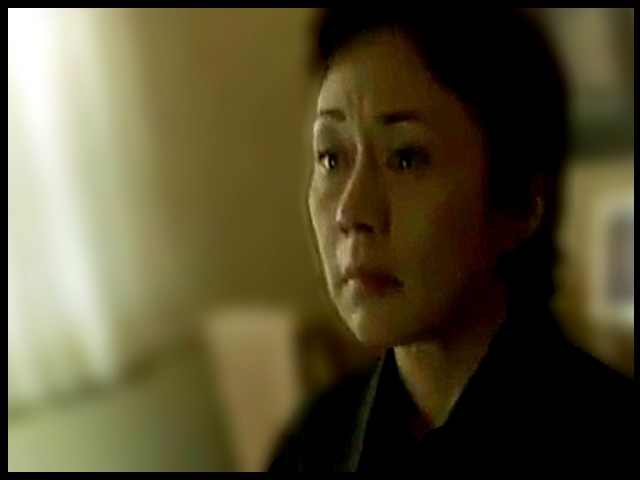
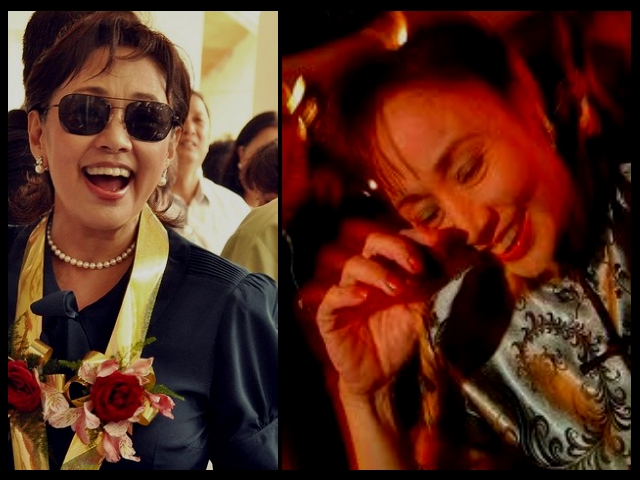
A Very Long Rivalry – 1972

This slideshow requires JavaScript.

Pre-1972 – From late 1960s to 1971, comes the arrival of the musical era and the arrival of the golden of voice of Nora Aunor. Aside from stocking success in music, Nora ventured into films, with string of films that featured other singers like Eddie Peregrina, Edgar Mortiz, Manny de Leon, Victor Laurel and Victor Wood. Films that begin with singing and mostly ends with big production number, all with singing and dancing – ala-Bollywood. Venturing to film making, Nora found her rival, “dramatic-child-star” now a strugling “teen-film-star” in a “musical-era,” Vilma Santos. Although the competition was slightly in favor of Nora, she found herself in numerous occassion, having a strong resistant from Vilma. On 1971, there were atleast one Nora or Vilma film showing in local movie houses. Nora Aunor did seven films (Always in My Heart; Ang Waray at ang Talyada; Guy & Pip; Lollipops and Roses; My Blue Hawaii; My Prayer; The Singing Filipina) and Vilma Santos did nine (Angelica; Eternally; Ikaw Lamang; Love at First Sight; Our Love Affair; Teen-Age Senorita; The Sensations; Wonderful World of Music; Young Lovers), most of these films were musicals. The next year, comes the confirmation of their rivalry.

And God Smiled At Me vs Dama de Noche – “…At the Quezon City Film Festival, then held every October, Nora’s entry was Sampaguita Pictures’ And God Smiled At Me (directed by Tony Cayado and Danny Holmsen); while Vilma’s banner vehicle was Tagalog Ilang-Ilang Productions’ Dama de Noche (directed by Emmanuel H. Borlaza). And the winner was Nora! May die-hard Vilmanian kaming kaklase sa elementary, ang sabi: ‘Luto ‘yun, dahil malapit si Nora kay QC Mayor Norberto Amoranto!” Such loose talks were never confirmed to be true. Or as Tempo’s veteran movie columnist Ronald K. Constantino avers, ‘Nora never figured in any awards scam!…Sa annual Filipino Academy of Movie Arts and Sciences (FAMAS) Awards Night, it was the Vilmanians’ turn to rejoice. Vi was ad-judged Best Actress for Dama de Noche, ka-tie ni Boots Anson-Roa (for JE Productions’ Augusto Buenaventura megger Tatay Na Si Erap). Nora wasn’t nominated for her award-winning starrer at the QC filmfest, but for The Gift of Love kung saan siya gumanap ng dual role: bilang isang cancer-stricken patient at ang kakambal na eventually ay napunta kay Tirso Cruz III. Dama de Noche, which paired Vi with Edgar Mortiz, also had her doing two parts: a baliw and a sane sister…” – William Reyes (READ MORE)

Nora Aunor’s 1972 Films (8): (And God Smiled At Me; Dito Sa Aking Puso; Gift of Love; Kung May Gusot, May Lusot; My Little Brown Girl; Nora, Mahal Kita; Way Out In The Country; Winter Holiday) – Most of her films capitalized on her golden voices and untapped dramatic talents.

Vilma Santos’ 1972 Films (14): (Aloha, My Love; Ang Kundoktora; Dalagang Nayon; Dama De Noche; Don’t Ever say Goodbye; Dulce Corazon; Hatinggabi Na, Vilma; Inspiration; Leron, Leron, Sinta; Little Darling; Remembrance; Sweet, Sweet, Love; Takbo, Vilma, Dali; Tatlong Mukha ni Rosa Vilma) – Most of her films were not focused on singing but more on her versatility.

Nora Aunor’s 1972 acting recognition (2) – Best Actress from Quezon City Film Festival and a nomination from FAMAS both for “And God Smiled At Me.”

Vilma Santos’ 1972 acting recognition (2) – Best Actress from FAMAS (tie with Boots Anson Roa) and a nomination from Quezon City Film Festival both for “Dama de Noche.”

Dual Roles – “…Vilma as Armida is drab and dry, almost a movie prop. It is in the portrayal of Rosanna that Vilma would tear one’s heart away. The many close-ups so effectively used throughout the movie show the unglamorous Vilma: her frowns, her lip-twitching, her uninhibited and stifled sobs. But Vilma is less successful with the shifty look that is the distinctive trait of the deranged. She compensates for this in the ‘betrayal’ scene when Rosanna suspects that Leo, Armida and the psychiatrist (Fred Montilla) all conspired to imprison her in the hospital. Another outstanding feat is the subdued scene where Rosanna learns that Leo has gone to the Lerma villa to meet Armida. The vivacious Rosanna is just as winsomely pathetic. Watching her is just like seeing a bosom friend trying to pretend she’s happy when both of you know she’s not only in this case, Rosanna is truly happy. Her non-knowledge of her plight is what is particularly heart-curling…” – Times Jornal, October 24, 1972 (READ MORE)

Golden Voice – “…They’ll wait for the perfect timing, he says and then he’ll tell his wife Olga (Lucita Soriano) everything. The perfect timing never comes. One morning, Celina just can’t help calling him ‘Itay,’ telling him she loves him very much and that he must come home at once, please. The tender moments take too long, and everybody in the theater knows Damian is ‘tsk, tsk, tsk, mamamatay.’ Everybody is right. At the hospital, the secret lets loose as Celina jerks in agony. ‘Itay, Itay,’ she sobs, in the presence of Damian’s wife and two adopted daughters. Here, Nora’s bid for a best actress award really begins. The three witches (oh, how the fans hated them) now maltreat Celina all the more, slapping her, pulling her hair, kicking her right in the tummy. All through these, Celina’s only consolation is her love for Carding (Tirso Cruz III), the laundry-woman’s (Nenita Jana) son. He is blind. He is desperate. He loves Celina very much but ‘wala akong karapatang umibig.’ And so he contemplates suicide, sneaking out one night, begging between yells of ‘Gusto ko nang mamamatay,’ for a vehicle to run over him. An irked driver shouts at him: ‘Ano ka ba, bulag?’ A woman fan shouted too: ‘wag kayong tumawa, serious yan.’ And then, what do you know, another death: not the blind leading man (that would’ve been a blunder) but his mother, who had followed him. After so much unbearable beating and tearful moments between the lovers, Celina delivers her ultimate prayer — she can’t take it anymore. AND GOD SMILES AT HER. God grants her a golden voice (for a while one thought that was only the beginning of the movie, after no less than two-and-a-half hours) and she sings all her heart at the foot of the altar. And this is not the end of it…” – Times Jornal, October 24, 1972 (READ MORE)

Post-1972 – Nora Aunor did eleven films (Binibini ng Palengke; Carmela; Dalawang Mukha ng Tagumpay; Erap is my Guy; Hindi Kita Malimot; Impossible Dream; Kondesang Basahan; Maalaala Mo Kaya; Paru-parong Itim; Super Gee; Tapat na Pag-ibig), most of these films were a smash hits. Some highlights: “Erap is my Guy,” her film with Joseph Estrada; “Paru-parong Itim,” confirmed her dramatic talents; and “Super Gee,” signalled her entry into the comics-superhero genre. Meanwhile, the same year, Vilma Santos did ten films (Anak ng Aswang; Carinosa; Darna and the Giants; Dyesebel at ang Mahiwagang Kabibe; Lipad, Darna, Lipad; Maria Cinderella; Now and Forever; Ophelia at Paris; Tsismosang Tindera; Wonder Vi), most of these films were also a box office hits. Some highlights: “Anak ng Aswang,” horror film with senior movie queen Gloria Romero; “Dyesebel at ang Mahiwagang Kabibe” (mermaid); “Lipad, Darna, Lipad” and “Darna and the Giants” (Filipino version of Wonder Woman/Superman); “Wonder Vi” (Filipino version of female Tarzan) – confirmed she was the queen of the comics-heroine genre as these films broke box office records. The following year, 1974, Nora Aunor did six films (Aking Maria Clara; As Long As There’s Music; Carnival Song; Fe, Esperanza, Caridad; Happy Days are Here Again; Somewhere Over The Rainbow) While Vilma did twelve films (Batya’t Palu-Palo, film with FPJ; Biktima; Happy Days are Here Again; Kamay na Gumagapang; Kampanerang Kuba; King Khayam and I, film with Joseph Estrada; Mga Tigre ng Sierra Cruz, film with Amalia Fuentez; Phantom Lady; Tok, Tok, Palatok; Twin Fists for Justice; Vilma and the Beep, Beep, Minica; Vivian Volta). Vilma dominated 1974 in terms of total output and notable projects with other big stars like FPJ, Joseph Estrada and Amalia Fuentez. By mid decade, Nora Aunor ended up with eight films (Banaue; Batu-bato sa Langit; Dugo at Pag-ibig sa Kapirasong Lupa; Happy Days are Here Again!; Hello, Goodnight, Goodbye; Hotdog Unang Kagat; Lollipops and Roses at Burong Talangka; Memories of Our Love) while Vilma’s total output was nine films (Basta’t Isipin mong Mahal Kita; Darna vs. the Planetwoman; Dugo at Pag-Ibig sa Kapirasong Lupa; Ibong Lukaret; Karugtong ang Kahapon; Nakakahiya?; Tag-ulan sa Tag-araw; Teribol Dobol; Vilma Viente Nueve). The highlights for both stars were: Nora’s signalling her seriousness in aquiring the services of A-1 directors to honed her dramatic talents for future projects that Gerry de leon’s “Banaue” initiated. Meanwhile, Vilma continued to balance art and commercialism with hit films like “Nakakahiya,” “Karugtong ng Kahapon,” and “Tag-ulan sa Tag-araw.”

Related Reading:

Coney Reyes and Vilma Santos

This slideshow requires JavaScript.

Student Canteen to Eat Bulaga – “…Matatandaang ang friendship nina Vi, Helen, Coney at Tina ay naging matibay at matatag dahilan upang mai-guest ni Helen ang tatlo sa kanyang programang Lovingly Yours. At biruin nyo ang talent fee nila ay ang trip to Singapore na silang apat lang ang magkakasama para lalo silang makapag-bonding. Noong binawian ng buhay si Helen noong early ’90s ay sa isang fellowship building sa Makati City siya ibinurol at nakita namin sa kanyang coffin ang isang bouquet na nakalagay ang mga pangalan nina Vi, Coney at Tina. Sobrang nalungkot ang tatlo sa pagkamatay ni Helen at bilang pagpapatunay ng kanilang pagkakaibigan…..nang ikasal si Vi ay ginawa niyang mga secondary sponsors sina Coney, Tina at Princess na siyang pumalit kay Helen. Matatandaan ding noong 1991, sina Vi, Helen, Coney at Tina ay pare-parehong umakyat sa entablado para tanggapin ang kanilang award mula sa Star Awards for Television. Tinanggap ni Vi ang best musical variety show para sa kanyang VILMA show, si Helen naman ay bilang best female newscaster para sa GMA Balita, si Coney ay bilang best drama actress para sa Coney Reyes on Camera at si Tina ay bilang best female host para sa Lunch Date. Silang apat ay nagsama na din sa isang espesyal na okasyon ng Vilma Show ni Vilma at umawit pa nga sila ng awiting That What Friends Are For. Siyanga pala si Helen at Coney ay nagkasama rin sa television show na Student Canteen katuwang sina Eddie Ilarde at Bobby Ledesma. Samantala, sinabi ni Coney sa isang VTR ng Wowowee noong nakaraang kaarawan ni Vi na siya daw ang nagturo kay Vi para gumamit ng panyo. Ayaw daw kasi ni Vi na gumamit ng tissue paper dahil pag pinagpapawisan siya at ginamit niya ang tissue paper ay may naiiwang nakadikit na tissue paper sa kanyang pisngi kaya’t hanggang ngayon ay panyo ang trademark ni Vi.

Di nga ba’t isa si Julie Haglund na masuwerteng nakahingi ng panyo ni Vi noong dinalaw niya si Vi sa Batangas City? Nang magkasunod-sunod ang best actress award ni Vi noong early 80s lalo na noong naka-grand slam si Vi sa pelikulang Relasyon ay nasabi ni Coney na pinapakyaw talaga ni Vi ang mga awards. Napangasawa ni Coney ang basketbolistang si Larry Mumar at nabiyayaan din sila ng mga anak subali’t hindi rin naging maganda ang kanilang pagsasama kung kaya’t naghiwalay din sila. Nang mawala ang Student Canteen ay naging isa sa mga hosts ng Eat Bulaga si Coney. Dito nabuo ang relasyon nila ni Vic Sotto. Nagkaroon sila ng isang anak sa katauhan ni Vico at isa si Vi sa mga naging ninang ni Vico. Si Coney ay ilang beses ding naparangalan ng Star Awards for Television bilang best drama actress sa kanyang drama anthology na Coney Reyes on Camera noong taong 1987, 1990, 1991, 1994 at 1995 at ang kanyang drama anthology ay nabigyan din ng best daytime drama anthology noong taong 1996 at 1997. Naging best actress ng Metro Manila Film Festival si Coney noong 1983 para sa pelikulang Bago Kumalat Ang Kamandag. Si Vi at si Coney ay nagkasama sa mga pelikulang Basta’t Isipin Mong Mahal Kita at Muling Buksan Ang Puso…” – Alfonso Valencia (READ MORE)

Coney Reyes (born Constancia Angeline Reyes Nubla on May 27, 1954) is an award winning Philippine Film/TV actress, television host and producer with Chinese and Spanish descent. She has been one of the co-presenters of Student Canteen (1975–1982) and Eat Bulaga (1982–1991). She earned a degree of Bachelor of Arts major in Communication Arts at Maryknoll College (now Miriam College). Prior to her career on entertainment, Coney was a student leader and consistent dean’s lister during her college days. Coney made her movie debut in “Return of the Dragon” in 1975. She hosted for Student Canteen since its first airing on GMA Network in 1975. In 1982, Coney Reyes left Student Canteen for Eat Bulaga on RPN. In exchange, Chiqui Hollmann filled the slot Reyes vacated. Coney’s hosting stint with Eat Bulaga opened more opportunities for her and she has co-starred with Dolphy, Fernando Poe Jr., Vilma Santos, Lorna Tolentino, Maricel Soriano, Helen Vela, Aiza Seguerra and Vic Sotto among others in several movies and TV programs. Her weekend afternoon drama anthology “Coney Reyes on Camera” (1984–1998), which she was also a producer, was one of the successful top-rating programs aired on Saturday afternoons and brought home several awards and citations including Star Awards for TV, Catholic Mass Media Awards and the CAMACOP. She recently appeared in programs like “Ysabella,” “Rubi” and “100 Days to Heaven” (her first leading role in TV or movie appearance since “Biyudo si Mister, Biyuda si Misis” in 1997) – Wikipedia (READ MORE)

Coney Reyes and Vilma Santos

Muling Buksan Ang Puso (1985) – “…Jim (Dindo Fernando) is a doctor and Cristy (Vilma Santos) is his nurse. Good looking and successful Jim finds himself an ardent admirer in Cristy. But Cristy is not an ordinary lady – she’s daring and defiant. She’ll do whatever it takes to win him even if he’s very much married. Cristy’s persistence and Jim’s longing for a child leads to an illicit relationship. But too much love suffocates and covetousness can breed hate…” – Mavshack (READ MORE)

Basta’t Isipin Mong Mahal Kita (1975) – “…And so, to prove them wrong, Vilma’s manager smartly plotted follow-up recordings. Not only did Vilma record her follow-up album, she recorded a string of mini-LPs. Mini-LPs are shorter version of the big vinyl record with two songs on each side. She ventured into Tagalog songs, recording six songs that include instants hits like Isipin Mong Basta’t Mahal Kita, a theme song to a film she did opposite Filipino chess grand master, Eugene Torre; Palong-Palo, where she received a golden record award in 1974 and an up-tempo opm, Tok-Tok Palatok, another theme song from one of her comedy film with the same title opposite Jojit Paredes…” – RV (READ MORE)

Related Reading:

Flores de Mayo

This slideshow requires JavaScript.

Fashion Show – “…The Sta. Cruz de Mayo, or popularly identified as the Santacuzan activity itself, as introduced by Franciscan Missionaries, is a retelling of biblical stories and characters climaxing with the “finding of the True Cross” by the Empress Helena and her son Constantine I, the first emperor of the Holy Roman Empire. This Novena procession is normally held at the end of May. In the past, the Santa Cruz de Mayo participants were encouraged to dress up in biblical costumes and to hold the appropriate symbols of their role in their hands. Sadly, with multiple queens or reinas, the present Santacruzan has become a fashion show, an unfortunate turn of event discouraged by the Church. The Filipino Heritage Festival Inc. (FHFI), in celebration of Heritage Month last May, campaigned for the return of the original practice of the Santacruzan by encouraging people to be aware of its inherent religious significance as well as its cultural value in our nation’s history…” – Philippine Daily Inquirer, July 15 2012 (READ MORE)

Hermana Mayor – “…Namukadkad ang samu’t saring klase ng bulaklak sa loob ng kapitolyo nang inalala ni Governor Vilma Santos Recto ang pagdiriwang ng Flores de Mayo kasama ang mga kawani at opisyales sa pamahalaang panlalawigan ng Batangas. Hangad ni Gov. Vi na muling maiangat ang kultura ng mga Batangueño lalo na at sila ang nagpalaganap ng paggunita ng pista ng mga bulaklak tuwing Mayo. Ang selebrasyong ito ay isang sagradong pagdiriwang ng pagbibigay parangal kay Birheng Maria sa pamamagitan ng paghahandog ng bulaklak sa kanyang taglay na huwarang kalinisan at kabutihan. Noong ika-7 ng Mayo ay pormal na binuksan ang tuklong sa Kapitolyo na hudyat ng pakikiisa ng buong Pamahalaang Panlalawigan sa Flores de Mayo at doon din ay masayang ginampanan ni Gov. Vi ang pagiging Hermana Mayor sa unang araw ng pag-aalay ng bulaklak sa Birheng Maria. Kaugnay dito ay nagtakda ng mga tanggapang magiging abala sa paghehermana hanggang sa ika-30 ng Mayo. Tulad din ng karaniwang parokya, magkakaroon ng isang Grand Santacruzan na magiging culminating event ng Flores de Mayo sa Kapitolyo…” – Mamerta P. De Castro, PIA, May 13 2012 (READ MORE)

True Cross – “…Tradition ascribes the Finding of the True Cross to Emperor Constantine’s mother, a Christian convert. As a token of piety, Helena had churches built, and, at an advanced age of 80, went on a pilgrimage to Jerusalem. At Calvary, she had several excavations made in which 3 crosses were found. To determine the real thing, she had a dying man placed on each cross who recovered upon being touched by the authentic cross. Another story tells of her discovery of 3 nails that shone like gold. Although details of her life are vague and legendary, she was, at one time, considered one of the most important women in the world. The proper Santacruzan not only gives tribute to Mary and the finder of the Jesus’ cross but also gives recognition to characters from both the Old and New Testament. The procession opens with boys holding ciriales, poles topped with a cross and candles. Heading the cast of charcaters is the ancient Matusalem, followed by 2 Reina Banderadas, flagbearers of the Philippine and papal standards. Toddlers carrying placards spelling out AVE MARIA precede the parade of gorgeous sagalas. Three maidens representing the virtues of Fe, Esperanza, Caridad (Faith, Hope and Charity) come next, trailed by the Divina Pastora, with a lamb or goat. More queens make their appearance in this order: Reina Mora (the moorish queen, Reina Saba (Queen of Sheba), Infanta Judith (holding Holofernes’ decapitated head), Reina Sentenciada, Abogada and Reina Justicia. Next in line are more pretty sagalas bearing the symbols of Christ’s passion: 3 dice on a plate, 30 pieces of silver (supot ng Hudas), St. Peter’s rooster (manuk ng San Pedro), the spear, 3 nails, INRI sign and kuronang suksuk. The major beauties of the town follow, starting with Veronica, Maria Magdalena, Maria Salome and Rosa Mistica. The last 3 queens make their grand entrance in this order: The Reina de los Flores holding a bouquet of flowers, Reina Ester, the beloved Jewish Queen of Persia holding a scepter, and finally, framed by a flowered arch, the crowned Reina Elena, a role especially reserved for the town’s loveliest belle, dressed in a magnificent flowing gown with a small crucifix in hand. Walking by her side is Principe Constantino, representing her young son, with a cape, crown and sword. The use of handsome escorts is a fairly modern concept as well as the appearance of multiple Elenas (as in Reina Elena 1, Elena 2, etc). Sometimes too, the Reina Elena is treated separately from an Emperatriz, although both are one and the same. Often lost or ignored in the rear-end of the procession is a figure representing San Macario, the bishop who escorted Helena to Jerusalem…” – Alex R. Castro, Views from Pangpang, Sep 12 2007 (READ MORE)

The Sweet Voice of Vilma Santos (Repost)


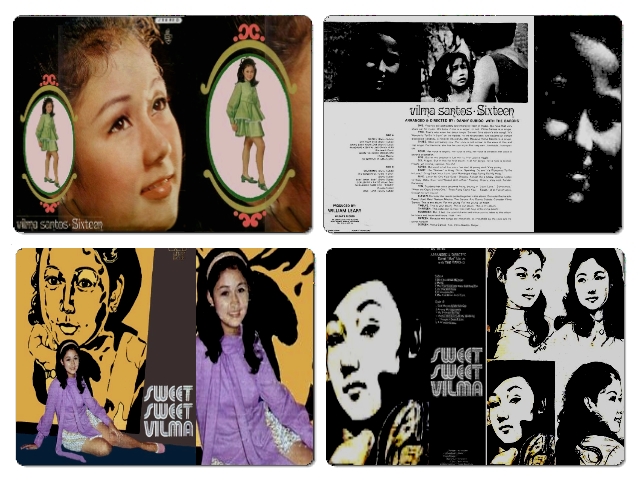
When Vilma Santos released her first album in 1969 under Willears Record, no one expected that her vinyl record would sell 500,000 units making it the company’s surprise record-breaking album of that year. The signature song, “Sixteen” became the most played single of that year proving that Vilma Santos can be as phenomenal as her closest rival and the more established singer, Nora Aunor. The young Vilma won a Golden Record Award for her debut album that comprised of 16 English songs including four original songs composed and arranged by Dannie Subido.

Prior to her debut album, Vilma Santos’ first stint in singing was in her earlier film, 1964’s Ging. She played a child singing sensation opposite drama staple, Olivia Cenizal. Her career continued with string of dramatic roles and when the musical trends started in late 60s her career aspiration become limited mainly because everyone expected young stars to sing well. She admitted her limited range as singer and concentrated with her promising acting talents and dancing. When Vi found commercial success with Edgar Mortiz as her love team, she occasionally sings with him. Their fans did not mind Vilma’s soft thin voice. Actually, Vilma’s sweet tone blends well with Edgar’s balladeer pipes.

The success of Vi & Bot love team was evident with numerous films and it was only a matter of time that the idea of having Vilma have her own album came in 1969. There was a market and demand for Vilma’s very own long-playing vinyl. William Leary, Vilma’s manager asked musical director Dannie Subido to gather songs that will suit Vilma’s limited range. It was reported that Subido find the project challenging. They have to find songs that are light but will still give Vilma’s fans enjoyment. They decided to make it fun and sort of child like. They also wanted to make sure that the songs reflect Vilma’s current state of mind, that of a growing teenager. Sort of like early Britney, “no longer a child not yet a woman.” Her promotional interview clearly confirmed some of the issues teenagers are experiencing during this time. Body image, sex education, adulthood, friendship, and dating are some of the topics the album tackled which are topics that are still relevant today. “…as a singer…gosh…I feel a funny thing inside every time na naiisip kong, I was not a born singer. But every time I hear my records play, I couldn’t help but kid myself that I was made after all.” She commented when asked to evaluate herself as singer. What she really meant by that line, “I made it” is that by making her record a success no one cannot say that she cannot be sell records. This success proves that she can be a successful singer like her closest rival, Nora.

Vilma’s first album was pure fun and still very relevant today. Consist of twelve songs six on each side. The vinyl record on side A starts with its carrying single, Sixteen. Composed by Dannie Subido, Sixteen talks about “making out” in the park. This might alarm some of the religious zealots in the 70s but Ate Vi’s wholesome sweet voice makes the song wholesome and child like. The hidden sex – “making out” – kissing and hugging in public place – message of the song would probably the reason why “Sixteen” became the favorites of teenagers. The song catapulted Vilma’s signature song. A feat that even her closest rival, Nora Aunor can’t replicated (Nora Aunor despite successful singing career lacked a signature song). Remember this is the hippie era and the start of the feminist movement. A clear reason why “Sixteen” was a major hit with the free love carefree young generation of this era. The next songs, Dry your Eyes and Bring Back Your Love both arranged by Dannie Subido are love songs that boils down to frustration of a girl in love. Followed by a turned around in terms of mood with Vi’s version of a Bacharach composition, Raindrops Keep Falling On My Head, a funny but out of place song. One of the two final songs on side A, came as a surprise. “When The Clock Strikes One” was an original composition of Robert Medina and like “Sixteen” was about “making out” – kissing and hugging but this time its more fun because of its unusual up-tempo mood that’s actually more like a hip-hop song.

Side B of Sixteen was pure fun too. Three songs that stands out were the original compositions of Dannie Subido, “Sometimes,” “It is Wonderful to be In Love” and “Then Along Came You Edgar.” The lyrics of these songs are simple and obviously catered to the massive followers of the Edgar – Vilma love team. Before Britney Spears came up with her hit song, “Sometimes,” Vilma has her own song titled “Sometimes.” Both Britney and Vilma’s songs are about teenage love confusion. It’s a Wonderful To Be in Love is self-explanatory, yes Ate Vi is in love and she expressed it nicely in this song. The up-tempo and simple lyrics of this song makes it more like a children rhyme song except that it’s about almost “adult-kind” of love. The puppy love theme of the album continued with an uplifting song, well at least for the Vi and Bot fans with “Then Along Came You, Edgar.” This song confirmed Vi’s puppy love to the dark and handsome but not so tall cutie-pie, Edgar Mortiz. Once again, Dannie Subido’s arrangement and lyrics are simple but playful, a perfect fit to Ate Vi’s sweet range.

The success of Sixteen can be attributed to the playfulness and simplicity of the song selections. It suited the sweetness and purity of Vilma’s almost child like voice. The album earned Vilma her first golden record award and a remarkable signature song, “Sixteen.” The album established her as a successful recording artist. If I will compare her to today’s list of contemporary artists, I will compare Vilma to the likes of Jennifer Lopez, Britney Spears, and Madonna. Jennifer, Britney, and Madonna has thin but sweet voices just like Vilma. Like Vilma, these pop superstars have to work hard to achieve almost perfect products that their fans loved. Like Vilma, the three pop stars are great dancers which they all used to the max in their choreographed production numbers. The reluctant singer came out on top. Vilma Santos’ debut album made history. Sixteen made Vilma Santos a remarkable singer.

After Sixteen – The success of Sixteen brings out another facet of Vilma Santos’ talent. Everyone knows that she is a good actress and a wonderful dancer but nobody expects that she will be able to succeed as a singer. At the early stage of her young career, the rivalry between her and a more established singer, Nora Aunor was lapse sided because Aunor was the number one singer in town. The success of Sixteen brings about an even playing field between the two young stars. Vilma’s record-breaking sales positioned her career into high gear. She continued to act in several musical films and at the same time recorded fun-filled songs. To her critics, Vilma’s recording success were attributed to pure luck. And so, to prove them wrong, Vilma’s manager smartly plotted follow-up recordings. Not only did Vilma record her follow-up album, she recorded a string of mini-LPs. Mini-LPs are shorter version of the big vinyl record with two songs on each side. She ventured into Tagalog songs, recording six songs that include instants hits like Isipin Mong Basta’t Mahal Kita, a theme song to a film she did opposite Filipino chess grand master, Eugene Torre; Palong-Palo, where she received a golden record award in 1974 and an up-tempo opm, Tok-Tok Palatok, another theme song from one of her comedy film with the same title opposite Jojit Paredes. Vi and Bot also released two mini-LPs, “Something Stupid,” a song that they regularly sings at their TV show, D’Sensations and “Christmas Tiding,” a collection of famous holiday songs like Silver Bells and Vilma’s now famous version of Santa Claus is Coming to Town and Mommy Kissing Santa Claus that’s been circulating in the internet in recent years. In addition, Vilma recorded Baby Vi, another mini-LP. She also shared equal billing with Edgar Mortiz, Esperanza Fabon, Ed Finlan, Hilda Koronel, and Sahlee Quizon in a Christmas compilation album titled, Christmas Carols.

Willears Records continued Vilma’s recording projects with two albums, Sweethearts and Aloha My Love both featured her with off and on screen love partner, Edgar Mortiz. The company who introduced the resurgent singer, Vilma in Sixteen followed up her solo success with Sweet, Vilma, Sweet, a much more ambitious offering with Vilma doing popular cover songs. Songs that are mostly identified with more established singers, like Nora Aunor. It is worth noting that during the peak of the musical genre in the early 70s, the musical films relied heavily on foreign influence. Maybe this was the reason why Vilma’s rival Nora Aunor doesn’t have a signature song. Recorded songs are mostly versions of the foreign recordings. Tom Jones, Frank Sinatra, Connie Francis, Neil Sedaka are the usual suspects. Instead of original simple composition, Willears selected songs like Mama, Sad Movies, and Our Day Will Come and let Vilma create her own version. The result was a disappointment not because Vilma didn’t work hard for the project but because it lacks the originality of her first album. Vilma’s thin voice also didn’t help.

But despite this visible contrast to her first album, Sweet Vilma Sweet was a successful follow-up. She continued her singing stints with an album most Vilmanians seems to forget, All I See Is You carried the folk song, Ati Cu Pung Sing-sing and Wonderful world of Music. The later song became a title of a musical film that paired Vilma with Edgar and co-starred with Snooky, Tony Ferrer, and Boots Anson Roa. The demand for Vi & Bot’s recordings increased and Willears produced Sweetheart, perhaps a confirmation album of the real score between the two young teen stars. Out of 25 films Vilma and Edgar made in 1970, both Sweethearts and Sixteen stands out as two of their certified hits both as films and recorded albums.

By 1972, Vicor Music Corporation took over Vilma’s singing career and smartly went back to the original fun-loving carefree theme that suited Vilma’s voice and made her a successful recording artist. With the guidance of Orly Ilacad, Vilma recorded original compositions that were light hearted, up-tempo and simple. Sing Vilma Sing arrived at the radio airwaves with the carrying single, “Bobby Bobby Bobby.” Despite the declaration of Martial law in 1972, the album became another instant hit. Also, Vilma and Edgar recorded their third album together, a follow-up with the hit, The Sensations. Aloha My Love came afterwards which also became a film and appropriately shoot entirely in Hawaii. Aloha was artistically packaged and contained Hawaiian and popular cover English songs like All Alone Am I and Eternally.

Unfortunately, all good things must end. By 1973, Vilma made her move. After almost one hundred films with Edgar Mortiz, she decided, it was time to venture out of the love team and test the water as solo star. This move also signaled the end of her singing career. At the same time, the musical genre started to subside as more turmoil politically spreads around the country. The bomba films exploded in mainstream local cinemas in mid 70s. Movie theatre owners illegally inserts porn clips in the middle of film. It was so popular back then that even the first Manila International Film Festival organized by former first lady, Imelda Romualdez Marcos allowed the bomba or sexy films to be shown during the midnight time slots of the festival. The bomba period created a long line up of respectable sexy actress like Elizabeth Oropeza, Daria Ramirez, and Chanda Romero. Even former beauty queen, Gloria Diaz ventured into the sexy film. The emergence of sexy or “bold” films as what they referred to by local film buff challenged the now solo superstar, Vilma Santos. Tagalog Ilang Ilang production transformed her into an action super hero as the new Darna, Philippines’ version of Wonder Woman. Lipad Darna Lipad (Fly Darna Fly) defeated entertainment giants Fernando Poe Jr and Joseph Estrada, both have films being shown at the same time and the usual bomba films. A very long line-up snake down the streets of Claro M. Recto Avenue’s Cinerama theatre. It was recorded that Tagalog Ilang Ilang Production distributed Darna dolls and Coka-Cola bottles to the massive patrons during the film showing. Lipad Darna Lipad became the most successful Darna film ever. It broke box office records and solidified Vilma’s clout as the new box office queen of Philippine movies. Vilma’s stature as the most bankable artist of that time validated her decision to leave her love team with Edgar Mortiz and the singing stints to her closest rival, Nora Aunor. She became more adventurous and accepted roles that showcase her versatility. And this move cemented her position as the actress to watch, the actress on top of her game.

Remarkable History – As a singer, Vilma’s thin voice didn’t stop her to become a successful singer. Her hard work paid off and earned her a piece of history. The reluctant singer recorded strings of solo albums that created her signature songs, “Sixteen” and “Bobby, Bobby, Bobby.” Signature songs that enlisted her together with famous singers like Imelda Papin (Bakit), Eva Eugenio (Tukso), Claire DeLaFuente (Sayang), Sharon Cuneta (Mr. DJ), Didith Reyes (Nananabik), Aiza Siguerra (Pagdating Ng Panahon), Freddie Aguilar (Anak), Florante (Handog), and Gary Valenciano (Di Na Natuto). Her sweet and child like voice reflected the innocence of her original up-tempo songs that tackles teenage issues like dating, sexual education, body images, and adulthood. Teenage issues that are still remarkably relevant today. – RV Album album text and photos: Nar Santander, Eric Nadurata; Additional photos: Rene Maximo READ MORE

RELATED READING:

Mike de Leon

This slideshow requires JavaScript.

Director For The Moment – “…The general public does not really know that Mike comes from the famous de Leon clan of showbusiness, his father being Atty. Manuel de Leon (erstwhile president of the Film Academy) and his grandmother being the late Donya Sisang, famous starmaker of LVN Pictures. Mike indeed grew up in a milieu that is purely showbiz. He is used to being surrounded by movie stars. Kaya naman hindi katakataka na sa kanyang paglaki ay hangarin niyang mapabilang din sa daigdig ng pelikulang kanyang kinamulatan. His first formal brush with moviemaking was in 1975 when he co-produced Lino Brocka’s Maynila: Sa Mga Kuko ng Liwanag. He was also the one who handled the film’s cinematography, and he won a Famas award for his marvelous sifirst job. The following year, he produced and directed his first full length fils, Itim. Mike’s early movies, Itim and Kung Mangarap, were hailed as gems of technical excellence. One can really see the effort to make the cinematograph, the sound recording, the production design, the editing and the musical scoring highly polished. But Mike was chided for the scarcity of relevant content in his films. Itim was merely an excursion to the realms of the occult while Kung Mangarap is basically a small drama about a confused youth and his brief affair with a lonely wife. Some even concluded that Mike cannot be expected to deal with subject that are socially conscious for he was born with the proverbial silver spoon in his mouth. With Kakabakaba Ka Ba?, Mike surprised his critics with a musical comedy that is a thinly disguised attack against the enroachment of foreign businessmen in our country. The Chinese and the Japanese were portrayed as wily capitalists earer to pillage their unsuspecting victims. For us, the movie was also a triumph for Armida Siguion Reyna and Johnny Delgado, who portrayed their neocolonialists roles with much fervor and enthusiasm. The movie also attacked organized religion and its involvement in deluding the people. Batch ’81 further enhanced Mike’s growing reputation as a conscienticized moviemakers. It dealt with oppression and tyranny using the basically cruel initiation practices of fraternities as an allegory. In Sister Stella L., de Leon’s politicalization is in full bloom…” – Mario E. Bautista, Movie Flash Magazine, July 19 1984 (READ MORE)

Focus on Filipino Director: Mike de Leon – “…de Leon spent his childhood in the family owned LVN studio, one of the three major studios of the forties and the fifties. He studied cinematography in Germany and the United States and worked to create the quality that LVN laboratory is known for. In 1975, he formed his own company, CineManila, whose initial offering was the monumental Maynila: sa Kuko ng Liwanga, of which he was also the cinematographer. In 1976, he directed his first film, Itim (Pitch-Black), a psyhological drama of a psychic who is haunted by a past muder, in which the supernatural is suggested rather than exploited. His second film, Kung Mangarap Ka’t Magising (Moments in a Stolen Dream, 1977) touched on the bourgeois values of the upper class as two lovers meet and separate in Baguio ans Sagada. His film Kakaba-kaba Ka Ba? (Will Your Heart Beat Faster? 1980) is a fine, innovative sppof of the country’s sacred cows, using Mother Goose language to hit at, among others, the Japanese and Chinese presence in the Philippines. His fourth film Batch ’81 depicts the initiation rites of aspiring neophytes into quasi-tribal fraternities, and is injected with so much double meaning that the gory initiation rites become a disturbing metaphor of post-Martial Law Phlippines. His last film, Kisapmata (In the Wink of an Eye) delves into the misuse of authority in a closely-knit family. The Mike de Leon style always hints at meanings otehr than those plotted out and creates powerful, disturbing images. Mike de Leon’s last tow films Batch ’81 and Kisapmata were shown together at the 1982 Director’s Forthnight in Cannes, marking the first time in its history that two films by the same director were ever exhibited…” – Focus On Filipino Films, A Sampling 1951-1982 (READ MORE)

The thin line between genius and sanity – “It’s easy to call Mike de Leon one of the greatest if not the greatest Filipino filmmaker who ever lived; he’s done only a handful (nine features and three shorts), but every one displays an amazingly high level of technical proficiency. In terms of sound design, cinematography, and editing, his films sound and look and flow better than almost any other Filipino filmmakers’; it may be argued that De Leon has never made a bad film–that his batting average runs a near-perfect 95 or even 100%. That said, De Leon does seem to have his blind spots. He’s never done a big-budget picture before (the only one he’s ever attempted, GMA Studio’s “Jose Rizal,” he walked away from after spending so many months and so many millions of pesos preparing). He never does explicit sex scenes, and almost never shows human sensuality in any form. He also seems to have trouble portraying women–they are either passive or impotent or almost totally absent from his films. For all of De Leon’s supposed range and versatility, you could almost chart his career on what he will or will not do, as if some complex formula secretly ruled his life. And perhaps there is. De Leon’s reputation for technical perfection is both boon and bane for anyone trying to assess his films; most critics only see the surface perfection–bow to it, hang garlands upon it, burn incense and chant hosannas to its holy presence. They don’t seem in any way aware of the turmoil beneath that perfect surface, a hidden turmoil the dynamic of which mars as often as strengthens his films, and is the true source of their power….Judging from his recent work, De Leon seems to have exorcised his demons and is content to do clever, even brilliant, comedies; the anguished artist has given way to the urbane, sophisticated satirist. Which is fine and good, unless you happen to catch a screening of “Kisapmata,” either in a retrospective or on cable, and notice how ten years later it still hasn’t lost any of its power to disturb or shock–that, in fact, it’s one of the greatest Filipino films ever made. Then you want to ask: “When is De Leon going to do something worth obsessing over again? When is he going to do films that matter again?…” – Noel Vera (READ MORE)

Miguel Pamintuan de Leon, also known as Mike de Leon (born May 24, 1947) is a Filipino film director, cinematographer, scriptwriter and film producer. He was born in Manila on May 24, 1947 to Manuel de Leon and Imelda Pamintuan. His interest in filmmaking began when he pursued a master’s degree in Art History at the University of Heidelberg in Germany…De Leon explored subjects such as incest, fraternity violence, and the Filipino workers’ cause. These were themes that were portrayed in the films Kisapmata, Batch ’81 and Sister Stella L. respectively. These films became cinematic masterpieces in Philippine History of Filmography and were later listed as the Philippines’s Ten Outstanding Films of the Decade: 1980-1989 by the Philippines’ Urian Awards. Later on, Batch ’81 was voted best picture by the Film Academy of the Philippines (FAP) where de Leon also won a best screenplay award. For Sister Stella L., De Leon won best director and best screenplay in the Philippines’s Urian Awards in 1984. Kisapmata and Batch ’81 were presented during the Directors’ Fortnight at the 1982 Cannes Film Festival. The film Sister Stella L. was an entry during the 1985 Venice Film Festival…Mike de Leon received the Parangal Sentenyal sa Sining at Kultura at the Cultural Center of the Philippines in February 1999. His Batch ’81 and Sister Stella L. had been among the 25 Filipino films shown in New York from July 31 to August 1999, organized by the Film Society of Lincoln Center, in partnership with the Philippine Centennial Commission, the Cultural Center of the Philippines, IFFCOM, the Philippine Information Agency, the Consulate General of the Philippines in New York and the Philippine Centennial Coordinating Council – Northeast USA. These series of Filipino films were presented at the Walter Reade Theater of the Lincoln Center, in celebration of the 100th year of Philippine Independence. – Wikipedia (READ MORE)

Related Reading:

Queen Vi (Repost)

This slideshow requires JavaScript.

Scene: struggling with her emotion, she kneels beside the bed where her father lies dead. The crippled old man couldn ’t accept the fact that his daughter was dancing for a living. Earlier, they had a quarrel and when she left the house, the old man had killed himself. “Bakit naman hindi n’yo ako hinintay?” she’s now whispering to him in remorse, “hindi naman talaga ako galit sa ‘yo, a. Di ba kayo rin kung minsan nakapagsasalita kayo ng masakit sa akin pero naintindihan kita dahil alam ko galit ka at hindi mo sinasadya. Dapat naman sana naintindihan mo rin ako,” she continues, breaking into sobs, “dadalawa na nga lang tayo sa buhay iniwanan mo pa ako. Hindi naman tama ‘yon!” And with the camera fixed on her in a semi-closeup shot, she weeps through her kilometric dialogues with startling spontaneity, the scene lasting all of ten minutes.

The scene is one of Vilma Santos’ high moments in Burlesk Queen, Celso Ad. Castillo’s magnum opus which earned for Vilma the Best Actress award in the Metro Manila Film Festival concluded last week. It’s a difficult scene and an actress of lesser skill could have buckled along the way and wasted rolls of precious film, but not Vilma who acquitted herself beautifully well in just one take. “Halos wala kaming rehearsal,” Vilma recalls, “kasi si Direk ayaw ng masyadong rehearsal dahil nagiging mechanical daw ang labas. Gusto niya after one rehearsal, take na kaagad because he believes that the first take is always the best.” Then she adds as an afterthought: “Nakakapagod ang eksenang ‘yon. Emotionally, that is.” Had she done the role of a burlesque dancer three years ago, Vilma would have stirred a big hornet’s nest among her loyal diehards… she would have been burned in effigies in indignant rallies all over the country… but no such untoward reaction happened, thank heavens. “My fans have grown up with me,” Vilma says, “they have matured. Besides, I’m already 24 and I’m not getting any younger. Ayoko naman nang palagi na lang akong naka-ribbon sa buhok at nalo-lollipop. Hindi na ako ang dating sweet-sweet. Come to think of it, mas mahirap mag-maintain ng sweet image dahil kaunting mali mo lang nama-magnify na kaagad, pinalalaki kaagad.”

Her metamorphosis began in late 1976 when she agreed to be kissed by Rudy Fernandez in Makahiya at Talahib. It was a “feeler” of sort and when the public clacked its tongue in obvious approval, Vilma shelved her lollipops-and-roses image and proved that she, too, could be a woman – a wise move indeed because at that time her career was on a downswing and her movies were not making money. Then she did Mga Rosas sa Putikan for her own VS Films where she played a country girl forced into prostitution in the big city. The movie did fairly well at the tills. Good sign. And came her romance with Romeo Vasquez, boosting both their stocks at the box office (thier two starrers, Nag-aapoy na Damdamin and Pulot-Gata where Vilma did her own wet style, were big moneymakers). The tandem, although it did help Vilma, actually helped Vasquez more in re-establishing himself at the box office (without Vilma, his movies with other leading ladies hardly create any ripple). In Susan Kelly, Edad 20, Vilma played a notorious-woman role that required her to wear skimpy bikini briefs in some scenes, following it up with two giant sizzlers (Dalawang Pugad, Isang Ibon and Masarap, Masakit ang Umibig) that catapulted her as the newest Bold Queen. Then came Burlesk Queen.

Scene: she comes home one night to find the mother of her week-old husband packing his clothes. He has eloped with her but he’s a Mama’s boy, a backbone-less guy when face-to-face with his mother, and he has now agreed to go home with Mama. She couldn’t persuade him to stay. As mother and son descend the long flight of stairs, the burlesk queen is left all alone in her room, in tears, with nothing and no one to clutch on to. At first she pleads with him but realizing the futility of it all, she proceeds to mock him and humiliate him, “Sige, she yells at him, “magsama na kayong dalawa, magsiping pa kayong dalawa, wala na akong pakialam. Ikaw, Jessie, wala ka namang paninindigan. Sige, magsama na kayo ng mama mo. Sige, gawin mong babae si Jessie, gawin mo siyang bakla!” Vilma’s change of image is part of her newly-found “liberation.” Liberation from what? “From many things,” Vilma answers. “From fear of being criticized, from fear of what people would say about me, from certain restrictions and inhibitions, from everything that was slowly choking me.” That exactly was how she felt early last year: all choked up.

So she slipped into a private hole after a quarrel with her Mama, refusing to be seen in public and thus setting off speculations that she was in hiding because she was on the family way. “No such thing,” says Vilma who had posed in a pair of bikinis to disprove the rumor. “Na-rumor pa na nagpa- abort daw ako at kung anu-ano pa, na nagwawala na raw ako. Pero ako naman hindi ko na iniintindi ang mga tsismis, bale wala na sa akin. Basta ako, I tell the truth and if people don’t believe me, okay lang. Dati-rati, nagri-react kaagad ako, pero ngayon, sanay na ako.” She was so confused and depressed at that time, “so filled up to my neck with problems and the pressure of too much work,” that Vilma was all set to kiss the movies goodbye. “Nakahanda na akong mamuhay ng tahimik noon, as an ordinary person.”

And how was he able to overcome that blue period? “Well, when they let me alone, nang payagan akong magsarili, that’s when everything seemed to loosen up. That’s the time I really felt free. Now, I have all the privacy I want, sa bahay ko, that is.” Although she now lives by herself in a single-girl’s pad, Vilma still runs home to Mama and Papa when she has to make important decisions. When Burlesk Queen was offered to her, Vilma bided her time until she talked with her parents. “Okay,” her Mama agreed, “as long as the sexy scenes would be treated well.” Says Vilma: “I am liberated in the sense that I have moved out of the family residence. Why did I do it? Because I feel I am old enough to take care of myself, gusto ko namang masubukan ang independence. I feel that I am old enough to know what I want. “Ngayon,” she adds, “anu’t-ano pa man ang mangyari, buhay ko na ito. Kung madapa man ako, sisikapin ko nang bumangon ng sarili ko.” Her kind of liberation includes freedom to choose her dates and to go out unchaperoned. To criticisms about her going out with a married man, Vilma snorts: “Ako naman, I don’t care whether a man is a sinner or a saint. Basta niri-respeto niya ako at ang pamilya ko, niri-respeto ko rin siya.”

Scene: She emerges on stage in a lace gown and, gradually, as the music gets hotter and hotter and the audience’s applause louder and louder, she unwraps herself and starts the greatest performance of her life. She has lost her father and her lover Jessie and she has nothing more to live for. The baby in her womb has to go, there shouldn’t be any memory of Jessie. And she dances on and on and on until she collapses in a bloody heap. The dance lasts for 17 minutes. It is her dance of death. Vilma almost backed out of the tree-fourths finished movie when she learned about the finale sequence. No, she wouldn’t do it, she couldn’t do it. She ignored call slips and went into hiding. Poor Celso, he was drowning in his own tears of desperation and banging his head against the wall.

Burlesk Queen was his “last card”, he wanted to retrieve his dwindling popularity, he wanted to save face and if he didn’t get what he wanted now, he would be finished. Finally one day, he received a basketful of fruits – “Peace offering,” Celso calls it, “from Vilma.” “It took us almost seven nights, shooting straight, to finish that sequence. I learned the dance from an expert real-life burlesque dancer. During shootings, palaging close-door. My God, I couldn’t have done it with so many people around.” She had to take several shots of brandy before the shooting. “Otherwise, I could have died from nervousness. ”According to Romy Ching, producer of Burlesk Queen, he didn’t really have the Metro Filmfest in mind because he had a November 25 playdate. But when he saw the rushes, he changed plans. “Hindi ka magsisisi na tinanggap mo ito,” he told Vilma, “it will be worth it.” Says Vilma: “I didn’t expect to win, although marami ang nagsasabi sa akin na malaki ang pag-asa ko. Ako naman, I don’t believe anything unless talagang nangyayari. Kasi noon, I expected to win, sa film festival din sa Quezon City, but somebody else did. I was very disappointed. Noong awards night nga, I wasn’t convinced I would win hanggang hindi ko pa hawak ‘yong trophy.”

After the award, Vilma has understandably upped her asking price.  She’s now worth only P300,000, may kaunting tawad pa if the role is good and the director is good. That business-and pleasure trip to Europe with Vasquez shall have to wait while Vilma is fulfilling her previous commitments. The morning after the awards night, tempting offers swamped Vilma, P300,000 and all, but she is not about to grab them all. She wants first to resume the shooting of her own outfit’s much delayed project, Pagputi ng Uwak, Pag-itim ng Tagak, where she co-stars with Bembol Roco and has for director, yes, Celso Ad. Castillo. “We want to make it as good as, if not better than, Burlesk Queen,” Vilma and Celso promise. It better be. – Ricardo F. Lo, Expressweek Magazine January 19, 1978

RELATED READING:

Mike de Leon: Director of the Moment

We were very much surprised to see Mike de Leon sitting at the presidential table at Mother China during the recent press conference of Sister Stella L. Alam naming pinakaiwas-iwasan niya ang ganitong mga klase ng “pakikipagtuos” sa movie press, always preferring to stay on the backstage when it comes to the publicity and promotions of his movies. Kaya naman sa simula pa lamang ng pagsasalit niya sa mikropono ay idineklara na niya agad:”I was told by Lily Monteverde that it’s going to be a small press conference. Had I known that it would be this big, I wouldn’t have come. But I guess this is her idea of small.” But once he started talking, Mike became very open to all queries thrown his way. He never rejected any of them. As a matter of fact, one could very well see that he tried to answer all of them as best he could. Although he has been directing movies for the past eight years, Mike is not that well known to local moviegoers. Probably because he has a small output (only a total of six movies made in eight years). Probably because he generally tries to avoid the press. But despite the fact that he has made very few movies, he and his works have won a number of awards. Itim was the winner of best picture in Asian Film Fest. Kung Mangarap ka’t Magising won the award for most technically well-made movie in the 1977 Metro Manila Filmfest. Kakabakaba Ka Ba? won the Urian best director award in the 1980. Kisapmata made sweep of several awards in the 1981 Metro Manila Film fest and also won Urian acting trophies for Vic Silayan, Charito Solis and Jay Ilagan. Batch ’81 won the Urian best screenplay trophy and the Film Academy best picture prize last year, and a lot of people are predicting that Stella L. will harvest more awards next year.

The general public does not really know that Mike comes from the famous de Leon clan of show business, his father being Atty. Manuel de Leon (erstwhile president of the Film Academy) and his grandmother being the late Donya Sisang, famous star maker of LVN Pictures. Mike indeed grew up in a milieu that is purely showbiz. He is used to being surrounded by movie stars. Kaya naman hindi katakataka na sa kanyang paglaki ay hangarin niyang mapabilang din sa daigdig ng pelikulang kanyang kinamulatan. His first formal brush with movie making was in 1975 when he co-produced Lino Brocka’s Maynila: Sa Mga Kuko ng Liwanag. He was also the one who handled the film’s cinematography, and he won a Famas award for his marvelous first job. The following year, he produced and directed his first full length fils, Itim. Mike’s early movies, Itim and Kung Mangarap, were hailed as gems of technical excellence. One can really see the effort to make the cinematography, the sound recording, the production design, the editing and the musical scoring highly polished. But Mike was chided for the scarcity of relevant content in his films. Itim was merely an excursion to the realms of the occult while Kung Mangarap is basically a small drama about a confused youth and his brief affair with a lonely wife. Some even concluded that Mike cannot be expected to deal with subject that are socially conscious for he was born with the proverbial silver spoon in his mouth. With Kakabakaba Ka Ba?, Mike surprised his critics with a musical comedy that is a thinly disguised attack against the encroachment of foreign businessmen in our country. The Chinese and the Japanese were portrayed as wily capitalists earer to pillage their unsuspecting victims.

For us, the movie was also a triumph for Armida Siguion Reyna and Johnny Delgado, who portrayed their neocolonialists roles with much fervor and enthusiasm. The movie also attacked organized religion and its involvement in deluding the people. Batch ’81 further enhanced Mike’s growing reputation as a conscienticized movie maker. It dealt with oppression and tyranny using the basically cruel initiation practices of fraternities as a allegory. In Sister Stella L., de Leon’s politicalization is in full bloom. One surmises that the awakening of Stella Legaspi, the movie’s central character, fundamentally parallels Mike’s own realization of the wrongs in our society. And this is what Mike himself says: “It is a conscientization film, which is the start of politicalization. It’s for those who still feel uninvolved.” Wasn’t he afraid that he, the producer, the film, would be branded as anti-government? “The film is critical of the government, yes, But I don’t agree with some people who say that it’s subversive. Because, what is subversive? It’s the advocation of the overthrow of one’s government. The film does not advocate that. What it advocate is organization. If you want to fight, you can’t do it by yourself. You have to do it as a body, then you present your demands. They’re asking me if it’s critical, yes, it’s critical of this government.” Mike also emphasizes that the film is not propaganda. “This is not a propaganda of the united democratic front or the opposition. It is just a film about people who go through a particular process and came out changed in the end.” Mike then narrates how the movie started as an idea in his head more than two years ago. He has met some members of the clergy whose views have grown from submission to the will of God to total awareness and involvement about socio-political issues.

The idea really is good material for a now movie. The movie was first offered to Viva Films with Vilma Santos playing the title role. Somehow, the project never pushed through and it was offered to other interested producers. When Vilma learned about it, she was immediately enthusiastic in playing the role and with the prospect of being directed by Mike de Leon. For a while, both Mike and Vilma felt the project would never get beyond the planning stage. Until Lily Monteverde of Regal called for Mike and said she is willing to finance it. Someone asked Mike if the L. in the tile really stands for the word Laban? “The title Stella L. was given to the project two years ago. The purpose is really to distinguish Stella Legaspi from Stella Bautista. A lot of people are really asking if it means Laban. But I always tell them na nagkataon lang. When Lily picked up the project, I think more than the story, it’s the title that she really liked.” The name of the establishment against which the workers in the story staged a strike is Republic Oil Factory. “Someone is curious if it is a symbol for our very own Philippine Republic. “Yes and no,” Mike answered. “The word Republic is really the production designer’s choice, Cesar Hernando. When we were hunting for a location, it so happened that Lily has this oil factory in Bankal, Makati. We made use of it in the movie. As with regard to the double meaning of the word republic, I guess that’s true. It stands for our country. Some of my staff even wanted to name it New Republic Oil Factory, but I rejected it. Masyado nang garapal.” Mike also narrated that because of the various changes that happened in the course of the movie’s being offered to other producers, members of the original cast he had in mind were also changed.

“Chanda Romero was originally assigned to play the role of Sister Stella B.,” Mike said. “But she was busy with some other projects when shooting started so she was replaced with Laurice Guillen. Joseph Sytangco was originally cast in the role of the reporter. When we brought over the project to Regal, Lily wanted Joel Torre instead. We tried revising the script to suit Joel. Pero talagang masyado siyang bata. So we suggested Jay Ilagan instead and Lily gave her approval.” The rest of the cast like Tony Santos Sr, as the labor leader, Anita Linda as his courageous wife, Liza Lorena as the magazine editor and Gina Alajar as the unwed mother who later kills herself were all personal choices of Mike himself. It was common knowledge that he has an initial misunderstanding over shooting schedules with Vilma Santos when shooting of Stella L. started finally at Regal. Would he have continued with the project without Vilma in it? “No,” Mike answered unequivocally. “The whole rationale behind the film was Vilma. Kung wala siya, hindi ito matutuloy.” The film that will be released to local audiences ends immediately after Stella L. talks directly to the audience about her transformation from being a mere bystander to that of a more actively involved individual. The version that was meant for international film fest audiences shows another final scene. After that solo scene of Stella talking straight to the camera, a special footage on the now famous and historic Lakad ng Bayan (Lakbayan) is exhibited. It shows impassioned Filipinos marching in a the streets wearing yellow Ninoy T-shirts and carrying anti-establishment placards. We have seen this ending ourselves and we personally feel that it is indeed a more fitting, more apt, more accurate finale for the story of Stella L.

“The Lakbayan ending is not originally in the script,” Mike reveals. “But since the Lakbayan was then going on at that time and since I believe in it, I decided to film it. I think that with that in the ending, mas malinaw ‘yung naging transformation ni Vilma. But when I shot it, Lily and I had an agreement that it is not going to be for local release. I was actually pushing for its inclusion intact in the local version but Lily reminded me of our government. But the print abroad has that ending. Is it true that the picture had rough sailing with the censors and this is the reason why the approval or permit was not released at once? “I went to the censors office together with a group of some fifteen nuns, priests, and pastors to inquire about the permit,” Mike narrated. “Mrs. Maria Kalaw Katigbak said that the problems was procedural. There was a vote of four against two for approval without cuts and she admitted that. The permit was released in time for the premiere. But if some people intended to harass the film, we were determined to bring the matter in court, even to the supreme court.” Mike was asked if the story was actually patterned after a real-life nun whose story ends with her being detained for eleven months in prison? “She is one of those interviewed by writer Pete Lacaba,” Mike replied. “But this is not her story alone dahil malayung-malayo na ito doon. Naka-part four or part five na ‘yon dahil namundok na ‘on. Stella L, is mainly the beginning. Conscientization stage lang it.” The formal open forum of the press conference ended with a touching pledge of allegiance to the movie by those who are involved. The staff of DZRH who were present promised: “We will be with you to the end.”

The press people also said they would support the film, specially after a rumor that is broadcast advertisements have been stopped. But the most poignant testimonials came from the members of the cast themselves. Vilma Santos declared: “I will fight for the picture!” Pahayag naman ni Laurice Guillen: “I’ll support whatever actions will be taken by the producer and the director.” And from Gina Alajar: “Sama-sama naming ginawa ‘yan, sama-sama din naming pagtutulungan.” Mula kay Anita Linda: “Isang salita lang: laban!” And Tony Santos announces: “Kung saan sila naroroon, doon na rin ako.” Pagkatapos nito’y nagtayuan na ang lahat. Namigay ng posters ng Stella L, at halos lahat nang nakatanggap ay nagpapirma kina Vilma Santos at Mike de Leon. Hindi namin ugaling magpapirma ng autograph sa movie celebrities pero this is one landmark film na we felt ay dapat lang na magkaroon ng more lasting memento with us kaya’t iniladlad namin ang aming poster at lumapit na rin sa presidential table. Gulat na gulat pa si Vilma nang sabihin namin: “Puwede pong magpapirma?” Pinalo niya kami sa braso at agad siyang sumulat ng isang mahaba-habang dedication -na ang gamit ay isang pentel peng kulay pula. Sumunod naming nilapitan ay si Lily Monteverde na producer ng pelikula at pagkatapos ay si Mike na mismo na siyang direktor nito. By this time, kakaunti na lamang ang naiwan sa Mother China. Together with Ethel Ramos, binalikan namin si Vi na nakaupo pa rin sa presidential table. Nang umupo na kami’y sumunod na rin sina Mother Lily, ang father ni Vi, Ricky Lo, Tony Santos, and Liza Lorena, who came late dahil nagbenta pa raw siya ng mga kalamansi na siya niyang business ngayon. Mike has gone out too by that time.

When everybody started ordering some coffee, natiyak naming magtatagal ang daldalang ito. Questions were started to be thrown towards Vi and Liza. Masarap ang kuwentuhan. Maya-maya’y lumapit si Viring, ang special alalay ni Vi. “Tinatawag ka na ni Mike,” sabi nito kay Vi. “Kanina ka pa raw niya hinihintay sa ibaba.” “Sabihin mo,” ani Vi, “umakyat na lang uli siya rito and join us.” Umalis si Viring at maya-maya’y bumalik uli. “Ayaw magpunta rito,” aniya. Sabi naman ni Vilma: “Sabihin mo, sandali na lang.” Maya-maya, bumalik na naman si Viring: “Ang tagal-tagal mo raw,” anito. Tumayo na si Vi. “Sandali lang,” aniya sa amin, “pupuntahan ko lang si Mike.” Nangantiyaw si Ethel Ramos: “Uhum, para na kayong mag-boyfriend niyan, ha. Natawa si Vi. “Ito naman. Naging close lang talaga kami.” Nang bumalik si Vilma sa mesa, kasama na nito si Mike. That was our first time to have a close encounter with the director. Although we have seen each other at previews of this and that movie several time, we never were really introduced to each other. We have asked him earlier kung bakit hindi naipalabas and Stella L. sa Cannes Film fest at ngayon ay mas nilinaw niya ito. “It wasn’t shown simply because I withdrew it from the screening,” he said. “To begin with, when I arrived in Paris, I learned that it was not subtitled at all. They had the print for almost a month but subtitling was not done. Then it was supposed to be shown in the directors fortnight section of the film fest. But the director general of the fortnight said he didn’t like the film and he’s not going to take it. A group of critics volunteered to sponsor its showing and I consented. Iniisip ko kasi baka makatulong. The film is facing a lot of problems in Manila and I was thinking that whatever favorable opinion it might got will help its release here.

But then I learned that while I was away, the film was shown to various audiences during several previews and we now have all the support we wanted, from the clergy, from the press, from the labor. And I felt that this is the more important thing. Without local support, no amount of international support will help the film. So I decided not to show it any more. What I did was I supervised the film’s subtitling until it was finished. Now, there’s a possibility that it might enter the Venice Film Festival which will be held in September.” With all the acclaim that the movie is receiving from different quarters, how is he reacting personally? “Well, of course, I’m very happy. But more than anything else, I believe that people who saw the film liked it so much because of several factors. First, it’s the first movie of its kind that tackled that sort of a subject matter. Napapanahon rin kasi ito, what with all the protests going on. So it’s a congruence of these things that made viewers like it.” Doesn’t he believe in the inherent goodness of the film? ” I do. Modesty aside, I think it can stand the test of time.” Will he and Regal be making more films of this sort? “It all depends on how this film will be received commercially and otherwise. Up to now, there are still those who doubt that it’s going to ever get shown in downtown theaters. Hinihintay muna namin ang resulta nito. But I have another movie intended for Vilma and this time she would be playing a journalist.” We extended our hand to Mike and, for the first time, personally congratulated him for Sister Stella L. We honestly feel that the movie is a personal triumph for him, for Lily Monteverde and the rest of the people involved in making it. So much has been said about local movies being inane and trivial and worthless. Mike proved that local filmmakers can be socially aware and responsible, too. Those who have been avoiding local movies for years and years, we now strongly advise you to see Sister Stella L. I concerns our country, our people, and it most certainly concern you! – Mario E. Bautista, Movie Flash Magazine, July 19, 1984 (READ MORE)

Miguel Pamintuan de Leon, also known as Mike de Leon (born May 24, 1947) is a Filipino film director, cinematographer, scriptwriter and film producer. He was born in Manila on May 24, 1947 to Manuel de Leon and Imelda Pamintuan. His interest in filmmaking began when he pursued a master’s degree in Art History at the University of Heidelberg in Germany…De Leon explored subjects such as incest, fraternity violence, and the Filipino workers’ cause. These were themes that were portrayed in the films Kisapmata, Batch ’81 and Sister Stella L. respectively. These films became cinematic masterpieces in Philippine History of Filmography and were later listed as the Philippines’s Ten Outstanding Films of the Decade: 1980-1989 by the Philippines’ Urian Awards. Later on, Batch ’81 was voted best picture by the Film Academy of the Philippines (FAP) where de Leon also won a best screenplay award. For Sister Stella L., De Leon won best director and best screenplay in the Philippines’s Urian Awards in 1984. Kisapmata and Batch ’81 were presented during the Directors’ Fortnight at the 1982 Cannes Film Festival. The film Sister Stella L. was an entry during the 1985 Venice Film Festival…Mike de Leon received the Parangal Sentenyal sa Sining at Kultura at the Cultural Center of the Philippines in February 1999. His Batch ’81 and Sister Stella L. had been among the 25 Filipino films shown in New York from July 31 to August 1999, organized by the Film Society of Lincoln Center, in partnership with the Philippine Centennial Commission, the Cultural Center of the Philippines, IFFCOM, the Philippine Information Agency, the Consulate General of the Philippines in New York and the Philippine Centennial Coordinating Council – Northeast USA. These series of Filipino films were presented at the Walter Reade Theater of the Lincoln Center, in celebration of the 100th year of Philippine Independence. – Wikipedia (MORE READ)

Gawad URIAN and Vilma Santos


On May 1, 1976, ten Filipino critics agreed to discuss the annual award-giving situation in the local industry. All in agreement that there must be an alternative to FAMAS, the only award giving body in the Philippines. The ten critics, mostly academics, were Pio de Castro, Behn Cervantes, Pete Daroy, Mario Hernando, Bien Lumbera, Doy del Mundo, Manny Pichel, Nick Tiongson, Gino Dormiendo, and Nestor Torre. Most of them were part of FAMAS roster of judges. Most, questioned the recent years winners. According to the website, Wikepedia: “The 1972 best actress “tie” that materialized between major star Boots Anson-Roa and then-rising star Vilma Santos was a good example of the disillusionments experienced by the academics. according to them, the two winners was unheard of at that time, which resulted in accusations of lessening “credibility and prestige.” Ironically, Gawad will have numerous ‘tie” winners in their future set of winners, including a string of ‘tie” involving their early favorite, Nora Aunor. Headed by Nestor Torre, the nine critics agreed to review films and release quarterly film citations with the final nominations and winners announce at the end of the year.

Over the years, the Manunuri Ng Pelikulang Pilipino, MPP, (translates – Filipino Film Critics and considered the equivalent of the USA’s New York Film Critics Circle), established themselves as the most credible award giving bodies in the Philippines. They are known for having a long discussion for each of their award categories resulting sometimes in heated debate and unfortunately resulting with the unavoidable “ties” winners. Since 1976, the group has eluded controversies that rival groups endured. The oldest award, FAMAS has experienced two renegade or break away groups resulting in costly legal battles and low television ratings. Another group, the Philippine Movie Press Club is considered second to Gawad Urian, their Star Awards had a similar fate, they also had a break away group, creating their own awards, the Golden Screen Awards. With the advent of new awards, now ten, and still counting. Gawad Urian remained strong and the most sought after. Currently, the Manunuri are consists of: Rolando B. Tolentino, Grace Javier Alfonso, Butch Francisco, Mario A. Hernando, Bienvenido Lumbera, Miguel Q. Rapatan, Benilda S. Santos, Dr. Nicanor G. Tiongson, Tito Genova Valiente and Lito B. Zulueta.

Vilma Santos has become a big part of Gawad Urian. Although she wasn’t considered their early favourite, they developed a long fondness to the actress, many considered as the Meryl Streep of the Philippines cinema. Fourteen best actress nominations spanning three decades and eight wins starting in 1982’s Relasyon. She also recieved a Gawad Urian best picture award in 1978, as film producer for the film, Pagputi Ng Uwak Pagitim Ng Tagak.

In 1981 Gawad Urian cited four films for their best picture category, Romy Suzara’s Pepeng Shotgun, Mel Chionglo’s Playgirl, Mike de Leon’s Kisap Mata and Laurice Guillen’s Salome. Salome was the winner. The four directors were also nominated for best director together with Ishmael Bernal for Pabling. Guillen was the winner for Salome. In addition to picture and director awards, Salome also won the best screenplay for Ricardo Lee and the best actress award for Gina Alajar. Alajar’s strong competitors were Charito Solis for Playgirl and Nora Aunor for the forgettable Bakit Bughaw ang Langit. Vilma Santos were again got the cold shoulder from the Manunuri as she wasn’t even cited for any of her films, Pakawalan Mo Ako where she won a FAMAS, Hiwalay, a Romy Suzara directed film, Karma where she won the best actress from Metro Manila Film Festival or Ex-Wife, an Eddie Rodriguez directed film co-starring her with Beth Bautista.

But a turned of events the following year. MPP considered 1982 a good harvest with a string of high quality films: Batch ’81, Himala, Moral, Oro Plata Mata and Relasyon, all vying for the best pictures Urian. Oro Plata Mata edged out the other four. It also won the best director honour for Peque Gallaga. Gallaga defeated Marilou Diaz-Abaya (Moral), Ishmael Bernal (Himala and Relasyon), Lino Brocka (Cain at Abel) and Mike de Leon (Batch ’81). The writing category went to Clodualdo del Mundo, Raquel Villavecencio at Mike de Leon for Batch ’81. Noticeably ignored many times by the Manunuri, Vilma Santos was nominated for her sympathetic mistress role in Relasyon. She is up against Nora Aunor’s epical role for Himala, Gina Alajar and Lorna Tolentino were nominated for their feminist film Moral completed the nominees. The Manunuri surprised everyone by declaring Vilma Santos as their 7th best actress winner. The other award giving bodies (FAMAS, Film Academy of the Philippines and CMMA) also declared Vilma Santos as their best actress and the term “grand slam” were born atleast in local entertainment industry. As for the other acting categories, Philip Salvador won the lead actor and Baby Delgado, supporting actress both for Cain At Abel, and Mark Gil won the supporting actor for Palipat-lipat, Papalit-palit. The Manunuri gave the Natatanging Gawad Urian to veteran actress, Anita Linda, who is still very active today and who worked with Vilma several times.

Proving that her win wasn’t just a fluke, Santos won the next two years for Broken Marriage and Sister Stella L both from Regal Films. Four years afterwards her three wins, she again got the best actress with co-winner, Nora Aunor in 1989’s Pahiram Ng Isang Umaga. She followed this with wins in 1991 (Ipagpatawad Mo), 1993 (Dahil Mahal Kita: The Dolzura Cortez Story), 1998 (Bata Bata Paano Ka Ginawa), and 2002 (Dekada 70). She also received the the Actress of the Decade 1990s award in 2000. – RV (READ MORE)

RELATED READING:

ANG ATE NI ATE VI (Repost)


While in New York & everybody were so busy talking to Ate Vi, I had a chance to chat with Ate Emelyn, ang Ate ni Ate Vi.

How’s Vilma Santos as a sister?
Mabait siya. Wala na akong hahanapin pa kay Vi bilang kapatid. Sabi nga sa commercial niya noong araw “perfect.”

How do you (Santoses) celebrate holidays?
We have a family reunion during Christmas.

Can you please tell us more about your experience with Ate Vi as a kid?
Very thoughtful ‘yan. She always visited me in my class and shared her sandwich or allowance or any little things to show that she cared. Sometimes it’s the other way around, pupunta siya sa classroom ko “Ma’am pwede pong makausap ang sister ko” yun pala hihingi lang ng baon.

Kelan mo nasabing proud na proud ka as a sister of Vilma?
Maraming beses na. Isa na doon yung Gawad Plaridel. Pero syempre mas proud ako sa pagiging mabuting tao niya, yung pagmamahal niya sa pamilya, yung pag-aalaga niya sa mga taga-Lipa.

What is your favorite Vilma movie?
Pahiram ng isang umaga. Siguro dahil mother din ako, kaya alam ko ang feeling ng isang ina na ayaw iwanan ang anak.

Nag-react ka ba nung tanggapin niya ang Burlesk Queen at nag-change siya ng image?
Alam mo napakatagal na discussion yan sa pamilya. Pero to make a long story short naayos din. Sabi ko nga career move naman yon eh at saka 23 na si Vi noon. Maganda ang project, matino ang story.

Let’s be frank, gusto mo pa bang tumakbo si Ate Vi sa politics?
Kung ano man ang plano ni Vi doon ako. I will support her all the way. Pareho namang maganda ang magiging resulta kung tatakbo siya o hindi. Kung itutuloy niya ang politics maraming matutuwa lalo na yung mahihirap. Minsan nga paglabas ni Vi sa city hall, may nag-aabang na matatanda, yung iba humihingi ng tulong, ‘yung iba naman nagpapasalamat. Nakakataba ng puso na makitang maraming napaligaya si Vi.

Paano kung hindi na siya tumakbo sa politika?
Marami pa ring matutuwa. Ang mga Vilmanians, ang mga producers. Alam mo may offer kay Vi ang Unitel, Violet at pati si Margie Moran ay balak ding mag-produce na si Vi ang bida. Pero sobrang busy niya, uunahin muna niya ang sa Star Cinema.

How’s Luis (Lucky) as pamangkin?
Mabait na bata. Hindi niya kami binigyan ng problema kaylan man. Everytime I see him, I realized that time flies so fast. Parang kelan lang ay kalong-kalong ko siya, ngayon ay malaki pa sa akin.

And finally, your message for Ate Vi?
Alam kong alam mo na pero uulitin ko pa rin na mahal na mahal kita. At kagaya ng nasabi ko sa iyo kanina Franco, kung ipapanganak ulit ako at papapiliin kung sino ang gusto kong maging kapatid….paulit-ulit kong sasabihin na si Vilma ang gusto ko. – Franco Gabriel, V Magazine, 2005 Global Vilmanians

Woman For All Seasons (Repost)


Star for All Seasons Vilma Santos proved that every woman could conquer whatever field she wants to pursue as long as she gives her heart and soul to it.

She’s so petite and yet so tall in all her accomplishments in life: as a loving and dedicated wife, a devoted mother to her two sons, a multi-awarded actress, a dedicated public servant and most especially a woman worth emulating. Indeed, Vilma Santos-Recto is also a woman for all seasons. She was able to cross the border of many boundaries in life, in her chosen profession as an actress and now as a public servant. “Gusto ko ang mga challenges sa buhay. Pag sinabi nila na hindi ko kaya, pinatutunayan kong mali sila (I love challenges in life. Whenever they underestimate my ability, I’ll prove to them that I can), ‘Vilma says when asked by Cito Beltran during the launching of Ponstan SF where she was launched as its official model endorser.

BEGINNINGS – Maria Rosa Vilma Tuazon Santos started as a child actress at the age of nine in Tudis Liit in 1963, the same movie that gave her first FAMAS best child actress award. The daughter of Milagros and the late Amado Santos, Vilma was seen by her mother as a real trooper. Mrs. Milagros recalls, “When she was still a little girl, I saw her ability to make it big someday.” Her mother, who was also present during the launching, was acknowledged by Vilma to have introduced her to Ponstan when she was just 21 years old. From Trudis Liit, Vilma transformed to be a lovely teen icon in the late ’60s until the ’70s with blockbuster movies like Lipad, Darna, Lipad, Dyesebel at ang Mahiwagang Kabibi, Kampanerang Kuba, among others.

WOMAN’S ROLES – With almost 200 films under her belt, Vilma is regarded as the longest reigning Box-Office Queen of Philippine Cinema. And among these films are critically acclaimed for tackling roles on various women’s issues. Burlesk Queen was one of the turning points in Vilma’s life and career. From being a sweet teen icon, she proved to be a mature actress in this movie. It was followed by other award-winning movies like Rubia Servious, Relasyon, Sister Stella L, Dolzura Cortez, Dekada ’70, Bata, Bata, Paano Ka Ginawa?, and Anak. A versatile and intense actress, Vilma honed her craft through the various top caliber directors, writers and actors she worked with.

MUSICAL SHOWS – Though Vilma admitted that only her fans would love to hear her singing prowess, Vilma’s musical variety TV shows emerged on top for many years – The Sensations, VIP and the long-running multi-awarded Vilma. Again, Vilma proved that she can make wonders whatever it takes. “It’s really blood, sweat and tears. But when you love your work, it will love you back,” she says recalling her struggles to stay on top of the entertainment industry.

THE BIG LEAP – Marrying Ralph Recto was one of the happiest changes in Vilma’s life and it turned to be the road to another career in her life. “I never thought that I will be a public servant, not in my wildest imagination,” Vilma admitted while talking to a lot of eager reporters and writers she obviously missed for a long time. “But this is the life I have now and I believe it was given to me because He (referring to GOD) wants me to make a difference in other people’s lives,” Vilma enthuses. The first woman mayor of Lipa and now the first woman governor of Batangas, Vilma considers herself lucky for having earned the trust of Batangueños. “Their faith in me is priceless,” says Vilma in another interview.

WOMAN STRATEGY – A real woman in all her endeavors, Vilma considers herself the mother of all her constituents in Batangas. She looks upon them as children who need her care and attention. “At first, I did the housekeeping of the province. We had the poverty diagnostic approach to know the concerns of all the constituents of Batangas, then when we got the budget we allocated to my HEARTS priorities,’ Vilma shares when asked about her priority projects for Batangas. HEARTS means health, education, agriculture, road (infrastructure), tourism and security. “I believe in teamwork and family approach. I consider them my family, that’s why last Valentine, I gave chocolates to all the departments of the governor’s office to let them know that we can make HEARTS work if we are team,'” Vilma recalls.

ACTING AGAIN – For this year, Vilma has two wishes: to start implementing her projects and to make movie. “There are three movies I committed to finish – one with John Lloyd, one with my son Luis and one with Sharon Cuneta but because I became the governor of Batangas, I have to ask for extension because I have to see to it that I implement my projects in Batangas first,” Vilma explains begging her fans to wait for her. But she quickly adds, “Whatever I have now is because I am a showbiz personality. I owe it to my first profession but my role is real life. Isang pagkakamali ko lang at pumalpak, masisira ako at ang mga constituent ko. Ayaw kong sumugal (One mistake and it will ruin not only my name but also the lives of my constituents, and I don’t gamble).

FIRST PRIORITY – But above all these priorities, Vilma admits that being a wife to Ralph and mother to her two sons Luis and Ryan are still her number one priority. Still a woman devoted to her husband, Vilma always acknowledge Ralph’s help and inspiration in her career as a public servant. “Public service is Ralph’s life and I learned to embrace it through him. Though we have differences in ideas, sometimes we clash, at hindi naman ako magpapatalo (I will not give in without a fight), I listen to Ralph. After all, whatever I achieve as a public servant, I owe it to my husband who has been my mentor up to now,” Vilma enthuses. With Luis, Vilma is a doting mother who just listens to his son’s escapades and love life. “I don’t want to meddle with my son’s life. I just advice him to enjoy life and to do what is right so that he will not commit mistakes that he might eventually regret.” She also finds time to help Ryan in his studies. “I help him in doing his projects especially when there are art works and proud ako na honor student ang anak ko,” Vilma says.

TIME FOR MYSELF – With all her roles in life, Vilma sees to it that she finds time for herself. “Ah, yan ang hindi mawawala. Every weekend, I do the treadmill, tae boxing, and yes, even swimming,” she proudly says. I also eat anything but always in moderation. Medyo conscious na ako kasi 38 na ako eh,” she jokingly says. Vilma will turn 55 this year and is not scared to age gracefully. “I think when you’re happy, you’re comfortable, you find time for yourself, you exercise, you eat good food in moderation and you love what you’re doing, then it’s the secret.” As a parting word Vilma says, “When I was able to make a difference in other people’s lives, then it adds to my positive outlook in life and it inspire me to do more.”

UNSTOPPABLE PARTNERSHIP – For more than four decades, Ponstan has been relieving body aches, pains, making it a household name when it comes to reliable fast relief. Just about the same time when Ponstan was strongly gaining the trust of consumers, the public witnessed the emergence of a talented and eye-catching young performer who will later become the country’s multi-awarded actress and eventually the first woman governor of the province of Batangas. “We are very excited and honored to have Gov. Vilma Santos-Recto as our celebrity endorser. We could not have chosen anyone else to effectively communicate the brand’s message to the public,” says Laiza Filart, Ponstan SF product manager. Filart further states that the choice to have Gov. Vi as the latest face behind Ponstan is the striking parallelism between the brand and the hardworking public official. “They are really fit to be unstoppable partners,” she adds. Gov. Vi has been known to pull all the stops whenever she sets her eye on her goals. As a show business personality, she aimed only for the best, which made her the most awarded actress in the country. As a politician, she willingly took the challenge posed by her constituents and run for the gubernatorial seat in the province of Batangas in 2007, earning her the title Ina ng Batangas. And as a family woman, she is never short in filling their home with love, respect and happiness. As Gov. Vi juggles her schedule as a politician, an actress, a wife and a mom, she sometimes finds herself in pain – whether in the form of a headache or backache. Whenever such pains strike, Gov. Vi relies on Ponstan to help her get through the day. “My work is physically, mentally and emotionally demanding. So when I get a headache, I immediately take Ponstan to relieve the pain.” states Gov. Vi. – Lea Manto-Beltran, HEALTH NEWS magazine, Mar 2008 Global Vilmanians