





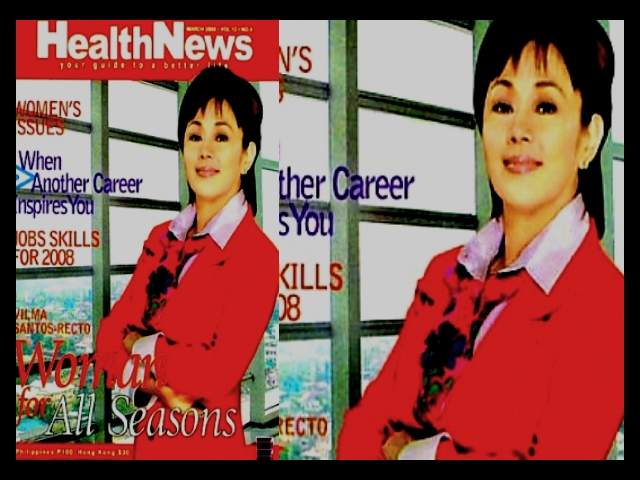
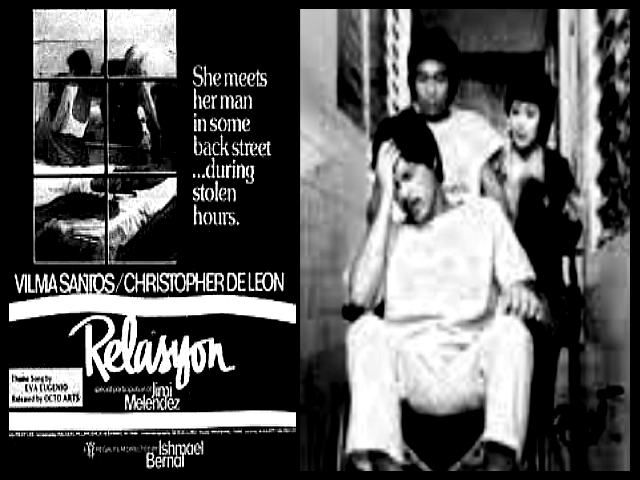
Relasyon is part of the legendary collaboration between the late National Artist for Film Ishmael Bernal and movie queen Vilma Santos.
The film, which is the first of the so-called Bernal-Santos trilogy (that includes Broken Marriage and Pahiram ng Isang Umaga), earned Santos all the Best Actress trophies in 1982 — FAMAS; Gawad Urian; Film Academy of the Philippines; Catholic Mass Media Awards — the very first grand slam feat for this category in Philippine entertainment history.
She defeated Nora Aunor’s high-wattage performance as Elsa, in another Bernal opus, in the heavily favored film production of Himala.
In Relasyon, Santos was both amusing and amazing as the contemporary incarnation of the beloved one, the querida. Critics and audiences, to this day, cannot seem to forget the very realistic death scene of Christopher de Leon as Emil that clocked more than one minute, taken in one continuous shot (no cuts), wherein Vilma’s Marilou was hysterically superlative.
Others (including this writer) found Santos’s exceptional acting evident in three memorable instances. The first is when she informs Emil of her pregnancy. Vilma’s face is almost pure, beaming at her lover affectionately, as she sends him off to work. Secondly, at Christmas Eve with girlfriends, she seems to be losing it, crying and laughing at the same time, enumerating how mistresses don’t celebrate special occasions, and prior to the credits, Marilou gives her love nest one more lingering gaze, eyes filled with acceptance and resignation on the fate of her affair.
Since the grand slam victory, spin masters gave her the tag “Star for All Seasons,” a creative counterpart to Aunor’s “Superstar” label.
She had other grand slam winnings after Relasyon, as Dolzura Cortez in The Dolzura Cortez Story, the AIDS-stricken sex worker; as Lea, the modern-day mother of two kids from different fathers, and as Amanda Bartolome, in Dekada ‘70, the mother coping with the turbulent 1970s and the harsh realities that growing children face.
The world of Philippine showbiz remains colorful and exciting as long as Vilma Santos’s supremacy continues.
Of late, she has been in the news again. With Aunor’s much-hyped TV comeback, Noranians are proclaiming hosannas for the superstar and, as expected, the “rivalry” between the two is brewing anew.
“That rivalry that I have with her, matagal na ‘yun,” says Santos. “I think, especially in the world of Philippine entertainment, universally accepted na yung if there is a Vilma, then Nora is immediately part of the equation. However, that so-called competition, matagal na ‘yun. Those were the days when we were still 37,” she laughs. “What’s important is that we are both working, we have very exciting projects and that the public, especially our fans, continue to support us.”
 Always an actress – “Acting will always be in my blood,” articulates the actress. “I consider myself fortunate because I have already achieved all the things that an artist would want to achieve in his or her career.”
Ate Vi elaborates: “When I was younger, I had done my dream roles — gumanap na ako bilang Darna at Dyesebel. These are the roles that young stars dream of now. Kahit papaano, napagdaanan ko na ‘yan. I was able to make good and relevant films like Sister Stella L, ‘yung mga ginawa ko with direk Ishma (Ishmael Bernal), ‘yung Relasyon, Broken Marriage. Na-experience ko rin to become a box-office queen once in my life.”
Fans are looking forward to her latest movie project. “This October, my movie with Kim Chiu begins; shooting na kami,” Santos happily reports. “Since once in two years lang ako gumagawa ng pelikula, pinipili ko na kung ano ‘yung gusto ko at may maibibigay akong bago.”
With Chito Roño as its director, The Healing (tentative title) is a film about the lives of people who believe in the power of alternative medicines and witchcraft.
What drives her passions? Queen Vi smiles. “It’s because I am inspired. I have my family with me, giving me all the inspiration and the adrenaline to work harder and be inspired. I am now the mother of the province of Batangas, and so far, so good. I’ve been serving Batangas for 14 years now. But the most important thing at this point in time is that I want my family to be healthy. Kayamanan na ‘yun.”
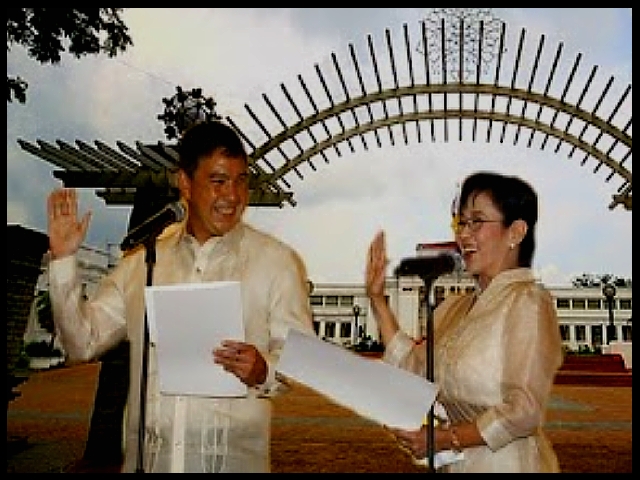 Always a public servant – Aside from the project with Kim, the Star for All Seasons is at the forefront of the Bear Brand Powdered Milk’s Laki Sa Gatas Nutrition Education Advocacy.
The Laki Sa Gatas Advocacy is now on its fifth year. The company behind the brand visits 5,000 public schools nationwide yearly, providing school children with milk so that they acquire the habit of milk drinking. It reaches out to more than 2.5 million mothers and children via interactive information campaign.
“I believe that health is number one,” she pronounces. “That’s why my priority programs are geared toward health. Before, education used to be my top priority, but I soon realized, how can our students learn if they are not healthy? How can they become competitive if they do not get the proper nutrition?
“That is why in Batangas, I am initiating programs for the rehabilitation of hospitals, for the promotion of health cards and various nutrition programs,” Santos adds.
 Always a mom – Any conversation with Santos will not be complete without talking about her eldest son, Luis Manzano. The young Manzano has announced his interest to run for the Lipa City mayor’s seat.
“I can’t stop him from the doing what he wants,” Ate Vi says. “I told him it’s not easy to be a public servant, it’s not easy to sacrifice all the things he has right now. I told him that if he’s really serious in entering, he must really have the heart for it, and that his life would not be the same.
“I would like to believe that I have set a good example,” she muses. “He grew up seeing how I work. When he was young I used to bring him with me on important occasions. I think that was an eye-opener for him, so in case he’s going to try politics he already has the foundation. If that is what he really wants, I’ll support him.”
With regard to his son’s love life, Santos quips, “As a mother, I’ll just be here to support him. I am here not to meddle or not to impose on anything when it comes to his love life.”
Vilma Santos-Recto clearly knows what is important to her — a blissful family, an exhilarating acting career, a progressive province. She is a queen in many ways and a woman in every way. – Alwin M. Ignacio
The Plot: “Botanist, Tere’s (Nora Aunor) long stable relationship with business executive Rex (Christopher Deleon) was shaken when Sandra (Vilma Santos) came into their lives. A pill popping liberal career minded, Sandra made Rex’s monotonous life colourful and exciting. He later realized that both women complete his existence.” – RV (READ MORE)
“An unusual story of three people caught in the unexplainable intricacies of love and need. The five year old relationship of Rex and Tere is put to a test as Sandra, the kooky, talented and aggressive designer rocks the picture perfect and peaceful relationship. The solid and unruffled engagement cracks as Rex is immediately smitten by Sandra’s dynamic persona. The film features the superstar team-up of award winning artists Nora Aunor and Vilma Santos and the drama king, Christopher de Leon.” – Database of Philippine Movies (READ MORE)
“Ang ‘Ikaw ang Akin’ ay tungkol sa isang paboritong paKsa sa ating puting-tabing: ang trianggulo ng pag-ibig. Si Rex (Christopher de Leon) ay batambatang tagapamahala ng isang pagawaan ng dyipni. Limang taon na silang magkatipan ni Tere (Nora Aunor), isang dalubhasa sa paghahalaman. Mapayapa at maayos ang kanilang pagsasama hanggang makilala ni Rex si Sandra (Vilma Santos), isang designer. Nagsimulang magkaroon ng sigalot ang pagsasama nina Rex at Tere. Hindi makapagpasiya si Rex kung sino ang pipilijn sa dalawa na kapwa naging matimbang sa kanya. Sa huli, nataios ni Rex na ang pag-ibig at pag-aangkin sa isang nilalang ay isang masalimuot na damdaming hindi nararapat sarilinin ng isang tao lamang.” – Manunuri (READ MORE)
The Reviews: “…After 37 years, Ikaw Ay Akin becomes a materialist indictment of the patriarchal deceit cisgender passion must contend with, opening up the queerness that emerges from feminine confidence as zone of alternative feelings. And, of course, Nora still punctures the assault with an imperturbable will to punctuate the sentence, despite the adages of her time failing to utter competitive affection, convincing Vilma that the encounter isn’t just about female rivalry, but also masculine decadence…” – J. Pilapil Jacobo, Young Critics Circle Film Desk, 21 November 2015 (READ MORE)
“…Bernal, testing the tensions of triangular love (for geometry books, one of his characters wittily says) for some time now, plunges deeper into character analysis and metaphorizing. In Lumayo, Lumapit ang Umaga, the triangle was unevenly explored: the first love was sketchily drawn. Dalawang Pugad, Isang become a choice for a more stable relationship. Walang Katapusang Tag-araw was a strange reverse of characters for two women and an unusual development of love into hatred and hatred into love, where therefore the triangle was essentially illusions. Ikaw ay Akin finally sets an interlocked triangle on its bases and looks at it (from all 3 angles) squarely in the face. Except for some scenes with overdrawn energy, the viewing is intelligent entertainment. However, after an interesting beginning and development one feels the resolution is too simplified…and too calculated. Charing (Nora) is the confident, authoritative, ultra-responsible mother-figure who fits very nicely with Rex’s (Boyet) tentative character: orphan-psyched, retreating… an incomplete figure. Sandra (Vilma) outs a very colorful character: agressive, creative, lively – but underneath it all, essentially a clinging vine. They are such convincing characters, and all their needing and suffering come accross very easily from the celluloids. With just a few scenes they are rounded out. Charing and her orchids – a reflection of her care for Rex and her discerment between experiment and commitment; Rex and his parachute – a give-away of his secret longing to get away from all the givens of his life (the inherited business, cons of orphan’s loneliness even his 5-year relationship with Charing!) Sandra and her designs – creating is at once product of her character and a need (initiating a realtionship with Rex is expression of need more than any romantic feeling). When Rex, balancing the triangle, verbalizes all these into a very basic “She needs me; I need her needing me plus your caring for me,” clearly sided heavily on Sandra’s side, it is unbelievable that it should all boil down to plain need, that decisions on love could be made this easily. Questions: While one is at verbalizations, why not mention the giving side of love, appraise or even applaud it a little instead of leaving it implicit in Charing’s character – which could be, come to think of it, the key out of tanglejails of possession? Ofcourse Bernal might have been considering less subtlety in a bid for a more popular style. Granting that, one may still appreciate the five selections of environmental details that areally delineate characters and character development – a fine effort to bring setting characters and action into a unified direction – but are triangles the curret favorite in the moviemarket? If this means it is a main concern in many lives today, then…what a hell!…” – Petronila Cleto, Pelikula, Atbp (READ MORE)
“…Unlike other superstar team-ups that fail to exploit the golden opportunity of pulling in sure audiences to watch a serious work, Bernal’s greatest achievement lies not so much in putting his three big stars together but in making use of them to lure their fans and followers intos eeing a mature, sensible film. And his cast serves Bernal very well. In the hands of a capable director, Christopher de Leon proves that his forgettable appearance in such odious films as “Topo-Topo Barega” and “Disco Fever” are mere lapses in judgment that do not entirely discredit his craft. He also shows enough gallantry by not getting into the way of his leading ladies, whose roles are undoubtedly more demanding than his. As the uptight Sandra, Vilma Santos has the script’s choicest, wittiest lines. She makes the most of them and succeeds in giving a fairly accurate portrait of an emotionally insecure young woman. And when she tells Rex: “sabi nila liberated ako, front lang. Kalog daw, front din. Alam mo namang kulang-kulang ako. Pag wala ka, magkakalat ako. Para akong manok, takbo ng takbo wala namang ulo.” She likewise handles her final breakdown exceedingly well. Nora has less lines but she nevertheless manages to conveys her emotions very effectively. In that family reunion-party which is so engrossed in gossip and banter, she remains so detached, speaking nary a word — a triumph for both Bernal and her. The hurt in her eyes continues to build up until that disrupted dinner scene where she rushes to her room and, unable to contain herself, finally cries. The most stable of the three, you could really believe her when she tells Rex: “Galit ako sa ‘king sarili, dahil sinasaktan mo na ako nang todo-todo pero lalo ka namang napapamahal sa akin.” The film is greatly enhanced by Jose Carreon’s vibrant script, Mel Chionglo’s superb production design, the Vanishing Tribe’s fine musical score, and Augusto Salvador’s brisk editing (few scenes last longer than a couple of minutes). But the lion’s share of credit goes to Bernal. I particularly like his splendid use of meaningful pauses and oppressive silences, as in Sandra and Tere’s accidental first meeting at Rex’s house, Sandra’s soundless dinner with her father that leads to her breakdown, and the long, quiet ending scene where Sandra and Tere never say a word and yet succeed in finally communicating with each other. Our viewers are discomfited by this exhausting process, what with the underdeveloped tastes of our mass audience perpetuated by irresponsible irectors. But one fervently hopes for Bernal, who apparently believes he owes the audience his best even if they are more likely to love his third best more, that they would get the film’s message and, perhaps, even accept and like it.” – Mario E. Bautista, Philippine Daily Express, 1978 (READ MORE)
 “…Mas challenging ang role ni Ate Vi rito kumpara kay nora…mas magaganda ang mga dialogues ni Ate Vi na nakakatuwa at magaling ang pagkakadeliver niya ng mga linya. Sexy siya ha at magaganda ang mga damit na ginamit niya rito. Maigsi ang buhok na medyo curly. Bagay na bagay sa kanya. Komento ko lang ay medyo matinis pa ang boses ni Ate Vi rito…Vilma-Nora Scenes: a) sa sine parang sa tingin ko ay di sabay ito kinunan sa tingin ko lang ay di sila magkaeksena rito bagamat pareho silang nasa sinehan. b) bahay scene – ang ikli ng pagsasama nilang dalawa rito na parang pinasabik ang mga manonood kung may iringan ba or acting sa acting ang magaganap, pero walang naganap na ganun! c) No Dialogue Scene – Grabe!! Ang galing ng eksenang ito. First time kong makanood ng ganitong ending…walang salitaan, sagutan, walang murahan, walang away, wala as in wala except labanan ng facial expression, eye acting ika nga. Kainis lang ang director na ito kasi pinaglaruan lamang ang imahinasyon ng mga manonood at ng mga Vilmanians-Noranians!…” – Dream Forest, V Magazine Issue No. 7 Literary Issue 2006 (READ MORE)
“…Makikita sa Ikaw Ay Akin ang dalawang magkaibang estilo ng pagganap na ipinamalas nina Nora at Vilma at kapwa akmang-akma ito sa buong katauhan ng mga karakter na kanilang ginampanan. Sino ang mas mahusay sa kanilang dalawa? Kani-kaniyang opinyon, depende sa mga nakapanood ng pelikula. Maraming nagsabing mas pinaboran daw ni Bernal si Vilma sa dahilang mas maramin itong mabibigat na eksena kaysa kay Nora, ngunit paano makakalimutan ang huling tagpo sa Ikaw Ay Akin kung saan mahabang katahimikan ang naging daan upang higit na magkaintindihan sina Tere at Sandra tungkol sa kanilang pag-ibig kay Rex. Kung totoong mas pinaboran ng direktor si Vilma ay nakabawi naman ito ng husto kay Nora pagdating sa nabanggit na eksena. Kakaiba din ang husay na ipinamalas ni Christopher de Leon, maaring alam niyang ang Ikaw Ay Akin ay pelikula ng dalawang malalaking aktres kung kaya tama lamang ang bigat ng pagganap na ipinamalas ng aktor sa papel ni Rex. Napagwagihan ni Christopher ang Pinakamahusay Na Pangunahing aktor mula sa Manunuri Ng Pelikulang Pilipino nang sumunod na taon samantalang kapwa nakatanggap ng nominasyon bilang Pinakamahusay Na Pangunahing Aktres sina Nora at Vilma sa Ikaw Ay Akin ngunit kapawa sila natalo ni Beth Bautista para sa kanyang mahusay na pagganap sa Hindi Sa Iyo Ang Mundo, Baby Porcuna. Hindi matatawaran ang tagumpay ng mga manlilikhang bumuo sa Ikaw Ay Akin na nagtaas ng kalidad ng dramatikong pelikulang Pilipino, nagturong umintindi ng husto sa damadamin ng mga taong tunay na nagmamahalan.” – Jojo Devera, Sari-saring Sineng Pinoy (READ MORE)
“…While the previous year was less productive in terms of quantity, Vilma Santos came back with a big bang the following year with twelve films. Most of these films were adult dramas. Three notable films were the critically acclaimed “Pagputi ng Uwak, Pag-itim ng Tagak” directed by Celso Ad Castillo and produced by Vilma herself. The local film festival entry, “Rubia Servios” directed by the late Lino Brocka. And lastly, “Ikaw ay Akin” directed by Bernal. “Ikaw ay Akin” reunited Vilma with rival, Nora Aunor. The film also featured Christopher De Leon, who won the local critics’ best actor and best actress nominations for Aunor and Santos as well as best director nomination for Bernal. Aside from Ikaw, Bernal also did two other films, both starring Alma Moreno, “Lagi na lamang ba akong babae?” and “Isang gabi sa iyo Isang gabi sa akin” with Elizabeth Oropeza…” – RV (READ MORE)
“…“Ikaw Ay Akin,” 1978, Ishmael Bernal. A refreshing change of role for the superstar, cast here as a smart and sophisticated horticulturist at odds with best friend and real-life rival Vilma Santos. Notable for its experimental and long closing shot of the two friends’ reunion, with only their eyes talking…” – Mario A. Hernando, Philippine Daily Inquirer, 01 October 2011 (READ MORE)
If we do not act, who will act? If not now, when?
The Plot: Sister Stella L. is the award-winning masterpiece by Mike De Leon. It’s about a nun, Sister Stella Legaspi, who becomes involved in labor strikes after learning about the government’s neglect of the poor and the working class. Her sworn duty to fight for the poor and the oppressed turns personal when her journalist friend Nick Fajardo is tortured and the union leader Dencio is kidnapped and killed. What follows is her eye-opening and the tear-jerking battle against cruelty and injustice. The film broke censorship barriers back in 1984, during the final years of the US-backed Marcos dictatorship, for its realistic portrayal of labor struggles, and extrajudicial killings, hauntingly mirroring the reality of Philippine society today under Gloria Macapagal-Arroyo. – Filipinas for the Rights and Empowerment
The Reviews: Hindi kami nakakilos sa aming inuupuan matapos panoorin ang “Sister Stella L”. Para kaming sinampal, tinamaan ng kidlat right between the eyes. Masyado kaming naapektuhan. Gusto naming sumigaw. Talagang gagalitin ka ng pelikula. Kay raming eksena ang talagang titiim ang bagang mo. Manggigigil ka, magngingitngit ka. At pahahangain ka. Gusto mong sigawan ng bravo, yakapin at suubin ng papuri ang mga gumawa nito. Si Mike de Leon na siyang direktor. Si Lily Monteverde na naglakas-loob na i-produce ito. Ang scripwriters, ang mga artista, at lahat na ng kaugnay sa pelikula. Alam mong itinataya nila ang kanilang kaligtasan sa paggawa ng ganitong uri ng pelikula. At bilang manunulat, naroon ang hangarin mo upang tulungan ang pelikulang ito na mapanood ng lalong nakararaming mga pilipino. ..nang walang putol!
Ang “Sister Stella L” ay kasaysayan ng isang madre, ng isang Pilipino, at ang pagkakamulat ng kanyang mga mata sa mga kaapihang sosyal na nagaganap sa kanyang paligid. Sa pagsisimula ng istorya as siyam na taon nang naglilingkod sa kumbento ng Caritas si Sister Stella Legaspi (Vilma Santos). Guidance counselor siya sa mga taong may problema na tulad ni Gigi (Gina Alajar), isang unwed mother. Minsa’y dinalaw siya ni Nick Fajardo (Jay Ilagan), isang peryodistang dati niyang katipan. May sinusulat itong artikulo tungkol sa mga aktibistang pari at madre. Agad inamin ni Stella na siya’y “walang masyadong alam sa socio-political involvement ng mga madre at pari.” Siya ang ginawang ehemplo ni Nick sa artikulo nito ng mga madreng kulang sa kamulatan. Nag-react dito si Stella at sinabi sa kanya: “ Hindi ba involvement din ang trabaho ko rito sa Caritas?” Madalas ma-depress si Gigi at kay Stella ito sumasandal. Nang minsang sabihin sa kanya ni Stella na kaya niyang dalhin ang kanyang mga problema ay sinumbatan siya nito: “Madaling magsalita. Hindi naman ikaw ang nahihirapan. Paano mo alam, hindi ka naman dumaan sa hirap? Nagbuntis ka na ba? Laging masakit ang suso mo. Nahihirapan kang tumae.” At nang patuloy pa ring malamig si Stella ay sinabi nito: “Bakit hindi ka gumaya sa ‘kin? Nagagalit, nagmumura, nagpapabuntis?”
May kaibigang madre si Stella, si Sister Stella Bautista (Laurice Guillen). Involved ito sa social action work at kasalukuyang tumutulong sa Barrio Agoho, isang factory town, na kung saan ang mga manggagawa sa Republic Cooking Oil ay nagbabantang mag-aklas. Naakit si Stella L. na tingnan ang uri ng trabaho roon ni Stella B. Sa araw ng kanyang pagdalaw sa Agoho ay tiyempo namang pagsisimula ng welga roon. Tuwang-tuwa si Stella B. Sumasama raw siya sa picket line dahil “pag may mga madre at pari sa picket line, nahihiyang pumasok ang mga eskirol.” Sa paglapit niya sa picket ay naabutan si Stella L. ng placard at siya man ay napabilang na rin sa welga. Puno pa siya ng mga katanungan: “Ano ba ‘tong napasukan ko? Anong gagawin ko?” Sabi naman ni Stella B.: “Basta gawin mo lang ang gagawin ko.” Sa paglipas ng oras ay nakausap niya ang mga manggagawang nagwewelga, nakitulong siya sa pagsandok ng kanin, sa paghugas ng plato. Nakilala niya ang lider ng mga welgista na si Dencio (Tony Santos) at ang asawa nitong si Auring (Anita Linda). Nang makita ni Nick ang mga larawang kuha sa welga at kabilang doon si Stella, nasabi nito sa kanyang editor (Liza Lorena): “Kilala ko si Stella. Madali siyang maimpluwensiyahan. Baka kung ano na ang napulot noon sa tokayo niyang radikal.” Nagsimula namang kuwestiyunin ni Stella ang trabaho niya sa Caritas. Binalaan siya ng kanyang superyorang si Juaning (Adul de Leon): “Hindi social action ang linya natin. At tandaan mo ang sabi ng Papa: huwag tayong humalo sa politika.” Sa kanyang mga alinlangan kung tama ang pasiya niyang maglingkod sa Agoho, ito ang payo ni Stella B.: “Paano mo malalaman kung hindi mo susubukan? Hindi ang mga tao ang dapat makinig sa ‘yo, ikaw ang dapat makinig sa kanila.” Dahil sa kanyang karanasan sa Agoho, nasabi ni Stella kay Gigi: “Ang kahirapang nababasa’t naririnig ko lamang ay naging buhay na sa akin. Ako pala’y nangangapa ring tulad mo.” Namulat ang mata niya sa “pang-aabuso sa mga naaapi” at na-touch siya ng “pag-aasikaso ng mga ito.” Aniya: “Sila na ang nangangailangan ay kami pa ang kanilang iniintindi.”
Duda pa rin si Nick sa involvement niya sa welga. Pasulpot-sulpot lang daw siya roon, patulong-tulong. “Kapag nagsawa ka,” anito, “uuwi ka rin sa komportableng kumbento.” Si Stella B. ay kinailangan namang magpunta sa Davao upang tumulong sa isa pa nilang kasamahan doon, lalong nangamba si Stella L. na iiwanan siya nito sa Agoho. “Baka hindi ko kaya,” aniya. Sabi naman ni Stella B. “Puro ka baka, e, kailan mo pa malalaman?” Pinatawag uli si Stella ni Juaning. Sabi nito: “Hindi payag ang kongregasyon sa trabaho mo sa Barrio Agoho.” Sa pagbabalik niya sa Caritas, nagpatiwakal naman si Gigi. Lalong naguluhan si Stella. “Parang bumaliktad ang mundo ko,” aniya. “Marami akong tinatanong. Bakit nga ba ako nag madre?” Sabi naman ni Stella B.: “Madreng lansangan ka pa rin hanggang mamatay ka.” Natuloy ang pag-alis nito, na ang akala’y pinoproblema niya na baka may pagtingin pa rin siya kay Nick. Bilin pa nito: “Kung mahal mo siya, sundin mong feeling mo. Marami namang paraan ngpaglilingkod sa Diyos.” Si Nick ay nagkaroon din ng problema sa trabaho niya. Isang artikulo niya tungkol sa karanasan ni Stella B. sa Isabela na pinamagatan niyang “A Nun’s Story: Military Atrocities” ang hindi pinalathala ng kanilang publisher. “I-rewrite mo,” sabi ng editor niya. “Bawasan mo’ng tapang.” “Ano?” balik niya. “Gawin kong love story?” “Sabi ko, i-rewrite mo, hindi babuyin,” anang editor. Pero sa bandang huli ay nag-give up na rin ito. Tanggapin na raw lamang ang kanilang mga limitasyon. “Hindi lahat ng legal ay makatarungan.” Nagbitiw si Nick sa trabaho niya sa Tribune at lumipat ng pagsusulat sa Malaya.
Nagbalik si Stella L. sa Agoho at naging mas aktibo na siya sa picket line. Nang minsang lalabas ang trak ng mga produkto mula sa pabrika ay siya pa ang nag wika: “Mga kasama, magkapit-bisig tayo.” Samantala’y nagsimula ang pangha-harass kay Dencio at sa pamilya nito. Una’y ginulpi ang anak niyang si Roger, pagkatapos ay binaril ang bahay nila. Ang huli’y kinidnap si Dencio. Nang papaalis na sina Stella at Nick upang humingi ng tulong, sila man ay kinidnap din. Nakita nila ang pagpapahirap kay Dencio. Sila man ay sinaktan din at si Stella ay binastos pa ng mga sanggano. Pinakawalan din sila. Di naglaon, ibinalik si Dencio. Patay na. Sa harap ng mga manggagawa, ipinahayag ng asawa nitong si Auring na tuloy ang welga. Nagsalita rin si Stella at sinabi niya: “Ilang beses akong pinaalalahanan na ako’y isang madre lamang. Pero una sa lahat, ako’y isang tao, ako’y isang Kristiyano.” At isinigaw niya: “Katarungan para kay Ka Dencio. Mabuhay ang uring manggagawa.” Sa last scene ng pelikula’y nagsasalita ng diretso si Stella L. sa mga manonood: “Marami pa akong hindi alam at dapat malaman tungkol sa kasalukuyang kalagayan ng ating sistema ng lipunan. Kailangan pa ‘kong patuloy na mag-aral at matuto. Pero ang mahalaga’y narito na ako ngayon, hindi na nanonood lamang. Nakikiisa sa pagdurusa ng mga di makaimik, tumutulong sa abot ng aking makakaya. Kung hindi tayo ang kikilos, sino ang kikilos? Kung hindi ngayon, kailan pa?”
More than anything else, ipinakita ni Mike de Leon bilang isang socially committed at responsible na director ang iba pang posibilidad ng pelikula bilang art at bilang medium of communication. ‘Yung mga laging pumipintas sa pelikulang lokal at nagsasabing walang kuwenta’t saysay ang mga ito, panoorin ninyo and “Sister Stella L” for it is Filipino moviemaking at its best: aware, concerned, and with a universally relevant message. It also shows that an artistic film can be entertaining and as a matter of fact, is necessarily intellectually entertaining (but an entertaining film is not necessarily an artistic one).
The movie succeeds in delivering its message because all the elements that went into its completion are excellently executed. It is that rare kind of movie which has no false moves. The screenplay is brilliantly developed and constructed by Pete Lacaba, Jose Almojuela (who is also the assistant director), and Mike de Leon himself. The cinematography of Rody Lacap deserves nothing but superlatives and the musical score by Ding Achacoso is served in a silver platter (napakagaganda ng mga awiting “Sangandaan” at “Aling Pag-ibig Pa” na nilikha niya para sa pelikula). The editing by Jess Navarro and the production design by Cesar Hernando also deserve the highest commendation. We cannot help but gush dahil lahat ng aspeto ng produksiyong ito ay maganda.
The movie is sure to elicit all sorts of reactions from various quarters. The bigoted and the narrow-minded will no doubt readily brand it as the work of communists and subversives. The involved will merely find it interesting. But the enlightened will declare it as a socially committed work of art. No doubt that some concerned quarters will be offended. Some of the speeches are so frank and fearless. Dencio says in a May 1st rally: “Ang mga manggagawa ang lumilikha ng yaman ng bansa. Panahon na para ipakita ang lakas ng ating pagkakaisa, na makamtan ng bayan ang tunay na kalayaan. Ang manggagawa ang nagpapaandar ng makina, nagpapalago ng puhunan.” Pero ano ang nangyayari? Tayo ang namamatay sa gutom, ang naghihikahos. Hindi magbabago ang ating lipunan kung uupo lang tayo sa isang sulok at maghihimutok. kundi tayo ngayon kikilos, kailan pa?” Nang mamatay siya, sabi naman ng asawa niyang si Auring: “Noon, ang paniwala ko talaga, gano’n ang buhay, may nasa itaas, may nasa ibaba. May nag-uutos at may nagsisilbi. Pero kung tatahimik ka na lang lagi, ang konting meron ka, aagawin pa sa ‘yo. Patay na nga si Dencio pero tuloy ang welga.” Sabi naman ng anak niyang si Roger: “Kung kikilos tayo, dapat ngayon na. Ngayon pa lang, pinapatay na kami. Kaya mas mabuti pang mamatay ng lumalaban kaysa habang buhay kang nagtitiis.”
To make a film like this comes under the heading “they said it couldn’t be done.” Mike de Leon does it, splendidly. In these days when local film faces such problems as exorbitant production cost, commercialism, lack of an intelligent and responsive audience, and censorship, it is heartening to note that movies like this are still being made. Matthew Arnold said that art and society shape each other so artists should deal with serious subjects of moral and social value. This is exactly what Stella L. accomplished, for it allows the viewer to meditate on life and help him gain some insights. Surely no film is an island entire of itself because each movie is made by several men, but the distinguishable personality of an exceptional director is almost always imprinted on his film. We have never really liked the works of Mike de Leon that much and his movies (like “Itim”, “Kung Mangarap Ka’t Magising”, and “Kisapmata”) seemed nothing more to us as exercises in self-indulgence. Starting with “Kakaba-kaba Ka Ba?” though, he demonstrated a newfound cause in making movies, which is further reinforced by “Batch ‘81”. Now, Stella L., offers the pleasure of watching a director as he is hitting full stride, his craft and competence marching in step with history. His deft hand is quickly evident in the cinematography. There is no imposed prettiness in the photography, no straining for arty effects, but the texture is rich and palpable to validate reality, with the effective use of color-acting on the viewer to reinforce the temper and tenor of the story.
De Leon handles his intimate and delicate material powerfully, persuasively and penetratingly. He not only executes the technical aspects marvelously but also knows how to work with his actors, both individually and in the here all-important ensembles. The crowd scenes are a delight, with some sequences presented with the veristic quality of a documentary, and each scene is played for maximum impact, immaculately crafted and made with care and conscience, with dedication and devotion. If we now sound so much like an avid de Leon fan, it is because Stella L. is the kind of work that makes a reviewer long for new adjectives of praise. One knows very well that de Leon works for reasons other than money. This makes the strength, sensitivity and symetry of his direction deserve the highest praise and the sweet of music of thunderous applause for it is just better than perfect. Local cinema gives us very few occasions to rejoice and this is one of them.
In the large and uniformly excellent supporting cast, Laurice Guillen stands out as Sister Stella B. She is one film director and actress who is really ablaze with talent. As the instrument to Stella L.’s involvement in a much more worthy cause, she imbuesher role with just the right mixture of intensity and charm. Equally memorable are Tony Santos as the beleaguered labor leader, Anita Linda as his courageous wife, and Liza Lorena as the sympathetic magazine editor who is willing to compromise. Gina Alajar is very effective in a very short role as the unwed mother. In the male lead role, Jay Ilagan proves once more that he is indeed one of our most competent young actors available.
And now, Vilma Santos. Playing the title role, Vilma tries a part that is totally different from her past roles and proves that she has indeed become a highly skilled professional. Her role is somewhat reminiscent of Audrey Hepburn’s in Fred Zinnermann’s “The Nun’s Story”, where a young nun discovers in a hospital at the Congo that she is first a nurse and only second a religious. But Stella’s awakening is much more vital and revolutionary than that of Sister Luke in the Hepburn movie. Vilma’s transformation from an innocent bystander to that of an active participant who is audacious enough to be in the thick of battle is truly quite awesome to behold. We could almost see and feel the internal changes in her. In a sense, the role is somewhat tailor made for her because her beauty is appropriate to the part of Stella L., but she also succeeds in transcending her established personality, delivering her lines and gestures with vigorous conviction and playing it to perfection that one can safely predict that she will again be running in the best actress derby come next year. And so, to Vi, Mike and Mother Lily, our heartfelt gratitude for giving us a film that has the power to cause insomnia. – Mario E. Bautista (READ MORE)
Must the ability to entertain the audience be the constant guiding criteria in the film and in the performing arts? While certainly, one does not minimize the importance of the entertainment function of the arts, the film Sister Stella L shows that it is not much the ability to entertain that is crucial as the ability to stir and maintain interest. For, as in this film, one cannot really say that the audience is entertained, regaled with spectacular sights, provided a pleasant diversion or titillated by teasing or amusing scenes, but the audience is invited, through the skills of the performers and director, to engage in immediate issues which concern us today. This film thus poses a challenge to our usual notions and expectations of Philippine cinema, as it is not a romantic or domestic drama, a comedy or an action film. The fact that such a film as this appears at this point implies a belief in the development and maturity of the local audience who can, at least from the responses of previewers so far, be receptive to harder stuff.
Sister Stella L deals with the contemporary social issues through the experience of various characters, among them Sister Stella L (Vilma Santos) and Nick, her former boyfriend now a journalist (Jay Ilagan), Sister Stella B (Laurice Guillen), the union leader Ka Dencio (Tony Santos) and his wife (Anita Linda). Again, the film differs from most productions nowadays in its immersion in contemporary social reality. The characters, too, possess a strong active aspect of people engaged in a meaningful cause, the people’s struggle for social justice. The nun that Sister Stella B portrays typifies in her strength and honesty the person who has gone beyond purely personal and selfish concerns to embrace the larger role of service to the people. No doubt, it is a refreshing and exhilarating experience to see characters who realize themselves fully as human beings by transcending petty selfish interest and giving of themselves to people in need of support and protection. Because of this, the spirit of the film is highly optimistic and reassuring because it makes us strongly aware of the forces in our midst working for change and of the fact that history is moving forward with these forces assuming the active role.
The central issue of the film has to do with the involvement of religious like Sister Stella L and her senior, Sister Stella B, in socio-political affairs. We know, for instance, that one point of view will have priests and religious secluded behind convent walls where their activity is restricted to praying. They are to have nothing to do with life around them as social and political concerns are thought to corrupt their purity and bring in wordly moral dangers and temptations. Or that priests and religious should remain apolitical, not taking sides in socio-political issues, but as men of God, considering all men as brothers who will, in the end, become docile and receptive to preachings of love and unity. The other point of view believes that it is not as simplistic as all that. In fact, it believes that the adoption of a neutral attitude can only serve to dull one’s moral sensibilities and because one shirks from making moral choices, one also renouces one’s responsibility as a human being. In truth, it is of utmost importance, perhaps particularly so for religious, to have a fine and acute sense of moral discernment as applied to social relations, in which the idea of truth and justice operate. The religious who makes grand sermons on love and unity may not himself understand the meaning of truth and justice, because love and unity do not exist in the abstract but are social ideals possible of attainment – only and only when exploitative relationships are destroyed. Otherwise, one contents oneself with hypocrisies. What for instance, would be the love of the rich factory owner intent on profits for the worker, and vise versa. Workers’ wages are only to keep workers alive and in a measure of health for him to have enough strength to operate the machines of work in the fields. Is it enough for factory owner and worker to meet in church and perhaps occupy the same pew – or will religious feel sufficiently edified at the sight? But priests and nuns are citizens of this country as much as any of us and are thus part of the body politic in which they have the right to take active part. Likewise, they are as human as anyone else, and as human beings, they have the drive toward concreteness and totality realized only in social interaction. The Church, too, cannot afford to take a position of alienation and withdrawal, because by doing so it will only continually lose its influence in a time of urgent and pressing realities; otherwise, it will only end up as an outmoded medieval institution. The Church is continually called upon to make moral decisions, and it is through these that the people will know whether it truly supports their cause or whether it only acts as a liaison for exploitative interests.
In the film, for instance, there is a conflict between Sister Stella L and her superior who wants her to stay in the convent to act as guidance counsellor and not to engage in labor activities in Barrio Agoho where a strike in an oil factory is taking place. For a while, she obeys her superior to be spiritual adviser to an unwed mother, portrayed by Gina Alajar, who, however, throws her back the question of what does she know at all, as a nun, of human suffering. The task of counselling this individual soul lost in her private hell is fruitless and Gina eventually commits suicide, which serves to show the nun the narrow limitation of such a task. Sister Stella L henceforth knows that she must make the choice of the larger and more challenging field of the workers in struggle. It is also important to note that Sister Stella B tells her fellow nun that although her immediate superior may not approve of her social participation, it is possible that higher superiors will – thus showing that such is still possible within the fold of the congregation. Also, at one time, there arises the question of whether Sister Stella L will stick it out as a religious or continue her activities outside the convent. Upon consultation with her friend, Sister Stella B, she decides to carry on the struggle as a nun, and by so doing, show the importance of such a function for her fellow religious, as well as its validity as a position within the religious orders.
The central event in the film is the strike of workers in an oil factory in Barrio Agoho where nuns show their support for the workers by participating in the picket, thereby lending valuable protection. The factory owner (Ruben Rustia) sends goons to harass the picket line, and makes use of the military, which readily lends itself to protect the minority interests of wealthy property owners against the majority interests of the workers. When the strike continues despite inclement weather and hunger, the factory owner resorts to kidnapping the union leader, Sister Stella L, and her journalist friend. All are maltreated and tortured, but the old union leader is finally “salvaged” and thrown into a dump. In the confrontation between the factory owner and Sister Stella L, the former shows himself to be hostile to the workers and to the participation of the nuns: “Kung pati ang mga madre ay nagpapagamit sa mga Komunista, mabuti pang magbago na lang ako ng relihiyon.” To which the nun answers: “Mabuti na ngang magbago kayo ng relihiyon upang hindi parehong Diyos ang sambahin natin.” The murder of the union leader, Ka Dencio, only lends more fuel to the workers’ resolve to continue the strike, which is now led by his wife, with the militant participation of Sister Stella L. The latter’s exhortation to the workers – and by extension to the audience – to engage in the struggle ends the film.
A secondary theme is the issue of press freedom, which is explored, in the first-hand experience of Nick, the young journalist. He writes a series on the politicization of the religious and their active participation in mass actions. In the beginning, his motivations are somewhat confused – and this his editor points out clearly to him – because he may be using this as an excuse to follow and communicate with Sister Stella L, who used to be his girlfriend. The journalist, however, understands the futility of the religious confining themselves within convent walls and poses the challenge for involvement. Sister Stella L takes up the challenge – in fact, the journalist’s articles contribute to her politicization. When she gets more and more involved, he becomes protective and anxious for her safety. His articles on the subject barely squeeze through censorship and he experiences increasing difficulty in getting published. Sister Stella L and he are kidnapped by goons and they are physically assaulted even as they witness the torture of the union leader. Instead of intimidating them, the experience completes their politicization and in the end Sister Stella, militant and committed, finds her true social role.
Because this movie deals with issues, it has more than the usual amount of dialogue compared with other films. This, however, does not work against it. Since what is talked about is drawn from the very stuff of social reality and thus concerns a large number, it is able to sustain interest. Too much dialogue would be a defect if it dwelt on banalities or inanities or if it narrated incidents rather than portrayed them. In this case, dialogue is necessary for the exploration of issues, as well as for the portrayal of how the characters reckon with ideas and develop in their social consciousness. The audience is not bored provided the things talked about in the film have a bearing on their lives. Filipinos, after all, are a talky lot (think of the large amounts of time spent in coffee shops over coffee or beer). Moreover, these are talky times, because the larger public is rapidly developing critical awareness, and there is now a greater need for interaction and exchange in the interest of survival. There are references in the film which may, at first, seem extraneous, such as Sister Stella B’s mission to Davao where she joins a fact-finding group. However, such references serve to extend the “area of responsibility,” if we may borrow the expression, from Manila to the far-flung provinces. Thus, the unity of the film is not only in the events that engage the characters in Manila but also in a larger over-all spirit of solidarity in which vibrations of sympathy throughout the islands give strength and comfort to those of a common cause. For a heart-warming film, the entire cast deserves congratulations, particularly Vilma Santos who reveals another aspect of her multi-faceted talent. From her usual soft and sweet romantic roles, she can be transformed into a strong and militant woman without losing any of her charm and beauty. Jay Ilagan, Tony Santos, Anita Linda and Liza Lorena are also in their best form. Mike de Leon as director, Jose F. Lacaba as scriptwriter are likewise to be congratulated for making a truly human film and for contributing to the cause of workers for justice and of the religious for the recognition of their social role. Not to be overlooked is the producer Lily Monteverde of Regal Films who has this time shifted from puerile erotic dramas to make a courageous film for which she will always be well remembered. – Alice G. Guillermo, Who Magazine May 30, 1984 (READ MORE)
THERE WOULD HAVE BEEN two important Filipino films in this year’s prestigious Cannes Film Festival: Sister Stella L., directed by Mike de Leon and Kapit sa Patalim, directed by Lino Brocka. Both smuggled out to France and both vitally political in thrust, the two films were reportedly disowned by the Philippine embassy in France. Supposedly under instructions from the Philippine goverment, the embassy sent the following disclaimer to the festival directorate: “There are no Filipino films in the Cannes Film Festival.” The two films nevertheless made it to the festival site, though only one was screened as scheduled. Brocka’s film was in the category “In Competition,” and was tested against the works of such eminent directors as Werner Herzog, Wim Wenders, and Satyajit Ray. Early on, Kapit sa Patalim (which acquired a second title, Bayan Ko, in deference to another film project which had been approved before Brocka’s project) was rumored to be a strong contender for the Best Film award. Critic Bertrand Tavernier was quoted as saying, “It’s a toss-up between Wim Wenders’ Paris Texas and Brockas’s Bayan Ko.” De Leon’s film was to have had special screenings, on the unanimous request of the Cannes’ board of critics. Sister Stella L., however, suffered from the rush of subtitling work that descended upon Cannes’ select group of translators and De Leon opted not to show the film without subtitles. He nevertheless had the distinct honor of holding a retrospective under the sponsorship of the French Cinematheque right after the festival. The film eventually competed at the Venice Film Festival. Under its original title Sangandaan (Crossroads), Sister Stella L. was invited to the Venice Film Festival in 1984, the second Filipino film (after Genghis Khan in 1951) to be honored with such recognition. – – Agustin L. Sotto and Pet Cleto, Philippine Panorama Dec 02 1984 (READ MORE)
“…Sister Stella L is undeniably, an angry film. It reeks of the pungency of a dictatorial regime and immersed in the canker of political and social repression. It is Jose F. “Pete” Lacaba’s film more than it is Mike de Leon’s. It is ideologically furious and liberalistic that you might surmise the film as left-leaning rather than simply a hard nudge at the Marcos government. Interesting to note of Lacaba’s background in the underground movement after the imposition of Martial Law in 1972, which, as most of the intellectually enlightened ended being rounded up by the military, thus his exclamation is compellingly evident in Sister Stella L…in the film’s first minutes, we witness a kind of relevancy we could not deny exists nowadays: the separation of the Church and the state, particularly on affairs that have a lasting effect on the people. “Hindi ang mga tao ang dapat makinig sa yo, ikaw ang dapat makinig sa kanila” (“The people should not be the ones listening to you, instead, you should be the one listening to them”), Sister Stella Bautista quietly ripostes, summarizing the supposedly inherent role of the laity in its profession of faith and service. A reversal of such an adage practically prevails in the Church’s current social rearings, despite the invisible boundary. But is activism a justification for the intrusion? Probably dependent on the circumstances. The motivation is noble and not of selfish traditionalism, that the film likewise bestows the necessity of religious congregations to act as a force to mobilize. Maybe the film is too radical in its approach, and frankly, Mike de Leon would possibly agree to that. Like most people would notice, Sister Stella L. is undoubtedly, not a Mike de Leon film. He has a hand in its production, but it is certainly not his. It has all the footprints of Pete Lacaba firmly planted in, from its conception to structure, similarly like what he did with Lino Brocka’s hard-line Bayan Ko…Kapit sa Patalim (1985) and Orapronobis (1989).” – Etchie (READ MORE)
“…In Mike de Leon’s “Sister Stella L,” Vilma Santos plays Catholic nun Sister Stella Legaspi. Searching for meaning behind the words in the Bible that teach people to serve the poorest of the poor, she is led to the picket line of striking workers. Gradually, she begins to see her role as a Christian to be amongst the poor and the oppressed in society. Eventually, the management (and military?) try to break the strike through terror and torture, something that is happening to this day. Different strategies of the strike are debated as well as the “sides” between the workers and capitalists. Although there is a simplistic framing of the “evil capitalist,” the issues raised by the union leaders ring very true today, especially in this economic crisis. No Filipino movie could be complete without a love story, or at least the background of one which thankfully doesn’t dominate this movie. Vilma Santos shines as the unsure but strong-willed nun in the beginning to a militant defender of the people by the end. It is a similar role she plays 18 years later in “Dekada ’70.” The movie ends in an almost-cheesy PSA but the message is clear and bold coming out after the Ninoy Aquino assassination. “If we do not act, who will act? If not now, when?…” – Identity & Consciousness (READ MORE)
“…Nearly a day after watching Philippine President Gloria Macapagal-Arroyo’s deliverance of the State of the Nation Address (SONA) in Manila, Filipinos in New York, unconvinced by Arroyo’s speech, gathered for a in-door forum to discuss “the REAL State of the Nation Address” (SONA) at the BAYANIHAN Filipino Community Center followed by an outdoor march along Roosevelt Avenue in Woodside, Queens. Amongst the special guest speakers at the forum was none other than the real-life inspiration for the 1984 Filipino film “Sister Stella L” featuring actress Vilma Santos, Mother Mary John Mananzan…Aside from serving as the Chairperson for the Association of Major Religious Superiors of the Philippines (AMRSP), Mananzan has the distinguished title of Chairperson Emeritus of GABRIELA Philippines, the largest federation of women’s organizations in the country working for fundamental economic and social reforms. While in New York, Mananzan was happy to be joined by fellow members of Filipinas for Rights and Empowerment (FiRE), one of only a handful of Filipino women’s organizations in the US that are also members of GABRIELA-USA….” – Anakbayan New York-New Jersey (READ MORE)
“…When “Sister Stella L.” starring Vilma Santos was shown in 1984 by Regal Films, it was up against Viva’s new Sharon Cuneta komiks mo-vie, “Bukas Luluhod ang mga Tala,” which clobbered it at the box office. Although it didn’t succeed at the box office, “Sister Stella L,” the story of a sheltered nun who becomes an activist, withstood the test of time. It won many awards and has been constantly praised through the years for being an excellent example of socially relevant filmmaking. Last Friday, the UP Film Institute (the haven of pornographic gay films) did something right and paid tribute to “Sister Stella L†on its 25th anniversary. Ate Vi, now Gov. Vi of Batangas, was candid enough during the open forum that at the time she did the movie when she was about 28 years old, the political issues that were delineated in the film (made at the time that the protest rallies against the Marcos regime was raging after the murder of Ninoy Aquino) were not really that clear to her. “Hindi ko pa talaga ganap na naiintindihan ang mga sitwasyon noon,” she says. “Basta ginawa ko lang ang pinaaarte sa akin ng director naming si Mike de Leon. But now, I’m more aware of the conditions shown there. Talaga ngang relevant pa rin up to now ang “Sister Stella L.” dahil ang mga sitwasyon na pinakikita roon, lalo na ang labis ng kahirapan ng mga manggagagawa, nangyayari pa rin hanggang ngayon sa ating paligid. It was only when I ran for mayor in Lipa City that I came to understand what “Sister Stella L.” was all about. Kaya proud akong kahit hindi maganda ang naging resulta nito sa takilya, heto’t patuloy pa rin siyang pinupuri at pinararangalan ng future generations. Hindi gaya ng ibang movies na nakalimutan na. I’m really proud na sa career at buhay ko, nagkaroon ako ng chance na gampanan si “Sister Stella L.”. Hanggang ngayon, gaya ng tauhan doong si Ka Dencio, marami pa rin tayong kababayan na naghahanap ng katarungan. Sabi nga sa movie, “kung hindi tayo ang kikilos, sino ang kikilos? Kundi ngayon, kailan pa?” In the panel discussion that preceded the showing of the film, the resource persons aside from Gov. Vi were Mother Lily Monteverde (the film’s producer), Pete Lacaba (the film’s scriptwriter), Laurice Guillen (who won best supporting actress for her role as the other Sister Stella in the film), production designer Cesar Hernando, and critics Mario Hernando and Roland Tolentino, with Prof. Ed Piano as moderator who cited Gov. Vi’s numerous accomplishments…” – Mario Bautista, People’s Journal March 25 2009 (READ MORE)
The Plot: Namatay ang tatay ni Ana (Vilma Santos) at dahil rito’y naghirap sila. Napilitan siyang magtinda ng sabon at tumigil sa pag-aaral. Sa kabila nito hindi siya humingi ng tulong sa katipan na si Freddie Villasenor (Christopher DeLeon). Dahil sa hirap ay napilitang pumasok si Ana sa isang escort service sa tulong ng kanyang kaibigang si Bernadette Santos (Deborah Sun). Nakilala ni Ana si Bernard San Diego (Antony Castelo) sa kanyang trabaho bilang escort girl. Sa gabing iyon nakita siya ng kapatid na babae ni Freddy. Nang yayain ni Freddy si Ana para magpakasal pumayag na ito at pumunta siya sa bahay ni Freddy para makilala ang pamilya ni Freddy. Hindi nila alam ay inimbitahan ng kapatid ni Freddy si Bernard San Diego. At sa hapag ng kainan ay binisto nito ang tunay na trabaho ni Ana. Umalis nang umiiyak si Ana at nagkagalit sila ni Freddy. Pinuntahan ni Bernard si Ana para humingi ng paunmanhin ngunit naabutan sila ni Freddy at nag-away sila ni Bernard. Inakala ni Freddy na talagang may relasyon si Bernard at Ana kung kaya iniwanan niya ito. Nagbalik si Ana sa kanyang trabaho. Nagkaroon ng secret admirer ito. Yung pala ito ay si Bernard. Nalaman rin ni Ana na buntis siya at ang ama ng dinadala niya ay si Freddy. Inalok ni Bernard si Ana ng kasal at pumayag naman ito sa kabila ng pagtutol ng kanyang mayamang ama. Lumaki ang bata at apat na taon na ito nang magdesisyon ang ama ni Bernard na tigilan na ang pagsasama ng dalawa. Inalok si Ana ng malaking halaga ngunit tumutol ito. Nang umalis ang ama ni Bernard ay pinaiwan nito ang isa sa kanyang mga tauhan para gahasain si Ana. Dumating si Bernard at nagaway sila ng tauhan ng kanyang ama. Sa kaguluhan ay nabaril ng tauhan ng kanyang ama si Bernard mismo. Sinet-up ng ama ni Bernard si Ana. Pinakulong at kinuhang abogado si Freddy. Sa hukuman ay nakuhang magduda ni Freddy sa dating katipan. Nagpunta ito sa bahay ng ina ni Ana upang kausapin ang batang anak ni Ana. Natuklasan ni Freddy ang tutuong nangyari at ang testigo ay ang anak ni Ana. Sa closing ng kaso ay inihayag ni Freddy na walang kasalanan si Ana at ang pumatay kay Bernard ay ang tauhan ng sarili nitong ama. Napawalang sala si Ana at nalaman ni Freddy na ang bata’y ang sarili niyang anak.
The Reviews: Prinudyus ng Sampaguita Pictures, ang “Pakawalan Mo Ako” ay isa sa mga pruweba na nasa ikataas na puwesto si Vilma Santos nang bagong dekada otsenta. Mula umpisa hanggang sa huli’y umiikot ang istorya sa karakter ni Vilma bilang si Ana, isang escort girl. Markado ang papel ni Vilma at makikita ito sa mga eksena sa kulungan at hukuman. Ang Pakawalan Mo Ako ay mula sa panulat ni Pete Lacaba at iskrinplay nina Pete Lacaba, Mao Gia Samonte at Isko Lopez. Kung ikukumpara sa mga ibang pelikula ni Elwood Perez mas pulido at makatotohanan ang mga eksena’t dialouge ng pelikula. Tulad ng konprontahin nga ma ni Bernard si Ana sinabi nito na: “Puta, Puta! Puta! Hindi lang naman kayo ang unang nagparatang sa akin ng ganyan! Puta! Puta! Putang Ina n’yong lahat…” At nang unang dalhin ni Bernard si Ana sa bahay nito at pagtangkaang gahasain, pumiglas si Ana at sabay kuha sa pera at sabay sabing: “kukunin ko ang bayad sa halik may sukli ka pa!” At siyempre ang eksena sa hukom kung saan paulit ulit niyang sinasabi ang salitang: “Sinungaling!…” Ang musika ni Lutgardo Labad ay minsan nakakaabala sa tunay na eksena ngunit angkop na angkop ang theme song ng pelikula, ang “Dati” na kinanta mismo ni Antony Castelo. Merong mahahabang linya si Christopher DeLeon sa bandang huli at nakuha naman niyang bigyan ng buhay ang papel niya bilang abogado ng taga-usig kahit na parang pilit ang pagpapalit niya ng panig para sa tagapagtanggol sa bandang huli, sa kanyang closing remarks. Alam niya marahil na talagang pelikula ito ni Ate Vi. Mahusay rin ang pagganap ni Antony Castelo bilang isang matigas na ulong anak ng isang mayaman. Sa papel na ina ni Ana, nakaka-distract ang hindi tunay na boses ni Mila Ocampo. Bilang ama ni Bernard San Diego, very one-dimensional ang papel ni Subas Herrero. Ang pinakanakakatuwang papel ay ang papel na kaibigan ni Ana na ginampanan ni Deborah Sun. Meron siyan eksena sa hukuman kung saan tumistigo siya at natural na natural ang pagkababaeng bakla niya. Mabilis ang pacing ng pelikula at walang mahusay ang pagkakaedit nito. Hindi ako nagtaka kung bakit nanalo si Ate Vi para sa pelikulang ito mula sa Famas. Ito rin ang bale hudyat ng pagsibol ng bagong Vilma Santos pagpasok ng dekada otsenta dahil sa sumunod na taon ay nagkasunod sunod na ang parangal sa pagarte ni Ate Vi mula sa iba’t ibang award giving bodies. – RV (READ MORE)
“Dalawangpu’t Anim na taon na ang nakakalipas nang una nating napanood ang pelikulang Pakawalan Mo Ako (Now on 2012, PMA is 31 years old!) . Tumabo ito sa takilya at nagbunga ng pagkapanalo ni Ate Vi ng Best Actress mula sa Famas para sa taong ito. Prinudyus ng Sampaguita Pictures, ang “Pakawalan Mo Ako” ay isa sa mga pruweba na nasa ikataas na puwesto si Vilma Santos nang bagong dekada otsenta. Mula umpisa hanggang sa huli’y umiikot ang istorya sa karakter ni Vilma bilang si Ana, isang escort girl. Markado ang papel ni Vilma at makikita ito sa mga eksena sa kulungan at hukuman. Ang Pakawalan Mo Ako ay mula sa panulat ni Pete Lacaba at iskrinplay nina Pete Lacaba, Mao Gia Samonte at Isko Lopez. Kung ikukumpara sa mga ibang pelikula ni Elwood Perez mas pulido at makatotohanan ang mga eksena’t dialouge ng pelikula. Tulad ng konprontahin nga ma ni Bernard si Ana sinabi nito na: “Puta, Puta! Puta! Hindi lang naman kayo ang unang nagparatang sa akin ng ganyan! Puta! Puta! Putang Ina n’yong lahat…” At nang unang dalhin ni Bernard si Ana sa bahay nito at pagtangkaang gahasain, pumiglas si Ana at sabay kuha sa pera at sabay sabing: “kukunin ko ang bayad sa halik may sukli ka pa!” At siyempre ang eksena sa hukom kung saan paulit ulit niyang sinasabi ang salitang: “Sinungaling!…” Ang musika ni Lutgardo Labad ay minsan nakakaabala sa tunay na eksena ngunit angkop na angkop ang theme song ng pelikula, ang “Dati” na kinanta mismo ni Antony Castelo. Merong mahahabang linya si Christopher DeLeon sa bandang huli at nakuha naman niyang bigyan ng buhay ang papel niya bilang abogado ng taga-usig kahit na parang pilit ang pagpapalit niya ng panig para sa tagapagtanggol sa bandang huli, sa kanyang closing remarks. Alam niya marahil na talagang pelikula ito ni Ate Vi. Mahusay rin ang pagganap ni Antony Castelo bilang isang matigas na ulong anak ng isang mayaman. Sa papel na ina ni Ana, nakaka-distract ang hindi tunay na boses ni Mila Ocampo. Bilang ama ni Bernard San Diego, very one-dimensional ang papel ni Subas Herrero. Ang pinakanakakatuwang papel ay ang papel na kaibigan ni Ana na ginampanan ni Deborah Sun. Meron siyan eksena sa hukuman kung saan tumistigo siya at natural na natural ang pagkababaeng bakla niya. Mabilis ang pacing ng pelikula at walang mahusay ang pagkakaedit nito. Hindi ako nagtaka kung bakit nanalo si Ate Vi para sa pelikulang ito mula sa Famas. Ito rin ang bale hudyat ng pagsibol ng bagong Vilma Santos pagpasok ng dekada otsenta dahil sa sumunod na taon ay nagkasunod sunod na ang parangal sa pagarte ni Ate Vi mula sa iba’t ibang award giving bodies.” – RV (READ MORE)
“…Elwood Perez and Vilma Santos collaborated in seven films. The first one was the trilogy that he co-directed with two other director, Borlaza and Gosiengfiao (these three are the most underrated and under appreciated directors in the Philippines), the remake of Mars Ravelo comic super hero, Darna in Lipad Darna Lipad. The film was a record-breaking hit Box-office Film. They follow this up with a more mature projects as Vilma started to switched her image from sweet to a mature/versatile actress, pairing her with Christopher DeLeon in five films starting with Masarap Masakit Ang Umibig in 1977. The Perez-Santos-DeLeon team produced several blockbuster hits and also gave Vilma two FAMAS best actress awards. Both wins contributed to her elevation to the FAMAS’ highest honour, the “Hall of Fame” award she received in 1989. The wins were for Pakawalan Mo Ako (1979) and Ibulong Mo Sa Diyos (1988)…” – RV (READ MORE)
“…The second memorable film experience for me was during early 80s where I saw the free sneak preview of “Pakawalan Mo Ako” at Gotesco Theatre near University of the East. I was one of the lucky ones who managed to get in. My college mates weren’t. They got stocked in the pandemonium outside. I was worried sick as I took the long escalator and saw them being crashed by the crowd. The security guards have to closed the gate of the lobby. Fans became so restless and broke the glass windows (where they displayed posters and still photos) . Inside, It was crowded, hot and wild. We were seeing a more mature Vilma Santos. The moviegoers reacts to every scenes from the very beginning up to the very end (the courtroom scene where Vilma cried and swear, “Liars! Liars! You’re all Lying!”)…” – RV (READ MORE)
“…Natatangi ang pelikulang Pakawalan Mo Ako (MVP Pictures, 1981) dahil sa matagumpay nitong pagtatangkang ilahad ang proseso tungkol sa pag-ibig at pagbabahagi ng sarili nang buo ang pagkatao. Nilinaw ng pelikula ang mga personal at pang-ekonomiyang salik na naghatid sa pangunahing tauhan tungo sa pagpuputa at inilalantad ang bunga nito gaya ng madamdaming pagsasadula ni Vilma Santos. Nang muli silang magkita ng kasintahan, ibang babae na ang kanyang nakatagpo, mas may tiwala sa sarili at mulat na sa kalakaran ng mundo. Nakakaantig ang transpormasyon ng kanyang karakter mula biktima ng nasawing pag-ibig at di-makalingang propesyon tungo sa pagbabago at paninindigan ng kanyang pagiging babae. Mapangumbinsi rin ang pagganap ni Christopher de Leon dahil sa kanyang sensitibong pagpasok sa katauhan ng isang abogadong makiling sa sistema ng batas. Sa unang tingin, tila makababae ang punto de bista ng Pakawalan Mo Ako dahil sa paglalahad ng babae bilang biktima pa rin ng ispontanyong reaksiyon ni Bernard, ang lalaking nagnanasa sa kanyang katawan. Subalit madulas ang daloy ng iskrip nina Pete Lacaba, Mao Gia Samonte at Iskho Lopez, konsistent ang disenyong biswal at sinematograpiya. Malinis ang editing at akmang-akma ang musika. Ngunit habang hinihimay ang naratibo, unti-unting natuklasan ang melodramatikong proposisyong ipinapakain ng pelikula. Isang proposisyong taliwas sa pagnanasang patuloy na makibaka, magmahal at mabuhay…” – Jojo Devera, Sari-saring Sineng Pinoy (READ MORE)
|
|

The Plot: They are half-sisters, connected by blood. But to Divina (Vilma Santos), Nora (Lorna Tolentino) is just her late father’s illegitimate daughter. Yet, despite the harsh treatments she gets, Nora remains awestruck and continues to adulate her strong-willed older sister. But even the meekest of people can only bear so much. Nora leaves the confort of home to hid her own place under the sun, and in due time, she and Divina are to meet again to settle the score once and for all. – Viva Films
They are half-sisters, connected by blood. But to Divina, Nora is just her late father’s illegitimate daughter. Yet, despite the harsh treatment she gets, Nora remains awestruck and continues to adulate her strong-willed older sister. But even the meekest of people can only bear so much. Nora leaves the comfort of home to find her own place under the sun, and in due time, she and Divina are to meet again to settle the score once and for all. But will the scars of yesterday prevail or will they forget the wounds especially now that they direly need each other. – Wikepedia
The Reviews: “Napanood namin ang “Sinasamba Kita” at hindi nga pala kayang iarte ni Lampel Luis ang role na napunta kay Lorna Tolentino. Parang komiks talaga ang istorya ng pelikulang hanggo nga sa nobelang komiks. Melodramatiko at kung minsan ay mahirap paniwalaan ang mga sitwasyon. Pero mapupuri na rin ang iskrip ni Orlando Nadres dahil nagawa niyang credible ang mga tauhan sa istorya. At talagang mahuhusay ang acting ng mga artista. Napakagaling ni Vilma Santos sa papel ng mataray na business executive. Para talagang alam niya ang bawat kilos at hakbang na ginagawa niya. Very sympathetic namang tunay si Lorna sa kanyang role bilang inaaping kapatid. At for once, hindi nasapawan si Christopher de Leon ng kanyang co-star. Kontroladong-kontrolado ang acting niya rito. Si Phillip Salvador nga ang nagmukhang dehado, iba pati ang hitsura niya sa pelikula. Mukha siyang tumandang hindi mawari. Maganda rin ang theme song ng pelikula. At dito kami naniwalang totoo ang kasabihang it’s the singer not the song.” – Mario E Bautista (READ MORE)
“Muli na namang ipinakita ni Vilma Santos ang kanyang husay sa pagganap sa pelikulang “Sinasamba Kita”. Consistent ang characterization ni Vilma sa naturang pelikula, at nagmukhang supporting na lahat ang kasama niyang may malalaki din namang pangalan.” – Arthur Quinto (READ MORE)
“Sobra pala ang lakas ng “Sinasamba Kita.” Tuwang tuwa sina Vic at Mina del Rosario. They started with 38 theatres, by the weekend, 41 theatres na ang nagpapalabas ng pelikula. After 6 days, kumita na ito ng P5,207,416.00. After a week’s time, almost P6 million na ito.” – Billy Balbastro (READ MORE)
“1982 was a banner year for Vilma Santos. Aside from the acting gem, “Relasyon,” she also established her bankable status, thanks to Viva film’s “Sinasamba Kita”. This film grossed 6.2 million in just 6 days, a box office record! Directed by Eddie Garcia, the film featured Vilma as the “bitchy-rich” anti-heroine executive, Lorna Tolentino, Christopher DeLeon and Philip Salvador. The intertwined love quadrangle between the four characters enhanced by crisp dialogue, glossy production design and catchy theme song made this movie effective and very commercial. Two scenes stands out, both involved Vi and Lorna. (By the way, Lorna’s name in this film was Nora and Vilma was Divina, which made us wonder if this is supposed to be a Nora-Vilma film.) In one scene, Vilma was waiting for her younger sibling Lorna, when she finally arrived, she accused the younger sister of wearing her perfume, the accusation made Lorna defensive and replied: “…bumili ako para sa sarili ko nagustuhan ko kasi ang amoy!” In which Vilma countered: “…for godsake, Nora, bakit hindi ka magkaroon ng sarili mong identity!..Hindi kita anino!” Another scene, Vilma caught Lorna wearing the same designer clothes: Vilma: “Iniinsulto mo ba ako? Anong gusto mong palabasin bakit ginagaya mo ang damit ko?” Lorna: “Ate naman ano naman ang masama kung gayahin kita?” Vilma: “Alamin mo muna ang iyong limitasyon…baka nakakalimutan mo kung saan kita pinulot…kinikilala kitang kapatid pero hindi tayo magkapantay!” Lorna: “Napakaliit naman pala ng pagtingin mo sa akin…” Vilma: “Imposible naman lumaki ang pagtingin ko sa taong tinutulungan ko lang?…kung sabagay magkaiba tayo ng ina…bakit kaya pinatulan ng papa ang iyong ina?” Lorna: “huwag mo naming insultuhin ang inay, patay na siya…” Vilma: “Hindi ko siya iniinsulto sinasabi ko lang sayo ang totoo! Magkaiba tayong dalawa, hindi mo ako matutularan at hindi kita tutularan! Nora, ang hindi mo maabot huwag mog pagpilitang abutin, wala kang pang pakpak k’ya huwag lumipad ng pagkataas-taas!” – RV (READ MORE)
“Dahil Father’s Day ngayon, nais nating bigyan ng magandang tribute ang nakilala nang ama ng maraming artista ng iba’t ibang henerasyon na si Eddie Garcia. Hindi lang mahusay na bida at kontrabida si Eddie kundi mahusay rin siya bilang isang film director. Taong 1961 nang idirek ni Eddie ang kanyang unang pelikula titled “Karugtong Ng Kahapon” kunsaan bida sina Mario Montenegro, Rita Gomez, Ric Rodrigo at Marlene Dauden. Higit na 36 movies pa ang dinirek ni Eddie na iba-iba ang tema…Sinasamba Kita (1982), Kuwento ng magkapatid sa ama na sina Divina (Vilma Santos) at Nora (Lorna Tolentino). Hindi buo ang pagtanggap ni Divina kay Nora at trato niya rito ay hindi parang kadugo. Pero iniidolo ni Nora si Divina. Hanggang sa pumagitna sa kanila si Jerry (Christopher de Leon) na lalong magpapalalim sa hidwaan ng magkapatid at galit naman sa manliligaw ni Divina na si Oscar (Phillip Salvador). Nanalo rito si Eddie bilang Best Director sa FAMAS Awards…” – Ruel Mendoza, Abante, 15 June 2019 (READ MORE)
Basic Information: Directed: Tata Esteban; Cast (in credits order) Vilma Santos, Robin Padilla, Roderick Paulate, Raul Zaragosa, Janice de Belen, Susan Lozada, Francis Magalona, Maila Gumila, Cita Astals, Tanya Gomez, Evelyn Vargas; Original Music: Jaime Fabregas; Cinematography: Vic Anao
Plot Description: As modern man continues to plunder our environment, the Engkantos prepare for battle to protect what is left. Always remember: We are not alone in this world! – Kabayan Central (READ MORE)
Film Accomplishments: 1992 Metro Manila Film Festival Third Best Picture
Film Reviews: “…He gave free passes to people from the showbiz industry to earn more clout in the business. He met Celso Ad Castillo, Lino Brocka and Mario O’Hara who opened for him a new world: directing. In 1985, at age 29, he directed his first movie, “Alapaap,” starring Tanya Gomez. It won 13 awards in the Metro Manila Film Festival and was bought later to Japan for the Tokyo Film Festival. Tata Esteban discovered that he had the gift. He was proud of his achievements. “I became a star builder,” he says. “I made many actresses, bold stars, famous. I gave them movies and built their names…” – Aliwan Avenue (READ MORE)
“Lea Salonga’s leading men in Bakit Labis Kitang Mahal, Aga Muhlach and Ariel Rivera won as best actor and best supporting actor in the Metro Manila Film Festival’s Gabi ng Parangal Monday night. Gina Alajar was Best Actress….best supporting actress went to Sylvia Sanchez…Although the Eddie Garcia-Eddie Gutierrez starrer Andres Manambit did not win acting awards, the movie nevertheless won the most number of awards, including the plum Best Picture that came with P250,000.00 cash…Second best picture and P150,000.00 went to Takbo, followed by Engkanto which received P100,000.00 as third best picture…” – Manila Standard, Dec 28, 1992 (READ MORE)
“…Maribuhok is an enchanted place deep in the mountains. The dwellers of Maribuhok are engkantos (nature spirits or elementals) tasked to protect nature. They are headed by Uban (Francis Magalona) the deity of animals and Yorac (Roderick Paulate) the deity of plants. Uban rejuvenates as a young man and proceeds to reinvent himself as a star specializing on cause-oriented environmental songs. He neglects his kingdom and his daughter Karina (Janice de Belen) grows up away from his guidance. Meanwhile illegal loggers continue to denude the forests and Yorac decides to do something about it. He holds some loggers hostages including Carlo (Raul Zaragosa) Karina’s boyfriend. Karina discovers the land of her birth including the fact that Uban is her father. She asks his help regarding Carlo. But Yorac remains unyielding. Uban and Yorac gear up for a showdown until Mother Nature (Vilma Santos) herself intervenes. Her meaningful lesson? We must all work for the preservation of our environment before it is too late…” – Mav Shack (READ MORE)

RELATED READING:
The Plot: The movie started on how Narda got her power as Darna. As soon as Narda transformed into Darna, she quickly started her adventure with Ding fighting the Hawk Woman. And soon after Darna and Ding found a giant and both lost the fight to Darna. As the story unfold Dr. Vontesberg pretended as a good samaritan with an evil plan to destroy the towns people who killed her grandfather mistakenly accused as a devil worshipper. Dr. Vontesberg summoned the dead and terrorized the townspeople. Narda was captured by the mad Dr. Vontesberg and showed her how she operates her plans. Ding got on time to rescue her helpless sister and they both stopped Vontesberg evil plans. Then, Darna and Ding flew their way to the city. And on their way, they captured a bunch of loose prisoners, after this scene was a long lots of talking non-action scenes. Finally, Lei Ming and Darna measured their strength and powers. Lei Ming created an evil Darna to destroy the real Darna. At the end Lei Ming lose and took her own life. – Super Heroes Lives (READ MORE)
Upon Narda (Vilma Santos) and her younger brother Ding’s (Niño Muhlach) discovery of a glowing stone from the sky, Narda’s life is changed as she turns into a superwoman. From then on, the tandem of Narda and Ding embark on adventures, saving the world from evil. Together, they battle German scientist Dr. Vontesberg (Marissa Delgado), who turns healthy people into zombies. Narda and Ding also take on Chinese witch Lei Ming (Celia Rodriguez), who is out to kidnap children. (READ)
The Reviews: “…On it’s 11th year of presenting Asian cinema to Czech audiences, 2015 FilmAsia, the Czech Republic’s premier Asian film festival, is putting Filipino cinema in focus for the first time. Initiated by Czech Embassy in Manila, in cooperation with the Film Development Council of the Philippines (FDCP), this year’s FilmAsia premieres six Filipino feature films, old and new. Among the films brought to Prague are the recently rediscovered and restored classic Genghis Khan (1950) directed by Manuel Conde which opened the festival on Dec. 4, and the acclaimed political family drama Dekada ’70 (2002) based on the novel by Lualhati Bautista, a film which mirrors the similar experience of the Czechs, who were also fighting for their democracy in the 1970s and 1980s while under communist rule. “As only a single Philippine film, The King of Sulu and the Emperor of China by Eddie Romero, ever entered the Czech film distribution [system] as long as a quarter a century ago, and not more than a dozen, often independent, films have been screened at Czech film festivals in recent years, this very first Philippine selection will be a unique glimpse into otherwise unknown cinematography in my country,” said Czech Ambassador to the Philippines Jaroslav Olša, Jr. The core of the Philippine focus are three independent Filipino films namely Lihis (2013), Sonata (2013), and Badil (2013), all co-produced by the FDCP. And to give the Czech audiences a glimpse of Philippine superhero films, the iconic Philippine superheroine will get the opportunity to fly over Prague with the Czech premier of Darna, starring Vilma Santos. “As the only Asian film festival in the Czech Republic, FilmAsia offers Czechs a glimpse of the best of what Asian cinema can offer,” said Karla Stojáková, the festival´s director and producer who has a long history of cooperation with Asian filmmakers. “Therefore I was happy to share the idea of Ambassador Jaroslav Olša, Jr. to present Filipino cinematography for the very first time in our country. Our festival is entering second decade this year and so it is symbolic and oportunity for our film enthusiasts to discover another Asian cinematography.” In previous years, FilmAsia has featured award-winning works by notable directors in the Asian region, among them Park Chan-wook, Kim Ki-duk, Hou Hsia-hsien, Johnnie To, Wong Kar-wai, Tsai Ming-liang, and Takashi Miike…” – Interaksyon, 07 December 2015 (READ MORE)
“…On it’s 11th year of presenting Asian cinema to Czech audiences, 2015 FilmAsia, the Czech Republic’s premier Asian film festival, is putting Filipino cinema in focus for the first time. Initiated by Czech Embassy in Manila, in cooperation with the Film Development Council of the Philippines (FDCP), this year’s FilmAsia premieres six Filipino feature films, old and new. Among the films brought to Prague are the recently rediscovered and restored classic Genghis Khan (1950) directed by Manuel Conde which opened the festival on Dec. 4, and the acclaimed political family drama Dekada ’70 (2002) based on the novel by Lualhati Bautista, a film which mirrors the similar experience of the Czechs, who were also fighting for their democracy in the 1970s and 1980s while under communist rule. “As only a single Philippine film, The King of Sulu and the Emperor of China by Eddie Romero, ever entered the Czech film distribution [system] as long as a quarter a century ago, and not more than a dozen, often independent, films have been screened at Czech film festivals in recent years, this very first Philippine selection will be a unique glimpse into otherwise unknown cinematography in my country,” said Czech Ambassador to the Philippines Jaroslav Olša, Jr. The core of the Philippine focus are three independent Filipino films namely Lihis (2013), Sonata (2013), and Badil (2013), all co-produced by the FDCP. And to give the Czech audiences a glimpse of Philippine superhero films, the iconic Philippine superheroine will get the opportunity to fly over Prague with the Czech premier of Darna, starring Vilma Santos. “As the only Asian film festival in the Czech Republic, FilmAsia offers Czechs a glimpse of the best of what Asian cinema can offer,” said Karla Stojáková, the festival´s director and producer who has a long history of cooperation with Asian filmmakers. “Therefore I was happy to share the idea of Ambassador Jaroslav Olša, Jr. to present Filipino cinematography for the very first time in our country. Our festival is entering second decade this year and so it is symbolic and oportunity for our film enthusiasts to discover another Asian cinematography.” In previous years, FilmAsia has featured award-winning works by notable directors in the Asian region, among them Park Chan-wook, Kim Ki-duk, Hou Hsia-hsien, Johnnie To, Wong Kar-wai, Tsai Ming-liang, and Takashi Miike…” – Interaksyon, 07 December 2015 (READ MORE)
“Darna at Ding, Vilma’s fourth and final portrayal of Darna, takes her to another wild adventure, this time with her younger brother Ding. When a mysterious stone falls into the hands of Narda, she finds out that the stone is an amulet that gives her super power. This is the start of the many adventures of Darna, that have her battling with the evil sorceress Lei Ming and Hawk Woman. A whole new adventure with the popular Philippine heroine, Darna at Ding is another classic worth watching.” – UP (READ MORE)
“…The famous child actress Vilma Santos grew up as a beautiful young star and was able to maintain popularity from the ’70’s up to the present. Her title “Star for all Seasons” fits her well because among her contemporaries, she is the only one who stays on top. She can choose the roles that she wants, and is still deluge with movie offers complete with top billing and huge talent fee, that even the likes of Claudine or Judy Ann can only hope for. And why not? She is the Queen! And she deserves nothing less! She is considered the Box Office Queen of all time. Blessings continued to pour for Vilma, from film awards to public service recognitions. She is also the only actor to have crossed over from showbiz to politics and was graded satisfactorily. And like what Mar Garces, our famous house writed said, “you ain’t see nothing yet, the best is yet to come.” What do they have in common (Vilma and Nino)? They are both considered as among the richest celebrities in local industry. In wrapping up, we can say that Nino started as a child wonder & ended up as a successful businessman; he is now accepting small roles. Vilma Santos on the other hand, continues to shine her star and is considered as the longest reigning Queenstar of all time. To you Darna at Ding.” – Franco Gabriel, V Magazine Issue No. 5 (READ MORE)
“…produced by D’ Wonder Films Vilma Santos donned her Darna costume for the last time in 1980 with Darna at Ding. For the first time, Ding was mentioned in the title. And why not? The kid was now played by Niño Muhlach, the most popular child star of the day. The company that produced it, DWonder films, belonged to the Muhlachs family. The Wonder films tried to captured the magic of 1973 monster hit “Lipad, Darna, Lipad.” By recasting some of the original cast of Vilma’s first Darna movie. Celia Rodriguez declined to play Valentina, instead they tailored a new character for her as Lei Ming the sorceress. Then Veronica Jones was asked to play Valentina but, ended up playing the role of Hawk Woman. Max Alvarado reprised his role as the Giant. Marissa Delgado also joined the cast as Dr. Vontesberg. The movie started on how Narda got her power as Darna. As soon as Narda transformed into Darna, she quickly started her adventure with Ding fighting the Hawk Woman. And soon after Darna and Ding found a giant and both lost the fight to Darna. As the story unfold Dr. Vontesberg pretended as a good samaritan with an evil plan to destroy the towns people who killed her grandfather mistakenly accused as a devil worshipper. Dr. Vontesberg summoned the dead and terrorized the townspeople. Narda was captured by the mad Dr. Vontesberg and showed her how she operates her plans. Ding got on time to rescue her helpless sister and they both stopped Vontesberg evil plans. Then, Darna and Ding flew their way to the city. And on their way, they captured a bunch of loose prisoners, after this scene was a long lots of talking non-action scenes. Finally, Lei Ming and Darna measured their strength and powers. Lei Ming created an evil Darna to destroy the real Darna. At the end Lei Ming lose and took her own life. Vilma finally relinquished the role of Darna to Sharon Cuneta, who appeared in a cameo role as Darna, in 1986’s Captain Barbel, also a Mars Ravelo classic creation. Years after, Dawn Zulueta was rumored to play Darna but the role of our beloved superheroine went to Nanette Medved who would have preferred to play Valentina…” – Eric Cueto (READ MORE)
“…The climax of this “Darna vs. the Dragon Lady” part of Darna At Ding sees Lei Ming conjure up an evil double of Darna to keep our heroine busy while, elsewhere in her lair, a towering robot bears menacingly down upon Ding. It’s a suitably whiz-bang finale to this loopy, kitchen sink confection, and one that makes the long, strange and circuitous route that we’ve taken to get to it seem perhaps less arduous in retrospect. Still, at a solid two hours, Darna At Ding is an example of a movie that pulls out all the stops, but perhaps shouldn’t have. While it’s combination of horror movie chills, superhero thrills and slapstick spills might have been catnip for the Filipino audience of its day, for the rest of us it might prove mildly exhausting. Nonetheless, I find Vilma Santos so appealing in her role that it’s hard for me to imagine hating any Darna movie that she appears in, and this one’s no exception.” – Todd Stadtman of “luchadiaries” (READ MORE)
“…Darna at Ding is a bit of a mess, even by nonsensical low-budget fantasy standards. The tone is incredibly inconsistent, ranging from broad slapstick comedy [as seen in a Benny Hill inspired speed-up sequence showing townspeople running from zombies], spooky horror [Ding nearly killed by voodoo], and violent action. The segue between the two wildly disparate plots, in which Darna must fend off a truck load of escaped convicts, seems particularly off key with its graphic Peckinpah-esque slow motion shotgun blast and neck-snapping conclusion. Children’s fare this certainly isn’t, though it plays as such for a good chunk of its two hour running time. Frequent shifts in tone and random outbursts of comedy/horror/violence I can deal with, but the sluggish plots really bog Darna at Ding down. The first narrative, in particular, just seems to drag on and on, with various groups of locals running into zombies, getting scared, and running away over and over again. I, for one, could have done with a lot less of that and a lot more of Darna kicking escaped convict ass. And there I think is the film’s biggest flaw – there’s just not nearly enough of Darna in it. She appears at the beginning, middle, and end for a few minutes each and in highly enjoyable setups, but the remaining four fifths of the film is left to languish in entertainment limbo without her.
That’s not to say that there aren’t fun moments to be had in this twelfth Darna outing – quite the contrary. The opening is fantastically absurd [I really dig those forced perspective giant effects], as is the Darna-versus-Darna battle that serves as the climax. But for every moment of overt glee there are twenty or so more in which nothing happens at all. It’s a pity, really, as the potential for entertainment is certainly there, but remains woefully un-tapped. From a production standpoint Darna at Ding was better than I anticipated, and there was obviously at least a little money put behind it. Special effects were about as good as I expected, and work well enough without becoming entirely embarrassing. The cast is quite good too, paltry as the material they have to work with is. Vilma Santos is always a pleasure to have on screen, and Nino Mulhach never becomes tiresome or annoying as Ding. The giant who sees such little action is familiar as well – Max Alvarado, who would go on to play Columbus, one of the multitude of villains in for y’ur height only. The soundtrack is groovy but of dubious legality. I recognized much of what was played, but could only pin down Pink Floyd’s Time for certain…” – Kevin Pyrtle, WTF-FILM (READ MORE)
 RELATED READING:

197 films, 70 directors, 5 decades, Vilma Santos, one of the original Philippine movie queens, rose up to become the versatile actress that has been given the fitting title of “Star for All Seasons” because of her capacity to adapt to the changing mores and values of the Filipino woman, giving a face to their plight and struggles, albeit in success both critically and box-office wise in some of Philippine cinema’s classics such as Relasyon (1982), Pahiram ng Isang Umaga (1989), Broken Marriage (1984) and Ikaw ay Akin (1978). This is the number one director who contributed to her success.
Considered the number one director of Vilma Santos, National Artist, Ishmael Bernal contributed significantly to her success. Their collaborations as actor and director spanned three decades. Eight films in total, almost a dozen best actress for Santos and a several best director for Bernal not including nominations both locally and internationally. He was quoted saying: “In Ikaw ay Akin, Vilma was already conscious of her own particular style of acting…which can be described as minimal, less is more. The fewer and simpler gestures, the greater effect…(Working in Pahiram Ng Isang Umage, Bernal said)…she had become an artist, no longer a movie star and just following the director’s instructions..” Their films are still relevant, timeless and to this day, being celebrated by many. READ MORE
Ishmael Bernal – A filmmaker of the first order and one of the very few who can be truly called a maestro. Critics have hailed him as “the genius of Philippine cinema.” He is recognized as a director of films that serve as social commentaries and bold reflections on the existing realities of the struggle of the Filipino. His art extends beyond the confines of aesthetics. By polishing its visuals, or innovating in the medium, he manages to send his message across: to fight the censors, free the artists, give justice to the oppressed, and enlighten as well as entertain the audience. Among his notable films are “Pahiram ng Isang Umaga” (1989), “Broken Marriage” (1983), “Himala” (1981), “City After Dark” (1980), and “Nunal sa Tubig” (1976). He was recognized as the Director of the Decade of the 1970s by the Catholic Mass Media Awards; four-time Best Director by the Urian Awards (1989, 1985, 1983, and 1977); and given the ASEAN Cultural Award in Communication Arts in 1993 (NCCA.gov.ph). Bernal was born in Manila on September 30, 1938, the son of Elena Bernal and Pacifico Ledesma. He studied at Burgos Elementary School and Mapa High School before entering the University of the Philippines, and graduated in 1962 with a degree of Bachelor of Arts degree in English. For a time he worked with Lamberto Avellana’s documentary outfit. He went on to earn his Licentiate in French Literature and Philosophy at the University of Aix-en-Prevence in France, and then in 1970 his Diplomate in Film Directing at the Film Insititue of India in Poona, under the Colombo plan scholarhip. Bernal was a board member of the Concerned Artists of the Philippines and the Directors Guild of the Philippines, Inc., an organization that studies the role of film as an instrument of entertainment, education and development. He actively crusaded for the rights and welfare of artists for as long as he lived. He died in Quezon City on June 2, 1996 (Wikipilipinas).
Total Number of directed films with Vilma Santos: 8 – Inspiration, Now and Forever, Dalawang Pugad Isang Ibon, Ikaw ay Akin, Good Morning Sunshine, Relasyon, Broken Marriage, Pahiram ng Isang Umaga
HIGHLIGHTS: Bernal gave Vilma Santos her first grandslam best actress awards and consecutive Gawad Urian best actress (1982 and 1983). Their first film together was Inspiration (1972) and last was Pahiram Ng Isang Umaga (1989).
RELATED READING:
 Star For All Seasons
You must be logged in to post a comment.